



Sean McCormack
-
Posts
99 -
Joined
-
Last visited
-
Days Won
5
Content Type
Profiles
Miami Marlins Videos
2026 Miami Marlins Top Prospects Ranking
Miami Marlins Free Agent & Trade Rumors, Notes, & Tidbits
Guides & Resources
News
2025 Miami Marlins Draft Pick Tracker
2026 Miami Marlins Draft Tracker: Picks & Bonuses
Forums
Blogs
Events
Store
Downloads
Gallery
Everything posted by Sean McCormack
-

Optimal lineup construction for the 2025 Marlins
Sean McCormack posted a topic in Miami Marlins Talk
The Marlins need every edge they can get to maximize their scoring opportunities with an inexperienced group of hitters. Miami Marlins fans were underwhelmed by the lineup that took the field on Tuesday for the team's last preseason exhibition game. Their results were actually solid—in the five innings before backup players began taking their place, the Marlins offense scored four runs on five hits, including two home runs. They drew three walks and struck out seven times against New York Yankees right-hander Will Warren and a pair of minor league relievers. We're expecting to see a similar lineup used on Opening Day and in other early-season matchups against right-handers. Obviously, there's room to improve once Jesús Sánchez and Connor Norby recover from their oblique injuries. Beyond that, I believe the order of these hitters can be adjusted to put each of them in the best situation for themselves and their skill sets. 1. Xavier Edwards, SS Potentially the Marlins' best hitter, X is the obvious choice for batting leadoff. When batting first, last season Edwards posted a 116 wRC+ and .340 wOBA. The base-stealing ability Edwards brings will allow the Marlins to try and manufacture runs through the bases and timely hitting. VmcwNlBfWGw0TUFRPT1fQWdoV0JWMEVWZ0FBQUZNRVVRQUFDUVlFQUFCWEJRY0FCd05YVXdvTUNGQmNVZ2RX.mp4 2. Jonah Bride, DH Jonah Bride didn't spend much time last season batting second, but I believe his skill set fits well there with an 11% walk rate. If the Marlins cluster together their two best hitters in terms of getting on base, it will help the more aggressive hitters in the lineup drive them in. 3. Jesús Sánchez, RF Once Sánchez returns, this would be his best spot in the lineup. The lefty power hitter actually had his highest OPS batting third last season with a .970 OPS starting 23 games, compared to 49 games batting in the cleanup spot and 39 games batting fifth. Having Edwards and Bride ahead of him should allow for plenty of RBI opportunities. dk1BVzRfWGw0TUFRPT1fQUZkVlYxTUVWMUVBQVFRQ1VnQUFCdzlUQUFNTVVsTUFVUUFOVmdNQ0FBSUFBRk1B.mp4 4. Connor Norby, 3B There are understandably high expectations for Norby this season. An aggressive hitter who swung in the zone 12% more than league average and had a extreme first-pitch swing rate of 54%, he may need to tone down that approach for more sustainable numbers, but his 24% pulled fly ball rate and high barrel rate help him out-hit his exit velocities. Being able to jump on pitchers early in counts and hit the ball hard will create a path to scoring runners. 5. Matt Mervis/Eric Wagaman, 1B The first platoon in the lineup would be at first base involving two hitters who were acquired last offseason. They have big shoes to fill considering that this was the most productive position for the 2024 Marlins in terms of both on-base percentage (.334) and slugging percentage (.432). Mervis would find himself hitting vs. righties. Last season at Triple-A, he actually hit better vs. lefties than righties, but let's project a return to his career norms and conventional platoon splits. Overall, Mervis has a career .508 SLG in the minor leagues and with extended time in the bigs, the Marlins hope he brings that power to their lineup. Wagaman would be the righty platoon hitter to face lefties. In the minors during the 2024 season, he had a .920 OPS vs. left-handed pitchers. YkIzelpfVlZjPV9WVmRVQVFBRkIxTUFBVmNEVXdBQUF3NWZBQU1GVUFjQUJGd0NWbEZRVWdNREJBRlQ=.mp4 6. Otto Lopez, 2B The defensive specialist got the majority of his reps batting sixth last season. Otto Lopez is much more of a slap hitter, which works well for him at loanDepot park with a large outfield. Groundballs are of concern for Lopez and it's what holds him back from hitting at the top of the lineup. A 54% groundball rate makes him susceptible to double plays. Batting behind strikeout-prone players may suit Otto well as he should be more likely to face pitchers with no runners on. 7. Griffin Conine/Dane Myers, LF Another platoon here. Conine has a track record of handling right-handed pitchers better than lefties throughout his career. He spent majority of his brief time in the majors last season playing around this same spot in the seventh hole. Conine destroyed fastballs last season with a .639 SLG. Another power bat in the lower end of the lineup never hurts. Dane Myers would find himself hitting against lefties. There's been nearly a 300-point difference in OPS during his major league career depending on the pitcher's handedness (.867 OPS and a 134 wRC+ vs. LHP). Just like others in this lineup, Dane hits the ball hard and quite often in the air, which against lefties will lead to positive outcomes. NjROazVfWGw0TUFRPT1fQVFJQUFRQUJBQVVBV2xBRkFBQUFVZ1FFQUFBQ0FWUUFCMWNCQWxkWEFGSmRCZ1JR.mp4 8. Nick Fortes/Liam Hicks, C In most modern lineups, the worst hitter will bat eighth as they statistically bat least often and it leaves the nine-hole to a decent hitter to get on base for the top of the lineup. Nick Fortes will do most of the catching this season depending on who the starting pitcher is. With Liam Hicks being a lefty hitter, it does allow for the Marlins to do a platoon if they chose to, although they get value from Fortes out of his glove and control of the pitching staff. Fortes has been a better hitter vs. lefties in his major league career with a .677 OPS compared to a .596 OPS vs. righties. A very unique profile behind the plate tempted the Marlins to select Hicks in the Rule 5 Draft this past winter. This spring, he had a .400 OBP, walking more than he struck out. However, Hicks does not hit for power. In 2024 at the Double-A level between two orgs, he slashed .278/.396/.385 vs. righties. Once Hicks becomes more at ease with the Marlins pitching staff, his usage may increase. 9. Derek Hill, CF More known for his defense in center field, Derek Hill adds some speed and decent power at the bottom of the lineup. Hill oddly enough was a .500 hitter in high-leverage situations in 2024 (14 AB). He will hopefully add a bit of spark and get on base for guys like Edwards and Bride. UGpMTnhfWGw0TUFRPT1fVWxWUkFWQlNWUVVBQ1ZVQ1V3QUFCbEpUQUFCV0FsZ0FVMTBDQ1ZVTVVsZGNVVlJY.mp4 Lineup Comparison Final Exhibition Game Lineup Optimal Regular Season Lineup SS Xavier Edwards (S) SS Xavier Edwards (S) CF Derek Hill DH Jonah Bride 1B Matt Mervis (L) RF Jesús Sánchez (L) DH Jonah Bride 3B Connor Norby RF Kyle Stowers (L) 1B Matt Mervis (L) / Eric Wagaman 2B Otto Lopez 2B Otto Lopez LF Griffin Conine (L) LF Griffin Conine (L) / Dane Myers C Nick Fortes C Nick Fortes / Liam Hicks (L) 3B Graham Pauley (L) CF Derek Hill The goal of lineup construction is setting up players for scoring opportunities. Manufacturing runs through walks and stealing bases is how the Marlins can look to out-produce their projected offensive stats. View full article -
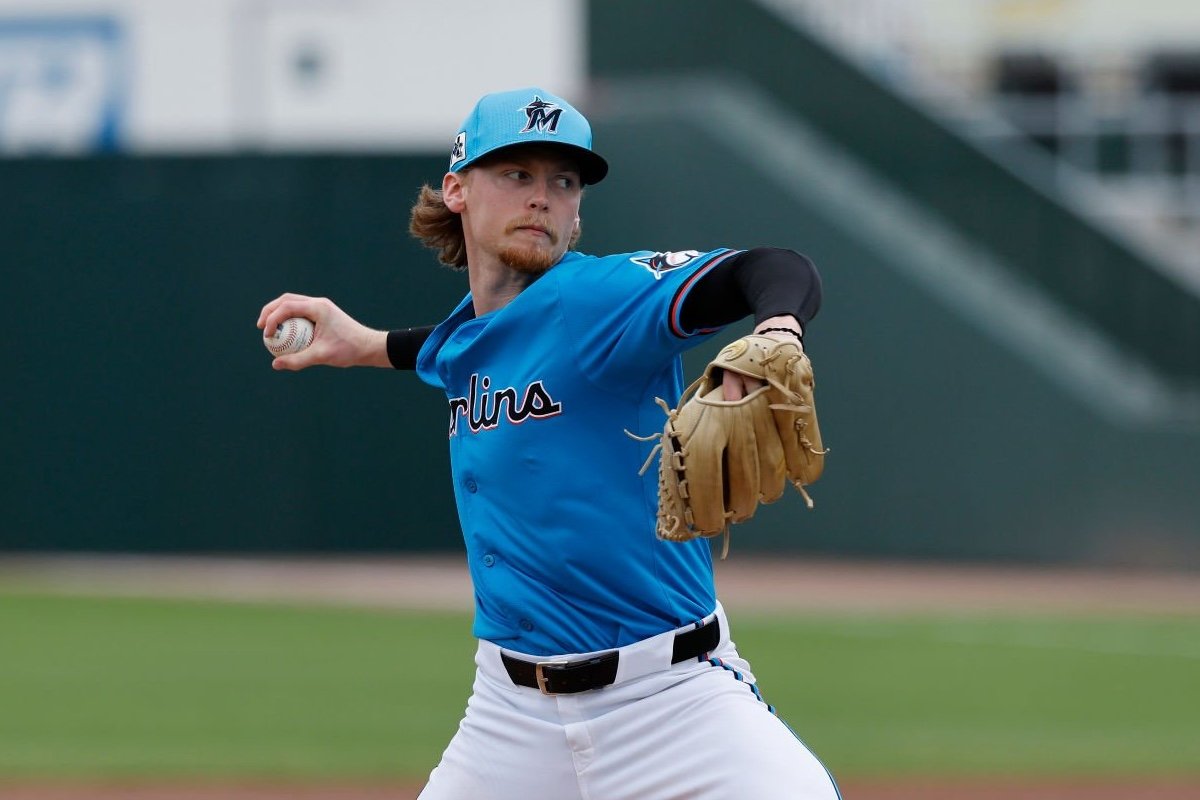 Before going down with a forearm strain, Miami Marlins left-hander Ryan Weathers was having a great spring training, and it wasn't just because he posted an ERA of 0.79 in 11 ⅓ innings of work. More importantly, noticeable changes were made in terms of his pitch data compared to last season. Weathers still predominantly utilized his fastball/changeup/sweeper trio this spring, but he seemingly tweaked all three pitches slightly. First, his fastball was on average 2 mph faster, sitting 97 mph and touching as high as 99.6 mph on the radar gun. This came with a increase in induced vertical break (IVB), which will up his overall fastball's shape and should improve his ability to get whiffs at the top of the strike zone. TDZPbk9fWGw0TUFRPT1fQWdaWFVGZFJVQU1BREZGUVVRQUFWdzREQUFOUVVWY0FVMUZUQmdzTUJGWURCVlFE.mp4 Weathers' changeup had an increase in spin this spring, which upped its horizontal movement, adding more depth to the pitch. This should continue to play off of his fastball very well as there now is about a 13 mph difference between the pitches. His sweeper posted elite numbers last season. Weathers finished with a 51% whiff rate on the pitch, which ranked it in the upper echelon of baseball. The 2025 edition of it has had more drop and a bit less sweep to it. Perhaps this tweak is to play off the changeup slightly better. Weathers used his sweeper to record his final strikeout of the spring against the Mets on St. Patrick's Day. MnJWV1BfWGw0TUFRPT1fVXdOVlhWQlZCd0VBQ1ZaVFZnQUFDVkJTQUZoVVYxY0FVMVVIQmdZR0JGWldCbEJV.mp4 Weathers' injury will delay his regular season debut by several weeks, but if he comes back looking the same as he did this spring, he will comfortably be the Marlins' number two starter. Max Meyer struggled in the bigs last year, so he came into this spring needing to earn a rotation spot. The former third overall pick added a sweeper this offseason to pair with his gyro bullet drop slider. And just like Weathers, Meyer has shown a velo jump and fastball shape refinement. Looking at Max's new sweeper, it is clearly a change-of-pace type of pitch. Thrown 5 mph less than his gyro slider, it has seven more inches of horizontal break on it as well. The pitch did get hit hard in the spring—considering it is the first time Meyer has competed with this pitch, there will be an adjustment period to test when and how it works. Meyer has already shown the confidence to use it against both right-handed and left-handed batters. MDRPZU5fVlZjPV9EZ1JTVWdVQkJ3TUFDUVpYVWdBQUFBNVJBQUJRVTFRQVYxZFVBZ0pXQkFwV0NBVUY=.mp4 Meyer's fastball is averaging six less inches of horizontal break to avoid cutting over the heart of the plate like it used to, but it has not had an increase in IVB. A velo jump was measured of about one extra mile per hour on the pitch. Meyer only gets approximately average extension down the mound, and combining with a release height which is not favorable for four-seam fastballs, his heater will still be underwhelming most likely. eHlYQVBfVlZjPV9VQVJSVUZNTVVnWUFXZ0FEQUFBQUExSUVBRmxXQndJQVZGTUVBd01FQWxJQVVRVmU=.mp4 I believe an east-to-west style of pitching will work best for Max Meyer going forward. His pitch mix is similar to the likes of Michael King or Will Warren, but with a much higher arm slot. Utilizing more sinker and slider will best suit Meyer's arsenal, as his gyro slider is one of the better sliders in baseball. That should be what he and the Marlins look to continue to building off of as the real games begin.
 -
Ryan Weathers and Max Meyer came into camp this spring with changes to their pitch shapes and increased velocity. Before going down with a forearm strain, Miami Marlins left-hander Ryan Weathers was having a great spring training, and it wasn't just because he posted an ERA of 0.79 in 11 ⅓ innings of work. More importantly, noticeable changes were made in terms of his pitch data compared to last season. Weathers still predominantly utilized his fastball/changeup/sweeper trio this spring, but he seemingly tweaked all three pitches slightly. First, his fastball was on average 2 mph faster, sitting 97 mph and touching as high as 99.6 mph on the radar gun. This came with a increase in induced vertical break (IVB), which will up his overall fastball's shape and should improve his ability to get whiffs at the top of the strike zone. TDZPbk9fWGw0TUFRPT1fQWdaWFVGZFJVQU1BREZGUVVRQUFWdzREQUFOUVVWY0FVMUZUQmdzTUJGWURCVlFE.mp4 Weathers' changeup had an increase in spin this spring, which upped its horizontal movement, adding more depth to the pitch. This should continue to play off of his fastball very well as there now is about a 13 mph difference between the pitches. His sweeper posted elite numbers last season. Weathers finished with a 51% whiff rate on the pitch, which ranked it in the upper echelon of baseball. The 2025 edition of it has had more drop and a bit less sweep to it. Perhaps this tweak is to play off the changeup slightly better. Weathers used his sweeper to record his final strikeout of the spring against the Mets on St. Patrick's Day. MnJWV1BfWGw0TUFRPT1fVXdOVlhWQlZCd0VBQ1ZaVFZnQUFDVkJTQUZoVVYxY0FVMVVIQmdZR0JGWldCbEJV.mp4 Weathers' injury will delay his regular season debut by several weeks, but if he comes back looking the same as he did this spring, he will comfortably be the Marlins' number two starter. Max Meyer struggled in the bigs last year, so he came into this spring needing to earn a rotation spot. The former third overall pick added a sweeper this offseason to pair with his gyro bullet drop slider. And just like Weathers, Meyer has shown a velo jump and fastball shape refinement. Looking at Max's new sweeper, it is clearly a change-of-pace type of pitch. Thrown 5 mph less than his gyro slider, it has seven more inches of horizontal break on it as well. The pitch did get hit hard in the spring—considering it is the first time Meyer has competed with this pitch, there will be an adjustment period to test when and how it works. Meyer has already shown the confidence to use it against both right-handed and left-handed batters. MDRPZU5fVlZjPV9EZ1JTVWdVQkJ3TUFDUVpYVWdBQUFBNVJBQUJRVTFRQVYxZFVBZ0pXQkFwV0NBVUY=.mp4 Meyer's fastball is averaging six less inches of horizontal break to avoid cutting over the heart of the plate like it used to, but it has not had an increase in IVB. A velo jump was measured of about one extra mile per hour on the pitch. Meyer only gets approximately average extension down the mound, and combining with a release height which is not favorable for four-seam fastballs, his heater will still be underwhelming most likely. eHlYQVBfVlZjPV9VQVJSVUZNTVVnWUFXZ0FEQUFBQUExSUVBRmxXQndJQVZGTUVBd01FQWxJQVVRVmU=.mp4 I believe an east-to-west style of pitching will work best for Max Meyer going forward. His pitch mix is similar to the likes of Michael King or Will Warren, but with a much higher arm slot. Utilizing more sinker and slider will best suit Meyer's arsenal, as his gyro slider is one of the better sliders in baseball. That should be what he and the Marlins look to continue to building off of as the real games begin. View full article
-
Our big board of this year's draft-eligible prospects has been updated as the 2025 college baseball season gets underway. Here is an overview of the top high school and college players that the Miami Marlins should consider drafting this summer. Prospect evaluations can change a lot between now and then. The big board will be updated to reflect that and later versions of it will be expanded to go beyond 100 players. The Marlins will make their first selection at No. 7 overall, then pick again at No. 43, No. 46, No. 79, No. 109 and No. 140. They have the third pick in all subsequent rounds (No. 168, No. 198, No. 228, etc.). The table below includes each prospect's age as of July 13, 2025, their school, position(s), handedness, measurables and overall future value on a 20-80 scale. Rank Name Age At Draft Level Position Bat/Throw Height/Weight FV 1 Seth Hernandez 19 Corona HS (CA) RHP R/R 6'4"- 190 60 2 Jace LaViolette 21 Texas A&M OF L/L 6'6"- 230 60 3 Aiva Arquette 21 Oregon State SS/3B R/R 6'4"- 220 55 4 Eli Willits 17 Fort Cobb-Broxton HS (OK) SS S/R 6'1" - 165 55 5 Brendan Summerhill 21 Arizona OF L/R 6'2"- 190 55 6 Jaime Arnold 21 Florida State LHP L/L 6'1"- 165 55 7 Cam Cannarella 21 Clemson OF L/R 6'0"- 180 55 8 Ethan Holliday 18 Stillwater HS (OK) SS/3B L/R 6'4" - 195 55 9 Billy Carlson 19 Corona HS (CA) SS/RHP R/R 6'1"- 165 55 10 Devin Taylor 21 Indiana OF L/R 6'0"- 194 50 11 Dean Curley 21 Tennessee SS R/R 6'3" - 195 50 12 Tre Phelps 21 Georgia 3B/OF R/R 6'3" - 210 50 13 Tyler Bremner 21 UC Santa Barbara RHP R/R 6'2"- 170 50 14 Luke Stevenson 21 North Carolina C L/R 6'1" - 200 50 15 Max Belyeu 21 Texas OF L/R 6'2" - 195 50 16 Xavier Neyens 18 Mount Vernon HS (WA) 3B L/R 6'4"- 200 50 17 Chase Shores 21 LSU RHP R/R 6'8" - 250 50 18 Angel Cervantes 17 Warren HS (CA) RHP R/R 6'2" - 190 50 19 Ike Irish 21 Auburn C/1B L/R 6'2" - 190 50 20 Lucas Franco 18 Cinco Ranch HS (TX) SS L/R 6'3"- 170 50 21 Cameron Appenzeller 18 Glenwood HS (IL) LHP L/L 6'5" - 180 50 22 Gavin Fien 18 Great Oak HS (CA) 3B R/R 6'3" - 200 50 23 Kruz Schoolcraft 18 Sunset HS (OR) LHP/1B L/L 6'8" - 215 50 24 Marek Houston 21 Wake Forest SS R/R 6'3" - 180 50 25 Trent Caraway 21 Oregon State 3B R/R 6'2" - 205 50 26 Matt Scott 21 Stanford RHP R/R 6'6"- 225 45 27 Nick Dumesnil 21 Cal Baptist OF R/R 6'2"- 205 45 28 Jaden Fauske 18 Nazareth Academy HS (IL) C L/R 6'1" - 195 45 29 Sean Gamble 19 IMG Academy HS (FL) SS/OF L/R 6'1" - 185 45 30 Kyson Witherspoon 20 Oklahoma RHP R/R 6'2" - 205 45 31 Gabe Davis 21 Oklahoma State RHP R/R 6'9" - 225 45 32 Kane Kepley 21 UNC OF L/L 5'8" - 170 45 33 Andrew Fischer 21 Tennessee 3B L/R 6'1" - 200 45 34 Kayson Cunningham 19 Johnson HS (TX) SS/2B L/R 5'9"-170 45 35 James Ellwanger 21 Dallas Baptist RHP R/R 6'5" 195 45 36 Kolten Smith 21 Georgia RHP R/R 6'3" - 200 45 37 Marcelo Harsch 18 Seton Hall Prep HS (NJ) RHP R/R 6'4" - 170 45 38 Brock Sell 18 Tokay HS (CA) OF L/R 6'1" - 170 45 39 Caden Bodine 21 Coastal Carolina C S/R 5'10"-190 45 40 A.J. Russell 21 Tennessee RHP R/R 6'6" - 195 45 41 Dean Moss 19 IMG Academy HS (FL) OF L/R 6'0" - 175 45 42 Henry Godbout 21 Virginia 2B R/R 6'1" - 185 45 43 Landon Harmon 18 East Union HS (MISS) RHP R/R 6'5" - 180 45 44 Gavin Kilen 21 Tennessee 2B L/R 5'11" - 185 45 45 Brock Ketelson 18 Valley Christian HS (CA) OF L/L 6'3" - 185 45 46 RJ Austin 21 Vanderbilt 2B/OF R/R 5'11" - 190 45 47 Henry Ford 21 Virginia 1B R/R 6'5 - 220 45 48 Liam Doyle 21 Tennessee LHP R/L 6'2" - 220 45 49 Nolan Schubart 21 Oklahoma State 1B/OF L/R 6'5" - 225 45 50 Aaron Watson 18 Trinity Christian Acad HS (FL) RHP R/R 6'5" - 205 45 51 Wehiwa Aloy 21 Arkansas SS R/R 6'2" - 195 45 52 Murf Gray 21 Fresno State 3B R/R 6'4"- 220 45 53 Cam Leiter 21 Florida State RHP R/R 6'4" - 195 45 54 Kade Anderson 21 LSU LHP L/L 6'2' - 180 45 55 Slater de Brun 18 Summit HS (OR) OF L/L 5'9" - 180 45 56 William Patrick 19 St. Fredrick HS (LA) OF R/R 6'2" - 190 45 57 Daniel Dickinson 21 LSU 2B R/R 6'0" - 180 45 58 Payton Graham 21 Gonzaga RHP R/R 6'1" - 190 45 59 Dallas Macias 21 Oregon State 2B/OF S/R 6'0" - 190 45 60 Ben Jacobs 21 Arizona State LHP L/L 6'0" - 190 45 61 Ethan Petry 21 South Carolina OF R/R 6'4" - 230 45 62 Aiden Stillman 18 Trinity Prep HS (FL) LHP R/L 6'3" - 190 45 63 Brady Ebel 18 Corona HS (CA) SS L/R 6'3" - 180 45 64 Evan Chrest 21 Florida State RHP R/R 5'11" - 165 40 65 Ben Abeldt 21 TCU LHP R/L 6'3" - 200 40 66 Landon Beidelschies 21 Arkansas LHP L/L 6'3" - 230 40 67 Dylan Dubovik 18 American Heritage HS (FL) OF R/R 6'3" - 200 40 68 Brandon Compton 21 Arizona State OF L/L 6'1" - 210 40 69 Alex Lodise 21 Florida State INF R/R 6'1" - 190 40 70 J.D. Thompson 21 Vanderbilt LHP R/L 6'0" - 190 40 71 Tate Southisene 18 Basic HS (NV) SS/OF R/R 5'11" - 170 40 72 Jason Reitz 21 Oregon RHP R/R 6'10" - 180 40 73 Gavin Turley 21 Oregon State OF R/R 6'2" - 200 40 74 Ethan Conrad 21 Wake Forest OF L/L 6'4" - 215 40 75 Anthony Pack 18 Millikan HS (CA) OF L/L 5'10" - 170 40 76 Jack McKernan 18 Ridge Point HS (TX) LHP L/L 6'1" - 185 40 77 Tanner Thach 21 UNC Wilmington 1B L/L 6'3" - 215 40 78 Kien Vu 21 Arizona State OF L/L 5'11" - 170 40 79 Riley Quick 21 Alabama RHP R/R 6"6" - 250 40 80 Jack Lafflam 18 Brophy College Prep HS (AZ) RHP R/R 6'6" - 170 40 81 Mason White 21 LSU SS/2B L/R 5'9" - 170 40 82 Joseph (JoJo) Parker 18 Purvis HS (MISS) SS L/R 6'2" - 195 40 83 Mason Pike 18 Puyallup HS (WA) SS/RHP S/R 6'0" - 190 40 84 Mason Neville 21 Oregon OF L/L 6'3" - 200 40 85 Finn Leach 18 Nathan Hale HS (WA) SS S/R 6'0" - 175 40 86 Shane Sdao 21 Texas A&M LHP L/L 6'2" - 170 40 87 Trent Grindlinger 19 Huntington Beach HS (CA) C R/R 6'3" - 200 40 88 Matthew Dallas 21 Wake Forest LHP L/L 6'5" - 180 40 89 Grant Jay 21 Dallas Baptist C R/R 5'11" - 220 40 90 Quentin Young 18 Oaks Christian HS (CA) INF/OF R/R 6'5" - 215 40 91 Coy James 18 Davie County HS (NC) SS R/R 6'0" - 180 40 92 Tony Martinez 21 UC Irvine 1B L/R 6'3" - 230 40 93 Cooper Rummel 19 Dripping Springs HS (TX) RHP R/R 6'3" - 210 40 94 Eli Jerzmenbeck 22 South Carolina RHP R/R 6'2" - 175 40 95 Patrick Forbes 21 Louisville RHP R/R 6'3" - 200 40 96 Max Williams 20 Florida State OF L/L 6'2" - 190 40 97 Josh Hammond 18 Wesleyan Christian Acad. HS (NC) RHP/SS R/R 6'1" - 205 40 98 Easton Carmichael 21 Oklahoma C R/R 6'1" - 190 40 99 Kyle Wolff 21 Boston College 1B R/L 6'1" - 210 40 100 Clay Grady 21 Virginia Tech SS R/R 5'9" - 165 40 Potential fits for the Marlins Coming off stellar freshman years, I have ranked Dean Curley (No. 11) and Tre Phelps (No. 12) relatively aggressively as I project big years for both SEC hitters. These are two names the Marlins may be considering in this year's draft. Curley, who is coming off a national championship with his Tennessee Volunteers, will be looking to build on a year where he slashed .285/.386/.502. He is slated to play full-time shortstop this season. He has the glove and arm to stick at short going forward. Curley's ability to control the strike zone with low in-zone whiff rates and the second lowest chase% of any qualified hitter at Tennessee last season was extremely impressive. Currently, power is the only tool Dean lacks, but I project that there could be improvement from him—his 6’3” frame is favorable for the outlook of pop in his bat. Tre Phelps is coming off one of the better freshman seasons in all of college baseball last year for a hitter. In 42 games, he slashed a .353/.441/.699. Posting a great 90th percentile exit velocity of 105.4 mph, Phelps has a powerful swing and quick hands to the ball. A large lower half allows him to generate an explosive swing. Already 6’3”, 210 as a 20-year-old, Phelps has even more room to grow into his body. Two areas of concern for Phelps are his lack of a home defensively and his chase rates. He spent time at third base, first base, the corner outfield spots and DH last year. Solidifying a position would help Phelps' draft stock further if he continues to demolish baseballs. He had a team-high 28% chase rate in 2024. Becoming less aggressive would push the Georgia native further up draft boards. View full article
-
2025 MLB Draft: Preseason ranking of Top 100 prospects
Sean McCormack posted an article in MLB Draft
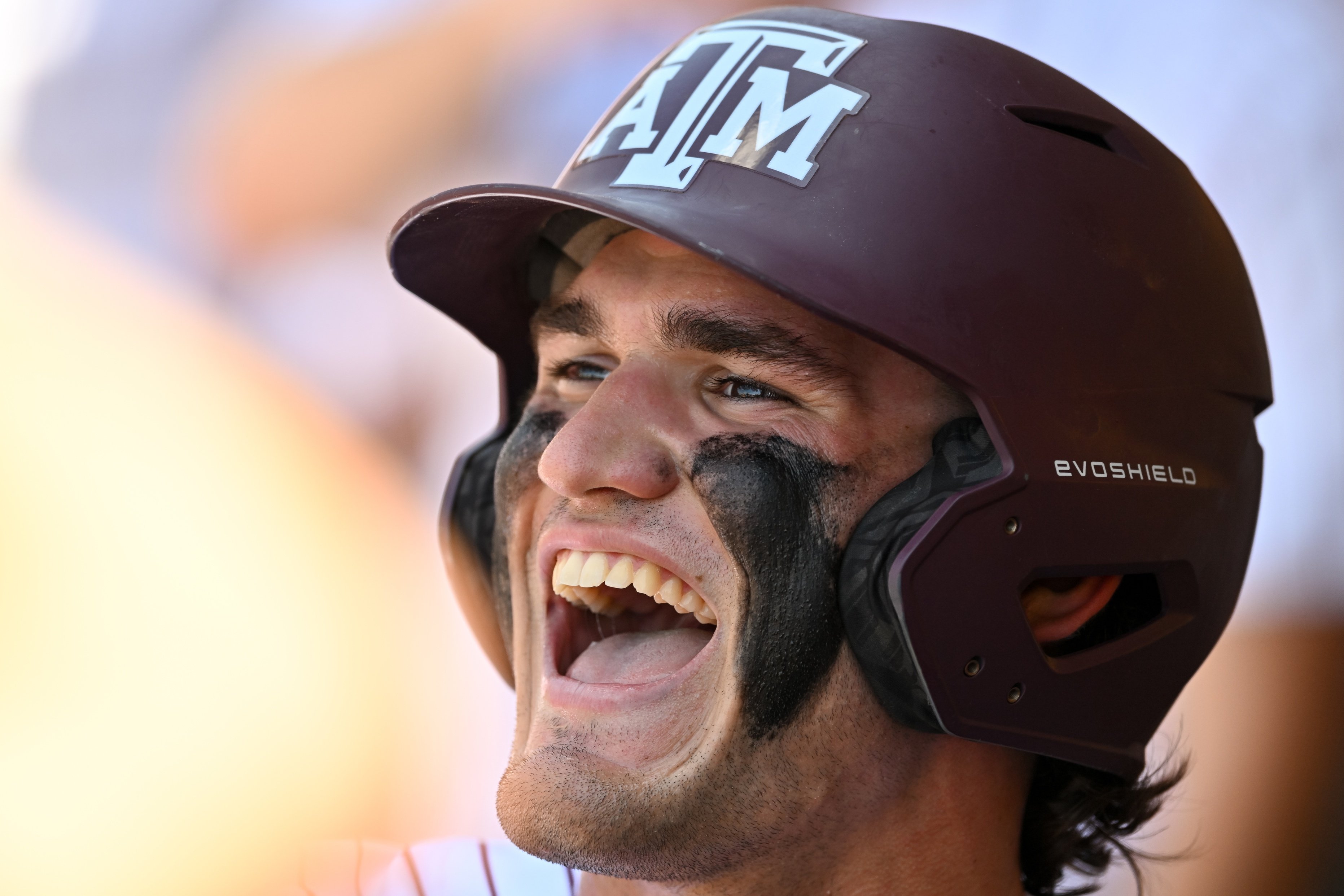 Here is an overview of the top high school and college players that the Miami Marlins should consider drafting this summer. Prospect evaluations can change a lot between now and then. The big board will be updated to reflect that and later versions of it will be expanded to go beyond 100 players. The Marlins will make their first selection at No. 7 overall, then pick again at No. 43, No. 46, No. 79, No. 109 and No. 140. They have the third pick in all subsequent rounds (No. 168, No. 198, No. 228, etc.). The table below includes each prospect's age as of July 13, 2025, their school, position(s), handedness, measurables and overall future value on a 20-80 scale. Rank Name Age At Draft Level Position Bat/Throw Height/Weight FV 1 Seth Hernandez 19 Corona HS (CA) RHP R/R 6'4"- 190 60 2 Jace LaViolette 21 Texas A&M OF L/L 6'6"- 230 60 3 Aiva Arquette 21 Oregon State SS/3B R/R 6'4"- 220 55 4 Eli Willits 17 Fort Cobb-Broxton HS (OK) SS S/R 6'1" - 165 55 5 Brendan Summerhill 21 Arizona OF L/R 6'2"- 190 55 6 Jaime Arnold 21 Florida State LHP L/L 6'1"- 165 55 7 Cam Cannarella 21 Clemson OF L/R 6'0"- 180 55 8 Ethan Holliday 18 Stillwater HS (OK) SS/3B L/R 6'4" - 195 55 9 Billy Carlson 19 Corona HS (CA) SS/RHP R/R 6'1"- 165 55 10 Devin Taylor 21 Indiana OF L/R 6'0"- 194 50 11 Dean Curley 21 Tennessee SS R/R 6'3" - 195 50 12 Tre Phelps 21 Georgia 3B/OF R/R 6'3" - 210 50 13 Tyler Bremner 21 UC Santa Barbara RHP R/R 6'2"- 170 50 14 Luke Stevenson 21 North Carolina C L/R 6'1" - 200 50 15 Max Belyeu 21 Texas OF L/R 6'2" - 195 50 16 Xavier Neyens 18 Mount Vernon HS (WA) 3B L/R 6'4"- 200 50 17 Chase Shores 21 LSU RHP R/R 6'8" - 250 50 18 Angel Cervantes 17 Warren HS (CA) RHP R/R 6'2" - 190 50 19 Ike Irish 21 Auburn C/1B L/R 6'2" - 190 50 20 Lucas Franco 18 Cinco Ranch HS (TX) SS L/R 6'3"- 170 50 21 Cameron Appenzeller 18 Glenwood HS (IL) LHP L/L 6'5" - 180 50 22 Gavin Fien 18 Great Oak HS (CA) 3B R/R 6'3" - 200 50 23 Kruz Schoolcraft 18 Sunset HS (OR) LHP/1B L/L 6'8" - 215 50 24 Marek Houston 21 Wake Forest SS R/R 6'3" - 180 50 25 Trent Caraway 21 Oregon State 3B R/R 6'2" - 205 50 26 Matt Scott 21 Stanford RHP R/R 6'6"- 225 45 27 Nick Dumesnil 21 Cal Baptist OF R/R 6'2"- 205 45 28 Jaden Fauske 18 Nazareth Academy HS (IL) C L/R 6'1" - 195 45 29 Sean Gamble 19 IMG Academy HS (FL) SS/OF L/R 6'1" - 185 45 30 Kyson Witherspoon 20 Oklahoma RHP R/R 6'2" - 205 45 31 Gabe Davis 21 Oklahoma State RHP R/R 6'9" - 225 45 32 Kane Kepley 21 UNC OF L/L 5'8" - 170 45 33 Andrew Fischer 21 Tennessee 3B L/R 6'1" - 200 45 34 Kayson Cunningham 19 Johnson HS (TX) SS/2B L/R 5'9"-170 45 35 James Ellwanger 21 Dallas Baptist RHP R/R 6'5" 195 45 36 Kolten Smith 21 Georgia RHP R/R 6'3" - 200 45 37 Marcelo Harsch 18 Seton Hall Prep HS (NJ) RHP R/R 6'4" - 170 45 38 Brock Sell 18 Tokay HS (CA) OF L/R 6'1" - 170 45 39 Caden Bodine 21 Coastal Carolina C S/R 5'10"-190 45 40 A.J. Russell 21 Tennessee RHP R/R 6'6" - 195 45 41 Dean Moss 19 IMG Academy HS (FL) OF L/R 6'0" - 175 45 42 Henry Godbout 21 Virginia 2B R/R 6'1" - 185 45 43 Landon Harmon 18 East Union HS (MISS) RHP R/R 6'5" - 180 45 44 Gavin Kilen 21 Tennessee 2B L/R 5'11" - 185 45 45 Brock Ketelson 18 Valley Christian HS (CA) OF L/L 6'3" - 185 45 46 RJ Austin 21 Vanderbilt 2B/OF R/R 5'11" - 190 45 47 Henry Ford 21 Virginia 1B R/R 6'5 - 220 45 48 Liam Doyle 21 Tennessee LHP R/L 6'2" - 220 45 49 Nolan Schubart 21 Oklahoma State 1B/OF L/R 6'5" - 225 45 50 Aaron Watson 18 Trinity Christian Acad HS (FL) RHP R/R 6'5" - 205 45 51 Wehiwa Aloy 21 Arkansas SS R/R 6'2" - 195 45 52 Murf Gray 21 Fresno State 3B R/R 6'4"- 220 45 53 Cam Leiter 21 Florida State RHP R/R 6'4" - 195 45 54 Kade Anderson 21 LSU LHP L/L 6'2' - 180 45 55 Slater de Brun 18 Summit HS (OR) OF L/L 5'9" - 180 45 56 William Patrick 19 St. Fredrick HS (LA) OF R/R 6'2" - 190 45 57 Daniel Dickinson 21 LSU 2B R/R 6'0" - 180 45 58 Payton Graham 21 Gonzaga RHP R/R 6'1" - 190 45 59 Dallas Macias 21 Oregon State 2B/OF S/R 6'0" - 190 45 60 Ben Jacobs 21 Arizona State LHP L/L 6'0" - 190 45 61 Ethan Petry 21 South Carolina OF R/R 6'4" - 230 45 62 Aiden Stillman 18 Trinity Prep HS (FL) LHP R/L 6'3" - 190 45 63 Brady Ebel 18 Corona HS (CA) SS L/R 6'3" - 180 45 64 Evan Chrest 21 Florida State RHP R/R 5'11" - 165 40 65 Ben Abeldt 21 TCU LHP R/L 6'3" - 200 40 66 Landon Beidelschies 21 Arkansas LHP L/L 6'3" - 230 40 67 Dylan Dubovik 18 American Heritage HS (FL) OF R/R 6'3" - 200 40 68 Brandon Compton 21 Arizona State OF L/L 6'1" - 210 40 69 Alex Lodise 21 Florida State INF R/R 6'1" - 190 40 70 J.D. Thompson 21 Vanderbilt LHP R/L 6'0" - 190 40 71 Tate Southisene 18 Basic HS (NV) SS/OF R/R 5'11" - 170 40 72 Jason Reitz 21 Oregon RHP R/R 6'10" - 180 40 73 Gavin Turley 21 Oregon State OF R/R 6'2" - 200 40 74 Ethan Conrad 21 Wake Forest OF L/L 6'4" - 215 40 75 Anthony Pack 18 Millikan HS (CA) OF L/L 5'10" - 170 40 76 Jack McKernan 18 Ridge Point HS (TX) LHP L/L 6'1" - 185 40 77 Tanner Thach 21 UNC Wilmington 1B L/L 6'3" - 215 40 78 Kien Vu 21 Arizona State OF L/L 5'11" - 170 40 79 Riley Quick 21 Alabama RHP R/R 6"6" - 250 40 80 Jack Lafflam 18 Brophy College Prep HS (AZ) RHP R/R 6'6" - 170 40 81 Mason White 21 LSU SS/2B L/R 5'9" - 170 40 82 Joseph (JoJo) Parker 18 Purvis HS (MISS) SS L/R 6'2" - 195 40 83 Mason Pike 18 Puyallup HS (WA) SS/RHP S/R 6'0" - 190 40 84 Mason Neville 21 Oregon OF L/L 6'3" - 200 40 85 Finn Leach 18 Nathan Hale HS (WA) SS S/R 6'0" - 175 40 86 Shane Sdao 21 Texas A&M LHP L/L 6'2" - 170 40 87 Trent Grindlinger 19 Huntington Beach HS (CA) C R/R 6'3" - 200 40 88 Matthew Dallas 21 Wake Forest LHP L/L 6'5" - 180 40 89 Grant Jay 21 Dallas Baptist C R/R 5'11" - 220 40 90 Quentin Young 18 Oaks Christian HS (CA) INF/OF R/R 6'5" - 215 40 91 Coy James 18 Davie County HS (NC) SS R/R 6'0" - 180 40 92 Tony Martinez 21 UC Irvine 1B L/R 6'3" - 230 40 93 Cooper Rummel 19 Dripping Springs HS (TX) RHP R/R 6'3" - 210 40 94 Eli Jerzmenbeck 22 South Carolina RHP R/R 6'2" - 175 40 95 Patrick Forbes 21 Louisville RHP R/R 6'3" - 200 40 96 Max Williams 20 Florida State OF L/L 6'2" - 190 40 97 Josh Hammond 18 Wesleyan Christian Acad. HS (NC) RHP/SS R/R 6'1" - 205 40 98 Easton Carmichael 21 Oklahoma C R/R 6'1" - 190 40 99 Kyle Wolff 21 Boston College 1B R/L 6'1" - 210 40 100 Clay Grady 21 Virginia Tech SS R/R 5'9" - 165 40 Potential fits for the Marlins Coming off stellar freshman years, I have ranked Dean Curley (No. 11) and Tre Phelps (No. 12) relatively aggressively as I project big years for both SEC hitters. These are two names the Marlins may be considering in this year's draft. Curley, who is coming off a national championship with his Tennessee Volunteers, will be looking to build on a year where he slashed .285/.386/.502. He is slated to play full-time shortstop this season. He has the glove and arm to stick at short going forward. Curley's ability to control the strike zone with low in-zone whiff rates and the second lowest chase% of any qualified hitter at Tennessee last season was extremely impressive. Currently, power is the only tool Dean lacks, but I project that there could be improvement from him—his 6’3” frame is favorable for the outlook of pop in his bat. Tre Phelps is coming off one of the better freshman seasons in all of college baseball last year for a hitter. In 42 games, he slashed a .353/.441/.699. Posting a great 90th percentile exit velocity of 105.4 mph, Phelps has a powerful swing and quick hands to the ball. A large lower half allows him to generate an explosive swing. Already 6’3”, 210 as a 20-year-old, Phelps has even more room to grow into his body. Two areas of concern for Phelps are his lack of a home defensively and his chase rates. He spent time at third base, first base, the corner outfield spots and DH last year. Solidifying a position would help Phelps' draft stock further if he continues to demolish baseballs. He had a team-high 28% chase rate in 2024. Becoming less aggressive would push the Georgia native further up draft boards.
 -
 On the surface, it may seem Sandy Alcántara just naturally regressed during his 2023 season after winning the NL Cy Young award the year before. His FIP went up to 4.03 compared to 2.99, his ERA jumped from 2.28 to 4.14, and he was walking a bit more and striking out less. But the difference between these seasons wasn't simply his luck evening out. To start, Alcántara's devastating changeup is by far his best pitch. It is his put-away pitch when he needs a strikeout. He throws it hard enough and commands it well enough to land it for a strike if needed. Even before the injury, this weapon quite clearly took a step back. After racking up a plus-24 total run value in 2022—which led all of Major League Baseball—it became a liability in 2023 (minus-5 run value). My theory as to why is all based on his sinker command and trouble vs. lefties. Alcántara's sinker and changeup go hand and hand. A clear look here thanks to Baseball Savant's movement profile shows how similar in location and break his sinker and changeup are. This similar movement profile allows his changeup to play off of his sinker as it has a sharp break milliseconds before crossing home plate with only an 8 mph difference on average. Another major difference is Alcántara's sinker location. It was in the zone 2% more often (57% overall) in 2023 and it was located arm side 52% of the time compared to 59% in 2022. Leaving a sinker over the middle of the zone more often creates less separation behind the changeup and sinker, allowing hitters to recognize whether the pitch is a changeup that will fall out of the zone or a sinker, which will stay in the zone. Although Baseball Savant will say Alcántara's sinker was more valuable in 2023 in terms of run value, I disagree that the pitch was actually better. Its purpose is to get weak, groundball contact. Instead, he saw an increase in home runs allowed in 2023 because his sinker got hit harder and in the air. In 2022, his sinker was barreled 6% of the time compared to 2% his Cy Young year. There was an 8 mph jump in average exit velocity against and his home run to fly ball rate doubled. Alcántara does not throw a pitch that can consistently get whiffs at the top of the zone because of his poor four-seam fastball shape. Instead, his strategy is to generate weak contact on the edges of the zone with his sinker and tunnel his changeup off of that. One hole in Alcántara's game has been his splits vs. lefties. Comparing 2022 to 2023, he saw nearly a .200 point increase in OPS vs. lefties going from .551 OPS to a .714 OPS. Historically, Alcántara has never had great options vs. lefties and has had to rely on trying to jam with a sinker inside or steal a strike low and away, then come back with a changeup. His slider in particular has always been demolished vs lefties. Having a xwOBAcon north of .400 since 2021. He really does not have a consistent pitch to throw to lefties. In 2023, he started utilizing his curveball again, which he hadn't used much since his early days in 2018-2020. However, he did not use it enough to see any meaningful results. Trying to solve Sandy's lefty problem is a tricky one. Perhaps a sweeper inside to lefties may help, as his current slider which is effective vs. righties is much more of a "gyro" slider—it has a sharper spin to it and more of a bullet drop. Many other pitchers have adopted a two-slider approach. Something fascinating is that in 2022, left-handed batters had a .373 OPS vs. his changeup, while in 2023 they had a .725 OPS. I am of the belief this ties back into pitch tunneling and sequencing. Clearly, Alcántara can get lefties out with the changeup, but it relies heavily on sinker or four-seam fastball location since he tends to throw the four-seam to left-handers more often. This is an example from 2022 of Alcántara using his sinker to set up Juan Soto for a strikeout tunneling his changeup off his sinker. UDJMTldfWGw0TUFRPT1fQWdWUVZGMVFBQUVBV2xzQlVnQUFVdzVTQUZrTVdnTUFDbEpSQndFSENBQlNCRk1B.mp4 UDJMTldfWGw0TUFRPT1fQVFnSFZsVlhCRmNBQUZFTEJRQUFCZ1ZlQUFNQlZWQUFVd1pVVVFKUVV3RlFVd01F.mp4 Did anything change mechanically with Alcántara from 2022 to 2023? I did spot one noticeable difference: his glove position during his windup. These first two screenshots are from two different months in 2022. Near the top of his leg kick, his glove is still wrapped around the ball. Now compare that to 2023. In screenshots taken during the same point in his delivery, his glove is almost facing straight down rather than wrapping. Perhaps this slight change messed with Sandy's ability to control and command pitches. Whether done intentionally or not, I'd like to see him return to his 2022 glove position. I'm sure newly hired Marlins pitching director Bill Hezel and pitching coach Daniel Moskos are already contemplating this and other slight tweaks that could make a huge difference. Sandy Alcántara at his peak is one of the greatest pitchers in Marlins history and a joy to watch every five days. Whether it means trying a new sweeper vs. lefties, changing mechanical or mental queues, or trying to optimize his sequencing and tunneling in general, there's hope he can get back to that level. It all starts with being fully healthy. If he is, Alcántara is poised for another big season in 2025.
 -
After missing last season while recovering from Tommy John surgery, Alcántara is coming back to lead the Marlins rotation. What changes must he make to dominate the league again like he did in 2022? On the surface, it may seem Sandy Alcántara just naturally regressed during his 2023 season after winning the NL Cy Young award the year before. His FIP went up to 4.03 compared to 2.99, his ERA jumped from 2.28 to 4.14, and he was walking a bit more and striking out less. But the difference between these seasons wasn't simply his luck evening out. To start, Alcántara's devastating changeup is by far his best pitch. It is his put-away pitch when he needs a strikeout. He throws it hard enough and commands it well enough to land it for a strike if needed. Even before the injury, this weapon quite clearly took a step back. After racking up a plus-24 total run value in 2022—which led all of Major League Baseball—it became a liability in 2023 (minus-5 run value). My theory as to why is all based on his sinker command and trouble vs. lefties. Alcántara's sinker and changeup go hand and hand. A clear look here thanks to Baseball Savant's movement profile shows how similar in location and break his sinker and changeup are. This similar movement profile allows his changeup to play off of his sinker as it has a sharp break milliseconds before crossing home plate with only an 8 mph difference on average. Another major difference is Alcántara's sinker location. It was in the zone 2% more often (57% overall) in 2023 and it was located arm side 52% of the time compared to 59% in 2022. Leaving a sinker over the middle of the zone more often creates less separation behind the changeup and sinker, allowing hitters to recognize whether the pitch is a changeup that will fall out of the zone or a sinker, which will stay in the zone. Although Baseball Savant will say Alcántara's sinker was more valuable in 2023 in terms of run value, I disagree that the pitch was actually better. Its purpose is to get weak, groundball contact. Instead, he saw an increase in home runs allowed in 2023 because his sinker got hit harder and in the air. In 2022, his sinker was barreled 6% of the time compared to 2% his Cy Young year. There was an 8 mph jump in average exit velocity against and his home run to fly ball rate doubled. Alcántara does not throw a pitch that can consistently get whiffs at the top of the zone because of his poor four-seam fastball shape. Instead, his strategy is to generate weak contact on the edges of the zone with his sinker and tunnel his changeup off of that. One hole in Alcántara's game has been his splits vs. lefties. Comparing 2022 to 2023, he saw nearly a .200 point increase in OPS vs. lefties going from .551 OPS to a .714 OPS. Historically, Alcántara has never had great options vs. lefties and has had to rely on trying to jam with a sinker inside or steal a strike low and away, then come back with a changeup. His slider in particular has always been demolished vs lefties. Having a xwOBAcon north of .400 since 2021. He really does not have a consistent pitch to throw to lefties. In 2023, he started utilizing his curveball again, which he hadn't used much since his early days in 2018-2020. However, he did not use it enough to see any meaningful results. Trying to solve Sandy's lefty problem is a tricky one. Perhaps a sweeper inside to lefties may help, as his current slider which is effective vs. righties is much more of a "gyro" slider—it has a sharper spin to it and more of a bullet drop. Many other pitchers have adopted a two-slider approach. Something fascinating is that in 2022, left-handed batters had a .373 OPS vs. his changeup, while in 2023 they had a .725 OPS. I am of the belief this ties back into pitch tunneling and sequencing. Clearly, Alcántara can get lefties out with the changeup, but it relies heavily on sinker or four-seam fastball location since he tends to throw the four-seam to left-handers more often. This is an example from 2022 of Alcántara using his sinker to set up Juan Soto for a strikeout tunneling his changeup off his sinker. UDJMTldfWGw0TUFRPT1fQWdWUVZGMVFBQUVBV2xzQlVnQUFVdzVTQUZrTVdnTUFDbEpSQndFSENBQlNCRk1B.mp4 UDJMTldfWGw0TUFRPT1fQVFnSFZsVlhCRmNBQUZFTEJRQUFCZ1ZlQUFNQlZWQUFVd1pVVVFKUVV3RlFVd01F.mp4 Did anything change mechanically with Alcántara from 2022 to 2023? I did spot one noticeable difference: his glove position during his windup. These first two screenshots are from two different months in 2022. Near the top of his leg kick, his glove is still wrapped around the ball. Now compare that to 2023. In screenshots taken during the same point in his delivery, his glove is almost facing straight down rather than wrapping. Perhaps this slight change messed with Sandy's ability to control and command pitches. Whether done intentionally or not, I'd like to see him return to his 2022 glove position. I'm sure newly hired Marlins pitching director Bill Hezel and pitching coach Daniel Moskos are already contemplating this and other slight tweaks that could make a huge difference. Sandy Alcántara at his peak is one of the greatest pitchers in Marlins history and a joy to watch every five days. Whether it means trying a new sweeper vs. lefties, changing mechanical or mental queues, or trying to optimize his sequencing and tunneling in general, there's hope he can get back to that level. It all starts with being fully healthy. If he is, Alcántara is poised for another big season in 2025. View full article
-
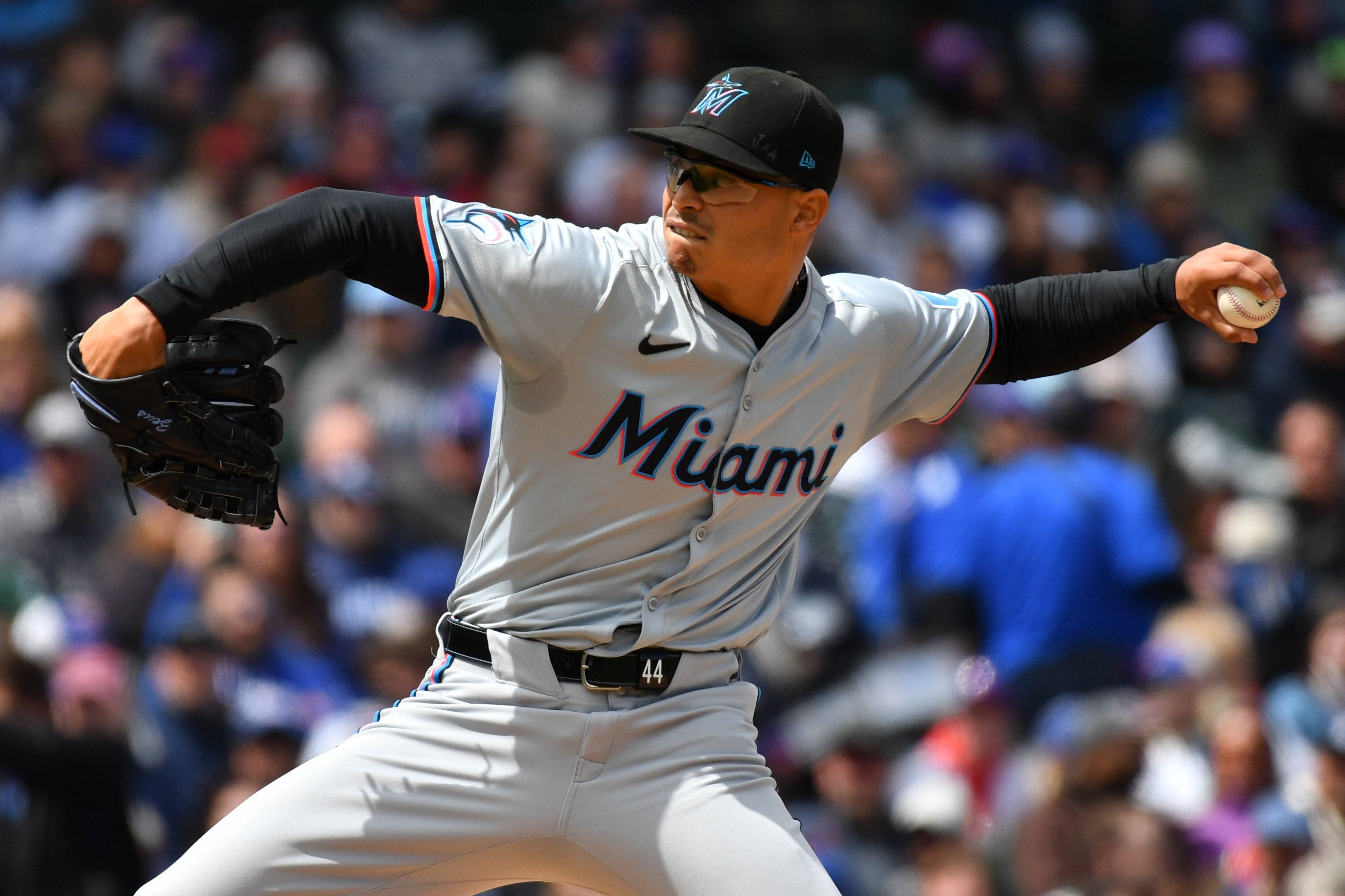 The Chicago Cubs are trying to acquire Jesús Luzardo from the Miami Marlins, as has been reported by USA Today, 670 The Score and most recently The Athletic. They may be the most aggressive suitor for him, but there are other logical landing spots for the 27-year-old lefty. Even with Luzardo coming off a back injury, he has flashed front-of-the-rotation potential and holds significant value in the current starting pitching market. The Marlins must insist on getting controllable quality players in return. Numbers in parentheses next to a player's name indicates where they're ranked in their team's farm system according to MLB Pipeline. Chicago Cubs Cubs receive: LHP Jesús Luzardo Marlins receive: OF Owen Caissie (2) and LHP Jordan Wicks Owen Caissie, a 2020 second-round draft pick, was part of the deal that sent Yu Darvish to the Padres. He is ranked 34th overall among MLB prospects by MLB Pipeline. Caissie spent all of 2024 in Triple-A where he posted a slash line of .278/.375/.472. and a 121 wRC+. He was 21 years old for the majority of the season and faced much older competition. Caissie shines with his power—he had the same max exit velocity as Jake Burger. The main area of concern is his 28% strikeout rate, though he does walk a bit with a 12% walk rate and does not swing and miss much in the zone. The Marlins could stick Caissie in a corner outfield spot where he grades out average. Jordan Wicks is a former first-round pick who spent time between AAA and MLB this past season. He was put on the IL two separate times with an oblique strain. The Cubs value Wicks as rotation depth, but might be willing to part ways with him for a more established arm like Luzardo. Wicks throws seven pitches with only one grading out above league average, according to tjStuff+ model. He primarily throws a four-seam fastball paired with a changeup, combining to make up 71% of his total pitch usage. Wicks' fastball sits at 92 mph, but plays well off of his changeup which racked up a 42% whiff rate this past season at the MLB level. The lefty's slider is actually his highest-graded pitch. Wicks has an underwhelming 5.02 ERA through the first 80 ⅔ innings of his major league career. Perhaps under the influence of new director of pitching Bill Hezel, the Marlins could unlock better results by utilizing more of his pitch mix. In addition to the Cubs, I've come up with proposals involving two other potential playoff contenders who are seemingly reluctant to spend for frontline talent in free agency, but have enough prospect capital to acquire pitching depth via trade and have done business with the Marlins recently. In both cases, let's pair Luzardo with a quality reliever to expand the deal. Baltimore Orioles Orioles receive: LHP Jesús Luzardo and RHP Declan Cronin Marlins receive: OF Heston Kjerstad, SS Griff O'Ferrall (7), OF Austin Overn (16) and RHP Kevin Velasco Heston Kjerstad headlining this deal was the second overall pick in the 2020 draft. He entered 2024 as Baltimore's fifth-ranked prospect, but has since graduated from prospect eligibility. This past year in the inconsistent MLB playing time he received, Kjerstad posted a .253/.351/.394 slash line with a 43% hard-hit rate in 114 plate appearances. He is clearly overqualified for AAA with a 152 wRC+ and .601 slugging percentage. A big-time bat with a track record of good plate discipline, Kjerstad is ready for a full chance at the MLB level. However, the O's have a log jam which only got deeper with the signing of Tyler O'Neill. With two minor league options left and less than a year of service time so far, Kjerstad could be a long-term contributor for the Marlins. The next two prospects were both taken early in the 2024 draft by the Orioles. Griff O'Ferrall is a well-balanced shortstop from the University of Virginia. What he lacks in power, he makes up for with a great plate approach and good defense. None of his tools are flashy, yet he is above average at every facet of the game besides power. Austin Overn is known for his elite defense in center field and eye-popping 80-grade speed. The Southern California native has had scouts' attention since his high school days and became arguably the best defensive outfielder in college baseball while at USC. What brings down Overn's potential is his lacking bat, especially his fringy power, although he did have a fast start to his pro career (.280/.398/.467 in 21 G at A/A+). Overn may be expendable for the O's because there are several comparable players who were recently drafted higher by the org such as Vance Honeycutt, Enrique Bradfield Jr. and Jud Fabian. anFlNTFfV0ZRVkV3dEdEUT09X0FRSUVYVlpTVjFFQUFWcFhCUUFBQ0ZNQ0FGa0VCZ1FBQmdOUkFsWURBd1FCVWxFRA==.mp4 Finally, Kevin Velasco is still at the Orioles Dominican complex. Velasco turns 19 in January and had some impressive numbers last season in the DSL. He did not allow a home run, posted an ERA of 1.13 and a FIP of 2.20, the lowest FIP in the entire league among pitchers who worked at least 40 innings. The Venezuelan right-hander had an 11.7 K/9 and only walked 10 batters. Minnesota Twins Twins receive: LHP Jesús Luzardo and LHP Andrew Nardi Marlins receive: OF Luke Keaschall (3), RHP C.J. Culpepper (12) and Competitive Balance Round A draft pick The top prospect the Marlins would get in return is 2023 second-rounder Luke Keaschall, who is Pipeline's 63rd-ranked overall prospect. Keaschall broke out last season, posting a .916 OPS combined between A+ and AA. He has a great feel for the barrel and has competitive at-bats. Speed is another dimension of his game, stealing bags and playing all around the diamond. His power had an uptick in 2024, which wasn't a part of his game previously. Overall, Keaschall is a hit-over-power batter with a good approach at the plate. The biggest question with Keaschall is where he will find a home defensively. He also recently underwent Tommy John surgery in August, but will be ready for big league camp in 2025. C.J. Culpepper was a riser in the Twins org this year. The 2022 13th-round draft pick may be a hidden gem. Culpepper has a five-pitch mix with a fastball touching 97 mph. He combines this with a sweeper and a new cutter he started throwing which averages about 90 mph, along with a changeup and another type of curveball he throws less often. Missing about two months with a forearm strain, Culpepper only pitched 58 ⅓ innings in 2024. With a small amount of innings, he was still effective in them, posting a 3.55 ERA, 9.9 K/9, and a 2.8 BB/9. Culpepper has a stocky build to him that should allow him to withstand a more aggressive inning total when healthy. With a deep arsenal that includes multiple above-average offerings, he can develop into a nice middle-of-the-rotation starter. This Comp-A pick is tentatively set to be the No. 33 overall selection in the 2025 draft. It would add to the Marlins' draft bonus pool and give them four total picks within the top 50.
- 8 comments
-
- 3
-

-

-
- jesus luzardo
- declan cronin
- (and 1 more)
-
If the Marlins trade Jesús Luzardo this offseason, here's what could be coming back to South Florida in return. The Chicago Cubs are trying to acquire Jesús Luzardo from the Miami Marlins, as has been reported by USA Today, 670 The Score and most recently The Athletic. They may be the most aggressive suitor for him, but there are other logical landing spots for the 27-year-old lefty. Even with Luzardo coming off a back injury, he has flashed front-of-the-rotation potential and holds significant value in the current starting pitching market. The Marlins must insist on getting controllable quality players in return. Numbers in parentheses next to a player's name indicates where they're ranked in their team's farm system according to MLB Pipeline. Chicago Cubs Cubs receive: LHP Jesús Luzardo Marlins receive: OF Owen Caissie (2) and LHP Jordan Wicks Owen Caissie, a 2020 second-round draft pick, was part of the deal that sent Yu Darvish to the Padres. He is ranked 34th overall among MLB prospects by MLB Pipeline. Caissie spent all of 2024 in Triple-A where he posted a slash line of .278/.375/.472. and a 121 wRC+. He was 21 years old for the majority of the season and faced much older competition. Caissie shines with his power—he had the same max exit velocity as Jake Burger. The main area of concern is his 28% strikeout rate, though he does walk a bit with a 12% walk rate and does not swing and miss much in the zone. The Marlins could stick Caissie in a corner outfield spot where he grades out average. Jordan Wicks is a former first-round pick who spent time between AAA and MLB this past season. He was put on the IL two separate times with an oblique strain. The Cubs value Wicks as rotation depth, but might be willing to part ways with him for a more established arm like Luzardo. Wicks throws seven pitches with only one grading out above league average, according to tjStuff+ model. He primarily throws a four-seam fastball paired with a changeup, combining to make up 71% of his total pitch usage. Wicks' fastball sits at 92 mph, but plays well off of his changeup which racked up a 42% whiff rate this past season at the MLB level. The lefty's slider is actually his highest-graded pitch. Wicks has an underwhelming 5.02 ERA through the first 80 ⅔ innings of his major league career. Perhaps under the influence of new director of pitching Bill Hezel, the Marlins could unlock better results by utilizing more of his pitch mix. In addition to the Cubs, I've come up with proposals involving two other potential playoff contenders who are seemingly reluctant to spend for frontline talent in free agency, but have enough prospect capital to acquire pitching depth via trade and have done business with the Marlins recently. In both cases, let's pair Luzardo with a quality reliever to expand the deal. Baltimore Orioles Orioles receive: LHP Jesús Luzardo and RHP Declan Cronin Marlins receive: OF Heston Kjerstad, SS Griff O'Ferrall (7), OF Austin Overn (16) and RHP Kevin Velasco Heston Kjerstad headlining this deal was the second overall pick in the 2020 draft. He entered 2024 as Baltimore's fifth-ranked prospect, but has since graduated from prospect eligibility. This past year in the inconsistent MLB playing time he received, Kjerstad posted a .253/.351/.394 slash line with a 43% hard-hit rate in 114 plate appearances. He is clearly overqualified for AAA with a 152 wRC+ and .601 slugging percentage. A big-time bat with a track record of good plate discipline, Kjerstad is ready for a full chance at the MLB level. However, the O's have a log jam which only got deeper with the signing of Tyler O'Neill. With two minor league options left and less than a year of service time so far, Kjerstad could be a long-term contributor for the Marlins. The next two prospects were both taken early in the 2024 draft by the Orioles. Griff O'Ferrall is a well-balanced shortstop from the University of Virginia. What he lacks in power, he makes up for with a great plate approach and good defense. None of his tools are flashy, yet he is above average at every facet of the game besides power. Austin Overn is known for his elite defense in center field and eye-popping 80-grade speed. The Southern California native has had scouts' attention since his high school days and became arguably the best defensive outfielder in college baseball while at USC. What brings down Overn's potential is his lacking bat, especially his fringy power, although he did have a fast start to his pro career (.280/.398/.467 in 21 G at A/A+). Overn may be expendable for the O's because there are several comparable players who were recently drafted higher by the org such as Vance Honeycutt, Enrique Bradfield Jr. and Jud Fabian. anFlNTFfV0ZRVkV3dEdEUT09X0FRSUVYVlpTVjFFQUFWcFhCUUFBQ0ZNQ0FGa0VCZ1FBQmdOUkFsWURBd1FCVWxFRA==.mp4 Finally, Kevin Velasco is still at the Orioles Dominican complex. Velasco turns 19 in January and had some impressive numbers last season in the DSL. He did not allow a home run, posted an ERA of 1.13 and a FIP of 2.20, the lowest FIP in the entire league among pitchers who worked at least 40 innings. The Venezuelan right-hander had an 11.7 K/9 and only walked 10 batters. Minnesota Twins Twins receive: LHP Jesús Luzardo and LHP Andrew Nardi Marlins receive: OF Luke Keaschall (3), RHP C.J. Culpepper (12) and Competitive Balance Round A draft pick The top prospect the Marlins would get in return is 2023 second-rounder Luke Keaschall, who is Pipeline's 63rd-ranked overall prospect. Keaschall broke out last season, posting a .916 OPS combined between A+ and AA. He has a great feel for the barrel and has competitive at-bats. Speed is another dimension of his game, stealing bags and playing all around the diamond. His power had an uptick in 2024, which wasn't a part of his game previously. Overall, Keaschall is a hit-over-power batter with a good approach at the plate. The biggest question with Keaschall is where he will find a home defensively. He also recently underwent Tommy John surgery in August, but will be ready for big league camp in 2025. C.J. Culpepper was a riser in the Twins org this year. The 2022 13th-round draft pick may be a hidden gem. Culpepper has a five-pitch mix with a fastball touching 97 mph. He combines this with a sweeper and a new cutter he started throwing which averages about 90 mph, along with a changeup and another type of curveball he throws less often. Missing about two months with a forearm strain, Culpepper only pitched 58 ⅓ innings in 2024. With a small amount of innings, he was still effective in them, posting a 3.55 ERA, 9.9 K/9, and a 2.8 BB/9. Culpepper has a stocky build to him that should allow him to withstand a more aggressive inning total when healthy. With a deep arsenal that includes multiple above-average offerings, he can develop into a nice middle-of-the-rotation starter. This Comp-A pick is tentatively set to be the No. 33 overall selection in the 2025 draft. It would add to the Marlins' draft bonus pool and give them four total picks within the top 50. View full article
-
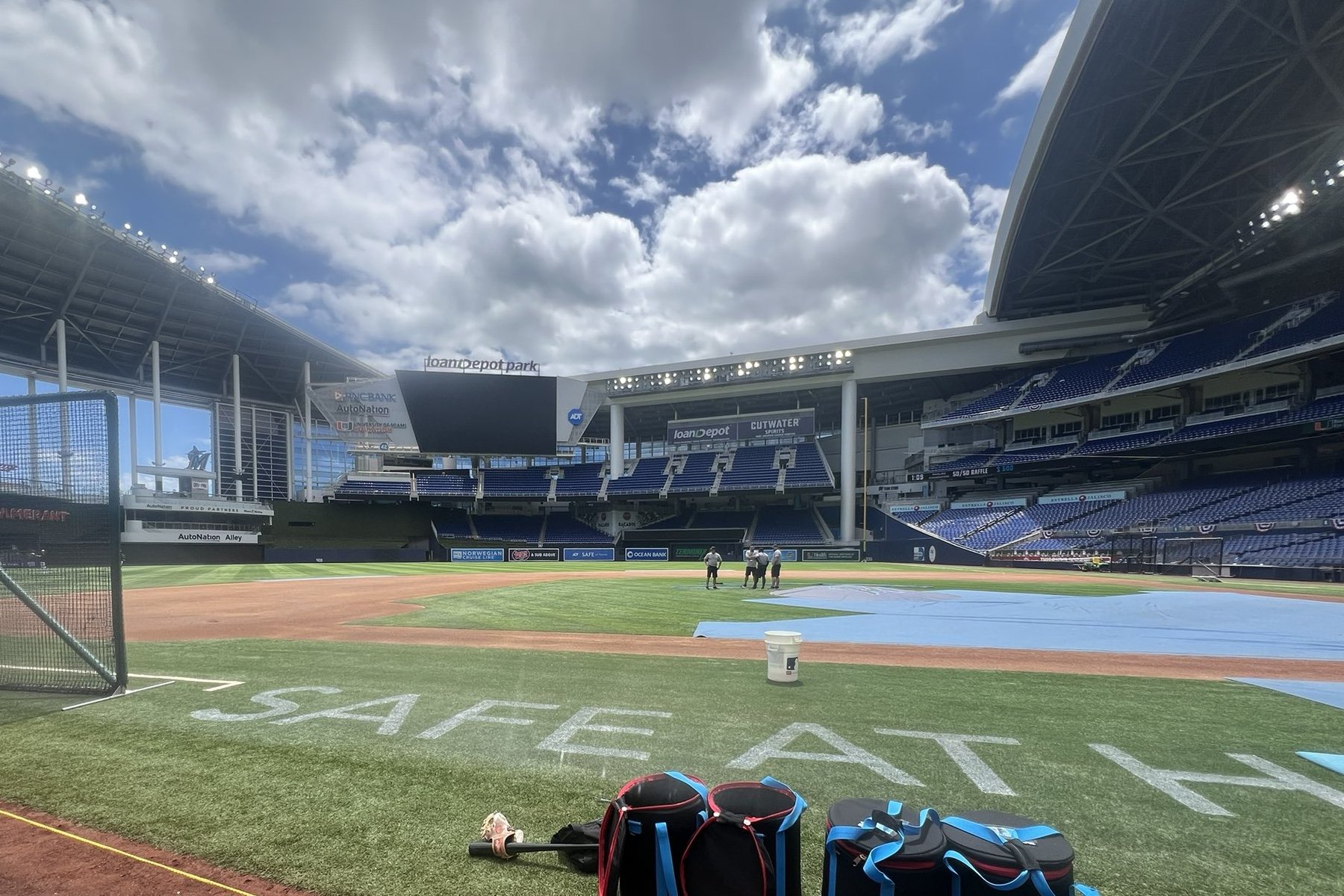 So many factors can influence how a ballpark plays, including altitude, temperature, wind, time of day, humidity and outfield dimensions. Through its first 13 seasons, loanDepot park's profile has been a moving target. On two separate occasions, the outfield walls were lowered and brought inward, changing what was initially a very pitcher-friendly environment into a somewhat neutral one. However, it still has its quirks and the Miami Marlins should be taking that into consideration when acquiring and developing players. The near-sea level altitude and humidity continue to impact ball flight at loanDepot park, making it the ninth-toughest MLB venue to hit home runs, according to Statcast Park Factors three-year rolling averages. The outfield dimensions are still relatively large. Combined with having plenty of foul ground to cover, that results in double and triples occurring at well above-average rates. These are the full year-by-year park factors for loanDepot dating back to 2012, with 100 representing league average. Anything above that favors hitters and anything below that favors pitchers. The Marlins operate with a lower payroll than the majority of MLB teams. They must be constantly searching for market inefficiencies, including ways to create a home-field advantage for themselves. What types of hitters to target The Marlins have tried several different offensive strategies during the loanDepot park era. For example, in what would be her final season as general manager, Kim Ng built the 2023 roster with a contact-orientated approach in mind. The lineup featured batting champ Luis Arraez, Jean Segura, Joey Wendle and Yuli Gurriel with some contributions from Xavier Edwards down the stretch. That team ranked fourth in the majors in batting average, but was below average in overall production. The Marlins made the playoffs largely due to their run prevention and clutch performance. In today's game where defensive positioning has become so advanced, hitting for power is very important. Across Major League Baseball, hitters average a 88.5 mph exit velocity and 36.5 HardHit%. Judging by the hitters who've had the most success at loanDepot, I believe the Marlins should use 90.5 mph exit velo and 43.5 HardHit% as their general thresholds when considering making acquisitions. Giancarlo Stanton, Adam Duvall, Jesús Sánchez, Jorge Soler, Jake Burger, Marcell Ozuna, Christian Yelich, Jorge Alfaro, Justin Bour...all of these names cleared those thresholds when playing in Miami. It is usually expensive to obtain MLB veterans with track records of hitting for power. The Marlins need to find these players at earlier stages of their careers through the amateur draft (Kemp Alderman), minor league trades (Deyvison De Los Santos) and international free agency. This is not to say the Marlins should limit themselves to that profile. There are other ways for players to facilitate run production. Slap hitters with an elite eye like Xavier Edwards can work at loanDepot. With his combination of speed, contact ability and plate discipline, he's been able to utilize the spacious outfield and foul territory to create chaos. What types of pitchers to target In recent years, the Marlins have gone with a non-four-seam fastball approach to pitching. This falls in line with a league-wide theme. MLB teams have found four-seam fastballs that do not reach a velo threshold of around 93 mph and an IVB (induced vertical break) of at least 17 inches have a high likelihood of resulting in damage. Pitchers with lower velos can counteract this by throwing more sinkers. The pitch's movement causes an increase in grounders and keep balls in the park even when they're hit hard. Certain teams such as the Boston Red Sox and San Francisco Giants have found themselves throwing more offspeed pitches than fastballs, which breaks a decades-long MLB tradition. I believe the Marlins could look to acquire more high IVB four-seam pitchers. If more and more teams revert back to an east-to-west style of pitching that optimizes sinkers and cutters to limit damage and uses offspeed stuff to rack up strikeouts, why not zag by pursuing north-to-south types? My reasoning behind this is that loanDepot park enables pitchers to get away with more mistakes on high heaters. Home runs hit down the lines at Yankee Stadium are often harmless flyouts in Miami. High IVB pitchers can operate with more confidence. MkJEeFBfWGw0TUFRPT1fQVZKU1YxWldYMUFBRDFaVFV3QUFDRlZXQUFOVVZsQUFBd05VQWxaWENBQlhWVlJU.mp4 Clearly, the Marlins have struggled with team defense. That is problematic when you play home games at a ballpark that allows a high rate of singles, doubles and triples. In 2024, there were 18 Marlins pitchers who surrendered a BABIP above .300 and 11 of them were non-four-seam fastball pitchers. Overall, I believe if the Marlins prioritize stuff over weak contact, it will better suit how loanDepot plays and complement the core of position players currently in place who have more potential with their bats than their gloves. Defensive shading and speed Baseball Savant provides team positioning graphics dating back to 2016. The first graphic shows the positioning of the 2024 Marlins, who were the worst-rated Marlins team during that period in terms of outs above average (OAA). The second graphic shows 2018, which was the Marlins' best season in terms of OAA. (Note: infield shifts were practically eliminated prior to the 2023 season due to MLB rule changes.) Team speed is imperative to playing successful defense at loanDepot park. Outfielders need to have the range to guard the gaps while also making plays in foul territory. However, even the best athletes lean on coaching and scouting reports so that they're shaded in the right direction. This past season, Marlins outfielders rarely adjusted their positioning from batter to batter. The results suggest the team should be investing more time and energy in these details. The impact of speed extends even further than defense. Athleticism and high IQ on the basepaths can add runs to any team's offense. The Marlins have finished top 15 in total bases stolen during four of the last five seasons. New pickoff rules and enlarged bases have incentivized base-stealing all around the league, and I believe the Marlins should use that to their advantage. Overall strategy To construct a team that fits your home ballpark as best as possible, it all begins with identifying the proper skill sets. In the case of loanDepot park, that calls for a combination of gap power, speed, whiff, more attention to defensive positioning and some elite sluggers capable of clearing the fences. In his second year running the Marlins front office, hopefully we see Peter Bendix make moves with those factors in mind.
 -
What kind of players are best suited to take advantage of the ballpark dimensions and overall conditions in Miami? So many factors can influence how a ballpark plays, including altitude, temperature, wind, time of day, humidity and outfield dimensions. Through its first 13 seasons, loanDepot park's profile has been a moving target. On two separate occasions, the outfield walls were lowered and brought inward, changing what was initially a very pitcher-friendly environment into a somewhat neutral one. However, it still has its quirks and the Miami Marlins should be taking that into consideration when acquiring and developing players. The near-sea level altitude and humidity continue to impact ball flight at loanDepot park, making it the ninth-toughest MLB venue to hit home runs, according to Statcast Park Factors three-year rolling averages. The outfield dimensions are still relatively large. Combined with having plenty of foul ground to cover, that results in double and triples occurring at well above-average rates. These are the full year-by-year park factors for loanDepot dating back to 2012, with 100 representing league average. Anything above that favors hitters and anything below that favors pitchers. The Marlins operate with a lower payroll than the majority of MLB teams. They must be constantly searching for market inefficiencies, including ways to create a home-field advantage for themselves. What types of hitters to target The Marlins have tried several different offensive strategies during the loanDepot park era. For example, in what would be her final season as general manager, Kim Ng built the 2023 roster with a contact-orientated approach in mind. The lineup featured batting champ Luis Arraez, Jean Segura, Joey Wendle and Yuli Gurriel with some contributions from Xavier Edwards down the stretch. That team ranked fourth in the majors in batting average, but was below average in overall production. The Marlins made the playoffs largely due to their run prevention and clutch performance. In today's game where defensive positioning has become so advanced, hitting for power is very important. Across Major League Baseball, hitters average a 88.5 mph exit velocity and 36.5 HardHit%. Judging by the hitters who've had the most success at loanDepot, I believe the Marlins should use 90.5 mph exit velo and 43.5 HardHit% as their general thresholds when considering making acquisitions. Giancarlo Stanton, Adam Duvall, Jesús Sánchez, Jorge Soler, Jake Burger, Marcell Ozuna, Christian Yelich, Jorge Alfaro, Justin Bour...all of these names cleared those thresholds when playing in Miami. It is usually expensive to obtain MLB veterans with track records of hitting for power. The Marlins need to find these players at earlier stages of their careers through the amateur draft (Kemp Alderman), minor league trades (Deyvison De Los Santos) and international free agency. This is not to say the Marlins should limit themselves to that profile. There are other ways for players to facilitate run production. Slap hitters with an elite eye like Xavier Edwards can work at loanDepot. With his combination of speed, contact ability and plate discipline, he's been able to utilize the spacious outfield and foul territory to create chaos. What types of pitchers to target In recent years, the Marlins have gone with a non-four-seam fastball approach to pitching. This falls in line with a league-wide theme. MLB teams have found four-seam fastballs that do not reach a velo threshold of around 93 mph and an IVB (induced vertical break) of at least 17 inches have a high likelihood of resulting in damage. Pitchers with lower velos can counteract this by throwing more sinkers. The pitch's movement causes an increase in grounders and keep balls in the park even when they're hit hard. Certain teams such as the Boston Red Sox and San Francisco Giants have found themselves throwing more offspeed pitches than fastballs, which breaks a decades-long MLB tradition. I believe the Marlins could look to acquire more high IVB four-seam pitchers. If more and more teams revert back to an east-to-west style of pitching that optimizes sinkers and cutters to limit damage and uses offspeed stuff to rack up strikeouts, why not zag by pursuing north-to-south types? My reasoning behind this is that loanDepot park enables pitchers to get away with more mistakes on high heaters. Home runs hit down the lines at Yankee Stadium are often harmless flyouts in Miami. High IVB pitchers can operate with more confidence. MkJEeFBfWGw0TUFRPT1fQVZKU1YxWldYMUFBRDFaVFV3QUFDRlZXQUFOVVZsQUFBd05VQWxaWENBQlhWVlJU.mp4 Clearly, the Marlins have struggled with team defense. That is problematic when you play home games at a ballpark that allows a high rate of singles, doubles and triples. In 2024, there were 18 Marlins pitchers who surrendered a BABIP above .300 and 11 of them were non-four-seam fastball pitchers. Overall, I believe if the Marlins prioritize stuff over weak contact, it will better suit how loanDepot plays and complement the core of position players currently in place who have more potential with their bats than their gloves. Defensive shading and speed Baseball Savant provides team positioning graphics dating back to 2016. The first graphic shows the positioning of the 2024 Marlins, who were the worst-rated Marlins team during that period in terms of outs above average (OAA). The second graphic shows 2018, which was the Marlins' best season in terms of OAA. (Note: infield shifts were practically eliminated prior to the 2023 season due to MLB rule changes.) Team speed is imperative to playing successful defense at loanDepot park. Outfielders need to have the range to guard the gaps while also making plays in foul territory. However, even the best athletes lean on coaching and scouting reports so that they're shaded in the right direction. This past season, Marlins outfielders rarely adjusted their positioning from batter to batter. The results suggest the team should be investing more time and energy in these details. The impact of speed extends even further than defense. Athleticism and high IQ on the basepaths can add runs to any team's offense. The Marlins have finished top 15 in total bases stolen during four of the last five seasons. New pickoff rules and enlarged bases have incentivized base-stealing all around the league, and I believe the Marlins should use that to their advantage. Overall strategy To construct a team that fits your home ballpark as best as possible, it all begins with identifying the proper skill sets. In the case of loanDepot park, that calls for a combination of gap power, speed, whiff, more attention to defensive positioning and some elite sluggers capable of clearing the fences. In his second year running the Marlins front office, hopefully we see Peter Bendix make moves with those factors in mind. View full article
-
I believe the Marlins are almost definitely going to use this upcoming spring training to tell if he is ready for MLB. He is also playing currently in the DWL, take that as you will. You see 1B/DH get this “Troy Johntson” treatment in all organizations. Think about Matt Mervis with the cubs, they took awhile to promote him. Luken Baker, spends most his time in AAA. Even a guy like Michael Busch couldn’t crack the dodgers 26 man consistently. What makes these guys stand out in my opinion is their ability to make contact and get on base. An example is Pete Alonso. Deyvison has probably more power in the tank than Alonso who is a 50 Homerun guy, but he is able to just hit enough and have a good enough eye at the plate to not have absorbent chase and whiff rates. Which seem to hold back guys like Mervis or Baker.
-
Can Deyvison De Los Santos overcome these approach concerns?
Sean McCormack posted an article in FOF Prospects
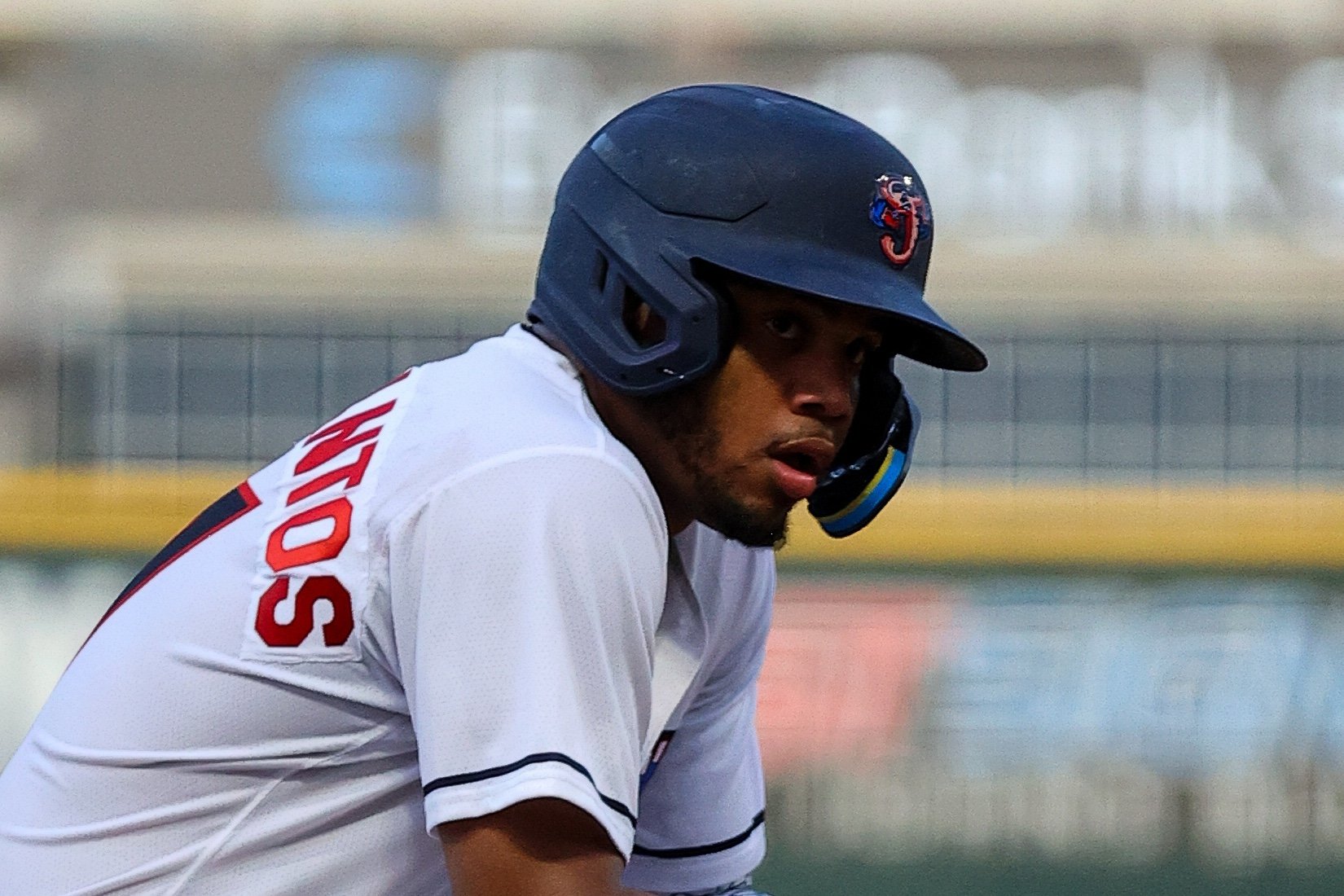 First, I would like to highlight how hard Deyvison De Los Santos hits the ball. He has posted a max exit velocity of 119 mph, putting him in the company of MLB's elite power hitters like Ohtani, Judge, and Stanton. This is especially impressive coming from a 21-year-old. De Los Santos has made a name for himself in the baseball world by leading all of Minor League Baseball in home runs. Many Marlins fans were understandably excited to add somebody like this to their minor league system. Although his potential is through the roof, there are some major concerns to highlight when it comes to plate approach. De Los Santos had 12 home runs with Triple-A Jacksonville after joining the Marlins org in late July, and 40 on the year between AA and AAA. It feels as if many people can be blinded by his immense power and miss out on a critical question: If he isn't hitting home runs, what can he do? De Los Santos does not walk. He had a 5% walk rate following the trade, which tied into his poor .284 OBP. His chase and whiff rates are even more concerning. This graphic shows De Los Santos' whiff rates per zone from August and September. The right-handed batter has a massive hole up and inside. He also swings and misses a ton out of the zone. This swing-happy approach has hurt his production greatly. In the final 30 games of the season, De Los Santos chased at a 51% rate. For context, league average is a 28% chase rate. When you combine bad whiff and chase rates, you get too many strikeouts. De Los Santos only had a 28% strikeout rate as a Marlins prospect. That seems manageable on the surface with the help of an above-league-average 57% out-of-zone contact rate. However, I believe if he were to play in the major leagues right now, he'd easily have strikeout rates over 35%. Teams scout opposing players more thoroughly in the majors and would know that they have no reason to throw him anything near the zone, the same way Javier Báez is treated. Because De Los Santos has been making hard contact in all quadrants of the zone, he has adopted an aggressive mindset, leading to quick plate appearances that keep his strikeout rate down. This may work in the minor leagues, but a jump in quality of stuff and scouting would certainly hinder his ability to maintain this. When De Los Santos isn't hitting the ball over the fence, he's usually putting it on the ground. This season, he posted a 53 GB% with Jacksonville. This is due to swinging at everything, even offspeed and breaking pitches that dip below the zone. As the season went on, De Los Santos saw fewer fastballs and more secondary stuff. He saw less and less pitches in the zone, but continued to try to hit them. It's not all doom and gloom, though. De Los Santos is only 21 years old and the Marlins can afford to be patient. They are clearly committed to the young slugger with hopes of developing his eye and patience. Skill and talent is not the issue—he has real 50 home run potential. If De Los Santos simply swung and missed at an above-league-average rate, he'd be the best power hitter the Marlins have had since Stanton. My fear is that if De Los Santos does not fix his approach, he has no value as a player outside of hitting home runs. He is going to be a 1B/DH, which gives him nearly no margin for error in terms of his development. De Los Santos is the epitome of a boom-or-bust prospect. His "boom" is really loud and his "bust" is strikingly low.
 -
The reigning minor league home run king and headline prospect in the A.J. Puk deal has some major red flags. First, I would like to highlight how hard Deyvison De Los Santos hits the ball. He has posted a max exit velocity of 119 mph, putting him in the company of MLB's elite power hitters like Ohtani, Judge, and Stanton. This is especially impressive coming from a 21-year-old. De Los Santos has made a name for himself in the baseball world by leading all of Minor League Baseball in home runs. Many Marlins fans were understandably excited to add somebody like this to their minor league system. Although his potential is through the roof, there are some major concerns to highlight when it comes to plate approach. De Los Santos had 12 home runs with Triple-A Jacksonville after joining the Marlins org in late July, and 40 on the year between AA and AAA. It feels as if many people can be blinded by his immense power and miss out on a critical question: If he isn't hitting home runs, what can he do? De Los Santos does not walk. He had a 5% walk rate following the trade, which tied into his poor .284 OBP. His chase and whiff rates are even more concerning. This graphic shows De Los Santos' whiff rates per zone from August and September. The right-handed batter has a massive hole up and inside. He also swings and misses a ton out of the zone. This swing-happy approach has hurt his production greatly. In the final 30 games of the season, De Los Santos chased at a 51% rate. For context, league average is a 28% chase rate. When you combine bad whiff and chase rates, you get too many strikeouts. De Los Santos only had a 28% strikeout rate as a Marlins prospect. That seems manageable on the surface with the help of an above-league-average 57% out-of-zone contact rate. However, I believe if he were to play in the major leagues right now, he'd easily have strikeout rates over 35%. Teams scout opposing players more thoroughly in the majors and would know that they have no reason to throw him anything near the zone, the same way Javier Báez is treated. Because De Los Santos has been making hard contact in all quadrants of the zone, he has adopted an aggressive mindset, leading to quick plate appearances that keep his strikeout rate down. This may work in the minor leagues, but a jump in quality of stuff and scouting would certainly hinder his ability to maintain this. When De Los Santos isn't hitting the ball over the fence, he's usually putting it on the ground. This season, he posted a 53 GB% with Jacksonville. This is due to swinging at everything, even offspeed and breaking pitches that dip below the zone. As the season went on, De Los Santos saw fewer fastballs and more secondary stuff. He saw less and less pitches in the zone, but continued to try to hit them. It's not all doom and gloom, though. De Los Santos is only 21 years old and the Marlins can afford to be patient. They are clearly committed to the young slugger with hopes of developing his eye and patience. Skill and talent is not the issue—he has real 50 home run potential. If De Los Santos simply swung and missed at an above-league-average rate, he'd be the best power hitter the Marlins have had since Stanton. My fear is that if De Los Santos does not fix his approach, he has no value as a player outside of hitting home runs. He is going to be a 1B/DH, which gives him nearly no margin for error in terms of his development. De Los Santos is the epitome of a boom-or-bust prospect. His "boom" is really loud and his "bust" is strikingly low. View full article
-
Thomas WhiteNoble MeyerRobby SnellingCarter JohnsonDeyvison De Los SantosConnor NorbyAgustín RamírezAdam MazurJavier SanojaDillon HeadPJ MorlandoJared SernaGraham PauleyKemp AldermanAndrés ValorLuis CovaJakob MarseeJoe MackEliazar DishmeyVictor Mesa Jr.Karson MilbrandtWilfredo LaraDax FultonJacob MillerJuan De La CruzAndrew PintarAiden MayJun-Seok ShimGrant ShepardsonJosh Ekness
- 16 replies
-
- 1
-
-
- thomas white
- noble meyer
- (and 8 more)
-
Analyzing Marlins waiver claims John McMillon and Brett de Geus
Sean McCormack posted an article in Marlins
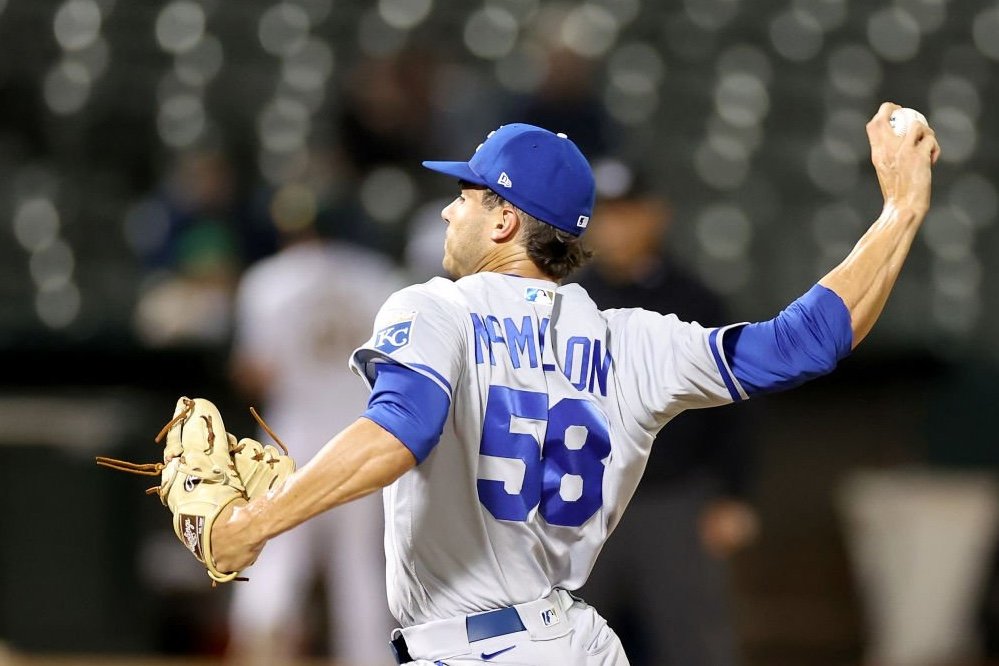 After being designated for assignment by their previous teams, John McMillon and Brett de Geus have been claimed by the Marlins in recent days. Both have been optioned to Triple-A Jacksonville. Although we aren't going to see them in the big leagues immediately, they have the potential to make a positive impact in the near future as pieces of this new-look bullpen. I am going to break down why the Marlins may have been interested in these players, or what I believe they may look to tweak. McMillon broke out onto the scene last year, striking out every batter in sight and making his MLB debut with the Royals. During his short spurt in the big leagues, he posted impressive numbers. McMillon was ranked 17th among Royals prospects coming into the season, according to MLB Pipeline. Why would the Royals get rid of a reliever who was viewed so highly and also has all three of his minor league options left? The answer is he has struggled commanding the baseball in 2024 and has had an unusual velocity decrease, although his slider is still as elite as ever. McMillon is the classic high-velocity bullpen arm. Even with a decrease in both his pitches, he is throwing his fastball at 95 mph this season in AAA and his slider at 84 mph. Last season between AAA and MLB, he threw his fastball at 99 mph and his slider at 86 mph. This is unusual, but potentially fixable. His velocity has gradually increased as his arm slot and release point fall back in line with his career norms. A major change McMillon has made in the past two months is upping his slider usage. To highlight just how good his slider is, last season in his brief MLB stint, he got 75% whiff on it. Relying on his slider may be the way to go especially with shaky control and a fastball that even when in the high 90s doesn't miss many bats. This season in the minor leagues, McMillon has thrown his fastball for a ball 47% of the time. This is extremely poor, and as a result, many hitters may be sitting on his slider. McMillon's fastball has been hit hard in all parts of the strike zone. He has a poor VAA along with 15 inches of IVB, which grades out as a below-average fastball even with elite velo on it. The Marlins could look to take a page out of the Red Sox playbook and continue to lower usage of a poorly graded fastball and up the slider usage even more, or develop a sinker that would play more efficiently off of his slider, allowing him to attack righties inside. His fastball comes in with -4.9 VAA, which would be 12th percentile in MLB—this means he should be attacking players higher in the zone with the fastball. He does this, but it is still being hit hard. Maybe hitters are able to pick up the difference between a high fastball and a low slider easily so they can sit on a pitch, or it could be the shaky control. Overall, the Marlins claimed a guy in McMillon who with some tweaks, may have the upside to be a high-leverage arm. Now Brett de Geus is the opposite type of pitcher. A journeyman right-hander who was most recently with the Mariners org, de Geus brings an unorthodox arm movement and a unique pitch mix. Can he find a home here in Miami? de Geus does a few things very well: he generates a lot of ground balls and limits hard contact. He has been hindered by poor control and a hittable sinker. Recently, he has increased his cutter usage, which has been a very efficient pitch for him. A harder knuckle curve and a new splitter may be pluses to his arsenal. In 2024, de Geus has seen an increase of velo on all of his pitches, helping him have a bit more whiff. This pie graph shows the pitch usage for de Geus this season in AAA. In addition to his sinker and cutter, his knuckle curve also generates soft contact on the ground. I suspect we see de Geus have another increase in cutter usage, surpassing his sinker, which is something many teams have started to do over the past couple of years because the cutter offers the upside of being able to get players to swing and miss. de Geus is much more of an east-to-west pitcher than north-to-south. If he can locate his cutter in to lefties as he does and away from righties and vice versa with his sinker while mixing his offspeed pitches to keep batters off balance, he should be able to stop loud contact. Leaving the ball over the plate normally hurts anyone, but especially De Geus. The Marlins must find a way to get the 26-year-old to command the ball. This heat map shows in 2024 where the damage against him has been. Balls in the middle of the plate or higher get hit hard. The Marlins added a project who has had an uptick in velo, a new pitch, and the ability to limit hard contact and get balls on the ground with a funky release and barely one year of MLB service time under his belt. I believe there is an up arrow next to Brett de Geus.
 -
Why the two newest Marlins arms may have future roles in this bullpen. After being designated for assignment by their previous teams, John McMillon and Brett de Geus have been claimed by the Marlins in recent days. Both have been optioned to Triple-A Jacksonville. Although we aren't going to see them in the big leagues immediately, they have the potential to make a positive impact in the near future as pieces of this new-look bullpen. I am going to break down why the Marlins may have been interested in these players, or what I believe they may look to tweak. McMillon broke out onto the scene last year, striking out every batter in sight and making his MLB debut with the Royals. During his short spurt in the big leagues, he posted impressive numbers. McMillon was ranked 17th among Royals prospects coming into the season, according to MLB Pipeline. Why would the Royals get rid of a reliever who was viewed so highly and also has all three of his minor league options left? The answer is he has struggled commanding the baseball in 2024 and has had an unusual velocity decrease, although his slider is still as elite as ever. McMillon is the classic high-velocity bullpen arm. Even with a decrease in both his pitches, he is throwing his fastball at 95 mph this season in AAA and his slider at 84 mph. Last season between AAA and MLB, he threw his fastball at 99 mph and his slider at 86 mph. This is unusual, but potentially fixable. His velocity has gradually increased as his arm slot and release point fall back in line with his career norms. A major change McMillon has made in the past two months is upping his slider usage. To highlight just how good his slider is, last season in his brief MLB stint, he got 75% whiff on it. Relying on his slider may be the way to go especially with shaky control and a fastball that even when in the high 90s doesn't miss many bats. This season in the minor leagues, McMillon has thrown his fastball for a ball 47% of the time. This is extremely poor, and as a result, many hitters may be sitting on his slider. McMillon's fastball has been hit hard in all parts of the strike zone. He has a poor VAA along with 15 inches of IVB, which grades out as a below-average fastball even with elite velo on it. The Marlins could look to take a page out of the Red Sox playbook and continue to lower usage of a poorly graded fastball and up the slider usage even more, or develop a sinker that would play more efficiently off of his slider, allowing him to attack righties inside. His fastball comes in with -4.9 VAA, which would be 12th percentile in MLB—this means he should be attacking players higher in the zone with the fastball. He does this, but it is still being hit hard. Maybe hitters are able to pick up the difference between a high fastball and a low slider easily so they can sit on a pitch, or it could be the shaky control. Overall, the Marlins claimed a guy in McMillon who with some tweaks, may have the upside to be a high-leverage arm. Now Brett de Geus is the opposite type of pitcher. A journeyman right-hander who was most recently with the Mariners org, de Geus brings an unorthodox arm movement and a unique pitch mix. Can he find a home here in Miami? de Geus does a few things very well: he generates a lot of ground balls and limits hard contact. He has been hindered by poor control and a hittable sinker. Recently, he has increased his cutter usage, which has been a very efficient pitch for him. A harder knuckle curve and a new splitter may be pluses to his arsenal. In 2024, de Geus has seen an increase of velo on all of his pitches, helping him have a bit more whiff. This pie graph shows the pitch usage for de Geus this season in AAA. In addition to his sinker and cutter, his knuckle curve also generates soft contact on the ground. I suspect we see de Geus have another increase in cutter usage, surpassing his sinker, which is something many teams have started to do over the past couple of years because the cutter offers the upside of being able to get players to swing and miss. de Geus is much more of an east-to-west pitcher than north-to-south. If he can locate his cutter in to lefties as he does and away from righties and vice versa with his sinker while mixing his offspeed pitches to keep batters off balance, he should be able to stop loud contact. Leaving the ball over the plate normally hurts anyone, but especially De Geus. The Marlins must find a way to get the 26-year-old to command the ball. This heat map shows in 2024 where the damage against him has been. Balls in the middle of the plate or higher get hit hard. The Marlins added a project who has had an uptick in velo, a new pitch, and the ability to limit hard contact and get balls on the ground with a funky release and barely one year of MLB service time under his belt. I believe there is an up arrow next to Brett de Geus. View full article
-
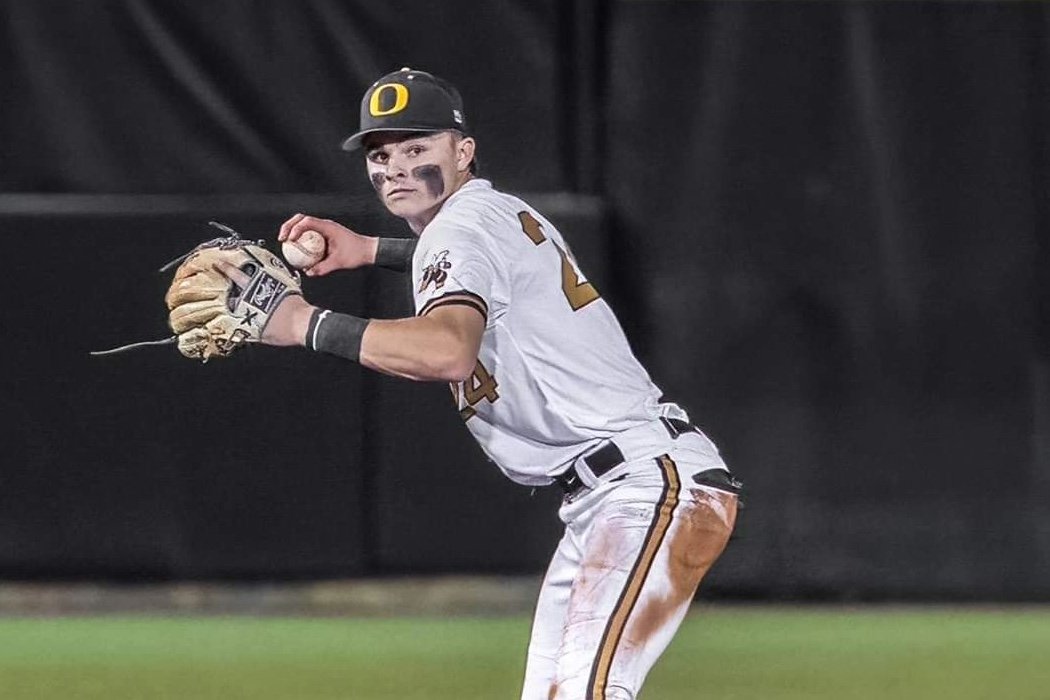 Peter Bendix and Frankie Piliere took an unorthodox approach to their first draft together as Miami Marlins executives. While there were some trends from their work with past teams, like taking an underslot pick first round in PJ Morlando and a high school shortstop second round, the Marlins went heavy on college bats overall. This most likely was to fill a lacking farm system in terms of bats. The types of bats the Marlins seemed to target were approach and plate discipline over raw power in most cases. They were able to sprinkle in some nice arms. Another trend was taking college bats that lack defensive versatility. Perhaps the Marlins just want to get bats into the system and figure out the rest later, which is very interesting considering this is not what Bendix did in his time with the Rays, usually preferring athletes and trusting their development. Only time will tell what works, but here are the Marlins picks that I believe could prove to be especially good values long term. Carter Johnson My favorite pick of this class was by far Carter Johnson. Carter was a guy that the Marlins were closely linked to most of the draft cycle and had apparent consideration in the first round. The Marlins were able to obtain Johnson in the second round for an overslot deal of $2.8 million. 24e4dfdb-8cc1-46c2-b28f-c14c736d2474.mp4 Johnson was my second-ranked high school shortstop in the class. He brings a high-level plate approach for a high school player and draws comps to Gunnar Henderson, who like Carter, was also an Alabama high school shortstop taken for an overslot deal in the second round. All teams love sweet lefty swing with the ability to stick at short, so it’s no surprise Johnson was so expensive to sign. He's only 18 years old. Nick Brink I believe the Marlins got a steal here in the seventh round in Nick Brink, who was signed out of University of Portland for a underslot deal of $195k. Nick was U-Portland's ace this past season where he put up an impressive 3.61 ERA in 99 innings. Brink shows impressive control and can touch up to 95 on a lively fastball. He also throws a traditional slider, changeup and curveball. I am not able to get much data on the pitches or any biomechanical metrics, but it appears Brink is maximizing the extension he gets down the mound in order to make his fastball and slider play up. His ability to command all four of his pitches and his motor—which is raved about—will allow him to move up to the minors rapidly. I also believe there is room for an uptick in velo for Brink through increased arm action and player development, which will improve his whole arsenal. Fenwick Trimble The Marlins took their first high school arm of the draft in the fifth round. Grant Shepardson, who is a 6’1 "righty from Colorado, throws a high-spin fastball and slider. The Marlins had to overslot here in order to sign Shepardson—he got $897.5k instead of the slot value of $427k. A lot to dream on physically and with the Marlins' great track record of developing arms, there is plenty to be excited about. Lack of control is the concern surrounding Grant at this moment, but there is reason to believe the Marlins will be able to help him as they have done with so many other arms. Overall, a nice get for the Fish as they look to create a never-ending supply of arms. Dub Gleed The final name I will mention is ninth-rounder Dub Gleed. The third baseman who played college baseball at University of California, Irvine, had a breakout 2024. He posted an OPS over 1.000 and had a lot more pop in his bat than in prior years. Gleed has shown the ability to once again not chase or strike out much. He has good contact rates and his exit velos have gone up this season. The Marlins are probably banking on Gleed continuing to improve in his power as that would mix very well with his already good plate approach and contact rates. Gleed's downside is his speed, and if the power doesn’t improve, he lacks defensive versatility to play other positions. But betting on a player with good plate skills and a nice frame is a solid pick in the ninth round and I look forward to seeing what Gleed does in the minors.
-
- 2
-
-
- carter johnson
- nick brink
- (and 3 more)
-
Detailing why these new Marlins prospects have the potential to outperform their draft position. Peter Bendix and Frankie Piliere took an unorthodox approach to their first draft together as Miami Marlins executives. While there were some trends from their work with past teams, like taking an underslot pick first round in PJ Morlando and a high school shortstop second round, the Marlins went heavy on college bats overall. This most likely was to fill a lacking farm system in terms of bats. The types of bats the Marlins seemed to target were approach and plate discipline over raw power in most cases. They were able to sprinkle in some nice arms. Another trend was taking college bats that lack defensive versatility. Perhaps the Marlins just want to get bats into the system and figure out the rest later, which is very interesting considering this is not what Bendix did in his time with the Rays, usually preferring athletes and trusting their development. Only time will tell what works, but here are the Marlins picks that I believe could prove to be especially good values long term. Carter Johnson My favorite pick of this class was by far Carter Johnson. Carter was a guy that the Marlins were closely linked to most of the draft cycle and had apparent consideration in the first round. The Marlins were able to obtain Johnson in the second round for an overslot deal of $2.8 million. 24e4dfdb-8cc1-46c2-b28f-c14c736d2474.mp4 Johnson was my second-ranked high school shortstop in the class. He brings a high-level plate approach for a high school player and draws comps to Gunnar Henderson, who like Carter, was also an Alabama high school shortstop taken for an overslot deal in the second round. All teams love sweet lefty swing with the ability to stick at short, so it’s no surprise Johnson was so expensive to sign. He's only 18 years old. Nick Brink I believe the Marlins got a steal here in the seventh round in Nick Brink, who was signed out of University of Portland for a underslot deal of $195k. Nick was U-Portland's ace this past season where he put up an impressive 3.61 ERA in 99 innings. Brink shows impressive control and can touch up to 95 on a lively fastball. He also throws a traditional slider, changeup and curveball. I am not able to get much data on the pitches or any biomechanical metrics, but it appears Brink is maximizing the extension he gets down the mound in order to make his fastball and slider play up. His ability to command all four of his pitches and his motor—which is raved about—will allow him to move up to the minors rapidly. I also believe there is room for an uptick in velo for Brink through increased arm action and player development, which will improve his whole arsenal. Fenwick Trimble The Marlins took their first high school arm of the draft in the fifth round. Grant Shepardson, who is a 6’1 "righty from Colorado, throws a high-spin fastball and slider. The Marlins had to overslot here in order to sign Shepardson—he got $897.5k instead of the slot value of $427k. A lot to dream on physically and with the Marlins' great track record of developing arms, there is plenty to be excited about. Lack of control is the concern surrounding Grant at this moment, but there is reason to believe the Marlins will be able to help him as they have done with so many other arms. Overall, a nice get for the Fish as they look to create a never-ending supply of arms. Dub Gleed The final name I will mention is ninth-rounder Dub Gleed. The third baseman who played college baseball at University of California, Irvine, had a breakout 2024. He posted an OPS over 1.000 and had a lot more pop in his bat than in prior years. Gleed has shown the ability to once again not chase or strike out much. He has good contact rates and his exit velos have gone up this season. The Marlins are probably banking on Gleed continuing to improve in his power as that would mix very well with his already good plate approach and contact rates. Gleed's downside is his speed, and if the power doesn’t improve, he lacks defensive versatility to play other positions. But betting on a player with good plate skills and a nice frame is a solid pick in the ninth round and I look forward to seeing what Gleed does in the minors. View full article
-
Predicting the first 39 selections of the draft, from the first round through Competitive Balance Round A. The 2024 MLB Draft gets underway this Sunday. As previously written here, I have the Marlins selecting Oklahoma State outfielder Carson Benge with the 16th overall pick, which would be a great selection. Benge has flown up the draft boards moving into his redshirt sophomore year of college. Benge missed his freshman year of college after undergoing Tommy John surgery and since then has focused on hitting. He is a good outfield defender with a solid arm. He projects to be a corner outfielder moving forward, but can fill in at center field if needed. Where Benge pops is in his bat. Benge this last season had 18 home runs and posted a .335/.444/.665 slash line, giving him a 1.109 OPS on the season. He nearly walked as much as he struck out with 51 K's and 49 walks. His under-the-hood data is even more promising than his counting stats. He posted elite max exit velocities in the top 1% of college baseball. He combines this wicked power with a great plate approach, which is something Peter Bendix and staff covets in players. With a great zone contact rate of 84% and low chase rates, this is a recipe that should continue leading him to success in the pros. My one knock on Benge would be that there are many moving components to his swing. As competition gets tougher, he may want to ease out his swing so higher velos don't catch up on him. Even with that being said, scouts have Benge listed with a 55-hit tool, which is above average for the big leagues. See below for my full mock draft: Color 39 Picks GOOD 14 Good 35% FINE 12 Fine 30% LOVE 7 Love 18% DISLIKE 6 Dislike 15% Team Pick Player Position C/HS Guardians 1 T.Bazzana 2B/SS College Reds 2 C.Condon OF College Rockies 3 J.Caglianone 1B/OF College Athletics 4 J.Wetherholt 2B College White Sox 5 K.Griffin OF HS Royals 6 H.Smith LHP College Cardinals 7 C.Burns RHP College Angels 8 B.Montgomery OF College Pirates 9 N.Kurtz 1B College Nationals 10 B.Rainer SS HS Tigers 11 J.Tibbs OF College Red Sox 12 T.Yesavage RHP College Giants 13 J.Cijntje RHP/LHP College Cubs 14 C.Moore INF College Mariners 15 C.Smith 3B College Marlins 16 C.Benge OF College Brewers 17 M.Moore C College Rays 18 V.Honeycutt OF College Mets 19 C.Caminiti LHP HS Blue Jays 20 B.Brecht RHP College Twins 21 W.Schmidt RHP HS Orioles 22 R.Waldschmidt OF College Dodgers 23 S.King ULT College Braves 24 R.Sloan RHP HS Padres 25 T.Gillen SS HS Yankees 26 K.Mayfield LHP HS Phillies 27 T.White 3B College Astros 28 D.Jordan OF College D-backs 29 G.O'Ferrall SS College Rangers 30 B.Doughty RHP HS PPIP D-backs 31 PJ.Morlando C HS Orioles 32 R.Johnson RHP College FAPP Twins 33 W.Janek C College Comp A Brewers 34 C.Johnson SS HS D-backs 35 B.Amick 3B College Guardians 36 L.Holman RHP College Pirates 37 K.Lindsey SS HS Rockies 38 B.Hess RHP College Royals 39 K.Culpepper SS College View full article
-
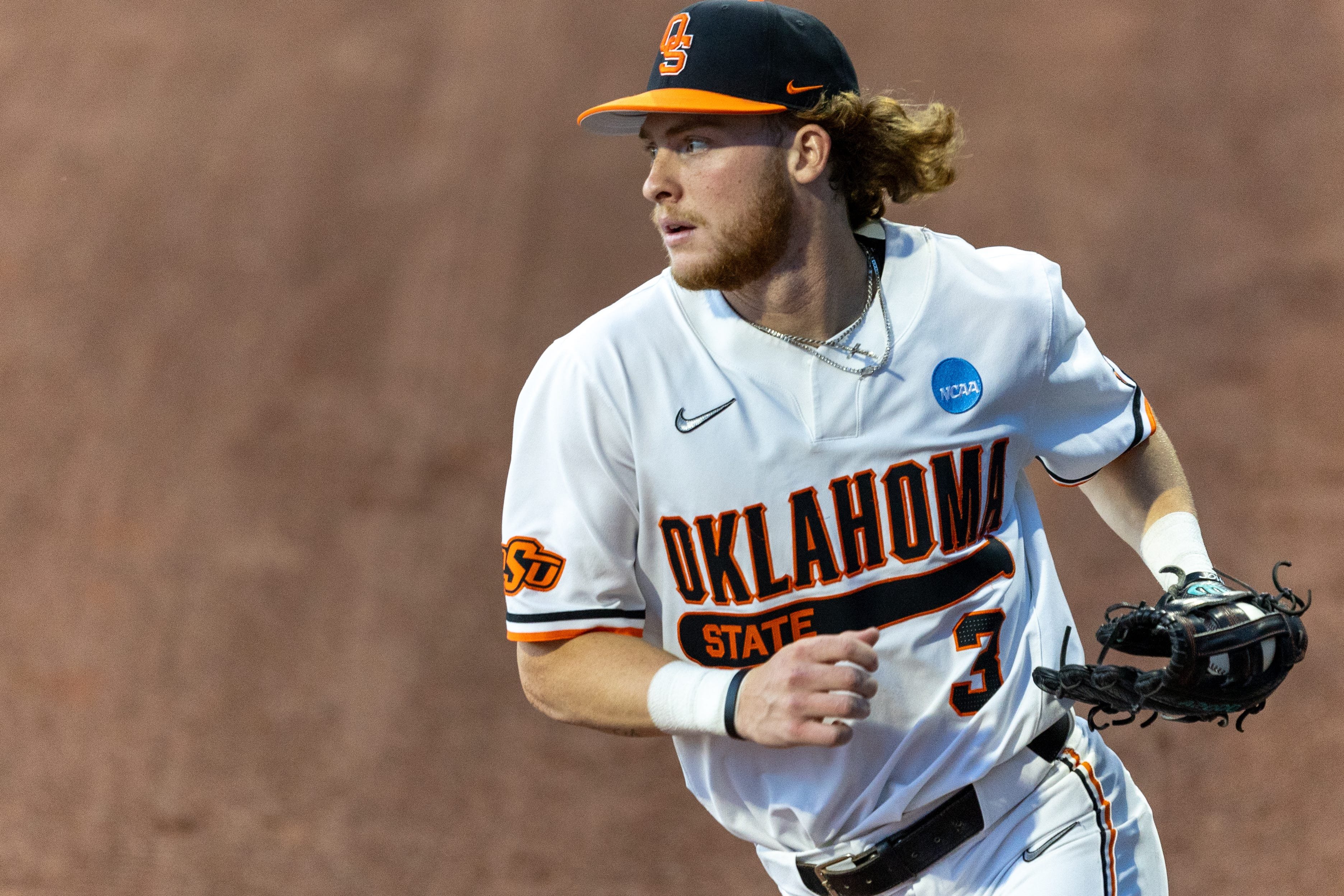 The 2024 MLB Draft gets underway this Sunday. As previously written here, I have the Marlins selecting Oklahoma State outfielder Carson Benge with the 16th overall pick, which would be a great selection. Benge has flown up the draft boards moving into his redshirt sophomore year of college. Benge missed his freshman year of college after undergoing Tommy John surgery and since then has focused on hitting. He is a good outfield defender with a solid arm. He projects to be a corner outfielder moving forward, but can fill in at center field if needed. Where Benge pops is in his bat. Benge this last season had 18 home runs and posted a .335/.444/.665 slash line, giving him a 1.109 OPS on the season. He nearly walked as much as he struck out with 51 K's and 49 walks. His under-the-hood data is even more promising than his counting stats. He posted elite max exit velocities in the top 1% of college baseball. He combines this wicked power with a great plate approach, which is something Peter Bendix and staff covets in players. With a great zone contact rate of 84% and low chase rates, this is a recipe that should continue leading him to success in the pros. My one knock on Benge would be that there are many moving components to his swing. As competition gets tougher, he may want to ease out his swing so higher velos don't catch up on him. Even with that being said, scouts have Benge listed with a 55-hit tool, which is above average for the big leagues. See below for my full mock draft: Color 39 Picks GOOD 14 Good 35% FINE 12 Fine 30% LOVE 7 Love 18% DISLIKE 6 Dislike 15% Team Pick Player Position C/HS Guardians 1 T.Bazzana 2B/SS College Reds 2 C.Condon OF College Rockies 3 J.Caglianone 1B/OF College Athletics 4 J.Wetherholt 2B College White Sox 5 K.Griffin OF HS Royals 6 H.Smith LHP College Cardinals 7 C.Burns RHP College Angels 8 B.Montgomery OF College Pirates 9 N.Kurtz 1B College Nationals 10 B.Rainer SS HS Tigers 11 J.Tibbs OF College Red Sox 12 T.Yesavage RHP College Giants 13 J.Cijntje RHP/LHP College Cubs 14 C.Moore INF College Mariners 15 C.Smith 3B College Marlins 16 C.Benge OF College Brewers 17 M.Moore C College Rays 18 V.Honeycutt OF College Mets 19 C.Caminiti LHP HS Blue Jays 20 B.Brecht RHP College Twins 21 W.Schmidt RHP HS Orioles 22 R.Waldschmidt OF College Dodgers 23 S.King ULT College Braves 24 R.Sloan RHP HS Padres 25 T.Gillen SS HS Yankees 26 K.Mayfield LHP HS Phillies 27 T.White 3B College Astros 28 D.Jordan OF College D-backs 29 G.O'Ferrall SS College Rangers 30 B.Doughty RHP HS PPIP D-backs 31 PJ.Morlando C HS Orioles 32 R.Johnson RHP College FAPP Twins 33 W.Janek C College Comp A Brewers 34 C.Johnson SS HS D-backs 35 B.Amick 3B College Guardians 36 L.Holman RHP College Pirates 37 K.Lindsey SS HS Rockies 38 B.Hess RHP College Royals 39 K.Culpepper SS College
 -
Predicting the Marlins first 5 rounds of the 2024 MLB draft With the 2024 MLB draft only two weeks away, it's time to dive into the possibilities ahead of the Marlins. This will be Peter Bendix and the new staff's first draft together. I went through the first five selections the Marlins have in the draft, Picks: 16, 56, 70 (comp B), 92, 122, and 155. Using the past draft history of Peter Bendix and the Rays, while mixing new Amauter Scouting Director, Frankie Piliere who comes from the Mariners. I have made what I believe are likely outcomes for this draft. The Marlins come in with the 16th most slot money, at 10,438,500 million to use. (Future value will be placed next to each name. EX: Carson Benge FV55) Pick 16 Round 1 Carson Benge, FV55, (21), Left handed hitter, OF, Oklahoma State University At pick 16 I foresee the Marlins targeting a college bat to stay at the slot value of the pick which is $4,704,700 million. Carson Benge would be a great selection. The Rays have a history of selecting College bats in the 1st round to potentially under-slot at the pick and use the leftover slot money on other later picks. Carson has flown up the draft boards moving into his redshirt sophomore year of college. Benge missed his freshman year of college after he suffered Tommy John surgery and since then has focused on hitting. He is a good outfield defender with a solid arm, he projects to be a corner outfielder moving forward but can fill in at center field if needed. Where Benge pops is in his bat. Carson this last season had 18 home runs and posted a .335/.444/.665 slash line, giving him a 1.109 OPS on the season. He nearly walked as much as he struck out with 51 Ks and 49 walks. His under-the-hood data is even more promising than his counting stats. He posted elite max exit velos in the top 1% of College Baseball. He combines this wicked power with a great plate approach which is something Bendix and staff covets in players. With a great zone contact % of 84% and with low chase rates, this is a recipe that should continue into the pros and lead him to success. My one knock on Benge would be that there are many moving components to his swing. And as competition gets tougher he may want to ease out his swing so higher velos don't catch up on him. Even with that being said, scouts have Benge listed with a 55-hit tool which is above average for the big leagues. Pick 56 Round 2 JD Dix, FV50, (18), Switch hitter, SS, Whitefish Bay HS WI Peter Bendix's time with the Rays shows us in the time he was appointed GM, they were very consistent with drafting a high school shortstop within the first two rounds. Most recently Carson Williams and Adrian Santana. The Mariners had also shown to draft many highschool shortstops. Most recently drafted 3 in the past 2 seasons. Here at pick 56, I have the Marlins selecting JD Dix. Most likely going to be a slot value pick coming in at $1,603,400 million. JD Dix may have to be slightly overslot to get him away from his Wake Forest Commitment, but for this exercise, we will use slot value due to him not being ranked as high on MLB.com as other high school shortstops that may be available at this pick. JD is ranked 75th in the class according to MLB.com. I believe JD may be overlooked in this year's crop of high school shortstops. He is from a smaller state in terms of baseball production and is coming off a shoulder injury which kept him out of many showcases. Dix projects to have the glove and arm to stick at shortstop and shows the ability to hit the ball to all fields. Scouts have Dix listed with a 55-hit tool and 45-power as an 18-year-old shortstop. There are many reasons to believe Dix will develop more power as he matures and fills out his 6'2 180-pound frame. A lot to be excited about when you see a smooth swinging switch hitter who can stick at shortstop. Pick 70 Comp B Sean Keys, FV40, (21), Left handed hitter, 1B, Bucknell Maybe a bit of a surprising pick to many but it shouldn't be. When you are a low budget team moving into an apparent rebuild, you want to draft high probability big leaguers. Sean Keys may be that. Keys is being looked at as a "data darling". He hits for power, doesn't swing and miss, and makes great contact. Now yes, Bucknell isn't known for producing MLB talent. In fact the last time a guy was drafted from Bucknell was in the 1999 draft. And Keys looks to only be the third player in their history drafted in the top 10 rounds. But do not overlook Keys. Some scouts worried about how he would compete against tougher competition, but when he played in the Cape Cod League he put up great numbers against high level college players. In 2023 he had a 1.191 OPS in the CCBL. This season at Bucknell he put up a .405/.535/.798 slashline. Absolutely elite. This pick would be very reminiscent of Kyle Manzardo which the Rays selected in the 2022 draft and turned out to be a top 100 prospect by 2023. Keys major hole is his defense, but once again the Marlins need high probability big leaguers and his bat gives that. Keys would be an under slot pick here. I predict we give him $800,800 thousand which would be equivalent to the slot bonus of pick 92. The reason I didn't mock Keys at 92 is that I believe teams are going to target him earlier than predicted. The slot for this pick is $1,139,100. Pick 92 Round 3 Blake Larson, FV45, (18), Left handed pitcher, IMG Academy FL HS It's no secret the Marlins have been great at developing starting pitching, and in a extremely deep high school pitching draft, I envision the Marlins hitting that honey well again. Most likely having to overslot this pick I predict Larson gets $1,139,000 which is what pick 70 is. The reason I have Larson going here instead of pick 70 and just doing a normal slot pick, is due to how deep the draft is for high school pitching and also how highly I think of Sean Keys. Larson projects to be one of the more pro ready lefties in the high school circuit. Scouts have him with a 55 grade Fastball that touches 96 mph and sits 93. He has a 55 grade slider and 50 grade changeup. His command in reportedly spotty but showed better flashes as the weather warmed. His slider has extreme spin on it and looks more like a sweeper/slurve type of pitch. The Marlins have already seen how well Thomas White our last year 1st round Lefty has done and could maybe match that with Larson here. Pick 122 Round 4 Zach Ehrhard, FV40, 21, Right handed hitter, OF, Oklahoma State University College teammates with Carson Benge, Ehrhard broke out in a big way this spring. Ehrhard who turned down being drafted by the Red Sox in round 13 of the 2021 draft seems to have made a good choice. A big season for Ehrhard had him posting a 1.085 OPS this season. Zach shared the outfield with Benge but is projected to be a better defender. He has 60 grade speed and is a solid base stealer. What impresses me the most about Ehrhard is how he walked 22 times more than he struck out this season. This shows an elite approach that will hopefully continue into his pro career. Scouts had been lower on him due to his lack of power and production in his first two seasons at OSU. But in his Junior year, he tapped into some power and impressed. I have the Marlins going at slot value here of $589,000 thousand to sign Zach. Pick 155 Round 5 Nate Dohm, FV40, 21, Right handed pitcher, Mississippi State With the last selection of this mock, I have the Marlins taking their first College arm. I believe Nate is a pitcher the Marlins will have their eye on for many reasons. Other than his 6'4 frame and mid 90s fastball that has explosive ride and multiple high spin offspeed pitches which scouts love, Dohm fits the model of pitcher the Rays have Id in the past. Which is college arms that may have had some injury problems, which makes them cheaper or undervalued. But they are filled with talent and throw a lot of strikes. Combine all that with the success the Mariners have had in later selections of the draft taking undervalued college arms, Dohm seems like a no brainer to me. Dohm has struggled with arm injuries in the past which is why he is falling lower then what his data and stats may suggest. Only pitching 112 innings in 4 years in college, Nate Dohm has still impressed. Although Dohm made no starts this season, he has a history of being a starter. He threw 29 innings this season and put up a 1.23 ERA. Dohm struck out 37 and only walked 4. He allowed 0 home runs this season. To me Nate seems like a pitcher that Bendix and his staff will love. I predict the Marlins going at under slot value for this pick. Coming at, $331,300 thousand which is 6th round value. The Original value for this pick is $427,000. thousand. This leaves the Marlins total slot money used at 9,168,300 million, with 1,270,200 million left to use on the next 5 slot picks. Thank you for reading.
- 1 reply
-
- 1
-
-
I agree on the DLC part, I’d be shocked as well but that return is definitely more of a Quantity over quality. On the Bell deal I had trouble finding a good fit for him. I picked the brewers because of their youth, he’d make a nice vet presence in a hitter friendly park . Also Gary sanchez plays DH 23% of the time and shares with Contreras and Hoskins. Unless they want to continue that 3 way of Platoons, they could make Gary just a full time backup and start him when William needs a rest, while Hoskins and Bell split DH and 1st base, Just adds more flexibility, and if Bell is hitting the way he should be I think they’d prefer him over Gaby Sanchez at DH.
-
Four Fire Sale Mock Trades With the trade of Luis Arraez, the Marlins are certainly looking toward the future and eyeing down another rebuild. I have identified four moves I believe the Marlins should make before the July 31st deadline. The mock trades are based on the process the Rays have shown when acquiring talent through trades. This falls in line with how Peter Bendix our new President of Baseball Ops views roster construction, since he is a former Rays GM. The Six players (Four Trades in total ) I have the Marlins moving are, Tanner Scott & Anthony Bender. Byran De la Cruz. Jazz Chisholm Jr. And finally Josh Bell & Patrick Monteverde. I will go in-depth on all prospects the Marlins acquired in the trades, and why they have a future in the Marlins Org. (Note: All prospect's ranks are found through MLB.com top 30 lists for their team. Prospects will also have FV placed next to their names to add their potential value according to FanGraphs.) Tanner Scott & Anthony Bender to the Cubs The First move I have mocked is one that has had some rumors surrounding it. The Cubs are on the hunt for an NL Central crown and are looking to boost their bullpen. Tanner Scott would give them a reliable high-leverage reliever or closer if those choose. While Bender who has underperformed his expected stats this season can give the Cubs a solid middle reliever with some team control left. The two prospects the Marlins will be getting in this deal are, Pedro Ramirez a 20-year-old INF in A+ who is ranked 14th in their system. The 2nd player in return is Double-A reliever Zac Leigh who is unranked. Cubs get- Tanner Scott LHRP & Anthony Bender RHRP Marlins get- Pedro Ramirez 3B/2B (13th) 45 FV , Zac Leigh RHRP (NR) AA 40 FV What do Ramirez and Leigh do well? To begin with, Ramirez has a highly advanced plate approach for his age, this season in A+ he has a .415 OBP. It is a small sample size but last year in A ball he had an 11% walk rate and only a 17% K rate as a 19-year-old with a .358 OBP. He is a smooth swinging switch hitter which adds to his appeal. He makes good contact rates and limits chase. There are some doubts if he can stick at 3rd base moving forward because he doesn't have the strongest arm, but he moves fast and has shown good feet at the hot corner. Zac Leigh was a 16th round draft pick by the Cubs in 2021 and has moved through their farm system as a reliever. He throws an above-average Fastball, slider, and changeup. Leigh so far in 2024 has a 12K/9, 4BB/9 with a 1.64 ERA and 2.59 xFIP in AA as a 26 year old. Leigh is more than ready for AAA and could be in our bullpen by the end of the season and into next year as a solid arm. Jazz Chisholm Jr to the Guardians While it is sad to write about trading a fan favorite in Jazz Chisholm, it only makes sense to deal him if he gets hot before the deadline. Jazz so far isn't off to the best of starts for his standards with only a .702 OPS and 101 WRC+ but so far through 35 games, he has been healthy and as athletic as ever in CF and on the basepaths. Although, his numbers don't currently look great jazz has bumped his walk% 5 points this year up to a career high 11%, while still hitting the ball as hard as usual. So the outlook for the rest of Jazz 2024 looks promising if he completely gets it going and is back to All star Jazz form of the past couple of years, I see Peter Bendix capitalizing on his peak value with 3 years left of control and dealing him at the deadline. A team I identified as a suiter for Jazz is the Guardians who seem to always be in need of outfield help. The Guardians are off to a hot start and could look to add some bats to their lineup. Jazz would also bring good center field defense and elite speed as well. The prospects I have the Marlins getting in return are, Jaison Chourio a switch hitting 18 year old in A ball who is ranked 5th in the Guardians system, Matt Wilkinson a big righty starter in A ball who is torching his competition, and Franco Aleman a high leverage arm in AAA who is ranked 28th in their org. Guardians get- Jazz Chisholm Jr OF Marlins get- Jaison Chourio OF (5th) 50+ FV, Matt Wilkinson RHSP (NR) 45+ FV, Franco Aleman RHRP (28th) 40 FV To start this off getting both Chourio and Wilkinson may be far fetched. This is based on if Jazz can ramp up his offensive production by July and the Guardians are in first place in the AL Central. But, Jazz value will be at a all time peak and he is a known commodity. Chourio who would be the best prospect acquired in all these trades is the younger brother of former top 10 prospect and Brewers star Jackson Chourio. Just like his brother Jaison is a very advanced prospect. in 22 games in A ball, he has a slash line of .291/.456/.443. This is an elite slash line for a 18 year old. He has shown to be a good defender in CF and will stick there, he is athletic and runs the bases well too. Chourio has all the makings to be a star in the future. He has shown no weakness in his game and will develop more power going into his 6'1 frame as he matures. I do expect Chourio to make 100 top prospect lists by mid season. The 2nd prospect in this deal is Matt Wilkinson a righty starter who was drafted in the 10th round of the 2023 draft. Wilkinson was a CC pitcher at Central Arizona College, but it seems the Guardians found an absolute gem. Wilkinson who is nicknamed the "Tugboat" because he is 6'1 270, has shown incredible numbers to start his minor league career so far in A ball. Wilkinson who is a fresh 21 year old is leading all of minor league baseball in K% with 51% of batters he faces he is striking out, which at any level is incredible. What makes him even better is that he is only walking batters at a 10% clip. Even though he is somewhat unknown he is a future top 100 prospect in baseball. The final prospect in this deal is Franco Aleman a hard-throwing, high spin rate high leverage reliever. Franco was electric last season in AA throwing his 95-97 MPH fastball with high spin and a slider that gets a ton of whiff. He had 7 saves last season in AA with a 42% K rate and only a 5% walk rate. Aleman has continued that success into 2024 now at AAA, now with a 43% K rate but with a higher walk rate of 13%. He has an opp BA of .136 and a FIP in the 3s. This is a guy who can bolster our bullpen and be a potential closer for us in the future. Bryan De la Cruz to the Mariners In this deal I have the Mariners picking up De la Cruz. Bryan who has a solid career with the Marlins has never seen to really put it all together. He currently has a career best OPS of .758, he always seems to lead MLB in hard hit % and other metrics like that. What has held him back is plate approach with a bit too much swing and miss. With players like Dane Myers and Victor Mesa Jr performing well, it makes sense to move De la Cruz at the apex of his value and performace, along with his 3 years of control left. De la Cruz doesn't give much fielding value but the Mariners who have baseball's best rotation have a chance to grab the AL West division title and could look to add to their lineup. In this deal I have the Marlins landing, Ryan Bliss SS/2B who has the potential to be an everyday big leaguer or utility piece in the infield. The 2nd player in this deal is Jimmy Joyce who has shown some promise as a low end starter. He has been buried in the depth charts by this great rotation at the big league levels and has some shoulder concerns. The last prospect in this deal was a 17th round pick last year, but Jacob Sharp is a guy who has really impressed at the low levels to begin his career as a very athletic catcher with a good eye and approach at the plate. Mariners get- Bryan De la Cruz OF/DH Marlins get- Ryan Bliss SS (11) 45 FV, Jimmy Joyce (21) 40 FV, Jacob Sharp (NR) 35+ FV The headliner of this deal is Ryan Bliss who is a smooth fielder and good hitter. Bliss was traded to the Mariners last season at the deadline which sent Paul Seawald to Arizona. Bliss since getting to Seattle system has put up a slash line of .243/.363/.444 in AAA. These aren't eye popping numbers but his value comes from his glove and base running. Bliss can be a league average hitter while giving the Marlins good defense. Jimmy Joyce is the 21st ranked player in the Mariners farm and I believe is an underrated arm. Joyce has gone less spoken about because of all the arms the Mariners have produced in the past few seasons. Joyce has shown the ability to command the baseball with a 2BB/9 in AA last season while having an 8K/9. He throws a high level changeup with an average fastball and slider. Joyce has a funky delivery which helps his fastball play up which leads to more Ks then what his pitch metrics may suggest. Little Shoulder injuries have held him back a bit from debuting in AAA, he is slightly older at 25 years old, but if his medicals clear out we could see him next season in the majors. Lastly, Jacob Sharp is the final player in this deal. Personally, I see him as a potentially underrated prospect. Sharp is largely unranked on any respected top Mariners prospect lists. Sharp was a late round draft pick last season who has gotten off to a hot start in A ball. He has a 175 WRC+ and walks 10% more than he strikes out at a 17% clip. He is an undersized catcher coming in a 5'7 180 and could find a position change as his career continues. Betting on an athletic catcher who has shown a good eye is something I'd bet on developing. Josh Bell and Patrick Monteverde to the Brewers The final deal is our slugging first baseman and minor league arm going to the surging young Brewers to help their NL Central title push. Bell has gotten off to a slow start to the season, so this is forecasting him picking it up and a team potentially looking to add some nice pop to their lineup to finish the season. Monteverde is more of a throw-in player in this trade in order to pick up another prospect, but he does have some intrigue if you look back at his great 2023 AA season. I also have the Marlins sending cash in this deal to pay off the final amount of Bell's contract to sweeten the deal. The two players the Marlins would get in return are two pitchers, Tyler Woessner a Triple-A righty, and the Brewers 30th ranked prospect Ryan Birchard. Brewers get- Josh Bell 1B/DH, Patrick Monteverde LHSP (22) 40 FV, and Cash. Marlins get- Tyler Woessner RHSP (NR) 40+ FV, Ryan Birchard RHSP (30) 40+ FV The two pitchers the Marlins get in return are two underrated arms in a system that develops arms out of thin air. Tyler Woessner has been pushed aggressively by the Brewers. Woessner was drafted in the 6th round in 2022 of the same school Matt Wilkinson came from Central Arizona College funny enough. Woessner started in AA this season and made 4 starts where he put an ERA of 2.09 with a 2.03 FIP. He had a 13K/9 and a 2BB/9 which are elite numbers. Woessner is 24 years old and can see major league time as soon as this season, he has a nice arsenal of a fastball, slider, and changeup. He is a high spin rate fastball and slider pitcher who seems to be on the uptick in terms of player potential. Finally, Ryan Birchard who is ranked 30th in the Brewers farm was a JUCO draftee last season which the Brewers seem to hit on consistently. He has only pitched 4 innings but he was highly scouted in last season's draft being taken in the 5th round. Another high spin rate player who tops out at 98 mph on his fastball. Birchard got a ton of whiff up in the zone and was able to limit walks in college, his outlook also seems to be pointing up for the future. The Marlins would get 2 potential starters here. This trade would remind me a lot of the 2 arms the Rays got in the deal that sent Willy Adames to the Brewers, in Drew Rasmussen and JP Feyeresien. Thank you for reading Sean McCormack
-
Marlins vs. Dodgers series preview & predictions
Sean McCormack replied to Fish On First Staff's topic in Miami Marlins Talk
Marlins steal game 1 of the series, but the MVP is Freeman.


