



Sean McCormack
-
Posts
99 -
Joined
-
Last visited
-
Days Won
5
Content Type
Profiles
Miami Marlins Videos
2026 Miami Marlins Top Prospects Ranking
Miami Marlins Free Agent & Trade Rumors, Notes, & Tidbits
Guides & Resources
News
2025 Miami Marlins Draft Pick Tracker
2026 Miami Marlins Draft Tracker: Picks & Bonuses
Forums
Blogs
Events
Store
Downloads
Gallery
Everything posted by Sean McCormack
-
 Along with Sandy Alcantara, fellow flame-throwing righty Edward Cabrera is the hottest name on the trade block for the Miami Marlins. Cabrera has put up the best and most consistent season of his major league career thus far. With a cost-effective salary, high upside and three-plus years of club control remaining, Miami would only move him at this week's trade deadline if a nice prospect package is involved. The current asking price for Cabrera is understandably steep. Matthew Trueblood of North Side Baseball reports that the Chicago Cubs prefer him over any of the other controllable starters on the trade market, but the Marlins are insisting that both Owen Caissie and Jaxon Wiggins be in the deal, and the Cubs aren't comfortable with that. "The two teams are in a staring contest, each hoping the other blinks first," Trueblood writes. A slight adjustment may be needed to satisfy both sides. Here's a five-player mock trade idea that gives the Marlins a balance of surefire big league production and upside, while positioning the Cubs to be true championship contenders in 2025. Cubs receive: Edward Cabrera and Anthony Bender Marlins receive: 2B Jefferson Rojas, RHP Jaxon Wiggins and RHP Nick Dean Part of Cabrera's appeal to the Cubs is the belief that "his stuff would play even better in front of their strong defensive group," according to Trueblood. That should apply to Anthony Bender as well. Although Bender is posting the lowest strikeout rate of his career (19.9 K%), the sinkerballer has continued inducing lots of ground balls that Gold Glovers like Dansby Swanson and Nico Hoerner should consistently convert into outs. Bender has gone 14 straight relief appearances without allowing a run. He is under club control through 2027 via arbitration. Instead of Caissie, Jefferson Rojas is the headliner of this trade package going back to the Marlins. Both Baseball America and MLB Pipeline rate him as a Top 100 MLB prospect. The 20-year-old second baseman has already reached Double-A. In High-A in 2025, Rojas slashed .278/.379/.492 with a 138 wRC+ and .402 wOBA, posting great numbers while being one of the youngest players at that level. His bat has cooled off in a nine-game sample since being promoted (.189/.279/.270 with a 67 wRC+ and .271 wOBA). Rojas projects to stay at second base and doesn't have many tools besides his bat, but the combination of pop and approach make him a future everyday player at the major league level. OTc3NmxfWGw0TUFRPT1fQmdaWlVWY0ZWZ1FBQ0ZFRFVBQUVBUUZWQUZFRlV3SUFWRlVOVTFjRUFBUUJCd0lI.mp4.ddbde6508872ac4cbaa280a649c0cc4d.mp4 Jaxon Wiggins is a 2023 second-rounder. The 6'6", hard-throwing righty has a 2.02 ERA with a 2.58 FIP this season. His K-rate has actually increased since a midseason promotion to AA, from 29.5% to 33.3%. Wiggins is best known for his elite fastball and electric slider. Poor control held Wiggins back last season. There is also elevated injury risk—he underwent Tommy John surgery in college and has been limited to only two innings since June 20. However, he has the stuff to be a top-end rotation piece if he can handle the zone. The final piece of this deal is right-handed-pitcher Nick Dean. The 24-year-old was drafted in 2023 in the 19th round out of Maryland. Dean's numbers on the surface do not impress—5.13 ERA between A+ and AA this season—but under the hood, his outlook is much brighter with a 2.90 FIP and 21.7 K-BB%. Dean generates soft contact and gets balls on the ground. His fastball only sits low 90s, but he has a plus sweeper and solid changeup. Dean may never amount to much in the big leagues, but there is a chance the righty can be the fifth option in a rotation or at least a spot starter. View full article
 -
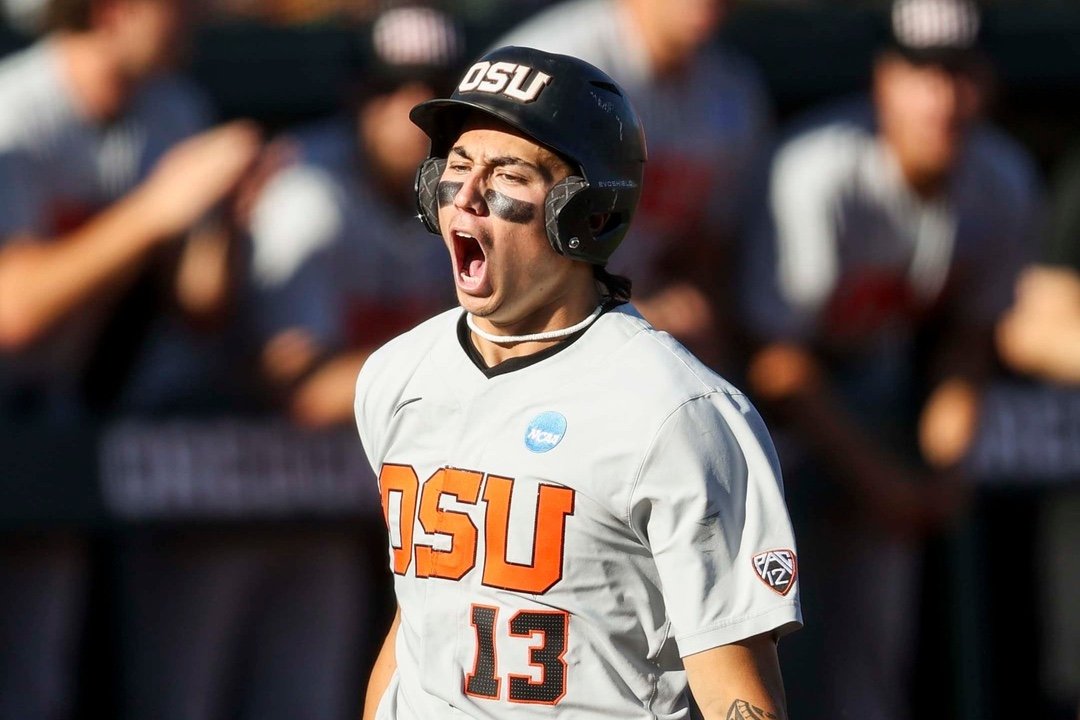 Here is an overview of the top high school and college players that the Miami Marlins should consider drafting this year. Some prospect evaluations have changed since the previous big board was released in early May. The Marlins will make their first selection at No. 7 overall, then pick again at No. 43, No. 46, No. 78, No. 108 and No. 139. They have the third pick in all subsequent rounds (No. 168, No. 198, No. 228, etc.). The table below includes each prospect's age as of Sunday, their school, position(s), handedness, measurables and overall future value on a 20-80 scale. Click the hyperlinks for full-length Fish On First prospect profiles. Rank Name Age School Position Bat/Throw Height/Weight FV 1 Seth Hernandez 19 Corona HS (CA) RHP R/R 6'4"- 190 60 2 Aiva Arquette 21 Oregon State SS/3B R/R 6'4"- 220 55 3 Jamie Arnold 21 Florida State LHP L/L 6'1"- 165 55 4 Kade Anderson 21 LSU LHP L/L 6'2' - 180 55 5 Billy Carlson 18 Corona HS (CA) SS R/R 6'1"- 165 55 6 Eli Willits 17 Fort Cobb-Broxton HS (OK) SS S/R 6'1" - 165 55 7 Ethan Holliday 18 Stillwater HS (OK) SS/3B L/R 6'4" - 195 55 8 Marek Houston 21 Wake Forest SS R/R 6'3" - 180 55 9 Joseph "JoJo" Parker 18 Purvis HS (MS) SS/2B L/R 6'2" - 195 55 10 Liam Doyle 21 Tennessee LHP R/L 6'2" - 220 55 11 Brendan Summerhill 21 Arizona OF L/R 6'2"- 190 55 12 Gavin Kilen 21 Tennessee SS/2B L/R 5'11" - 185 50 13 Gavin Fien 18 Great Oak HS (CA) 3B/SS R/R 6'3" - 200 50 14 Ike Irish 21 Auburn C/1B L/R 6'2" - 190 50 15 Tyler Bremner 21 UC Santa Barbara RHP R/R 6'2"- 170 50 16 Kyson Witherspoon 20 Oklahoma RHP R/R 6'2" - 205 50 17 Andrew Fischer 21 Tennessee 3B/1B L/R 6'1" - 200 50 18 Gage Wood 21 Arkansas RHP R/R 6'0" - 200 50 19 Steele Hall 17 Hewitt-Trussville HS (AL) SS R/R 5'11" - 160 50 20 Josh Hammond 18 Wesleyan Christian Acad. HS (NC) 3B R/R 6'1" - 205 50 21 Patrick Forbes 21 Louisville RHP R/R 6'3" - 200 50 22 Landon Harmon 18 East Union HS (MISS) RHP R/R 6'5" - 180 50 23 Kayson Cunningham 19 Johnson HS (TX) SS/2B L/R 5'9"-170 50 24 Alex Lodise 21 Florida State INF R/R 6'1" - 190 50 25 Ethan Conrad 21 Wake Forest OF L/L 6'4" - 215 50 26 Jaden Fauske 18 Nazareth Academy HS (IL) C/OF L/R 6'1" - 195 50 27 Jace LaViolette 21 Texas A&M OF L/L 6'6"- 230 50 28 Xavier Neyens 18 Mount Vernon HS (WA) 3B L/R 6'4"- 200 50 29 A.J. Russell 21 Tennessee RHP R/R 6'6" - 225 50 30 Marcus Phillips 21 Tennessee RHP R/R 6'4"- 250 50 31 Wehiwa Aloy 21 Arkansas SS R/R 6'2" - 195 50 32 Sean Gamble 19 IMG Academy HS (FL) SS/OF L/R 6'1" - 185 50 33 Dean Curley 21 Tennessee INF R/R 6'3" - 195 50 34 Riley Quick 21 Alabama RHP R/R 6"6" - 250 50 35 Slater de Brun 18 Summit HS (OR) OF L/L 5'9" - 180 50 36 Caden Bodine 21 Coastal Carolina C S/R 5'10"-190 50 37 Chase Shores 21 LSU RHP R/R 6'8" - 250 50 38 Angel Cervantes 17 Warren HS (CA) RHP R/R 6'2" - 190 50 39 Taitn Gray 17 Dallas Center-Grimes HS (IA) OF S/R 6'4" - 220 50 40 Charles Davalan 21 Arksansas 2B L/R 5'9" - 190 50 41 Luke Stevenson 21 North Carolina C L/R 6'1" - 200 50 42 Joseph Dzierwa 21 Michigan State LHP R/L 6'7" - 180 45+ 43 Cam Cannarella 21 Clemson OF L/R 6'0"- 180 45+ 44 Devin Taylor 21 Indiana OF L/R 6'0"- 195 45+ 45 Cooper Flemming 18 Alsio Niguel HS (CA) SS L/R 6'3" - 190 45+ 46 Ryan Mitchell 18 Houston HS (TENN) SS L/R 6'0" - 175 45+ 47 Kane Kepley 21 UNC OF L/L 5'8" - 170 45+ 48 Ethan Petry 21 South Carolina OF/1B R/R 6'4" - 230 45+ 49 Jack Lafflam 18 Brophy College Prep HS (AZ) RHP R/R 6'6" - 170 45+ 50 Zach Root 21 Arkansas LHP L/L 6'1" - 175 45+ 51 Kyle Lodise 21 Georgia Tech SS R/R 5'11" - 180 45+ 52 Mason Neville 21 Oregon OF L/L 6'3" - 200 45+ 53 Daniel Pierce 18 Mill Creek HS (GA) SS R./R 6'1" - 180 45+ 54 Jack Bauer 18 Lincoln-Way East HS (IL) LHP L/L 6'3"- 175 45+ 55 Jordan Yost 18 Sickles HS (FL) SS L/R 6'0" - 170 45+ 56 Max Belyeu 21 Texas OF L/R 6'2" - 195 45+ 57 Aaron Watson 18 Trinity Christian Acad HS (FL) RHP R/R 6'5" - 205 45+ 58 Griffin Enis 18 Cornith HS (MS) OF R/R 6'0" - 180 45+ 59 Mitch Voit 20 Michigan 2B R/R 6'0" - 200 45+ 60 Michael Winter 18 Shawnee Mission East HS (KS) RHP R/R 6'5" - 220 45+ 61 Antonio Jimenez 21 UCF SS R/R 6'1" - 200 45+ 62 Jayden Stroman 18 Patchogue-Medford HS (NY) RHP S/R 6'0" - 195 45+ 63 Landon Schaefer 18 Fayetteville HS (AR) 3B R/R 6'3" - 190 45+ 64 Tate Southisene 18 Basic HS (NV) SS/OF R/R 5'11" - 170 45+ 65 Josh Owens 18 Providence HS (TN) SS/OF L/R 6'3" - 180 45+ 66 Anthony Evanson 20 LSU RHP R/R 6'2" - 185 45+ 67 Jacob Parker 18 Purvis HS (MS) OF L/R 6'4" - 210 45+ 68 Kruz Schoolcraft 18 Sunset HS (OR) LHP/1B L/L 6'8" - 215 45+ 69 Cade Obermueller 21 Iowa LHP L/L 6'0" - 170 45+ 70 Angel Laya 18 East Lake HS (CA) OF L/R 6'3" - 190 45+ 71 Korbyn Dickerson 21 Indiana OF R/R 6'1" - 190 45+ 72 J.D. Thompson 21 Vanderbilt LHP L/L 6'0" - 190 45+ 73 Matthew Fisher 19 Memorial HS (IN) RHP R/R 6'3" - 200 45+ 74 Aiden Stillman 18 Trinity Prep HS (FL) LHP R/L 6'3" - 190 45 75 Noah Franklin 18 West Ashley HS (SC) C R/R 6'1" - 210 45 76 Malachi Witherspoon 21 Oklahoma RHP R/R 6'3" - 210 45 77 Nick Becker 18 Don Bosco Prep HS (NJ) SS R/R 6'3" - 180 45 78 Aaron Walton 21 Arizona OF R/R 6'3" - 220 45 79 Jaime Quinn-Irons 21 George Mason OF R/R 6'5" - 230 45 80 Mason Morris 21 Ole Miss RHP R/R 6'4' - 225 45 81 Jacob Morrison 21 Coastal Carolina RHP R/R 6'8" - 245 45 82 Cameron Appenzeller 18 Glenwood HS (IL) LHP L/L 6'5" - 180 45 83 Henry Godbout 21 Virginia 2B R/R 6'1" - 185 45 84 Noah Yoder 18 Atlee HS (VA) RHP R/R 6'5" - 230 45 85 Johnny Slawinski 18 Johnson City HS (TX) LHP L/L 6'3" - 185 45 86 Tim Piasentin 18 Foothills Composite HS (Alberta) 3B L/R 6'3" - 205 45 87 Matt Barr 19 Niagara County CC RHP R/R 6'6" - 195 45 88 Dax Kilby 18 Newnan HS (GA) SS L/R 6'3" - 185 45 89 Marcelo Harsch 18 Seton Hall Prep HS (NJ) RHP R/R 6'4" - 170 45 90 Brady Ebel 18 Corona HS (CA) INF L/R 6'3" - 180 45 91 Colin Yeaman 21 UC Irvine INF R/R 6'2" - 200 45 92 Ryan Wideman 21 Western Kentucky OF R/R 6'5" - 205 45 93 Dean Moss 19 IMG Academy HS (FL) OF L/R 6'0" - 175 45 94 Sam Horn 21 Missouri RHP R/R 6'4" - 220 45 95 Zane Taylor 23 UNC Willingham RHP R/R 6'0" - 200 45 96 Briggs McKenzie 18 Conrinth Holders HS (NC) LHP L/L 6'2" - 185 45 97 Jason Reitz 21 Oregon RHP R/R 6'10" - 180 45 98 Daniel Dickinson 21 LSU 2B R/R 6'0" - 180 45 99 Cal Scolari 21 San Diego RHP R/R 6''4" - 220 45 100 Brandon Compton 21 Arizona State OF L/L 6'1" - 210 45 101 Nate Snead 21 Tennessee RHP R/R 6'2" - 210 45 102 Uli Fernsler 17 Novi HS (MI) LHP L/L 6'4" - 200 45 103 Jacob McCombs 21 UC Irvine OF L/R 6'2" - 200 45 104 Micah Bucknam 21 Dallas Baptist RHP R/R 6'1" - 210 45 105 Dominick Reid 21 Abilene Christian RHP R/R 6'3" - 200 45 106 Ben Jacobs 21 Arizona State LHP L/L 6'0" - 190 45 107 Jalin Flores 22 Texas INF R/R 6'2" - 185 45 108 Kaeden Kent 21 Texas A&M 2B L/R 6'2" - 200 45 109 RJ Austin 21 Vanderbilt 2B/OF R/R 5'11" - 190 45 110 Logan Lunceford 21 Wake Forest RHP R/R 6'0" - 180 45 111 Sean Youngerman 21 Oklahoma State RHP R/R 6'3" - 220 45 112 Ethan Frey 21 LSU OF R/R 6'6" - 225 45 113 Will Hynes 18 Lorne Park HS (ON) RHP R/R 6'2" - 180 45 114 Jack McKernan 18 Ridge Point HS (TX) LHP L/L 6'1" - 185 45 115 Pico Kohn 22 Mississippi State LHP L/L 6'4" - 200 45 116 Tre Phelps 21 Georgia 3B/OF R/R 6'3" - 210 45 117 Henry Ford 21 Virginia 1B R/R 6'5 - 220 45 118 Grant Jay 21 Dallas Baptist C R/R 5'11" - 220 45 119 Tyler Fay 21 Alabama RHP R/R 6'5" - 215 45 120 Eddie King Jr. 22 Louisville OF R/R 6'2" - 220 45 121 Griffin Hugus 21 Miami RHP R/R 6'2" - 180 45 122 Talon Haley 19 Lewisburg HS (MISS) LHP L/L 6'2" - 200 45 123 McLane Moody 18 Northside HS (AR) RHP R/R 6'7" - 200 45 124 Landyn Vidourek 21 Cincinnati OF L/R 6'1" - 190 40 125 Ryan Weingartner 21 Penn State SS R/R 5'11" - 180 40 126 Brooks Bryan 20 Troy C L/R 6'2" - 220 40 127 Reid Worley 19 Cherokee HS (GA) RHP R/R 6'2" - 180 40 128 Cody Bowker 21 Vanderbilt RHP R/R 6'1" - 210 40 129 CJ Hughes 17 Junipero Serra HS (CA) SS R/R 6'0" - 160 40 130 Bruin Agbayani 18 St.Louis HS (HI) SS L/R 6'2" - 185 40 131 Drew Faurot 21 FSU INF S/R 6'3" - 185 40 132 Gavin Turley 21 Oregon State OF R/R 6'2" - 200 40 133 Brian Curley 22 Georgia RHP R/R 5'10" - 200 40 134 Brody Walls 18 Mckinney Boyd HS (TX) RHP R/R 6'0" - 180 40 135 Will McCausland 21 Ole Miss RHP R/R 6'0" - 190 40 136 Cam Maldonado 21 Northeastern OF R/R 6'3" - 195 40 137 Anthony Pack 18 Millikan HS (CA) OF L/L 5'10" - 170 40 138 Trace Phillips 21 Middle Tennessee State RHP/1B R/R 6'3" - 185 40 139 Luke Hill 21 Ole Miss INF R/R 6'0" - 190 40 140 Kyle McCoy 21 Maryland LHP L/L 6'5" - 180 40 141 Tanner Franklin 21 Tennessee RHP R/R 6'4" - 240 40 142 John Stuetzer 18 Pope HS (GA) SS/OF R/R 5'11" - 190 40 143 Easton Carmichael 21 Oklahoma C R/R 6'1" - 190 40 144 Cameron Miller 18 Alhambra HS (CA) RHP R/R 6'2" - 180 40 145 Josiah Hartshorn 18 Orange HS (CA) OF R/L 6'2' - 185 40 146 Brock Sell 18 Tokay HS (CA) OF L/R 6'1" - 170 40 147 Mason White 21 LSU SS/2B L/R 5'9" - 170 40 148 Maximus Martin 21 Kansas State SS R/R 6'0" - 175 40 149 Drew Horn 21 Middle Tennessee State RHP R/R 5'11" - 180 40 150 Cam Tilly 21 Auburn RHP R/R 6'2" - 205 40
 -
Here is an overview of the top high school and college players that the Miami Marlins should consider drafting this year. Some prospect evaluations have changed since the previous big board was released in early May. The Marlins will make their first selection at No. 7 overall, then pick again at No. 43, No. 46, No. 78, No. 108 and No. 139. They have the third pick in all subsequent rounds (No. 168, No. 198, No. 228, etc.). The table below includes each prospect's age as of Sunday, their school, position(s), handedness, measurables and overall future value on a 20-80 scale. Click the hyperlinks for full-length Fish On First prospect profiles. Rank Name Age School Position Bat/Throw Height/Weight FV 1 Seth Hernandez 19 Corona HS (CA) RHP R/R 6'4"- 190 60 2 Aiva Arquette 21 Oregon State SS/3B R/R 6'4"- 220 55 3 Jamie Arnold 21 Florida State LHP L/L 6'1"- 165 55 4 Kade Anderson 21 LSU LHP L/L 6'2' - 180 55 5 Billy Carlson 18 Corona HS (CA) SS R/R 6'1"- 165 55 6 Eli Willits 17 Fort Cobb-Broxton HS (OK) SS S/R 6'1" - 165 55 7 Ethan Holliday 18 Stillwater HS (OK) SS/3B L/R 6'4" - 195 55 8 Marek Houston 21 Wake Forest SS R/R 6'3" - 180 55 9 Joseph "JoJo" Parker 18 Purvis HS (MS) SS/2B L/R 6'2" - 195 55 10 Liam Doyle 21 Tennessee LHP R/L 6'2" - 220 55 11 Brendan Summerhill 21 Arizona OF L/R 6'2"- 190 55 12 Gavin Kilen 21 Tennessee SS/2B L/R 5'11" - 185 50 13 Gavin Fien 18 Great Oak HS (CA) 3B/SS R/R 6'3" - 200 50 14 Ike Irish 21 Auburn C/1B L/R 6'2" - 190 50 15 Tyler Bremner 21 UC Santa Barbara RHP R/R 6'2"- 170 50 16 Kyson Witherspoon 20 Oklahoma RHP R/R 6'2" - 205 50 17 Andrew Fischer 21 Tennessee 3B/1B L/R 6'1" - 200 50 18 Gage Wood 21 Arkansas RHP R/R 6'0" - 200 50 19 Steele Hall 17 Hewitt-Trussville HS (AL) SS R/R 5'11" - 160 50 20 Josh Hammond 18 Wesleyan Christian Acad. HS (NC) 3B R/R 6'1" - 205 50 21 Patrick Forbes 21 Louisville RHP R/R 6'3" - 200 50 22 Landon Harmon 18 East Union HS (MISS) RHP R/R 6'5" - 180 50 23 Kayson Cunningham 19 Johnson HS (TX) SS/2B L/R 5'9"-170 50 24 Alex Lodise 21 Florida State INF R/R 6'1" - 190 50 25 Ethan Conrad 21 Wake Forest OF L/L 6'4" - 215 50 26 Jaden Fauske 18 Nazareth Academy HS (IL) C/OF L/R 6'1" - 195 50 27 Jace LaViolette 21 Texas A&M OF L/L 6'6"- 230 50 28 Xavier Neyens 18 Mount Vernon HS (WA) 3B L/R 6'4"- 200 50 29 A.J. Russell 21 Tennessee RHP R/R 6'6" - 225 50 30 Marcus Phillips 21 Tennessee RHP R/R 6'4"- 250 50 31 Wehiwa Aloy 21 Arkansas SS R/R 6'2" - 195 50 32 Sean Gamble 19 IMG Academy HS (FL) SS/OF L/R 6'1" - 185 50 33 Dean Curley 21 Tennessee INF R/R 6'3" - 195 50 34 Riley Quick 21 Alabama RHP R/R 6"6" - 250 50 35 Slater de Brun 18 Summit HS (OR) OF L/L 5'9" - 180 50 36 Caden Bodine 21 Coastal Carolina C S/R 5'10"-190 50 37 Chase Shores 21 LSU RHP R/R 6'8" - 250 50 38 Angel Cervantes 17 Warren HS (CA) RHP R/R 6'2" - 190 50 39 Taitn Gray 17 Dallas Center-Grimes HS (IA) OF S/R 6'4" - 220 50 40 Charles Davalan 21 Arksansas 2B L/R 5'9" - 190 50 41 Luke Stevenson 21 North Carolina C L/R 6'1" - 200 50 42 Joseph Dzierwa 21 Michigan State LHP R/L 6'7" - 180 45+ 43 Cam Cannarella 21 Clemson OF L/R 6'0"- 180 45+ 44 Devin Taylor 21 Indiana OF L/R 6'0"- 195 45+ 45 Cooper Flemming 18 Alsio Niguel HS (CA) SS L/R 6'3" - 190 45+ 46 Ryan Mitchell 18 Houston HS (TENN) SS L/R 6'0" - 175 45+ 47 Kane Kepley 21 UNC OF L/L 5'8" - 170 45+ 48 Ethan Petry 21 South Carolina OF/1B R/R 6'4" - 230 45+ 49 Jack Lafflam 18 Brophy College Prep HS (AZ) RHP R/R 6'6" - 170 45+ 50 Zach Root 21 Arkansas LHP L/L 6'1" - 175 45+ 51 Kyle Lodise 21 Georgia Tech SS R/R 5'11" - 180 45+ 52 Mason Neville 21 Oregon OF L/L 6'3" - 200 45+ 53 Daniel Pierce 18 Mill Creek HS (GA) SS R./R 6'1" - 180 45+ 54 Jack Bauer 18 Lincoln-Way East HS (IL) LHP L/L 6'3"- 175 45+ 55 Jordan Yost 18 Sickles HS (FL) SS L/R 6'0" - 170 45+ 56 Max Belyeu 21 Texas OF L/R 6'2" - 195 45+ 57 Aaron Watson 18 Trinity Christian Acad HS (FL) RHP R/R 6'5" - 205 45+ 58 Griffin Enis 18 Cornith HS (MS) OF R/R 6'0" - 180 45+ 59 Mitch Voit 20 Michigan 2B R/R 6'0" - 200 45+ 60 Michael Winter 18 Shawnee Mission East HS (KS) RHP R/R 6'5" - 220 45+ 61 Antonio Jimenez 21 UCF SS R/R 6'1" - 200 45+ 62 Jayden Stroman 18 Patchogue-Medford HS (NY) RHP S/R 6'0" - 195 45+ 63 Landon Schaefer 18 Fayetteville HS (AR) 3B R/R 6'3" - 190 45+ 64 Tate Southisene 18 Basic HS (NV) SS/OF R/R 5'11" - 170 45+ 65 Josh Owens 18 Providence HS (TN) SS/OF L/R 6'3" - 180 45+ 66 Anthony Evanson 20 LSU RHP R/R 6'2" - 185 45+ 67 Jacob Parker 18 Purvis HS (MS) OF L/R 6'4" - 210 45+ 68 Kruz Schoolcraft 18 Sunset HS (OR) LHP/1B L/L 6'8" - 215 45+ 69 Cade Obermueller 21 Iowa LHP L/L 6'0" - 170 45+ 70 Angel Laya 18 East Lake HS (CA) OF L/R 6'3" - 190 45+ 71 Korbyn Dickerson 21 Indiana OF R/R 6'1" - 190 45+ 72 J.D. Thompson 21 Vanderbilt LHP L/L 6'0" - 190 45+ 73 Matthew Fisher 19 Memorial HS (IN) RHP R/R 6'3" - 200 45+ 74 Aiden Stillman 18 Trinity Prep HS (FL) LHP R/L 6'3" - 190 45 75 Noah Franklin 18 West Ashley HS (SC) C R/R 6'1" - 210 45 76 Malachi Witherspoon 21 Oklahoma RHP R/R 6'3" - 210 45 77 Nick Becker 18 Don Bosco Prep HS (NJ) SS R/R 6'3" - 180 45 78 Aaron Walton 21 Arizona OF R/R 6'3" - 220 45 79 Jaime Quinn-Irons 21 George Mason OF R/R 6'5" - 230 45 80 Mason Morris 21 Ole Miss RHP R/R 6'4' - 225 45 81 Jacob Morrison 21 Coastal Carolina RHP R/R 6'8" - 245 45 82 Cameron Appenzeller 18 Glenwood HS (IL) LHP L/L 6'5" - 180 45 83 Henry Godbout 21 Virginia 2B R/R 6'1" - 185 45 84 Noah Yoder 18 Atlee HS (VA) RHP R/R 6'5" - 230 45 85 Johnny Slawinski 18 Johnson City HS (TX) LHP L/L 6'3" - 185 45 86 Tim Piasentin 18 Foothills Composite HS (Alberta) 3B L/R 6'3" - 205 45 87 Matt Barr 19 Niagara County CC RHP R/R 6'6" - 195 45 88 Dax Kilby 18 Newnan HS (GA) SS L/R 6'3" - 185 45 89 Marcelo Harsch 18 Seton Hall Prep HS (NJ) RHP R/R 6'4" - 170 45 90 Brady Ebel 18 Corona HS (CA) INF L/R 6'3" - 180 45 91 Colin Yeaman 21 UC Irvine INF R/R 6'2" - 200 45 92 Ryan Wideman 21 Western Kentucky OF R/R 6'5" - 205 45 93 Dean Moss 19 IMG Academy HS (FL) OF L/R 6'0" - 175 45 94 Sam Horn 21 Missouri RHP R/R 6'4" - 220 45 95 Zane Taylor 23 UNC Willingham RHP R/R 6'0" - 200 45 96 Briggs McKenzie 18 Conrinth Holders HS (NC) LHP L/L 6'2" - 185 45 97 Jason Reitz 21 Oregon RHP R/R 6'10" - 180 45 98 Daniel Dickinson 21 LSU 2B R/R 6'0" - 180 45 99 Cal Scolari 21 San Diego RHP R/R 6''4" - 220 45 100 Brandon Compton 21 Arizona State OF L/L 6'1" - 210 45 101 Nate Snead 21 Tennessee RHP R/R 6'2" - 210 45 102 Uli Fernsler 17 Novi HS (MI) LHP L/L 6'4" - 200 45 103 Jacob McCombs 21 UC Irvine OF L/R 6'2" - 200 45 104 Micah Bucknam 21 Dallas Baptist RHP R/R 6'1" - 210 45 105 Dominick Reid 21 Abilene Christian RHP R/R 6'3" - 200 45 106 Ben Jacobs 21 Arizona State LHP L/L 6'0" - 190 45 107 Jalin Flores 22 Texas INF R/R 6'2" - 185 45 108 Kaeden Kent 21 Texas A&M 2B L/R 6'2" - 200 45 109 RJ Austin 21 Vanderbilt 2B/OF R/R 5'11" - 190 45 110 Logan Lunceford 21 Wake Forest RHP R/R 6'0" - 180 45 111 Sean Youngerman 21 Oklahoma State RHP R/R 6'3" - 220 45 112 Ethan Frey 21 LSU OF R/R 6'6" - 225 45 113 Will Hynes 18 Lorne Park HS (ON) RHP R/R 6'2" - 180 45 114 Jack McKernan 18 Ridge Point HS (TX) LHP L/L 6'1" - 185 45 115 Pico Kohn 22 Mississippi State LHP L/L 6'4" - 200 45 116 Tre Phelps 21 Georgia 3B/OF R/R 6'3" - 210 45 117 Henry Ford 21 Virginia 1B R/R 6'5 - 220 45 118 Grant Jay 21 Dallas Baptist C R/R 5'11" - 220 45 119 Tyler Fay 21 Alabama RHP R/R 6'5" - 215 45 120 Eddie King Jr. 22 Louisville OF R/R 6'2" - 220 45 121 Griffin Hugus 21 Miami RHP R/R 6'2" - 180 45 122 Talon Haley 19 Lewisburg HS (MISS) LHP L/L 6'2" - 200 45 123 McLane Moody 18 Northside HS (AR) RHP R/R 6'7" - 200 45 124 Landyn Vidourek 21 Cincinnati OF L/R 6'1" - 190 40 125 Ryan Weingartner 21 Penn State SS R/R 5'11" - 180 40 126 Brooks Bryan 20 Troy C L/R 6'2" - 220 40 127 Reid Worley 19 Cherokee HS (GA) RHP R/R 6'2" - 180 40 128 Cody Bowker 21 Vanderbilt RHP R/R 6'1" - 210 40 129 CJ Hughes 17 Junipero Serra HS (CA) SS R/R 6'0" - 160 40 130 Bruin Agbayani 18 St.Louis HS (HI) SS L/R 6'2" - 185 40 131 Drew Faurot 21 FSU INF S/R 6'3" - 185 40 132 Gavin Turley 21 Oregon State OF R/R 6'2" - 200 40 133 Brian Curley 22 Georgia RHP R/R 5'10" - 200 40 134 Brody Walls 18 Mckinney Boyd HS (TX) RHP R/R 6'0" - 180 40 135 Will McCausland 21 Ole Miss RHP R/R 6'0" - 190 40 136 Cam Maldonado 21 Northeastern OF R/R 6'3" - 195 40 137 Anthony Pack 18 Millikan HS (CA) OF L/L 5'10" - 170 40 138 Trace Phillips 21 Middle Tennessee State RHP/1B R/R 6'3" - 185 40 139 Luke Hill 21 Ole Miss INF R/R 6'0" - 190 40 140 Kyle McCoy 21 Maryland LHP L/L 6'5" - 180 40 141 Tanner Franklin 21 Tennessee RHP R/R 6'4" - 240 40 142 John Stuetzer 18 Pope HS (GA) SS/OF R/R 5'11" - 190 40 143 Easton Carmichael 21 Oklahoma C R/R 6'1" - 190 40 144 Cameron Miller 18 Alhambra HS (CA) RHP R/R 6'2" - 180 40 145 Josiah Hartshorn 18 Orange HS (CA) OF R/L 6'2' - 185 40 146 Brock Sell 18 Tokay HS (CA) OF L/R 6'1" - 170 40 147 Mason White 21 LSU SS/2B L/R 5'9" - 170 40 148 Maximus Martin 21 Kansas State SS R/R 6'0" - 175 40 149 Drew Horn 21 Middle Tennessee State RHP R/R 5'11" - 180 40 150 Cam Tilly 21 Auburn RHP R/R 6'2" - 205 40 View full article
-
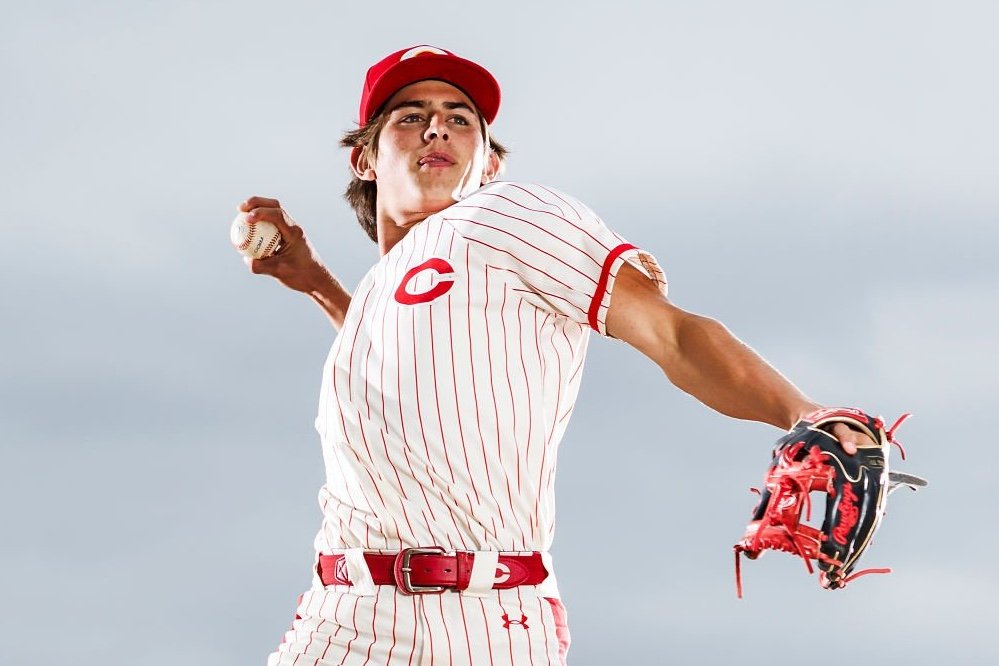 The Miami Marlins are just days away from a crucial MLB Draft, armed with the largest bonus pool in franchise history ($15,187,400). After collaborating on two previous Marlins mock drafts, @Hector Rodriguez and I went through the exercise separately this time, both simulating the first seven rounds for the Marlins (eight total picks). Let us know whose picks you like more. Hector Rodriguez's mock draft First Round (7th overall)—Eli Willits, SS, Fort Cobb-Broxton HS (OK) Slot value: $7,149,900 FOF draft profile With the seventh pick of the 2025 MLB Draft, the Miami Marlins select shortstop Eli Willits. The Marlins select one of the most well-rounded high school prospects in this draft class. Willits is a switch-hitting middle fielder with excellent hitting tools and five-tool potential as he continues to fill out his frame. If he’s available, Willits should be the pick for the Marlins. Competitive Balance Round A (43rd overall)—Tate Southisene, SS/OF, Basic HS (NV) Slot value: $2,276,700 With the 43rd pick of the 2025 MLB Draft, the Miami Marlins select shortstop/outfielder Tate Southisene. The Marlins select another well-rounded prep prospect here. He’s a very smart ballplayer who drives the ball to all fields with authority and doesn't chase many pitches out of the zone. The Nevada native is also a good athlete who can play shortstop and center field at the next level. Second Round (46th overall)—Zach Root, LHP, Arkansas Slot value: $2,128,800 With the 46th pick of the 2025 MLB Draft, the Miami Marlins select left-handed pitcher Zach Root. The Marlins select their first college prospect, grabbing one of the best southpaws in the SEC. The East Carolina transfer posted a 9-6 record with a 3.62 ERA, 1.18 WHIP, 3.94 FIP, and 11.4 K/9 in 99 innings pitched last season. Root’s fastball sits 91-94 mph and tops out at 97 mph with some sink. However, his curveball and changeup are his best pitches and generate whiffs. Third Round (78th overall)—Daniel Dickinson, 2B, LSU Slot value: $1,043,700 With the 78th pick of the 2025 MLB Draft, the Miami Marlins select second baseman Daniel Dickinson. The Utah Valley transfer was one of LSU’s best hitters on their national championship-winning team. Dickinson slashed .315/.458/.525 with 75 hits, twelve home runs, 40 walks, a 136 wRC+, and a .984 OPS in his first season at LSU. Dickinson has great plate discipline and posted a 13.8 K% and 13.1 BB% for the Tigers. Fourth Round (108th overall)—Marcos Paz, RHP, Hebron HS (TX) Slot value: $708,300 With the 108th pick of the 2025 MLB Draft, the Miami Marlins select right-handed pitcher Marcos Paz. The Texas native missed all of his senior season due to Tommy John surgery, but pitched very well at the MLB Draft Combine. Paz has a three-pitch mix, including a low-90s sinking fastball. His best pitch is his slider, which topped out at a 2,952 rpm spin rate at the Combine. Paz also has an advanced feel for his changeup and projects as a middle-of-the-rotation type arm. Fifth Round (139th overall)—Bobby Boser, 3B, Florida Slot value: $523,900 With the 139th pick of the 2025 MLB Draft, the Miami Marlins select third baseman Bobby Boser. The Marlins need to save some signing bonus money after selecting three prep prospects with their first five picks. Boser had a great final season at the University of Florida. He slashed .336/.437/.613 with 80 hits, twelve doubles, 18 home runs, 67 RBIs, and a 1.050 OPS last season. Boser projects best as a third baseman/second baseman, but also started at shortstop towards the end of the season. Sixth Round (168th overall)—Zane Taylor, RHP, UNC Wilmington Slot value: $397,000 With the 168th pick of the 2025 MLB Draft, the Miami Marlins select right-handed pitcher Zane Taylor. The Marlins grab another senior who would take an underslot deal. Taylor had a tremendous senior season for the UNC Wilmington Seahawks, posting an 11-2 record with a 1.98 ERA, a .181 opponent batting average, 1.0 BB/9, and 9.9 K/9 in 2025. Taylor has a low-to-mid 90s fastball and locates it well. He also has a good feel for his three secondary pitches (changeup, slider, curveball) that can generate whiffs and weak contact. Seventh Round (198th overall)—Trevor Cohen, OF, Rutgers Slot value: $309,400 With the 198th pick of the 2025 MLB Draft, the Miami Marlins select outfielder Trevor Cohen. The Marlins grab one of the best bat-to-ball hitters in college baseball. Cohen is a .338 hitter and had an 8% strikeout rate in his three seasons at Rutgers. Cohen slashed .387/.460/.523 with 91 hits, 24 doubles, two home runs, 36 RBIs, 30 walks, a 134 wRC+, and .983 OPS. Cohen projects as a left fielder at the next level. Sean McCormack's mock draft First Round (7th overall)—Billy Carlson, SS, Corona HS (CA) Slot value: $7,149,900 FOF draft profile With the seventh pick of the 2025 MLB Draft, the Miami Marlins select shortstop Billy Carlson. The Marlins grab the best prep shortstop defender in the draft and one of the highest-regarded prospects overall. Carlson is silky smooth at short with a great arm. He combines this with great athleticism and an advanced approach and contact rates for his age. Scouts believe as Carlson matures with age, he will fill out physically and tap into game power. Competitive Balance Round A (43rd overall)—Dean Curley, INF, Tennessee Slot value: $2,276,700 With the 43rd pick of the 2025 MLB Draft, the Miami Marlins select infielder Dean Curley. The Marlins select one of the highest-upside college infield prospects in the draft. In 2025, Curley posted a .966 OPS in SEC play, pairing that with elite swing decisions—chasing only 16.6% of the time—and a 80% contact rate. Curley posted a max exit velocity of 112 mph in 2025 and looks to hit for power going forward, having a total of 14 home runs this season. In the field, Curley played a nearly even mix of SS, 2B, and 3B, although many project him at the hot corner in the pros. Second Round (46th overall)—Angel Laya, OF, Eastlake HS (CA) Slot value: $2,128,800 With the 46th pick of the 2025 MLB Draft, the Miami Marlins select prep high schooler Angel Laya. The Marlins select one of the highest-rated high school outfielders in the draft. At the plate, Laya displays an advanced approach and makes great contact, posting a 92% contact rate in games where Trackman data was collected, and he has flashed plus EVs. In the field, Laya has a plus-plus arm and looks to be able to stick in center field. Third Round (78th overall)—Joseph Dzierwa, LHP, Michigan State Slot value: $1,043,700 With the 78th pick of the 2025 MLB Draft, the Miami Marlins select Michigan State lefty Joseph Dzierwa. With this pick, the Marlins select one of the best Big Ten pitchers in the draft. Dzierwa is a large man, standing at 6'8". Atypical for pitchers with his height, he shows great command and lacks top-notch velo, though there is reason to believe he could eventually train to throw harder in the pros. Dzierwa's changeup is among the better ones in the class. Fourth Round (108th overall)—Jake Cook, OF, Southern Mississippi Slot value: $708,300 With the 108th pick of the 2025 MLB Draft, the Miami Marlins select Southern Mississippi outfielder Jake Cook. One of the fastest runners in this year's class, Cook projects to have elite speed and top-notch outfield defense in center field. Cook posted a .350/.436/.468 slash line this season and walked 31 times compared to 19 strikeouts. He does not have standout power, but his pure athleticism has teams showing interest in the Mississippi native. Fifth Round (139th overall)—Mason Morris, RHP, Ole Miss Slot value: $523,900 With the 139th pick of the 2025 MLB Draft, the Miami Marlins select Ole Miss right-handed pitcher Mason Morris. The SEC product has spent his college career in the bullpen, but projects to be able to move into the rotation in the pros. Morris has a fastball that touches 99 mph with 18 inches of vert, and a power slurve that got 43% whiff in 2025. He also uses a cutter that sits 92. Morris brings a powerful stride and electric arm to the Marlins farm system. Sixth Round (168th overall)—Will Hynes, RHP, Lorne Park HS (ON) Slot value: $397,000 With the 168th pick of the 2025 MLB Draft, the Miami Marlins select Will Hynes, a right-handed pitcher from Ontario, Canada. Hynes is following in the footsteps of fellow Ontarians who were recently drafted, such as Jonah Tong (Mets) and Josiah Romeo (Athletics). Hynes brings a advanced feel for pitching, a fastball that sits in the mid-90s and a sweeper which has gotten scouts' attention. He is one of the younger players in the draft class, having just turned 18 on Monday. With a strong commitment to Wake Forest, the Marlins would most likely overslot this pick using savings from prior selections. Seventh Round (198th overall)—Jacob Morrison, RHP, Coastal Carolina Slot value: $309,400 With the 198th pick of the 2025 MLB Draft, the Miami Marlins select Jacob Morrison, a right-handed pitcher from Coastal Carolina University. The 6'8" righty has one of the better fastballs in the class and great feel to spin the baseball. Morrison is a north-south pitching archetype, which pairs perfectly with his over-the-top release point. He has a four-seam fastball, 12-6 curve, cutter and a fringy changeup in his arsenal. Morrison pitched 107 innings in 2025, posting a 2.42 ERA with 8.7 K/9 and 1.9 BB/9. This is one of the more proven starters in the draft.
 -
The Miami Marlins are just days away from a crucial MLB Draft, armed with the largest bonus pool in franchise history ($15,187,400). After collaborating on two previous Marlins mock drafts, @Hector Rodriguez and I went through the exercise separately this time, both simulating the first seven rounds for the Marlins (eight total picks). Let us know whose picks you like more. Hector Rodriguez's mock draft First Round (7th overall)—Eli Willits, SS, Fort Cobb-Broxton HS (OK) Slot value: $7,149,900 FOF draft profile With the seventh pick of the 2025 MLB Draft, the Miami Marlins select shortstop Eli Willits. The Marlins select one of the most well-rounded high school prospects in this draft class. Willits is a switch-hitting middle fielder with excellent hitting tools and five-tool potential as he continues to fill out his frame. If he’s available, Willits should be the pick for the Marlins. Competitive Balance Round A (43rd overall)—Tate Southisene, SS/OF, Basic HS (NV) Slot value: $2,276,700 With the 43rd pick of the 2025 MLB Draft, the Miami Marlins select shortstop/outfielder Tate Southisene. The Marlins select another well-rounded prep prospect here. He’s a very smart ballplayer who drives the ball to all fields with authority and doesn't chase many pitches out of the zone. The Nevada native is also a good athlete who can play shortstop and center field at the next level. Second Round (46th overall)—Zach Root, LHP, Arkansas Slot value: $2,128,800 With the 46th pick of the 2025 MLB Draft, the Miami Marlins select left-handed pitcher Zach Root. The Marlins select their first college prospect, grabbing one of the best southpaws in the SEC. The East Carolina transfer posted a 9-6 record with a 3.62 ERA, 1.18 WHIP, 3.94 FIP, and 11.4 K/9 in 99 innings pitched last season. Root’s fastball sits 91-94 mph and tops out at 97 mph with some sink. However, his curveball and changeup are his best pitches and generate whiffs. Third Round (78th overall)—Daniel Dickinson, 2B, LSU Slot value: $1,043,700 With the 78th pick of the 2025 MLB Draft, the Miami Marlins select second baseman Daniel Dickinson. The Utah Valley transfer was one of LSU’s best hitters on their national championship-winning team. Dickinson slashed .315/.458/.525 with 75 hits, twelve home runs, 40 walks, a 136 wRC+, and a .984 OPS in his first season at LSU. Dickinson has great plate discipline and posted a 13.8 K% and 13.1 BB% for the Tigers. Fourth Round (108th overall)—Marcos Paz, RHP, Hebron HS (TX) Slot value: $708,300 With the 108th pick of the 2025 MLB Draft, the Miami Marlins select right-handed pitcher Marcos Paz. The Texas native missed all of his senior season due to Tommy John surgery, but pitched very well at the MLB Draft Combine. Paz has a three-pitch mix, including a low-90s sinking fastball. His best pitch is his slider, which topped out at a 2,952 rpm spin rate at the Combine. Paz also has an advanced feel for his changeup and projects as a middle-of-the-rotation type arm. Fifth Round (139th overall)—Bobby Boser, 3B, Florida Slot value: $523,900 With the 139th pick of the 2025 MLB Draft, the Miami Marlins select third baseman Bobby Boser. The Marlins need to save some signing bonus money after selecting three prep prospects with their first five picks. Boser had a great final season at the University of Florida. He slashed .336/.437/.613 with 80 hits, twelve doubles, 18 home runs, 67 RBIs, and a 1.050 OPS last season. Boser projects best as a third baseman/second baseman, but also started at shortstop towards the end of the season. Sixth Round (168th overall)—Zane Taylor, RHP, UNC Wilmington Slot value: $397,000 With the 168th pick of the 2025 MLB Draft, the Miami Marlins select right-handed pitcher Zane Taylor. The Marlins grab another senior who would take an underslot deal. Taylor had a tremendous senior season for the UNC Wilmington Seahawks, posting an 11-2 record with a 1.98 ERA, a .181 opponent batting average, 1.0 BB/9, and 9.9 K/9 in 2025. Taylor has a low-to-mid 90s fastball and locates it well. He also has a good feel for his three secondary pitches (changeup, slider, curveball) that can generate whiffs and weak contact. Seventh Round (198th overall)—Trevor Cohen, OF, Rutgers Slot value: $309,400 With the 198th pick of the 2025 MLB Draft, the Miami Marlins select outfielder Trevor Cohen. The Marlins grab one of the best bat-to-ball hitters in college baseball. Cohen is a .338 hitter and had an 8% strikeout rate in his three seasons at Rutgers. Cohen slashed .387/.460/.523 with 91 hits, 24 doubles, two home runs, 36 RBIs, 30 walks, a 134 wRC+, and .983 OPS. Cohen projects as a left fielder at the next level. Sean McCormack's mock draft First Round (7th overall)—Billy Carlson, SS, Corona HS (CA) Slot value: $7,149,900 FOF draft profile With the seventh pick of the 2025 MLB Draft, the Miami Marlins select shortstop Billy Carlson. The Marlins grab the best prep shortstop defender in the draft and one of the highest-regarded prospects overall. Carlson is silky smooth at short with a great arm. He combines this with great athleticism and an advanced approach and contact rates for his age. Scouts believe as Carlson matures with age, he will fill out physically and tap into game power. Competitive Balance Round A (43rd overall)—Dean Curley, INF, Tennessee Slot value: $2,276,700 With the 43rd pick of the 2025 MLB Draft, the Miami Marlins select infielder Dean Curley. The Marlins select one of the highest-upside college infield prospects in the draft. In 2025, Curley posted a .966 OPS in SEC play, pairing that with elite swing decisions—chasing only 16.6% of the time—and a 80% contact rate. Curley posted a max exit velocity of 112 mph in 2025 and looks to hit for power going forward, having a total of 14 home runs this season. In the field, Curley played a nearly even mix of SS, 2B, and 3B, although many project him at the hot corner in the pros. Second Round (46th overall)—Angel Laya, OF, Eastlake HS (CA) Slot value: $2,128,800 With the 46th pick of the 2025 MLB Draft, the Miami Marlins select prep high schooler Angel Laya. The Marlins select one of the highest-rated high school outfielders in the draft. At the plate, Laya displays an advanced approach and makes great contact, posting a 92% contact rate in games where Trackman data was collected, and he has flashed plus EVs. In the field, Laya has a plus-plus arm and looks to be able to stick in center field. Third Round (78th overall)—Joseph Dzierwa, LHP, Michigan State Slot value: $1,043,700 With the 78th pick of the 2025 MLB Draft, the Miami Marlins select Michigan State lefty Joseph Dzierwa. With this pick, the Marlins select one of the best Big Ten pitchers in the draft. Dzierwa is a large man, standing at 6'8". Atypical for pitchers with his height, he shows great command and lacks top-notch velo, though there is reason to believe he could eventually train to throw harder in the pros. Dzierwa's changeup is among the better ones in the class. Fourth Round (108th overall)—Jake Cook, OF, Southern Mississippi Slot value: $708,300 With the 108th pick of the 2025 MLB Draft, the Miami Marlins select Southern Mississippi outfielder Jake Cook. One of the fastest runners in this year's class, Cook projects to have elite speed and top-notch outfield defense in center field. Cook posted a .350/.436/.468 slash line this season and walked 31 times compared to 19 strikeouts. He does not have standout power, but his pure athleticism has teams showing interest in the Mississippi native. Fifth Round (139th overall)—Mason Morris, RHP, Ole Miss Slot value: $523,900 With the 139th pick of the 2025 MLB Draft, the Miami Marlins select Ole Miss right-handed pitcher Mason Morris. The SEC product has spent his college career in the bullpen, but projects to be able to move into the rotation in the pros. Morris has a fastball that touches 99 mph with 18 inches of vert, and a power slurve that got 43% whiff in 2025. He also uses a cutter that sits 92. Morris brings a powerful stride and electric arm to the Marlins farm system. Sixth Round (168th overall)—Will Hynes, RHP, Lorne Park HS (ON) Slot value: $397,000 With the 168th pick of the 2025 MLB Draft, the Miami Marlins select Will Hynes, a right-handed pitcher from Ontario, Canada. Hynes is following in the footsteps of fellow Ontarians who were recently drafted, such as Jonah Tong (Mets) and Josiah Romeo (Athletics). Hynes brings a advanced feel for pitching, a fastball that sits in the mid-90s and a sweeper which has gotten scouts' attention. He is one of the younger players in the draft class, having just turned 18 on Monday. With a strong commitment to Wake Forest, the Marlins would most likely overslot this pick using savings from prior selections. Seventh Round (198th overall)—Jacob Morrison, RHP, Coastal Carolina Slot value: $309,400 With the 198th pick of the 2025 MLB Draft, the Miami Marlins select Jacob Morrison, a right-handed pitcher from Coastal Carolina University. The 6'8" righty has one of the better fastballs in the class and great feel to spin the baseball. Morrison is a north-south pitching archetype, which pairs perfectly with his over-the-top release point. He has a four-seam fastball, 12-6 curve, cutter and a fringy changeup in his arsenal. Morrison pitched 107 innings in 2025, posting a 2.42 ERA with 8.7 K/9 and 1.9 BB/9. This is one of the more proven starters in the draft. View full article
-
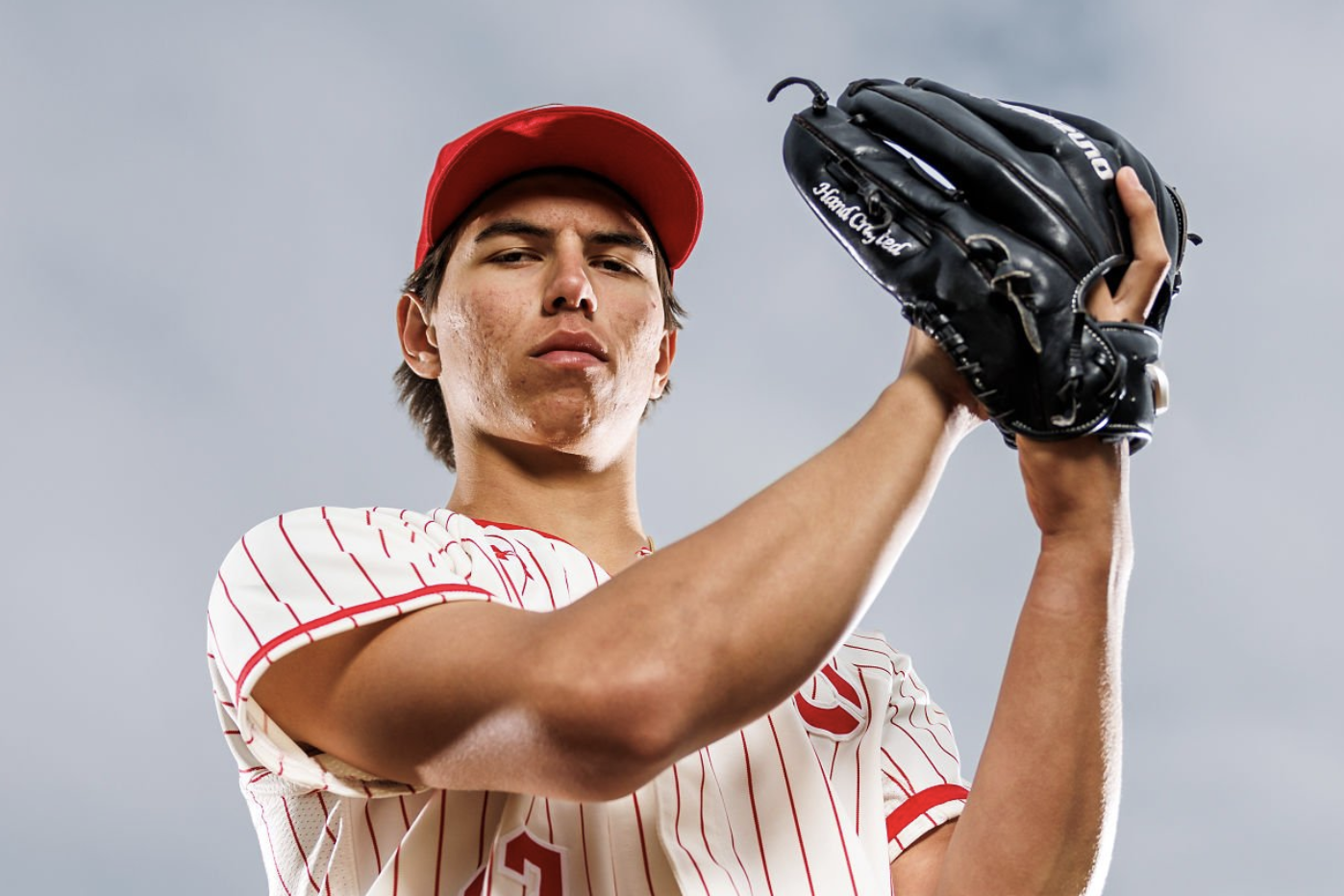 Kicking off a week of comprehensive 2025 MLB Draft coverage at Fish On First, here is an updated mock draft that goes through the entire first round as well as prospect promotion incentive picks, free agent compensation picks and Competitive Balance Round A. The biggest riser when comparing this to March's mock is LSU's Kade Anderson, who I previously forecasted to fall outside of the first round. The biggest faller is Tennessee's Dean Curley (previously mocked to go No. 10). The seventh and 43rd overall selections belong to the Miami Marlins. I have them using both picks on California prep prospects: right-hander Seth Hernandez from Corona High School and shortstop Cooper Flemming from Aliso Niguel High School. Pick Team Player Position Bat/Throw Age School 1 Nationals Eli Willits SS S/R 17 Fort Cobb-Broxton HS (OK) 2 Angels Kade Anderson LHP L/L 21 LSU 3 Mariners Jamie Arnold LHP L/L 21 Florida State 4 Rockies Ethan Holliday SS/3B L/R 18 Stillwater HS (OK) 5 Cardinals Billy Carlson SS R/R 18 Corona HS (CA) 6 Pirates Aiva Arquette SS/3B R/R 21 Oregon State 7 Marlins Seth Hernandez RHP R/R 19 Corona HS (CA) 8 Blue Jays Jojo Parker SS L/R 18 Purvis HS (MS) 9 Reds Ike Irish C/1B L/R 21 Auburn 10 White Sox Marek Houston SS R/R 21 Wake Forest 11 Athletics Tyler Bremner RHP R/R 21 UC Santa Barbara 12 Rangers Liam Doyle LHP R/L 21 Tennessee 13 Giants Kayson Cunningham SS/2B L/R 19 Johnson HS (TX) 14 Rays Steele Hall SS R/R 17 Hewitt-Trussville HS (AL) 15 Red Sox Gavin Kilen SS/2B L/R 21 Tennessee 16 Twins Jace LaViolette CF L/L 21 Texas A&M 17 Cubs Kyson Witherspoon RHP R/R 20 Oklahoma 18 Diamondbacks Xavier Neyens 3B L/R 18 Mount Vernon HS (WA) 19 Orioles Brendan Summerhill CF L/R 21 Arizona 20 Brewers Caden Bodine C S/R 21 Coastal Carolina 21 Astros Andrew Fischer 3B/1B L/R 21 Tennessee 22 Braves Gage Wood RHP R/R 21 Arkansas 23 Royals Cam Cannarella CF L/R 21 Clemson 24 Tigers Slater de Brun CF L/R 18 Summit HS (OR) 25 Padres Josh Hammond SS R/R 18 Wesleyan Christian Acad. HS (NC) 26 Phillies Sean Gamble SS/CF L/R 19 IMG Academy HS (FL) 27 Guardians Jaden Fauske OF L/R 18 Nazareth Academy HS (IL) 28 Royals Wehiwa Aloy SS R/R 21 Arkansas 29 Diamondbacks Riley Quick RHP R/R 21 Alabama 30 Orioles Alex Lodise INF R/R 21 Florida State 31 Orioles Patrick Forbes RHP R/R 21 Louisville 32 Brewers Angel Cervantes RHP R/R 17 Warren HS (CA) 33 Red Sox Gavin Fien SS/3B R/R 18 Great Oak HS (CA) 34 Tigers Daniel Pierce SS R/R 18 Mill Creek HS (GA) 35 Mariners Ethan Conrad OF L/L 21 Wake Forest 36 Twins Landon Harmon RHP R/R 18 East Union HS (MS) 37 Orioles Charles Davalan 2B/OF L/R 21 Arkansas 38 Mets Tate Southisene SS R/R 18 Basic HS (NV) 39 Yankees AJ Russell RHP R/R 21 Tennessee 40 Dodgers Kruz Schoolcraft LHP/1B L/L 18 Sunset HS (OR) 41 Dodgers Ryan Mitchell SS L/R 18 Houston HS (TN) 42 Rays Luke Stevenson C L/R 21 North Carolina 43 Marlins Cooper Flemming SS L/R 18 Aliso Niguel HS (CA) Seth Hernandez Early in the draft process, Hernandez separated himself as the top prep pitching prospect in the 2025 class. At 6’4” and 190 pounds, he has the ideal pitching frame with room to fill it out with more muscle. Hernandez has a four-pitch mix. His fastball sits 96-98 mph and was clocked at 100 mph last summer. It has an above-average spin rate and explodes out of his hand. The changeup might be Hernandez’s best pitch. His curveball has a true 12-6 break and he also uses a sharp slider. The high-ceiling right-hander has good control and fills up the strike zone, but he will need to fine-tune the command of his secondary pitches. Hernandez is signed to play college baseball at Vanderbilt University. Cooper Flemming Flemming has risen up public big boards following strong performances in the spring. A lanky teenager standing at 6'3", he has shown an impressive ability to make consistent contact, posting a 89% contact rate in games where Trackman data was collected. He's been posting exit velocities north of 100 mph already and it's reasonable to project a significant increase in that area as he matures. With a smooth swing and quiet load from the left side, Flemming is able to stay on time and on plane with pitches while generating good bat speed. In the field, Flemming has the tools to stick at short with a very strong arm and quick feet. Third base would be his potential fallback position. He is an average to above-average runner on the bases. Another Vandy commit, Flemming will require a seven-figure bonus to forgo college, but he should be willing to settle for less than this pick's $2,276,700 slot value.
 -
A year later, decision to draft PJ Morlando still hard to defend
Sean McCormack posted an article in MLB Draft
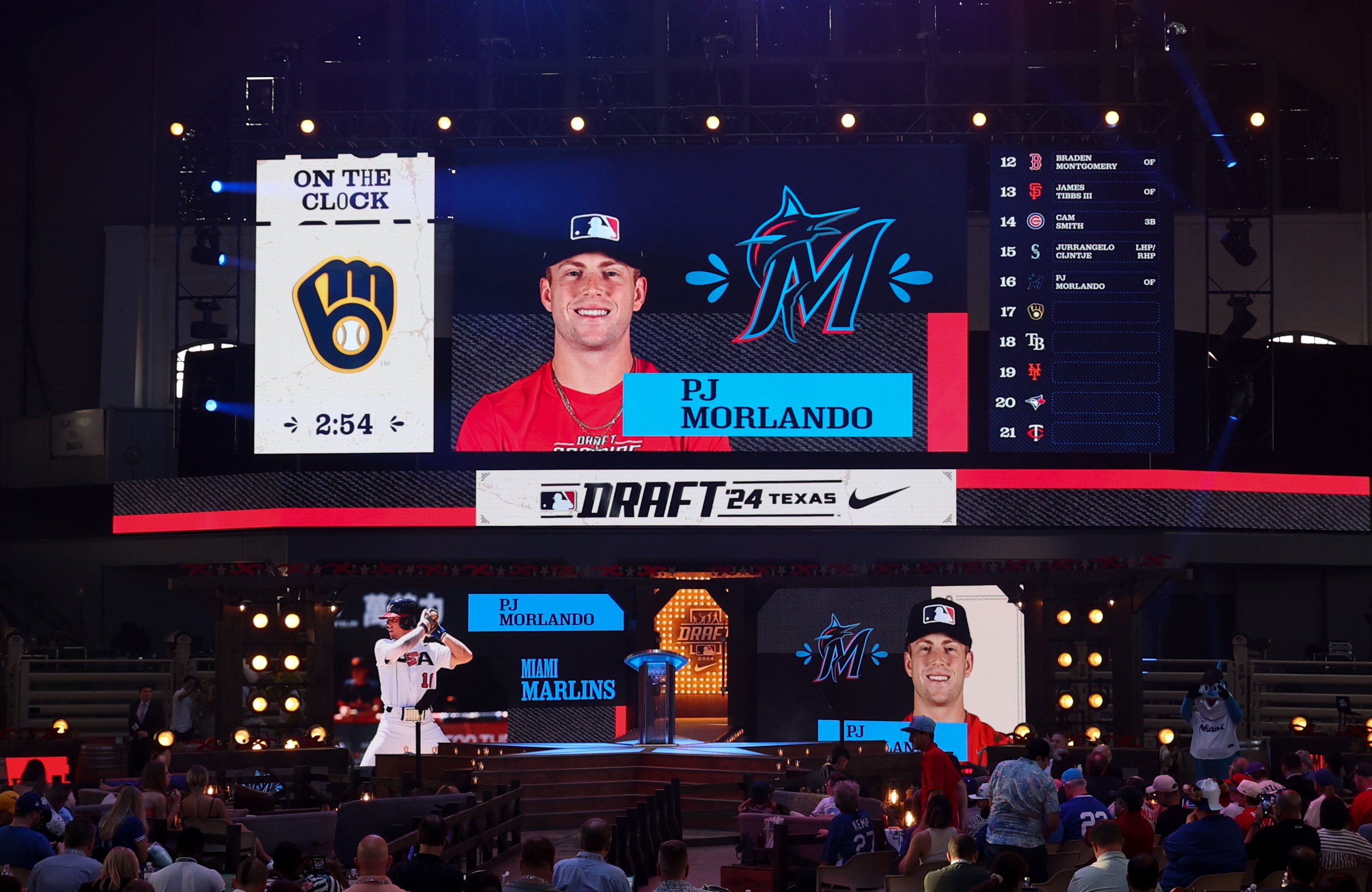 To start off, this is not an article degrading the talent and ability of 2024 Marlins first-rounder PJ Morlando. In the limited time that Morlando has been available to play, he has been one of the better hitters for the Low-A Jupiter Hammerheads. In 20 games this season, he has posted a .231/.427/.385 slash line with a .812 OPS, splitting time between center field and left field. It's too soon to close the door on him eventually becoming a productive big leaguer. The question is, how did the Marlins reach the conclusion that Morlando was the best available player on the board for them? The third-oldest high school player selected in the first round last year, it was clear in the moment that his ability to reach the majors relied heavily on his bat and he was lacking the flashy tools of other outfielders taken after him. Part of the reasoning was financial—Morlando signed for $3.4 million, which was $1.3 million below slot value. Those savings gave the Marlins flexibility to go overslot on their second-rounder, Carter Johnson. However, fellow outfielders who were selected later in that round, such as Braylon Payne, Carson Benge, and Slade Caldwell, also signed for $4 million or less. Why take Morlando over them? Payne went to the Milwaukee Brewers immediately after Morlando and for a near-identical bonus ($3.44M). He was one of the youngest high school bats in the whole class. The power is lacking as Payne has a small frame, but he graded out to be a future center fielder, with great speed and an above-average hit tool. As it turns out, Payne is easily out-slugging Morlando as a pro thus far while having a clearer path to providing value to a MLB team even if he does not hit at the highest level. Zoning in on Benge, he had a great college career and has continued that success in the minors, already reaching Double-A. Passing on Benge is also a head-scratcher. He had shown the ability to play center field and posted elite numbers versus more advanced pitching prior to the draft. According to both Baseball America and MLB Pipeline, Benge now ranks among the top 100 prospects in the entire sport. Slade Caldwell fell to the Diamondbacks at pick No. 29. He has played strictly center field in the lower minors and has shown an elite ability to get on base and generate contact, which was expected out of him pre-draft. Caldwell signed for $3.09 million—significantly less than Morlando—and had just turned 18 at the time of the draft. This is another example of a player who has several avenues to succeed as he develops, rather than being a literal hit-or-miss prospect. The Marlins must look to optimize value in every draft selection, especially in the first round. Morlando lacked the experience of Carson Benge, and the all-around tools and youth of Braylon Payne and Slade Caldwell. Time will tell whether or not they ultimately suffer for that particular decision, but repeatedly making similar errors in the 2025 draft and beyond will eventually come back to bite them.
 -
Kicking off a week of comprehensive 2025 MLB Draft coverage at Fish On First, here is an updated mock draft that goes through the entire first round as well as prospect promotion incentive picks, free agent compensation picks and Competitive Balance Round A. The biggest riser when comparing this to March's mock is LSU's Kade Anderson, who I previously forecasted to fall outside of the first round. The biggest faller is Tennessee's Dean Curley (previously mocked to go No. 10). The seventh and 43rd overall selections belong to the Miami Marlins. I have them using both picks on California prep prospects: right-hander Seth Hernandez from Corona High School and shortstop Cooper Flemming from Aliso Niguel High School. Pick Team Player Position Bat/Throw Age School 1 Nationals Eli Willits SS S/R 17 Fort Cobb-Broxton HS (OK) 2 Angels Kade Anderson LHP L/L 21 LSU 3 Mariners Jamie Arnold LHP L/L 21 Florida State 4 Rockies Ethan Holliday SS/3B L/R 18 Stillwater HS (OK) 5 Cardinals Billy Carlson SS R/R 18 Corona HS (CA) 6 Pirates Aiva Arquette SS/3B R/R 21 Oregon State 7 Marlins Seth Hernandez RHP R/R 19 Corona HS (CA) 8 Blue Jays Jojo Parker SS L/R 18 Purvis HS (MS) 9 Reds Ike Irish C/1B L/R 21 Auburn 10 White Sox Marek Houston SS R/R 21 Wake Forest 11 Athletics Tyler Bremner RHP R/R 21 UC Santa Barbara 12 Rangers Liam Doyle LHP R/L 21 Tennessee 13 Giants Kayson Cunningham SS/2B L/R 19 Johnson HS (TX) 14 Rays Steele Hall SS R/R 17 Hewitt-Trussville HS (AL) 15 Red Sox Gavin Kilen SS/2B L/R 21 Tennessee 16 Twins Jace LaViolette CF L/L 21 Texas A&M 17 Cubs Kyson Witherspoon RHP R/R 20 Oklahoma 18 Diamondbacks Xavier Neyens 3B L/R 18 Mount Vernon HS (WA) 19 Orioles Brendan Summerhill CF L/R 21 Arizona 20 Brewers Caden Bodine C S/R 21 Coastal Carolina 21 Astros Andrew Fischer 3B/1B L/R 21 Tennessee 22 Braves Gage Wood RHP R/R 21 Arkansas 23 Royals Cam Cannarella CF L/R 21 Clemson 24 Tigers Slater de Brun CF L/R 18 Summit HS (OR) 25 Padres Josh Hammond SS R/R 18 Wesleyan Christian Acad. HS (NC) 26 Phillies Sean Gamble SS/CF L/R 19 IMG Academy HS (FL) 27 Guardians Jaden Fauske OF L/R 18 Nazareth Academy HS (IL) 28 Royals Wehiwa Aloy SS R/R 21 Arkansas 29 Diamondbacks Riley Quick RHP R/R 21 Alabama 30 Orioles Alex Lodise INF R/R 21 Florida State 31 Orioles Patrick Forbes RHP R/R 21 Louisville 32 Brewers Angel Cervantes RHP R/R 17 Warren HS (CA) 33 Red Sox Gavin Fien SS/3B R/R 18 Great Oak HS (CA) 34 Tigers Daniel Pierce SS R/R 18 Mill Creek HS (GA) 35 Mariners Ethan Conrad OF L/L 21 Wake Forest 36 Twins Landon Harmon RHP R/R 18 East Union HS (MS) 37 Orioles Charles Davalan 2B/OF L/R 21 Arkansas 38 Mets Tate Southisene SS R/R 18 Basic HS (NV) 39 Yankees AJ Russell RHP R/R 21 Tennessee 40 Dodgers Kruz Schoolcraft LHP/1B L/L 18 Sunset HS (OR) 41 Dodgers Ryan Mitchell SS L/R 18 Houston HS (TN) 42 Rays Luke Stevenson C L/R 21 North Carolina 43 Marlins Cooper Flemming SS L/R 18 Aliso Niguel HS (CA) Seth Hernandez Early in the draft process, Hernandez separated himself as the top prep pitching prospect in the 2025 class. At 6’4” and 190 pounds, he has the ideal pitching frame with room to fill it out with more muscle. Hernandez has a four-pitch mix. His fastball sits 96-98 mph and was clocked at 100 mph last summer. It has an above-average spin rate and explodes out of his hand. The changeup might be Hernandez’s best pitch. His curveball has a true 12-6 break and he also uses a sharp slider. The high-ceiling right-hander has good control and fills up the strike zone, but he will need to fine-tune the command of his secondary pitches. Hernandez is signed to play college baseball at Vanderbilt University. Cooper Flemming Flemming has risen up public big boards following strong performances in the spring. A lanky teenager standing at 6'3", he has shown an impressive ability to make consistent contact, posting a 89% contact rate in games where Trackman data was collected. He's been posting exit velocities north of 100 mph already and it's reasonable to project a significant increase in that area as he matures. With a smooth swing and quiet load from the left side, Flemming is able to stay on time and on plane with pitches while generating good bat speed. In the field, Flemming has the tools to stick at short with a very strong arm and quick feet. Third base would be his potential fallback position. He is an average to above-average runner on the bases. Another Vandy commit, Flemming will require a seven-figure bonus to forgo college, but he should be willing to settle for less than this pick's $2,276,700 slot value. View full article
-
To start off, this is not an article degrading the talent and ability of 2024 Marlins first-rounder PJ Morlando. In the limited time that Morlando has been available to play, he has been one of the better hitters for the Low-A Jupiter Hammerheads. In 20 games this season, he has posted a .231/.427/.385 slash line with a .812 OPS, splitting time between center field and left field. It's too soon to close the door on him eventually becoming a productive big leaguer. The question is, how did the Marlins reach the conclusion that Morlando was the best available player on the board for them? The third-oldest high school player selected in the first round last year, it was clear in the moment that his ability to reach the majors relied heavily on his bat and he was lacking the flashy tools of other outfielders taken after him. Part of the reasoning was financial—Morlando signed for $3.4 million, which was $1.3 million below slot value. Those savings gave the Marlins flexibility to go overslot on their second-rounder, Carter Johnson. However, fellow outfielders who were selected later in that round, such as Braylon Payne, Carson Benge, and Slade Caldwell, also signed for $4 million or less. Why take Morlando over them? Payne went to the Milwaukee Brewers immediately after Morlando and for a near-identical bonus ($3.44M). He was one of the youngest high school bats in the whole class. The power is lacking as Payne has a small frame, but he graded out to be a future center fielder, with great speed and an above-average hit tool. As it turns out, Payne is easily out-slugging Morlando as a pro thus far while having a clearer path to providing value to a MLB team even if he does not hit at the highest level. Zoning in on Benge, he had a great college career and has continued that success in the minors, already reaching Double-A. Passing on Benge is also a head-scratcher. He had shown the ability to play center field and posted elite numbers versus more advanced pitching prior to the draft. According to both Baseball America and MLB Pipeline, Benge now ranks among the top 100 prospects in the entire sport. Slade Caldwell fell to the Diamondbacks at pick No. 29. He has played strictly center field in the lower minors and has shown an elite ability to get on base and generate contact, which was expected out of him pre-draft. Caldwell signed for $3.09 million—significantly less than Morlando—and had just turned 18 at the time of the draft. This is another example of a player who has several avenues to succeed as he develops, rather than being a literal hit-or-miss prospect. The Marlins must look to optimize value in every draft selection, especially in the first round. Morlando lacked the experience of Carson Benge, and the all-around tools and youth of Braylon Payne and Slade Caldwell. Time will tell whether or not they ultimately suffer for that particular decision, but repeatedly making similar errors in the 2025 draft and beyond will eventually come back to bite them. View full article
-
How Edward Cabrera has turned into the best version of himself
Sean McCormack posted an article in Marlins
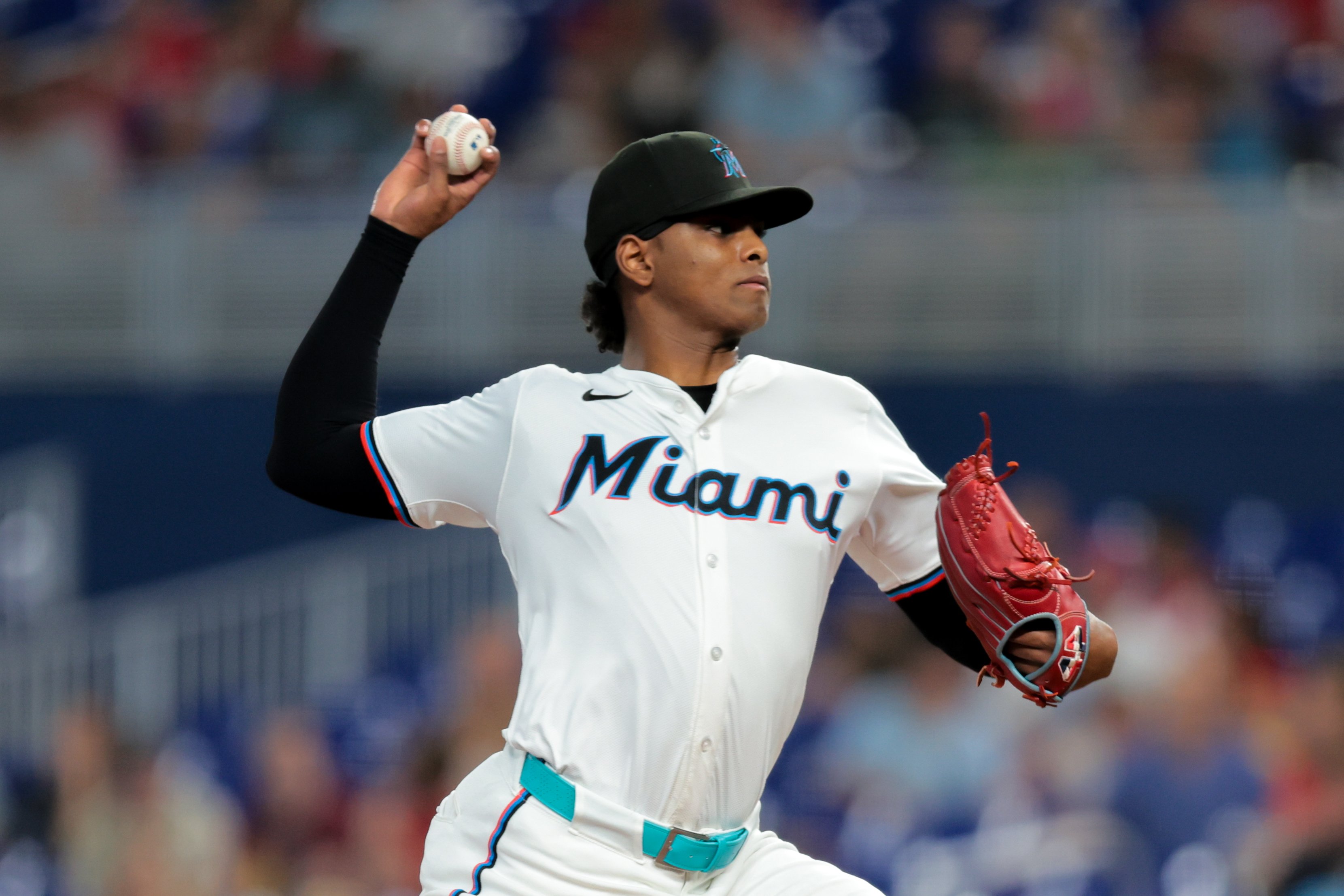 Edward Cabrera entered this season with a lot to prove. From 2021-24, the talented flame-thrower had not been nearly as effective or available as the Marlins hoped he would be. Even 2025 started off on the wrong foot with an awful spring training and time missed due to a middle finger blister. About halfway through the season, however, it's safe to say that Cabrera is on track for a career year. Through 71 ⅓ innings, he has posted a 3.41 ERA and a career-low walk rate of 10.5%. There have been tangible changes to Cabrera's pitch usage, command, arm slot and extension, and pitch movement. The combination of these factors has helped him go on this run of unprecedented consistency. In 2025, Cabrera has evened out his arsenal compared to prior years, throwing his changeup, sinker, curveball, slider, and four-seam fastball each over 14% of the time. Compared to last season, he has cut his four-seam usage in half at the expense of more sinkers. Cabrera has also thrown the changeup less while upping his slider usage from 8% to 16%. I believe due to being a natural supinator, Cabrera has always had better feel for his sinker compared to the four-seam fastball. His in-zone rate with the sinker has increased to 60.6%, up 30% from last season. He now has a weapon for getting in front of counts, allowing his offspeed to put away hitters with two strikes. I believe the improved command for Cabrera stems from his new arm slot. His average arm angle from 2021-24 was 43 degrees, but that has dropped to 36 degrees this season. A higher slot generally pairs best with a pitcher who has a north-south approach and four-seam-heavy diet. He's now working more east-west. There's been a slight drop in Cabrera's extension, from 6.7 feet down the mound in 2024 to 6.5 feet in 2025. Although getting closer to the plate is generally a positive, releasing the ball earlier may be what he needed to do to throw more strikes than ever before. The quality of Edward Cabrera's stuff has never been better. There's been an increase in spin rate on all of his pitches. Overall, his Stuff+ this season is 106, per FanGraphs (100 represents league average). Both his curveball and changeup grade out significantly better than they did in any previous season. We are observing a career-high 50 inches of vertical drop on Cabrera's curveball. This has led to a crazy 42.2 CSW% on the pitch, putting it in the 95% percentile. The curve has a 40% whiff rate and it's responsible for finishing off more strikeouts than any of his other pitches. WEQyajNfWGw0TUFRPT1fQjFRRVVGUUNVVmNBQ0ZGV1ZBQUhWd1VIQUZoUVZ3UUFBQU1BQUFKWENRSmRCZ0lE.mp4 The whiff rate is even higher on Cabrera's slider (44.8%). He has yet to give up a barrel on the pitch and it has a impressive xwOBACON of .276, preventing damage even when opponents make contact. Cabrera's signature changeup has not performed as well as prior seasons, but the emergence of his slider and curveball has helped compensate for that. The major weakness for Cabrera is still his four-seam fastball—xSLG of .696, .444 wOBA, and 68.0% Hard-Hit%. ZzY4alBfWGw0TUFRPT1fQXdoVUJsVlNBQU1BRFZZQkF3QUhBd01GQUZsUlVGTUFDd1lGQ0FVQUJsQlJVZ1FG.mp4 Cabrera has tried leaning more on his sinker to change eye levels, but that pitch is far less optimal when thrown higher in the zone. The lack of velocity separation between his changeup and sinker also limits the upside those pitches have when paired with each other. Cabrera throws the hardest changeup on average in the big leagues at 93.8 mph, only a 2.8 mph dip from his average sinker. During certain sequences, there's no difference in velo whatsoever. Even though the pitches are thrown to different areas, the similarities in speed may be helping batters with their timing. While there are still limitations to Cabrera's game, including the ability to control baserunners, he has emerged as a more complete pitcher at age 27. He is equally productive against left-handed and right-handed batters and putting himself in position to navigate his starts with better efficiency. He has solidified his spot in the Marlins rotation and made himself one of the most desirable starters on the trade market this month.
 -
Edward Cabrera entered this season with a lot to prove. From 2021-24, the talented flame-thrower had not been nearly as effective or available as the Marlins hoped he would be. Even 2025 started off on the wrong foot with an awful spring training and time missed due to a middle finger blister. About halfway through the season, however, it's safe to say that Cabrera is on track for a career year. Through 71 ⅓ innings, he has posted a 3.41 ERA and a career-low walk rate of 10.5%. There have been tangible changes to Cabrera's pitch usage, command, arm slot and extension, and pitch movement. The combination of these factors has helped him go on this run of unprecedented consistency. In 2025, Cabrera has evened out his arsenal compared to prior years, throwing his changeup, sinker, curveball, slider, and four-seam fastball each over 14% of the time. Compared to last season, he has cut his four-seam usage in half at the expense of more sinkers. Cabrera has also thrown the changeup less while upping his slider usage from 8% to 16%. I believe due to being a natural supinator, Cabrera has always had better feel for his sinker compared to the four-seam fastball. His in-zone rate with the sinker has increased to 60.6%, up 30% from last season. He now has a weapon for getting in front of counts, allowing his offspeed to put away hitters with two strikes. I believe the improved command for Cabrera stems from his new arm slot. His average arm angle from 2021-24 was 43 degrees, but that has dropped to 36 degrees this season. A higher slot generally pairs best with a pitcher who has a north-south approach and four-seam-heavy diet. He's now working more east-west. There's been a slight drop in Cabrera's extension, from 6.7 feet down the mound in 2024 to 6.5 feet in 2025. Although getting closer to the plate is generally a positive, releasing the ball earlier may be what he needed to do to throw more strikes than ever before. The quality of Edward Cabrera's stuff has never been better. There's been an increase in spin rate on all of his pitches. Overall, his Stuff+ this season is 106, per FanGraphs (100 represents league average). Both his curveball and changeup grade out significantly better than they did in any previous season. We are observing a career-high 50 inches of vertical drop on Cabrera's curveball. This has led to a crazy 42.2 CSW% on the pitch, putting it in the 95% percentile. The curve has a 40% whiff rate and it's responsible for finishing off more strikeouts than any of his other pitches. WEQyajNfWGw0TUFRPT1fQjFRRVVGUUNVVmNBQ0ZGV1ZBQUhWd1VIQUZoUVZ3UUFBQU1BQUFKWENRSmRCZ0lE.mp4 The whiff rate is even higher on Cabrera's slider (44.8%). He has yet to give up a barrel on the pitch and it has a impressive xwOBACON of .276, preventing damage even when opponents make contact. Cabrera's signature changeup has not performed as well as prior seasons, but the emergence of his slider and curveball has helped compensate for that. The major weakness for Cabrera is still his four-seam fastball—xSLG of .696, .444 wOBA, and 68.0% Hard-Hit%. ZzY4alBfWGw0TUFRPT1fQXdoVUJsVlNBQU1BRFZZQkF3QUhBd01GQUZsUlVGTUFDd1lGQ0FVQUJsQlJVZ1FG.mp4 Cabrera has tried leaning more on his sinker to change eye levels, but that pitch is far less optimal when thrown higher in the zone. The lack of velocity separation between his changeup and sinker also limits the upside those pitches have when paired with each other. Cabrera throws the hardest changeup on average in the big leagues at 93.8 mph, only a 2.8 mph dip from his average sinker. During certain sequences, there's no difference in velo whatsoever. Even though the pitches are thrown to different areas, the similarities in speed may be helping batters with their timing. While there are still limitations to Cabrera's game, including the ability to control baserunners, he has emerged as a more complete pitcher at age 27. He is equally productive against left-handed and right-handed batters and putting himself in position to navigate his starts with better efficiency. He has solidified his spot in the Marlins rotation and made himself one of the most desirable starters on the trade market this month. View full article
-
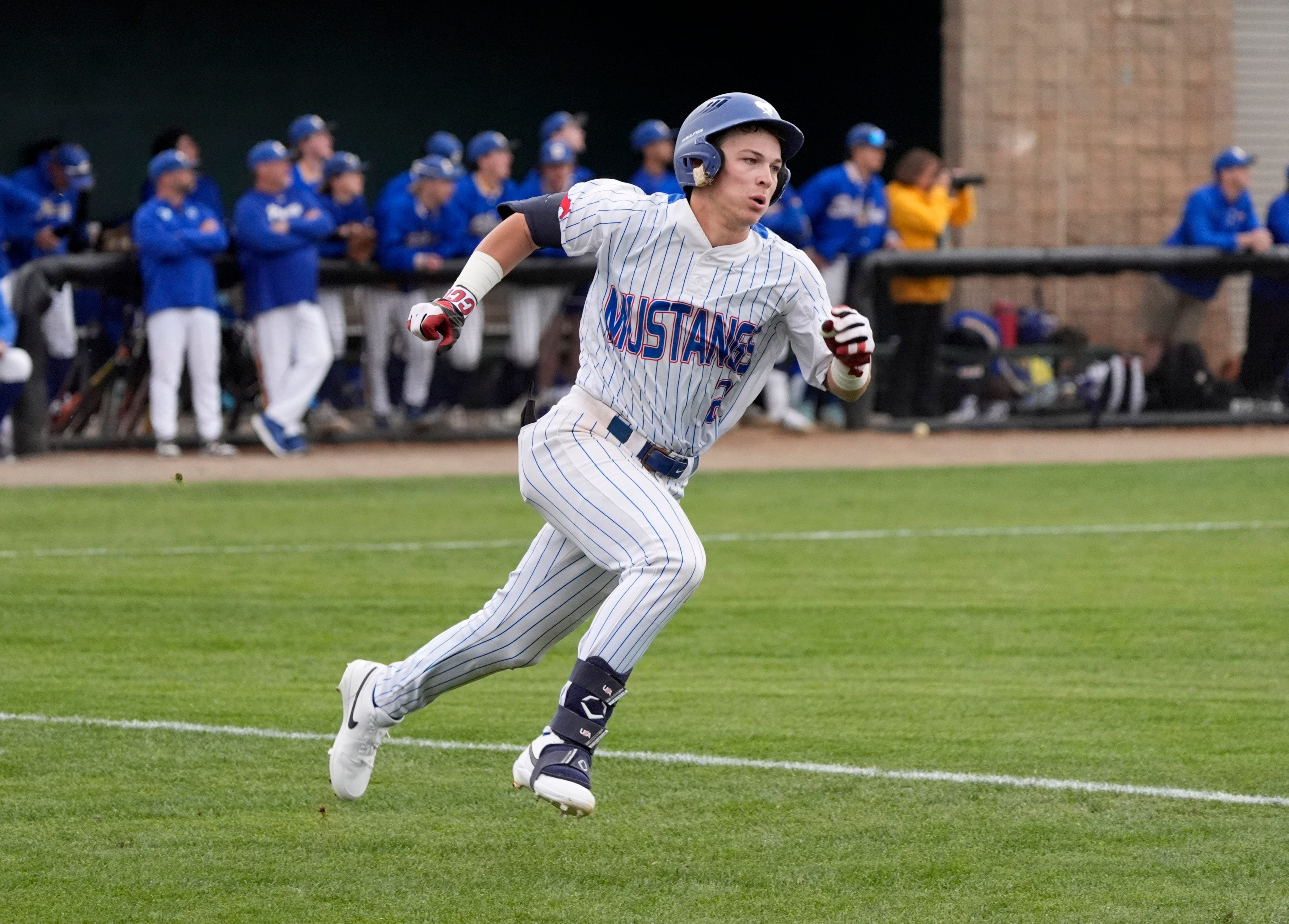 The Marlins will make eight selections within the first seven rounds—seventh, 43rd, 48th, 78th, 108th, 139th, 168th, and 198th overall. Their overall bonus pool is the largest in franchise history at $15,187,400. Based on the composition of the 2025 draft class and past draft trends, @Hector Rodriguez and I have simulated what the Marlins may do under the leadership of president of baseball operations Peter Bendix and amateur scouting director Frankie Piliere. Hector and I alternated picks for this exercise (#7, #46, #108, and #168 selected by him; #43, #78, #139, and #198 selected by me). First Round (7th overall)—Eli Willits, SS, Fort Cobb-Broxton HS (OK) Slot value: 7,149,900 With the seventh pick of the 2025 MLB Draft, the Miami Marlins select shortstop Eli Willits. The Marlins select one of the most well-rounded high school prospects in the 2025 MLB Draft class. He's also one of the youngest prospects in this draft class. Eli Willits is the 6'1", 180-pound middle infielder out of Fort Cobb-Broxton High School in Fort Cobb, Oklahoma. On MLB Pipeline, Willits is the fifth-ranked prospect in the 2025 MLB Draft. He's also the third-ranked draft prospect on Baseball America. Willits is a switch-hitter, but he's more polished from the left side. He has excellent bat-to-ball skills with an advanced approach. He's a line-drive hitter who rarely chases out the zone. Willits doesn't possess much power yet, but will hit for more pop once he fills in his frame. Defensively, Willits projects as an above-average defensive shortstop with solid arm strength. He's also a good athlete and can play center field at the next level. Willits is an above-average runner and swipes some bases. He is signed to play college baseball for the University of Oklahoma. Competitive Balance Round A (43rd overall)—Charles Davalan, OF/2B, Arkansas Slot value: $2,276,700 With the 43rd pick of the 2025 MLB Draft, the Miami Marlins select outfielder/second baseman Charles Davalan. The Marlins have prioritized the bat-first player archetype since Peter Bendix took over and Davalan is one of the most polished college hitters in this year's draft class. Charles Davalan is a short, yet stocky player for the Razorbacks, coming in at 5'9", 190 pounds. A native of Canada, Davalan began his college career at FGCU last season before transferring to Arkansas. Ranked 55th overall among draft prospects by MLB Pipeline, his name has had some serious helium as Arkansas continues its College World Series run. Davalan gets his value from top-tier bat-to-ball skills and an elite approach at the plate. In 2025, he is slashing .352/.440/.572 with 14 home runs and more walks than strikeouts. The lefty has posted in-zone contact rates above 90% and contact rates above 85% against fastballs. Davalan has shown the ability to hit all pitches in different parts of the zone while staying patient and refusing to chase. The power numbers may never be great, but he has flashed solid exit velocities and projects to have decent power in the pros. With the glove, Davalan plays a solid corner outfield and second base. He has a good arm and adds value on the basepaths with sneaky athleticism. Second Round (46th overall)—Landon Harmon, RHP, East Union HS (MS) Slot value: $2,128,800 With the 46th pick of the 2025 MLB Draft, the Miami Marlins select right-handed pitcher Landon Harmon. The Marlins select one of the top prep arms in this draft class with their second-round pick. He's also the first pitcher the Marlins have taken in this mock draft. Landon Harmon is a 6'5", 190-pound right-handed pitcher out of East Union High School in New Albany, Mississippi. On Perfect Game, Harmon is the 26th-ranked prospect and the second-ranked right-handed pitcher in the Class of 2025. He's also the 47th-ranked draft prospect on MLB Pipeline. Harmon possesses a three-pitch mix including his fastball, slider, and changeup. The fastball is his best pitch, sitting 93-96 mph and topping out at 99 mph with good carry and armside run. Harmon's slider is his best secondary pitch. It typically sits in the low 80s and moves like a sweeper, but he can also manipulate it into a mid-80s cutter. He doesn't have much feel for his changeup yet and needs to develop it in the minors. Harmon has a smooth, repeatable delivery with plus arm speed and pounds the zone. He is signed to play college baseball for Mississippi State University. Third Round (78th overall)—Griffin Hugus, RHP, Miami Slot value: $1,043,700 With the 78th overall pick of the 2025 MLB Draft, the Miami Marlins select right-handed pitcher Griffin Hugus. The Marlins select a local product currently attending the University of Miami. Griffin Hugus is a 6'2", 195-pound right-handed pitcher. The former Cincinnati Bearcat transferred to Miami and has seemingly figured out his control problems, adding to his pitch mix and becoming a starter for the first time in his college career. Currently ranked 164th overall on MLB Pipeline, Hugus has garnered interest from teams coming off of his impressive 2025 campaign for the Hurricanes. Before this season, Hugus never could command the strike zone, but he put up a 4.16 ERA, 9.2 K/9, and 3.4 BB/9 for his new school. While these base stats may not be eye-popping, it's the underlying pitch data that intrigues teams. Hugus throws an electric fastball coming in around 95 mph. The fastball has nice carry which allows it to play well at the top parts of the strike zone, getting whiffs. He added a bullet slider to replace his sweeping slider and it has performed better off of his fastball. His old sweeper has become more of a curveball with steep depth to it. Hugus' combination of quick arm speed, big-time fastball, and pitch arsenal and production improvements has him rising up draft boards. Adding another offspeed pitch will be a key part of his development in the minors. Fourth Round (108th overall)—Nolan Schubart, OF, Oklahoma State Slot value: $708,300 With the 108th pick of the 2025 MLB Draft, the Miami Marlins select outfielder Nolan Schubart. The 6'5", 225-pound outfielder is one of the top power hitters in college baseball. He has had three very productive seasons for the Oklahoma State Cowboys. In his freshman season, Schubart made an immediate impact for the Cowboys. He played in 61 games and started in 59. Schubart slashed .338/.451/.667 with 73, hits, 20 doubles, 17 home runs, 74 RBIs, and a 1.117 OPS. He was named a Freshman All-American as well as a Third Team All-American by Collegiate Baseball and NCBWA. In his sophomore season, Schubart slashed .370/.513/.838 with 64 hits, ten doubles, 23 home runs, 68 RBIs, and 1.351 OPS. He was named a Second Team All-American by the NCBWA and Baseball America. Schubart continued to be one of the top power hitters in the nation in 2025. In 55 games, Schubart slashed .300/.436/.630 with 60 hits, nine doubles, 19 home runs, 57 RBIs, 48 walks, and a 1.066 OPS. Besides his tremendous power, Schubart doesn't have many tools and could move to first base at the next level. Fifth Round (139th overall)—Griffin Enis, OF, Corinth HS (MS) Slot value: $523,900 With the 139th pick of the 2025 MLB Draft, the Miami Marlins select outfielder Griffin Enis from Corinth High School in Mississippi. In a strong high school class for the state of Mississippi, Enis may be getting overlooked. Enis is a powerful, tooled-out outfielder who will stick at center field. He has an extremely violent swing from the right side, with an advanced swing path for his age. He's an aggressive hitter who uses his large 6'1", 190-pound frame to turn on pitches. He hit 13 home runs as a senior. He faced fellow Mississippian Landon Harmon this season and took him deep. A 70-grade runner, Enis has the potential to be a true five-tool player at the next level. The Marlins would most likely have to go over-slot to sign Enis in the fifth round and take him from his commitment to Duke. Sixth Round (168th overall)—Bobby Boser, 3B, Florida Slot value: $397,000 With the 106th pick of the 2025 MLB Draft, the Miami Marlins select third baseman Bobby Boser. The Marlins select one of the most productive seniors available with the expectation of signing him under slot value. In his first three seasons, Boser played in 127 games and 106 starts for the USF Bulls. Boser was considered a top prospect in the 2024 draft cycle, but went undrafted after missing half of the 2024 season with an injury. Boser entered the transfer portal and signed with the Florida Gators. In his senior season, Boser was one of the best hitters in Florida's lineup. Boser slashed .336/.437/.613 with 80 hits, 12 doubles, 18 home runs, 67 RBIs, sixteen hit-by-pitches, 28 walks, and a 1.050 OPS. Boser has average to above-average hit and power tools, but his defensive versatility makes him an intriguing prospect. He projects as a third baseman or second baseman at the next level. He also played some shortstop when Florida lost their starting shortstop, Colby Shelton, to a season-ending hand injury. Seventh Round (198th overall)—Dylan Brown, LHP, Old Dominion Slot value: $309,400 With the 198th pick of the 2025 MLB Draft, the Miami Marlins select left-handed-pitcher Dylan Brown from Old Dominion. The 6'5", 230-pound lefty dominated this season in 15 starts. Dylan Brown throws from a low three-quarters arm slot and cuts across the rubber, creating difficult angles for opposing hitters. His 6'5" frame and funky delivery adds deception and allows for his arsenal of pitches to tick up. For a large pitcher, he can command the strike zone very well. This season, Brown posted a 4.06 ERA in 82 innings with a 11.2 K/9, 2.9 BB/9, and 1.24 WHIP. The calling card for Brown—besides the size and unique delivery—is a great slider that generates a lot of chase and whiff. It sits 86 mph with bullet drop to it. What's holding Brown back is a sub-par fastball with poor shape, velo, and extension. That being said, because of his delivery and arm slot, the changeup does play well off of the fastball. Gaining velo at the next level would change his outlook. I believe Brown should adopt a sinker to generate soft contact and embrace his funky stuff. Summarizing Rounds 1-7 Our selections of Eli Willits, Charles Davalan, Landon Harmon, Griffin Hugus, Nolan Schubart, Griffin Enis, Bobby Boser, and Dylan Brown add a blend of prep hitting, prep pitching, college hitting, and college pitching to the Marlins farm system.
 -
We are now less than one month away from the 2025 MLB Draft. Fish On First has already published profiles for many of the prospects worth considering for the Miami Marlins in the first round as well as a mid-May mock draft covering the first five rounds. It's time to dive even deeper with a seven-round mock. The Marlins will make eight selections within the first seven rounds—seventh, 43rd, 48th, 78th, 108th, 139th, 168th, and 198th overall. Their overall bonus pool is the largest in franchise history at $15,187,400. Based on the composition of the 2025 draft class and past draft trends, @Hector Rodriguez and I have simulated what the Marlins may do under the leadership of president of baseball operations Peter Bendix and amateur scouting director Frankie Piliere. Hector and I alternated picks for this exercise (#7, #46, #108, and #168 selected by him; #43, #78, #139, and #198 selected by me). First Round (7th overall)—Eli Willits, SS, Fort Cobb-Broxton HS (OK) Slot value: 7,149,900 With the seventh pick of the 2025 MLB Draft, the Miami Marlins select shortstop Eli Willits. The Marlins select one of the most well-rounded high school prospects in the 2025 MLB Draft class. He's also one of the youngest prospects in this draft class. Eli Willits is the 6'1", 180-pound middle infielder out of Fort Cobb-Broxton High School in Fort Cobb, Oklahoma. On MLB Pipeline, Willits is the fifth-ranked prospect in the 2025 MLB Draft. He's also the third-ranked draft prospect on Baseball America. Willits is a switch-hitter, but he's more polished from the left side. He has excellent bat-to-ball skills with an advanced approach. He's a line-drive hitter who rarely chases out the zone. Willits doesn't possess much power yet, but will hit for more pop once he fills in his frame. Defensively, Willits projects as an above-average defensive shortstop with solid arm strength. He's also a good athlete and can play center field at the next level. Willits is an above-average runner and swipes some bases. He is signed to play college baseball for the University of Oklahoma. Competitive Balance Round A (43rd overall)—Charles Davalan, OF/2B, Arkansas Slot value: $2,276,700 With the 43rd pick of the 2025 MLB Draft, the Miami Marlins select outfielder/second baseman Charles Davalan. The Marlins have prioritized the bat-first player archetype since Peter Bendix took over and Davalan is one of the most polished college hitters in this year's draft class. Charles Davalan is a short, yet stocky player for the Razorbacks, coming in at 5'9", 190 pounds. A native of Canada, Davalan began his college career at FGCU last season before transferring to Arkansas. Ranked 55th overall among draft prospects by MLB Pipeline, his name has had some serious helium as Arkansas continues its College World Series run. Davalan gets his value from top-tier bat-to-ball skills and an elite approach at the plate. In 2025, he is slashing .352/.440/.572 with 14 home runs and more walks than strikeouts. The lefty has posted in-zone contact rates above 90% and contact rates above 85% against fastballs. Davalan has shown the ability to hit all pitches in different parts of the zone while staying patient and refusing to chase. The power numbers may never be great, but he has flashed solid exit velocities and projects to have decent power in the pros. With the glove, Davalan plays a solid corner outfield and second base. He has a good arm and adds value on the basepaths with sneaky athleticism. Second Round (46th overall)—Landon Harmon, RHP, East Union HS (MS) Slot value: $2,128,800 With the 46th pick of the 2025 MLB Draft, the Miami Marlins select right-handed pitcher Landon Harmon. The Marlins select one of the top prep arms in this draft class with their second-round pick. He's also the first pitcher the Marlins have taken in this mock draft. Landon Harmon is a 6'5", 190-pound right-handed pitcher out of East Union High School in New Albany, Mississippi. On Perfect Game, Harmon is the 26th-ranked prospect and the second-ranked right-handed pitcher in the Class of 2025. He's also the 47th-ranked draft prospect on MLB Pipeline. Harmon possesses a three-pitch mix including his fastball, slider, and changeup. The fastball is his best pitch, sitting 93-96 mph and topping out at 99 mph with good carry and armside run. Harmon's slider is his best secondary pitch. It typically sits in the low 80s and moves like a sweeper, but he can also manipulate it into a mid-80s cutter. He doesn't have much feel for his changeup yet and needs to develop it in the minors. Harmon has a smooth, repeatable delivery with plus arm speed and pounds the zone. He is signed to play college baseball for Mississippi State University. Third Round (78th overall)—Griffin Hugus, RHP, Miami Slot value: $1,043,700 With the 78th overall pick of the 2025 MLB Draft, the Miami Marlins select right-handed pitcher Griffin Hugus. The Marlins select a local product currently attending the University of Miami. Griffin Hugus is a 6'2", 195-pound right-handed pitcher. The former Cincinnati Bearcat transferred to Miami and has seemingly figured out his control problems, adding to his pitch mix and becoming a starter for the first time in his college career. Currently ranked 164th overall on MLB Pipeline, Hugus has garnered interest from teams coming off of his impressive 2025 campaign for the Hurricanes. Before this season, Hugus never could command the strike zone, but he put up a 4.16 ERA, 9.2 K/9, and 3.4 BB/9 for his new school. While these base stats may not be eye-popping, it's the underlying pitch data that intrigues teams. Hugus throws an electric fastball coming in around 95 mph. The fastball has nice carry which allows it to play well at the top parts of the strike zone, getting whiffs. He added a bullet slider to replace his sweeping slider and it has performed better off of his fastball. His old sweeper has become more of a curveball with steep depth to it. Hugus' combination of quick arm speed, big-time fastball, and pitch arsenal and production improvements has him rising up draft boards. Adding another offspeed pitch will be a key part of his development in the minors. Fourth Round (108th overall)—Nolan Schubart, OF, Oklahoma State Slot value: $708,300 With the 108th pick of the 2025 MLB Draft, the Miami Marlins select outfielder Nolan Schubart. The 6'5", 225-pound outfielder is one of the top power hitters in college baseball. He has had three very productive seasons for the Oklahoma State Cowboys. In his freshman season, Schubart made an immediate impact for the Cowboys. He played in 61 games and started in 59. Schubart slashed .338/.451/.667 with 73, hits, 20 doubles, 17 home runs, 74 RBIs, and a 1.117 OPS. He was named a Freshman All-American as well as a Third Team All-American by Collegiate Baseball and NCBWA. In his sophomore season, Schubart slashed .370/.513/.838 with 64 hits, ten doubles, 23 home runs, 68 RBIs, and 1.351 OPS. He was named a Second Team All-American by the NCBWA and Baseball America. Schubart continued to be one of the top power hitters in the nation in 2025. In 55 games, Schubart slashed .300/.436/.630 with 60 hits, nine doubles, 19 home runs, 57 RBIs, 48 walks, and a 1.066 OPS. Besides his tremendous power, Schubart doesn't have many tools and could move to first base at the next level. Fifth Round (139th overall)—Griffin Enis, OF, Corinth HS (MS) Slot value: $523,900 With the 139th pick of the 2025 MLB Draft, the Miami Marlins select outfielder Griffin Enis from Corinth High School in Mississippi. In a strong high school class for the state of Mississippi, Enis may be getting overlooked. Enis is a powerful, tooled-out outfielder who will stick at center field. He has an extremely violent swing from the right side, with an advanced swing path for his age. He's an aggressive hitter who uses his large 6'1", 190-pound frame to turn on pitches. He hit 13 home runs as a senior. He faced fellow Mississippian Landon Harmon this season and took him deep. A 70-grade runner, Enis has the potential to be a true five-tool player at the next level. The Marlins would most likely have to go over-slot to sign Enis in the fifth round and take him from his commitment to Duke. Sixth Round (168th overall)—Bobby Boser, 3B, Florida Slot value: $397,000 With the 106th pick of the 2025 MLB Draft, the Miami Marlins select third baseman Bobby Boser. The Marlins select one of the most productive seniors available with the expectation of signing him under slot value. In his first three seasons, Boser played in 127 games and 106 starts for the USF Bulls. Boser was considered a top prospect in the 2024 draft cycle, but went undrafted after missing half of the 2024 season with an injury. Boser entered the transfer portal and signed with the Florida Gators. In his senior season, Boser was one of the best hitters in Florida's lineup. Boser slashed .336/.437/.613 with 80 hits, 12 doubles, 18 home runs, 67 RBIs, sixteen hit-by-pitches, 28 walks, and a 1.050 OPS. Boser has average to above-average hit and power tools, but his defensive versatility makes him an intriguing prospect. He projects as a third baseman or second baseman at the next level. He also played some shortstop when Florida lost their starting shortstop, Colby Shelton, to a season-ending hand injury. Seventh Round (198th overall)—Dylan Brown, LHP, Old Dominion Slot value: $309,400 With the 198th pick of the 2025 MLB Draft, the Miami Marlins select left-handed-pitcher Dylan Brown from Old Dominion. The 6'5", 230-pound lefty dominated this season in 15 starts. Dylan Brown throws from a low three-quarters arm slot and cuts across the rubber, creating difficult angles for opposing hitters. His 6'5" frame and funky delivery adds deception and allows for his arsenal of pitches to tick up. For a large pitcher, he can command the strike zone very well. This season, Brown posted a 4.06 ERA in 82 innings with a 11.2 K/9, 2.9 BB/9, and 1.24 WHIP. The calling card for Brown—besides the size and unique delivery—is a great slider that generates a lot of chase and whiff. It sits 86 mph with bullet drop to it. What's holding Brown back is a sub-par fastball with poor shape, velo, and extension. That being said, because of his delivery and arm slot, the changeup does play well off of the fastball. Gaining velo at the next level would change his outlook. I believe Brown should adopt a sinker to generate soft contact and embrace his funky stuff. Summarizing Rounds 1-7 Our selections of Eli Willits, Charles Davalan, Landon Harmon, Griffin Hugus, Nolan Schubart, Griffin Enis, Bobby Boser, and Dylan Brown add a blend of prep hitting, prep pitching, college hitting, and college pitching to the Marlins farm system. View full article
-
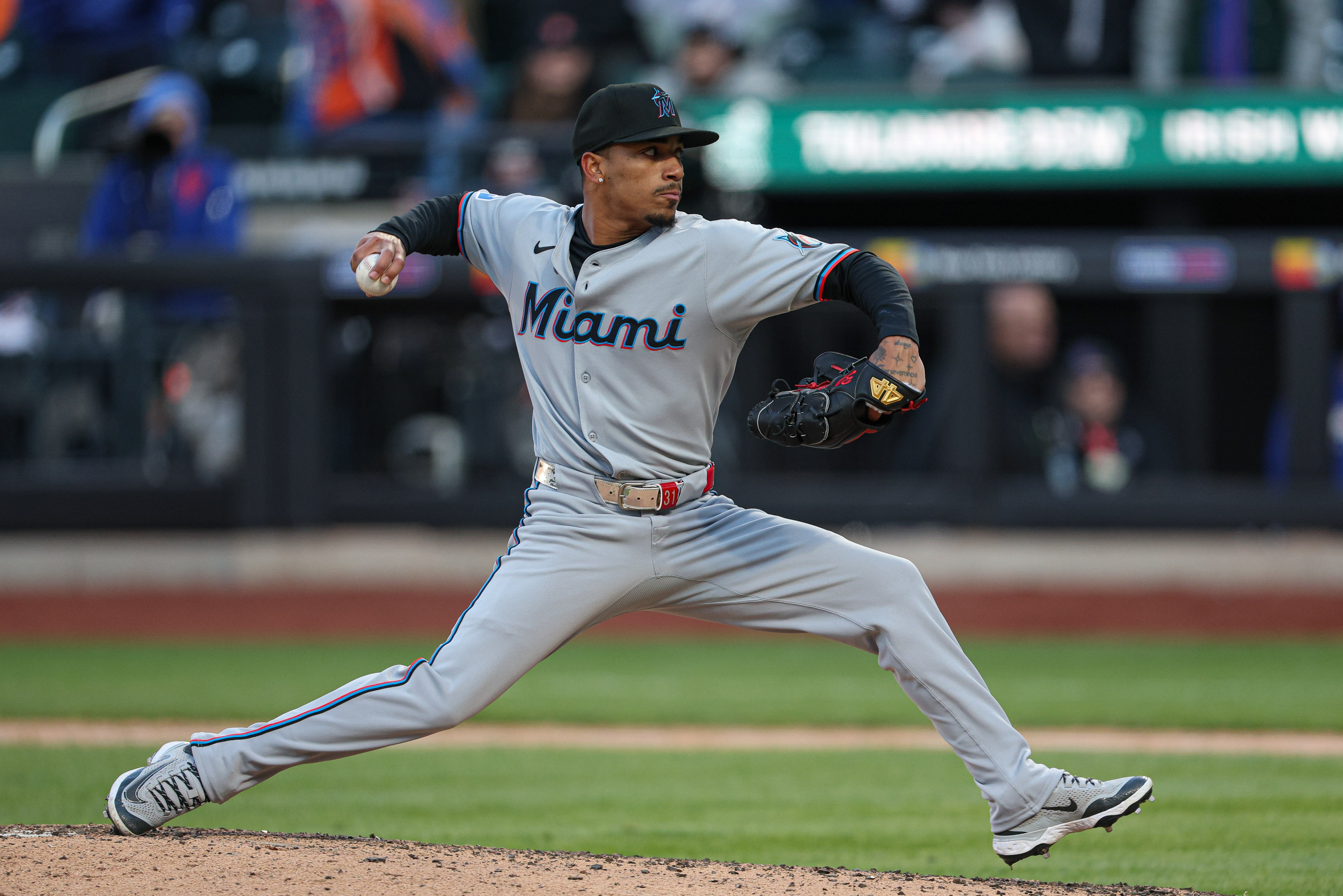 Late into the offseason, Ronny Henriquez was designated for assignment by the Minnesota Twins. The Marlins picked up the undersized, hard-throwing righty off of waivers and gave him a shot this past spring training. Henriquez impressed the coaching staff, which led to his first Opening Day nod. Henriquez climbed the minors relatively quickly during his time with the Texas Rangers before being traded to Minnesota in 2022 in a deal that included Mitch Garver. Following his acquisition, Henriquez was the 14th-ranked prospect in the Twins org. Henriquez had a starting pitcher background, but was converted into a full-time reliever by the Twins. He got solid results out of the bullpen in 2024 and those have improved so far this season. Through 28 ⅔ innings pitched as a Marlin, he has posted a 2.20 ERA and 3.42 FIP, striking hitters out 32% of the time. There's no risk of Henriquez being DFA'd again anytime soon. Quite the opposite—the Marlins should be looking for ways to expand his role even more. Commanding the strike zone is still a significant hurdle. Combining that with durability concerns, Henriquez is unlikely to get the opportunity to join a major league rotation. With that being said, his stuff could translate well to closing out games. Henriquez has the arsenal of a starter, with four quality pitches: a sweeper (which the Marlins added this spring), a more conventional slider, changeup, and fastball that plays up due to its velocity, spin efficiency, and arm angle. Each of those weapons have been effective at missing bats. Henriquez and Jason Adam are the only two relievers in MLB this season with four different pitch types (thrown a minimum of 50 times each) that have whiff rates greater than 25%. The new sweeper has been elite with a 50% whiff rate and a 31.6 SwStr%, which ranks in the 99th percentile for sweepers. It's been Henriquez's most-used pitch this season, coming in at 28% of the time. He utilizes the pitch more versus righties than to lefties, electing to use the changeup as his main offspeed pitch versus lefties. R0I2azlfWGw0TUFRPT1fVXdKU1VsRUJWd1lBQ1FjRkJRQUhVRlFEQUZnRlVsVUFBd0VDQWdZTVUxVmRBd1ZX.mp4 Because of his shorter stature compared to most pitchers in today's game and his higher arm slot, Henriquez gets great backspin on the ball and pounds the top of the zone with his four-seam fastball. Its spin rate ranks in the 80th percentile, gets 18 inches of induced vertical break, and averages 96 mph. But what stands out the most is his vertical approach angle. Henriquez's fastball has a VAA of -3.8 degrees (95th percentile). All of this plays well off of his 42-degree arm slot, allowing him to generate that high carry-spin fastball. The pitch has generated a 31.8 CSW%, which ranks in the top 70% of fastballs. Hitters have a .161 xBA and .256 xwOBA against the fastball. Everything indicates the pitch should stay effective the rest of the season as long as it is thrown at the top of the zone. MnJPazVfWGw0TUFRPT1fVjFRRVZnSUJWRkFBREZwVFhnQUhCMVVIQUZsVVZWQUFBd2RUQmxBTkJBQUJWUVpX.mp4 Henrique's slider has posted a xBA of .128, xSLG of .316, xwOBA of .272 and a 39% whiff rate. It is only being hit hard 25% of the time. It has gotten good results regardless of batter handedness, although the batted ball data versus lefties is mildly concerning. This slider is unique—it doesn't move much horizontally, yet has more downward drop. If Henriquez were to throw this pitch harder than its current 87 mph average, I believe it would get even better results. Lastly, Henriquez's changeup has resulted in a .310 xBA, .464 xwOBA, and a HH% of 50%—all very poor numbers. He's thrown the pitch 91 times this season and 81 times to lefties. Ironically, when rarely used to righties, it has performed very well. It should be used more in those situations to jam hitters. RDFBNjZfWGw0TUFRPT1fRGdrRFhGMVFBd0FBQVZJQ1h3QUhWRlZTQUZsVEIxQUFBbEZSQjFBQkFnUUVCQWND.mp4 A lefty problem may arise in the future as hitters adjust to Henriquez's new stuff. Developing another way to neutralize lefties would be advantageous. With the current state of the Marlins bullpen isn't great overall. Andrew Nardi has been out all season due to injury and Declan Cronin still isn't back to his 2024 self. Jesús Tinoco was just diagnosed with a forearm strain and he hadn't been missing bats even when healthy. Breakout reliever Calvin Faucher has also underperformed relative to last season. Although Anthony Bender has the edge in terms of experience, I believe Ronny Henriquez offers more upside and is currently the best option to close games for the Fish.
 -
Late into the offseason, Ronny Henriquez was designated for assignment by the Minnesota Twins. The Marlins picked up the undersized, hard-throwing righty off of waivers and gave him a shot this past spring training. Henriquez impressed the coaching staff, which led to his first Opening Day nod. Henriquez climbed the minors relatively quickly during his time with the Texas Rangers before being traded to Minnesota in 2022 in a deal that included Mitch Garver. Following his acquisition, Henriquez was the 14th-ranked prospect in the Twins org. Henriquez had a starting pitcher background, but was converted into a full-time reliever by the Twins. He got solid results out of the bullpen in 2024 and those have improved so far this season. Through 28 ⅔ innings pitched as a Marlin, he has posted a 2.20 ERA and 3.42 FIP, striking hitters out 32% of the time. There's no risk of Henriquez being DFA'd again anytime soon. Quite the opposite—the Marlins should be looking for ways to expand his role even more. Commanding the strike zone is still a significant hurdle. Combining that with durability concerns, Henriquez is unlikely to get the opportunity to join a major league rotation. With that being said, his stuff could translate well to closing out games. Henriquez has the arsenal of a starter, with four quality pitches: a sweeper (which the Marlins added this spring), a more conventional slider, changeup, and fastball that plays up due to its velocity, spin efficiency, and arm angle. Each of those weapons have been effective at missing bats. Henriquez and Jason Adam are the only two relievers in MLB this season with four different pitch types (thrown a minimum of 50 times each) that have whiff rates greater than 25%. The new sweeper has been elite with a 50% whiff rate and a 31.6 SwStr%, which ranks in the 99th percentile for sweepers. It's been Henriquez's most-used pitch this season, coming in at 28% of the time. He utilizes the pitch more versus righties than to lefties, electing to use the changeup as his main offspeed pitch versus lefties. R0I2azlfWGw0TUFRPT1fVXdKU1VsRUJWd1lBQ1FjRkJRQUhVRlFEQUZnRlVsVUFBd0VDQWdZTVUxVmRBd1ZX.mp4 Because of his shorter stature compared to most pitchers in today's game and his higher arm slot, Henriquez gets great backspin on the ball and pounds the top of the zone with his four-seam fastball. Its spin rate ranks in the 80th percentile, gets 18 inches of induced vertical break, and averages 96 mph. But what stands out the most is his vertical approach angle. Henriquez's fastball has a VAA of -3.8 degrees (95th percentile). All of this plays well off of his 42-degree arm slot, allowing him to generate that high carry-spin fastball. The pitch has generated a 31.8 CSW%, which ranks in the top 70% of fastballs. Hitters have a .161 xBA and .256 xwOBA against the fastball. Everything indicates the pitch should stay effective the rest of the season as long as it is thrown at the top of the zone. MnJPazVfWGw0TUFRPT1fVjFRRVZnSUJWRkFBREZwVFhnQUhCMVVIQUZsVVZWQUFBd2RUQmxBTkJBQUJWUVpX.mp4 Henrique's slider has posted a xBA of .128, xSLG of .316, xwOBA of .272 and a 39% whiff rate. It is only being hit hard 25% of the time. It has gotten good results regardless of batter handedness, although the batted ball data versus lefties is mildly concerning. This slider is unique—it doesn't move much horizontally, yet has more downward drop. If Henriquez were to throw this pitch harder than its current 87 mph average, I believe it would get even better results. Lastly, Henriquez's changeup has resulted in a .310 xBA, .464 xwOBA, and a HH% of 50%—all very poor numbers. He's thrown the pitch 91 times this season and 81 times to lefties. Ironically, when rarely used to righties, it has performed very well. It should be used more in those situations to jam hitters. RDFBNjZfWGw0TUFRPT1fRGdrRFhGMVFBd0FBQVZJQ1h3QUhWRlZTQUZsVEIxQUFBbEZSQjFBQkFnUUVCQWND.mp4 A lefty problem may arise in the future as hitters adjust to Henriquez's new stuff. Developing another way to neutralize lefties would be advantageous. With the current state of the Marlins bullpen isn't great overall. Andrew Nardi has been out all season due to injury and Declan Cronin still isn't back to his 2024 self. Jesús Tinoco was just diagnosed with a forearm strain and he hadn't been missing bats even when healthy. Breakout reliever Calvin Faucher has also underperformed relative to last season. Although Anthony Bender has the edge in terms of experience, I believe Ronny Henriquez offers more upside and is currently the best option to close games for the Fish. View full article
-
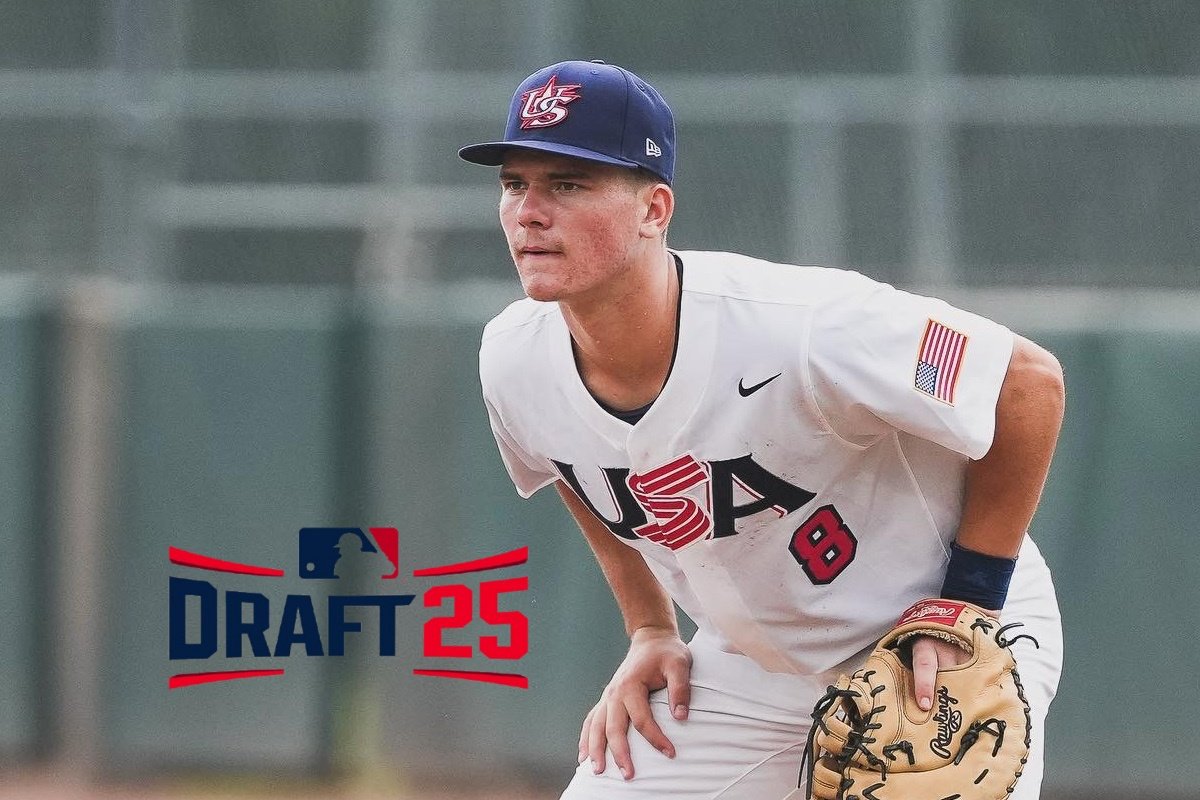 We are now just two months away from the 2025 MLB Draft. Fish On First has already published profiles for many of the prospects worth considering for the Miami Marlins in the first round as well as an updated draft big board. It's time to dive even deeper with a five-round mock draft. The Marlins will make six selections within the first five rounds—seventh, 43rd, 48th, 78th, 108th and 139th overall. Their overall bonus pool is the largest in franchise history at $15,187,400. Based on the composition of the 2025 draft class and past draft trends, @Hector Rodriguez and I have simulated what the Marlins may do under the leadership of president of baseball operations Peter Bendix and amateur scouting director Frankie Piliere. Hector and I alternated picks for this exercise (#7, #48 and #108 selected by me; #43, #78 and #139 selected by him). First Round (7th overall)—Gavin Fien, 3B, Great Oak HS (CA) Big board rank: 10th Slot value: $7,149,900 With the seventh pick of the 2025 MLB Draft, the Miami Marlins select third baseman Gavin Fien. The Marlins select one of the most pro-ready high school bats in the draft. Gavin Fien is a 6'3", 200-pound third baseman from Great Oak High School in California. Fien is one of the highest-ranked prospects across all outlets with 50-plus grades for all tools. He figures to go much earlier than his brother Dylan, who got an over-slot deal in the seventh from the A's in last year's draft. Hitting-wise, Fien gets great lift and pull on the ball, hitting for pull-side power and having some of the best exit velocities of any high school prospect in this class. The California native gets scouts excited with his bat speed and advanced hands for his age. He has a unique swing by positioning his hands high, which allows him to stay on plane with the pitcher and hit line drives. The hand placement also allows for Fien to get steep approach on pitches in the lower half of the zone, which he pulls in the air with authority. Overall, he generates high contact rates, has shown the ability to control the strike zone, hunting pitches he likes and using his large frame to turn on a strike. In the field, although Fien is athletic enough to play shortstop, he projects as a third baseman at the pro level. He has quick hands, a strong arm, and agile feet. Some scouts believe Fien can also move out to a corner outfield spot eventually. r1yk1a.mp4 The University of Texas commit most likely will be a slight underslot deal. I project Fien to sign somewhere between $6.2M-$6.7M. Similar to what happened last year with their PJ Morlando selection, the Fish would be saving some money to be used for later picks. Competitive Balance Round A (43rd overall)—Ryan Mitchell, SS, Houston HS (TN) Big board rank: 43rd Slot value: $2,276,700 With the 43rd pick of the 2025 MLB Draft, the Miami Marlins select shortstop Ryan Mitchell. The Marlins select one of the most well-rounded high school prospects on the board. Ryan Mitchell is a 6'0", 175-pound middle infielder out of Houston High School in Germantown, Tennessee. On Perfect Game, Mitchell is the 26th-ranked high school player in the Class of 2025. He's also the top-ranked prospect in the state of Tennessee. At the plate, Mitchell has one of the best hit tools in this draft class and terrific plate discipline. He rarely chases pitches out of the zone. He consistently barrels pitches and can hit the ball with authority to all fields. Mitchell has great bat speed and it'll continue to improve as he fills out his frame. Mitchell's power is underrated, but he can drive the ball deep when he swings with lift. Defensively, Mitchell is a great athlete, but isn't the smoothest player at his position. Mitchell runs a 6.74 60-yard dash and has average to above-average arm strength. If he can keep his speed while adding more solid weight, he could be a quality center fielder. Some scouts view him as an everyday second baseman. Mitchell is signed to play college baseball for the Georgia Tech Yellow Jackets. He would likely sign for a slot deal. Second Round (46th overall)—Marcus Phillips, RHP, Tennessee Big board rank: 54th Slot value: $2,128,800 With the 46th pick of the 2025 MLB Draft, the Miami Marlins select right-handed pitcher Marcus Phillips. The Marlins select one of the hardest-throwing college starters in the draft. The South Dakota native's fastball sits in the mid-to-high 90s, touching 100 mph with ease. Listed at 6'4", 250 pounds, its easy to understand how he generates so much power. So far this season at Tennessee, Phillips has started 13 games and posted a 10.9 K/9, 3.3 BB/9, and 1.3 HR/9, with a 3.55 ERA and 1.18 WHIP. His fastball is unorthodox with "cuttery" movement to it. Phillips also throws a slider at 86 mph and a "splinker" as well. Other than his velocity, Phillips' best quality may be the nearly seven feet of extension he gets down the mound, which would rank in the 90th percentile of current MLB pitchers. This make his electric stuff play up even more, leaving hitters with limited time to react. With Phillips not turning 21 until two weeks after the draft, I predict that the Marlins would have to give him full slot value. Third Round (78th overall)—Gavin Turley, OF, Oregon State Big board rank: 79th Slot value: $1,043,700 With the 78th pick of the 2025 MLB Draft, the Miami Marlins select outfielder Gavin Turley. The Marlins select one of the toolsiest prospects in this draft class. The junior outfielder out of Oregon State has tons of upside, but he is a bit of a project. During his collegiate career, Turley has always showcased his power tool, which is one of the best in the nation. He's a plus defender with 60-grade arm strength who'll likely play right field at the next level. Turley was named to the Freshman All-American second team on Perfect Game in 2023 and the All-Pac-12 first team last season. In his junior season, he is slashing .348/.469/.663 with 63 hits, 13 doubles, 15 home runs, 55 RBIs, 36 walks, and a 1.132 OPS. Turley also has a .403 BABIP and 156 wRC+. Turley's one weakness is his hit tool and he specifically struggles with offspeed pitches. To his credit, Turley has trimmed his strikeout rate from a 27.3 K% in 2024 to a 21.7 K% in 2025. It helps that he has a 16.9 BB% in his collegiate career. If the Marlins believe they can fix his swing-and-miss issues, he's worth talking a chance on in the third round. Turley would most likely be signing slightly below slot value at this spot. Fourth Round (108th overall)—Jack Lafflam, RHP, Brophy College Prep HS (AZ) Big board rank: 69th Slot value: $708,300 With the 108th pick of the 2025 MLB Draft, the Miami Marlins select right-handed pitcher Jack Lafflam. Similar to last year's selection of Grant Shepardson in the fifth round, this is where the Marlins invest in a talented prep pitcher. Jack Lafflam is a tall glass of water, currently 6'6", 170 pounds at only 18 years old. Topping out in the high 90s and sitting mid-90s on his fastball, Lafflam is one of the harder-throwing prep pitchers in the draft and still has a ton of room to fill out. There have been control concerns, but his stuff and size make up for it. The Arizona native has a knack for spinning the baseball. Many scouts see untapped potential with his high rpm fastball and slider combined with great extension down the mound. Getting swings-and-misses with ease when he is around the zone, Lafflam has started to move up draft boards due to his extremely high upside. I project the Marlins to use up earlier savings for an overslot deal at this pick worth $900k-$1.1M, convincing Lafflam to forgo his college commitment to Arizona. Fifth Round (139th overall)—Kishon Frett, OF, FIU Big board rank: unranked Slot value: $523,900 With the 139th pick of the 2025 MLB Draft, the Miami Marlins select outfielder Kishon Frett. The Marlins select one of the top local collegiate prospects in this draft class. To balance out Jack Lafflam's overslot deal in the fourth round, Miami needs to save some dollars. Frett is a fifth-year senior with no eligibility left. Frett is a 6'3", 215 pound corner outfielder with excellent bat speed and power. At the plate, he does a good job of using his lower half and swings with lots of lift to put the ball in the air. After three seasons at Seminole State College of Florida, Frett transferred to FIU and has made an instant impact. Frett has been FIU's best power hitter for the past two seasons. During his FIU Panthers career, Frett has played in 100 games and started in 97. Frett is slashing .287/.411/.642 with 97 hits, 35 home runs, 76 RBIs, 40 walks, 92 runs scored, and a 1.053 OPS. The Broward County native could be a nice option for the Marlins. Summarizing Rounds 1-5 Our selections of Gavin Fien, Ryan Mitchell, Marcus Phillips, Gavin Turley, Jack Lafflam, and Kishon Frett add a blend of prep hitting, prep pitching, college hitting, and college pitching to the Marlins farm system. The team would be left with roughly $2-3 million in bonus pool money for the remaining 15 rounds.
 -
Simulating who the Marlins could select with their first six picks in the upcoming draft. We are now just two months away from the 2025 MLB Draft. Fish On First has already published profiles for many of the prospects worth considering for the Miami Marlins in the first round as well as an updated draft big board. It's time to dive even deeper with a five-round mock draft. The Marlins will make six selections within the first five rounds—seventh, 43rd, 48th, 78th, 108th and 139th overall. Their overall bonus pool is the largest in franchise history at $15,187,400. Based on the composition of the 2025 draft class and past draft trends, @Hector Rodriguez and I have simulated what the Marlins may do under the leadership of president of baseball operations Peter Bendix and amateur scouting director Frankie Piliere. Hector and I alternated picks for this exercise (#7, #48 and #108 selected by me; #43, #78 and #139 selected by him). First Round (7th overall)—Gavin Fien, 3B, Great Oak HS (CA) Big board rank: 10th Slot value: $7,149,900 With the seventh pick of the 2025 MLB Draft, the Miami Marlins select third baseman Gavin Fien. The Marlins select one of the most pro-ready high school bats in the draft. Gavin Fien is a 6'3", 200-pound third baseman from Great Oak High School in California. Fien is one of the highest-ranked prospects across all outlets with 50-plus grades for all tools. He figures to go much earlier than his brother Dylan, who got an over-slot deal in the seventh from the A's in last year's draft. Hitting-wise, Fien gets great lift and pull on the ball, hitting for pull-side power and having some of the best exit velocities of any high school prospect in this class. The California native gets scouts excited with his bat speed and advanced hands for his age. He has a unique swing by positioning his hands high, which allows him to stay on plane with the pitcher and hit line drives. The hand placement also allows for Fien to get steep approach on pitches in the lower half of the zone, which he pulls in the air with authority. Overall, he generates high contact rates, has shown the ability to control the strike zone, hunting pitches he likes and using his large frame to turn on a strike. In the field, although Fien is athletic enough to play shortstop, he projects as a third baseman at the pro level. He has quick hands, a strong arm, and agile feet. Some scouts believe Fien can also move out to a corner outfield spot eventually. r1yk1a.mp4 The University of Texas commit most likely will be a slight underslot deal. I project Fien to sign somewhere between $6.2M-$6.7M. Similar to what happened last year with their PJ Morlando selection, the Fish would be saving some money to be used for later picks. Competitive Balance Round A (43rd overall)—Ryan Mitchell, SS, Houston HS (TN) Big board rank: 43rd Slot value: $2,276,700 With the 43rd pick of the 2025 MLB Draft, the Miami Marlins select shortstop Ryan Mitchell. The Marlins select one of the most well-rounded high school prospects on the board. Ryan Mitchell is a 6'0", 175-pound middle infielder out of Houston High School in Germantown, Tennessee. On Perfect Game, Mitchell is the 26th-ranked high school player in the Class of 2025. He's also the top-ranked prospect in the state of Tennessee. At the plate, Mitchell has one of the best hit tools in this draft class and terrific plate discipline. He rarely chases pitches out of the zone. He consistently barrels pitches and can hit the ball with authority to all fields. Mitchell has great bat speed and it'll continue to improve as he fills out his frame. Mitchell's power is underrated, but he can drive the ball deep when he swings with lift. Defensively, Mitchell is a great athlete, but isn't the smoothest player at his position. Mitchell runs a 6.74 60-yard dash and has average to above-average arm strength. If he can keep his speed while adding more solid weight, he could be a quality center fielder. Some scouts view him as an everyday second baseman. Mitchell is signed to play college baseball for the Georgia Tech Yellow Jackets. He would likely sign for a slot deal. Second Round (46th overall)—Marcus Phillips, RHP, Tennessee Big board rank: 54th Slot value: $2,128,800 With the 46th pick of the 2025 MLB Draft, the Miami Marlins select right-handed pitcher Marcus Phillips. The Marlins select one of the hardest-throwing college starters in the draft. The South Dakota native's fastball sits in the mid-to-high 90s, touching 100 mph with ease. Listed at 6'4", 250 pounds, its easy to understand how he generates so much power. So far this season at Tennessee, Phillips has started 13 games and posted a 10.9 K/9, 3.3 BB/9, and 1.3 HR/9, with a 3.55 ERA and 1.18 WHIP. His fastball is unorthodox with "cuttery" movement to it. Phillips also throws a slider at 86 mph and a "splinker" as well. Other than his velocity, Phillips' best quality may be the nearly seven feet of extension he gets down the mound, which would rank in the 90th percentile of current MLB pitchers. This make his electric stuff play up even more, leaving hitters with limited time to react. With Phillips not turning 21 until two weeks after the draft, I predict that the Marlins would have to give him full slot value. Third Round (78th overall)—Gavin Turley, OF, Oregon State Big board rank: 79th Slot value: $1,043,700 With the 78th pick of the 2025 MLB Draft, the Miami Marlins select outfielder Gavin Turley. The Marlins select one of the toolsiest prospects in this draft class. The junior outfielder out of Oregon State has tons of upside, but he is a bit of a project. During his collegiate career, Turley has always showcased his power tool, which is one of the best in the nation. He's a plus defender with 60-grade arm strength who'll likely play right field at the next level. Turley was named to the Freshman All-American second team on Perfect Game in 2023 and the All-Pac-12 first team last season. In his junior season, he is slashing .348/.469/.663 with 63 hits, 13 doubles, 15 home runs, 55 RBIs, 36 walks, and a 1.132 OPS. Turley also has a .403 BABIP and 156 wRC+. Turley's one weakness is his hit tool and he specifically struggles with offspeed pitches. To his credit, Turley has trimmed his strikeout rate from a 27.3 K% in 2024 to a 21.7 K% in 2025. It helps that he has a 16.9 BB% in his collegiate career. If the Marlins believe they can fix his swing-and-miss issues, he's worth talking a chance on in the third round. Turley would most likely be signing slightly below slot value at this spot. Fourth Round (108th overall)—Jack Lafflam, RHP, Brophy College Prep HS (AZ) Big board rank: 69th Slot value: $708,300 With the 108th pick of the 2025 MLB Draft, the Miami Marlins select right-handed pitcher Jack Lafflam. Similar to last year's selection of Grant Shepardson in the fifth round, this is where the Marlins invest in a talented prep pitcher. Jack Lafflam is a tall glass of water, currently 6'6", 170 pounds at only 18 years old. Topping out in the high 90s and sitting mid-90s on his fastball, Lafflam is one of the harder-throwing prep pitchers in the draft and still has a ton of room to fill out. There have been control concerns, but his stuff and size make up for it. The Arizona native has a knack for spinning the baseball. Many scouts see untapped potential with his high rpm fastball and slider combined with great extension down the mound. Getting swings-and-misses with ease when he is around the zone, Lafflam has started to move up draft boards due to his extremely high upside. I project the Marlins to use up earlier savings for an overslot deal at this pick worth $900k-$1.1M, convincing Lafflam to forgo his college commitment to Arizona. Fifth Round (139th overall)—Kishon Frett, OF, FIU Big board rank: unranked Slot value: $523,900 With the 139th pick of the 2025 MLB Draft, the Miami Marlins select outfielder Kishon Frett. The Marlins select one of the top local collegiate prospects in this draft class. To balance out Jack Lafflam's overslot deal in the fourth round, Miami needs to save some dollars. Frett is a fifth-year senior with no eligibility left. Frett is a 6'3", 215 pound corner outfielder with excellent bat speed and power. At the plate, he does a good job of using his lower half and swings with lots of lift to put the ball in the air. After three seasons at Seminole State College of Florida, Frett transferred to FIU and has made an instant impact. Frett has been FIU's best power hitter for the past two seasons. During his FIU Panthers career, Frett has played in 100 games and started in 97. Frett is slashing .287/.411/.642 with 97 hits, 35 home runs, 76 RBIs, 40 walks, 92 runs scored, and a 1.053 OPS. The Broward County native could be a nice option for the Marlins. Summarizing Rounds 1-5 Our selections of Gavin Fien, Ryan Mitchell, Marcus Phillips, Gavin Turley, Jack Lafflam, and Kishon Frett add a blend of prep hitting, prep pitching, college hitting, and college pitching to the Marlins farm system. The team would be left with roughly $2-3 million in bonus pool money for the remaining 15 rounds. View full article
-
2025 MLB Draft: Updated big board expanded to 150 prospects
Sean McCormack posted an article in MLB Draft
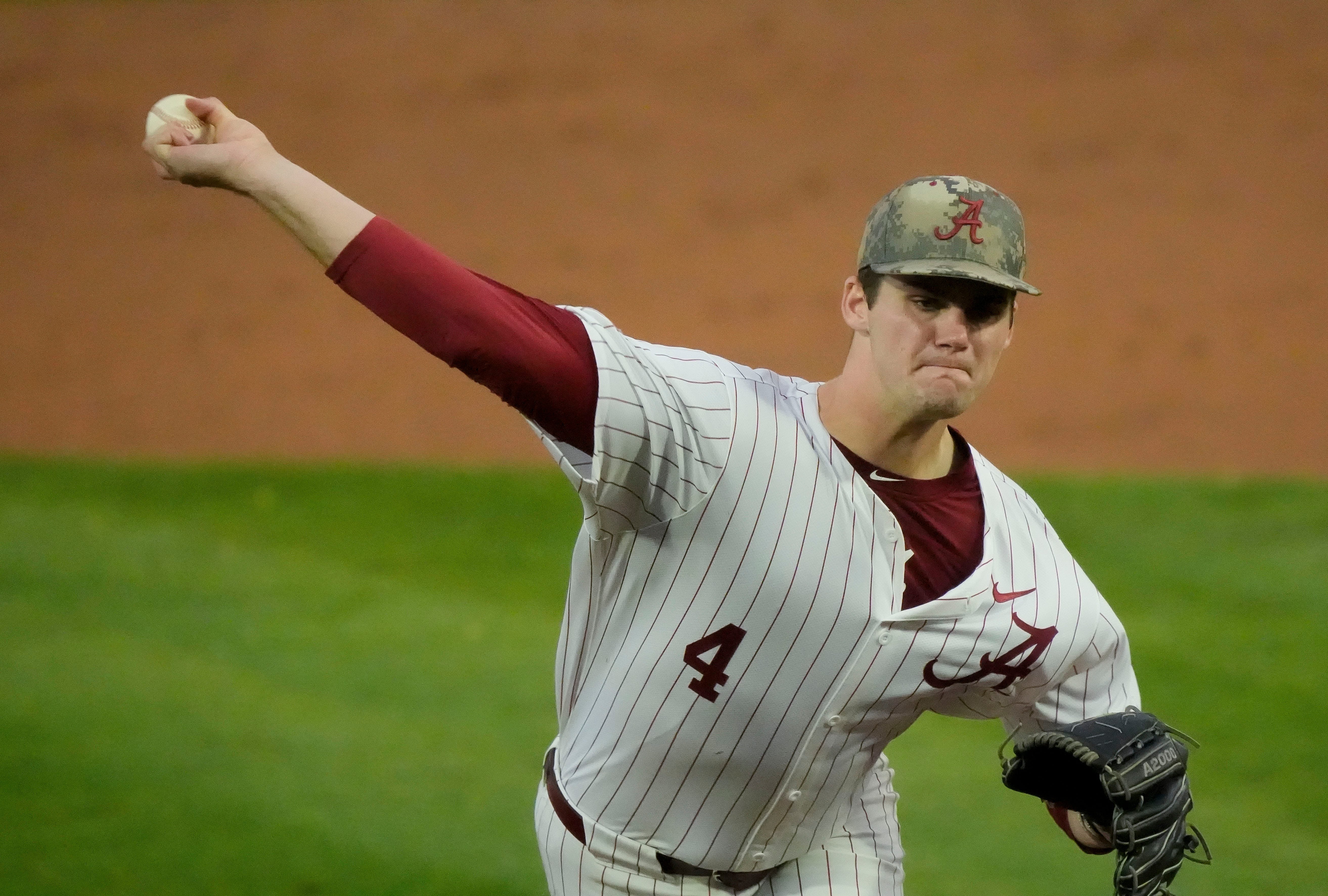 Here is an overview of the top high school and college players that the Miami Marlins should consider drafting this summer. Some prospect evaluations have changed since the prior MLB Draft big board was released on college baseball's opening day. There have also been 50 new players added to the board. The Marlins will make their first selection at No. 7 overall, then pick again at No. 43, No. 46, No. 79, No. 109 and No. 140. They have the third pick in all subsequent rounds (No. 168, No. 198, No. 228, etc.). The table below includes each prospect's age as of July 13, 2025, their school, position(s), handedness, measurables and overall future value on a 20-80 scale. Click the hyperlinks for full-length Fish On First prospect profiles. Rank Name Age At Draft Level Position Bat/Throw Height/Weight FV 1 Seth Hernandez 19 Corona HS (CA) RHP R/R 6'4"- 190 60 2 Billy Carlson 18 Corona HS (CA) SS/RHP R/R 6'1"- 165 60 3 Jamie Arnold 21 Florida State LHP L/L 6'1"- 165 60 4 Aiva Arquette 21 Oregon State SS/3B R/R 6'4"- 220 60 5 Marek Houston 21 Wake Forest SS R/R 6'3" - 180 55 6 Eli Willits 17 Fort Cobb-Broxton HS (OK) SS S/R 6'1" - 165 55 7 Jace LaViolette 21 Texas A&M OF L/L 6'6"- 230 55 8 Dean Curley 21 Tennessee SS R/R 6'3" - 195 55 9 Ethan Holliday 18 Stillwater HS (OK) SS/3B L/R 6'4" - 195 55 10 Gavin Fien 18 Great Oak HS (CA) 3B R/R 6'3" - 200 55 11 Riley Quick 21 Alabama RHP R/R 6"6" - 250 55 12 Ethan Conrad 21 Wake Forest OF L/L 6'4" - 215 55 13 Tyler Bremner 21 UC Santa Barbara RHP R/R 6'2"- 170 55 14 Joseph "JoJo" Parker 18 Purvis HS (MS) SS L/R 6'2" - 195 50 15 Gavin Kilen 21 Tennessee 2B/SS L/R 5'11" - 185 50 16 Brendan Summerhill 21 Arizona OF L/R 6'2"- 190 50 17 Liam Doyle 21 Tennessee LHP R/L 6'2" - 220 50 18 Angel Cervantes 17 Warren HS (CA) RHP R/R 6'2" - 190 50 19 Andrew Fischer 21 Tennessee 3B L/R 6'1" - 200 50 20 Kade Anderson 21 LSU LHP L/L 6'2' - 180 50 21 Mason Neville 21 Oregon OF L/L 6'3" - 200 50 22 Sean Gamble 19 IMG Academy HS (FL) SS/OF L/R 6'1" - 185 50 23 Patrick Forbes 21 Louisville RHP R/R 6'3" - 200 50 24 Ethan Petry 21 South Carolina OF/1B R/R 6'4" - 230 50 25 Xavier Neyens 18 Mount Vernon HS (WA) 3B L/R 6'4"- 200 50 26 Luke Stevenson 21 North Carolina C L/R 6'1" - 200 50 27 Kyson Witherspoon 20 Oklahoma RHP R/R 6'2" - 205 50 28 Josh Hammond 18 Wesleyan Christian Acad. HS (NC) RHP/SS R/R 6'1" - 205 50 29 Kayson Cunningham 19 Johnson HS (TX) SS/2B L/R 5'9"-170 50 30 Alex Lodise 21 Florida State INF R/R 6'1" - 190 50 31 Landon Harmon 18 East Union HS (MS) RHP R/R 6'5" - 180 50 32 Chase Shores 21 LSU RHP R/R 6'8" - 250 50 33 Jack Bauer 18 Lincoln-Way East HS (IL) LHP L/L 6'3"- 175 45 34 Devin Taylor 21 Indiana OF L/R 6'0"- 194 45 35 Ike Irish 21 Auburn C/1B L/R 6'2" - 190 45 36 Cam Cannarella 21 Clemson OF L/R 6'0"- 180 45 37 Korbyn Dickerson 21 Indiana OF R/R 6'1" - 190 45 38 Zach Root 21 Arkansas LHP L/L 6'1" - 175 45 39 Max Belyeu 21 Texas OF L/R 6'2" - 195 45 40 Jordan Yost 18 Sickles HS (FL) SS L/R 6'0" - 170 45 41 Kane Kepley 21 UNC OF L/L 5'8" - 170 45 42 Henry Godbout 21 Virginia 2B R/R 6'1" - 185 45 43 Ryan Mitchell 18 Houston HS (TN) SS L/R 6'0" - 175 45 44 Angel Laya 18 East Lake HS (CA) OF L/R 6'3" - 190 45 45 Marcelo Harsch 18 Seton Hall Prep HS (NJ) RHP R/R 6'4" - 170 45 46 RJ Austin 21 Vanderbilt 2B/OF R/R 5'11" - 190 45 47 Briggs McKenzie 18 Conrinth Holders HS (NC) LHP L/L 6'2" - 185 45 48 Brock Ketelson 18 Valley Christian HS (CA) OF L/L 6'3" - 185 45 49 Steele Hall 17 Hewitt-Trussville HS (AL) SS R/R 5'11" - 160 45 50 Aaron Watson 18 Trinity Christian Acad HS (FL) RHP R/R 6'5" - 205 45 51 Nolan Schubart 21 Oklahoma State 1B/OF L/R 6'5" - 225 45 52 Kyle Lodise 21 Georgia Tech SS R/R 5'11" - 180 45 53 Kruz Schoolcraft 18 Sunset HS (OR) LHP/1B L/L 6'8" - 215 45 54 Marcus Phillips 21 Tennessee RHP R/R 6'4"- 250 45 55 Brandon Compton 21 Arizona State OF L/L 6'1" - 210 45 56 Antonio Jimenez 21 UCF SS R/R 6'1" - 200 45 57 Cooper Flemming 19 Alsio Niguel HS (CA) SS L/R 6'3" - 190 45 58 Jaden Fauske 18 Nazareth Academy HS (IL) C L/R 6'1" - 195 45 59 Henry Ford 21 Virginia 1B R/R 6'5 - 220 45 60 Dean Moss 19 IMG Academy HS (FL) OF L/R 6'0" - 175 45 61 Slater de Brun 18 Summit HS (OR) OF L/L 5'9" - 180 45 62 J.D. Thompson 21 Vanderbilt LHP R/L 6'0" - 190 45 63 Brady Ebel 18 Corona HS (CA) SS L/R 6'3" - 180 45 64 Wehiwa Aloy 21 Arkansas SS R/R 6'2" - 195 45 65 Daniel Pierce 19 Mill Creek HS (GA) SS R./R 6'1" - 180 45 66 Payton Graham 21 Gonzaga RHP R/R 6'1" - 190 45 67 Cody Bowker 21 Vanderbilt RHP R/R 6'1" - 210 45 68 Charles Davalan 21 Arkansas 2B L/R 5'9" - 190 45 69 Jack Lafflam 18 Brophy College Prep HS (AZ) RHP R/R 6'6" - 170 45 70 Tre Phelps 21 Georgia 3B/OF R/R 6'3" - 210 45 71 Caden Bodine 21 Coastal Carolina C S/R 5'10"-190 45 72 Daniel Dickinson 21 LSU 2B R/R 6'0" - 180 45 73 Tanner Franklin 21 Tennessee RHP R/R 6'4" - 240 45 74 James Ellwanger 21 Dallas Baptist RHP R/R 6'5" 195 40+ 75 Aiden Stillman 18 Trinity Prep HS (FL) LHP R/L 6'3" - 190 40+ 76 Gage Wood 21 Arkansas RHP R/R 6'0" - 200 40+ 77 Nick Dumesnil 21 Cal Baptist OF R/R 6'2"- 205 40+ 78 Cameron Appenzeller 18 Glenwood HS (IL) LHP L/L 6'5" - 180 40+ 79 Gavin Turley 21 Oregon State OF R/R 6'2" - 200 40+ 80 Noah Franklin 18 West Ashley HS (SC) C R/R 6'1" - 210 40+ 81 Cam Leiter 21 Florida State RHP R/R 6'4" - 195 40+ 82 Trent Caraway 21 Oregon State 3B R/R 6'2" - 205 40+ 83 Mason Pike 18 Puyallup HS (WA) SS/RHP S/R 6'0" - 190 40+ 84 Gabe Davis 21 Oklahoma State RHP R/R 6'9" - 225 40+ 85 Logan Lunceford 21 Wake Forest RHP R/R 6'0" - 180 40+ 86 Gustavo Melendez 17 Colegio La Merced HS (PR) SS L/R 5'8" - 150 40+ 87 Trent Grindlinger 19 Huntington Beach HS (CA) C R/R 6'3" - 200 40+ 88 Max Williams 20 Florida State OF L/L 6'2" - 190 40+ 89 Nate Snead 21 Tennessee RHP R/R 6'2" - 210 40+ 90 Jason Reitz 21 Oregon RHP R/R 6'10" - 180 40+ 91 Matt Scott 21 Stanford RHP R/R 6'6"- 225 40+ 92 Brock Sell 18 Tokay HS (CA) OF L/R 6'1" - 170 40+ 93 Malachi Witherspoon 21 Oklahoma RHP R/R 6'3" - 210 40+ 94 J.B. Middleton 21 Southern Mississippi RHP R/R 6'0"- 170 40+ 95 A.J. Russell 21 Tennessee RHP R/R 6'6" - 195 40+ 96 Anthony Evanson 20 LSU RHP R/R 6'2" - 185 40+ 97 Joseph Dzierwa 21 Michigan State LHP R/L 6'7" - 180 40+ 98 Ben Abeldt 21 TCU LHP R/L 6'3" - 200 40+ 99 Jared Jones 22 LSU 1B R/R 6'4" - 235 40+ 100 Jack Martinez 22 Arizona State RHP R/R 6'4" - 220 40+ 101 William Patrick 19 St. Fredrick HS (LA) OF R/R 6'2" - 190 40+ 102 Murf Gray 21 Fresno State 3B R/R 6'4"- 220 40+ 103 Jalin Flores 22 Texas INF R/R 6'2" - 185 40+ 104 Jack Gurevitch 21 San Diego 1B L/R 6'0" - 215 40+ 105 Noah Yoder 18 Atlee HS (VA) RHP R/R 6'5" - 230 40+ 106 Griffin Hugus 21 Miami RHP R/R 6'2" - 180 40+ 107 Talon Haley 19 Lewisburg HS (MS) LHP L/L 6'2" - 200 40+ 108 Kelvyn Paulino Jr 19 IMG Academy HS (FL) 3B R/R 6'1" - 190 40+ 109 Ben Jacobs 21 Arizona State LHP L/L 6'0" - 190 40+ 110 Tanner Thach 21 UNC Wilmington 1B L/L 6'3" - 215 40+ 111 Finn Leach 18 Nathan Hale HS (WA) SS S/R 6'0" - 175 40+ 112 Reid Worley 19 Cherokee HS (GA) RHP R/R 6'2" - 180 40+ 113 Nick Becker 18 Don Bosco Prep HS (NJ) SS R/R 6'3" - 180 40+ 114 Cameron Miller 18 Alhambra HS (CA) RHP R/R 6'2" - 180 40+ 115 Josiah Hartshorn 18 Orange HS (CA) OF R/L 6'2' - 185 40+ 116 Trace Phillips 21 Middle Tennessee State RHP/1B R/R 6'3" - 185 40+ 117 Luke Hill 21 Ole Miss INF R/R 6'0" - 190 40+ 118 Kyle McCoy 21 Maryland LHP L/L 6'5" - 180 40+ 119 Grant Jay 21 Dallas Baptist C R/R 5'11" - 220 40+ 120 Tim Piasentin 18 Foothills Composite HS (Alberta) 3B L/R 6'3" - 205 40+ 121 Jack McKernan 18 Ridge Point HS (TX) LHP L/L 6'1" - 185 40+ 122 Jordan Martin 18 Jefferson City HS (MO) RHP R/R 6'2" - 160 40+ 123 Will Rhine 18 The John Carroll School HS (MD) SS L/R 6'3" - 190 40+ 124 Anthony Pack 18 Millikan HS (CA) OF L/L 5'10" - 170 40+ 125 Nico Partida 18 Pearland HS (TX) SS/RHP R/R 6'0" - 190 40+ 126 Quentin Young 18 Oaks Christian HS (CA) INF/OF R/R 6'5" - 215 40+ 127 Dax Kilby 18 Newnan HS (GA) SS L/R 6'3" - 185 40+ 128 Marcos Paz 18 Hebron HS (TX) RHP R/R 6'2" - 185 40+ 129 Jacob Parker 18 Purvis HS (MISS) OF L/R 6'4" - 210 40 130 Coy James 18 Davie County HS (NC) SS R/R 6'0" - 180 40 131 Griffin Enis 18 Cornith HS (MS) OF R/R 6'0" - 180 40 132 Micah Bucknam 21 Dallas Baptist RHP R/R 6'2" - 220 40 133 Cam Maldonado 21 Northeastern OF R/R 6'3" - 195 40 134 Drew Horn 21 Middle Tennessee State RHP R/R 5'11" - 180 40 135 Kien Vu 21 Arizona State OF L/L 5'11" - 170 40 136 Easton Carmichael 21 Oklahoma C R/R 6'1" - 190 40 137 Anthony Pack 18 Millikan HS (CA) OF L/L 5'10" - 170 40 138 River Hamilton 18 Barlow HS (OR) RHP R/R 6'3" - 195 40 139 Maximus Martin 21 Kansas State SS R/R 6'0" - 175 40 140 Brian Curley 22 Georgia RHP R/R 5'10" - 200 40 141 Tate Southisene 18 Basic HS (NV) SS/OF R/R 5'11" - 170 40 142 Drew Faurot 21 FSU INF S/R 6'3" - 185 40 143 Jaime Quinn-Irons 21 George Mason OF R/R 6'5" - 230 40 144 Brody Walls 18 Mckinney Boyd HS (TX) RHP R/R 6'0" - 180 40 145 Ryan Wideman 21 Western Kentucky OF R/R 6'5" - 215 40 146 Cade Crossland 21 Oklahoma LHP L/L 6'2" - 195 40 147 Jake Clemente 21 Florida RHP R/R 6'4" - 205 40 148 Mason White 21 LSU SS/2B L/R 5'9" - 170 40 149 Dylan Dubovik 18 American Heritage HS (FL) OF R/R 6'3" - 200 40 150 Lucas Franco 18 Cinco Ranch HS (TX) SS L/R 6'3"- 170 40 Risers Riley Quick (previously ranked 79th, now ranked 11th) had Tommy John surgery in 2024. He has bounced back with a great season, posting a 3.54 ERA with 9.1 K/9, 3.3 BB/9, and 0.7 HR/9. Quick is now the second-ranked college starter on the board. The Alabama native touches 99 mph with ease with his sinker. His elite slider gets whiffs out the zone and his changeup has become a good third option. Joseph "JoJo" Parker (previously 82nd, now 14th) has also skyrocketed up our big board and many others around the draft community. The Mississippi State commit has excelled in recent months while the high school draft circuit heats up. Parker plays a smooth shortstop with an advanced swing for his age. He has a high rate of contact and has posted very good exit velocities. He's poised to be a first-round pick. JoJo's twin brother Jacob Parker (ranked 129th) is also projected to be selected during the first three round picks of the draft. Other prospects who have risen at least 30 spots since February include Alex Lodise (69th to 30th), Ethan Petry (61st to 24th), Angel Laya (unranked to 44th), Cooper Flemming (unranked to 57th) and Cody Bowker (unranked to 67th).
 -
Here is an overview of the top high school and college players that the Miami Marlins should consider drafting this summer. Some prospect evaluations have changed since the prior MLB Draft big board was released on college baseball's opening day. There have also been 50 new players added to the board. The Marlins will make their first selection at No. 7 overall, then pick again at No. 43, No. 46, No. 79, No. 109 and No. 140. They have the third pick in all subsequent rounds (No. 168, No. 198, No. 228, etc.). The table below includes each prospect's age as of July 13, 2025, their school, position(s), handedness, measurables and overall future value on a 20-80 scale. Click the hyperlinks for full-length Fish On First prospect profiles. Rank Name Age At Draft Level Position Bat/Throw Height/Weight FV 1 Seth Hernandez 19 Corona HS (CA) RHP R/R 6'4"- 190 60 2 Billy Carlson 18 Corona HS (CA) SS/RHP R/R 6'1"- 165 60 3 Jamie Arnold 21 Florida State LHP L/L 6'1"- 165 60 4 Aiva Arquette 21 Oregon State SS/3B R/R 6'4"- 220 60 5 Marek Houston 21 Wake Forest SS R/R 6'3" - 180 55 6 Eli Willits 17 Fort Cobb-Broxton HS (OK) SS S/R 6'1" - 165 55 7 Jace LaViolette 21 Texas A&M OF L/L 6'6"- 230 55 8 Dean Curley 21 Tennessee SS R/R 6'3" - 195 55 9 Ethan Holliday 18 Stillwater HS (OK) SS/3B L/R 6'4" - 195 55 10 Gavin Fien 18 Great Oak HS (CA) 3B R/R 6'3" - 200 55 11 Riley Quick 21 Alabama RHP R/R 6"6" - 250 55 12 Ethan Conrad 21 Wake Forest OF L/L 6'4" - 215 55 13 Tyler Bremner 21 UC Santa Barbara RHP R/R 6'2"- 170 55 14 Joseph "JoJo" Parker 18 Purvis HS (MS) SS L/R 6'2" - 195 50 15 Gavin Kilen 21 Tennessee 2B/SS L/R 5'11" - 185 50 16 Brendan Summerhill 21 Arizona OF L/R 6'2"- 190 50 17 Liam Doyle 21 Tennessee LHP R/L 6'2" - 220 50 18 Angel Cervantes 17 Warren HS (CA) RHP R/R 6'2" - 190 50 19 Andrew Fischer 21 Tennessee 3B L/R 6'1" - 200 50 20 Kade Anderson 21 LSU LHP L/L 6'2' - 180 50 21 Mason Neville 21 Oregon OF L/L 6'3" - 200 50 22 Sean Gamble 19 IMG Academy HS (FL) SS/OF L/R 6'1" - 185 50 23 Patrick Forbes 21 Louisville RHP R/R 6'3" - 200 50 24 Ethan Petry 21 South Carolina OF/1B R/R 6'4" - 230 50 25 Xavier Neyens 18 Mount Vernon HS (WA) 3B L/R 6'4"- 200 50 26 Luke Stevenson 21 North Carolina C L/R 6'1" - 200 50 27 Kyson Witherspoon 20 Oklahoma RHP R/R 6'2" - 205 50 28 Josh Hammond 18 Wesleyan Christian Acad. HS (NC) RHP/SS R/R 6'1" - 205 50 29 Kayson Cunningham 19 Johnson HS (TX) SS/2B L/R 5'9"-170 50 30 Alex Lodise 21 Florida State INF R/R 6'1" - 190 50 31 Landon Harmon 18 East Union HS (MS) RHP R/R 6'5" - 180 50 32 Chase Shores 21 LSU RHP R/R 6'8" - 250 50 33 Jack Bauer 18 Lincoln-Way East HS (IL) LHP L/L 6'3"- 175 45 34 Devin Taylor 21 Indiana OF L/R 6'0"- 194 45 35 Ike Irish 21 Auburn C/1B L/R 6'2" - 190 45 36 Cam Cannarella 21 Clemson OF L/R 6'0"- 180 45 37 Korbyn Dickerson 21 Indiana OF R/R 6'1" - 190 45 38 Zach Root 21 Arkansas LHP L/L 6'1" - 175 45 39 Max Belyeu 21 Texas OF L/R 6'2" - 195 45 40 Jordan Yost 18 Sickles HS (FL) SS L/R 6'0" - 170 45 41 Kane Kepley 21 UNC OF L/L 5'8" - 170 45 42 Henry Godbout 21 Virginia 2B R/R 6'1" - 185 45 43 Ryan Mitchell 18 Houston HS (TN) SS L/R 6'0" - 175 45 44 Angel Laya 18 East Lake HS (CA) OF L/R 6'3" - 190 45 45 Marcelo Harsch 18 Seton Hall Prep HS (NJ) RHP R/R 6'4" - 170 45 46 RJ Austin 21 Vanderbilt 2B/OF R/R 5'11" - 190 45 47 Briggs McKenzie 18 Conrinth Holders HS (NC) LHP L/L 6'2" - 185 45 48 Brock Ketelson 18 Valley Christian HS (CA) OF L/L 6'3" - 185 45 49 Steele Hall 17 Hewitt-Trussville HS (AL) SS R/R 5'11" - 160 45 50 Aaron Watson 18 Trinity Christian Acad HS (FL) RHP R/R 6'5" - 205 45 51 Nolan Schubart 21 Oklahoma State 1B/OF L/R 6'5" - 225 45 52 Kyle Lodise 21 Georgia Tech SS R/R 5'11" - 180 45 53 Kruz Schoolcraft 18 Sunset HS (OR) LHP/1B L/L 6'8" - 215 45 54 Marcus Phillips 21 Tennessee RHP R/R 6'4"- 250 45 55 Brandon Compton 21 Arizona State OF L/L 6'1" - 210 45 56 Antonio Jimenez 21 UCF SS R/R 6'1" - 200 45 57 Cooper Flemming 19 Alsio Niguel HS (CA) SS L/R 6'3" - 190 45 58 Jaden Fauske 18 Nazareth Academy HS (IL) C L/R 6'1" - 195 45 59 Henry Ford 21 Virginia 1B R/R 6'5 - 220 45 60 Dean Moss 19 IMG Academy HS (FL) OF L/R 6'0" - 175 45 61 Slater de Brun 18 Summit HS (OR) OF L/L 5'9" - 180 45 62 J.D. Thompson 21 Vanderbilt LHP R/L 6'0" - 190 45 63 Brady Ebel 18 Corona HS (CA) SS L/R 6'3" - 180 45 64 Wehiwa Aloy 21 Arkansas SS R/R 6'2" - 195 45 65 Daniel Pierce 19 Mill Creek HS (GA) SS R./R 6'1" - 180 45 66 Payton Graham 21 Gonzaga RHP R/R 6'1" - 190 45 67 Cody Bowker 21 Vanderbilt RHP R/R 6'1" - 210 45 68 Charles Davalan 21 Arkansas 2B L/R 5'9" - 190 45 69 Jack Lafflam 18 Brophy College Prep HS (AZ) RHP R/R 6'6" - 170 45 70 Tre Phelps 21 Georgia 3B/OF R/R 6'3" - 210 45 71 Caden Bodine 21 Coastal Carolina C S/R 5'10"-190 45 72 Daniel Dickinson 21 LSU 2B R/R 6'0" - 180 45 73 Tanner Franklin 21 Tennessee RHP R/R 6'4" - 240 45 74 James Ellwanger 21 Dallas Baptist RHP R/R 6'5" 195 40+ 75 Aiden Stillman 18 Trinity Prep HS (FL) LHP R/L 6'3" - 190 40+ 76 Gage Wood 21 Arkansas RHP R/R 6'0" - 200 40+ 77 Nick Dumesnil 21 Cal Baptist OF R/R 6'2"- 205 40+ 78 Cameron Appenzeller 18 Glenwood HS (IL) LHP L/L 6'5" - 180 40+ 79 Gavin Turley 21 Oregon State OF R/R 6'2" - 200 40+ 80 Noah Franklin 18 West Ashley HS (SC) C R/R 6'1" - 210 40+ 81 Cam Leiter 21 Florida State RHP R/R 6'4" - 195 40+ 82 Trent Caraway 21 Oregon State 3B R/R 6'2" - 205 40+ 83 Mason Pike 18 Puyallup HS (WA) SS/RHP S/R 6'0" - 190 40+ 84 Gabe Davis 21 Oklahoma State RHP R/R 6'9" - 225 40+ 85 Logan Lunceford 21 Wake Forest RHP R/R 6'0" - 180 40+ 86 Gustavo Melendez 17 Colegio La Merced HS (PR) SS L/R 5'8" - 150 40+ 87 Trent Grindlinger 19 Huntington Beach HS (CA) C R/R 6'3" - 200 40+ 88 Max Williams 20 Florida State OF L/L 6'2" - 190 40+ 89 Nate Snead 21 Tennessee RHP R/R 6'2" - 210 40+ 90 Jason Reitz 21 Oregon RHP R/R 6'10" - 180 40+ 91 Matt Scott 21 Stanford RHP R/R 6'6"- 225 40+ 92 Brock Sell 18 Tokay HS (CA) OF L/R 6'1" - 170 40+ 93 Malachi Witherspoon 21 Oklahoma RHP R/R 6'3" - 210 40+ 94 J.B. Middleton 21 Southern Mississippi RHP R/R 6'0"- 170 40+ 95 A.J. Russell 21 Tennessee RHP R/R 6'6" - 195 40+ 96 Anthony Evanson 20 LSU RHP R/R 6'2" - 185 40+ 97 Joseph Dzierwa 21 Michigan State LHP R/L 6'7" - 180 40+ 98 Ben Abeldt 21 TCU LHP R/L 6'3" - 200 40+ 99 Jared Jones 22 LSU 1B R/R 6'4" - 235 40+ 100 Jack Martinez 22 Arizona State RHP R/R 6'4" - 220 40+ 101 William Patrick 19 St. Fredrick HS (LA) OF R/R 6'2" - 190 40+ 102 Murf Gray 21 Fresno State 3B R/R 6'4"- 220 40+ 103 Jalin Flores 22 Texas INF R/R 6'2" - 185 40+ 104 Jack Gurevitch 21 San Diego 1B L/R 6'0" - 215 40+ 105 Noah Yoder 18 Atlee HS (VA) RHP R/R 6'5" - 230 40+ 106 Griffin Hugus 21 Miami RHP R/R 6'2" - 180 40+ 107 Talon Haley 19 Lewisburg HS (MS) LHP L/L 6'2" - 200 40+ 108 Kelvyn Paulino Jr 19 IMG Academy HS (FL) 3B R/R 6'1" - 190 40+ 109 Ben Jacobs 21 Arizona State LHP L/L 6'0" - 190 40+ 110 Tanner Thach 21 UNC Wilmington 1B L/L 6'3" - 215 40+ 111 Finn Leach 18 Nathan Hale HS (WA) SS S/R 6'0" - 175 40+ 112 Reid Worley 19 Cherokee HS (GA) RHP R/R 6'2" - 180 40+ 113 Nick Becker 18 Don Bosco Prep HS (NJ) SS R/R 6'3" - 180 40+ 114 Cameron Miller 18 Alhambra HS (CA) RHP R/R 6'2" - 180 40+ 115 Josiah Hartshorn 18 Orange HS (CA) OF R/L 6'2' - 185 40+ 116 Trace Phillips 21 Middle Tennessee State RHP/1B R/R 6'3" - 185 40+ 117 Luke Hill 21 Ole Miss INF R/R 6'0" - 190 40+ 118 Kyle McCoy 21 Maryland LHP L/L 6'5" - 180 40+ 119 Grant Jay 21 Dallas Baptist C R/R 5'11" - 220 40+ 120 Tim Piasentin 18 Foothills Composite HS (Alberta) 3B L/R 6'3" - 205 40+ 121 Jack McKernan 18 Ridge Point HS (TX) LHP L/L 6'1" - 185 40+ 122 Jordan Martin 18 Jefferson City HS (MO) RHP R/R 6'2" - 160 40+ 123 Will Rhine 18 The John Carroll School HS (MD) SS L/R 6'3" - 190 40+ 124 Anthony Pack 18 Millikan HS (CA) OF L/L 5'10" - 170 40+ 125 Nico Partida 18 Pearland HS (TX) SS/RHP R/R 6'0" - 190 40+ 126 Quentin Young 18 Oaks Christian HS (CA) INF/OF R/R 6'5" - 215 40+ 127 Dax Kilby 18 Newnan HS (GA) SS L/R 6'3" - 185 40+ 128 Marcos Paz 18 Hebron HS (TX) RHP R/R 6'2" - 185 40+ 129 Jacob Parker 18 Purvis HS (MISS) OF L/R 6'4" - 210 40 130 Coy James 18 Davie County HS (NC) SS R/R 6'0" - 180 40 131 Griffin Enis 18 Cornith HS (MS) OF R/R 6'0" - 180 40 132 Micah Bucknam 21 Dallas Baptist RHP R/R 6'2" - 220 40 133 Cam Maldonado 21 Northeastern OF R/R 6'3" - 195 40 134 Drew Horn 21 Middle Tennessee State RHP R/R 5'11" - 180 40 135 Kien Vu 21 Arizona State OF L/L 5'11" - 170 40 136 Easton Carmichael 21 Oklahoma C R/R 6'1" - 190 40 137 Anthony Pack 18 Millikan HS (CA) OF L/L 5'10" - 170 40 138 River Hamilton 18 Barlow HS (OR) RHP R/R 6'3" - 195 40 139 Maximus Martin 21 Kansas State SS R/R 6'0" - 175 40 140 Brian Curley 22 Georgia RHP R/R 5'10" - 200 40 141 Tate Southisene 18 Basic HS (NV) SS/OF R/R 5'11" - 170 40 142 Drew Faurot 21 FSU INF S/R 6'3" - 185 40 143 Jaime Quinn-Irons 21 George Mason OF R/R 6'5" - 230 40 144 Brody Walls 18 Mckinney Boyd HS (TX) RHP R/R 6'0" - 180 40 145 Ryan Wideman 21 Western Kentucky OF R/R 6'5" - 215 40 146 Cade Crossland 21 Oklahoma LHP L/L 6'2" - 195 40 147 Jake Clemente 21 Florida RHP R/R 6'4" - 205 40 148 Mason White 21 LSU SS/2B L/R 5'9" - 170 40 149 Dylan Dubovik 18 American Heritage HS (FL) OF R/R 6'3" - 200 40 150 Lucas Franco 18 Cinco Ranch HS (TX) SS L/R 6'3"- 170 40 Risers Riley Quick (previously ranked 79th, now ranked 11th) had Tommy John surgery in 2024. He has bounced back with a great season, posting a 3.54 ERA with 9.1 K/9, 3.3 BB/9, and 0.7 HR/9. Quick is now the second-ranked college starter on the board. The Alabama native touches 99 mph with ease with his sinker. His elite slider gets whiffs out the zone and his changeup has become a good third option. Joseph "JoJo" Parker (previously 82nd, now 14th) has also skyrocketed up our big board and many others around the draft community. The Mississippi State commit has excelled in recent months while the high school draft circuit heats up. Parker plays a smooth shortstop with an advanced swing for his age. He has a high rate of contact and has posted very good exit velocities. He's poised to be a first-round pick. JoJo's twin brother Jacob Parker (ranked 129th) is also projected to be selected during the first three round picks of the draft. Other prospects who have risen at least 30 spots since February include Alex Lodise (69th to 30th), Ethan Petry (61st to 24th), Angel Laya (unranked to 44th), Cooper Flemming (unranked to 57th) and Cody Bowker (unranked to 67th). View full article
-
How a lower arm slot has made Sandy Alcantara's stuff even nastier
Sean McCormack posted an article in Marlins
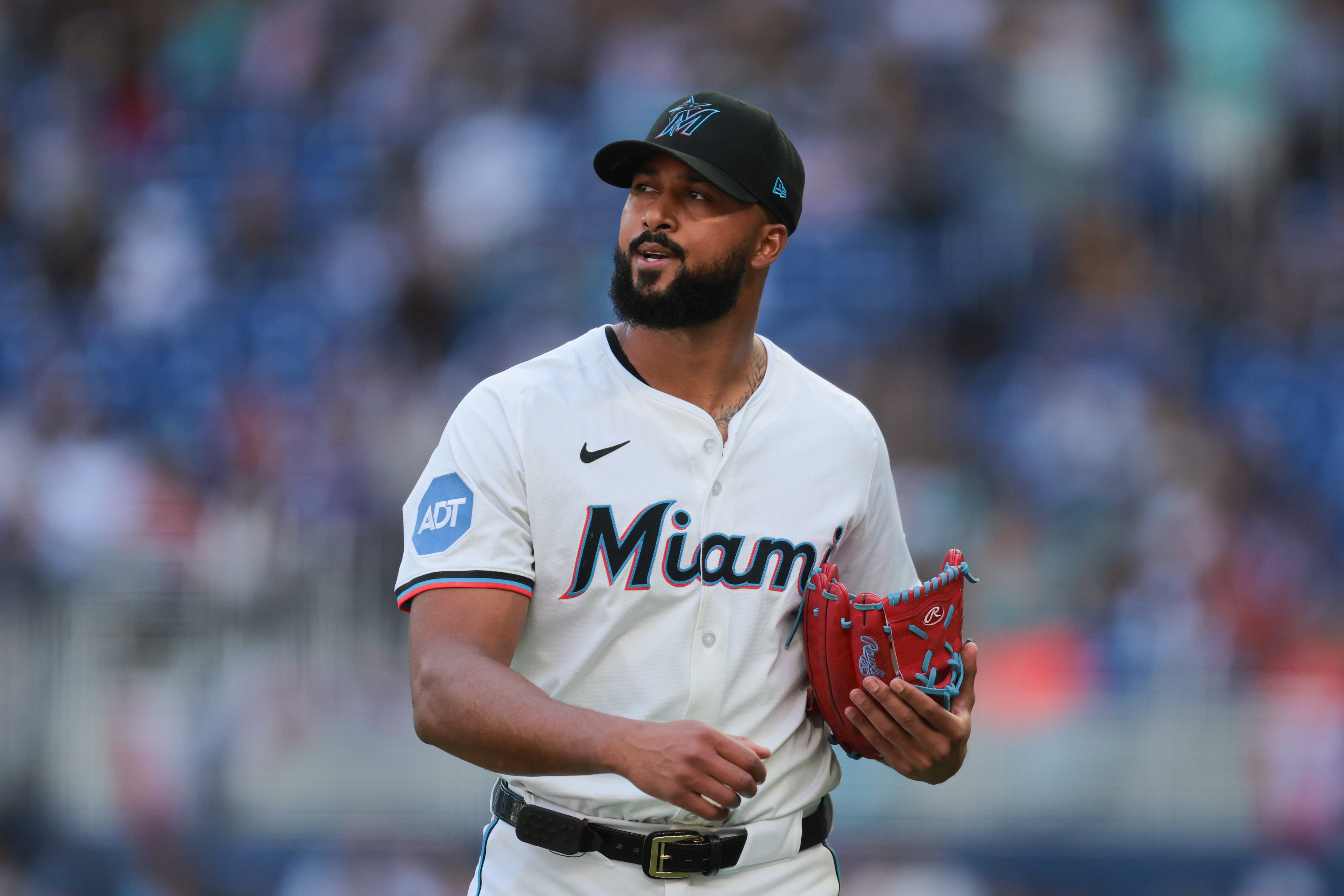 Instead of trying to pick up exactly where he left off before his elbow injury, Sandy Alcantara is doing something different early in the 2025 season. The subtle adjustment is hard to notice with the naked eye, but it's impacting the pitch characteristics of his sinker, changeup and potential new slider. Using Statcast's arm angle tool, we can see the gradual change in Alcantara's mechanics since 2020. His arm slot used to be very consistent around 34 degrees or 35 degrees. Through his first two starts of 2025, the angle has dropped to 30.7 degrees, which is lower than any other month on record for him. Coinciding with the drop in arm slot, Alcantara's sinker has seen a noticeable increase in horizontal movement, currently averaging a career high of 20 inches of armside movement. So far, this change has led to great results. The sinker has been whiffed at more and barreled less than it was in the past. Hitters are not anticipating the extra inches of run and they're giving up on pitches that looks like a ball out of the ace's hand before crossing home plate as a strike. cU9lZWdfWGw0TUFRPT1fVUZjRlVGUlhWMUVBQ2xwVFZ3QUhCRkFFQUZoUkFsZ0FVUWRXVmxWWENRVUhCd0lG.mp4 Alcantara's changeup was his primary strikeout pitch during his Cy Young award-winning season. That pitch has also seen an uptick in movement with two extra inches of horizontal, leading to a high 45% whiff rate. The lowered arm slot is allowing the natural pronation Alcantara has always had to play up. Alcantara mostly abandoned his curveball in recent seasons. Statcast is labeling 16.1% of his pitches as curves so far in 2025, but based on the profile of the pitch and Alcantara's comments about his arsenal in spring training, I believe this is a new slider with a higher vertical drop compared to the traditional slider he has used his whole career. By throwing it with mid-80s mph velocity, there is more of a differential between it and his fastball. As shown by the Baseball Savant movement profile graph, the slider and refined curveball have similar movement profiles: The early returns on the new pitch shape have been very positive—it has yet to be hit and has racked up three of the 11 strikeouts for Alcantara this season. It should play a huge role for Alcantara moving forward, particularly against left-handed batters. The pitch plays well off of the normal slider, fooling hitters into swinging over the top of the pitch. e4w5me_1.mp4 The Marlins have not gotten much length from Sandy Alcantara through his first two starts of the 2025 season, but even in this brief glimpse, he has shown changes to his game that should generate soft contact on the ground—something he has always excelled at—while also resulting in higher strikeout rates.
 -
Coming off Tommy John surgery, Alcantara has returned to the mound with a different arm angle, resulting in more movement on his key pitches. Instead of trying to pick up exactly where he left off before his elbow injury, Sandy Alcantara is doing something different early in the 2025 season. The subtle adjustment is hard to notice with the naked eye, but it's impacting the pitch characteristics of his sinker, changeup and potential new slider. Using Statcast's arm angle tool, we can see the gradual change in Alcantara's mechanics since 2020. His arm slot used to be very consistent around 34 degrees or 35 degrees. Through his first two starts of 2025, the angle has dropped to 30.7 degrees, which is lower than any other month on record for him. Coinciding with the drop in arm slot, Alcantara's sinker has seen a noticeable increase in horizontal movement, currently averaging a career high of 20 inches of armside movement. So far, this change has led to great results. The sinker has been whiffed at more and barreled less than it was in the past. Hitters are not anticipating the extra inches of run and they're giving up on pitches that looks like a ball out of the ace's hand before crossing home plate as a strike. cU9lZWdfWGw0TUFRPT1fVUZjRlVGUlhWMUVBQ2xwVFZ3QUhCRkFFQUZoUkFsZ0FVUWRXVmxWWENRVUhCd0lG.mp4 Alcantara's changeup was his primary strikeout pitch during his Cy Young award-winning season. That pitch has also seen an uptick in movement with two extra inches of horizontal, leading to a high 45% whiff rate. The lowered arm slot is allowing the natural pronation Alcantara has always had to play up. Alcantara mostly abandoned his curveball in recent seasons. Statcast is labeling 16.1% of his pitches as curves so far in 2025, but based on the profile of the pitch and Alcantara's comments about his arsenal in spring training, I believe this is a new slider with a higher vertical drop compared to the traditional slider he has used his whole career. By throwing it with mid-80s mph velocity, there is more of a differential between it and his fastball. As shown by the Baseball Savant movement profile graph, the slider and refined curveball have similar movement profiles: The early returns on the new pitch shape have been very positive—it has yet to be hit and has racked up three of the 11 strikeouts for Alcantara this season. It should play a huge role for Alcantara moving forward, particularly against left-handed batters. The pitch plays well off of the normal slider, fooling hitters into swinging over the top of the pitch. e4w5me_1.mp4 The Marlins have not gotten much length from Sandy Alcantara through his first two starts of the 2025 season, but even in this brief glimpse, he has shown changes to his game that should generate soft contact on the ground—something he has always excelled at—while also resulting in higher strikeout rates. View full article
-
Optimal lineup construction for the 2025 Marlins
Sean McCormack replied to Sean McCormack's topic in Miami Marlins Talk
Wouldn’t mind it personally. If he can play centerfield it may be an option to platoon with Derek Hill. But I suppose the Marlins would have to see very little future for Stowers at MLB level, or even VMJ. -
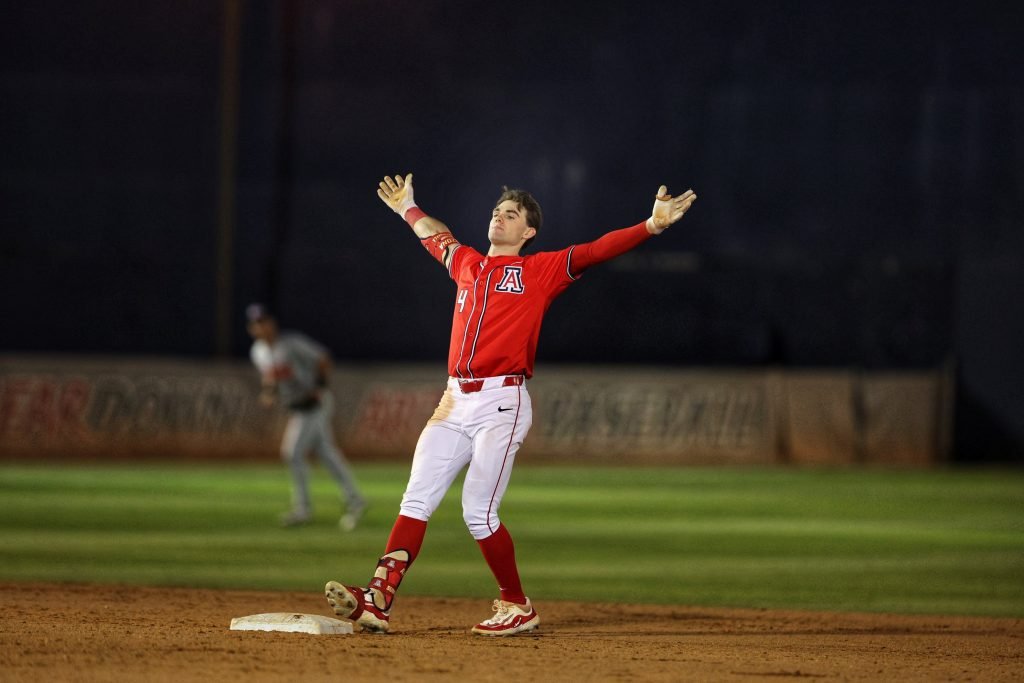 Just in time for the start of the MLB regular season, this mock draft includes the entire first round of the 2025 amateur draft as well as prospect promotion incentive picks, free agent compensation picks and Competitive Balance Round A. The Miami Marlins have pick No. 7 and pick No. 43. I have them taking Brendan Summerhill, an athletic outfielder from University of Arizona, and Quentin Young, a boom-or-bust high school talent from California. Team Pick Player Position Bat/Throw School Nationals 1 Jamie Arnold LHP L/L Florida State Angels 2 Aiva Arquette SS/3B R/R Oregon State Mariners 3 Seth Hernandez RHP R/R Corona HS (CA) Rockies 4 Ethan Holliday SS/3B L/R Stillwater HS (OK) Cardinals 5 Billy Carlson SS R/R Corona HS (CA) Pirates 6 Marek Houston SS R/R Wake Forest Marlins 7 Brendan Summerhill OF L/R University of Arizona Blue Jays 8 Jace Laviolette OF L/L Texas A&M Reds 9 Luke Stevenson C L/R North Carolina White Sox 10 Dean Curley SS R/R Tennessee Athletics 11 Tyler Bremner RHP R/R UC Santa Barbara Rangers 12 Eli Willits SS S/R Fort Cobb-Broxton HS (OK) Giants 13 Ethan Conrad OF L/L Wake Forest Rays 14 Cam Cannarella OF L/R Clemson Red Sox 15 Sean Gamble SS/OF L/R IMG Academy HS (FL) Twins 16 Korbyn Dickerson OF R/R Indiana Cubs 17 Riley Quick RHP R/R Alabama Diamondbacks 18 Xavier Neyenes 3B L/R Mount Vernon HS (WA) Orioles 19 Gavin Kilen SS/2B L/R Tennessee Brewers 20 Jojo Parker SS L/R Purvis HS (MISS) Astros 21 Max Belyeu OF L/R Texas Braves 22 Landon Harmon RHP R/R East Union HS (MISS) Royals 23 Kyson Witherspoon RHP R/R Oklahoma Tigers 24 Slater de Brun OF L/L Summit HS (OR) Padres 25 Kayson Cunningham SS/2B L/R Johnson HS (TX) Phillies 26 Steele Hall SS R/R Hewitt Trussville HS (AL) Guardians 27 Matt Scott RHP R/R Stanford Royals 28 Wehiwa Aloy SS R/R Arkansas Diamondbacks 29 Patrick Forbes RHP R/R Louisville Orioles 30 Devin Taylor OF L/R Indiana Orioles 31 Chase Shores RHP R/R LSU Brewers 32 Ike Irish C L/R Auburn Brewers 33 Angel Cervantes RHP R/R Warren HS (CA) Tigers 34 Gavin Fien 3B R/R Great Oaks HS (CA) Mariners 35 Brandon Compton OF L/L Arizona State Twins 36 Andrew Fischer 3B L/R Tennessee Rays 37 Cameron Appenzeller LHP L/L Glenwood HS (IL) Mets 38 Liam Doyle LHP R/L Tennessee Yankees 39 Tre Phelps 3B/OF R/R Georgia Dodgers 40 Kruz Schoolcraft LHP/1B L/L Sunset HS (OR) Dodgers 41 Brady Ebel SS L/R Corona HS (CA) Rays 42 Alex Lodise SS/3B R/R Florida State Marlins 43 Quentin Young INF/OF R/R Oaks Christian HS (CA) Brendan Summerhill has had an electric start to his junior year down in Tucson. Currently batting .418/.505/.670 through 22 games. Summerhill is 6'3", 200 pounds and a great athlete, runs well and can play center field in the pros. He combines this athleticism with an elite plate approach. A 87% contact rate is one of the highest rates in the nation with a low swing rate on pitches out of the zone. So far this season, Summerhill leads the country in triples with six. The home runs have not come yet (only two). This may be worrying to some, but he has had a nearly 5 mph increase in average exit velocity this season. Even if the home run power does not show itself this spring, his projectable frame gives him plenty of room to grow into long term. With the 43rd overall pick, Quentin Young is a large, powerful, high school talent with baseball bloodlines. He is the nephew of former big leaguer and first overall pick Delmon Young. Young is 6'5", 215 pounds. He currently plays shortstop, but will move off of short eventually, most likely to a corner infield or corner outfield spot, although Young moves very well for his size, which adds to his draft stock. He has a cannon for an arm and some of the loudest pop in this draft (potential 60-65 grade power). The main concerns for Young are plate approach and strikeouts. His player profile and California roots may remind people of the Marlins' all-time home run leader, Giancarlo Stanton. The LSU commit will be a project that takes patience to develop. The Marlins have time and the ability to take a risk on a guy like Young. He could pay big dividends for the Fish if their revamped development system unlocks his potential to be a great all-around hitter.
 -
Our first mock draft of the 2025 draft cycle has arrived just over a month into the college baseball season, covering the first 43 picks, which includes the Marlins' top two selections. Just in time for the start of the MLB regular season, this mock draft includes the entire first round of the 2025 amateur draft as well as prospect promotion incentive picks, free agent compensation picks and Competitive Balance Round A. The Miami Marlins have pick No. 7 and pick No. 43. I have them taking Brendan Summerhill, an athletic outfielder from University of Arizona, and Quentin Young, a boom-or-bust high school talent from California. Team Pick Player Position Bat/Throw School Nationals 1 Jamie Arnold LHP L/L Florida State Angels 2 Aiva Arquette SS/3B R/R Oregon State Mariners 3 Seth Hernandez RHP R/R Corona HS (CA) Rockies 4 Ethan Holliday SS/3B L/R Stillwater HS (OK) Cardinals 5 Billy Carlson SS R/R Corona HS (CA) Pirates 6 Marek Houston SS R/R Wake Forest Marlins 7 Brendan Summerhill OF L/R University of Arizona Blue Jays 8 Jace Laviolette OF L/L Texas A&M Reds 9 Luke Stevenson C L/R North Carolina White Sox 10 Dean Curley SS R/R Tennessee Athletics 11 Tyler Bremner RHP R/R UC Santa Barbara Rangers 12 Eli Willits SS S/R Fort Cobb-Broxton HS (OK) Giants 13 Ethan Conrad OF L/L Wake Forest Rays 14 Cam Cannarella OF L/R Clemson Red Sox 15 Sean Gamble SS/OF L/R IMG Academy HS (FL) Twins 16 Korbyn Dickerson OF R/R Indiana Cubs 17 Riley Quick RHP R/R Alabama Diamondbacks 18 Xavier Neyenes 3B L/R Mount Vernon HS (WA) Orioles 19 Gavin Kilen SS/2B L/R Tennessee Brewers 20 Jojo Parker SS L/R Purvis HS (MISS) Astros 21 Max Belyeu OF L/R Texas Braves 22 Landon Harmon RHP R/R East Union HS (MISS) Royals 23 Kyson Witherspoon RHP R/R Oklahoma Tigers 24 Slater de Brun OF L/L Summit HS (OR) Padres 25 Kayson Cunningham SS/2B L/R Johnson HS (TX) Phillies 26 Steele Hall SS R/R Hewitt Trussville HS (AL) Guardians 27 Matt Scott RHP R/R Stanford Royals 28 Wehiwa Aloy SS R/R Arkansas Diamondbacks 29 Patrick Forbes RHP R/R Louisville Orioles 30 Devin Taylor OF L/R Indiana Orioles 31 Chase Shores RHP R/R LSU Brewers 32 Ike Irish C L/R Auburn Brewers 33 Angel Cervantes RHP R/R Warren HS (CA) Tigers 34 Gavin Fien 3B R/R Great Oaks HS (CA) Mariners 35 Brandon Compton OF L/L Arizona State Twins 36 Andrew Fischer 3B L/R Tennessee Rays 37 Cameron Appenzeller LHP L/L Glenwood HS (IL) Mets 38 Liam Doyle LHP R/L Tennessee Yankees 39 Tre Phelps 3B/OF R/R Georgia Dodgers 40 Kruz Schoolcraft LHP/1B L/L Sunset HS (OR) Dodgers 41 Brady Ebel SS L/R Corona HS (CA) Rays 42 Alex Lodise SS/3B R/R Florida State Marlins 43 Quentin Young INF/OF R/R Oaks Christian HS (CA) Brendan Summerhill has had an electric start to his junior year down in Tucson. Currently batting .418/.505/.670 through 22 games. Summerhill is 6'3", 200 pounds and a great athlete, runs well and can play center field in the pros. He combines this athleticism with an elite plate approach. A 87% contact rate is one of the highest rates in the nation with a low swing rate on pitches out of the zone. So far this season, Summerhill leads the country in triples with six. The home runs have not come yet (only two). This may be worrying to some, but he has had a nearly 5 mph increase in average exit velocity this season. Even if the home run power does not show itself this spring, his projectable frame gives him plenty of room to grow into long term. With the 43rd overall pick, Quentin Young is a large, powerful, high school talent with baseball bloodlines. He is the nephew of former big leaguer and first overall pick Delmon Young. Young is 6'5", 215 pounds. He currently plays shortstop, but will move off of short eventually, most likely to a corner infield or corner outfield spot, although Young moves very well for his size, which adds to his draft stock. He has a cannon for an arm and some of the loudest pop in this draft (potential 60-65 grade power). The main concerns for Young are plate approach and strikeouts. His player profile and California roots may remind people of the Marlins' all-time home run leader, Giancarlo Stanton. The LSU commit will be a project that takes patience to develop. The Marlins have time and the ability to take a risk on a guy like Young. He could pay big dividends for the Fish if their revamped development system unlocks his potential to be a great all-around hitter. View full article
-
 Miami Marlins fans were underwhelmed by the lineup that took the field on Tuesday for the team's last preseason exhibition game. Their results were actually solid—in the five innings before backup players began taking their place, the Marlins offense scored four runs on five hits, including two home runs. They drew three walks and struck out seven times against New York Yankees right-hander Will Warren and a pair of minor league relievers. We're expecting to see a similar lineup used on Opening Day and in other early-season matchups against right-handers. Obviously, there's room to improve once Jesús Sánchez and Connor Norby recover from their oblique injuries. Beyond that, I believe the order of these hitters can be adjusted to put each of them in the best situation for themselves and their skill sets. 1. Xavier Edwards, SS Potentially the Marlins' best hitter, X is the obvious choice for batting leadoff. When batting first, last season Edwards posted a 116 wRC+ and .340 wOBA. The base-stealing ability Edwards brings will allow the Marlins to try and manufacture runs through the bases and timely hitting. VmcwNlBfWGw0TUFRPT1fQWdoV0JWMEVWZ0FBQUZNRVVRQUFDUVlFQUFCWEJRY0FCd05YVXdvTUNGQmNVZ2RX.mp4 2. Jonah Bride, DH Jonah Bride didn't spend much time last season batting second, but I believe his skill set fits well there with an 11% walk rate. If the Marlins cluster together their two best hitters in terms of getting on base, it will help the more aggressive hitters in the lineup drive them in. 3. Jesús Sánchez, RF Once Sánchez returns, this would be his best spot in the lineup. The lefty power hitter actually had his highest OPS batting third last season with a .970 OPS starting 23 games, compared to 49 games batting in the cleanup spot and 39 games batting fifth. Having Edwards and Bride ahead of him should allow for plenty of RBI opportunities. dk1BVzRfWGw0TUFRPT1fQUZkVlYxTUVWMUVBQVFRQ1VnQUFCdzlUQUFNTVVsTUFVUUFOVmdNQ0FBSUFBRk1B.mp4 4. Connor Norby, 3B There are understandably high expectations for Norby this season. An aggressive hitter who swung in the zone 12% more than league average and had a extreme first-pitch swing rate of 54%, he may need to tone down that approach for more sustainable numbers, but his 24% pulled fly ball rate and high barrel rate help him out-hit his exit velocities. Being able to jump on pitchers early in counts and hit the ball hard will create a path to scoring runners. 5. Matt Mervis/Eric Wagaman, 1B The first platoon in the lineup would be at first base involving two hitters who were acquired last offseason. They have big shoes to fill considering that this was the most productive position for the 2024 Marlins in terms of both on-base percentage (.334) and slugging percentage (.432). Mervis would find himself hitting vs. righties. Last season at Triple-A, he actually hit better vs. lefties than righties, but let's project a return to his career norms and conventional platoon splits. Overall, Mervis has a career .508 SLG in the minor leagues and with extended time in the bigs, the Marlins hope he brings that power to their lineup. Wagaman would be the righty platoon hitter to face lefties. In the minors during the 2024 season, he had a .920 OPS vs. left-handed pitchers. YkIzelpfVlZjPV9WVmRVQVFBRkIxTUFBVmNEVXdBQUF3NWZBQU1GVUFjQUJGd0NWbEZRVWdNREJBRlQ=.mp4 6. Otto Lopez, 2B The defensive specialist got the majority of his reps batting sixth last season. Otto Lopez is much more of a slap hitter, which works well for him at loanDepot park with a large outfield. Groundballs are of concern for Lopez and it's what holds him back from hitting at the top of the lineup. A 54% groundball rate makes him susceptible to double plays. Batting behind strikeout-prone players may suit Otto well as he should be more likely to face pitchers with no runners on. 7. Griffin Conine/Dane Myers, LF Another platoon here. Conine has a track record of handling right-handed pitchers better than lefties throughout his career. He spent majority of his brief time in the majors last season playing around this same spot in the seventh hole. Conine destroyed fastballs last season with a .639 SLG. Another power bat in the lower end of the lineup never hurts. Dane Myers would find himself hitting against lefties. There's been nearly a 300-point difference in OPS during his major league career depending on the pitcher's handedness (.867 OPS and a 134 wRC+ vs. LHP). Just like others in this lineup, Dane hits the ball hard and quite often in the air, which against lefties will lead to positive outcomes. NjROazVfWGw0TUFRPT1fQVFJQUFRQUJBQVVBV2xBRkFBQUFVZ1FFQUFBQ0FWUUFCMWNCQWxkWEFGSmRCZ1JR.mp4 8. Nick Fortes/Liam Hicks, C In most modern lineups, the worst hitter will bat eighth as they statistically bat least often and it leaves the nine-hole to a decent hitter to get on base for the top of the lineup. Nick Fortes will do most of the catching this season depending on who the starting pitcher is. With Liam Hicks being a lefty hitter, it does allow for the Marlins to do a platoon if they chose to, although they get value from Fortes out of his glove and control of the pitching staff. Fortes has been a better hitter vs. lefties in his major league career with a .677 OPS compared to a .596 OPS vs. righties. A very unique profile behind the plate tempted the Marlins to select Hicks in the Rule 5 Draft this past winter. This spring, he had a .400 OBP, walking more than he struck out. However, Hicks does not hit for power. In 2024 at the Double-A level between two orgs, he slashed .278/.396/.385 vs. righties. Once Hicks becomes more at ease with the Marlins pitching staff, his usage may increase. 9. Derek Hill, CF More known for his defense in center field, Derek Hill adds some speed and decent power at the bottom of the lineup. Hill oddly enough was a .500 hitter in high-leverage situations in 2024 (14 AB). He will hopefully add a bit of spark and get on base for guys like Edwards and Bride. UGpMTnhfWGw0TUFRPT1fVWxWUkFWQlNWUVVBQ1ZVQ1V3QUFCbEpUQUFCV0FsZ0FVMTBDQ1ZVTVVsZGNVVlJY.mp4 Lineup Comparison Final Exhibition Game Lineup Optimal Regular Season Lineup SS Xavier Edwards (S) SS Xavier Edwards (S) CF Derek Hill DH Jonah Bride 1B Matt Mervis (L) RF Jesús Sánchez (L) DH Jonah Bride 3B Connor Norby RF Kyle Stowers (L) 1B Matt Mervis (L) / Eric Wagaman 2B Otto Lopez 2B Otto Lopez LF Griffin Conine (L) LF Griffin Conine (L) / Dane Myers C Nick Fortes C Nick Fortes / Liam Hicks (L) 3B Graham Pauley (L) CF Derek Hill The goal of lineup construction is setting up players for scoring opportunities. Manufacturing runs through walks and stealing bases is how the Marlins can look to out-produce their projected offensive stats.
- 3 comments
-
- 2
-

-
- xavier edwards
- jonah bride
- (and 8 more)

