



Sean McCormack
-
Posts
99 -
Joined
-
Last visited
-
Days Won
5
2 Followers
.thumb.jpg.206fd74e5ebf1872d1f367916fbfd3d0.jpg)

Recent Profile Visitors
10,336 profile views



Sean McCormack's Achievements


-
 Sean McCormack reacted to an article:
Midseason reports for every Marlins Top 30 prospect
Sean McCormack reacted to an article:
Midseason reports for every Marlins Top 30 prospect
-
THOMAS JOSEPH reacted to an article:
Is Joe Mack already a top-5 defensive catcher in MLB?
-
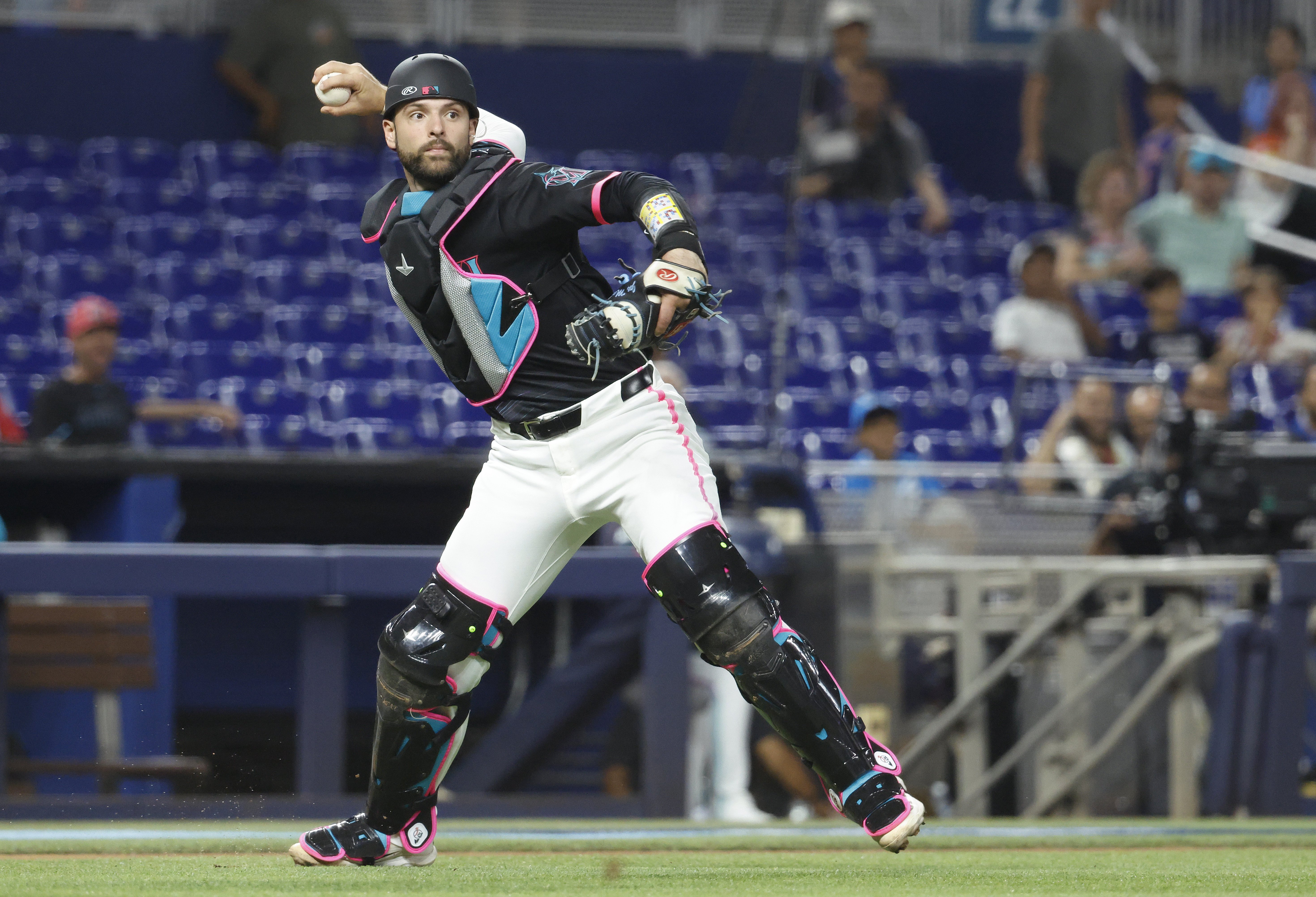 Joe Mack arrived to the big leagues with a supreme defensive reputation. During his first half-season on the Miami Marlins, he showed what the hype was all about, routinely making perfect throws to catch potential base-stealers and athletic plays with his glove. The defensive metrics back it up. Mack already has plus-6 fielding runs (including three from framing), per Baseball Savant, ranks in the 99th percentile in caught stealing above average, and averages a 1.89 second pop time. Digging deeper, Mack excels at framing runs on the top shadow of the zone. He has recorded the highest strike rate of any catcher in baseball in that zone at 52.6%. Mack is tied for the most shadow strikes in general with veteran catcher Victor Caratini. WERaVk5fWGw0TUFRPT1fQkZWWVhWRlhBRmNBREZWUkF3QUhBQWRlQUZnRkJWWUFVVlpUQTFGVUJncFdBUUpY.mp4 Mack's elite ability in this regard is routinely turning balls into called strikes. Even in a day and age with ABS challenges, many of those have been uncontested by batters and benefited Marlins pitchers. Mack enters Friday with a 36% caught stealing rate, which ranks ninth in all of baseball. Beyond his consistent accuracy, he separates himself by getting rid of the ball quickly with an average exchange time of 0.60 seconds. ZzZxWWJfWGw0TUFRPT1fQVZKWEFsRUFCQVlBRDFBREJRQUhBZ0pVQUZoUVVWZ0FWRnhRQ0FSVUJGSUFCd0Jl.mp4 Mack makes opposing runners second-guess before taking off, a complete 180 from how teams were approaching the Marlins early in the season against catchers Agustin Ramirez and Liam Hicks. This visual via Baseball Savant shows where Mack has struggled or performed well with blocking balls in the dirt. He only ranks 39th of all qualified catchers with minus-1 BAA. With that being said, he has had to deal with the fourth-most "tough blocks," which are balls with a 85% or less chance of being blocked. Perhaps Mack has been unlucky in this department. Considering the whole package, I do believe it is safe to say Mack is among MLB's five best defensive catchers. He is genuinely comparable to the likes of Patrick Bailey (Cleveland Guardians), Adley Rutschman (Baltimore Orioles) and Dillon Dingler (Detroit Tigers). It's no coincidence that the Marlins have dominated in the games Mack has started (29-17 record). With the potential to improve even more as his career progresses, he is a cornerstone for Miami to build around.
 -
 Joe Mack arrived to the big leagues with a supreme defensive reputation. During his first half-season on the Miami Marlins, he showed what the hype was all about, routinely making perfect throws to catch potential base-stealers and athletic plays with his glove. The defensive metrics back it up. Mack already has plus-6 fielding runs (including three from framing), per Baseball Savant, ranks in the 99th percentile in caught stealing above average, and averages a 1.89 second pop time. Digging deeper, Mack excels at framing runs on the top shadow of the zone. He has recorded the highest strike rate of any catcher in baseball in that zone at 52.6%. Mack is tied for the most shadow strikes in general with veteran catcher Victor Caratini. WERaVk5fWGw0TUFRPT1fQkZWWVhWRlhBRmNBREZWUkF3QUhBQWRlQUZnRkJWWUFVVlpUQTFGVUJncFdBUUpY.mp4 Mack's elite ability in this regard is routinely turning balls into called strikes. Even in a day and age with ABS challenges, many of those have been uncontested by batters and benefited Marlins pitchers. Mack enters Friday with a 36% caught stealing rate, which ranks ninth in all of baseball. Beyond his consistent accuracy, he separates himself by getting rid of the ball quickly with an average exchange time of 0.60 seconds. ZzZxWWJfWGw0TUFRPT1fQVZKWEFsRUFCQVlBRDFBREJRQUhBZ0pVQUZoUVVWZ0FWRnhRQ0FSVUJGSUFCd0Jl.mp4 Mack makes opposing runners second-guess before taking off, a complete 180 from how teams were approaching the Marlins early in the season against catchers Agustin Ramirez and Liam Hicks. This visual via Baseball Savant shows where Mack has struggled or performed well with blocking balls in the dirt. He only ranks 39th of all qualified catchers with minus-1 BAA. With that being said, he has had to deal with the fourth-most "tough blocks," which are balls with a 85% or less chance of being blocked. Perhaps Mack has been unlucky in this department. Considering the whole package, I do believe it is safe to say Mack is among MLB's five best defensive catchers. He is genuinely comparable to the likes of Patrick Bailey (Cleveland Guardians), Adley Rutschman (Baltimore Orioles) and Dillon Dingler (Detroit Tigers). It's no coincidence that the Marlins have dominated in the games Mack has started (29-17 record). With the potential to improve even more as his career progresses, he is a cornerstone for Miami to build around. View full article
 -
 1993 fan from start reacted to an article:
3 MLB comps for Marlins 14th overall pick Jacob Lombard
1993 fan from start reacted to an article:
3 MLB comps for Marlins 14th overall pick Jacob Lombard
-
 Jose Herrera reacted to an article:
3 MLB comps for Marlins 14th overall pick Jacob Lombard
Jose Herrera reacted to an article:
3 MLB comps for Marlins 14th overall pick Jacob Lombard
-
THOMAS JOSEPH reacted to an article:
3 MLB comps for Marlins 14th overall pick Jacob Lombard
-
The Miami Marlins selected Jacob Lombard at 14th overall in last weekend's MLB Draft. Lombard "falling" to pick 14 was considered a shock around baseball. When he was still available to them, the Marlins pounced and selected the Miami native with a family history of baseball, Lombard's father is the bench coach of the Detroit Tigers and his brother, George, is a top prospect in the Yankees system who was also drafted in the first round out of high school. Jacob Lombard is a large 6'3" shortstop with big power projection, yet he's extremely fluid at the position. There are mixed opinions of his hit tool. Baseball America gives him a 45 on the 20-80 grade scale, citing his low contact rates compared to his peers on the summer circuit and tendency to chase. Meanwhile, MLB.com gives Lombard a 55 because his angles when he makes contact are strong, with a high fly ball rate, with hard-contact, and high bat speed. Low-end outcome: Trevor Plouffe MLB seasons: nine Peak bWAR: 4.2 Career bWAR: 7.4 The reason for Trevor Plouffe being the "low outcome" for Lombard is based on if Lombard cannot stick at shortstop, Plouffe like Lombard was drafted as a shortstop out of high school and in Triple-A moved to the hot corner. Plouffe had a solid career mostly being remembered for his power, playing nine years in the major leagues with 106 career home runs. cv_24749955_1200K.mp4 Middle outcome: Ian Desmond MLB seasons: 11 Peak bWAR: 4.4 Career bWAR: 15.8 Desmond was a tantalizing offensive talent who had 181 home runs and 181 stolen bases over his 11-year MLB career. He won three NL Silver Slugger awards at shortstop, but his OPS only topped .800 once and strikeouts became a big issue for him in his late 20s. The Nats kept Desmond at shortstop until he reached free agency even though he was very error-prone. Such a player might move down the defensive spectrum earlier in the Marlins organization in its current state. With the talent that Lombard possesses, he could achieve similar counting stats and accolades by staying relatively healthy. High-end outcome: Troy Tulowitzki MLB seasons: 13 Peak bWAR: 6.7 Career bWAR: 44.8 This would be an absolute top-tier outcome for Jacob Lombard, it is unlikely for any player to be the player Troy Tulowitzki was when he played, but if Lombard reaches his peak potential, the size and talent could be as dominate as Tulo was. This would mean the glove, power, and even hit-tool max out for Lombard, making him a complete 5-tool player. As unlikely as it is, the talent is there. Tulowitzki would've reached even higher career WAR and counting stats if it wasn't for injuries. cv_29056227_1200K.mp4 Jacob Lombard by most critics is one of the highest upside selections in recent Marlins history, the bloodlines and talent are there for Lombard to flourish. While unlikely that Lombard reaches superstar status like Tulowitzki did, the Marlins should expect an everyday big league player in some capacity. View full article
-
3 MLB comps for Marlins 14th overall pick Jacob Lombard
Sean McCormack posted an article in FOF Prospects
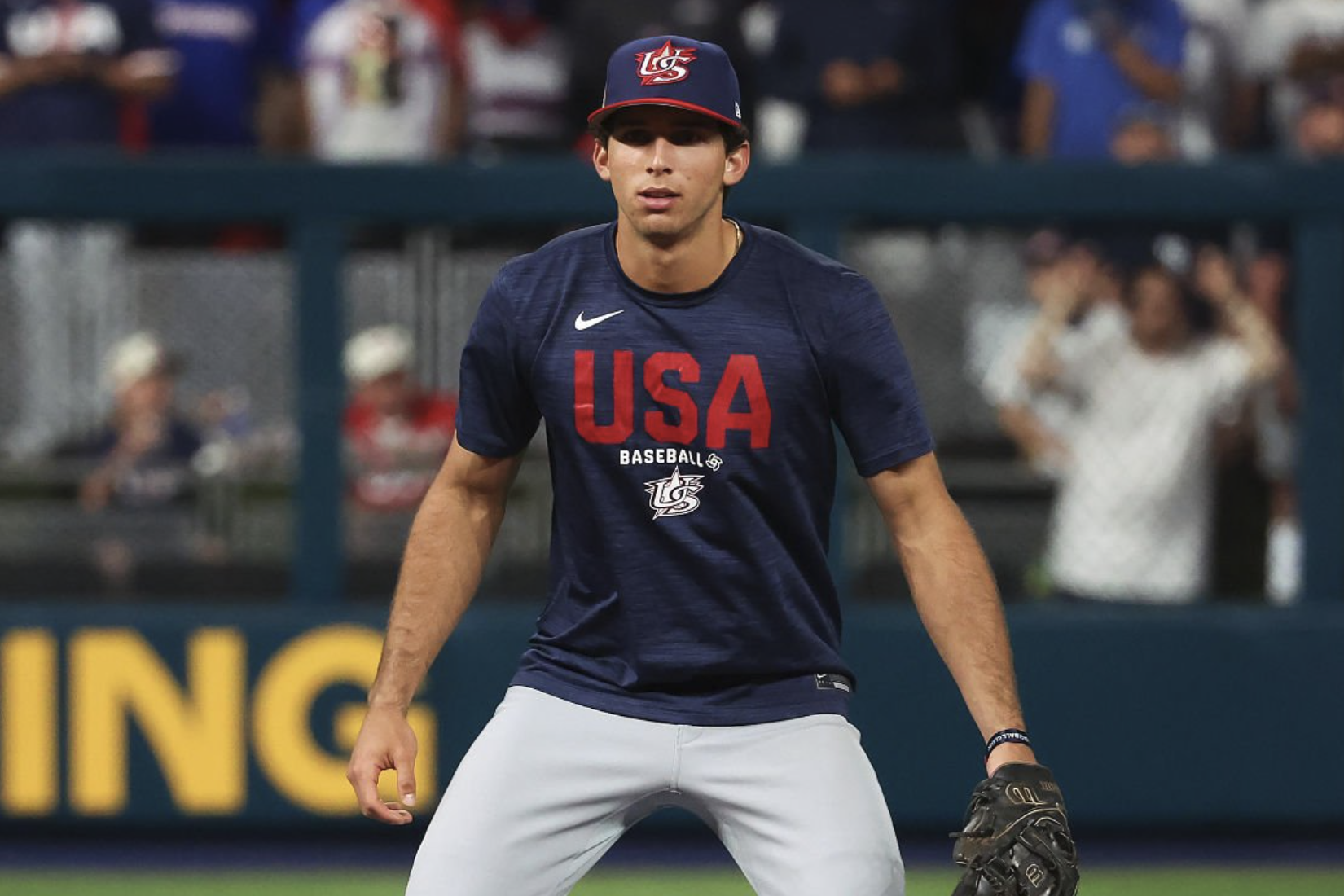 The Miami Marlins selected Jacob Lombard at 14th overall in last weekend's MLB Draft. Lombard "falling" to pick 14 was considered a shock around baseball. When he was still available to them, the Marlins pounced and selected the Miami native with a family history of baseball, Lombard's father is the bench coach of the Detroit Tigers and his brother, George, is a top prospect in the Yankees system who was also drafted in the first round out of high school. Jacob Lombard is a large 6'3" shortstop with big power projection, yet he's extremely fluid at the position. There are mixed opinions of his hit tool. Baseball America gives him a 45 on the 20-80 grade scale, citing his low contact rates compared to his peers on the summer circuit and tendency to chase. Meanwhile, MLB.com gives Lombard a 55 because his angles when he makes contact are strong, with a high fly ball rate, with hard-contact, and high bat speed. Low-end outcome: Trevor Plouffe MLB seasons: nine Peak bWAR: 4.2 Career bWAR: 7.4 The reason for Trevor Plouffe being the "low outcome" for Lombard is based on if Lombard cannot stick at shortstop, Plouffe like Lombard was drafted as a shortstop out of high school and in Triple-A moved to the hot corner. Plouffe had a solid career mostly being remembered for his power, playing nine years in the major leagues with 106 career home runs. cv_24749955_1200K.mp4 Middle outcome: Ian Desmond MLB seasons: 11 Peak bWAR: 4.4 Career bWAR: 15.8 Desmond was a tantalizing offensive talent who had 181 home runs and 181 stolen bases over his 11-year MLB career. He won three NL Silver Slugger awards at shortstop, but his OPS only topped .800 once and strikeouts became a big issue for him in his late 20s. The Nats kept Desmond at shortstop until he reached free agency even though he was very error-prone. Such a player might move down the defensive spectrum earlier in the Marlins organization in its current state. With the talent that Lombard possesses, he could achieve similar counting stats and accolades by staying relatively healthy. High-end outcome: Troy Tulowitzki MLB seasons: 13 Peak bWAR: 6.7 Career bWAR: 44.8 This would be an absolute top-tier outcome for Jacob Lombard, it is unlikely for any player to be the player Troy Tulowitzki was when he played, but if Lombard reaches his peak potential, the size and talent could be as dominate as Tulo was. This would mean the glove, power, and even hit-tool max out for Lombard, making him a complete 5-tool player. As unlikely as it is, the talent is there. Tulowitzki would've reached even higher career WAR and counting stats if it wasn't for injuries. cv_29056227_1200K.mp4 Jacob Lombard by most critics is one of the highest upside selections in recent Marlins history, the bloodlines and talent are there for Lombard to flourish. While unlikely that Lombard reaches superstar status like Tulowitzki did, the Marlins should expect an everyday big league player in some capacity.
 -
Jose Herrera reacted to an article:
5 best picks of 2026 Marlins MLB Draft class
-
Their first-rounder is understandably hogging many of the headlines given his pre-draft projection and local ties, but the Miami Marlins landed plenty of other intriguing talent in subsequent rounds. I've highlighted the five best draft picks that the Marlins made this year, based on value or sheer player evaluation. 1. Jacob Lombard, SS, Gulliver Prep HS (FL) As a consensus top-10 prospect in the draft and a top-three high school prospect, the Miami native was not expected to be available at 14. Lombard has all the tools and family baseball lineage to be considered a 5-tool player, including 60-grade power potential and a high likelihood to stick at shortstop. The largest question looming with Lombard will be the hit tool. Poor contact rates and the tendency to chase are red flags, but the attack angles to the ball on his swing are strong, leading to high flyball rates and to his pull side. Overall, Lombard projects to be a 20-25 home run hitter with above-average to Gold Glove defense at shortstop. The Marlins will likely overslot Lombard, but the potential is worth all the money. 2. Ryan Peterson, RHP, Sam Houston State The Sam Houston State product went 71st overall in Competitive Balance Round B. His results in colleges were decent, 4.67 xFIP, 3.38 ERA, but a 2.62 SIERA, 22.2 K-BB%. and solid chase, whiff, but struggled with damage limitation. But the Marlins are betting on traits. Peterson has an amazing ability to spin the baseball, his repertoire fits how MLB teams approach pitching, deep mix, with the ability to spin the baseball. Peterson's fastball also has an extremely flat approach, similar to Bryan Woo, Joe Ryan, and Christian Scott. Peterson's extension down the mound also allows his fastball to play up despite his current lack of velocity. Peterson's tendency to throw strikes should improve with MLB pitching development along with his velocity. Shapes, repertoire, extension, and release heights make him an absolute pitching development darling in the modern game. 3. Trey Beard, LHP, Florida State With Trey Beard, the Marlins selected another college pitcher with unique release height and the ability to spin the baseball with different shapes. (Data visualization via overslotbaseball.com) Beard in 66.2 innings this prior season at Florida State University posted a 4.50 ERA, 3.93 xFIP, 2.35 SIERA and 24.9 K-BB%. He utilizes a high-carry fastball, big curveball, and tight slider. Beard also has a cutter and changeup in his pitch mix. Beard's ability like Peterson to spin the baseball combined with a unique release height and arm slot probably attracted the Marlins to him in the fifth round. 4. Nic Tolbert, 3B, Oktaha HS (OK) In the ninth round the Marlins selected Tolbert and announced him as a third baseman. Tolbert is massive at 6'6". A complete upside selection by the Marlins, the 18-year-old showcases large power potential from the left side of the plate. Tolbert, if signed will most likely get an over-slot deal, Tolbert struggles with offspeed and swing will need some adjustments, the Oklahoma product will need time in the minors and a lot of development, but all the raw tools are prevalent. 5. Colin Linder, RHP, Arizona State Miami's 15th-rounder has a long history of injuries and played mostly out the bullpen in 2026. The results were not good at all in 5.40 ERA, 5.99 xFIP, 4.00 SIERA, 11.2 K-BB%. But most MLB teams draft pitchers in college based on traits. Like the other two pitchers on this list, Linder is interesting from that standpoint. He has an extreme cut-ride fastball sitting 95 and touching 98, solid extension, high-release point, and good spin capacity. He also has a presence on the mound with his 6'5" stature. (Data visualization via overslotbaseball.com) Lacking any pitch that moves arm side, Linder will need to development another pitch to differentiate his shapes and keep hitters off balance. He also struggles with command, suggesting he will most likely work out of the bullpen going forward. He could move fast through the system as a reliever with his stuff if he's able to refine it. View full article
-
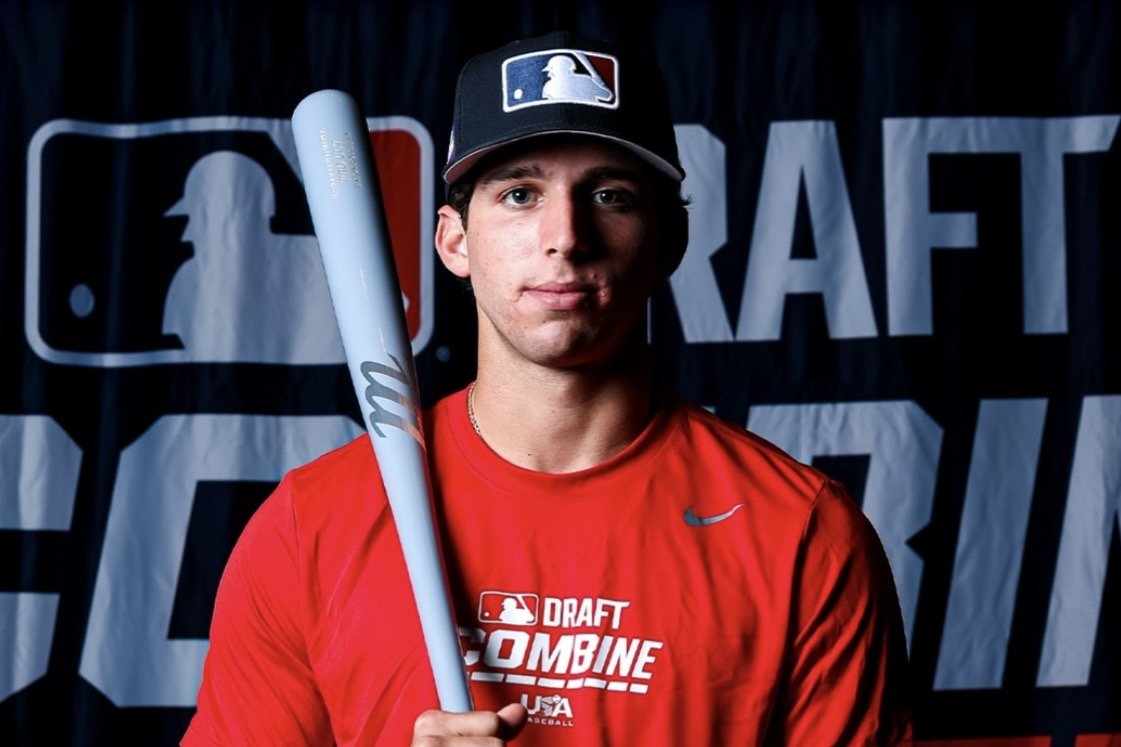 Their first-rounder is understandably hogging many of the headlines given his pre-draft projection and local ties, but the Miami Marlins landed plenty of other intriguing talent in subsequent rounds. I've highlighted the five best draft picks that the Marlins made this year, based on value or sheer player evaluation. 1. Jacob Lombard, SS, Gulliver Prep HS (FL) As a consensus top-10 prospect in the draft and a top-three high school prospect, the Miami native was not expected to be available at 14. Lombard has all the tools and family baseball lineage to be considered a 5-tool player, including 60-grade power potential and a high likelihood to stick at shortstop. The largest question looming with Lombard will be the hit tool. Poor contact rates and the tendency to chase are red flags, but the attack angles to the ball on his swing are strong, leading to high flyball rates and to his pull side. Overall, Lombard projects to be a 20-25 home run hitter with above-average to Gold Glove defense at shortstop. The Marlins will likely overslot Lombard, but the potential is worth all the money. 2. Ryan Peterson, RHP, Sam Houston State The Sam Houston State product went 71st overall in Competitive Balance Round B. His results in colleges were decent, 4.67 xFIP, 3.38 ERA, but a 2.62 SIERA, 22.2 K-BB%. and solid chase, whiff, but struggled with damage limitation. But the Marlins are betting on traits. Peterson has an amazing ability to spin the baseball, his repertoire fits how MLB teams approach pitching, deep mix, with the ability to spin the baseball. Peterson's fastball also has an extremely flat approach, similar to Bryan Woo, Joe Ryan, and Christian Scott. Peterson's extension down the mound also allows his fastball to play up despite his current lack of velocity. Peterson's tendency to throw strikes should improve with MLB pitching development along with his velocity. Shapes, repertoire, extension, and release heights make him an absolute pitching development darling in the modern game. 3. Trey Beard, LHP, Florida State With Trey Beard, the Marlins selected another college pitcher with unique release height and the ability to spin the baseball with different shapes. (Data visualization via overslotbaseball.com) Beard in 66.2 innings this prior season at Florida State University posted a 4.50 ERA, 3.93 xFIP, 2.35 SIERA and 24.9 K-BB%. He utilizes a high-carry fastball, big curveball, and tight slider. Beard also has a cutter and changeup in his pitch mix. Beard's ability like Peterson to spin the baseball combined with a unique release height and arm slot probably attracted the Marlins to him in the fifth round. 4. Nic Tolbert, 3B, Oktaha HS (OK) In the ninth round the Marlins selected Tolbert and announced him as a third baseman. Tolbert is massive at 6'6". A complete upside selection by the Marlins, the 18-year-old showcases large power potential from the left side of the plate. Tolbert, if signed will most likely get an over-slot deal, Tolbert struggles with offspeed and swing will need some adjustments, the Oklahoma product will need time in the minors and a lot of development, but all the raw tools are prevalent. 5. Colin Linder, RHP, Arizona State Miami's 15th-rounder has a long history of injuries and played mostly out the bullpen in 2026. The results were not good at all in 5.40 ERA, 5.99 xFIP, 4.00 SIERA, 11.2 K-BB%. But most MLB teams draft pitchers in college based on traits. Like the other two pitchers on this list, Linder is interesting from that standpoint. He has an extreme cut-ride fastball sitting 95 and touching 98, solid extension, high-release point, and good spin capacity. He also has a presence on the mound with his 6'5" stature. (Data visualization via overslotbaseball.com) Lacking any pitch that moves arm side, Linder will need to development another pitch to differentiate his shapes and keep hitters off balance. He also struggles with command, suggesting he will most likely work out of the bullpen going forward. He could move fast through the system as a reliever with his stuff if he's able to refine it.
- 2 comments
-
- 1
-
-
- mlb draft
- jacob lombard
- (and 4 more)
-
Ely Sussman reacted to an article:
3 MLB comps for Marlins 14th overall pick Jacob Lombard
-
Sean McCormack reacted to an article:
Hector Rodriguez's 2026 Miami Marlins Draft Board
-
THOMAS JOSEPH reacted to an article:
Could Lake Bachar be stretched out to a starter?
-
Jose Herrera reacted to an article:
Could Lake Bachar be stretched out to a starter?
-
Could Lake Bachar be stretched out to a starter?
Sean McCormack posted a topic in Miami Marlins Talk
Lake Bachar has been successful out of the Marlins bullpen for parts of three seasons since being claimed off waivers from San Diego. Bachar has been one of the steadiest arms out the ‘pen in 2026. Through 39 ⅓ innings, he has a 2.97 ERA, 3.68 FIP, 20.5 K-BB%. With regular rotation members Eury Pérez and Janson Junk sidelined by injuries, the Marlins have tried to patch things together without a full group of conventional starters. Bachar, for example, has served as an opener three times this month, completing as many as three innings in those situations. The right-hander hasn't pitched consistently in a starting role since early in the 2022 season when he was still at the Double-A level. Would the Marlins dare experiment with stretching him out to fill one of their rotation voids? Bachar has seen his pitch mix expand every season with the Fish. Coming into 2025, he only threw a four-seam fastball, split-finger, and sweeper. Adding a slider in 2025, and now both a curveball and sinker this year has expanded his mix from three pitches to six. Baseball Savant’s movement profile illustrates how Bachar can throw many different shapes and attack batters in a plethora of ways. This is how many of today's top MLB starting pitchers approach the game as well. Bachar ideally fits into how the Marlins approach pitching: off-speed and breaking ball heavy. All of Bachar's non-fastballs have an xAVG under .208 with a xWOBA under .260 and 37.5 whiff% or more. He usage each of those pitches 10% or more, evenly distributing his mix to keep hitters off balance. a0RsWUtfVjBZQUhRPT1fQUZBQ1VsTUFWbEVBQVZGVUFnQUhVZ1VIQUFBQkFBQUFDbDBOQ1FvRVVGZFNBZ0pX.mp4 The addition of the sinker may be pivotal for Bachar's development as a pitcher. Bachar's four-seam struggles against vs. lefty batters as reflected in its hard-hit rate allowed and called strike plus swinging strike rate. The addition of the sinker will be strong vs. RHB, like his four-seam. Experimenting with a cutter, like many other pitchers have, may be a ideal addition for Bachar to have a variation of fastball to attack lefties with. Adding a cutter would continue a league-wide trend of three fastball shapes for pitchers—49% of the league has three fastballs they utilize, compared to 32% ten years ago. Due to Bachar's lack of extension and league-average velocity on the four-seam, it will be more likely to regress in an expanded role. The longer Bachar's outings are, the more plausible that his velo will drop, which is common when players move from the ‘pen to the rotation. TzA0TDRfWGw0TUFRPT1fQjFJSEFnSlJCd2NBRFZFQUFnQUhDRlJVQUZrQlVBQUFCQUVCVmxJREExSlZVbEZU.mp4 Lastly, like with any starter, Bachar's command would be tested. So far, Bachar has a 8.3% BB%. The FanGraphs Location+ metric, gives Bachar overall a 99 Location+ score (100 being average), although this score is severely hindered by his split-finger which registers a 52 Location+. (Heat map via Fangraphs) Overall, Bachar's expanded pitch mix, lack of physical exertion when pitching, and ability to utilize all his pitches in different quadrants of the zone, could allow him to move to the rotation for the Marlins if needed as the 2026 season continues. View full article -
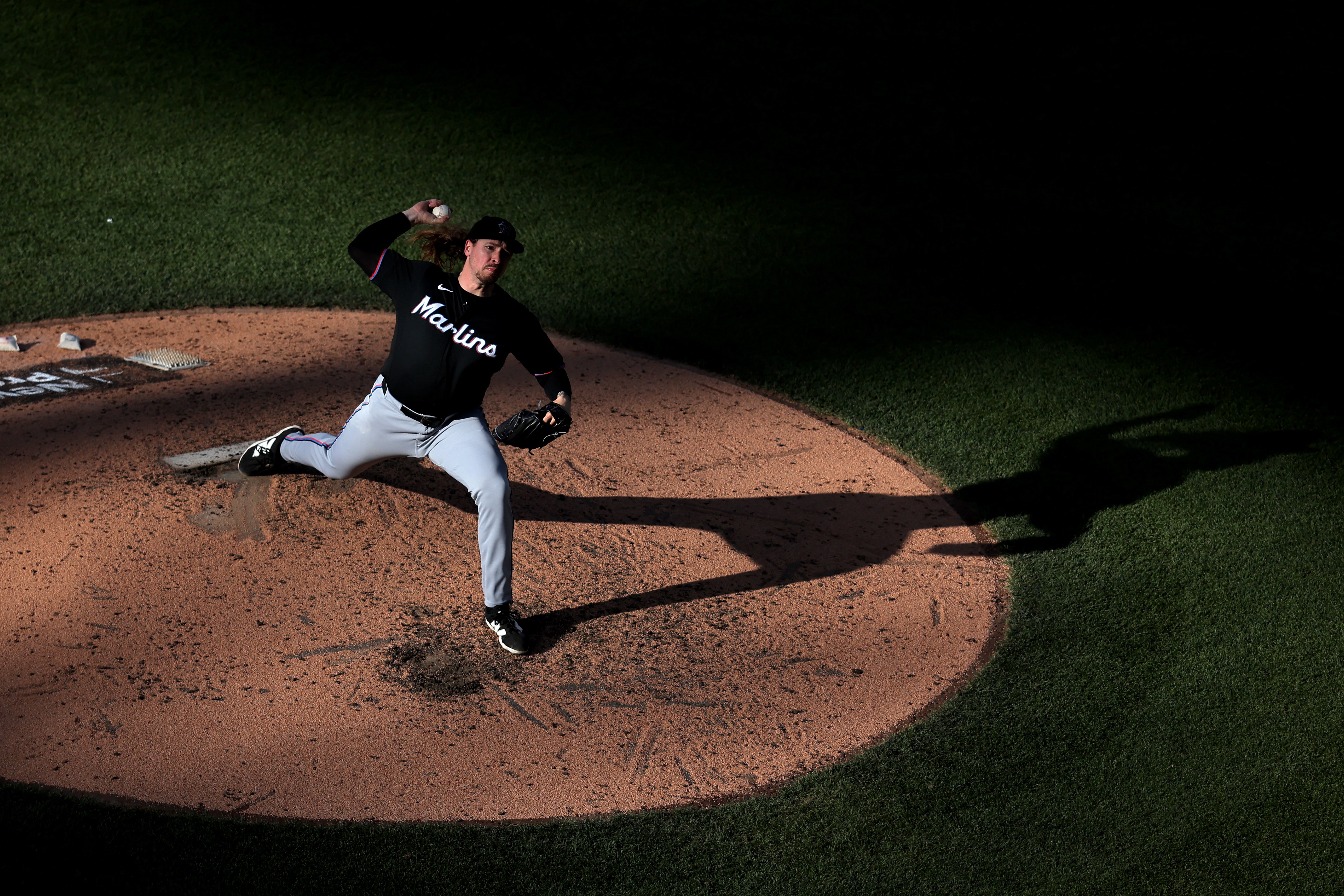 Lake Bachar has been successful out of the Marlins bullpen for parts of three seasons since being claimed off waivers from San Diego. Bachar has been one of the steadiest arms out the ‘pen in 2026. Through 39 ⅓ innings, he has a 2.97 ERA, 3.68 FIP, 20.5 K-BB%. With regular rotation members Eury Pérez and Janson Junk sidelined by injuries, the Marlins have tried to patch things together without a full group of conventional starters. Bachar, for example, has served as an opener three times this month, completing as many as three innings in those situations. The right-hander hasn't pitched consistently in a starting role since early in the 2022 season when he was still at the Double-A level. Would the Marlins dare experiment with stretching him out to fill one of their rotation voids? Bachar has seen his pitch mix expand every season with the Fish. Coming into 2025, he only threw a four-seam fastball, split-finger, and sweeper. Adding a slider in 2025, and now both a curveball and sinker this year has expanded his mix from three pitches to six. Baseball Savant’s movement profile illustrates how Bachar can throw many different shapes and attack batters in a plethora of ways. This is how many of today's top MLB starting pitchers approach the game as well. Bachar ideally fits into how the Marlins approach pitching: off-speed and breaking ball heavy. All of Bachar's non-fastballs have an xAVG under .208 with a xWOBA under .260 and 37.5 whiff% or more. He usage each of those pitches 10% or more, evenly distributing his mix to keep hitters off balance. a0RsWUtfVjBZQUhRPT1fQUZBQ1VsTUFWbEVBQVZGVUFnQUhVZ1VIQUFBQkFBQUFDbDBOQ1FvRVVGZFNBZ0pX.mp4 The addition of the sinker may be pivotal for Bachar's development as a pitcher. Bachar's four-seam struggles against vs. lefty batters as reflected in its hard-hit rate allowed and called strike plus swinging strike rate. The addition of the sinker will be strong vs. RHB, like his four-seam. Experimenting with a cutter, like many other pitchers have, may be a ideal addition for Bachar to have a variation of fastball to attack lefties with. Adding a cutter would continue a league-wide trend of three fastball shapes for pitchers—49% of the league has three fastballs they utilize, compared to 32% ten years ago. Due to Bachar's lack of extension and league-average velocity on the four-seam, it will be more likely to regress in an expanded role. The longer Bachar's outings are, the more plausible that his velo will drop, which is common when players move from the ‘pen to the rotation. TzA0TDRfWGw0TUFRPT1fQjFJSEFnSlJCd2NBRFZFQUFnQUhDRlJVQUZrQlVBQUFCQUVCVmxJREExSlZVbEZU.mp4 Lastly, like with any starter, Bachar's command would be tested. So far, Bachar has a 8.3% BB%. The FanGraphs Location+ metric, gives Bachar overall a 99 Location+ score (100 being average), although this score is severely hindered by his split-finger which registers a 52 Location+. (Heat map via Fangraphs) Overall, Bachar's expanded pitch mix, lack of physical exertion when pitching, and ability to utilize all his pitches in different quadrants of the zone, could allow him to move to the rotation for the Marlins if needed as the 2026 season continues.
 -
Ely Sussman reacted to an article:
Could Lake Bachar be stretched out to a starter?
-
1993 fan from start reacted to an article:
MLB mock draft: 2026 late college season update
-
The first edition of the 2026 MLB mock draft has arrived. As the college baseball regular season nears its conclusion, my board of top draft-eligible prospects has fallen in place. The Marlins select 14th in the first round. Pick # Team Player Position School Slot Value 1 Chicago White Sox Roch Cholowsky SS UCLA $11,350,600 2 Tampa Bay Rays Grady Emerson SS High School $10,507,000 3 Minnesota Twins Vahn Lackey C Georgia Tech $9,740,100 4 San Francisco Giants Jackson Flora RHP UC Santa Barbara $8,988,400 5 Pittsburgh Pirates AJ Gracia OF Virginia $8,336,500 6 Kansas City Royals Jared Grindlinger LHP/OF High School $7,746,100 7 Baltimore Orioles Drew Burress OF Georgia Tech $7,327,200 8 Athletics Logan Reddemann RHP UCLA $6,982,600 9 Atlanta Braves Cameron Flukey RHP Coastal Carolina $6,675,300 10 Colorado Rockies Jacob Lombard SS High School $6,393,100 11 Washington Nationals Ryder Helfrick C Arkansas $6,133,500 12 Los Angeles Angels Derek Curiel OF LSU $5,889,300 13 St. Louis Cardinals Chris Hacopian INF Texas A&M $5,661,300 14 Miami Marlins Ace Reese 3B/1B Mississippi State $5,444,900 15 Arizona Diamondbacks Eric Booth Jr. OF High School $5,241,000 16 Texas Rangers Sawyer Strosnider OF TCU $5,051,900 17 Houston Astros Aiden Robbins OF Texas $4,868,600 18 Cincinnati Reds Gio Rojas LHP/OF High School $4,696,500 19 Cleveland Guardians Tyler Bell SS Kentucky $4,530,500 20 Boston Red Sx Logan Hughes OF Texas Tech $4,373,900 21 San Diego Padres Tyler Spangler SS High School $4,224,700 22 Detroit Tigers Logan Schmidt LHP High School $4,082,700 23 Chicago Cubs James Clark SS High School $3,947,600 24 Seattle Mariners Cole Carlon LHP Arizona State $3,818,700 25 Milwaukee Brewers Daniel Jackson C Georgia $3,696,000 26 Atlanta Braves* Justin Lebron SS Alabama $3,578,800 27 New York Mets Cole Prosek C/SS High School $3,466,500 28 Houston Astros* Aiden Ruiz SS High School $3,363,600 29 Cleveland Guardians^ Mason Edwards LHP USC $3,270,200 30 Kansas City Royals^ Coleman Borthwick RHP High School $3,190,500 31 Arizona Diamondbacks^ Tegan Kuhns RHP Tennessee $3,118,300 32 St. Louis Cardinals^ Cade Townsend RHP Ole Miss $3,044,600 33 Tampa Bay Rays^ Jarren Advincula 2B Georgia Tech $2,980,200 34 Pittsburgh Pirates^ Liam Peterson RHP Florida $2,897,400 35 New York Yankees Bo Lowrance 3B High School $2,826,700 36 Philadelphia Phillies Connor Comeau SS/C High School $2,758,800 37 Colorado Rockies^ Brody Bumila LHP High School $2,696,700 * = Prospect Promotion Incentive ^ = Competitive Balance Round A Marlins first-round pick: Ace Reese, 3B/1B, Mississippi State Ace Reese is one of the best power-hitting prospects in the 2026 MLB Draft class. He’s also one of the most consistent hitters in this class and continues to show growth after every season. The Mississippi State product has had an extremely successful college career to date. Through 49 games as a junior, Reese has a .317/.420/.688 slash line, with a .463 wOBA, and 17 home runs. Power is the name of the game for Reese, flashing elite exit velocities for a college bat, and staggering barrel rates. Reese's approach is slightly aggressive, although he makes strong contact and whiff numbers for a power bat. Reese slips down draft boards a bit due to lack of a positional home. He has spent most of his time at third base and the corner outfield spots during college, but may be best at first base as he grows older. On many fronts, he resembles 2025 Brewers first-round pick Andrew Fischer, who made waves for himself in the World Baseball Classic (Italy) and has built upon that in High-A. Reese will not add much on the base paths, but would add much needed pop to the Marlins farm system if selected. He'd cost slightly less than half of Miami's total draft bonus pool of $11,960,100. View full article
-
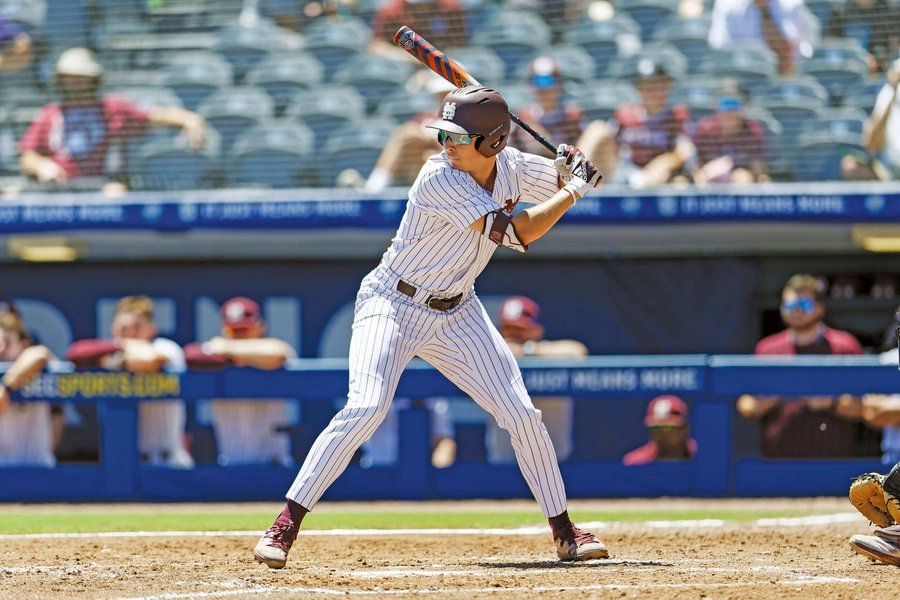 The first edition of the 2026 MLB mock draft has arrived. As the college baseball regular season nears its conclusion, my board of top draft-eligible prospects has fallen in place. The Marlins select 14th in the first round. Pick # Team Player Position School Slot Value 1 Chicago White Sox Roch Cholowsky SS UCLA $11,350,600 2 Tampa Bay Rays Grady Emerson SS High School $10,507,000 3 Minnesota Twins Vahn Lackey C Georgia Tech $9,740,100 4 San Francisco Giants Jackson Flora RHP UC Santa Barbara $8,988,400 5 Pittsburgh Pirates AJ Gracia OF Virginia $8,336,500 6 Kansas City Royals Jared Grindlinger LHP/OF High School $7,746,100 7 Baltimore Orioles Drew Burress OF Georgia Tech $7,327,200 8 Athletics Logan Reddemann RHP UCLA $6,982,600 9 Atlanta Braves Cameron Flukey RHP Coastal Carolina $6,675,300 10 Colorado Rockies Jacob Lombard SS High School $6,393,100 11 Washington Nationals Ryder Helfrick C Arkansas $6,133,500 12 Los Angeles Angels Derek Curiel OF LSU $5,889,300 13 St. Louis Cardinals Chris Hacopian INF Texas A&M $5,661,300 14 Miami Marlins Ace Reese 3B/1B Mississippi State $5,444,900 15 Arizona Diamondbacks Eric Booth Jr. OF High School $5,241,000 16 Texas Rangers Sawyer Strosnider OF TCU $5,051,900 17 Houston Astros Aiden Robbins OF Texas $4,868,600 18 Cincinnati Reds Gio Rojas LHP/OF High School $4,696,500 19 Cleveland Guardians Tyler Bell SS Kentucky $4,530,500 20 Boston Red Sx Logan Hughes OF Texas Tech $4,373,900 21 San Diego Padres Tyler Spangler SS High School $4,224,700 22 Detroit Tigers Logan Schmidt LHP High School $4,082,700 23 Chicago Cubs James Clark SS High School $3,947,600 24 Seattle Mariners Cole Carlon LHP Arizona State $3,818,700 25 Milwaukee Brewers Daniel Jackson C Georgia $3,696,000 26 Atlanta Braves* Justin Lebron SS Alabama $3,578,800 27 New York Mets Cole Prosek C/SS High School $3,466,500 28 Houston Astros* Aiden Ruiz SS High School $3,363,600 29 Cleveland Guardians^ Mason Edwards LHP USC $3,270,200 30 Kansas City Royals^ Coleman Borthwick RHP High School $3,190,500 31 Arizona Diamondbacks^ Tegan Kuhns RHP Tennessee $3,118,300 32 St. Louis Cardinals^ Cade Townsend RHP Ole Miss $3,044,600 33 Tampa Bay Rays^ Jarren Advincula 2B Georgia Tech $2,980,200 34 Pittsburgh Pirates^ Liam Peterson RHP Florida $2,897,400 35 New York Yankees Bo Lowrance 3B High School $2,826,700 36 Philadelphia Phillies Connor Comeau SS/C High School $2,758,800 37 Colorado Rockies^ Brody Bumila LHP High School $2,696,700 * = Prospect Promotion Incentive ^ = Competitive Balance Round A Marlins first-round pick: Ace Reese, 3B/1B, Mississippi State Ace Reese is one of the best power-hitting prospects in the 2026 MLB Draft class. He’s also one of the most consistent hitters in this class and continues to show growth after every season. The Mississippi State product has had an extremely successful college career to date. Through 49 games as a junior, Reese has a .317/.420/.688 slash line, with a .463 wOBA, and 17 home runs. Power is the name of the game for Reese, flashing elite exit velocities for a college bat, and staggering barrel rates. Reese's approach is slightly aggressive, although he makes strong contact and whiff numbers for a power bat. Reese slips down draft boards a bit due to lack of a positional home. He has spent most of his time at third base and the corner outfield spots during college, but may be best at first base as he grows older. On many fronts, he resembles 2025 Brewers first-round pick Andrew Fischer, who made waves for himself in the World Baseball Classic (Italy) and has built upon that in High-A. Reese will not add much on the base paths, but would add much needed pop to the Marlins farm system if selected. He'd cost slightly less than half of Miami's total draft bonus pool of $11,960,100.
 -
Starlyn Caba, Fish on First's eighth-ranked prospect, was acquired by the Miami Marlins in the December 2024 trade which sent Jesús Luzardo to the Philadelphia Phillies. One season later, the Phillies looked like they got the better end of the deal, as Luzardo was a crucial piece of their division-winning starting rotation and the left-hander was signed to a five-year contract extension. Meanwhile, Caba struggled with injuries and the stick during his age-19 season. The shortstop played his whole 2025 with the Jupiter Hammerheads. He had a .613 OPS and .284 wOBA, unable to hit the ball with much authority. Fortunately for the Fish, Caba fared much better in the Arizona Fall League. Among the youngest prospects who participated in the AFL, he recorded a 105 mph max exit velocity, .363 wOBA and 42.6% hard-hit rate overall, and continued his strong swing decisions and 70-grade defense at short. He reached base safely in all 18 games he played and earned a Fall Stars Game selection. Three weeks into his 2026 season, Caba has made even more progress in the batter's box. Through 13 games with High-A Beloit, he has a .327/.424/.531 slash line with a .436 wOBA and 153 wRC+. The lack of public batted-ball data from the Midwest League prevents us from speaking on his EVs, but he appears to be mostly deserving of these results. The glove on its own may have given Caba a future MLB role, but this positive development to his hitting profile from a damage perspective mixed with his great plate approach makes him a viable potential building block for the Marlins. While we're at least a full year away from seeing the Dominican switch-hitter in the majors, he has undeniable similarities to some longtime big leaguers. Using them as reference points, I'll lay out three plausible career outcomes for Caba. Low-end outcome: Alcides Escobar MLB seasons: 14 Peak fWAR/career fWAR: 3.5/13.3 Alcides Escobar was an All-Star, Gold Glove award winner, and World Series champion, though all of those accolades came during the same 2015 season. He had an extremely up-and-down career overall. At his peak, Escobar was the spark at the top of the Kansas City Royals lineup. The majority of the time, he was best suited for the bottom of the order, earning his keep with defense and speed. cv_516191283_1200K.mp4 Escobar had a single-season high of only seven home runs and didn't get on base consistently. It wouldn't be unfair to expect Caba to fare better in one or both of those areas in the future. That being said, this kind of stability at shortstop has considerable value. Likely outcome: Jose Iglesias MLB seasons: 13 Peak fWAR/career fWAR: 2.5/16.8 Caba's remarkably smooth actions up the middle are reminiscent of Jose Iglesias. The former top prospect with the Boston Red Sox saw major league time with eight different franchises, making flashy plays every place he went. Iglesias hit for an elite average in several seasons, too. However, like Escobar, his production was limited in terms of homers and walks. Caba's patient approach could elevate him above this tier of player. High-end outcome: Andrés Giménez MLB seasons: seven Peak fWAR/career fWAR: 6.1/16.2 Andrés Giménez is not only still active, but should be for at least another half-decade. The Toronto Blue Jays shortstop is in the midst of his age-27 season. Even with many years of baseball ahead of him, it's safe to say that 2022 will go down as his career year, when he finished sixth in American League MVP voting. Most often utilized at second base in the past, Giménez has been one of the best infield defenders in baseball. He already has three Gold Gloves as well as the 2023 AL Platinum Glove. SzQ3QUJfV0ZRVkV3dEdEUT09X0JnQldBUWNDWGxZQUMxVlJYZ0FBQ0FGU0FBQlhXd2NBVkZJRkJBSlFBRkZkVmxaVA==.mp4 If Caba grows into a Giménez-like combination of speed, elite defense and nearly league-average hitting, I believe this would be a fantastic outcome. In an absolute best-case scenario, Caba could maintain even higher OBPs than him. View full article
-
3 MLB comps for future Marlins shortstop Starlyn Caba
Sean McCormack posted an article in FOF Prospects
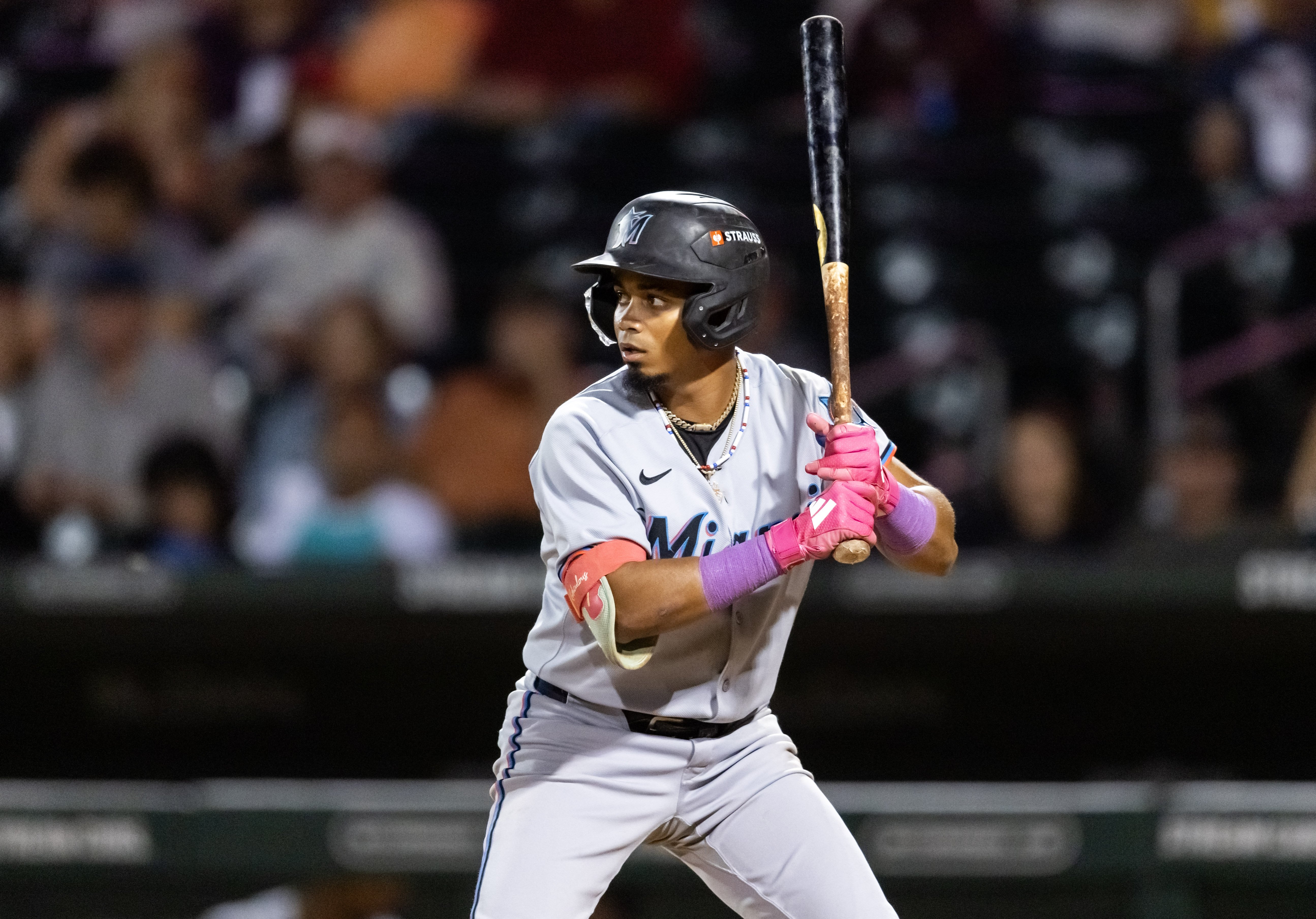 Starlyn Caba, Fish on First's eighth-ranked prospect, was acquired by the Miami Marlins in the December 2024 trade which sent Jesús Luzardo to the Philadelphia Phillies. One season later, the Phillies looked like they got the better end of the deal, as Luzardo was a crucial piece of their division-winning starting rotation and the left-hander was signed to a five-year contract extension. Meanwhile, Caba struggled with injuries and the stick during his age-19 season. The shortstop played his whole 2025 with the Jupiter Hammerheads. He had a .613 OPS and .284 wOBA, unable to hit the ball with much authority. Fortunately for the Fish, Caba fared much better in the Arizona Fall League. Among the youngest prospects who participated in the AFL, he recorded a 105 mph max exit velocity, .363 wOBA and 42.6% hard-hit rate overall, and continued his strong swing decisions and 70-grade defense at short. He reached base safely in all 18 games he played and earned a Fall Stars Game selection. Three weeks into his 2026 season, Caba has made even more progress in the batter's box. Through 13 games with High-A Beloit, he has a .327/.424/.531 slash line with a .436 wOBA and 153 wRC+. The lack of public batted-ball data from the Midwest League prevents us from speaking on his EVs, but he appears to be mostly deserving of these results. The glove on its own may have given Caba a future MLB role, but this positive development to his hitting profile from a damage perspective mixed with his great plate approach makes him a viable potential building block for the Marlins. While we're at least a full year away from seeing the Dominican switch-hitter in the majors, he has undeniable similarities to some longtime big leaguers. Using them as reference points, I'll lay out three plausible career outcomes for Caba. Low-end outcome: Alcides Escobar MLB seasons: 14 Peak fWAR/career fWAR: 3.5/13.3 Alcides Escobar was an All-Star, Gold Glove award winner, and World Series champion, though all of those accolades came during the same 2015 season. He had an extremely up-and-down career overall. At his peak, Escobar was the spark at the top of the Kansas City Royals lineup. The majority of the time, he was best suited for the bottom of the order, earning his keep with defense and speed. cv_516191283_1200K.mp4 Escobar had a single-season high of only seven home runs and didn't get on base consistently. It wouldn't be unfair to expect Caba to fare better in one or both of those areas in the future. That being said, this kind of stability at shortstop has considerable value. Likely outcome: Jose Iglesias MLB seasons: 13 Peak fWAR/career fWAR: 2.5/16.8 Caba's remarkably smooth actions up the middle are reminiscent of Jose Iglesias. The former top prospect with the Boston Red Sox saw major league time with eight different franchises, making flashy plays every place he went. Iglesias hit for an elite average in several seasons, too. However, like Escobar, his production was limited in terms of homers and walks. Caba's patient approach could elevate him above this tier of player. High-end outcome: Andrés Giménez MLB seasons: seven Peak fWAR/career fWAR: 6.1/16.2 Andrés Giménez is not only still active, but should be for at least another half-decade. The Toronto Blue Jays shortstop is in the midst of his age-27 season. Even with many years of baseball ahead of him, it's safe to say that 2022 will go down as his career year, when he finished sixth in American League MVP voting. Most often utilized at second base in the past, Giménez has been one of the best infield defenders in baseball. He already has three Gold Gloves as well as the 2023 AL Platinum Glove. SzQ3QUJfV0ZRVkV3dEdEUT09X0JnQldBUWNDWGxZQUMxVlJYZ0FBQ0FGU0FBQlhXd2NBVkZJRkJBSlFBRkZkVmxaVA==.mp4 If Caba grows into a Giménez-like combination of speed, elite defense and nearly league-average hitting, I believe this would be a fantastic outcome. In an absolute best-case scenario, Caba could maintain even higher OBPs than him.
 -
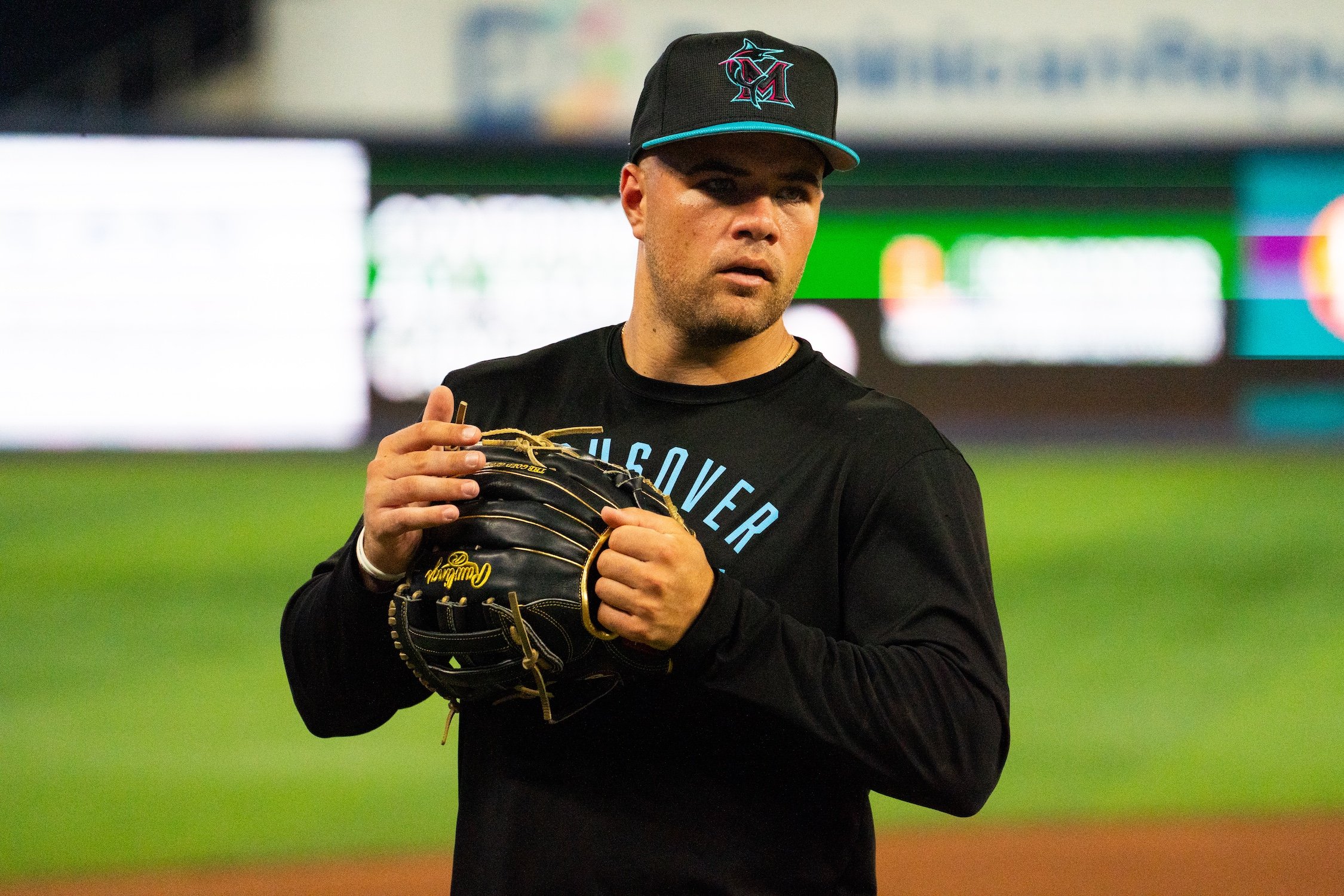 Coming off of what was a great two-month debut with the Miami Marlins in 2025, Jakob Marsee entered 2026 with lofty expectations. While his defense and baserunning have remained strong, the bat has been lacking to start the new season. Entering Saturday, Marsee's slash line is .148/.254/.204 with a .224 wOBA and 37 wRC+. It's a stark difference from his 133 wRC+ in 55 major league games last year. On the surface, these numbers are poor, and his expected stats only partially paint a better picture. However, a change to Marsee's stance in the batter's box has seemingly contributed to massive increases in important metrics, which will eventually lead to positive outcomes. First off, Marsee has gotten unlucky. His batting average on balls in play has plummeted from .357 as a rookie to .205 as a sophomore. Regression was expected, but this is an overcorrection that has him way underperforming league averages and his own minor league career norms. 7k4rab.mp4 Marsee's hard-hit rate and average exit velocity are much higher than the prior season. Those alone would point to future success, but I can dig even deeper to prove my case. Marsee's approach is potentially his best tool, and that has for the most part been the same as last year. In fact, his in-zone-contact rate has increased to 95%, up 8% from last season and 7% better than the MLB average. He's putting balls in the air more frequently, with his pulled-air rate rising up to 31%, which is nearly doubled the rest of the league. He is chasing outside the zone a tad more, but still ranks in the 83rd percentile in that department, according to Baseball Savant. The home runs are coming for Marsee if he stays consistent with what he's already doing in these areas. Marsee's new tendency to pull balls is no small-sample coincidence. Consider that last year, he stood 30.4 inches deep in the box, whereas this year, his depth is only 27.2 inches. That positioning has caused his "intercept point" to move 7.9 inches in front of home plate, compared to -0.3 inches previously (slightly behind the front of the plate). For context, league average is 2.9 inches in front. Monitoring Marsee's stance changes will be important to see how he adjusts (or doesn't adjust) to his early struggles. From my view, he shouldn't change a thing. These are all indicators of a strong hitting profile and the hits will soon follow.
 -
Coming off of what was a great two-month debut with the Miami Marlins in 2025, Jakob Marsee entered 2026 with lofty expectations. While his defense and baserunning have remained strong, the bat has been lacking to start the new season. Entering Saturday, Marsee's slash line is .148/.254/.204 with a .224 wOBA and 37 wRC+. It's a stark difference from his 133 wRC+ in 55 major league games last year. On the surface, these numbers are poor, and his expected stats only partially paint a better picture. However, a change to Marsee's stance in the batter's box has seemingly contributed to massive increases in important metrics, which will eventually lead to positive outcomes. First off, Marsee has gotten unlucky. His batting average on balls in play has plummeted from .357 as a rookie to .205 as a sophomore. Regression was expected, but this is an overcorrection that has him way underperforming league averages and his own minor league career norms. 7k4rab.mp4 Marsee's hard-hit rate and average exit velocity are much higher than the prior season. Those alone would point to future success, but I can dig even deeper to prove my case. Marsee's approach is potentially his best tool, and that has for the most part been the same as last year. In fact, his in-zone-contact rate has increased to 95%, up 8% from last season and 7% better than the MLB average. He's putting balls in the air more frequently, with his pulled-air rate rising up to 31%, which is nearly doubled the rest of the league. He is chasing outside the zone a tad more, but still ranks in the 83rd percentile in that department, according to Baseball Savant. The home runs are coming for Marsee if he stays consistent with what he's already doing in these areas. Marsee's new tendency to pull balls is no small-sample coincidence. Consider that last year, he stood 30.4 inches deep in the box, whereas this year, his depth is only 27.2 inches. That positioning has caused his "intercept point" to move 7.9 inches in front of home plate, compared to -0.3 inches previously (slightly behind the front of the plate). For context, league average is 2.9 inches in front. Monitoring Marsee's stance changes will be important to see how he adjusts (or doesn't adjust) to his early struggles. From my view, he shouldn't change a thing. These are all indicators of a strong hitting profile and the hits will soon follow. View full article
-
The biggest positive development for the Marlins during the early portion of the 2026 season has been Sandy Alcantara looking like the best pitcher on the planet. A berth in the MLB postseason is a lot more viable if Alcantara continues to put the team on his back every fifth day. However, the future of Miami's starting rotation is in flux. The club only has its former Cy Young Award winner under contract through 2027, and extending him again probably won't be in the Marlins' budget if this dominance sustains. Fortunately, the Marlins have a young stud with comparable upside in right-hander Eury Pérez. Still a week shy of his 23rd birthday, the former top prospect hasn't yet performed like an ace—in fact, since returning from Tommy John surgery last June, his production is approximately league average (97 ERA+). On the other hand, that may make him receptive to a long-term deal at a reasonable price. Pérez is on track to become arbitration-eligible for the first time next winter and enter free agency after the 2029 season. For the Marlins to extend their next contention window beyond that, signing Pérez to a deal that covers more of his prime years is imperative. It is rare for teams to make long-term commitments to players in this demographic. A couple pre-arb pitchers who have received extensions recently are Hunter Greene (Cincinnati Reds) and Spencer Strider (Atlanta Braves). Greene signed his deal on April 18, 2023. The Reds guaranteed $53M for his entire 20s, buying out his arbitration years and potentially two years of free agency if the 2029 club option is exercised. Strider owns the record for largest payday for a pre-arb pitcher. Coming off an electrifying rookie season in 2022, his six-year deal was worth $75M. The structure of Strider's extension was more backloaded than Greene's. In Pérez's case, I would attempt to buy out an additional free agent year. As seen below, this deal would run through 2032, with that row highlighted in light blue representing a club option. He would edge out Strider by receiving $76.5M guaranteed, with a maximum value of $102.5M if the Marlins pick up his option. This would be the longest pitching contract in franchise history and the first player extension of any kind since Peter Bendix took over as president of baseball operations. Season Age Base Salary 2026—Pre-Arb 23 $2.0M 2027—Arb1 24 $5.0M 2028—Arb2 25 $10.5M 2029—Arb3 26 $15.0M 2030—FA 27 $22.0M 2031—FA 28 $22.0M 2032—FA 29 $26.0M Total $102.5M Eury Pérez considers Sandy Alcantara to be a friend and a mentor. Ideally, they'll co-lead the Marlins rotation for years to come. If the resources aren't there to keep both, extending Pérez should be the priority. View full article


