
Jump to content
Fish On First
  • Create Account

Fish On First Staff

Verified Member
  • Posts

    781
  • Joined

  • Last visited

  • Days Won

    54

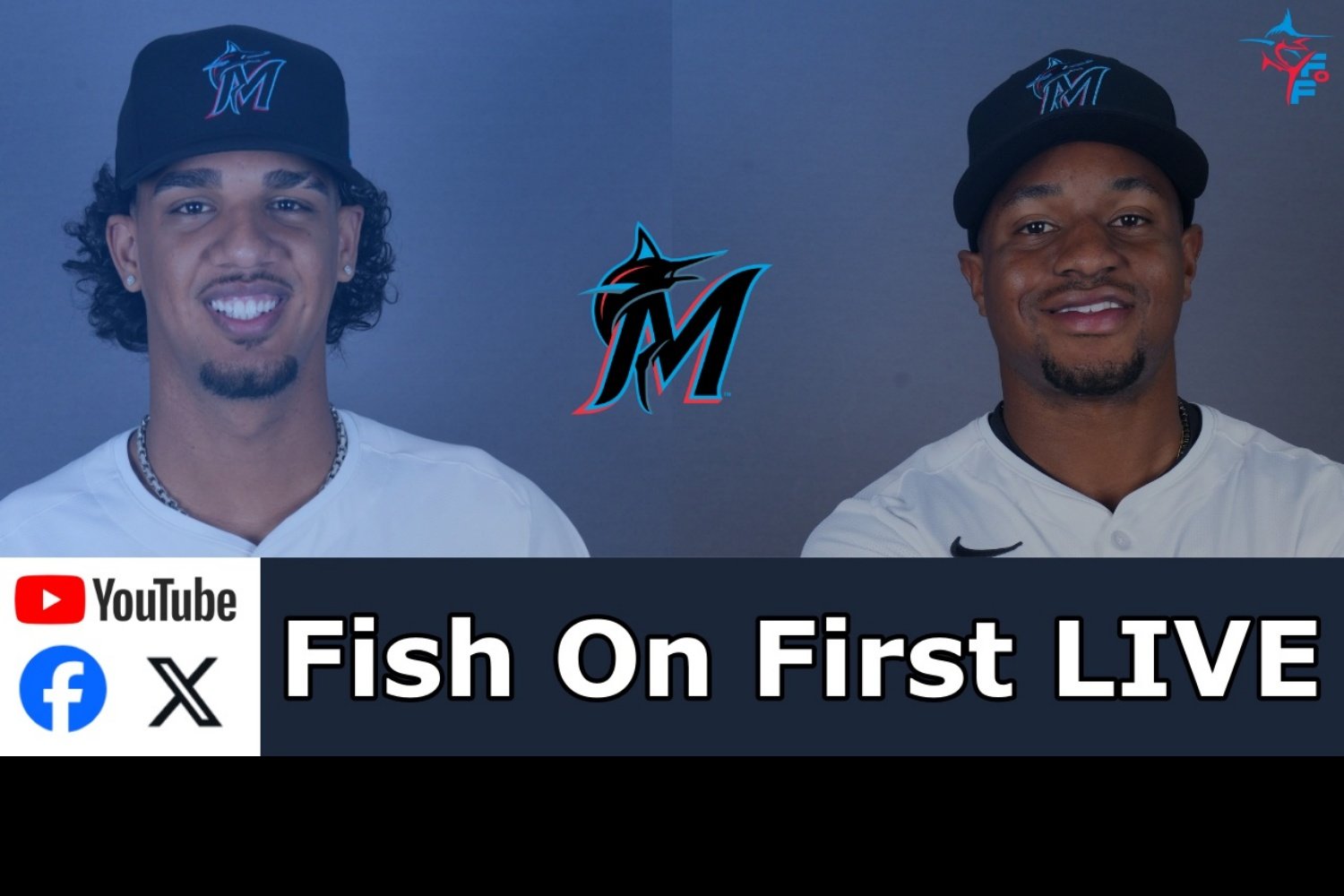
Fish On First Staff last won the day on November 9 2025

Fish On First Staff had the most liked content!

2 Followers

Recent Profile Visitors

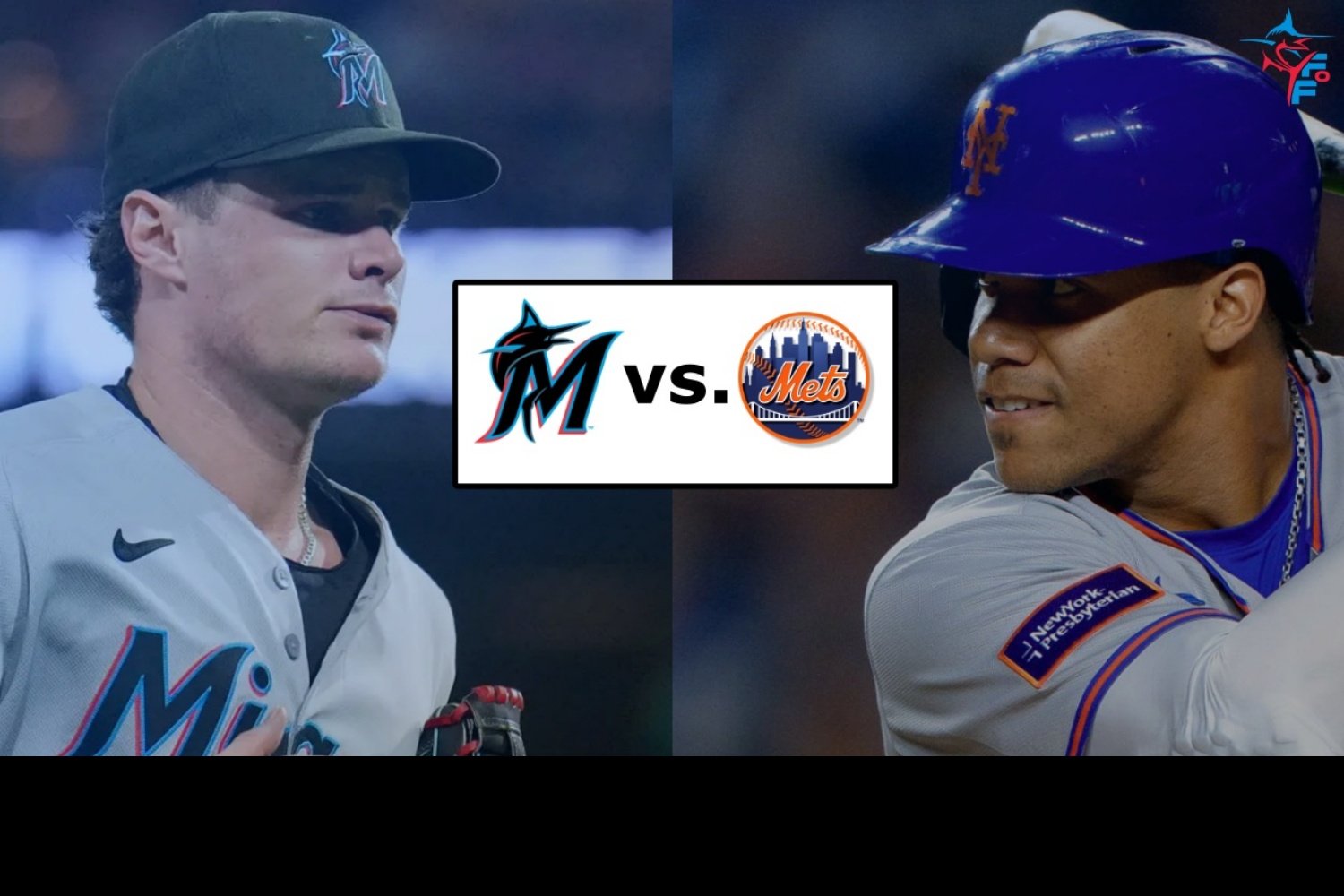
The recent visitors block is disabled and is not being shown to other users.

Fish On First Staff's Achievements

Draft Eligible

Draft Eligible (3/14)

  • Now Let's Talk About This
  • Aw Shucks
  • Let's Be Friends
  • Let's Talk
  • Dipping a Toe

Recent Badges

530

Reputation

  1. Can Major League Baseball really work in South Florida? Even as the Marlins approach their 34th season, that question is difficult to answer conclusively. While the Marlins were crowned World Series champions in 1997 and 2003, they've enjoyed only blips of local relevance. So many of their games since then have been sparsely attended and it has been difficult to entice established talent (at any position) to join the Fish. To understand the Marlins' bizarre history, you need to familiarize yourself with how the franchise has been operated by ownership. Fish On First chronicles what has transpired under the leadership of past owners Wayne Huizenga, John Henry and Jeffrey Loria, and current chairman and principal owner Bruce Sherman. Ely Sussman, Alex Carver and Alex Krutchik contributed to this guide. List of Florida/Miami Marlins Owners Years in parentheses indicate which MLB seasons they served as control person for the Marlins franchise Bruce Sherman (2018-Present) Jeffrey Loria (2002-2017) John Henry (1999-2001) Wayne Huizenga (1993-1998) Bruce Sherman (2018-Present) Purchased the Marlins for $1.2 billion Marlins valued at $1.05 billion as of March 2025 (via Forbes) .429 regular season winning percentage (entering 2026) Miami's current head honcho, Bruce Sherman made his fortune through wealth-management firm Private Capital Management. Sherman launched PCM in 1986 and sold it in 2001. Following the sale, he retained autonomy over PCM’s portfolio management and investment research. However, Sherman didn't have enough cash to afford the Marlins on his own. He teamed up with recently retired New York Yankees shortstop Derek Jeter and other investors to meet Jeffrey Loria's asking price. At the time of the sale, Sherman owned 46% of the Marlins, according to Mike Ozanian of Forbes. David Ott owned 10%, Doug Kimmelman owned 8%, Jaime Montealegre owned 7%, John Troiano owned 5%, Michael Rogers owned 4% and Jeter owned 4%, with Michael Jordan and a handful of others contributing to the remaining 16%. They paid $1.2 billion despite Forbes only valuing the Fish at approximately $940 million. A group led by Miami native Jorge Mas came close to winning the bidding. There was a $1.17 billion agreement in place as of July 11, 2017, per Ozanian. Mas later went on to purchase the Inter Miami soccer franchise. Sherman's acquisition of the Marlins went into effect on October 2, 2017. He and Jeter held their introductory press conference at Marlins Park the following day. Despite owning such a small stake in the franchise, Jeter had a heavy influence from the beginning. "You have to be present," Jeter said at the introductory presser. "You have to be involved. People won't respect you—in my mind, I don't think they would respect me if I wasn't here." Inheriting a barren farm system, mediocre pitching staff and weak local revenue streams, the new administration did not see a financially viable path toward contending in the near future. They immediately plunged into a rebuild, flipping star players Giancarlo Stanton, Marcell Ozuna, Christian Yelich and Dee Strange-Gordon for prospect packages. The 2018 Opening Day payroll was approximately $16 million lower than it had been in 2017, per Cot's Baseball Contracts. It then dropped another $28 million from 2018 to 2019. "The Jeter/Sherman group had no choice but to cut payroll," Barry Jackson of the Miami Herald reported, "because Jeter—trying to lure investors to cover the bid beyond his modest $25 million investment and Sherman’s $390 million—assured them that there would not be cash calls to cover losses." Longtime Jeffrey Loria executive Michael Hill remained president of baseball operations, but Jeter made numerous front office hires. Not coincidentally, some of them came directly from the Yankees organization where Jeter spent the entirety of his playing career. That included tasking Gary Denbo with turning around Miami's ailing player development department. Even though they had just changed their logo and color scheme entering the 2012 season, the Marlins rebranded again in November 2018. The ballpark fences were repainted from bright green to dark blue. At Jeter's behest, the massive home run sculpture that previously stood in left-center field was relocated to the plaza outside. The fish tank behind home plate was removed. Hill and the Marlins parted ways when his pre-existing contract expired in October 2020. Jeter handpicked Kim Ng as Hill's successor. On February 28, 2022, Jeter announced that he'd be stepping down as CEO and leaving the Marlins ownership group. His statement mentioned that "the vision for the future of the franchise is different than the one I signed up to lead." Denbo left soon after. In the post-Jeter era, minority owner David Ott has become increasingly involved (though he nor anybody else currently holds the CEO title). The Los Angeles Times reported in January 2023 that the Marlins "could go up for sale soon." The then-74-year-old Sherman issued a statement insisting that will not happen during his lifetime. According to multiple reports (including The Athletic and Miami Herald), following the third and final guaranteed year of Ng's contract, Sherman informed her that he would be searching for a new president of baseball operations who would function as her boss. Rather than stay under those conditions, Ng declined her side of a 2024 mutual option and left the organization. Similar to Jeter, she publicly attributed the break-up to being "not completely aligned" with ownership. Former Tampa Bay Rays GM Peter Bendix was hired by Sherman to lead baseball ops, in part because they agree on the principle of using analytics to influence decision-making. Bendix's deal runs through 2028. In February 2024, Sherman began a four-year term on MLB's executive council. He is the first Marlins owner to serve on the council. Under Sherman, the Marlins have been reluctant to participate in MLB free agency. Most of those investments have yielded terrible results, such as Avisaíl García (4 YR/$53M), Corey Dickerson (2 YR/$17.5M), Jean Segura (2 YR/$17M), Johnny Cueto (1 YR/$8.5M), Tim Anderson (1 YR/$5M) and Cal Quantrill (1 YR/$3.5M). Their most-hyped international signing, Victor Victor Mesa, didn't even reach the majors. With the exception of Sandy Alcantara, they haven't shown a willingness to spend what it requires to extend All-Star-caliber players. In addition to the ballpark renovations mentioned above, Sherman has also spent on upgrades to the Marlins' spring training home, Roger Dean Chevrolet Stadium, and their academy in the Dominican Republic. He has turned loanDepot park into a top destination for international baseball events such as the World Baseball Classic, Caribbean Series and Choque de Gigantes. However, Marlins regular season games continue to draw very poorly unless they feature a popular opponent or a clever non-baseball-related promotion. Their attendance perennially ranks 28th or lower among MLB teams. Sherman is the only Marlins owner to preside over multiple postseason berths (2020 and 2023). However, he's also the only one with multiple 100-loss seasons on his record (2019 and 2024). The club's winning percentage during his tenure is lower than it was under any previous owner. Jeffrey Loria (2002-2017) Purchased the Marlins for $158.5 million Sold the Marlins for $1.2 billion .480 regular season winning percentage Jeffrey Loria came from a baseball background. Say what you will about him—there is plenty of criticism below—but Loria was a genuine baseball fan from a young age. He did not merely see the Marlins as a business. A native of New York, Loria grew up a Yankees fan. He initially made his fortune as an art dealer and buyer, something that would inspire much of what Marlins Park looked like in its early days. Loria’s first dip into the baseball ownership world was in 1989 when he bought the Oklahoma 89ers, the Triple-A affiliate of the Los Angeles Dodgers. He made a serious attempt to buy the Baltimore Orioles in 1993, but was outbid by Peter Angelos. He eventually reached the majors with the Montreal Expos in 1999, becoming a minority owner while being the franchise's control person. Within a couple years, he owned 95% of the Expos. Loria’s time with the Expos was marked by poor play, a failed english-language television deal and an unsuccessful move to a new ballpark when Olympic Stadium fell into disarray. In 2002, Loria would sell the Expos back to Major League Baseball in a rare move explained in this guide's John Henry section. He subsequently bought the Florida Marlins and brought virtually the entire front office down to South Florida, including team president David Samson. The Expos, as we all know, would leave Montreal after the 2004 season and become the Washington Nationals. Many people credit Samson and Loria with killing baseball in Montreal. In Miami, meanwhile, things couldn’t have started any better for this ownership group. Within two seasons, the Marlins would bring in future Hall of Famer Iván Rodríguez, trade for future NL Rookie of the Year Dontrelle Willis, trade for top closer Ugueth Urbina, and bring back “Mr. Marlin” Jeff Conine. In 2003, sparked by Loria's unorthodox midseason hiring of manager Jack McKeon, they won the World Series against the Yankees, who were still in the midst of their dynasty with legends like Derek Jeter, Mariano Rivera, Jorge Posada and Andy Pettitte. Unlike in 1997-98, the Marlins kept their core of guys after their championship…at least for a little while. When the team fell just short of the playoffs the next two seasons and certain veterans were due for larger contracts than the team was willing to pay, Loria and Samson began jettisoning players. They allowed A.J. Burnett, Juan Encarnación, Alex González and Jeff Conine to walk in free agency after the 2005 season. That offseason, they traded away Josh Beckett, Mike Lowell, Luis Castillo, Carlos Delgado and Paul Lo Duca. Going into 2006, the Marlins had the youngest roster in the major leagues. Rookie manager Joe Girardi somehow led them to a respectable 78-84 record with the lowest payroll in baseball at just under $15 million. Loria was well known for going through managers quickly and having a short fuse. The Baseball Writers' Association of America honored Girardi with the NL Manager of the Year award. That would be Girardi's lone season as Marlins skipper because Loria fired him. Legend has it that Loria originally fired Girardi in the middle of the season and had to be talked out of it. The Marlins had 10 different managers in 16 seasons under Loria. That brings us to 2007: the year that The Trade happened. Miguel Cabrera and Dontrelle Willis were the faces of the Marlins and the last remaining players from the 2003 World Series roster. But they were getting increasingly expensive via arbitration, having made $7.4 million and $6.45 million in '07, respectively. The Marlins packaged them to the Detroit Tigers, receiving highly-touted prospects Andrew Miller and Cameron Maybin in return, along with Burke Badenhop, Mike Rabelo, Frankie De La Cruz and Dallas Trahern. While Miller, Maybin, and Badenhop had long and serviceable MLB careers, they didn’t come close to matching Cabrera's Hall of Fame-caliber peak. Whatever production they did have, most of it would come with other teams after the Marlins. Cabrera would go on to win two American League MVPs and a triple crown with the Tigers. Willis flamed out of the league within a few seasons. To this day, it is widely regarded as one of the worst trades in baseball history. Loria ensured that the Marlins had a long-term future in South Florida by doing what the previous two owners couldn’t: build a baseball-first stadium. The process was messy, with Loria threatening to relocate to a different market on multiple occasions, but in 2009, the Marlins broke ground on what is now loanDepot park. Constructed on the site of the old Orange Bowl, it had everything Marlins fans wanted since the team’s inception: air conditioning, no rain delays (other than the 2015 Opening Day fiasco), and perhaps most importantly, a place they can call their own without sharing with another team. Most of the flashy and gaudy things you saw in the early years of the ballpark were handpicked by Loria, who, as mentioned earlier, had a background in art. The multi-colored tiles on the plaza outside, the infamous home run sculpture and the lime green walls were all features that Loria wanted in the ballpark. Of course, even this accomplishment was marred by controversy. The taxpayers of Miami were saddled with most of the funding. The original cost of the stadium was about $500 million, which Miami-Dade County did not have at the time and Loria did not want to pay. So the county sold $500 million worth of public bonds, which were financed by taxes to residents. Miami-Dade will have to start repaying those loans in 2026, with final payment due in 2048. When you factor in the interest rate, it will eventually cost taxpayers $1.2 billion on just that one set of bonds. When you factor in every loan used to pay the original cost, it will actually add up to $2.4 billion. Oh, by the way, after shelling out $191 million to sign José Reyes, Heath Bell and Mark Buehrle in the stadium’s inaugural season, the Marlins began another fire sale the very next offseason. Their season-opening payroll was sliced in half from $101.6 million in 2012 to $50.5 million in 2013. The team was largely middling for the next half-decade. They did well in drafting and developing guys like Christian Yelich, Giancarlo Stanton, J.T. Realmuto and José Fernández, but couldn't get over the hump of 80 wins. That core never made the playoffs. Loria and Samson signed Stanton in 2014 to a 13-year extension worth $325 million, far and away the largest contract in franchise history. The Marlins will wind up paying only $60 million of that as he was traded to the Yankees following the Loria/Sherman ownership transition. "Not long after José Fernández’s tragic death, I began to consider life after baseball," Loria says in his memoir, From The Front Row. "After almost two decades in the game, I was filled with conflicting thoughts. I had already begun to receive numerous inquiries about selling, but I wasn’t convinced that I was ready. As the offers kept coming, I began to consider them seriously, and I decided at least to discuss options for selling the team." The MLB All-Star Game came to Miami for the first time in 2017, Loria's final summer in charge. John Henry (1999-2001) Purchased the Marlins for $158 million Sold the Marlins for $158.5 million .452 regular season winning percentage John Henry founded a global investment management firm in 1981, accruing his wealth by trading commodities futures. Prior to purchasing the Marlins, he owned a Minor League Baseball team and then a 1% stake in the New York Yankees. Don Smiley, who served as Marlins president under Wayne Huizenga, assembled an ownership group in an attempt to buy the Fish. He resigned in December 1998 after his bid was unsuccessful. Henry selected John Boles to be the Marlins manager entering the 1999 season, replacing future Hall of Famer Jim Leyland. When the club made a 15-win improvement in 2000, Boles received a contract extension. He was fired in 2001 after getting off to a 22-26 start. Tony Pérez served as interim manager for the rest of that season. From the very beginning of his tenure, Henry was focused on securing a new ballpark for the Marlins, who had been tenants at Pro Player Stadium since their inception. Pro Player was initially awarded the 2000 MLB All-Star Game, but the exhibition was moved at Henry's request so that the Marlins could host it when their baseball-only facility was ready. In December 2000, Henry reached an agreement with Miami-Dade County to build a retractable-roof ballpark in downtown Miami, primarily using public funds. The Florida Marlins would be renamed the Miami Marlins upon making the move. However, the project did not receive the necessary government approvals. Following that setback, Henry lost his interest in owning the franchise. In his memoir, Jeffrey Loria describes acquiring the Marlins from Henry through "a transaction unprecedented in Major League Baseball or in any other professional sport." Loria had agreed to sell the Montreal Expos to MLB for $120M in the fall of 2001, but Henry "demanded" $158.5M for the Marlins to match what he had paid three years prior. So here's how they resolved it: During the negotiation process, Dave Dombrowski—the only general manager that the Marlins had ever had to that point—left to become president of the Detroit Tigers. Henry is still principal owner of the Red Sox today. Boston's four World Series titles during that span are more than any other MLB franchise. Wayne Huizenga (1993-1998) Paid a $95 million expansion fee for the Marlins Sold the Marlins for $158 million .449 regular season winning percentage Wayne Huizenga not only kept professional sports in South Florida—he made the region a professional sports destination. Huizenga, an established local businessman in several markets, used and furthered relationships to establish both the Florida Panthers and what is known today as the Miami Marlins. However, he is also known for tearing franchises down. Huizenga rose to power as the founder of Waste Management, an eventual Fortune 500 company. He would then become a visionary and co-owner of the media-rental giant Blockbuster Video. He entered the sports realm in 1990 with the Dolphins as a minority owner. During that time, he saw an even larger future for professional sports in the region. “Some people dream of success, while other people get up every morning and make it happen," Huizenga said. "If you just keep your head down, work, and put it on the bottom line, sooner or later that takes care of everything else.” In the spring of 1990, Huizenga purchased 50% of Joe Robbie Stadium, stating a main intention behind the buy was to secure baseball in South Florida. Shortly after the purchase, Major League Baseball announced its own intention to expand. Questionnaires were sent to prospective owners. The main criteria that MLB wanted candidates to adhere to was “the ability for the area in its entirety to support Major League Baseball long term.” Several cities in the state of Florida were named as candidates including Tampa Bay and Orlando. Phoenix was also well in play on the west coast. In the end, Huizenga won the bid for one of the two new teams. On June 10, 1990, the Florida franchise officially came into existence. Huizenga opted to name the team after the state rather than one single region to be inclusive of Broward, Palm Beach and Miami-Dade counties. The centralized location of Joe Robbie Stadium—well within reach of all three counties—had previously corroborated Huizenga’s vision to make baseball as accessible as possible. From the start, excitement about baseball was effervescent in the region. On April 5, 1993, the Marlins played their first game against the Los Angeles Dodgers in front of a sellout crowd at Joe Robbie Stadium. Walt Weiss recorded the Marlins’ first extra-base hit, a triple and RBI. The 45-year-old pitcher Charlie Hough picked up the first win in franchise history. Despite that being the only win of the Marlins’ first two series against Los Angeles and San Diego, they drew over 40,000 fans a game. Fans continued to show up to see the Marlins play throughout that non-competitive campaign. Their 37,838 average attendance is still a team record unlikely to ever be matched. gsd7ir_1.mp4 From 1993-1995, the Marlins went a combined 182-238 (.433 winning percentage). In 1996, bolstered by the arrival of prospects Edgar Rentería and Luis Castillo as well as the signings of veteran pitchers Kevin Brown and Al Leiter, Huizenga saw an immediate path to postseason success for the Marlins. After an 80-82 season (their best on record), Huizenga, likely also swayed by his Florida Panthers falling just short of a Stanley Cup, invested heavily in the Marlins. During the offseason, he spent a total of $89 million on free agent contracts, bringing in the likes of Bobby Bonilla, Moises Alou and Alex Fernandez. Cliff Floyd also came in via trade from the Montreal Expos. Prospects Liván Hernández and Craig Counsell made their debuts while other in-house players started to realize their full potential. The Marlins squeezed into the 1997 playoffs as the NL Wild Card, making the playoffs faster than any previous expansion team across all the major North American sports leagues. The Fightin' Fish swept the San Francisco Giants in their NLDS matchup. Certainly the Marlins’ Cinderella run would end against the Atlanta Braves and their roster stacked with future Hall of Famers Chipper Jones, Tom Glavine, John Smoltz and Greg Maddux, right? Wrong. The Marlins defeated the Braves 4-2 to advance to the World Series. There, against the AL Central champion Cleveland Guardians, the Marlins performed the impossible. In the 11th inning of a winner-take-all Game 7 on October 26, 1997, Rentería struck a line drive over Charles Nagy’s head. Another rookie, Counsell, scored to put the Marlins in the history books. Hernández received WS MVP honors. Huizenga’s vision had been fulfilled. The Marlins had brought the tri-county region a major sports champion for the first time since 1973. However, with baseball fever running rampant, Huizenga didn’t build off success—he dismantled it, citing financial losses from fielding such a star-studded team. From late 1997 through the middle of 1998, Huizenga sold nearly every asset the Marlins had. The return pieces were mostly up-and-coming prospects. Gone were main contributors Bonilla, Brown, Conine, Sheffield and Charles Johnson. Quotes from executives after the Marlins’ first fire sale are haunting: “My attitude was so thankful and happy that we won the World Series, this (fire sale) was going to happen anyway." —Dan Lunetta “I think we knew once and for all the Thursday after the World Series was over. On Sunday night, there was a big meeting and that was it. Once the meeting was over, it (the Marlins' success) was over." —Frank Wren As quickly as Huizenga was the hero, he became the goat—and he knew it. He made a last-ditch effort to secure a baseball-only stadium for the Marlins funded by taxpayers. This would have allowed Huizenga to try to make a financial comeback and recoup his losses. Once shot down by legislature, Huizenga made his move to sell the franchise. After a dreary 1998 season that is still the worst in franchise history, John Henry acquired the Marlins for $158 million. Subsequent to the Marlins’ sale, Huizenga’s Blockbuster Golf and Games theme park in Sunrise closed in 2000. In 2008, he sold half of the Dolphins. His movie and video game rental business empire filed for bankruptcy and closed in 2014. Only Huizenga’s controlling interest in the Panthers remained until his death in 2018. In the end, Huizenga will be remembered for building something out of nothing. He ascended from small business owner to controlling three major sports teams. As those who watched from the outside, living in Wayne’s World—for however short a time it lasted—was something to remember. Living in the rubble was difficult. Ultimately, Wayne’s dream for a better community that he and his family worked to build will be remembered and forever lauded.
  2. The Marlins are shopping for a veteran high-leverage reliever this offseason. They won't be landing Raisel Iglesias, who has returned to the Atlanta Braves on a one-year, $16 million deal. View full video
  3. The Marlins are shopping for a veteran high-leverage reliever this offseason. They won't be landing Raisel Iglesias, who has returned to the Atlanta Braves on a one-year, $16 million deal.
  4. Entering the final week of his Dominican Winter League stint, Marlins outfielder Griffin Conine speaks with Kevin Barral and Isaac Azout about his unique experience playing with Tigres del Licey. View full video
  5. Entering the final week of his Dominican Winter League stint, Marlins outfielder Griffin Conine speaks with Kevin Barral and Isaac Azout about his unique experience playing with Tigres del Licey.
  6. For the first time this offseason, let's play Marlins Jeopardy. Watch live as Fish On First staffers and Marlins experts battle in a Jeopardy-style trivia contest. FOF LIVE is presented by About The Fans. Check out our new merchandise collection (coupon code fof10 for 10% off). Submit trivia here to be featured on the show. We prioritize submissions that come from our loyal SuperSubs! If you are not a SuperSub, please consider signing up here to support the FOF staff. You're encouraged to answer the trivia yourself in the live chat via YouTube, Twitter or Facebook. View full article
  7. For the first time this offseason, let's play Marlins Jeopardy. Watch live as Fish On First staffers and Marlins experts battle in a Jeopardy-style trivia contest. FOF LIVE is presented by About The Fans. Check out our new merchandise collection (coupon code fof10 for 10% off). Submit trivia here to be featured on the show. We prioritize submissions that come from our loyal SuperSubs! If you are not a SuperSub, please consider signing up here to support the FOF staff. You're encouraged to answer the trivia yourself in the live chat via YouTube, Twitter or Facebook.
  8. The inaugural Fish On First Awards will be recognizing standout performances from the 2025 Miami Marlins season, as voted on by FOF staff and SuperSubs. Voting on each award is optional—only vote on the ones you feel fully comfortable with. All Marlins fans are welcome to submit a ballot, but your vote will only count if you have an active SuperSub subscription. Please cast your ballot by 11:59 p.m. ET on Friday. If for whatever reason the embedded form does not show up for you below, click here to vote. Loading… View full article
  9. The inaugural Fish On First Awards will be recognizing standout performances from the 2025 Miami Marlins season, as voted on by FOF staff and SuperSubs. Voting on each award is optional—only vote on the ones you feel fully comfortable with. All Marlins fans are welcome to submit a ballot, but your vote will only count if you have an active SuperSub subscription. Please cast your ballot by 11:59 p.m. ET on Friday. If for whatever reason the embedded form does not show up for you below, click here to vote. Loading…
  10. Here at Fish On First, we produce livestream panel discussions during the MLB regular season counting down to the start of each new Marlins series. The final segment of the show is always “Prediction Time.” We will be tracking the 2025 results on this page with prognostications from the FOF staff, stream guests and SuperSubs. This is how the scoring system works: Earn one point for predicting which team will win the upcoming series Earn one point for predicting the precise number of victories for each team Earn one point for predicting the “Series MVP” who accumulated the highest win probability added (WPA) during the series as calculated by FanGraphs (could pick a player from either team) That's a maximum of three points per series. FOF LIVE is presented by About The Fans. Check out our new merchandise collection (coupon code fof10 for 10% off). Final series
  11. Fish On First LIVE discusses how much better the Marlins could be next season by trading from positions of strength and doing SOMETHING in free agency to add more offense. View full video
  12. Fish On First LIVE discusses how much better the Marlins could be next season by trading from positions of strength and doing SOMETHING in free agency to add more offense.
  13. With only three teams left in the mix and the Marlins relegated to a spoiler role, Fish On First LIVE discusses what the New York Mets, Cincinnati Reds and Arizona Diamondbacks would bring to the 2025 postseason field. View full video
  14. With only three teams left in the mix and the Marlins relegated to a spoiler role, Fish On First LIVE discusses what the New York Mets, Cincinnati Reds and Arizona Diamondbacks would bring to the 2025 postseason field.
  15. SuperSubs, comment below with your Prediction Time picks: 1. How many games will the Marlins win in this series? 2. Who will be the Series MVP? (determined by win probability added) The Fish On First staffers made their predictions for the Miami Marlins vs. New York Mets series at the end of the previous livestream. Now, it's your turn. If you are a SuperSub, leave a comment with your Prediction Time picks. We'll track your points on this leaderboard throughout the season! Any picks submitted prior to the first pitch of the series opener will be counted. FOF LIVE is presented by About The Fans. Check out our new merchandise collection (coupon code fof10 for 10% off). If you are not a SuperSub, please consider signing up here to support the FOF staff. View full article
×
×
  • Create New...