



Sean McCormack
-
Posts
99 -
Joined
-
Last visited
-
Days Won
5
Content Type
Profiles
Miami Marlins Videos
2026 Miami Marlins Top Prospects Ranking
Miami Marlins Free Agent & Trade Rumors, Notes, & Tidbits
Guides & Resources
News
2025 Miami Marlins Draft Pick Tracker
2026 Miami Marlins Draft Tracker: Picks & Bonuses
Forums
Blogs
Events
Store
Downloads
Gallery
Everything posted by Sean McCormack
-
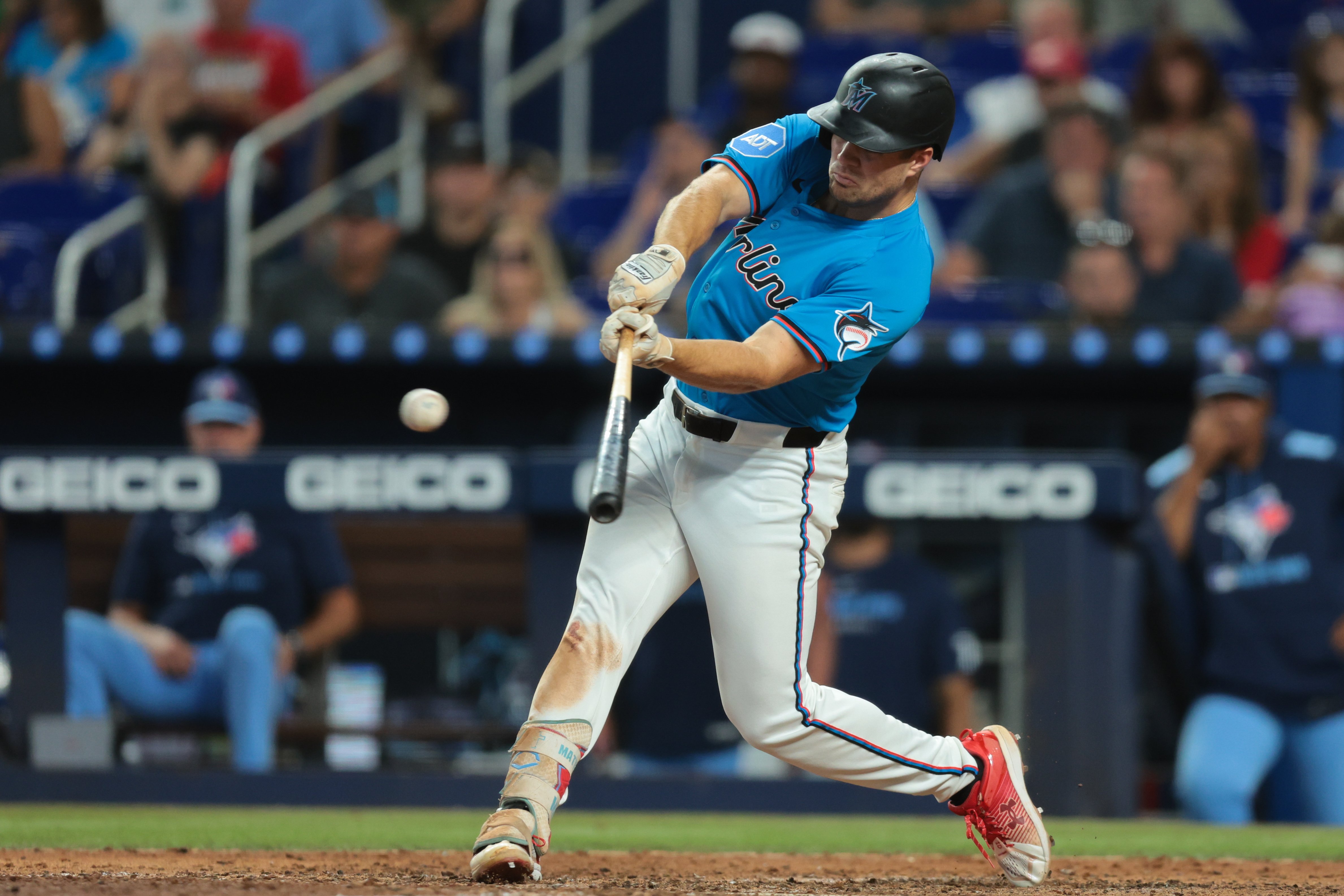 In 2025, Jakob Marsee emerged as one of the top all-around prospects in the Miami Marlins system, earning himself a midseason call-up to the big leagues. The lefty outfielder hit the ground running and won the National League Rookie of the Month award in August. Even with less production in September, Marsee was the most impactful position player on the club during that two-month span with a slash line of .292/.363/.478, a .363 wOBA and a 133 wRC+ while playing strong center field defense. However, it would not be a fair expectation to count on Marsee maintaining those numbers throughout his upcoming sophomore season. Each of the projection models featured on FanGraphs believe his profile is much closer to that of an average regular than a star. Marsee did a lot of damage at the plate despite a lack of raw power. His bat speed last season was 70.5 mph, nearly 1 mph slower than the MLB average. He posted a shockingly low 3.9% fast swing rate (average was 23.6%). He prioritized making consistent contact over trying to crush the ball. So far, he has enjoyed the best of both worlds and slugged at an impressive level, but moving forward, that approach will likely cost him some extra-base hits. There was a 17-point difference between Marsee's wOBA and xwOBA. These models don't trust that to continue. Marsee is hindered by an ideal attack angle rate of 43.3%, far below the league average of nearly 51%. Barring dramatic changes, Marsee's luck on balls in play is due to regress. He was helped by a .357 BABIP in 2025, but he's universally projected to settle below the .300 mark in 2026. It will be important for Marsee to continue his trend of pulling the ball often. That gives him the highest likelihood of once again outperforming his damage data. WERPNVhfWGw0TUFRPT1fQlFkVkFWWlZBQUlBV1ZaVFZRQUhCUVlBQUZnR1dsSUFVUVlBQXdVQkNRcGNDRlFE.mp4 The 24-year-old offers a high floor regardless. He has an excellent ability to discern balls from strikes and will regularly draw walks as a result. A speedy and instinctual fielder, Marsee was on a full-season pace to produce 12 defensive runs saved. Impacting games positively in that way makes it easy for the Marlins to give him playing time even when struggles inevitably occur at the plate. QXdhcUtfWGw0TUFRPT1fVUZBQVVsVUNBZ0VBQUFkVUFBQUhCZ05WQUZoV1ZWWUFBMU5RQWxKUkJBRURVMVJl.mp4 I do believe Marsee should sacrifice some contact for bat speed. He cannot count on being rewarded for mediocre exit velocities as often moving forward, so seek opportunities to sell out for hard hits, especially when his patience gets him into favorable counts. With all due respect to the any fancy projection models, I foresee Marsee faring slightly better than they do in 2026. Assuming no underlying injuries that degrade his tools, he could finish around a 107 wRC+ with 2.8-3.2 fWAR.
 -
 Marlins fans have been treated to a whirlwind of activity over the last several weeks. The most accomplished player that they've acquired is Pete Fairbanks, the former Tampa Bay Rays closer who signed a one-year, $13M free agent deal. Fairbanks is capable of being the reliable ninth-inning solution that the Marlins lacked last season. He has had 75 saves in total since 2023, which is 12th-most in baseball over that time span. Although Fairbanks has an impressive résumé, there are mixed signals regarding his future. Fairbanks has experienced a fastball velocity dip in the past two years. The right-hander who once averaged 99 mph on his heater is down to 97 mph. In a related trend, Fairbanks' strikeout rate peaked in 2022 at 43.7% and remained strong at 37% in 2023, but he's been at 24% since then. bGJlUlZfWGw0TUFRPT1fVndVREJWd0JBMUFBQUZBQVVRQUhVQVZUQUZoV1Yxa0FCRjBEQWd0V0NRcFdVUW9D.mp4 Under the hood, his fastball still performs well. In 2025, the pitch put up a .286 wOBA, .247 xBA, and 21.9% whiff rate—all of those numbers improved from 2024. Fairbanks has had to improve his command to compensate for the velocity dip. The FanGraphs Location+ model graded the pitch with a 105 last season. He was in the zone with his fastball a career-high 53% of the time, which led to a major increase in zone contact from hitters (78.1%), although the damage remained relatively low. The main reason why Fairbanks' fastball has been able to outperform its expected outcomes (FanGraphs Stuff+ of 99) is because of the combination of his arm angle, vertical approach angle (VAA) and induced vertical break (IVB) on the pitch. He had the third-highest arm angle of all qualified MLB right-handed hitters in 2025 at 59°. His -5.6° VAA was one of the lowest averages for a fastball. His IVB of 16.5" ranked in the 71st percentile. The pitch also had less horizontal break (0.3") then batters anticipated. Despite the decline in strikeout ability, Fairbanks has remained an above-average, borderline All-Star-caliber closer. He showed more durability last season by pitching a career-high 60 ⅓ innings last season. The decrease in velo may be a net positive for Fairbanks, limiting the wear and tear of his high-effort delivery. Fairbanks changed his slider in 2025, in prior seasons the pitch was far more "droopy" or curveball-like. The 2025 version was tighter. The pitch had a decrease in hard-hit rate compared to 2024, yet an increase in average exit velo and home-run-to-fly-ball ratio. He also generated more whiffs. Fairbanks' slider will be imperative to his success in 2026. YkI5bzlfWGw0TUFRPT1fVWdVSFZ3VURCQVlBWEFZTFZRQUhCMVJYQUFBRUFnUUFVVlpYVmxFQ0NBcFJVZ0JX.mp4 Moving away from Steinbrenner Field could help Fairbanks, who clearly did not feel comfortable pitching to left-handed hitters at home. His walk rate against them was more than twice as high in Tampa compared to road appearances. His strikeout rate also decreased at home vs. lefties. UHZnUDNfWGw0TUFRPT1fQXdSWFZ3QUZBZ29BQ1ZOVFVBQUhDRlJRQUZnRldsZ0FCd0ZRVkZVREFRTlFBRk5Y.mp4 Fairbanks added a cutter in September and it has the potential to be a deadly pitch. In a sample of 42 cutters thrown, it had an .158 xwOBA, 0% barrel rate, 55% ground ball rate, and a 26.2% swinging strike rate. The Marlins covet pitchers with deep arsenals, so the cutter's usage could rise going forward. V0EyUllfWGw0TUFRPT1fVWdkWkFWUlNVRkVBRDFRREFnQUhBRklDQUFCVFVsZ0FVUVlIVTFVRENGQlVWZ29I.mp4 Even the most generous 2026 projection for Pete Fairbanks as displayed on his FanGraphs player page has the 32-year-old merely matching his 2025 production with 1.0 fWAR. He would need to surpass that for the Marlins to extract fair value for the $13M they're spending on him. That being said, if Fairbanks consistently comes up clutch in close games, his positive impact on the team would go beyond that context-neutral output. The Marlins hope that propels them into postseason contention so that Fairbanks actually spends the entire season in Miami rather than turning into a piece to sell at the trade deadline. View full article
 -
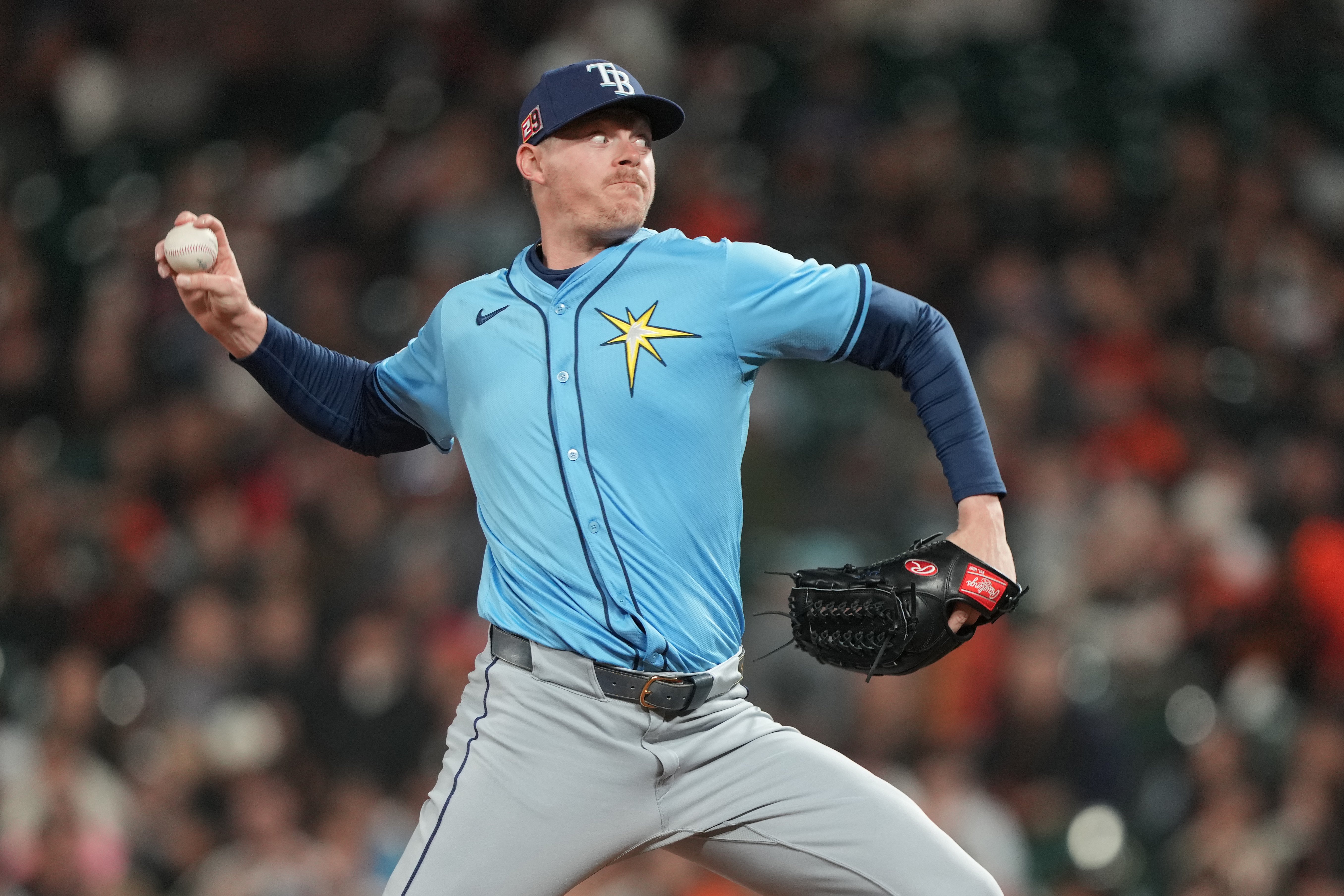 Marlins fans have been treated to a whirlwind of activity over the last several weeks. The most accomplished player that they've acquired is Pete Fairbanks, the former Tampa Bay Rays closer who signed a one-year, $13M free agent deal. Fairbanks is capable of being the reliable ninth-inning solution that the Marlins lacked last season. He has had 75 saves in total since 2023, which is 12th-most in baseball over that time span. Although Fairbanks has an impressive résumé, there are mixed signals regarding his future. Fairbanks has experienced a fastball velocity dip in the past two years. The right-hander who once averaged 99 mph on his heater is down to 97 mph. In a related trend, Fairbanks' strikeout rate peaked in 2022 at 43.7% and remained strong at 37% in 2023, but he's been at 24% since then. bGJlUlZfWGw0TUFRPT1fVndVREJWd0JBMUFBQUZBQVVRQUhVQVZUQUZoV1Yxa0FCRjBEQWd0V0NRcFdVUW9D.mp4 Under the hood, his fastball still performs well. In 2025, the pitch put up a .286 wOBA, .247 xBA, and 21.9% whiff rate—all of those numbers improved from 2024. Fairbanks has had to improve his command to compensate for the velocity dip. The FanGraphs Location+ model graded the pitch with a 105 last season. He was in the zone with his fastball a career-high 53% of the time, which led to a major increase in zone contact from hitters (78.1%), although the damage remained relatively low. The main reason why Fairbanks' fastball has been able to outperform its expected outcomes (FanGraphs Stuff+ of 99) is because of the combination of his arm angle, vertical approach angle (VAA) and induced vertical break (IVB) on the pitch. He had the third-highest arm angle of all qualified MLB right-handed hitters in 2025 at 59°. His -5.6° VAA was one of the lowest averages for a fastball. His IVB of 16.5" ranked in the 71st percentile. The pitch also had less horizontal break (0.3") then batters anticipated. Despite the decline in strikeout ability, Fairbanks has remained an above-average, borderline All-Star-caliber closer. He showed more durability last season by pitching a career-high 60 ⅓ innings last season. The decrease in velo may be a net positive for Fairbanks, limiting the wear and tear of his high-effort delivery. Fairbanks changed his slider in 2025, in prior seasons the pitch was far more "droopy" or curveball-like. The 2025 version was tighter. The pitch had a decrease in hard-hit rate compared to 2024, yet an increase in average exit velo and home-run-to-fly-ball ratio. He also generated more whiffs. Fairbanks' slider will be imperative to his success in 2026. YkI5bzlfWGw0TUFRPT1fVWdVSFZ3VURCQVlBWEFZTFZRQUhCMVJYQUFBRUFnUUFVVlpYVmxFQ0NBcFJVZ0JX.mp4 Moving away from Steinbrenner Field could help Fairbanks, who clearly did not feel comfortable pitching to left-handed hitters at home. His walk rate against them was more than twice as high in Tampa compared to road appearances. His strikeout rate also decreased at home vs. lefties. UHZnUDNfWGw0TUFRPT1fQXdSWFZ3QUZBZ29BQ1ZOVFVBQUhDRlJRQUZnRldsZ0FCd0ZRVkZVREFRTlFBRk5Y.mp4 Fairbanks added a cutter in September and it has the potential to be a deadly pitch. In a sample of 42 cutters thrown, it had an .158 xwOBA, 0% barrel rate, 55% ground ball rate, and a 26.2% swinging strike rate. The Marlins covet pitchers with deep arsenals, so the cutter's usage could rise going forward. V0EyUllfWGw0TUFRPT1fVWdkWkFWUlNVRkVBRDFRREFnQUhBRklDQUFCVFVsZ0FVUVlIVTFVRENGQlVWZ29I.mp4 Even the most generous 2026 projection for Pete Fairbanks as displayed on his FanGraphs player page has the 32-year-old merely matching his 2025 production with 1.0 fWAR. He would need to surpass that for the Marlins to extract fair value for the $13M they're spending on him. That being said, if Fairbanks consistently comes up clutch in close games, his positive impact on the team would go beyond that context-neutral output. The Marlins hope that propels them into postseason contention so that Fairbanks actually spends the entire season in Miami rather than turning into a piece to sell at the trade deadline.
 -
After the trade of Dane Myers last weekend, the Miami Marlins found themselves with a shortage of right-handed-hitting outfielders. They acted quickly to fill that hole, acquiring Esteury Ruiz from the Los Angeles Dodgers on Monday. Ruiz spent most of his age-26 season in Triple-A for the Dodgers and put up monster numbers. In the 106 games he played at that level in 2025, he slashed .304/.412/.511 with a .411 wOBA and 137 wRC+ in Triple-A. It's worth noting that Ruiz originally reached AAA way back in 2022. Repeating a familiar level can lead to improved results without meaningful development, but in his case, there have been some encouraging signs under the hood. Ruiz shined vs. left-handed pitching this past season with a .358/.425/.569 slash line, four home runs and 12 doubles in 123 at-bats. He showed a patient plate approach with a solid amount of in-zone contact at 85.7% and a chase rate in the 67th percentile among AAA hitters, according to Prospect Savant. Ruiz has no issue hitting fastballs—he had an xwOBA above .360 against four-seamers, sinkers, and cutters. His whiff rate against fastballs was only 21.2%, compared to 31.5% vs. sliders, changeups, and curveballs. eUxXckxfV0ZRVkV3dEdEUT09X1ZBUUZBRmNGVlZNQUFWSUJBZ0FIVkFjQUFBTUNVVmtBQWdNSFUxWUZBQUJSQVZNQQ==.mp4 Ruiz's power is lacking, but his speed allows him to turn singles into doubles and doubles into triples, helping the overall slugging profile. ZzZQUWxfV0ZRVkV3dEdEUT09X0JWSlRCbE1HVUFRQVcxSUxWQUFIQUZjRkFGa0NCVmNBVVZ3TUFGVU1VMVpRVVFZSA==.mp4 In 2023, Ruiz led the American league in stolen bases with 67 despite missing a full month of that season on the injured list. He ran even more frequently and efficiently in Oklahoma City last season, with 63 steals on 74 attempts in 104 games there. Andrew Pinckney (Washington Nationals) is the only player to spend the majority of 2025 in AAA and register a higher Sprint Speed than Ruiz. TDZPVk9fV0ZRVkV3dEdEUT09X1ZGSlFYVlJYQkFRQUNRWUVYd0FIVTFCUkFGa05VUVVBQUFjRUJsRlFWVmRjVlFNQw==.mp4 Ruiz's ability to cover ground in the outfield will be useful at loanDepot park. His arm holds him back from succeeding in center field, therefore he profiles best in left field where opponents will have fewer opportunities to take advantage of him. Esteury Ruiz could play an impactful role for the Marlins. He would be best utilized as a platoon bat vs. left-handed pitchers and as a bench option to steal bases. With one minor league option left, he will still need to put his talent on display during spring training to earn his spot on the Opening Day roster. View full article
-
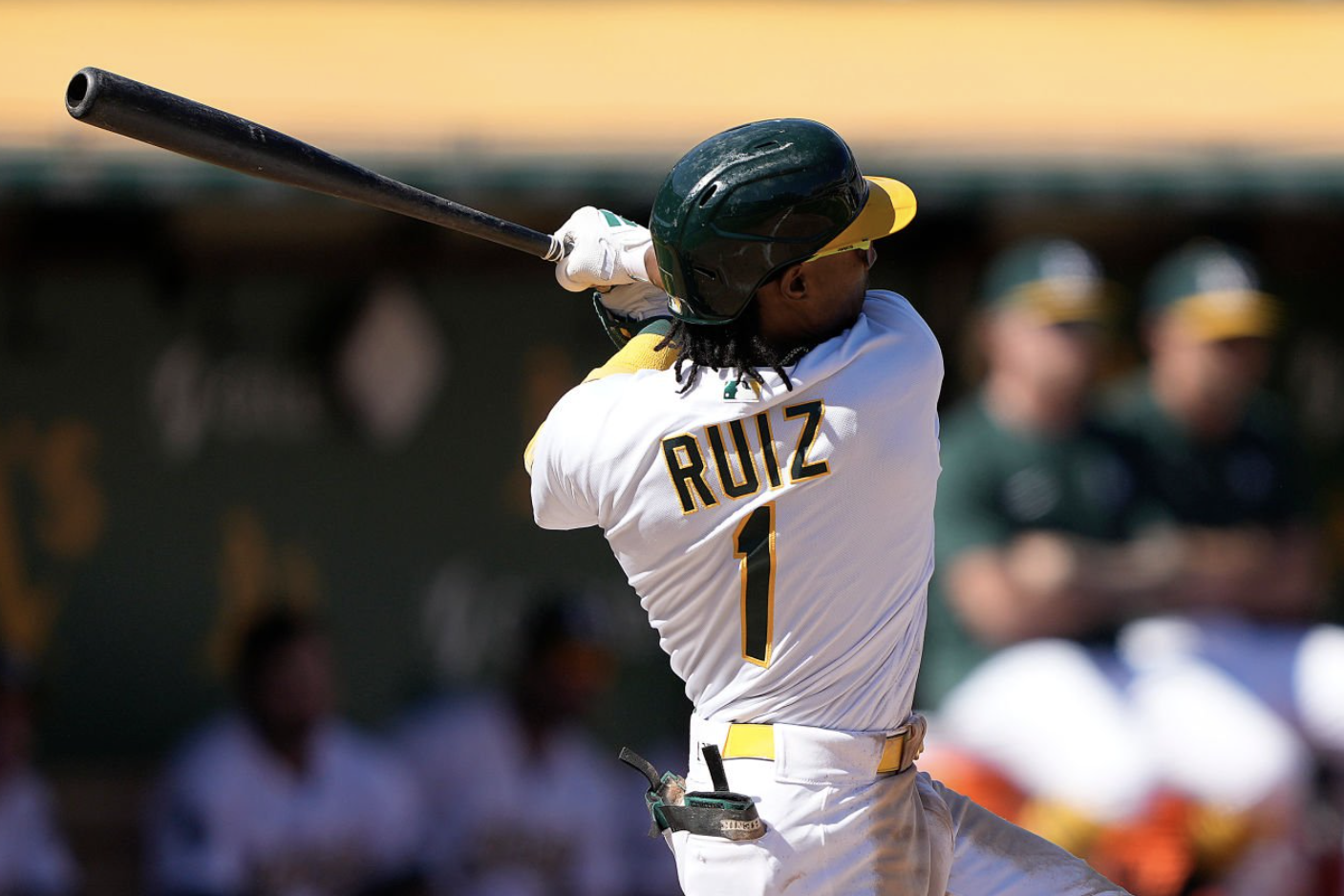 After the trade of Dane Myers last weekend, the Miami Marlins found themselves with a shortage of right-handed-hitting outfielders. They acted quickly to fill that hole, acquiring Esteury Ruiz from the Los Angeles Dodgers on Monday. Ruiz spent most of his age-26 season in Triple-A for the Dodgers and put up monster numbers. In the 106 games he played at that level in 2025, he slashed .304/.412/.511 with a .411 wOBA and 137 wRC+ in Triple-A. It's worth noting that Ruiz originally reached AAA way back in 2022. Repeating a familiar level can lead to improved results without meaningful development, but in his case, there have been some encouraging signs under the hood. Ruiz shined vs. left-handed pitching this past season with a .358/.425/.569 slash line, four home runs and 12 doubles in 123 at-bats. He showed a patient plate approach with a solid amount of in-zone contact at 85.7% and a chase rate in the 67th percentile among AAA hitters, according to Prospect Savant. Ruiz has no issue hitting fastballs—he had an xwOBA above .360 against four-seamers, sinkers, and cutters. His whiff rate against fastballs was only 21.2%, compared to 31.5% vs. sliders, changeups, and curveballs. eUxXckxfV0ZRVkV3dEdEUT09X1ZBUUZBRmNGVlZNQUFWSUJBZ0FIVkFjQUFBTUNVVmtBQWdNSFUxWUZBQUJSQVZNQQ==.mp4 Ruiz's power is lacking, but his speed allows him to turn singles into doubles and doubles into triples, helping the overall slugging profile. ZzZQUWxfV0ZRVkV3dEdEUT09X0JWSlRCbE1HVUFRQVcxSUxWQUFIQUZjRkFGa0NCVmNBVVZ3TUFGVU1VMVpRVVFZSA==.mp4 In 2023, Ruiz led the American league in stolen bases with 67 despite missing a full month of that season on the injured list. He ran even more frequently and efficiently in Oklahoma City last season, with 63 steals on 74 attempts in 104 games there. Andrew Pinckney (Washington Nationals) is the only player to spend the majority of 2025 in AAA and register a higher Sprint Speed than Ruiz. TDZPVk9fV0ZRVkV3dEdEUT09X1ZGSlFYVlJYQkFRQUNRWUVYd0FIVTFCUkFGa05VUVVBQUFjRUJsRlFWVmRjVlFNQw==.mp4 Ruiz's ability to cover ground in the outfield will be useful at loanDepot park. His arm holds him back from succeeding in center field, therefore he profiles best in left field where opponents will have fewer opportunities to take advantage of him. Esteury Ruiz could play an impactful role for the Marlins. He would be best utilized as a platoon bat vs. left-handed pitchers and as a bench option to steal bases. With one minor league option left, he will still need to put his talent on display during spring training to earn his spot on the Opening Day roster.
 -
The Miami Marlins have a two-headed, left-handed-pitching monster rapidly approaching the big leagues after wreaking havoc down on the farm. Robby Snelling led all minor league southpaws with 166 strikeouts in 2025. He spent half of his season with Triple-A Jacksonville, making 11 starts for the Jumbo Shrimp with only nine earned runs allowed. Nearly a year younger than Snelling, Thomas White missed bats at an even higher rate. He got a cup of coffee in Jacksonville (two starts) to end the season. Although neither are on Miami's 40-man roster yet, both prospects are likely to debut during the 2026 season. Snelling's success was the bigger surprise coming off an uneven 2024 campaign. He sliced his ERA in half (from 5.15 to 2.51) and improved his xFIP by more than a full run (from 3.80 to 2.72). These are elite numbers for any prospect, especially one who's facing Double-A and Triple-A competition as a starter. The curveball is Snelling's best pitch. It got a 42.70% whiff rate in Triple-A and a low .241 xwOBA, faring well against both lefties and righties. The pitch resembles former Marlin Andrew Heaney's curveball, but with much more velocity on it (averaging 82.6 mph). ckRPWTFfV0ZRVkV3dEdEUT09X0R3ZFJBRklNWGdjQUMxb0dWZ0FIQWdNQ0FGZ0hWVllBQjFVQkExRUNCUXNFQkZNSA==.mp4 An increase in velo has benefited Snelling's whole pitch mix. His fastball sat at 94.7 mph in Triple-A. He mostly removed the sinker from his arsenal as a result of being able to overpower hitters with the four-seamer and commanding it so well. Snelling's fastball has characteristics comparable to Tanner Scott's. Both get around 16.7 inches of induced vertical break (IVB), close to six inches of arm-side run, and just over six feet of extension down the mound during their delivery. Snelling's ability to locate more precisely and his slightly lower arm angle (approx. 26.6 degrees) are more conducive to long-term performance even if his velo doesn't continue to climb. Overall, his fastball performed well in Triple-A, posting a 36.5 whiff% and a .200 xwOBA. ckRPWTFfV0ZRVkV3dEdEUT09X0FBSlpCZ1pRQWxjQUFRQlFYd0FIQVZkVEFBTlRBZ0lBVUZFRVVnSURBd1pjQjFCUw== (1).mp4 Snelling was in the strike zone 54.5% of the time in Triple-A, which would have ranked top 10 among MLB starters in 2025. He mixed his pitches in such a way that hitters only swung at 62% of in-zone pitches, the same as Hunter Brown. Even when they did, their 77.5% zone contact rate was Dylan Cease-like. Outside the zone, the contact rate was 50.7%, on par with NL Cy Young Award runner-up Cristopher Sánchez (50.5%). He also thrived at limiting hard contact with a 3.5% barrel rate and 28.5% hard-hit rate. Snelling showed minimal flaws in 2025, and continuing a trend from his San Diego Padres days, he was injury-free. He has emerged as a complete pitcher. This is not meant to diminish Thomas White at all (2.31 ERA and 2.80 xFIP in 89.2 IP). His "stuff" may be slightly better than Snelling's, including a fastball that sits 95 mph and touched triple digits on several occasions. His sweeper is practically a cheat code for getting whiffs both in and out of the zone. UUFkQnFfV0ZRVkV3dEdEUT09X1VBQlVWRkVCVkZNQUNRRUJVZ0FIQkFkVEFBQlVCVllBQkZkVUJBQUVBVmNIVmdNRQ==.mp4 However, White's lack of efficiency is a potential concern when looking ahead to how he'd fit in a major league rotation. He finished Double-A with a walk rate of 12.6%, and it ballooned to 25% his two starts of Triple-A. Although it's reasonable to project further improvement in that area—he is entering his age-21 season—waste pitches will likely always be part of his formula, similar to somebody like Blake Snell. White has completed six innings only once in a professional game. For context, Snelling did that 14 times in 2025 alone. The future is bright for both Marlins minor leaguers. White is universally ranked higher on public prospect lists due to his ceiling, but it may be easier to forecast consistent success for Snelling at the highest level. One thing's for sure: they will command a lot of attention when they report to spring training in February as non-roster invitees. View full article
-
Robby Snelling vs. Thomas White is closer than you think
Sean McCormack posted an article in FOF Prospects
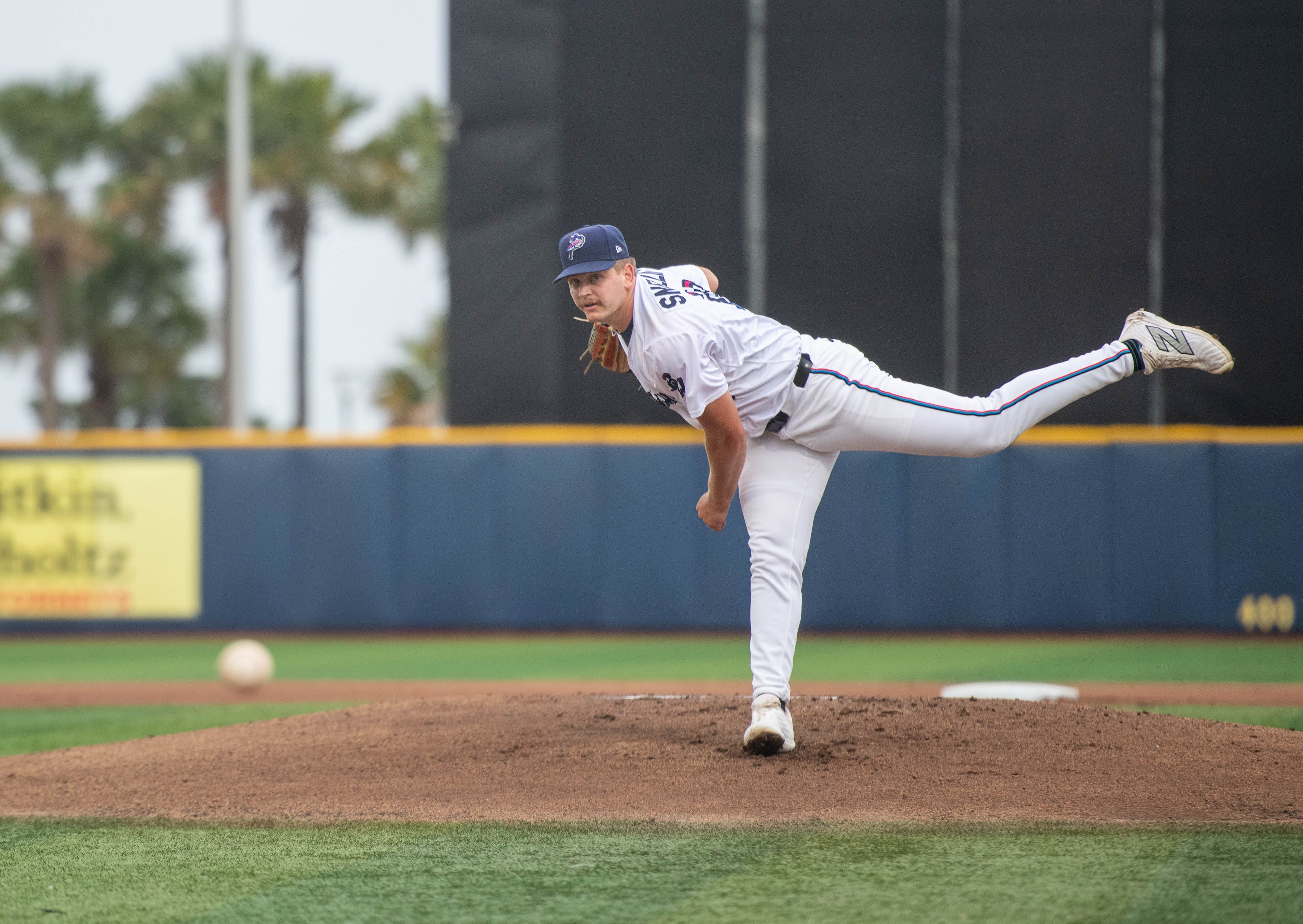 The Miami Marlins have a two-headed, left-handed-pitching monster rapidly approaching the big leagues after wreaking havoc down on the farm. Robby Snelling led all minor league southpaws with 166 strikeouts in 2025. He spent half of his season with Triple-A Jacksonville, making 11 starts for the Jumbo Shrimp with only nine earned runs allowed. Nearly a year younger than Snelling, Thomas White missed bats at an even higher rate. He got a cup of coffee in Jacksonville (two starts) to end the season. Although neither are on Miami's 40-man roster yet, both prospects are likely to debut during the 2026 season. Snelling's success was the bigger surprise coming off an uneven 2024 campaign. He sliced his ERA in half (from 5.15 to 2.51) and improved his xFIP by more than a full run (from 3.80 to 2.72). These are elite numbers for any prospect, especially one who's facing Double-A and Triple-A competition as a starter. The curveball is Snelling's best pitch. It got a 42.70% whiff rate in Triple-A and a low .241 xwOBA, faring well against both lefties and righties. The pitch resembles former Marlin Andrew Heaney's curveball, but with much more velocity on it (averaging 82.6 mph). ckRPWTFfV0ZRVkV3dEdEUT09X0R3ZFJBRklNWGdjQUMxb0dWZ0FIQWdNQ0FGZ0hWVllBQjFVQkExRUNCUXNFQkZNSA==.mp4 An increase in velo has benefited Snelling's whole pitch mix. His fastball sat at 94.7 mph in Triple-A. He mostly removed the sinker from his arsenal as a result of being able to overpower hitters with the four-seamer and commanding it so well. Snelling's fastball has characteristics comparable to Tanner Scott's. Both get around 16.7 inches of induced vertical break (IVB), close to six inches of arm-side run, and just over six feet of extension down the mound during their delivery. Snelling's ability to locate more precisely and his slightly lower arm angle (approx. 26.6 degrees) are more conducive to long-term performance even if his velo doesn't continue to climb. Overall, his fastball performed well in Triple-A, posting a 36.5 whiff% and a .200 xwOBA. ckRPWTFfV0ZRVkV3dEdEUT09X0FBSlpCZ1pRQWxjQUFRQlFYd0FIQVZkVEFBTlRBZ0lBVUZFRVVnSURBd1pjQjFCUw== (1).mp4 Snelling was in the strike zone 54.5% of the time in Triple-A, which would have ranked top 10 among MLB starters in 2025. He mixed his pitches in such a way that hitters only swung at 62% of in-zone pitches, the same as Hunter Brown. Even when they did, their 77.5% zone contact rate was Dylan Cease-like. Outside the zone, the contact rate was 50.7%, on par with NL Cy Young Award runner-up Cristopher Sánchez (50.5%). He also thrived at limiting hard contact with a 3.5% barrel rate and 28.5% hard-hit rate. Snelling showed minimal flaws in 2025, and continuing a trend from his San Diego Padres days, he was injury-free. He has emerged as a complete pitcher. This is not meant to diminish Thomas White at all (2.31 ERA and 2.80 xFIP in 89.2 IP). His "stuff" may be slightly better than Snelling's, including a fastball that sits 95 mph and touched triple digits on several occasions. His sweeper is practically a cheat code for getting whiffs both in and out of the zone. UUFkQnFfV0ZRVkV3dEdEUT09X1VBQlVWRkVCVkZNQUNRRUJVZ0FIQkFkVEFBQlVCVllBQkZkVUJBQUVBVmNIVmdNRQ==.mp4 However, White's lack of efficiency is a potential concern when looking ahead to how he'd fit in a major league rotation. He finished Double-A with a walk rate of 12.6%, and it ballooned to 25% his two starts of Triple-A. Although it's reasonable to project further improvement in that area—he is entering his age-21 season—waste pitches will likely always be part of his formula, similar to somebody like Blake Snell. White has completed six innings only once in a professional game. For context, Snelling did that 14 times in 2025 alone. The future is bright for both Marlins minor leaguers. White is universally ranked higher on public prospect lists due to his ceiling, but it may be easier to forecast consistent success for Snelling at the highest level. One thing's for sure: they will command a lot of attention when they report to spring training in February as non-roster invitees.
 -
Tyler Demon Zuber is the best move the Marlins have made.
-
As Joe Mack nears MLB debut, would Marlins explore a Liam Hicks trade?
Sean McCormack posted an article in Marlins
 In a surprising move, the Miami Marlins selected catcher Liam Hicks in the 2024 Rule 5 draft. Where would he fit in with an organization that already had two highly regarded catching prospects—Agustín Ramírez and Joe Mack—at the upper minor league levels? It turns out that there was meaningful role for Hicks to fill in the short term while Ramírez spent much of his rookie season as Miami's designated hitter and Mack continued to develop at Triple-A. Showing a very polished plate approach, Hicks played 119 games, slashing .247/.346/.346 with a .313 wOBA and 98 wRC+ in 2025. His stock has clearly gone up since being exposed to the Rule 5 last year. However, Mack is still on his way as we were reminded last week when the Marlins selected him to their 40-man roster. They also have not given up on the idea of Ramírez behind the plate despite his struggles on defense so far. Although Hicks is well-positioned to crack the Opening Day roster and would serve as solid depth over the course of the season, this may be a good opportunity to flip him to another team with a clearer need for his services. The Milwaukee Brewers may be interested in Hicks after declining their mutual option on Danny Jansen. The Brewers still have William Contreras and top prospect Jeferson Quero, but those are the only catchers on their 40-man. With Contreras getting increasingly expensive and Quero's MLB readiness in question after a few injury-riddled seasons, Hicks would have value to them next season and beyond. Marlins acquire: LHP DL Hall and OF Brandon Lockridge Brewers acquire: C/1B Liam Hicks and player to be named later DL Hall was a former first-round pick of the Orioles in 2017. He was a piece of the Corbin Burnes trade during the 2023-24 offseason. The past two seasons in Milwaukee, Hall has not found his footing. He has missed out on meaningful playing time at the big league level while battling through knee, lat, and oblique injuries. In 81 ⅔ innings pitched as a Brewer (33 G/10 GS), he has posted a 4.30 ERA and 4.66 xFIP while experiencing a drop in velocity compared to his days in Baltimore. Health permitting, Hall would have an expanded role with the Marlins. He throws a wide variety of pitches—something the Marlins are always looking for. He could be stretched out if needed, but I believe he is best served coming out of the bullpen. M3k0ajZfWGw0TUFRPT1fQmdWVlhGSUJWd1VBREFCVFZnQUhBbEFGQUZoVEFRTUFBUVlBQWxBR0IxVlJVbEZT.mp4 Hall is still only 27, but has used up all of his minor league options entering 2026. Quite a contrast from Hall, Lockridge was a fifth-round pick of the Yankees in 2018 and has fought his way to the big leagues. He joined the Brewers at this past trade deadline in a deal that sent Nestor Cortes to the Padres. Lockridge has certainly struggled with the bat in his couple stints in the majors, slashing .231/.276/.299 through 34 games in 2025. But in Triple-A, he slashed .351/.413/.404 after being traded to the Brewers. There may be reason to believe Lockridge is on the cusp of a breakout season. From 2024 to 2025, his average exit velocity against AAA competition increased by 3 mph, his hard-hit rate by nearly 8%, and his in-zone contact rate by 5%. These trends are indicative of an improving player. M3k0ZU5fWGw0TUFRPT1fVWxjRlZsY01CRlFBQ1FZR1VnQUhDVk1EQUZsV0FnY0FCRllOQkFwVUFGVlRCMU5U.mp4 Lockridge has 99th-percentile Sprint Speed and he rated as a great defender in limited MLB action (5 OAA). Entering his age-29 season, he profiles similarly to former Marlin Derek Hill, except with potentially more upside as a hitter and two minor league options left. As of this writing, the Marlins 40-man roster is full, so they would have to open up a spot with a separate transaction to make room for both Hall and Lockridge. The PTBNL going with Hicks to Milwaukee would be determined following next month's Rule 5 draft. In 2022, the Marlins acquired Jake Mangum from the New York Mets under these conditions. Mangum was traded after MLB teams declined to take him in that year's Rule 5. In this case, the Brewers would be eyeing right-hander Matt Pushard. The former undrafted free agent had an extremely successful season in AAA, pitching 62 ⅓ innings to the tune of a 3.61 ERA with a 2.98 FIP. Pushard has four pitches with a stuff+ of 102 or better, according to Prospect Savant's model. If Pushard departs in the Rule 5, the Brewers would have their choice of the Marlins' other Rule 5-eligible relievers, such as Zach McCambley or Dale Stanavich.
 -
In a surprising move, the Miami Marlins selected catcher Liam Hicks in the 2024 Rule 5 draft. Where would he fit in with an organization that already had two highly regarded catching prospects—Agustín Ramírez and Joe Mack—at the upper minor league levels? It turns out that there was meaningful role for Hicks to fill in the short term while Ramírez spent much of his rookie season as Miami's designated hitter and Mack continued to develop at Triple-A. Showing a very polished plate approach, Hicks played 119 games, slashing .247/.346/.346 with a .313 wOBA and 98 wRC+ in 2025. His stock has clearly gone up since being exposed to the Rule 5 last year. However, Mack is still on his way as we were reminded last week when the Marlins selected him to their 40-man roster. They also have not given up on the idea of Ramírez behind the plate despite his struggles on defense so far. Although Hicks is well-positioned to crack the Opening Day roster and would serve as solid depth over the course of the season, this may be a good opportunity to flip him to another team with a clearer need for his services. The Milwaukee Brewers may be interested in Hicks after declining their mutual option on Danny Jansen. The Brewers still have William Contreras and top prospect Jeferson Quero, but those are the only catchers on their 40-man. With Contreras getting increasingly expensive and Quero's MLB readiness in question after a few injury-riddled seasons, Hicks would have value to them next season and beyond. Marlins acquire: LHP DL Hall and OF Brandon Lockridge Brewers acquire: C/1B Liam Hicks and player to be named later DL Hall was a former first-round pick of the Orioles in 2017. He was a piece of the Corbin Burnes trade during the 2023-24 offseason. The past two seasons in Milwaukee, Hall has not found his footing. He has missed out on meaningful playing time at the big league level while battling through knee, lat, and oblique injuries. In 81 ⅔ innings pitched as a Brewer (33 G/10 GS), he has posted a 4.30 ERA and 4.66 xFIP while experiencing a drop in velocity compared to his days in Baltimore. Health permitting, Hall would have an expanded role with the Marlins. He throws a wide variety of pitches—something the Marlins are always looking for. He could be stretched out if needed, but I believe he is best served coming out of the bullpen. M3k0ajZfWGw0TUFRPT1fQmdWVlhGSUJWd1VBREFCVFZnQUhBbEFGQUZoVEFRTUFBUVlBQWxBR0IxVlJVbEZT.mp4 Hall is still only 27, but has used up all of his minor league options entering 2026. Quite a contrast from Hall, Lockridge was a fifth-round pick of the Yankees in 2018 and has fought his way to the big leagues. He joined the Brewers at this past trade deadline in a deal that sent Nestor Cortes to the Padres. Lockridge has certainly struggled with the bat in his couple stints in the majors, slashing .231/.276/.299 through 34 games in 2025. But in Triple-A, he slashed .351/.413/.404 after being traded to the Brewers. There may be reason to believe Lockridge is on the cusp of a breakout season. From 2024 to 2025, his average exit velocity against AAA competition increased by 3 mph, his hard-hit rate by nearly 8%, and his in-zone contact rate by 5%. These trends are indicative of an improving player. M3k0ZU5fWGw0TUFRPT1fVWxjRlZsY01CRlFBQ1FZR1VnQUhDVk1EQUZsV0FnY0FCRllOQkFwVUFGVlRCMU5U.mp4 Lockridge has 99th-percentile Sprint Speed and he rated as a great defender in limited MLB action (5 OAA). Entering his age-29 season, he profiles similarly to former Marlin Derek Hill, except with potentially more upside as a hitter and two minor league options left. As of this writing, the Marlins 40-man roster is full, so they would have to open up a spot with a separate transaction to make room for both Hall and Lockridge. The PTBNL going with Hicks to Milwaukee would be determined following next month's Rule 5 draft. In 2022, the Marlins acquired Jake Mangum from the New York Mets under these conditions. Mangum was traded after MLB teams declined to take him in that year's Rule 5. In this case, the Brewers would be eyeing right-hander Matt Pushard. The former undrafted free agent had an extremely successful season in AAA, pitching 62 ⅓ innings to the tune of a 3.61 ERA with a 2.98 FIP. Pushard has four pitches with a stuff+ of 102 or better, according to Prospect Savant's model. If Pushard departs in the Rule 5, the Brewers would have their choice of the Marlins' other Rule 5-eligible relievers, such as Zach McCambley or Dale Stanavich. View full article
-
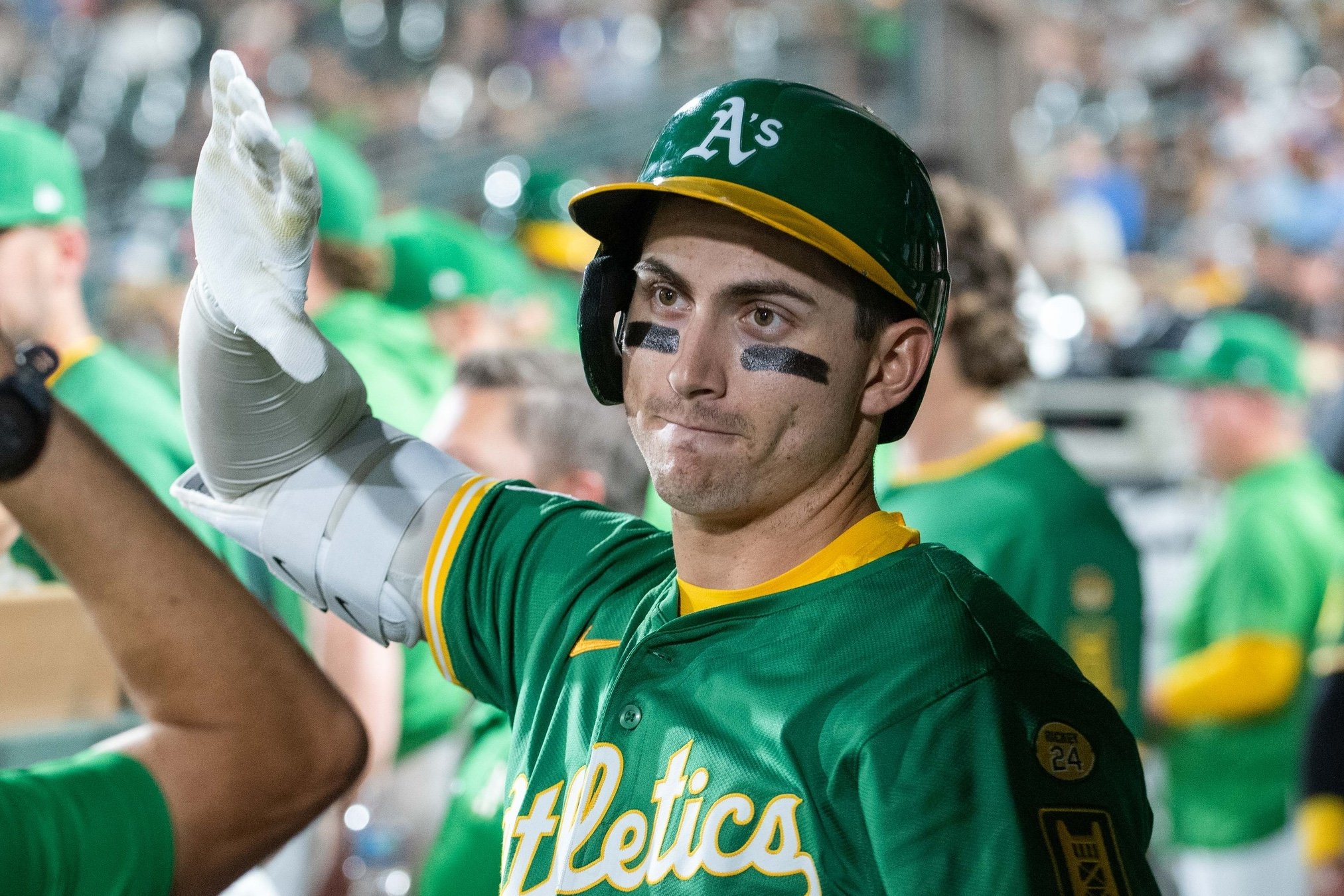 Rumors surrounded Edward Cabrera leading up to the 2025 MLB trade deadline. After finishing his career year in good health, there are sure to be many suitors trying to acquire him from the Miami Marlins again this offseason. Cabrera posted a 3.53 ERA and 3.83 FIP with a career-high 137 ⅔ innings and surprisingly consistent strike-throwing. His fastball velocity sits at 97 mph and his curveball has joined his changeup as a reliable putaway pitch. He's still under club control for three more seasons via arbitration. While the iron is hot and they're focused on making offensive upgrades, the Marlins may part with their homegrown starter. In this mock trade proposal, the Athletics—whose window of contention is similar to Miami's—look to nab Cabrera in exchange for one of their own breakout players. Marlins acquire: 1B/OF Tyler Soderstrom and OF Henry Bolte Athletics acquire: RHP Edward Cabrera and RHP Calvin Faucher Tyler Soderstrom in 2025 posted a .276/.346/.474 slash line and 25 home runs with a .354 wOBA and 125 wRC+, finishing the year with 3.4 fWAR. A left-handed hitter, he held his own against fellow lefties (103 wRC+), allowing him to accrue 624 plate appearances. 7b25b74b-17f56bb9-84e9150a-csvm-diamondgcp-asset_1280x720_59_4000K.mp4 Soderstrom began this season at first base, but moved to left field once Nick Kurtz arrived in the big leagues. Although he performed well with the glove at his new position, many still believe his defensive home moving forward should be first base or DH. That's how the Marlins would utilize him in this scenario. With only two years of MLB service time, Soderstrom is not even eligible for arbitration yet and he won't hit free agency until after the 2029 season. An affordable power bat who can anchor the Marlins lineup with loud pop, he'd fit in perfectly. Henry Bolte is the fifth-ranked prospect in the Athletics farm system, according to MLB Pipeline. The 2022 second-round draft pick was signed out of high school for an overslot deal of $2 million. In 2025 at Double-A and Triple-A, Bolte slashed .284/.385/.427 with a .377 wOBA and 121 wRC+. He flashes encouraging hard-hit rates and a max exit velo of 111.6 mph. 82zih7.mp4 Bolte plays a good outfield, but may be relegated to a corner spot long term. Speed may be his best tool with a 99th-percentile Sprint Speed in AAA. The 22-year-old shows promise and could be valuable depth for the Marlins ever-crowded outfield. Under the hood, there are areas of concern that may lead to the A's being willing to move Bolte. He has struck out in nearly one-third of his plate appearances throughout his minor league career. In AAA, he was particularly vulnerable against offspeed and breaking pitches (35 whiff% or higher vs. curveballs, sweepers, sliders, and changeups). The Marlins player development group may be able to fix his plate approach. Also, Bolte had a shockingly low pulled-air rate—remove him from the hitter-friendly environment of the Pacific Coast League and his actual slugging percentage of .433 may settle in much closer to his .295 xSLG. Bolte is not Rule 5-eligible until 2026, which would allow the Marlins to keep him off their 40-man roster next season until he's fully ready to contribute. In addition to Cabrera, the A's also get a high-leverage reliever in Faucher who has posted respectable numbers for the Fish the past two seasons. He is under club control through 2029. By including Faucher in this trade, I am assuming the Marlins will make a separate offseason move to reinforce their bullpen, ideally bringing in somebody who misses even more bats.
 -
Rumors surrounded Edward Cabrera leading up to the 2025 MLB trade deadline. After finishing his career year in good health, there are sure to be many suitors trying to acquire him from the Miami Marlins again this offseason. Cabrera posted a 3.53 ERA and 3.83 FIP with a career-high 137 ⅔ innings and surprisingly consistent strike-throwing. His fastball velocity sits at 97 mph and his curveball has joined his changeup as a reliable putaway pitch. He's still under club control for three more seasons via arbitration. While the iron is hot and they're focused on making offensive upgrades, the Marlins may part with their homegrown starter. In this mock trade proposal, the Athletics—whose window of contention is similar to Miami's—look to nab Cabrera in exchange for one of their own breakout players. Marlins acquire: 1B/OF Tyler Soderstrom and OF Henry Bolte Athletics acquire: RHP Edward Cabrera and RHP Calvin Faucher Tyler Soderstrom in 2025 posted a .276/.346/.474 slash line and 25 home runs with a .354 wOBA and 125 wRC+, finishing the year with 3.4 fWAR. A left-handed hitter, he held his own against fellow lefties (103 wRC+), allowing him to accrue 624 plate appearances. 7b25b74b-17f56bb9-84e9150a-csvm-diamondgcp-asset_1280x720_59_4000K.mp4 Soderstrom began this season at first base, but moved to left field once Nick Kurtz arrived in the big leagues. Although he performed well with the glove at his new position, many still believe his defensive home moving forward should be first base or DH. That's how the Marlins would utilize him in this scenario. With only two years of MLB service time, Soderstrom is not even eligible for arbitration yet and he won't hit free agency until after the 2029 season. An affordable power bat who can anchor the Marlins lineup with loud pop, he'd fit in perfectly. Henry Bolte is the fifth-ranked prospect in the Athletics farm system, according to MLB Pipeline. The 2022 second-round draft pick was signed out of high school for an overslot deal of $2 million. In 2025 at Double-A and Triple-A, Bolte slashed .284/.385/.427 with a .377 wOBA and 121 wRC+. He flashes encouraging hard-hit rates and a max exit velo of 111.6 mph. 82zih7.mp4 Bolte plays a good outfield, but may be relegated to a corner spot long term. Speed may be his best tool with a 99th-percentile Sprint Speed in AAA. The 22-year-old shows promise and could be valuable depth for the Marlins ever-crowded outfield. Under the hood, there are areas of concern that may lead to the A's being willing to move Bolte. He has struck out in nearly one-third of his plate appearances throughout his minor league career. In AAA, he was particularly vulnerable against offspeed and breaking pitches (35 whiff% or higher vs. curveballs, sweepers, sliders, and changeups). The Marlins player development group may be able to fix his plate approach. Also, Bolte had a shockingly low pulled-air rate—remove him from the hitter-friendly environment of the Pacific Coast League and his actual slugging percentage of .433 may settle in much closer to his .295 xSLG. Bolte is not Rule 5-eligible until 2026, which would allow the Marlins to keep him off their 40-man roster next season until he's fully ready to contribute. In addition to Cabrera, the A's also get a high-leverage reliever in Faucher who has posted respectable numbers for the Fish the past two seasons. He is under club control through 2029. By including Faucher in this trade, I am assuming the Marlins will make a separate offseason move to reinforce their bullpen, ideally bringing in somebody who misses even more bats. View full article
-
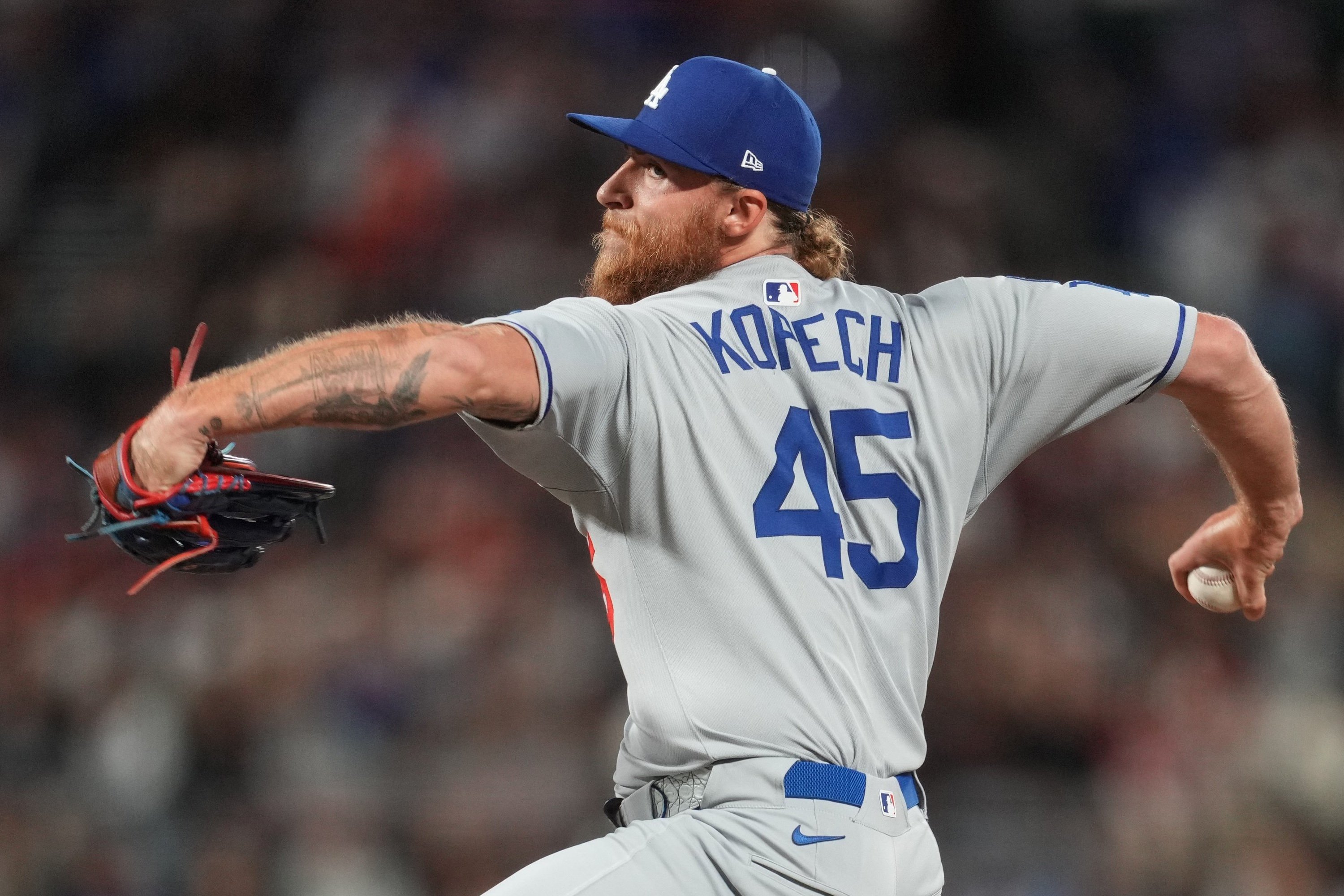 As the MLB offseason truly begins, rumors have circulated about the Miami Marlins showing interest in top-of-the-market relievers and other positions of need. Although I foresee them missing out on the big-time names such as Devin Williams, Eugenio Suárez and Josh Naylor, there will still be opportunities to piece together solid solutions with low-risk, short-term deals. In this article, I will briefly describe five free agents who I believe make sense for the Marlins. RHP Brad Keller Projected contract: 2 YR/$15M The most expensive potential addition that I have in this free agent group is Brad Keller. In 2025, he had a breakout season with the Cubs after moving into a bullpen role. Keller posted a 2.07 ERA and 2.93 FIP. Doing what he historically has done, Keller generated groundballs. The major difference-maker for the 30-year-old this season was an extreme fastball velocity increase from 93 mph to 97 mph—that coincided with a jump in spin rate on all his pitches. Carrying those pitch characteristics into 2026 should yield similar results. N3lkamtfV0ZRVkV3dEdEUT09X0JGVlpVVlFBVUZjQVhBTUtBd0FIQ1E4RUFBQU1CVmNBVUFRQVZWVlJCZ05UVVFwVQ==.mp4 RHP Michael Kopech Projected contract: 1 YR/$1M $250k incentive for reaching 50 innings pitched Kopech has suffered a plethora of injuries since his debut in 2018 with the White Sox. His 2025 season was impacted by health issues as well. The former first-round pick got off to a delayed start due to right knee surgery, and his knee flared up again in September, preventing him from contributing to their World Series run. As always, Kopech showed an elite fastball, but struggled to find the zone, walking 24.5% of batters he faced in 2025. He would be a dart throw for the Marlins. If they luck into a healthy season from him and are able to get him to command his fastball and offspeed, the upside is tremendous for the right-handed flamethrower. eHk5dnpfWGw0TUFRPT1fQUZCWVZWWUJVUVVBQVZvRFZRQUhCMVZmQUZnQ0FBTUFCMWNFVTFCV1ZGWlJBUXNF.mp4 LHP Ryan Yarbrough Projected contract:1 YR/$2M $250k incentive for reaching 115 innings pitched Best known for being a "bulk guy" with the Tampa Bay Rays during his 20s, Yarbrough has had an under-the-radar past two seasons. He adds depth, a veteran presence, adaptability to be a starter or bulk reliever, and a funky look for hitters. He also limits walks. Peter Bendix would have familiarity with Yarbrough dating back to his days in Tampa. The soft-throwing southpaw could play a meaningful role for the Marlins in 2026. bGJlWm9fWGw0TUFRPT1fQWdFQ0JsSUdBQU1BWEFZREJBQUhVQUJTQUFNTVZGa0FDbFJUQndzTVVnVlhCZ0VE.mp4 INF Amed Rosario Projected contract: 1 YR/$5.2M It may be curious to add to a seemingly packed infield for the Marlins, but I believe Amed Rosario could serve as valuable insurance behind Connor Norby and Graham Pauley in 2026, while being enough of an offensive threat to play DH vs. lefties. Rosario in 2025 saw a 2 mph increase in his bat speed which led to a career-high hard-hit rate of 45%. Perhaps even more importantly, the soon-to-be 30-year-old infielder had the highest pulled-air rate of his career—up to 17.9% from a career norm of 10%. This is why Rosario had the highest slug (.436) and average exit velo (91.2 mph) of his career. Perhaps a mini breakout season is on the horizon for the journeyman infielder. ZzZ2b1FfV0ZRVkV3dEdEUT09X0IxSUhVMVVDWGdZQVdRRUxBQUFIQUFjSEFGa0ZVUWNBQ2xNTVVnUUVCRkJSVVFwVQ==.mp4 C James McCann Projected contract: 1 YR/$1.5M $150k incentive for 95 games played After what many thought was the finale of a solid MLB career in 2024, McCann was released by the Braves near the end of 2025 spring training and picked up by the Diamondbacks in June. McCann went on to put up 0.7 fWAR for the Diamondbacks and hit .260/.324/.431 with five home runs and a 110 wRC+ in 42 games. McCann would add a veteran presence that Marlins catchers and pitchers haven't had since trading away Nick Fortes. There's only a clear fit for him if the Marlins have determined that it's time to move Agustín Ramírez to first base or DH. cU82azFfWGw0TUFRPT1fVWdaWUFsTURWZ0lBV3dZR0J3QUhBUVJXQUZrRVVGWUFCVlFNQ0ZkV0JnVlFCd1Jl.mp4
 -
As the MLB offseason truly begins, rumors have circulated about the Miami Marlins showing interest in top-of-the-market relievers and other positions of need. Although I foresee them missing out on the big-time names such as Devin Williams, Eugenio Suárez and Josh Naylor, there will still be opportunities to piece together solid solutions with low-risk, short-term deals. In this article, I will briefly describe five free agents who I believe make sense for the Marlins. RHP Brad Keller Projected contract: 2 YR/$15M The most expensive potential addition that I have in this free agent group is Brad Keller. In 2025, he had a breakout season with the Cubs after moving into a bullpen role. Keller posted a 2.07 ERA and 2.93 FIP. Doing what he historically has done, Keller generated groundballs. The major difference-maker for the 30-year-old this season was an extreme fastball velocity increase from 93 mph to 97 mph—that coincided with a jump in spin rate on all his pitches. Carrying those pitch characteristics into 2026 should yield similar results. N3lkamtfV0ZRVkV3dEdEUT09X0JGVlpVVlFBVUZjQVhBTUtBd0FIQ1E4RUFBQU1CVmNBVUFRQVZWVlJCZ05UVVFwVQ==.mp4 RHP Michael Kopech Projected contract: 1 YR/$1M $250k incentive for reaching 50 innings pitched Kopech has suffered a plethora of injuries since his debut in 2018 with the White Sox. His 2025 season was impacted by health issues as well. The former first-round pick got off to a delayed start due to right knee surgery, and his knee flared up again in September, preventing him from contributing to their World Series run. As always, Kopech showed an elite fastball, but struggled to find the zone, walking 24.5% of batters he faced in 2025. He would be a dart throw for the Marlins. If they luck into a healthy season from him and are able to get him to command his fastball and offspeed, the upside is tremendous for the right-handed flamethrower. eHk5dnpfWGw0TUFRPT1fQUZCWVZWWUJVUVVBQVZvRFZRQUhCMVZmQUZnQ0FBTUFCMWNFVTFCV1ZGWlJBUXNF.mp4 LHP Ryan Yarbrough Projected contract:1 YR/$2M $250k incentive for reaching 115 innings pitched Best known for being a "bulk guy" with the Tampa Bay Rays during his 20s, Yarbrough has had an under-the-radar past two seasons. He adds depth, a veteran presence, adaptability to be a starter or bulk reliever, and a funky look for hitters. He also limits walks. Peter Bendix would have familiarity with Yarbrough dating back to his days in Tampa. The soft-throwing southpaw could play a meaningful role for the Marlins in 2026. bGJlWm9fWGw0TUFRPT1fQWdFQ0JsSUdBQU1BWEFZREJBQUhVQUJTQUFNTVZGa0FDbFJUQndzTVVnVlhCZ0VE.mp4 INF Amed Rosario Projected contract: 1 YR/$5.2M It may be curious to add to a seemingly packed infield for the Marlins, but I believe Amed Rosario could serve as valuable insurance behind Connor Norby and Graham Pauley in 2026, while being enough of an offensive threat to play DH vs. lefties. Rosario in 2025 saw a 2 mph increase in his bat speed which led to a career-high hard-hit rate of 45%. Perhaps even more importantly, the soon-to-be 30-year-old infielder had the highest pulled-air rate of his career—up to 17.9% from a career norm of 10%. This is why Rosario had the highest slug (.436) and average exit velo (91.2 mph) of his career. Perhaps a mini breakout season is on the horizon for the journeyman infielder. ZzZ2b1FfV0ZRVkV3dEdEUT09X0IxSUhVMVVDWGdZQVdRRUxBQUFIQUFjSEFGa0ZVUWNBQ2xNTVVnUUVCRkJSVVFwVQ==.mp4 C James McCann Projected contract: 1 YR/$1.5M $150k incentive for 95 games played After what many thought was the finale of a solid MLB career in 2024, McCann was released by the Braves near the end of 2025 spring training and picked up by the Diamondbacks in June. McCann went on to put up 0.7 fWAR for the Diamondbacks and hit .260/.324/.431 with five home runs and a 110 wRC+ in 42 games. McCann would add a veteran presence that Marlins catchers and pitchers haven't had since trading away Nick Fortes. There's only a clear fit for him if the Marlins have determined that it's time to move Agustín Ramírez to first base or DH. cU82azFfWGw0TUFRPT1fVWdaWUFsTURWZ0lBV3dZR0J3QUhBUVJXQUZrRVVGWUFCVlFNQ0ZkV0JnVlFCd1Jl.mp4 View full article
-
How moves on the margins propelled the Marlins to a surprising season
Sean McCormack posted an article in Marlins
 Within every surprising season, there are unlikely contributors. The 2025 Miami Marlins were widely projected—including by the Fish On First staff—to win no more than 70 games. Instead, they finished 79-83, which was good enough for third place in the NL East. In the absence of splashy moves involving veterans with long MLB track records, Miami's relative success compared to preseason expectations was the result of a series of small, smart acquisitions. The Fish netted 6.2 fWAR from the combination of Janson Junk (2.5 fWAR), Ronny Henriquez (1.3 fWAR), Heriberto Hernández (1.3 fWAR), Liam Hicks (1.0 fWAR), and Tyler Phillips (0.1 fWAR). These players were not held in high regard by other teams around the league, which made them attainable via minor league free agency, the Rule 5 draft, waiver claims and cash trades. Credit goes to the Marlins for identifying their upside. Janson Junk, a career-long journeyman, found his footing with the Marlins this season after stints with the Angels, Athletics, and Brewers. Junk dialed in his mechanics over the offseason while training at the well-known Driveline Baseball facility. That made him a natural target for the Marlins, whose new director of pitching, Bill Hezel, had worked several years at Driveline himself. Junk needed to be patient and prove himself with Triple-A Jacksonville throughout April and most of May. Once called up, he posted a 4.17 ERA with a 3.15 FIP in 110 innings pitched over 21 appearances (16 starts). He established a new all-time franchise-low walk rate while working for a league-minimum salary. Junk now has the future outlook of a fifth starter. Ronny Henriquez was claimed off waivers from the Twins on Feb. 11. Immediately, the undersized righty emerged as arguably the best reliever for the Marlins. In 73 innings pitched this season, Henriquez posted a 2.22 ERA, 3.15 FIP, 32.3 K%, and he led all Marlins pitchers in chase%, whiff%, and xBA. Henriquez was the difference between winning or losing several tight games in 2025. He could make an even greater impact moving forward now that the Marlins fully understand what a weapon they have in him. On top of that, having cheap, long-term control over Henriquez allows the team to allocate money towards different areas of the roster. More than nine years removed from the start of his professional career, Tyler Phillips finally made his MLB debut for the 2024 Phillies as mostly a starter. When the Phillies decided there was no room for Phillips on their Opening Day roster this year, the Marlins picked him up for cash considerations and transitioned him to the bullpen. The Marlins tinkered with Phillips' pitch mix—they upped his sinker, curveball, and splitter usage and dropped his four-seam and sweeper usage. That led to him generating a shocking amount of chase on pitches outside the strike zone. Phillips ended the season with 77 ⅔ innings, a 2.78 ERA, 4.14 FIP, 55.6 GB%, and limited damage with a 5.1 barrel%. Like Henriquez, Phillips gradually became a mainstay in high-leverage situations. His 2.33 WPA was tops on the Marlins pitching staff. Onto the hitters, Heriberto Hernández spent the previous four seasons in Tampa Bay's minor league system prior to being signed by the Marlins as a minor-league free agent in December 2024. As former general manager of the Rays, Peter Bendix was familiar with Hernández from the period when they overlapped in Tampa. After a midseason call-up, Hernández posted a .266/.347/.438 slash line for a 118 wRC+ and .341 wOBA. The 25-year-old rookie was an above-league-average hitter for 87 games and contributed through his defense as well with 5 OAA. Even for an organization that is deep with other outfield options, Hernández has moved up the depth chart and may have found himself a role as a platoon hitter. Liam Hicks spent all of 2024 in Double-A in the Rangers and Tigers organizations. The Canadian native stood out in the Rule 5 draft due to being a catcher whose hitting profile didn't rely on his power, but instead his contact ability and patient approach. Hicks put up a .247/.346/.346 slash line with a 98 wRC+ and .313 wOBA. He split time between catcher and first base for the Marlins. Given the circumstance of skipping Triple-A and going straight to the big leagues, he had an impressive year. TDZvVnFfVjBZQUhRPT1fQkFCWFZWQUVVZ1lBRGxaVFZRQUhVZ0ZTQUZnQ1cxWUFBMU5XQTFBRkFRTUdDUWND.mp4 Hicks posted better numbers vs. RHP with a 104 wRC+, justifying a significant spot on the Marlins roster even if his defense behind the plate continues to be sub-par. He had a 90.8% contact rate on pitches in the zone and ranked in the 90th percentile or better in whiff% and chase%. As a small-market team, the Marlins must find ways to be cost-efficient. That is a trait shared by perennial postseason qualifiers such as the Rays, Brewers, and Guardians. Bendix's front office has to annually supplement the roster with quality big leaguers who were overlooked by their old teams, and that requires operating outside the box. It was encouraging to see the Marlins create valuable pieces out of nothing in 2025. If they can do the same in 2026 while also spending what it takes to complete a few major moves that address their biggest weaknesses, the Fish could exceed expectations yet again.
- 10 comments
-
- 2
-

-
- ronny henriquez
- janson junk
- (and 3 more)
-
Within every surprising season, there are unlikely contributors. The 2025 Miami Marlins were widely projected—including by the Fish On First staff—to win no more than 70 games. Instead, they finished 79-83, which was good enough for third place in the NL East. In the absence of splashy moves involving veterans with long MLB track records, Miami's relative success compared to preseason expectations was the result of a series of small, smart acquisitions. The Fish netted 6.2 fWAR from the combination of Janson Junk (2.5 fWAR), Ronny Henriquez (1.3 fWAR), Heriberto Hernández (1.3 fWAR), Liam Hicks (1.0 fWAR), and Tyler Phillips (0.1 fWAR). These players were not held in high regard by other teams around the league, which made them attainable via minor league free agency, the Rule 5 draft, waiver claims and cash trades. Credit goes to the Marlins for identifying their upside. Janson Junk, a career-long journeyman, found his footing with the Marlins this season after stints with the Angels, Athletics, and Brewers. Junk dialed in his mechanics over the offseason while training at the well-known Driveline Baseball facility. That made him a natural target for the Marlins, whose new director of pitching, Bill Hezel, had worked several years at Driveline himself. Junk needed to be patient and prove himself with Triple-A Jacksonville throughout April and most of May. Once called up, he posted a 4.17 ERA with a 3.15 FIP in 110 innings pitched over 21 appearances (16 starts). He established a new all-time franchise-low walk rate while working for a league-minimum salary. Junk now has the future outlook of a fifth starter. Ronny Henriquez was claimed off waivers from the Twins on Feb. 11. Immediately, the undersized righty emerged as arguably the best reliever for the Marlins. In 73 innings pitched this season, Henriquez posted a 2.22 ERA, 3.15 FIP, 32.3 K%, and he led all Marlins pitchers in chase%, whiff%, and xBA. Henriquez was the difference between winning or losing several tight games in 2025. He could make an even greater impact moving forward now that the Marlins fully understand what a weapon they have in him. On top of that, having cheap, long-term control over Henriquez allows the team to allocate money towards different areas of the roster. More than nine years removed from the start of his professional career, Tyler Phillips finally made his MLB debut for the 2024 Phillies as mostly a starter. When the Phillies decided there was no room for Phillips on their Opening Day roster this year, the Marlins picked him up for cash considerations and transitioned him to the bullpen. The Marlins tinkered with Phillips' pitch mix—they upped his sinker, curveball, and splitter usage and dropped his four-seam and sweeper usage. That led to him generating a shocking amount of chase on pitches outside the strike zone. Phillips ended the season with 77 ⅔ innings, a 2.78 ERA, 4.14 FIP, 55.6 GB%, and limited damage with a 5.1 barrel%. Like Henriquez, Phillips gradually became a mainstay in high-leverage situations. His 2.33 WPA was tops on the Marlins pitching staff. Onto the hitters, Heriberto Hernández spent the previous four seasons in Tampa Bay's minor league system prior to being signed by the Marlins as a minor-league free agent in December 2024. As former general manager of the Rays, Peter Bendix was familiar with Hernández from the period when they overlapped in Tampa. After a midseason call-up, Hernández posted a .266/.347/.438 slash line for a 118 wRC+ and .341 wOBA. The 25-year-old rookie was an above-league-average hitter for 87 games and contributed through his defense as well with 5 OAA. Even for an organization that is deep with other outfield options, Hernández has moved up the depth chart and may have found himself a role as a platoon hitter. Liam Hicks spent all of 2024 in Double-A in the Rangers and Tigers organizations. The Canadian native stood out in the Rule 5 draft due to being a catcher whose hitting profile didn't rely on his power, but instead his contact ability and patient approach. Hicks put up a .247/.346/.346 slash line with a 98 wRC+ and .313 wOBA. He split time between catcher and first base for the Marlins. Given the circumstance of skipping Triple-A and going straight to the big leagues, he had an impressive year. TDZvVnFfVjBZQUhRPT1fQkFCWFZWQUVVZ1lBRGxaVFZRQUhVZ0ZTQUZnQ1cxWUFBMU5XQTFBRkFRTUdDUWND.mp4 Hicks posted better numbers vs. RHP with a 104 wRC+, justifying a significant spot on the Marlins roster even if his defense behind the plate continues to be sub-par. He had a 90.8% contact rate on pitches in the zone and ranked in the 90th percentile or better in whiff% and chase%. As a small-market team, the Marlins must find ways to be cost-efficient. That is a trait shared by perennial postseason qualifiers such as the Rays, Brewers, and Guardians. Bendix's front office has to annually supplement the roster with quality big leaguers who were overlooked by their old teams, and that requires operating outside the box. It was encouraging to see the Marlins create valuable pieces out of nothing in 2025. If they can do the same in 2026 while also spending what it takes to complete a few major moves that address their biggest weaknesses, the Fish could exceed expectations yet again. View full article
-
The Miami Marlins have had a lack of consistency with their lineup construction this season. In 132 games played, they've used 124 unique batting orders. Updating my preseason thought exercise in response to call-ups, breakouts, trades and injuries, let's analytically find the best way to construct the Marlins lineup. All of the players included below are either on the 26-man active roster or projected to be reinstated from the injured list before the end of the 2025 season. 1. Xavier Edwards, 2B Edwards is the stereotypical leadoff man in baseball and has fittingly started all of his games there in 2025. "X" brings a great contact/speed combo. With a .291/.349/.368 slash line so far this season, Edwards sets the tone for the rest of the lineup and his legs put pressure on the opposing team. MTZxV2dfWGw0TUFRPT1fVWdkUVVBSUhWZ1VBRFZOVEFnQUhCMWNEQUZrRlZWTUFVVlZRVXdFRFYxWmRVMVFE.mp4 2. Jakob Marsee, CF Marsee has had a meteoric rise since his call-up to the big leagues at the beginning of this month. Through 24 games, Marsee has posted a .329/.398/.671 slash line, .443 wOBA and 188 wRC+ with 1.7 fWAR. He slots into the two-hole perfectly. You want your best hitter batting second—that has become the norm in the sabermetric era of baseball. The Central Michigan product has flashed power with four home runs and an average exit velocity of 92.5 mph to complement an elite eye at the plate and above-average speed. N3lSeWtfWGw0TUFRPT1fQXdCVUJ3QUdWbEVBQ2xvRFVRQUhVQWRYQUZnRVdsVUFCbFFEQUFwV1Z3dFNVZ0Zm.mp4 3. Agustín Ramírez, DH Agustín Ramírez's stats may not be eye-popping, but looking deeper, he's just scratching the surface. Better production is inevitable moving forward as he gains experience and spends a greater percentage of his time as Miami's designated hitter. Ramírez's base stats at the big league level are .230/.288/.428 with a .308 wOBA, although his xwOBA is .353. When playing DH this season, he has been a .304/.304/.514 hitter with a .346 wOBA, and 121 wRC+. With men in scoring position, Ramírez has a .814 OPS and 122 wRC+. The "Gus Bus" can reliably bring in the high on-base players ahead of him. MDRXejJfVjBZQUhRPT1fQlFoWFhRVlZWd0lBV2xWUlZRQUhCZzlSQUFNRlVWUUFCd0FGVVZJSEJnZFNVd29I.mp4 4. Kyle Stowers, LF The breakout of Kyle Stowers is one of the top headlines for the Marlins this season. Stowers leads the Marlins in home runs (25) and batting run value (26 RV), and he has posted elite batted-ball data, including a hard-hit rate of 52% and barrel rate of 19%. His overall slash line is .288/.368/.544 with a .387 wOBA, and 149 wRC+. Stowers also performs well with RISP (.863 OPS and 125 wRC+). QXdhdmdfWGw0TUFRPT1fVlFWV1ZsSUdVQUlBRGdFSFZBQUhVbFFBQUFBTlZ3TUFWRk1IQndkVUF3QUdWbE1D.mp4 5. Griffin Conine/Heriberto Hernández, RF Ironically, both Conine and Hernández have performed better in 2025 versus same-handed opposition, but historically in their careers, this hasn't been the case. Projecting some regression to the mean, this would set up a perfect platoon option for the Marlins in right field and bring pop to the middle of the order. Debuting shortly after Conine underwent shoulder surgery, Hernández has been a pleasant surprise for the Fish this season with his bat, and he has even shown the ability to be a good fielder. The son of Mr. Marlin is projected back in the big leagues around the final week of the regular season. He'd get the majority of starts at this position, facing right-handers. Nnk5ajJfWGw0TUFRPT1fVlFGWlUxSUNBQUlBWFFFR1VRQUhWd1FIQUZrTVYxTUFCVk1CQ0FZREJGRlZCUW9B.mp4 6. Otto Lopez, SS Otto Lopez may be one of MLB's unluckiest hitters in 2025. He has posted a .240/.311/.359 slash line, but there's been a 53-point difference between his wOBA and xwOBA and a low BAIP of .261. Lopez's expected metrics are promising with an xBA of .284 and xSLG of .455. He's been miscast in the heart of the Marlins order for much of this season, but the club should continue starting him regularly in the sixth spot, anticipating a higher average moving forward. WEQyWURfWGw0TUFRPT1fQXdNQUJWTUVYZ0FBQzFBS1hnQUhBZ0JWQUFNRkFBUUFDd0VHVmxKVEIxQlhBd3ND.mp4 7. Connor Norby/Graham Pauley, 3B There were big expectations for Connor Norby entering 2025. However, he has fallen way short of the performance he gave last season post-trade deadline. Once he returns from left hamate bone surgery in the next few days, batting this low in the lineup may take pressure off of him to come through in high-leverage moments and allow him to find his swing again at the big league level. Norby is at his best when he is pulling the ball in the air for power and going the other way for doubles and singles. Graham Pauley may eventually overtake Norby at third base and deserves occasional starts even when both are healthy. In July and August before his oblique injury, Pauley posted a .254/.371/.492 slash line, with a 141 wRC+, and walking as many times as he struck out. This was easily the best stretch for Pauley as an MLB player. His defensive ability at third is an important factor when deciding how to balance the playing time between them. WEQyeFpfWGw0TUFRPT1fQjFOUlV3QUNCUVVBV1ZNTFZ3QUhDUUpVQUFNQ0JWY0FCbDFUQkFSUlZBRmNWRlJm.mp4 8. Eric Wagaman, 1B The relatively unknown Eric Wagaman got much praise from the coaching staff and front office alike entering 2025. There have been deep slumps that raised questions about whether Wagaman belonged on the Marlins roster, though his expected stats paint a slightly different picture. A good August (138 wRC+ and .370 wOBA) may have ensured a spot for him in the majors for the rest of the year. After that, the Marlins have a complicated decision to make regarding their future at first base. UHZnak5fVjBZQUhRPT1fQWdGU1VWQURBbEVBQ0ZJRkJ3QUhWVk5WQUFBQ1ZGQUFCQVFCQWdVSENBQlNWZ1lF.mp4 9. Liam Hicks, C I believe Hicks' elite eye and ability to get on base would set up opportunities for the top of the Marlins lineup to drive him in. One of the most unique catchers in baseball, he has a .350 on-base percentage and a 99th percentile chase rate. This unorthodox usage of the Rule 5 Draft pick may lead to good results for the Marlins. MnJPazVfWGw0TUFRPT1fQkFWWFVGTlFYbEFBV2djREF3QUhVbFZlQUFCV1cxa0FWRlpSVkZJRUJGRlRCbEJX.mp4 View full article
-
Optimal lineup construction for the 2025 Marlins, end-of-season update
Sean McCormack posted an article in Marlins
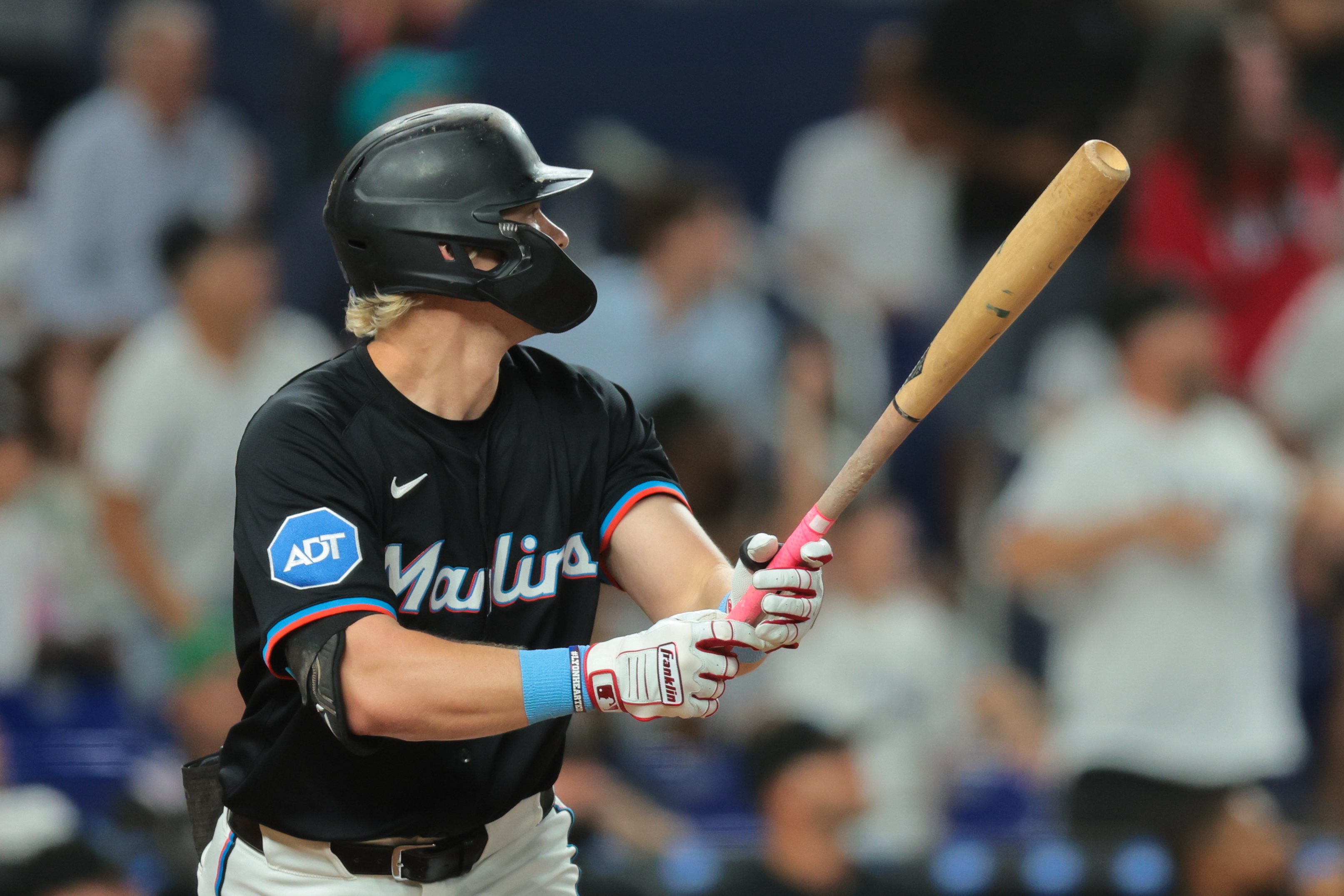 The Miami Marlins have had a lack of consistency with their lineup construction this season. In 132 games played, they've used 124 unique batting orders. Updating my preseason thought exercise in response to call-ups, breakouts, trades and injuries, let's analytically find the best way to construct the Marlins lineup. All of the players included below are either on the 26-man active roster or projected to be reinstated from the injured list before the end of the 2025 season. 1. Xavier Edwards, 2B Edwards is the stereotypical leadoff man in baseball and has fittingly started all of his games there in 2025. "X" brings a great contact/speed combo. With a .291/.349/.368 slash line so far this season, Edwards sets the tone for the rest of the lineup and his legs put pressure on the opposing team. MTZxV2dfWGw0TUFRPT1fVWdkUVVBSUhWZ1VBRFZOVEFnQUhCMWNEQUZrRlZWTUFVVlZRVXdFRFYxWmRVMVFE.mp4 2. Jakob Marsee, CF Marsee has had a meteoric rise since his call-up to the big leagues at the beginning of this month. Through 24 games, Marsee has posted a .329/.398/.671 slash line, .443 wOBA and 188 wRC+ with 1.7 fWAR. He slots into the two-hole perfectly. You want your best hitter batting second—that has become the norm in the sabermetric era of baseball. The Central Michigan product has flashed power with four home runs and an average exit velocity of 92.5 mph to complement an elite eye at the plate and above-average speed. N3lSeWtfWGw0TUFRPT1fQXdCVUJ3QUdWbEVBQ2xvRFVRQUhVQWRYQUZnRVdsVUFCbFFEQUFwV1Z3dFNVZ0Zm.mp4 3. Agustín Ramírez, DH Agustín Ramírez's stats may not be eye-popping, but looking deeper, he's just scratching the surface. Better production is inevitable moving forward as he gains experience and spends a greater percentage of his time as Miami's designated hitter. Ramírez's base stats at the big league level are .230/.288/.428 with a .308 wOBA, although his xwOBA is .353. When playing DH this season, he has been a .304/.304/.514 hitter with a .346 wOBA, and 121 wRC+. With men in scoring position, Ramírez has a .814 OPS and 122 wRC+. The "Gus Bus" can reliably bring in the high on-base players ahead of him. MDRXejJfVjBZQUhRPT1fQlFoWFhRVlZWd0lBV2xWUlZRQUhCZzlSQUFNRlVWUUFCd0FGVVZJSEJnZFNVd29I.mp4 4. Kyle Stowers, LF The breakout of Kyle Stowers is one of the top headlines for the Marlins this season. Stowers leads the Marlins in home runs (25) and batting run value (26 RV), and he has posted elite batted-ball data, including a hard-hit rate of 52% and barrel rate of 19%. His overall slash line is .288/.368/.544 with a .387 wOBA, and 149 wRC+. Stowers also performs well with RISP (.863 OPS and 125 wRC+). QXdhdmdfWGw0TUFRPT1fVlFWV1ZsSUdVQUlBRGdFSFZBQUhVbFFBQUFBTlZ3TUFWRk1IQndkVUF3QUdWbE1D.mp4 5. Griffin Conine/Heriberto Hernández, RF Ironically, both Conine and Hernández have performed better in 2025 versus same-handed opposition, but historically in their careers, this hasn't been the case. Projecting some regression to the mean, this would set up a perfect platoon option for the Marlins in right field and bring pop to the middle of the order. Debuting shortly after Conine underwent shoulder surgery, Hernández has been a pleasant surprise for the Fish this season with his bat, and he has even shown the ability to be a good fielder. The son of Mr. Marlin is projected back in the big leagues around the final week of the regular season. He'd get the majority of starts at this position, facing right-handers. Nnk5ajJfWGw0TUFRPT1fVlFGWlUxSUNBQUlBWFFFR1VRQUhWd1FIQUZrTVYxTUFCVk1CQ0FZREJGRlZCUW9B.mp4 6. Otto Lopez, SS Otto Lopez may be one of MLB's unluckiest hitters in 2025. He has posted a .240/.311/.359 slash line, but there's been a 53-point difference between his wOBA and xwOBA and a low BAIP of .261. Lopez's expected metrics are promising with an xBA of .284 and xSLG of .455. He's been miscast in the heart of the Marlins order for much of this season, but the club should continue starting him regularly in the sixth spot, anticipating a higher average moving forward. WEQyWURfWGw0TUFRPT1fQXdNQUJWTUVYZ0FBQzFBS1hnQUhBZ0JWQUFNRkFBUUFDd0VHVmxKVEIxQlhBd3ND.mp4 7. Connor Norby/Graham Pauley, 3B There were big expectations for Connor Norby entering 2025. However, he has fallen way short of the performance he gave last season post-trade deadline. Once he returns from left hamate bone surgery in the next few days, batting this low in the lineup may take pressure off of him to come through in high-leverage moments and allow him to find his swing again at the big league level. Norby is at his best when he is pulling the ball in the air for power and going the other way for doubles and singles. Graham Pauley may eventually overtake Norby at third base and deserves occasional starts even when both are healthy. In July and August before his oblique injury, Pauley posted a .254/.371/.492 slash line, with a 141 wRC+, and walking as many times as he struck out. This was easily the best stretch for Pauley as an MLB player. His defensive ability at third is an important factor when deciding how to balance the playing time between them. WEQyeFpfWGw0TUFRPT1fQjFOUlV3QUNCUVVBV1ZNTFZ3QUhDUUpVQUFNQ0JWY0FCbDFUQkFSUlZBRmNWRlJm.mp4 8. Eric Wagaman, 1B The relatively unknown Eric Wagaman got much praise from the coaching staff and front office alike entering 2025. There have been deep slumps that raised questions about whether Wagaman belonged on the Marlins roster, though his expected stats paint a slightly different picture. A good August (138 wRC+ and .370 wOBA) may have ensured a spot for him in the majors for the rest of the year. After that, the Marlins have a complicated decision to make regarding their future at first base. UHZnak5fVjBZQUhRPT1fQWdGU1VWQURBbEVBQ0ZJRkJ3QUhWVk5WQUFBQ1ZGQUFCQVFCQWdVSENBQlNWZ1lF.mp4 9. Liam Hicks, C I believe Hicks' elite eye and ability to get on base would set up opportunities for the top of the Marlins lineup to drive him in. One of the most unique catchers in baseball, he has a .350 on-base percentage and a 99th percentile chase rate. This unorthodox usage of the Rule 5 Draft pick may lead to good results for the Marlins. MnJPazVfWGw0TUFRPT1fQkFWWFVGTlFYbEFBV2djREF3QUhVbFZlQUFCV1cxa0FWRlpSVkZJRUJGRlRCbEJX.mp4
- 3 comments
-
- 3
-
-
- xavier edwards
- jakob marsee
- (and 7 more)
-
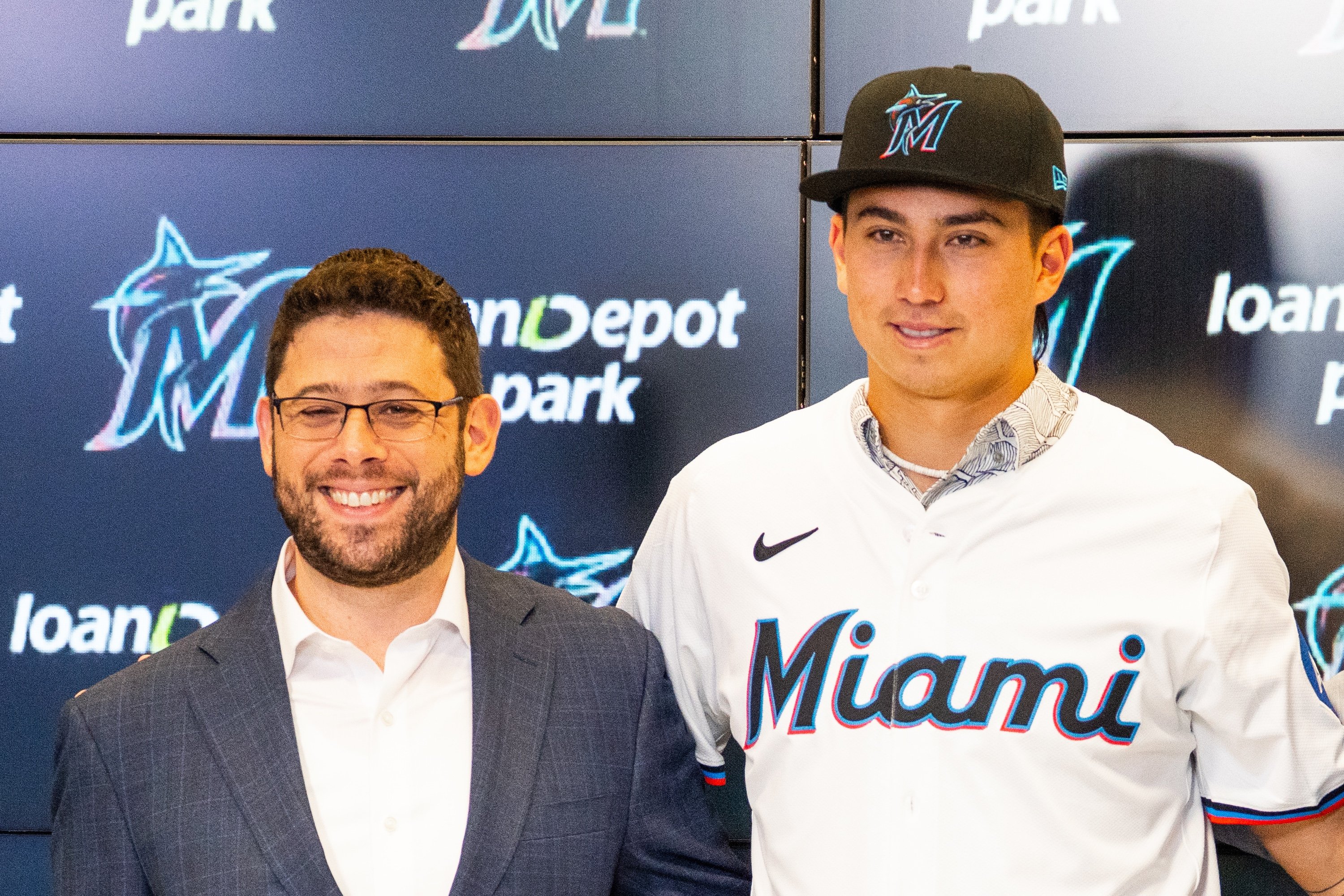 It was a unique year for the Miami Marlins, who used all of their 2025 MLB Draft selections on college players. With many of the draftees set to make their professional debuts any day now, I've highlighted the five best picks that the Marlins made, based on value or sheer player evaluation. 1. SS/3B Aiva Arquette (Round 1) The Marlins' first selection of the draft may have been one of the better value selections in the whole draft. Aiva Arquette who ranked second on the Fish On First big board, and the top rated college bat in the draft by most insiders and scouts. Arquette is a lanky shortstop who most likely will move over to 3rd base as his career continues. With the bat Arquette possess real 60-grade pop, the Hawaiian native does have above-average amount of chase in his profile, but is able to mitigate the aggressive approach with his long arms and great hand-eye coordination to make contact in all quadrants of the zone. Arquette has a expected of .570 and higher vs fastballs 93+ or more and slugs well vs off-speed. The first-rounder has shown few holes in his hitting at the college level. He'll have a chance to through the minors in a way that has become increasingly common across baseball, but rare for Marlins prospects. 2. INF Drew Faurot (Round 4) Drew Faurot was the second of three Florida State teammates selected by the Marlins. Faurot, who ranked 131st on the FOF big board, brings infield pop and good infield defense. In 2025, Faurot slugged .564 with 16 home runs. He is a power threat from both sides of the plate, with a bit better feel from the left side. After swing mechanic changes, Faurot was able to put together the best season of his college career with the Noles. What makes Faurot stand out as a prospect is the projection as a legitimate powerful, bat-first infielder in the pros. He must refine his approach throughout the minor leagues—he did major damage vs fastballs, but lacked the ability to make contact with offspeed. 3. LHP Joey Volini (Round 6) The final Nole selected is the big 6'4" lefty. Joey Volini in 2025 had a 3.50 ERA, 10.8 K/9, and a 2.6 BB/9 in 87.1 IP. Volini fills up the strike zone and has multiple solid offspeed offerings. His fastball is not electric, but the deception and size of Volini makes it play up. The pitchability is present. Volini has the upside of a No. 4/No. 5 starter in the big leagues if the Marlins are able to squeeze extra velocity out of his fastball. 4. UTIL Jake McCutcheon (Round 10) Missouri Valley Conference product Jake McCutcheon found his power stroke this season. In his first two years of college ball, McCutcheon never hit more than one home run in a season; this year, he hit 15. The lefty had a slash line of .358/.444/.647. Where on the diamond McCutcheon plays is a different story. He may stick in the infield at second base, or move to a corner outfield spot. Either way, the Marlins acquired a potential under-the-radar bat with utility upside in the 10th round. 5. LHP RJ Shunck (Round 16) The Marlins in the 16th round selected Toledo's RJ Shunck. Another tall lefty, Shunck is the tallest player the Marlins selected, standing at 6'7". Spending most of his 2025 season working out the bullpen, Shunck may have a future starting role in the Marlins org. The Ohio native would need to add additional pitches to his arsenal, which currently consists of a sinker, slider, and occasionally a cutter. There is big stuff with Shunck. If he is unable to put it all together as a starter, he could fly through the minor leagues as a reliever.
-
- 2
-
-
- aiva arquette
- drew faurot
- (and 4 more)
-
It was a unique year for the Miami Marlins, who used all of their 2025 MLB Draft selections on college players. With many of the draftees set to make their professional debuts any day now, I've highlighted the five best picks that the Marlins made, based on value or sheer player evaluation. 1. SS/3B Aiva Arquette (Round 1) The Marlins' first selection of the draft may have been one of the better value selections in the whole draft. Aiva Arquette who ranked second on the Fish On First big board, and the top rated college bat in the draft by most insiders and scouts. Arquette is a lanky shortstop who most likely will move over to 3rd base as his career continues. With the bat Arquette possess real 60-grade pop, the Hawaiian native does have above-average amount of chase in his profile, but is able to mitigate the aggressive approach with his long arms and great hand-eye coordination to make contact in all quadrants of the zone. Arquette has a expected of .570 and higher vs fastballs 93+ or more and slugs well vs off-speed. The first-rounder has shown few holes in his hitting at the college level. He'll have a chance to through the minors in a way that has become increasingly common across baseball, but rare for Marlins prospects. 2. INF Drew Faurot (Round 4) Drew Faurot was the second of three Florida State teammates selected by the Marlins. Faurot, who ranked 131st on the FOF big board, brings infield pop and good infield defense. In 2025, Faurot slugged .564 with 16 home runs. He is a power threat from both sides of the plate, with a bit better feel from the left side. After swing mechanic changes, Faurot was able to put together the best season of his college career with the Noles. What makes Faurot stand out as a prospect is the projection as a legitimate powerful, bat-first infielder in the pros. He must refine his approach throughout the minor leagues—he did major damage vs fastballs, but lacked the ability to make contact with offspeed. 3. LHP Joey Volini (Round 6) The final Nole selected is the big 6'4" lefty. Joey Volini in 2025 had a 3.50 ERA, 10.8 K/9, and a 2.6 BB/9 in 87.1 IP. Volini fills up the strike zone and has multiple solid offspeed offerings. His fastball is not electric, but the deception and size of Volini makes it play up. The pitchability is present. Volini has the upside of a No. 4/No. 5 starter in the big leagues if the Marlins are able to squeeze extra velocity out of his fastball. 4. UTIL Jake McCutcheon (Round 10) Missouri Valley Conference product Jake McCutcheon found his power stroke this season. In his first two years of college ball, McCutcheon never hit more than one home run in a season; this year, he hit 15. The lefty had a slash line of .358/.444/.647. Where on the diamond McCutcheon plays is a different story. He may stick in the infield at second base, or move to a corner outfield spot. Either way, the Marlins acquired a potential under-the-radar bat with utility upside in the 10th round. 5. LHP RJ Shunck (Round 16) The Marlins in the 16th round selected Toledo's RJ Shunck. Another tall lefty, Shunck is the tallest player the Marlins selected, standing at 6'7". Spending most of his 2025 season working out the bullpen, Shunck may have a future starting role in the Marlins org. The Ohio native would need to add additional pitches to his arsenal, which currently consists of a sinker, slider, and occasionally a cutter. There is big stuff with Shunck. If he is unable to put it all together as a starter, he could fly through the minor leagues as a reliever. View full article
-
 Ryan Gusto was the headline piece that the Marlins received when sending Jesús Sánchez to Houston on Thursday. Gusto, who is 26, made his MLB debut with the Astros this year. So far in 24 total appearances (14 starts), Gusto has put up a 4.92 ERA, 1.48 WHIP, and 4.11 FIP in 86 innings. On the surface, his numbers have not been impressive. What made Gusto attractive to the Marlins? His six years of control, ability to command the strike zone, deep arsenal, and underlying individual pitch metrics. There is a lot of untapped potential here. Gusto comes to Miami will sizable platoon splits. He sets up on the middle part of the rubber and then cuts over to the right side of the mound, releasing the ball nearly pointing at the right-handed batter's box. It's a deceptive look that has helped him hold RHB to a .345 slugging percentage. He confidently fills up the zone against them (4.3% walk rate), but maybe a bit too confidently. Throwing in the middle of the zone still leaves him susceptible to damage. Look how good he is when commanding just off the edges: Breaking down the arsenal, Gusto throws seven pitches: four-seam fastball, sinker, cutter, changeup, slider, sweeper, and curveball. Five of those pitches currently have whiff rates above 22%. Interestingly, Gusto becomes the third Marlins pitcher on the 40-man roster who throws three different types of fastballs, joining Calvin Faucher and Cal Quantrill, This is a growing trend around the league, as having more pitches allows a pitcher to sequence more effectively vs. righties and lefties. According to the FanGraphs stuff+ model, Gusto has three above-average offerings—the four-seam (106 Stf+), sinker (109 Stf+), and slider (110 Stf+). I foresee the Fish cutting down on Gusto's four-seam fastball and increasing the usage on other pitches. His four-seam does have intrigue and works effectively at the top of the zone. So far this season in the big leagues, he's been averaging 94.1 mph and touching 97 mph, and it has gotten a 30.4 CSW%, which ranks in the 80th percentile. Gusto pounds the fastball high 65.8% of the time, 92nd percentile in HiLoc% among all four-seamers. It plays well with his above-average vert of 17 inches and low VAA (-4.33). With natural cut (6.1 inches of horizontal movement), this pitch has great results vs. righties (.119 xAVG, .161 xWOBA, 2.3 barrel%, and 30.3 CSW%). NHlNUW9fWGw0TUFRPT1fVWxWVlVWSldBQWNBVzFvR1VRQUhWRlFFQUFBTkFnVUFCRndCVVFjRkJ3RlZCVmND.mp4 Gusto mixes up his arsenal depending on the handedness of the batter. He uses his cutter and four-seam nearly evenly, but elects to throw his changeup and curveball mainly to lefties, and the sinker, sweeper, and slider to righties. Gusto's changeup seemingly has the most potential as it has been highly effective vs. lefties. It has posted an above-average 54.2 GB% and a low hard-hit% of 20.8%. He throws it hard—88 mph on average—with good spin. This is a pitch that may see a increase in its usage. It may fair well vs. righties as well due to its characteristics. TzBsWGxfWGw0TUFRPT1fVlFFQVZWSURVMVFBQVZFSEFnQUhBQVJVQUFOUUFsUUFBRmNGVWdKUkNRRUJBQVlF.mp4 Gusto's curveball and sweeper have both had mixed results. The curveball has been hit hard in the air too often with a 56.8 hard-hit%, and .525 xSLG. It has a average exit velocity of 92 mph. The placement of the curveball is in the zone too often (44% zone rate). Gusto may look to change the location of the pitch, or perhaps he just had trouble commanding it. In either case, there is reason to believe this pitch should see its usage dropped. NHlNUW9fWGw0TUFRPT1fQmdFRVhWd0RVbFlBVzFFTEF3QUhWUUplQUFNQ0FWTUFVMWRSQlZaV1ZBRmNCQUFB.mp4 The sweeper has had slightly better results, but a shocking .629 xSLG because of its 41.9% fly ball rate. Like the curveball, the sweeper has caught the hittable areas of the zone too often. He gets solid outcomes when throwing it low and to the arm side. With other pitchers, the Marlins have successfully introduced/refined their sweepers. In Gusto's case, the keys will be location and adding extra depth on the pitch. Gusto has also experimented with a tighter slider, that moves horizontally, like his sweeper, but is thrown harder. This pitch has only been thrown 2% of the time, but has shown some promise vs. right-handed hitters. It appears in its low usage that Gusto has better control of the pitch and doesn't throw it in undesirable locations. The Marlins may up his usage of it. SzRsMGxfWGw0TUFRPT1fRGxOWFZ3VlNYMU1BV2dBQ0F3QUhCMU5XQUFOUkFsTUFCRlZUVWdOUkNWVUdCd0pY.mp4 Lastly, Gusto's cutter and sinker have been poor. Both pitches currently have a minus-3 pitch value, according to Baseball Savant. The cutter averages 89 mph and doesn't have much movement. It has a 65.7% hard-hit rate and .393 xwOBA, getting a 25% whiff rate. He has thrown it in the strike zone a staggering 64% of the time, ranking in the 95th percentile of cutters. This level of exposure may be leading to the high level of damage on the pitch. It's another opportunity for the Marlins to either change the intended location of the pitch, or lessen the usage of it in general. TkE5WTVfWGw0TUFRPT1fQjFOUVhBRlNBMUVBQ0ZCUlZ3QUhBQUJYQUFNREFsUUFBRkJRQmdVRVZ3RldBUU5T.mp4 The sinker, which is thrown mainly to righties, has worked as intended to generate ground balls and a good amount of whiff (15.2% so far). The pitch has the lowest fly ball rate in his arsenal besides the lesser utilized slider. It has been pounded by opponents, with a 13.3% barrel rate and 45.2 hard-hit%. Like his other pitches, it has a high zone rate and gets a lot of contact. TkE5WTVfWGw0TUFRPT1fQVFJSFVGUUhVd01BVzFFSEFBQUhBbGNDQUZrTUFnTUFWRklOQmxaV1VnWmNBRkFG.mp4 Overall, the Marlins identified a young, controllable starting pitcher with the upside of a No. 3/No. 4 and the floor of a swingman. Ryan Gusto will certainly see pitch design and pitch mix changes, hopefully benefiting like many other Marlins have this season under the tutelage of pitching coach Daniel Moskos and director of pitching Bill Hezel. They have a knack for utilizing deep arsenals to create advantageous pitch sequencing methods. Gusto should fit right in.
 -
Ryan Gusto was the headline piece that the Marlins received when sending Jesús Sánchez to Houston on Thursday. Gusto, who is 26, made his MLB debut with the Astros this year. So far in 24 total appearances (14 starts), Gusto has put up a 4.92 ERA, 1.48 WHIP, and 4.11 FIP in 86 innings. On the surface, his numbers have not been impressive. What made Gusto attractive to the Marlins? His six years of control, ability to command the strike zone, deep arsenal, and underlying individual pitch metrics. There is a lot of untapped potential here. Gusto comes to Miami will sizable platoon splits. He sets up on the middle part of the rubber and then cuts over to the right side of the mound, releasing the ball nearly pointing at the right-handed batter's box. It's a deceptive look that has helped him hold RHB to a .345 slugging percentage. He confidently fills up the zone against them (4.3% walk rate), but maybe a bit too confidently. Throwing in the middle of the zone still leaves him susceptible to damage. Look how good he is when commanding just off the edges: Breaking down the arsenal, Gusto throws seven pitches: four-seam fastball, sinker, cutter, changeup, slider, sweeper, and curveball. Five of those pitches currently have whiff rates above 22%. Interestingly, Gusto becomes the third Marlins pitcher on the 40-man roster who throws three different types of fastballs, joining Calvin Faucher and Cal Quantrill, This is a growing trend around the league, as having more pitches allows a pitcher to sequence more effectively vs. righties and lefties. According to the FanGraphs stuff+ model, Gusto has three above-average offerings—the four-seam (106 Stf+), sinker (109 Stf+), and slider (110 Stf+). I foresee the Fish cutting down on Gusto's four-seam fastball and increasing the usage on other pitches. His four-seam does have intrigue and works effectively at the top of the zone. So far this season in the big leagues, he's been averaging 94.1 mph and touching 97 mph, and it has gotten a 30.4 CSW%, which ranks in the 80th percentile. Gusto pounds the fastball high 65.8% of the time, 92nd percentile in HiLoc% among all four-seamers. It plays well with his above-average vert of 17 inches and low VAA (-4.33). With natural cut (6.1 inches of horizontal movement), this pitch has great results vs. righties (.119 xAVG, .161 xWOBA, 2.3 barrel%, and 30.3 CSW%). NHlNUW9fWGw0TUFRPT1fVWxWVlVWSldBQWNBVzFvR1VRQUhWRlFFQUFBTkFnVUFCRndCVVFjRkJ3RlZCVmND.mp4 Gusto mixes up his arsenal depending on the handedness of the batter. He uses his cutter and four-seam nearly evenly, but elects to throw his changeup and curveball mainly to lefties, and the sinker, sweeper, and slider to righties. Gusto's changeup seemingly has the most potential as it has been highly effective vs. lefties. It has posted an above-average 54.2 GB% and a low hard-hit% of 20.8%. He throws it hard—88 mph on average—with good spin. This is a pitch that may see a increase in its usage. It may fair well vs. righties as well due to its characteristics. TzBsWGxfWGw0TUFRPT1fVlFFQVZWSURVMVFBQVZFSEFnQUhBQVJVQUFOUUFsUUFBRmNGVWdKUkNRRUJBQVlF.mp4 Gusto's curveball and sweeper have both had mixed results. The curveball has been hit hard in the air too often with a 56.8 hard-hit%, and .525 xSLG. It has a average exit velocity of 92 mph. The placement of the curveball is in the zone too often (44% zone rate). Gusto may look to change the location of the pitch, or perhaps he just had trouble commanding it. In either case, there is reason to believe this pitch should see its usage dropped. NHlNUW9fWGw0TUFRPT1fQmdFRVhWd0RVbFlBVzFFTEF3QUhWUUplQUFNQ0FWTUFVMWRSQlZaV1ZBRmNCQUFB.mp4 The sweeper has had slightly better results, but a shocking .629 xSLG because of its 41.9% fly ball rate. Like the curveball, the sweeper has caught the hittable areas of the zone too often. He gets solid outcomes when throwing it low and to the arm side. With other pitchers, the Marlins have successfully introduced/refined their sweepers. In Gusto's case, the keys will be location and adding extra depth on the pitch. Gusto has also experimented with a tighter slider, that moves horizontally, like his sweeper, but is thrown harder. This pitch has only been thrown 2% of the time, but has shown some promise vs. right-handed hitters. It appears in its low usage that Gusto has better control of the pitch and doesn't throw it in undesirable locations. The Marlins may up his usage of it. SzRsMGxfWGw0TUFRPT1fRGxOWFZ3VlNYMU1BV2dBQ0F3QUhCMU5XQUFOUkFsTUFCRlZUVWdOUkNWVUdCd0pY.mp4 Lastly, Gusto's cutter and sinker have been poor. Both pitches currently have a minus-3 pitch value, according to Baseball Savant. The cutter averages 89 mph and doesn't have much movement. It has a 65.7% hard-hit rate and .393 xwOBA, getting a 25% whiff rate. He has thrown it in the strike zone a staggering 64% of the time, ranking in the 95th percentile of cutters. This level of exposure may be leading to the high level of damage on the pitch. It's another opportunity for the Marlins to either change the intended location of the pitch, or lessen the usage of it in general. TkE5WTVfWGw0TUFRPT1fQjFOUVhBRlNBMUVBQ0ZCUlZ3QUhBQUJYQUFNREFsUUFBRkJRQmdVRVZ3RldBUU5T.mp4 The sinker, which is thrown mainly to righties, has worked as intended to generate ground balls and a good amount of whiff (15.2% so far). The pitch has the lowest fly ball rate in his arsenal besides the lesser utilized slider. It has been pounded by opponents, with a 13.3% barrel rate and 45.2 hard-hit%. Like his other pitches, it has a high zone rate and gets a lot of contact. TkE5WTVfWGw0TUFRPT1fQVFJSFVGUUhVd01BVzFFSEFBQUhBbGNDQUZrTUFnTUFWRklOQmxaV1VnWmNBRkFG.mp4 Overall, the Marlins identified a young, controllable starting pitcher with the upside of a No. 3/No. 4 and the floor of a swingman. Ryan Gusto will certainly see pitch design and pitch mix changes, hopefully benefiting like many other Marlins have this season under the tutelage of pitching coach Daniel Moskos and director of pitching Bill Hezel. They have a knack for utilizing deep arsenals to create advantageous pitch sequencing methods. Gusto should fit right in. View full article
-
Sandy Alcantara is slated to take the mound at Busch Stadium on Tuesday night for the 159th start of his Miami Marlins career. It could very well be the final time he wears this uniform. With the MLB trade deadline looming on Thursday and the Marlins not yet in true postseason contention, Alcantara is reportedly one of the most popular names on the market. Alcantara has struggled this season (6.66 ERA and 1.43 WHIP in 104.0 IP), but industry insiders still estimate that the former NL Cy Young Award winner has substantial value. He's been gradually regaining his command as gets further away from Tommy John surgery and there are no concerns about his arm health with a fastball that's sitting above 97 mph. His contract provides two years of club control after this season at prices that would be considered team-friendly if he simply performs to his career averages moving forward. We believe these are the sort of prospect packages that deadline buyers would be willing to offer for Miami's consideration. Toronto Blue Jays receive: Sandy Alcantara and $5.6 million cash Miami Marlins receive: 3B Orelvis Martínez, LHP Kendry Rojas, RHP Gage Stanifer and SS Juan Sánchez The proposed cash would cover what Sandy is owed for the rest of the 2025 season, allowing the Blue Jays to add payroll in other transactions as they continue their run for an AL East title. First, Orelvis Martínez is a former Top 100 MLB prospect who has struggled to find consistent playing time in the major leagues. Martinez was suspended in the middle of his 2024 campaign for PEDs. He slashed .267/.346/.523 with a 123 wRC+ that year in Triple-A. He's still in AAA this season and it's been ugly statistically, hitting under .200, although his BABIP is unsustainably low at .235. The third baseman brings loud pop and perhaps just needs a change of scenery the same way much like afterthought turned All-Star Kyle Stowers did at last year's deadline. eUwxNkdfV0ZRVkV3dEdEUT09X0JnSlFYUUZYVTFFQVhBUUFCd0FIQWxOVkFBTUdBbElBQXdFQUJRZFJBbEJUVXdOVw==.mp4 Kendry Rojas has risen up prospect boards in 2025. The Cuban native is a lefty who sits mid-90s. Rojas has a advanced feel for throwing strikes, with a repeatable delivery. Rojas' best pitch is his changeup. He throws a slider as well. As long as he stays healthy and collects innings, Rojas should be in the majors by mid-to-late 2026. A 19th-round draft pick in 2022, Gage Stanifer has made his way to High-A. He brings loud stuff to the table—a fastball with a lot of ride and 17-20 inches of induced vertical break, plus a gyro slider. Nobody can question the arm talent. The problem with Stanifer has been the control. In 70 innings this season between Low-A and High-A, he has posted a 13.1% walk rate. He's been extremely effective in spite of that thanks to a 38.1% strikeout rate and no home runs allowed. There is a lot of reliever risk in Stanifer, but if the Marlins can shore up the command problems, they got themselves a potential mid-rotation arm. Lastly, Juan Sánchez is a widely unknown Dominican Summer League prospect who signed with Toronto earlier this year. Sánchez would be a dart throw in this deal, but has shown some promise with his bat, slashing .340/.451/.560 with a 159 wRC+. Importantly, he gets good lift with a 45.5% fly ball rate to go along with decent contact numbers. Sánchez may not stick at shortstop, but early on, the 17-year-old has shown some skills there. San Diego Padres receive: Sandy Alcantara and Dane Myers Miami Marlins receive: RHP Braden Nett, LHP Boston Bateman, 1B/C Lamar King Jr and SS Brandon Butterworth In this scenario, the Padres would also acquire Dane Myers to add good defense and a decent cheap bat. These teams have a good working relationship, having completed deals at each of the last two trade deadlines as well. Like Kendry Rojas, Brandon Nett has flown up prospect rankings. The 2022 undrafted free agent signed for $10k it's safe to say the Padres found a diamond in the rough. Nett has great stuff and a deep arsenal. He brings a plus fastball, slider and underrated cutter along with a curveball and changeup. The flaw for Nett is his command—he has had trouble locating pitches in the zone. Rounding that out would be an additional boon to his prospect status. Boston Bateman came to the Padres with more pedigree, selected in second round of the 2024 draft out of high school. Bateman is a tall glass of water standing at 6'8". Assigned to Low-A, he has a 25.8% K-rate and 8.6% walk rate with a 4.08 ERA, although his FIP is 3.25. Impressively, Bateman has only allowed one home run in 68 ⅓ innings. Only 19 years old, the California native's upside isn't far behind current Marlins lefties Thomas White and Robby Snelling. Both Lamar King Jr. and Brandon Butterworth have had strong seasons in 2025. King was a 2022 fourth-round pick out of high school. Regarded as a "raw" prospect at the start of his pro career, major swing adjustments have King looking ready for higher level competition. He currently has a 121 wRC+. He lacks a true defensive home and profiles best at first base or DH long term. A 12th-rounder last season out of NC State, Butterworth stuck out to scouts with his glove, but seemingly has out-performed with his bat. In 87 games, he has hit 11 homers in A+ and is slashing .262/.324/.455 with a 113 wRC+ and .359 wOBA. Unranked on many prospect lists for the Padres, Butterworth has an up arrow next to his name. Chicago Cubs receive: Sandy Alcantara Miami Marlins receive: OF Owen Caissie and SS Juan Tomás The Marlins have specifically asked about Owen Caissie in Edward Cabrera negotiations. If these teams cannot find common ground on Cabrera's worth, maybe the focus shifts to Alcantara. Through 81 games at Triple-A this season, Caissie is slashing .278/.377/.563 with 20 home runs, 46 RBI, and a 137 wRC+. The one concern is his 29.3% strikeout rate—slightly up from last season—but he’s also walking at an encouraging 12.8% clip. With nearly two full years of AAA experience under his belt, Caissie appears ready for the next step. If the Marlins end up moving on from Jesús Sánchez in a separate deal, Caissie would have a path to be called up immediately and take over in right field. Juan Tomás is a name that should sound familiar to Marlins fans who follow the international market. He was once expected to sign with Miami, but instead inked a $1.1 million deal with the Cubs. Through 31 games in the Dominican Summer League, the 17-year-old infielder is slashing just .200/.371/.337 with one home run, 16 RBI and a 93 wRC+. However, Tomás is trending in the right direction after an early-season slump and has been walking at an impressive 21.8% rate, showing an advanced eye for his age. The tools are there, including an above-average arm. Tomás might outgrow shortstop as he fills out his 6'2" frame. That said, third base could be a natural fit. Trading one of the most accomplished pitchers in franchise history is never easy. But in the Marlins’ case, they can feel comfortable about the arms in their prospect pipeline and others due back from injuries in 2026. The Cubs are in need of rotation help, and Alcantara would give their pitching staff a major boost as they gear up for what they hope will be a deep postseason run. View full article
-
 Sandy Alcantara is slated to take the mound at Busch Stadium on Tuesday night for the 159th start of his Miami Marlins career. It could very well be the final time he wears this uniform. With the MLB trade deadline looming on Thursday and the Marlins not yet in true postseason contention, Alcantara is reportedly one of the most popular names on the market. Alcantara has struggled this season (6.66 ERA and 1.43 WHIP in 104.0 IP), but industry insiders still estimate that the former NL Cy Young Award winner has substantial value. He's been gradually regaining his command as gets further away from Tommy John surgery and there are no concerns about his arm health with a fastball that's sitting above 97 mph. His contract provides two years of club control after this season at prices that would be considered team-friendly if he simply performs to his career averages moving forward. We believe these are the sort of prospect packages that deadline buyers would be willing to offer for Miami's consideration. Toronto Blue Jays receive: Sandy Alcantara and $5.6 million cash Miami Marlins receive: 3B Orelvis Martínez, LHP Kendry Rojas, RHP Gage Stanifer and SS Juan Sánchez The proposed cash would cover what Sandy is owed for the rest of the 2025 season, allowing the Blue Jays to add payroll in other transactions as they continue their run for an AL East title. First, Orelvis Martínez is a former Top 100 MLB prospect who has struggled to find consistent playing time in the major leagues. Martinez was suspended in the middle of his 2024 campaign for PEDs. He slashed .267/.346/.523 with a 123 wRC+ that year in Triple-A. He's still in AAA this season and it's been ugly statistically, hitting under .200, although his BABIP is unsustainably low at .235. The third baseman brings loud pop and perhaps just needs a change of scenery the same way much like afterthought turned All-Star Kyle Stowers did at last year's deadline. eUwxNkdfV0ZRVkV3dEdEUT09X0JnSlFYUUZYVTFFQVhBUUFCd0FIQWxOVkFBTUdBbElBQXdFQUJRZFJBbEJUVXdOVw==.mp4 Kendry Rojas has risen up prospect boards in 2025. The Cuban native is a lefty who sits mid-90s. Rojas has a advanced feel for throwing strikes, with a repeatable delivery. Rojas' best pitch is his changeup. He throws a slider as well. As long as he stays healthy and collects innings, Rojas should be in the majors by mid-to-late 2026. A 19th-round draft pick in 2022, Gage Stanifer has made his way to High-A. He brings loud stuff to the table—a fastball with a lot of ride and 17-20 inches of induced vertical break, plus a gyro slider. Nobody can question the arm talent. The problem with Stanifer has been the control. In 70 innings this season between Low-A and High-A, he has posted a 13.1% walk rate. He's been extremely effective in spite of that thanks to a 38.1% strikeout rate and no home runs allowed. There is a lot of reliever risk in Stanifer, but if the Marlins can shore up the command problems, they got themselves a potential mid-rotation arm. Lastly, Juan Sánchez is a widely unknown Dominican Summer League prospect who signed with Toronto earlier this year. Sánchez would be a dart throw in this deal, but has shown some promise with his bat, slashing .340/.451/.560 with a 159 wRC+. Importantly, he gets good lift with a 45.5% fly ball rate to go along with decent contact numbers. Sánchez may not stick at shortstop, but early on, the 17-year-old has shown some skills there. San Diego Padres receive: Sandy Alcantara and Dane Myers Miami Marlins receive: RHP Braden Nett, LHP Boston Bateman, 1B/C Lamar King Jr and SS Brandon Butterworth In this scenario, the Padres would also acquire Dane Myers to add good defense and a decent cheap bat. These teams have a good working relationship, having completed deals at each of the last two trade deadlines as well. Like Kendry Rojas, Brandon Nett has flown up prospect rankings. The 2022 undrafted free agent signed for $10k it's safe to say the Padres found a diamond in the rough. Nett has great stuff and a deep arsenal. He brings a plus fastball, slider and underrated cutter along with a curveball and changeup. The flaw for Nett is his command—he has had trouble locating pitches in the zone. Rounding that out would be an additional boon to his prospect status. Boston Bateman came to the Padres with more pedigree, selected in second round of the 2024 draft out of high school. Bateman is a tall glass of water standing at 6'8". Assigned to Low-A, he has a 25.8% K-rate and 8.6% walk rate with a 4.08 ERA, although his FIP is 3.25. Impressively, Bateman has only allowed one home run in 68 ⅓ innings. Only 19 years old, the California native's upside isn't far behind current Marlins lefties Thomas White and Robby Snelling. Both Lamar King Jr. and Brandon Butterworth have had strong seasons in 2025. King was a 2022 fourth-round pick out of high school. Regarded as a "raw" prospect at the start of his pro career, major swing adjustments have King looking ready for higher level competition. He currently has a 121 wRC+. He lacks a true defensive home and profiles best at first base or DH long term. A 12th-rounder last season out of NC State, Butterworth stuck out to scouts with his glove, but seemingly has out-performed with his bat. In 87 games, he has hit 11 homers in A+ and is slashing .262/.324/.455 with a 113 wRC+ and .359 wOBA. Unranked on many prospect lists for the Padres, Butterworth has an up arrow next to his name. Chicago Cubs receive: Sandy Alcantara Miami Marlins receive: OF Owen Caissie and SS Juan Tomás The Marlins have specifically asked about Owen Caissie in Edward Cabrera negotiations. If these teams cannot find common ground on Cabrera's worth, maybe the focus shifts to Alcantara. Through 81 games at Triple-A this season, Caissie is slashing .278/.377/.563 with 20 home runs, 46 RBI, and a 137 wRC+. The one concern is his 29.3% strikeout rate—slightly up from last season—but he’s also walking at an encouraging 12.8% clip. With nearly two full years of AAA experience under his belt, Caissie appears ready for the next step. If the Marlins end up moving on from Jesús Sánchez in a separate deal, Caissie would have a path to be called up immediately and take over in right field. Juan Tomás is a name that should sound familiar to Marlins fans who follow the international market. He was once expected to sign with Miami, but instead inked a $1.1 million deal with the Cubs. Through 31 games in the Dominican Summer League, the 17-year-old infielder is slashing just .200/.371/.337 with one home run, 16 RBI and a 93 wRC+. However, Tomás is trending in the right direction after an early-season slump and has been walking at an impressive 21.8% rate, showing an advanced eye for his age. The tools are there, including an above-average arm. Tomás might outgrow shortstop as he fills out his 6'2" frame. That said, third base could be a natural fit. Trading one of the most accomplished pitchers in franchise history is never easy. But in the Marlins’ case, they can feel comfortable about the arms in their prospect pipeline and others due back from injuries in 2026. The Cubs are in need of rotation help, and Alcantara would give their pitching staff a major boost as they gear up for what they hope will be a deep postseason run.
 -
Would packaging reliever with Edward Cabrera get Cubs trade done?
Sean McCormack posted an article in Marlins
 Along with Sandy Alcantara, fellow flame-throwing righty Edward Cabrera is the hottest name on the trade block for the Miami Marlins. Cabrera has put up the best and most consistent season of his major league career thus far. With a cost-effective salary, high upside and three-plus years of club control remaining, Miami would only move him at this week's trade deadline if a nice prospect package is involved. The current asking price for Cabrera is understandably steep. Matthew Trueblood of North Side Baseball reports that the Chicago Cubs prefer him over any of the other controllable starters on the trade market, but the Marlins are insisting that both Owen Caissie and Jaxon Wiggins be in the deal, and the Cubs aren't comfortable with that. "The two teams are in a staring contest, each hoping the other blinks first," Trueblood writes. A slight adjustment may be needed to satisfy both sides. Here's a five-player mock trade idea that gives the Marlins a balance of surefire big league production and upside, while positioning the Cubs to be true championship contenders in 2025. Cubs receive: Edward Cabrera and Anthony Bender Marlins receive: 2B Jefferson Rojas, RHP Jaxon Wiggins and RHP Nick Dean Part of Cabrera's appeal to the Cubs is the belief that "his stuff would play even better in front of their strong defensive group," according to Trueblood. That should apply to Anthony Bender as well. Although Bender is posting the lowest strikeout rate of his career (19.9 K%), the sinkerballer has continued inducing lots of ground balls that Gold Glovers like Dansby Swanson and Nico Hoerner should consistently convert into outs. Bender has gone 14 straight relief appearances without allowing a run. He is under club control through 2027 via arbitration. Instead of Caissie, Jefferson Rojas is the headliner of this trade package going back to the Marlins. Both Baseball America and MLB Pipeline rate him as a Top 100 MLB prospect. The 20-year-old second baseman has already reached Double-A. In High-A in 2025, Rojas slashed .278/.379/.492 with a 138 wRC+ and .402 wOBA, posting great numbers while being one of the youngest players at that level. His bat has cooled off in a nine-game sample since being promoted (.189/.279/.270 with a 67 wRC+ and .271 wOBA). Rojas projects to stay at second base and doesn't have many tools besides his bat, but the combination of pop and approach make him a future everyday player at the major league level. OTc3NmxfWGw0TUFRPT1fQmdaWlVWY0ZWZ1FBQ0ZFRFVBQUVBUUZWQUZFRlV3SUFWRlVOVTFjRUFBUUJCd0lI.mp4.ddbde6508872ac4cbaa280a649c0cc4d.mp4 Jaxon Wiggins is a 2023 second-rounder. The 6'6", hard-throwing righty has a 2.02 ERA with a 2.58 FIP this season. His K-rate has actually increased since a midseason promotion to AA, from 29.5% to 33.3%. Wiggins is best known for his elite fastball and electric slider. Poor control held Wiggins back last season. There is also elevated injury risk—he underwent Tommy John surgery in college and has been limited to only two innings since June 20. However, he has the stuff to be a top-end rotation piece if he can handle the zone. The final piece of this deal is right-handed-pitcher Nick Dean. The 24-year-old was drafted in 2023 in the 19th round out of Maryland. Dean's numbers on the surface do not impress—5.13 ERA between A+ and AA this season—but under the hood, his outlook is much brighter with a 2.90 FIP and 21.7 K-BB%. Dean generates soft contact and gets balls on the ground. His fastball only sits low 90s, but he has a plus sweeper and solid changeup. Dean may never amount to much in the big leagues, but there is a chance the righty can be the fifth option in a rotation or at least a spot starter.
- 2 comments
-
- 2
-
-
- edward cabrera
- anthony bender
- (and 1 more)


