



Louis Addeo-Weiss
-
Posts
277 -
Joined
-
Last visited
-
Days Won
49
Content Type
Profiles
Miami Marlins Videos
2026 Miami Marlins Top Prospects Ranking
Miami Marlins Free Agent & Trade Rumors, Notes, & Tidbits
Guides & Resources
News
2025 Miami Marlins Draft Pick Tracker
2026 Miami Marlins Draft Tracker: Picks & Bonuses
Forums
Blogs
Events
Store
Downloads
Gallery
Everything posted by Louis Addeo-Weiss
-
 Making his first Major League start in nearly 21 months against the Pirates on Monday, Eury Pérez appeared to be shaking off the rust one would expect a pitcher coming off Tommy John surgery to have. The results—four runs in three innings of work—were largely a product of tough luck. On a Father's Day Sunday, his second outing, some of the accompanying rust remained, albeit with more of that aforementioned luck. Working around three walks and failing to strike out a hitter for the second time in his brief career, Pérez allowed just one run over four innings in the Marlins' 3-1 victory over the Nationals. "It's another game, another learning experience, trying to get better...I was able to compete inning after inning, despite some traffic," said Pérez through an interpreter. Threatening to score with runners on second and third in the fourth, Pérez nearly ran into a case of deja vu from his previous start in Pittsburgh when a weakly hit ground ball from Alex Call came in his direction. Fortunately, the 22-year-old fielded his position to escape the jam and put a lid on his second outing of the year. In relief of Pérez, the Marlins bullpen fired off five scoreless innings to cap off a weekend where they covered 19 of the team's 27 innings pitched, including multiple-inning efforts Sunday from Lake Bachar and Tyler Phillips. One may argue, though, that the biggest surprise of the day was the work of the recently recalled Freddy Tarnok, who worked a scoreless ninth inning in his Marlins debut for his first career save. In 41 ⅓ innings in AAA spread over 12 appearances (10 starts), Tarnok struggled to the tune of a 4.79 ERA, averaging nearly four walks every nine innings pitched. The 26-year-old right-hander had previously seen big league time with Atlanta and Oakland in 2022 and 2023. Bats Do Just Enough Entering the series averaging four runs a game, Miami averaged six in their sweep of Washington over the weekend. Returning the show of good faith the organization has shown him since receiving regular playing time, Sunday saw Dane Myers put together a three-hit day, punctuated by a second-inning home run off MacKenzie Gore. In 44 plate appearances in June, Myers has hit .366 with a .946 OPS. In the weekend set, Myers went 8-for-13, raising his season average to .333 in the process. Gore, the NL leader in strikeouts entering play, put forth another solid effort, allowing just two runs in six innings of work, striking out five. Gore's 2.89 ERA is 18th among pitchers to throw at least 75 innings so far this season. Despite a hitless day Sunday, Eric Wagaman collected Miami's two additional RBIs on the day, upping his total to eight in the month of June. The win sealed Miami's first sweep since taking the final three games of the 2024 season against the Blue Jays from September 27-29, snapping a stretch of 22 consecutive sweepless series. Miami, now 28-41, handed the Nationals their eighth consecutive loss, falling to 30-41, leaving the Marlins just one game out of a tie for fourth place in the NL East. "I thought we played more complete games here, and that's what it takes to win," noted Clayton McCullough. Looking Ahead The Marlins will return home where they'll start a four-game series against the Phillies on Monday. Sandy Alcantara (3-7, 7.14 ERA) will look to keep his season going in the right direction, pitching to a 1.50 ERA over his last two starts. Mick Abel (1-0, 2.35 ERA), the Phillies third-ranked pitching prospect, will make his fourth career Major League start opposite Alcantara. First pitch from loanDepot park is slated for 6:40 EST. View full article
 -
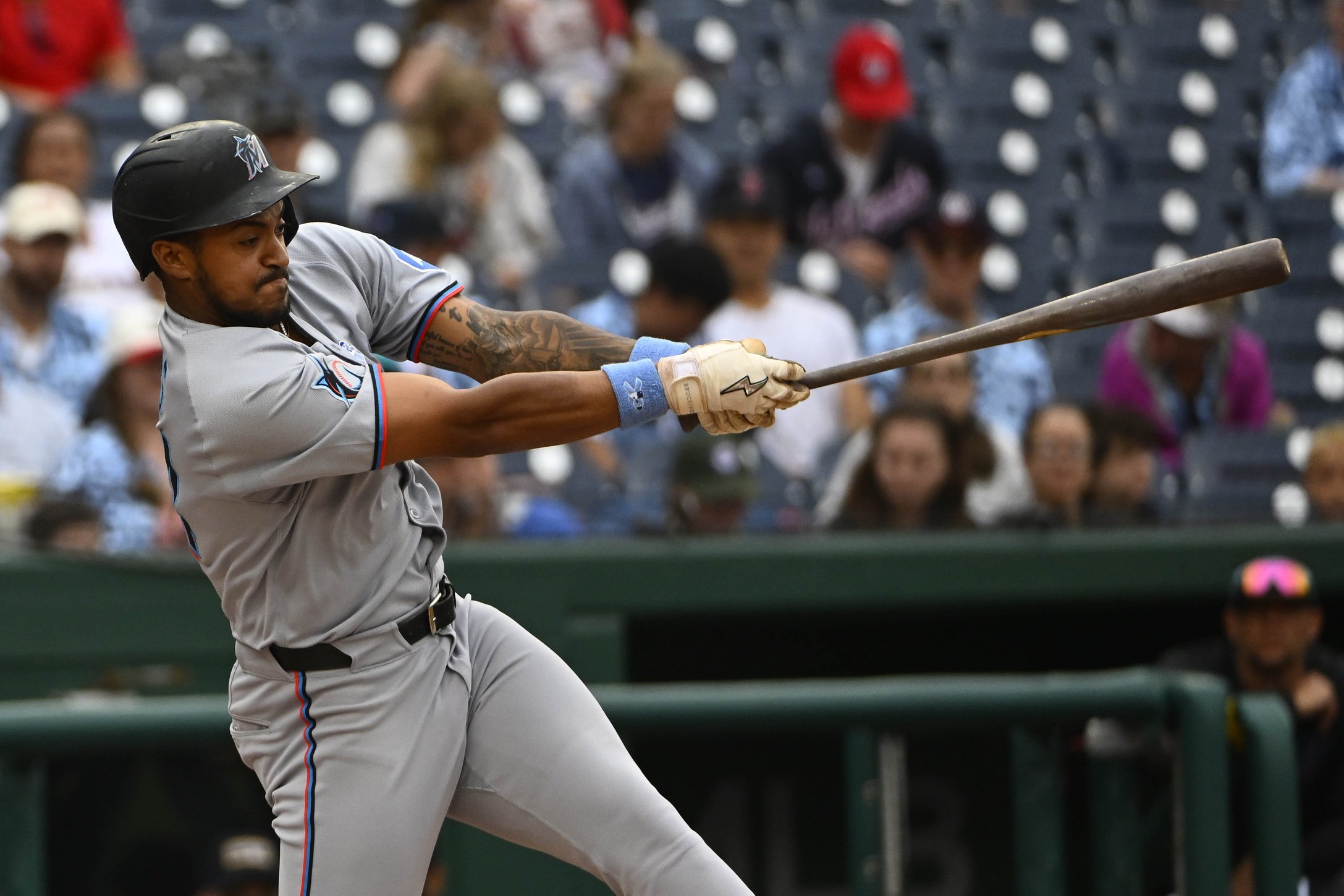 Making his first Major League start in nearly 21 months against the Pirates on Monday, Eury Pérez appeared to be shaking off the rust one would expect a pitcher coming off Tommy John surgery to have. The results—four runs in three innings of work—were largely a product of tough luck. On a Father's Day Sunday, his second outing, some of the accompanying rust remained, albeit with more of that aforementioned luck. Working around three walks and failing to strike out a hitter for the second time in his brief career, Pérez allowed just one run over four innings in the Marlins' 3-1 victory over the Nationals. "It's another game, another learning experience, trying to get better...I was able to compete inning after inning, despite some traffic," said Pérez through an interpreter. Threatening to score with runners on second and third in the fourth, Pérez nearly ran into a case of deja vu from his previous start in Pittsburgh when a weakly hit ground ball from Alex Call came in his direction. Fortunately, the 22-year-old fielded his position to escape the jam and put a lid on his second outing of the year. In relief of Pérez, the Marlins bullpen fired off five scoreless innings to cap off a weekend where they covered 19 of the team's 27 innings pitched, including multiple-inning efforts Sunday from Lake Bachar and Tyler Phillips. One may argue, though, that the biggest surprise of the day was the work of the recently recalled Freddy Tarnok, who worked a scoreless ninth inning in his Marlins debut for his first career save. In 41 ⅓ innings in AAA spread over 12 appearances (10 starts), Tarnok struggled to the tune of a 4.79 ERA, averaging nearly four walks every nine innings pitched. The 26-year-old right-hander had previously seen big league time with Atlanta and Oakland in 2022 and 2023. Bats Do Just Enough Entering the series averaging four runs a game, Miami averaged six in their sweep of Washington over the weekend. Returning the show of good faith the organization has shown him since receiving regular playing time, Sunday saw Dane Myers put together a three-hit day, punctuated by a second-inning home run off MacKenzie Gore. In 44 plate appearances in June, Myers has hit .366 with a .946 OPS. In the weekend set, Myers went 8-for-13, raising his season average to .333 in the process. Gore, the NL leader in strikeouts entering play, put forth another solid effort, allowing just two runs in six innings of work, striking out five. Gore's 2.89 ERA is 18th among pitchers to throw at least 75 innings so far this season. Despite a hitless day Sunday, Eric Wagaman collected Miami's two additional RBIs on the day, upping his total to eight in the month of June. The win sealed Miami's first sweep since taking the final three games of the 2024 season against the Blue Jays from September 27-29, snapping a stretch of 22 consecutive sweepless series. Miami, now 28-41, handed the Nationals their eighth consecutive loss, falling to 30-41, leaving the Marlins just one game out of a tie for fourth place in the NL East. "I thought we played more complete games here, and that's what it takes to win," noted Clayton McCullough. Looking Ahead The Marlins will return home where they'll start a four-game series against the Phillies on Monday. Sandy Alcantara (3-7, 7.14 ERA) will look to keep his season going in the right direction, pitching to a 1.50 ERA over his last two starts. Mick Abel (1-0, 2.35 ERA), the Phillies third-ranked pitching prospect, will make his fourth career Major League start opposite Alcantara. First pitch from loanDepot park is slated for 6:40 EST.
- 1 comment
-
- 1
-

-
- eury perez
- dane myers
- (and 2 more)
-
MIAMI, FL—For many a pitcher, outings that go awry tend to do so on one pitch they "wish they had back." For Ryan Weathers, that pitch was an 87 mph changeup to number 9 hitter Luis Matos that caught too much of the plate. A .147 hitter at the outset of Sunday's contest, Matos sent it over the left field wall for a three-run home run, eventually proving the difference in the 4-2 Giants win over the Marlins. Miami falls to 23-34 with the loss, boasting the second-worst run differential in the National League at negative-79. An Achilles heel of the Marlins pitching staff this season, number 9 hitters have combined for a league-leading .312 BA with a .779 OPS against them in 2025. "The changeup hurt me, but the two at-bats prior hurt me," noted Weathers following his first loss of the season. In his six innings of work on Sunday, Weathers still showed flashes of the pitcher he's been since the start of 2024, striking out seven against three walks while allowing four runs. The 25-year-old touched 99 with his fastball, generating 17 whiffs on the day, including nine on the changeup that eventually accounted for the deciding blow. San Francisco opened the scoring against him with a Wilmer Flores groundout to Xavier Edwards, who made his first start at second base since July 21 last season. Fresh off returning from the injured list, Edwards authored the first five-hit game of his career, going a perfect 5-for-5, raising his season average to .282 in the process. "What a great day," said manager Clayton McCullough, reflecting on what he referred to as "the directness" of Edwards' big day at the plate and at his natural position. "Four of the five line drives were stung well through the middle of the field and the other way...Couple double plays there (at second), quick hands...He looked good." "It just reinforces what I already thought about myself...I know what I'm capable of doing," said Edwards. The sour grapes in Edwards' effort is that it marks just the third time in franchise history—and first time since Dee-Strange Gordon back on April 18, 2015—that a Marlin had a five-hit game in a loss. Miami was previously 21-2 in such games. The Marlins had their chances late, though, tacking on a run in the seventh inning before squandering an opportunity to tack on more, then failing to convert on a bases-loaded opportunity the following inning. In the weekend set, Miami went a collective 3-for-24 (.125 BA) with runners in scoring position. Looking Ahead The Marlins will continue their homestand Monday when they welcome the ill-fated Colorado Rockies. Max Meyer (3-4, 4.53 ERA) will toe the slab for Miami as he goes up against Germán Márquez (1-7, 7.13 ERA). First pitch from loanDepot park is slated for 6:40 EST. View full article
-
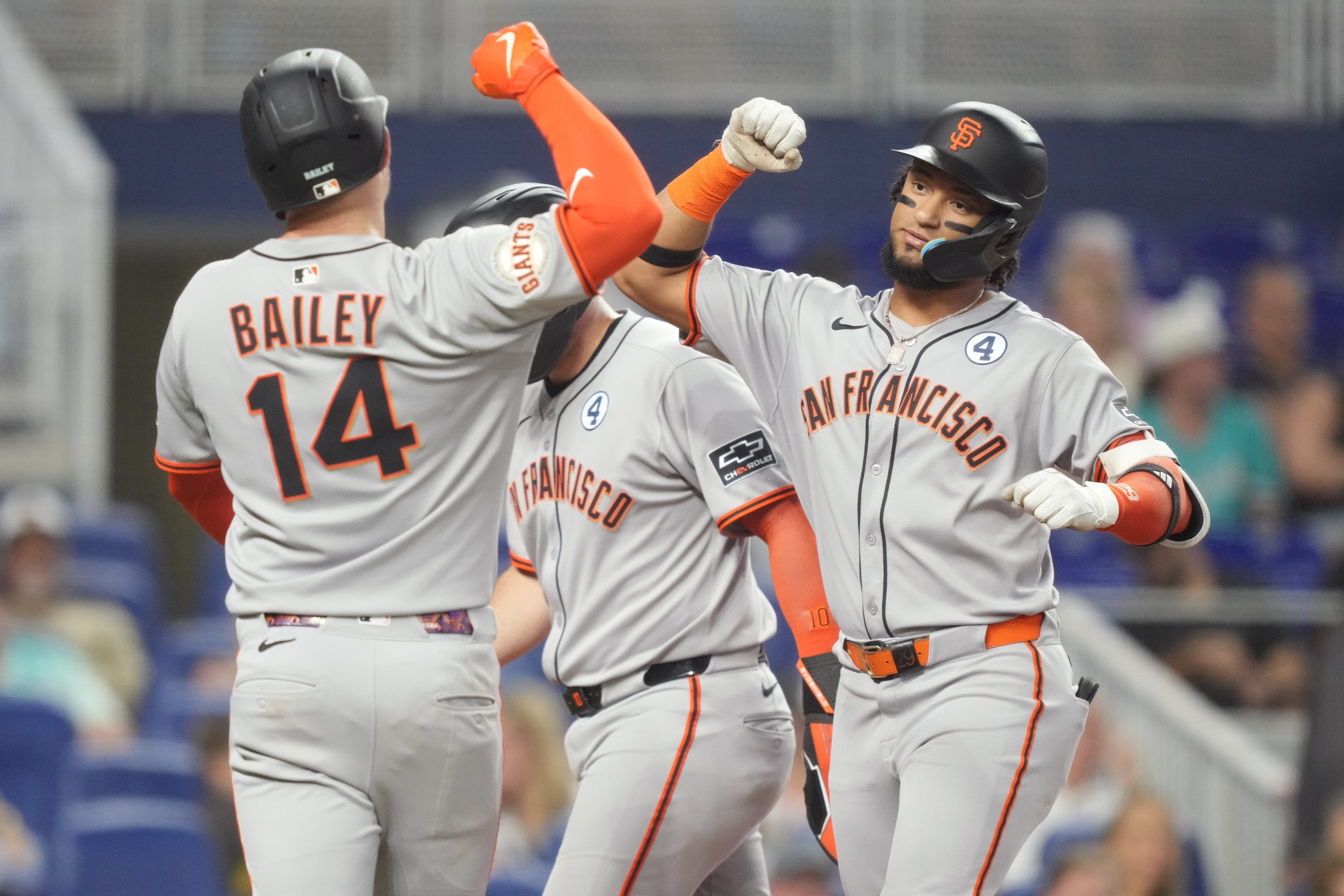 MIAMI, FL—For many a pitcher, outings that go awry tend to do so on one pitch they "wish they had back." For Ryan Weathers, that pitch was an 87 mph changeup to number 9 hitter Luis Matos that caught too much of the plate. A .147 hitter at the outset of Sunday's contest, Matos sent it over the left field wall for a three-run home run, eventually proving the difference in the 4-2 Giants win over the Marlins. Miami falls to 23-34 with the loss, boasting the second-worst run differential in the National League at negative-79. An Achilles heel of the Marlins pitching staff this season, number 9 hitters have combined for a league-leading .312 BA with a .779 OPS against them in 2025. "The changeup hurt me, but the two at-bats prior hurt me," noted Weathers following his first loss of the season. In his six innings of work on Sunday, Weathers still showed flashes of the pitcher he's been since the start of 2024, striking out seven against three walks while allowing four runs. The 25-year-old touched 99 with his fastball, generating 17 whiffs on the day, including nine on the changeup that eventually accounted for the deciding blow. San Francisco opened the scoring against him with a Wilmer Flores groundout to Xavier Edwards, who made his first start at second base since July 21 last season. Fresh off returning from the injured list, Edwards authored the first five-hit game of his career, going a perfect 5-for-5, raising his season average to .282 in the process. "What a great day," said manager Clayton McCullough, reflecting on what he referred to as "the directness" of Edwards' big day at the plate and at his natural position. "Four of the five line drives were stung well through the middle of the field and the other way...Couple double plays there (at second), quick hands...He looked good." "It just reinforces what I already thought about myself...I know what I'm capable of doing," said Edwards. The sour grapes in Edwards' effort is that it marks just the third time in franchise history—and first time since Dee-Strange Gordon back on April 18, 2015—that a Marlin had a five-hit game in a loss. Miami was previously 21-2 in such games. The Marlins had their chances late, though, tacking on a run in the seventh inning before squandering an opportunity to tack on more, then failing to convert on a bases-loaded opportunity the following inning. In the weekend set, Miami went a collective 3-for-24 (.125 BA) with runners in scoring position. Looking Ahead The Marlins will continue their homestand Monday when they welcome the ill-fated Colorado Rockies. Max Meyer (3-4, 4.53 ERA) will toe the slab for Miami as he goes up against Germán Márquez (1-7, 7.13 ERA). First pitch from loanDepot park is slated for 6:40 EST.
-
- 1
-
-
- ryan weathers
- xavier edwards
- (and 1 more)
-
Does Sandy Alcantara have a fastball problem?
Louis Addeo-Weiss posted a topic in Miami Marlins Talk
If you've watched him pitch in 2025, you don't need me telling you that Sandy Alcantara has been bad. But for those just awakening from their slumber to Marlins baseball, here is a little refresher. Alcantara's 8.47 ERA ranks dead last out of the 103 MLB pitchers to already cross the 50-inning threshold this season, and he's on pace for the second-worst such season in Marlins history. In terms of bWAR, only Boston's Tanner Houck (-1.6) has proven a bigger on-field liability to his club on the mound than Alcantara (-1.5). How can we explain the shocking demise of one of the greatest pitchers in Marlins history at age 29? The low-hanging fruit is Tommy John surgery. Alcantara underwent the procedure shortly after the end of the 2023 season, one in which the Marlins surprised many en route to an 84-win playoff campaign. The two-time All-Star missed all of 2024 as a result. Although he looked sharp in spring training, there has not been a single consistently dominant outing from him since then. Beyond that, there's been a subtle change to Alcantara's pitch selection that may be exacerbating the situation. The pitches in Alcantara's arsenal were distributed relatively evenly when he was at the peak of his powers in 2022. Here in 2025, his four-seam fastball, sinker and changeup are being used a similar proportion of the time, but he has cut the usage of his slider nearly in half, down to 12.8%. He's been featuring his curveball more often instead. Adjusting pitch usage is not inherently a bad thing, but the results suggest another change would be more appropriate. Let's take a closer look at Alcantara's four-seamer. His usage of it compared to 2022 is nearly identical (up from 25.5% to 25.8%). 2022 2025 While never remarked as a strikeout pitcher—boasting a career 7.9 K/9 through 2023—Alcantara generated whiffs on 24.2% of four-seamers thrown in 2022. Here in 2025, hitters are whiffing just 14% of the time. Take a close look at the pitch locations in the above graphics, you will notice that Alcantara previously placed a high percentage of his four-seamers at the very top of the strike zone or just above it. Too close to take and too inconvenient for hitters to reach with their "A-swing." YkRNMDRfVjBZQUhRPT1fVUFOUUIxWUFYd1VBREZSVFhnQUFVZ1JmQUZrQlZnUUFBRllEQVFWVUF3VlNCQWRm.mp4 When opponents did make contact with Alcantara's four-seamers, they would frequently get underneath them, as evidenced by an average launch angle of 25 degrees in 2022. That average has now come down to 17 degrees as he leaves more mistakes in the heart of the zone. More concerningly, the average exit velocity against the pitch has ballooned from 91.1 mph to 96.8 mph. To put that in perspective, Shohei Ohtani's average EV is 96.0 mph. No pitcher's four-seamer (min. 50 PA) has resulted more frequently in hard hits (67.4% of the time). In 69 plate appearances ending on an Alcantara four-seamer, the league is hitting .345 with an Ohtani-esque .638 slugging percentage. Alcantara is releasing the ball from a lower arm angle than ever. Perhaps that is part of this equation because it has changed the shape of his pitches—his four-seamer, for example, is drifting several more inches armside than it used to. As far as a potential solution goes, why not tone down the usage of his four-seamer, using it more as a complement to his superior sinking two-seam fastball? Hitters collectively have a .267 average with a 0-degree launch angle off Sandy's sinker. It is reliably inducing ground balls for him, which ought to yield slightly better results moving forward with news that standout defender Otto Lopez is expected to see a majority of the reps at shortstop. The Marlins' hope of recouping substantial value for Alcantara at this year's trade deadline is rapidly fading. Their focus now should be pulling whatever levers they can to avoid one of the worst-pitched seasons in franchise history. View full article -
.jpg.af7c33e63f5a7d126ff7857be56b5ae2.jpg) If you've watched him pitch in 2025, you don't need me telling you that Sandy Alcantara has been bad. But for those just awakening from their slumber to Marlins baseball, here is a little refresher. Alcantara's 8.47 ERA ranks dead last out of the 103 MLB pitchers to already cross the 50-inning threshold this season, and he's on pace for the second-worst such season in Marlins history. In terms of bWAR, only Boston's Tanner Houck (-1.6) has proven a bigger on-field liability to his club on the mound than Alcantara (-1.5). How can we explain the shocking demise of one of the greatest pitchers in Marlins history at age 29? The low-hanging fruit is Tommy John surgery. Alcantara underwent the procedure shortly after the end of the 2023 season, one in which the Marlins surprised many en route to an 84-win playoff campaign. The two-time All-Star missed all of 2024 as a result. Although he looked sharp in spring training, there has not been a single consistently dominant outing from him since then. Beyond that, there's been a subtle change to Alcantara's pitch selection that may be exacerbating the situation. The pitches in Alcantara's arsenal were distributed relatively evenly when he was at the peak of his powers in 2022. Here in 2025, his four-seam fastball, sinker and changeup are being used a similar proportion of the time, but he has cut the usage of his slider nearly in half, down to 12.8%. He's been featuring his curveball more often instead. Adjusting pitch usage is not inherently a bad thing, but the results suggest another change would be more appropriate. Let's take a closer look at Alcantara's four-seamer. His usage of it compared to 2022 is nearly identical (up from 25.5% to 25.8%). 2022 2025 While never remarked as a strikeout pitcher—boasting a career 7.9 K/9 through 2023—Alcantara generated whiffs on 24.2% of four-seamers thrown in 2022. Here in 2025, hitters are whiffing just 14% of the time. Take a close look at the pitch locations in the above graphics, you will notice that Alcantara previously placed a high percentage of his four-seamers at the very top of the strike zone or just above it. Too close to take and too inconvenient for hitters to reach with their "A-swing." YkRNMDRfVjBZQUhRPT1fVUFOUUIxWUFYd1VBREZSVFhnQUFVZ1JmQUZrQlZnUUFBRllEQVFWVUF3VlNCQWRm.mp4 When opponents did make contact with Alcantara's four-seamers, they would frequently get underneath them, as evidenced by an average launch angle of 25 degrees in 2022. That average has now come down to 17 degrees as he leaves more mistakes in the heart of the zone. More concerningly, the average exit velocity against the pitch has ballooned from 91.1 mph to 96.8 mph. To put that in perspective, Shohei Ohtani's average EV is 96.0 mph. No pitcher's four-seamer (min. 50 PA) has resulted more frequently in hard hits (67.4% of the time). In 69 plate appearances ending on an Alcantara four-seamer, the league is hitting .345 with an Ohtani-esque .638 slugging percentage. Alcantara is releasing the ball from a lower arm angle than ever. Perhaps that is part of this equation because it has changed the shape of his pitches—his four-seamer, for example, is drifting several more inches armside than it used to. As far as a potential solution goes, why not tone down the usage of his four-seamer, using it more as a complement to his superior sinking two-seam fastball? Hitters collectively have a .267 average with a 0-degree launch angle off Sandy's sinker. It is reliably inducing ground balls for him, which ought to yield slightly better results moving forward with news that standout defender Otto Lopez is expected to see a majority of the reps at shortstop. The Marlins' hope of recouping substantial value for Alcantara at this year's trade deadline is rapidly fading. Their focus now should be pulling whatever levers they can to avoid one of the worst-pitched seasons in franchise history.
If you've watched him pitch in 2025, you don't need me telling you that Sandy Alcantara has been bad. But for those just awakening from their slumber to Marlins baseball, here is a little refresher. Alcantara's 8.47 ERA ranks dead last out of the 103 MLB pitchers to already cross the 50-inning threshold this season, and he's on pace for the second-worst such season in Marlins history. In terms of bWAR, only Boston's Tanner Houck (-1.6) has proven a bigger on-field liability to his club on the mound than Alcantara (-1.5). How can we explain the shocking demise of one of the greatest pitchers in Marlins history at age 29? The low-hanging fruit is Tommy John surgery. Alcantara underwent the procedure shortly after the end of the 2023 season, one in which the Marlins surprised many en route to an 84-win playoff campaign. The two-time All-Star missed all of 2024 as a result. Although he looked sharp in spring training, there has not been a single consistently dominant outing from him since then. Beyond that, there's been a subtle change to Alcantara's pitch selection that may be exacerbating the situation. The pitches in Alcantara's arsenal were distributed relatively evenly when he was at the peak of his powers in 2022. Here in 2025, his four-seam fastball, sinker and changeup are being used a similar proportion of the time, but he has cut the usage of his slider nearly in half, down to 12.8%. He's been featuring his curveball more often instead. Adjusting pitch usage is not inherently a bad thing, but the results suggest another change would be more appropriate. Let's take a closer look at Alcantara's four-seamer. His usage of it compared to 2022 is nearly identical (up from 25.5% to 25.8%). 2022 2025 While never remarked as a strikeout pitcher—boasting a career 7.9 K/9 through 2023—Alcantara generated whiffs on 24.2% of four-seamers thrown in 2022. Here in 2025, hitters are whiffing just 14% of the time. Take a close look at the pitch locations in the above graphics, you will notice that Alcantara previously placed a high percentage of his four-seamers at the very top of the strike zone or just above it. Too close to take and too inconvenient for hitters to reach with their "A-swing." YkRNMDRfVjBZQUhRPT1fVUFOUUIxWUFYd1VBREZSVFhnQUFVZ1JmQUZrQlZnUUFBRllEQVFWVUF3VlNCQWRm.mp4 When opponents did make contact with Alcantara's four-seamers, they would frequently get underneath them, as evidenced by an average launch angle of 25 degrees in 2022. That average has now come down to 17 degrees as he leaves more mistakes in the heart of the zone. More concerningly, the average exit velocity against the pitch has ballooned from 91.1 mph to 96.8 mph. To put that in perspective, Shohei Ohtani's average EV is 96.0 mph. No pitcher's four-seamer (min. 50 PA) has resulted more frequently in hard hits (67.4% of the time). In 69 plate appearances ending on an Alcantara four-seamer, the league is hitting .345 with an Ohtani-esque .638 slugging percentage. Alcantara is releasing the ball from a lower arm angle than ever. Perhaps that is part of this equation because it has changed the shape of his pitches—his four-seamer, for example, is drifting several more inches armside than it used to. As far as a potential solution goes, why not tone down the usage of his four-seamer, using it more as a complement to his superior sinking two-seam fastball? Hitters collectively have a .267 average with a 0-degree launch angle off Sandy's sinker. It is reliably inducing ground balls for him, which ought to yield slightly better results moving forward with news that standout defender Otto Lopez is expected to see a majority of the reps at shortstop. The Marlins' hope of recouping substantial value for Alcantara at this year's trade deadline is rapidly fading. Their focus now should be pulling whatever levers they can to avoid one of the worst-pitched seasons in franchise history. -
Cabrera outduels crafty veteran Hendricks, K's 10 to lead Miami to series win in the Big A. If Edward Cabrera's performance over his past three starts was building towards something, that "something" may have been what he did on Sunday in Anaheim. Relying heavily on a sharp-breaking curveball instead of his routinely mid-90s changeup, Cabrera struck out 10 over 5 ⅔ scoreless innings in the Marlins 3-0 win over the Angels to earn his long-awaited first win of the season. Of his 18 whiffs generated on the day, 11 came via the curveball. Cabrera now owns a 2.53 ERA in four starts this May. With the win, the Marlins improve to 7-7 lifetime at Angel Stadium. "It was good as I've ever seen him...He had a good run there where he was getting a bunch of punchouts," noted Clayton McCullough. One of those runs for Cabrera saw the right-hander punch out four consecutive Angel hitters. In 40 innings pitched this season, the 27-year-old has averaged 9.7 strikeouts per 9. Facing Kyle Hendricks, the owner of a career 2.17 ERA in nine starts against them, the Marlins tagged the 2016 World Champion for three runs in his six innings of work. One of those three came via Connor Norby's sixth hit of the weekend set, continuing a month of May that's seen the Marlins third baseman OPS north of .800. Highlighting the 3 ⅓ scoreless frames from the Marlins bullpen was Ronny Henriquez, who worked a 1-2-3 bottom of the ninth to earn his first career save. Henriquez demonstrated his versatility this weekend, picking up the win on Saturday when he entered a 1-0 game in the fourth inning and faced the heart of the Angels lineup. "With the combination of stuff and strike-throwing, he's got the ability to get swing-and-miss, especially with the fastball at the top of the zone," opined McCullough when asked about potentially seeing the diminutive righty in future high-leverage situations. Henriquez's 12.4 K/9 is the best among relievers with at least 25 innings pitched this season. The Marlins find themselves at 21-30 and two games out of fourth place in the NL East entering Memorial Day. They have quietly gone 6-4 over the past 10 games. Looking Ahead The Marlins will continue their tour of the Golden State on Monday when they open up a series against the San Diego Padres. Ryan Weathers (1-0, 1.80 ERA) will look to improve upon his first start against his former club, allowing five runs over 3 ⅓ innings back on 8/21/23. Randy Vásquez (3-4, 3.49 ERA) is projected to oppose him for San Diego. First pitch from Petco Park is slated for 8:40 EST. View full article
-
Cabrera K's his way to first win of the season as Fish best Halos
Louis Addeo-Weiss posted an article in Marlins
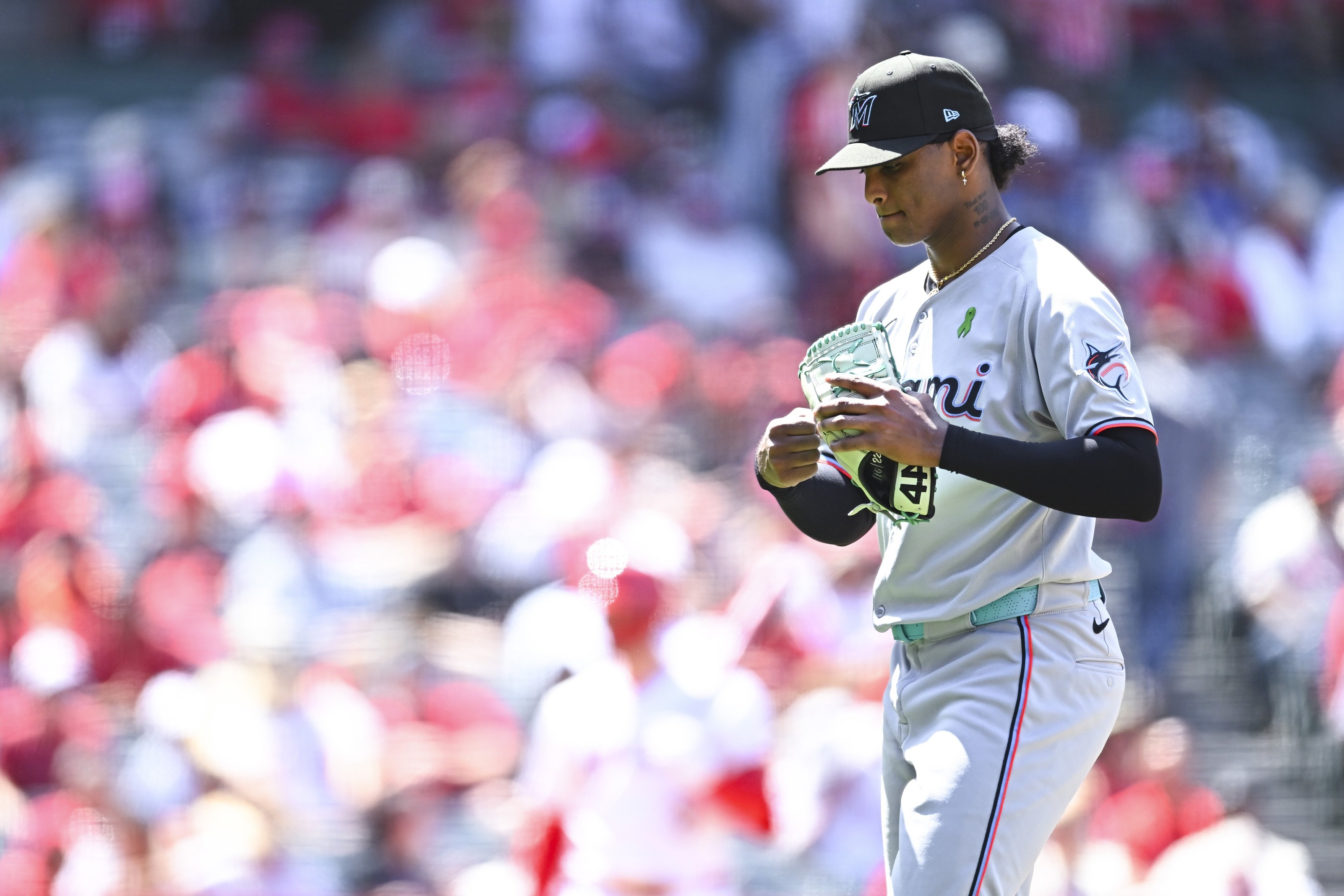 If Edward Cabrera's performance over his past three starts was building towards something, that "something" may have been what he did on Sunday in Anaheim. Relying heavily on a sharp-breaking curveball instead of his routinely mid-90s changeup, Cabrera struck out 10 over 5 ⅔ scoreless innings in the Marlins 3-0 win over the Angels to earn his long-awaited first win of the season. Of his 18 whiffs generated on the day, 11 came via the curveball. Cabrera now owns a 2.53 ERA in four starts this May. With the win, the Marlins improve to 7-7 lifetime at Angel Stadium. "It was good as I've ever seen him...He had a good run there where he was getting a bunch of punchouts," noted Clayton McCullough. One of those runs for Cabrera saw the right-hander punch out four consecutive Angel hitters. In 40 innings pitched this season, the 27-year-old has averaged 9.7 strikeouts per 9. Facing Kyle Hendricks, the owner of a career 2.17 ERA in nine starts against them, the Marlins tagged the 2016 World Champion for three runs in his six innings of work. One of those three came via Connor Norby's sixth hit of the weekend set, continuing a month of May that's seen the Marlins third baseman OPS north of .800. Highlighting the 3 ⅓ scoreless frames from the Marlins bullpen was Ronny Henriquez, who worked a 1-2-3 bottom of the ninth to earn his first career save. Henriquez demonstrated his versatility this weekend, picking up the win on Saturday when he entered a 1-0 game in the fourth inning and faced the heart of the Angels lineup. "With the combination of stuff and strike-throwing, he's got the ability to get swing-and-miss, especially with the fastball at the top of the zone," opined McCullough when asked about potentially seeing the diminutive righty in future high-leverage situations. Henriquez's 12.4 K/9 is the best among relievers with at least 25 innings pitched this season. The Marlins find themselves at 21-30 and two games out of fourth place in the NL East entering Memorial Day. They have quietly gone 6-4 over the past 10 games. Looking Ahead The Marlins will continue their tour of the Golden State on Monday when they open up a series against the San Diego Padres. Ryan Weathers (1-0, 1.80 ERA) will look to improve upon his first start against his former club, allowing five runs over 3 ⅓ innings back on 8/21/23. Randy Vásquez (3-4, 3.49 ERA) is projected to oppose him for San Diego. First pitch from Petco Park is slated for 8:40 EST.
-
- 1
-
-
- edward cabrera
- connor norby
- (and 1 more)
-
Otto Lopez and Liam Hicks homered, while Quantrill became just the second pitcher in Marlins history to author an immaculate inning. MIAMI—The universe had aligned on Sunday for Cal Quantrill to get his 2025 season on track. The veteran right-hander was facing the Tampa Bay Rays, who he has held to a .475 OPS in his previous career matchups. With the return of the sure-handed Otto Lopez, Quantrill rode the momentum to five innings of one-run ball in the Marlins' 5-1 victory. The highlight of the afternoon was what Quantrill did in the top of the fourth when he struck out Jonathan Aranda, Christopher Morel, and Kameron Misner on nine pitches. He joined Jesús Sánchez (9/13/98) as the only other pitchers in franchise history to throw an immaculate inning. "Pretty cool," said Quantrill when reflecting on his fourth-inning performance. "As a guy who doesn't strike out the most people in the world, it's a pretty cool little collectible to put on the wall." Quantrill's modesty was apt. He entered Sunday with the third-lowest K/9 (6.5) among the 78 MLB pitchers to throw at least 175 innings since the start of 2024. "It kind of goes back to Seattle a few starts ago. I think he just made a decision to be more aggressive and be more on the attack," noted manager Clayton McCullough. That "Seattle" start back on April 25 saw Quantrill tagged for four runs, three of which game in his sixth and final inning of work. In the ensuing four starts and 18 innings pitched since then, the seven-year veteran has pitched to a more respectable 4.50 ERA, seeing his ERA fall from 8.10 to 6.37 in the process. Shane Baz, all the while, didn't fare so well, coughing up five runs on nine hits in his six innings of work that included a pair of home runs. After starting the year 3-0 with a 2.45 ERA through April, the former top prospect has fallen victim to a 9.61 ERA in the month of May. Lopez put Miami ahead with a three-run blast in his first game off the injured list. Quantrill's battery mate, Liam Hicks, took him deep three innings later. Lopez's reinstatement coincides with Xavier Edwards being placed on the 10-day IL. The Marlins have grown accustomed to using Lopez regularly at second base, but he could slide over to shortstop occasionally during Edwards' absence, McCullough said. The Marlins bullpen continued their upward trend, throwing four scoreless innings in relief of Quantrill. Despite entering Sunday with a collective 4.69 ERA, the 'pen has fared much better in the month of May, owning a 3.36 ERA in 56 ⅓ innings pitched. With the win, Miami secured their first series victory since April 21-23, when they took two of three from the Cincinnati Reds. The win also marks their first series victory against the Rays since July 20-22, 2018. Looking Ahead Miami's homestand continues Monday against a familiar foe as they'll welcome the Chicago Cubs for the first of a three-game series. Chicago took two of three from Miami this past week. Edward Cabrera (0-1, 5.52 ERA) will make his first start since May 10 when he worked five innings of one-run ball in a 3-1 win over the White Sox. Ben Brown (3-3, 4.75 ERA) will oppose him for the North Siders. First pitch from loanDepot park is slated for 6:40 EST. View full article
-
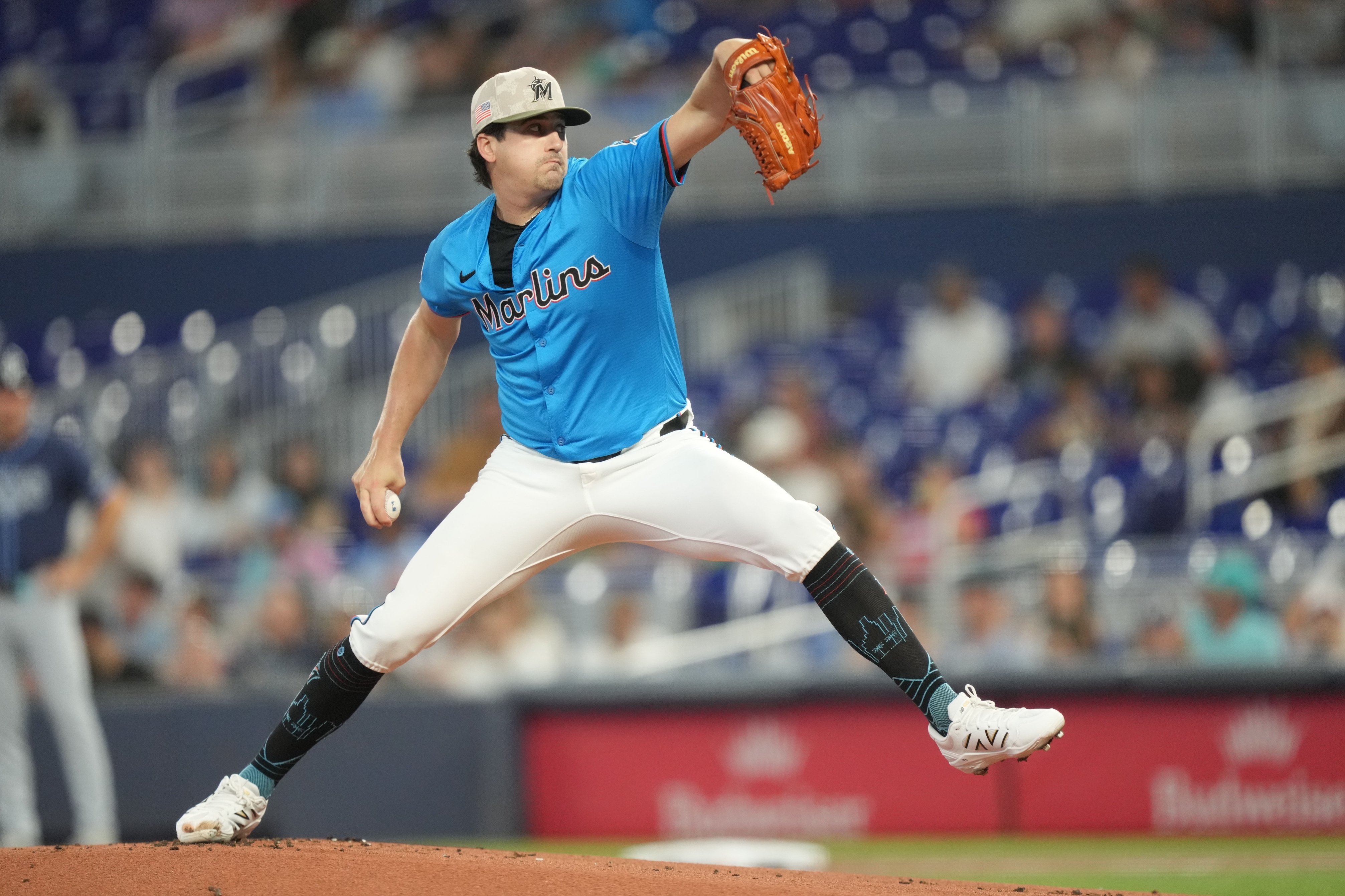 MIAMI—The universe had aligned on Sunday for Cal Quantrill to get his 2025 season on track. The veteran right-hander was facing the Tampa Bay Rays, who he has held to a .475 OPS in his previous career matchups. With the return of the sure-handed Otto Lopez, Quantrill rode the momentum to five innings of one-run ball in the Marlins' 5-1 victory. The highlight of the afternoon was what Quantrill did in the top of the fourth when he struck out Jonathan Aranda, Christopher Morel, and Kameron Misner on nine pitches. He joined Jesús Sánchez (9/13/98) as the only other pitchers in franchise history to throw an immaculate inning. "Pretty cool," said Quantrill when reflecting on his fourth-inning performance. "As a guy who doesn't strike out the most people in the world, it's a pretty cool little collectible to put on the wall." Quantrill's modesty was apt. He entered Sunday with the third-lowest K/9 (6.5) among the 78 MLB pitchers to throw at least 175 innings since the start of 2024. "It kind of goes back to Seattle a few starts ago. I think he just made a decision to be more aggressive and be more on the attack," noted manager Clayton McCullough. That "Seattle" start back on April 25 saw Quantrill tagged for four runs, three of which game in his sixth and final inning of work. In the ensuing four starts and 18 innings pitched since then, the seven-year veteran has pitched to a more respectable 4.50 ERA, seeing his ERA fall from 8.10 to 6.37 in the process. Shane Baz, all the while, didn't fare so well, coughing up five runs on nine hits in his six innings of work that included a pair of home runs. After starting the year 3-0 with a 2.45 ERA through April, the former top prospect has fallen victim to a 9.61 ERA in the month of May. Lopez put Miami ahead with a three-run blast in his first game off the injured list. Quantrill's battery mate, Liam Hicks, took him deep three innings later. Lopez's reinstatement coincides with Xavier Edwards being placed on the 10-day IL. The Marlins have grown accustomed to using Lopez regularly at second base, but he could slide over to shortstop occasionally during Edwards' absence, McCullough said. The Marlins bullpen continued their upward trend, throwing four scoreless innings in relief of Quantrill. Despite entering Sunday with a collective 4.69 ERA, the 'pen has fared much better in the month of May, owning a 3.36 ERA in 56 ⅓ innings pitched. With the win, Miami secured their first series victory since April 21-23, when they took two of three from the Cincinnati Reds. The win also marks their first series victory against the Rays since July 20-22, 2018. Looking Ahead Miami's homestand continues Monday against a familiar foe as they'll welcome the Chicago Cubs for the first of a three-game series. Chicago took two of three from Miami this past week. Edward Cabrera (0-1, 5.52 ERA) will make his first start since May 10 when he worked five innings of one-run ball in a 3-1 win over the White Sox. Ben Brown (3-3, 4.75 ERA) will oppose him for the North Siders. First pitch from loanDepot park is slated for 6:40 EST.
-
- 1
-
-
- cal quantrill
- otto lopez
- (and 2 more)
-
Weathers shines, Stowers powers in Marlins win amid Wrigley fog
Louis Addeo-Weiss posted an article in Marlins
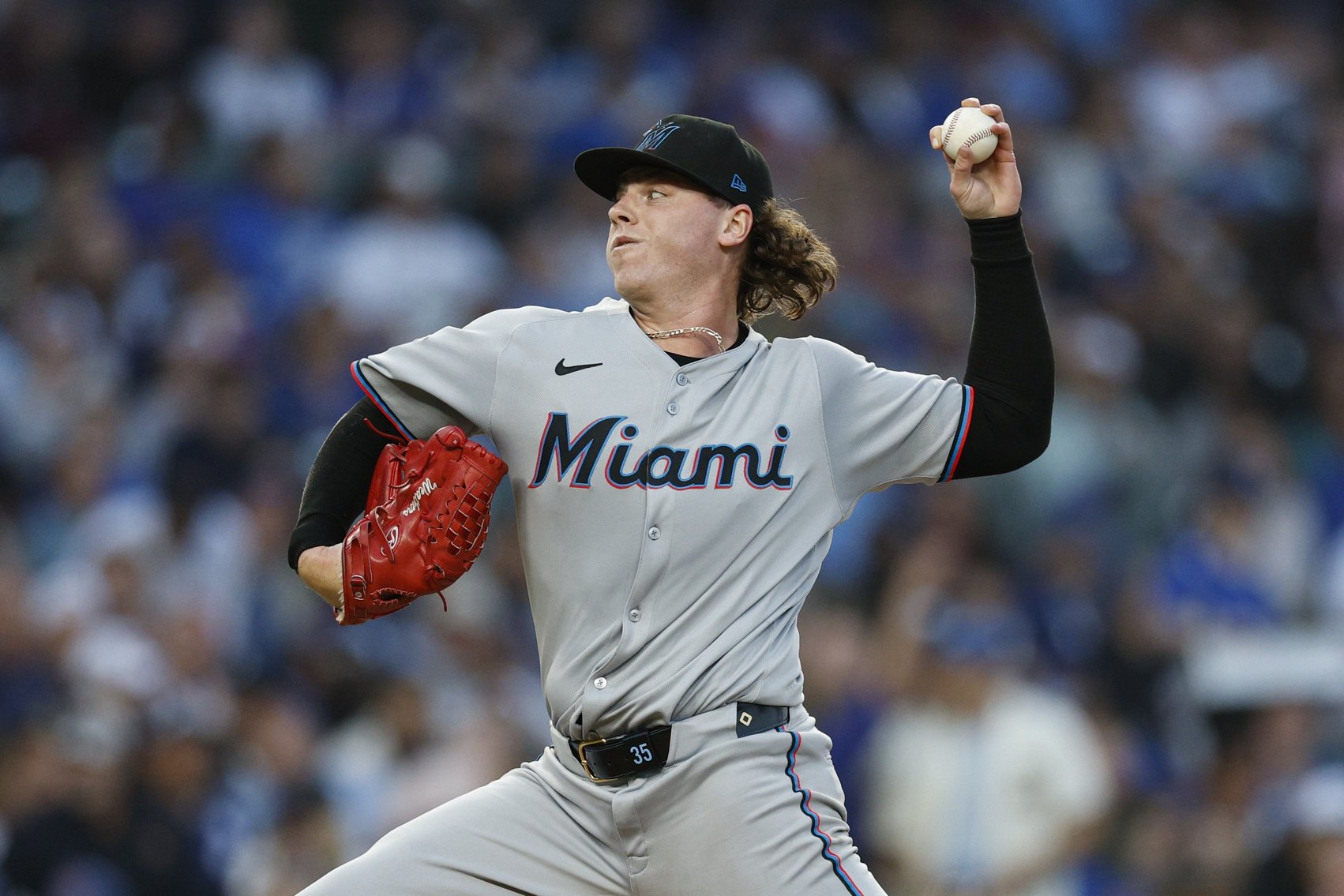 What's the best next-day remedy for blowing a two-run lead in the bottom of the ninth? The return of your best inning-for-inning pitcher from a year ago and a multi-homer effort from a burgeoning middle-of-the-order bat. That's what propelled the Marlins past the NL Central-leading Chicago Cubs on Wednesday night. In his season debut on a foggy and cold Wrigley Field night, Ryan Weathers flashed the overpowering stuff that reminded fans of his 122 ERA+ a season ago. He limited the Cubs to one run and just a pair of hits in his five innings of work in Miami's 3-1 victory to leave the Windy City on a high note. Topping out at 99 mph with a fastball up nearly two ticks from a year ago, Weathers' strong effort couldn't have come at a better time for a Marlins rotation that entered the day with the second-worst ERA in the majors (6.17). With the win, Weathers became the first Marlins starter to earn a win since Cal Quantrill back on April 25. "To get through five with the number of pitches he had...The stuff, I just thought he threw great," said manager Clayton McCullough. In 17 starts since the start of 2024, Weathers owns a 3.53 ERA. The bullpen, in relief of Weathers, held Chicago scoreless in their four innings of work, an effort highlighted by a moment for Jesús Tinoco, who authored the blown save in Tuesday's 5-4 defeat. In the batter's box, Kyle Stowers continued his ascension on the list of feared sluggers, hitting a pair of home runs—one to each side of the field—in his third multi-homer game of the season. In doing so, he became just the fourth Marlin since the start of 2018 with three such games in a single season. Stowers continued endearing himself to fans when he became just the third player in franchise history to triple and have a multi-homer effort in the same game, joining Juan Encarnación (9/24/02) and Gary Sheffield (4/10/94). After a .915 OPS in April, Stowers owns a 1.032 OPS in the month of May. "It's all about sticking to my plan...I know it sounds simple, but that's the secret sauce," said Stowers after his third multi-homer effort in 13 days. And in keeping with the theme of home runs, a conversation of this nature is not complete without mentioning Agustín Ramírez, who went back-to-back with Stowers in the fourth. Through 20 career games, Ramírez's 14 extra-base hits are the most to begin a career in Marlins history since Miguel Cabrera had 10 in 2003. Otherwise effective when you exclude the trio of home runs, Jameson Taillon allowed just four hits in his six innings of work, striking out seven and walking none. After allowing seven home runs over his past two starts, Taillon now leads the Major Leagues with 13 home runs allowed. Looking Ahead Miami will travel home where they'll spend their off day awaiting the arrival of the in-state rival Tampa Bay Rays in what will be the latest edition of the Citrus Series. Max Meyer (2-4, 4.37 ERA) will look to get back to his early-season ways in the series opener, having allowed five runs in each of his last three starts. Taj Bradley (3-2, 4.24 ERA) will oppose him in what will be his second career start against Miami. He took the loss against them after allowing four runs over five innings back on July 31 last season. First pitch from loanDepot park is slated for 6:40 EST.
- 2 comments
-
- 2
-
-
- ryan weathers
- kyle stowers
- (and 1 more)
-
Weathers awes in season debut while Stowers, Ramírez power offense to a getaway win at Wrigley Field. What's the best next-day remedy for blowing a two-run lead in the bottom of the ninth? The return of your best inning-for-inning pitcher from a year ago and a multi-homer effort from a burgeoning middle-of-the-order bat. That's what propelled the Marlins past the NL Central-leading Chicago Cubs on Wednesday night. In his season debut on a foggy and cold Wrigley Field night, Ryan Weathers flashed the overpowering stuff that reminded fans of his 122 ERA+ a season ago. He limited the Cubs to one run and just a pair of hits in his five innings of work in Miami's 3-1 victory to leave the Windy City on a high note. Topping out at 99 mph with a fastball up nearly two ticks from a year ago, Weathers' strong effort couldn't have come at a better time for a Marlins rotation that entered the day with the second-worst ERA in the majors (6.17). With the win, Weathers became the first Marlins starter to earn a win since Cal Quantrill back on April 25. "To get through five with the number of pitches he had...The stuff, I just thought he threw great," said manager Clayton McCullough. In 17 starts since the start of 2024, Weathers owns a 3.53 ERA. The bullpen, in relief of Weathers, held Chicago scoreless in their four innings of work, an effort highlighted by a moment for Jesús Tinoco, who authored the blown save in Tuesday's 5-4 defeat. In the batter's box, Kyle Stowers continued his ascension on the list of feared sluggers, hitting a pair of home runs—one to each side of the field—in his third multi-homer game of the season. In doing so, he became just the fourth Marlin since the start of 2018 with three such games in a single season. Stowers continued endearing himself to fans when he became just the third player in franchise history to triple and have a multi-homer effort in the same game, joining Juan Encarnación (9/24/02) and Gary Sheffield (4/10/94). After a .915 OPS in April, Stowers owns a 1.032 OPS in the month of May. "It's all about sticking to my plan...I know it sounds simple, but that's the secret sauce," said Stowers after his third multi-homer effort in 13 days. And in keeping with the theme of home runs, a conversation of this nature is not complete without mentioning Agustín Ramírez, who went back-to-back with Stowers in the fourth. Through 20 career games, Ramírez's 14 extra-base hits are the most to begin a career in Marlins history since Miguel Cabrera had 10 in 2003. Otherwise effective when you exclude the trio of home runs, Jameson Taillon allowed just four hits in his six innings of work, striking out seven and walking none. After allowing seven home runs over his past two starts, Taillon now leads the Major Leagues with 13 home runs allowed. Looking Ahead Miami will travel home where they'll spend their off day awaiting the arrival of the in-state rival Tampa Bay Rays in what will be the latest edition of the Citrus Series. Max Meyer (2-4, 4.37 ERA) will look to get back to his early-season ways in the series opener, having allowed five runs in each of his last three starts. Taj Bradley (3-2, 4.24 ERA) will oppose him in what will be his second career start against Miami. He took the loss against them after allowing four runs over five innings back on July 31 last season. First pitch from loanDepot park is slated for 6:40 EST. View full article
-
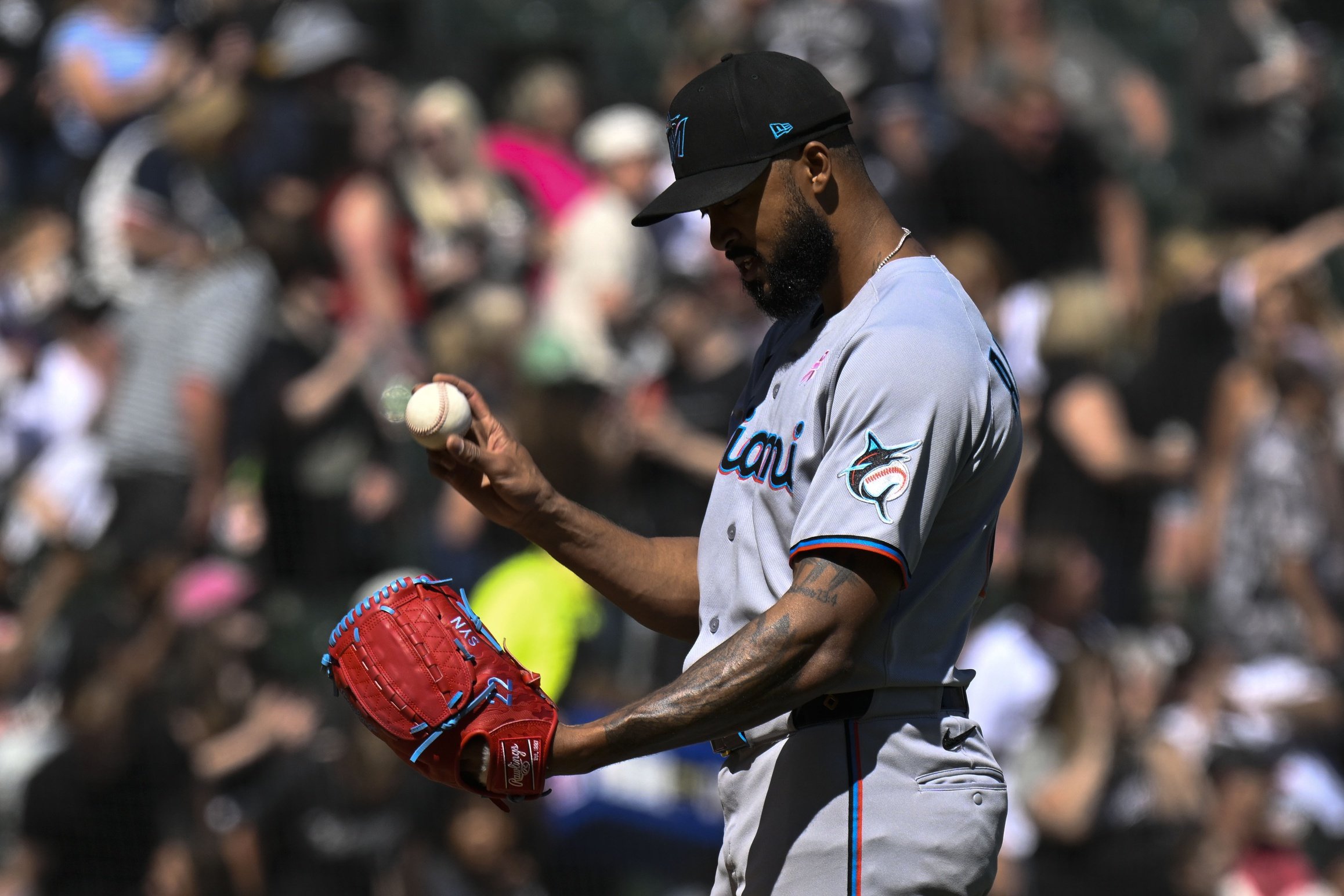 Sandy Alcantara could almost taste it. Having pitched to an ERA north of 8.00 entering Sunday, this felt like that get-right game he needed to reverse course on what had inarguably been the roughest stretch of his career. Through 5 ⅓ innings, the former Cy Young Award winner had limited the White Sox to just one run. And then, Tim Elko authored one of the more memorable first career hits that a player could possibly have. Elko sent a curveball over the left field wall of Rate Field for a go-ahead three-run homer that ignited the South Side crowd, while simultaneously souring the afternoon for an ace still searching for answers. "I thought Sandy made some really outstanding pitches late in the count," noted manager Clayton McCullough. "Didn't end well, but there were some positives to take away from this...He's definitely trending," continued McCullough. Working around a trio of walks in his 5 ⅔ innings of work, Alcantara struck out a season-high eight hitters, even registering his fastest pitch of the season at 99.9 mph in Miami's 4-2 loss to the White Sox. Despite this, Alcantara will enter his ninth start with an ERA of 8.10. In doing so, he becomes just the fourth pitcher in franchise history to struggle with run prevention to that magnitude through his first eight starts of a season and the first Marlin to lose five consecutive decisions since Trevor Richards back in 2019.. Dating back to 2023, Alcantara has now walked two or more hitters in each of his last 11 starts. He is averaging 5.2 BB/9 this year, the third-highest among pitchers with at least 35 innings pitched. Preordained as the premier asset on the market at this year's MLB trade deadline, needless to say he will have to perform better before contending teams come calling. It wasn't all doom and gloom for the Fish on Sunday, as the bullpen authored 2 ⅓ perfect innings in relief of Alcantara. Shortstop Xavier Edwards reached base three times, collecting a pair of hits, a stolen base, and his first RBI since May 3. Miami also exuded patience at the plate, drawing six walks against just three strikeouts in the loss. Chicago starter Sean Burke, who threw more balls than strikes on the afternoon, was responsible for five of those free passes, though he only coughed up one run in his four innings of work. Now 15-24 following their seventh loss in their last ten games, Miami falls to 5-12 on the road this season, third-worst in the National League. Looking Ahead The Marlins will venture up to the north side of Chicago, where they'll begin a three-game series against the NL Central-leading Cubs. Cal Quantrill (2-3, 7.11 ERA) will start the series opener against one-time Marlin Colin Rea (2-0, 2.43 ERA). Outfielder Derek Hill is expected to make his return from a left wrist sprain, Fish On First's Kevin Barral reports. First pitch from Wrigley Field is slated for 7:40 EST.
 -
One center-cut curveball spoils Alcantara's potential get-right game, hands Marlins series loss on South Side. Sandy Alcantara could almost taste it. Having pitched to an ERA north of 8.00 entering Sunday, this felt like that get-right game he needed to reverse course on what had inarguably been the roughest stretch of his career. Through 5 ⅓ innings, the former Cy Young Award winner had limited the White Sox to just one run. And then, Tim Elko authored one of the more memorable first career hits that a player could possibly have. Elko sent a curveball over the left field wall of Rate Field for a go-ahead three-run homer that ignited the South Side crowd, while simultaneously souring the afternoon for an ace still searching for answers. "I thought Sandy made some really outstanding pitches late in the count," noted manager Clayton McCullough. "Didn't end well, but there were some positives to take away from this...He's definitely trending," continued McCullough. Working around a trio of walks in his 5 ⅔ innings of work, Alcantara struck out a season-high eight hitters, even registering his fastest pitch of the season at 99.9 mph in Miami's 4-2 loss to the White Sox. Despite this, Alcantara will enter his ninth start with an ERA of 8.10. In doing so, he becomes just the fourth pitcher in franchise history to struggle with run prevention to that magnitude through his first eight starts of a season and the first Marlin to lose five consecutive decisions since Trevor Richards back in 2019.. Dating back to 2023, Alcantara has now walked two or more hitters in each of his last 11 starts. He is averaging 5.2 BB/9 this year, the third-highest among pitchers with at least 35 innings pitched. Preordained as the premier asset on the market at this year's MLB trade deadline, needless to say he will have to perform better before contending teams come calling. It wasn't all doom and gloom for the Fish on Sunday, as the bullpen authored 2 ⅓ perfect innings in relief of Alcantara. Shortstop Xavier Edwards reached base three times, collecting a pair of hits, a stolen base, and his first RBI since May 3. Miami also exuded patience at the plate, drawing six walks against just three strikeouts in the loss. Chicago starter Sean Burke, who threw more balls than strikes on the afternoon, was responsible for five of those free passes, though he only coughed up one run in his four innings of work. Now 15-24 following their seventh loss in their last ten games, Miami falls to 5-12 on the road this season, third-worst in the National League. Looking Ahead The Marlins will venture up to the north side of Chicago, where they'll begin a three-game series against the NL Central-leading Cubs. Cal Quantrill (2-3, 7.11 ERA) will start the series opener against one-time Marlin Colin Rea (2-0, 2.43 ERA). Outfielder Derek Hill is expected to make his return from a left wrist sprain, Fish On First's Kevin Barral reports. First pitch from Wrigley Field is slated for 7:40 EST. View full article
-
Marlins drop finale despite strong effort from Edward Cabrera. MIAMI, FL—The Marlins pitching over the last week has been bad. How bad, you may ask? Dating back to April 26, here are the earned run totals allowed by each of their starting pitchers: 7, 5, 5, 7, 4, 5, 5, with the club's collective 9.71 ERA and negative-1.2 fWAR in that span both Major League worsts. So, when Edward Cabrera worked 5 ⅔ innings of two-run ball on Sunday against the Athletics, it almost felt as if the metaphoric rock that had been crushing the Marlins' necks had slowly begun to be lifted. "It was a really good version of Eddie, especially with the strike throwing," noted manager Clayton McCullough following the 3-2 loss. After surrendering a pair of runs in the top of the second, Cabrera pitched scoreless ball from there on out, retiring 11 of the final 15 batters faced. Flashing pitch-to-contact meets command approach, Cabrera threw first-pitch strikes to 15 of the 23 hitters he faced, not walking his first (and only) batter of the day until there were two outs in the top of the sixth. The right-hander's four strikeouts were his fewest in a game of 5 or more innings pitched since the three he registered against the Giants back on August 31 last season. Unfortunately for Cabrera and the Marlins' sake, JP Sears was merely a tad bit better, limiting Miami to two runs over his 6 ⅓ innings of work. The 29-year-old owns a 2.93 ERA over his seven starts this season, a mark that would have been noticeably lower had Dane Myers not tagged him for a two-run double in the bottom of the fourth. Over his 10 plate appearances during the weekend set, Myers notched a pair of hits, including a home run in Friday's loss, before stealing a pair of bases in Saturday's walk-off victory. Though only getting limited playing time, Myers has made the most of it, hitting .351 with a .922 OPS over 69 plate appearances. With the loss, Miami, now 13-20, is 2-8 over their last 10 games. They currently sport a minus-54 run differential. Only the Rockies, who entered Sunday at minus-83, have been outscored by more runs thus far in 2025 among National League clubs. Of Note - The club announced before Sunday's game that Otto Lopez had been placed on the 10-day injured list with a right ankle sprain. He tells Daniel Álvarez-Montes of El Extrabase that he expects to miss 2-3 weeks. - Catcher Nick Fortes, activated to fill the aforementioned Lopez's roster spot, went 1-for-3 in his first game since April 9. - After allowing seven runs (four earned) over his first five outings, Calvin Faucher has now gone seven consecutive appearances without allowing an earned run, lowering his season ERA to 3.18. Looking Ahead The Marlins will continue their hosting duties Monday when they welcome the Los Angeles Dodgers for the first of a three-game series. Sandy Alcantara (2-3, 8.31 ERA) will look to avenge his most recent start against the Dodgers on April 29, when he allowed seven runs over 2 ⅔ innings. Alcantara's lifetime 9.66 ERA is the worst mark among the 843 pitchers to make at least seven starts against Los Angeles. First pitch from loanDepot park is slated for 6:40 EST. View full article
-
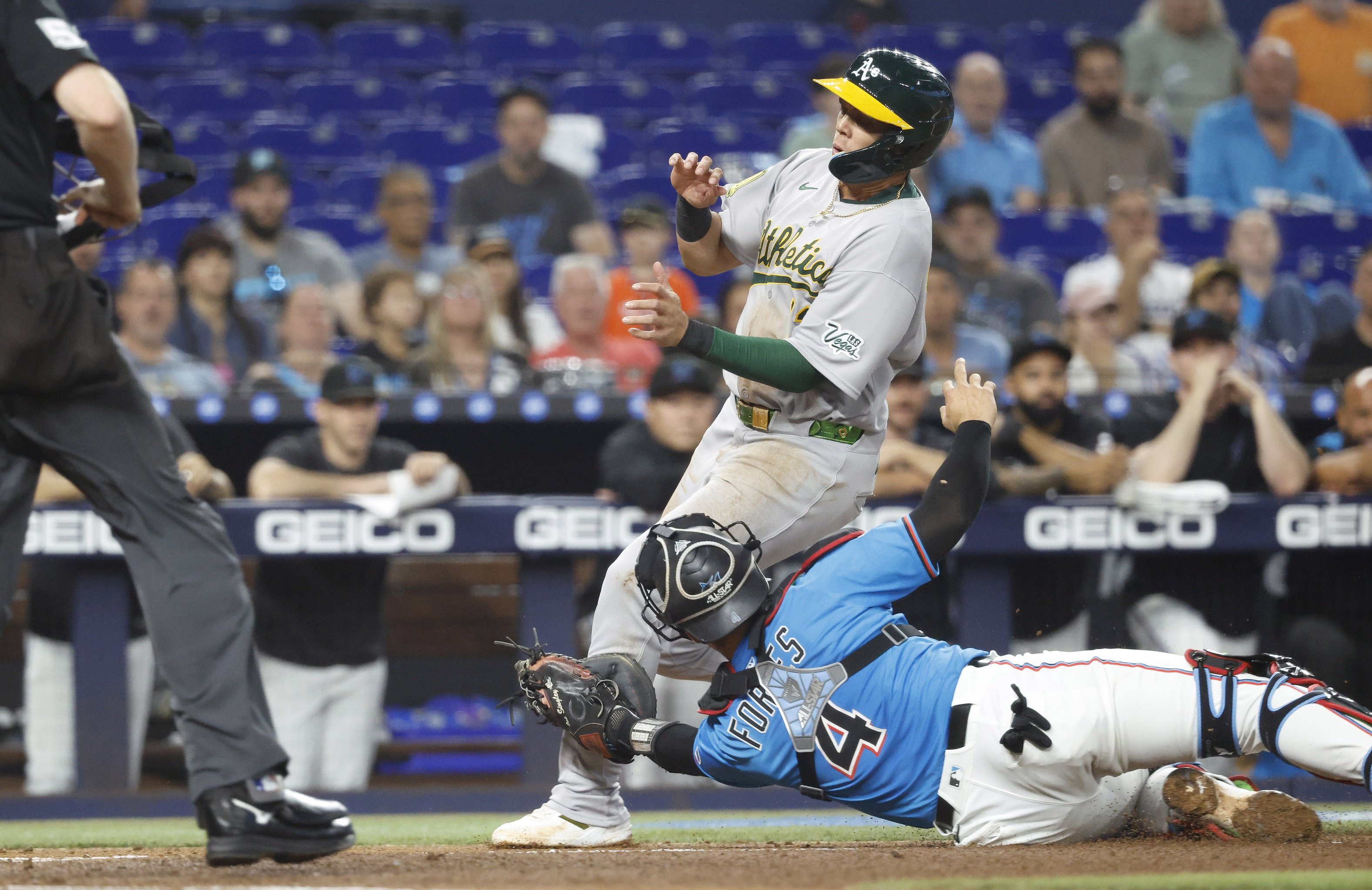 MIAMI, FL—The Marlins pitching over the last week has been bad. How bad, you may ask? Dating back to April 26, here are the earned run totals allowed by each of their starting pitchers: 7, 5, 5, 7, 4, 5, 5, with the club's collective 9.71 ERA and negative-1.2 fWAR in that span both Major League worsts. So, when Edward Cabrera worked 5 ⅔ innings of two-run ball on Sunday against the Athletics, it almost felt as if the metaphoric rock that had been crushing the Marlins' necks had slowly begun to be lifted. "It was a really good version of Eddie, especially with the strike throwing," noted manager Clayton McCullough following the 3-2 loss. After surrendering a pair of runs in the top of the second, Cabrera pitched scoreless ball from there on out, retiring 11 of the final 15 batters faced. Flashing pitch-to-contact meets command approach, Cabrera threw first-pitch strikes to 15 of the 23 hitters he faced, not walking his first (and only) batter of the day until there were two outs in the top of the sixth. The right-hander's four strikeouts were his fewest in a game of 5 or more innings pitched since the three he registered against the Giants back on August 31 last season. Unfortunately for Cabrera and the Marlins' sake, JP Sears was merely a tad bit better, limiting Miami to two runs over his 6 ⅓ innings of work. The 29-year-old owns a 2.93 ERA over his seven starts this season, a mark that would have been noticeably lower had Dane Myers not tagged him for a two-run double in the bottom of the fourth. Over his 10 plate appearances during the weekend set, Myers notched a pair of hits, including a home run in Friday's loss, before stealing a pair of bases in Saturday's walk-off victory. Though only getting limited playing time, Myers has made the most of it, hitting .351 with a .922 OPS over 69 plate appearances. With the loss, Miami, now 13-20, is 2-8 over their last 10 games. They currently sport a minus-54 run differential. Only the Rockies, who entered Sunday at minus-83, have been outscored by more runs thus far in 2025 among National League clubs. Of Note - The club announced before Sunday's game that Otto Lopez had been placed on the 10-day injured list with a right ankle sprain. He tells Daniel Álvarez-Montes of El Extrabase that he expects to miss 2-3 weeks. - Catcher Nick Fortes, activated to fill the aforementioned Lopez's roster spot, went 1-for-3 in his first game since April 9. - After allowing seven runs (four earned) over his first five outings, Calvin Faucher has now gone seven consecutive appearances without allowing an earned run, lowering his season ERA to 3.18. Looking Ahead The Marlins will continue their hosting duties Monday when they welcome the Los Angeles Dodgers for the first of a three-game series. Sandy Alcantara (2-3, 8.31 ERA) will look to avenge his most recent start against the Dodgers on April 29, when he allowed seven runs over 2 ⅔ innings. Alcantara's lifetime 9.66 ERA is the worst mark among the 843 pitchers to make at least seven starts against Los Angeles. First pitch from loanDepot park is slated for 6:40 EST.
- 1 comment
-
- 1
-
-
- edward cabrera
- dane myers
- (and 1 more)
-
Athletics outfielder JJ Bleday speaks with Fish On First about being traded by the Miami Marlins, terrorizing his former team and trying to establish himself as an everyday big leaguer. View full video
-
Athletics outfielder JJ Bleday speaks with Fish On First about being traded by the Miami Marlins, terrorizing his former team and trying to establish himself as an everyday big leaguer.
-
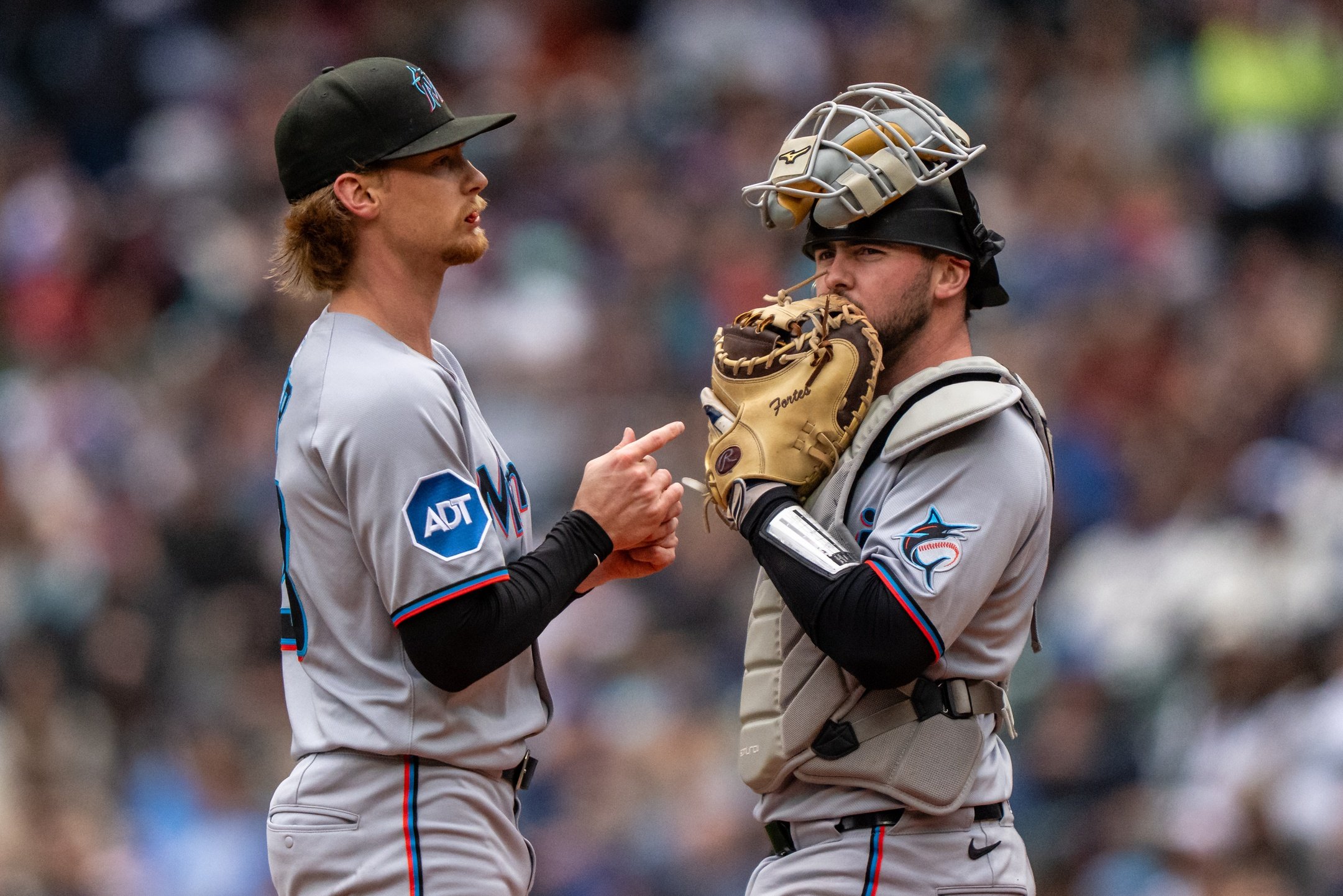 Agustín Ramírez hit not one, but two home runs in a game started by Max Meyer, the Marlins' best pitcher to this point of the season. Sounds like a recipe for success, right? Alas, Meyer was outdueled by Seattle Mariners right-hander Logan Evans (5 IP 2 R), who was making his Major League debut on Sunday. Interrupting a streak of four consecutive quality starts, Meyer lasted just four innings, surrendering five runs and striking out six in Miami's 7-6 loss to Seattle. "Uncharacteristic for him to get behind in counts," said manager Clayton McCullough about Meyer, who tied a career-worst with four walks allowed. Seattle catcher Cal Raleigh tagged Meyer for a first-inning home run to put him into a tie with former teammate Eugenio Suárez for the MLB lead with 10. A pair of two-out walks came back to haunt Meyer in the second frame. The Mariners took a 4-1 lead following a Julio Rodríguez single and Jorge Polanco double. Polanco ultimately compiled five extra-base hits over the course of the series. Trailing by four in the top of the eighth, Connor Norby capped off his second three-hit game of the season with a three-run home run to cut the deficit to one. In nine games since returning from injury, Norby has hit .303 with an .828 OPS. "He's just getting back into the flow of things, and today was a good sign of things," noted McCullough. Ramírez Continues Torrid Start After his latest display of excellence in the batter's box, Agustín Ramírez now finds himself the owner of a 1.682 OPS through his first five career games. No Marlin had ever posted an OPS that high through their first five games with the franchise. Nick Fortes' 1.615 OPS in 2021 was the previous best mark, and that consisted of only 13 plate appearances (Ramírez is at 21). Despite serving as the designated hitter Sunday, Ramírez became the first Marlins catcher with a multi-homer effort since Fortes back on August 16, 2022. In a way that only baseball could make possible, Ramírez would prove Miami's final chance to keep the game going. He ultimately grounded out at the hands of Andrés Muñoz, who collected his sport-leading 10th save to end the contest. The Marlins head to Los Angeles with a 12-15 record and tied with Atlanta for last place in the NL East. Looking Ahead The west coast trek continues on Monday with the first of a three-game series at Dodger Stadium. Game one starter Edward Cabrera (0-1, 6.14 ERA) will look to get both his season and numbers against the Dodgers on track—in four career appearances, Cabrera owns a 10.93 ERA against Los Angeles. Opposite of Cabrera, Dustin May (1-1, 3.68 ERA) will look to resume his dominance against Miami, having posted a 1.08 ERA in three starts. First pitch from Chavez Ravine is slated for 10:10 EST.
-
- 1
-
-
- max meyer
- agustin ramirez
- (and 1 more)
-
A pair of Agustín Ramírez home runs and a huge, late blast from Connor Norby were not quite enough to erase the deficit. Agustín Ramírez hit not one, but two home runs in a game started by Max Meyer, the Marlins' best pitcher to this point of the season. Sounds like a recipe for success, right? Alas, Meyer was outdueled by Seattle Mariners right-hander Logan Evans (5 IP 2 R), who was making his Major League debut on Sunday. Interrupting a streak of four consecutive quality starts, Meyer lasted just four innings, surrendering five runs and striking out six in Miami's 7-6 loss to Seattle. "Uncharacteristic for him to get behind in counts," said manager Clayton McCullough about Meyer, who tied a career-worst with four walks allowed. Seattle catcher Cal Raleigh tagged Meyer for a first-inning home run to put him into a tie with former teammate Eugenio Suárez for the MLB lead with 10. A pair of two-out walks came back to haunt Meyer in the second frame. The Mariners took a 4-1 lead following a Julio Rodríguez single and Jorge Polanco double. Polanco ultimately compiled five extra-base hits over the course of the series. Trailing by four in the top of the eighth, Connor Norby capped off his second three-hit game of the season with a three-run home run to cut the deficit to one. In nine games since returning from injury, Norby has hit .303 with an .828 OPS. "He's just getting back into the flow of things, and today was a good sign of things," noted McCullough. Ramírez Continues Torrid Start After his latest display of excellence in the batter's box, Agustín Ramírez now finds himself the owner of a 1.682 OPS through his first five career games. No Marlin had ever posted an OPS that high through their first five games with the franchise. Nick Fortes' 1.615 OPS in 2021 was the previous best mark, and that consisted of only 13 plate appearances (Ramírez is at 21). Despite serving as the designated hitter Sunday, Ramírez became the first Marlins catcher with a multi-homer effort since Fortes back on August 16, 2022. In a way that only baseball could make possible, Ramírez would prove Miami's final chance to keep the game going. He ultimately grounded out at the hands of Andrés Muñoz, who collected his sport-leading 10th save to end the contest. The Marlins head to Los Angeles with a 12-15 record and tied with Atlanta for last place in the NL East. Looking Ahead The west coast trek continues on Monday with the first of a three-game series at Dodger Stadium. Game one starter Edward Cabrera (0-1, 6.14 ERA) will look to get both his season and numbers against the Dodgers on track—in four career appearances, Cabrera owns a 10.93 ERA against Los Angeles. Opposite of Cabrera, Dustin May (1-1, 3.68 ERA) will look to resume his dominance against Miami, having posted a 1.08 ERA in three starts. First pitch from Chavez Ravine is slated for 10:10 EST. View full article
-
 At the outset of 2025, it was never a question of if the Miami Marlins would entertain offers for staff ace Sandy Alcantara, but when they would reel off what has the potential to be the most impactful trade of this baseball season. Sources within the Marlins organization were playing it cool amidst a couple of thrilling series wins. Reality began setting in last week, with only an improbable home run standing in the way of six consecutive losses. Much like last year, the front office will be looking for opportunities to swap veterans for young players in anticipation of returning to contender status a few years down the road. What makes the former NL Cy Young award winner and workhorse an intriguing trade candidate? He is owed “just” $34.6M combined over this and next season, along with a $21M club option for 2027. For context, between 2021 and 2023, only Zack Wheeler (16.5 bWAR) produced more pitching value than Alcantara (16.0 bWAR), and Wheeler's annual salary is $42M through 2027. Alcantara is a bargain and very much in the prime of his career at age 29. Needless to say, every team could use Sandy Alcantara. Which one could provide Miami with the most satisfying return to soften the blow of what would be a depressing departure? As things currently stand, the Chicago Cubs feel to be the best fit, both for Alcantara and for a Marlins team dedicated to stacking its pipeline with potential impact players. Pros for Chicago The Cubs have already lost their ace, Justin Steele, to season-ending surgery on his left elbow. Among the 41 pitchers to throw at least 425 innings between 2022 and 2024, Steele ranked sixth with a 3.10 ERA and nearly identical 3.14 FIP, a period that saw him finish fifth in 2023 NL Cy Young voting. A rotation now headlined by Shota Imanaga has managed a 3.05 ERA in 11 games played post-Steele. Even so, the addition of Alcantara would greatly boost the group's upside for both this season and beyond. They are currently leaning on the likes of Colin Rea, Jameson Taillon, and Matthew Boyd, each of whom are set to hit free agency after 2025 or 2026. The deep-pocketed Cubs wouldn't hesitate to pick up Alcantara's $21M option for 2027 if he's productive. In three career appearances (two starts) at Wrigley Field, Alcantara owns a 3.14 ERA and .699 opponent’s OPS. Most notably, though, Alcantara shined in his first career postseason start, tossing 6 ⅔ innings of 1-run ball in Chicago during Game 1 of the 2020 NL Wild Card Series. There’s also the Kyle Tucker of it all. Acquired from the Astros this past December, Tucker, one of the most well-rounded players in baseball, is set to cash in big once he enters free agency at season's end. Since becoming a full-time player in September 2019, Tucker has been the 10th-most valuable position player in baseball, according to fWAR (22.6). He is the only player with at least 100 HR, 90 stolen bases, and 30 runs on defense (Rfield) since the start of 2020. Tucker has continued his excellent play with the Cubs, hitting .302/.404/.615/1.018 through his first 24 games. The Cubs are hoping to retain Tucker long term. Acquiring Alcantara would be a sign of good faith in their effort to persuade him to re-sign with the organization. Divisional perspective matters, too. The complacency of the Cardinals and Pirates, the questions surrounding the Reds and if their core of young players will click simultaneously, along with the year-to-year enigma of, “How will the Brewers get it done this time given their limitations?” should only motivate Chicago more to acquire marquee talent. Pros for Miami As previously noted, the winner of the Sandy Alcantara sweepstakes ought to be the one who can supply the Marlins with the best potential return. Pitchers like Alcantara don’t grow on trees, but the prospect of two, three, or possibly even four players who could play pivotal roles on your organization’s next competitive club is an alluring potential outcome. The eighth-ranked MLB farm system ahead of the 2025 season includes a lot of potential trade chips who are practically major league-ready. One such player, 3B Matt Shaw, has already gotten a taste of the highest level. Shaw cracked the Cubs Opening Day roster and sported a .535 OPS in 18 games before being demoted to Triple-A. A change of scenery similar to what Connor Norby experienced going from the Orioles to Marlins last season could pay big dividends when you consider his career .900 minor league OPS. Chicago's highest-ranked pitcher, RHP Cade Horton, has shown an ability to miss bats, striking out 175 in his 135 innings in pro ball. Sporting two potential 60-grade pitches in his slider and changeup, Horton is off to a fast start, sporting a 1.46 ERA through his first three starts at AAA Iowa. Command issues may limit his ceiling, but Horton has mid-rotation starter written all over him. Cons for Chicago Regardless of his résumé, Alcantara’s player profile isn’t without its own warts. After logging 228-plus innings of a 2.28 ERA in his Cy Young award-winning 2022, Alcantara did experience a bit of a hangover in 2023, pitching to a 4.14 ERA (113 ERA+) over 28 starts, though still amassing 3.9 bWAR in the process. Pitching through most of that season with lingering biceps tendinitis, he ultimately developed a UCL sprain that required Tommy John surgery. In his absence in 2024, the Marlins rotation ranked 29th in ERA at 5.24 and last with 1.6 fWAR. Through four post-TJ starts, the 29-year-old has pitched to an ugly 7.27 ERA and with a tick less velocity on his four-seam and sinker in the early going. Encouraging, though, are Alcantara’s 4.73 FIP along with a 91st percentile ground ball rate, right in line with his previous campaigns. Alcantara's best asset used to be the volume of his workload. It's been more than 19 months since we've seen him make a quality start. Cons for Miami The Marlins' recent history of trading superstar-caliber players hasn’t worked out in their favor. Fans are still reeling over the Giancarlo Stanton trade after the 2017 season, a salary dump for a reigning NL MVP and just three years after signing a then-record $325M extension. The Christian Yelich trade to Milwaukee was a mere month later. He succeeded Stanton as NL MVP in 2018, has been the main protagonist of the most successful era in Brewers history, and still bats in the heart of their lineup to this day. The players acquired by Miami in both transactions failed to pan out. A very notable exception was the deal sending Marcell Ozuna to the Cardinals. The headliner of that prospect package? Sandy Alcantara. Standing pat with Alcantara is not the easy answer, either. The Marlins lose leverage as his years of club control dwindle. Alcantara's current slump is more than the simple product of bad luck. He has made mechanical changes and still has the prove he can succeed with them. While pivoting to build around Alcantara would be celebrated by fans, it'd be a risky proposition as he enters his 30s. The length of Alcantara's contract gives the Marlins enough runway to rebuff offers at the deadline if they feel he needs the months of August and September to remind the rest of the league of his awesome upside. The Marlins and Cubs most recently collaborated on a deal in December, swapping Vidal Bruján for Matt Mervis. The early returns of that favor the Fish—Mervis is their leading power hitter and run producer. Sandy Alcantara for Matt Shaw and Cade Horton: Which side would say no if that offer was on the table right now?
 -
Many teams will be vying for Sandy Alcantara's services as the 2025 trade deadline approaches. Here's why the Cubs may be the perfect fit. At the outset of 2025, it was never a question of if the Miami Marlins would entertain offers for staff ace Sandy Alcantara, but when they would reel off what has the potential to be the most impactful trade of this baseball season. Sources within the Marlins organization were playing it cool amidst a couple of thrilling series wins. Reality began setting in last week, with only an improbable home run standing in the way of six consecutive losses. Much like last year, the front office will be looking for opportunities to swap veterans for young players in anticipation of returning to contender status a few years down the road. What makes the former NL Cy Young award winner and workhorse an intriguing trade candidate? He is owed “just” $34.6M combined over this and next season, along with a $21M club option for 2027. For context, between 2021 and 2023, only Zack Wheeler (16.5 bWAR) produced more pitching value than Alcantara (16.0 bWAR), and Wheeler's annual salary is $42M through 2027. Alcantara is a bargain and very much in the prime of his career at age 29. Needless to say, every team could use Sandy Alcantara. Which one could provide Miami with the most satisfying return to soften the blow of what would be a depressing departure? As things currently stand, the Chicago Cubs feel to be the best fit, both for Alcantara and for a Marlins team dedicated to stacking its pipeline with potential impact players. Pros for Chicago The Cubs have already lost their ace, Justin Steele, to season-ending surgery on his left elbow. Among the 41 pitchers to throw at least 425 innings between 2022 and 2024, Steele ranked sixth with a 3.10 ERA and nearly identical 3.14 FIP, a period that saw him finish fifth in 2023 NL Cy Young voting. A rotation now headlined by Shota Imanaga has managed a 3.05 ERA in 11 games played post-Steele. Even so, the addition of Alcantara would greatly boost the group's upside for both this season and beyond. They are currently leaning on the likes of Colin Rea, Jameson Taillon, and Matthew Boyd, each of whom are set to hit free agency after 2025 or 2026. The deep-pocketed Cubs wouldn't hesitate to pick up Alcantara's $21M option for 2027 if he's productive. In three career appearances (two starts) at Wrigley Field, Alcantara owns a 3.14 ERA and .699 opponent’s OPS. Most notably, though, Alcantara shined in his first career postseason start, tossing 6 ⅔ innings of 1-run ball in Chicago during Game 1 of the 2020 NL Wild Card Series. There’s also the Kyle Tucker of it all. Acquired from the Astros this past December, Tucker, one of the most well-rounded players in baseball, is set to cash in big once he enters free agency at season's end. Since becoming a full-time player in September 2019, Tucker has been the 10th-most valuable position player in baseball, according to fWAR (22.6). He is the only player with at least 100 HR, 90 stolen bases, and 30 runs on defense (Rfield) since the start of 2020. Tucker has continued his excellent play with the Cubs, hitting .302/.404/.615/1.018 through his first 24 games. The Cubs are hoping to retain Tucker long term. Acquiring Alcantara would be a sign of good faith in their effort to persuade him to re-sign with the organization. Divisional perspective matters, too. The complacency of the Cardinals and Pirates, the questions surrounding the Reds and if their core of young players will click simultaneously, along with the year-to-year enigma of, “How will the Brewers get it done this time given their limitations?” should only motivate Chicago more to acquire marquee talent. Pros for Miami As previously noted, the winner of the Sandy Alcantara sweepstakes ought to be the one who can supply the Marlins with the best potential return. Pitchers like Alcantara don’t grow on trees, but the prospect of two, three, or possibly even four players who could play pivotal roles on your organization’s next competitive club is an alluring potential outcome. The eighth-ranked MLB farm system ahead of the 2025 season includes a lot of potential trade chips who are practically major league-ready. One such player, 3B Matt Shaw, has already gotten a taste of the highest level. Shaw cracked the Cubs Opening Day roster and sported a .535 OPS in 18 games before being demoted to Triple-A. A change of scenery similar to what Connor Norby experienced going from the Orioles to Marlins last season could pay big dividends when you consider his career .900 minor league OPS. Chicago's highest-ranked pitcher, RHP Cade Horton, has shown an ability to miss bats, striking out 175 in his 135 innings in pro ball. Sporting two potential 60-grade pitches in his slider and changeup, Horton is off to a fast start, sporting a 1.46 ERA through his first three starts at AAA Iowa. Command issues may limit his ceiling, but Horton has mid-rotation starter written all over him. Cons for Chicago Regardless of his résumé, Alcantara’s player profile isn’t without its own warts. After logging 228-plus innings of a 2.28 ERA in his Cy Young award-winning 2022, Alcantara did experience a bit of a hangover in 2023, pitching to a 4.14 ERA (113 ERA+) over 28 starts, though still amassing 3.9 bWAR in the process. Pitching through most of that season with lingering biceps tendinitis, he ultimately developed a UCL sprain that required Tommy John surgery. In his absence in 2024, the Marlins rotation ranked 29th in ERA at 5.24 and last with 1.6 fWAR. Through four post-TJ starts, the 29-year-old has pitched to an ugly 7.27 ERA and with a tick less velocity on his four-seam and sinker in the early going. Encouraging, though, are Alcantara’s 4.73 FIP along with a 91st percentile ground ball rate, right in line with his previous campaigns. Alcantara's best asset used to be the volume of his workload. It's been more than 19 months since we've seen him make a quality start. Cons for Miami The Marlins' recent history of trading superstar-caliber players hasn’t worked out in their favor. Fans are still reeling over the Giancarlo Stanton trade after the 2017 season, a salary dump for a reigning NL MVP and just three years after signing a then-record $325M extension. The Christian Yelich trade to Milwaukee was a mere month later. He succeeded Stanton as NL MVP in 2018, has been the main protagonist of the most successful era in Brewers history, and still bats in the heart of their lineup to this day. The players acquired by Miami in both transactions failed to pan out. A very notable exception was the deal sending Marcell Ozuna to the Cardinals. The headliner of that prospect package? Sandy Alcantara. Standing pat with Alcantara is not the easy answer, either. The Marlins lose leverage as his years of club control dwindle. Alcantara's current slump is more than the simple product of bad luck. He has made mechanical changes and still has the prove he can succeed with them. While pivoting to build around Alcantara would be celebrated by fans, it'd be a risky proposition as he enters his 30s. The length of Alcantara's contract gives the Marlins enough runway to rebuff offers at the deadline if they feel he needs the months of August and September to remind the rest of the league of his awesome upside. The Marlins and Cubs most recently collaborated on a deal in December, swapping Vidal Bruján for Matt Mervis. The early returns of that favor the Fish—Mervis is their leading power hitter and run producer. Sandy Alcantara for Matt Shaw and Cade Horton: Which side would say no if that offer was on the table right now? View full article
-
Javier Sanoja drove in a career-best five runs to help the Marlins salvage the final game of their series against Philadelphia. On Easter Sunday, the Marlins bore witness to the return of a familiar-faced Jesus: Philadelphia Phillies left-hander Jesús Luzardo. Acquired in a trade with the Athletics for Starling Marte in 2021, Luzardo made 74 starts over parts of four seasons with Miami, winning 21 games and averaging nearly 10 strikeouts per nine. After an injury-plagued 2024, Miami pulled the trigger on a four-player trade to send the Broward County product to Philadelphia. Fortunately for the left-hander's new employer, Luzardo did just as he had done in each of his first four starts since coming over to the City of Brotherly Love, throwing 7 innings of two-run ball (one earned) against his former club. Luzardo's ERA now sits at 2.08. And yet, it was the Marlins who had the last laugh in their 7-5 extra-innings win, snapping their five-game losing streak in the process to improve to 9-12. The Marlins trailed 4-2 in the top of the eighth, but had finally gotten into a Phillies bullpen that entered play with a 5.54 ERA. Javier Sanoja—playing left field and using Griffin Conine's glove the day he was played on the 60-day injured list with a dislocated shoulder—saved his first career home run for the perfect moment. The 22-year-old deposited a hanging Orion Kerkering breaking ball into the left field seats for a three-run shot to give the Marlins a 5-4 lead. "One of the greatest moments of my life," noted Sanoja in Spanish postgame, reflecting on the homer. Sanoja would add on in the top of 10th with an RBI single, becoming the fourth-youngest Marlin to drive in five runs in a game. Gillispie Guts Through 5 After allowing four of the first five batters he faced to reach, Connor Gillispie fought his way through five innings, allowing four runs on seven hits. "He took a hit early, but he settled in and kept the game close," said manager Clayton McCullough. Miami's 5.74 ERA from their starters is 28th among 30 clubs through Sunday. Gillispie isn't helping the cause with a 6.75 ERA this season. 1.mp4 As they had in the first two games of this series, the Phillies took advantage of a Marlins team that entered the day having allowed a league-leading 34 stolen bases, swiping a pair off Gillispie in a three-run bottom of the first. Baserunners are now a perfect six-for-six on stolen base attempts against the right-hander this season. In the three-game set, Philadelphia went seven-for-seven on steal attempts. A(nother) Day to Remember Making his Major League debut, the recently recalled Cade Gibson, 27, fired 2 ⅓ scoreless frames, picking up a pair of strikeouts and touching 95 mph with his sinker in the process. "For making your Major League debut on the road, he showed no fear and a lot of composure," noted McCullough on Gibson, who 22 of his 34 pitches for strikes. Of Note - Veteran catcher Rob Brantly exited Sunday's game with reported right shoulder discomfort. - Sanoja became the first Marlin to drive in 5 or more runs against the Phillies since Starlin Castro did on August 23, 2019. - With his first inning, two-run double, Bryce Harper became just the fifth different player to collect 90 extra-base hits against the Marlins, and third with 50 doubles (along with David Wright and Jimmy Rollins). Looking Ahead The Marlins will fly south for a brief homestand, hosting a three-game series against the Cincinnati Reds that begins on Monday. Max Meyer (1-2, 2.63 ERA) will look to continue his strong start of the season in what will be his second career outing against Cincinnati. In his lone start against them back on August 6 last season, Meyer surrendered six runs over four innings. Nick Lodolo (2-1, 2.31 ERA) will oppose him for the Reds. First pitch from loanDepot park is slated for 6:40 EST. View full article
-
Sanoja spoils Luzardo's big day to help Fish snap five-game skid
Louis Addeo-Weiss posted an article in Marlins
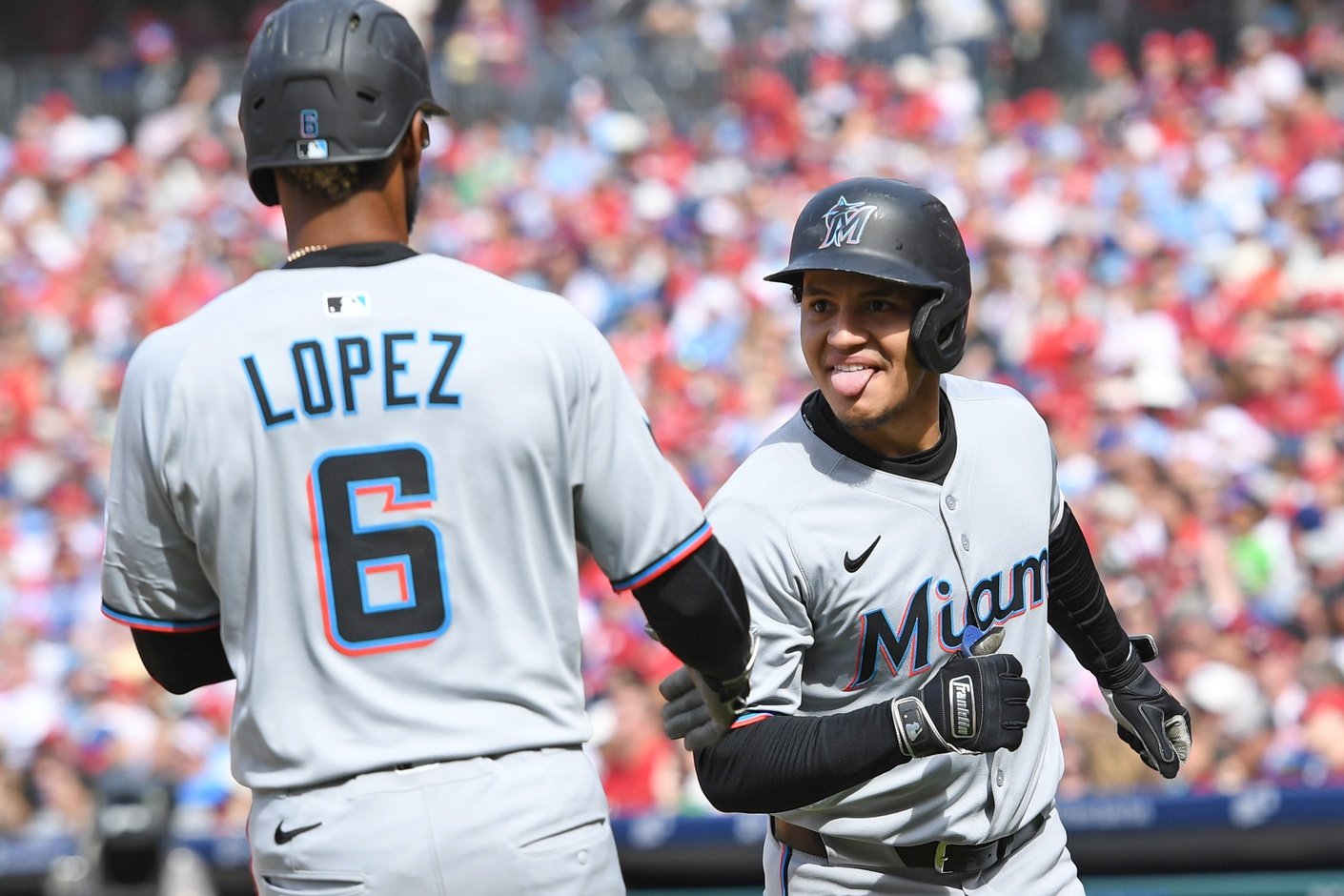 On Easter Sunday, the Marlins bore witness to the return of a familiar-faced Jesus: Philadelphia Phillies left-hander Jesús Luzardo. Acquired in a trade with the Athletics for Starling Marte in 2021, Luzardo made 74 starts over parts of four seasons with Miami, winning 21 games and averaging nearly 10 strikeouts per nine. After an injury-plagued 2024, Miami pulled the trigger on a four-player trade to send the Broward County product to Philadelphia. Fortunately for the left-hander's new employer, Luzardo did just as he had done in each of his first four starts since coming over to the City of Brotherly Love, throwing 7 innings of two-run ball (one earned) against his former club. Luzardo's ERA now sits at 2.08. And yet, it was the Marlins who had the last laugh in their 7-5 extra-innings win, snapping their five-game losing streak in the process to improve to 9-12. The Marlins trailed 4-2 in the top of the eighth, but had finally gotten into a Phillies bullpen that entered play with a 5.54 ERA. Javier Sanoja—playing left field and using Griffin Conine's glove the day he was played on the 60-day injured list with a dislocated shoulder—saved his first career home run for the perfect moment. The 22-year-old deposited a hanging Orion Kerkering breaking ball into the left field seats for a three-run shot to give the Marlins a 5-4 lead. "One of the greatest moments of my life," noted Sanoja in Spanish postgame, reflecting on the homer. Sanoja would add on in the top of 10th with an RBI single, becoming the fourth-youngest Marlin to drive in five runs in a game. Gillispie Guts Through 5 After allowing four of the first five batters he faced to reach, Connor Gillispie fought his way through five innings, allowing four runs on seven hits. "He took a hit early, but he settled in and kept the game close," said manager Clayton McCullough. Miami's 5.74 ERA from their starters is 28th among 30 clubs through Sunday. Gillispie isn't helping the cause with a 6.75 ERA this season. 1.mp4 As they had in the first two games of this series, the Phillies took advantage of a Marlins team that entered the day having allowed a league-leading 34 stolen bases, swiping a pair off Gillispie in a three-run bottom of the first. Baserunners are now a perfect six-for-six on stolen base attempts against the right-hander this season. In the three-game set, Philadelphia went seven-for-seven on steal attempts. A(nother) Day to Remember Making his Major League debut, the recently recalled Cade Gibson, 27, fired 2 ⅓ scoreless frames, picking up a pair of strikeouts and touching 95 mph with his sinker in the process. "For making your Major League debut on the road, he showed no fear and a lot of composure," noted McCullough on Gibson, who 22 of his 34 pitches for strikes. Of Note - Veteran catcher Rob Brantly exited Sunday's game with reported right shoulder discomfort. - Sanoja became the first Marlin to drive in 5 or more runs against the Phillies since Starlin Castro did on August 23, 2019. - With his first inning, two-run double, Bryce Harper became just the fifth different player to collect 90 extra-base hits against the Marlins, and third with 50 doubles (along with David Wright and Jimmy Rollins). Looking Ahead The Marlins will fly south for a brief homestand, hosting a three-game series against the Cincinnati Reds that begins on Monday. Max Meyer (1-2, 2.63 ERA) will look to continue his strong start of the season in what will be his second career outing against Cincinnati. In his lone start against them back on August 6 last season, Meyer surrendered six runs over four innings. Nick Lodolo (2-1, 2.31 ERA) will oppose him for the Reds. First pitch from loanDepot park is slated for 6:40 EST.
- 1 comment
-
- 1
-
-
- javier sanoja
- jesus luzardo
- (and 3 more)
-
Miami was set to conclude their three-game set at Truist Park with Sandy Alcantara on the mound. The 2025 Miami Marlins (5-4) will have to wait for their second series win of the year as the finale of their three-game set against the Atlanta Braves (1-8) that had been scheduled for Sunday afternoon was called due to inclement weather. Georgia is on a partial tornado watch until 6 pm CDT. After falling victim to a dominant Spencer Schwellenbach start and a 10-run Atlanta barrage on Friday, Miami bounced back to claim the Saturday affair on the backs of Cal Quantrill's 5 shutout innings as he earned his first win in a Marlins uniform. Miami had returning ace Sandy Alcantara (1-0, 3.72 ERA) slated to start the rubber game, fresh off his first win of the season when he tossed 5 innings of 2-run ball against the Mets on April 1. The former Cy Young Award winner has mostly had his way with the Atlanta lineup, pitching to a 2.94 ERA in 13 prior starts. Among active pitchers to make at least 10 starts against the Braves, only Jacob deGrom and Clayton Kershaw have lower ERA's. Atlanta's scheduled starter, Grant Holmes (0-1, 7.20 ERA) was looking to not only get his 2025 on track but also figure out the Miami bats. In two starts against them in 2024, Holmes pitched to an 8.10 ERA over 8 ⅔ innings. The Marlins make another trip to Atlanta from August 7-10. That will now turn into a five-game series with a split doubleheader scheduled for Saturday, August 9. The Marlins' road trip continues with three games against the New York Mets, but Alcantara will be returning to Miami and go on the paternity list—he and his wife are expecting a baby girl, per Craig Mish. He will rejoin the club for the next homestand. Monday's series opener figures to be a bullpen game for the Fish with an additional arm to be recalled from the minors to take Alcantara's roster spot. Connor Gillispie (0-1, 3.60 ERA) and Max Meyer (0-1, 3.09 ERA) are the probables for Tuesday and Wednesday, respectively. The Braves will welcome the Phillies on Tuesday with Chris Sale (0-1, 5.40 ERA) set for his third start of the season. View full article

.jpg.af7c33e63f5a7d126ff7857be56b5ae2.jpg)

