



Louis Addeo-Weiss
-
Posts
283 -
Joined
-
Last visited
-
Days Won
49
Content Type
Profiles
Miami Marlins Videos
2026 Miami Marlins Top Prospects Ranking
Miami Marlins Free Agent & Trade Rumors, Notes, & Tidbits
Guides & Resources
News
2025 Miami Marlins Draft Pick Tracker
2026 Miami Marlins Draft Tracker: Picks & Bonuses
Forums
Blogs
Events
Store
Downloads
Gallery
Everything posted by Louis Addeo-Weiss
-
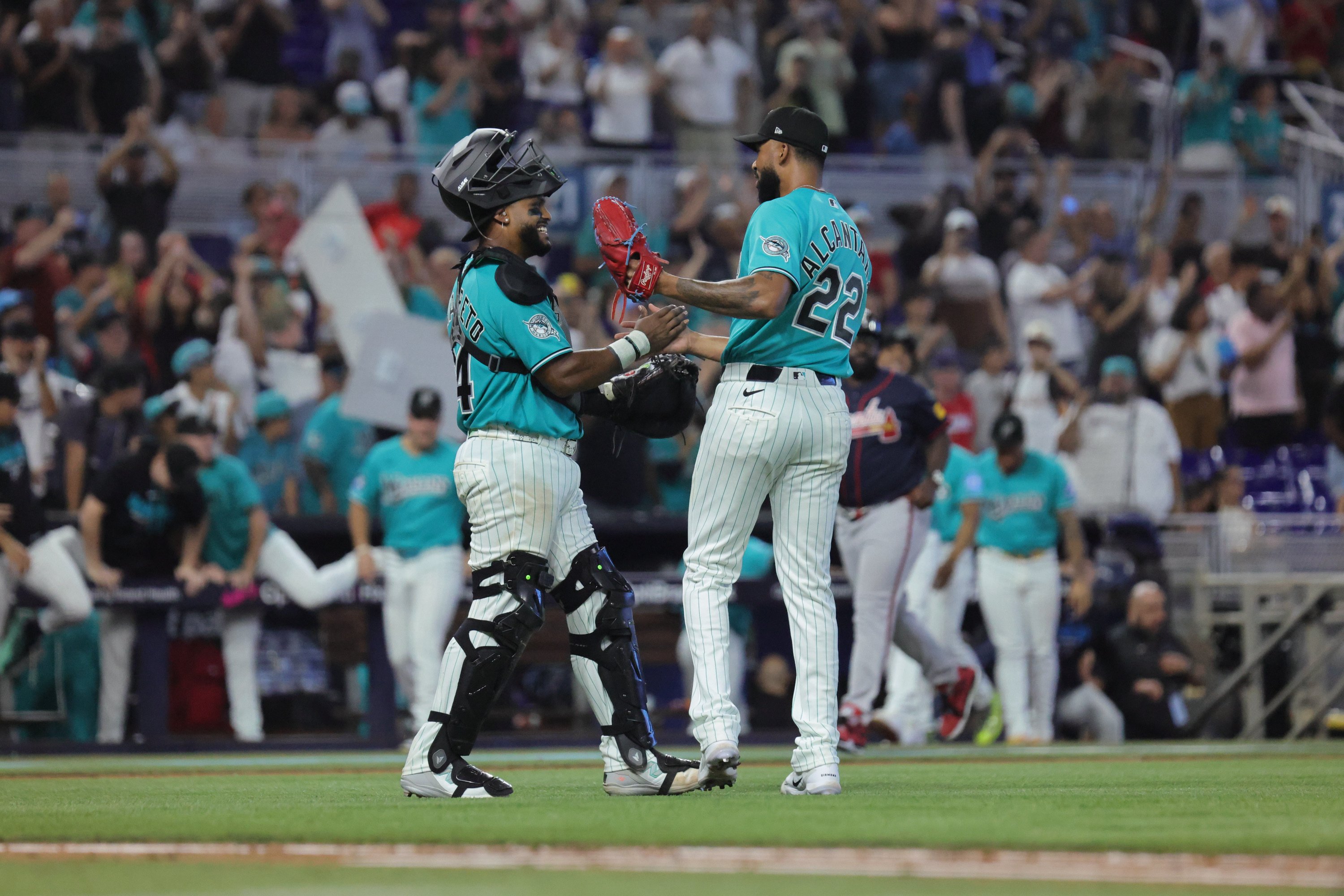 The 2026 season has come and gone for the Miami Marlins. While the year brought its many ups and downs, there will be ample time to reflect this offseason. Before they bid adieu to their 34th season of play, the Marlins had the goal of winning the final series against the NL East champion Atlanta Braves. Thanks to a combination of Janson Junk, a pair of home runs, and new part-time closer Sandy Alcantara, they did just that, ending the year with a 5-3 victory over Atlanta. How It Started As he has consistently done this season, Janson Junk put forth a strong effort, striking out five in his 4 ⅔ innings of work. The 30-year-old ends his 2026 season with career bests in innings pitched (123 ⅔) and strikeouts (89). Junk allowed two or fewer runs in 18 of his 25 starts, finishing with a 4.22 ERA. The lone blunder on Junk's afternoon came on a Mauricio Dubón solo home run in the top of the third. Clutch Pop Sitting on 24 home runs on the final day of the season, Heriberto Hernández tied the score in his second plate appearance with a solo home run of his own. Since returning to the big leagues on May 7, Hernández hit a team-leading 25 home runs. In the bottom half of the seventh and his final plate appearance, Griffin Conine showed the light-tower power that looks to see him be a regular in the 2027 lineup. It was remarkably well-timed, just as longtime play-by-play broadcaster Rich Waltz made a surprise appearance in the TV booth, joining his former partner Tommy Hutton, who was working the final game of his career. Hutton, who has called Marlins games across two stints since 1997, teamed up with Waltz in 2005, a year when the club had another Conine, Griffin's father, Jeff, on the roster. The Closer Adding to the ending on a high of it all, Marlins manager Clayton McCullough turned to Sandy Alcantara in the bottom of the ninth to end it where it all started. Speaking before the game, McCullough hinted at the move with a wry, "we hope things line up that way." Alcantara, the major league leader in innings pitched at 213, entered seeking his third save of the season. The previous two came during the Marlins' last road trip. The last time any player had a season of at least 200 innings pitched and three or more saves came in 1980 via Jerry Reuss. As he had the prior two such outings, Alcantara wasted little time, needing just 10 pitches to lock down the win for Miami while notching save number three in the process. His final pitch, a 92 mph changeup, resulted in a swinging strikeout of Dashawn Keirsey Jr. "After a bad season last year...I'm very happy with myself because I finished strong. I finished healthy—I got 200-plus innings," noted Alcantara. In his first season off Tommy John surgery in 2025, Alcantara pitched a 5.36 ERA, though he still threw 174-plus innings in the process. He ends 2026 with a much more Sandy-like 3.87 mark. Now through the final year of a five-year extension he signed following the 2021 season, Alcantara will, in his own words, "wait on the couch until the team calls" to confirm whether they are picking up his $21M club option for 2027. "I want to keep myself here with the Marlins. I've been with this club for nine years...I love this organization so much." Miami concludes 2026 with an 80-82 record. At a run differential of plus-3, this year's club ties 2008's Florida Marlins for the fifth-best mark in franchise history, a 92-run improvement year-over-year. Their 168 home runs are the most since they hit 194 in 2017. "A lot of high moments," reflected McCullough, now through two seasons as manager. "We certainly had to navigate through quite a bit of adversity." Marlins president of baseball operations Peter Bendix is scheduled to hold his end-of-season press conference at loanDepot park on Tuesday.
- 3 comments
-
- 4
-

-

-
- sandy alcantara
- griffin conine
- (and 2 more)
-
The 2026 season has come and gone for the Miami Marlins. While the year brought its many ups and downs, there will be ample time to reflect this offseason. Before they bid adieu to their 34th season of play, the Marlins had the goal of winning the final series against the NL East champion Atlanta Braves. Thanks to a combination of Janson Junk, a pair of home runs, and new part-time closer Sandy Alcantara, they did just that, ending the year with a 5-3 victory over Atlanta. How It Started As he has consistently done this season, Janson Junk put forth a strong effort, striking out five in his 4 ⅔ innings of work. The 30-year-old ends his 2026 season with career bests in innings pitched (123 ⅔) and strikeouts (89). Junk allowed two or fewer runs in 18 of his 25 starts, finishing with a 4.22 ERA. The lone blunder on Junk's afternoon came on a Mauricio Dubón solo home run in the top of the third. Clutch Pop Sitting on 24 home runs on the final day of the season, Heriberto Hernández tied the score in his second plate appearance with a solo home run of his own. Since returning to the big leagues on May 7, Hernández hit a team-leading 25 home runs. In the bottom half of the seventh and his final plate appearance, Griffin Conine showed the light-tower power that looks to see him be a regular in the 2027 lineup. It was remarkably well-timed, just as longtime play-by-play broadcaster Rich Waltz made a surprise appearance in the TV booth, joining his former partner Tommy Hutton, who was working the final game of his career. Hutton, who has called Marlins games across two stints since 1997, teamed up with Waltz in 2005, a year when the club had another Conine, Griffin's father, Jeff, on the roster. The Closer Adding to the ending on a high of it all, Marlins manager Clayton McCullough turned to Sandy Alcantara in the bottom of the ninth to end it where it all started. Speaking before the game, McCullough hinted at the move with a wry, "we hope things line up that way." Alcantara, the major league leader in innings pitched at 213, entered seeking his third save of the season. The previous two came during the Marlins' last road trip. The last time any player had a season of at least 200 innings pitched and three or more saves came in 1980 via Jerry Reuss. As he had the prior two such outings, Alcantara wasted little time, needing just 10 pitches to lock down the win for Miami while notching save number three in the process. His final pitch, a 92 mph changeup, resulted in a swinging strikeout of Dashawn Keirsey Jr. "After a bad season last year...I'm very happy with myself because I finished strong. I finished healthy—I got 200-plus innings," noted Alcantara. In his first season off Tommy John surgery in 2025, Alcantara pitched a 5.36 ERA, though he still threw 174-plus innings in the process. He ends 2026 with a much more Sandy-like 3.87 mark. Now through the final year of a five-year extension he signed following the 2021 season, Alcantara will, in his own words, "wait on the couch until the team calls" to confirm whether they are picking up his $21M club option for 2027. "I want to keep myself here with the Marlins. I've been with this club for nine years...I love this organization so much." Miami concludes 2026 with an 80-82 record. At a run differential of plus-3, this year's club ties 2008's Florida Marlins for the fifth-best mark in franchise history, a 92-run improvement year-over-year. Their 168 home runs are the most since they hit 194 in 2017. "A lot of high moments," reflected McCullough, now through two seasons as manager. "We certainly had to navigate through quite a bit of adversity." Marlins president of baseball operations Peter Bendix is scheduled to hold his end-of-season press conference at loanDepot park on Tuesday. View full article
-
 The Marlins may be mathematically out of the playoff picture, but that does not mean the end of their season has to end on a sour note. Experimental in their approach to pitching, the Marlins, for the second night in a row, deployed the strategy of having a starting pitcher throw in-game. After Eury Pérez tossed a scoreless eighth inning in Tuesday's extra-innings victory, it would be Sandy Alcantara, yet again, in to close it out. Whereas the first such occurrence last week in Arizona came with a pair of close-call fly balls, Alcantara fared much better on Wednesday, needing just 12 pitches to secure his second save of the season. In doing so, Alcantara becomes the first pitcher since 1996 with a season of at least 200 innings pitched and two or more saves. How We Got There Had someone told you at the beginning of the 2026 season that Ryan Gusto would be making a compelling case to start for the Marlins in 2027, you would be hard-pressed to find someone who agreed. Through the end of July, Gusto sported a 5.31 ERA, a case of déjà vu from his rookie season when he posted an ERA approaching six. And then, something clicked. Gusto's performance in Miami's 3-2 victory over the Chicago Cubs on Wednesday read more like the pitcher he has been for the better part of the last two months. Tossing 5 ⅓ scoreless innings before being lifted in the bottom of the sixth, Gusto showed why the Marlins brass has entrusted him to work deeper into games. "I thought Ryan was fantastic tonight...He was moving the ball around, using his mix really well...and he's just been throwing the ball really well of late," noted McCullough. Finishing his season on a strong note, Gusto has posted a 3.12 ERA since the beginning of August. The right-hander allowed two or fewer earned runs in nine of his last 10 starts. Giving the ball to Michael Petersen , Miami's best reliever at stranding baserunners (93.3%), one had to figure they would exit the inning retaining their 2-0 lead. But, because baseball is baseball, Petersen allowed a two-out, two-strike single to Dansby Swanson, tying the score at two apiece. Like Gusto, veteran Kevin Gausman matched him pitch-for-pitch, allowing two over 5 ⅔ innings, striking out seven. The lone blow against the splitter specialist came in the top of the sixth when Kyle Stowers homered for the second time in as many days. Though he has played most of 2026 on a pair of injured hamstrings, a compromised Stowers still ranks second on the club with 21 home runs, while sporting an OPS right under .800. The Marlins would take the final lead of the evening when a Joe Mack ground ball originally ruled a 6-4-3 double play was overturned on replay review that showed Esteury Ruiz slid into second just before the transfer was caught by Swanson. The Current Playoff Picture With the Marlins playing spoiler this final week of the season, the Cubs and Phillies remained deadlocked for a share of the first NL Wild Card spot with identical 87-71 records. The Don Mattingly-led club fell 4-1 at the hands of the NL Central champion Milwaukee Brewers, who secured their 99th victory of the season. The Phillies will commence their final series of the year against the AL East champion Tampa Bay Rays, while Chicago will match up against the Boston Red Sox. Of Note Miami will close out the season series against Chicago on Thursday in an afternoon affair at the Friendly Confines. Tyler Phillips (5-4, 3.45 ERA) gets the call for the Marlins in his final start of the season. In his lone start against Chicago earlier this year, Phillips allowed three runs over five innings pitched in a 10-3 Marlins win. Matthew Boyd (9-5, 4.06 ERA) will oppose Phillips as he vies for his tenth win of the season. First pitch from Wrigley Field is slated for 2:20 pm EST. View full article
 -
Sandy saves the day AGAIN as Fish take game two in Chicago
Louis Addeo-Weiss posted an article in Marlins
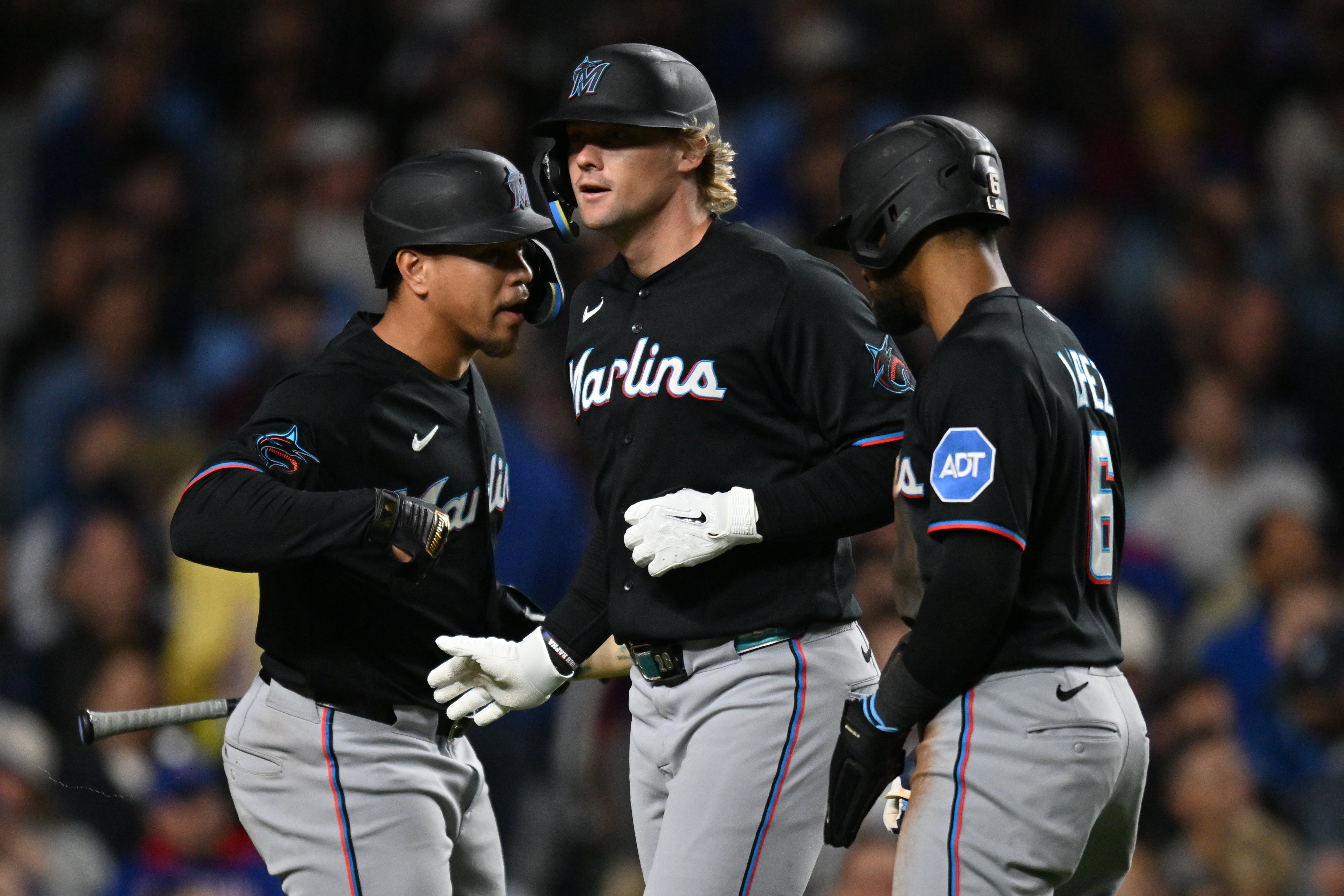 The Marlins may be mathematically out of the playoff picture, but that does not mean the end of their season has to end on a sour note. Experimental in their approach to pitching, the Marlins, for the second night in a row, deployed the strategy of having a starting pitcher throw in-game. After Eury Pérez tossed a scoreless eighth inning in Tuesday's extra-innings victory, it would be Sandy Alcantara, yet again, in to close it out. Whereas the first such occurrence last week in Arizona came with a pair of close-call fly balls, Alcantara fared much better on Wednesday, needing just 12 pitches to secure his second save of the season. In doing so, Alcantara becomes the first pitcher since 1996 with a season of at least 200 innings pitched and two or more saves. How We Got There Had someone told you at the beginning of the 2026 season that Ryan Gusto would be making a compelling case to start for the Marlins in 2027, you would be hard-pressed to find someone who agreed. Through the end of July, Gusto sported a 5.31 ERA, a case of déjà vu from his rookie season when he posted an ERA approaching six. And then, something clicked. Gusto's performance in Miami's 3-2 victory over the Chicago Cubs on Wednesday read more like the pitcher he has been for the better part of the last two months. Tossing 5 ⅓ scoreless innings before being lifted in the bottom of the sixth, Gusto showed why the Marlins brass has entrusted him to work deeper into games. "I thought Ryan was fantastic tonight...He was moving the ball around, using his mix really well...and he's just been throwing the ball really well of late," noted McCullough. Finishing his season on a strong note, Gusto has posted a 3.12 ERA since the beginning of August. The right-hander allowed two or fewer earned runs in nine of his last 10 starts. Giving the ball to Michael Petersen , Miami's best reliever at stranding baserunners (93.3%), one had to figure they would exit the inning retaining their 2-0 lead. But, because baseball is baseball, Petersen allowed a two-out, two-strike single to Dansby Swanson, tying the score at two apiece. Like Gusto, veteran Kevin Gausman matched him pitch-for-pitch, allowing two over 5 ⅔ innings, striking out seven. The lone blow against the splitter specialist came in the top of the sixth when Kyle Stowers homered for the second time in as many days. Though he has played most of 2026 on a pair of injured hamstrings, a compromised Stowers still ranks second on the club with 21 home runs, while sporting an OPS right under .800. The Marlins would take the final lead of the evening when a Joe Mack ground ball originally ruled a 6-4-3 double play was overturned on replay review that showed Esteury Ruiz slid into second just before the transfer was caught by Swanson. The Current Playoff Picture With the Marlins playing spoiler this final week of the season, the Cubs and Phillies remained deadlocked for a share of the first NL Wild Card spot with identical 87-71 records. The Don Mattingly-led club fell 4-1 at the hands of the NL Central champion Milwaukee Brewers, who secured their 99th victory of the season. The Phillies will commence their final series of the year against the AL East champion Tampa Bay Rays, while Chicago will match up against the Boston Red Sox. Of Note Miami will close out the season series against Chicago on Thursday in an afternoon affair at the Friendly Confines. Tyler Phillips (5-4, 3.45 ERA) gets the call for the Marlins in his final start of the season. In his lone start against Chicago earlier this year, Phillips allowed three runs over five innings pitched in a 10-3 Marlins win. Matthew Boyd (9-5, 4.06 ERA) will oppose Phillips as he vies for his tenth win of the season. First pitch from Wrigley Field is slated for 2:20 pm EST.
 -
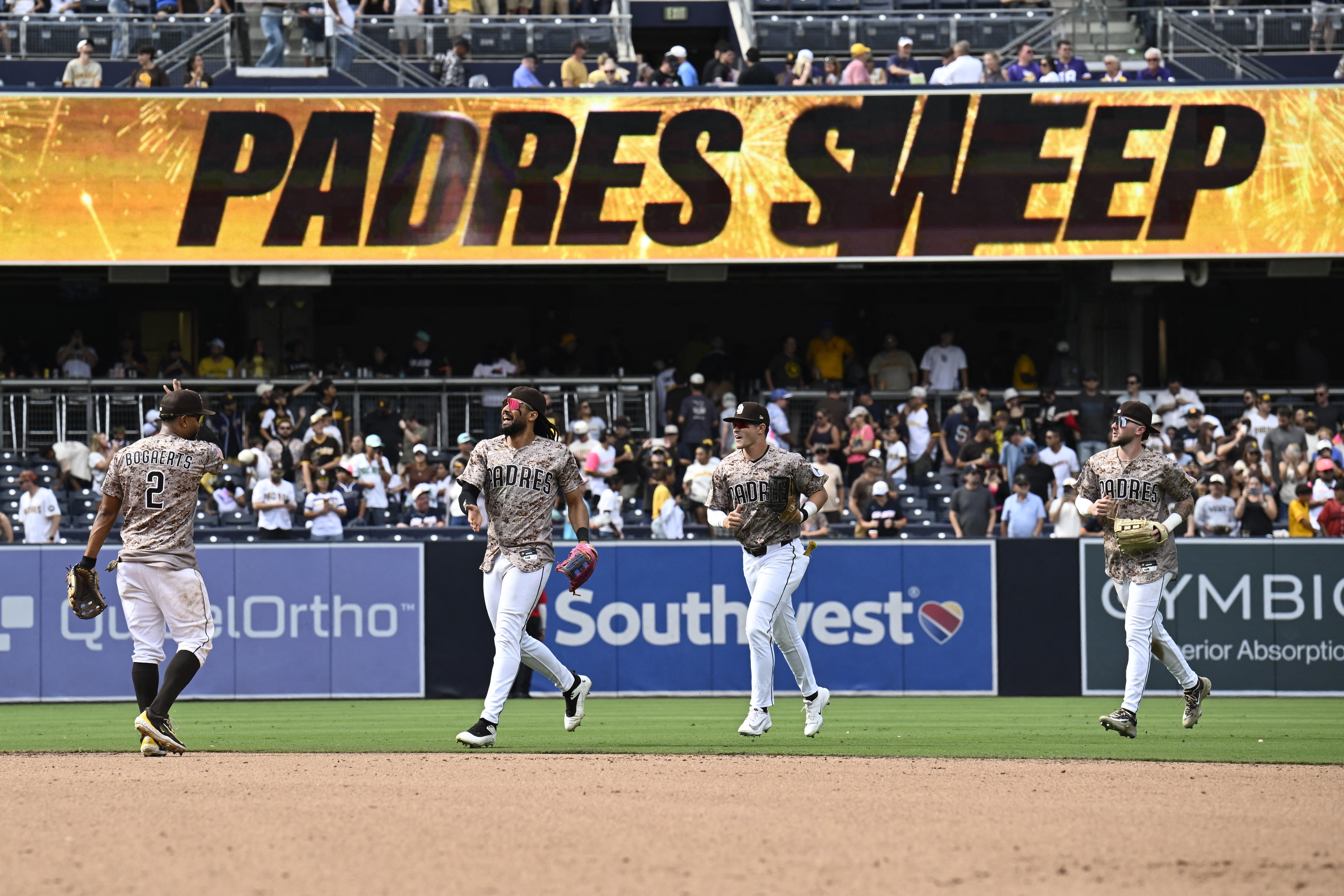 With the Marlins officially eliminated from postseason contention, the focus shifts from competing in 2026 to finishing strong and laying the groundwork for a superior 2027 campaign. This weekend was not too encouraging from that standpoint. The Marlins fell to the San Diego Padres, 7-3, to wrap up a three-game sweep. Overall, Miami ends the season having gone 0-6 against the Padres, marking just the eighth time in franchise history they failed to collect a win in a season series of six-plus games. Making his first start since earning his first career save on Wednesday, Sandy Alcantara surrendered four runs over six innings of work, raising his season ERA to 3.91. Miami have now lost each of Alcantara's last eight starts, a stretch in which Alcantara has a 5.21 ERA. The Padres wasted little time in getting to Alcantara thanks a second inning, two-runner homer off the bat of Jake Cronenworth. Of the 209 MLB hitters who entered Sunday with at least 375 plate appearances this season, Cronenworth's 72 adjusted OPS+ ranked as the seventh-worst. At just 325 feet, Cronenworth's home run is tied for the third-shortest in Petco Park history. Cronenworth's role as the Marlins villain was far from over though, as he would follow up his home run with an RBI double in the fourth. His coup de grace, however, came in the eighth when he launched his second two-run homer of the day. Miami's comeback attempt came in the top of the seventh when Walker Buehler, working into the seventh inning for the first time this season - surrendered a three-run home run to Javier Sanoja. The long ball gave Sanoja the first double digit home run season in his career. Winners of nine of ten, the Padres 87-69 record sees them tied with the Marlins' next opponent, the Chicago Cubs, for the top NL Wild Card spot. The Marlins will have to win out to finish above .500 and go at least 4-2 to surpass last season's record. Of Note In what will be a light schedule in Major League Baseball on Monday, the Marlins will fly to Chicago, where they will open up a three-game series Tuesday against the Cubs. Janson Junk (6-9, 4.50 ERA) will get the ball for Miami in the series opener. First pitch from Wrigley Field is set for 7:40 EST.
 -
With the Marlins officially eliminated from postseason contention, the focus shifts from competing in 2026 to finishing strong and laying the groundwork for a superior 2027 campaign. This weekend was not too encouraging from that standpoint. The Marlins fell to the San Diego Padres, 7-3, to wrap up a three-game sweep. Overall, Miami ends the season having gone 0-6 against the Padres, marking just the eighth time in franchise history they failed to collect a win in a season series of six-plus games. Making his first start since earning his first career save on Wednesday, Sandy Alcantara surrendered four runs over six innings of work, raising his season ERA to 3.91. Miami have now lost each of Alcantara's last eight starts, a stretch in which Alcantara has a 5.21 ERA. The Padres wasted little time in getting to Alcantara thanks a second inning, two-runner homer off the bat of Jake Cronenworth. Of the 209 MLB hitters who entered Sunday with at least 375 plate appearances this season, Cronenworth's 72 adjusted OPS+ ranked as the seventh-worst. At just 325 feet, Cronenworth's home run is tied for the third-shortest in Petco Park history. Cronenworth's role as the Marlins villain was far from over though, as he would follow up his home run with an RBI double in the fourth. His coup de grace, however, came in the eighth when he launched his second two-run homer of the day. Miami's comeback attempt came in the top of the seventh when Walker Buehler, working into the seventh inning for the first time this season - surrendered a three-run home run to Javier Sanoja. The long ball gave Sanoja the first double digit home run season in his career. Winners of nine of ten, the Padres 87-69 record sees them tied with the Marlins' next opponent, the Chicago Cubs, for the top NL Wild Card spot. The Marlins will have to win out to finish above .500 and go at least 4-2 to surpass last season's record. Of Note In what will be a light schedule in Major League Baseball on Monday, the Marlins will fly to Chicago, where they will open up a three-game series Tuesday against the Cubs. Janson Junk (6-9, 4.50 ERA) will get the ball for Miami in the series opener. First pitch from Wrigley Field is set for 7:40 EST. View full article
-
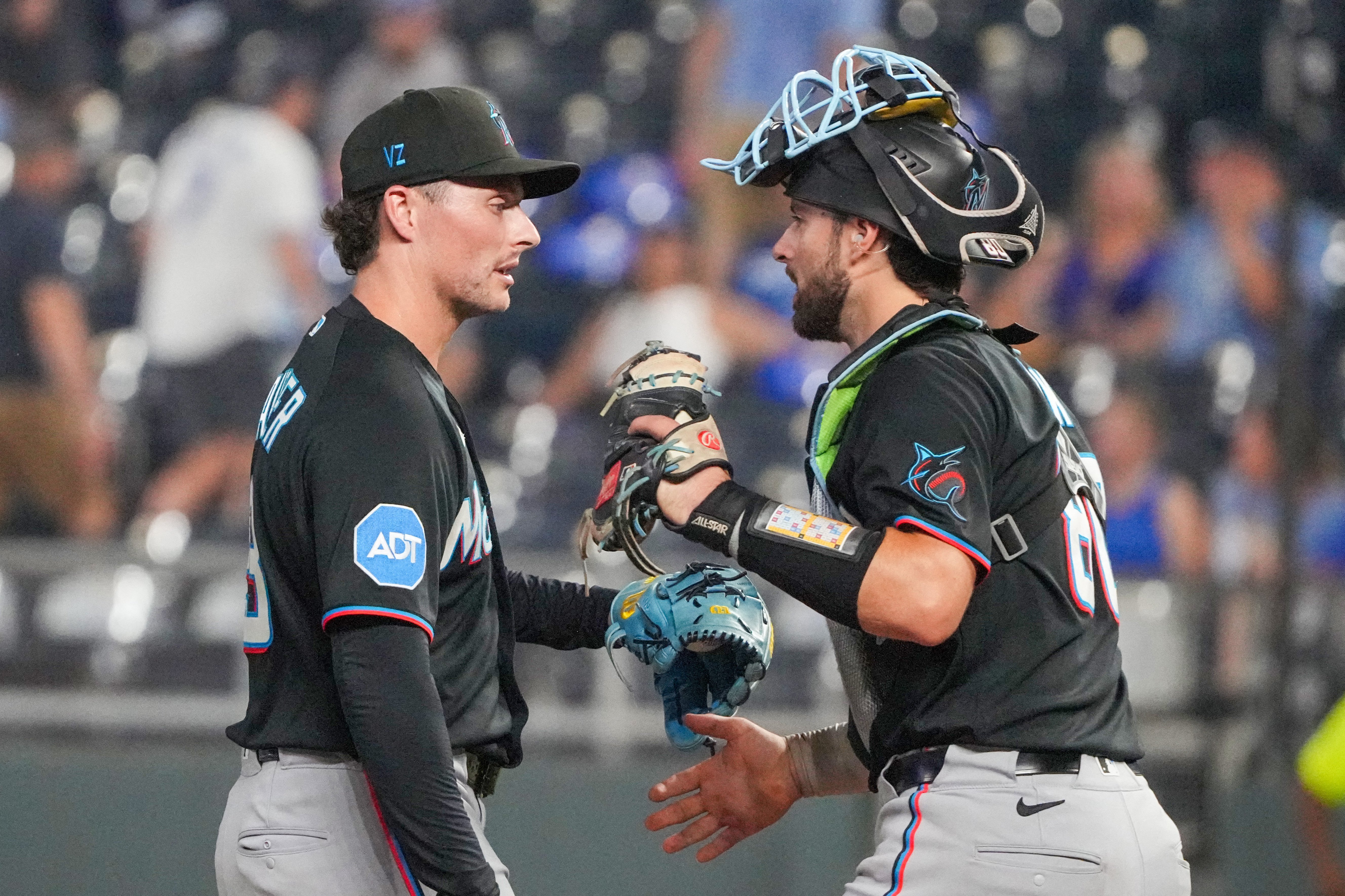 Other teams must see this Marlins offense as pests. If you thought their ninth-inning rally against the Nationals on Sunday made for a wild game, then I am afraid you were not prepared to process the emotions of Wednesday's mid-series matchup against the Kansas City Royals. In a game that saw the two teams club three home runs apiece, it was a total coin flip in deciding a winner for this game. Fortunately for the Marlins, the coin landed in their favor in a 9-6 victory. Miami is now 71-69, merely 2.5 games back of the final NL Wild Card spot, with just 22 to go in the regular season. "We kept clipping away and won the second half of this game," noted Clayton McCullough. Mirroring the Nationals three days prior, Miami jumped out to an early 2-0 lead against southpaw Noah Cameron (5 IP, 4 R), needing just seven pitches to do so. Otto Lopez provided the opening blow, collecting his eighth triple of the season, becoming just the 11th different player in franchise history to accomplish that feat and the first to do so since Dee Strange-Gordon in 2017. And with Eury Pérez on the mound, the Marlins had to feel themselves firmly in the driver's seat; until they were not. One-upping the Marlins by plating their first two runs in just 6 pitches, the Royals gave 23-year-old Eury Pérez one of the biggest challenges of his young Major League career. In a bottom of the first that would wind up being a 34-pitch affair, Kansas City tagged the Fish for a five-spot, highlighted by a pair of home runs courtesy of Carter Jensen and Salvador Perez. Jensen would later go on to homer a second time against Perez in the bottom half of the fourth. The prevailing thought in that trying first inning though had to be one of "how long can they afford to keep him out there?" And then, Pérez settled in and made the most of an otherwise forgettable outing, allowing a lone run in the following 3-plus frames, working deep into the fifth inning. After a 13-start, 75-plus-inning stretch from May 22-August 22 where he allowed just 14 earned runs, Pérez has now allowed 11 runs over his last two outings. Come the top of the third, the Marlins would begin to claw back thanks to Kyle Stowers ' 18th home run of the season. Riddled with injuries and IL stints due to hamstring strains on both his right and left legs, Stowers owns an .801 OPS in his 103 games played. Heriberto Hernández would contribute two innings later, blasting a ground rule double to cut the Kansas City lead to two, but it would be the sixth inning where Miami clawed all the way back to take a lead they would not relinquish. Griffin Conine, a mid-game substitution for Esteury Ruiz, singled home Javier Sanoja before a sacrifice fly from recently called-up Jared Serna and another Heriberto two-bagger put the Marlins out in front. Sanoja and Jakob Marsee would later pad the lead with back-to-back home runs in the ninth. Sanoja certainly seems to have found his stride at the plate in his third season, the owner of a 106 wRC+ through a career-best 122 games played. Matching the offense's contributions, Miami's bullpen in relief of Pérez posted 4 1/3 hitless frames, highlighted by a six-pitch save from Calvin Faucher. Looking Ahead The Marlins will bid adieu to the Royals in 2026 when they play the series finale on Thursday. Saving the best for last, both clubs will throw their aces, as Sandy Alcantara (13-8, 3.46 ERA) will oppose Michael Wacha (8-8, 3.32). In two career starts against Kansas City, Alcantara owns a 2.40 ERA, limiting Royals hitters to a .572 OPS. First pitch from Kauffman Stadium has been slated for 7:40 pm EST.
- 2 comments
-
- 3
-
-
-
- eury perez
- javier sanoja
- (and 1 more)
-
Other teams must see this Marlins offense as pests. If you thought their ninth-inning rally against the Nationals on Sunday made for a wild game, then I am afraid you were not prepared to process the emotions of Wednesday's mid-series matchup against the Kansas City Royals. In a game that saw the two teams club three home runs apiece, it was a total coin flip in deciding a winner for this game. Fortunately for the Marlins, the coin landed in their favor in a 9-6 victory. Miami is now 71-69, merely 2.5 games back of the final NL Wild Card spot, with just 22 to go in the regular season. "We kept clipping away and won the second half of this game," noted Clayton McCullough. Mirroring the Nationals three days prior, Miami jumped out to an early 2-0 lead against southpaw Noah Cameron (5 IP, 4 R), needing just seven pitches to do so. Otto Lopez provided the opening blow, collecting his eighth triple of the season, becoming just the 11th different player in franchise history to accomplish that feat and the first to do so since Dee Strange-Gordon in 2017. And with Eury Pérez on the mound, the Marlins had to feel themselves firmly in the driver's seat; until they were not. One-upping the Marlins by plating their first two runs in just 6 pitches, the Royals gave 23-year-old Eury Pérez one of the biggest challenges of his young Major League career. In a bottom of the first that would wind up being a 34-pitch affair, Kansas City tagged the Fish for a five-spot, highlighted by a pair of home runs courtesy of Carter Jensen and Salvador Perez. Jensen would later go on to homer a second time against Perez in the bottom half of the fourth. The prevailing thought in that trying first inning though had to be one of "how long can they afford to keep him out there?" And then, Pérez settled in and made the most of an otherwise forgettable outing, allowing a lone run in the following 3-plus frames, working deep into the fifth inning. After a 13-start, 75-plus-inning stretch from May 22-August 22 where he allowed just 14 earned runs, Pérez has now allowed 11 runs over his last two outings. Come the top of the third, the Marlins would begin to claw back thanks to Kyle Stowers ' 18th home run of the season. Riddled with injuries and IL stints due to hamstring strains on both his right and left legs, Stowers owns an .801 OPS in his 103 games played. Heriberto Hernández would contribute two innings later, blasting a ground rule double to cut the Kansas City lead to two, but it would be the sixth inning where Miami clawed all the way back to take a lead they would not relinquish. Griffin Conine, a mid-game substitution for Esteury Ruiz, singled home Javier Sanoja before a sacrifice fly from recently called-up Jared Serna and another Heriberto two-bagger put the Marlins out in front. Sanoja and Jakob Marsee would later pad the lead with back-to-back home runs in the ninth. Sanoja certainly seems to have found his stride at the plate in his third season, the owner of a 106 wRC+ through a career-best 122 games played. Matching the offense's contributions, Miami's bullpen in relief of Pérez posted 4 1/3 hitless frames, highlighted by a six-pitch save from Calvin Faucher. Looking Ahead The Marlins will bid adieu to the Royals in 2026 when they play the series finale on Thursday. Saving the best for last, both clubs will throw their aces, as Sandy Alcantara (13-8, 3.46 ERA) will oppose Michael Wacha (8-8, 3.32). In two career starts against Kansas City, Alcantara owns a 2.40 ERA, limiting Royals hitters to a .572 OPS. First pitch from Kauffman Stadium has been slated for 7:40 pm EST. View full article
-
The clock is ticking on the Miami Marlins to make up ground in their 2026 playoff push. Dropping the first two games of a four-game set against the Nationals to fall to .500 and four games out of the final NL Wild Card spot, they had no choice but to make a statement on Sunday. Through eight innings against the division rival Washington Nationals, it looked as if that statement was, "we surrender." The Fish trailed 2-0 entering the top of the ninth inning. They had previously been 2-58 when trailing in the ninth this season. Then, the Marlins improbably reeled off this sequence of events: Walk Walk Popout Double steal Walk Hit by pitch Sacrifice fly, E8 Walk Double steal Two-run home run Groundout Sending all nine men to the plate, the Marlins left the top of the ninth with a 6-2 lead, one they would not relinquish, picking up their 69th win of the season in the process. Scoring six runs on the strength of merely four hits, the Marlins became the first MLB team to do so since the Mets on June 4, 2025. The Marlins last did it way back on April 24, 2011. One of those four hits came via Otto Lopez, his first home run since July 5, snapping a drought of 197 plate appearances. Lost in Sunday's game was the solid effort put forth by Janson Junk, who held Washington to merely one run over 4 ⅔ innings of work. After a rough stretch in May, Junk has rebounded to allow two or fewer runs in nine of his last 10 starts, finishing the month of August with a 1.59 ERA. Carrying a scoreless tie into the bottom of the fifth, Washington broke through first when former Marlins farmhand Nasim Nuñez doubled in center fielder Jacob Young. Washington would net a second run three innings later with help from Leo Jiménez, whose second error of the day allowed Brady House to go first to third. On a more serious note, second baseman Xavier Edwards had to leave the game following Jorbit Vivas' slide that saw Edwards jam his left thumb. He will undergo imaging on Monday to determine the severity of the injury. Edwards has yet to miss a game this season. Looking Ahead The Marlins will wrap up the season series against the Nationals on Monday. Ryan Gusto (1-3, 3.98 ERA), fresh off one of his best starts of the season, will take the ball for Miami. A win would clinch the Marlins' first 10-win season series against any NL East team since going 11-2 against these Nats in 2023. The first pitch is slated for 6:45 EST at Nationals Park. View full article
-
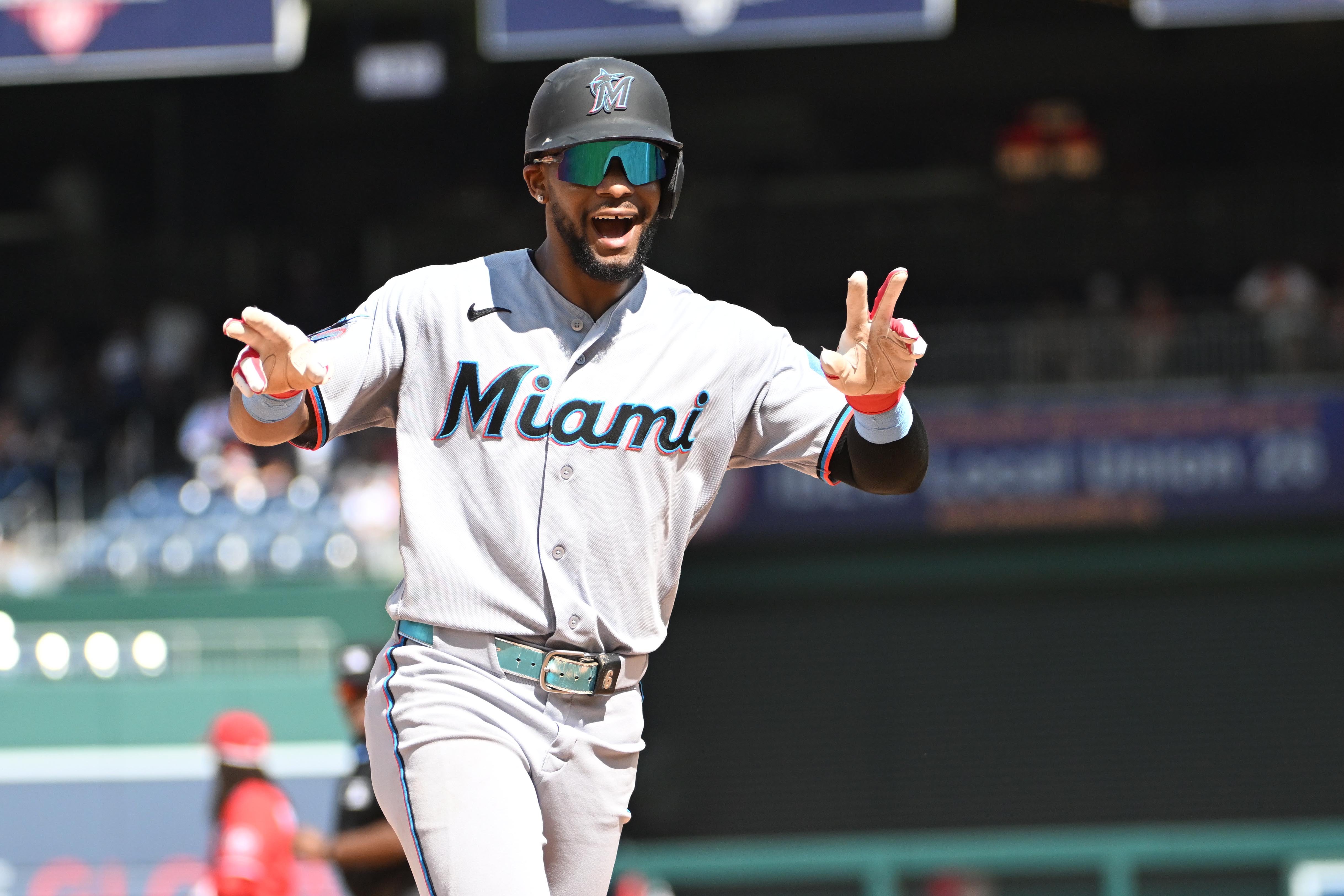 The clock is ticking on the Miami Marlins to make up ground in their 2026 playoff push. Dropping the first two games of a four-game set against the Nationals to fall to .500 and four games out of the final NL Wild Card spot, they had no choice but to make a statement on Sunday. Through eight innings against the division rival Washington Nationals, it looked as if that statement was, "we surrender." The Fish trailed 2-0 entering the top of the ninth inning. They had previously been 2-58 when trailing in the ninth this season. Then, the Marlins improbably reeled off this sequence of events: Walk Walk Popout Double steal Walk Hit by pitch Sacrifice fly, E8 Walk Double steal Two-run home run Groundout Sending all nine men to the plate, the Marlins left the top of the ninth with a 6-2 lead, one they would not relinquish, picking up their 69th win of the season in the process. Scoring six runs on the strength of merely four hits, the Marlins became the first MLB team to do so since the Mets on June 4, 2025. The Marlins last did it way back on April 24, 2011. One of those four hits came via Otto Lopez, his first home run since July 5, snapping a drought of 197 plate appearances. Lost in Sunday's game was the solid effort put forth by Janson Junk, who held Washington to merely one run over 4 ⅔ innings of work. After a rough stretch in May, Junk has rebounded to allow two or fewer runs in nine of his last 10 starts, finishing the month of August with a 1.59 ERA. Carrying a scoreless tie into the bottom of the fifth, Washington broke through first when former Marlins farmhand Nasim Nuñez doubled in center fielder Jacob Young. Washington would net a second run three innings later with help from Leo Jiménez, whose second error of the day allowed Brady House to go first to third. On a more serious note, second baseman Xavier Edwards had to leave the game following Jorbit Vivas' slide that saw Edwards jam his left thumb. He will undergo imaging on Monday to determine the severity of the injury. Edwards has yet to miss a game this season. Looking Ahead The Marlins will wrap up the season series against the Nationals on Monday. Ryan Gusto (1-3, 3.98 ERA), fresh off one of his best starts of the season, will take the ball for Miami. A win would clinch the Marlins' first 10-win season series against any NL East team since going 11-2 against these Nats in 2023. The first pitch is slated for 6:45 EST at Nationals Park.
- 1 comment
-
- 3
-
-
-
- xavier edwards
- otto lopez
- (and 1 more)
-
Fish drop middle game in Atlanta, fall to one over .500
Louis Addeo-Weiss posted an article in Marlins
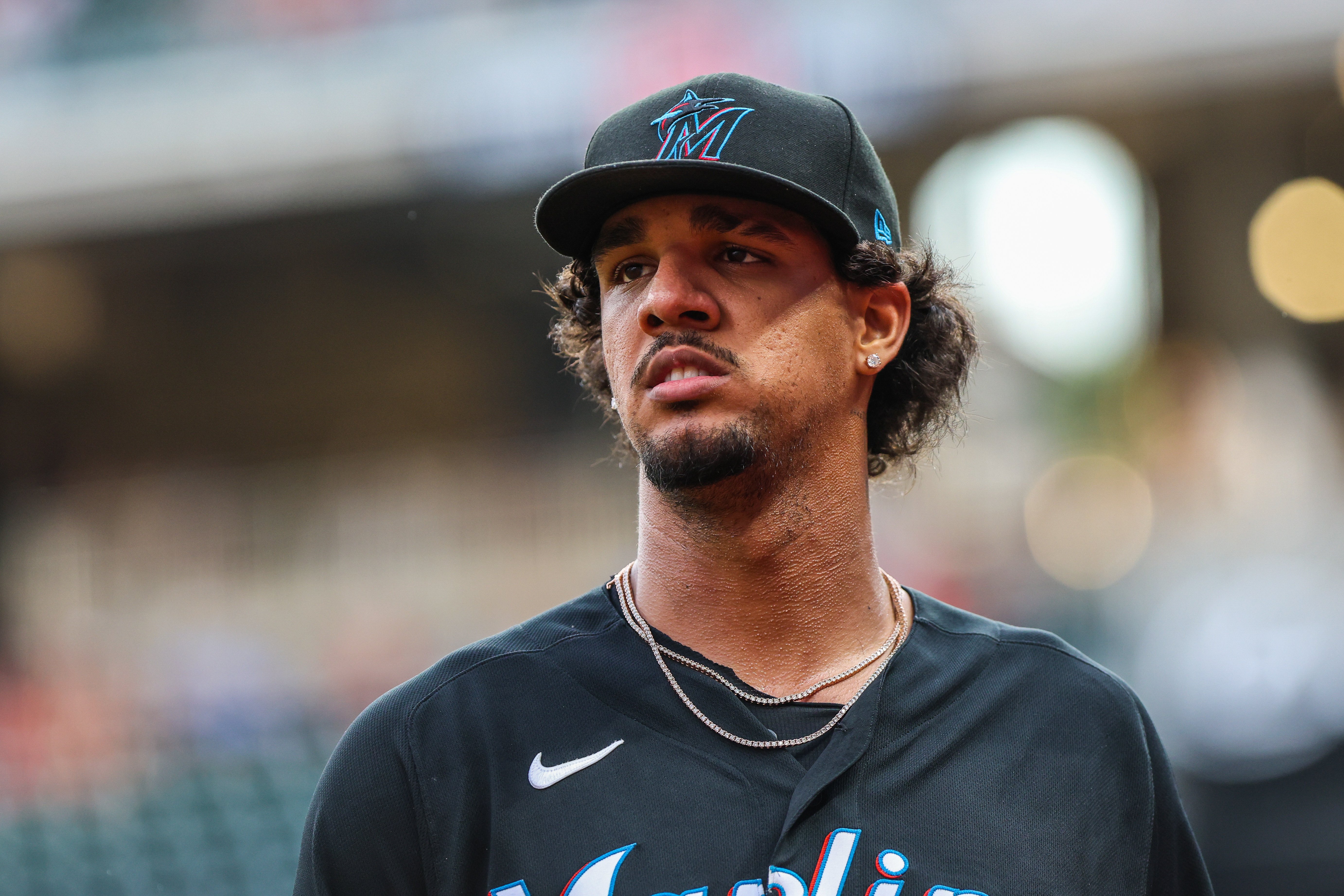 Each loss for the 2026 Miami Marlins is a dagger in their playoff aspirations, with Wednesday being no exception. Following their 4-1 loss to the division rival Atlanta Braves, Miami's season record now sits at 58-57, 2.5 games out of a wild-card spot in the Senior Circuit, a tough cross to bear following a trade deadline that saw the departures of Liam Hicks and Lake Bachar. With this defeat, the Marlins now own a lifetime 23-57 (.288) record since Truist Park's opening in 2017. Only the Pittsburgh Pirates own a worse winning percentage in that span (.258). Making his 20th start of the season—matching a career-high set last season—Eury Pérez ran into trouble in the second, throwing 34 pitches and allowing a trio of runs. Atlanta would tag on a fourth run in the following inning courtesy of a Mauricio Dubón single. Gutting through an otherwise mediocre outing, Pérez struck out nine in his five innings of work, falling to 5-9 on the year. Reflecting on Pérez's outing postgame, manager Clayton McCullough took the glass half-full approach. "If his clunkers look like this, we'll be very encouraged with it," noted McCullough. "There's a lot I can feel proud of. The ground balls I was able to induce and the fact that I was able to make it through five innings. It's a growing process...", said Pérez through interpreter Luis Durante. Looking under the hood, Pérez had more than the five innings of work to be proud of, as he induced 18 swings-and-misses, aided in part by a near-unanimous bump in pitch velocities. While his start ERA of 7.20 would lead one to call his outing less than savory, the underlying metrics tell a completely different story, as evidenced by minuscule 0.70 and 1.92 FIP and xFIP. Miami's lone run came via Joe Mack on a fifth inning ground out that plated Owen Caissie . Now with 34 RBI since arriving in the big leagues, Mack's total ranks third best amongst Marlins rookie catchers who started a minimum of 60 percent of their games behind the plate, trailing only 1995 Charles Johnson (39) and 2015 J.T. Realmuto (47). Through the series' first two games, Miami has gone 2-for-11 with runners in scoring position. Bryce Elder, making his 12th career start against Miami, shut them down to the tune of 7 innings of 1-run, 1-hit ball, lowering his career ERA to 3.31 opposing the Marlins. As they did in Tuesday's loss, the Marlins had late-inning comeback attempts thwarted by the Atlanta bullpen. After collecting a pair of hits against the conservative hit surrenderer Dylan Dodd, Miami would ultimately see this one end on an Otto Lopez first-pitch ground out to Austin Riley. Thanks to an 0-for-4 evening, Lopez's season batting average fell to .320, putting him .005 points behind former Marlin and three-time batting champion Luis Arraez in the NL batting title race. Looking Ahead Miami will conclude their trip to Atlanta on Thursday in a rare game three nightcap. Janson Junk (5-6, 4.58 ERA) will square off against veteran left-hander Martín Pérez (7-6, 3.24 ERA). First pitch from Truist Park is slated for 7:15 pm EST.
 -
Each loss for the 2026 Miami Marlins is a dagger in their playoff aspirations, with Wednesday being no exception. Following their 4-1 loss to the division rival Atlanta Braves, Miami's season record now sits at 58-57, 2.5 games out of a wild-card spot in the Senior Circuit, a tough cross to bear following a trade deadline that saw the departures of Liam Hicks and Lake Bachar. With this defeat, the Marlins now own a lifetime 23-57 (.288) record since Truist Park's opening in 2017. Only the Pittsburgh Pirates own a worse winning percentage in that span (.258). Making his 20th start of the season—matching a career-high set last season—Eury Pérez ran into trouble in the second, throwing 34 pitches and allowing a trio of runs. Atlanta would tag on a fourth run in the following inning courtesy of a Mauricio Dubón single. Gutting through an otherwise mediocre outing, Pérez struck out nine in his five innings of work, falling to 5-9 on the year. Reflecting on Pérez's outing postgame, manager Clayton McCullough took the glass half-full approach. "If his clunkers look like this, we'll be very encouraged with it," noted McCullough. "There's a lot I can feel proud of. The ground balls I was able to induce and the fact that I was able to make it through five innings. It's a growing process...", said Pérez through interpreter Luis Durante. Looking under the hood, Pérez had more than the five innings of work to be proud of, as he induced 18 swings-and-misses, aided in part by a near-unanimous bump in pitch velocities. While his start ERA of 7.20 would lead one to call his outing less than savory, the underlying metrics tell a completely different story, as evidenced by minuscule 0.70 and 1.92 FIP and xFIP. Miami's lone run came via Joe Mack on a fifth inning ground out that plated Owen Caissie . Now with 34 RBI since arriving in the big leagues, Mack's total ranks third best amongst Marlins rookie catchers who started a minimum of 60 percent of their games behind the plate, trailing only 1995 Charles Johnson (39) and 2015 J.T. Realmuto (47). Through the series' first two games, Miami has gone 2-for-11 with runners in scoring position. Bryce Elder, making his 12th career start against Miami, shut them down to the tune of 7 innings of 1-run, 1-hit ball, lowering his career ERA to 3.31 opposing the Marlins. As they did in Tuesday's loss, the Marlins had late-inning comeback attempts thwarted by the Atlanta bullpen. After collecting a pair of hits against the conservative hit surrenderer Dylan Dodd, Miami would ultimately see this one end on an Otto Lopez first-pitch ground out to Austin Riley. Thanks to an 0-for-4 evening, Lopez's season batting average fell to .320, putting him .005 points behind former Marlin and three-time batting champion Luis Arraez in the NL batting title race. Looking Ahead Miami will conclude their trip to Atlanta on Thursday in a rare game three nightcap. Janson Junk (5-6, 4.58 ERA) will square off against veteran left-hander Martín Pérez (7-6, 3.24 ERA). First pitch from Truist Park is slated for 7:15 pm EST. View full article
-
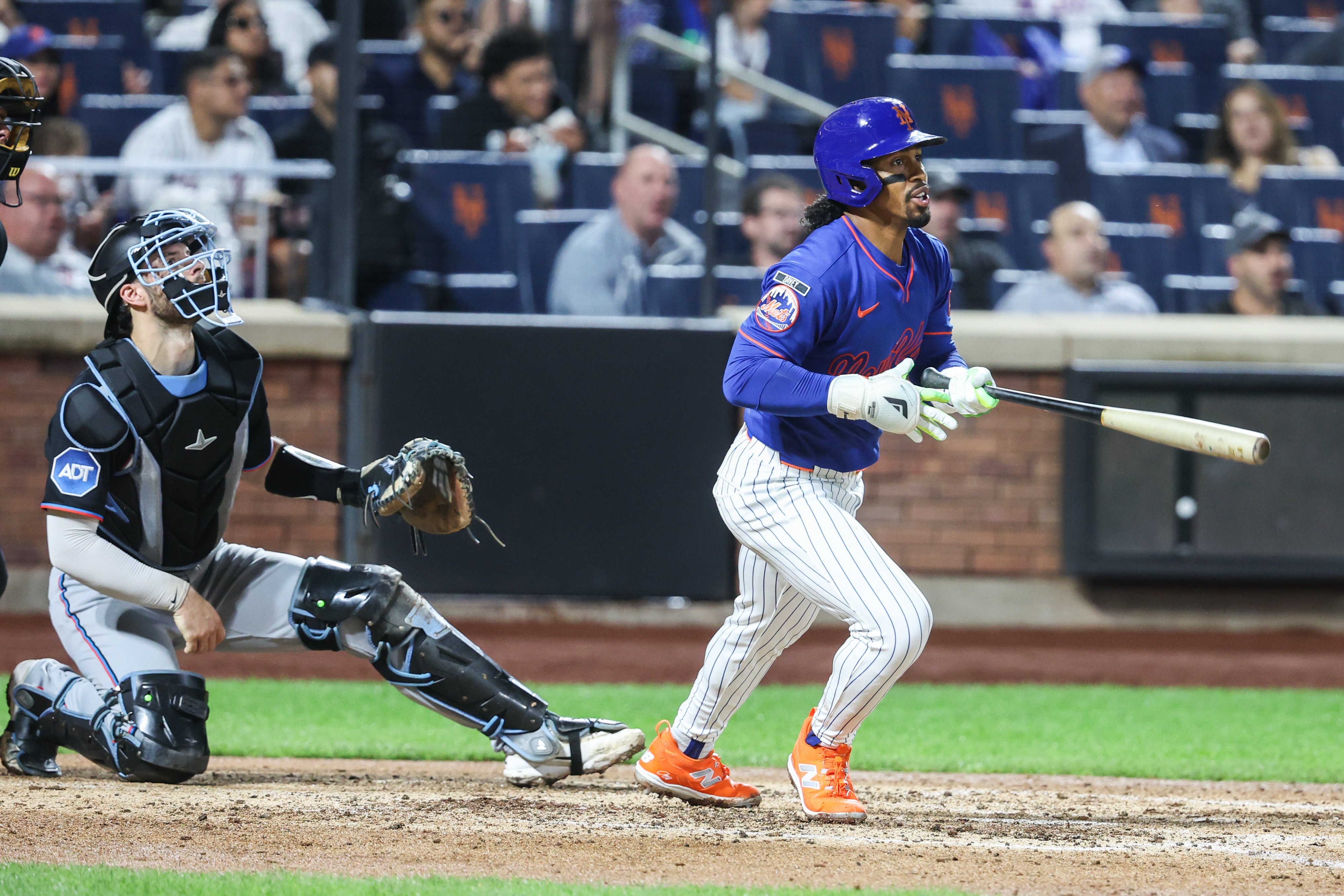 Each ensuing game for the Miami Marlins from here on out has compounded importance, ever more so true as the club opens up their final series against the New York Mets in advance of Monday's trade deadline. Fresh off the heels of a franchise record 12-game losing streak, Miami responded by sweeping the Phillies at home, entering the Big Apple one game over .500 at 55-54. On the other end of the spectrum, the New York Mets, a team which entered 2026 with a payroll estimated north of $360M and playoff aspirations after the previous season's collapse. The club traded for Luis Robert Jr. and Marcus Semien, signed Bo Bichette to pair with Francisco Lindor in the infield, and shored up the bullpen with the addition of Luke Weaver. However, the disaster that was the second half of 2025 for the Metropolitans returned tenfold, as New York entered play Thursday 46-63 and last in the National League East. Unfortunately, the game went as forecasted at the outset of the 2026 season and the Mets found themselves on the right side of victory, besting Miami 4-2. Repeating what they did in Tuesday's 1-0 victory over Philadelphia, the Marlins were aided early by a solo home run off the bat of Kyle Stowers . After sporting an OPS near .900 in June, Stowers has continued to see his season trend in the right direction, boasting an .812 mark in July. His 15 home runs trail only Heriberto Hernández 's 16. On the mound, it was more of what has been the case with Eury Pérez of late, as the flame-throwing 23-year-old held New York hitless into the fifth inning. Entering the bottom of the sixth on just 69 pitches, Pérez ran into trouble following a leadoff walk to Francisco Alvarez, as Francisco Lindor promptly singled him home. Then, 24 pitches into the sixth, Pérez surrendered a slow-moving chopper off the bat of the aforementioned Robert Jr. that caromed off the glove of third baseman Graham Pauley to put the Mets out front 2-1. In his six innings of work, Pérez allowed merely a trio of hits, striking out six. In seven starts since returning from injury, Pérez owns a sterling 1.71 ERA. As great as Pérez was, so too was Nolan McLean in his 6 1/3 innings of two-run ball. The only mistakes made by McLean would end in the longball. Looking to respond following the coughing up of the lead, Jakob Marsee —the touted outfielder that has struggled mightily in 2026—came through with his sixth home run of the season. Miami then called upon the man who had arguably been the club's most reliable reliever this season, Michael Petersen. In his first game since taking a comebacker off his forearm on Monday, Miami would see the 2-2 tie go by the wayside, with three consecutive hits courtesy of Bichette, Carson Benge, and Robert plating a pair of runs. Now 55-55, the Marlins currently find themselves 2.5 games out of the final Wild Card spot in the National League. Looking Ahead Miami will continue to steer the ship towards the postseason in the sequel Friday night. Janson Junk (4-6, 4.89 ERA) will square off against two-time All-Star Freddy Peralta (5-9, 4.99 ERA). The reigning NL wins leader, Peralta owns a 4.47 ERA across 13 appearances (10 starts) against the Fish. First pitch from Citi Field is slated for 7:10 pm EST.
- 1 comment
-
- 1
-
-
- eury perez
- kyle stowers
- (and 2 more)
-
Each ensuing game for the Miami Marlins from here on out has compounded importance, ever more so true as the club opens up their final series against the New York Mets in advance of Monday's trade deadline. Fresh off the heels of a franchise record 12-game losing streak, Miami responded by sweeping the Phillies at home, entering the Big Apple one game over .500 at 55-54. On the other end of the spectrum, the New York Mets, a team which entered 2026 with a payroll estimated north of $360M and playoff aspirations after the previous season's collapse. The club traded for Luis Robert Jr. and Marcus Semien, signed Bo Bichette to pair with Francisco Lindor in the infield, and shored up the bullpen with the addition of Luke Weaver. However, the disaster that was the second half of 2025 for the Metropolitans returned tenfold, as New York entered play Thursday 46-63 and last in the National League East. Unfortunately, the game went as forecasted at the outset of the 2026 season and the Mets found themselves on the right side of victory, besting Miami 4-2. Repeating what they did in Tuesday's 1-0 victory over Philadelphia, the Marlins were aided early by a solo home run off the bat of Kyle Stowers . After sporting an OPS near .900 in June, Stowers has continued to see his season trend in the right direction, boasting an .812 mark in July. His 15 home runs trail only Heriberto Hernández 's 16. On the mound, it was more of what has been the case with Eury Pérez of late, as the flame-throwing 23-year-old held New York hitless into the fifth inning. Entering the bottom of the sixth on just 69 pitches, Pérez ran into trouble following a leadoff walk to Francisco Alvarez, as Francisco Lindor promptly singled him home. Then, 24 pitches into the sixth, Pérez surrendered a slow-moving chopper off the bat of the aforementioned Robert Jr. that caromed off the glove of third baseman Graham Pauley to put the Mets out front 2-1. In his six innings of work, Pérez allowed merely a trio of hits, striking out six. In seven starts since returning from injury, Pérez owns a sterling 1.71 ERA. As great as Pérez was, so too was Nolan McLean in his 6 1/3 innings of two-run ball. The only mistakes made by McLean would end in the longball. Looking to respond following the coughing up of the lead, Jakob Marsee —the touted outfielder that has struggled mightily in 2026—came through with his sixth home run of the season. Miami then called upon the man who had arguably been the club's most reliable reliever this season, Michael Petersen. In his first game since taking a comebacker off his forearm on Monday, Miami would see the 2-2 tie go by the wayside, with three consecutive hits courtesy of Bichette, Carson Benge, and Robert plating a pair of runs. Now 55-55, the Marlins currently find themselves 2.5 games out of the final Wild Card spot in the National League. Looking Ahead Miami will continue to steer the ship towards the postseason in the sequel Friday night. Janson Junk (4-6, 4.89 ERA) will square off against two-time All-Star Freddy Peralta (5-9, 4.99 ERA). The reigning NL wins leader, Peralta owns a 4.47 ERA across 13 appearances (10 starts) against the Fish. First pitch from Citi Field is slated for 7:10 pm EST. View full article
-
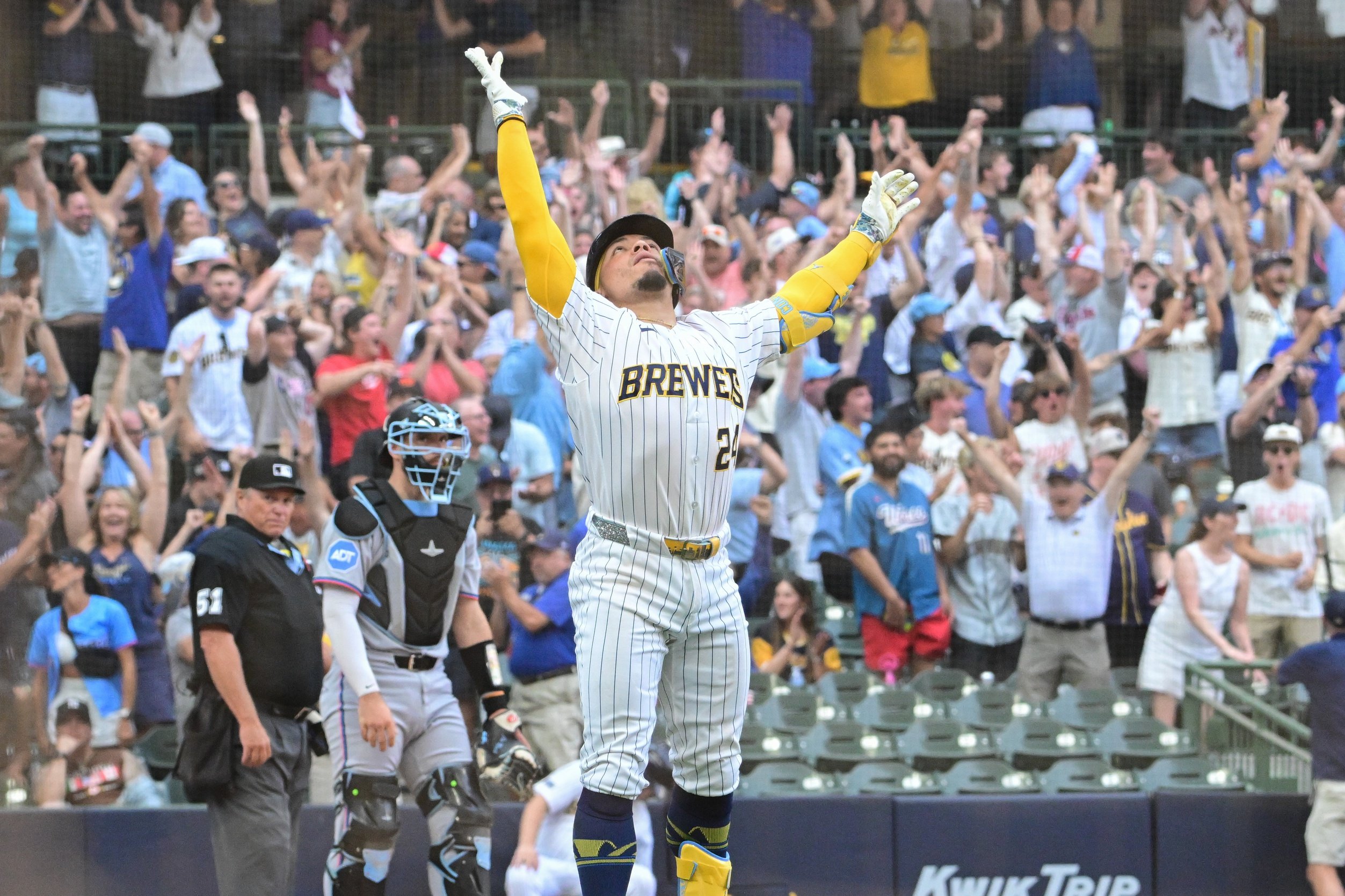 The Marlins of two weeks ago were riding a high that had eluded them for the better part of two decades. Fast-forward to July 19 and they have done a complete 180, dropping their season-worst sixth consecutive game in their 3-1 loss to the NL Central-leading Milwaukee Brewers. As has been the case amid a resurgent season for the franchise, Pete Fairbanks played the role of the heel. The embattled Marlins closer allowed a leadoff single to Jackson Chourio, then a walk to Brice Turang before catching Andrew Vaughn looking for the first out. Fairbanks went ahead in the count 0-2 against William Contreras, but couldn't put him away. He hung a cutter to Contreras on the sixth pitch of the plate appearance, resulting in a walk-off, three-run home run. "Losses hurt, but going through a season, stretches like this happen," noted Marlins manager Clayton McCullough. The Marlins were defeated only twice in walk-off fashion prior to the All-Star break. The Brewers doubled that total this weekend—Garrett Mitchell delivered the game-winner on Friday in the bottom of the 10th inning. Amid this losing streak, the Marlins have hit just .199. They bookended the Milwaukee series by scoring one run apiece in the opener and the finale. All of the offense for the Marlins on Sunday came courtesy of a third-inning solo home run off the bat of Esteury Ruiz. Outside of the perpetual rain clouds currently hanging over the club, Sunday saw continued signs of growth from Eury Pérez, who allowed just one hit over six scoreless innings. In seven starts dating back to May 22, the 23-year-old has allowed just five earned runs over his last 39 ⅓ innings pitched (1.14 ERA). The Marlins have tumbled to just four games over .500 at 52-48. They're in a virtual three-way tie with the St. Louis Cardinals (51-47) and Pittsburgh Pirates (52-48) for the NL's final wild-card spot. Looking Ahead The Marlins will travel to the Lone Star State, where they'll open up a series on Monday against the Houston Astros. Janson Junk (4-5, 4.57 ERA) will make his second start since returning from injury. Ronel Blanco (3-4, 4.10 ERA in 2025) will take the ball for the first time in 14 months following Tommy John surgery, First pitch from Daikin Park is slated for 8:10 EST/7:10 CDT.
- 4 comments
-
- 2
-
-
- pete fairbanks
- eury perez
- (and 2 more)
-
The Marlins of two weeks ago were riding a high that had eluded them for the better part of two decades. Fast-forward to July 19 and they have done a complete 180, dropping their season-worst sixth consecutive game in their 3-1 loss to the NL Central-leading Milwaukee Brewers. As has been the case amid a resurgent season for the franchise, Pete Fairbanks played the role of the heel. The embattled Marlins closer allowed a leadoff single to Jackson Chourio, then a walk to Brice Turang before catching Andrew Vaughn looking for the first out. Fairbanks went ahead in the count 0-2 against William Contreras, but couldn't put him away. He hung a cutter to Contreras on the sixth pitch of the plate appearance, resulting in a walk-off, three-run home run. "Losses hurt, but going through a season, stretches like this happen," noted Marlins manager Clayton McCullough. The Marlins were defeated only twice in walk-off fashion prior to the All-Star break. The Brewers doubled that total this weekend—Garrett Mitchell delivered the game-winner on Friday in the bottom of the 10th inning. Amid this losing streak, the Marlins have hit just .199. They bookended the Milwaukee series by scoring one run apiece in the opener and the finale. All of the offense for the Marlins on Sunday came courtesy of a third-inning solo home run off the bat of Esteury Ruiz. Outside of the perpetual rain clouds currently hanging over the club, Sunday saw continued signs of growth from Eury Pérez, who allowed just one hit over six scoreless innings. In seven starts dating back to May 22, the 23-year-old has allowed just five earned runs over his last 39 ⅓ innings pitched (1.14 ERA). The Marlins have tumbled to just four games over .500 at 52-48. They're in a virtual three-way tie with the St. Louis Cardinals (51-47) and Pittsburgh Pirates (52-48) for the NL's final wild-card spot. Looking Ahead The Marlins will travel to the Lone Star State, where they'll open up a series on Monday against the Houston Astros. Janson Junk (4-5, 4.57 ERA) will make his second start since returning from injury. Ronel Blanco (3-4, 4.10 ERA in 2025) will take the ball for the first time in 14 months following Tommy John surgery, First pitch from Daikin Park is slated for 8:10 EST/7:10 CDT. View full article
-
Bad luck bites Meyer, snaps record-setting undefeated streak
Louis Addeo-Weiss posted an article in Marlins
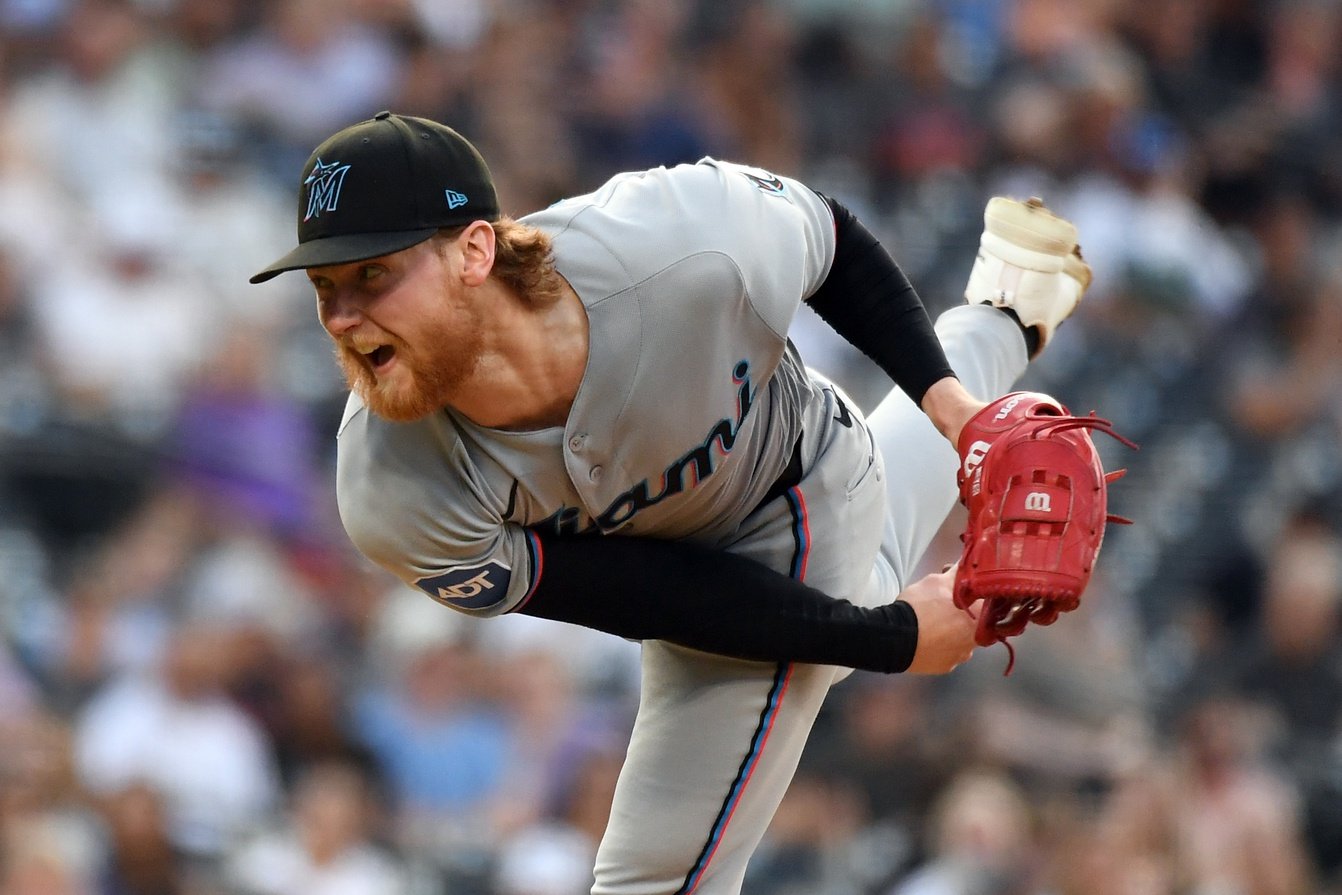 Not all good things last forever. Pitching in the cavernous Coors Field, Max Meyer put his perfect record on the line against the forces of altitude and dry air, ultimately suffering a loss for the first time in 2026. The former third overall draft pick had been off to a 9-0 start to the season. His 17 starts without a loss were the most to begin a season in franchise history. The Coors effect infected Meyer early, when Mickey Moniak, for the second time in as many nights, sent a ball over the center field wall to give the Rockies an early 1-0 lead. Falling a mere single short of the cycle, Moniak has been Colorado's best hitter this season, sporting a 135 wRC+. As was the case in their 10-run and 14-run barrages in the series' first two games, Miami would take the lead on Javier Sanoja's two-run triple. Kyle Freeland, the owner of a 3.80 ERA in 10 career appearances against the Fish, would work five otherwise carefree innings, striking out seven in the Rockies' victory. Carrying that 2-1 lead into the bottom of the fifth, Meyer would fall victim to some tough luck when an error by the aforementioned Sanoja misplayed a ground ball off the bat of Kyle Karros. Two batters later, it was Moniak's two-run triple that gave the Rockies a lead they would never relinquish. The salt in the wound would come in short order, as Hunter Goodman, the team's presumed representative at this year's All-Star game, launched his 27th home run of the season. Among catchers to start at least 150 games behind the plate since the start of last season, only Cal Raleigh (55) has more home runs in games caught than Goodman's 50. Over his last six games played, Goodman has hit six home runs. On the whole, Meyer would power through six innings, allowing five runs, though only being charged with one in collecting his first loss of the season. Despite the defeat, Meyer lowered his season ERA to 2.53. "I thought Max was good tonight...It's the conditions here that take a toll on your body, though," noted manager Clayton McCullough. The night would not be without its moments of elation for Miami, though, as Joe Mack, pinch-hitting in the top of the seventh, sent a ball over the head of center fielder Jake McCarthy in what would turn out to be an inside-the-park home run. The long ball would represent the first of the inside-the-park variety since Yuli Gurriel in 2023. Colorado pitchers retired nine consecutive Marlins after that to seal the 6-3 win. Looking Ahead The Marlins will conclude the four-game set and their West Coast road trip in Thursday's series finale. Michael Lorenzen (3-9, 6.83 ERA) will take the ball for Colorado. While the first half of the season has been unkind to him, Lorenzen has a track record of success against Miami, posting a 2.62 ERA - his lowest mark against any NL opponent - across 18 games pitched (7 GS). First pitch from Coors Field is scheduled for 3:10 EST/1:10 MDT.
- 6 comments
-
- 3
-
-

-
- max meyer
- javier sanoja
- (and 1 more)
-
Not all good things last forever. Pitching in the cavernous Coors Field, Max Meyer put his perfect record on the line against the forces of altitude and dry air, ultimately suffering a loss for the first time in 2026. The former third overall draft pick had been off to a 9-0 start to the season. His 17 starts without a loss were the most to begin a season in franchise history. The Coors effect infected Meyer early, when Mickey Moniak, for the second time in as many nights, sent a ball over the center field wall to give the Rockies an early 1-0 lead. Falling a mere single short of the cycle, Moniak has been Colorado's best hitter this season, sporting a 135 wRC+. As was the case in their 10-run and 14-run barrages in the series' first two games, Miami would take the lead on Javier Sanoja's two-run triple. Kyle Freeland, the owner of a 3.80 ERA in 10 career appearances against the Fish, would work five otherwise carefree innings, striking out seven in the Rockies' victory. Carrying that 2-1 lead into the bottom of the fifth, Meyer would fall victim to some tough luck when an error by the aforementioned Sanoja misplayed a ground ball off the bat of Kyle Karros. Two batters later, it was Moniak's two-run triple that gave the Rockies a lead they would never relinquish. The salt in the wound would come in short order, as Hunter Goodman, the team's presumed representative at this year's All-Star game, launched his 27th home run of the season. Among catchers to start at least 150 games behind the plate since the start of last season, only Cal Raleigh (55) has more home runs in games caught than Goodman's 50. Over his last six games played, Goodman has hit six home runs. On the whole, Meyer would power through six innings, allowing five runs, though only being charged with one in collecting his first loss of the season. Despite the defeat, Meyer lowered his season ERA to 2.53. "I thought Max was good tonight...It's the conditions here that take a toll on your body, though," noted manager Clayton McCullough. The night would not be without its moments of elation for Miami, though, as Joe Mack, pinch-hitting in the top of the seventh, sent a ball over the head of center fielder Jake McCarthy in what would turn out to be an inside-the-park home run. The long ball would represent the first of the inside-the-park variety since Yuli Gurriel in 2023. Colorado pitchers retired nine consecutive Marlins after that to seal the 6-3 win. Looking Ahead The Marlins will conclude the four-game set and their West Coast road trip in Thursday's series finale. Michael Lorenzen (3-9, 6.83 ERA) will take the ball for Colorado. While the first half of the season has been unkind to him, Lorenzen has a track record of success against Miami, posting a 2.62 ERA - his lowest mark against any NL opponent - across 18 games pitched (7 GS). First pitch from Coors Field is scheduled for 3:10 EST/1:10 MDT. View full article
-
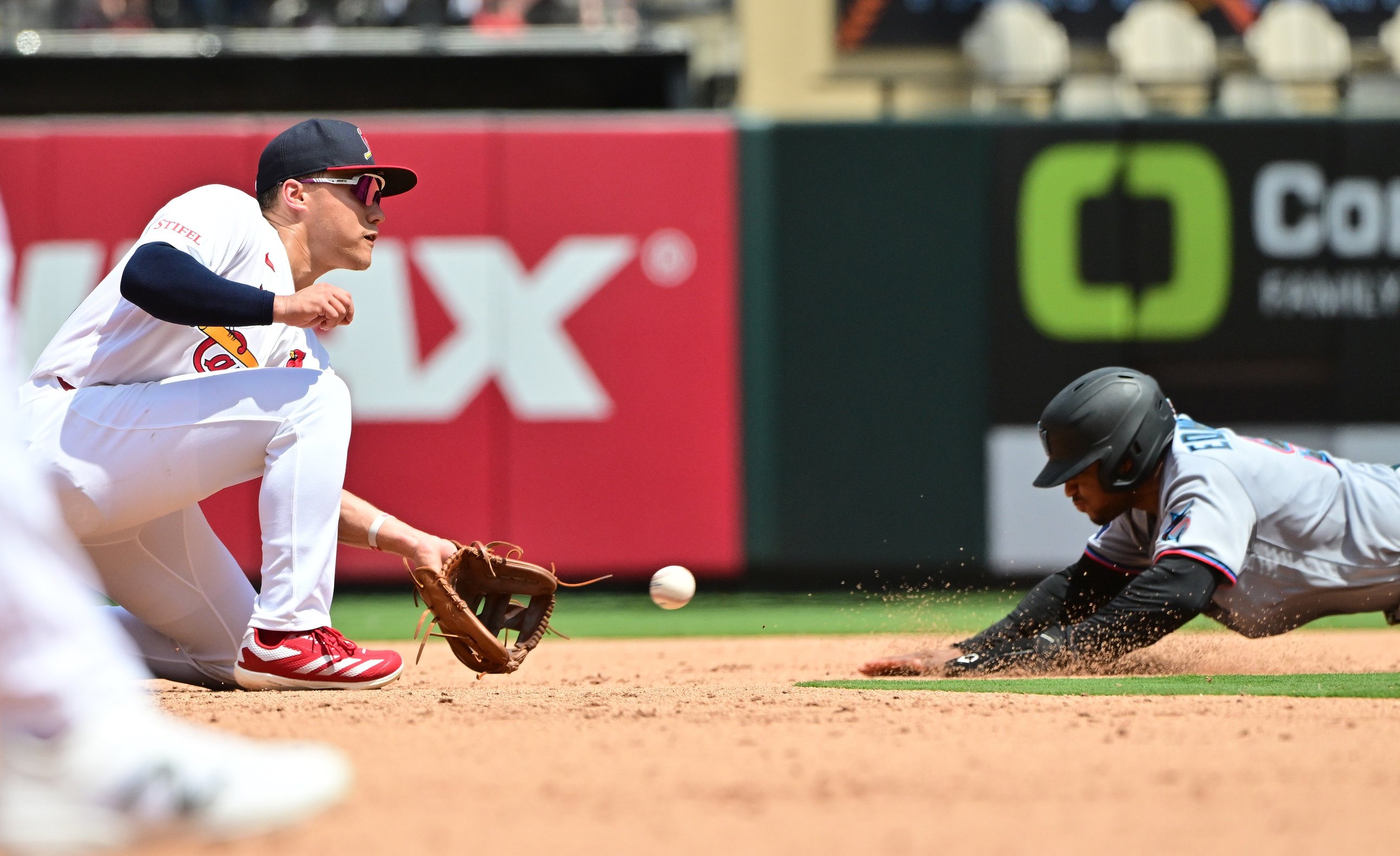 In the role of Marlins starting pitcher, Tyler Phillips has been a mixed bag to this point. Through his first five starts, Phillips posted a 4.94 ERA, with a lot of that damage concentrated in a June 16 clunker against the Phillies, where he allowed eight runs over four innings. On Sunday, the Marlins saw the good upside of that mixed bag, as Phillips, doing his best Sandy Alcantara, struck out just one over a season-high 7 ⅓ innings of one-run ball. Phillips became the first Marlin since Henderson Alvarez back on 7/31/13 to record an out in the eighth inning in a start with one or fewer strikeouts. The 28-year-old's lone strikeout came at the expense of NL Rookie of the Year frontrunner JJ Wetherholt. "He was outstanding today...was able to economically get through innings," noted manager Clayton McCullough. Unfortunately, Phillips' great effort would be all for nothing, as the Marlins only scratched across one run in their 2-1 loss to the Cardinals. Snapping their current 4-game winning streak, the Marlins still find themselves 44-40 and vying for a playoff spot. The lone blunder on Phillips' day came early courtesy of a two-run homer from rookie left fielder Bryan Torres. Held hitless by Kyle Leahy through the first four, the Marlins broke through in the fifth when Owen Caissie launched a leadoff double. The recently recalled Grant Pauley authored his second double in as many days to bring home Caissie, though Cardinal pitching would allow just two more Marlins to reach base. In keeping with a prevailing theme for the 2026 club, Clayton McCullough made a pair of changes that had some scratching their head. Prioritizing the platoon advantage, McCullough removed the aforementioned Caissie and Pauley for pinch-hitters Esteury Ruiz and Leo Jiménez, respectively. That was part of a sequence which saw the Fish use four consecutive pinch-hitters, who combined to go 1-for-4. The lone hit—Jiménez's seeing-eye single in the seventh—would prove inconsequential. Although a road series win is nothing to scoff at, the Marlins ought to be leaving town feeling unfulfilled having limited the opposition to three total runs this weekend, yet falling short of completing the sweep. Looking Ahead Miami will hope to find its Rocky Mountain High as they begin a four-game series against the Colorado Rockies. Sandy Alcantara (8-4, 4.01 ERA), now the Marlins' all-time strikeout leader, will toe the rubber in Monday's series opener. Sean Sullivan (0-2, 8.25 ERA) will oppose him as he makes just his fourth career big league appearance. First pitch from Coors Field is slated for 8:40 EST/6:40 MDT.
 -
In the role of Marlins starting pitcher, Tyler Phillips has been a mixed bag to this point. Through his first five starts, Phillips posted a 4.94 ERA, with a lot of that damage concentrated in a June 16 clunker against the Phillies, where he allowed eight runs over four innings. On Sunday, the Marlins saw the good upside of that mixed bag, as Phillips, doing his best Sandy Alcantara, struck out just one over a season-high 7 ⅓ innings of one-run ball. Phillips became the first Marlin since Henderson Alvarez back on 7/31/13 to record an out in the eighth inning in a start with one or fewer strikeouts. The 28-year-old's lone strikeout came at the expense of NL Rookie of the Year frontrunner JJ Wetherholt. "He was outstanding today...was able to economically get through innings," noted manager Clayton McCullough. Unfortunately, Phillips' great effort would be all for nothing, as the Marlins only scratched across one run in their 2-1 loss to the Cardinals. Snapping their current 4-game winning streak, the Marlins still find themselves 44-40 and vying for a playoff spot. The lone blunder on Phillips' day came early courtesy of a two-run homer from rookie left fielder Bryan Torres. Held hitless by Kyle Leahy through the first four, the Marlins broke through in the fifth when Owen Caissie launched a leadoff double. The recently recalled Grant Pauley authored his second double in as many days to bring home Caissie, though Cardinal pitching would allow just two more Marlins to reach base. In keeping with a prevailing theme for the 2026 club, Clayton McCullough made a pair of changes that had some scratching their head. Prioritizing the platoon advantage, McCullough removed the aforementioned Caissie and Pauley for pinch-hitters Esteury Ruiz and Leo Jiménez, respectively. That was part of a sequence which saw the Fish use four consecutive pinch-hitters, who combined to go 1-for-4. The lone hit—Jiménez's seeing-eye single in the seventh—would prove inconsequential. Although a road series win is nothing to scoff at, the Marlins ought to be leaving town feeling unfulfilled having limited the opposition to three total runs this weekend, yet falling short of completing the sweep. Looking Ahead Miami will hope to find its Rocky Mountain High as they begin a four-game series against the Colorado Rockies. Sandy Alcantara (8-4, 4.01 ERA), now the Marlins' all-time strikeout leader, will toe the rubber in Monday's series opener. Sean Sullivan (0-2, 8.25 ERA) will oppose him as he makes just his fourth career big league appearance. First pitch from Coors Field is slated for 8:40 EST/6:40 MDT. View full article
-
In an organization largely devoid of tenured players, Sandy Alcantara is an anomaly. The 2026 season is his ninth season in Miami, making him just the second player to reach that many years as a Marlins big leaguer, joining Marlins Legends Hall of Fame inductee Luis Castillo. The main reason why Alcantara hasn't changed teams already is the club conveniently inked him to a contract extension right before his 2022 NL Cy Young Award campaign. Now that he's in the midst of the final guaranteed year of that deal, the Marlins find themselves at a crossroads with one of their franchise's greatest hurlers. There are several reasons that support trading Alcantara this summer, as there are compelling ones to hold onto him. Here, we consider both sides of the debate. Case for Trading If there is one thing playoff contenders will seek out come deadline time, durable starting pitching would be near the top of that list. Alcantara is the epitome of this archetype. Despite missing all of 2024 due to recovery from Tommy John surgery, Alcantara's 939 innings in the 2020s rank as the 12th-most in MLB. The only scheduled start he has failed to make post-Tommy John was when he went on the paternity list in April 2025 for the birth of his daughter. Beyond the workhorse mentality, there's the performance on the whole, as Alcantara is one of just 12 pitchers in the decade to throw at least 900 innings and post a sub-4 ERA. Consider it quality volume, if you will. Alcantara's previous playoff experience is another feather in his cap. The right-hander made two starts in Miami's surprise 2020 playoff season, posting a 4.26 ERA over 12 ⅔ innings pitched. Conveniently for the Marlins, there are prospective Alcantara suitors with immensely talented farm systems. The Milwaukee Brewers were ranked No. 1 by ESPN entering 2026. Though they enter Monday fifth in fWAR among starters and fourth in ERA, Milwaukee needs to fill the 157-inning gap left by the void of Quinn Priester, who is set to undergo season-ending thoracic outlet surgery. The Cleveland Guardians have the second-ranked system. They have relied on the same five starters all season thus far, which will not be sustainable considering that three of them have never shouldered a full season's major league workload before. Alcantara is earning $17.3M this season, but the acquiring team would only be on the hook for about $5.4M of that cost if a trade waits until the August 3 deadline. His $21M club option for 2027 reads as a bargain. Should he flop down the stretch for whatever reason, that option could be bought out for a modest $2M. Case for Not Trading Alcantara may be more valuable to the Marlins roster than he would be as a trade chip. Holding steady at 40-38 through their first 78 games played, the Marlins find themselves merely half a game out of an NL Wild Card spot entering Monday. They have shown no signs of slowing down, going a league-best 14-4 in June. Even with Alcantara in the fold, their starting rotation is thin. The club's top-ranked prospect, Thomas White, is questionable to pitch again this season due to a shoulder injury. Second-ranked Robby Snelling has already been ruled out for the rest of 2026 after undergoing UCL surgery. Eury Pérez is nearing his return from a leg injury, but he was posting career-worst numbers through 12 starts, so expectations for him ought to be tempered accordingly. Filling out the rotation alongside Alcantara, Pérez and Max Meyer, Miami has resorted to Ryan Gusto and Tyler Phillips, who have posted a combined 5.51 ERA across 32 ⅔ innings pitched in that role. Alcantara was very much on the trade block in 2025, but stayed put due to reportedly underwhelming offers. Although another year removed from Tommy John, he still has his fair share of red flags that may prevent the Marlins from extracting a massive prospect haul. Alcantara's overall results have been underwhelming with a 4.92 ERA over the past two seasons, nearly 50 percent higher than his 3.32 career mark prior to TJ. The decreased effectiveness of his arsenal is undeniable. While still averaging north of 97 mph on his four-seam and sinking fastballs, hitters largely have not been fooled by the former, hitting .316 with a .526 slugging percentage, and registering a minus-3 run value. Teams pay a premium for swing-and-miss stuff, which does not apply to Alcantara even when he's performing well. Among 187 pitchers with at least 50 plate appearances ending on a four-seamer, his 17.8 percent whiff rate ranks 133rd. The Marlins bullpen has been a bright spot throughout this season. A key to maintaining that will be providing adequate rest for those relievers. For whatever flaws he has, Alcantara can be trusted to help in that department, as he ranks second in MLB in both total innings pitched and quality starts. He's still a valuable complementary piece of this pitching staff. If this is indeed farewell, Alcantara's impact on the Miami Marlins cannot be overstated. The lone Cy Young winner in franchise history, only Josh Johnson accrued more pitching bWAR with the club than Alcantara's 21.7. With at least four strikeouts in his next start, he will take sole possession of the franchise's career strikeout record. By FanGraphs' accounting, his on-field production through the years has been worth nearly three times as much as his contract. The next month and change of Marlins baseball will signal further the direction the ship is sailing in. View full article
-
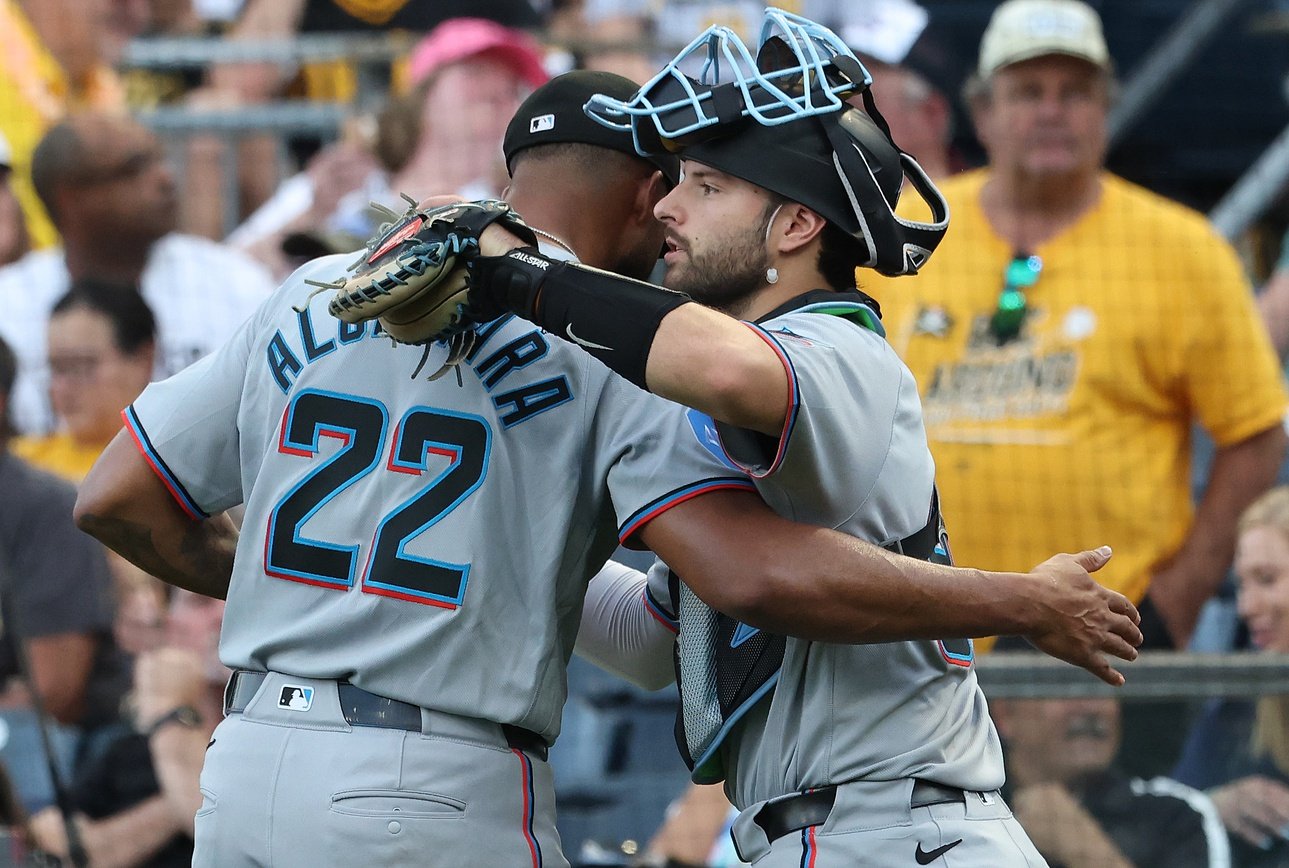 In an organization largely devoid of tenured players, Sandy Alcantara is an anomaly. The 2026 season is his ninth season in Miami, making him just the second player to reach that many years as a Marlins big leaguer, joining Marlins Legends Hall of Fame inductee Luis Castillo. The main reason why Alcantara hasn't changed teams already is the club conveniently inked him to a contract extension right before his 2022 NL Cy Young Award campaign. Now that he's in the midst of the final guaranteed year of that deal, the Marlins find themselves at a crossroads with one of their franchise's greatest hurlers. There are several reasons that support trading Alcantara this summer, as there are compelling ones to hold onto him. Here, we consider both sides of the debate. Case for Trading If there is one thing playoff contenders will seek out come deadline time, durable starting pitching would be near the top of that list. Alcantara is the epitome of this archetype. Despite missing all of 2024 due to recovery from Tommy John surgery, Alcantara's 939 innings in the 2020s rank as the 12th-most in MLB. The only scheduled start he has failed to make post-Tommy John was when he went on the paternity list in April 2025 for the birth of his daughter. Beyond the workhorse mentality, there's the performance on the whole, as Alcantara is one of just 12 pitchers in the decade to throw at least 900 innings and post a sub-4 ERA. Consider it quality volume, if you will. Alcantara's previous playoff experience is another feather in his cap. The right-hander made two starts in Miami's surprise 2020 playoff season, posting a 4.26 ERA over 12 ⅔ innings pitched. Conveniently for the Marlins, there are prospective Alcantara suitors with immensely talented farm systems. The Milwaukee Brewers were ranked No. 1 by ESPN entering 2026. Though they enter Monday fifth in fWAR among starters and fourth in ERA, Milwaukee needs to fill the 157-inning gap left by the void of Quinn Priester, who is set to undergo season-ending thoracic outlet surgery. The Cleveland Guardians have the second-ranked system. They have relied on the same five starters all season thus far, which will not be sustainable considering that three of them have never shouldered a full season's major league workload before. Alcantara is earning $17.3M this season, but the acquiring team would only be on the hook for about $5.4M of that cost if a trade waits until the August 3 deadline. His $21M club option for 2027 reads as a bargain. Should he flop down the stretch for whatever reason, that option could be bought out for a modest $2M. Case for Not Trading Alcantara may be more valuable to the Marlins roster than he would be as a trade chip. Holding steady at 40-38 through their first 78 games played, the Marlins find themselves merely half a game out of an NL Wild Card spot entering Monday. They have shown no signs of slowing down, going a league-best 14-4 in June. Even with Alcantara in the fold, their starting rotation is thin. The club's top-ranked prospect, Thomas White, is questionable to pitch again this season due to a shoulder injury. Second-ranked Robby Snelling has already been ruled out for the rest of 2026 after undergoing UCL surgery. Eury Pérez is nearing his return from a leg injury, but he was posting career-worst numbers through 12 starts, so expectations for him ought to be tempered accordingly. Filling out the rotation alongside Alcantara, Pérez and Max Meyer, Miami has resorted to Ryan Gusto and Tyler Phillips, who have posted a combined 5.51 ERA across 32 ⅔ innings pitched in that role. Alcantara was very much on the trade block in 2025, but stayed put due to reportedly underwhelming offers. Although another year removed from Tommy John, he still has his fair share of red flags that may prevent the Marlins from extracting a massive prospect haul. Alcantara's overall results have been underwhelming with a 4.92 ERA over the past two seasons, nearly 50 percent higher than his 3.32 career mark prior to TJ. The decreased effectiveness of his arsenal is undeniable. While still averaging north of 97 mph on his four-seam and sinking fastballs, hitters largely have not been fooled by the former, hitting .316 with a .526 slugging percentage, and registering a minus-3 run value. Teams pay a premium for swing-and-miss stuff, which does not apply to Alcantara even when he's performing well. Among 187 pitchers with at least 50 plate appearances ending on a four-seamer, his 17.8 percent whiff rate ranks 133rd. The Marlins bullpen has been a bright spot throughout this season. A key to maintaining that will be providing adequate rest for those relievers. For whatever flaws he has, Alcantara can be trusted to help in that department, as he ranks second in MLB in both total innings pitched and quality starts. He's still a valuable complementary piece of this pitching staff. If this is indeed farewell, Alcantara's impact on the Miami Marlins cannot be overstated. The lone Cy Young winner in franchise history, only Josh Johnson accrued more pitching bWAR with the club than Alcantara's 21.7. With at least four strikeouts in his next start, he will take sole possession of the franchise's career strikeout record. By FanGraphs' accounting, his on-field production through the years has been worth nearly three times as much as his contract. The next month and change of Marlins baseball will signal further the direction the ship is sailing in.
 -
Meyer outduels Skenes leading to a series win in Pittsburgh
Louis Addeo-Weiss posted an article in Marlins
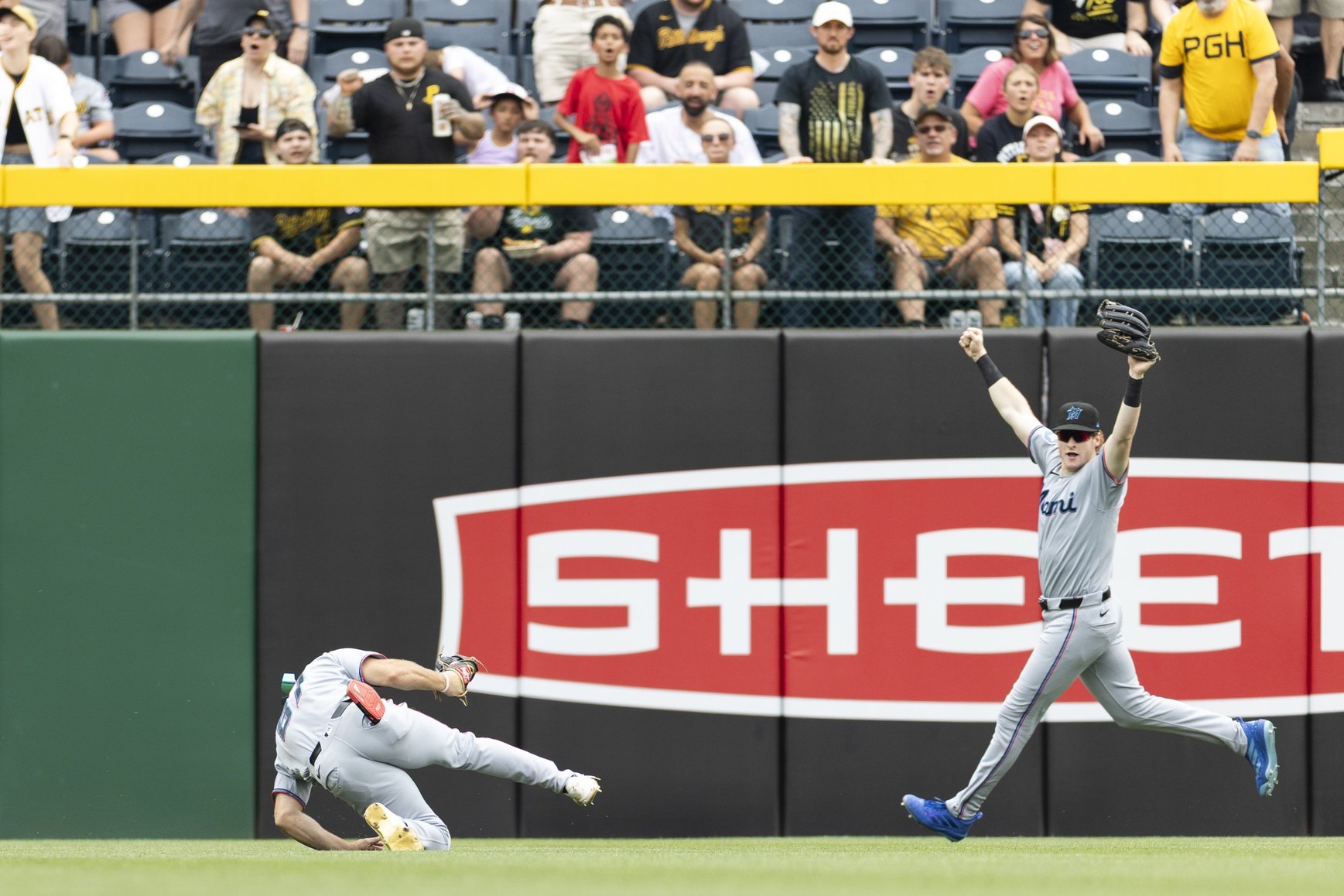 The version of Max Meyer we have seen in 2026 has been automatic. After toiling for a handful of years at the big league level, Meyer has finally ascended to what was once promised upon his drafting, now six years ago. On Sunday, the prospective All-Star had his grandest test to date, squaring off against reigning NL Cy Young Award winner Paul Skenes. In keeping with the 2026 Meyer narrative to this point, the 27-year-old came out on top, firing six innings of one-run ball in Miami's 4-2 win over the Pirates. Meyer registered eight of his nine strikeouts with his lethal sweeper-slider tandem, including a 54% whiff rate on the latter. Now 7-0, Meyer's 15-start stretch without recording a loss represents a new franchise record. Back to .500 for the second time in three days at 36-36, Miami owns the majors' best record in June, improving to 10-2. What Skenes (2.85 ERA) did should not be without mention, though, as the two-time All-Star tied a season-high with 10 strikeouts over his six innings of work. After trading zeroes in the first, Miami would ambush Skenes with a pair of solo home runs, starting with Heriberto Hernández, the owner of a robust 1.062 OPS in the month of June. Joe Mack, who has neutralized the running game since his arrival, continued to show added promise at the plate, depositing his second home run over the center field wall of PNC Park. Himself a slow starter, Mack owns a .902 OPS in June after OPS'ing just .500 in his inaugural big league month of May. After getting to Meyer for a run in the fourth, Pittsburgh would load the bases for Jake Mangum in the bottom of the fifth. Sending a hanging sweeper into the right-center gap, Jakob Marsee made a five-star catch in every sense of the word, diving to his right to save a trio of runs. "Max had a couple of balls not go his way, but he's been shoving all year, so I just tried to make a catch for him...he's fun to play behind," noted Marsee. Miami pitching held the Pirates 1-4 hitters to a .118 (2-for-17) clip on Sunday, with the top of the order not breaking through until Bryan Reynolds, currently riding a 21-game on-base streak, launched a solo home run in the bottom of the ninth. Looking Ahead The Marlins will continue their trek through the Northeast when they travel to the City of Brotherly Love to commence a three- game series against the surging Philadelphia Phillies on Monday. Ryan Gusto (0-1, 6.00 ERA), off his best start of the season, where he tossed four scoreless innings against Arizona. Zack Wheeler (5-1, 2.22 ERA) will look to continue his brilliance against Miami (career 2.68 ERA against), as he opposes Gusto. First pitch from Citizens Bank Park is slated for 6:40 EST.
 -
The version of Max Meyer we have seen in 2026 has been automatic. After toiling for a handful of years at the big league level, Meyer has finally ascended to what was once promised upon his drafting, now six years ago. On Sunday, the prospective All-Star had his grandest test to date, squaring off against reigning NL Cy Young Award winner Paul Skenes. In keeping with the 2026 Meyer narrative to this point, the 27-year-old came out on top, firing six innings of one-run ball in Miami's 4-2 win over the Pirates. Meyer registered eight of his nine strikeouts with his lethal sweeper-slider tandem, including a 54% whiff rate on the latter. Now 7-0, Meyer's 15-start stretch without recording a loss represents a new franchise record. Back to .500 for the second time in three days at 36-36, Miami owns the majors' best record in June, improving to 10-2. What Skenes (2.85 ERA) did should not be without mention, though, as the two-time All-Star tied a season-high with 10 strikeouts over his six innings of work. After trading zeroes in the first, Miami would ambush Skenes with a pair of solo home runs, starting with Heriberto Hernández, the owner of a robust 1.062 OPS in the month of June. Joe Mack, who has neutralized the running game since his arrival, continued to show added promise at the plate, depositing his second home run over the center field wall of PNC Park. Himself a slow starter, Mack owns a .902 OPS in June after OPS'ing just .500 in his inaugural big league month of May. After getting to Meyer for a run in the fourth, Pittsburgh would load the bases for Jake Mangum in the bottom of the fifth. Sending a hanging sweeper into the right-center gap, Jakob Marsee made a five-star catch in every sense of the word, diving to his right to save a trio of runs. "Max had a couple of balls not go his way, but he's been shoving all year, so I just tried to make a catch for him...he's fun to play behind," noted Marsee. Miami pitching held the Pirates 1-4 hitters to a .118 (2-for-17) clip on Sunday, with the top of the order not breaking through until Bryan Reynolds, currently riding a 21-game on-base streak, launched a solo home run in the bottom of the ninth. Looking Ahead The Marlins will continue their trek through the Northeast when they travel to the City of Brotherly Love to commence a three- game series against the surging Philadelphia Phillies on Monday. Ryan Gusto (0-1, 6.00 ERA), off his best start of the season, where he tossed four scoreless innings against Arizona. Zack Wheeler (5-1, 2.22 ERA) will look to continue his brilliance against Miami (career 2.68 ERA against), as he opposes Gusto. First pitch from Citizens Bank Park is slated for 6:40 EST. View full article
-
Miami's bullpen blunder sends them to a sweep, fifth straight loss
Louis Addeo-Weiss posted an article in Marlins
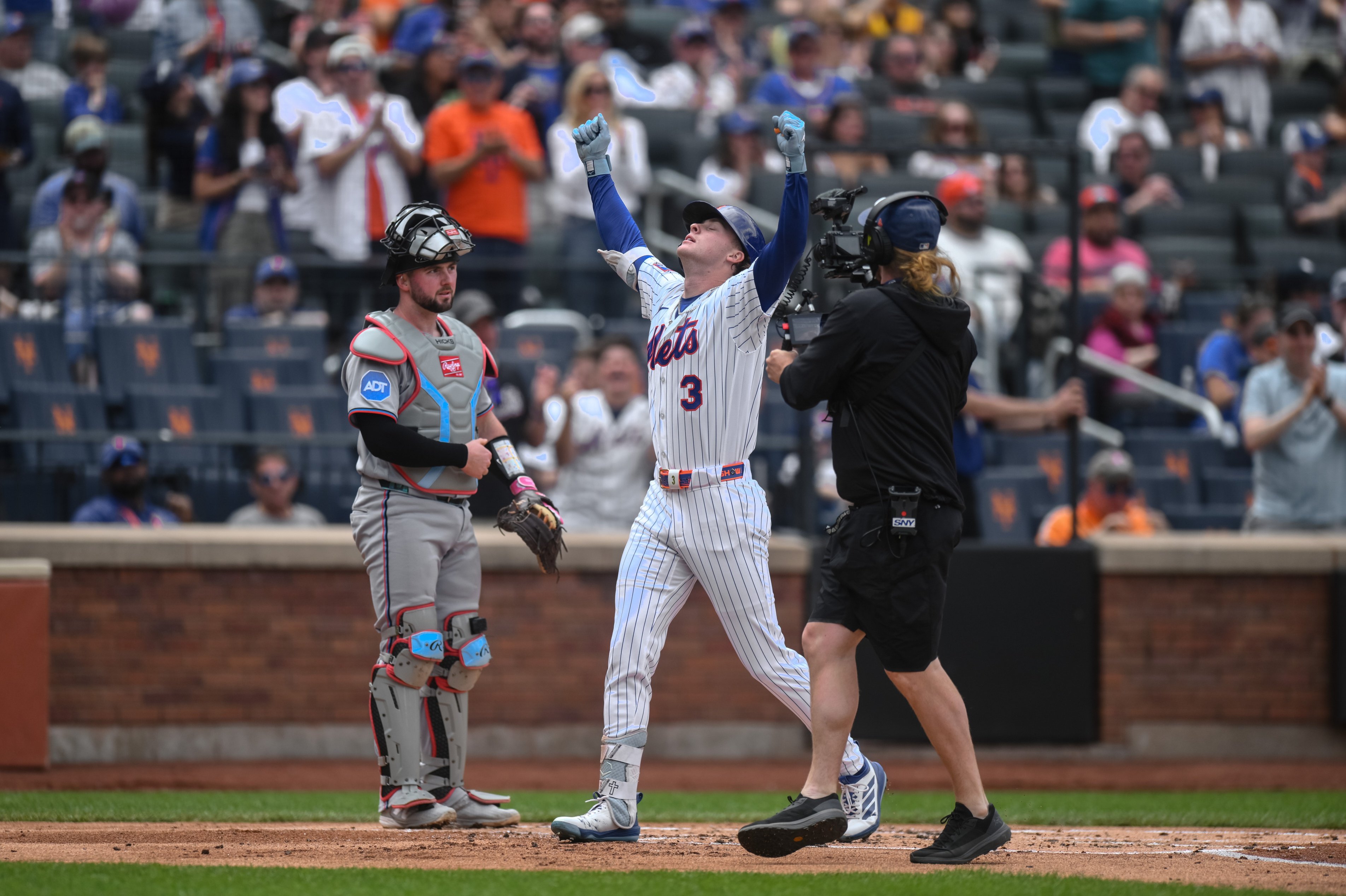 Bad news seems to follow the Miami Marlins of late. Less than 24 hours after learning that left-handed reliever Andrew Nardi was headed to the injured list, joining him was another hurler, this one a starter in Janson Junk. "I was still able to do my job, I feel like," Junk explained prior to Sunday's game regarding his right shin bone inflammation, "but maybe subconsciously I was compensating for it a little bit...Being able to get checked out is, I think, the right thing to do, and ultimately was the right thing." However, it posed a major challenge for Marlins manager Clayton McCullough, who had to resort to a bullpen game against the cellar-dwelling New York Mets. The end result was allowing double-digit runs to one of the sport's feeblest lineups. One week after completing a sweep of the Mets at loanDepot park, the Marlins found themselves on the other end of the equation, dropping the series finale, 10-1. Now 26-34, the Marlins fall to last place in the National League East amid a season-worst five-game losing streak and losers in five of their last six. "This was tough," said a sighing McCullough, who reflected on Miami's numerous missed opportunities this series. For the weekend, Marlin hitters went a combined 5-for-30 in at-bats with runners in scoring position. Making his first career start in 241 appearances at the major league level, John King would be gotten to from the get-go when Carson Benge sent his fourth home run of the season and career over the center field wall. The home run also marked the first leadoff blast of Benge's career. Things would not get any easier from there, as Anthony Bender, entering late in the second inning for King, would serve up a home run to his first batter faced, veteran second baseman Marcus Semien, to increase New York's lead to three. Miami's lone run would come in the top of the fourth on an Owen Caissie double. After hitting just over .200 with a .565 OPS through April, Caissie hit .281 with an .835 OPS in May, his best month as a big leaguer to date. The only positive to come from Sunday's series blowout was that the Marlins didn't have to face the ascendant Nolan McLean more than they did, as the right-hander worked around five walks in five innings of one-run ball. After tacking on a pair in the fourth, the Mets would all but end the game when Juan Soto, facing Josh White in the latter's major league debut hit a grand slam, his 19th home run in 107 games against Miami. The Marlins will conclude the month of May going 11-18, and falling to 8-19 in games away from loanDepot park. Looking Ahead The Marlins will travel to the nation's capital, where they are slated to commence the month of June with a three-game series against the surprisingly competitive Washington Nationals. Sandy Alcantara (3-4, 4.66 ERA) will be tasked with eating as many innings as possible on Monday for a fatigued Marlins pitching staff. Cade Cavalli (3-3, 3.62 ERA) will start the series opener for Washington. Cavalli's 3.00 FIP is easily the best in the Nats rotation and he's riding a streak of three consecutive quality starts. First pitch from Nationals Park is slated for 6:45 EST.


