
Jump to content
Fish On First
  • Create Account

Recommended Posts

Posted

By Miller Lepree 

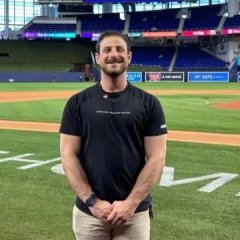
On November 5th of last year, the Marlins announced they had hired Peter Bendix to run their baseball operations. Seven Days later, the fanbase was introduced to the spectacled gaze, the hunched brow, the measured, chary delivery that make up the man who run’s South Florida’s saddest sports franchise. Bendix’s physical makeuphis tightly wound body language, his nasal voice—all have nothing to do with the way he performs his job. Nonetheless, they are part of the impression he leaves upon fans who digest the parts of the regime’s promotional messaging he is willing to participate in.  

His near-supercilious demeanor is reminiscent of another man who once held similar reigns: David Samson. Suffice it to say Bendix, for all his purported genius and acumen within the industry, leaves something to be desired on the charisma front. But that’s not why he’s here. He’s here to build a winning team that can sustain more than a one-year cycle of success. 

 On May 10th, eight months removed from a Wild Card playoff series, the Marlins are the second worst team in baseball. They recently traded Luis Arraez in a move that signals the start of what will at least be a partial rebuild. 

 But Bendix has been hinting at this possibility since he was hired. I’d like to peel back some language, look behind the poise, clasped hands, and agile non-answers to figure out what this man has in store, and what he could really mean when he says things like “one eye on the present, one eye on the future.” 

To aid this venture, we need the help of one Mad-Dog Russo—a host who pushed Bendix to crack via toothy smile, several times, during their interview shortly after his hiring. Let’s look at part of this exchange I found telling of the direction Bendix has in mind: 

Mad Dog: Alright how about the farm system, I know you made a lot of trades to augment the offense...maybe not as deep as it used to be with the Marlins Farm system, what can you tell me?   

Bendix visibly perks up:  

Bendix: yeah! The farm system is going to be a really important part of what we’re gonna do here long term. You mentioned there were some trades that were made, and brought in really good players, that's a great thing, one of the uses of a farm system, right, is to make trades to help the major league team. But we’re gonna need to build that farm system to the point where it’s consistently providing high quality prospects, either to be traded or for the big-league team.  


To me, what this means is that he assessed the Marlins farm system before he was hired and saw what everyone else saw: a cupboard stripped bare. He comes as close to taking a shot at Kim Ng as he possibly could here, noting that, sure, trading prospects for current major league players is one way of doing business, but he is left with the aftermath of those decisions.  

And here, he has a point: as applauded as NG was for pushing her chips in on last year’s lucky, lovable squad, she didn’t exactly leave them with the most organizational stability for the next three, four, five seasons. In terms of sustainability, the Marlins have been unable to simply promote players from their farm system who can make an impact. Outside of Dane Myers, who was a rule 5 draft pick under the NG regime, the Marlins only meaningful additions on offense during the 2023 season came through trades (ok, and Johnathan Davis, a minor league free agent).  

Let’s look at one more quote from the Mad Dog interview, one which summarizes the majority of eyeroll inducing GM-speak from last offseason. Mad Dog, to paraphrase, had asked Bendix how he planned to thread the needle between being competitive in the short term with executing some sort of longer term rebuild of that depleted farm system.  

Bendix: “It’s always about keeping one eye on the present and one eye on the future at all times...they made the playoffs last year...it’s also something where we want to build where that is the case every year...”  

He goes on to re-state this in various ways in a single interview and throughout the offseason. During his introductory presser next to Bruce Sherman, that same day as the Mad Dog interview, Bendix had stated many of those points verbatim. That he wanted to build a team that plays meaningful games in September every year. He stressed that it would take time. That these things don’t happen “overnight.” 

You might be thinking by now, ok, duh, the team that outperformed its run differential by a wide margin last year, has no farm talent, a putrid offense missing last year's most productive slugger, and a slim payroll, would be due for a longer process rebuild.  

The trouble, I think, for fans, is that the team has been stuck in a never-ending cycle of rebuilds that go nowhere, trudging through seasons of utter putridity, climaxing at a run of mediocrity, or in last year's case, moderate success, and ending in all of their best players, often in their prime, being traded for prospects.  We are now solidly in the latter half of that bell-shaped curve.  

ESPN’s Alden Gonzalez published a piece this morning that nicely summarizes the current situation for the fish and makes the case for patience with Bendix. 

When Jeter & Co came to town in 2017, they sung a similar tune: you might recall the “layers upon layers” of talent they promised to build throughout the minor league system. Those layers resulted in players like Isan Diaz (-2,9 career WAR), Lewis Brinson (Mexico League), Monte Harrison (college football(?)), Victor Victor Mesa (M.I.A), etc. That list also includes acquisitions Chisolm Jr, Jesus Sanchez, and A’s future All Star JJ Bleday, to be fair. But overall—they failed to build a sustainable winner. If not for NG’s all-in moves last season, the current core may never have seen a single winning season.  

So why should fans trust Bendix? He promised they would still try to win this season, albeit with the caveat of a one-eyed approach that is also looking ahead. They didn’t sign anyone until Tim Anderson, a reclamation project that nobody could except anything from and hasn’t panned out. That inaction was more telling than any of his offseason message-board material.  

 The first real signal, though, was Jon Berti’s departure from the roster shortly before opening day.  

In response to trading Berti, Bendix still refused to show his hand. He did not want to send a message, at least verbally, to his players that the season was punted before opening day. The irony, of course, being that his lack of investment in the major league roster all but told the truth of his assessment. This team is many years away from fulfilling the vision Bendix has: one of sustained success without relying on major league free agent signings every year.  

With last week's trade of Arraez, and the ensuing dugout awkwardness, little room for interpretation is left: the rebuild is on. He stated as much in an interview with Kyle Sielaff which may as well have been read from a teleprompter.  

"When you have the record that we have, the frustrating start that we have, we have to take the incoming calls and we have to listen, and ultimately we have to be open to moves that are going to help us in the long term.”  

So, he’s taking calls, not making them. Got that? Sure. Rumors swirl like rip currents off the shore of Miami—the Phillies want Jazz. The Astros, Royals, whoever, want Luzardo. More trades will be made in the following weeks. The roster Bendix called “exciting, dynamic” over the offseason, has panned out about as poorly as it could have.  

The boomerang of luck hit Schumacker’s Marlins squarely in the jaw. With a depleted starting rotation, a record 20 games under .500 in May, it would be foolish to do anything but look ahead. In many ways, Bendix’s assessment has been verified by the on-field result. But it could also be viewed as a self-fulfilling prophecy. In any case, here we are. 

Marlins fans can only hope that Bendix’s steadfast efforts to fill the front office with new faces resulted in a collection of minds that can successfully identify and, more importantly, develop young and talented players. Because they’re coming in waves. Perhaps even layers.  

Posted

Bendix could prove to be the savviest decision-maker in baseball and it still wouldn't be enough to overcome complacent ownership. That is the lingering concern.

There is no glory in having the second-worst record in the league following draft lottery reform. That was not part of the long-term vision. Sherman is responsible for the magnitude of the team's dramatic regression. Even though Bendix publicly claims otherwise, he did not have the support to sign accomplished veterans on short-term deals to plug roster holes, the kind of players who would have raised the team's floor and at least turned into potential trade deadline assets had the team collectively struggled.

If Sherman did not have the willingness to enhance this roster with his WBC revenue, large year-to-year attendance increase and still-intact local TV deal, what reason is there to believe that things will be different on the other side of this rebuild? His cheapness will continue to limit what they can realistically achieve.

Create an account or sign in to comment

You need to be a member in order to leave a comment

Create an account

Sign up for a new account in our community. It's easy!

Register a new account

Sign in

Already have an account? Sign in here.

Sign In Now
The Fish On First SuperSub Fund

We're grinding to bring you complete Miami Marlins coverage! Please support this site so it can remain the top destination for Fish fans.

×
×
  • Create New...