



Alex Carver
-
Posts
459 -
Joined
-
Last visited
-
Days Won
16
Content Type
Profiles
Miami Marlins Videos
2026 Miami Marlins Top Prospects Ranking
Miami Marlins Free Agent & Trade Rumors, Notes, & Tidbits
Guides & Resources
News
2025 Miami Marlins Draft Pick Tracker
2026 Miami Marlins Draft Tracker: Picks & Bonuses
Forums
Blogs
Events
Store
Downloads
Gallery
Everything posted by Alex Carver
-
 On Swimming Upstream, Alex Carver and Kevin Barral analyze the season that Marlins right-hander Noble Meyer had with Low-A Jupiter and High-A Beloit.
 -
On Swimming Upstream, Alex Carver and Kevin Barral analyze the season that Marlins right-hander Noble Meyer had with Low-A Jupiter and High-A Beloit. View full video
-
On Swimming Upstream, Alex Carver and Kevin Barral analyze the season that Marlins outfielder Andrés Valor had in the Florida Complex League.
-
On Swimming Upstream, Alex Carver and Kevin Barral analyze the season that Marlins outfielder Andrés Valor had in the Florida Complex League. View full video
-
On Swimming Upstream, Alex Carver and Kevin Barral analyze the season that Marlins catcher Ryan Ignoffo had with Low-A Jupiter and High-A Beloit. View full video
-
On Swimming Upstream, Alex Carver and Kevin Barral analyze the season that Marlins catcher Ryan Ignoffo had with Low-A Jupiter and High-A Beloit.
-
On Swimming Upstream, Alex Carver and Kevin Barral analyze the season that right-hander Juan De La Cruz had in the Florida Complex League and with Low-A Jupiter.
-
On Swimming Upstream, Alex Carver and Kevin Barral analyze the season that right-hander Juan De La Cruz had in the Florida Complex League and with Low-A Jupiter. View full video
-
On Swimming Upstream, Alex Carver and Kevin Barral analyze the season that infielder Joseph Tailor had in the Dominican Summer League. View full video
-
On Swimming Upstream, Alex Carver and Kevin Barral analyze the season that infielder Joseph Tailor had in the Dominican Summer League.
-
Ryan Ignoffo nearly played everywhere in his amateur career, but as a pro, the final pick of the Marlins' 2023 draft class has been turned into a full-time catcher. He rose to the challenge this year. When the Marlins selected Ryan Ignoffo out of Eastern Illinois in the 20th round of the 2023 MLB Draft, it was like choosing to eat at a new restaurant after seeing it had a very long menu. Defensively, the two-way player had done almost everything as an amateur including pitching, playing the corner outfield spots, and playing multiple spots on both sides of the infield. From very early this spring though, it was evident the Marlins were trying something else and one of the few positions that was almost completely foreign to Ignoffo: catcher. He welcomed the chance. “I saw it as another opportunity to get out on the field,” Ignoffo told Fish On First during the minor league season. “It’s a position I didn’t really get to play. I caught some bullpens my freshman year in the fall in college and that was about all I got. But being called on to catch for a bunch of professional guys with nasty stuff was just one of those eye-opening opportunities.” Ignoffo began by catching some of the earliest bullpens on the backfields during spring training. As the campaign wore on, he spent nearly all of his time at the position. From the start, it was clear the Marlins had a plan for his development. “It takes a special player to go to different positions and he’s that special player,” director of player development Rachel Balkovec said. “I think it’s a big mental hurdle. It’s an identity: 'oh no, I’m an outfielder. I can’t do that,' especially catching. It just speaks to his mentality, his open-mindedness, his willingness to work and learn, and his humble nature to learn a new position like that and then crush it. It really speaks to him as a person.” Marlins top-ranked prospect Thomas White was paired with Ignoffo more often that any other catcher in 2024. White was highly complimentary of his battery mate's ability to cut down 28% of potential base-stealers. “He did great. He has a freakin’ cannon back there,” White said. “It’s nice to see a guy get thrown out. You walk a guy, then Ryan throws him out next throw. He’s done a great job. It’s only going to get better.” TGxNNXhfV0ZRVkV3dEdEUT09X0FBZFVWZ0JRVUFvQUNsdFFVQUFBQVZVREFBTUZBQVFBVXdGWFZsRlFWUWRVQlFvRQ==.mp4 For Ignoffo defensively, some of his biggest takeaways as a new catcher were putting in the required time, learning how to be an effective supporter of his pitchers, and helping them control game tempo. “It was just a lot of me showing up earlier than normal, talking with our catching coaches and pitching coaches both at Low-A and High-A,” Ignoffo said. “Just knowing how to pick apart certain game plans, knowing what our pitcher has, and how to attack hitters.” Overall, learning how to catch nearly on the fly and making the full-time positional change in a single spring was a physical challenge, but one which he conquered. “Looking back at all my preparation being a new catcher and seeing it pay off, especially on the hitting side—I thought I was going to suffer with not having my legs underneath me,” Ignoffo said. “I never ran into any issues. I only had fatigue for a couple of games here and there, but overall I felt really, really good.” The success with the bat Ignoffo speaks of was a .324/.376/.459 slash line. He started with Low-A Jupiter and his exploits earned him the Marlins' organizational MVP award for that level. His production largely sustained with High-A Beloit against competition whose average age was closer to his own. In 24 games with the Sky Carp, Ignoffo hit .307/.327/.426. His 139 wRC+ across both levels was the best in the Marlins organization amongst full-season players. “I think going from Low-A to High-A wasn’t that big of a jump. Guys have better stuff and command and do a really good job slowing the game down,” Ignoffo said of how he handled the push up the minor league ladder. “I think the first game I was the most nervous because all my family was there; Beloit is only 40 minutes from my house.” Ignoffo added that his family was in attendance to support him at nearly every Sky Carp home game. Heading into 2025, the new backstop has a plan for how he will attack the offseason in order to improve even more. ”Now I have a foundation and I know what I need to work on,” Ignoffo said. “I caught a ton of games this year which was a really good learning experience. Now I know where I need to get better, and it’s going to happen this offseason.” At 24, Ignoffo is in a great situation: a player who impressed the organization, who became a leader, and who handled every challenge thrown at him. The versatility to play many other positions could be valuable further down the road even if catcher proves to be his primary occupation. He has a good chance of being invited to spring training and to possibly open the season at the Double-A level. View full article
-
Ryan Ignoffo thrives in first season behind the plate
Alex Carver posted an article in FOF Prospects
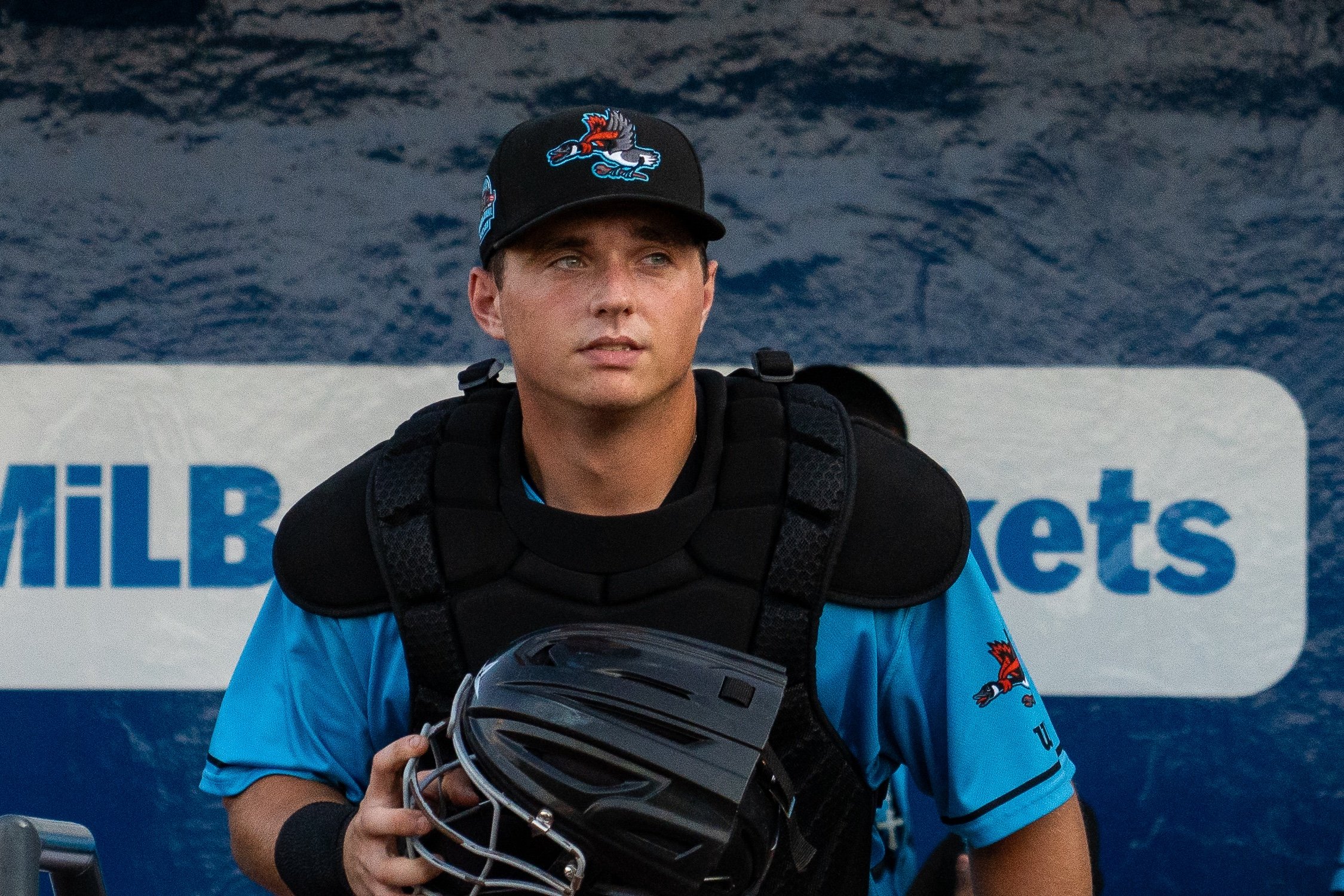 When the Marlins selected Ryan Ignoffo out of Eastern Illinois in the 20th round of the 2023 MLB Draft, it was like choosing to eat at a new restaurant after seeing it had a very long menu. Defensively, the two-way player had done almost everything as an amateur including pitching, playing the corner outfield spots, and playing multiple spots on both sides of the infield. From very early this spring though, it was evident the Marlins were trying something else and one of the few positions that was almost completely foreign to Ignoffo: catcher. He welcomed the chance. “I saw it as another opportunity to get out on the field,” Ignoffo told Fish On First during the minor league season. “It’s a position I didn’t really get to play. I caught some bullpens my freshman year in the fall in college and that was about all I got. But being called on to catch for a bunch of professional guys with nasty stuff was just one of those eye-opening opportunities.” Ignoffo began by catching some of the earliest bullpens on the backfields during spring training. As the campaign wore on, he spent nearly all of his time at the position. From the start, it was clear the Marlins had a plan for his development. “It takes a special player to go to different positions and he’s that special player,” director of player development Rachel Balkovec said. “I think it’s a big mental hurdle. It’s an identity: 'oh no, I’m an outfielder. I can’t do that,' especially catching. It just speaks to his mentality, his open-mindedness, his willingness to work and learn, and his humble nature to learn a new position like that and then crush it. It really speaks to him as a person.” Marlins top-ranked prospect Thomas White was paired with Ignoffo more often that any other catcher in 2024. White was highly complimentary of his battery mate's ability to cut down 28% of potential base-stealers. “He did great. He has a freakin’ cannon back there,” White said. “It’s nice to see a guy get thrown out. You walk a guy, then Ryan throws him out next throw. He’s done a great job. It’s only going to get better.” TGxNNXhfV0ZRVkV3dEdEUT09X0FBZFVWZ0JRVUFvQUNsdFFVQUFBQVZVREFBTUZBQVFBVXdGWFZsRlFWUWRVQlFvRQ==.mp4 For Ignoffo defensively, some of his biggest takeaways as a new catcher were putting in the required time, learning how to be an effective supporter of his pitchers, and helping them control game tempo. “It was just a lot of me showing up earlier than normal, talking with our catching coaches and pitching coaches both at Low-A and High-A,” Ignoffo said. “Just knowing how to pick apart certain game plans, knowing what our pitcher has, and how to attack hitters.” Overall, learning how to catch nearly on the fly and making the full-time positional change in a single spring was a physical challenge, but one which he conquered. “Looking back at all my preparation being a new catcher and seeing it pay off, especially on the hitting side—I thought I was going to suffer with not having my legs underneath me,” Ignoffo said. “I never ran into any issues. I only had fatigue for a couple of games here and there, but overall I felt really, really good.” The success with the bat Ignoffo speaks of was a .324/.376/.459 slash line. He started with Low-A Jupiter and his exploits earned him the Marlins' organizational MVP award for that level. His production largely sustained with High-A Beloit against competition whose average age was closer to his own. In 24 games with the Sky Carp, Ignoffo hit .307/.327/.426. His 139 wRC+ across both levels was the best in the Marlins organization amongst full-season players. “I think going from Low-A to High-A wasn’t that big of a jump. Guys have better stuff and command and do a really good job slowing the game down,” Ignoffo said of how he handled the push up the minor league ladder. “I think the first game I was the most nervous because all my family was there; Beloit is only 40 minutes from my house.” Ignoffo added that his family was in attendance to support him at nearly every Sky Carp home game. Heading into 2025, the new backstop has a plan for how he will attack the offseason in order to improve even more. ”Now I have a foundation and I know what I need to work on,” Ignoffo said. “I caught a ton of games this year which was a really good learning experience. Now I know where I need to get better, and it’s going to happen this offseason.” At 24, Ignoffo is in a great situation: a player who impressed the organization, who became a leader, and who handled every challenge thrown at him. The versatility to play many other positions could be valuable further down the road even if catcher proves to be his primary occupation. He has a good chance of being invited to spring training and to possibly open the season at the Double-A level.
 -
Thomas White is good and he knows it. He dazzled in 2024 and wants to do even more in 2025. Thomas White looked down at two pieces of new hardware that were presented to him by Miami Marlins' brass on Saturday afternoon at loanDepot park. In his first full professional season, White double-dipped as High-A Beloit's MVP and the organization's Minor League Pitcher of the Year. For the 19-year-old left-hander, this would be a surreal moment, yet he keeps his composure throughout the ceremony, wearing a sly grin. He speaks in a calm and collected tone as he poses for photos with his family and accepts handshakes. He is the epitome of confidence. From the outset, new Marlins executives Gabe Kapler and Rachel Balkovec promised to aggressively challenge players who impress them. White was no exception. After a very impressive spring training, White spent just eight games in Low-A Jupiter before being assigned to Beloit. There, over 13 games, he was absolutely electric. Pitching to a 2.81 ERA via a 76/21 K/BB, White was one of the best pitchers on his circuit. He took the challenge of adjusting to a new league and new level about as well as he possibly could have. "Guys hit some mistakes a little bit better. I had a little streak of three home runs in three weeks, but I felt those outings were really good and I made one mistake and they made me pay for it," White said of differences he noticed between the two levels. "Getting used to that and obviously thats something I'll get better at as I get older." After settling in at the High-A level, Thomas White was automatic as he aced the Sky Carp rotation. From July 5 through August 29, White went five innings in each of seven starts while only giving up one run. White attributed his ability to stay consistent to his pitching coach, Jason Erickson. "I thought (he) was great for me; especially coming up there we tried to really just continue what I was doing well in Jupiter while also making some adjustments." One of White’s biggest focuses this season was improving the consistency of his control. After starting the season with a 10.9% walk rate through the month of May, White held down a 7.8% walk rate from June through the end of the season. ”(Control) started out okay, and then middle to end of the year it got really, really way better for me,” White said. “Starting to do more dry work on the mound, getting on the mound every day and getting more comfortable out there is really what contributed to it.” As good as White was in 2024 and as many accolades as he earned including becoming the Marlins' unanimous top prospect, he has plans to do even more in 2025. Working towards that season will start very soon and will include adding around seven more pounds of mass and furthering knowledge of his body. "I'm hoping to put on a little bit more weight and kind of get to where I want to be and then just focus on being explosive," White said. "Now that I know what its like to go through a full season, where I get sore and when I get tired, kind of just building on those specific areas." White also spoke of improving his already-impressive arsenal. "The changeup in general and then kind of honing in on slider," White said of improvements he wants to make to existing pitches. "It was really good at the end of the year when I was able to get it to 83-84, but when it starts to slow down and kind of gets to 80-81, it gets a little more sweeper-y, rather than a tight slider." White isn't stopping at just perfecting his existing pitches. He wants to add another one: a cutter he said he would like to resemble Garrett Crochet's. White believes the addition of a new pitch will allow him to mix speeds more advantageously and keep hitters even more off balance. "A nice bridge pitch would be nice," White said. "A hard cutter type thing; maybe a hard slider/soft cutter just to kind of have the fastball at 96, the changeup at like 84 and the slider also at 84." Stuff and physicality aren't the only things that stick out about White. According to Rachel Balkovec, he also showed that he has it between the ears. "You talk about maturity," Balkovec said. "It's stunning to think of his age and how he carries himself on the mound and how much of a leader he is in the clubhouse." If the club continues to challenge White, he could make his upper minors debut in 2025. From there, the possibility of him making his MLB debut the following year is real. View full article
-
Thomas White named Marlins' Pitcher of the Year and High-A MVP
Alex Carver posted an article in FOF Prospects
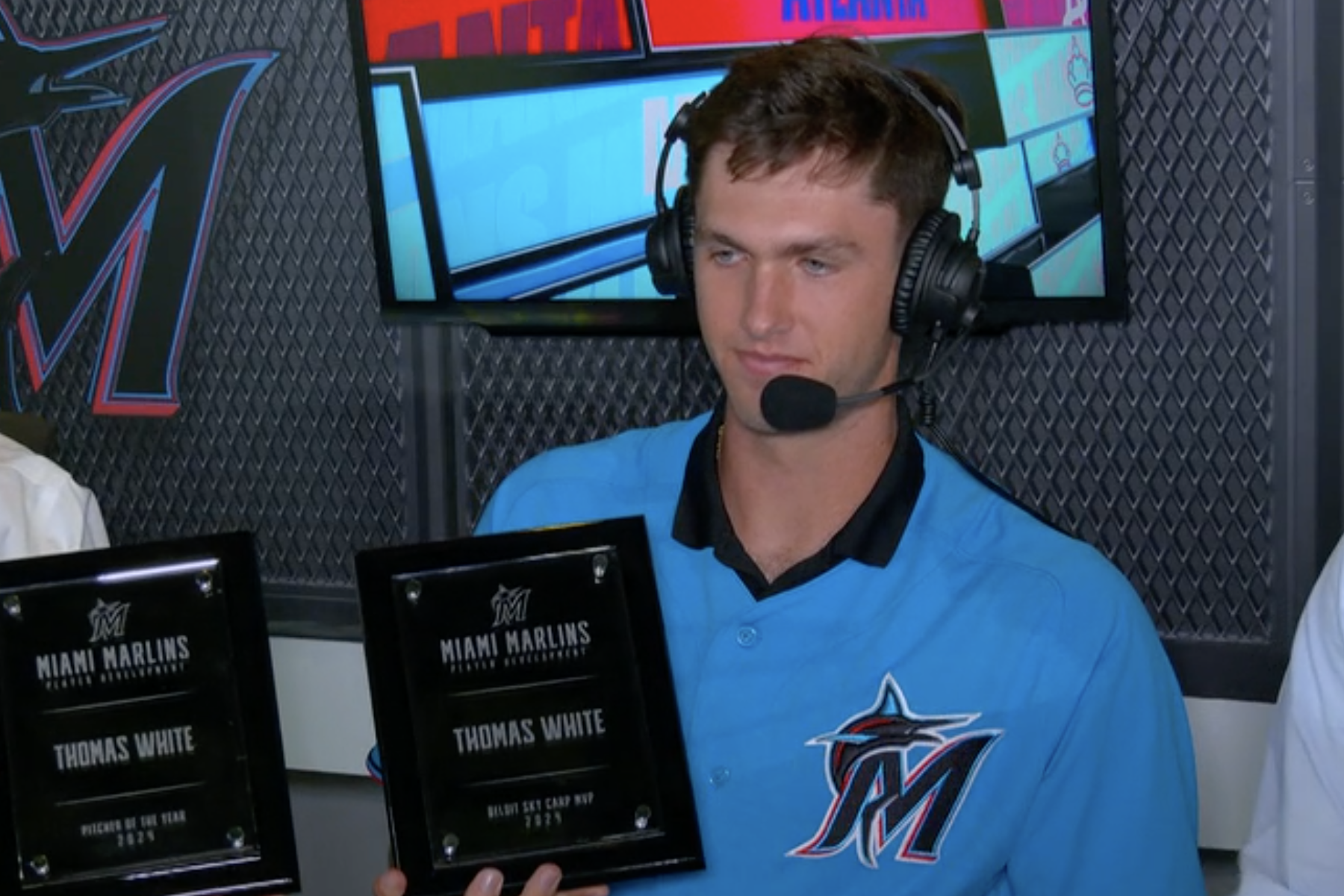 Thomas White looked down at two pieces of new hardware that were presented to him by Miami Marlins' brass on Saturday afternoon at loanDepot park. In his first full professional season, White double-dipped as High-A Beloit's MVP and the organization's Minor League Pitcher of the Year. For the 19-year-old left-hander, this would be a surreal moment, yet he keeps his composure throughout the ceremony, wearing a sly grin. He speaks in a calm and collected tone as he poses for photos with his family and accepts handshakes. He is the epitome of confidence. From the outset, new Marlins executives Gabe Kapler and Rachel Balkovec promised to aggressively challenge players who impress them. White was no exception. After a very impressive spring training, White spent just eight games in Low-A Jupiter before being assigned to Beloit. There, over 13 games, he was absolutely electric. Pitching to a 2.81 ERA via a 76/21 K/BB, White was one of the best pitchers on his circuit. He took the challenge of adjusting to a new league and new level about as well as he possibly could have. "Guys hit some mistakes a little bit better. I had a little streak of three home runs in three weeks, but I felt those outings were really good and I made one mistake and they made me pay for it," White said of differences he noticed between the two levels. "Getting used to that and obviously thats something I'll get better at as I get older." After settling in at the High-A level, Thomas White was automatic as he aced the Sky Carp rotation. From July 5 through August 29, White went five innings in each of seven starts while only giving up one run. White attributed his ability to stay consistent to his pitching coach, Jason Erickson. "I thought (he) was great for me; especially coming up there we tried to really just continue what I was doing well in Jupiter while also making some adjustments." One of White’s biggest focuses this season was improving the consistency of his control. After starting the season with a 10.9% walk rate through the month of May, White held down a 7.8% walk rate from June through the end of the season. ”(Control) started out okay, and then middle to end of the year it got really, really way better for me,” White said. “Starting to do more dry work on the mound, getting on the mound every day and getting more comfortable out there is really what contributed to it.” As good as White was in 2024 and as many accolades as he earned including becoming the Marlins' unanimous top prospect, he has plans to do even more in 2025. Working towards that season will start very soon and will include adding around seven more pounds of mass and furthering knowledge of his body. "I'm hoping to put on a little bit more weight and kind of get to where I want to be and then just focus on being explosive," White said. "Now that I know what its like to go through a full season, where I get sore and when I get tired, kind of just building on those specific areas." White also spoke of improving his already-impressive arsenal. "The changeup in general and then kind of honing in on slider," White said of improvements he wants to make to existing pitches. "It was really good at the end of the year when I was able to get it to 83-84, but when it starts to slow down and kind of gets to 80-81, it gets a little more sweeper-y, rather than a tight slider." White isn't stopping at just perfecting his existing pitches. He wants to add another one: a cutter he said he would like to resemble Garrett Crochet's. White believes the addition of a new pitch will allow him to mix speeds more advantageously and keep hitters even more off balance. "A nice bridge pitch would be nice," White said. "A hard cutter type thing; maybe a hard slider/soft cutter just to kind of have the fastball at 96, the changeup at like 84 and the slider also at 84." Stuff and physicality aren't the only things that stick out about White. According to Rachel Balkovec, he also showed that he has it between the ears. "You talk about maturity," Balkovec said. "It's stunning to think of his age and how he carries himself on the mound and how much of a leader he is in the clubhouse." If the club continues to challenge White, he could make his upper minors debut in 2025. From there, the possibility of him making his MLB debut the following year is real.
 -
Who might the Marlins send to the Arizona Fall League?
Alex Carver posted an article in FOF Prospects
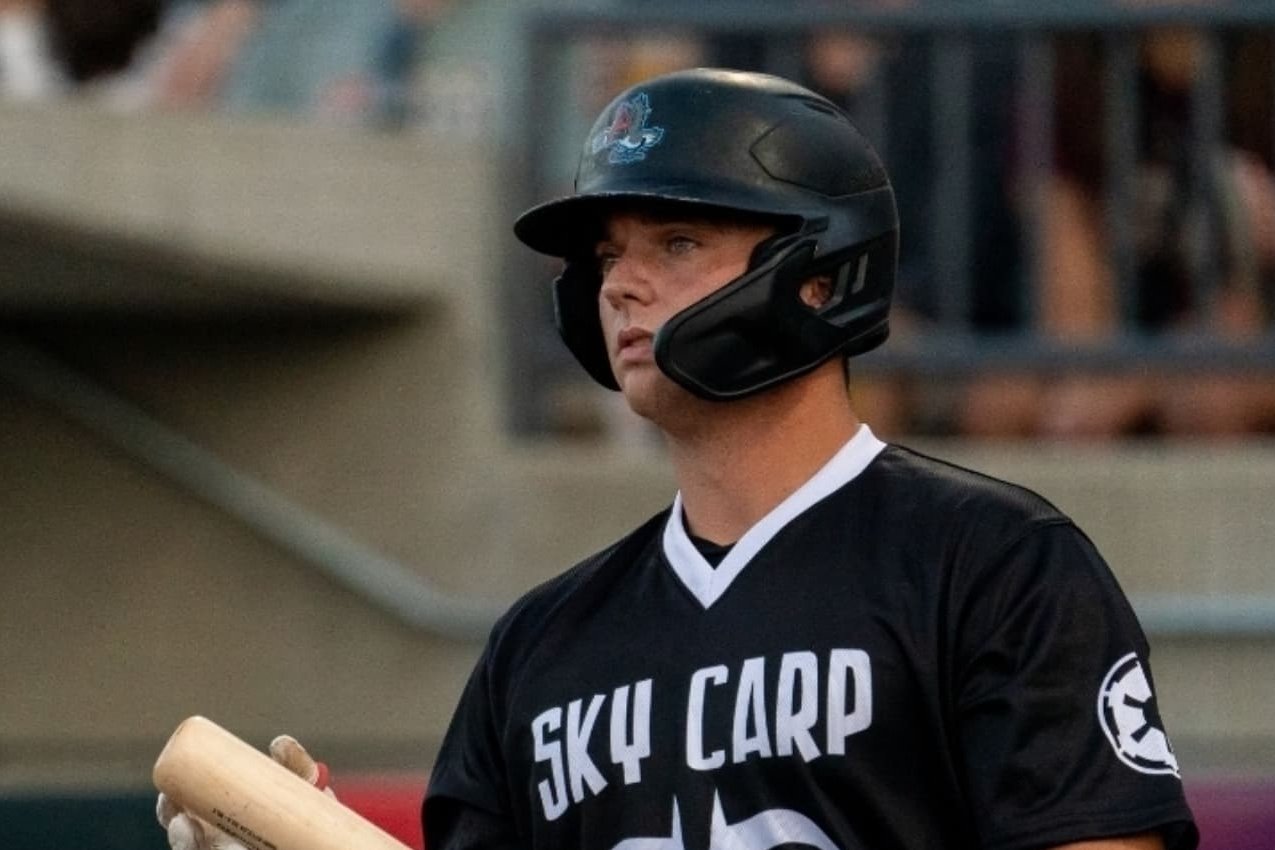 Player development doesn’t stop in September. Each autumn, every major league team selects a group of up to seven players to send out west to compete in the Arizona Fall League. Selections are usually comprised of minor leaguers that organizations wants to see get more reps in order to gauge their current level of progression. This year, a rebuilt Marlins system has been keen on challenging players quickly. Logistically, Miami will need to continue to do so as more prospects have entered the organization via trades, the draft, and the upcoming international signing period. Who does Miami want to see a bit more of in Arizona this fall before next season? Here are a few candidates. LHP Justin King King has been notified that he will be going to the AFL, a source tells Fish On First. Released by the Milwaukee Brewers organization two months ago, a change of scenery is benefiting the 26-year-old left-hander thus far. Through 11 relief appearances with the Pensacola Blue Wahoos, he has an astounding 48.8% strikeout rate. With an average fastball velocity of 97 mph, the key for King is sharpening his control and command. Expect him to be the oldest Marlins representative. UVc2OFhfV0ZRVkV3dEdEUT09X0R3WlZBbHdHWGxBQUFRRUxVZ0FBVTFKVUFGaFJWRkFBVjFJTUFBVUJCQVlHVlZGUQ==.mp4 C Ryan Ignoffo Ignoffo has been one of the most pleasant developments for the Marlins’ system this year. A late-round pick from 2023, Ignoffo had a solid cup of coffee with the Hammerheads, slashing .300/.375/.389. This season, he proved that production wasn’t a fluke. Beginning with Jupiter then moving to Beloit, Ignoffo is slashing .335/.390/.490. The 5’9”, 215-pounder has also flashed good speed, stealing 21 bases and more than good plate discipline with a 49/46 K/BB. All of this has been done while Ignoffo has learned how to play a new position and arguably the hardest one on the diamond, catcher. The 24-year-old is deserving of an even greater challenge. The Marlins may decide to preview how he does offensively against advanced pitching while getting him even more reps at his new position this fall. INF Yiddi Cappe Cappe was the Marlins' top signing in his international free agent class, receiving a lucrative $3.5M bonus in January 2021. He jumped from the DSL to stateside ball in 2022 then spent a full season Beloit in 2023. This year, Cappe has played just 60 games between Jupiter and the Sky Carp due to being slowed by a wrist injury that cost him nearly three months. Cappe’s development has lagged behind what the Marlins initially projected. He has not developed much physically, his bat speed still needs improvement, and he has been completely moved off of shortstop. Cappe makes a lot of sense as a guy Miami could send westward to make up for lost time and continue attempting to bring out the top prospect they thought they signed four years ago. LHP Dax Fulton Fulton was a member of the Marlins’ all-pitcher 2020 draft class out of the high school ranks. He moved straight to full-season ball in 2021, then in 2022, he held down a 3.80 ERA with dazzling control numbers (150/42 K/BB) between A+ and a small showing in AA. He was invited to big league spring training last season before being sent back to the Blue Wahoos to begin 2023. Just 33 innings into his season, Fulton was shut down with an elbow injury, requiring him to undergo his second full Tommy John surgery. This spring, Fulton was limited to light work and throwing. He’s remained in Jupiter all season where he’s focused on both rehab and conditioning. Recently, a very slimmed down version of Dax threw off a mound again for the first time in over a year. It’s pretty easy to see the vision for Dax to head to Arizona: he needs innings. If he’s ready for game action, the Marlins would love to send him westward. INF Ian Lewis Lewis is a tooled-up infielder who has insane speed, giving him the ability for solid stolen base totals and the ability to turn anything into at least a double. In 2023, his first full-length pro season, Lewis struggled with the quality of his contact, but he was also a victim of the pitcher-friendly Florida State League, posting a .280 BABIP. Improvements are needed here, particularly physically, but the Marlins have not been able to bring the Bahamian switch-hitter to the U.S. all year due to visa issues. Instead, Lewis has been at their Dominican Academy and worked on his conditioning and building strength. The Marlins would love to see where Lewis stands in his progression if they can get him to Arizona. As long as no barriers are in place, Lewis will be with the Peoria Javelinas this fall. RHP Breidy Encarnación Encarnación is one of the longer-tenured members of the organization, having joined it out of the international ranks in 2019. Despite being around that long, Encarnación has logged just 177 ⅓ innings in the minors. Encarnación pitched a full season’s worth of innings last season and was effective at the Low-A and High-A levels as a reliever, demonstrating a plus changeup and earning small cups of coffee at the upper levels of the system. He was originally tabbed to go to the 2023 fall league. However, injury woes scrapped those plans and he remained shut down for most of 2024 until just recently beginning a rehab assignment. Now nearly 24, Encarnación is on track to appear in a limited showing at AA to end the regular season. It would behoove Miami to see more of the 6’3” righty in Arizona. He has the ceiling of a multiple-inning reliever at the next level. LHP Jack Sellinger Sellinger is a 2023 draft pick who was limited to just four FCL games after his selection. He started his 2024 season in early May after spending time on the reserve list with Jupiter where he impressed, specifically with his control and command. In 34 innings, Sellinger threw to a 2.91 ERA via a 52/13 K/BB. He’s since been promoted to A+ Beloit. In four games and 5.1 IP, he’s allowed two earned runs. The lefty has a funky, herky-jerky delivery and a side-arm arm angle. He has succeeded due to his ability to drill the lower half of the strike zone and garner weak contact as well as whiffs out of it, particularly with his high-arcing breaking ball. At 24, the Marlins may choose to feed him more frames against older competition and challenge him in a hitter-friendly league. With success, he’s an arm that could be pushed up the MiLB ladder quickly.
- 3 comments
-
- 3
-

-
- justin king
- ryan ignoffo
- (and 5 more)
-
One of the pitchers participating in the 2024 fall league has already been confirmed. Who else might Miami send westward this autumn and why? Player development doesn’t stop in September. Each autumn, every major league team selects a group of up to seven players to send out west to compete in the Arizona Fall League. Selections are usually comprised of minor leaguers that organizations wants to see get more reps in order to gauge their current level of progression. This year, a rebuilt Marlins system has been keen on challenging players quickly. Logistically, Miami will need to continue to do so as more prospects have entered the organization via trades, the draft, and the upcoming international signing period. Who does Miami want to see a bit more of in Arizona this fall before next season? Here are a few candidates. LHP Justin King King has been notified that he will be going to the AFL, a source tells Fish On First. Released by the Milwaukee Brewers organization two months ago, a change of scenery is benefiting the 26-year-old left-hander thus far. Through 11 relief appearances with the Pensacola Blue Wahoos, he has an astounding 48.8% strikeout rate. With an average fastball velocity of 97 mph, the key for King is sharpening his control and command. Expect him to be the oldest Marlins representative. UVc2OFhfV0ZRVkV3dEdEUT09X0R3WlZBbHdHWGxBQUFRRUxVZ0FBVTFKVUFGaFJWRkFBVjFJTUFBVUJCQVlHVlZGUQ==.mp4 C Ryan Ignoffo Ignoffo has been one of the most pleasant developments for the Marlins’ system this year. A late-round pick from 2023, Ignoffo had a solid cup of coffee with the Hammerheads, slashing .300/.375/.389. This season, he proved that production wasn’t a fluke. Beginning with Jupiter then moving to Beloit, Ignoffo is slashing .335/.390/.490. The 5’9”, 215-pounder has also flashed good speed, stealing 21 bases and more than good plate discipline with a 49/46 K/BB. All of this has been done while Ignoffo has learned how to play a new position and arguably the hardest one on the diamond, catcher. The 24-year-old is deserving of an even greater challenge. The Marlins may decide to preview how he does offensively against advanced pitching while getting him even more reps at his new position this fall. INF Yiddi Cappe Cappe was the Marlins' top signing in his international free agent class, receiving a lucrative $3.5M bonus in January 2021. He jumped from the DSL to stateside ball in 2022 then spent a full season Beloit in 2023. This year, Cappe has played just 60 games between Jupiter and the Sky Carp due to being slowed by a wrist injury that cost him nearly three months. Cappe’s development has lagged behind what the Marlins initially projected. He has not developed much physically, his bat speed still needs improvement, and he has been completely moved off of shortstop. Cappe makes a lot of sense as a guy Miami could send westward to make up for lost time and continue attempting to bring out the top prospect they thought they signed four years ago. LHP Dax Fulton Fulton was a member of the Marlins’ all-pitcher 2020 draft class out of the high school ranks. He moved straight to full-season ball in 2021, then in 2022, he held down a 3.80 ERA with dazzling control numbers (150/42 K/BB) between A+ and a small showing in AA. He was invited to big league spring training last season before being sent back to the Blue Wahoos to begin 2023. Just 33 innings into his season, Fulton was shut down with an elbow injury, requiring him to undergo his second full Tommy John surgery. This spring, Fulton was limited to light work and throwing. He’s remained in Jupiter all season where he’s focused on both rehab and conditioning. Recently, a very slimmed down version of Dax threw off a mound again for the first time in over a year. It’s pretty easy to see the vision for Dax to head to Arizona: he needs innings. If he’s ready for game action, the Marlins would love to send him westward. INF Ian Lewis Lewis is a tooled-up infielder who has insane speed, giving him the ability for solid stolen base totals and the ability to turn anything into at least a double. In 2023, his first full-length pro season, Lewis struggled with the quality of his contact, but he was also a victim of the pitcher-friendly Florida State League, posting a .280 BABIP. Improvements are needed here, particularly physically, but the Marlins have not been able to bring the Bahamian switch-hitter to the U.S. all year due to visa issues. Instead, Lewis has been at their Dominican Academy and worked on his conditioning and building strength. The Marlins would love to see where Lewis stands in his progression if they can get him to Arizona. As long as no barriers are in place, Lewis will be with the Peoria Javelinas this fall. RHP Breidy Encarnación Encarnación is one of the longer-tenured members of the organization, having joined it out of the international ranks in 2019. Despite being around that long, Encarnación has logged just 177 ⅓ innings in the minors. Encarnación pitched a full season’s worth of innings last season and was effective at the Low-A and High-A levels as a reliever, demonstrating a plus changeup and earning small cups of coffee at the upper levels of the system. He was originally tabbed to go to the 2023 fall league. However, injury woes scrapped those plans and he remained shut down for most of 2024 until just recently beginning a rehab assignment. Now nearly 24, Encarnación is on track to appear in a limited showing at AA to end the regular season. It would behoove Miami to see more of the 6’3” righty in Arizona. He has the ceiling of a multiple-inning reliever at the next level. LHP Jack Sellinger Sellinger is a 2023 draft pick who was limited to just four FCL games after his selection. He started his 2024 season in early May after spending time on the reserve list with Jupiter where he impressed, specifically with his control and command. In 34 innings, Sellinger threw to a 2.91 ERA via a 52/13 K/BB. He’s since been promoted to A+ Beloit. In four games and 5.1 IP, he’s allowed two earned runs. The lefty has a funky, herky-jerky delivery and a side-arm arm angle. He has succeeded due to his ability to drill the lower half of the strike zone and garner weak contact as well as whiffs out of it, particularly with his high-arcing breaking ball. At 24, the Marlins may choose to feed him more frames against older competition and challenge him in a hitter-friendly league. With success, he’s an arm that could be pushed up the MiLB ladder quickly. View full article
-
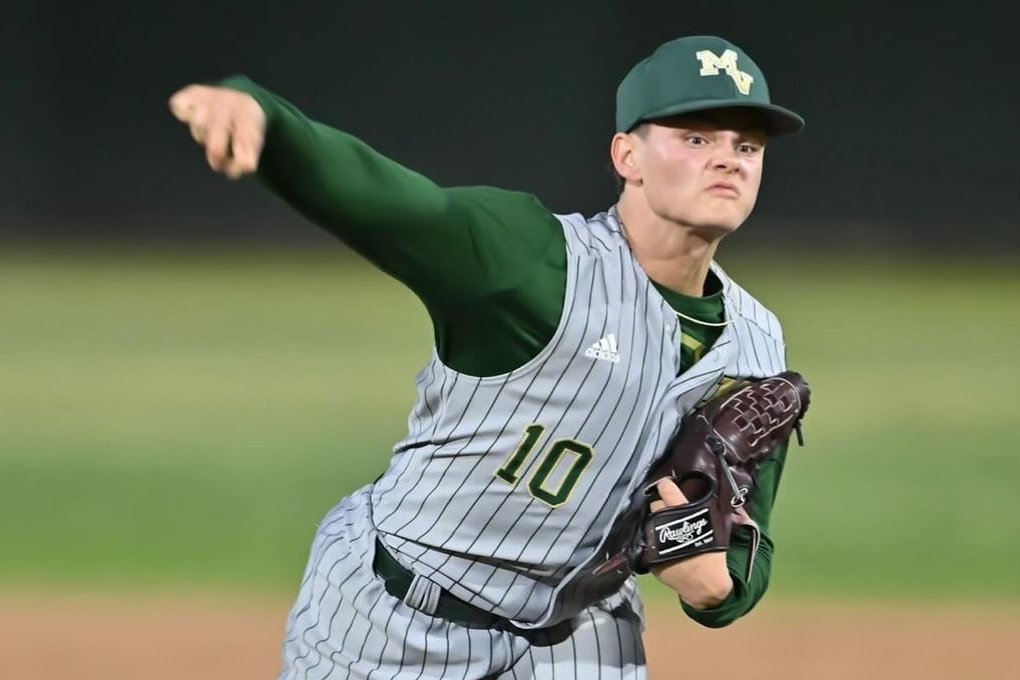 This past week at the MLB Draft, the Marlins had a plan: buy into the long-term future early, often, and regularly. With their first two picks, the Marlins took prep position players who will be on solid trajectory to make a big league impact in the next 4-5 years. After going with three collegiate picks their next three rounds to manage their signing bonus pool, Miami saw a prep pitcher fall to them that they could not pass on: Colorado right-hander Grant Shepardson. Although still 18, a big-league impact could happen even sooner for Shepardson. The key cog in Shepardson’s quick development has been those closest to him. It became a family affair for the Shepardsons on Day 3 of the draft when Grant's brother, Blake, a righty reliever out of the collegiate ranks, was drafted by the White Sox in the 11th round. For Grant, he went before his role model and a young man who has supported him the length of his career starting at an early age. Even if it took tough love, over the years, the brothers became inseparable. “They pushed each other hard and his brother rode him like a bull to push him and get better,” their father, Paul Shepardson, stated. “They are best friends.” According to their matriarch, the Shepardson brothers continued to be each other’s best source of motivation as they grew through the high school ranks. For the younger brother, he did his best to act spongelike around Blake, especially in terms of preparation. “Grant saw how Blake worked out and took his workout and made it his own.” As the pair grew, Blake headed off to college and continued to follow his own trajectory, first locally at Denver's Regis University, then transferring to the University of San Francisco for his junior season. However, his support for his brother didn’t waver. If anything, it got even stronger and more frequent. Grant committed to play at San Francisco as well. As Blake became even more versed with his younger brother’s path during Grant’s later high school years, he saw how advanced Grant was. “Ever since I entered college and started to follow along to his journey, I’ve started to realize how advanced he is at such a young age,” Blake said. “For example, by his junior year, he had already mastered a good slider, changeup, two-seam, sinker etc. Just a bunch of stuff like that that I had no idea about when I was his age.” Blake also noticed Grant’s strength of mind and his ability to rise to any game occasion, demonstrating maturity beyond his current years. “Not only that, his talent is extraordinary," the elder brother added. “The fact he has been able to be so successful in certain games and completely dominant at 17-18 is crazy; I know at that age, I was only just breaking the surface of what it could look like to be a good pitcher.” Yet another thing Blake noticed was the ability for Grant to be even better. With his brother sitting 93-94 mph with his fastball as late as his junior year, the elder Shepardson saw more in the tank and took it upon himself to encourage it and bring it out. This past winter, Grant met Andrew Amato, the Director of Pitching at Push Performance in Arizona. Their meeting happened on account of Blake. “He started working with me in February,” Amato said. “I’ve been working with his brother Blake for over a year now and Blake got Grant and I in contact.” Amato went to work with Grant on his lower body strength and mechanics. It was a main driver in his ability to bump up his fastball velocity and secure a $897,500 signing bonus from the Marlins. “(We) started off primarily focusing on spinal capacity and coordination through his spine. Made a few small tweaks to his mechanics, in hopes to clean up timing out of peak leg lift, and avoid a super swingy lead leg,” Amato said. “Along with that, increasing arm side side bend and posterior pelvic tilt to increase torque being induced at the lumbar spine.“ After that, it was all about repetition. “Hammered that stuff and over the course of the season. We obviously would talk weekly and velo just kept ticking up,” Amato said. “Ended up hitting 98 on March 28 and one of his last pitches of the game was 97. He came in, got some work in before his pre-draft workouts and ended up climbing to 98 as well.” On top of Shepardson's staple slider, that velocity has been recognized very quickly. According to Amato, though, this still isn’t the best possible version of him. “There is definitely more in the tank. For being 18, and doing what he’s doing is a great sign. Now, the goal moving forward obviously is to keep climbing average velo and dialing in command. A lot is gonna happen in the next couple years.” As those years happen, along the ride with Grant will still be his brother Blake. Through his own experience, Blake has made it his task to continue to contribute to the success of his younger sibling. According to Blake, they will continue compelling each other to develop further. “Having him be really good at a young age has been awesome just because I have a younger version of myself who I can bounce ideas off of, help with my stuff, and ultimately I can be the one to help him through a baseball career,” the elder Shepardson told us. “I’ve been there, done that at a lot of places, lots of teams, coaches and had lots of success and even more failure.” “I can’t even express how fired up I am for my brother,” Blake added. “He works his ass off and everything he has accomplished has been deserved.“ By both being selected in the 2024 draft, the Shepardson brothers are one of six pairs of siblings in MLB history to go in the same selection period. Cole Messina (Round 3, Rockies) and Carson Messina (Round 12, Blue Jays) also pulled off the feat this year. “One person getting drafted is a huge thing and a major accomplishment for one person or one family,” Blake stated. “But myself as well is almost inconceivable at this point. I cannot imagine what our parents are feeling now. But, at the end of the day, they are the sole reasons we are at this point. They supported us every step of the way, and have been there no matter what.” What is next in the development path for the Miami-bound Shepardson as he enters the professional ranks? “(Blake) had been up to 101 mph this summer,” a collegiate source said. "I don’t know if Grant will throw that hard, but that was something that was really intriguing in the recruiting process. His slider is gross. Best pitch and it’s not close. The issue with his fastball is the movement: super generic. If he gets it to do something and adds a third pitch, he could be a starter. But at worst, he’s a good reliever that relies heavily on his slider.” With a great blueprint that has quickly gotten even better and a sturdy support system that isn’t going anywhere no matter how many miles come between them, Grant Shepardson is going places quickly. With an already high floor and higher ceiling, this is arguably the best signing of the draft for Miami. For it, the team can thank the Shepardson family now and continuously.
 -
Grant Shepardson became a fifth-round pick of the Marlins this past week by way of great stuff and an even better support system. His older brother, Blake Shepardson, was selected by the White Sox in the 11th round. This past week at the MLB Draft, the Marlins had a plan: buy into the long-term future early, often, and regularly. With their first two picks, the Marlins took prep position players who will be on solid trajectory to make a big league impact in the next 4-5 years. After going with three collegiate picks their next three rounds to manage their signing bonus pool, Miami saw a prep pitcher fall to them that they could not pass on: Colorado right-hander Grant Shepardson. Although still 18, a big-league impact could happen even sooner for Shepardson. The key cog in Shepardson’s quick development has been those closest to him. It became a family affair for the Shepardsons on Day 3 of the draft when Grant's brother, Blake, a righty reliever out of the collegiate ranks, was drafted by the White Sox in the 11th round. For Grant, he went before his role model and a young man who has supported him the length of his career starting at an early age. Even if it took tough love, over the years, the brothers became inseparable. “They pushed each other hard and his brother rode him like a bull to push him and get better,” their father, Paul Shepardson, stated. “They are best friends.” According to their matriarch, the Shepardson brothers continued to be each other’s best source of motivation as they grew through the high school ranks. For the younger brother, he did his best to act spongelike around Blake, especially in terms of preparation. “Grant saw how Blake worked out and took his workout and made it his own.” As the pair grew, Blake headed off to college and continued to follow his own trajectory, first locally at Denver's Regis University, then transferring to the University of San Francisco for his junior season. However, his support for his brother didn’t waver. If anything, it got even stronger and more frequent. Grant committed to play at San Francisco as well. As Blake became even more versed with his younger brother’s path during Grant’s later high school years, he saw how advanced Grant was. “Ever since I entered college and started to follow along to his journey, I’ve started to realize how advanced he is at such a young age,” Blake said. “For example, by his junior year, he had already mastered a good slider, changeup, two-seam, sinker etc. Just a bunch of stuff like that that I had no idea about when I was his age.” Blake also noticed Grant’s strength of mind and his ability to rise to any game occasion, demonstrating maturity beyond his current years. “Not only that, his talent is extraordinary," the elder brother added. “The fact he has been able to be so successful in certain games and completely dominant at 17-18 is crazy; I know at that age, I was only just breaking the surface of what it could look like to be a good pitcher.” Yet another thing Blake noticed was the ability for Grant to be even better. With his brother sitting 93-94 mph with his fastball as late as his junior year, the elder Shepardson saw more in the tank and took it upon himself to encourage it and bring it out. This past winter, Grant met Andrew Amato, the Director of Pitching at Push Performance in Arizona. Their meeting happened on account of Blake. “He started working with me in February,” Amato said. “I’ve been working with his brother Blake for over a year now and Blake got Grant and I in contact.” Amato went to work with Grant on his lower body strength and mechanics. It was a main driver in his ability to bump up his fastball velocity and secure a $897,500 signing bonus from the Marlins. “(We) started off primarily focusing on spinal capacity and coordination through his spine. Made a few small tweaks to his mechanics, in hopes to clean up timing out of peak leg lift, and avoid a super swingy lead leg,” Amato said. “Along with that, increasing arm side side bend and posterior pelvic tilt to increase torque being induced at the lumbar spine.“ After that, it was all about repetition. “Hammered that stuff and over the course of the season. We obviously would talk weekly and velo just kept ticking up,” Amato said. “Ended up hitting 98 on March 28 and one of his last pitches of the game was 97. He came in, got some work in before his pre-draft workouts and ended up climbing to 98 as well.” On top of Shepardson's staple slider, that velocity has been recognized very quickly. According to Amato, though, this still isn’t the best possible version of him. “There is definitely more in the tank. For being 18, and doing what he’s doing is a great sign. Now, the goal moving forward obviously is to keep climbing average velo and dialing in command. A lot is gonna happen in the next couple years.” As those years happen, along the ride with Grant will still be his brother Blake. Through his own experience, Blake has made it his task to continue to contribute to the success of his younger sibling. According to Blake, they will continue compelling each other to develop further. “Having him be really good at a young age has been awesome just because I have a younger version of myself who I can bounce ideas off of, help with my stuff, and ultimately I can be the one to help him through a baseball career,” the elder Shepardson told us. “I’ve been there, done that at a lot of places, lots of teams, coaches and had lots of success and even more failure.” “I can’t even express how fired up I am for my brother,” Blake added. “He works his ass off and everything he has accomplished has been deserved.“ By both being selected in the 2024 draft, the Shepardson brothers are one of six pairs of siblings in MLB history to go in the same selection period. Cole Messina (Round 3, Rockies) and Carson Messina (Round 12, Blue Jays) also pulled off the feat this year. “One person getting drafted is a huge thing and a major accomplishment for one person or one family,” Blake stated. “But myself as well is almost inconceivable at this point. I cannot imagine what our parents are feeling now. But, at the end of the day, they are the sole reasons we are at this point. They supported us every step of the way, and have been there no matter what.” What is next in the development path for the Miami-bound Shepardson as he enters the professional ranks? “(Blake) had been up to 101 mph this summer,” a collegiate source said. "I don’t know if Grant will throw that hard, but that was something that was really intriguing in the recruiting process. His slider is gross. Best pitch and it’s not close. The issue with his fastball is the movement: super generic. If he gets it to do something and adds a third pitch, he could be a starter. But at worst, he’s a good reliever that relies heavily on his slider.” With a great blueprint that has quickly gotten even better and a sturdy support system that isn’t going anywhere no matter how many miles come between them, Grant Shepardson is going places quickly. With an already high floor and higher ceiling, this is arguably the best signing of the draft for Miami. For it, the team can thank the Shepardson family now and continuously. View full article
-
Though they weren’t at their best, Noble Meyer and Thomas White were effective on a big stage. For a second straight prospect-centric event, the Marlins got a look at their top two pitching prospects on a national stage. On Saturday afternoon in Arlington, Texas, Noble Meyer and Thomas White toed the rubber for the National League Futures team. What the Marlins currently lack in overall prospect prowess, there’s a ton in both of these arms. Once again, they proved it. Both recently called up to High-A as 19-year-olds, Miami’s pair of high-prized arms turned in a combined 1 ⅔ innings of one run work on three strikeouts. Noble was up first. Following Colorado’s Chase Dollander, Meyer tossed the second inning. It was just Meyer’s third time on the mound over the past month; he had missed two straight starts due to a minor injury scare. From the start, Noble had full command of his fastball. Since spring training, it’s been a focus of his to elevate and place his fastball up in the zone more consistently to allow his best pitch slider to advantageously change eye levels and garner even more off-balance hacks. After placing two fastballs up to his first hitter Xavier Isaac, Meyer attempted two pitches to the outer half before freezing him with another fastball over the middle of the plate. In a 2-2 count, Meyer showed great confidence in his heater which topped at 94.6 mph. While the fastball was good, Meyer didn’t have full control of his slider. Many of his spinners wound up well off the plate and led to his walk of Harry Ford. Meyer did garner a whiff for a second strikeout with his slider, but it wound up middle/middle. He somehow got away with the mistake for a K. All in all for Noble, it was very encouraging to see him continue to build confidence in his fastball and place it with paint in the upper quadrants. Though the slider wasn’t there in this inning, it’s a forgone conclusion that that pitch is already close to major league ready. Without his best stuff in a nerve-wracking environment, Noble rose to the occasion. Thomas White, Fish on First’s consensus top prospect, was up next. White entered into a scoreless game in the bottom of the fourth inning. From the jump, White didn’t have his sharpest control. After getting behind his first hitter 3-0, White issued a walk on a fastball. To his second hitter, White tried incorporating his signature slurve a bit more. He did so effectively, gaining a a called strike. He then went back to the bender for a flyout to center field. White seemed to be settling in at that point, getting ahead to his third hitter 1-2, but he eventually lost him by missing outside with two breakers and a fastball. Following a mound visit, White got ahead versus Jaison Chourio 0-2, but then issued a changeup that caught way too much plate. Chourio took the pitch to left for an RBI single, breaking the scoreless tie. After the single, White appeared a bit rattled by his control issues. He was much quicker to the plate between pitches and could be seen exhibiting some negative body language as he walked his next hitter on four pitches. Although he didn’t get out of his inning of work, White ended his night on a good note, striking out Max Clark on a frontdoor slider. He showed good confidence in the pitch to throw it inside in an even count. Though neither Meyer or White had their best stuff, they were still able to limit damage against some of the brightest young bats in Minor League Baseball. The pair of friends will travel together back to Beloit, then meet their High-A teammates in Peoria, where they are expected to return to the Sky Carp starting rotation next week. View full article
-
Noble Meyer, Thomas White showcase tools in Futures Game
Alex Carver posted an article in FOF Prospects
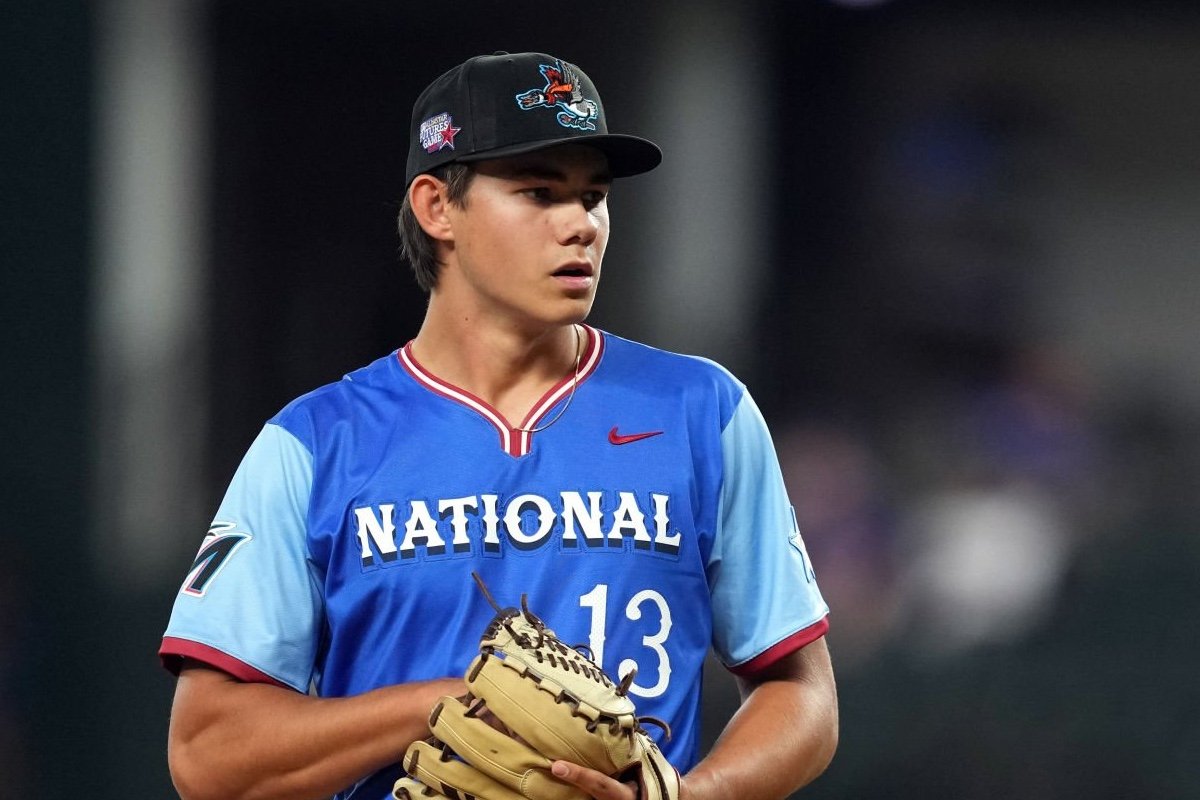 For a second straight prospect-centric event, the Marlins got a look at their top two pitching prospects on a national stage. On Saturday afternoon in Arlington, Texas, Noble Meyer and Thomas White toed the rubber for the National League Futures team. What the Marlins currently lack in overall prospect prowess, there’s a ton in both of these arms. Once again, they proved it. Both recently called up to High-A as 19-year-olds, Miami’s pair of high-prized arms turned in a combined 1 ⅔ innings of one run work on three strikeouts. Noble was up first. Following Colorado’s Chase Dollander, Meyer tossed the second inning. It was just Meyer’s third time on the mound over the past month; he had missed two straight starts due to a minor injury scare. From the start, Noble had full command of his fastball. Since spring training, it’s been a focus of his to elevate and place his fastball up in the zone more consistently to allow his best pitch slider to advantageously change eye levels and garner even more off-balance hacks. After placing two fastballs up to his first hitter Xavier Isaac, Meyer attempted two pitches to the outer half before freezing him with another fastball over the middle of the plate. In a 2-2 count, Meyer showed great confidence in his heater which topped at 94.6 mph. While the fastball was good, Meyer didn’t have full control of his slider. Many of his spinners wound up well off the plate and led to his walk of Harry Ford. Meyer did garner a whiff for a second strikeout with his slider, but it wound up middle/middle. He somehow got away with the mistake for a K. All in all for Noble, it was very encouraging to see him continue to build confidence in his fastball and place it with paint in the upper quadrants. Though the slider wasn’t there in this inning, it’s a forgone conclusion that that pitch is already close to major league ready. Without his best stuff in a nerve-wracking environment, Noble rose to the occasion. Thomas White, Fish on First’s consensus top prospect, was up next. White entered into a scoreless game in the bottom of the fourth inning. From the jump, White didn’t have his sharpest control. After getting behind his first hitter 3-0, White issued a walk on a fastball. To his second hitter, White tried incorporating his signature slurve a bit more. He did so effectively, gaining a a called strike. He then went back to the bender for a flyout to center field. White seemed to be settling in at that point, getting ahead to his third hitter 1-2, but he eventually lost him by missing outside with two breakers and a fastball. Following a mound visit, White got ahead versus Jaison Chourio 0-2, but then issued a changeup that caught way too much plate. Chourio took the pitch to left for an RBI single, breaking the scoreless tie. After the single, White appeared a bit rattled by his control issues. He was much quicker to the plate between pitches and could be seen exhibiting some negative body language as he walked his next hitter on four pitches. Although he didn’t get out of his inning of work, White ended his night on a good note, striking out Max Clark on a frontdoor slider. He showed good confidence in the pitch to throw it inside in an even count. Though neither Meyer or White had their best stuff, they were still able to limit damage against some of the brightest young bats in Minor League Baseball. The pair of friends will travel together back to Beloit, then meet their High-A teammates in Peoria, where they are expected to return to the Sky Carp starting rotation next week.
 -
Declan Cronin continues to pitch well out of the Marlins bullpen, no matter what the recent results say. Declan Cronin entered the month of June riding high. The 26-year-old reliever had come a long way from being DFA’d twice this past winter, first by the White Sox and then again by the Astros. Cronin was squeezed off the Marlins active roster for a couple weeks shortly after the regular season began, but his job security has not been in doubt since being recalled in mid-April. Showcasing a two-pitch slider/sinker mix both from a funky arm angle and all with downward tilt and command, the righty was extremely effective in 26.2 IP through the end of May. He held down a 1.35 ERA and 2.72 FIP. His 61.4% groundball rate ranked seventh-highest in baseball amongst qualified pitchers. Cronin also had a respectable 24.3% K rate and was stranding baserunners at an 83.8% clip. Along with Tanner Scott, Cronin was a bright spot in the Marlins bullpen. Peter Bendix looked as though he had made one of the most impactful waiver claims of the MLB offseason. Cronin won't be joining Scott as an All-Star representative, though. His production has slipped recently. His ERA has jumped two full runs to 3.35 and his WHIP is up to 1.40. So what happened? Did Cronin regress to the mean and lose value or is something else in play? In not so many words, Cronin himself is just as effective as he used to be. The placement of his pitches has not changed, as illustrated below. Through May 31, he had a 2.72 FIP. In June/July, it is 2.13. He still hasn't allowed a home run in 2024. The two extra runs on Cronin's ERA? They can be attributed to terrible luck and poor defensive play by the Marlins while he was on the mound. Since June began, Cronin’s BABIP is .404, 11th-highest amongst all qualified relievers in baseball. That is up considerably from the .329 BABIP he posted in the first two months of the season. Additionally, he was forced to deal with this brand of glove work behind him: 78le14.mp4 xzn0u2.mp4 On a few occasions, Cronin was teased with good defensive play on one end, only for it to come undone on the back end: s6xxpn.mp4 MLB opponents have made a few adjustments against Cronin. They are not whiffing against his sinker as much as they did initially and they've found ways to lift the ball more consistently. That being said, Cronin's trade stock should not be diminished by what happened this past month. He was still a great pickup by Bendix, perhaps his best of the winter. The baseball gods owe Cronin and his fielders some more routine plays (and maybe a steak dinner to boot) in the second half of the season. View full article
-
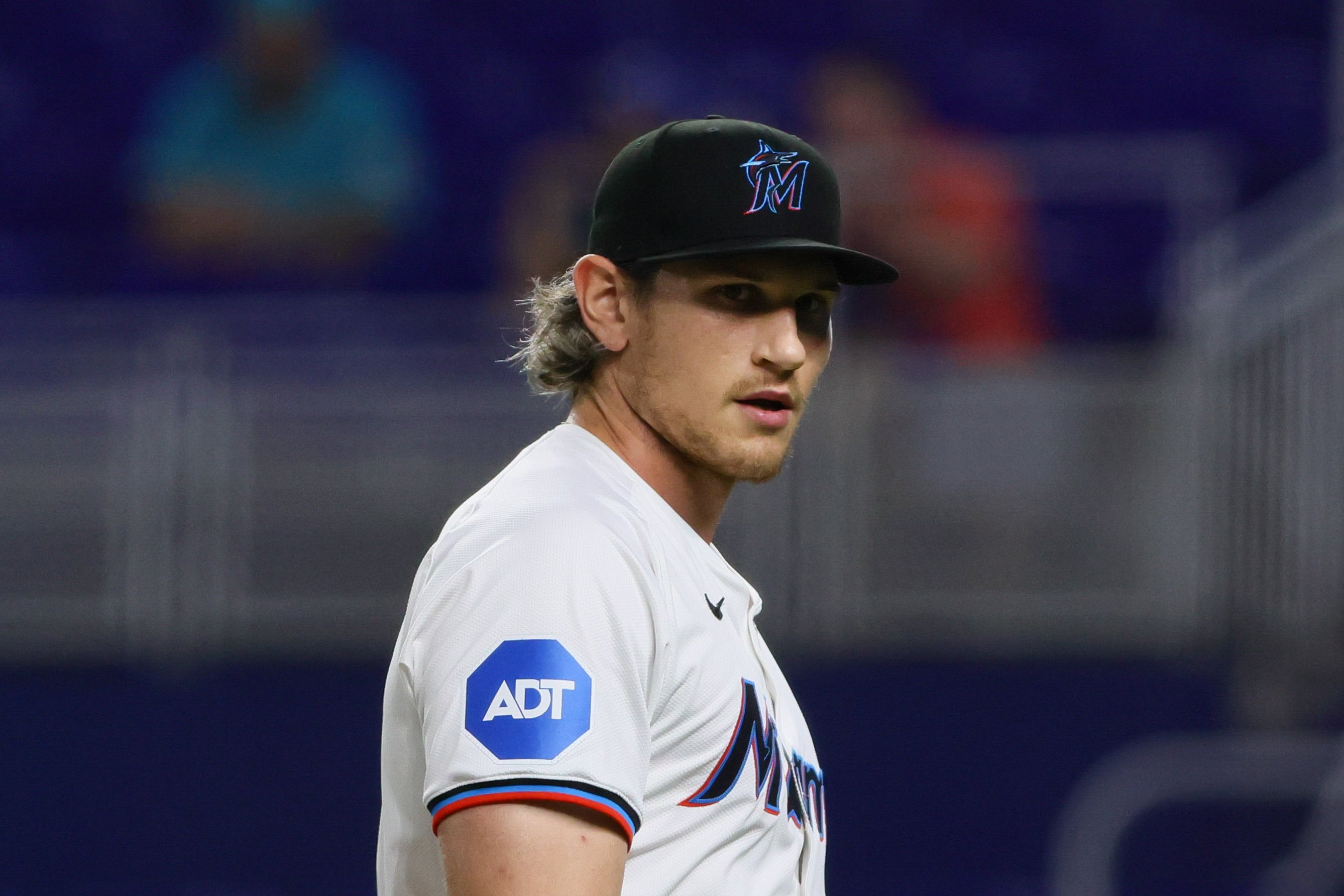 Declan Cronin entered the month of June riding high. The 26-year-old reliever had come a long way from being DFA’d twice this past winter, first by the White Sox and then again by the Astros. Cronin was squeezed off the Marlins active roster for a couple weeks shortly after the regular season began, but his job security has not been in doubt since being recalled in mid-April. Showcasing a two-pitch slider/sinker mix both from a funky arm angle and all with downward tilt and command, the righty was extremely effective in 26.2 IP through the end of May. He held down a 1.35 ERA and 2.72 FIP. His 61.4% groundball rate ranked seventh-highest in baseball amongst qualified pitchers. Cronin also had a respectable 24.3% K rate and was stranding baserunners at an 83.8% clip. Along with Tanner Scott, Cronin was a bright spot in the Marlins bullpen. Peter Bendix looked as though he had made one of the most impactful waiver claims of the MLB offseason. Cronin won't be joining Scott as an All-Star representative, though. His production has slipped recently. His ERA has jumped two full runs to 3.35 and his WHIP is up to 1.40. So what happened? Did Cronin regress to the mean and lose value or is something else in play? In not so many words, Cronin himself is just as effective as he used to be. The placement of his pitches has not changed, as illustrated below. Through May 31, he had a 2.72 FIP. In June/July, it is 2.13. He still hasn't allowed a home run in 2024. The two extra runs on Cronin's ERA? They can be attributed to terrible luck and poor defensive play by the Marlins while he was on the mound. Since June began, Cronin’s BABIP is .404, 11th-highest amongst all qualified relievers in baseball. That is up considerably from the .329 BABIP he posted in the first two months of the season. Additionally, he was forced to deal with this brand of glove work behind him: 78le14.mp4 xzn0u2.mp4 On a few occasions, Cronin was teased with good defensive play on one end, only for it to come undone on the back end: s6xxpn.mp4 MLB opponents have made a few adjustments against Cronin. They are not whiffing against his sinker as much as they did initially and they've found ways to lift the ball more consistently. That being said, Cronin's trade stock should not be diminished by what happened this past month. He was still a great pickup by Bendix, perhaps his best of the winter. The baseball gods owe Cronin and his fielders some more routine plays (and maybe a steak dinner to boot) in the second half of the season.
 -
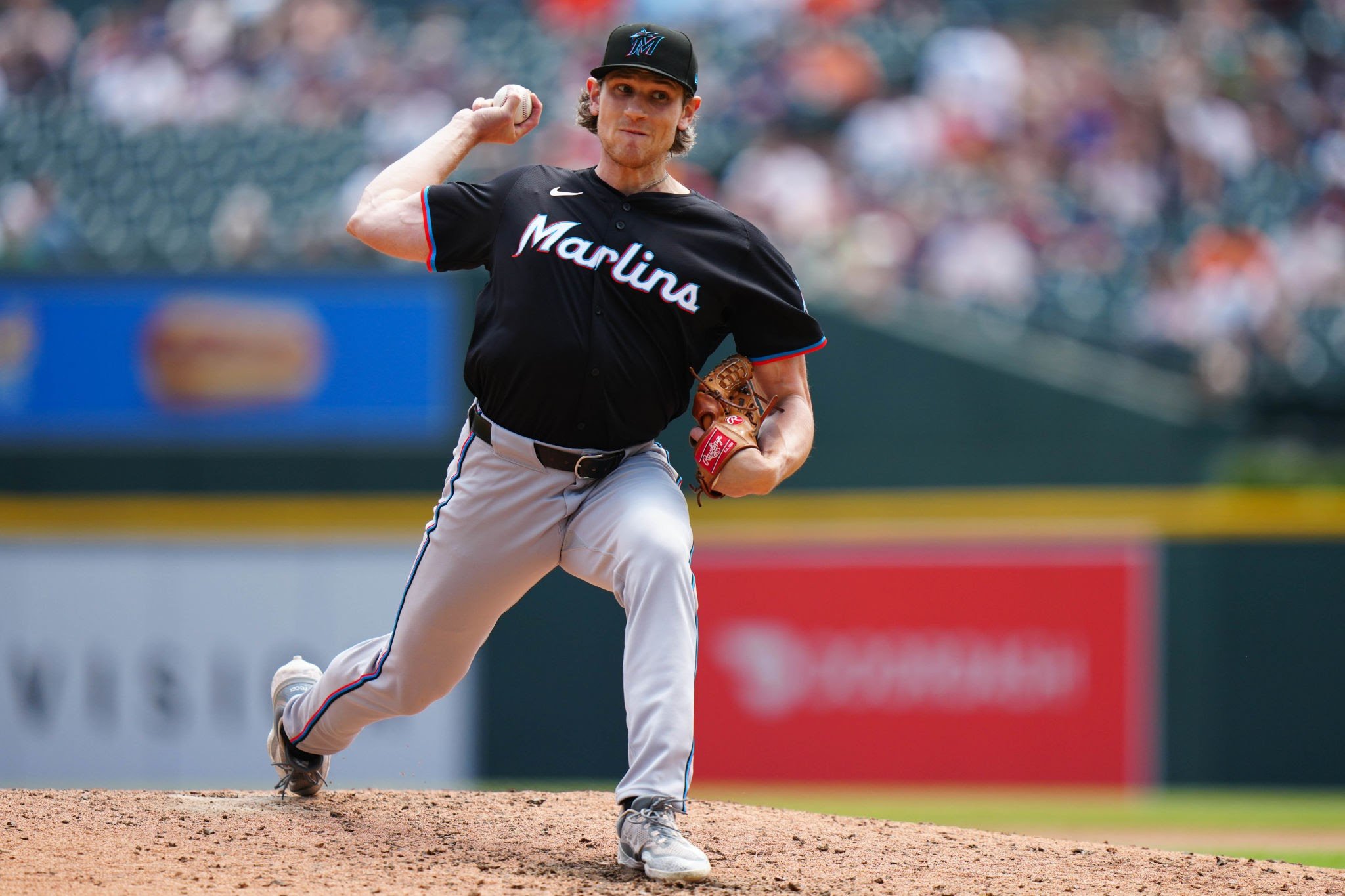 In his first year as Marlins President of Baseball Operations, Peter Bendix has been the target of some scrutiny for how he handled both the offseason and his first couple months of in-season maneuvers. The team has disappointed to this point with a 21-38 record following Saturday's shutout loss, but Bendix has made his share of valuable low-cost acquisitions that could prove to be impactful long term. Declan Cronin, for example, had a 9.00 ERA in his brief MLB career when the Houston Astros designated for assignment shortly before spring training. Remarkably, he has been lights out in relief for the Marlins and just completed a nearly perfect month of May. Coming into May with an already impressive stat line, Cronin was very impressive despite being limited to two pitches. In 12 ⅔ innings, Cronin allowed two runs including one earned run. He’s one of 19 relievers in Marlins history to pitch at least 10 innings and allow just one earned run in the month of May. Cronin works with a sinker/slider combo that he commands very well low and out of the zone. His ability to get quick outs has allowed him to earn the trust of manager Skip Schumaker. On the year, Cronin has a 61.4% groundball rate, which ranks in the 97th percentile amongst MLB pitchers. His stuff has also been some of the best at limiting barrel contact—his 2.9% barrel rate is in the 94th percentile. Cronin's control has also improved, yielding only nine unintentional walks in 26 ⅔ innings pitched compared to seven in his nine frames of MLB action in 2023. On Friday postgame, Schumaker spoke about how Cronin has impressed him in high-leverage situations. “Today, nobody out, first and third, big part of the order, got ground ball after ground ball,” Schumaker told the media, including Just Baseball’s Ethan Budowsky. “That game could’ve gone away quickly. They could have tied it up quick.” zw7zwu.mp4 Cronin’s game hinges his ability to change eye levels and get swings over the top of the ball. His best pitch is a slider that averages 87 mph and tops at 90. With 38.7 inches of vertical break this season, it’s 3.2% above league average. Similarly with his sinker, Cronin is coming by 29.8 inches of drop. That’s 18% above league average, making it one of the best in baseball. Amongst pitchers who have thrown 100+ sinkers, Cronin’s vertical break profile ranks 15th. “What I love about him is I know I’m gonna get it on the ground,” Schumaker said. “Even the base hits he gives up are on the ground, they just happen to get through. It could be the 5th, the 7th or 8th, because I know it’s gonna be on the ground and we have a chance to turn a double play in a big spot.” With a 1.3 Baseball-Reference WAR already this season, Cronin ranks third amongst Marlins pitchers and second amongst relievers. He and the man who ranks just above him Tanner Scott (1.4 bWAR), just became the third Marlins relief duo in team history to go a combined 20+ IP on just one earned run. Cronin’s effectiveness has started to earn him the same level of trust as Scott. He’s already pitched in high leverage on seven separate occasions this season. Cronin is continuously validating Schumaker’s trust, which Skip says hasn’t wavered since Opening Day when he worked three innings (the 10th through the 12th), yielding just one unearned run. “I trust him," Schumaker said. "We trust him.” With two pitches that fall off the table and generate weak contact on a very consistent basis both from a funky arm angle and the ability to mix in a four seamer that touches 97, Cronin is starting to carve out a very important role in the Marlins’ bullpen. If the aforementioned Scott—rumored to be a trade candidate this summer—is indeed dealt, Cronin could soon play himself into consistent save opportunities. The 26-year-old is currently making the league minimum, not even arbitration eligible until 2027. He is on track to reach free agency in 2030. Bendix's modest waiver claim might turn into a long-term contributor.
 -
Declan Cronin continuing to impress, maintain trust
Alex Carver posted a topic in Miami Marlins Talk
Claimed off waivers from the Astros this past February, Cronin has been excellent out of the Marlins’ bullpen. In his first year as Marlins President of Baseball Operations, Peter Bendix has been the target of some scrutiny for how he handled both the offseason and his first couple months of in-season maneuvers. The team has disappointed to this point with a 21-38 record following Saturday's shutout loss, but Bendix has made his share of valuable low-cost acquisitions that could prove to be impactful long term. Declan Cronin, for example, had a 9.00 ERA in his brief MLB career when the Houston Astros designated for assignment shortly before spring training. Remarkably, he has been lights out in relief for the Marlins and just completed a nearly perfect month of May. Coming into May with an already impressive stat line, Cronin was very impressive despite being limited to two pitches. In 12 ⅔ innings, Cronin allowed two runs including one earned run. He’s one of 19 relievers in Marlins history to pitch at least 10 innings and allow just one earned run in the month of May. Cronin works with a sinker/slider combo that he commands very well low and out of the zone. His ability to get quick outs has allowed him to earn the trust of manager Skip Schumaker. On the year, Cronin has a 61.4% groundball rate, which ranks in the 97th percentile amongst MLB pitchers. His stuff has also been some of the best at limiting barrel contact—his 2.9% barrel rate is in the 94th percentile. Cronin's control has also improved, yielding only nine unintentional walks in 26 ⅔ innings pitched compared to seven in his nine frames of MLB action in 2023. On Friday postgame, Schumaker spoke about how Cronin has impressed him in high-leverage situations. “Today, nobody out, first and third, big part of the order, got ground ball after ground ball,” Schumaker told the media, including Just Baseball’s Ethan Budowsky. “That game could’ve gone away quickly. They could have tied it up quick.” zw7zwu.mp4 Cronin’s game hinges his ability to change eye levels and get swings over the top of the ball. His best pitch is a slider that averages 87 mph and tops at 90. With 38.7 inches of vertical break this season, it’s 3.2% above league average. Similarly with his sinker, Cronin is coming by 29.8 inches of drop. That’s 18% above league average, making it one of the best in baseball. Amongst pitchers who have thrown 100+ sinkers, Cronin’s vertical break profile ranks 15th. “What I love about him is I know I’m gonna get it on the ground,” Schumaker said. “Even the base hits he gives up are on the ground, they just happen to get through. It could be the 5th, the 7th or 8th, because I know it’s gonna be on the ground and we have a chance to turn a double play in a big spot.” With a 1.3 Baseball-Reference WAR already this season, Cronin ranks third amongst Marlins pitchers and second amongst relievers. He and the man who ranks just above him Tanner Scott (1.4 bWAR), just became the third Marlins relief duo in team history to go a combined 20+ IP on just one earned run. Cronin’s effectiveness has started to earn him the same level of trust as Scott. He’s already pitched in high leverage on seven separate occasions this season. Cronin is continuously validating Schumaker’s trust, which Skip says hasn’t wavered since Opening Day when he worked three innings (the 10th through the 12th), yielding just one unearned run. “I trust him," Schumaker said. "We trust him.” With two pitches that fall off the table and generate weak contact on a very consistent basis both from a funky arm angle and the ability to mix in a four seamer that touches 97, Cronin is starting to carve out a very important role in the Marlins’ bullpen. If the aforementioned Scott—rumored to be a trade candidate this summer—is indeed dealt, Cronin could soon play himself into consistent save opportunities. The 26-year-old is currently making the league minimum, not even arbitration eligible until 2027. He is on track to reach free agency in 2030. Bendix's modest waiver claim might turn into a long-term contributor. View full article -
Scott Kornberg's Triple-A Jacksonville insight & MLB debut
Alex Carver posted an article in Podcasts
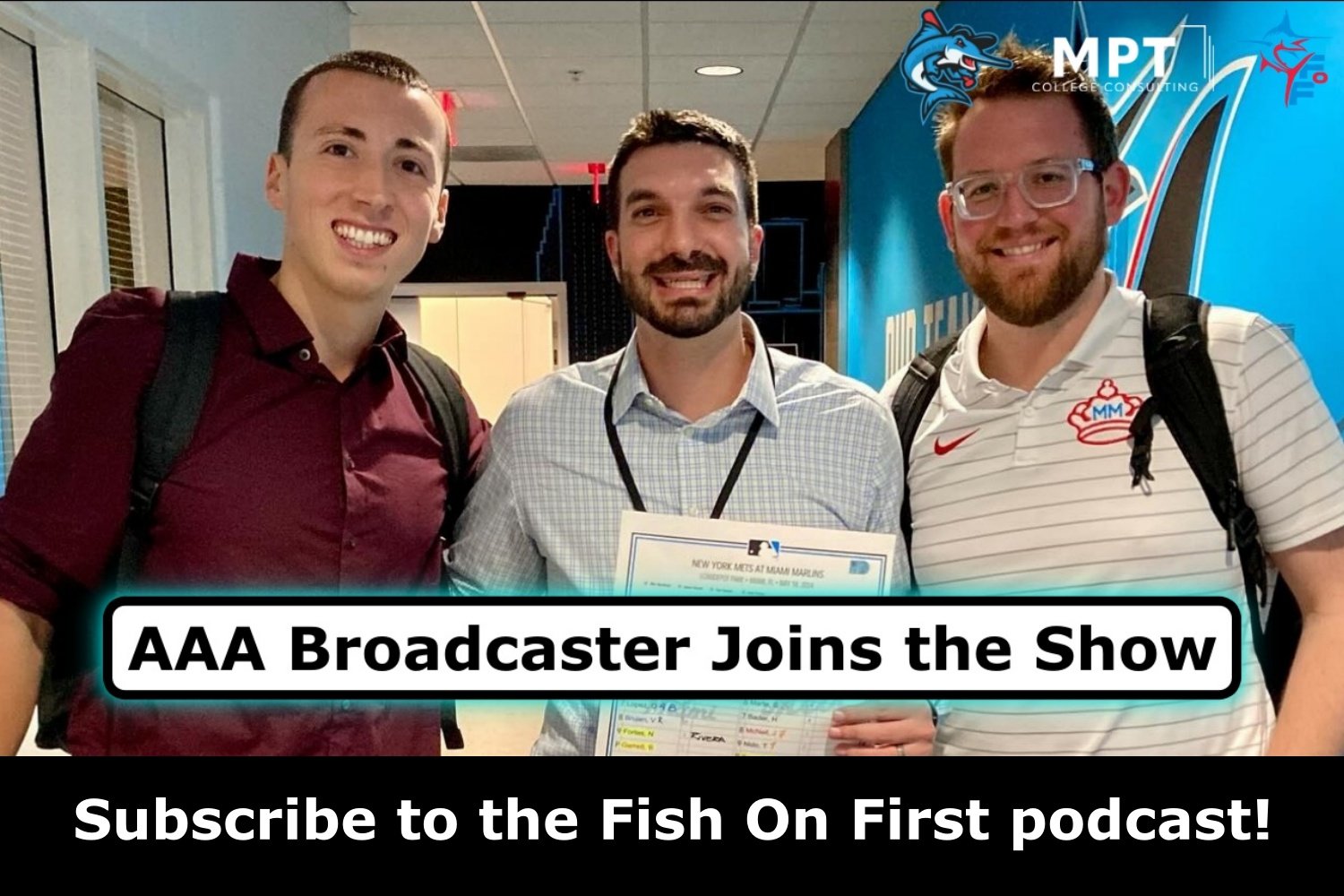 Jacksonville Jumbo Shrimp play-by-play broadcaster Scott Kornberg joins Alex Carver and Kevin Barral on this episode. Kornberg shares his insight on all of the Miami Marlins' most intriguing Triple-A players and how he approaches his work, plus he revisits the incredible opportunity he had earlier this month to call a Marlins walk-off win at loanDepot park. Players discussed in detail include Max Meyer, Victor Mesa Jr., Otto Lopez, Javier Sanoja, Troy Johnston and Roddery Muñoz. Find Swimming Upstream on the Fish On First YouTube channel, our new-look Apple Podcasts channel and wherever else you get your pods. FOF's audio programming also includes The Offishial Show, Fish Unfiltered, Big Fish Small Pod and more. The Fish On First podcast is now being presented by MPT College Consulting! They pride themselves on helping clients navigate the college application process. This includes preparation for standardized testing, guidance through high school, assistance with essays and applications, and choosing the right college. Visit them today at mptcollegeconsulting.com to learn more about their services and schedule a free consultation. Follow Scott (@ScottKornberg), Alex (@marlinsminors), Kevin (@kevin_barral) and Fish On First (@FishOnFirst) on Twitter. Join the Marlins Discord server! Complete Miami Marlins coverage here at FishOnFirst.com.
- 1 comment
-
- 2
-
-
- otto lopez
- javier sanoja
- (and 4 more)


