


Alex Carver
-
Posts
466 -
Joined
-
Last visited
-
Days Won
16
Content Type
Profiles
Miami Marlins Videos
2026 Miami Marlins Top Prospects Ranking
Miami Marlins Free Agent & Trade Rumors, Notes, & Tidbits
Guides & Resources
News
2025 Miami Marlins Draft Pick Tracker
2026 Miami Marlins Draft Tracker: Picks & Bonuses
Forums
Blogs
Events
Store
Downloads
Gallery
Everything posted by Alex Carver
-
 The state of Florida got through a good chunk of the 2026 Atlantic hurricane season without much of a whisper of a threat, but all of that changed earlier this week when Invest 92L churned up off the coast of western Mexico and made its way into temperate waters. Within two days, Hurricane Isaias was named and quickly strengthened to a major Category 3 storm. Isaias made landfall Friday night and maintained 115 mph sustained winds when it hit Destin, Florida, just to the east of Pensacola, as a major threat to life and property. The city of Pensacola, including the Bay Area and the ballpark, took a significant impact from the eye wall of the storm, causing damage to Blue Wahoos Stadium. Winds in the area of 90 mph sustained, gusting to 117 mph look to have been the main culprit for damage within the stadium. Most significantly, the covering of the batter’s eye has been torn to shreds and much of it is gone from its moorings altogether. Fence and wall padding has been blown down, some of which was scattered in the outfield grass. Damage to the outfield and foul ground walls themselves is also evident. Above the box seating behind first base, shade coverings have also been shredded and hang loosely from overhead. Finally, many pieces of furniture and other fixtures have been blown down and throughout the fan experience areas. “The (most) damage is to the left field fence and batter’s eye. We will know a bit more in learning if video board damaged. The new batter's cages have minimal damage and the locker rooms appear okay,” Blue Wahoos majority owner Quint Studer told Fish On First. The stadium’s original scoreboard was replaced with an upgraded LED video board in 2017. Measuring 26.3 feet high and 30.5 feet wide, the new board cost $235,000. At the time of its installment, the Blue Wahoos paid $120,000 of the cost; the rest was covered by non-profit organization Community Maritime Park Associates. The batting cages were finished as part of the aforementioned renovations this past offseason. They were a $2 million undertaking. Per the terms of the Blue Wahoos’ lease at the park, the team is not responsible for the upkeep of permanent fixtures. If the batting cage or video board needs to be repaired, it is highly likely the City of Pensacola (perhaps in conjunction with CMPA) will foot the bill. The same holds true for the batter’s eye and fencing. “It wasn't completely terrible," an eyewitness said of the stadium’s current state. “The park itself and the grass was okay. It's going to need probably some new scoreboard material, and just to kind of do a general tidying up.” Thankfully for Pensacola’s park, which sits just on the edge of Pensacola Bay, they look to have escaped without much in the way of water damage even though Isaias boasted as high as a five-foot storm surge in some areas not too distant. Still, the stadium took as close to a direct impact as possible from winds powerful enough to topple and toss significantly sized objects. The internal cleanup and possible replacement of those items will fall solely on the Blue Wahoos, who have already lost revenue from having to cancel their fall baseball exhibition between Florida State and Auburn, an event that is always a popular draw. Last year, tickets to see the FSU baseball program take on Mississippi State sold out within an hour of going on sale. As the repairs and cleanup get underway, the Blue Wahoos could also be forced to cancel NCAA baseball games featuring the University of Alabama (October 17) and the University of Florida (October 24). The first Blue Wahoos home game of 2027 is set for April 6. Studer isn’t worried about his venue being ready for the occasion. “All (repairs) will be completed,” he said. The MiLB schedule will not be impacted by a potential MLB lockout. Isaias is the first Atlantic hurricane to strike in this close proximity to Pensacola since September 2020 when Hurricane Sally tore through the region on its way to causing $7.3 billion in total damage. Other than the Blue Wahoos being idle that season, circumstances were eerily similar—Sally struck just outside of Pensacola, the Blue Wahoos had just upgraded their stadium, and damage to the park was to the same amenities. The team was able to recover and rebuild the stadium as well as turn in 500-plus community service hours in aid of those affected in the region. View full article
-
Blue Wahoos Stadium sustains damage from Hurricane Isaias strike
Alex Carver posted an article in FOF Prospects
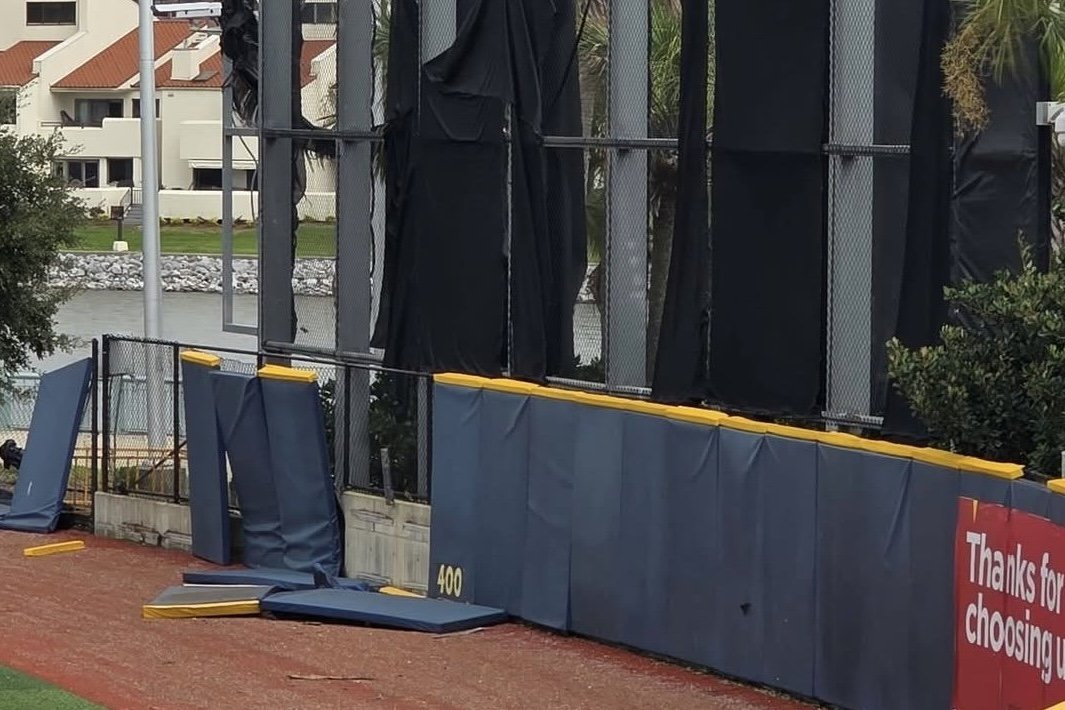 The state of Florida got through a good chunk of the 2026 Atlantic hurricane season without much of a whisper of a threat, but all of that changed earlier this week when Invest 92L churned up off the coast of western Mexico and made its way into temperate waters. Within two days, Hurricane Isaias was named and quickly strengthened to a major Category 3 storm. Isaias made landfall Friday night and maintained 115 mph sustained winds when it hit Destin, Florida, just to the east of Pensacola, as a major threat to life and property. The city of Pensacola, including the Bay Area and the ballpark, took a significant impact from the eye wall of the storm, causing damage to Blue Wahoos Stadium. Winds in the area of 90 mph sustained, gusting to 117 mph look to have been the main culprit for damage within the stadium. Most significantly, the covering of the batter’s eye has been torn to shreds and much of it is gone from its moorings altogether. Fence and wall padding has been blown down, some of which was scattered in the outfield grass. Damage to the outfield and foul ground walls themselves is also evident. Above the box seating behind first base, shade coverings have also been shredded and hang loosely from overhead. Finally, many pieces of furniture and other fixtures have been blown down and throughout the fan experience areas. “The (most) damage is to the left field fence and batter’s eye. We will know a bit more in learning if video board damaged. The new batter's cages have minimal damage and the locker rooms appear okay,” Blue Wahoos majority owner Quint Studer told Fish On First. The stadium’s original scoreboard was replaced with an upgraded LED video board in 2017. Measuring 26.3 feet high and 30.5 feet wide, the new board cost $235,000. At the time of its installment, the Blue Wahoos paid $120,000 of the cost; the rest was covered by non-profit organization Community Maritime Park Associates. The batting cages were finished as part of the aforementioned renovations this past offseason. They were a $2 million undertaking. Per the terms of the Blue Wahoos’ lease at the park, the team is not responsible for the upkeep of permanent fixtures. If the batting cage or video board needs to be repaired, it is highly likely the City of Pensacola (perhaps in conjunction with CMPA) will foot the bill. The same holds true for the batter’s eye and fencing. “It wasn't completely terrible," an eyewitness said of the stadium’s current state. “The park itself and the grass was okay. It's going to need probably some new scoreboard material, and just to kind of do a general tidying up.” Thankfully for Pensacola’s park, which sits just on the edge of Pensacola Bay, they look to have escaped without much in the way of water damage even though Isaias boasted as high as a five-foot storm surge in some areas not too distant. Still, the stadium took as close to a direct impact as possible from winds powerful enough to topple and toss significantly sized objects. The internal cleanup and possible replacement of those items will fall solely on the Blue Wahoos, who have already lost revenue from having to cancel their fall baseball exhibition between Florida State and Auburn, an event that is always a popular draw. Last year, tickets to see the FSU baseball program take on Mississippi State sold out within an hour of going on sale. As the repairs and cleanup get underway, the Blue Wahoos could also be forced to cancel NCAA baseball games featuring the University of Alabama (October 17) and the University of Florida (October 24). The first Blue Wahoos home game of 2027 is set for April 6. Studer isn’t worried about his venue being ready for the occasion. “All (repairs) will be completed,” he said. The MiLB schedule will not be impacted by a potential MLB lockout. Isaias is the first Atlantic hurricane to strike in this close proximity to Pensacola since September 2020 when Hurricane Sally tore through the region on its way to causing $7.3 billion in total damage. Other than the Blue Wahoos being idle that season, circumstances were eerily similar—Sally struck just outside of Pensacola, the Blue Wahoos had just upgraded their stadium, and damage to the park was to the same amenities. The team was able to recover and rebuild the stadium as well as turn in 500-plus community service hours in aid of those affected in the region.
-
As the Miami Marlins organization heads into the winter, they have breakout prospects to be enthused about while having good reason to hold out hope for others who haven’t met expectations. Overall, Miami will head into 2027 with a top-heavy system featuring some of baseball’s top talent. Question marks abound in the B-tier of the system, rooted in both injury and subpar performance. Finally, the back third of our newest Top 30 consensus list features some up-and-comers we simply need to see more positive production from. How did some of our standouts and top movers get to where they are on our list and who just missed the cut? Here’s a closer look. 2025 MLB Draft picks impress It’s no secret: before the 2025 class, the Marlins had struggled developing draft selections in the post-Stan Meek era, especially in the early rounds. While foregoing the likes of CJ Abrams, Brooks Lee, Matt Shaw, Theo Gillen and Carson Benge, Miami has seen JJ Bleday, Kahlil Watson and Jacob Berry come and go from the organization without making an MLB impact and has witnessed Noble Meyer and PJ Morlando slog through injury-riddled tenures early in their pro careers. Needless to say, new amateur scouting director Frankie Pillierie and his staff needed to prove their direction and strategy in discovering and scouting talent will work, especially for a Marlins organization that needs to be able to maximize on investments. As such, Pillere and company should be ecstatic with what they saw out of their 2025 class this season. In their first full year pro, multiple members of the signing period were some of the brightest stars in the Marlins’ minor league system and in some cases, Minor League Baseball as a whole. First-round pick Aiva Arquette (#5 on FOF Top 30) had a late start to the year and also ended the season on the IL, but what he showed in between was plenty encouraging. The 22-year-old started the year at High-A, but after a .276/.333/.517 start was a quick promotee up to Double-A. In a larger sample at a higher level, Arquette slashed a similar .271/.325/.443. He hit 12 total homers and showed off plus speed by stealing 21 bases in 23 attempts. Along with his ability to stay healthy, swing-and-miss potential partially related to a swing with a lot of moving parts will be question marks for Arquette as he continues to develop, but initial returns were more than satisfactory. Defensively, Arquette will likely be moved off of shortstop long term, but has shown the qualities to stick at third base. Arquette maintains a solid top five spot on our end-of-season list. From satisfactory to eye-popping, we move from Arquette to Cam Cannarella (FOF #3). After suffering an early-season wrist injury in an outfield collision, the competitive balance round pick came back with a full head of steam and didn’t hold back all year. A brief 19-game stint with Beloit parlayed into a .344/.453/.607 tenure with Pensacola. Cannarella spent the final 45 games of the season at the highest level of the minors where he hit .282/.393/.813. Outside of a slightly higher K rate at Triple-A, the two changes in level and improvement in quality of stuff did not bother Cannarella much as he hit both velocity and breaking stuff well consistently, showing fantastic barrel control, and plate coverage to go to all fields. Earning percentile ranks in the 90s or higher in average exit velo, hard hit rate, and O-swing with Jacksonville, Cannarella swung nearly exclusively at strikes and when he made contact, it was of the squared up variety. One of the best bats in the entirety of MiLB, the long-term center fielder is looking every bit like a big leaguer. With Jakob Marsee injured, we could potentially see the organization’s MiLB Player of the Year and our third-ranked prospect with the Fish early in 2027. Brandon Compton (FOF #10), the Marlins’ third overall selection from 2025, followed a similar trajectory as Cannarella and made a similar amount of extreme noise with the bat. After being somewhat limited by a hamate injury that he played through during the early part of the season, Compton rebuilt his strength back to 100% and adjusted to a new bat grip by June. From the 1st of that month through the rest of the season, Compton was statistically the best hitter in all of Minor League Baseball. Absolutely feasting on opposite side pitching and fastballs, Compton tore through Double-and-Triple-A slashing .309/.409/.685 in his final 85 games of the season. In the field, the converted pitcher spent most of his time in the outfield but with a history of Tommy John and just average route running ability, Compton moonlighted as a first baseman late in the season. Along with his defensive home still being up in the air, there are also reservations about Compton’s high K rate, very lopsided platoon splits and his ability to handle breaking stuff. A man of extremes, Compton hit just .130/.323/.247 against same-side pitching and held a similar slash line against non-fastballs. To his credit though, Compton has been able to make a great impression in a very short amount of baseball games. There are still a lot of “ifs” Compton will have to fulfill to reach a ceiling reminiscent of Rookie of the Year favorite Sal Stewart, but settling somewhere in the neighborhood of Griffin Conine wouldn’t be terrible. Cautiously optimistic When it comes to their 2026 draft class, the Marlins opted to take a cautious approach, holding most of their selections out of official game action and instead, relegating them to scrimmage work at the Jupiter Academy. Miami did allow four players to get a taste of affiliated action, though, one being first-round pick Jacob Lombard (FOF #4). Pilliere and the Marlins were “thrilled” when the prep shortstop from Gulliver Prep who grew up in the shadow of loanDepot park fell to them at 14th overall this past July. In 22 games, Lombard showed flashes of the raw tools he possesses that caused evaluators to label him the second-best prep shortstop in the nation. Stemming from quick wrists and hands and good involvement of his lower half, Lombard showed very strong exit velocities reaching as high as 105 mph and which averaged out at 90.6, within the 90th percentile in the Florida State League. Bat control seems to be where Lombard needs the most work. While he didn’t swing outside of the zone often (just 20% of the time) he struck out at a 39% rate, alarmingly high no matter the level of competition. Defensively, Lombard showed good range and a strong but inaccurate arm that largely accounted for his seven errors. If the Marlins can get the most out of the crowned jewel of their 2026 class, he profiles as a four of five tool player, but there’s understandably for a 19-year-old, his tools need polish. Because of the validity of his high school career, the fact that many evaluators pin him more advanced than his brother George Jr. when he was the same age, and his potential ceiling, we remain cautiously optimistic about Lombard’s future. He comes in at fourth on our end of season list. His first full season will be a much better barometer for how close he can get to being a five-tool guy. It was a tale of two halves for Dillon Lewis (FOF #6). After making a strong impression in spring training with his new team, the 6’3”, 205 unit reported to Double-A Pensacola for his debut at the level. His .267/.389/.533 spring campaign parlayed into immediate success with the Wahoos, particularly relating to his propensity to hit baseballs very far. Between April and June, Lewis hit 17 homers, putting him on pace for 30+ over the course of the full season slate. However, Lewis met with a much more unfortunate fate. Following Pensacola’s June 24 contest, it was discovered that Lewis suffered a broken hamate bone that required removal surgery. Lewis made it back from the injury in the regularly expected time frame of around seven weeks and while it was clear he was healthy enough to play, it was also evident he was still building back strength. From his return on August 14 up until the final game of the regular season, Lewis did not hit another home run. His second half slash was .243/.257/.340. Lewis is a pure power hitter who will always have a high propensity for strikeouts. If he is not hitting for power, his above-average K rates will be hard to overlook. Because of his absurd raw strength and overall athleticism though, we remain high on Lewis’ ability to fully come back from injury and continue to slug while providing the speed and arm necessary to hold down any outfield spot. As such, he remains ranked well within our top 30, at sixth. The 23-year-old will attempt to make up for lost time this autumn in the Arizona Fall League before taking part in another spring training ahead of 2027. An MLB debut next season shouldn’t be ruled out. We need to see more Several position player prospects have shot up our list following incredible but limited showings this season. The first name that comes to mind is another 2025 draft pick, Max Williams (FOF #22). Miami’s third rounder from last season, Williams wasn’t ready for in-game action until July due to a shoulder injury suffered in spring training. But from the moment Williams stepped into the batter’s box for Low-A Jupiter on July 9, he was making noise. A 2-for-5 effort that included his first homer in his first effort of 2026 parlayed into a 20-for-58 effort at Low-A, prompting his call to Beloit. Williams met that level with a 29-95, 7 homer effort earning him another promotion to Double-A. He lived out his final nine games going 12-for-34 with six more bombs. Williams homered at an audacious pace, going yard once in every 17 at bats. Overall, Williams slashed .326/.399/.620. As incredible as the 22-year-old’s run was, we simply need to see a larger sample and to see him spend a longer tenure at a single level, which will give pitchers and teams an opportunity to adjust to him. Additionally, while Williams was healthy enough to bat, he was held out of playing the field until very late in the season. How will Williams’ look during the course of a full season in the upper minors and how will his throwing arm look post-labrum surgery? These are all questions we will get answers to next season. If he can somehow prove the torrid offensive pace he showed this season is sustainable and if he can remain eligible in the corner outfield spots, Williams will continue to rise up our prospect rankings. For now, he comes in at 22nd overall. Another short-but-incredible offensive showing took place in the international ranks, this time by a player still in his teenage years. Participating in his first professional season, Santiago Solarte (FOF #12) put up a .339/.450/.538 slash line with 10 homers and 42 stolen bases in 52 games. A massive 6’5”, 200 pound specimen at age 17, Solarte put peak athleticism on full display in every facet of his offensive game, showing off easy power and speed. The swing-and-miss potential was a bit high for Solarte (26% K rate) against the most nascent level of competition, but he was able to rival it with a 12.9% walk rate. With plenty of room to grow into an already impressive frame, the mix of power and speed here is alluring. What Solarte will need to find is a defensive home. Scouted and signed as a shortstop, Solarte made 13 errors in just 24 appearances a the position, causing Miami to also feed him 19 games at third base. Solarte fared much better at the hot corner and will likely be tried as a full time third baseman next season. How he fills out his frame, how much he can keep Ks in check at higher levels, how his body responds to a full slate of games, and if he can in fact handle third on a full-time basis are all questions we need to see answered as Solarte matriculates stateside next season. Safe floors In the middle of our list lie a grouping of players who do a lot of things right. Though the tools may not be massive or loud, the sum of their parts will equal a dependable Major League Baseball player in some capacity. The first name within the grouping is Fenwick Trimble (FOF #16). A member of Miami’s 2024 draft class, Trimble spent the entirety of 2026 in Double-A after spending 2025 at three different levels. In an extended look at Southern League pitching, the success Trimble had at the level last year not only stagnated, it was more robust. In 85 games, the 24-year-old improved his average by more than 30 points (.263) and added nearly 100 points to his slug (.465). The improvement in power came by way of an improvement in his ability to get under the ball as his fly ball rate grew from 28% to 37% without sacrificing his bat speed. The full year with Pensacola and the newfound power did come at the expense of some points on his walk rate (9.2%) and OBP (.344), but if Trimble can find a happy medium between power and patience as he fills out, his ceiling is that of a starting outfielder at any spot, including center field. Known as a pesky out who views the strike zone well before this past season and with above average speed that allotted him 31 bags, there is definitely an MLB future here, at least as a fourth outfielder. The beginning of next year should give us a good idea of how close he can get to his ceiling before a possible MLB call up, especially if the Marlins don’t look for right handed bats. While none of Trimble’s tools are very loud, many of them are good and he may have just solved for one clear offensive gap. These facts give us reason to slot Trimble right around the midway point of our list at 16th. Another high-floor player comes in at 21st on our list: lefty Nate Payne (FOF #21). Also part of the 2024 draft class, the high schooler made his pro debut in 2025 first in the FCL then with Low-A Jupiter. Right away, Payne showed a solid foundation, particularly with an advanced curveball. Command was still an evident work in progress, as he allowed walks at an extremely elevated 16.2% clip, but Payne showed good poise with runners on and limited damage to tune of a 3.20. This spring and summer, Payne worked to revamp his arsenal, turning his cutter into his most utilized secondary and blending his changeup into a his sharp diving splitter. By pounding the zone and garnering more swings outside of it particularly with his always-great anchor curveball and newly improved splitter, Payne drove up his whiff rates walked just three more than his 2025 total in more than twice as many innings pitched. Payne’s percentile rankings light up the page as he earned marks in the 80th percentile or better in K rate, whiff rate and CSW. The only knock on Payne was the fact that he was a bit susceptible to the long ball, allowing 15 on the season (1.21 HR/9). While we need to see how that plays as Payne matriculates to the upper minors especially with limited velo (sitting 92), his good size, wide arsenal, and great command at age 21 give him a solid future as a back-end starter or, at the very least, a multiple inning reliever potentially in short order given his sudden growth and the fact he’s a southpaw. He’s an under-the-radar name who has handled failure well and drastically improved early in his pro career to keep tabs on. New kids in town The Marlins weren’t necessarily buyers or sellers at this year’s deadline; they settled somewhere in the middle. As a result, several new prospects entered the organization and by way of their 2026 accomplishments, earned Top 30 spots. Coming in at 19th is infielder Brayden Taylor, a product of the Liam Hicks trade. Tampa Bay’s 2023 first-round pick, Taylor came to the Marlins riding high, slashing .284/.384/.513 with the Montgomery Biscuits. Upon joining the Marlins, he was promoted the Triple-A Jacksonville. There, in an even more hitter friendly league, Taylor’s on-base and power numbers persisted through 33 games, but he hit a lowly .194. The culprit for Taylor’s lack of hits with Jacksonville wasn’t the fact that he swung at bad pitches (20.1% O-swing); it was attributed to a heightened whiff rate (27.8%) and a lack of contact swinging at pitches in the zone (80.5% Z-contact). Additionally, his hard-hit rate fell to 37.8% which, along with a stroke of bad luck, paved the way to a lowly .234 BABIP. While the 33-game spell at Triple-A could have gone better in terms of making a good first impression with his new organization, Taylor still showed the underlying tools that made him the central return piece of the deal. As long as he’s able to come back advantageously from that end of season slump in terms of his contact rates, Taylor’s ability to select pitches and drive the ball to his pull side could carry him to a good ceiling. On top of that, Taylor earns high marks as high as 60-grade at a position of need for the Marlins, third base where he has reliable arm strength, quick hands and good range to his left. He also has the versatility to play second base. All in all, Taylor checks many boxes and could be the Marlins’ long-term answer on the left side of the infield as long as he’s able to make consistent contact by not forcing pull contact. Expect him to get a look in spring training before a possible call-up as early as the first half of next season. Another part of the Hicks trade, righty Jacob Kisting, slots in at 25th. A 14th-round pick by the Twins in 2024, Kisting came to the Marlins in the middle of his second year pro. Dominating at High-A within the Rays system, the Marlins saw it fit to challenge him to Double-A ball upon his arrival to the organization. Kisting took the promotion in stride and continued to turn in very similar results over his first 24 innings at the level. In five games with the Blue Wahoos, Kisting tossed 24 innings worth of 1.88 ERA ball with 31 strikeouts and seven walks. Kisting is another sum-of-his-parts type prospect who doesn’t do one thing great, but does a lot of things well. He isn’t going to blow anyone away with velocity or stuff as he sits around 93 with his fastball and doesn’t have a true standout secondary. However, at his best, Kisting is effective by way of mixing speeds, shortening distance to the plate, changing eye levels and giving hitters many different looks at a wide arsenal. To his credit, Kisting throws a slider, sweeper, kick changeup, and splitter. The slider is probably his best secondary because of his ability to land it for strikes. The rest of his secondaries are usable, but his feel and command over them is fringy. That fact plus a low BABIP with the Wahoos this year provide some skepticism surrounding how effective Kisting’s arm will be in extended looks against upper minors pitching. If the Marlins can continue to riddle out his command and build up his arsenal, he could stick as a starter, but may be better suited only facing lineups a maximum of twice per game. At the least, the 6’5” specimen has a future as an MLB reliever. Just missed With an improving system and only 30 spots to fill, we need to give credence to players who were in significant discussion to make our list but for one reason or another, we’re left off. The first of this crowd is infielder Echedry Vargas. A Texas Rangers signing from the 2021-22 period, Vargas came to the Marlins in the Jake Burger trade in 2024 on the heels of a .276/.321/.454 season at Low-A. Right on schedule in development and continuing to jump a level each year, the Marlins promoted Vargas to Hogh-A to begin his tenure with the organization in 2025. It was a rude welcome to the level for Vargas though as, in limited action (82 games), he slashed just .201/.255/.322 with an audacious 80/12 K/BB. Clearly overmatched at the level and with competition for playing time nipping at his heels, the Marlins demoted Vargas back to Low-A for 2026. This season, back in Jupiter, Vargas absolutely exploded for what would become a historic season in the Florida State League. The 5’11”, 170 Vargas hit .323/.372/.611 with 27 homers, the most ever by a Hammerheads player. Vargas decimated the ball all season long, but still was not promoted back to the High-A ranks. The case could be made that Miami didn’t send Vargas back to Beloit to allow him to continue to build confidence. It could also be said that the 21-year-old remained with Jupiter to try to improve his walk rate which still sat at a lowly 6.5%. Whatever the reason, as good as this year was, we are still wary of buying in on a K rate historically north of 21% (he still struck out 22% of the time this year), very little walks, and nearly exclusive pull side contact. Vargas has proven he has the raw thump to make noise at the plate and he quieted down his approach a bit this year, but we need to see it matriculate to higher levels. Particular improvements needed include his ability to work counts, use more of the field, and not force power. With just an average glove, Vargas currently profiles as a boom-or-bust, power or nothing profile. We are intrigued to see how he is able to build off 2026, but for now, his future remains just too volatile for us to buy in. It’s been quite the roller coaster ride for Brandon White thus far in his pro career. Drafted in the 12th round in 2021, the massive physical specimen missed nearly the first two full years of his pro tenure due to injury. Finally, in 2024, White was able to get nearly a full season’s worth of innings under his belt. White was 24 that year, but developmentally, he was still 21 simply needing innings and experience to make up for lost time. In 2025, the Marlins decided to be cautious with White’s arm and psyche, delegating him to a swing man role. Results were solid for White with the Sky Carp as he tossed to a 4.06 ERA with a 73/26 K/BB. He ended that season on a great run tossing the best baseball of his life, allowing just 10 earned runs over his last 47.1 innings. Finally, it looked as though the massive 6’8” righty looked to be on track and was showing the potential to fulfill his MLB dream. Things started just as swimmingly for White this season as he made the jump to the upper minors. After a healthy spring, he held down a 3.00 ERA in 33 frames for the Blue Wahoos. White was also showing an enhanced ability to garner whiffs and limit walks as he had a 39/5 K/BB. Needing to challenge the 26-year-old quickly, the Marlins pushed White to Triple-A in May. With the Jumbo Shrimp in the hitter friendly International League, command consistency was an issue for White and Triple-A hitters didn’t let his mistakes go to waste. To go along with a lowly 36% ground ball rate due to his inability to keep the ball down in the zone, White allowed homers on fly balls at a 17% clip. Thanks in large part to the homers, White had a 6.08 ERA, 4.94 of which belonged to his FIP. White has good velocity, topping at 98 and sitting 96, a good fading mid-80s changeup and some of the best extension in all of MiLB, but he has struggled to develop a third pitch. His slider hit the zone just 39% of the time with Jacksonville and his new sweeper which Miami attempted to teach him this year, is very much in the nascent stages. To be as statistically imposing as he is physically, White will need one of those pitches to develop quickly. He will also need to control his massive levers more consistently in order to plane his pitches downward to induce more weak contact. Inasmuch as White showed solid flashes last year and at Pensacola this year, he still has a lot of ground to make up to become MLB ready. At this point, we have our doubts but remain optimistic. 2027 will be a huge year for him. View full article
-
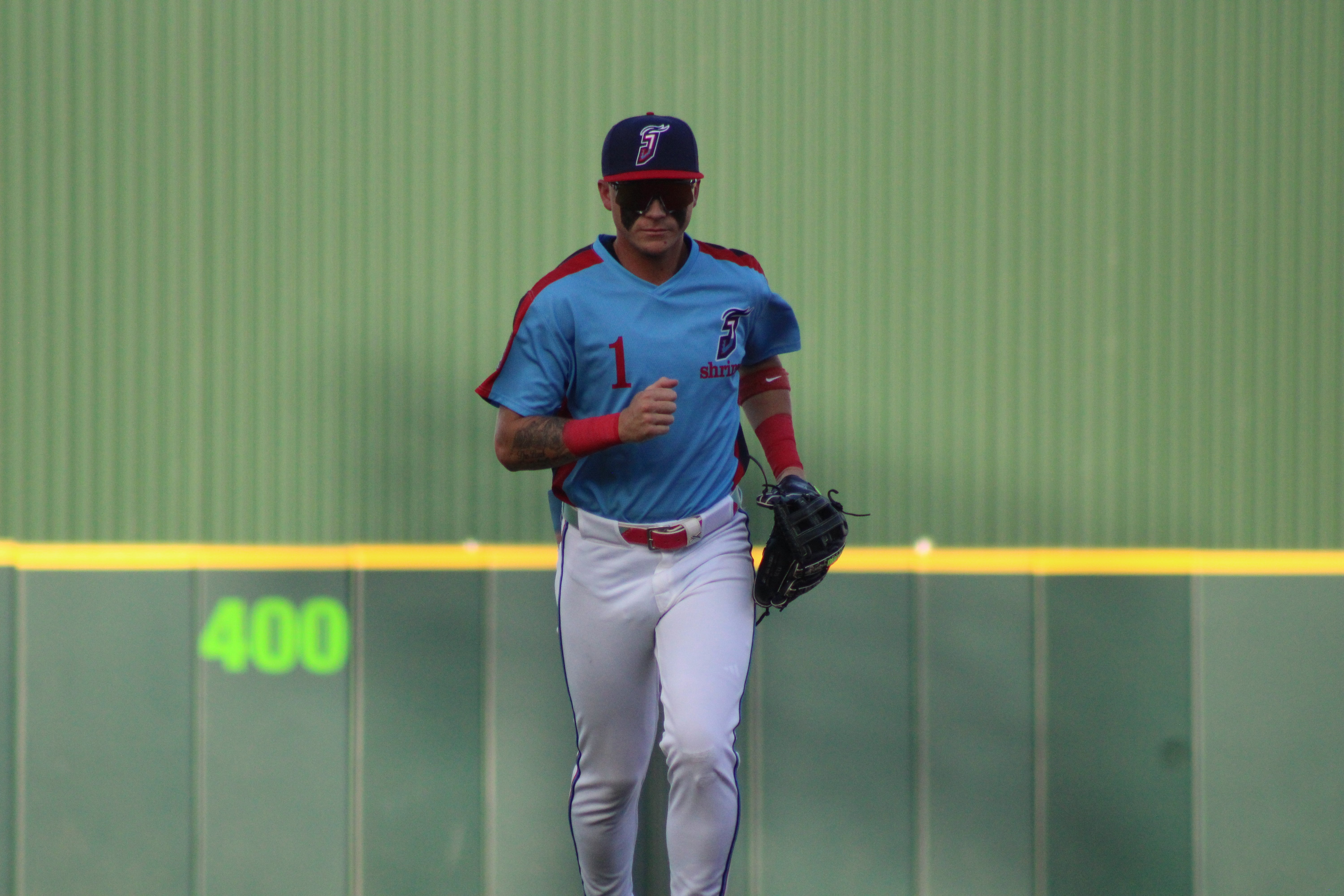 As the Miami Marlins organization heads into the winter, they have breakout prospects to be enthused about while having good reason to hold out hope for others who haven’t met expectations. Overall, Miami will head into 2027 with a top-heavy system featuring some of baseball’s top talent. Question marks abound in the B-tier of the system, rooted in both injury and subpar performance. Finally, the back third of our newest Top 30 consensus list features some up-and-comers we simply need to see more positive production from. How did some of our standouts and top movers get to where they are on our list and who just missed the cut? Here’s a closer look. 2025 MLB Draft picks impress It’s no secret: before the 2025 class, the Marlins had struggled developing draft selections in the post-Stan Meek era, especially in the early rounds. While foregoing the likes of CJ Abrams, Brooks Lee, Matt Shaw, Theo Gillen and Carson Benge, Miami has seen JJ Bleday, Kahlil Watson and Jacob Berry come and go from the organization without making an MLB impact and has witnessed Noble Meyer and PJ Morlando slog through injury-riddled tenures early in their pro careers. Needless to say, new amateur scouting director Frankie Pillierie and his staff needed to prove their direction and strategy in discovering and scouting talent will work, especially for a Marlins organization that needs to be able to maximize on investments. As such, Pillere and company should be ecstatic with what they saw out of their 2025 class this season. In their first full year pro, multiple members of the signing period were some of the brightest stars in the Marlins’ minor league system and in some cases, Minor League Baseball as a whole. First-round pick Aiva Arquette (#5 on FOF Top 30) had a late start to the year and also ended the season on the IL, but what he showed in between was plenty encouraging. The 22-year-old started the year at High-A, but after a .276/.333/.517 start was a quick promotee up to Double-A. In a larger sample at a higher level, Arquette slashed a similar .271/.325/.443. He hit 12 total homers and showed off plus speed by stealing 21 bases in 23 attempts. Along with his ability to stay healthy, swing-and-miss potential partially related to a swing with a lot of moving parts will be question marks for Arquette as he continues to develop, but initial returns were more than satisfactory. Defensively, Arquette will likely be moved off of shortstop long term, but has shown the qualities to stick at third base. Arquette maintains a solid top five spot on our end-of-season list. From satisfactory to eye-popping, we move from Arquette to Cam Cannarella (FOF #3). After suffering an early-season wrist injury in an outfield collision, the competitive balance round pick came back with a full head of steam and didn’t hold back all year. A brief 19-game stint with Beloit parlayed into a .344/.453/.607 tenure with Pensacola. Cannarella spent the final 45 games of the season at the highest level of the minors where he hit .282/.393/.813. Outside of a slightly higher K rate at Triple-A, the two changes in level and improvement in quality of stuff did not bother Cannarella much as he hit both velocity and breaking stuff well consistently, showing fantastic barrel control, and plate coverage to go to all fields. Earning percentile ranks in the 90s or higher in average exit velo, hard hit rate, and O-swing with Jacksonville, Cannarella swung nearly exclusively at strikes and when he made contact, it was of the squared up variety. One of the best bats in the entirety of MiLB, the long-term center fielder is looking every bit like a big leaguer. With Jakob Marsee injured, we could potentially see the organization’s MiLB Player of the Year and our third-ranked prospect with the Fish early in 2027. Brandon Compton (FOF #10), the Marlins’ third overall selection from 2025, followed a similar trajectory as Cannarella and made a similar amount of extreme noise with the bat. After being somewhat limited by a hamate injury that he played through during the early part of the season, Compton rebuilt his strength back to 100% and adjusted to a new bat grip by June. From the 1st of that month through the rest of the season, Compton was statistically the best hitter in all of Minor League Baseball. Absolutely feasting on opposite side pitching and fastballs, Compton tore through Double-and-Triple-A slashing .309/.409/.685 in his final 85 games of the season. In the field, the converted pitcher spent most of his time in the outfield but with a history of Tommy John and just average route running ability, Compton moonlighted as a first baseman late in the season. Along with his defensive home still being up in the air, there are also reservations about Compton’s high K rate, very lopsided platoon splits and his ability to handle breaking stuff. A man of extremes, Compton hit just .130/.323/.247 against same-side pitching and held a similar slash line against non-fastballs. To his credit though, Compton has been able to make a great impression in a very short amount of baseball games. There are still a lot of “ifs” Compton will have to fulfill to reach a ceiling reminiscent of Rookie of the Year favorite Sal Stewart, but settling somewhere in the neighborhood of Griffin Conine wouldn’t be terrible. Cautiously optimistic When it comes to their 2026 draft class, the Marlins opted to take a cautious approach, holding most of their selections out of official game action and instead, relegating them to scrimmage work at the Jupiter Academy. Miami did allow four players to get a taste of affiliated action, though, one being first-round pick Jacob Lombard (FOF #4). Pilliere and the Marlins were “thrilled” when the prep shortstop from Gulliver Prep who grew up in the shadow of loanDepot park fell to them at 14th overall this past July. In 22 games, Lombard showed flashes of the raw tools he possesses that caused evaluators to label him the second-best prep shortstop in the nation. Stemming from quick wrists and hands and good involvement of his lower half, Lombard showed very strong exit velocities reaching as high as 105 mph and which averaged out at 90.6, within the 90th percentile in the Florida State League. Bat control seems to be where Lombard needs the most work. While he didn’t swing outside of the zone often (just 20% of the time) he struck out at a 39% rate, alarmingly high no matter the level of competition. Defensively, Lombard showed good range and a strong but inaccurate arm that largely accounted for his seven errors. If the Marlins can get the most out of the crowned jewel of their 2026 class, he profiles as a four of five tool player, but there’s understandably for a 19-year-old, his tools need polish. Because of the validity of his high school career, the fact that many evaluators pin him more advanced than his brother George Jr. when he was the same age, and his potential ceiling, we remain cautiously optimistic about Lombard’s future. He comes in at fourth on our end of season list. His first full season will be a much better barometer for how close he can get to being a five-tool guy. It was a tale of two halves for Dillon Lewis (FOF #6). After making a strong impression in spring training with his new team, the 6’3”, 205 unit reported to Double-A Pensacola for his debut at the level. His .267/.389/.533 spring campaign parlayed into immediate success with the Wahoos, particularly relating to his propensity to hit baseballs very far. Between April and June, Lewis hit 17 homers, putting him on pace for 30+ over the course of the full season slate. However, Lewis met with a much more unfortunate fate. Following Pensacola’s June 24 contest, it was discovered that Lewis suffered a broken hamate bone that required removal surgery. Lewis made it back from the injury in the regularly expected time frame of around seven weeks and while it was clear he was healthy enough to play, it was also evident he was still building back strength. From his return on August 14 up until the final game of the regular season, Lewis did not hit another home run. His second half slash was .243/.257/.340. Lewis is a pure power hitter who will always have a high propensity for strikeouts. If he is not hitting for power, his above-average K rates will be hard to overlook. Because of his absurd raw strength and overall athleticism though, we remain high on Lewis’ ability to fully come back from injury and continue to slug while providing the speed and arm necessary to hold down any outfield spot. As such, he remains ranked well within our top 30, at sixth. The 23-year-old will attempt to make up for lost time this autumn in the Arizona Fall League before taking part in another spring training ahead of 2027. An MLB debut next season shouldn’t be ruled out. We need to see more Several position player prospects have shot up our list following incredible but limited showings this season. The first name that comes to mind is another 2025 draft pick, Max Williams (FOF #22). Miami’s third rounder from last season, Williams wasn’t ready for in-game action until July due to a shoulder injury suffered in spring training. But from the moment Williams stepped into the batter’s box for Low-A Jupiter on July 9, he was making noise. A 2-for-5 effort that included his first homer in his first effort of 2026 parlayed into a 20-for-58 effort at Low-A, prompting his call to Beloit. Williams met that level with a 29-95, 7 homer effort earning him another promotion to Double-A. He lived out his final nine games going 12-for-34 with six more bombs. Williams homered at an audacious pace, going yard once in every 17 at bats. Overall, Williams slashed .326/.399/.620. As incredible as the 22-year-old’s run was, we simply need to see a larger sample and to see him spend a longer tenure at a single level, which will give pitchers and teams an opportunity to adjust to him. Additionally, while Williams was healthy enough to bat, he was held out of playing the field until very late in the season. How will Williams’ look during the course of a full season in the upper minors and how will his throwing arm look post-labrum surgery? These are all questions we will get answers to next season. If he can somehow prove the torrid offensive pace he showed this season is sustainable and if he can remain eligible in the corner outfield spots, Williams will continue to rise up our prospect rankings. For now, he comes in at 22nd overall. Another short-but-incredible offensive showing took place in the international ranks, this time by a player still in his teenage years. Participating in his first professional season, Santiago Solarte (FOF #12) put up a .339/.450/.538 slash line with 10 homers and 42 stolen bases in 52 games. A massive 6’5”, 200 pound specimen at age 17, Solarte put peak athleticism on full display in every facet of his offensive game, showing off easy power and speed. The swing-and-miss potential was a bit high for Solarte (26% K rate) against the most nascent level of competition, but he was able to rival it with a 12.9% walk rate. With plenty of room to grow into an already impressive frame, the mix of power and speed here is alluring. What Solarte will need to find is a defensive home. Scouted and signed as a shortstop, Solarte made 13 errors in just 24 appearances a the position, causing Miami to also feed him 19 games at third base. Solarte fared much better at the hot corner and will likely be tried as a full time third baseman next season. How he fills out his frame, how much he can keep Ks in check at higher levels, how his body responds to a full slate of games, and if he can in fact handle third on a full-time basis are all questions we need to see answered as Solarte matriculates stateside next season. Safe floors In the middle of our list lie a grouping of players who do a lot of things right. Though the tools may not be massive or loud, the sum of their parts will equal a dependable Major League Baseball player in some capacity. The first name within the grouping is Fenwick Trimble (FOF #16). A member of Miami’s 2024 draft class, Trimble spent the entirety of 2026 in Double-A after spending 2025 at three different levels. In an extended look at Southern League pitching, the success Trimble had at the level last year not only stagnated, it was more robust. In 85 games, the 24-year-old improved his average by more than 30 points (.263) and added nearly 100 points to his slug (.465). The improvement in power came by way of an improvement in his ability to get under the ball as his fly ball rate grew from 28% to 37% without sacrificing his bat speed. The full year with Pensacola and the newfound power did come at the expense of some points on his walk rate (9.2%) and OBP (.344), but if Trimble can find a happy medium between power and patience as he fills out, his ceiling is that of a starting outfielder at any spot, including center field. Known as a pesky out who views the strike zone well before this past season and with above average speed that allotted him 31 bags, there is definitely an MLB future here, at least as a fourth outfielder. The beginning of next year should give us a good idea of how close he can get to his ceiling before a possible MLB call up, especially if the Marlins don’t look for right handed bats. While none of Trimble’s tools are very loud, many of them are good and he may have just solved for one clear offensive gap. These facts give us reason to slot Trimble right around the midway point of our list at 16th. Another high-floor player comes in at 21st on our list: lefty Nate Payne (FOF #21). Also part of the 2024 draft class, the high schooler made his pro debut in 2025 first in the FCL then with Low-A Jupiter. Right away, Payne showed a solid foundation, particularly with an advanced curveball. Command was still an evident work in progress, as he allowed walks at an extremely elevated 16.2% clip, but Payne showed good poise with runners on and limited damage to tune of a 3.20. This spring and summer, Payne worked to revamp his arsenal, turning his cutter into his most utilized secondary and blending his changeup into a his sharp diving splitter. By pounding the zone and garnering more swings outside of it particularly with his always-great anchor curveball and newly improved splitter, Payne drove up his whiff rates walked just three more than his 2025 total in more than twice as many innings pitched. Payne’s percentile rankings light up the page as he earned marks in the 80th percentile or better in K rate, whiff rate and CSW. The only knock on Payne was the fact that he was a bit susceptible to the long ball, allowing 15 on the season (1.21 HR/9). While we need to see how that plays as Payne matriculates to the upper minors especially with limited velo (sitting 92), his good size, wide arsenal, and great command at age 21 give him a solid future as a back-end starter or, at the very least, a multiple inning reliever potentially in short order given his sudden growth and the fact he’s a southpaw. He’s an under-the-radar name who has handled failure well and drastically improved early in his pro career to keep tabs on. New kids in town The Marlins weren’t necessarily buyers or sellers at this year’s deadline; they settled somewhere in the middle. As a result, several new prospects entered the organization and by way of their 2026 accomplishments, earned Top 30 spots. Coming in at 19th is infielder Brayden Taylor, a product of the Liam Hicks trade. Tampa Bay’s 2023 first-round pick, Taylor came to the Marlins riding high, slashing .284/.384/.513 with the Montgomery Biscuits. Upon joining the Marlins, he was promoted the Triple-A Jacksonville. There, in an even more hitter friendly league, Taylor’s on-base and power numbers persisted through 33 games, but he hit a lowly .194. The culprit for Taylor’s lack of hits with Jacksonville wasn’t the fact that he swung at bad pitches (20.1% O-swing); it was attributed to a heightened whiff rate (27.8%) and a lack of contact swinging at pitches in the zone (80.5% Z-contact). Additionally, his hard-hit rate fell to 37.8% which, along with a stroke of bad luck, paved the way to a lowly .234 BABIP. While the 33-game spell at Triple-A could have gone better in terms of making a good first impression with his new organization, Taylor still showed the underlying tools that made him the central return piece of the deal. As long as he’s able to come back advantageously from that end of season slump in terms of his contact rates, Taylor’s ability to select pitches and drive the ball to his pull side could carry him to a good ceiling. On top of that, Taylor earns high marks as high as 60-grade at a position of need for the Marlins, third base where he has reliable arm strength, quick hands and good range to his left. He also has the versatility to play second base. All in all, Taylor checks many boxes and could be the Marlins’ long-term answer on the left side of the infield as long as he’s able to make consistent contact by not forcing pull contact. Expect him to get a look in spring training before a possible call-up as early as the first half of next season. Another part of the Hicks trade, righty Jacob Kisting, slots in at 25th. A 14th-round pick by the Twins in 2024, Kisting came to the Marlins in the middle of his second year pro. Dominating at High-A within the Rays system, the Marlins saw it fit to challenge him to Double-A ball upon his arrival to the organization. Kisting took the promotion in stride and continued to turn in very similar results over his first 24 innings at the level. In five games with the Blue Wahoos, Kisting tossed 24 innings worth of 1.88 ERA ball with 31 strikeouts and seven walks. Kisting is another sum-of-his-parts type prospect who doesn’t do one thing great, but does a lot of things well. He isn’t going to blow anyone away with velocity or stuff as he sits around 93 with his fastball and doesn’t have a true standout secondary. However, at his best, Kisting is effective by way of mixing speeds, shortening distance to the plate, changing eye levels and giving hitters many different looks at a wide arsenal. To his credit, Kisting throws a slider, sweeper, kick changeup, and splitter. The slider is probably his best secondary because of his ability to land it for strikes. The rest of his secondaries are usable, but his feel and command over them is fringy. That fact plus a low BABIP with the Wahoos this year provide some skepticism surrounding how effective Kisting’s arm will be in extended looks against upper minors pitching. If the Marlins can continue to riddle out his command and build up his arsenal, he could stick as a starter, but may be better suited only facing lineups a maximum of twice per game. At the least, the 6’5” specimen has a future as an MLB reliever. Just missed With an improving system and only 30 spots to fill, we need to give credence to players who were in significant discussion to make our list but for one reason or another, we’re left off. The first of this crowd is infielder Echedry Vargas. A Texas Rangers signing from the 2021-22 period, Vargas came to the Marlins in the Jake Burger trade in 2024 on the heels of a .276/.321/.454 season at Low-A. Right on schedule in development and continuing to jump a level each year, the Marlins promoted Vargas to Hogh-A to begin his tenure with the organization in 2025. It was a rude welcome to the level for Vargas though as, in limited action (82 games), he slashed just .201/.255/.322 with an audacious 80/12 K/BB. Clearly overmatched at the level and with competition for playing time nipping at his heels, the Marlins demoted Vargas back to Low-A for 2026. This season, back in Jupiter, Vargas absolutely exploded for what would become a historic season in the Florida State League. The 5’11”, 170 Vargas hit .323/.372/.611 with 27 homers, the most ever by a Hammerheads player. Vargas decimated the ball all season long, but still was not promoted back to the High-A ranks. The case could be made that Miami didn’t send Vargas back to Beloit to allow him to continue to build confidence. It could also be said that the 21-year-old remained with Jupiter to try to improve his walk rate which still sat at a lowly 6.5%. Whatever the reason, as good as this year was, we are still wary of buying in on a K rate historically north of 21% (he still struck out 22% of the time this year), very little walks, and nearly exclusive pull side contact. Vargas has proven he has the raw thump to make noise at the plate and he quieted down his approach a bit this year, but we need to see it matriculate to higher levels. Particular improvements needed include his ability to work counts, use more of the field, and not force power. With just an average glove, Vargas currently profiles as a boom-or-bust, power or nothing profile. We are intrigued to see how he is able to build off 2026, but for now, his future remains just too volatile for us to buy in. It’s been quite the roller coaster ride for Brandon White thus far in his pro career. Drafted in the 12th round in 2021, the massive physical specimen missed nearly the first two full years of his pro tenure due to injury. Finally, in 2024, White was able to get nearly a full season’s worth of innings under his belt. White was 24 that year, but developmentally, he was still 21 simply needing innings and experience to make up for lost time. In 2025, the Marlins decided to be cautious with White’s arm and psyche, delegating him to a swing man role. Results were solid for White with the Sky Carp as he tossed to a 4.06 ERA with a 73/26 K/BB. He ended that season on a great run tossing the best baseball of his life, allowing just 10 earned runs over his last 47.1 innings. Finally, it looked as though the massive 6’8” righty looked to be on track and was showing the potential to fulfill his MLB dream. Things started just as swimmingly for White this season as he made the jump to the upper minors. After a healthy spring, he held down a 3.00 ERA in 33 frames for the Blue Wahoos. White was also showing an enhanced ability to garner whiffs and limit walks as he had a 39/5 K/BB. Needing to challenge the 26-year-old quickly, the Marlins pushed White to Triple-A in May. With the Jumbo Shrimp in the hitter friendly International League, command consistency was an issue for White and Triple-A hitters didn’t let his mistakes go to waste. To go along with a lowly 36% ground ball rate due to his inability to keep the ball down in the zone, White allowed homers on fly balls at a 17% clip. Thanks in large part to the homers, White had a 6.08 ERA, 4.94 of which belonged to his FIP. White has good velocity, topping at 98 and sitting 96, a good fading mid-80s changeup and some of the best extension in all of MiLB, but he has struggled to develop a third pitch. His slider hit the zone just 39% of the time with Jacksonville and his new sweeper which Miami attempted to teach him this year, is very much in the nascent stages. To be as statistically imposing as he is physically, White will need one of those pitches to develop quickly. He will also need to control his massive levers more consistently in order to plane his pitches downward to induce more weak contact. Inasmuch as White showed solid flashes last year and at Pensacola this year, he still has a lot of ground to make up to become MLB ready. At this point, we have our doubts but remain optimistic. 2027 will be a huge year for him.
- 2 comments
-
- 2
-

-
- aiva arquette
- cam cannarella
- (and 8 more)
-
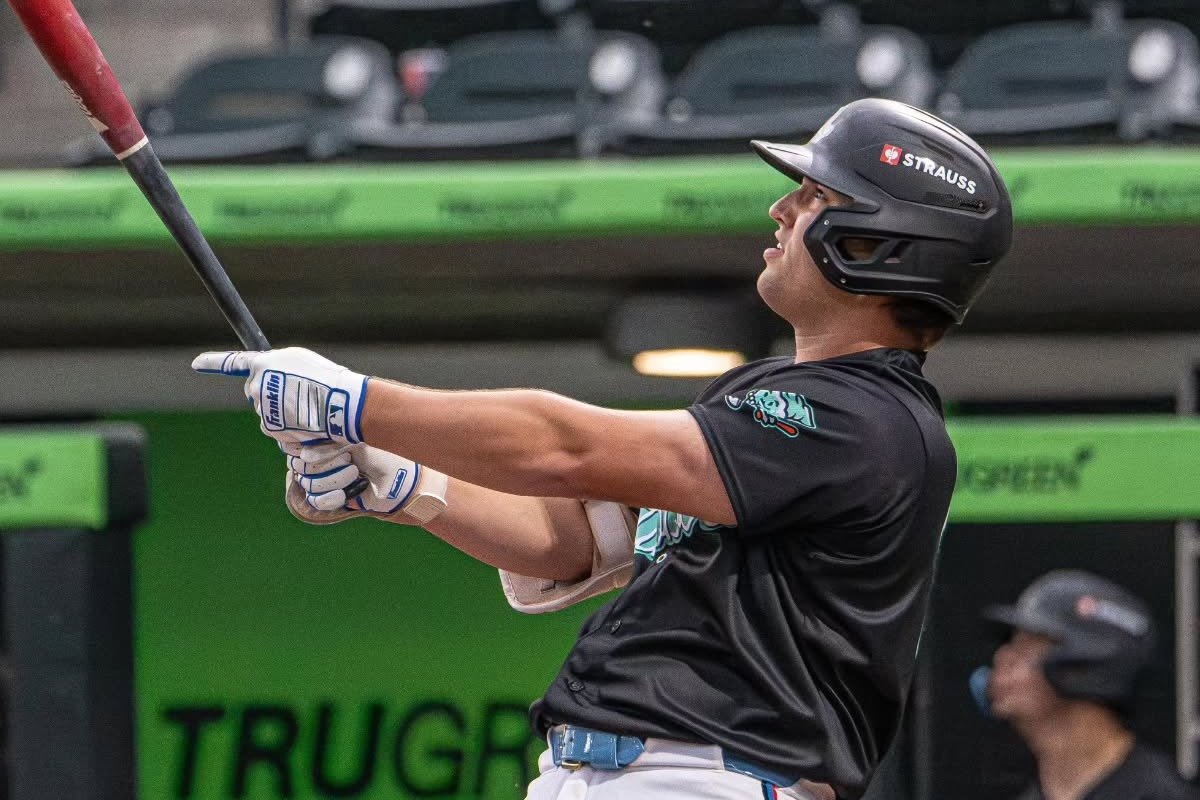 Every winter, prospects from across baseball continue their seasons in exhibition form during MLB’s Arizona Fall League. Selections to the league are vastly comprised of prospects who have missed time due to injuries as well as guys that organizations just want an extended look at following regular season play. On Tuesday, the league announced which Miami Marlins prospects will be headed out west for the 2026 AFL season, beginning October 3. Miami’s prospects will be affiliated with the Glendale Desert Dogs. Keep in mind, the group is subject to change in the event of injuries that may occur down the stretch of the minor league season. Here are scouting and performance notes on each of the eight Marlins participants. RHP Samuel Carpio Current MiLB level: Low-A Samuel Carpio is a 23-year-old right-handed reliever who spent the 2026 regular season with Low-A Jupiter. Carpio repeated the level after spending all of 2025 there and threw to a 5.10 ERA in 60 innings. Carpio has been durable in terms of his health, having not missed time on the IL yet in his professional career. What he has done is struggled with limiting walks. This season, he walked a batter an inning leading to a 21.1% overall walk rate. The 6’2”, 200-pounder has a fantastic 70-grade fastball, sitting 95 mph. However, Carpio’s 43% zone rate ranked in the lowly 18th percentile league-wide this year. That inability to locate led him to be heavily dependent on his changeup, which he tossed a whopping 49% of the time this season. Past the fastball and changeup, he has a cutter and slider, but both are in the nascent stages of development. Carpio will have the chance to continue refining his craft with Glendale. LHP Brayan Mendoza Current MiLB level: High-A Lefty Brayan Mendoza also repeated a level in 2026. A product of the trade that sent Jake Burger to the Texas Rangers, Mendoza has been healthy but mostly ineffective with the Beloit Sky Carp. After spending all of 2025 at High-A, the 22-year-old spent the year back with Beloit in a swing-man capacity. In 94 ⅔ innings, he threw to a 5.89 ERA with a 99/47 K/BB. Overall at the High-A level, Mendoza owns a 5.45 ERA over 185 innings. Mendoza is a control over command guy as reflected by his manageable walk rate, but hitters do not expand the zone against him, leading to deeper counts and higher pitch counts particularly after the first time through the order. With just average overall stuff, Mendoza doesn’t profile as a swing-and-miss guy and needs to rely on ground ball contact to succeed. To his credit, he ranked in the 78th percentile in ground ball rate this season. If Mendoza can refine command to live in the lower half more often, he could reach the ceiling of a backend starter. For now, though, it is much more likely he will wind up being a bullpen option long term. LHP Emmett Olson Current MiLB level: Double-A The Marlins’ fourth-round draft pick in 2023, Emmett Olson showed solid initial results as he enjoyed a solid 2024 campaign at Low-and-High-A. Not long into the next season at Beloit, injury struck as Olson required full Tommy John surgery. He returned to the mound late this season, first in rehab capacity with Jupiter, then for four outings in Beloit and finally for an outing with Double-A Pensacola. Understandably, there’s rust on Olson (9.50 ERA and 20.4 BB% in 18.0 IP). He will head to Arizona for more much-needed innings. Olson is the epitome of the Marlins’ pitching archetype: size (6’4”, 230) and stuff. Planing downhill, he features two plus breaking pitches—a 12-6 curve and a low-mid 80s slider with late action that he can front-door to both sides when it’s at its best, leading to off-balance swings. Olson doesn’t feature much in the way of velocity, averaging just 92 mph with his heater. He will need to maintain each bit of that and try to improve upon it as he returns from surgery, which could be a task. Because of his advanced breakers, Olson won’t need to be a fireballer to stay effective; but a further interval between speeds will benefit him. Bottom line is Olson just needs to pitch and get back in shape before we or the Marlins can determine his long term future. Arizona will afford him that opportunity. If he comes back well, he could be pushed pretty quickly through what remains of his MiLB career as lefty starters are in short supply within the Miami organization. A larger, physical version of Braxton Garrett is his ceiling. RHP Tristan Stevens Current MiLB level: Double-A Tristan Stevens was signed as an undrafted free agent in 2022. A four-year college player, Stevens was pushed quickly in his pro career pitching at three levels as early as his second full year. As a swing man in 2024, he topped at 95 innings, which was by far the most pitching he’d ever done in a single season. wear and tear took its toll on Stevens arm as just 4 ⅔ innings into 2025, he was shut down with an elbow injury that required Tommy John. Stevens returned late this season first in a rehab capacity then with Double-A Pensacola. He’s pitched well in the limited sample, holding down a 2.30 ERA and 11/4 K/BB in 15.2 IP. An average-sized 6’, 200, Stevens features a sinker, cutter and slider and comes by outs economically due to his penchant for keeping the ball on the infield, primarily with heavy ground ball rates. He posted a 50.5% ground ball rate his last full season in 2024. Without much of a four-seam, he will top at 94 and usually sits at 92. Turning 29 in December, Stevens may turn out to be the oldest player in the entire AFL this year. Of all Marlins pitchers going to the desert, he is the likeliest to make his MLB debut in 2027. RHP Alex Williams Current MiLB level: Double-A Alex Williams is a 26-year-old righty who has also been with the Marlins since 2022, having come out of the draft in the 11th round. Initially a starter, Williams transitioned to mostly relief work in 2024. This past season, though, he was a regular fixture in the Pensacola rotation, minus a month of missed action from late July to late August. The results at Double-A were tepid: 20 games (18 starts), 85.2 IP, 5.78 ERA, (5.11 FIP), 87/40 K/BB. He heads to Glendale to make up for that lost month and with hopes that he can stick as a rotational option. The 6’3”, 220-pounder has historically held his walk rates in check while garnering solid ground ball rates. This season, the ground ball contact maintained, but his walk rate ticked up to 10.6%, a career-high mark. The culprit was more times through the lineup and command waning deeper in his outings, particularly the third time through an order. In 16 post-fourth innings, Williams allowed 17 earned runs (9.56 ERA). Improving his command will be the main focus for Williams as he competes as a Desert Dog. A healthy Williams can be a solid middle relief or long relief option. INF Carter Johnson Current MiLB level: High-A Carter Johnson was Miami’s 2024 second-round pick. At the time of his selection, the Marlins were so high on the prep infielder as their second round target that they used money saved by selecting PJ Morlando in the first round to make his deal a sure thing, taking him away from his commitment to Alabama. Out of the draft, Johnson got his feet wet in Jupiter with expectations that he would be assigned to the FCL at the turn of the season. Surprisingly, the Marlins chose to return Johnson to the full-season Low-A level. Johnson struggled mightily in 2025, slashing just .177/.274/.261 with a 134/47 K/BB. Clearly overmatched, Johnson was sent back to Jupiter to begin 2026. Things went much better for the 20-year-old this season, particularly in terms of his selectiveness. He hit .243/.355/.426 with the Hammerheads, prompting a midseason call to High-A. His walk rate shrunk a bit with the Sky Carp, but his twitchy power persisted. On the season, he hit 14 homers and 25 doubles while manning multiple defensive positions. Johnson embarks to Arizona for more looks against more advanced pitching. He will be one of the younger players on the circuit and the youngest of the Marlins’ representatives. The improvement Johnson was able to show after such a disastrous 2025 season was definitely encouraging in terms of his ability to stay the course, trust his process and accept failure. Definitive improvements were made by Johnson across the board but most strikingly in terms of his swing length and ability to get his lower half involved in his approach. Defensively, Johnson has gradually dipped in production, particularly with arm accuracy and arm strength. A full time move to second base makes the most sense in many ways including in-house traffic at shortstop and taking pressure off to allow him to focus on rounding out offensively. That is the likely course of action Miami will take in 2027 and beyond. The jury is still very much out on Johnson’s ceiling as he continues to be exposed to better pitching, but he still has a lot of time on his side. More reps in a less competitive and more offensive friendly environment are a definitively good route for the Marlins to go for his growth and ability to build confidence. OF Dillon Lewis Current MiLB level: Double-A Dillon Lewis is one of the Marlins’ most physically gifted and toolsy prospects which he proved in the first half of his first season in the organization. After coming over from the Yankees as the main return in the Ryan Weathers trade, Lewis flexed his power against Southern League competition in his first trip to the Double-A level, smashing 16 homers in his first 64 games. He also showed well on the basepaths, swiping 14 bags. As with any pure power hitter, the strikeout was prevalent for Lewis, leading to a limited .319 first-half OBP. However, because of his exit velos and the frequency at which he was finding fences, that figure was excusable. Lewis’ season as a whole took a turn though on June 27 when he suffered an injury to his hand. Further observation and imaging revealed a broken hamate bone that put the slugger on the shelf just days after his 23rd birthday. In early July, Lewis underwent excision surgery to remove the broken fragments of bone from his hand. He recovered from the procedure and returned to play in Pensacola in just over seven weeks without a rehab assignment. Life in a post-injury world was unfortunately difficult for Lewis as his full power potential didn’t return to him for the rest of the year. At one point on pace to hit 30+ homers on the season, Lewis went on a dry spell that lasted 22 games without a long ball. He will head to Arizona with the hopes of getting fully back to 100%. Lewis is a sight to behold on the field at 6’3”, 205. Similarly, his exit velocities are the stuff of things you don’t hear very often; the ball just sounds different when this man finds a barrel. In addition to his special power, Lewis’ above average speed and great athleticism give him the ability to hold down all three outfield spots, including center field where he shows good first reads and a solid arm. It’s simply a matter of time before Lewis makes a big league impact. The organization is rightfully so very high on true potential ceiling of Lewis, that of a pure slugging center fielder who can also do damage on the bases. If he gets back to his first half self during the Arizona Fall League season, he could lead the circuit in home runs. Triple-A is a likely calling for Lewis when MiLB full season ball resumes. OF Max Williams Current MiLB level: Double-A The 2025 draft class did the Marlins brass proud during their first full season pro. Among those producing great results in the days following the signing of their first pro contracts was third round pick Max Williams, a corner outfielder out of Florida State. Across three levels, the 22-year-old slashed .326/.399/.620. The only caveats for Williams was that his season lasted just 48 games and he was held out of playing defense for much of the season due to a shoulder injury suffered during spring training. Williams has been made a Desert Dog simply to get him more reps to build off what was an incredible offensive showing at the full-season levels. Similarly sized as his Blue Wahoos teammate Lewis at 6’2”, 207, Williams is another physically gifted athlete with an explosive lefty swing. In a limited sample, he’s shown a knack to select pitches well, including plus velo and breaking stuff as high as the Double-A level. His lack of defensive opportunities at the pro level make his defensive ceiling unfair to judge just yet, but he's shown sufficient range in the past to profile as a capable corner outfielder. At the very least, Williams’ power potential carries him to a fairly high floor. Long story short, we need to see more from Williams and allow a league to adjust to him and gauge his ability to adjust back before making any serious contentions. We should get a better idea on how for real his showing this season was when full-season ball resumes next year. In the meantime, he could continue to pop off in the hitter paradise that is the Valley of the Sun.
- 3 comments
-
- 2
-
-
- dillon lewis
- max williams
- (and 6 more)
-
Every winter, prospects from across baseball continue their seasons in exhibition form during MLB’s Arizona Fall League. Selections to the league are vastly comprised of prospects who have missed time due to injuries as well as guys that organizations just want an extended look at following regular season play. On Tuesday, the league announced which Miami Marlins prospects will be headed out west for the 2026 AFL season, beginning October 3. Miami’s prospects will be affiliated with the Glendale Desert Dogs. Keep in mind, the group is subject to change in the event of injuries that may occur down the stretch of the minor league season. Here are scouting and performance notes on each of the eight Marlins participants. RHP Samuel Carpio Current MiLB level: Low-A Samuel Carpio is a 23-year-old right-handed reliever who spent the 2026 regular season with Low-A Jupiter. Carpio repeated the level after spending all of 2025 there and threw to a 5.10 ERA in 60 innings. Carpio has been durable in terms of his health, having not missed time on the IL yet in his professional career. What he has done is struggled with limiting walks. This season, he walked a batter an inning leading to a 21.1% overall walk rate. The 6’2”, 200-pounder has a fantastic 70-grade fastball, sitting 95 mph. However, Carpio’s 43% zone rate ranked in the lowly 18th percentile league-wide this year. That inability to locate led him to be heavily dependent on his changeup, which he tossed a whopping 49% of the time this season. Past the fastball and changeup, he has a cutter and slider, but both are in the nascent stages of development. Carpio will have the chance to continue refining his craft with Glendale. LHP Brayan Mendoza Current MiLB level: High-A Lefty Brayan Mendoza also repeated a level in 2026. A product of the trade that sent Jake Burger to the Texas Rangers, Mendoza has been healthy but mostly ineffective with the Beloit Sky Carp. After spending all of 2025 at High-A, the 22-year-old spent the year back with Beloit in a swing-man capacity. In 94 ⅔ innings, he threw to a 5.89 ERA with a 99/47 K/BB. Overall at the High-A level, Mendoza owns a 5.45 ERA over 185 innings. Mendoza is a control over command guy as reflected by his manageable walk rate, but hitters do not expand the zone against him, leading to deeper counts and higher pitch counts particularly after the first time through the order. With just average overall stuff, Mendoza doesn’t profile as a swing-and-miss guy and needs to rely on ground ball contact to succeed. To his credit, he ranked in the 78th percentile in ground ball rate this season. If Mendoza can refine command to live in the lower half more often, he could reach the ceiling of a backend starter. For now, though, it is much more likely he will wind up being a bullpen option long term. LHP Emmett Olson Current MiLB level: Double-A The Marlins’ fourth-round draft pick in 2023, Emmett Olson showed solid initial results as he enjoyed a solid 2024 campaign at Low-and-High-A. Not long into the next season at Beloit, injury struck as Olson required full Tommy John surgery. He returned to the mound late this season, first in rehab capacity with Jupiter, then for four outings in Beloit and finally for an outing with Double-A Pensacola. Understandably, there’s rust on Olson (9.50 ERA and 20.4 BB% in 18.0 IP). He will head to Arizona for more much-needed innings. Olson is the epitome of the Marlins’ pitching archetype: size (6’4”, 230) and stuff. Planing downhill, he features two plus breaking pitches—a 12-6 curve and a low-mid 80s slider with late action that he can front-door to both sides when it’s at its best, leading to off-balance swings. Olson doesn’t feature much in the way of velocity, averaging just 92 mph with his heater. He will need to maintain each bit of that and try to improve upon it as he returns from surgery, which could be a task. Because of his advanced breakers, Olson won’t need to be a fireballer to stay effective; but a further interval between speeds will benefit him. Bottom line is Olson just needs to pitch and get back in shape before we or the Marlins can determine his long term future. Arizona will afford him that opportunity. If he comes back well, he could be pushed pretty quickly through what remains of his MiLB career as lefty starters are in short supply within the Miami organization. A larger, physical version of Braxton Garrett is his ceiling. RHP Tristan Stevens Current MiLB level: Double-A Tristan Stevens was signed as an undrafted free agent in 2022. A four-year college player, Stevens was pushed quickly in his pro career pitching at three levels as early as his second full year. As a swing man in 2024, he topped at 95 innings, which was by far the most pitching he’d ever done in a single season. wear and tear took its toll on Stevens arm as just 4 ⅔ innings into 2025, he was shut down with an elbow injury that required Tommy John. Stevens returned late this season first in a rehab capacity then with Double-A Pensacola. He’s pitched well in the limited sample, holding down a 2.30 ERA and 11/4 K/BB in 15.2 IP. An average-sized 6’, 200, Stevens features a sinker, cutter and slider and comes by outs economically due to his penchant for keeping the ball on the infield, primarily with heavy ground ball rates. He posted a 50.5% ground ball rate his last full season in 2024. Without much of a four-seam, he will top at 94 and usually sits at 92. Turning 29 in December, Stevens may turn out to be the oldest player in the entire AFL this year. Of all Marlins pitchers going to the desert, he is the likeliest to make his MLB debut in 2027. RHP Alex Williams Current MiLB level: Double-A Alex Williams is a 26-year-old righty who has also been with the Marlins since 2022, having come out of the draft in the 11th round. Initially a starter, Williams transitioned to mostly relief work in 2024. This past season, though, he was a regular fixture in the Pensacola rotation, minus a month of missed action from late July to late August. The results at Double-A were tepid: 20 games (18 starts), 85.2 IP, 5.78 ERA, (5.11 FIP), 87/40 K/BB. He heads to Glendale to make up for that lost month and with hopes that he can stick as a rotational option. The 6’3”, 220-pounder has historically held his walk rates in check while garnering solid ground ball rates. This season, the ground ball contact maintained, but his walk rate ticked up to 10.6%, a career-high mark. The culprit was more times through the lineup and command waning deeper in his outings, particularly the third time through an order. In 16 post-fourth innings, Williams allowed 17 earned runs (9.56 ERA). Improving his command will be the main focus for Williams as he competes as a Desert Dog. A healthy Williams can be a solid middle relief or long relief option. INF Carter Johnson Current MiLB level: High-A Carter Johnson was Miami’s 2024 second-round pick. At the time of his selection, the Marlins were so high on the prep infielder as their second round target that they used money saved by selecting PJ Morlando in the first round to make his deal a sure thing, taking him away from his commitment to Alabama. Out of the draft, Johnson got his feet wet in Jupiter with expectations that he would be assigned to the FCL at the turn of the season. Surprisingly, the Marlins chose to return Johnson to the full-season Low-A level. Johnson struggled mightily in 2025, slashing just .177/.274/.261 with a 134/47 K/BB. Clearly overmatched, Johnson was sent back to Jupiter to begin 2026. Things went much better for the 20-year-old this season, particularly in terms of his selectiveness. He hit .243/.355/.426 with the Hammerheads, prompting a midseason call to High-A. His walk rate shrunk a bit with the Sky Carp, but his twitchy power persisted. On the season, he hit 14 homers and 25 doubles while manning multiple defensive positions. Johnson embarks to Arizona for more looks against more advanced pitching. He will be one of the younger players on the circuit and the youngest of the Marlins’ representatives. The improvement Johnson was able to show after such a disastrous 2025 season was definitely encouraging in terms of his ability to stay the course, trust his process and accept failure. Definitive improvements were made by Johnson across the board but most strikingly in terms of his swing length and ability to get his lower half involved in his approach. Defensively, Johnson has gradually dipped in production, particularly with arm accuracy and arm strength. A full time move to second base makes the most sense in many ways including in-house traffic at shortstop and taking pressure off to allow him to focus on rounding out offensively. That is the likely course of action Miami will take in 2027 and beyond. The jury is still very much out on Johnson’s ceiling as he continues to be exposed to better pitching, but he still has a lot of time on his side. More reps in a less competitive and more offensive friendly environment are a definitively good route for the Marlins to go for his growth and ability to build confidence. OF Dillon Lewis Current MiLB level: Double-A Dillon Lewis is one of the Marlins’ most physically gifted and toolsy prospects which he proved in the first half of his first season in the organization. After coming over from the Yankees as the main return in the Ryan Weathers trade, Lewis flexed his power against Southern League competition in his first trip to the Double-A level, smashing 16 homers in his first 64 games. He also showed well on the basepaths, swiping 14 bags. As with any pure power hitter, the strikeout was prevalent for Lewis, leading to a limited .319 first-half OBP. However, because of his exit velos and the frequency at which he was finding fences, that figure was excusable. Lewis’ season as a whole took a turn though on June 27 when he suffered an injury to his hand. Further observation and imaging revealed a broken hamate bone that put the slugger on the shelf just days after his 23rd birthday. In early July, Lewis underwent excision surgery to remove the broken fragments of bone from his hand. He recovered from the procedure and returned to play in Pensacola in just over seven weeks without a rehab assignment. Life in a post-injury world was unfortunately difficult for Lewis as his full power potential didn’t return to him for the rest of the year. At one point on pace to hit 30+ homers on the season, Lewis went on a dry spell that lasted 22 games without a long ball. He will head to Arizona with the hopes of getting fully back to 100%. Lewis is a sight to behold on the field at 6’3”, 205. Similarly, his exit velocities are the stuff of things you don’t hear very often; the ball just sounds different when this man finds a barrel. In addition to his special power, Lewis’ above average speed and great athleticism give him the ability to hold down all three outfield spots, including center field where he shows good first reads and a solid arm. It’s simply a matter of time before Lewis makes a big league impact. The organization is rightfully so very high on true potential ceiling of Lewis, that of a pure slugging center fielder who can also do damage on the bases. If he gets back to his first half self during the Arizona Fall League season, he could lead the circuit in home runs. Triple-A is a likely calling for Lewis when MiLB full season ball resumes. OF Max Williams Current MiLB level: Double-A The 2025 draft class did the Marlins brass proud during their first full season pro. Among those producing great results in the days following the signing of their first pro contracts was third round pick Max Williams, a corner outfielder out of Florida State. Across three levels, the 22-year-old slashed .326/.399/.620. The only caveats for Williams was that his season lasted just 48 games and he was held out of playing defense for much of the season due to a shoulder injury suffered during spring training. Williams has been made a Desert Dog simply to get him more reps to build off what was an incredible offensive showing at the full-season levels. Similarly sized as his Blue Wahoos teammate Lewis at 6’2”, 207, Williams is another physically gifted athlete with an explosive lefty swing. In a limited sample, he’s shown a knack to select pitches well, including plus velo and breaking stuff as high as the Double-A level. His lack of defensive opportunities at the pro level make his defensive ceiling unfair to judge just yet, but he's shown sufficient range in the past to profile as a capable corner outfielder. At the very least, Williams’ power potential carries him to a fairly high floor. Long story short, we need to see more from Williams and allow a league to adjust to him and gauge his ability to adjust back before making any serious contentions. We should get a better idea on how for real his showing this season was when full-season ball resumes next year. In the meantime, he could continue to pop off in the hitter paradise that is the Valley of the Sun. View full article
-
Brandon Compton interview: How he became best slugger in Marlins system
Alex Carver posted an article in Podcasts
 Brandon Compton has been one of the biggest risers on the Fish On First Top 30 prospects list during the 2026 season. Particularly over the last three months, he's been on a heater unlike anything we've seen in our careers covering the Miami Marlins farm system. Compton speaks with Ely Sussman and Alex Carver about how his baseball career changed coming off elbow surgery, developing with help from Marlins coaches and the competitive environment at Driveline Baseball, why he wasn't hitting for power early in the season and the adjustments he's made since then. You can find Fish Unfiltered and Fish On First LIVE on the Fish On First YouTube channel, Apple Podcasts, Spotify or wherever else you get your pods. Compton already leads Double-A Pensacola with 18 home runs this season, even though he was promoted there less than two months ago! Overall in 101 minor league games this season, Compton is slashing .277/.426/.596 with 30 homers, 18 stolen bases and a 164 wRC+ (best among all qualified Marlins MiLB hitters). Used exclusively in the corner outfield spots to this point, Compton tells Fish Unfiltered that he's been taking ground balls at first base before games in an attempt to add more defensive versatility. It would not be surprising if the 22-year-old gets a taste of Triple-A Jacksonville next month. Health permitting, Compton is on track to make his major league debut in 2027.
-
This podcast is brought to you by Jet Ski Rentals of South Florida—offering Miami’s best jet ski and boat adventures. With six jet ski locations and over 120 boats, there’s something for every style and every budget. They’re reservation-based only. To inquire, call 305-990-2192, or check them out online at SFJetskiRentals.com. Make sure to use promo code FISHONFIRST to receive 10% off your next booking. Brandon Compton has been one of the biggest risers on the Fish On First Top 30 prospects list during the 2026 season. Particularly over the last three months, he's been on a heater unlike anything we've seen in our careers covering the Miami Marlins farm system. Compton speaks with Ely Sussman and Alex Carver about how his baseball career changed coming off elbow surgery, developing with help from Marlins coaches and the competitive environment at Driveline Baseball, why he wasn't hitting for power early in the season and the adjustments he's made since then. You can find Fish Unfiltered and Fish On First LIVE on the Fish On First YouTube channel, Apple Podcasts, Spotify or wherever else you get your pods. Compton already leads Double-A Pensacola with 18 home runs this season, even though he was promoted there less than two months ago! Overall in 101 minor league games this season, Compton is slashing .277/.426/.596 with 30 homers, 18 stolen bases and a 164 wRC+ (best among all qualified Marlins MiLB hitters). Used exclusively in the corner outfield spots to this point, Compton tells Fish Unfiltered that he's been taking ground balls at first base before games in an attempt to add more defensive versatility. It would not be surprising if the 22-year-old gets a taste of Triple-A Jacksonville next month. Health permitting, Compton is on track to make his major league debut in 2027. View full article
-
 Fish On First staffers react to the latest Miami Marlins series and prepare you for what lies ahead. Sunday's show was hosted by Alex Carver and featured panelists Ely Sussman, Kevin Barral, Sean Millerick, Nate Karzmer and Alex Krutchik. The following topics were covered: Another sweep sets Marlins franchise record for consecutive losses Clayton McCullough on the hot seat Eury Pérez showing continued growth as a pitcher Contract extension candidate Joe Mack? Jakob Marsee still making physical, mental errors Previewing and predicting the next series against the Philadelphia Phillies You can find Fish Unfiltered and Fish On First LIVE on the Fish On First YouTube channel, Apple Podcasts, Spotify or wherever else you get your pods. Our next FOF LIVE episode will be on Wednesday at approximately 4:00 p.m. ET following the Marlins-Phillies series finale.
-
- 1
-
-
- clayton mccullough
- eury perez
- (and 2 more)
-
This podcast is brought to you by Jet Ski Rentals of South Florida—offering Miami’s best jet ski and boat adventures. With six jet ski locations and over 120 boats, there’s something for every style and every budget. They’re reservation-based only. To inquire, call 305-990-2192, or check them out online at SFJetskiRentals.com. Make sure to use promo code FISHONFIRST to receive 10% off your next booking. Fish On First staffers react to the latest Miami Marlins series and prepare you for what lies ahead. Sunday's show was hosted by Alex Carver and featured panelists Ely Sussman, Kevin Barral, Sean Millerick, Nate Karzmer and Alex Krutchik. The following topics were covered: Another sweep sets Marlins franchise record for consecutive losses Clayton McCullough on the hot seat Eury Pérez showing continued growth as a pitcher Contract extension candidate Joe Mack? Jakob Marsee still making physical, mental errors Previewing and predicting the next series against the Philadelphia Phillies You can find Fish Unfiltered and Fish On First LIVE on the Fish On First YouTube channel, Apple Podcasts, Spotify or wherever else you get your pods. Our next FOF LIVE episode will be on Wednesday at approximately 4:00 p.m. ET following the Marlins-Phillies series finale. View full article
-
From spring training through last month's promotion to Double-A, Marlins outfielder Cam Cannarella takes us inside his first full season as a professional baseball player.
-
From spring training through last month's promotion to Double-A, Marlins outfielder Cam Cannarella takes us inside his first full season as a professional baseball player. View full video
-
Cam Cannarella interview: Getting to know one of MiLB's best hitters
Alex Carver posted an article in Podcasts
 A year into his professional baseball career, Miami Marlins outfielder Cam Cannarella has crushed even the most optimistic projections. Now starring for Double-A Pensacola, Cannarella sits down with Alex Carver and Isaac Azout to discuss the MLB Draft process, overcoming injuries, how he has developed into an elite all-around hitter in 2026 and more. You can find Fish Unfiltered and Fish On First LIVE on the Fish On First YouTube channel, Apple Podcasts, Spotify or wherever else you get your pods. Cannarella's offensive numbers this season are positively eye-popping. Through 52 games entering Sunday (mostly at the Double-A level), he is slashing .365/.443/.599 with 12 home runs, nine stolen bases and a 170 wRC+. He's the fourth-most productive hitter across all of Minor League Baseball (min. 200 PA) in terms of wRC+. He has reached base safely in 23 of his last 25 games. Oh yeah, and Cannarella is also a long-term center fielder. The culmination of those abilities has bumped him up to fifth on our Fish On First Top 30 prospects list. Even assuming that Cannarella comes down to earth a bit in terms of his batting average on balls in play and over-the-fence power, the 22-year-old should get a cup of coffee with Triple-A Jacksonville before season's end. He'll be in the mix for a big league job early next year.
-
This podcast is brought to you by Jet Ski Rentals of South Florida—offering Miami’s best jet ski and boat adventures. With six jet ski locations and over 120 boats, there’s something for every style and every budget. They’re reservation-based only. To inquire, call 305-990-2192, or check them out online at SFJetskiRentals.com. Make sure to use promo code FISHONFIRST to receive 10% off your next booking. A year into his professional baseball career, Miami Marlins outfielder Cam Cannarella has crushed even the most optimistic projections. Now starring for Double-A Pensacola, Cannarella sits down with Alex Carver and Isaac Azout to discuss the MLB Draft process, overcoming injuries, how he has developed into an elite all-around hitter in 2026 and more. You can find Fish Unfiltered and Fish On First LIVE on the Fish On First YouTube channel, Apple Podcasts, Spotify or wherever else you get your pods. Cannarella's offensive numbers this season are positively eye-popping. Through 52 games entering Sunday (mostly at the Double-A level), he is slashing .365/.443/.599 with 12 home runs, nine stolen bases and a 170 wRC+. He's the fourth-most productive hitter across all of Minor League Baseball (min. 200 PA) in terms of wRC+. He has reached base safely in 23 of his last 25 games. Oh yeah, and Cannarella is also a long-term center fielder. The culmination of those abilities has bumped him up to fifth on our Fish On First Top 30 prospects list. Even assuming that Cannarella comes down to earth a bit in terms of his batting average on balls in play and over-the-fence power, the 22-year-old should get a cup of coffee with Triple-A Jacksonville before season's end. He'll be in the mix for a big league job early next year. View full article
-
This podcast is brought to you by Jet Ski Rentals of South Florida—offering Miami’s best jet ski and boat adventures. With six jet ski locations and over 120 boats, there’s something for every style and every budget. They’re reservation-based only. To inquire, call 305-990-2192, or check them out online at SFJetskiRentals.com. Make sure to use promo code FISHONFIRST to receive 10% off your next booking. Fish On First staffers react to who the Miami Marlins selected with the 14th overall pick in the 2026 MLB Draft. Saturday's show was hosted by Alex Carver and featured panelists Ely Sussman, Hector Rodriguez, Sean McCormack, Kevin Barral, Nate Karzmer and Jeremiah Geiger. You can find Fish Unfiltered and Fish On First LIVE on the Fish On First YouTube channel, Apple Podcasts, Spotify or wherever else you get your pods. Widely projected to be taken within the draft's first 10 picks, Lombard is an extremely toolsy shortstop who just so happens to be a South Florida native. He's likely to require an overslot deal from the Fish (slot value is $5,444,900). View full article
-
2026 Miami Marlins MLB Draft countdown & Jacob Lombard instant analysis
Alex Carver posted an article in Podcasts
 Fish On First staffers react to who the Miami Marlins selected with the 14th overall pick in the 2026 MLB Draft. Saturday's show was hosted by Alex Carver and featured panelists Ely Sussman, Hector Rodriguez, Sean McCormack, Kevin Barral, Nate Karzmer and Jeremiah Geiger. You can find Fish Unfiltered and Fish On First LIVE on the Fish On First YouTube channel, Apple Podcasts, Spotify or wherever else you get your pods. Widely projected to be taken within the draft's first 10 picks, Lombard is an extremely toolsy shortstop who just so happens to be a South Florida native. He's likely to require an overslot deal from the Fish (slot value is $5,444,900).
-
 Fish On First staffers react to the latest Miami Marlins series and prepare you for what lies ahead. Sunday's show was hosted by Alex Carver and featured panelists Ely Sussman, Kevin Barral, Isaac Azout, Jeremiah Geiger and Nate Karzmer. The following topics were covered: The decision to take out Eury Pérez after seven perfect innings Postgame comments from Pérez and manager Clayton McCullough Otto Lopez and Max Meyer selected to the NL All-Star roster Joe Mack emerging as a leading contract extension candidate Jakob Marsee's injury scare Previewing and predicting the next series against the Seattle Mariners You can find Fish Unfiltered and Fish On First LIVE on the Fish On First YouTube channel, Apple Podcasts, Spotify or wherever else you get your pods. Despite the stressful ending to Sunday's contest, the Marlins swept the Athletics to improve to a season-best seven games over .500. To conclude the first half of their regular season, they'll begin a six-game homestand on Tuesday against the Seattle Mariners and Cleveland Guardians.
- 1 comment
-
- 1
-
-
- eury perez
- clayton mccullough
- (and 6 more)
-
This podcast is brought to you by Jet Ski Rentals of South Florida—offering Miami’s best jet ski and boat adventures. With six jet ski locations and over 120 boats, there’s something for every style and every budget. They’re reservation-based only. To inquire, call 305-990-2192, or check them out online at SFJetskiRentals.com. Make sure to use promo code FISHONFIRST to receive 10% off your next booking. Fish On First staffers react to the latest Miami Marlins series and prepare you for what lies ahead. Sunday's show was hosted by Alex Carver and featured panelists Ely Sussman, Kevin Barral, Isaac Azout, Jeremiah Geiger and Nate Karzmer. The following topics were covered: The decision to take out Eury Pérez after seven perfect innings Postgame comments from Pérez and manager Clayton McCullough Otto Lopez and Max Meyer selected to the NL All-Star roster Joe Mack emerging as a leading contract extension candidate Jakob Marsee's injury scare Previewing and predicting the next series against the Seattle Mariners You can find Fish Unfiltered and Fish On First LIVE on the Fish On First YouTube channel, Apple Podcasts, Spotify or wherever else you get your pods. Despite the stressful ending to Sunday's contest, the Marlins swept the Athletics to improve to a season-best seven games over .500. To conclude the first half of their regular season, they'll begin a six-game homestand on Tuesday against the Seattle Mariners and Cleveland Guardians. View full article
-
Fish On First LIVE discusses Owen Caissie's nice production in recent weeks. The Marlins outfielder has posted a .930 OPS over his last 12 games and he drove in two more runs in Monday's win.
-
Fish On First LIVE discusses Owen Caissie's nice production in recent weeks. The Marlins outfielder has posted a .930 OPS over his last 12 games and he drove in two more runs in Monday's win. View full video
-
 Fish On First staffers react to the latest Miami Marlins series and prepare you for what lies ahead. Sunday's show was hosted by Alex Carver and featured panelists Ely Sussman, Jeremiah Geiger, Kevin Barral and Nate Karzmer. The following topics were covered: Walk-off grand slam by Heriberto Hernández to secure a series sweep Tyler Phillips slides into open starting rotation spot Repeatedly overaggressive sends by third base coach Blake Lalli Max Meyer on an All-Star trajectory Liam Hicks' fascinating offensive profile Owen Caissie snaps out of an extended slump Previewing and predicting the next series against the Toronto Blue Jays You can find Fish Unfiltered and Fish On First LIVE on the Fish On First YouTube channel, Apple Podcasts, Spotify or wherever else you get your pods. Our next FOF LIVE episode will be Wednesday at approximately 7:00 p.m. ET following the Marlins-Blue Jays series finale.
-
- 1
-
-
- max meyer
- heriberto hernandez
- (and 4 more)
-
This podcast is brought to you by Jet Ski Rentals of South Florida—offering Miami’s best jet ski and boat adventures. With six jet ski locations and over 120 boats, there’s something for every style and every budget. They’re reservation-based only. To inquire, call 305-990-2192, or check them out online at SFJetskiRentals.com. Make sure to use promo code FISHONFIRST to receive 10% off your next booking. Fish On First staffers react to the latest Miami Marlins series and prepare you for what lies ahead. Sunday's show was hosted by Alex Carver and featured panelists Ely Sussman, Jeremiah Geiger, Kevin Barral and Nate Karzmer. The following topics were covered: Walk-off grand slam by Heriberto Hernández to secure a series sweep Tyler Phillips slides into open starting rotation spot Repeatedly overaggressive sends by third base coach Blake Lalli Max Meyer on an All-Star trajectory Liam Hicks' fascinating offensive profile Owen Caissie snaps out of an extended slump Previewing and predicting the next series against the Toronto Blue Jays You can find Fish Unfiltered and Fish On First LIVE on the Fish On First YouTube channel, Apple Podcasts, Spotify or wherever else you get your pods. Our next FOF LIVE episode will be Wednesday at approximately 7:00 p.m. ET following the Marlins-Blue Jays series finale. View full article
-
This podcast is brought to you by Jet Ski Rentals of South Florida—offering Miami’s best jet ski and boat adventures. With six jet ski locations and over 120 boats, there’s something for every style and every budget. They’re reservation-based only. To inquire, call 305-990-2192, or check them out online at SFJetskiRentals.com. Make sure to use promo code FISHONFIRST to receive 10% off your next booking. Fish On First staffers react to the latest Miami Marlins series and prepare you for what lies ahead. Monday's show was hosted by Alex Carver and featured panelists Ely Sussman, Kevin Barral, Jeremiah Geiger and Nate Karzmer. The following topics were covered: Marlins releasing (rather than outrighting) Chris Paddack Unusual pitch usage for Sandy Alcantara Esteury Ruiz thriving in his role What Joe Mack and Robby Snelling have shown us so far First-inning pitching struggles for the whole staff Eury Pérez underperforming his immense talent Who gets sent down to make room for Pete Fairbanks? Previewing and predicting the next series against the Minnesota Twins You can find Fish Unfiltered and Fish On First LIVE on the Fish On First YouTube channel, Apple Podcasts, Spotify or wherever else you get your pods. Our next FOF LIVE episode will be Thursday at approximately 6:00 p.m. ET the day after the Marlins-Twins series finale. View full article
-
 Fish On First staffers react to the latest Miami Marlins series and prepare you for what lies ahead. Monday's show was hosted by Alex Carver and featured panelists Ely Sussman, Kevin Barral, Jeremiah Geiger and Nate Karzmer. The following topics were covered: Marlins releasing (rather than outrighting) Chris Paddack Unusual pitch usage for Sandy Alcantara Esteury Ruiz thriving in his role What Joe Mack and Robby Snelling have shown us so far First-inning pitching struggles for the whole staff Eury Pérez underperforming his immense talent Who gets sent down to make room for Pete Fairbanks? Previewing and predicting the next series against the Minnesota Twins You can find Fish Unfiltered and Fish On First LIVE on the Fish On First YouTube channel, Apple Podcasts, Spotify or wherever else you get your pods. Our next FOF LIVE episode will be Thursday at approximately 6:00 p.m. ET the day after the Marlins-Twins series finale.
-
- 1
-
-
- chris paddack
- sandy alcantara
- (and 5 more)
-
Hey Siri, define “good problems to have.” As the Marlins’ minor league system continues to improve and deepen, top prospect rankings become harder and harder to decide. Before the latest release of our Fish On First Top 30 consensus list this past week, several players were highly considered to make the cut, but just missed. Herein, we give those players their flowers and ensure you know their names and skill sets. C Ryan Ignoffo Current level: Double-A Ignoffo is the ultimate team player. An unheralded 20th-round selection as a two-way player, he played virtually every single position except catcher as an amateur. Upon his arrival in Miami, he was tasked with exactly that. With confidence in his bat to succeed at the next level, the Marlins converted Ignoffo full-time to backstop. Ignoffo took the challenge in stride, continuing to hit well as he did, even amidst the call-up to the upper minors last season. After a bit of a slow start this year at the plate, Ignoffo is performing close to his norms by slashing .273/.310/.485. Overall, Ignoffo is a contact-oriented hitter who lengthens at-bats and limits whiffs by way of great timing and bat control. He shows a true penchant to make contact at an above-average frequency, with career rate norms above 80%. Because of his ability to cover the plate, he doesn’t walk a ton so his on-base numbers are largely driven by balls put in play. Keeping the ball off the ground and hitting line drives at a good clip, his career slash is well-earned proven by his BABIP, which sits at .282. Ignoffo won’t hit a ton of home runs, and with such low walk rates, he will need to be able to continue to make good contact at the next level to be effective, leaving him little room for error. Defensively, Ignoffo went through an atypical learning process as a backstop. The organization saw in him a plus throwing arm that execs and his teammates continue to rave about. This offseason, Ignoffo put a ton of focus on his lateral movement, framing and pop times. So far this season, the results are good: he’s allowed just one passed ball and thrown out 24% of potential base-stealers. Ignoffo shouldn’t have an issue sticking at catcher and he also offers positional flexibility, although he'd have to shake off years of rust to contribute elsewhere on the diamond. Ignoffo has been repeating the Double-A level because he was blocked by Joe Mack. Now that Mack’s promotion has occurred, Ignoffo is in line to make his Triple-A debut imminently, sharing catching reps with the optioned Agustín Ramírez and veteran Brian Navarreto. Going on 26, we place Ignoffo’s floor pretty high, but due to the lack of plus contact and walks, his ceiling is a bit low. That said, he could still be of great service to any organization as a backup catcher or utility type player, especially if he continues to make contact when he breaks into MLB. He could rejoin our Top 30 amidst the upcoming graduations of Mack and Josh Ekness. RHP Carson Laws Current level: High-A Laws is a 6’1”, 186-pound righty who was selected by the Marlins in the 14th round of last year’s draft out of Texas State. Laws didn’t have an extremely long track record as a hurler in college. He came into Miami’s organization having only pitched 37 NCAA innings on top of another 34 at JuCo, so even as he embarks on his first full professional season, he is very raw. What Miami does have in Laws, though, is a high ceiling rooted in a plus-plus stuff profile. Laws’ primary weapon is a four-seamer that sits at 98 mph and can touch triple digits. After the draft, he went to work on his secondary arsenal, adding a curveball and altering the grip on his changeup into a kick-change. Laws still maintains his best secondary, a high-80s slider with wipeout action. At this point, Laws needs reps and experience. That is why the Marlins currently have him working as a starter in High-A Beloit. As he fully learns his craft, Laws will need to rein in his control and command. At 23, the late-bloomer will need to learn quickly, but if he can, he has the upside of a shutdown high-leverage reliever. Because of the low floor though, Laws just misses our list for now. IF Edgardo De Leon Current level: FCL De Leon is a 19-year-old infielder who came to the Marlins in the trade that sent Edward Cabrera to Chicago. De Leon signed with the Cubs in 2024 for an undisclosed amount, which normally signifies the figure wasn’t very significant. What has been significant is what De Leon has done over his first two seasons pro. After slashing .277/.431/.433 in the DSL in 2024, the 6’, 170 righty proved his skill set could translate well stateside. Last season with the AZL Cubs, he hit .276/.353/.500. De Leon split time evenly at corner infield for the Cubs, playing 37 games at first and 35 at third. While De Leon has performed very well thus far, he has some questions to answer for as he begins his Marlins tenure, the most pressing being where will his defensive home be, can he solve for a high whiff rate as he matriculates through levels against better stuff and how much power can he grow into. If he can build up a strong but raw arm and stick at third base, be taught to select swings a bit better and make the most of stateside facilities physically, he will be part of future Top 30 lists. For now, stats aside, he remains a bit of a lottery ticket. RHP Aiden May Current level: High-A May, a 23-year-old righty, is the Marlins’ Competitive Balance Round B pick from 2024. Barely recruited as a high schooler, May built his stock basically from the ground up as an amateur, playing at three colleges over three years. That journey culminated with May holding down a sparkling 3.05 ERA and 84/23 K/BB in the PAC-12, earning him top-100 draft pick honors. Unfortunately for May, his tenure as a pro has only spanned 14 MiLB games. He did not pitch after signing due to a forearm strain and then underwent surgery to remove loose bodies from his throwing elbow, keeping him off the mound until July of last season. When back at full strength, he participated in the Arizona Fall League. It's been an inconsistent opening month for May with Beloit in 2026, including six no-hit innings on April 19. However, he was unable to complete four frames on April 26 and missed his most recent scheduled start on Sunday. May is just an average-sized 6’2”, 196, and doesn’t shorten the distance to the plate, but he throws from a funky low arm slot which allots him some deception. He has a deep arsenal which includes a sinker that sits 94 and can touch 96. His best pitch is a sweeper that can garner him whiffs in and out of the zone. With the Marlins, he’s strayed away from using his changeup in favor of a new cut fastball that he’s building confidence in. If May is going to stick as a starter, he will need to be able to consistently use that third pitch for strikes and be able to maintain his control throughout starts. He could still reach a ceiling as a back-end starter but at this point in his injury-marred career, it’s more likely he moves to the bullpen long term. That said, May’s plus velo and sweeper and the aforementioned tricky mechanics could be effective in shorter stints making the floor decently high. IF Ronny Muñoz Current level: DSL Muñoz is one of the newest Marlins in the organization, having joined the club in January as part of the current international signing period. The 27th-ranked prospect in the class per MLB Pipeline, his deal with Miami was worth $1 million, matching Santiago Solarte (FOF #18). Unlike Solarte, Muñoz is limited in size, but he comes by good power via elite bat speed stemming from quick hands that evaluators graded at the very top of the 20-80 scale. Those same hands serve Muñoz well in the infield where he has the athleticism to stick at shortstop. Once Muñoz can prove himself against pro stuff, it is likely he will shoot up our list. For now, his limited size, being built more for line drives than homers, and the fact that he will need to be on time and stay on time against pro stuff have him on the outside looking in. View full article


