



Alex Carver
-
Posts
459 -
Joined
-
Last visited
-
Days Won
16
Content Type
Profiles
Miami Marlins Videos
2026 Miami Marlins Top Prospects Ranking
Miami Marlins Free Agent & Trade Rumors, Notes, & Tidbits
Guides & Resources
News
2025 Miami Marlins Draft Pick Tracker
2026 Miami Marlins Draft Tracker: Picks & Bonuses
Forums
Blogs
Events
Store
Downloads
Gallery
Everything posted by Alex Carver
-
 Outfield prospect Brendan Jones discusses the bittersweet process of getting traded from the Yankees to the Marlins and why he's optimistic that it will be a smooth transition to his new organization. View full video
 -
Outfield prospect Brendan Jones discusses the bittersweet process of getting traded from the Yankees to the Marlins and why he's optimistic that it will be a smooth transition to his new organization.
-
All Fish On First podcasts are brought to you by Jet Ski Rentals of South Florida—offering Miami’s best jet ski and boat adventures. With six jet ski locations and over 120 boats, there’s something for every style and every budget. They’re reservation-based only. To inquire, call 305-990-2192, or check them out online at SFJetskiRentals.com. This Miami Marlins farm system is now unquestionably among the best in baseball. On Swimming Upstream, Alex Carver and Kevin Barral analyze all of the talent that the Marlins have recently acquired via trade and international free agency. Then, they sit down for an exclusive interview with one of those new prospects, outfielder Brendan Jones. You can find Swimming Upstream on the Fish On First YouTube channel, Apple Podcasts, Spotify or wherever else you get your pods. Our audio programming also includes The Offishial Show, Fish Unfiltered, Fish On First LIVE and more. Jones, who's entering his age-24 season, was part of a five-player trade last week that sent left-hander Ryan Weathers to the New York Yankees. The Marlins also acquired prospect Dillon Lewis, Juan Matheus and Dylan Jasso in the deal. The Nashville, Tennessee, native was a low-profile prospect coming out of the 2024 MLB Draft. However, Jones has quickly made a name for himself in pro ball with a polished plate approach and plus-plus speed. Used primarily in center field last season, he led all Yankees farmhands in stolen bases (51) and ranked third in runs scored (89). The trade reunites Jones with some familiar faces from the Yankees organization, including director of hitting Joe Migliaccio and MiLB hitting coach Tom DeAngelis. "That should hopefully make for a smooth transition," he says. Jones tells Swimming Upstream that he will be a non-roster invitee at Marlins spring training next month. He's likely to open up the 2026 season at the Double-A level, batting near the top of the Pensacola Blue Wahoos lineup. Health permitting, his major league debut should come in 2027. Follow Brendan (@BrendanTJones), Alex (@marlinsminors), Kevin (@kevin_barral) and Fish On First (@FishOnFirst) on Twitter. Join the Marlins Discord server! Complete Miami Marlins coverage here at FishOnFirst.com. View full article
-
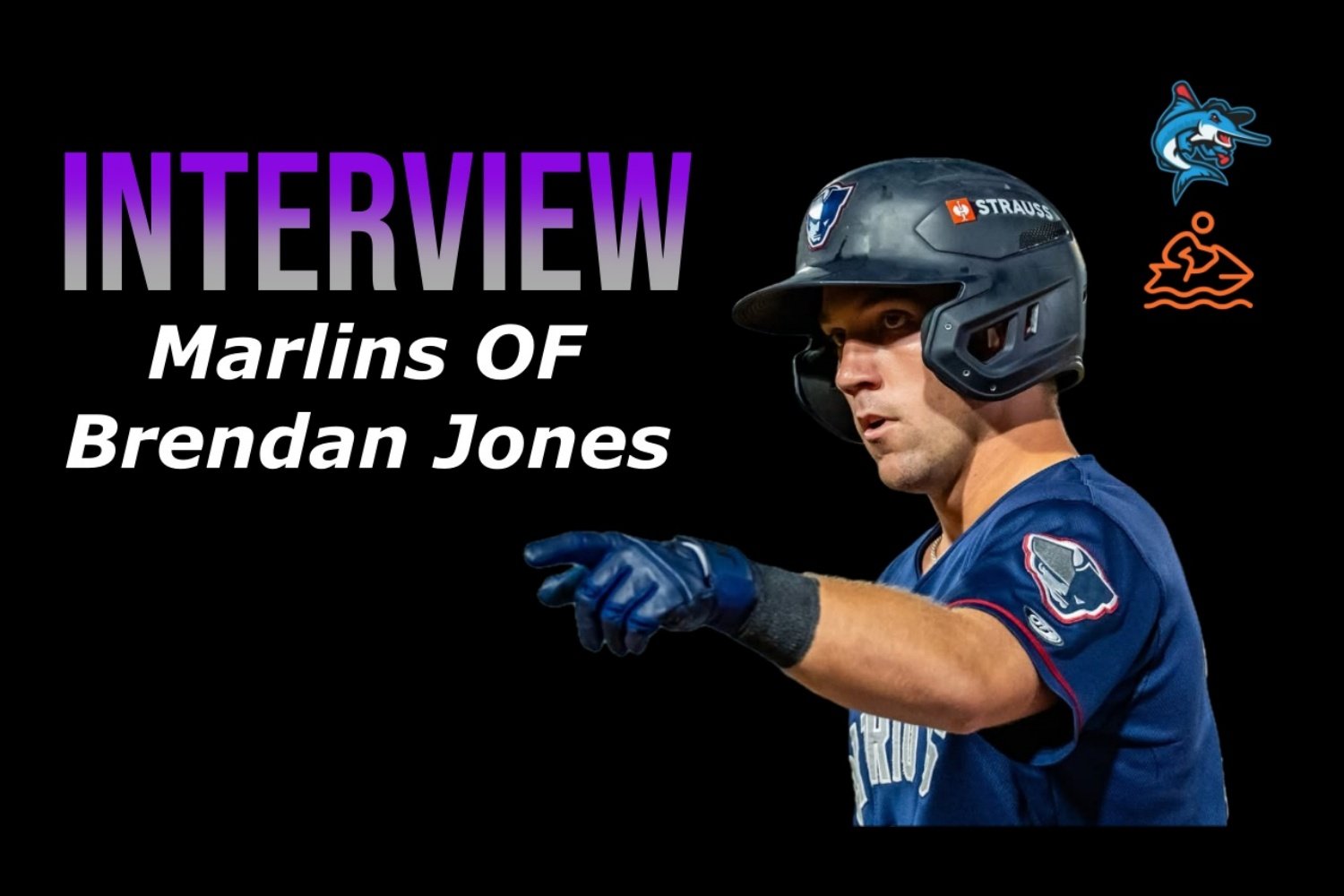 This Miami Marlins farm system is now unquestionably among the best in baseball. On Swimming Upstream, Alex Carver and Kevin Barral analyze all of the talent that the Marlins have recently acquired via trade and international free agency. Then, they sit down for an exclusive interview with one of those new prospects, outfielder Brendan Jones. You can find Swimming Upstream on the Fish On First YouTube channel, Apple Podcasts, Spotify or wherever else you get your pods. Our audio programming also includes The Offishial Show, Fish Unfiltered, Fish On First LIVE and more. Jones, who's entering his age-24 season, was part of a five-player trade last week that sent left-hander Ryan Weathers to the New York Yankees. The Marlins also acquired prospect Dillon Lewis, Juan Matheus and Dylan Jasso in the deal. The Nashville, Tennessee, native was a low-profile prospect coming out of the 2024 MLB Draft. However, Jones has quickly made a name for himself in pro ball with a polished plate approach and plus-plus speed. Used primarily in center field last season, he led all Yankees farmhands in stolen bases (51) and ranked third in runs scored (89). The trade reunites Jones with some familiar faces from the Yankees organization, including director of hitting Joe Migliaccio and MiLB hitting coach Tom DeAngelis. "That should hopefully make for a smooth transition," he says. Jones tells Swimming Upstream that he will be a non-roster invitee at Marlins spring training next month. He's likely to open up the 2026 season at the Double-A level, batting near the top of the Pensacola Blue Wahoos lineup. Health permitting, his major league debut should come in 2027. Follow Brendan (@BrendanTJones), Alex (@marlinsminors), Kevin (@kevin_barral) and Fish On First (@FishOnFirst) on Twitter. Join the Marlins Discord server! Complete Miami Marlins coverage here at FishOnFirst.com.
 -
Parlez-vous français? Why the Marlins should consider signing Ty France
Alex Carver posted an article in Marlins
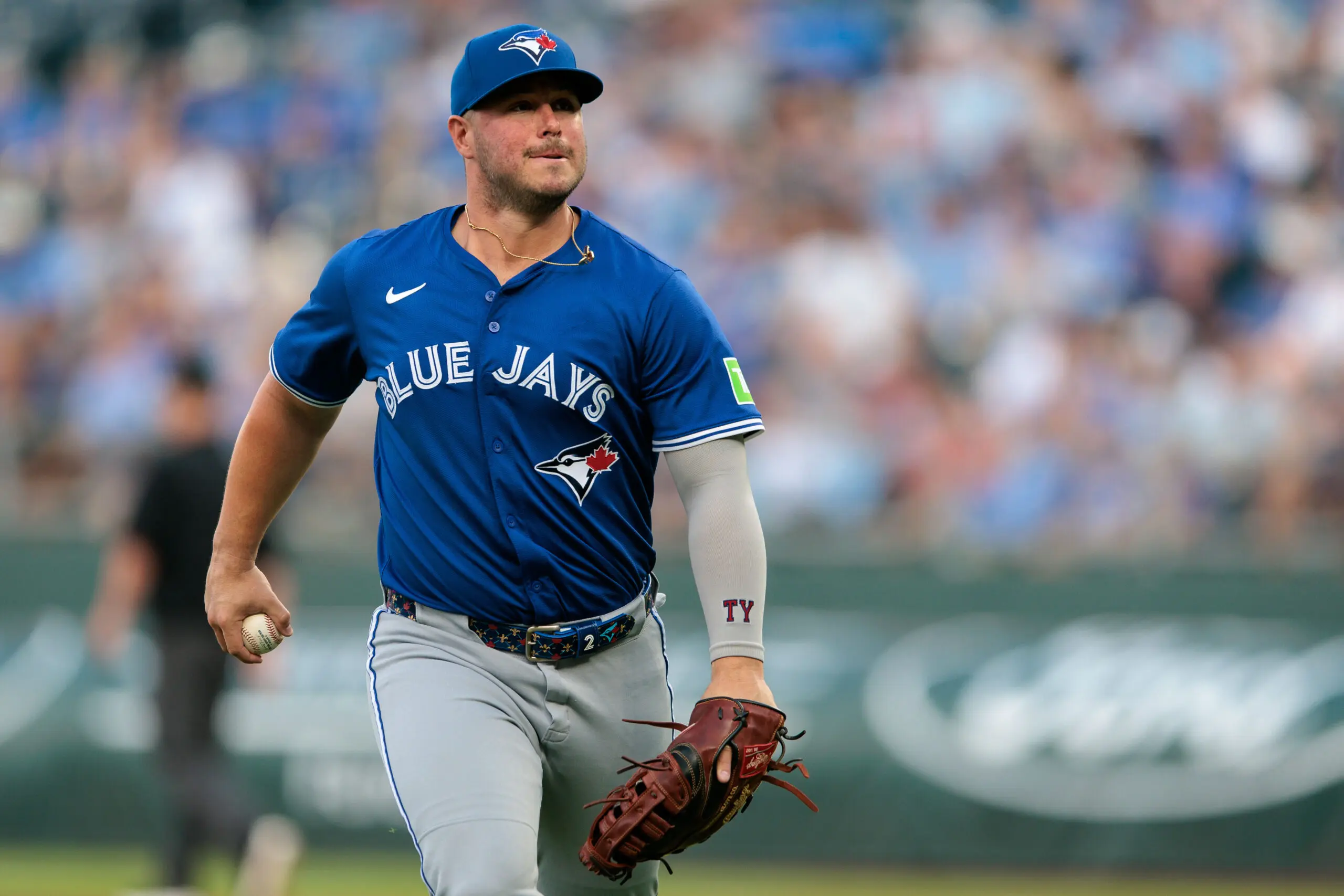 The Marlins have been active this offseason in the free agent and trade markets. Peter Bendix got his whale in fireballing closer Pete Fairbanks. He also dealt from starting pitching depth while maximizing return value on Miami’s biggest trade asset, Edward Cabrera, who is coming off a career year after he managed to stay healthy. The acquisitions of Esteury Ruiz and Christopher Morel bolstered the club's position player depth. These moves, along with the fact that top prospects including the likes of Thomas White, Robby Snelling, and Joe Mack are on the verge of their big league debuts, have given brightened their 2026 outlook. However, the Marlins shouldn’t be content yet. As winter wears on and we push closer to pitchers and catchers reporting back to Jupiter, there is still more that can and should be done. The Marlins spent much of last season with a hole at first base. Following the losses of Troy Johnston (claimed by Rockies) and Eric Wagaman (traded to Twins), that hole is even more glaring. Currently, three players on their 40-man roster have played first base in the big leagues: Liam Hicks, Graham Pauley and Javier Sanoja. Each of them are far more experienced and effective at other positions, though. In the minor leagues, the closest thing the Marlins have to an MLB-ready first baseman is Deyvison De Los Santos. While the last baseball we saw DDLS play this winter overseas was encouraging, he struggled in hitter-friendly Jacksonville this past season. There were also concerns about him off the field as well. The power-only bat will require more seasoning in Triple-A. If only there existed an experienced first baseman who could hold down the position in the short term and help mentor parts of Miami’s young core as a great teammate. Enter Tyler Lawrence France. A very late-round pick in 2015, France has proven to be a very productive major leaguer for five different organizations. In five of his six MLB seasons, he’s posted a positive WAR. Originally a second/third baseman, France began playing first base for the Mariners in 2021. He hasn’t spent much time at any other position since, giving him over 5,400 career innings at the position. With the glove, France has been among MLB’s best at the position, including this past season. For the second time in his career, the 31-year-old led his league in fielding percentage at a near-perfect .996. He also turned in a 10 OAA and his fielding run value was plus-7, marks which ranked first and second among 1Bs. irqhn2.mp4 Offensively, France can be a pesky hitter. He has never struck out much, but he also does not take many walks. In 2025, he posted a 16.9% K rate and 4.5% walk rate, making him one of the most inconsistent free passes in all of baseball. His propensity for getting hit by pitches keeps his on-base percentage in good condition (he has twice led MLB in that category). Historically, France has been able to square up enough to reach double-digit home runs, but he has limited bat speed and even more limited foot speed. Overall, he is mostly a singles-hitting, for-average bat who is best off the bench and can be slotted in at the bottom of a lineup where he attempts to find a hole and turn it over. France’s struggles on both sides of the ball in 2024 allowed the Twins to garner his services for an even $1 million. He didn’t live out the full season with Minnesota as he was dealt to the Blue Jays as part of a deadline deal. With Toronto, France made it to the World Series for the first time in his career, but he wasn’t much of a contributor. Ultimately, he was not offered a new contract and has not been offered one since the start of free agency. Headed into his age-31 season, France would not cost much and there is a likelihood he may even accept a minor league contract with an invite to spring training. Absent any outside additions, Christopher Morel, Griffin Conine and Heriberto Hernández are leading candidates to see time at first base. The Marlins may ultimately move Agustín Ramírez off the catcher position—especially as Joe Mack nears a big league call-up—but Bendix has remained adamant that he is confident in Ramírez’s ability to stick at backstop. All of these individuals are neophytes at the defensive aspects of manning first. A potential France signing would not be flashy. It would not garner many ooh’s and ahh’s from Marlins fans, much less the national baseball world. However, it would provide Miami with a short-term fix to their most obvious problem, first base defense, in the most obvious way. As a bonus, he can also play other positions. There is a potential added bonus if the pop in his bat returns. All we are saying is give France a chance. With low-risk/high-reward potential, the Marlins can’t go wrong.
 -
The Marlins have been active this offseason in the free agent and trade markets. Peter Bendix got his whale in fireballing closer Pete Fairbanks. He also dealt from starting pitching depth while maximizing return value on Miami’s biggest trade asset, Edward Cabrera, who is coming off a career year after he managed to stay healthy. The acquisitions of Esteury Ruiz and Christopher Morel bolstered the club's position player depth. These moves, along with the fact that top prospects including the likes of Thomas White, Robby Snelling, and Joe Mack are on the verge of their big league debuts, have given brightened their 2026 outlook. However, the Marlins shouldn’t be content yet. As winter wears on and we push closer to pitchers and catchers reporting back to Jupiter, there is still more that can and should be done. The Marlins spent much of last season with a hole at first base. Following the losses of Troy Johnston (claimed by Rockies) and Eric Wagaman (traded to Twins), that hole is even more glaring. Currently, three players on their 40-man roster have played first base in the big leagues: Liam Hicks, Graham Pauley and Javier Sanoja. Each of them are far more experienced and effective at other positions, though. In the minor leagues, the closest thing the Marlins have to an MLB-ready first baseman is Deyvison De Los Santos. While the last baseball we saw DDLS play this winter overseas was encouraging, he struggled in hitter-friendly Jacksonville this past season. There were also concerns about him off the field as well. The power-only bat will require more seasoning in Triple-A. If only there existed an experienced first baseman who could hold down the position in the short term and help mentor parts of Miami’s young core as a great teammate. Enter Tyler Lawrence France. A very late-round pick in 2015, France has proven to be a very productive major leaguer for five different organizations. In five of his six MLB seasons, he’s posted a positive WAR. Originally a second/third baseman, France began playing first base for the Mariners in 2021. He hasn’t spent much time at any other position since, giving him over 5,400 career innings at the position. With the glove, France has been among MLB’s best at the position, including this past season. For the second time in his career, the 31-year-old led his league in fielding percentage at a near-perfect .996. He also turned in a 10 OAA and his fielding run value was plus-7, marks which ranked first and second among 1Bs. irqhn2.mp4 Offensively, France can be a pesky hitter. He has never struck out much, but he also does not take many walks. In 2025, he posted a 16.9% K rate and 4.5% walk rate, making him one of the most inconsistent free passes in all of baseball. His propensity for getting hit by pitches keeps his on-base percentage in good condition (he has twice led MLB in that category). Historically, France has been able to square up enough to reach double-digit home runs, but he has limited bat speed and even more limited foot speed. Overall, he is mostly a singles-hitting, for-average bat who is best off the bench and can be slotted in at the bottom of a lineup where he attempts to find a hole and turn it over. France’s struggles on both sides of the ball in 2024 allowed the Twins to garner his services for an even $1 million. He didn’t live out the full season with Minnesota as he was dealt to the Blue Jays as part of a deadline deal. With Toronto, France made it to the World Series for the first time in his career, but he wasn’t much of a contributor. Ultimately, he was not offered a new contract and has not been offered one since the start of free agency. Headed into his age-31 season, France would not cost much and there is a likelihood he may even accept a minor league contract with an invite to spring training. Absent any outside additions, Christopher Morel, Griffin Conine and Heriberto Hernández are leading candidates to see time at first base. The Marlins may ultimately move Agustín Ramírez off the catcher position—especially as Joe Mack nears a big league call-up—but Bendix has remained adamant that he is confident in Ramírez’s ability to stick at backstop. All of these individuals are neophytes at the defensive aspects of manning first. A potential France signing would not be flashy. It would not garner many ooh’s and ahh’s from Marlins fans, much less the national baseball world. However, it would provide Miami with a short-term fix to their most obvious problem, first base defense, in the most obvious way. As a bonus, he can also play other positions. There is a potential added bonus if the pop in his bat returns. All we are saying is give France a chance. With low-risk/high-reward potential, the Marlins can’t go wrong. View full article
-
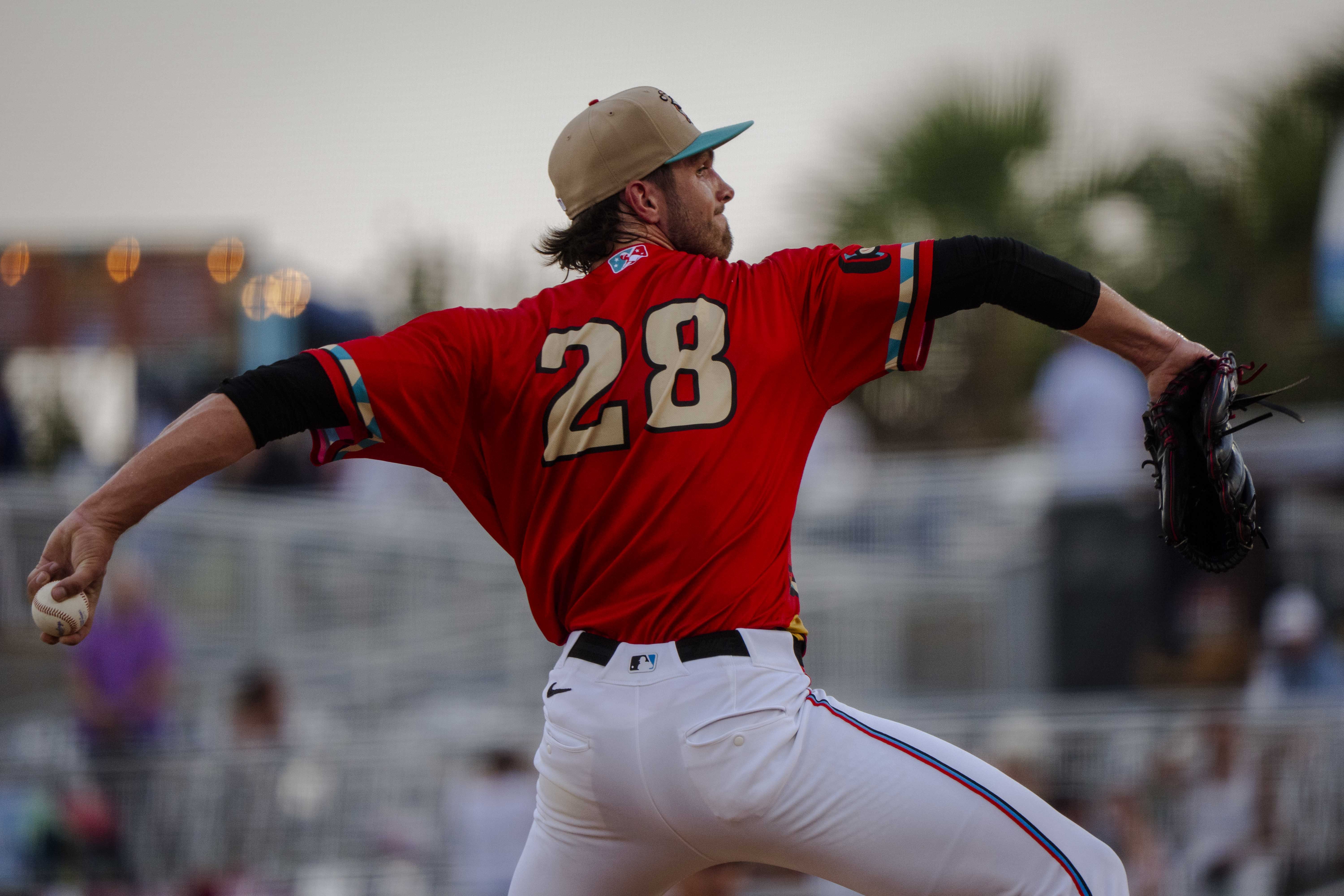 Compared to hitters, pitchers generally have more to prove at the big league level before being considered for contract extensions. In fact, there's never been a pre-debut deal for an arm. But Thomas White isn’t just another arm. Will the Marlins set a new precedent and get their star-studded lefty on paper at the tender age of 21? Here are some reasons why they should be attempting to sign him ASAP. White was drafted by the Marlins in 2023 in the competitive balance round already ahead of the curve. Regarded as the 24th-ranked prospect in that year’s MLB Draft, he came supplied with a plus fastball in the mid 90s, a curveball with spin rates in the 2700 rpm range and the blueprint for a late-fading changeup. He also enticed the Marlins with his intangibles, including great grades, a commitment to a top-tier collegiate program at Vanderbilt, and supreme maturity. What prevented White from being selected closer to the head of his class was uncertainty surrounding his future ability to fully iron out nascent control and repeatability while growing into a long 6’5” frame. 6he284.mp4 During his first full pro season, White had a 120/38 K/BB ratio in 96 frames across both single-A levels. The 19-year-old got called strikes at a 16% clip, attributing to a 30 CSW%, though he only threw first-pitch strikes at a 53% rate. This past season, the already-impressive prospect became a potential superstar. White came in to minor league spring training 30 pounds heavier than he was at the time of his draft selection. He showed what he could do with the extra muscle mass in one of his first side sessions. White was touching 97 while throwing at 80% effort when one of his coaches uttered, “Let it go.” White lit up the radar at over 100 mph. He morphed his breaking ball into a wipeout slider to generate more whiffs. Finally, his changeup also became firmer. This combination of higher velo and better stuff all while holding onto solid control made White even more unhittable. He had an amazing 2025 season, earning Double-A Pensacola MVP honors and ending at Triple-A contributing to the Jumbo Shrimp’s playoff run. With size, stuff, control, and maturity beyond his years, White is the prize of a rebuilt Marlins farm system and one of the best prospects Minor League Baseball has to offer. He's on the precipice of a potential major league debut this coming season. If White comes to the majors and dominates, he will quickly exceed his small-market team’s price range. Offering him an extension now may be Miami's only chance to push back his free agency. Signing White would reinforce the Marlins’ commitment to breeding in-house talent, rewarding success, and keeping young players in Miami. It would stifle the stigma that the club mortgages assets once they reach a certain service-time threshold. An extension would give Miami a rotational anchor from the left side, which they lacked throughout the last two losing seasons. Negotiating with Scott Boras is always a chore—he is notorious for getting his clients top dollar as dictated by the open market. In this case, perhaps he would be intrigued by the opportunity to venture into uncharted territory and secure generational wealth for White when he's only a few months above the legal drinking age. A good starting point for a potential White deal would be Hunter Greene. Shortly after embarking on his second season at the MLB level in 2023, he inked a six-year deal (including a club option) worth $53 million guaranteed and $95 million if all performance incentives are met. A key consideration for the Marlins would be securing a second club option, stretching their control of White through 2033. It's been a busy year at the bargaining table for the Marlins, discussing extensions with Kyle Stowers and most recently Eury Pérez, but to no avail. Although those ascending stars are important future building blocks themselves, they need to prioritize White.
 -
Compared to hitters, pitchers generally have more to prove at the big league level before being considered for contract extensions. In fact, there's never been a pre-debut deal for an arm. But Thomas White isn’t just another arm. Will the Marlins set a new precedent and get their star-studded lefty on paper at the tender age of 21? Here are some reasons why they should be attempting to sign him ASAP. White was drafted by the Marlins in 2023 in the competitive balance round already ahead of the curve. Regarded as the 24th-ranked prospect in that year’s MLB Draft, he came supplied with a plus fastball in the mid 90s, a curveball with spin rates in the 2700 rpm range and the blueprint for a late-fading changeup. He also enticed the Marlins with his intangibles, including great grades, a commitment to a top-tier collegiate program at Vanderbilt, and supreme maturity. What prevented White from being selected closer to the head of his class was uncertainty surrounding his future ability to fully iron out nascent control and repeatability while growing into a long 6’5” frame. 6he284.mp4 During his first full pro season, White had a 120/38 K/BB ratio in 96 frames across both single-A levels. The 19-year-old got called strikes at a 16% clip, attributing to a 30 CSW%, though he only threw first-pitch strikes at a 53% rate. This past season, the already-impressive prospect became a potential superstar. White came in to minor league spring training 30 pounds heavier than he was at the time of his draft selection. He showed what he could do with the extra muscle mass in one of his first side sessions. White was touching 97 while throwing at 80% effort when one of his coaches uttered, “Let it go.” White lit up the radar at over 100 mph. He morphed his breaking ball into a wipeout slider to generate more whiffs. Finally, his changeup also became firmer. This combination of higher velo and better stuff all while holding onto solid control made White even more unhittable. He had an amazing 2025 season, earning Double-A Pensacola MVP honors and ending at Triple-A contributing to the Jumbo Shrimp’s playoff run. With size, stuff, control, and maturity beyond his years, White is the prize of a rebuilt Marlins farm system and one of the best prospects Minor League Baseball has to offer. He's on the precipice of a potential major league debut this coming season. If White comes to the majors and dominates, he will quickly exceed his small-market team’s price range. Offering him an extension now may be Miami's only chance to push back his free agency. Signing White would reinforce the Marlins’ commitment to breeding in-house talent, rewarding success, and keeping young players in Miami. It would stifle the stigma that the club mortgages assets once they reach a certain service-time threshold. An extension would give Miami a rotational anchor from the left side, which they lacked throughout the last two losing seasons. Negotiating with Scott Boras is always a chore—he is notorious for getting his clients top dollar as dictated by the open market. In this case, perhaps he would be intrigued by the opportunity to venture into uncharted territory and secure generational wealth for White when he's only a few months above the legal drinking age. A good starting point for a potential White deal would be Hunter Greene. Shortly after embarking on his second season at the MLB level in 2023, he inked a six-year deal (including a club option) worth $53 million guaranteed and $95 million if all performance incentives are met. A key consideration for the Marlins would be securing a second club option, stretching their control of White through 2033. It's been a busy year at the bargaining table for the Marlins, discussing extensions with Kyle Stowers and most recently Eury Pérez, but to no avail. Although those ascending stars are important future building blocks themselves, they need to prioritize White. View full article
-
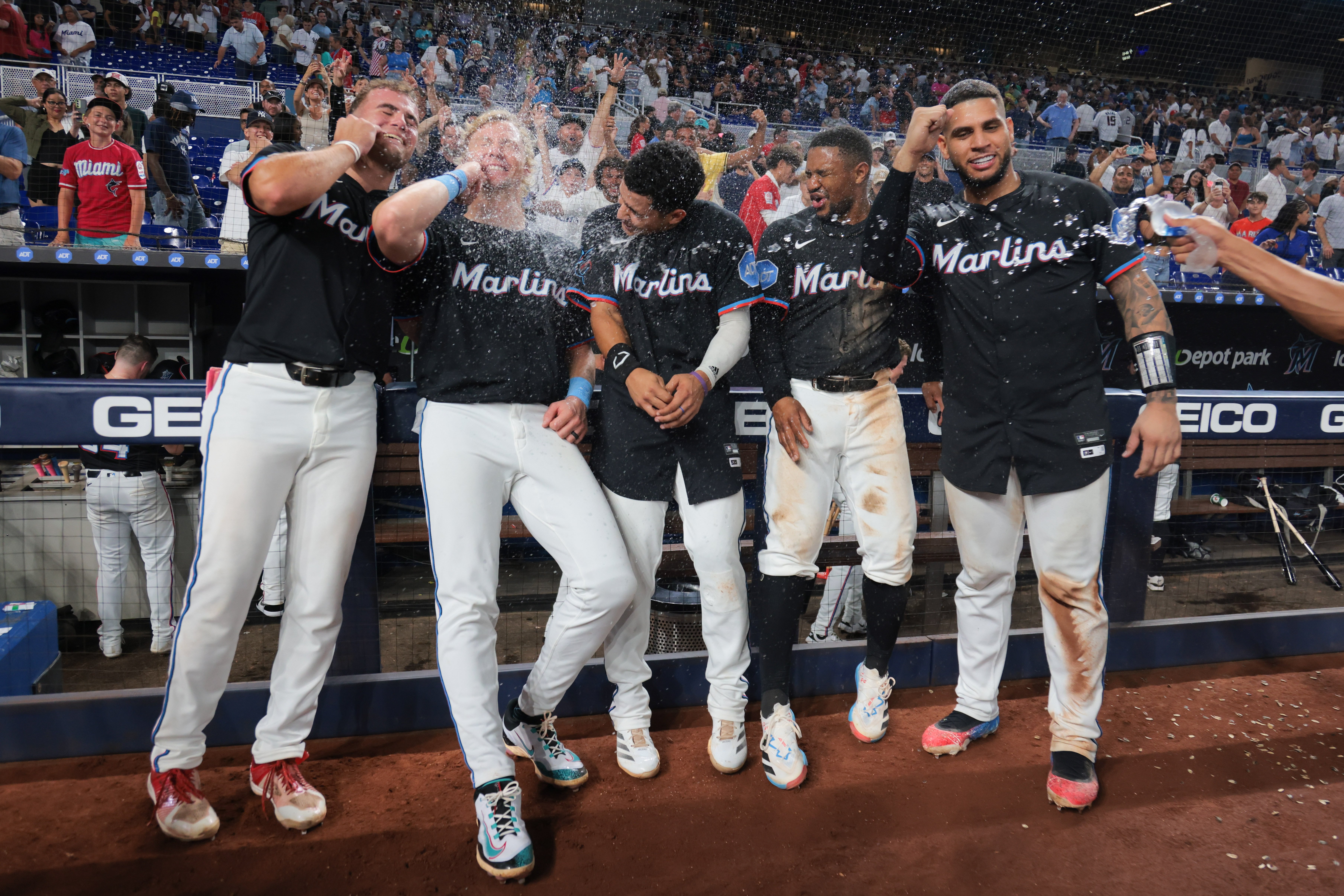 Summer has ended and October has arrived. As leaves start to fall, the proverbial final leaf has unfortunately fallen on the Marlins’ 2025 season. But although they are not participating in the playoffs, the dog days of summer were not nearly as arduous as some expected them to be for Miami and Marlins fans. The team stayed competitive until the very end. We surveyed our staff as well as our SuperSubs regarding who and what excited them most within this year, the 33rd season in franchise history. Each staffer and SuperSub vote was weighted equally. Below are the winners of the 2025 FOF Awards. Hitter of the Year: OF Kyle Stowers (90.6%) “A team long in-need of a reliable long-ball hitter finally has one. Much like the Marlins writ large, Kyle Stowers far surpassed all measurable expectations. That he ended his season in the statistical company of NL East powerhouse hitters Kyle Schwarber, Juan Soto, and Pete Alonso suggests Stowers might have reached offensive heights similar to theirs if not for injury.” — Alec Chao (@xiaochi_chao) Part of a midseason trade in 2024 that sent Trevor Rogers to the Baltimore Orioles, Stowers stepped into his first full major league season in 2025 with something to prove after he struggled mightily in his first 50 games with the Marlins. From the very start of the season, Stowers was an offensive force. In March and April, he slashed .323/.396/.510. On the final day of that span, he slammed two home runs, one of his three multi-home run games of the season. As the season progressed, Stowers didn’t slow down much. He was front and center for some of the team’s biggest moments, including two walk-off home runs. The only variable that was able to slow Stowers was an oblique injury that cost him the final quarter of the season. Despite that, Stowers collected 3.6 bWAR, making him the ninth outfielder in franchise history to record that feat in a single season. Some of the names he joined: Sheffield, Floyd, Stanton and Yelich. Stowers accomplished the feat in 117 games, a feat only bested by Stanton in 2015 (74 games). The Marlins’ All-Star representative was third-best among NL outfielders with a 149 wRC+ (min. 200 PAs). Stowers broke out in a big way, proving his prospect pedigree was no fluke. Not yet arbitration eligible, the 27-year-old should be a mainstay in the Marlins’ lineup as their competitive window fully opens. Pitcher of the Year: RHP Edward Cabrera (59.4%) “It finally feels like he’s got the walks under control to go along with his arsenal that has teased Marlins fans for so long.” —Casey Marika (@CaseyMarika) Since he was signed as an international free agent in 2015, Cabrera’s potential stemming from good size and fantastic stuff has never been questioned. Unfortunately, in multiple ways, his consistency has always been an issue. Whether it be in his ability to stay in the strike zone or in his ability to stay on the field, Cabrera has struggled mightily. However, through several different regime changes dating all the way back to Dan Jennings sitting in the GM seat, the Marlins have remained committed to harnessing his talent. Finally, in 2025, Cabrera’s on-field output validated their patience. Things started rocky for Cabrera in April. Through his first five starts, Cabrera had a 6.29 ERA (4.90 FIP) via a 24/12 K/BB. On May 10, though, Cabrera began to settle in. He didn’t dazzle with strikeouts that day, but rather lived inside the strike zone, challenging hitters with stuff that channeled Kenny DeNunez and simply said, “here it is, I dare you to hit it.” Forty-nine of Cabrera’s 79 pitches landed inside the zone. This would become a theme for Cabrera for the rest of the season. And it worked to his advantage. Over his next 10 starts before the All-Star break, Cabrera held down a 2.54 ERA (3.04 FIP) in 52 innings. His overall zone percentage over that span was 50.8 and he garnered swings on 60.1% of those pitches. His swinging strike percentage was 13.8%. In the second half, Cabrera ticked up even more. With his zone percentage hovering right at 50%, Cabrera garnered a 14% whiff rate over his final 55 ⅔, allotting him a 3.42 ERA and 64/18 K/BB. Overall, Cabrera threw 50.7% of his pitches in the strike zone, up more than 4% from 2024. Being more in the strike zone especially early in counts meant more protective hitters which equated to more chase. His CSW% jumped from 27.7% to 30.7% and his whiff rate from 11.9% to 12.6%. Seemingly the biggest catalyst for Cabrera’s success was a retooled arsenal. He de-emphasized his four-seam fastball in favor of his two-seamer, which he used 20.6% of the time. Immediately, the Cabrera sinker was a huge difference-maker. He could theoretically throw the pitch for strikes whenever he needed to. It landed in the zone 63.7% of the time. Secondly, Cabrera incorporated a slider which he threw at a 17.3% rate. It was more of a change-of-pace offering, but it gave hitters more to think about than just his patented fastball/changeup combo from years past. Overall, Cabrera was much less reliant on his highest-effort pitch, his changeup—his usage of it dropped from 33% to 26%. It is a credit to Cabrera for remaining coachable through a wide variety and long bouts of previous adversity. This newest version looked fearsome to opposing batters. Cabrera did face more challenges in 2025 in terms of his health. He missed time on two separate occasions; once at the start of the season due to a blister he incurred during spring training, and most of September was lost due to a right elbow sprain. The 27-year-old remains under club control for three more seasons. His solid 2025 is projected to garner him $3.7 million in arbitration. Rookie of the Year: OF Jakob Marsee (59.4%) “With how many league-wide statistical droughts he ended—how many Marlins franchise records he matched—in his first 13 games, Jakob Marsee easily earned Marlins Rookie of the Year honors in his first two weeks as a major leaguer. Notwithstanding his stellar offensive numbers, Marsee’s early defensive showings in CF similarly breed confidence in his ability to contribute on both sides of the ball in his first full-season in 2026.” —Alec Chao (@xiaochi_chao) Thought to be a relatively minor piece at the time he was traded to the Marlins at the deadline last season, Marsee has become a legitimate building block. A sixth-round selection by San Diego in 2022, Marsee flew threw the minors with both of his organizations, making in to Triple A with the Marlins last season. Wherever he’s played, Marsee has always shown a great eye at the plate. Coming into this season, his career OBP sat at .373. In a more extended look against the most advanced pitching the minor leagues have to offer this year, Marsee not only kept that trend going, posting a .379 OBP courtesy of a 15.9% walk rate. He struck out a lowly 18.9% of the time, the best marker he’s posted since 2023 at High-A. Marsee didn’t stop at collecting a single base after dropping the bat. As a Jumbo Shrimp, the 6’, 180-pounder touched them all 14 times. Even more impressive was the plus speed Marsee exhibited, showing the ability to turn anything into at least a double. Despite spending just 98 games in Jacksonville, his 47 stolen bases led the team and the International League. After the trade of Jesús Sánchez to Houston, Marsee immediately filled the void. The Marlins promoted Marsee to the majors on August 1 following a minor league career that lasted just 395 games. In his first MLB game, Marsee put in summation exactly what he can provide—he doubled, walked three times, and scored two runs in a thrilling Marlins win. Overall, in 55 games, Marsee slashed a very impressive .292/.363/.478 with five home runs and 14 stolen bases. A supremely patient hitter with a great approach, Marsee waits out opposing pitchers and forces them into the strike zone, allowing him to make up for average bat speed. His quiet setup from the back of the batters box allows him to let the ball get deep after which he can spray it to all fields. Marsee has consistently found success against fellow lefties, including a .324/.370/.554 MLB slash line in nearly equal splits. He’s a terror on the bases capable of 20-plus steals annually. His solid range (4 OAA over the small MLB sample) and above-average throwing arm will allow him to stick in the corner outfield spots. After a fantastic first impression, Marsee will be locked into an everyday starting lineup spot next season. Move of the Year: RHP Ronny Henriquez claimed off waivers from Minnesota Twins (53.1%) “Miami claimed Henriquez off waivers in exchange for virtually nothing, making the move a clear steal. In his first season with the club, Henriquez posted a 7–1 record and accumulated 2.3 bWAR over 73 innings pitched—nearly all in high-leverage situations. He recorded strikeouts in 60 separate appearances, setting a new Marlins single-season record.” — Isaac Azout (@IsaacAzout) Following the trade of Tanner Scott last season and the losses of Andrew Nardi and Declan Cronin to injury, Miami’s bullpen could have collapsed. One of the first moves the Marlins made in 2025 was claiming Henriquez off waivers from the Twins. He came to the Marlins having thrown to a solid 3.44 ERA in Triple-A in 2024, which he matriculated into a 3.26 ERA in a small sample of 19.1 IP with Minnesota. Henriquez did not come with any remaining minor league options, so it was up to him to either impress the Marlins’ brass in spring training or be exposed to waivers once again. Statistically, Henriquez did not have a good spring by any means as he allowed three home runs in his seven innings pitched. However, the Marlins saw past those numbers and stayed hopeful that there was a solid floor in Henriquez’s fiery velo and plus slider. During the spring, they also taught him how to throw a sweeper, which became his second-most-used pitch during the 2025 campaign. Suddenly a much more complete pitcher, Henriquez was spectacular for the Marlins for the entirety of the season, much more than they could’ve hoped for, especially as he learned how to adapt to a new organization. With a 2.22 ERA (3.15 FIP) and daunting 32% K rate, he was one of the best relievers in all of baseball. His 36% whiff rate and 35% chase rate graded in the 97th and 98th percentiles league-wide. His average fastball velo of 96.6 mph ranked in the 85th percentile. Henriquez occasionally struggled with overall command. His walk rate landed at 8.9% and he was at times susceptible to having his power stuff used against him. He allowed hard contact at a 42.5% rate. The 25-year-old could become an even more prominent fixture in the Marlins’ bullpen in 2026. He was a spectacular find by Peter Bendix and company. Game of the Year: August 1 vs. New York Yankees (73.4%) “Because of how wild of a back and forth it was! That series sweep was such a high point in the year.” —Casey Marika (@CaseyMarika) Always one of the most highly anticipated series of the season, the Marlins were in the midst of a 6-3 stretch when the Yankees came to town. New York was also riding high, fresh off a sweep against the Tampa Bay Rays and looking to further narrow the gap to the top of the AL East. Janson Junk, a great find for Miami as a minor league signing, drew the start. After a perfect first three innings, Junk ran into trouble with the Yankees’ high-powered lineup in the fourth and fifth frames. Highlighted by a Giancarlo Stanton homer and RBI hits by Jasson Dominguez and Cody Bellinger, New York put up back-to-back three spots to get into the Marlins’ bullpen. The Marlins, courtesy of a Javier Sanoja home run and and Liam Hicks pinch-hit single, fought back in their half of the fifth, plating four only to see the Yankees post another three runs in the top of the seventh. Down five with nine outs to play with, Miami at this point had a 2.8% chance to win the game. They needed a huge spark. What followed was one of the Marlins’ best offensive innings of the season. Kyle Stowers hit a grand slam (his second of the season), Sanoja hit his second home run of the game, and Augustin Ramirez recorded an RBI single to put the Marlins ahead 10-9 going into the eighth inning. Miami’s lead was very short lived though, as Anthony Volpe, the next Yankee batter, tied the game with a homer of his own. Volpe came in clutch for New York again in the ninth, recording an RBI double to put his team back up by two. Down to their last two outs, Sanoja once again served as the spark plug for Miami. The super-utility player recorded his third hit of the game with a single to left field, then got into scoring position via a Jakob Marsee walk. It was then Xavier Edwards’ turn to play the hero. Coming off a .324/.361/.471 month of July, X didn't disappoint. His single to right field easily plated Sanoja then got under the glove of José Caballero, tying the game once again. Edwards advanced to third on the play, putting the winning run 90 feet away. Ramirez, known for his huge power and massive exit velocities, then stepped to the plate and hit a ball 39 mph off the end of his bat—the equivalent of a swinging bunt. Edwards ran on contact and slid into home plate head first safe, exhilarating a sellout crowd. The 13-run total tied a season-high and was the most Miami has scored at loanDepot park since 2023. The wild win showcased the tenacity and never-say-die attitude the Marlins played with all season. It also set the tone for a series sweep of the Yankees, their first in franchise history. The game was an instant classic. Prospect of the Year: LHP Thomas White (33.3%) The best left-handed pitcher in Minor League Baseball just keeps getting better. Despite posting a sub-3 ERA and 76/21 K/BB at the level last season, Miami took the cautious route with their top prospect and future ace, sending him back to Beloit to start the year. At the end of June, White got the call to Pensacola. In 10 games with Pensacola, White was virtually untouchable. Over 45.1 IP, he held down a ludicrous 1.59 ERA and 75/24 K/BB. A major highlight on the season for Thomas was his outing on July 26 in which he allowed just two hits, didn’t walk a batter, and struck out a career-high 14 over five innings. As good as the start looked both live and on paper, White told Fish On First last month there was room for him to be even better. e6f98e9a-c532e27c-bda4700a-csvm-diamondgcp-asset_1280x720_59_4000K.mp4 Immediately following that outing, the Marlins loosened the reins on their top prospect. After previously maxing out at 86 pitches, White averaged 93 pitches per start during August and September. He excelled with the increased workload and even earned an additional promotion to contribute to the Jacksonville Jumbo Shrimp’s playoff run. Against the highest level of competition in the minors in playoff settings, White threw 10 ⅓ innings, struck out 17 and walked 10, giving Duval County a glimpse of what they can expect next season. It is well within the realm of possibility we see White make his MLB debut sometime in 2026. The 6’5” southpaw is the total package. On top of elite raw stuff, he stays repeatable with his delivery and diligently studies the game, continuing to optimize his arsenal. Maturity is also on his side, as the 21-year-old is unfazed by failure or decisions beyond his control. Pitchers like this don’t come along often. Well ahead of schedule with an unquestioned MLB rotational floor and the ceiling of a dominant ace, it would behoove the Marlins to start exploring a long-term deal.
-
- 3
-

-
- kyle stowers
- edward cabrera
- (and 3 more)
-
Summer has ended and October has arrived. As leaves start to fall, the proverbial final leaf has unfortunately fallen on the Marlins’ 2025 season. But although they are not participating in the playoffs, the dog days of summer were not nearly as arduous as some expected them to be for Miami and Marlins fans. The team stayed competitive until the very end. We surveyed our staff as well as our SuperSubs regarding who and what excited them most within this year, the 33rd season in franchise history. Each staffer and SuperSub vote was weighted equally. Below are the winners of the 2025 FOF Awards. Hitter of the Year: OF Kyle Stowers (90.6%) “A team long in-need of a reliable long-ball hitter finally has one. Much like the Marlins writ large, Kyle Stowers far surpassed all measurable expectations. That he ended his season in the statistical company of NL East powerhouse hitters Kyle Schwarber, Juan Soto, and Pete Alonso suggests Stowers might have reached offensive heights similar to theirs if not for injury.” — Alec Chao (@xiaochi_chao) Part of a midseason trade in 2024 that sent Trevor Rogers to the Baltimore Orioles, Stowers stepped into his first full major league season in 2025 with something to prove after he struggled mightily in his first 50 games with the Marlins. From the very start of the season, Stowers was an offensive force. In March and April, he slashed .323/.396/.510. On the final day of that span, he slammed two home runs, one of his three multi-home run games of the season. As the season progressed, Stowers didn’t slow down much. He was front and center for some of the team’s biggest moments, including two walk-off home runs. The only variable that was able to slow Stowers was an oblique injury that cost him the final quarter of the season. Despite that, Stowers collected 3.6 bWAR, making him the ninth outfielder in franchise history to record that feat in a single season. Some of the names he joined: Sheffield, Floyd, Stanton and Yelich. Stowers accomplished the feat in 117 games, a feat only bested by Stanton in 2015 (74 games). The Marlins’ All-Star representative was third-best among NL outfielders with a 149 wRC+ (min. 200 PAs). Stowers broke out in a big way, proving his prospect pedigree was no fluke. Not yet arbitration eligible, the 27-year-old should be a mainstay in the Marlins’ lineup as their competitive window fully opens. Pitcher of the Year: RHP Edward Cabrera (59.4%) “It finally feels like he’s got the walks under control to go along with his arsenal that has teased Marlins fans for so long.” —Casey Marika (@CaseyMarika) Since he was signed as an international free agent in 2015, Cabrera’s potential stemming from good size and fantastic stuff has never been questioned. Unfortunately, in multiple ways, his consistency has always been an issue. Whether it be in his ability to stay in the strike zone or in his ability to stay on the field, Cabrera has struggled mightily. However, through several different regime changes dating all the way back to Dan Jennings sitting in the GM seat, the Marlins have remained committed to harnessing his talent. Finally, in 2025, Cabrera’s on-field output validated their patience. Things started rocky for Cabrera in April. Through his first five starts, Cabrera had a 6.29 ERA (4.90 FIP) via a 24/12 K/BB. On May 10, though, Cabrera began to settle in. He didn’t dazzle with strikeouts that day, but rather lived inside the strike zone, challenging hitters with stuff that channeled Kenny DeNunez and simply said, “here it is, I dare you to hit it.” Forty-nine of Cabrera’s 79 pitches landed inside the zone. This would become a theme for Cabrera for the rest of the season. And it worked to his advantage. Over his next 10 starts before the All-Star break, Cabrera held down a 2.54 ERA (3.04 FIP) in 52 innings. His overall zone percentage over that span was 50.8 and he garnered swings on 60.1% of those pitches. His swinging strike percentage was 13.8%. In the second half, Cabrera ticked up even more. With his zone percentage hovering right at 50%, Cabrera garnered a 14% whiff rate over his final 55 ⅔, allotting him a 3.42 ERA and 64/18 K/BB. Overall, Cabrera threw 50.7% of his pitches in the strike zone, up more than 4% from 2024. Being more in the strike zone especially early in counts meant more protective hitters which equated to more chase. His CSW% jumped from 27.7% to 30.7% and his whiff rate from 11.9% to 12.6%. Seemingly the biggest catalyst for Cabrera’s success was a retooled arsenal. He de-emphasized his four-seam fastball in favor of his two-seamer, which he used 20.6% of the time. Immediately, the Cabrera sinker was a huge difference-maker. He could theoretically throw the pitch for strikes whenever he needed to. It landed in the zone 63.7% of the time. Secondly, Cabrera incorporated a slider which he threw at a 17.3% rate. It was more of a change-of-pace offering, but it gave hitters more to think about than just his patented fastball/changeup combo from years past. Overall, Cabrera was much less reliant on his highest-effort pitch, his changeup—his usage of it dropped from 33% to 26%. It is a credit to Cabrera for remaining coachable through a wide variety and long bouts of previous adversity. This newest version looked fearsome to opposing batters. Cabrera did face more challenges in 2025 in terms of his health. He missed time on two separate occasions; once at the start of the season due to a blister he incurred during spring training, and most of September was lost due to a right elbow sprain. The 27-year-old remains under club control for three more seasons. His solid 2025 is projected to garner him $3.7 million in arbitration. Rookie of the Year: OF Jakob Marsee (59.4%) “With how many league-wide statistical droughts he ended—how many Marlins franchise records he matched—in his first 13 games, Jakob Marsee easily earned Marlins Rookie of the Year honors in his first two weeks as a major leaguer. Notwithstanding his stellar offensive numbers, Marsee’s early defensive showings in CF similarly breed confidence in his ability to contribute on both sides of the ball in his first full-season in 2026.” —Alec Chao (@xiaochi_chao) Thought to be a relatively minor piece at the time he was traded to the Marlins at the deadline last season, Marsee has become a legitimate building block. A sixth-round selection by San Diego in 2022, Marsee flew threw the minors with both of his organizations, making in to Triple A with the Marlins last season. Wherever he’s played, Marsee has always shown a great eye at the plate. Coming into this season, his career OBP sat at .373. In a more extended look against the most advanced pitching the minor leagues have to offer this year, Marsee not only kept that trend going, posting a .379 OBP courtesy of a 15.9% walk rate. He struck out a lowly 18.9% of the time, the best marker he’s posted since 2023 at High-A. Marsee didn’t stop at collecting a single base after dropping the bat. As a Jumbo Shrimp, the 6’, 180-pounder touched them all 14 times. Even more impressive was the plus speed Marsee exhibited, showing the ability to turn anything into at least a double. Despite spending just 98 games in Jacksonville, his 47 stolen bases led the team and the International League. After the trade of Jesús Sánchez to Houston, Marsee immediately filled the void. The Marlins promoted Marsee to the majors on August 1 following a minor league career that lasted just 395 games. In his first MLB game, Marsee put in summation exactly what he can provide—he doubled, walked three times, and scored two runs in a thrilling Marlins win. Overall, in 55 games, Marsee slashed a very impressive .292/.363/.478 with five home runs and 14 stolen bases. A supremely patient hitter with a great approach, Marsee waits out opposing pitchers and forces them into the strike zone, allowing him to make up for average bat speed. His quiet setup from the back of the batters box allows him to let the ball get deep after which he can spray it to all fields. Marsee has consistently found success against fellow lefties, including a .324/.370/.554 MLB slash line in nearly equal splits. He’s a terror on the bases capable of 20-plus steals annually. His solid range (4 OAA over the small MLB sample) and above-average throwing arm will allow him to stick in the corner outfield spots. After a fantastic first impression, Marsee will be locked into an everyday starting lineup spot next season. Move of the Year: RHP Ronny Henriquez claimed off waivers from Minnesota Twins (53.1%) “Miami claimed Henriquez off waivers in exchange for virtually nothing, making the move a clear steal. In his first season with the club, Henriquez posted a 7–1 record and accumulated 2.3 bWAR over 73 innings pitched—nearly all in high-leverage situations. He recorded strikeouts in 60 separate appearances, setting a new Marlins single-season record.” — Isaac Azout (@IsaacAzout) Following the trade of Tanner Scott last season and the losses of Andrew Nardi and Declan Cronin to injury, Miami’s bullpen could have collapsed. One of the first moves the Marlins made in 2025 was claiming Henriquez off waivers from the Twins. He came to the Marlins having thrown to a solid 3.44 ERA in Triple-A in 2024, which he matriculated into a 3.26 ERA in a small sample of 19.1 IP with Minnesota. Henriquez did not come with any remaining minor league options, so it was up to him to either impress the Marlins’ brass in spring training or be exposed to waivers once again. Statistically, Henriquez did not have a good spring by any means as he allowed three home runs in his seven innings pitched. However, the Marlins saw past those numbers and stayed hopeful that there was a solid floor in Henriquez’s fiery velo and plus slider. During the spring, they also taught him how to throw a sweeper, which became his second-most-used pitch during the 2025 campaign. Suddenly a much more complete pitcher, Henriquez was spectacular for the Marlins for the entirety of the season, much more than they could’ve hoped for, especially as he learned how to adapt to a new organization. With a 2.22 ERA (3.15 FIP) and daunting 32% K rate, he was one of the best relievers in all of baseball. His 36% whiff rate and 35% chase rate graded in the 97th and 98th percentiles league-wide. His average fastball velo of 96.6 mph ranked in the 85th percentile. Henriquez occasionally struggled with overall command. His walk rate landed at 8.9% and he was at times susceptible to having his power stuff used against him. He allowed hard contact at a 42.5% rate. The 25-year-old could become an even more prominent fixture in the Marlins’ bullpen in 2026. He was a spectacular find by Peter Bendix and company. Game of the Year: August 1 vs. New York Yankees (73.4%) “Because of how wild of a back and forth it was! That series sweep was such a high point in the year.” —Casey Marika (@CaseyMarika) Always one of the most highly anticipated series of the season, the Marlins were in the midst of a 6-3 stretch when the Yankees came to town. New York was also riding high, fresh off a sweep against the Tampa Bay Rays and looking to further narrow the gap to the top of the AL East. Janson Junk, a great find for Miami as a minor league signing, drew the start. After a perfect first three innings, Junk ran into trouble with the Yankees’ high-powered lineup in the fourth and fifth frames. Highlighted by a Giancarlo Stanton homer and RBI hits by Jasson Dominguez and Cody Bellinger, New York put up back-to-back three spots to get into the Marlins’ bullpen. The Marlins, courtesy of a Javier Sanoja home run and and Liam Hicks pinch-hit single, fought back in their half of the fifth, plating four only to see the Yankees post another three runs in the top of the seventh. Down five with nine outs to play with, Miami at this point had a 2.8% chance to win the game. They needed a huge spark. What followed was one of the Marlins’ best offensive innings of the season. Kyle Stowers hit a grand slam (his second of the season), Sanoja hit his second home run of the game, and Augustin Ramirez recorded an RBI single to put the Marlins ahead 10-9 going into the eighth inning. Miami’s lead was very short lived though, as Anthony Volpe, the next Yankee batter, tied the game with a homer of his own. Volpe came in clutch for New York again in the ninth, recording an RBI double to put his team back up by two. Down to their last two outs, Sanoja once again served as the spark plug for Miami. The super-utility player recorded his third hit of the game with a single to left field, then got into scoring position via a Jakob Marsee walk. It was then Xavier Edwards’ turn to play the hero. Coming off a .324/.361/.471 month of July, X didn't disappoint. His single to right field easily plated Sanoja then got under the glove of José Caballero, tying the game once again. Edwards advanced to third on the play, putting the winning run 90 feet away. Ramirez, known for his huge power and massive exit velocities, then stepped to the plate and hit a ball 39 mph off the end of his bat—the equivalent of a swinging bunt. Edwards ran on contact and slid into home plate head first safe, exhilarating a sellout crowd. The 13-run total tied a season-high and was the most Miami has scored at loanDepot park since 2023. The wild win showcased the tenacity and never-say-die attitude the Marlins played with all season. It also set the tone for a series sweep of the Yankees, their first in franchise history. The game was an instant classic. Prospect of the Year: LHP Thomas White (33.3%) The best left-handed pitcher in Minor League Baseball just keeps getting better. Despite posting a sub-3 ERA and 76/21 K/BB at the level last season, Miami took the cautious route with their top prospect and future ace, sending him back to Beloit to start the year. At the end of June, White got the call to Pensacola. In 10 games with Pensacola, White was virtually untouchable. Over 45.1 IP, he held down a ludicrous 1.59 ERA and 75/24 K/BB. A major highlight on the season for Thomas was his outing on July 26 in which he allowed just two hits, didn’t walk a batter, and struck out a career-high 14 over five innings. As good as the start looked both live and on paper, White told Fish On First last month there was room for him to be even better. e6f98e9a-c532e27c-bda4700a-csvm-diamondgcp-asset_1280x720_59_4000K.mp4 Immediately following that outing, the Marlins loosened the reins on their top prospect. After previously maxing out at 86 pitches, White averaged 93 pitches per start during August and September. He excelled with the increased workload and even earned an additional promotion to contribute to the Jacksonville Jumbo Shrimp’s playoff run. Against the highest level of competition in the minors in playoff settings, White threw 10 ⅓ innings, struck out 17 and walked 10, giving Duval County a glimpse of what they can expect next season. It is well within the realm of possibility we see White make his MLB debut sometime in 2026. The 6’5” southpaw is the total package. On top of elite raw stuff, he stays repeatable with his delivery and diligently studies the game, continuing to optimize his arsenal. Maturity is also on his side, as the 21-year-old is unfazed by failure or decisions beyond his control. Pitchers like this don’t come along often. Well ahead of schedule with an unquestioned MLB rotational floor and the ceiling of a dominant ace, it would behoove the Marlins to start exploring a long-term deal. View full article
-
Top 30 prospects: Updated Marlins list entering 2025-26 offseason
Alex Carver posted an article in FOF Prospects
 It's just a bit more satisfying when a farm system prominently features homegrown talent rather than relying on players who were acquired by selling off productive members of the major league roster. Initially, Peter Bendix revitalized the Miami Marlins' pipeline via trade, losing a lot of games in the process. The 2025 season was a significant turning point with more on-field success across all levels, heavily driven by former Marlins draft picks and international signings. At Fish On First, we rank only 30 prospects at a time, though there are dozens of others worth monitoring closely. Each player's previous ranking—as of September 8—is shown in parentheses. Click the hyperlink in a player's name to visit their prospect profile. FOF Top 30 as of October 3, 2025 LHP Thomas White (#1) C Joe Mack (#2) LHP Robby Snelling (#4) INF Aiva Arquette (#3) RHP Kevin Defrank (#6) INF/OF Andrew Salas (#5) OF Dillon Head (#8) OF Kemp Alderman (#15) SS Starlyn Caba (#7) OF Luis Cova (#12) OF Andrés Valor (#11) INF Maximo Acosta (#10) RHP Karson Milbrandt (#19) OF Cam Cannarella (#16) RHP Eliazar Dishmey (#20) OF PJ Morlando (#18) LHP Keyner Benitez (#14) RHP Noble Meyer (#13) OF Esmil Valencia (#25) OF Fenwick Trimble (unranked) RHP Josh White (unranked) RHP Josh Ekness (#23) 1B Deyvison De Los Santos (#17) INF Jared Serna (#21) RHP Nigel Belgrave (#27) INF Luis Arana (#30) RHP Liomar Martínez (unranked) INF Drew Faurot (unranked) C Ryan Ignoffo (unranked) OF Matthew Etzel (unranked) Removed since the previous update: RHP Adam Mazur (#9) graduated from prospect eligibility; INF Chase Jaworsky (#22), INF Anthony Abreu (#24), LHP Dax Fulton (#26), RHP Grant Shepardson (#28) and INF Carter Johnson (#29) are no longer ranked. Honorable mentions: RHP Pedro Montero, INF Payton Green, INF Steven Herrera and C Almen Tolentino. The next detailed update to the FOF Top 30 will be coming in late January (following the opening of the next international free agent signing period).
- 5 comments
-
- 2
-
-
- thomas white
- joe mack
- (and 8 more)
-
It's just a bit more satisfying when a farm system prominently features homegrown talent rather than relying on players who were acquired by selling off productive members of the major league roster. Initially, Peter Bendix revitalized the Miami Marlins' pipeline via trade, losing a lot of games in the process. The 2025 season was a significant turning point with more on-field success across all levels, heavily driven by former Marlins draft picks and international signings. At Fish On First, we rank only 30 prospects at a time, though there are dozens of others worth monitoring closely. Each player's previous ranking—as of September 8—is shown in parentheses. Click the hyperlink in a player's name to visit their prospect profile. FOF Top 30 as of October 3, 2025 LHP Thomas White (#1) C Joe Mack (#2) LHP Robby Snelling (#4) INF Aiva Arquette (#3) RHP Kevin Defrank (#6) INF/OF Andrew Salas (#5) OF Dillon Head (#8) OF Kemp Alderman (#15) SS Starlyn Caba (#7) OF Luis Cova (#12) OF Andrés Valor (#11) INF Maximo Acosta (#10) RHP Karson Milbrandt (#19) OF Cam Cannarella (#16) RHP Eliazar Dishmey (#20) OF PJ Morlando (#18) LHP Keyner Benitez (#14) RHP Noble Meyer (#13) OF Esmil Valencia (#25) OF Fenwick Trimble (unranked) RHP Josh White (unranked) RHP Josh Ekness (#23) 1B Deyvison De Los Santos (#17) INF Jared Serna (#21) RHP Nigel Belgrave (#27) INF Luis Arana (#30) RHP Liomar Martínez (unranked) INF Drew Faurot (unranked) C Ryan Ignoffo (unranked) OF Matthew Etzel (unranked) Removed since the previous update: RHP Adam Mazur (#9) graduated from prospect eligibility; INF Chase Jaworsky (#22), INF Anthony Abreu (#24), LHP Dax Fulton (#26), RHP Grant Shepardson (#28) and INF Carter Johnson (#29) are no longer ranked. Honorable mentions: RHP Pedro Montero, INF Payton Green, INF Steven Herrera and C Almen Tolentino. The next detailed update to the FOF Top 30 will be coming in late January (following the opening of the next international free agent signing period). View full article
-
Marlins top prospect Thomas White struck out 14 of 17 batters faced on July 26, even though the quality of his stuff was way below normal. White tells Swimming Upstream about the importance of pitch execution.
-
Marlins top prospect Thomas White struck out 14 of 17 batters faced on July 26, even though the quality of his stuff was way below normal. White tells Swimming Upstream about the importance of pitch execution. View full video
-
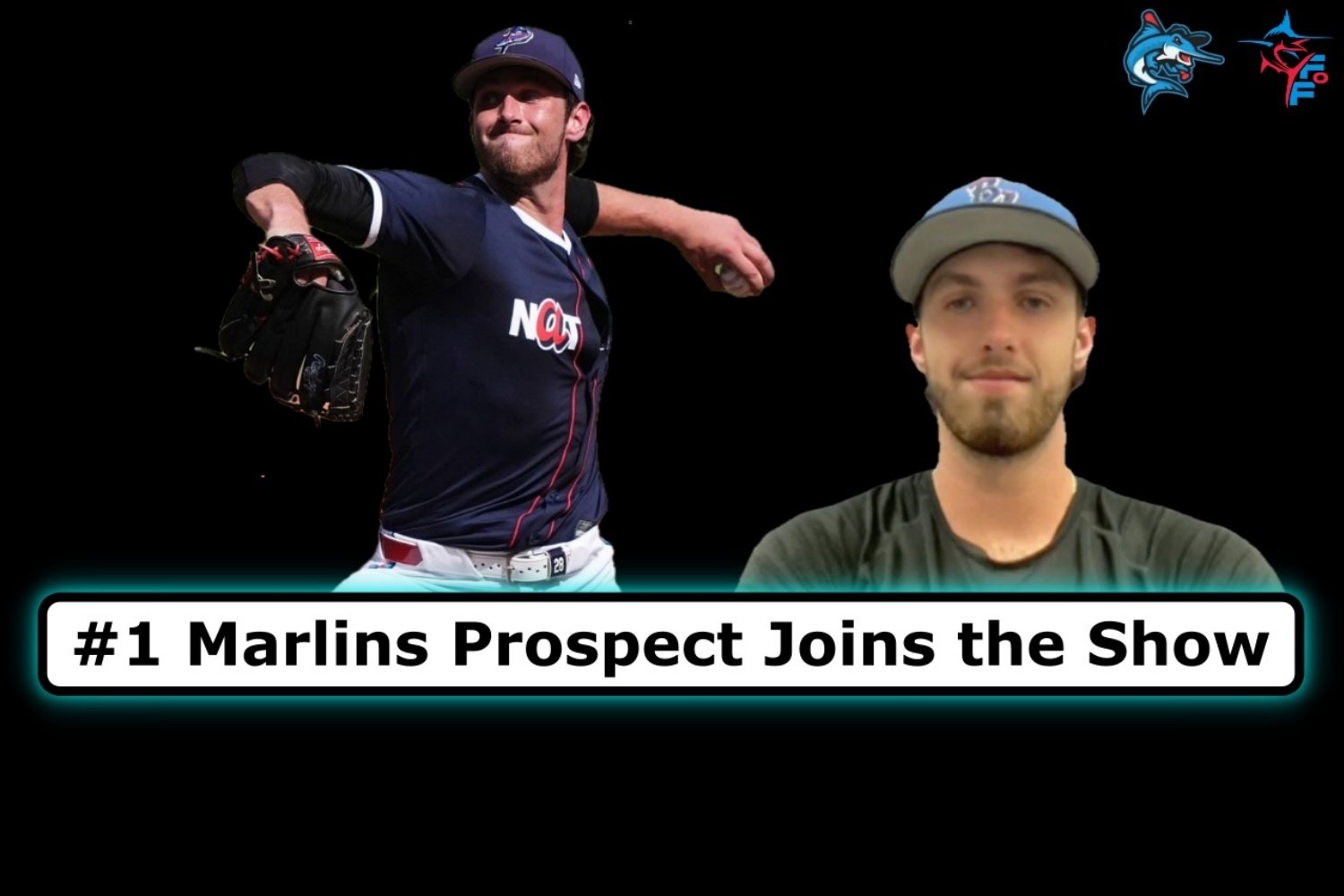 A very special guest joins Alex Carver and Isaac Azout on Swimming Upstream: Miami Marlins left-hander Thomas White. The consensus top prospect in the Marlins organization since early 2024, White just keeps getting better. This conversation touches on the evolution of his pitch mix, the increasingly analytical approach that the Marlins have applied to player development, relationships with his teammates, his recent 14-strikeout game and more. Find Swimming Upstream on the Fish On First YouTube channel, our new-look Apple Podcasts channel and wherever else you get your pods. FOF's audio programming also includes Fish On First LIVE, Fish Unfiltered, Big Fish Small Pod and more. During a 2025 season that's been split between High-A Beloit and Double-A Pensacola, the 20-year-old lefty has made 18 starts, posting a 2.27 ERA, 2.13 FIP and .189 BAA. His 37.5% strikeout rate is third-highest among all minor leaguers with a minimum of 70 innings pitched. For the second consecutive year, White represented the Marlins at the Futures Game. Both Baseball America and MLB Pipeline currently rank White 21st overall on their respective MLB Top 100 prospects lists. The last Marlins prospect to be so highly regarded by national outlets was Eury Pérez in 2023. White is a virtual lock to participate in 2026 Marlins big league spring training as a non-roster invitee. Health permitting, he will make his MLB debut before the end of that season. Follow Alex (@marlinsminors), Isaac (@IsaacAzout) and Fish On First (@FishOnFirst) on Twitter. Join the Marlins Discord server! Complete Miami Marlins coverage here at FishOnFirst.com.
 -
Swimming Upstream—Episode #67 A very special guest joins Alex Carver and Isaac Azout on Swimming Upstream: Miami Marlins left-hander Thomas White. The consensus top prospect in the Marlins organization since early 2024, White just keeps getting better. This conversation touches on the evolution of his pitch mix, the increasingly analytical approach that the Marlins have applied to player development, relationships with his teammates, his recent 14-strikeout game and more. Find Swimming Upstream on the Fish On First YouTube channel, our new-look Apple Podcasts channel and wherever else you get your pods. FOF's audio programming also includes Fish On First LIVE, Fish Unfiltered, Big Fish Small Pod and more. During a 2025 season that's been split between High-A Beloit and Double-A Pensacola, the 20-year-old lefty has made 18 starts, posting a 2.27 ERA, 2.13 FIP and .189 BAA. His 37.5% strikeout rate is third-highest among all minor leaguers with a minimum of 70 innings pitched. For the second consecutive year, White represented the Marlins at the Futures Game. Both Baseball America and MLB Pipeline currently rank White 21st overall on their respective MLB Top 100 prospects lists. The last Marlins prospect to be so highly regarded by national outlets was Eury Pérez in 2023. White is a virtual lock to participate in 2026 Marlins big league spring training as a non-roster invitee. Health permitting, he will make his MLB debut before the end of that season. Follow Alex (@marlinsminors), Isaac (@IsaacAzout) and Fish On First (@FishOnFirst) on Twitter. Join the Marlins Discord server! Complete Miami Marlins coverage here at FishOnFirst.com. View full article
-
 The venue now known as loanDepot park is deep into its 14th season serving as the home of the Miami Marlins. When the City of Miami and Miami-Dade County received approval for public funds to cover over $510 million—approximately 80.3%—of the total cost to build it, the primary objective was keeping a Major League Baseball franchise in South Florida. All parties involved also envisioned that the ballpark would be a vibrant, indispensable community hub. That part still has not come to fruition...yet. However, the process of improving the area directly adjacent to the stadium is underway. Astute loanDepot park visitors will notice green-lined fencing around certain property surrounding the West Plaza. The reason why: this has become city-owned land. Starting in August 2021, the city began to seek out property in the area, remaining active in that regard through at least May 2023. According to public records, the City of Miami has purchased six properties, all of them on NW 5th Street or NW 6th Street between NW 16th Avenue and NW 17th Avenue. Each of the parcels were previously single-family homes or empty lots, and they were acquired either through outright purchase or eminent domain. Eminent domain refers to the government’s right to inherit private property through public use, even without the owner’s consent but through just compensation. Official public records obtained through the City of Miami state the following: 1649 NW 5th St and 1651 NW 5th St were purchased on 8/2/2021 1641 NW 5th St was purchased on 8/31/2021 1628 NW 6th St was acquired via eminent domain taking on 8/14/2022 1653 NW 5th St was acquired via eminent domain taking on 2/3/2023 1644 NW 6th St was purchased on 5/25/2023 These properties are represented by stars on the map below: The city has sought out land just west of the park’s main entrance for “park land development.” By definition, in Florida, park land development refers to the process of designing, gaining approval for, and constructing a park or recreational area, which must comply with local zoning, land use plans, and regulations to create public or private facilities for recreation. According to a City of Miami spokesperson, the details regarding the development of the land are still being finalized. The upcoming construction of the site will likely coincide with the opening of Miami Live!, a privately-funded project to be located on the West Plaza. The Marlins have partnered with The Cordish Companies to make loanDepot park a more alluring destination with indoor-outdoor dining and entertainment spaces. It is expected to cut its tape in early 2026, coinciding with the World Baseball Classic. In addition to the space adjacent to loanDepot park, the City of Miami is also undertaking a much larger project named Miami Freedom Park, a space near Miami International Airport, for similar reasons. That space promises a new stadium for the Inter Miami CF soccer franchise and is expected to open in the spring of 2026.
 -
The venue now known as loanDepot park is deep into its 14th season serving as the home of the Miami Marlins. When the City of Miami and Miami-Dade County received approval for public funds to cover over $510 million—approximately 80.3%—of the total cost to build it, the primary objective was keeping a Major League Baseball franchise in South Florida. All parties involved also envisioned that the ballpark would be a vibrant, indispensable community hub. That part still has not come to fruition...yet. However, the process of improving the area directly adjacent to the stadium is underway. Astute loanDepot park visitors will notice green-lined fencing around certain property surrounding the West Plaza. The reason why: this has become city-owned land. Starting in August 2021, the city began to seek out property in the area, remaining active in that regard through at least May 2023. According to public records, the City of Miami has purchased six properties, all of them on NW 5th Street or NW 6th Street between NW 16th Avenue and NW 17th Avenue. Each of the parcels were previously single-family homes or empty lots, and they were acquired either through outright purchase or eminent domain. Eminent domain refers to the government’s right to inherit private property through public use, even without the owner’s consent but through just compensation. Official public records obtained through the City of Miami state the following: 1649 NW 5th St and 1651 NW 5th St were purchased on 8/2/2021 1641 NW 5th St was purchased on 8/31/2021 1628 NW 6th St was acquired via eminent domain taking on 8/14/2022 1653 NW 5th St was acquired via eminent domain taking on 2/3/2023 1644 NW 6th St was purchased on 5/25/2023 These properties are represented by stars on the map below: The city has sought out land just west of the park’s main entrance for “park land development.” By definition, in Florida, park land development refers to the process of designing, gaining approval for, and constructing a park or recreational area, which must comply with local zoning, land use plans, and regulations to create public or private facilities for recreation. According to a City of Miami spokesperson, the details regarding the development of the land are still being finalized. The upcoming construction of the site will likely coincide with the opening of Miami Live!, a privately-funded project to be located on the West Plaza. The Marlins have partnered with The Cordish Companies to make loanDepot park a more alluring destination with indoor-outdoor dining and entertainment spaces. It is expected to cut its tape in early 2026, coinciding with the World Baseball Classic. In addition to the space adjacent to loanDepot park, the City of Miami is also undertaking a much larger project named Miami Freedom Park, a space near Miami International Airport, for similar reasons. That space promises a new stadium for the Inter Miami CF soccer franchise and is expected to open in the spring of 2026. View full article
-
3,310 career professional plate appearances, including 2,741 in Minor League Baseball. That’s how long Troy Johnston had been waiting to collect the biggest home run of his life entering Saturday night’s game at Fenway Park. Experiencing the iconic park from a player’s perspective for the first time, Troy soaked it all in on Friday—touring the tunnels, signing the wall inside the Green Monster, and of course, taking BP. That experience parlayed into Saturday night. Against righty Brayan Bello, the lefty Johnston was tabbed the starter at first base. After collecting a single in his first AB, Johnston stepped to the plate in the fifth with two outs. He fell behind 0-2 quickly before taking three very close pitches, forcing a mistake pitch, an 88 mph changeup over the heart of the plate. Johnston turned on the pitch, taking it to right-center field. There are many ways to "luck" into a homer at Fenway; this 419-foot shot to one of the deeper parts of the park was anything but. Johnston became the first lefty Marlins batter since Jazz Chisholm Jr. in 2023 to homer at Fenway. Only five total Miami lefties have accomplished that feat. As an added bonus, Johnston got his first home run ball back for free as the fan that caught the blast threw it back moments after receiving it. Following Johnston in the next frame, slugger Agustín Ramírez attempted to keep Miami’s slim hopes alive with a blast of his own. Behind in the count 2-1, Bello didn’t make a mistake, locating a sweeper on the lower black of the plate. Ramírez made him pay regardless. At 100.9 mph off the bat, Ramírez scaled the Green Monster, giving Miami its second run. a8054c98-3cd05757-0c5e8e32-csvm-diamondgcp-asset_1280x720_59_4000K.mp4 For Agustín, it was his 18th home run of the season, tying him with Chisholm (2021) for ninth-most home runs by a Marlins rookie. Dan Uggla (2006) owns the team record with 27. There are 39 games left to play this year. Despite the two rookie blasts, Miami could not undo their early deficit. Against Cal Quantrill, who struggled mightily with overall command particularly with his fastball varieties, the Red Sox forced him into the strike zone and teed off. Quantrill had one 1-2-3 inning, but even within it, he allowed plus exit velocity to two of three batters. Overall, he went 3 ⅔ innings, allowing seven earned runs on eight hits with two strikeouts and a walk. It was his shortest start since May 24. Since the trade deadline, Quantrill has allowed 15 earned runs in 8 ⅓ innings. Miami, as they have most of the season, made things interesting late off the bats of Ramírez, Heriberto Hernández and Eric Wagaman who recorded his first triple since May, drawing the tying run to the plate in the ninth. However, Aroldis Chapman stepped in and closed out the series in favor of the Red Sox. It's now been two weeks since the last Marlins series win. The Marlins' 11-game road trip concludes against the Red Sox Sunday afternoon. They'll have to do it without All-Star Kyle Stowers, who will be placed on the injured list prior to the game with a Grade 1 left side strain, per manager Clayton McCullough. Recent waiver claim Joey Wiemer is likely to take Stowers' vacant spot on the active roster. Janson Junk will try to avoid the sweep as he opposes veteran Garrett Crochet. View full article
-
Johnston, Ramírez homers not enough for Marlins in loss to Red Sox
Alex Carver posted an article in Marlins
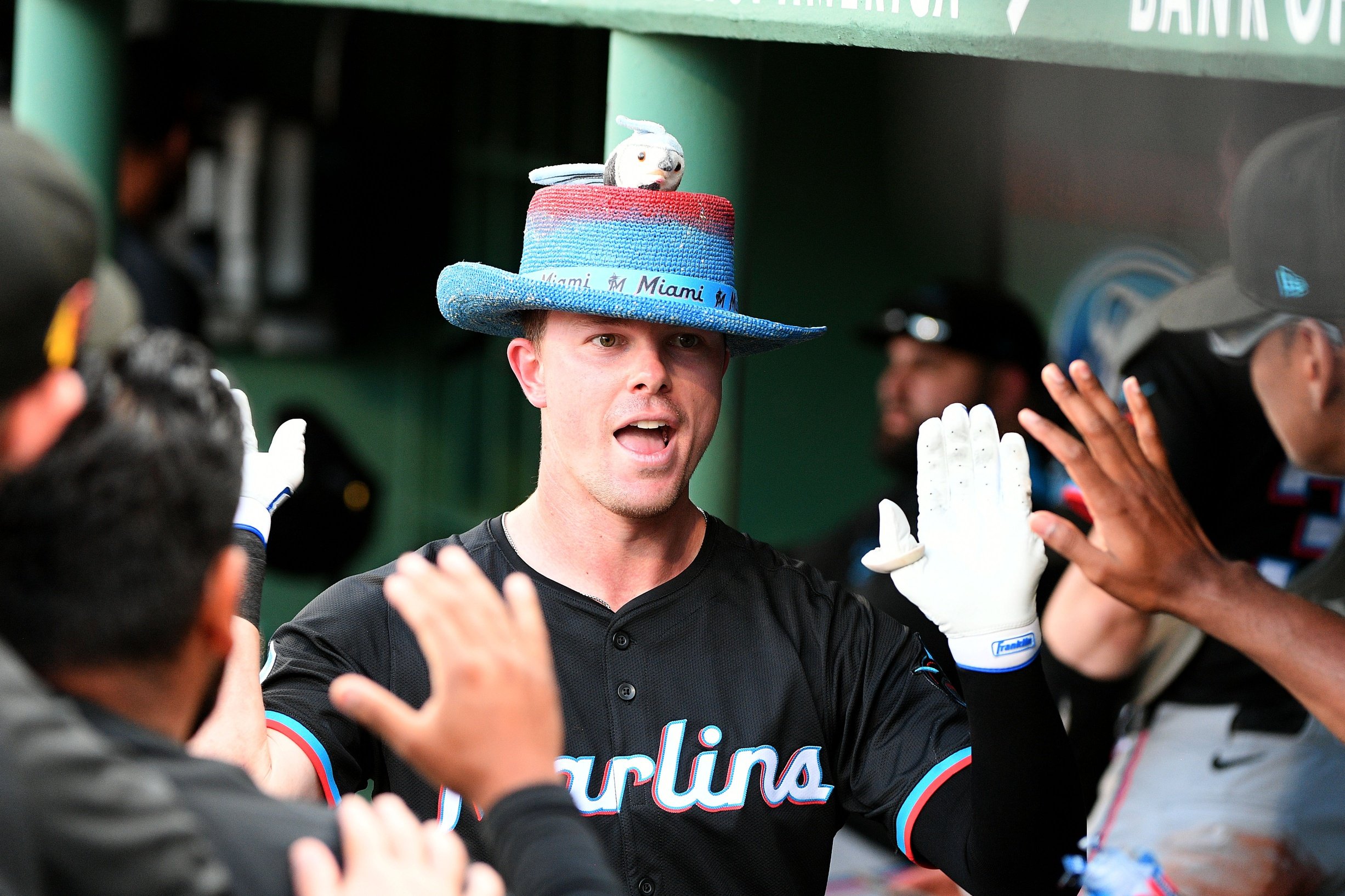 3,310 career professional plate appearances, including 2,741 in Minor League Baseball. That’s how long Troy Johnston had been waiting to collect the biggest home run of his life entering Saturday night’s game at Fenway Park. Experiencing the iconic park from a player’s perspective for the first time, Troy soaked it all in on Friday—touring the tunnels, signing the wall inside the Green Monster, and of course, taking BP. That experience parlayed into Saturday night. Against righty Brayan Bello, the lefty Johnston was tabbed the starter at first base. After collecting a single in his first AB, Johnston stepped to the plate in the fifth with two outs. He fell behind 0-2 quickly before taking three very close pitches, forcing a mistake pitch, an 88 mph changeup over the heart of the plate. Johnston turned on the pitch, taking it to right-center field. There are many ways to "luck" into a homer at Fenway; this 419-foot shot to one of the deeper parts of the park was anything but. Johnston became the first lefty Marlins batter since Jazz Chisholm Jr. in 2023 to homer at Fenway. Only five total Miami lefties have accomplished that feat. As an added bonus, Johnston got his first home run ball back for free as the fan that caught the blast threw it back moments after receiving it. Following Johnston in the next frame, slugger Agustín Ramírez attempted to keep Miami’s slim hopes alive with a blast of his own. Behind in the count 2-1, Bello didn’t make a mistake, locating a sweeper on the lower black of the plate. Ramírez made him pay regardless. At 100.9 mph off the bat, Ramírez scaled the Green Monster, giving Miami its second run. a8054c98-3cd05757-0c5e8e32-csvm-diamondgcp-asset_1280x720_59_4000K.mp4 For Agustín, it was his 18th home run of the season, tying him with Chisholm (2021) for ninth-most home runs by a Marlins rookie. Dan Uggla (2006) owns the team record with 27. There are 39 games left to play this year. Despite the two rookie blasts, Miami could not undo their early deficit. Against Cal Quantrill, who struggled mightily with overall command particularly with his fastball varieties, the Red Sox forced him into the strike zone and teed off. Quantrill had one 1-2-3 inning, but even within it, he allowed plus exit velocity to two of three batters. Overall, he went 3 ⅔ innings, allowing seven earned runs on eight hits with two strikeouts and a walk. It was his shortest start since May 24. Since the trade deadline, Quantrill has allowed 15 earned runs in 8 ⅓ innings. Miami, as they have most of the season, made things interesting late off the bats of Ramírez, Heriberto Hernández and Eric Wagaman who recorded his first triple since May, drawing the tying run to the plate in the ninth. However, Aroldis Chapman stepped in and closed out the series in favor of the Red Sox. It's now been two weeks since the last Marlins series win. The Marlins' 11-game road trip concludes against the Red Sox Sunday afternoon. They'll have to do it without All-Star Kyle Stowers, who will be placed on the injured list prior to the game with a Grade 1 left side strain, per manager Clayton McCullough. Recent waiver claim Joey Wiemer is likely to take Stowers' vacant spot on the active roster. Janson Junk will try to avoid the sweep as he opposes veteran Garrett Crochet.
- 2 comments
-
- 1
-
-
- troy johnston
- agustin ramirez
- (and 2 more)
-
Riding high heading into his career-high 21st start of the season, an up-and-down night for Edward Cabrera ended on the latter side of that equation, a factor that eventually spelled the doom for the Marlins as they lost to the Guardians 9-4 on Thursday in Cleveland. Things started swimmingly for Cabrera even before he took the mound. On Agustín Ramírez’s 25th double and a wacky fielder's choice play that scored two, Miami was staked to a three-run lead early. The lead was very short-lived. Trying to establish with his sinker, Cabrera left many pitches up in his first frame, leading to him allowing a run before he recorded an out. At the end of a frame, the game had been reset, 3-3. Cabrera showed the capability to start to settle in during the second, completely abandoning the two-seamer and going with his four-seamer and changeup, while mixing in slider and curve, a trend that would continue for the rest of the night. He started flying open a bit in the fourth, causing him to miss up, but Liam Hicks handled the situation well despite being paired with Cabrera for the first time since April. After the visit, Cabrera ended the third with a K then followed that up with his best inning of the night, working cleanly through the frame on 10 pitches. The bounce-back frame occurred after Hicks had scored a go-ahead run in the top of the fourth. Despite Hicks’ efforts on both sides of the ball to get his starter back in the game and what could’ve been, things would once again come undone for Cabrera in the fifth. Following a walk and a stolen base, a bloop single put two runners in scoring position with one out. Cabrera then deviated back to leaving stuff up and allowed the go-ahead run to score. It would prove to be the game-deciding tally. For Cabrera, who pitched with an incomplete arsenal and inconsistent control, he ended the night with a 5.1 IP, 7 H, 5 ER, 3 BB, 6 K line. It was his shortest start since July 11 when he was removed early due to health concerns. Leading off the seventh, Xavier Edwards walked and stole his 23rd base, but was stranded in scoring position. That was the closest the Marlins would come to winning their first series since sweeping the Yankees in Miami. Edwards went on to record a ninth-inning single and this was the seventh time in nine games he’s been on base multiple times. He’s off to a 24-for-63 (.381 BA) start to August. In the home half of the seventh, the Guardians teed off on Valente Bellozo whom Clayton McCullough continues to rely on in close games. With one out, Cleveland scored three runs on two singles and a fielder's choice. Bellozo, topping at 92 mph and struggling to induce weak contact, needed 30 pitches to get through the frame. Miami showed some fight and made some noise in the ninth by loading the bases and forcing Cade Smith into the game, but the game ended on a Hicks fly out without another scoreboard tally. With the loss, the Marlins fall to 58-63. Up next, they travel to Boston where a series against the Red Sox begins Friday night. It will be Miami’s first trip to Fenway Park since 2023. Sandy Alcantara is expected to oppose Lucas Giolito in game one. View full article
-
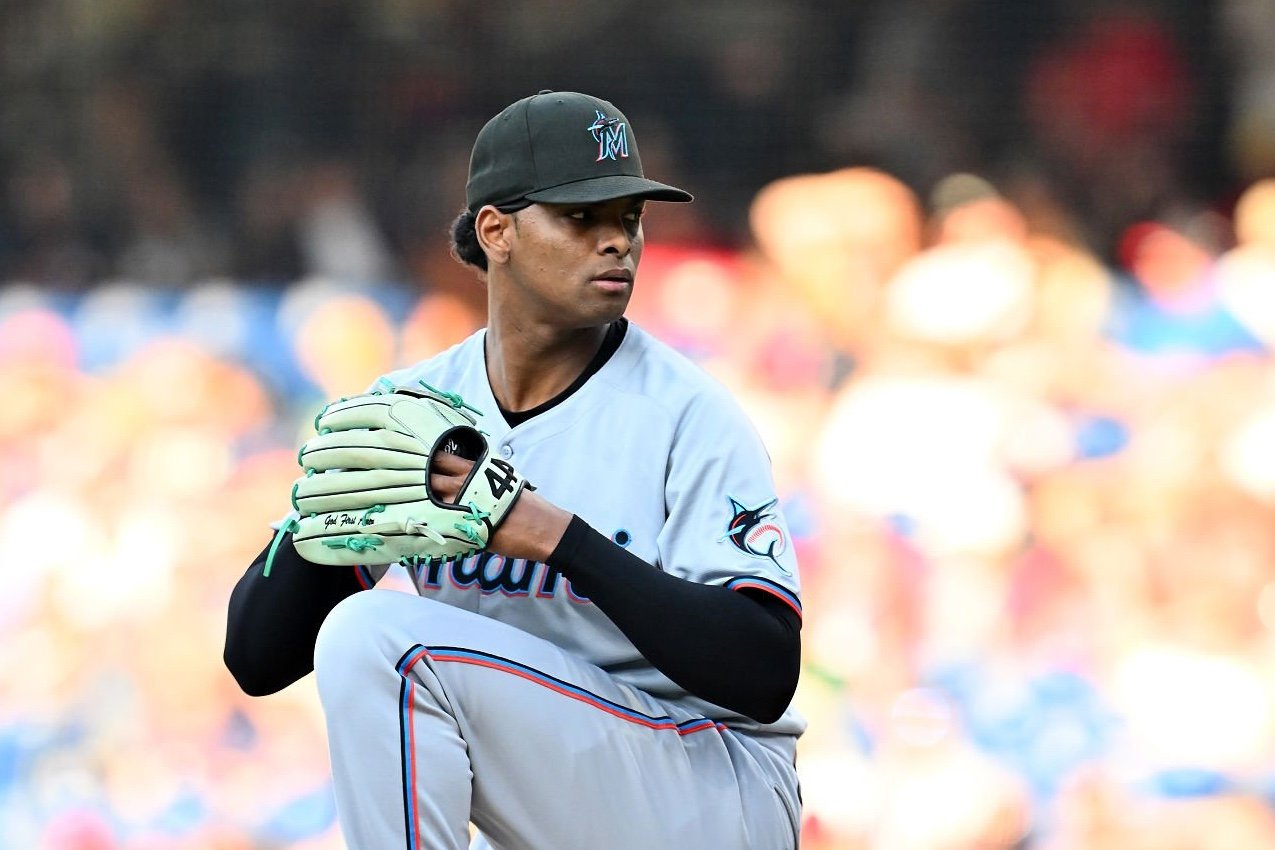 Riding high heading into his career-high 21st start of the season, an up-and-down night for Edward Cabrera ended on the latter side of that equation, a factor that eventually spelled the doom for the Marlins as they lost to the Guardians 9-4 on Thursday in Cleveland. Things started swimmingly for Cabrera even before he took the mound. On Agustín Ramírez’s 25th double and a wacky fielder's choice play that scored two, Miami was staked to a three-run lead early. The lead was very short-lived. Trying to establish with his sinker, Cabrera left many pitches up in his first frame, leading to him allowing a run before he recorded an out. At the end of a frame, the game had been reset, 3-3. Cabrera showed the capability to start to settle in during the second, completely abandoning the two-seamer and going with his four-seamer and changeup, while mixing in slider and curve, a trend that would continue for the rest of the night. He started flying open a bit in the fourth, causing him to miss up, but Liam Hicks handled the situation well despite being paired with Cabrera for the first time since April. After the visit, Cabrera ended the third with a K then followed that up with his best inning of the night, working cleanly through the frame on 10 pitches. The bounce-back frame occurred after Hicks had scored a go-ahead run in the top of the fourth. Despite Hicks’ efforts on both sides of the ball to get his starter back in the game and what could’ve been, things would once again come undone for Cabrera in the fifth. Following a walk and a stolen base, a bloop single put two runners in scoring position with one out. Cabrera then deviated back to leaving stuff up and allowed the go-ahead run to score. It would prove to be the game-deciding tally. For Cabrera, who pitched with an incomplete arsenal and inconsistent control, he ended the night with a 5.1 IP, 7 H, 5 ER, 3 BB, 6 K line. It was his shortest start since July 11 when he was removed early due to health concerns. Leading off the seventh, Xavier Edwards walked and stole his 23rd base, but was stranded in scoring position. That was the closest the Marlins would come to winning their first series since sweeping the Yankees in Miami. Edwards went on to record a ninth-inning single and this was the seventh time in nine games he’s been on base multiple times. He’s off to a 24-for-63 (.381 BA) start to August. In the home half of the seventh, the Guardians teed off on Valente Bellozo whom Clayton McCullough continues to rely on in close games. With one out, Cleveland scored three runs on two singles and a fielder's choice. Bellozo, topping at 92 mph and struggling to induce weak contact, needed 30 pitches to get through the frame. Miami showed some fight and made some noise in the ninth by loading the bases and forcing Cade Smith into the game, but the game ended on a Hicks fly out without another scoreboard tally. With the loss, the Marlins fall to 58-63. Up next, they travel to Boston where a series against the Red Sox begins Friday night. It will be Miami’s first trip to Fenway Park since 2023. Sandy Alcantara is expected to oppose Lucas Giolito in game one.
 -
The internal debates were especially heated this time around, which bodes well for the long-term outlook of the Miami Marlins organization. Miami's farm system is deep. At Fish On First, we rank only 30 prospects at a time—there are dozens of others worth monitoring closely who could realistically grow into major league roles in the future. Each player's previous ranking—as of June 2—is shown in parentheses. Click the hyperlink in a player's name to visit their prospect profile. FOF Top 30 as of August 9, 2025 LHP Thomas White (#1) C Joe Mack (#2) SS Aiva Arquette LHP Robby Snelling (#5) SS Andrew Salas (#3) RHP Kevin Defrank (#14) OF Jakob Marsee (#23) SS Starlyn Caba (#4) OF Dillon Head (#6) RHP Adam Mazur (#7) SS Maximo Acosta (#13) OF Andrés Valor (#11) OF Luis Cova (#19) RHP Noble Meyer (#9) LHP Keyner Benitez (#16) OF Kemp Alderman (#22) OF Cam Cannarella 1B Deyvison De Los Santos (#8) OF PJ Morlando (#17) RHP Karson Milbrandt (#20) RHP Eliazar Dishmey (unranked) INF Jared Serna (#10) INF Chase Jaworsky RHP Josh Ekness (#25) SS Anthony Abreu (unranked) OF Esmil Valencia LHP Dax Fulton (#12) RHP Nigel Belgrave (#30) RHP Grant Shepardson (#26) INF Carter Johnson (#15) Removed since the previous update: OF Victor Mesa Jr. (#18), RHP Jacob Miller (#21), OF Andrew Pintar (#24), RHP Liomar Martínez (#27), RHP Aiden May (#28) and OF Fenwick Trimble (#29) are no longer ranked. Honorable mentions: INF Luis Arana, OF Brandon Compton, LHP Nate Payne, Pintar and C Almen Tolentino. The next detailed update to the FOF Top 30 will be coming in October. Health permitting, Jakob Marsee will have graduated from prospect eligibility by then, ensuring at least one new addition to the list. View full article
-
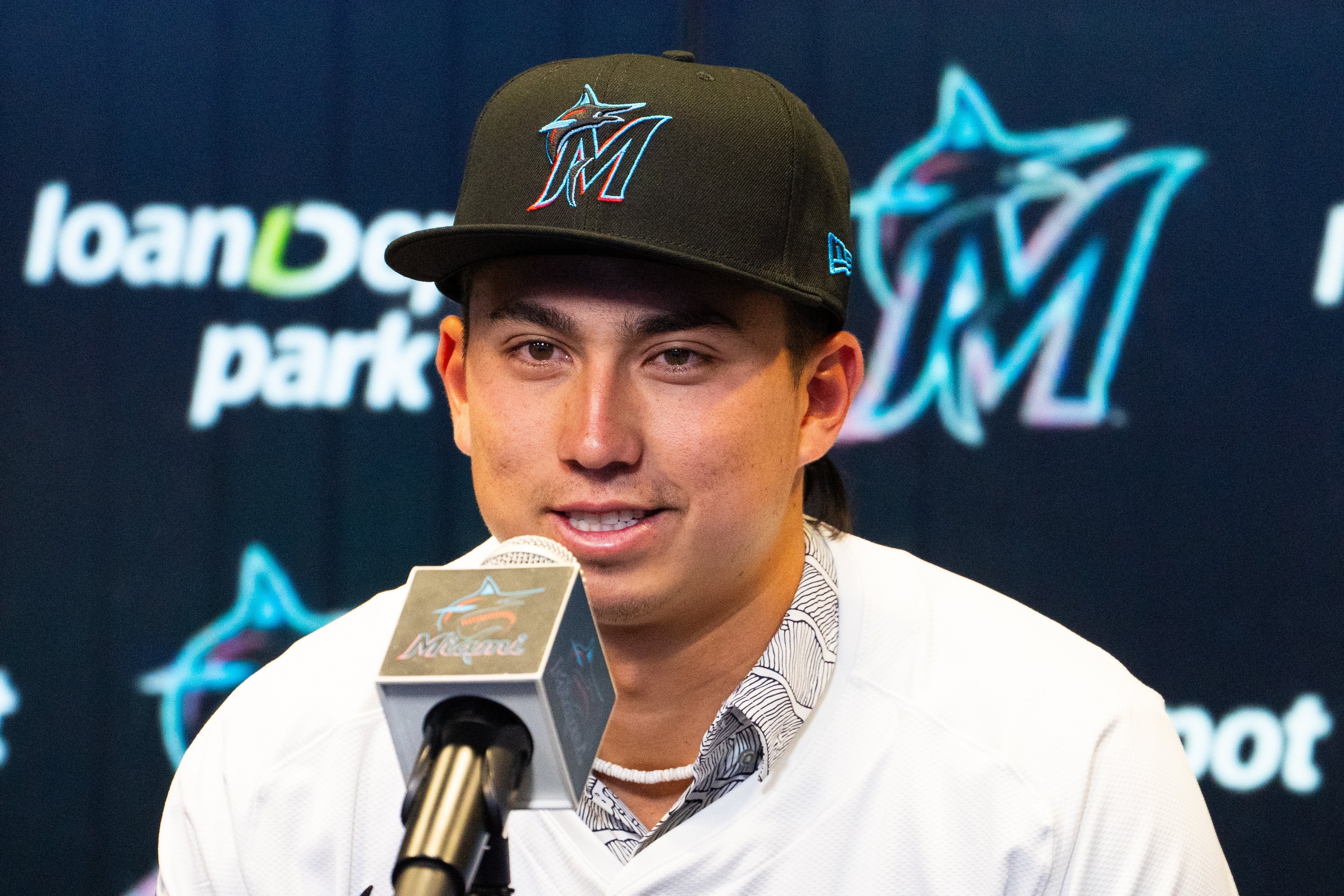 The internal debates were especially heated this time around, which bodes well for the long-term outlook of the Miami Marlins organization. Miami's farm system is deep. At Fish On First, we rank only 30 prospects at a time—there are dozens of others worth monitoring closely who could realistically grow into major league roles in the future. Each player's previous ranking—as of June 2—is shown in parentheses. Click the hyperlink in a player's name to visit their prospect profile. FOF Top 30 as of August 9, 2025 LHP Thomas White (#1) C Joe Mack (#2) SS Aiva Arquette LHP Robby Snelling (#5) SS Andrew Salas (#3) RHP Kevin Defrank (#14) OF Jakob Marsee (#23) SS Starlyn Caba (#4) OF Dillon Head (#6) RHP Adam Mazur (#7) SS Maximo Acosta (#13) OF Andrés Valor (#11) OF Luis Cova (#19) RHP Noble Meyer (#9) LHP Keyner Benitez (#16) OF Kemp Alderman (#22) OF Cam Cannarella 1B Deyvison De Los Santos (#8) OF PJ Morlando (#17) RHP Karson Milbrandt (#20) RHP Eliazar Dishmey (unranked) INF Jared Serna (#10) INF Chase Jaworsky RHP Josh Ekness (#25) SS Anthony Abreu (unranked) OF Esmil Valencia LHP Dax Fulton (#12) RHP Nigel Belgrave (#30) RHP Grant Shepardson (#26) INF Carter Johnson (#15) Removed since the previous update: OF Victor Mesa Jr. (#18), RHP Jacob Miller (#21), OF Andrew Pintar (#24), RHP Liomar Martínez (#27), RHP Aiden May (#28) and OF Fenwick Trimble (#29) are no longer ranked. Honorable mentions: INF Luis Arana, OF Brandon Compton, LHP Nate Payne, Pintar and C Almen Tolentino. The next detailed update to the FOF Top 30 will be coming in October. Health permitting, Jakob Marsee will have graduated from prospect eligibility by then, ensuring at least one new addition to the list.
- 2 comments
-
- 1
-
-
- thomas white
- joe mack
- (and 8 more)
-
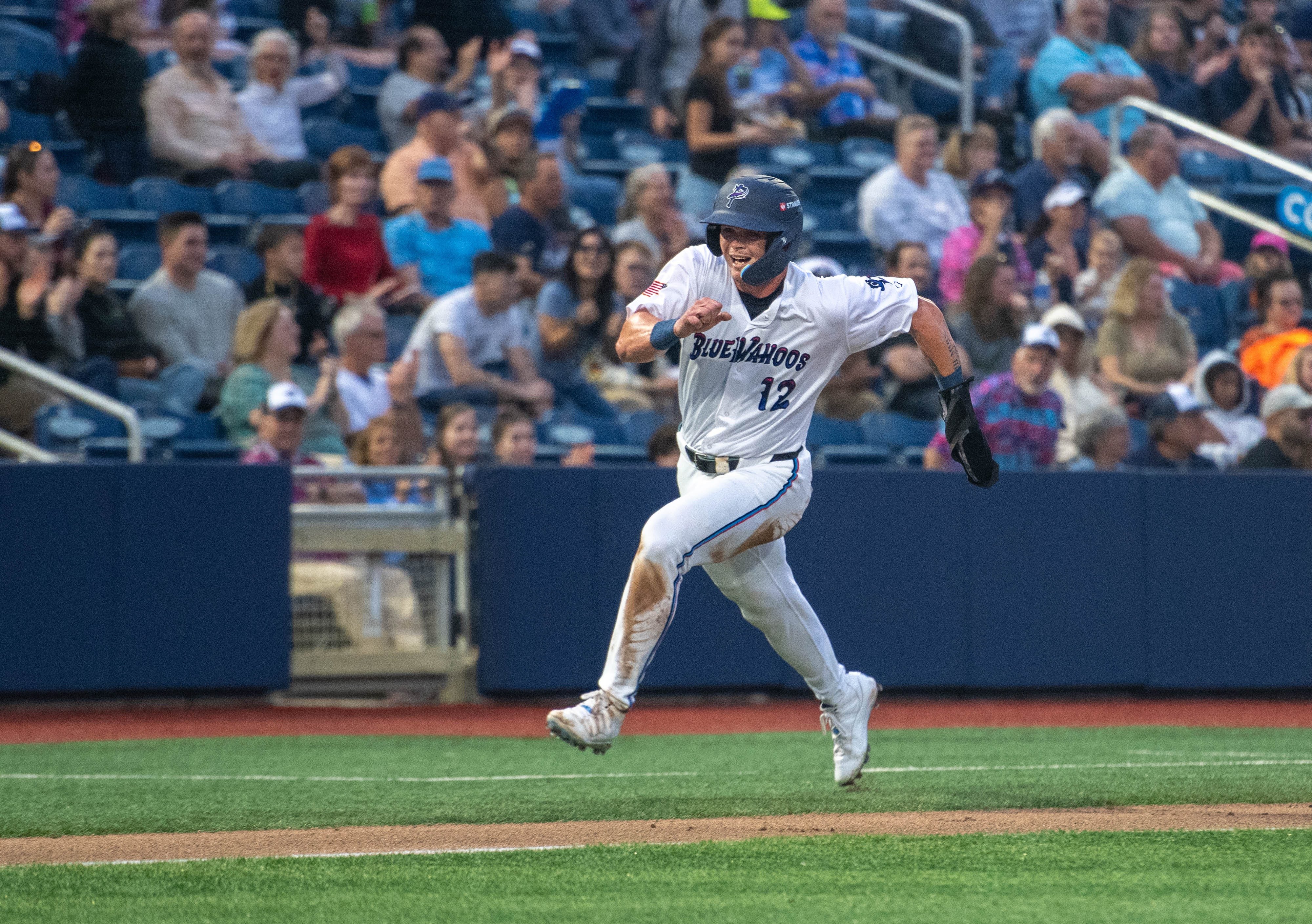 In addition to encouraging developments at the big league level, Marlins players are showing up more than they have in a long time down on the farm. With results and projection galore to marvel at, there is a lot to pick from in terms of who has stood out the most during the first half of the 2025 season. After much deliberation, we have highlighted players at each position below, including several honorable mentions at the bottom. Some are still several years away from maturity, while others should be debuting in Miami before season's end. C Joe Mack Current affiliate: Triple-A Jacksonville Mack, pick 31 overall in the 2021 draft, came into pro ball from the high school ranks lauded for his defense with a bit to figure out on the offensive side of the ball. The glove allowed him to matriculate through a level a season through 2023, but he entered 2024 with a .217/.324/.303 slash line. This past season, amidst making the jump to Double-A where he was playing against average competition nearly three years his elder, Mack broke out with the bat. In 125 games, 112 with Pensacola, he slashed .252/.338/.468 with 24 home runs, fifth most amongst all MiLB catchers and one less than his future teammate Agustín Ramírez. This season so far, not only has Mack proven 2024 was no fluke, he’s hitting even better. Through 73 games, the 22-year-old owns a .268/.344/.454 slash line. Currently, Mack is on a ridiculous 15-game run in which he has a 1.186 OPS. Almost all of this has happened at the highest level of MiLB with the Jumbo Shrimp. Seemingly the only potential knock on Mack’s performance is that most of his success has come at home in Jacksonville where the conditions vastly favor bats. Mack will have the rest of the season to even that out. As he has his entire career, Mack is once again playing well under his average competition’s age this season—he’s nearly five years younger than the average AAA player. With continued success, Mack is on pace to take over as Miami’s everyday catcher in short order, possibly at the start of 2026. He will be 23 for all of next season. 1B Michael Snyder Current affiliate: Double-A Pensacola Snyder, who was drafted in the tenth round of the 2024 MLB Draft, has gotten off to a great start, slashing .247/.401/.388/.790 with six home runs, 47 RBI and a 133 wRC+. After spending most of the 2025 season in High-A, he received the promotion to AA, where in 18 games, he’s posted a 139 wRC+. Snyder is one of the few qualified hitters in the system with more walks (57) than strikeouts (56). 2B Yoffry Solano Current affiliate: FCL Marlins Miami’s highest-priced international signing from the 2022 class ($750k bonus), Solano had a fine initial showing in the DSL, allowing him to make it stateside this past season. A minor injury in 2023 limited him to just 17 games that season, likely contributing to a slow start last year amidst the aforementioned stateside move. Solano finished that season well though, slashing .345/.400/.483 in the month of July, proving the rust was off and that he had begun adjusting to baseball in America. He also did it amidst making the full-time transition to second base where he fared well. Solano is back in the FCL this season, building off of that late season success. Through 36 games, he’s slashing .270/.374/.357. He’s struck out just 24 times and walked 17 times. The glaring hole in Solano’s game is the lack of present power. Of his 34 hits this season, 27 are singles. His potential 60 grade hit tool, which he’s played into well this year, will be what carries him in his career, but he will need to at least start to find higher exit velocities and gaps to play towards a higher floor. Also, it would be encouraging to see him his use his 50-grade speed more. There’s still time for both of those things to happen. He probably won’t ever be a menacing physical presence in any sense of the word, but there’s still room for Solano to grow. He is still just 20 years old. It is very likely he will be moved to Jupiter to continue playing when the FCL season wraps up. 3B Diwarys Encarnación Current affiliate: FCL Marlins Encarnación, a signing from last year’s class, inked an undisclosed deal, which usually signifies the bonus was not substantial. In 2024, Encarnación played a full season in the DSL and slashed .227/.317/.301. This season, Encarnación, repeating the DSL, has produced a huge increase in power and exit velocities via physical projection. Through 33 games, the 19-year-old is slashing .305/.399/.534. His seven home runs are tied for second most on the DSL circuit. “Credit to him and his offseason routine as well as our (player development) staff really getting him a lot stronger. He’s ticked up in a lot of areas and rightfully so has turned himself into one of our better position players in the DSL,” international scouting director David Hernandez told us recently. “He’ll almost turn 20 soon, but he’s performed his way into a promotion and has significantly improved in batted ball data as well as plate discipline from one year to the next.” Positionally, the Marlins are still figuring things out with Encarnación: he has spent time at six different positions this season. If he sticks on the dirt, it will be at third base but at this point, it is more likely he moves to corner outfield spots. An improving mix of size and strength at 6’2”, 170, Encarnación is a bat-first prospect who should receive a stateside call in short order, likely when the DSL season concludes. SS Payton Green Current affiliate: High-A Beloit Another 2024 draft pick out of Georgia Tech, Green is slashing .290/.364/.440/.804 with four home runs, 29 RBI and a 124 wRC+. Green has primarily played shortstop and should stick at the position moving forward. At 22 years old, a promotion to AA-Pensacola should be arriving shortly. LF Fenwick Trimble Current affiliate: Double-A Pensacola Trimble had been rising quickly through the system. In High-A, he slashed .284/.407/.422/.828 with one home run, 14 RBI, 15 stolen bases and a 138 wRC+. When promoted to AA, Trimble hit one home run, but suffered a hamstring strain that sidelined him for nearly two months. He re-entered the Blue Wahoos lineup on Saturday. Trimble has been getting occasional reps at each of the three outfield spots. CF Jakob Marsee Current affiliate: Triple-A Jacksonville At this point, it isn’t a matter of if we will see Jakob Marsee don the Marlins uniform; it is a matter of when Marsee will be making his Major League debut. Through 88 games, Marsee is slashing .242/.375/.426/.800 with 12 home runs, 34 RBI, 42 stolen bases and a 122 wRC+. Marsee’s ability to get on base and cause havoc on the basepaths has been impressive. One major improvement has been elevating the ball higher, leading to increased power and the ability to utilize the entire field. RF Kemp Alderman Current affiliate: Double-A Pensacola Alderman had a rough 2024 season, adjusting to a full slate of games in full-season ball. He was assigned to repeat Jupiter to start the season. Two months in, a hamate bone injury landed him on the IL for nearly two months. Alderman’s overall numbers in his second stint with Jupiter were solid and earned him a call to Beloit in August. There, he hit .240/.312/.344 in 33 games. Attempting to lengthen his season and make up for missed reps, the Marlins assigned Alderman to Double-A for the Southern League playoffs and then assigned him to the Arizona Fall League. Alderman got his swag back in the hitter-friendly Fall League, hitting six home runs in just nine games and earning a Fall-Stars Game selection. Back fully healthy this season, the 22-year-old has been Pensacola’s most consistent offensive performer. Through 76 games, he’s slashing .281/.332/.431 with 9 home runs, already a career high. He’s another bat-first guy, but the onset of loud offensive tools at the upper levels should keep him in the conversation for a debut as early as next year. DH Troy Johnston Current affiliate: Triple-A Jacksonville In true Johnston fashion, it’s been yet another very productive season so far. Seventy-six games in, he’s staring another 20-20 season directly in the face for the playoff-bound Jumbo Shrimp. Other than the time missed away from the team for the birth of his first child, Johnston has been in lineup nearly every single game for Jacksonville. He’s played left field, first base and DH. On most occasions, the veteran minor leaguer has been asked to set the tone for the Jumbo Shrimp lineup. When leading off, Johnston is slashing .262/.333/.536. He has 10 home runs and 28 stolen bases. Why Johnston, the 2023 MiLB Player of the Year, has yet to be called upon to contribute to the major league team, the world may never know. In his last year of team control before hitting minor league free agency, hope is that step will be taken for a scientific and crafty lefty hitter and tenacious athlete who has given most of his life to the organization for upwards of seven years. SP Robby Snelling Current affiliate: Triple-A Jacksonville The recently promoted Robby Snelling has been great this season, completing seven innings of work twice and in AA, posting a 3.61 ERA, 2.90 FIP, 10.58 K/9 and a 2.74 BB/9. Of note, his fastball velocity has risen compared to 2024, more consistently touching mid 90s when he needs it. In a pair of AAA starts this season, Snelling has logged nine innings and allowed only two runs. RP Nigel Belgrave Current affiliate: Double-A Pensacola Belgrave has been unhittable this season, posting a 1.58 ERA, 2.53 FIP, 12.60 K/9 and 3.60 BB/9 through 23 appearances. He last surrendered an earned run on June 5. It was a decision between Josh Ekness and Belgrave to earn the honor, but Belgrave has been far more consistent and should receive the promotion to AAA soon. HM Anthony Abreu Current affiliate: DSL Marlins Abreu is an international signing from this year’s class who has shown immediate results. The 17-year-old has put out six home runs, something pretty rare from a debuting DSL prospect. Overall, Abreu is slashing a robust .235/.395/.500. In addition to the power potential, Abreu is holding down a respectable 45/22 K/BB. A lefty-hitting, righty-throwing 6’1”, 180 corner outfielder, Abreu appears ahead of the curve already in terms of developed tools. The Marlins think this may be the peak of Abreu’s development physically, and he also owns a defensive profile that will likely move him to a corner outfield spot. That said, the already-loud offensive tools and plenty of time for projection should carry Abreu to a very solid floor. He will very likely come stateside next season. HM Colby Shade Current affiliate: High-A Beloit Shade, 24, is a bit old for his current level which he is repeating after spending 33 games in Beloit last season, but his improvement deserves credit. Drafted in 2024 and moved from Jupiter to Beloit mid season, Shade is slashing .261/.380/.374 so far this season. After stealing 45 bases last year, he is already at 39 with nearly two full months left. a0REUldfV0ZRVkV3dEdEUT09X0Fna0NVd1lOQTFNQVhWVlJVd0FIVWdjRkFGa05CbGNBQWdBRkJRTlVCRllBVlF0Ug==.mp4 Shade owns a hit-over-power profile, but he’s been able to find some gaps and let his speed go to work for him. He has doubled 12 times and recorded four triples. Shade has also shown good patience against A+ stuff. He owns a 13.2% walk rate. Defensively, Shade has the plus speed and good-enough arm to stick in center field. He should’ve been called up to Pensacola yesterday to see if his offensive profile can keep pace against upper minors pitching. HM Thomas White Current affiliate: Double-A Pensacola White just keeps shoving. A top prospect in the organization and top 30 prospect league wide, the 6’5”, 240 lefty was a force to start the season at High-A (2.80 ERA and 53/17 K/BB in 35.0 IP) and continues to be amidst his recent call to the upper minors. He’s current holding down an even 3.00 ERA in his first 15 innings with Pensacola. During the All-Star break, White participated in his second straight Futures Game. The Marlins are, somewhat understandably, taking White’s progression very slowly. This season, he has only been allowed to pitch more than four innings three times. On almost every occasion, he is being limited to 85 pitches. That said, White’s insurmountable stuff has played up well to Double-A hitters. He is sitting 95 and has been as high as 99 with his fastball while intermixing a plus-plus power curve and plus changeup all from a high deceptive arm slot. He masks his smooth release well and garners the ability to make hitters look foolish. The next step for Thomas is to have the reins taken off and be allowed to go deep into games. As long as the stuff and velo persists into later innings and third time through lineups, he will be on track to make a major league debut next season. He will turn 21 on September 29.
- 1 comment
-
- 3
-
-
- joe mack
- michael snyder
- (and 7 more)


