



Alex Carver
-
Posts
459 -
Joined
-
Last visited
-
Days Won
16
Content Type
Profiles
Miami Marlins Videos
2026 Miami Marlins Top Prospects Ranking
Miami Marlins Free Agent & Trade Rumors, Notes, & Tidbits
Guides & Resources
News
2025 Miami Marlins Draft Pick Tracker
2026 Miami Marlins Draft Tracker: Picks & Bonuses
Forums
Blogs
Events
Store
Downloads
Gallery
Everything posted by Alex Carver
-
 View full article
 -
 [caption id=attachment_1416" align="alignnone" width="830] Photo by Joseph Guzy/Miami Marlins[/caption] They came, they played, they won us over. In this annual installment, we recognize and examine the Marlins’ top minor league performers at their respective positions. Presenting our 2019 All-Fish Team. Just after the second year anniversary of Jeter and Co. taking over the helm, the list just so happens to be riddled with first-year acquisitions and 2019 draft picks. Translation: they’re doing this rebuild thing correctly. — C Dustin Skelton A- - 24 G, .224/.321/.269, 3 2B, 6 RBI, 23/7 K/BB; 12/8 SB/CS, 1.000 FPCT At what is by far the thin(nest) position in the Marlins’ system, one young backstop stood out this season: 2019 10th-rounder Dustin Skelton. Small sample of just 24 games aside, the 22-year-old stood out by way of being able to very quickly translate collegiate credence into professional production. Despite having never played in wood bat leagues, it only took Skelton 13 games worth of .150/.277/.200 ball for him to hit .333/.387/.370 in his final 11 of the season. While his bat began to come around, Skelton played perfect defense all year recording 137 outs out of 150 times that he touched the ball, including catching 40% of those who attempted to steal on his arm. Probably most impressive on the defensive side though is that Skelton only allowed two passed balls while catching his short season teammates. Giving the crowd a show! Talk about this 🚀#RoadToOmaha | @HailStateBB pic.twitter.com/otFe7mX2nz — NCAA Baseball (@NCAACWS) June 10, 2019 Skelton is an average-sized 6’, 200 physical specimen but in his heart, mind and in the way that he puts every ounce and inch of his frame to use, he is gargantuan. A great receiver with fantastic movement whether it be while popping or while moving laterally into blocks, Skelton is a naturally gifted defensive backstop. A guy who did a lot of work on his offensive approach shortening his swing while also tempering timidity in between his sophomore and junior years at Mississippi State, Skelton slashed .316/.385/.517 in his final collegiate season, earning his 18th round draft slot, up from the 36th round in 2018. After finishing his calendar year advantageously and proving the adjustments he made at the dish last season made him much more professionally ready, Skelton, despite currently being at the deep end of the prospect pool, is primed to make a big splash, likely with the Clinton LumberKings, in 2020. [caption id=attachment_1383" align="alignnone" width="1280] Evan Edwards (Photo by MiLB.com)[/caption] 1B Evan Edwards A-/A - 73 G, .281/.357/.442, 9 HR, 25 XBH, 50 RBI, 83/30 K/BB After going unreceuited out of high school and spending his freshman season playing JuCo ball, Edwards, like his fellow 2019 draftee Skelton, quickly made a name for himself and caught the attention of Marlins area scouts. Following a ridiculous .342/.542/.730, 17 HR, 52/59 K/BB single season at UNC Lancaster, Edwards cracked the Division I ranks with North Carolina State. In his first season as a member of the Wolfpack, Edwards led the Wolfpack on their 2018 Regional finals run by slashing .297/.419/.564. Amongst full time starters, he paced the club in OBP, BB% (16.7) and HR% (6.1). Edwards’ 15 total homers placed second on the club. Reminder: this was his inaugural season at the Division I level. Last season, Edwards, a senior, solidified his status as a top-5 round pick by appearing in all 61 of the Wolfpack’s games and slashing .330/.465/.604 with another 14 homers. Edwards led the squad in multiple stat categories including BA and RBI (60). For the second time in his collegiate career, Edwards walked more than he struck out (47/51 K/BB). The cherry on top of a spectacular offensive campaign was an equally stellar defensive showing. Playing one of, if not the most frequently called-upon positions in the game, Edwards did not commit a single error and recorded 30 assists. Just began his pro career a few months ago, but Evan Edwards might already be the best defensive first baseman in the Marlins organization pic.twitter.com/Tsplh1L65m — Fish Stripes (@fishstripes) September 12, 2019 Noticing his immediate adaptation and success at the D1 level both statistically and humanely, the Marlins jumped on Edwards I’m the fourth round with the 111th overall selection. Negotiations with Edwards (if they existed at all) were very brief and ended with Miami inking him right at slot value ($522K). “I got the call with an offer, and I took it,” Edwards explained regarding his signing “negotiations”. “I’m a senior, so I didn’t have much leverage on the (signing bonus). I took the first thing offered to me and I’m happy with the deal. I’m ready to go wherever they want me to go and play (at whatever level) they want me to play.” In his first season as a pro hitting with woods bats for the first time (save two ABs in a showcase league in his freshman year), Edwards hit .281/.357/.442 with nine homers. Given the low risk/high reward nature of Edwards’ signing and his age while playing at a thin position as well as his reputation to adjust to new levels advantageously, all signs point toward Evan being fast-tracked through the system. He should start 2019 in high A with the Hammerheads. A 6’, 200 pound, the lefty hitting native of Greensboro, North Carolina, Edwards makes true of his numerically equal build by exhibiting a balanced skill set and approach. Edwards’ uppercut stroke is tailor made for the power numbers it has produced but, thanks to his plus plate vision and coverage ability, they haven’t come at the expense of a multitude of strikeouts. “The numbers prove I’m a power guy, but I try to hit for average, too,” Edwards said of his mindset during an AB. “I just want to put the ball in play, to have the best at-bat I can every time I’m up there.” If Edwards’ pitch recognition skills can continue to improve as he makes his way from level to level, there is a Luke Voit-esque foundation here. Next year, Edwards will embark upon his full-season ball career beginning with the LumberKings. [caption id=attachment_1375" align="aligncenter" width="830] Isan Diaz[/caption] 2B Isan Diaz AAA - 102 G, .305/.395/.578, 26 HR, 49 XBH, 70 RBI, 96/49 K/BB Get this kid a frequent flier miles card. An Arizona Diamondbacks 2014 second round draftee out of Springfield, MA, Diaz, a Puerto Rico native, spent two years out west before being traded to the Brewers. Another two years later, Diaz joined the Marlins in the trade that sent Christian Yelich to Milwaukee. However, despite the many names that have been on the front of his jersey (including those worn at six different levels and during two Caribbean Winter League campaigns back home), Diaz has consistently produced more-than-positive results. The most recent of those exports was a .305/.395/.578, 26 HR, 70 RBI campaign with the New Orleans Baby Cakes that earned him his first MLB call-up. Despite only playing in 103 games, Diaz placed 17th in the PCL in homers due to the fact that he hit one in every 15 of his ABs. On August 4, Diaz was very deservedly awarded his first MLB call-up just before a double-header with the Mets the next day. On August 5, Diaz’s promotion was officially announced and he started at second base in the both games of the twin bill. During game two, Diaz shared in one of the most feel-good moments of the 2019 season. In the middle of an on-camera interview with his father RJ, Isan recorded his first career hit — a homer. The smash made Isan the seventh Marlin — and first since Jeremy Hermida in 2005 — to homer in his first appearance with the organization’s parent club. Overall, Diaz’s 49-game cup of coffee equated to a .173/.259/.307 line with five homers, 23 RBI and a 59/19 K/BB. A 5’10, 185 pound specimen, Diaz makes up for his lack of size by swinging a violently quick bat. A power-first hitter trapped inside a limited physical frame, Diaz’s swing gets very long at times, leading to a ton of swing-and-miss potential. However, when he makes contact, the ball jumps. This has led to a fairly limited MiLB batting average (.263) while also supplying Diaz with a daunting extra base hit percentage (42.58%). In order to succeed at the major league level, Diaz will need to improve his pitch recognition skills, become more selective when engaging and figure out a better timing mechanism which will lead to his barrel staying in the zone longer. If this sounds like a tough road to hoe, it is. However, working in Diaz’s favor is the fact that he’s still just 22, playing for a club in the young stages of a total rebuild. With Starlin Castro out of the picture, Diaz will get his chance to start every day for the Marlins this coming season. An undersized, power-first middle of the order bat, we place Diaz’s ceiling at that former Marlin Dan Uggla. [caption id=attachment_1387" align="aligncenter" width="800] Nic Ready (Photo by ParkCitiesPeople.com)[/caption] 3B Nic Ready A- - .263/.311/.508, 10 HR, 42 XBH, 47 RBI, 82/20 K/BB The son of former major leaguer and Marlins minor league coach Randy, Nic grew up in Dallas, Texas attending Jesuit College Prep, the same high school as Pittsburgh Pirates standout Josh Bell and the Atlanta Braves current seventh-ranked prospect Kyle Muller. He was a letterman in three of his amateur seasons, including his .410/.452/.619 senior year, a 39-game campaign in which he was also named first team All District, second team All State, and a North Texas and Texas Coaches Association All-Star. As icing on the cake, Ready also won the 2018 College Home Run Derby. During his three weeks of permitted yearly leave from the Academy, Ready spent his time getting acclimated to wood bats in the Coastal Plain League and the Northwoods League. After a .190/.227/.190 seven game campaign with the Fayetteville Swampkeepers in 2016, Ready hit a combined .279/.361/.375 with the Eau Claire Express in 2016 and 2017. Collectively, all of Ready’s travels and collegiate exports made him a well-rounded product in the 2019 MLB Draft and the Marlins recognized that potential in the 23rd round. Miami’s low-risk, high-reward investment has already begun to pay off. In 67 games for the Muckdogs, Nic hit .263/.311/.508 with 10 homers and 47 RBI. In his inaugural pro campaign, Ready was one of Batavia’s seven New York Penn League All-Stars. The 6’3”, 220 Ready approaches from a nearly completely vertical split stance. His swing is taylor-made for over-the-fence shots and, although it is extremely long making him very susceptible to the strikeout, his barrel stays in the zone longer than most and when he connects, he crushes. Defensively, Ready does enough with his arm to pass at third base but his quick glove-to-hand transfers and better range to his arm side give him a better future at first base with a potential showing up the middle. Further supplanted by his best tool, natural athleticism, Ready profiles as a floor utility infielder and draws current comparisons to Twins infielder CJ Cron. If he continues to fine-tune his swing and approach under pro coaching, a potential ceiling around Kyle Seager, a .256/.324/.443 career bat is in the cards. [caption id=attachment_1409" align="aligncenter" width="830] Jose Devers[/caption] SS Jose Devers A-A+ - 47 G, .322/.391/.390, 10 XBH, 26/14 K/BB Acquired from the Yankees as a distant third piece in the trade that sent Giancarlo Stanton to the Bronx, this 20-year-old babyfaced infielder may very well wind up being the star of the deal. The potential is definitely in his bloodlines: Jose, the younger cousin of Red Sox infielder and World Series champion Rafael, garnered scouts’ attention as young as 16 back in the Dominican. When he was of age, the Yankees signed Devers as an international free agent in 2017. After breaking in to pro ball with a .239/.255/.326 campaign split between the Dominican Summer League and the Gulf Coast League, the teenager, brand new to America, was flipped to the Marlins in the blockbuster Stanton swap. Since then, Devers has spent his afternoons and nights hitting his oppositions for plus average with relative ease, despite being one of, if not the youngest guy in his league. Beginning last season, Devers hit South Atlantic League pitching at a .273 clip (.313 OBP, .359 SLG) at the ripe age of 18, three-and-a-half years younger than his average league mate. This season, Devers was promoted to A+ Jupiter where he once again got out to another roaring start against similary-aged competition (3.3 years older, on average). With the Hammerheads, Devers hit .325/.384/.365 with a 126 wRC+. For much of the first half, he lead the league in BA and OBP. However, just before the All-Star Game which was being held at his home park, Devers suffered a major forearm strain. The ailment kept Devers out of action until very late in the season. He never returned to the Hammerheads. Instead, he ended his summer by getting his feet back under him in the GCL (11 games, .275/.370/.400) before getting a three-game stint with the LumberKings. Devers got into another 11 games this winter in the Arizona Fall League. In the limited sample, his OBP (.270) fell against some of the best young competition MiLB has to offer but the average still showed plus (.269) and the speed rang true (5/0 SB/CS). The question circling Devers this coming season will have nothing to do with his talent, which is clear and present. It will be how both his mind and body respond to spending such a long stint off the field for the first time in his young career. Given the fact that youth is still very much on his side and the fact that his work ethic is second to none, we would put our money on Devers showing up to camp in the best shape of his career and continuing to dominate the FSL for another half before receiving his summons to Jacksonville. Devers uses a supremely quick and compact approach, plus-plus bat speed and a hitter’s eye well beyond his years to get the ball in play. From there, due to Devers’ 60 grade speed, anything can happen (note his .387 BABIP in the pitcher-friendly FSL this year). If Devers can put the injury in the past and continue to grow physically, he will be a major piece of the Marlins’ rebuild. At his high ceiling, we like him as a catalytic lead-off threat whose infield hands are nearly as quick as his feet. The lefty is capable of big things, ala Dee Gordon. [caption id=attachment_1390" align="aligncenter" width="830] Peyton Burdick (Photo by MiLB.com)[/caption] LF Peyton Burdick A-/A - 69 G, .308/.407/.542, 11 HR, 35 XBH, 64 RBI, 72/34 K/BB A native of the coincidentally named Batavia, Ohio, Burdick is one half of a duo of 2019 draftees out of an on-the-rise Wright State University program that has come to the Marlins and absolutely flown out of the gate. Born February 26, 1997, Burdick attended Glen Este High School in Cincinnati where took part in three different sports: baseball, football and basketball. In his senior year in 2015, Burdick hit .386 with 14 XBH, 19 RBI and 15 stolen bases. The leader and MVP of a 21-7 team, Peyton was named to All-State, All-League and All-District teams. Flaunting his natural raw athleticism, Burdick also lettered on the gridiron. Upon his arrival in the collegiate ranks at Wright State University in nearby Dayton, Burdick displayed his ability to immediately rise to the challenge of a new level of competition without missing a single beat. But Peyton didn’t stop there. Continuing to show elite leadership prowess, he took it upon himself to guide the WSU program over the next three years. In his 2016 freshman season, Burdick earned the reputation of an on-field leader by hitting .289/.409/.443 with 39 RBI and 44 runs scored. After being selected to his conference’s All-Second and All-Freshman teams, Peyton spent all of 2017 on the bench due to injury. However, that didn’t stop him from making a major impact upon a Raiders team that went 38-21, including 21-9 during in-conference play. That influence gave Burdick the reputation of a moral leader headed into 2018. “Burdick is just wired differently. He is a worker who has no fear but also a guy who is smart about his plan,” WSU coach Nate Metzger said. “He is a guy who naturally pulls guys along with him. He has an edge about him in everything he does.” During his sophomore campaign, Burdick rebounded from a torn ACL by starting all 56 of the a Raiders’ games and by hitting .378/.437/.569. Those marks ranked third, fifth and third respectively in the Horizon League. He had 30 XBH, 65 RBI and 15 steals. Accordingly, Burdick was named to the league’s First Team. Peyton capped off his incredible season by collecting three hits, including the game-winning homer, two RBI and three runs scored in the Horizon League championship game. Altogether in the tournament, Burdick went 5-15 with five RBI, five runs and two steals, propelling the Raiders, who outscored their opponents 32-11, to their third NCAA tournament in four years. Burdick rounded out his 2018 calendar year by slashing .252/351/.435 with five homers and 24 RBI in the Cape Cod League, proving his offensive skill set holds potential in wood bat leagues. This past season, Peyton returned to the Raiders as a redshirt junior. He blew up even more, Burdick cemented his position on WSU Baseball’s Mount Rushmore. He paced the Horizon League in both BA (.407) and OBP (.538). Those marks both ranked inside the top 10 in the nation. Burdick also paced the league in RBIs with 72 and added on 24 steals in 27 opportunities and he walked almost twice as much as he struck out (35/60 K/BB). “He really is a self-made guy,” Metzger attested to Burdick’s steadfast effort in the face of any setback. “He wasn’t drafted or even highly recruited out of high school and he was a 7.0-7.1 runner. But he added a ton of strength in the weight room while also adding speed. And he did it all through a major knee injury. Extremely tough to do.” In round three of the 2018 draft, the Marlins, via extremely intensive and delicate work done at WSU by area scout Nate Adcock, recognized Burdick‘s torrid athleticism and equally strong mind. Upon signing with the Marlins almost immediately, the 82nd overall pick joined the Muckdogs where he hit an eye-popping .318/.400/.545 in his first six professional games before making the quick jump up to A Clinton. Burdick proved his flaming cup of coffee in short season ball was no fluke as he brought his stat line back to the Midwest with him, hitting .307/.408/.542 in 63 games as a LumberKing. Those marked ranked ninth, second and fourth in the MWL. Amongst countable stats, Burdick’s ten homers ranked ninth and his 56 RBIs ranked sixth. To reiterate, Burdick appeared in just 63 games. “He is a worker who has no fear but who is smart about his plan,” Metzger said. “He is not a big tinker-with-his-swing guy. He has his plan and goes about it daily with a purpose.” .@LumberKings MVP Peyton Burdick talks about his transition from @wrightstate to the @Marlins' organization with @SeverinoMLB and @hollytime28.#JuntosMiami pic.twitter.com/z58hfuwp77 — FOX Sports Florida & Sun (@FOXSportsFL) September 20, 2019 Burdick gets low in a straight-away stance and uses a toe tap trigger. He approaches from deep in the box in order to put quite possibly his best tool — exquisite plate vision and pitch recognition — to work most advantageously. From there, Burdick strides to the ball with a medium-high leg kick before executing a short and compact swing that generates power due to plus bat speed. Because he’s done it the same way for so long, Burdick’s repeatability in his mechanics is second-to-none. Through physical growth and in the tutelage of pro coaching, there is room for Burdick‘s power tool to evolve even further. Ultimately, there’s 30/30 potential here. Rounding out his skill set with a plus arm and good initial reads off bats in the field, Burdick profiles as an every-day starting outfielder. Like Edwards, given his age, his thrifty price tag at his time of signing and his ability to already succeed at multiple levels of the minors, Burdick should be fast-tracked. Look for him to begin the year with A+ Jupiter and end it in AA. Long story short, Burdick could wind up being one of the biggest steals of the 2019 Draft. [caption id=attachment_1394" align="aligncenter" width="830] J.D. Orr (Photo by Wright State University)[/caption] CF J.D. Orr A- - .352/.469/.423, 12 XBH, 29/17 SB/CS, 30/44 K/BB Playing to Burdick’s right on our 2019 All-Fish Team is the guy that manned the same position for Peyton’s entire collegiate career: J.D. Orr. Like his good friend Burdick, Orr excelled at both baseball and football in high school which was both a blessing in the way that it allowed him to show the level of his athleticism but a curse in that he came to Wright State not entirely physically suited to play baseball full time. It is a testament to both Orr’s work ethic as well as the attention of the WSU coaching and conditioning staffs that by his junior year in 2018, Orr was hitting .318/.465/.388, stealing 30+ bases and walking more than he struck out. By Orr’s side the entire time was his good buddy Burdick. According to Metzger, the two were perfect teammates for each other because they found common ground in their differences and fed off of one another, each pushing the other to be better both on and off the field. “J.D. is a loner & Peyton life of the party for sure. But J.D. can handle himself, too,” Metzger said. “He was one who at times was there to tell Burdick exactly what he thought if Peyton got a little frisky.” JD Orr of @WSURaidergang might be the most exciting player in the @NCAACWS to watch on the basepaths. Have seen him steal 2B, 3B, and now Home. Changes the game and puts constant pressure on the defense. #RaiderGang. pic.twitter.com/5rMagyx3aX — Ryan Tabeling (@R_Tabeling) May 11, 2019 Lo and behold, Burdick have gotten to continue their relationship at the start of their pro ball careers by way of them both being selected by the Marlins. After a senior year in which he slashed .330/.464/.404 in 230 ABs (third most in the league) and in which he paced the Raiders in both runs (83) and steals (59, a school record), Orr jumped at the chance to sign his first pro contract, a slot value deal. According to Orr, the prospect of continuing to play on the same team as Burdick factored in his quick decision to sign and has already begun to pay huge dividends early on in his pro career. “Winding up on the same team was both awesome and huge. I’m a big home boy so going down to Florida that first week and not being by myself but being with Peyton was great,” Orr said. “I don’t handle change as well as he and he’s a very outgoing person so having him by my side and just figuring out this whole new culture w were becoming a part of was awesome. It really helped me.” For a full scouting report on what J.D., a catalytic top of the order base-hit first threat with speed to burn and comparable ceiling to Brett Gardner (on top of long-pong prowess that should make him a shoe-in favorite during the spring training table tennis tourney), check out our write-up on him from August in which we honored him as our 2019 Prospect Of The Year. Another potential fast mover through the system, look for Orr to begin 2020 with Clinton before joining his pal Burdick in Jupiter as early as July. [caption id=attachment_1397" align="aligncenter" width="830] Jerar Encarnacion[/caption] RF Jerar Encarnacion A-A+ - .276/.331/.425, 16 HR, 43 XBH, 71 RBI, 140/40 K/BB Jerar “Jonron Jerry” Encarnacion is one of few remnants from the Marlins’ old regime still making a huge impact in the minors. An international signee, he broke into affiliated ball by appearing in 14 games in his native Dominican Republic in 2016 before relocating stateside in 2017. Jerar’s first year in the US treated him well as he hit .266/.323/.448 for the GCL Marlins. Amongst those who played more than 11 games, he paced the club in nearly every stat category including SLG, HR (5) and RBI (26). Encarnacion parlayed his strong North American debut into an even mightier 2018 season across two different levels. On Opening Day, Jerar suited up for the Clinton LumberKings. Playing as far away from home as he’s ever traveled, Encarnacion was able to maintain his focus and put together an All-Star worthy first half, slashing .296/.363/.478 with double-digit homers (10) and 30+ RBIs, figures which assisted in creating a 143 wRC+. Jerar honored his selection to the MWL All-Star game when crushed a go-ahead two run bomb. As good as his tenure in Clinton was, according to LumberKings’ PA announcer Erik Oas, he still went through some growing pains. The staunchest of these was falling into complacency. “Jerar had one of the highest ceilings of any of the guys that came through here last year, and that was quite the list [of prospects], but he kind of became a victim of his own success,” Oas said. “When he started, he was more disciplined at the plate and was among the league leaders in homers and BA, but then he began to swing at more junk. His average went down, but the power was still there.” Oas’ findings are corroborated by the fact that Jerar hit .352/.424/.591 with a 63/29 K/BB in his first 22 games before slashing .269/.333/.431 in his next 46 games. However, at the back end of his final two months in Clinton, Oas also saw Encarnacion begin to rectify the issue of pressing. “By the end of his time [in Clinton], he began to adjust to the treatment he was receiving,” Oas said. “His average climbed again and he started to go to the opposite field a bit more.” Spray charts from left to right are Rookie ➡️ short season ➡️ Class-A ➡️ A+ pic.twitter.com/uGlDVj7qxH — James (@MarlinsMilbGuy) December 9, 2019 In the second half, Encarnacion took his talents to South Florida. At a new level and in a very pitcher-friendly league, the slugger’s production took a bit of a hit, but he was still able to bang out 17 XBH, one more than he did in Clinton in one less game. Overall as a Hammerhead, Encarnacion hit a respectable .252 with an SLG hovering near .400 (.372). Through his growth in Clinton and his good showing in Jupiter, Encarnacion has begun to transform his game and play up to his ceiling of a power-dependent cleanup threat. He further cemented that reputation via a .269/.315/.433 showing in the Arizona Fall League. He hit three more homers during the regular season and put the cherry on top of an impressive 20-game campaign by doing this in the AFL title game: 🚨 Jerar Encarnacion grand slam 🚨 The #Marlins' No. 17 prospect absolutely crushed this 💣 in the @MLBazFallLeague title game, and he knew it. Everyone knew it. 109.6 mph 418 feet Watch live: https://t.co/oAUdW5Dvez pic.twitter.com/LGnWpAU9TX — MLB Pipeline (@MLBPipeline) October 26, 2019 Currently 6’4” but just 219, Jerar will need to put in some work in the weight room if he hopes to make the most of his power potential. However, still 22 and entering his first offseason at the behest of a professional coaching regiment in the US, we expect Encarnacion to show up for the 2020 MiLB season a different physical animal. Encarnacion is still a bit raw in his approach especially in swing length and pitch recognition, leading to low contact rates, but he’s begun to rectify those issues. This year, his K rate fell from near 40% to 25%. While there’s still work to be done here and while strikeouts will always be part of Encarnacion’s makeup lowering his ceiling a bit, there is a good foundation for an annual 25+ homer total to go along with a .240> BA and 60-grade defensive tools, including a booming arm in right field. Those metrics would make it easy to look past a heightened K rate of 20-30%. A more defensively sound Mark Trumbo type piece isn’t out of the realm of possibility here but there’s questions that need answering if he is to approach that. 2020 will be a big year for Encarnacion’s development. Watch him closely. [caption id=attachment_1401" align="aligncenter" width="830] Trevor Rogers[/caption] SP Trevor Rogers A+/AA - 136 IP, 2.90 ERA, 150/30 K/40 BB, 1.14 WHIP Born and raised in south-central New Mexico, Rogers rose to local baseball stardom as a high schooler at Carlsbad High. By adding the blueprint of a changeup to an arsenal that included a 92-95 MPH heater, a 79-82 MPH power curve and an 85-87 MPH slider, Rogers dominated his opposition to the tune of an 11-0 record, a 0.33 ERA (second lowest ever posted by a Carlsbad pitcher) and 134 Ks. Those exports earned him plenty of national recognition and eventually, the 13th overall selection which came along with a $3.4 million payday. Today is the day my dream becomes a reality. — Trevor Rogers (@T_Raw1691) June 12, 2017 Not long after his selection, Rogers went from the highest of highs to the lowest of lows when the Marlins shut him down due to a shoulder strain and in order to avoid him succumbing to the same fate as Tyler Kolek and Braxton Garrett: Tommy John. Rogers didn’t take a professional mound until nearly eleven months later. When he did, the results weren’t pretty. In 17 starts and 72.2 IP for the Greensboro Grasshoppers, Rogers stumbled to a 5.82 ERA by way of a 1.52 WHIP. The third prep hurler taken in the Marlins’ last four drafts, Marlins fans and scouts alike didn’t hold Rogers up too high. This past year, Rogers put any preoccupations held about him deep in the past. A, tall, lanky 6’6”, 120 pound, moving parts hurler in his senior year, Rogers dedicated his time off to filling out physically. He showed up for his first start at 6’6”, 186. His trials and tribulations in Greensboro can be attributed to him learning his new physical borders. After making it through spring training at the tutelage of Mel Stottlemyre, Jr, Mark DiFelice, Reid Cornelius and the rest of the Marlins’ organizational coaches, Rogers emerged with much more fluidity in his motion and delivery. Furthermore, his changeup became much more than a mix-in offering and has started to play as a plus pitch that he can work off of. We have also noticed more differentiation between his slider and curveball that used to blend into one another. The curveball is showing added shape and the slide piece has more lateral movement. Rogers got his feet wet with the Jumbo Shrimp at the end of last season, tossing to a 4.50 ERA via a 1.31 WHIP in 26 IP. The control numbers persisted as he managed a 3.11 K/BB. Rogers will return to Jacksonville in 2020 where he will play against upper minors competition full-time in a measuring stick season. With continued development to his breaking arsenal, Rogers shouldn’t have a problem realizing his top-end rotational piece ceiling by 2022. [caption id=attachment_1407" align="aligncenter" width="830] CJ Carter (Photo by Joseph Guzy/Miami Marlins)[/caption] RP CJ Carter A-AA - 54.2 IP, 2.30 ERA, 1.24 WHIP, 61/17 K/BB Carter is an undersized 6’, 165 righty who pitched for three different colleges before finally gaining traction via a 69.2, 3.75 ERA, 1.12 WHIP, 90/23 K/BB season for Troy University. Upon being drafted by the Marlins in 2018, he threw to a 3.64 ERA with a 38/17 K/BB in 38.2 IP What Carter lacks in size he very much makes up for in deception. With as a creative delivery you will see, Carter comes home from a short stretch windup leading into a snappy side-armed motion. All of this precursors some nasty offspeed stuff, including a slurvy slide piece, a low-arcing curve with fall-off-the-table movement late. He also has a change up but it’s currently a distant third pitch. This past season, that deception worked it’s wonders on minor league hitters at both the low A and high A levels. After beginning the year by tossing 31.2 IP to a 2.27 ERA via a 1.17 WHIP for the LumberKings, Carter was promoted to Jupiter where he was even more dominant. In 17 games and 22 IP for the Hammerheads, Carter tossed to a 0.41 ERA via a 1.14 WHIP, 22 Ks and eight walks. The only foreseeable downfalls hampering Carter’s ceiling as a top-tier late reliever are: He tends to tip his 90-92 MPH fastball by throwing it from a much shorter arm angle and release point. He will work off the plate a lot proven by a career 13.4 swinging strike percentage. His stuff has allowed him to get away with it in the lower minors but as he faces more disciplined, skillful hitters, he will probably need to challenge a bit more. An extremely fun guy to watch throw, Carter will likely get that assignment to start 2019 when he joins the Jumbo Shrimp.
 -
View full article
-
 [caption id=attachment_1349" align="aligncenter" width="830] J.D. Orr (Photo by Howard Owens/The Batavian)[/caption] 2019 Stats12 XBH, 18 RBI29/17 SB/CS30/44 K/BB Up until this point, the baseball career of J.D. Orr has been about three As: athleticism, architecture and astonishment. By way of those three adjectives, the 23-year-old Ohio native has gone from standing out in two different sports to being a huge catalyst in leading a fairly new baseball program to some of their best and longest-tenured success to most recently seeing that talent translate to the professional level the slightest hint of a hiccup. All of that has culminated in Orr playing some of the best baseball of his career at the highest level this season. Accordingly, the Marlins’ 10th round pick has earned our 2019 Prospect Of The Year Award. A player of nearly every sport that approached him as a child, Orr limited his talents to just two when high school came calling: baseball and football. Saying Orr stood out in both ventures would be an understatement. He was named an All-Ohio state player in both and was being visited by scouts and recruiters during his time on both the gridiron and the diamond. According to J.D. though, when decision time came, choosing baseball over football was a better fit for both his physical and mental faculties. “I was a pretty good football player too and all the way up until my junior year I was trying to decide between the two. But seeing how my body was being beat up by football, I thought I’d have a better chance at a professional career in baseball because of my speed. My speed isn’t as rare in football as it is in baseball. So that’s what made the difference.” Being a two-sport athlete in his prep years, Orr admits he wasn’t naturally suited to play baseball full-time at the next level. However, due to daily tutelage that fall and during his junior season, Orr says his WSU coaching staff quickly caught his mind up to his natural gifts and had him fully prepared to show his true grit in the 2017 season. “I never really played baseball full time until I went to college so having all that practice in the fall was really helpful. I struggled at the beginning but I had a phenomenal coaching staff that developed players better than I’ve ever seen anywhere. Having them by my side helping me with everything from my body growth to my approach at the plate was awesome. I give them all the credit in the world for the way they worked with me and taught me how to play baseball the right way.” Looking back on his time at Wright State, Orr champions the environment and attitude surrounding the program, an ethnology imprinted upon it by the coaching staff. According to JD, that was what drew him to attend the school and what he tried to further as a team leader during his final collegiate season. “That was one of the main reasons I went to [Wright State]. It was a program in the rise. I loved the culture there; they’re huge on development. The coaches are top of the line in developing players. I wanted to be part of that culture. It was great to help the progression of that school. Enter the 2019 MLB Draft. After scouts took notice of J.D. during the second half of his historic junior season, his positive attitude and drive imparted on him by an extremely attentive coaching staff paid off when he heard his name called 291st overall. Joining Orr in the professional ranks were four of his teammates, making it the most Wright State-occupier draft in program history. Orr believes he and the other Raiders selected left an imprint on the program: you work and play properly, you get results. “It was really rewarding not only for myself but my teammates. They’re all great players with great work ethic so to see that hard work pay off in the Draft that was a really cool thing,” Orr said. “We had a great core of guys that just knew hard work was so important to the organization. We taught the younger kids how to play the game. We always played hard and we never took days off. That’s the mark I wanted to leave on the program: you don’t ever skip reps and you don’t skip practices, because down the road, it all pays off.” Another member of the quintet of Wright State players selected in the 2019 Draft was Orr’s very good friend and fellow team leader Peyton Burdick. What’s more is that Burdick and Orr were recognized by the same Marlins scout, Nate Adcock and wound up being continuous teammates upon their jump to the next level. According to WSU recruiting director Nate Metzger, Adcock should be commended for his ability to recognize and recommend talent in up-and-coming baseball avenues. “Nate spent a lot of time with us. He really got to know them & loved the makeup,” Metzger said.. “Those guys may not have 80 tools, but they are 80 makeup. (Adcock) deserves a lot of credit.” According to Orr, having the 82nd overall pick by his side during his side during his transition to pro ball has been a penultimate factor in his success, both on and off the field. “Winding up on the same team was both awesome and huge. I’m a big home boy so going down to Florida that first week and not being by myself but being with Peyton was great,” Orr said. “I don’t handle change as well as he and he’s a very outgoing person so having him by my side and just figuring out this whole new culture w were becoming a part of was awesome. It really helped me.” Regarding Orr and Burdick’s relationship, Metzger testified to Burdick being the yin to Orr’s yang. “J.D. is a loner & Peyton life if the party forsure. But J.D. can handle himself, too,” Metzger said. “He was one who at times was there to tell Burdick exactly what he thought if Peyton got a little frisky.” When they weren’t driving each other to be their absolute best on the field, Orr and Burdick were engaged in mostly-friendly competition off the field. According to Metzger, the two ultimate adversaries would go to war on a surface that became well-known to the Marlins’ clubhouse this past spring. “Those guys playing ping-pong: absolute war!” Metzger recalled. “They would play with no shirts on and the loser of every point had to wear a ball off the back hit by the other one as hard as they could hit it. They’d both wind up with welts all over their backs.” While the Marlins’ training personnel will probably step in before it gets to that point, Orr and Burdick should be considered finals favorites for the entire-squad ping-pong tourney this spring. — It wasn’t always sunshine and butterflies for Orr during his tenure at WSU. During his first full season, he struggled to a .238/.333.350 slash line. So how did Orr turn it around to become one of the school’s top alumni? According to Orr, his coaches focused on tempering the repeatability in his mechanics and in adjusting his approach to both counts and situations to where now, instead of going up trying to hit the ball as hard as he can, Orr now has a plan. That coupled with his willingness and ability to both learn and adjust is what allotted him his collegiate success and made him an MLB-caliber talent. “My coaches were very expressive with how important my approach is so I always go up and try to hit the ball to the left center field gap and then adjust to the inside pitch,” Orr said. “Having that mindset and staying calm and just taking what the pitching gives to me has really allowed me to make solid contact a good bit of the time. It has worked out more times than it hasn’t.” Upon his arrival in the pro ranks this season, Orr, who never played summer ball as a student, was immediately faced with a new challenge: hitting with wood bats. Once again by using the ability to discipline his versatile mind and his by way of natural tools that allowed him to clear hurdles fairly quickly at WSU, Orr was once again able to adjust advantageously. According to Orr, it wasn’t about improving his connectivity or swing path; it was about overcoming an aversion. “I think the biggest thing with the wood bats was not being afraid to break them,” Orr said. “This is the first time I’ve used them; I never played summer ball. At first I was kind of scared to break them but now I know it’s gonna he part of it. If I keep making contact, no matter how much you don’t want to break them.” Despite all of the grandeur and excitement that has surrounded his career these past two years, Orr isn’t letting any of it goes to his extremely level head. Instead, he’s doing the same thing he has been doing little league: showing up for work, ready to go at 100% all the time and not sweating the obstinate. “I try to go in every day with the same mindset to have quality at-bats and control what I can control,” Orr said. “I know there’s a lot of uncontrollable in baseball but hopefully I can just go up there and stay calm and keep doing what I’m doing.” Standing 5’11”, 187, Orr makes up for his limited size by possessing a huge baseball IQ. With an already well-advanced knowledge of the strike zone, Orr selects his swings beneficially and adjusts to counts at will, a trait that allotted him a walk rate over 16% in his first professional season. Orr owns an extremely short swing that allows him to put his plus-plus plate vision to work. The quickness of Orr’s cut also gives him a bit of hidden power. Overall, Orr owns an extremely streamlined, catalytic approach coupled with his plus-plus foot speed and his unique on-base antics that allow him to continue to get in his opposition’s head even after he’s dropped the bat make Orr, who was once nicknamed the “Base Bandit”, a threat for extra bases whenever the ball is in play. In the field, Orr has eligibility at all three outfield spots, but his speed will best be utilized in center, the spot he’s far and away most familiar with. With a ceiling comparable to Brett Gardner, a fully-grown Orr is a great candidate to either lead off or to occupy the two hole. Can J.D. Orr go from being a collegiate state champion to Marlins’ spring training ping-pong king to a fixture at the top of the Miami lineup? Time will tell, but he is definitely off to a great start. After spring training, the Orr should make his return to the Midwest where he will make his full-season ball debut with the A Clinton LumberKings.
 -
View full article
-
 [caption id=attachment_1315" align="aligncenter" width="830] J.C. Millan (Photo by Danielle Bleau)[/caption] JUNE STATS 2019 STATS .299/.386/.471 .278/.336/.364 3 HR, 6 2B, 13 RBI 4 HR, 13 2B, 33 RBI 12 K/13 BB 40 K/20 BB Though he may not have laced up a pair of cleats until he was a teenager, Juan Carlos Millan Jr’s love for the game was born in him at an early age. As a young child, JC spent many hours watching his father, Juan Carlos Senior, prepare off the field and perform on the field in the family’s home country. “Back in Cuba I played little baseball, but I remember watching him play in packed stadiums. It felt like the World Baseball Classic.” When JC was eight, the Millan family emigrated to the United States, settling in South Florida. According to Junior, it was then that he started learning how to play the game. His tutor: none other than his hero, his dad. “When we got here, I started playing more baseball and my dad started training me pretty much from scratch,” Millan said. “I wasn’t very good until everyday sessions became our thing.” Junior’s rudimentary start would wind up being a blessing. Through many hours spent practicing together, ensuring fundamentals, creating a swing and building arm strength, the Millans strengthened their bond as father and son. “He’s my right hand man, my brother; everything to me,” JC said. “I used to watch him, now it’s time to for him to enjoy watching me and see what he created. It’s really cool.” When his high school age came calling, Millan devoted his services to Brito Academy in Miami, the same secondary school that berthed the likes of Manny Machado and former Marlin Gaby Sanchez. According to JC, the atmosphere created by the coaching staff at Brito (despite being hard at times) is plenty responsible for bridging the his gap between childhood hopeful and young adult prodigy. “They opened the doors for me, giving me a place where I could develop myself as a baseball player and a human being. Everyone in the school is like a family,” JC said. “The coaching staff we had there were amazing people that helped me grow as a baseball player with their guidance on and off the field. I couldn’t be any more thankful for guys like David Fanshawe, Lazaro Fundora, JC Ruiz. Our head coach Pedro Guerra would be a pain sometimes and be hard on us, but I’m glad he was the way. That’s the reason why we won states and had no pressure on us on the field.” From there, Millan took his talents to nearby Broward College in Coconut Creek. In a single season in the JuCo ranks, he hit .324/.406/.463, garnering the attention of scouts and eventually awarding him a free-agent contract, post-draft To Millan’s delight, the team that came calling was none other than his hometown Marlins. According to JC, being able to stay at home and maintain a close relationship with his family — especially his dad — has been advantageous for his career as well as his life. “Playing here in Miami in front of my family and staying close was a huge help,” Millan said. Being able to stay close to my Dad has been huge because he has taught me pretty much everything I know about baseball.” After signing, Millan attended spring training camp and was assigned to extended spring training before remaining in Jupiter as a member of the 2016 GCL squad. In his first taste of professional ball, Millan hit a modest .177/.250/.228, but his strong contact tool was already on the rise as he only struck out nine times in 79 ABs. A season later, Millan wound up a ton of frequent flyer miles as the club attempted to gauge his level of maturation. Millan played at all four levels of the system, beginning in A Greensboro before a three day stay in AAA New Orleans. Following another two weeks back with the Grasshoppers, Millan spent 13 games in AA Jacksonville before ending the year with seven games in A+ Jupiter. According to Millan who always seeks the positive in any situation, he views his 2018 campaign as a good lesson on how to stay motivated and how to stay grinding, no matter where you are. “I was healthy during that time; I was just moving up and down wherever the organization needed me to be,” Millan said. “I never lost sight of what I was trying to do. I always played hard and gave 100% whereever they sent me; it didn’t affect me at all. It just kept pushing me to be better each day.” This season, Millan has not only stayed in one place for more than a few weeks, he’s spent his entire season with the Jacksonville Shrimp. According to Millan, getting the opportunity to build a relationship with his teammates and coaches and getting a feel for scouting his opposition have been the biggest catalysts for his success this season, including his big month of June. And of course, Millan has remained in constant contact with his biggest supporter and mentor, his father. “Playing for one team for a while helps a lot since you face the same pitchers over and over, so you sort of have a feel of how they pitch to you. I just trust my preparation before the game and the game plan I have for each pitcher,” Millan said. “Also, my coaching staff and teammates have really helped me feel comfortable. Whatever I feel like I’m doing wrong, I ask the coaches and we go and work on things. Plus when I give my dad a call and he’s watching the game, he’s tells me a couple of the same things and I’m able to make the adjustments right away.” Millan’s breakout has coincided with the changing of the guard; with the Marlins franchise coming under the control of the Jeter regime. J.C. says that is no coincidence. “They have done a great job getting good prospects in the organization and giving guys a chance to show what they have before making any decisions,” Millan said. “Since day one, I knew these guys were going to change things around and find a way to get the best guys to make a winning team and it’s showing. Down here in the lower levels, there’s a lot more talent compared to past years and I’m sure this organization will have a lot of success in the near future.” Approaching from a nearly straight-away righty stance, Millan uses a toe-tap trigger before slightly stepping in to an uppercut stroke that makes the most of his upper half. Where Millan has shown the most improvement this year has been his contact tool. By shifting his stance deeper into the box, Millan is reading pitches better and putting bat to ball on a much more consistent basis. The aforementioned opportunity of getting to face the same competition more than once has led to a much better average. With better plate vision and bat speed to his credit this year, Millan is profiling as a future catalytic bat off the bench. If he finishes filling out advantageously and begin integrating his lower half in his swing more, adding more launch angle and leverage (which he has flashed this past month), Millan, who also has eligibility at first base, would have a ceiling reminiscent of Josh Reddick, a .274/.322/.431 career bat.
 -
View full article
-
 Zac Gallen, Jordan Yamamoto, Braxton Garrett, Trevor Rogers, Edward Cabrera. These names you know and are getting to know well this season. One which you may not have heard of but should start speaking aloud in your household on a regular basis, especially after a lights-out month of May: Chris Vallimont. Chris Ryan Vallimont, a native of Erie, Pennsylvania, just celebrated his 22nd birthday on March 18th. His amateur baseball career began in 2011 at Mercyhurst Prep where he also competed in football and basketball. In 43 games played from the mound, despite having the projectable size to succeed, Vallimont’s success was fairly limited due to his suffering the same fate as many prep hurlers, especially those that play other positions: being given the baseball and simply being told to go throw it as hard as you can without being taught the craft. “I was bigger, but I wasn’t really fine-tuned,” Vallimont said. “Coming out, I only had three D-II offers and not many D-I, because I didn’t have everything. I didn’t throw that hard, just sort of did my thing.” However, showing poise and maturity beyond his years, Vallimont was able to use the fact that he was sparsely recruited to his advantage, successfully turning a usually-negative teenage experience into a positive one. Knowing he still had plenty of innings ahead of him, this is when Vallimont truly got to work on becoming a pitcher. As fate would have it, being under the radar became an ally for Vallimont and allowed him to find his most advantageous companion: Mercyhurst College. “I went into college with a chip on my shoulder in knowing that I had to put in the work if I wanted to play past it,” Vallimont said. “It actually helped me out being underdeveloped and going into the program at Mercyhurst with the success that their pitching staff and the coach there created, it was the perfect fit. I fitted really well into the system and it worked out.” According to Vallimont, his being recruited by Mercyhurst wasn’t by chance but rather by a design. That blueprint was laid out by their head coach Joe Spano, the same mind responsible for berthing Mariners reliever Dan Altavilla as well as Royals outfielder David Lough. “The way Joe does it is he looks for people who are underdeveloped. He works with them and sees in them the potential to get to the next level,” Vallimont attested. “With Dan also being there a year before me, just knowing that it wasn’t all about going D1 in order to make it to the next level, but just if you put on the work, you can make it. That’s really what made the difference.” Above all though, Vallimont credits the turning point of his amateur career to one moment. That occasion happened during his first season at Mercyhurst when the ball was forced away from him by a teammate. According to Vallimont, it is that bear-down mindset that is passed down from Spano and then from player to player that gives Mercyhurst a more-than-viable reputation for berthing MLB caliber hurlers. “It was freshman year in the regionals I was supposed to start the championship game to get us to the World Series. Colin McKee ended up begging for the ball, telling coach he wanted it,” Vallimont said. “It was just that dog mentality that he got from Dan and I got from him. There are a few young guys there is now that get that mentality from myself.” Following that aforementioned game in which McKee wound up begging the ball away from him, McKee imparted this quote upon Vallimont, one which has stuck with him ever since and is partly responsible for making Chris the pitcher he has become. “I’ll never forget it. After that game, he told me, “if you put in the work, you can be the best pitcher this school has ever seen,”” Vallimont said. “It was at that moment where everything clicked. He had seen so many people there that had success and when he said that, it pushed me to work harder and really get serious about everything.” With a new means of motivation, Vallimont used a building block sophomore season (60 IP, 2.69 ERA, 1.31 WHIP, 88/41 K/BB) to vault into a completely dominant junior campaign in which he set Mercyhurst’s single season mark in strikeouts (147). [youtube https://www.youtube.com/watch?v=ZNGF_F5HVG0] “My sophomore year I was up there in the country in walks per nine, I was just trying to throw hard I didn’t care where it was going,” Vallimont attested. “That offseason, I started focusing on control and staying mechanically sound. It helped my velo and my control by focusing on little things that I didn’t think about before.” Vallimont attributes that success to building around his fastball rather than exclusively building on it, keeping his opposition guessing and, above all, the desire to pitch to 100% of his ability. “More than anything, It was just the mentality to be the best that I knew I could be. I would always want to throw harder and everything just started to click, “My changeup came along a bit in my junior year and the curveball was a big pitch. Keeping hitters off balance was big, but overall it was just the mindset of just keep doing my thing and not giving in to anyone else, no matter who it was, was doing in the box.“ After a 21-5, 166.2 IP, 2.59 ERA, 1.09 WHIP, 14.47 K/9, 3.57 K/BB tenure at Mercyhurst, the Marlins turned their heads towards Vallimont and called his name with the 147th overall pick in the 2018 MLB Draft. This is where Marlins 5th-rounder Chris Vallimont was when his name was called pic.twitter.com/CIR4ORd0eh — Fish Stripes (@fishstripes) June 6, 2018 Days later, Vallimont decided to ink an entry level contract with the Marlins for $300K, forgoing his final collegiate season. According to Vallimont, that decision was attributed to the Marlins’ new ownership having the faith in him to stay true to his own training while also fitting in with what they were seeking. “I figured it was a great opportunity; it’s what I’ve always wanted to do is play professional baseball. When they called, I couldn’t have been more happy to be with Miami,” Vallimont said. “I’m a big Driveline guy and I knew the old regime wasn’t really a big fan of it. Once they got Gary [Denbo] and everybody, they were telling me it’d be a little easier to do my thing while also staying in the lines of what they wanted as well. Having them trust me to be able to be me has been great.” Upon his arrival in the instructional league last year, it didn’t take the Marlins long to recognize that Vallimont had many tools. One which was absent though was the ability to use the strike zone advantageously. Immediately, Marlins’ Minor League pitching coordinator Chris Michalak got to work with Vallimont on spotting his pitches. According to Vallimont, that tutelage has made a huge difference so far this season. “Michalak really helped out with keeping me under control more. Whereas in college, I was just throwing it down the middle, now it’s more about inside/outsiding the fastball with the curveball in the dirt,” Vallimont said. “It’s not commanding he zone but just spotting stuff now. That’s what I’ve been working on and it’s working out well.” Since learning how to get the most out if his projectable 6’5”, 220 pound frame by incorporating a downward plane to the plate, Vallimont has grown into heat reaching up to 97 MPH and resting between 93-95. Offsetting the heat is Vallimont’s best breaking pitch, his curveball which holds tight 11-6 arc and run to his corner of choice. He can also bury the pitch via its late break, making it a viable swing-and-miss pitch. Vallimont also mixes in a shapely mid-80s changeup plays up and a power slider with frisbee action in the high 80s. Along with his already deep arsenal that holds plus velo expanse, Vallimont further messes with timing by showing hitters two completely different looks from the wind and the stretch. With the bases empty, Vallimont steps back to the first base side, executes a high leg kick when loading up his back leg and comes home deliberately. With bags occupied, the righty speeds up his motion, diminishes his leg kick and limits time between pitches. Already an awesome mix of stuff and headiness just 25 games into his professional career, Vallimont is a guy who has barely missed a beat in a huge jump from JuCo to the affiliated ranks. Should he continue to respond to challenges during the rest of his journey through he minors, the 22-year-old who was once overlooked coming out of high school has the potential to become a more than viable 2-4 starter. The next of Vallimont’s assignments should come in the next few days when he is promoted to A+ Jupiter.
 -
View full article
-
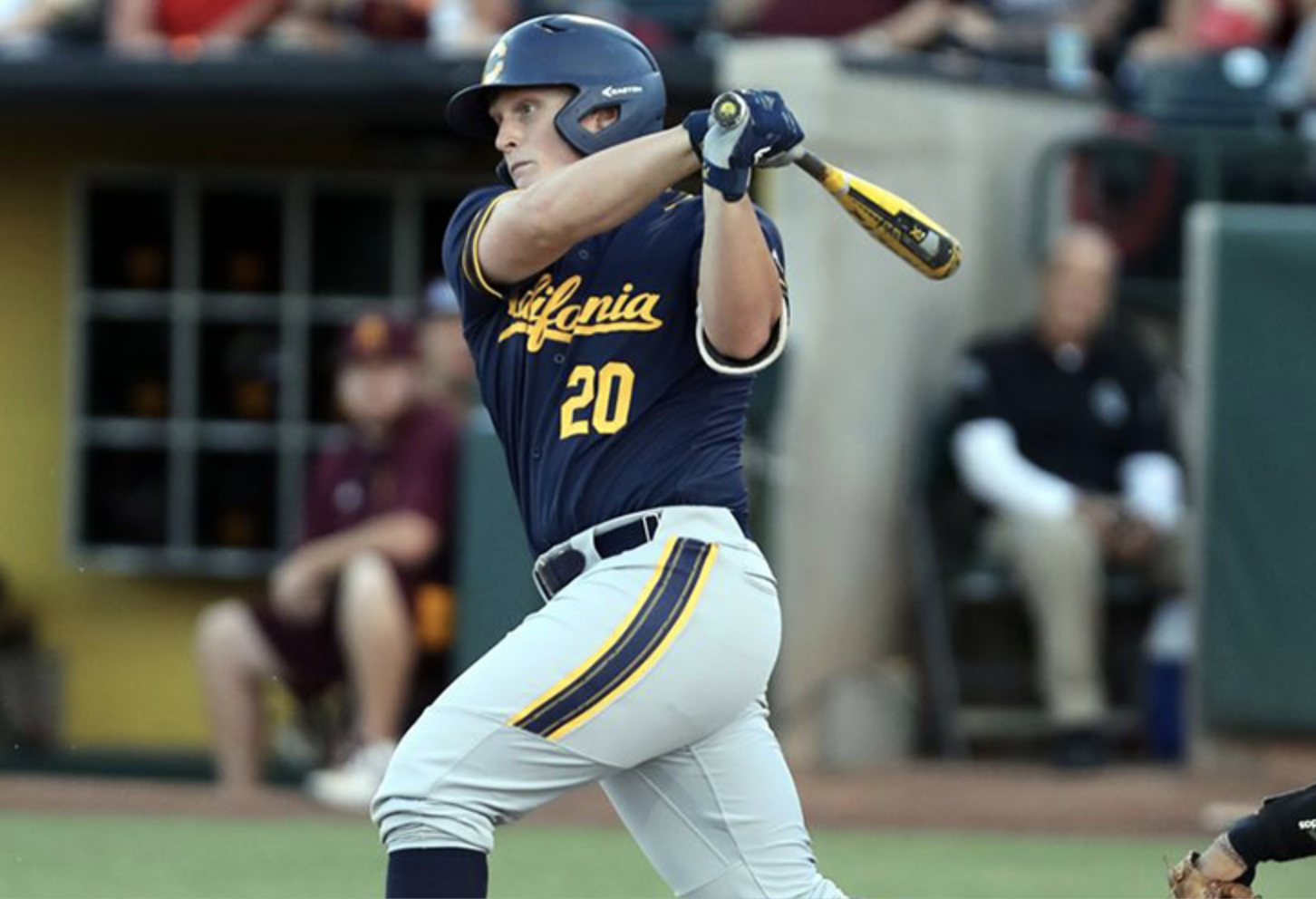 In their first season behind the draft table labeled Miami Marlins, Gary Denbo and the new Jeter regime brought a bevy or talent to South Beach, three of which have already proven to be top 30 prospects. Behind that trio is another group of draftees (Tristan Pompey, Nick Fortes, Chris Vallimont) which stands a very good chance of joining the top tier of organizational talent very soon. This season, although the draft table may look a little bit different, Denbo and Co. are in a fantastic position to match if not better that success. #Marlins CEO Derek Jeter talking about the team’s approach going into next week’s #MLBDraft Says team is focusing on acquiring best available position player talent at the top of the draft. @TheAthleticMIA pic.twitter.com/NfDCKaPxEK — Andre Fernandez (@FernandezAndreC) May 29, 2019 Owners of the fourth overall draft pick, the Marlins are in prime position to have their pick of the litter of many future faces of any franchise. From there, the Fish will pick at #35, a spot which has produced the current 19th overall prospect in baseball Taylor Trammell (2016) as well as All-Star Aaron Rowand (1998) and Johnny Damon (1992). The Marlins will then pick again for a third time within the top 50 picks at #45 overall. That spot is responsible for berthing the likes of Trevor Story (2011) and Jed Lowrie (2005). Whom should the Marlins, at a crucial point in the rebuild, target with each of their first three picks? Herein, we examine. Round 1, #4 - 1B Andrew Vaughn, Cal NCAA - 586 AB, .377/.495/.695, 50 HR, 162 RBI, 0.62 K/BB% With Adley Rutschman, Bobby Witt, Jr and CJ Abrams projected as the first three off the board at this point in time, things get a bit more uncertain when the Marlins hit the clock. Both Vaughn and Vanderbilt outfielder JJ Bleday have the potential to be franchise-altering talents and both have offensive capabilities and tools to hit for both average and power. Given their similarities at the plate, the tipping point for us is where is the franchise thinner: corner outfield or corner infield? And the answer is simple. Vaughn, who is slightly younger than Bleday, was born on April 3, 1998. The soon-to-be 21-year-old attended Maria Carrillo High in Santa Rosa. The accolades started coming early for Vaughn as, in 2013, he was a member of the All-15-and-Under USA National Team. After being named both Freshman and Sophomore of the Year in his district in 2013 and 2014 respectively, Vaughn was named North Bay Junior of the year in 2015 via a .440/.551/.533 line. Those exports allotted Vaughn to be named a preseason All-American prior to his senior year in 2016. Andrew ended his high school tenure by hitting .326/.440/.483, rounding out a .380/.474/.493 tenure. The multi-talented Vaughn also went 13-4 with a 2.05 ERA via a 1.17 WHIP and 166/60 K/BB. As much potential as Vaughn showed to hit for average at the next level in high school via quick hands and wrists, scouts limited his ability to hit for power due to his straight-through swing plane and short stride through contact. An offseason later, Vaughn was doing this: [youtube https://www.youtube.com/watch?v=fIKBAKaVRMo] By tapping into natural raw power very few — including the Cal coaching staff — thought the sub-6-foot, sub-215 pounder was capable of and by adding loft to his swing, Vaughn added another facet to his game. In his freshman year, Vaughn’s 12 homers tied him with teammate and Marlins’ 10th round draft pick Denis Karas for the PAC-12 league lead. “Andrew Vaughn is obviously one of the best players in the country. Really proud of what he did a year ago and after being with him for a year, not surprising,” Vaughn's recruiter turned Stanford head coach David Esquer said after Vaughn's breakout year. “He’s just a class act on and off the field. He makes people better because he kind of pulls people with him with his work ethic.” Vaughn continued to answer questions about his size in his sophomore year when he more than proved the power outbreak wasn’t a fluke. In 2018, Vaughn entered University of California history books. He set a Cal single-season program record by slugging .819 and his .402 BA ranked third all-time by a Bear. Attending the same Alma matter as Chase Utley, Eric Karros, former Marlin Todd Ziele and Mr Marlin, Jeff Conine, Vaughn was named the first-ever Golden Spikes Award recipient in Cal program history and the first to do so in a draft-ineligible year since 1987 (Jim Abbott). He won the award over 2018 first-overall pick Casey Mize, 18th-overall Brady Singer and third-rounder Kasey Clemens. "We couldn't be prouder of the way in which Andrew represents our team and the University of California,” Vaughn’s Head Coach Michael Neu said at the time. "To see him recognized as the best amateur player in America speaks volumes about who he is, both on and off the field, and speaks to the incredible support he gets from a family that has been behind him every step of the way. It's an incredibly exciting day for Cal and Cal Baseball." After proving his power isn’t restricted to metal bats by slashing .308/.368/.654 with five homers in just 52 ABs in the prestigious Cape Cod League last summer, Vaughn hit 385/.539/.728 line in his junior year this past season. In a single-season low in ABs, Vaughn tallied a career high 53 walks contrasted by just 30 Ks, bringing his collegiate career K/BB% to a ridiculous 0.62%. What the 5’11”, 210 pound Vaughn lacks in size he makes up for by way of freakishly raw power, especially for a guy of that stature and a very advanced feel for making the most of it. By understanding situations, minimizing the strike zone and very rarely chasing too far outside of it, Vaughn, who doesn’t have to discount contact for power, owns one of the most complete offensive skill sets in the entire draft. Though he strictly played first base in college, Vaughn owns an explosive defensive arm that regularly reached the mid-90s from the mound in high school. During recruiting, scouts saw a future for him at third base. Though it would require attentive coaching and a lot of patience Vaughn is open to the possibility. With modestly graded 60 grade power and contact, a 50-grade arm and defense, Vaughn is considered by some scouts to be the best prospect in the draft and, should he fall to the Marlins at fourth overall, an absolute steal. Due to the fact that Vaughn’s approach, mechanics, swing path, patience and baseball IQ are already so advanced and effortless, we place the multi-faceted talent’s ceiling extremely high: SoFla product Ryan Braun, a career .297/.360/.534 1B/3B figure despite fairly limited 6’2”, 205 lb size. Round 1 (CBA), #35 - RHP Josh Wolf, St. Thomas Catholic HS (Houston, TX) Wolf is a well-built pound prep righty out of St Thomas High in Houston, Texas, the same Alma matter as recent MLB promotee, Blue Jays' number nine prospect, Cavan Biggio. Thought for certain to become an honoree of his commitment to Texas A&M before the beginning of his senior season, Wolf turned scouts’ heads toward him once again when he reached 97 in his first start of the year. After parlaying his newly recognized velo into a lights-out season, Wolf has vaulted himself into late first round/early second round selection merits. [youtube https://www.youtube.com/watch?v=WkjQMBjP2S4] Standing 6’2”, 165, over ten pounds heavier than he was in his junior season, Wolf coupled his added size with a lower arm slot in order to gain over seven MPH worth of velo on his fastball this past season. Along with a four-seamer that ranges from 90-97, Wolf also owns a knee-buckling, low-80s 12-6 curve. The 19-year-old’s distant third pitch, yet one that is already flashing plus, is a mid-80s change. When at its best, the work-in-progress pitch shows good fade and sink. A guy who already adds and subtracts from his wide velo range effectively and a guy who has shown the ability to quickly grow in to added size by making positive adjustments, Wolf has shown poise and maturity well beyond his years, giving scouts a lot to rave about. After quickly taking draft boards by storm this past season, Wolf is a guy who has done everything right. Should that continue, with room to add at least 20 more pounds of muscle mass, Wolf is a teenager with big things written all over him. Given Michael Hill’s recent past with taking a liking to prep hurlers, we wouldn’t doubt if the Marlins’ sights have been fixed on Wolf for some time. With two plus pitches via great spin rates on his shapely change which ducks and dives and curve which has a nice 11/5 arc in addition to his huge fastball, Wolf already shows the makings of a future ace, reminiscent of Stephen Strasburg. While he also shows the effort in his delivery a la Strasburg and the need to gain the ability to repeat it in order to remain healthy and be effective at the next level, an outlook that would make some Marlins fans wary of selecting him this high, Wolf’s ability to match Strasburg’s velo as well as his advanced blueprint for two plus breaking pitches is well worthy of this selection by a franchise in the nascent stages of a rebuild that will give him no reason to rush. Given time, we place Wolf’s modest ceiling high: Gerritt Cole, a current 3.14 FIP hurler by way of a 1.17 WHIP and 3.94 K/BB% with room for more. Round 2, #45 - SS Greg Jones, UNC Wilimington NCAA - 443 AB, .309/.452/.458, 37 XBH, 1.29 K/BB, 56/14 SB/CS In Vaughn, the Marlins will acquire arguably the best all-around hitting talent in the draft. In Jones, they’ll reign in not-so-arguably the fastest player available this June. Gregory Jones Jr. was born on March 7, 1998 in Cary, North Carolina where he attended the high school carrying his township’s name from 2013-2017. A varsity participant in each of his four high school years, Jones hit .355/.493/.496. Very early on in his baseball career, Jones’ calling card became his speed and voracity on the basepaths. In 79 high school games, the infielder terrorized opposing batteries, stealing 45 bags in 75 attempts (60% success rate). Ranked 75th overall in the 2017 MLB Draft by Baseball America, the two-time All-Conference, one-time All-Regional and All-American honorable mention was drafted by the Orioles in the 17th round. Jones forwent that selection in favor of honoring his collegiate commitment to UNC Wilmington. Breaking in to the collegiate ranks, Jones started 60/62 of the Seahawks’ games in 2018 and hit a very respectable .278/.412/.370. His elite jets allowed him to steal 16/20 potential bases. “As a freshman, I played a pretty big role,” Jones said. “It was either step up or get left behind. I chose to step up. That just shows what I can be this year.” What could Jones be this past year? How does a .343/.491/.551 hitter and 40 base stealer sound? By leading the Colonial Athletic Association in OBP, steals, runs scored (69), triples (9), hits (74) and walks (53) as well as ranking second in BA and fourth in SLG all while seeing the second most plate appearances in the league, Jones was named the CAA Player Of The Year. Jones also appeared on national leaderboards with the third most triples and sixth most SB. All of this has pushed Jones up into the conversation to become a late-first round choice and, at the very latest, an early second round selection. [youtube https://www.youtube.com/watch?v=Hdw6xmO-3wo] Watching Jones hit, his approach screams future lead-off hitter. Approaching from deep in the box, Jones views the strike zone extremely well, forcing his opposition to come to him. The weak point in Jones’ game at present is his swing. Although he flashes the bat speed necessary to succeed as a top-of-the-order contact/speed-first threat, the hack shows the susceptibility to get long, limiting him to weak contact, easy outs and, in the past, swings and misses. Via this hole, Jones’ hit tool has been limited to a sub-50 grade and kept him out of the conversation involving early first round selections. That said, Jones made huge strides last year in the area of whiffs while continuing to grow into his body. Given proper time to fill out — which the rebuilding Marlins should have no problem giving him — Jones is a future catalytic threat capable of a Dee Gordon-esque ceiling. Like Gordon, Jones is a natural middle infielder who could make the move to center field at the next level. While his natural raw speed allowed him to field the shortstop position decently at the collegiate level, scouts say Jones profiles better as a center fielder at the next level due to limited immediately readability of trajectory off the bat. Given that, Jones’ unquestionable ability to cover advantageous ground and then some would make him an immediate shoe-in to become Juan Pierre v. 2.0 in center, with the capability to grow into more. Stay tuned to Fish On The Farm both here and on social media (@marlinsminors) on Twitter, Instagram and Facebook for continuing coverage of the MLB Draft all June long.
 -
View full article
-
 Bubba Hollins: aesthetically, one of the best names in the Marlins system, if not in all of MiLB. That you probably know. What you may not know is that Bubba is actually David Hollins, Jr, the son of a 17.8 career WAR corner infielder. Accordingly, Bubba is the owner of a pedigree, upbringing and support system that spawned a fantastic amateur career and is beginning to birth professional success. By hitting .338/.411/.508 this past month, Bubba is our first 2019 Prospect Of The Month. Born on December 6th, 1995, Hollins was named after his father, carrying the name David Jr. However, Hollins did not go by that name for very long before he was given an alternate everyday moniker. According to Hollins, his stout build even as a child is what led to the nickname. It’s stuck with him ever since. “When I was a baby I was really fat and chubby with chubby cheeks. My mom said you could barely see my eyes when I was a kid. So she just started calling me Bubba, Bubs, nicknames like that,” Hollins said. “I don’t know, it just sort of stuck with me through the years. All my close friends and family have all called me Bubba and never really called me David at all. I loved it and it’s all I really knew. It’s a funny story.” In addition to earning the title given to him by his mother early in life, Hollins also importantly benefited from growing up within the game. As the son of Dave Sr, spent many an occasion watching and and under the tutelage of a .260/.358/.420 career hitter. According to Bubba, he made the most of the days he was able to spend with his dad, under the “He was gone a lot, but every time he was home we’d work together almost every day. When it came to college ball and pro ball, he has helped me tremendously on the mental side; just to adapt faster to the game and to slow it down. To be around him and [fellow major leaguers] at a young age, it’s been very helpful. For him to watch me now play at his level, it’s pretty cool. It’s weird, but it’s a cool feeling.” Along with his alternate title given to him by his parents, the thing that caused Hollins to garner it — his physique — also remained with him through his amateur career. “I was always one of the smaller players on the team. I was only about 5’11”, 180 my senior year but before that, I was even smaller,” Hollins said. “I always took that with a chip on my shoulder to go out there as the smaller guy and play with an edge. That’s how I looked at things.” Hollins used said shoulder-chip to refuse to let his limited size and stature limit his production. After doubling in football as the starting quarterback for his alma matter’s squad, Hollins hit .310/.393/.451 in two years in junior college. He credits that tenure spent with the Titans as a huge stepping stone in his career, one which truly allowed him to ready himself for a professional career in the game. “My freshman year was definitely a bit of a shock with how fast the game was. It helped me get acclimated to the speed of the game being around that competition in the conference,” Hollins said. “My sophomore year I felt much more comfortable and got used to playing at that speed. My head coach Ryan Beckman has been an amazing help to me. Whatever you need, that guy will always be there for you. My teammates there — we were all competing for a job at the next level. So we all made each other better. It was a great group of guys.” In 2017, Hollins made the jump up Division I ball at St. Bonaventure in upstate New York. In a single season there, the 24-year-old Hollins hit .290/.379/.485 with eight homers and nine doubles. During that tenure, Hollins tied Bonnies’ team records by recording six hits and eight RBIs in a single game. "Bubba is an extremely hard worker and a great teammate. He has always wanted to follow in his father's footsteps (former Major League All-Star Dave Hollins) and St. Bonaventure baseball is very happy for him," Bonnies head coach Larry Sudbrook said at the time. "We would've loved to have had him back, but we certainly respect him taking a shot at the dream and we wish him the best." Hollins didn’t head back to St Bonaventure in favor of signing with the Marlins who inked him as a minor league free agent in August of 2017. According to Hollins, the decision to forego his senior year of college was spurred not only by more reps against better competitors but by work he did physically leading up to the draft. “I took off playing summer ball because I wanted to get more do more with my body to prepare me for my senior season. So I was an eight out of 10 in terms of being more ready for pro ball,” Hollins said. “Mentally, I was always ready to go. But physically I was much more prepared that time around.” Congrats to #Bonnies 3B Bubba Hollins who has signed a pro deal to play in the #Marlins organization! Details to follow. pic.twitter.com/hkRzs6FCqi — Bonnies Baseball (@BonniesBaseball) August 1, 2017 Last season, the Marlins experimented a bit with Hollins, trying to gauge his current level of expertise. During that time, Bubba saw reps at three different levels from rookie ball to A+. Although his tenure at each level was limited over his 57 game campaign was limited, Hollins says he picked up something from each stop in his travels that have aided him in his hot start this year. “I was bouncing around so much and not in the lineup regularly, but watching from the bench, it was pretty easy to see the difference in [levels]. In high A, those guys know how to command 2-3 pitches really well, low A maybe two pitches and short A was more like wildly effective; guys that just try to throw really hard,” Hollins said. “I think it is a big jump between low A and high A. Pitchers at that higher level really know how to pitch. They’re really good up there.” The big difference for Hollins this season has been two-fold: being more comfortable in his approach and being able to maintain the mindset to take the game as it comes to him. Via that outlook, Bubba has put together one of the best months on the Midwest League circuit, slashing .338/.411/.508. Among hitters with at least 70 ABs, Hollins’ May BA ranked second and his OBP ranked fifth in the Midwest League. Furthermore, Bubba’s 177 wRC+ ranked third. Hollins credits the hot start to being able to repeat his approach stemming from a stance which he is more cozy in as well as to his ability to take the game as it comes to him, resisting the urge to force things. “I think the most important lesson is to take everything a day at a time. I’ve been telling myself in the offseason that this year was going to be different and to just take one at bat at a time and on the field one pitch at a time,” Hollins said. “I’ve got a batting stance I’m finally comfortable in and I’m just able to focus on the baseball. Just to try to stay on the heater and stay middle. Whatever happens from there, happens.” Via his fantastic month of April, the 23-year-old has succeeded at a very advantageous time, one in which a rebuilding organization is looking for young players to step up and make themselves known. However, much in the same way that he has learned how to take one at-bat at a time, Hollins is staying in the moment, focusing on the day and task at hand. According to Bubba, he’s concerned with only that and not with what is in front of him. In this way, he is limiting distraction and streamlining his achievements, ones which should follow him up the MiLB ladder and beyond. “I just come to the ballpark and take care of business every day. If you’re taking care of your business, you’re helping the ball club, wherever you are,” Hollins said. “At the end of the day, I’m not thinking about anything else. The best thing to do is to focus on yourself and helping your team out.” From a compact and low straight-away stance, the 6’1”, 200 pound Hollins cuts down on an already small strike zone. The difference for Bubba this season has been in his aforementioned comfortability in his stance and approach. By setting up from further back in the box, Hollins has garnered the ability to let the ball to get deeper, aiding in his plate vision, swing selectiveness and consistency in getting the to drop. Couple that with his ability to cover the plate extremely well and Bubba is already painting beautifully over his hit chart canvas. Hollins’ swing itself has always held good speed through the zone. The mostly-straight through line drive cut is built for a big average and, due to good raw upper body strength and lightning quick hands, the occasional gap and/or fence. At current, his offensive ceiling is that of a constant on-base threat capable of respectable power numbers, a la Martin Prado, a similarly sized 6’0”, 215, 289/.337/.416 career stick. In the field, Hollins is a natural third baseman with good off-the-bat instincts and a strong right arm that makes accurate throws across the diamond. In 61 games, he’s committed just five errors. Hollins also has eligibility at first base. Bubba’s name -- although recognizable -- is not one the average fan might have heard mentioned too often, especially during the current state of the rebuild. However, that all could be about to change. Rule 5 eligible next season, if his hot hitting continues, Bubba, 23, should be placed on the fast track up the minor league ladder.
 -
View full article
-
 With the turn of the tide for the Marlins franchise comes an influx of new talent on the shores of Jupiter, Florida. They come bearing jagged teeth that prove to get even sharper over these next five months. The man overseeing that process will be former major leaguer Todd Pratt. Over his fourteen year career, the .251/.344/.398 is probably most remembered for this moment in the 1999 Division Series. Prior to his playing career, Pratt embarked upon coaching in 2010 as the inaugural manager of the West Georgia Tech Golden Knights baseball team. After building the program up from club-level to Division I status, Pratt was named the school’s athletic director in 2011, a position he held through 2016. Pratt came to the Marlins in 2017 to coach the A Greensboro Grasshoppers. After two seasons there, he heads up the ladder to A+. Following Pratt to Jupiter this year are many of the young prospects Greensboro rostered last year. Joining the promotees will be a few new signees and prospects acquired via trade. Altogether, they make up a star-studded roster which holds 12 of the organization’s top 30 prospects, including four of the top ten. It is far and away the most talented roster Pratt has been responsible for. According to the skipper though, he is heading into the season with no weight on his shoulders. “With all of the prospects, and I think there’s more prospects here than is being noted, you’d figure there would be a lot of pressure on the manager. I think it’s a pleasure to be he manager. I’ve had most of them before so I’m looking for them to have a good season, just playing the way they’re supposed to be playing," Pratt said. "It is an honor to be able to lead a team that could be considered the future of the Marlins. I will use my 24 years of professional experience to keep the ship steady. My job is to get them ready daily and mentor them so they can become the player they and the Marlins want them to be." In moving from the single A to single A advanced ranks, Pratt will be tasked with guiding some of the Marlins' top young talents to some of the biggest challenges they've faced in their careers. According to Todd, the toughest of those tests is being able to make positive adjustments as your opponents go through the same struggle. Coach Pratt says that is the biggest separator between ability at the A+ level. "The big difference is the consistency of the talent. Players in high A have been around a couple of years professionally and know what it takes to grind everyday in a 140 game season. Players at this level are starting to learn they must make adjustments during the season as the opponents do as well. Scouting and analytics have come a long way since I played at this level so that needs to be taken into consideration as well." Lineup SS José Devers CF Victor Victor Mesa LF Tristan Pompey 1B Lazaro Alonso 3B James Nelson Riley Mahan DH Isael Soto C Nick Fortes RF Cameron Baranek [caption id=attachment_1242" align="aligncenter" width="830] Jose Devers (Photo by Alex Carver)[/caption] SS José Devers 2018 (A-A+) - .272/.313/.330, 16 XBH, 26 RBI, 47 R, 49/16 K/BB, 13/6 SB/CS Devers is a 2016 Yankees’ international draft signee out of Somana, DR. After spending the first 11 games of his pro ball career in the DSL (.239/.255/.326), the 17-year-old transitioned stateside where he lived out the rest of his rookie season. In 42 games with the Yankees East Gulf Coast League squad, Devers hit .246/.359/.348 with a 21/18 K/BB and a 15/3 SB/CS. He also yarded his first career homer. Devers accomplished all of this against competition 2 1/2 years older than him. Devers’ exceptional raw talent as well as his already mature speed and fielding prowess garnered the attention of Marlins scouts. Last winter, he was part of one of the biggest trades of the offseason, coming to the Fish in the Giancarlo Stanton swap. Upon joining the Marlins as a viable but distant third piece to both Starlin Castro and Jorge Guzman, Devers was a more-than-solid for-average threat, hitting .273/.313/.332 in his first 85 games stateside. Those exports have allowed him to make the jump up to A+ this season. He will be competing in the pitcher-friendly Florida State League against competition nearly four years his elder. He is officially the youngest player on the circuit. Not only does Pratt feel Devers is up for that challenge, he has made the teenager his leadoff hitter to start the campaign. [youtube https://www.youtube.com/watch?v=sept6GwuOvY] Watching Devers this preseason, it isn’t difficult to recognize what the organization sees in Devers’ maturing natural abilities and maturing physical stature. After coming in to camp with at least 20 pounds of added muscle mass to his listed 155 pound stature, Devers has learned quickly how to put that weight to use. Approaching from a straight-away stance from the back of the box, his slashy singles swing is beginning to show some loft and he’s garnered the ability to stride downward into contact. His placement in the box allows him to use his plus plate vision to his advantage and once on base, Devers is an absolute weapon. Still very much a kid with tools that are growing at a very quick rate and a guy who has the potential do damage in a multitude of ways offensively on top of an already-elite defensive skill set, Devers projects as an every day starter at shortstop and future table-setter capable of a ceiling approaching a lefty-hitting Edgar Renteria, a .284/.343/.398 career hitter with a 73% SB% and an 8.9 career dWAR. [caption id=attachment_1241" align="aligncenter" width="830] Victor Victor Mesa (Photo by Alex Carver)[/caption] CF/DH Victor Victor Mesa Mesa is the crowned jewel of the first offseason orchestrated by Jeter and Co. The top international prospect, Mesa (along with his 17-year-old brother Victor Jr) signed with the Marlins for $5.25 million. Here’s why: [youtube https://www.youtube.com/watch?v=K7KQgt1ZsuU] After defecting from Cuba in 2016, Mesa hadn’t played an inning of organized baseball in almost two years when he suited up for Team Cuba in the World Baseball Classic. For that reason, the Marlins hoped to get Mesa as many at bats as possible this spring. That plan was turned on its head when Mesa injured his hamstring while running the bases in his first official stateside start. According to Pratt though, despite missing out on the opportunity to get some valuable ABs in this spring, Mesa has fully recovered. "Coming into spring early he had some nagging stuff but anyone's gonna have that going from not playing at all to being out there every day. He's a full go," Pratt said. You don’t have to watch many videos or read many reports in order to see what the Marlins invested in when they doled out the biggest payday to an international free agent in franchise history. In Mesa’s approach, we see a lot of Giancarlo Stanton. From a slightly spread stance with his front foot straddling the edge of the box, Mesa uses a front-foot toe tap trigger to step into the ball. From there, his best swings explode through the zone from. The follow through is well-balanced as he keeps both hands and eyes on the bat through contact. From there, Mesa allows 70-grade speed to go to work for him. That speed follows him in to the field where he is exceptionally capable as a center fielder. Where Mesa will need to improve is creating leverage and loft to his swing in order to make the most of his abilities. On top of that, VVM will need to adjust his timing and pitch recognition as he will consistently be facing some of the best pitching the baseball ranks anywhere have to offer. According to Pratt though, Mesa is perfectly capable of accomplishing those feats but after spending so much time off the field, his growth will be safely guided. "He's not an 18-year-old kid; he's 22 years old. So he's got an idea of what he wants to do; he just needs to play every day. There may be some days he has to take off because he hasn't played in two years. We're going to make sure he's rested and at 100% every day he walks out there," Pratt said. "Obviously, we want to get him as many ABs as possible but we don't want to break him down. It will be a guided process." Mesa’s efforts in his first full pro season will be two-fold: adjusting advantageously on a North American field and adjusting to life in the US off the field. "The game doesn't change. The communication aspect is probably most difficult for these Latin players. I think we are right on track with him," Pratt said. "We understand each other and I think he's done well with Kevin Witt, our hitting coach. "He's an exciting player who will play center field for us and we will see what develops." If Mesa can accomplish both, the 22-year-old has the upside of a special MLB talent with the ceiling of Odubel Herrera, currently a .280/.336/.429, 54/23 SB/CS threat with at least 60-grade defense. Pratt sees the same potential in Mesa and says that once he makes health his ally, he will quickly begin to dominate the Florida State League and beyond. "He just needs the reps and to learn what being a pro is all about. He was slowed in spring training due to some minor injuries, but he is starting to get healthy," Pratt said. "I cannot wait until he is 100% as he is showing signs why he was highly sought after as a free agent out of Cuba." [caption id=attachment_1243" align="aligncenter" width="830] Tristan Pompey (Photo by Alex Carver)[/caption] LF Tristan Pompey 2018 (RK-A+) - .299/.408/.397, 12 XBH, 23 RBI, 47/32 K/BB, 10/5 SB/CS Pompey is the Marlins first round pick out of the University Of Kentucky in 2018 where he had a .321/.426/.521 career. After his $645K payday, Pompey broke into pro ball with Pratt’s Grasshoppers last season. There, the multiple time All-American hit .314/.422/.430 with four doubles and his first two professional homers in 86 ABs. He also stole five bases in eight attempts and had a 22/16 K/BB before being called up to the Hammerheads. Pompey’s current skill set translated with superiority to the more pitcher friendly Florida State League ranks. In equal time with the Hammerheads (24 games), he hit .291/.396/.384 with five doubles, a homer, a 4/1 SB/CS and a 21/13 K/BB. He begins 2018 back with the Hammerheads, but if he enjoys similar success for the bulk of the year, he could wind up in AA Jacksonville by season’s end. “He started with me in Greensboro last year and really didn’t belong there. He got up here and it was the same consistency with better ballplayers and the (Florida) heat,” Pratt said. “He can swing the bat from both sides with good discipline and a good knowledge of the strikezone. I’m very impressed.” [youtube https://www.youtube.com/watch?v=cftSyW4LCa0] Approaching from a split stance, Pompey brings his front leg inward to the ball with a medium-high timing trigger before engaging a well-leveraged swing with good uppercut action. It’s a stroke tailor-made for doubles. Because of the inside-out action of his lower half, Pompey favors pull-side contact, but, thanks to his parents teaching him how to switch hit when he was a child, Tristan is able to mirror his mechanics from both sides of the plate, making him a much more complete offensive threat. Couple that fact with a patient eye and the bat speed to fight off tough pitches, Pompey projects as a plus for-average threat with the ability to add even more power. He will need to add more torque and use of his hips in order to play up to his full potential of the back half of that equation, but with more physical growth, that should come naturally. Add to the fact that Pompey is capable of plus speed on the basepaths, the 22-year-old projects as a future centerfielder, hitting top three in the batting order. [caption id=attachment_1244" align="aligncenter" width="830] Riley Mahan (Photo by Alex Carver)[/caption] 2B Riley Mahan 2018 (A+) - .250/.298/.340, 29 XBH, 40 RBI, 127/24 K/BB Mahan is another Kentucky alum selected by the Marlins, this time from the 2017 draft class. Before his .311/.360/.524 three year career at UK, Mahan was a high school standout for the Archbishop Moeller Crusaders in Cincinnati, Ohio. There, he was a .367/.460/.538 career hitter and a 2014 preseason All-American. Postseason, he earned first team All-State and All-GCL honors. After hitting .304 with 22 RBI in the Cape Cod League in 2016, Mahan hit .336/.392/.618 as a senior at UK. The last of those figures was driven by a team leading 15 homers and 23 doubles. He also drove in a team high 67 runs. The boost in power was a huge catalyst in Mahan being selected at his $525K-worthy draft slot.After just six games with the Grasshoppers, Mahan suffered a groin strain, bringing an end his 2017 calendar year. However, after a strong camp, the Marlins saw enough to task the middle infielder with a quick graduation to A+ Jupiter to begin 2018. After missing two weeks early in the year with an aggravation to the same injury, Mahan hit right at the Mendoza line, slashing .250/.298/.340 with a team leading 23 doubles, three triples and three homers. With similar home and away splits, what really hampered Mahan from standing out even more offensively was his 31% K rate and 127/24 K/BB. Mahan will look to rectify that area of his game this season as he faces off against the same level competition. [youtube https://www.youtube.com/watch?v=aH1TC8Y7yLU] An athletically built 6’3”, 200 pound specimen, Mahan hits lefty and throws righty. From a compact closed stance, he approaches from the back of the box, but crowds the plate, allowing him to get his average sized limbs all the way across the zone. In trying to create leverage in his swing though, his cut gets a bit long, leading to either weak contact or swings and misses. When Mahan shortens up though, he flashes a 50 grade hit tool stemming from good bat control, capable of a good average. His future will depend on his ability to read pitches more consistently, work counts and stay simple. On the other side of the ball, Mahan possesses a good glove and nimble feet, but his throwing arm is just average, which limits his infield ceiling to second base. While that is where the team would like to continue to develop Mahan, the 23-year-old may be converted to left field during the fast-tracking process. Entering an important developmental season, we will follow this ceiling Kelly Johnson (.251/.330/.422) and floor fourth outfielder New Year’s Eve baby closely. [caption id=attachment_1250" align="aligncenter" width="640] Cameron Baranek (Photo by Tony Capobianco)[/caption] RF Cameron Baranek 2018 (A-A+) - .244/.307/.347, 17 XBH, 39 RBI, 79/26 K/BB With the early season promotion of Corey Bird who heads up to the Jumbo Shrimp, right field opens up for Cameron Baranek (pronounced BAH-rah-NIK), a Marlins’ draftee from 2017. Baranek comes to the Miami after a two years in JuCo at Santa Ana College where he was a .344 BA, 435 OBP hitter and after a single season at Hope International University where he hit .364/.486/.672 with 14 homers and a 20/10 SB/CS on top of a 32/43 K/BB. Baranek’s single season totals at HIU not only helped his school to an NAIA World Series berth, they broke several school records including HR, SLG, total bases and SB. Following his standout junior season, Baranek broke yet another Hope International mold, becoming the first player from the collegiate program to be selected in the MLB draft. The Marlins took Baranek in the ninth round at 269th overall. “It’s quite an honor being able to represent HIU, and being the first draft pick from the school. The school and coaching staff were so helpful in every aspect to allow me to be the best student athlete I could be,” Baranek told us last season. “Being a smaller Christian school with a focus on quality education and it’s a really awesome place for growth, the coaching staff and baseball program is top notch and to get a good foundation and name in its second year is huge and hopefully will draw more athletes alike with the same goals to win a championship and make it to the next level.” After finishing his 2017 campaign by hitting .234/.306/.351 with 22 RBI and nine total XBH including his first career homer in the GCL, Baranek received the call to full season ball last year. There, in Greensboro, the lefty quickly proved he was more than capable of low A ball, hitting .319/.400/.479 with four homers, a 19/13 K/BB and a 4/2 SB/CS in 94 ABs. After those 28 games, Baranek was given the promotion to A+ Jupiter where he lived out the year. Overall, he hit .208/.259/.284, but that doesnt tell the whole story of how he started to figure things out late in the year. In the month of August, Baranek hit .230/.284/.324 with four doubles, a homer and 13 RBI. He had a five game hit streak from August 10th through 16th. Baranek will look to build on that success this season as he begins his third pro season back in the Florida State League. A stout but athletic 5’10”, 195, Baranek owns great bat speed and a mostly lateral swing with some slight loft, allowing him to hit gaps and occasionally a fence. Once on base, Baranek exhibits plus speed, capable of double-digit steals. When he’s making consistent contact, Cam is a catalytic type threat that can start a fire from either the top or bottom of a lineup. The main area of offensive improvement for Baranek is his plate discipline, especially against same-side pitching and gaining the ability to adjust to the count, attributes which should come naturally as he faces off more frequently against fellow professionals. With a 90+ MPH outfield arm capable of accurate throws that carry and good outfield readability, Baranek is a floor fourth outfielder and lefty bat off the bench and a ceiling starting and/or platooning outfielder with the prowess of a .270+ BA and a .400+ SLG. While he isn’t a name that will stand out to even the informed Marlins fan right now, Baranek could be on his way to quietly sneaking on to an MLB roster sometime in the not too distant future. Pitching Rotation As formidable as the Hammerheads’ starting lineup is this season, their pitching rotation is even more drool-inducing. The star-studded staff includes two Marlins first round picks, a fire-balling international draftee and two 20th round picks who are in the midst of standout minor league careers 1. Jordan Holloway 2. Trevor Rogers 3. Braxton Garrett 4. Edward Cabrera 5. Will Stewart [caption id=attachment_1247" align="aligncenter" width="830] Braxton Garrett (Photo by Tony Capobianco)[/caption] RHP Braxton Garrett 2018 - DNP (Tommy John) Garrett is the Marlins’ first round pick from 2017 out of Florence High School in Florence, Alabama. Long and lanky with plenty of physical projection and velo which already sat at 92 with a best-pitch curveball and above average changeup, the lefty was ranked as the seventh best overall pitching prospect and second best lefty in his draft year of 2016. [youtube https://www.youtube.com/watch?v=HDF6jkHQX-E] The Marlins selected Garrett away from his Vanderbilt commit at #7 overall, rewarding him a $4.1 million payday. After an impressive camp, Garrett was assigned to A Greensboro. Not long after that, though, the 6’3”, 190 pound lefty went from the highest of highs to the lowest of lows. After just four starts and 15.1 IP, it was revealed that Garrett’s throwing shoulder required Tommy John surgery. The injury cost him the rest of 2017 and all of last season. This year, Garrett was one of the first Marlins’ back on the field as he participated in Captain’s Camp. In addition to his repaired shoulder, Garrett v. 2.0 also sports a pair of spectacles on the mound. But as a few things changed for Garrett, more things stayed the same, including Braxton’s mindset and his drive to succeed. According to Mark DeFelice, those intangibles attributed a lot to the reason the Marlins drafted Garrett and they will continue to aid him most handily in the future. “He’s a guy that the organization spent a lot of money on. Obviously it was related to stuff but I think moreso the kind of person he is, his character, his integrity,” DeFelice said. “The type of person he is is going to withstand the injury. Rehab is grueling; you never know how someone is going to respond, be it physically or mentally. But I think he’s checked all the boxes when it comes to that.” According to DeFelice, Garrett, now at 100% can go full bore 100% of the time, an aspect of his game that should allow him to make a huge leap in progression this year. “I absolutely loved what I saw (in Greensboro) and moving forward, I think he’s going to be that much better having that healthy arm,” DeFelice said. “When something is ailing you, you tailor back. Now we are in the building process, building his arm strength back to getting that feel for his breaking ball. He’s made strides up until this point and I think that will continue into the year.” A 6’3”, 190 pound physical specimen, Garrett is capable of an absolutely filthy three pitch mix. Anchored by a four seamer that is capable of 95 but usually sits 92, he mixes in an improving 85-87 mph changeup, pitching in to his best pitch high 70s curve which shows tight arc and late drop down into his spot on the lower half. Garrett shows the ability to both pitch cautiously away from contact on the outer half and come right after hitters, busting them in on the inner quadrants. Nearly everything is down and even when he isn’t at his best, Garrett is able to get by by inducing weak contact. A guy who shows the ability to adjust to his present stuff from start to start and even inning to inning, Braxton, despite the surgery, still projects as a front line starter with an ace's ceiling. [caption id=attachment_1251" align="aligncenter" width="830] Edward Cabrera (Photo by Chris Robertson/MiLB.com)[/caption] RHP Edward Cabrera 2018 (A) - 100.1 IP, 4.22 ERA, 1.465 WHIP, 93/42 K/BB Cabrera is a Marlins 2015 international signee out of the Dominican. Upon signing his $100K contract, the 18-year-old was immediately assigned to stateside ball in the Gulf Coast League, where hitters nearly three years his elder touched him up for a 4.21 ERA and 1.362 WHIP in his first 47 IP. However, despite subpar numbers, the Marlins saw the true potential in Cabrera's fiery arm, skipping the regular reacher of 96 MPH up to low A in 2017. There, the numbers were even less satisfying: 5.30 ERA by way of a 1.4 WHIP in 35.2 IP. Still, the organization saw past the numbers and tasked Cabrera with his first year in full season ball last year. As a Greensboro Grasshopper, the 20-year-old managed a 4.22 ERA despite a 1.465 WHIP. In by far the most lengthy season of his career in a hitter friendly league, Cabrera managed a 2.21 K/BB. According to his pitching coach Mark DeFelice, Cabrera's success stemmed from better confidence in his changeup and his ability to turn it in to a plus pitch. "He was only 20 years old so with that maturity level, the question was can he handle his emotions? When he started getting hit, he had the tendency to go to the breaking ball a little more or start rushing and then his fastball started getting up in the zone and he started getting hit. He was able throughout the last year, to stay with the fastball command down and then elevate when he needs to," DeFelice said. "The breaking ball had been there but his changeup development last year had gotten a little better. In previous years, he was only using 2-3 a game but we had him up to 15-20 per game. It's almost like a two seam fastball coming out of his hand with the depth that's created. I think moving forward his changeup has turned into his best secondary pitch over his breaking ball. This year, that's going to be a pitch that's going to take him from where he was to where he needs to be as a big league pitcher." Pratt, who will be Cabrera's head coach for a second straight season, echoes DeFelice's sentiments and likens the 20-year-old to a very high ceiling. "He is over powering and his breaking ball is really starting to develop. The change was a plus pitch for him last season and as he is becoming more confident throwing it," Pratt said. "He has three plus pitches in his arsenal now and he has shown dominance here early in the season. He will be a dominant starter in the future and I see him as a front-end starter on any staff." [caption id=attachment_1245" align="aligncenter" width="830] Will Stewart (Photo by Tony Capobianco)[/caption] LHP Will Stewart 2018 (A) - 113.2 IP, 2.06 ERA, 0.98 WHIP, 90/21 K/BB Stewart is a Phillies' 20th round pick out of Hazel Green High School in Hazel Green, Alabama. Plucked from the ranks of the unknown as just the twelfth professional to ever attend HGHS, Stewart stands to become just the second MLB player to spend his secondary school years there and the first to ever be selected straight out of the institution. While the school isn't rich in baseball history, Stewart had scouts flocking to his starts. The primary reason for that was advanced feel and control over a sinker/changeup combo that had hitters spellbound. Upon joining the professional ranks as an 18-year-old, Stewart had a bit of a wake-up call, pitching to a 4.29 ERA via a 55/32 K/BB over 65 innings in the GCL from 2015-2016 and a 4.18 ERA via a 1.48 WHIP and .268 BAA in short season ball in 2017. Last season though, in his first year in full season ball, Stewart's fastball velo took a timely jump up to the 90-93 MPH range, giving him a much more advantageous differential down to his 86-88 MPH arm-side fading changeup and developing slurvy 84-86 MPH slider. In addition, Stewart commanded the zone with much more efficiency in 2018, throwing all three pitches for consistent strikes and keeping everything below his opposition's eye level, leading to many long swings and weak contact. Stewart generated ground balls at a 62% rate, tops in the South Atlantic League. [youtube https://www.youtube.com/watch?v=lRpCm5tQURo] A fairly averaged sized 6'3", 175 pound specimen, Stewart puts every bit of his stature to use in his approach, especially vertically. Stretching all the way downward in his slow windup, Stewart strides and powers through his motion from a mid-3/4 release, adding deception to his delivery. The change of speeds and his ability to hide the ball as well as his repeatable release points keep hitters guessing and prevent them from timing him. In place of one elite pitch, Stewart is the owner of three plus offerings with a good feel for each of them. He will get hurt when he isn't commanding well, but those instances are growing fewer and farther between. If his fastball velo takes another jump or if his slider can start generating more whiffs out of the zone, he has the ability to become a top-tier starter. At the very least, Will could be a viable back-end starter as early as next season.
 -
View full article
-
 In 2019, Marlins baseball will expand westward as Clinton, Iowa will be provided with a taste of Miami. There, future Fish will compete as Clinton LumberKings, the oldest franchise in the Midwest League. The Marlins, on a two year player development contract, are Clinton’s sixteenth MLB affiliate. “Gosh, I hope they’re gonna be happier than a pig in slop. I hope they come in here and go, “holy cow!”” Tornow said of his organization’s hospitality, both on and off the field. “We’ve got a great host family situation. Believe it or not, in Clinton, Iowa, we have a great Latino connection. We’ve got great clubhouse facilities and great player amenities. We might be small, but we have first class facilities.” The manager making those judgments will be former Marlins’ first baseman Mike Jacobs who gets the promotion to full season ball after spending the first two seasons of his managerial career at the helm of the Batavia Muckdogs. According to Jacobs, during his first two years on the other side of the bench, the most important skill he garnered was the ability to remain acquiescent with his understudies. “I think one of the things that you learn from it is the patience you need to have with the young guys,” Jacobs said. “I think that’s one of the biggest things in this job: just being able to have patience.” Regarding the full season A team switching cities and, Jacobs says that while the process is rousing, his and his team’s MO remains the same. “I think that when you go to a new place regardless of whatever the environment is we are still out there to play baseball,” Jacobs said. In that spirit, Jake is going to do everything in his power to create a squad and a culture northeastern Iowa can take pride in. “It’s exciting to be somewhere new and I know (the fans) are excited about it and are looking forward to us getting out there,” said Jacobs. “They can be sure we are going to go out there and play the game the right way every day. They’re going to get a good chance to see some of the great young prospects the Marlins have and that should be exciting for them.” These are the names Jacobs speaks of that should make up most of his positional squad: Projected Lineup CF Connor Scott 2B Christopher Torres RF Jerar Encarnacion 1B Sean Reynolds C Will Banfield DH Thomas Jones SS Demetrius Sims 3B Bubba Hollins LF Michael Donadio [caption id=attachment_1221" align="aligncenter" width="638] Connor Scott (Photo by Tony Capobianco)[/caption] CF Connor Scott 2018 (ROK/A) - .218/.309/.296, 3 2B, 4 3B, 1 HR, 56/24 K/BB Scott is the Marlins’ highly-heralded first round pick from this past season out of Plant High School in a Tampa, FL. Ranked as the second best outfield prospect in the Draft, the Marlins took Scott with the 13th overall selection after he hit .526/.640/.929 with five homers and 11 XBHs. An effervescent athlete, Scott also turned in plus work on the mound, topping out at 92 and showing a plus slider, allowing him to hold down a 2.13 ERA and a 28/7 K/BB in five appearances. That same arm strength showed true in the field where, during a PerfectGame showcase, he threw as high as 91 MPH. He signed with Miami for a bonus worth over $4,000,000. “I committed to Florida pretty early in high school as a freshman. It was a big dream of mine to play college baseball,” Scott said. “I never thought I’d take that extra step and go straight into pro ball, but I worked my butt off and it paid off. I’m happy with where I’m at.” Scott broke in to pro ball by hitting .223/.319/.311 with a 29/14 K/BB in 103 ABs in the Gulf Coast League. Scott spent the final 23 games of the season nearly mirroring those totals at the level in which he will begin the 2019 season. In 75 ABs with the Grasshoppers, he slashed .211/.295/.276 with a 27/10 K/BB. During that tenure, he also hit his first professional homer. While those numbers don’t necessarily jump off of this page, it should be noted that in his first 50 games across multiple levels and in by far the longest season of his playing career, the 18-year-old enjoyed sustained success and showed that his tools are already worthy of plus-plus projection. According to Scott, he has his high school alma matter and the nurturing he received from the coaching staff at Plant, the same school that produced Hall Of Famer Wade Boggs and more recently Mets’ top prospect Peter Alonso and Astros' standout Kyle Tucker, to thank. “I would think of [Plant] as a small college team. We practiced every day but we took care of ourselves. We stretched a bunch before practice and also stretched after practice. We conditioned all Fall and preseason so we were all in great shape,” Scott said. “They just cared about us. I think that’s the biggest thing. I think a lot of high schools don’t; they just care about winning. But they didn’t care if we went 0-28, just as long as we got to be better men and better people.” .@connorscott24 with warning track power in his first AB. Worked into 3-0 before nearly homering on 3-1. That sound. 😍#MarlinsST pic.twitter.com/y2DN7yTxnw — Fish On The Farm (@marlinsminors) March 14, 2019 .@connorscott24 steals a second base off the battery of Guerrero and Banfield. Elite baserunning instincts, picking up the slider to run on and getting another great jump.#MarlinsST pic.twitter.com/5S7lPZ2iZM — Fish On The Farm (@marlinsminors) March 25, 2019 Already with a 70-grade run tool via exceptional acceleration rates and a 60-grade arm on top of a 55-grade hit tool, there aren’t many holes in Scott’s game. If there is one area of improvement, it’s in getting his legs, which are currently mostly stationary, involved in his swing allowing him to tap in to more over-the-fence power. According to Scott, that has been an area of focus this offseason and early on in camp. “We’ve been working on it a lot and we’ve improved drastically. Good things are happening,” Scott said. “I think one of the big things would be getting stronger. In getting stronger, the legs start working better, the hips start working better and you get faster too. I’ve been working in the weight room a lot. It’s gonna do big things for us.” At 19, the lefty hitting Scott currently weighs in at 6’4”, 180. At the same age, a young Marlins prospect by name of Christian Yelich was 6’4”, 181. Yelich even had a similar pedigree: good contact rates via great bat speed, a good speed tool (Scott’s is probably better) and good fielding grades but adjustments needed to complete a five-tool skill set. Seven years later, Yelich hit the 12th most homers in the majors en route to becoming the National League MVP. While Scott views the comps to Yelich as well as to future teammate Lewis Brinson and past teammate Kyle Tucker, he is out to make his own name a unique household fixture. “Nowadays it’s hard not to see stuff like that because of social media and all of that,” Scott said. “Obviously the comparison is cool but I want to be me, I want to be me. I want to be Connor Scott.” Scott has a lot to be in being himself. Already advanced, especially for his age, in four of five tools, the still-teenaged prospect is building towards an All-Star worthy future. We like Scott to begin collecting ASG selections this year as a member of the LumberKings and foresee his future ceiling as one that would allow Marlins fans to forget about the loss of Yelich. We pin Scott’s full-time arrival in the big leagues to the year 2021. [youtube https://www.youtube.com/watch?v=EaVfyHRMQAc] RF Jerar Encarnacion 2018 (A) - .236/.269/.363, 20 XBH, 26 RBI, 80/9 K/BB Encarnacion is a heavy-hitting strong-armed right handed power threat signed by the Marlins out of the Dominican jn 2016. After breaking into pro ball by slashing .218/.232/.345 with four XBHs including his first homer back home, Encarnacion received his first stateside assignment with the GCL Marlins. Not only did Jerar impress during his first 25 games against North American pitching, he blew the usually-difficult initial challenge of facing it out of the park. Literally. In 42 games spanning 154 ABs, Encarnacion slashed .266/.323/.448. On top of leading his team in SLG (among full-time GCLers), Jerar also led the squad in homers (5) and RBI (26) while placing second in doubles (7). This past season, Jerar moved up to A ball with the Muckdogs. Despite competing against competition a full year older that he was, Enc managed a .284/.305/.448 line with four homers and a team-leading 14 doubles. His outfield arm also grew as he contributed seven outfield assists. That arm persisted in his cup of coffee with the Grasshoppers in full-season A, where he spent his final 16 games of the season. However, his bat was a bit overmatched against pitchers 1.5 years his elder as he went just 4-54. It is there to the same full-season A ranks that Jerar returns this season. Another year older with at least another 15 pounds added to his 6’4” frame, we like Encarnacion to meet his latest inquisition well, just as he has with every test he’s come across in his past. In order to do so though, Encarnacion has some adjustments to make. Though his doubles-first power which he has the ability to grow into frequent over-the-fence power is unquestioned, Encarnacion‘s mechanics are entirely too pull happy. Watching his lower half, Jerar approaches from a straight away stance before turning his hips inward then snapping them out. While this provides him success on inside pitches, it leads to him pulling off on pitches on the outer half and to his swing getting long and frequent on pitches out of his field of vision. In order for Encarnacion to take the next step, he will need to improve his plate vision and coverage. If he can adjust accordingly at the behest of pro coaching, Encarnacion has the ability to be a pure power hitting talent, capable of 20/20+ production. While his past success is encouraging, Encarnacion is very much a work in progress, but still just 21, he has time and the ability to become an “out of nowhere” top 25 prospect. He’s a guy we will follow intently this coming season. [caption id=attachment_1230" align="aligncenter" width="830] Osiris Johnson (Photo by Tony Capobianco)[/caption] SS Osiris Johnson 2018 (ROK-A) - .250/.276/.378, 16 XBH, 19 RBI, 53/5 K/BB, 7/4 SB/CS Johnson is the second pick in the Jeter era selected last year at 53rd overall out of Encinal High School in Alameda, CA. In his four year career there, the prep hit .403/.452/.688 with 37 stolen bases in 43 attempts. Those marks included a .535/.588/.965 senior year in which Johnson earned All-American and Top Prospect Team honors. In Perfect Game’s 2017 National Showcase, he ran a blistering 6.72 60 and showed an elite maturing power tool that nearly earned a perfect grade via an average barrel exit velo of 93 MPH which ranked in the 66th percentile. It is worthy to note that Johnson was one of the youngest players taking part in that event. “I think he’s a first or second-round pick,” said Johnson’s high school coach Jim Saunders who also coached the likes of . “Whoever gets him is going to be very, very happy. He’s a pure baseball talent. He runs like a deer. He’s got a great glove and a big-time arm. And God gifted him with an incredible body.” Johnson’s fantastic natural gifts stem from the same family tree that produced another Encinal standout: 2007 NL MVP, four time Gold Glover and three time All-Star Jimmy Rollins. The pair are second cousins. Where Osiris is still very raw and very much growing physically, the teenager has the beginnings of leveraged swing mechanics and more than the start of plus-plus foot speed as well as a potentially elite fielding tools including great hands and swift footwork. Johnson needs to make the biggest jump is at the plate. Though he shows leveraged swing mechanics that provide him with a 50-grade power tool, a mark that should grow as his physique improves and although he also has a good hitters IQ and the same soft hands that he maintains on the other side of the ball, allowing him to both lengthen his swing in favorable counts and shorten it in unfavorable situations, he has trouble recognizing sequences and visualizing pitches. This led to him being over-matched in his brief appearance in full season A last year (.188/.205/.294, 34/1 K/BB). It should be noted however that the teenager was playing against competition nearly five years older than him. It was also, by far, the summation of the longest season of his playing career. A year later, Osiris, who turns 19 in October, is ready for another, longer crack at full season A ball. Along with being better prepared mentally for life in full season ball, Johnson’s physique also looks to have improved over his first offseason on a professional regimen. Still billed at 6’0, 180 by MiLB.com, Johnson appears to have put on at least 20 pounds worth of muscle mass. While Johnson still has plenty of growing to do offensively, the holes in his game are very common for a prep hitter just starting his journey up the minor league ladder and can all be remedied by effective coaching. What is positively uncommon in Johnson’s game is his exceptional defensive skill set that already plays up to the big league level. If his bat catches up to his glove or at the very least, gets anywhere close, the Marlins will have a special talent at their disposal. With youth on his side and stemming from bloodlines that produced a potential future Hall of Famer, we place Osiris’ floor and ceiling both very high. Fully mature, we like Johnson to reach the level of current Marlins’ middle infielder Starlin Castro (.281/.321/.411 162-game average, 1.6 career dWAR) with the potential for even more. UPDATE: On May 29th, it was announced that Johnson will likely miss the entirety of the 2019 season with a stress fracture in his tibia. This is a huge blow for Johnson who, after a solid 2018, was entering an important developmental season. On the plus side, Osiris still has youth on his side and an outstanding pedigree. Even after missing an entire year, we don’t put it past Johnson to come back and make a huge impact. In fact, knowing Johnson’s mental drive and mindset, we expect it. SS Demetrius Sims 2018 (A) - .227/.306/.294, 10 XBH, 16 RBI, 53/18 K/BB, 9/4 SB/CS Filling the void for Johnson at short for the LumberKings will likely be Demetrius Sims, a 6’2”, 200 pounder out of Bethune Cookman who hit .227/.306/.294 with the Muckdogs last year. While those numbers don’t jump off the page, they were well up from the .186/.262/.237 line he posted in 17 games at the same level in 2017. While the soon to be 24-year-old is a bit old to be receiving his first full season ball assignment, he’s a kid that has shown the ability to adjust well to his environment including in going from metal to wood bat leagues and he’s a guy who owns plus speed on the basepaths (29/10 K/BB in college, 9/4 SB/CS last year). D-Sims comes from great bloodlines. He’s the brother of NFL tight end Dion Sims. While he has work to do in repeating his swing and perfecting his timing mechanics, especially as the pitching gets harder to face, we wouldn’t put those tasks over the head of this great an athlete. If that happens early this year, he could be fast-tracked up to A+. [caption id=attachment_1228" align="aligncenter" width="830] Sean Reynolds (Photo by Tony Capobianco)[/caption] 1B Sean Reynolds 2018 (A) - .193/.306/.441, 17 HR, 12 2B, 52 RBI, 133/42 K/BB, 13/1 SB/CS Reynolds, currently 6’7”, 240+, is the Marlins’ fourth round pick from 2016 out of Redondo Union High School in Redondo Beach, CA. As a prep senior, Reynolds hit .364/.454/.742 with nine homers and a 7/1 SB/CS. Reynolds was even more impressive on the mound where he earned 11 wins by way of a 1.08 ERA and 94 Ks in 84 IP. Reynolds tells the story of his early career in baseball, adjusting to being the biggest kid on the field and growing into his body this way: “I was always big for my age but I never really was towering over everybody until my sophomore and junior year of high school I grew about six and a half inches in a 12-18 month span. That was obviously really quick development and I had no idea what to do with my body,” Reynolds said. “I knew I was big and I started to get some more power but I didn’t know how to run, didn’t really know how to throw hard yet. My senior year, I gained a little more weight and started getting behind everything.” While many teams had Reynolds on their radars as a mid-late round pitcher, few viewed him as a position player due to his inflexibility in the field. The Marlins however, quickly fell in love with Reynolds’ power potential, selecting the then-gargantuan-but-lanky 6’7, 205 pounder as a positional player 113th overall. Upon being drafted, even before he took the field for the first time, Reynolds received a big wake-up call. “When I got drafted I was 18, 6’7”, 195-200. My first day I was getting changed and getting ready next to grown men,” Reynolds said. “It was a shock, just how I thought I was so ready physically then I got out there and I was like, “man I’ve got a lot of work to do.”” For the still physically immature Reynolds playing in the field full-time for the first time in his career and for the first time with a wood bat, his break-in to the professional ranks was pretty rudimentary. In his first 148 MLB-affiliated ABs, he hit .155/.262/.196 with a 64/22 K/BB. He had two homers and two triples but failed to homer. This came as Reynolds attempted to learn a brand new position, the outfield as he split time between both corner spots, mostly on the strength of his throwing arm. A season later, Reynolds returned to the GCL, this time as a first baseman, a position that is much less physically demanding. This allowed Reynolds to focus much more significantly on improving his hit tool. As his contact rates made leaps and bounds, his stats reaped the benefits as he slashed .214/.303/.311 with five doubles, a triple and his first pro homer. This past season, with an offseason of physical growth under the watchful eye of coaches and trainers under his belt, Reynolds’ power tool flourished as the lefty hit 17 homers, most in the New York Penn League. However, the pure power hitter also showed tons of swing and miss, whiffing 133 times. Put another way, Reynolds was the epitome of all or nothing. 32% of his ABs ended in a homer and 49% resulted in a K. He was the only player in MiLB to hit sub-.200 while slugging over .400. Reynolds attributes his unique stat line to learning how to take the good with the bad and gaining the knowledge to not be careless but to not be too careful, either. “I made a big jump last year in taking the tension out; going from “oh there’s a guy on third, I have to get him in” to “there’s a guy on third? Perfect.””, Reynolds said. “Staying true to what I know I’m good at; that’s what the mindset is. Trying to change something every day and working on something new every day just doesn’t work. It’s just going to be about staying with what works and knowing what I’m capable of and knowing that at the end of the day, you’ve got to tell yourself you’re the best player on the field.” Heading into 2019, Reynolds feels that he is better prepared mentally thanks to time spent reflecting on his first professional stint. According to Sean, learning how accept deficiency last year and this offseason as well as learning how to separate amateur success from professional growth will be lessons that allow him to take the a very important next step in his first full season this year. “I’m coming into this year after having a lot of time alone reflecting on the season I had and going over previous swings and just letting go of the fear of failure. That’s something a lot of people that don’t play baseball don’t understand: you have to be okay with falling on your face and looking like an idiot, like you’re swinging a sword in the box. You have too many ABs over the course of a season to look good every time,” Reynolds said. “In high school you’re always the man that everyone is looking forward to getting up and watching. You’re gonna be the one driving in the runs every game. Then you come into pro ball and you’re just another guy. So letting go of that fear and just not worrying about. That‘s something I feel like is gonna let me make a big jump this year.” In addition to changing his thought process, Reynolds has also made some mechanical adjustments, including approaching from deeper in the box and maintaining a more upright stance. According to Reynolds, these modifications will allow him to make the most of his reach and cover more of his big strike zone. “That has been a big focus for me, changing some things around in my swings and my mechanics and the way I go about hitting, improving the contact rate. All the numbers will increase by default if the contact rate increases and I know that,” Reynolds said. “Staying linear and trying to catch the ball out in front where I know I can use my leverage and my long limbs and power. Staying through the middle and not try to get too pull happy. That’s what it’s been about for me.” In making the trip up the ladder to Clinton, Reynolds will be playing in almost twice as many games as he ever has in a calendar year and all within a five-month span. But according to Reynolds, he is not only ready physically, but just as prominent, mentally. “Physical endurance has a lot to do with it keeping your body healthy and ready but overall, I think once you get into that 100-game range it’s just mental,” Reynolds said. “You’ve got to convince yourself that for three hours a day, you’re good to go, even if something is not feeling right. If you’re at 80%, then you’ve gotta give 100% of that 80%. Just gotta do he best with what you’ve got. Mental toughness, making sure that you’re able to play, even if you know in the back of your mind you’re not 100%. That’s what it’s about to me.” Jacobs, who rostered Reynolds in Batavia last season, speaks very highly of his abilities both as a player and as a mentor. “The power is obviously legit and he’s made great strides defensively from where he was at at the beginning of the year to where he ended up. You don’t get a lot of guys with that size and the ability to hit the ball as far as he can. The biggest thing is getting the ball in play a little bit more but it’s all a work in progress,” Jacobs said. “He wants to be really good and he’s impressive to watch. He’s a great kid, he’s a hard worker, he’s a leader in the clubhouse and he wants to be out there every day. I’m excited for what he’s gonna bring to the table. It’s been fun watching him make the adjustments he’s made already and I expect him to have a great year this year.” More @sean___reynolds BP. This is a sight to behold.#MarlinsST pic.twitter.com/iKVGk8Ad29 — Fish On The Farm (@marlinsminors) February 21, 2019 Reynolds enters his second season as a professional already in a better state of mind and in an overall better position as a maturing player. According to Reynolds, the new attitude and new direction of the franchise has created a better sense of comfortability while also invigorating him and it will be a major catalyst in his further development. “Before it was kind of a foregone conclusion that if you were a sought after prospect you were gonna be traded, the closer you get to the big leagues,” Reynolds said. “It definitely adds a bit of excitement when you think about the direction that Gary and the rest of the staff are taking this organization and how everything is being conducted in such a professional way. It’s definitely a big change from what it was before.” A guy who can be seen around the cage coaching up his teammates, we see Reynolds as both a current and future locker room leader ceiling at that can approach the ceiling of Chris Davis (.238/.319/.471). [caption id=attachment_1232" align="aligncenter" width="830] Will Banfield (Photo by Tony Capobianco)[/caption] C Will Banfield 2018 (ROK-A) - .238/.308/.385, 12 XBH, 18 RBI, 43/11 K/BB; 38% CS% Banfield is the Marlins’ second round pick from last year’s draft, taken 69th overall out of Brookwood High School in Snellville, GA. A force in his two-year varsity career, Banfield followed a .409/.511/.686 12/22 K/BB junior season with a .398, 49 RBI, 15 2B 9 HR senior campaign. A guy who was already clocking in at 95 from the mound as a sophomore, Banfield built his throwing arm up to being the best in last season’s draft. On top of that, his 1.74 second pop time ranked in the 99th percentile during PerfectGame showcases. After a season of professional coaching as well as an offseason spent under the watchful eye of a pro organization, here is what Will is looking like headed into his first full season in the minors: From yesterday: @will_banfield pops and throws.#MarlinsST pic.twitter.com/hXob14sdhf — Fish On The Farm (@marlinsminors) February 22, 2019 With more physical maturity to his credit (looks like at least 10-20 pounds of muscle mass added), the 29-year-old stands to enter his first full year as a pro at around 6’1”, 220. Approaching 2019, Banfield’s improved physique should allow him to tap into his raw power potential as well as cover even more area behind the plate. Areas in which he still needs to improve on the offensive side are barrel speed and swing length. If he’s able to shorten up a bit and get barrel in the zone at advantageous times, the righty hitter who approaches from the back of the box and recognizes pitches well, should be able to turn into a .260+ for-average threat with the potential for 15+ homers and 20+ doubles. Projected Rotation Alberto Guerrero Humberto Mejia Josh Roberson Chris Vallimont RHP Josh Roberson 2018 (ROK-A) - 48.1 IP, 1.30 ERA, 0.97 WHIP, 34/12 K/BB Roberson is the Marlins' twelfth round pick from last season out of UNC Wilmington in his hometown of North Carolina. Primarily a reliever in his first two collegiate seasons, his big velocity and the maturation of his slider allowed him to assume regular rotational work in 2017. That year, Roberson held down a 1.80 ERA and 1.40 WHIP by way of a 23/8 K/BB. As was the case in 2016 though, recurring throwing arm injuries limited him to just 20-something innings. Just before the draft in June, it was revealed that Roberson would require Tommy John surgery which cost him the rest of the 2017 season. Thought to be a late-first to early-second day pick, Roberson fell to the Marlins in round 12, 359th overall. pic.twitter.com/svQKxmtrCa — UNCW Baseball (@UNCWBaseball) June 14, 2017 This past season, Roberson returned to the mound with a vengeance. One-hundred percent healthy for the first time in a long time, he held a 1.06 ERA through eight GCL starts, limiting his opposition to a .184 BAA with a 0.94 WHIP and a 31/12 K/BB. His five wins far and away led the GCL Marlins. Those exports earned Roberson a late-season call to Batavia where he made two starts, spanning a total of six IP. He allowed two earned runs (3.00 ERA), struck out three and didn't walk any. [youtube https://www.youtube.com/watch?v=2ekBZ5ZlSTk] This season, Roberson, 22, makes the jump up the ladder to the full-season ranks. He also participated in the post-season instructional league. A tall and lanky 6'3", 175, he owns two plus pitches, a calling card heater that is capable of 97+ MPH and a hard-biting 86-88 MPH slider. He has the blueprint of a changeup, but that pitch is very much in its infantile stages and is currently little more than a mix-in waste pitch. Given his injury history and past spent throwing mostly in relief, Roberson's future would sensibly lie in the bullpen. However, we wouldn't put it past this very hungry hard thrower to surprise a lot of people this season, allow the organization to throw his medical record out the window and continue to develop him as a back-end starter. He's a very interesting piece to watch and, given his drive, could wind up being a diamond in the rough. RHP CJ Carter 2018 (ROK-A) - 29.2 IP, 3.64 ERA, 1.21 WHIP, 38/17 K/BB, .179 BAA One of the most interesting guys in the system, Carter is a 6’, 165 pound righty out of Troy University in his home state of Georgia, preceded by Alvin Community College In Texas. A full time JuCo starter where he held down a 2.64 ERA via a 1.13 WHIP and 84/32 K/BB, he made the transition to the pen after being recruited to Division I. After 69.2 IP worth of 3.75 ERA, 1.12 WHIP, 90/23 ball out of the pen as a Trojan, the Marlins selected him in the 29th round of last season’s draft. Although he has worked exclusively out of the bullpen in his first 29.2 professional IP between the GCL and Batavia, it looks as though the organization is impressed enough with Carter to allow him to at least return to a swing-man role. Watching him throw against some of he Marlins’ top prospects as well as current big leaguers this spring, its easy to see what the organization sees. [youtube https://www.youtube.com/watch?v=3V7jl0EEIco] Carter is one of the more unique arms not only to observe but more importantly for hitters to face. He combats his limited size by creating deception stemming from a high leg kick and extremely short arm action and a low sidearm slot. Stuff-wise, he is a complete offspeed artist, rarely reaching over 90 MPH and dipping all the way down to 72. It is in his ability to repeat his delivery and in his swing and miss potential that the Marlins view him as a future rotational piece. Everything has good movement when it comes to Carter’s four pitch arsenal, including a biting two seamer, a dancing changeup, a loopy curveball with late sink and a disappearing slider. An extremely fun guy to watch work, Carter has the ceiling of change-of-pace back end starter ala Dan Haren and the floor of an innings-eating bullpen anchor. Projected Stats 72-68 .245/.322/.390, 115 HR, 320 XBH 4.29 ERA, 1.34 WHIP
 -
View full article
-
View full article
-
 Success is a tradition long since born in the Jacksonville baseball franchise. From 2003 until 2009, the organization, then owned by Peter Bragan, Jr. and his father, facilitated a successful park rebuild and led the Southern League in attendance for six straight seasons. No matter the age of the park they were playing in, the Bragans never had a problem creating a winning culture within their organization. In their 30-year tenure owning the team, the family brought six league titles to Duval County. So, when one Ken Babby surprisingly supplanted the Bragans in 2015, he had some big shoes to fill. The first move by the 30-something year old was one just as bold as the words Bold City which are now befittingly emblazoned upon the team’s third jersey: rebrand the team, turning the long-tenured Suns into the Jacksonville Jumbo Shrimp. The longtime Jacksonville Suns have become the Jacksonville Jumbo Shrimp. https://t.co/dMY1slvf7L pic.twitter.com/1v2nw2Y2sL — Chris Creamer (@sportslogosnet) November 2, 2016 Across baseball and most professional sports, it is very common for a new team owner to go through the rebranding process as a first step towards recreating the organization in his/her own image. But according to Babby, his decision to make the Suns the Shrimp revolves around unselfish reasons, the most paramount being bringing a sense of pride back to a great and loyal MiLB market. It was about giving the team back to the fans. “Each market and each community probably requires a more dedicated investigation to understanding the why. In our case, we felt like there was a historic love and real appreciation for great Minor League baseball in northeast Florida and had been for quite some time but that the experience of going to the ballpark, the experience of wearing your cap or your shirt out in the community had declined,” Babby said. “When we talked to people and asked them when was the last time they went to a Jacksonville Suns game, in lost cases the answer was 10 or 15 years ago. So what we did as part of this rebrand was as much as thinking about the identity and the experience of the ballpark as much as it was about team names or colors.” So why the name Jumbo Shrimp? Babby expanded on that, citing how he, a board member at Jacksonville University and regular visitor of the area, views the region: a big community with a small-town feel and deep military roots. “It’s actually the largest community in the US in terms of land mass, but a town in which everyone seems to know each other. So with ‘Jumbo Shrimp’, we honor that big/little mentality,” Babby said. “We are on the water both on the St. John’s River and along the ocean. Finally, we have a huge military presence with three active bases within driving distance of the ballpark so that was a good opportunity for us to really weave that light blue into our colors and play off that grittiness that the Shrimp stand for.” While the rebrand was still in its infantile stages Babby is on record stating that he expected some resistance and backlash in response to the audacious changes to such a classical baseball market. The news of the rebrand hit the region so hard, it trumped then-President elect Donald Trump and then-president Obama both being in town at the same time in the battleground swing-state. Babby and Co. even advantageously placed children front and center during the unveiling, a tactic that the rebranding team half-heartedly referred to as “self-preservation”. As it turns out, the only safeguarding that would be necessary in Jacksonville was that of the team’s fans’ wallets. Not only did the market accept the rebrand, they absolutely loved it. “They took their time to really go in depth and figure out Jacksonville before the rebranding. They really wanted to incorporate the colors red, white, blue for our military town. I believe the rebranding caught the eye of many and a lot of people were inquisitive of what’s going on and what it would bring to Jacksonville,” longtime Duval County resident and Shrimp hype woman Jordan Price said. “Word-of-mouth also helped out the rebranding because people talked about how much fun they were having with promotions, giveaway nights etc. As the Jumbo Shrimp, we pride ourselves on affordable family fun and just the name in itself already brings a fun atmosphere to the ballpark.” In addition to Jacksonville’s new logos and colors, the team has also added some attractions to Bragan Field friendly to fans of all ages. These sights include a boozy tiki bar beyond the left field wall that offers local craft brews and cocktails, a kids fun zone featuring batting cages and bounce houses beyond the center field wall and some of the best and most popular giveaways Minor League Baseball has to offer. ITS GAMEDAY!!!!!! Let's go @JaxShrimp 🍤⚾️🙌🏼😍 pic.twitter.com/FQQow64aFb — Jordan Price (@JordanMPrice08) April 12, 2017 While Babby and Co. have focused on bringing the franchise into the 21st century, they have also made it a point not to forget the game’s roots and the bonding experiences enjoyed by the families of the region and those visiting the First Coast. “In Jacksonville, we recognized early on that change is difficult and sports teams are very much part of people’s lives; their brands live in our homes whether it be shirts or hats but more importantly in memories,” Babby said. “You remember where you took your kids for their birthday parties or where a grandfather might take his grandson on a Sunday afternoon. Those memories are cherished and are really important.” According to Babby, his vision in rebranding wasn’t to simply re-color his team but to recreate the fan encounter with the ballpark. “The cost of creating a new brand and the cost of developing and trademarking all of those merchandise items really does not make it worthwhile to change it even if you’re gonna sell an incredibly high volume,” Babby said. “The real value of why teams rebrand, change identities and change colors really is to change an identity, change an experience and to redefine what I means to come to a game.” Having fun #affordablefamilyfun @JaxShrimp #jaxshrimp #CrustaceanNation pic.twitter.com/JFRFdNsDqF — Roy Alaimo (@royalaimo83) September 3, 2017 Relative to Miami, their rebrand and their stadium improvements many of which have been requested by fans, in this young Marlins regime, Babby sees a lot of what he saw in himself as the new owner of the Shrimp two seasons ago: more community involvement and a much more fan-friendly ballpark experience with on-field success very much on the horizon. “It’s an exciting time to be a Marlins fan. I am personally really excited for what they are doing from a player development standpoint; we have a front row seat to that. I think it’s a time to be excited about what this brand means and I think he new colors speak to the heritage of Miami and speaking to the vibrancy of the community “ Babby said. “I’m excited to see how it performs and I can pretty much guarantee that that logo and that brand is gonna catch on quickly in town.” FRESH CATCH: Affiliate dual-blend t-shirts featuring the Jumbo Shrimp and the NEW @Marlins logo!#OurColores #CrustaceanNationhttps://t.co/uFViYX0sTu pic.twitter.com/j2mj4GJLP7 — Jacksonville Jumbo Shrimp (@JaxShrimp) February 1, 2019 From a business standpoint on the Jacksonville front, the Marlins’ player development agreement with the Shrimp will be up for renewal this coming offseason. With the recent success of the Jacksonville franchise, there has been talk of the team deservedly moving up the minor league ladder to the AAA level. However, Babby has no such immediate plans. “We are a really proud affiliate of the Marlins and we are proud to be their AA affiliate and really proud to be in the Southern League. We are the owners of not one but two AA franchises. We are huge champions of AA baseball and huge champions of this level of baseball. I can tell you with great certainty that we don’t have any plans to change that at time. I think time is on our side and there is going to be great success from the Marlins at this level and at the Major League level for years to come. And we are so glad to be a part of that.” And we are glad to have you, Mr. Babby. As it has been for quite some time, the state of the Jacksonville baseball franchise as well as their relationship with the Marlins which stands to continue, are both very strong.
 -
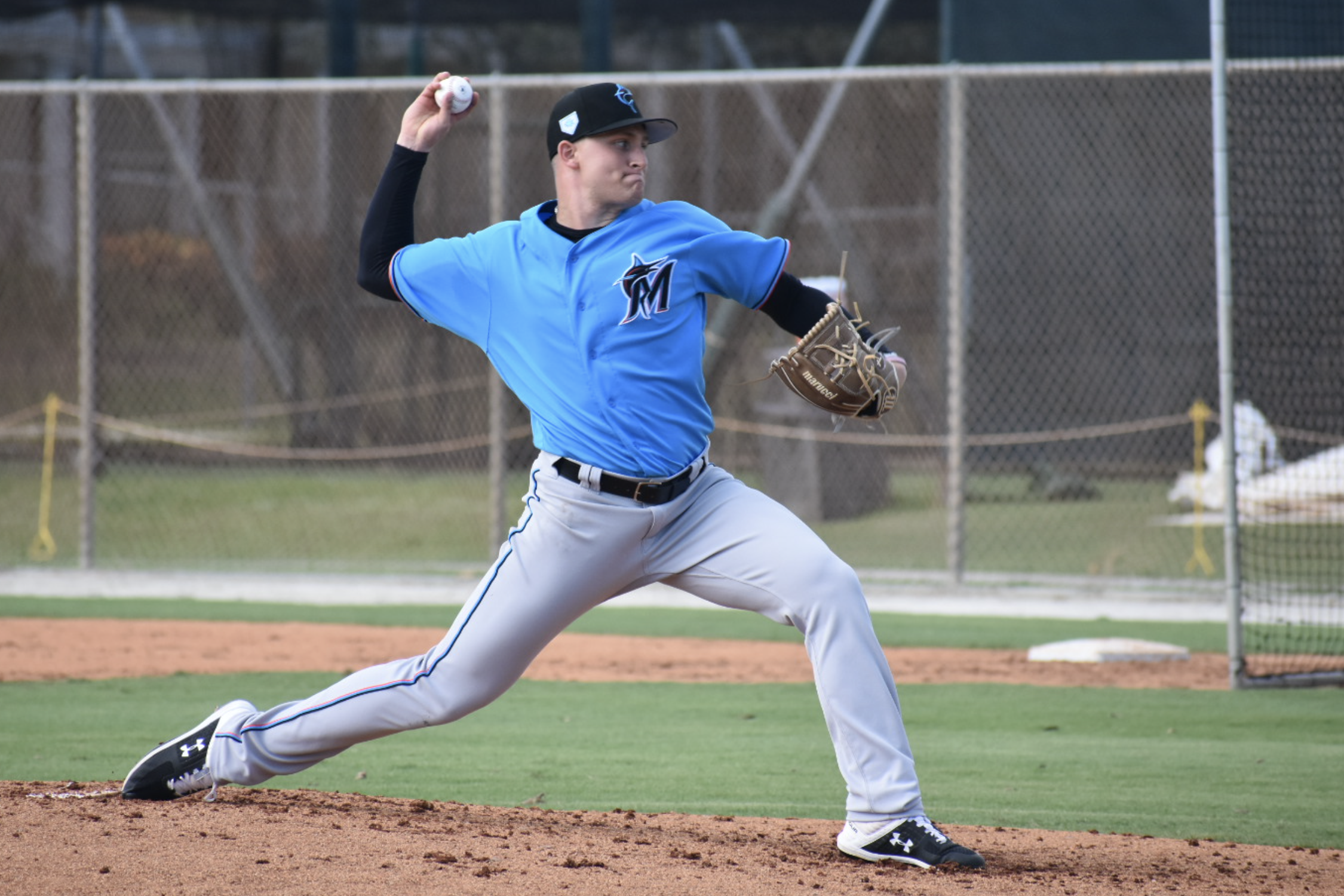 Looking at the career of Nick Neidert in a nutshell, one would be inclined to question how he made the near-impossible possible. The answer to that query lies in the faith and trust the now 22-year-old top prospect holds in a power much bigger and higher than anything baseball has to offer. At the beginning of his baseball career, Neidert was a middle infielder at Peachtree Ridge High School in Suwanee, Georgia. Then, one day, in his third amateur season, his coach tasked him with manning the mound. It didn’t take long for the PRHS coaching staff to realize the natural gifts Neidert had been endowed with by his creator. And thus, the teenager began down the path destined for him. “In high school, I was trying to get the feel for pitching. Just trying to get the grasp on how hitters think, what kind of sequences to use, just the basic stuff,” Neidert said. “God blessed me to make the huge velo jump [in my senior year] and he allowed me to have better stuff fairly quickly, getting me on a bunch of team’s radars.” Upon the completion of his senior year, Neidert was reaching as high as 96 MPH with both fade and run, spotting his heater at will all over the strike zone. His 86-88 MPH slider and 75-77 MPH curveball, though sometimes blending into each other, both showed plus potential and he was already starting to throw a 86-88 MPH changeup. Lauded as the 29th best high school prospect in the 2015 draft, Neidert forwent a commitment with the University of South Carolina in favor of signing for the Mariners who selected him with their second round pick. #Mariners have agreed to terms with RHP Nick Neidert & RHP Andrew Moore, the #Mariners top two picks in 2015 Draft. pic.twitter.com/uCHr8kk1OT — MarinersPR (@MarinersPR) June 12, 2015 For the second time, Neidert’s life path took a sudden turn. But once again, the newly-turned adult didn’t question things; he just went with it, trusting in faith and prayer to guide him through the maturation process both as a pitcher and a person. In his first taste of pro ball, Neidert provided a good glimpse at his potential as he held down a 1.53 ERA via a 0.96 WHIP and 23/9 K/BB. “When I went out to Arizona, it was definitely a big change for me. I was definitely a little nervous, but I knew that that was in God’s plan and what he wanted in my life so I just trusted in him,” Neidert said. “It was a good first season. It helped me grow as a person. You gotta mature really quickly when you go away for 3-4 months. It was a great experience.” Neidert was spectacular in 2017, pitching to a career best 10-3, 2.76 ERA, 1.073 WHIP, 107/17 showing in the A+ California League, marks which made him one of the circuit’s best pitchers. His ERA was led the league as did his 78.8 LOB%, his 6.41 K/BB ratio ranked third and his 3.39 FIP ranked second only to teammate Pablo Lopez. On top an All-Star selection, Neidert won the California League’s Pitcher Of The Year Award, a title formerly won by the likes of Felix Hernandez, Ervin Santana and Brad Penny. By way of those accolades, Neidert rocketed up prospect rankings, placing as high as number two organizationally heading into 2018. There was little time for Neidert to reflect on his first full-season campaign as, exactly four months after he threw his final pitch, the newly-turned 22-year-old was traded to the Marlins in the Dee Gordon trade. “It came as a shock to me because a lot of people were saying I was an untouchable prospect for [seattle], but in my mind, nobody’s untouchable. So when I got traded, I was kind of caught off guard, but I knew God had a plan for that and I knew there was a reason behind it.” Two months after being dealt from the only system and baseball family he’d ever known, Neidert was back at spring training on a different coast with a team in a completely different situation; with a team in the early stages of a rebuild rather than one on the verge of the playoffs. As if that weren’t enough, at the start of the year, the righty was tasked with making the full-time jump to AA, quite possibly the hardest task in professional baseball. Despite changing coasts, joining a different organization for the first time in his career and joining the upper minors full-time against competition over three years his elder, Neidert didn’t miss a beat. In a career-high 26 starts, he lasted a career-high (and Southern League most) 152.2 IP and held down a 3.24 ERA via a 1.13 WHIP, marks which placed 4th and 6th circuit-wide among pitchers with at least 100 IP. His 154 Ks were second-most only to D-Backs top prospect Taylor Widener and his 20.1 K/BB ratio placed third. According to Neidert, his ability to continue to develop positively despite joining a brand new club lay in the fact that with the recent regime change, everyone was acclimating to the Marlins’ reconstructed organization. In essence, everyone was the new kid in town. “When I came to the Marlins, they had a whole new front office so it kind of helped me coming in because everyone else was learning a new front office, it wasn’t just me,” Neidert said. “The players and the guys, I connected with them very quick because we all have the same dream ahead of us, the same goal. So it wasn’t too bad trying to fit in.” And, as always, despite whatever circumstance came his way, Neidert maintained his allegiance to his faith. “Throughout all last year and throughout whatever has gone on, I’ve put my trust in God,” Neidert said. “My identity is in Him, as a child of God. So I haven’t really been too nervous or anxious on what has been going on around me and the places I’ve been because I’ve always felt He has a plan for me.” Along the path created for him, Neidert has been the beneficiary of the expertise of many different mentors, including five pitching coaches in the past four seasons. According to Neidert, he picked up something useful from each of them. “It’s hard pick just one,” Neidert chuckled when asked to name his most helpful mentor. “I want to say Rich Dorman because he was my very first pitching coach. He was there for me in the AZL in my very first season and taught me about how pro ball goes and how to become a pitcher who can succeed. I had Peter Woolworth after that. He taught me how to contain myself. Then this year we had Storm Davis and Dave LaRoche, both legends in the game of baseball. They taught me so much how to slow down the game and change timing, how to disrupt a hitters timing, how to change speeds and how to keep hitters off balance. Collectively, if we could combine all of them into one, that’d be incredible.” [youtube https://www.youtube.com/watch?v=xDkxbc8ulyQ] Despite the jump in level in 2018, Neidert’s swing-and-miss potential followed him from A ball where his K rate was 26% in 104.1 IP to AA where it was 25.2% over 152.2 IP. According to Neidert, that persistence had less to do with an improvement in stuff and more to do with a better psychological understanding of his opposition. “I’ve always been a pitch-to-contact kind of guy because I’d rather a guy ground out or pop out in two pitches because pitch count is big now; get your team back in the dugout quicker. I’ve really never tried to do much different. But just learning pitch sequencing more, learning what hitters are trying to do in every situation; that kind of stuff, just taking my knowledge and trying to apply it every single time to keep hitters messed up at the dish and to try to have more success.” Although his stuff showed true two seasons ago, Neidert’s pitcher’s IQ has absolutely soared in that time, not only allowing him to better understand hitters but to further understand himself. Through this unique but very advantageous route, Neidert has grown into a near-MLB ready hurler in just a four year tenure in minor league ball. As we enter 2019, Neidert, the owner of a four-pitch arsenal including a changeup that he made huge strides with in 2018, catching it up to his low-mid 90s heat which he throws with both two and four seams, sits on the precipice of realizing his Major League dream. As he has been for every other challenge that life has thrown his way, Neidert will undoubtedly be up for the jump to the Major League ranks, but for now, he isn’t concerned with when it occurs. “I don’t look at the prospect rankings because everyone has an opportunity to make it to the big leagues. Once you’re there, you stay there. If not, you go down,” Neidert said. “I’m just working on really mixing up my sequencing, my pitches and trying to be as deceptive as I possible can be. Just to try to have the most success with the things I have. I am going to try to build off last year and try my best to work even harder and to put in even more just to get 1% better every single day.” One of those days not too far in the future, Neidert will find himself pulling on an official “Our Colores” Marlins’ uniform. Not only is Nick a fan of the look, he’s a huge supporter of what it stands for. “I love the new colors. It basically states that we are in a rebuild and this is a completely new organization than it has been in years past,” Neidert said. “I’ve been here since the start of the start of the new front office and I can tell you that in everything they’re doing, the Miami Marlins are going to be competing for World Series championships for years to come. The culture they’re creating in the clubhouse is absolutely incredible and the fact that one day I’ll be blessed enough to pitch in a big league ballpark, that’s equally incredible.” As exceptional as the prospect is, Neidert isn’t concerned with the date and time of that occurrence. Rather, he is leaving that to date and living in the moment. Overall, Neidert doesn’t view himself as the driver in charge of his career, but rather as a passenger. “I’m just along for the ride, man,” Neidert said. “Just allowing God to use me.” Keep enjoying riding shotgun, Nick. We are thoroughly enjoying the view from the backseat.
 -
View full article
-
View full article
-
 In the early stages of not the organization’s first rebuild but the first being orchestrated by a new ownership headed by Derek Jeter and thereby the first being done properly and completely, without holding on to pieces and hopes and dreams of cores past, the Marlins entered this offseason holding one of baseball’s biggest trade chips: JT Realmuto. Lauded as one of, if not the best backstop in baseball by way of a 4.8 WAR which led baseball in 2018, a .277/.340/.484 slash line (3rd/7th/2nd league-wide among catchers with at least 300 plate appearances) 21 homers, and a 38% CS% gun behind the plate and still under club control for two more years, the Marlins’ asking price was understandably sky-high and it remained as such. Winter wore on. The holidays came and went. The winter meetings came and went. Camp dates and the spring training schedules were announced. And still, the Marlins’ asking price persisted, even when the rumor mill ran ice cold. Don Mattingly even got in on the facade, hinting at Realmuto possibly beginning the year in Miami. "For me, I'm ecstatic right now, because I feel like we're walking into camp with J.T. again," Mattingly said. "He gives us a better chance to win and grow as an organization." Finally, on February 7th, Michael Hill’s patience were rewarded when a deal was reached with the Philadelphia Phillies to send Realmuto north for three young arms, two which approach from in front of the plate and one from behind. Among the haul is the the team’s consensus top prospect Sixto Sanchez, an established big league backstop Jorge Alfaro and another member of the Phillies’ top 25, Will Stewart. Herein, we take a closer look at all three pieces and give the deal a final grade (not-so-spoiler alert: it’s very much a passing mark). RHP Sixto Sanchez 2018 (A+) - 46.2 IP, 2.51 ERA, 1.07 WHIP, 45/11 K/BB Sanchez is a Phillies’ 2015 international signee out of the Dominican at the ripe age of 16. After breaking into pro ball mostly in relief in his home country in his draft year (25.2 IP, 4.56 ERA, 1.48 WHIP), it didn’t take Sixto long to start making a name for himself stateside. In 2016, pitching exclusively from the rotation, a 17-year-old Sanchez became the Gulf Coast League’s best pitcher, tossing to a 0.50 ERA via a 0.76 WHIP, a 90.7 LOB% and an 18.6 K/BB%. Sanchez accomplished all of this as the single youngest player on his circuit. In 2017, Sixto made the jump to full-season Ball, beginning the year with the Lakewood BlueClaws. In 13 South Atlantic League appearances, all starts, he went 67 IP while holding down a 2.41 ERA. That mark was due to his absurd 0.82 WHIP and and equally ridiculous 64/18 K/BB which proved that his dominance wasn’t exclusive to the rookie ball ranks. Among pitchers with at least 60 IP, Sanchez’s WHIP ranked fourth league-wide, his 21.5 K/BB% ranked 10th and his 2.35 FIP ranked third. Those marks earned Sanchez a look at the A+ level to end the year. Following his 5 GS, 27.2 IP, 4.55 ERA, 1.30 WHIP, 20/9 K/BB cup of coffee, Sanchez returned to the Clearwater Threshers this past season. Sixto began the season well, managing a 2.51 ERA in his first eight starts which lasted a total of 46.2 IP by way of a 1.07 WHIP and 45/11 K/BB, further proving his ability to grow and adapt to surroundings even at such a young age. But during a start in early June, Sanchez suffered a shoulder injury that would wind up claiming the remainder of his season. The only action Sanchez has seen since has been in the Florida instructional league. It was the hope of the Phillies that Sixto could make up for some lost time during this past Arizona Fall League season, but after suffering a setback due to a separate injury to his collarbone, his trip to the Valley of the Sun was canceled. Formerly viewed as an untouchable, the Phillies took Sanchez’s recent past into account and decided to make him the centerpiece in this deal for Realmuto. [youtube https://www.youtube.com/watch?v=OFHkPmNCPOI] It’s quite obvious what the Marlins see in Sixto. The owner of a 70-grade fastball that he throws two different ways, with four seams which he can regularly ramp up to triple digits and to as high as 102 and with two seams, a pitch which owns filthy late arm-side tailing run and sink, the 20-year-old also has a well-developed breaking arsenal. Sanchez’s best secondary is a power slider that comes in at 89-92 MPH and which hits the spot with 11-5 run. He also has the makings of a plus mix-in changeup that sits in the 90-93 MPH range that he can place on either corner with late fading action. Viewed, even at his young age, as having the ceiling of Pedro Martinez (link) and regularly drawing comps to Johnny Cueto and the late José Fernandez, Sanchez has a huge ceiling, that of a clear-cut ace. While his recent injuries have slightly delayed him, Sanchez is still just 20 years old a huge primary weapon and a matching command tool with an already-plus but still-growing breaking arsenal. A penultimate gamer with a bulldog mentality and fantastic work ethic and the reputation of a guy who wants to have the ball in his hand as much as possible, we foresee Sixto starting the year in A+ Jupiter. From there, health permitting, the sky is the limit. With further success in repetition and limiting overthrows and the further growth of his breakers, Sanchez should be a quick mover to the AA level, definitively by the All-Star break. Overall, we like Sanchez to suit up in a Marlins uni as early as September but, given his age, more realistically next season. Nevertheless, Sanchez is immediately the top pitching prospect in the organization. C Jorge Alfaro 2018 (MLB) - .262/.324/.407, 10 HR, 16 2B, 37 RBI, 138/18 K/BB Alfaro is a a 25-year-old backstop who was born on June 11, 1993, just after the first pitch in Marlins history which occurred on April 5 that same year. A quarter century later, Alfaro is the Marlins’ clear-cut starter behind the dish. Signed by the Rangers out of Colombia in 2010, Alfaro garnered a $1.3 million signing bonus, which set a record for any prospect discovered in his home country. Originally a middle infielder, Rangers scouting noticed the projection in Alfaro’s frame and in his huge throwing arm, thus tasking him with catching duties. After breaking in to pro ball in the Dominican Summer League in 2010 where he slashed just .221/.243/.291 with a 48/5 K/BB as a DH while he learned his new position behind the scenes, the Rangers took a leap of faith in Alfaro’s raw tools, promoting him to stateside ball. There, as an 18-year-old playing against competition that were, on average 3+ years older than him, Alfaro fared well, hitting .300/.345/.481 with six homers and 23 RBI. Despite showing plenty of rawness on the defensive side in his in-game action at catcher (12 passed balls, 54/15 SB/CS) and even though his slash line was largely due to a fortunate .420 BABIP and while his inflated strikeout totals persisted (54/4 K/BB), Alfaro’s solid peripherals with the bat stemming from a solid power-first approach at such a young age earned him some recognition, including being named the 8th best prospect in the Northwest League by Baseball America. A year later, Alfaro made his full-season A ball debut spending nearly the entire season with the South Atlantic League’s Hickory Crawdads. There, he hit a respectable .258/.338/.452. Most importantly, this is where Alfaro’s 70-grade power tool began to rear its head as he collected 16 homers and 22 doubles. It was also where the plus-plus throwing arm the Rangers saw early on in his development started to provide rewards as he threw out 36% of potential base stealers. Another offseason and another promotion later, Alfaro joined the A+ ranks as a Myrtle Beach Pelican in 2013. There, Alfaro furthered his reputation as a pull-hearty power-first swinger who trades swings and misses for fence-clearing and gap-reaching contact, as he struck out 100 times in 398 ABs but also homered 13 times and collected 22 doubles. He ended the season with AA Frisco, preluding a .261/343/.443 line with the squad he was slated to spend 2015 with. Things were going according to plan for Alfaro in 2015 as he was slashing .258/.324/.438 with 15 doubles and 5 homers with Frisco. However, it was then, just 49 games into his AA tenure, that Alfaro would suffer an ankle injury that required him to go under the knife. June 10th, 2015 would wind up being Alfaro’s final game in a Rangers-affiliated uniform as on July 31st, the rehabbing backstop was included in the trade that sent Cole Hamels to Texas. Bearing the same uniform number that Realmuto did in his final year as a Marlin (11), Alfaro displayed his infinite athleticism and drive. Not only did Alfaro come back from the injury that afforded surgery and cost him most of nearly a season’s worth of development,he came back stronger than ever without missing a step. In 2016, as a AA Reading Fightin’ Phil, Alfaro enjoyed his longest and best season as a pro. After hitting .285/.325/.428 with 15 homers, the 23-year-old was rewarded with his first MLB call-up. In his first 29 games in red and white, Alfaro slashed an impressive .318/.360/.514 with his first five MLB long balls, carving himself out as the Phillies’ unquestionable starting backstop in 2018. In that capacity, a 25-year-old fully grown Alfaro didn’t disappoint. In 108 games, all as a catcher, he slashed .262/.324/.407 with 10 homers and 16 doubles. Once again though, hitting in the slugger-friendly Citizens Bank Park, his success was fueled by a friendly .406 BABIP. All the while, Alfaro’s gargantuan K rates persisted as he struck out 36% of the time and walked at just a 4.8% pace. On the defensive side of the ball, Alfaro caught base stealers 26% of the time. According to StatCast, Alfaro's 90.8 MPH average velo from behind the plate led baseball and his 1.94 average pop time on throws to second base ranked third. [youtube 2019 will pose a new challenge for the free-swinging long ball threat: proving he can sustain power-hitting success in a more pitcher friendly environment while continuing to prove his surgically repaired ankle will not inhibit his pop times and while further improving his receiving and defensive plate coverage skills. All of that said, Alfaro proved both pre and post injury in the minors that he has the athleticism needed to succeed at the MLB level. At the very least, he provides an all-or-nothing bat to the middle of the order and an arm that strikes fear in the hearts of those thinking to take a base on on. Under club control through 2023, Alfaro should at least serve as an advantageous bridge to Will Banfield. With very questionable contact rates but unquestionable power potential on top of growing defensive instincts stemming from natural arm strength and what has become plus arm accuracy, Alfaro should man a spot somewhere between 5-8 in the order this season, a campaign which should go a long way in proving exactly where his future lies. We like Alfaro to hit somewhere in the .270/.330/.470 range with 20/30+ power. We cap the 25-year-old’s canon around 35% CS%. RHP Will Stewart 2018 (A) - 113.2 IP, 2.06 ERA, 0.98 WHIP, 90/21 K/BB Sanchez and Alfaro were agreed to early on in trade negotiations with the Phillies but some squabbling over the inclusion of a third piece that held even the advanced talks between the two organizations up even longer. Source confirms @Joelsherman1 report: Sixto Sanchez and Jorge Alfaro are agreed upon as being part of J.T. Realmuto trade, pending medicals, but discussion continues on possible third or even fourth pieces. @MLBNetwork @MLB — Jon Morosi (@jonmorosi) February 7, 2019 While the Phillies balked on the inclusion of another one of their top 10 such as Bohm, Moniak, Medina and Haseley, the Marlins were able to sway them on Stewart, a 21-year-old lefty coming off his best year as a pro. Drafted by the Phillies in round 20 of the 2015 draft, Stewart hails from Hazel Green High in the unincorporated community of Hazel Green on the northeastern tip of Alabama. Stewart is the first baseball player drafted directly out of HGHS. After putting ink to paper, Stewart broke in to pro ball with the Gulf Coast League Phillies, working exclusively in relief. In 12 appearances and 20.2 IP, he had a 4.79 ERA, 1.6 WHIP and 20/15 K/BB. Stewart stuck in the GCL as an 18-year-old in 2016 where he split time between the rotation and the pen. In his 11 appearances, Stewart began to show positive adjustments, holding down a 4.06 ERA in 44 IP. His WHIP shrunk to 1.2 and his K/BB improved to 35/19. The owner of a 33% groundball rate a season previous, that figure improved to 52%. In 2017 Stewart jumped to short season A ball with the Williamsport CrossCutters. There, for the first time, he worked exclusively as a starter. In 13 appearances, he lasted a total of 60 IP and held down a 4.18 ERA via a 1.48 WHIP and 58/25 K/BB. In his 3.60 FIP and even more improved near-70% ground ball rate and the damage that was done against him coming via a .333 BABIP, the Phillies saw enough to task Stewart with full-season ball this past year. Stewart did not let the Phillies’ confidence down. In fact, he made the organization look like geniuses. In 20 starts with the Lakewood BlueClaws of the A hitter-friendly South Atlantic League, the 21-year-old broke out with an 8-1, 2.06 ERA, 0.98 WHIP, 90/21 K/BB campaign. All of this came in twice as many innings as Stewart had ever thrown in a single season (113.2). On league leaderboards, his ERA and WHIP each ranked 2nd and his 4.29 K/BB ranked 5th. Most encouraging though, Stewart’s 62.1 ground ball ratio led the Sally League. [youtube https://www.youtube.com/watch?v=1MwHdyyclvM] At age 21, Stewart isn’t a guy who will blow you away with any one pitch or tool. However, he is a guy who throws everything with confidently well thanks to plus tools. From a smooth windup and downhill plane, Stewart puts every bit of his 6’2”, 175 pound frame to work for him, extending every one of his appendages to create deception. Stewart’s arsenal consists of a 90-94 MPH four-seamer, an 85-88 MPH cutter that holds at least 50-grade movement, an 80-84 MPH frisbee slider, a slow 74-77 MPH curve that acts as a mix-in eephus type piece that sneaks up on and completely baffles hitters and his best pitch, an 82-86 MPH circle-change that he feels and selects well, inducing plenty of ground balls with via advantageous placement on the corners. He is careful not to overthrow any of his pitches and repeats his easy delivery with fluidity. With a good feel and IQ for selecting pitches and a good psychiatric view into the mind of his opposition, this southpaw lines up well as a ceiling middle-rotation starter with the floor of a back-end anchor. Expect Stewart to start 2019 in A+ Jupiter. -- Although it was a painstaking process, the Marlins played this situation beautifully, biding their time and eventually landing some very important pieces to the core of young talent they are building: a bonafide ace, a strong-armed power hitting backstop that will at least allow the club to take their time with Banfield but who could assume the reigns as their long-term catcher and a potentially budding middle-back end rotation starter coming off an impressive breakout year. Grade: A
 -
View full article
-
 At this time last year, despite being under new management, Marlins fans and the rest of the baseball collective were turning up their noses at the once again rebuilding Marlins, scoffing, “Same old, same old.” However, it quickly became evident that this Jeter and Co: reboot starkly contrasted the many orchestrated Loria and Co: it was being done and properly and most importantly of all, completely and thoroughly with the fanbase’s best interests in mind. Rather than holding on to parts of failed core(s) year after year, Jeter traded away all of the Marlins’ biggest MLB assets (J.T. Realmuto pending) and began building a core of his own down in the minor leagues. Jeter ensured the best trade returns possible by not asking partners to eat bad contracts a la Loria, creating a hand-picked nucleus. Then, by doing some strategic wheeling and dealing, he capped it all off by landing the top free agent on the international market. After ending 2017 with the 28th-ranked farm system, the Marlins are now a top-15 organization. When all is said and done this offseason, they could have a top-10 system, something Loria never even got close to sniffing due to his penny-pinching and living off distant hopes and dreams. Add to the pot the fact that they have facilitated solutions to fans’ material factors surrounding the team such as updating the logo and colors, ridding the stadium of the egregious home run sculpture and lowering prices on both tickets and concessions, in just over a year, this new regime has given the team back to Miami and created a culture that promotes the term ‘community’ in every possible way. Nothing brings a sports community closer than winning games. And by 2020, thanks to the blueprint Jeter’s administration has laid out and executed so well in such a short time, the M stands to be flipped on a regular basis. At the forefront of those occasions will be these faces and names that Marlins fans should start getting plenty used to seeing and hearing. Without any further ado, we present our 2019 Top Prospects list. 1. OF Monte Harrison 2019 (AA) - .240/.316/.399, 19 HR, 48 RBI, 28/9 SB/CS Harrison, who came to the Marlins in what wound up being one of the biggest moves of this past offseason, the deal that sent eventual NL MVP Christian Yelich to Milwaukee, was a Brewers draftee in 2014. Considered one of, if not the best athlete in that year’s draft, it cost the Brewers a pretty penny, $1.8 million, to sway Harrison to sign with them rather than honoring a two-sport commitment with the University of Nebraska. Harrison had a rough start to his professional baseball career, breaking his tibia and fibula while running the bases in his first season in 2015 which limited him to just 76 games. Harrison was understandably slow out of the gate in 2016, hitting just .163/.245/.209 in his first 39 games before he began to settle in game 40. From May 26th-June 17, Harrison went 24-79 (.303) with six homers, showing the Brewers his true potential for the first time. Then, Harrison went under the knife again, this time for a broken hamate bone in his dominant hand. Despite missing almost two month’s worth of action, Harrison returned on August 11 and finished the season by going a respectable 17-59 (.288). This past season was a turning point for Harrison in more ways than one. First up on a long list of happenings for Harrison was his trade to Miami in exchange for Christian Yelich. Accompanying Monte to the Marlins were Lewis Brinson who just graduated prospect status and the duo of Isan Diaz and Jordan Yamamoto, each of whom will appear in the top ten in these rankings (spoiler alert). While some pundits have stated that the Marlins didn’t get enough back in this trade, they have done so as they have stared directly at the accomplishments of Yelich while simultaneously turning a blind eye to Harrison’s athletic pedigree and the nature of the two hard-luck injuries, one suffered on a hustle play and one on a hit-by-pitch, that stunted his growth as Brewers property. In his first year as a Marlin, Harrison was able to wholly avoid the injury bug and make up for lost time. Positive adjustments began to reward Monte late in the season as he went 23-70 in his final 22 games. He ended the regular season with a .240/.316/.399 slash line with 19 homers, fourth in the Southern League. This winter, Harrison participated in the Arizona Fall League. There, as a Salt River Rafter, Harrison perfected the changes in his approach he showed late in the regular season campaign, including a much more closed stance and a much smaller front leg timing trigger. These changes have allowed Monte to keep his head and shoulders stationary and via a shorter swing that better employs his plus bat speed, cover much more of the plate much more advantageously. This re-tooled version of Harrison promotes much better contact rates and drastically lower K rates than the MiLB-leading 37% factor he posted during the regular season. In 19 Arizona Fall League games (81 PAs) against competition a half a year older than him, Harrison hit .290/.348/.343 with a 19/10 K/BB. The only thing glaringly missing, both in the month of August and in Arizona, from Harrison v. 2.0’s potential five-tool game was the over-the-fence power prowess that was his calling card as a younger prospect. However, now that he has been properly coached to simplify his plate work, prolong counts and use his elite bat speed properly, Harrison, who has always owned good hands and horizontal movement in his elbows as well as an uppercut swing plane that promotes barrel contact and lift, he is much closer to realizing his five-tool type ceiling than he ever has been. By being coached to step into the ball in sync with his downward swing slope and by adding torque to his presently fairly stationary hips, he can get all of his power back and then some, creating a near-complete offensive threat. That will be the 22-year-old’s focus as he begins 2019 at the upper-most level of the minors as a New Orleans Baby Cake. With similar output that he showed at the end of last season and this fall, Harrison could be a Miami Marlin, joining his former Brewers organizational Brinson in the same MLB outfield by the All-Star break. 2. OF Victor Victor Mesa One of the biggest free agent sweepstakes revolved around Cuba’s Victor Victor Mesa. The attention was well deserved. Mesa began his professional playing career in the Cuban National Series as a 16-year-old in 2012. Through four seasons playing at his home country’s top level, Mesa hit .275/.334/.378 including a .354/.399/.539, and 40/10 SB/CS in 2016-17, leading to the fanfare surrounding his free agency this year. At one time, more than ten teams were rumored to be heavily involved in the Mesa sweepstakes. The Marlins has their eyes on the brothers from the start and remained focused throughout the offseason, making them a-priori. The team shrewdly began racking up bonus pool money in the middle of the season when they flipped Cameron Maybin to the Seattle Mariners for $250K in pool space and infielder Bryson Brigman. At season’s end, the Fish made a trio of trades, sending Ryan Lillie to the Cincinnati Reds for $750K in cap space and Kyle Barraclough to the Washington Nationals for $1MM. On October 16, the Marlins dealt Dominican Summer League prospects Adonis Giron and Brayan De Paula to the Astros for another $500K. The dealings vaulted the Marlins from $4MM past the Orioles, who sat at $6.7MM. I love the city #victorvictormesa #mesabrothers #miami @VictorMesaRios1 pic.twitter.com/cqs4phwvU9 — Victor Victor Mesa (@victorvmesa) November 20, 2018 "We had to put in all our chips," Michael Hill said, "and add chips." On October 22nd, 2018, the Marlins claimed their long-sought after prize, signing Víctor Victor Mesa for $5.25MM (as well as Victor Jr for an even $1MM). In addition to acquiring the special talent, Jeter told ABC News he wants the signings to set a new standard for the Marlins’ organization. “We want Miami to be the destination for top international talent," Jeter said. "This organization should reflect the diversity of the South Florida community.” In Cuba, Victor Victor personified the term baseball phenom by way of a skillset that promotes all five tools. Well recognized and touted for his explosive defensive arm and plus-plus speed on top of advanced contact readability and route-running knowledge acquiescent of any of the three outfield positions, Mesa is even more ahead of the curve on the offensive side of the ball — figuratively and literally. Setting up in the back of the box via a slightly open stance to the third base side, Mesa owns a compact back leg load and vertical power transfer. Through his swing, Mesa maintains his skyward-pointed back elbow and lateral front elbow, creating natural arc and lift to his explosive swing. Though he doesn’t quite have the size or raw power to match, Mesa’s mechanics are reminiscent of Giancarlo Stanton. Where Mesa easily trumps Stanton is in his his pitch recognition, plate coverage ability and the IQ needed to adjust mid-count and prolong his chances. While he won’t walk a ton, Mesa has an offensive skillset that promotes tons of contact. With 70-grade speed capable of 30+ steals and 60-grade defense, Mesa is a small uptick in over-the-fence power away from owning all five tools. And he’s still just 22. The only thing that keeps Mesa out of the top spot in these preseason rankings is the fear of the unknown as he breaks into full-season ball in America. That said, there Mesa shows more than enough natural talent to break in to the affiliated ranks and succeed as the Jacksonville Jumbo Shrimp’s starting center fielder. From there, the sky is the limit. We place Mesa’s ceiling sky high: a potential .290/.340/.430+ annual hitter with an average of greater than 20bSBs and a plus-plus dWAR. 3. RHP Nick Neidert 2018 (AA) - 152.2 IP, 3.24 ERA, 1.13 WHIP, 154/31 K/BB Neidert is a 6’1”, 180 pound righty hailing out Suwannee, GA. Seven months before the draft, in his junior year of high school, Neidert was already showing a unique brand of pitch mix, placement and deception via late movement on his already deep and well advanced four-pitch arsenal which ranged from 92-76. Already flashing a big sweeping hook, a sinking changeup and a running fastball to all parts of the zone, a 17-year-old Neidert was already well on his way to big things. [youtube https://www.youtube.com/watch?v=PONDqFtgc1M] Upon being drafted by the Mariners 60th overall in the 2nd round in 2015, Neidert finished the year by making 11 starts for the Arizona Mariners of the rookie ball Arizona League. Despite somehow not earning a win (0-2), Neidert held down a 1.53 ERA via a 0.96 WHIP and 2.56 K/BB. In 2016, Neidert made 19 starts for the Clinton LumberKings but was limited to 91 innings as the Mariners nurtured his development. Still, the solid numbers persisted as Neidert posted a 2.57 ERA via a 0.97 WHIP and 69/13 K/BB. Come 20-7, Neidert’s leash was lengthened. That factor along with the advancement of his changeup which caught up to the rest of his staff allowed him to hold down a 2.74 ERA and 1.07 WHIP in 104.1 IP in the A+ California League. Most noticeably improved was Neidert’s K rate which rose from 19% a year previous to 26%. All the while, his impeccable control persisted (1.47 BB%). Among California League pitchers with at least 80 IP, Neidert’s (.41 K/BB ranked third just behind teammate Pablo Lopez (6.85 K/BB). This past season upon joining the Marlins in the Dee Gordon trade, Neidert made his way to AA Jacksonville. There, despite the big jump in level, Neidert’s success continued as he went 12-7 with a 3.24 ERA in a career high 152.2 IP via a 1.13 WHIP and 154/31 K/BB. With a complete arsenal and equally complete head for pitching, Neidert got inside the head of hitters with four completely different looks. Despite not owning overpowering stuff, he was able to post the Southern League’s third best K/BB ratio (20.1%). Feauturing a velo mix ranging from 93 (with the ability to reach 95 when he ramps up) via a two-seamer with arm side run, Neidert drops down to 73 with a 12-6 curve. He mixes in an 86-88 mph 11-5 slider with great delineation from the aforementioned offering as well as an 89 mph change that he masks well and which piggybacks the fastball perfectly. While he won’t overpower you or light up radar guns, Neidert is a thinking-man’s hurler that hides the ball well in his low 3/4 arm slot. Despite limited size, he maintains the same stride and arm angle when coming home with four completely different looks, making him a master of deception. A guy who has always played above his age, we like Neidert to break into the Marlins’ big league rotation not long after spring training and quickly recognize his ceiling as a 2-4 slot starter. 4. RHP Jordan Yamamoto 2018 (A-A+) - 68.2 IP, 1.83 ERA, 0.83 WHIP, 85/14 K/BB Jordan Yamamoto is another product of the Yelich trade. At the time the trade was made, he was thought to be the sugar of the deal, sweetening it on a throw-in level. A season later, Yamamoto has proven he’s much more than that. Yamamoto is the product of St. Louis High School in Honolulu, Hawaii. When Yamamoto gets his MLB call, he will become the third man from the state capital to pitch for the organization, joining Justin Wayne and the man who threw the first pitch and earned the first win in team history on April 5, 1993, Charlie Hough. Judging by his current level of progression, that future isn’t too far away from the 22-year-old’s realization. Yamamoto was selected by the Brewers with the 356th overall pick in round 12 of the 2014 MLB Draft. In his first 83.2 innings as a pro, Yamamto’s statistics were very becoming of a teenager taken in that kind of low-risk draft slot as he posted a 1-7 record, a ERA and a. WHIP. However, since being the unfortunate owner of a 7.84 ERA and 1.95 WHIP as a member of the Pioneer League’s Helena Brewers in 2015 and finding himself on the verge of exploring life outside of baseball, Yamamoto made a concerted effort to succeed, resulting in him becoming a top-tier pitching prospect. The difference for Yamamato from then until now lies in the simplification of his delivery and a change in his arm slot. The most noticeable change in Yamamoto’s pre-pitch mechanics are a smaller step back toward the first base side, the erasure of toe-tapping which served as a tip to hitters on breaking balls and a much lower 3/4 arm slot which has allowed Yamamoto to hide the ball better and to prevent himself from flying open. Coupled together, these improvements have given Yamamoto the ability to repeat his delivery much more efficiently and to place pitches much more accurately, creating more deception and more advantageous counts. From there, Yamamoto relies on his stuff to he hitters out. And he has a very deep arsenal of plus pitches to dip into. While he is another guy who won’t blown you away with velo, he is a strike-zone resident who will wow with his secondaries. For proof, see some of Yamamoto’s latest exports from the Arizona Fall League below: [youtube https://www.youtube.com/watch?v=dDs_B-kwIQI] Yamamoto’s 90-93 MPH fastball holds great spin rates and is workable in every area of the zone, giving him the ability to change a hitter’s eye level and/or completely take their vision away, setting up his two plus secondaries that he commands very well on the lower half. Coupling late break on his tight 83-85 mph curveball with his 86-88 MPH changeup that runs arm-side and holds late fade to his arm side. By making adjustments necessary to catch his command tool up to his stuff, Yamamoto has enjoyed great success of late in the minors. This past season, he pitched to a collective 1.83 ERA by way of a 0.83 WHIP and 6.07 K/BB, aided in part by his 13/0 K/BB performance on (), an outing in which he set the record for most strikeouts in a single game by a Jupiter Hammerheads pitcher. Jordan then parlayed that performance into a standout campaign in the Arizona Fall League where as a Salt River Rafter, he went 3-0 with a 2.08 ERA, 1.07 WHIP and 27/13 K/BB in 26 IP. During that time, in a pleasant bit of foreshadowing, Yamamoto was among the first few players to pull on a new Marlins’ jersey. With continued success in spring training, it won’t be very long before Yamamoto, owner of a complete three-pitch arsenal and a good mix of swing-and-miss and limited contact inducing stuff, dons the same jersey again in his first MLB game. Place his ceiling at a 2-3 starter and floor at the back end of a major league rotation. 5. C Will Banfield 2018 (A) - .238/.308/.385, 3 HR, 43/11 K/BB; 37/23 SB/CS Banfield is the Marlins’ CBA Round B pick from 2018. Hailing out of Brookwood High School in Snellville, GA, the native of nearby Lawrenceville was highly heralded for his defensive capabilities including a 1.74 second pop time and an 84 MPH arm behind the dish. He proved his throwing arm was capable of growth by clocking in at 94 MPH velo he flashed from the opposite side of the mound. Coupling the aforementioned canon with solid glove-to-hand transfer times, a good and growing throwing accuracy and solid receiving abilities including framing prowess and the agility to go well out of the zone, Banfield was considered one of if not the best defensive catchers in the draft. It was on that basis that Marlins selected Banfield with a CBA pick at 69th overall. This past summer, Banfield joined the GCL Marlins. In his first 22 pro games, the 18-year-old threw out 18 of 44 potential base stealers (41% CS%), allowed just five passed balls and held down a perfect fielding percentage by way of a 8.05 range factor before being called up to A Greensboro. As a Grasshopper, Banfield committed just one error while catching five of 16 potential base stealers (31% CS%). In those 107 innings catching more advanced stuff, he didn’t allow a passed ball. [youtube https://www.youtube.com/watch?v=fUPF-c8d17A] Offensively, Banfield also played pretty closely to his scouting report which states that he has above-average raw power stemming from his athletic 6’1”, 210 frame with room to grow, but that he also owns just average bat speed. Banfield will need to make some adjustments in reading opposing pitchers, timing swings and shortening his stroke in order to tap in to his raw power potential, but at just 19 entering his first full professional season with pro coaching and facilities at his disposal, we see a fully-grown Banfield as an elite defender with a respectable bat capable of at least a Mendoza line average with plus power numbers. He is the franchise’s cornerstone catching prospect. Entering a big season in his developmental process, if things go well, a fully-grown Banfield could be ready for the Show by 2021. 6. RHP Sandy Alcantara 2018 (AAA) - 115.2 IP, 3.89 ERA, 1.254 WHIP, 88/38 K/BB Alcantara is a 6’5”, 185 pound righty signed by St. Louis in 2013. Upon building his way to being named the Cardinals’ ninth best prospect by the end of 2016, he became Marlins property last offseason in the trade for Marcell Ozuna. Alcantara spent most of 2018 in AAA New Orleans where he threw 115.2 IP and managed a 3.89 ERA via a 1.254 WHIP and 2.32 K/BB differential. Sandy accomplished all of this while throwing against competition nearly five years his elder. Upon the MLB’s September roster expansion, his exports earned Alcantara a call to the bigs. In his first action as a Marlin, Alcantara held down a 3.44 ERA in 34 IP via a 1.41 WHIP, a .214 BAA and a 30/23 K/BB. Alcantara’s bread and butter that he used to climb up the MiLB ranks is his fiery velocity on his four-seamer which he can ramp into triple digits but which usually sits in the 96-99 MPH range. He shows the same consistent command and usage of his two-seam sinker which has great arm side action and allows him to add and subtract, keeping hitters guessing. But, while the rest of his arsenal which includes an 85-91 MPH changeup and a tight 12-6 power curveball that has sharp downward action, have shown flashes of brilliance, what his secondaries lack most is that same C word when it comes to controlling them: consistency. If Alcantara hopes to stick as a starter, he will need to gain a better feel for his stuff, most significantly the grip and release point on his changeup which currently comes in mostly straight, and when he isn’t at his best, misses spots more than it hits them. The sharp break on his curve and the differential in velo, dropping 20 MPH lower than his heat, plays up, but he will need to refrain from overthrowing it. While these are certainly issues, they are the type which should work themselves out with age and proper coaching. Alcantara should enter 2019 at the back end of the Marlins’ rotation. Still in his age 23 season and entering his first full season at the behest of MLB coaching, there is plenty of time for Alcantara to recognize his ceiling potential as a front end starter. 7. IF Isan Diaz 2018 (AA-AAA) - .232/.340/.399, 13 HR, 56 RBI, 140/68 K/BB Along with Harrison and Yamamoto, Diaz is the final return piece in the Yelich trade with the Brewers and at age 21, the youngest of the trio acquired by Miami in the deal. Diaz, a native of Puerto Rico, moved to Springfield, MA when he was four, bringing an ironic beginning to a life which has been full of quick and stark changes of scenery. When of age, Diaz began to attend Springfield Central High School where he became a two sport athlete, playing both baseball and basketball. After entering the 2014 draft as the eighth ranked infielder and the 38th ranked overall prep prospect according to MaxPreps, Diaz was selected 70th overall by the Diamondbacks in the 2014 draft. Forgoing a collegiate commitment to Vanderbilt, Diaz signed with Arizona for $750K. Upon moving to the opposite side of the country as an 18-year-old, Diaz broke in to pro ball with the Arizona League D-Backs, hitting .187/.289/.330 in 182 ABs. After partaking in eight games in the Puerto Rican Winter League, Diaz spent the rest of the 2015 offseason under the close tutelage of pro coaches, simplifying his swing. Through streamlining of his pre-pitch timing mechanics and some shortening of his swing, Diaz broke out in a big way in 2016. For the short season A Missoula Osprey, Diaz hit .360/.436/.640. His BA and OBP each ranked sixth while his SLG led the league. The power figure was made possible by 13 homers, second most on the circuit and a league-most 25 doubles, adding up to 174 total bases, also a Pioneer League best. Among his many highlights that year was hitting for the cycle on August 23rd. After being named the Pioneer League’s MVP, Missoula’s first in 14 years as well as a Pioneer League All-Star, Diaz was traded to the Brewers in the deal that brought Jean Segura to the desert. In 2016, the eight-ranked Brewers prospect made his full season debut with the Wisconsin Timber Rattlers. In almost twice as many games as he played in a year previously in brand new surroundings, Diaz held up well, both physically and statistically hitting .264/.358/.469. He once again appeared on league leaderboards in a multitude of categories. Playing on the same circuit as baseball’s current number two ranked prospect Eloy Jimenez, Diaz’s 20 homers led the league, his 34 doubles ranked 5th, his 75 RBIs were 3rd, his .469 SLG placed 13th and his .827 OPS came in 20th. With a 149 wRC+, Diaz was named the Brewers’ minor league player of the year. Following an appearance in the Arizona Fall League (17 G, .239/.338/.373), Diaz spent 2017 in A+ Carolina. There, a nagging wrist injury limited him to a pedestrian .222/.334/.376 slash line and 104 wRC+. On August 31, the Brewers shut Diaz down for the year, bringing an end to his season after just 110 games. The slight hiccup in Diaz’s production allowed the Marlins to buy low on the infielder as they swayed Milwaukee to include him in the three-piece deal for Yelich. On January 25, 2018, Miami became Diaz’s third organization in his young four year career. Despite his mundane 2017 season, the Marlins challenged Diaz to take on the AA level with the Jumbo Shrimp in 2018. Back at 100%, Diaz fared well, slashing .245/.365/.418 with 10 homers and 19 doubles, not too far off the pace which resulted in his aforementioned .264/.358/.469, 20 HR, 34 2B season back in low A in 2016. His walk rate of 14.89, a career high, resulted in a 1.79 K/BB ratio, a career low. Playing second base full time, he flashed some of his best defense, collecting a career high 153 putouts and 200 assists and being part of 45 double plays. By way of a 4.30 range factor, he held down a .975 fielding percentage. Diaz spent the final 36 games of the 2018 regular season in New Orleans, getting his feet wet at the AAA level. The highlight of that tenure was a 3-5, 2 3B, HR, 5 RBI performance against Albuquerque on August 4th. In 137 ABs with New Orleans, he slashed .204/.281/.358. Despite finishing the season rather slowly (7 for his last 52), Diaz proved he isn’t far away from competing for an MLB starting job at second base. With another slight push forward in maturation and production, the realization of Diaz’s Major League dream would allow the Marlins to shed another $21 million in owed money (Starlin Castro) and possibly bring back a mid-lower level tier prospect or two and/or mid-round draft selections. Where Diaz needs to improve for that to occur is in recognizing and identifying major league quality stuff, especially secondaries, something that should come naturally as he gets more ABs in the uppermost level of the minors. 5’10”, 185, the stout Diaz with surprising pop profiles as a lefty-hitting Dan Uggla with slightly less power, built for more doubles than homers and slightly better defense capable of manning both shortstop, second base, and, the Marlins hope third base. The team gave him a look at the hot corner this winter when Diaz partook in the Puerto Rican League. In 99 innings played at the hot corner, Diaz committed just one error. Oh, and he also hit .276/.348/.366. An athletic gamer who is showing versatility both on the field and off adjusting to whatever circumstances come his way, we like Diaz to reach a ceiling somewhere around .260/.340/.460 with room for 20+ homers and 30+ doubles sooner rather than later. 8. OF Connor Scott 2018 (A) - .218/.309/.296, 1 HR, 24 RBI, 56/24 K/BB Scott is the Marlins first rounder from last season and the fifth straight prep the franchise has spent their top selection on. Leading up to the draft, the first draft pick of the Jeter era drew close comparisons to his former teammate turned MLB’s fifth ranked overall prospect Kyle Tucker. If that weren’t enough, according to draft connoisseurs including Keith Law and MLB.com’s Jonathan Mayo, Scott draws reminiscence of current NL MVP Christian Yelich. Watching Scott play, it’s easy to see the similarities. [youtube https://www.youtube.com/watch?v=6NkuXbXm8DI] In his senior year at Plant High, Scott was .526 hitter with 20 homers via barrel velocity of 89 MPH which ranked in the 57th percentile. Scott also showed off a plus arm, tossing 90-93 from the hill. Despite missing valuable playing time against top talent in the summer due to the removal of his appendix, the Marlins selected Scott as an outfielder with 13th overall pick. The Marlins have selected Connor Scott from Plant High School with the 13th overall pick in the 2018 #MLBDraft. #JustGettinStarted pic.twitter.com/koXH4MZtzZ — Miami Marlins (@Marlins) June 5, 2018 Upon inking his $4 million signing deal, the 18-year-old spent his first 27 pro games in the Gulf Coast League where he slashed .223/.319/.311 before joining the single A ranks in Greensboro. In 23 games as a Grasshopper he hit .211/.295/.276. His first career homer came on August 20th, 2018. Though he is still very raw, Scott exhibits all five tools loudly. From a split stance in which he points his front foot up the first base line, the lefty hitter has a compact approach with good power load in his hands and elbows which maintain their height throughout his swing which holds great speed and through which the barrel spends advantageous time in the zone. Scott favors pull, but has already shown enough plate coverage to go to all fields. Where the teenager stands to improve is in getting his mostly stationary lower half more involved in his approach which will aid in the recognition of his power ceiling as well as in more contact to pitches on the outer half via a better step into the ball. Similarly, on the other side of the ball, Scott could use to improve his footwork leading to more power behind throws and better routes to balls. However, with already present foot speed, good bat to ball instincts and overall feel for hitting should allow Scott to bridge the gap from amateur standout to professional pretty smoothly. Scott should start 2019 with A Clinton and, with success, could move up to Jupiter sometime in the second half, but entering his age 19 season, there should be no reason to rush his development. His ceiling, although uncertain at this point in his career, could potentially be that of a .270 average hitter with 20/20 HR/SB capacity. 9. 3B James Nelson 2018 (A+) - .211/.262/.280, 2 HR, 28 RBI, 66/13 K/BB Picked by Miami in the 15th round of the 2016 draft, Nelson hails out of Cisco Junior College in Cisco, Texas. Previously, he was selected by the Red Sox in round 18 of the 2015 draft out of his high school alma matter, Redan High in Stone Mountain, GA. “Going to Junior college was probably the biggest and best decision I could’ve made to be honest,” Nelson told us last year. “I don’t think I got enough exposure in high school as far as seeing the pitchers I did.” In his junior and senior seasons, Nelson hit a total of four homers. In his single JuCo season, a more physically matured specimen hit 17. The jump in power production was a major precursor for Nelson’s earlier draft slot which awarded him $75K, over $20K more than the slot Boston signed him in. After breaking in with the GCL Marlins, Nelson spent 2017 absolutely raking in single A. Highlighted by a .372/.425/.540, 8 2B, 1 3B, 3 HR, 17 RBI, 5/1 SB/CS month of May, Nelson slashed .309/.354/.456 with 31 doubles, three triples and seven homers. His BA ranked 11th and his two bagger count ranked sixth league wide. At the end of 2017, Nelson was named the Marlins organizational Minor League Player of the Year (LINK). After opening the eyes of those who underrated him due to his brief amateur career, the 19-year-old headed in to last offseason riding high, primed to build on a more than solid debut full season. However, just before camp began, Nelson suffered a torn meniscus, an injury that, with no past history of knee trouble, he says “just sort of happened”. The injury required surgery and kept Nelson out of action until June. Upon making his season and Jupiter Hammerheads debut on June 3rd, Nelson played in five games before he quickly landed back on the DL due to a setback. From there, it was a slow go for Nelson who went 10 for his first 71 (.140). However, by going 33 for his final 143 (.230) with at least one hit in 23 of his final 37 games, Nelson proved he was adjusting well to the pitcher-friendly Florida State League. He will likely begin 2019 back in Jupiter. With success, he could move up to AA sometime in the second half. Approaching from a slightly split stance, the righty hitter owns a middle-high timing trigger which he uses in concert with his plus plate vision to both stay behind the ball and get extended to it. From there, Nelson executes an absolutely explosive swing that is lightning fast, short and well-leveraged, allowing him to use all fields with hard line drive contact. On the frequent occasion that he barrels up, the ball absolutely flies, giving him some of the best exit velo in the organization. Past his good plate approach and mechanics, Nelson owns 50-grade speed and a good glove at third base, one which he has quickly grown in to since beginning to learn the position upon becoming a pro. The Marlins bought in to Nelson’s future at the both offensive and defensive demanding hot corner based on his second-to-none athleticism, his already advanced offensive makeup and his growing frame which looks to have improved this offseason. Hit 'em with that upgrade. #HammerDown pic.twitter.com/f2k6rOVUQI — Jupiter Hammerheads (@GoHammerheads) January 16, 2019 A guy who looks to have spent his offseason getting healthier and stronger, Nelson appears to have all the tools necessary to become a constant power threat with both gap-to-gap and over-the-fences power. Nelson should begin the 2019 season back in Jupiter and, with consistent health, looks primed to make the jump to the upper minors not too long after. Place Nelson’s ceiling at that of a .270/.320/.450, 25+ 2B, 20+ HR, 15+ SB yearly offensive threat with above replacement level defense. 10. OF Tristan Pompey 2018 (A-A+) - .299/.408/.397, 3 HR, 23 RBI, 47/32 K/BB, 10/5 SB/CS Pompey is a Marlins’ 2018 first rounder out of the University Of Kentucky and the owner of a great baseball pedigree. Born to parents that prefer he play football rather than a sport they barely understood or even liked, both Tristan and his brother Dalton before him, opted for the diamond. Being supporters of their dream no matter which path they chose, the Daltons’ parents learned the game along with their sons and at a young age, taught them both to switch hit. The gift bestowed upon Dalton allotted him a .279/.364/.405 Minor League career including .283/.396/.462 leading up to his MLB debut, but due to frequent injury and an overcrowding of outfield candidates in Toronto, his Major League career has been limited to just 64 games. Now, after a standout three-year .321/.426/.521 career at the University Of Kentucky including the posting of a 1.005 OPS in both his sophomore and junior seasons, accolades which earned him multiple All-American selections and allotted him being named as high as the 14th best player in the 2018 Draft, it’s younger brother Tristan’s time to shine. After joining the Marlins upon the inking of his $645,000 signing bonus, Tristan spent just four games conditioning in the GCL before joining the full season single A ranks. But after hitting .314/.422/.430 with a 22/16 K/BB in 24 games, Pompey was quickly back on his way down to Jupiter, this time to play in the big park with the A+ Hammerheads. He spent the rest of his rookie year slashing .291/.396/.384 with a 21/13 K/BB. These loud results earned Pompey an invite to play in the Pan-American games for his home country of Canada, a pre-qualifier for the 2020 Olympic Summer Games. He is the third youngest player on the roster. From there, Pompey should begin 2019 back in Jupiter but results permitting, could be a quick mover up to the AA level. Already the more physically mature Pompey brother, Tristan, who will turn 22 in March 23rd, still exhibits the same front leg timing trigger that caused some scouts to look down on him leading up to the draft. However, as a pro, Pompey has improved his back leg mechanics, keeping it planted and using it to drive forward into his downward planed and well-leveraged swing. He’s also closed his stance a bit and is approaching from further back in the box, allowing his plus plate vision to go to work for him on a more frequent basis. [youtube https://www.youtube.com/watch?v=-E22Cxt4ENI] With a great feel for the barrel from both sides of the plate via a short stroke path to the ball, a good first step out of the box and a plus-plus runner when he gets to full-stride, Pompey, who has stayed healthy most of his playing career and adjusted well to his environment with each jump in level, profiles as a future 20/20+ threat. If his throwing arm improves past it’s current grade of 45, he is on a great track to reach his ceiling as a middle-of-the-order starting right fielder. 11. RHP Edward Cabrera 2018 (A) - 100.1 IP, 4.22 ERA, 1.47 WHIP, 93/42 K/BB Cabrera is a Marlins’ 2015 international signed out of the Dominican, heavily lauded for his upper 90s velo. With just 182.1 IP under his belt, Cabrera has spent his early career learning how to pitch stateside. The Marlins have been methodical with Cabrera’s development, limiting him to 82.2 combined IP in his first two seasons. Last season, Cabrera was stretched out to an even 100 IP. Cabrera held up well both physically and statistically in his first elongated look, holding down a 4.22 ERA by way of a 1.47 WHIP, 11.6 K/BB%, and a 44% GB%. [youtube https://www.youtube.com/watch?v=Aj3n00JhkNA] A tall, lanky righty who weighs in at 6’4”, Cabrera gets every bit of his body involved in his delivery, nearly completely turning his back to the hitter and exploding through his 3/4 slot. His current mechanics already allow him to hold 94+ MPH velo throughout his starts, but issues repeating the delivery cause him to struggle with command, causing him to miss spots, often missing wide to his arm side where the pitch naturally runs to. Past the four-seamer, Cabrera owns the solid blueprint for a good slurvy slider that comes in at 77-80, a pitch that would both accentuate and counteract his fiery heat beautifully, but he will need to improve his release point and follow-through in order to create proper deception. Cabrera also owns an 88-90 MPH changeup, a pitch which has the prospect of being a great accompaniment to the high heat and the low bender, but it is an offering that is still very much in the beginning stages. Still many years away from the majors though and with room to grow physically, Cabrera is far from a finished product and is already quite intriguing. With a fastball that already plays up via natural plus-plus velo and a good foundation for at-least average, if not better secondary stuff, Cabrera, although still being very much a work-in-progress, has youth on his side and the work ethic needed to become a ceiling 3-5 starter. 12. RHP Trevor Rogers 2018 (A) - 72.2 IP, 5.82 ERA, 1.56 WHIP, 85/27 K/BB Rogers is the Marlins top draft pick in the 2017 Draft, a spot and $3.4 million payday he garnered after a 26-5, 0.73 ERA, .138 BAA, 325/52 K/BB prep career at Carlsbad High in New Mexico. In 182 career innings pitched, Rogers only allowed one home run. An All-American preseason selection in his senior year, Rogers defended that honor by going 11-0 with a 0.33 ERA and 134/13 K/BB. The top ranked draft prospect out of the state of New Mexico, Rogers signed on with the Marlins for $3.4 million. Suffering from a mild forearm strain, the Marlins, a franchise all too familiar with prep picks going awry, erred on the side of caution and assigned Rogers to the instructional league. However, that entire campaign was washed out due to Hurricane Irma, keeping Trevor sidelined. After participating in minor league camp, Rogers finally made his pro debut on May 22nd. Following a bit of an adjustment period in pitching to professional hitters and in getting back into in-game action for the first time in 364 days, Rogers went on a nice run as things began to click. From July 6th to August 18th, he went 43.1 IP while holding down a 3.13 ERA with a 42/13 K/BB. The highlight of Rogers’ rookie campaign was a 7.2 IP, 1 H, 12/2 K/BB outing in which he flirted with a no hitter on July 29th. [youtube https://www.youtube.com/watch?v=xnXs2EIb5xE] A 6’4” 220+ specimen, Rogers makes the most of his size on the Hill, throwing downhill into the strike zone thereby gaining an extra few ticks on his fastball which comes in in the 92-96 MPH range and stays there throughout his outings. Coming out of high school, Rogers had a quality slider but trying to take too much off of it was causing him to tip it to opposing hitters. Since then, Rogers has quickly been coached to not overthink pitches, throwing everything with the same arm speed, a modification that has worked out well in his favor, aiding his confidence and pitchability. Rogers also owns the makings of a plus curveball with 12-6 action and good late bite and an at least average changeup with good fade to the arm side. A coachable asset with youth and projection both on his side, we like Rogers, who also impressed during the instructional league this offseason, we like Rogers to break the Marlins’ spell of high school draft picks gone wrong and, upon further growth in A-A+ this coming season, realize his ceiling potential as a top end starter come 2020-21. 13. RHP Luis Palacios 2018 (A) - 63.2 IP, 0.85 ERA, 0.60 WHIP, 62/4 K/BB Palacios is a lefty hurler who signed as an international free agent out of the Dominican in 2016. It is there, with the DSL Marlins, that the teenager has spent the first two seasons of his professional career making a clear cut name for himself. As a 16-year-old in his debut season, Palacios worked 46.2 IP, holding down a 2.70 ERA via a 1.14 WHIP and 2.87 K/BB%. This past season, Palacios worked in the same capacity (4 starts, 11 relief appearances), lasting 63.2 IP and managing a sparkling 0.85 ERA by way of an even more dazzling 0.60 WHIP. Somehow, the 17-year-old allowed even less baserunners his previous campaign while tossing in nearly 20 more frames. While leading the league in IP, he also led it in ERA, in WHIP and absolutely blew it away in K/BB% (25.4). In 2019, Palacios, a Dominican League stud, will first participate in the Marlins’ Captains’ Camp before making his regular season stateside ball debut, likely with the Batavia Muckdogs but possibly with the full-season LumberKings. Finally, some highlights of LHP Luis Palacios from the Dominican Summer League. 63.2 IP, 0.85 ERA, 0 HR, 62 K. Palacios was the best baseball player in the entire organization this season. pic.twitter.com/mgvCtgHQM2 — Fish Stripes (@fishstripes) September 6, 2018 After a high leg kick, Palacios, a 6’2”, 160 pound specimen, comes home with a well-balanced 3/4 delivery. His whip-through follow-through on all three of his pitches allows him to mask them all advantageously. From there, the stuff speaks for itself. His fastball comes in at 93-95 with good bite to his arm side. Palacios’ best secondary is his 88-90 MPH changeup which fades late and holds corner-painting prowess. Palacios has similar control over his 86-88 MPH power slider which owns late 11-5 run. Palacios’ stuff, which is well beyond his years, proved to be nearly unhittable for his countrymen. This coming season as Palacios makes his US debut, he will need to improve the consistency of his release points as his pitches can sometimes get away from him. That said, Palacios is a kid who shows good feel for all three of his pitches, a trio which already good velo mix. At just 18, growing both mentally and physically, Palacios has plenty of room to add even more MPH and quite possibly a fourth pitch to his arsenal (he shows the beginnings of a big curveball). Given how far along he is at such a young age, Palacios, who will remind Marlins fans of a miniature Dontrelle Willis, has a huge ceiling, that of a potential ace. Though still pretty far out, pay close attention to this name which is likely to rise up these prospect rankings sooner rather than later. 14. RHP Jorge Guzman 2018 (A+) - 96 IP, 4.03 ERA, 1.54 WHIP, 101/64 K/BB Guzman is an Astros 2015 international signee out of the Dominican. After learning how to pitch stateside in the pro ranks by tossing 55 IP to the tune of a 5.04 ERA and 1.68 WHIP with three different rookie ball teams that year, the 20-year-old improved his peripherals to a 4.05 ERA and 1.15 WHIP in 2016. In just 40 IP, the righty struck out 54 and walked just 17. That offseason, Guzman was dealt to the Yankees along with Albert Abreu in the trade that sent Brian McCann to Houston. Guzman spent 2016 in short season A ball compiling a 5-3 record and 2.30 ERA by way of a 1.03 WHIP and 88/18 K/BB. His 11.88 K/9 ranked second league wide. By way of that season in which Guzman flashed the beginnings of a power slider to piggyback his tremendous blow-it-by-you fastball that sits at 96 and tops at 103 that he climbed the Yankees’ prospect ranks and wound up at number 25. That offseason, Guzman became the centerpiece of the trade that sent Giancarlo Stanton to New York. Starlin Castro and Jose Devers also joined the Marlins. Upon his arrival in Miami, the Marlins were extremely careful with Guzman’s development, not inviting him to spring training or assigning him an affiliated squad at the break of camp. Instead, Guzman, whose career high innings count was 66.2, conditioned in extended spring training. On April 28th, Guzman finally joined the Jupiter Hammerheads and made his first start. Ninety-six innings later, Guzman sported a 4.03 ERA. Judging by his extended numbers including a 4.45 FIP, a 1.45 WHIP and lowly 38.7 ground ball rate, it looks as though Guzman benefitted from throwing in the pitcher-friendly Florida State League. Guzman’s biggest and currently only mature weapon and the reason for his prospect status is his aforementioned heat which rarely ticks below 96, hits as high as 103 and persists throughout his starts. However, Guzman has yet to show the consistent ability to harness the potential 70-grade tool. Though he shows flashes of dominance, Guzman fails to repeat his delivery and gets hurt when the mostly straight pitch misses spots, causing his walk and contact rates to rise. Moreover, Guzman’s lack of a secondary arsenal allows hitters to sit on the heat, negating his best asset even if he does hit the zone. [youtube https://www.youtube.com/watch?v=JfLj-grZo2s] 2019 stands to be a make-it-or-break-it type year when it comes to Guzman’s future as a starter. In order to stick in a rotational role long-term Guzman will need his curveball to play up to its 60-grade potential. An 11-5 power hook, the pitch has shown the ability to partner well with his heater but he currently lacks the feel and arm speed to throw it with any sort of consistency. Guzman began to learn a changeup last year, but that pitch is still in the foundational phase and is very little more than a waste offering. Unless Guzman takes a big jump this year, he will probably start working out of the bullpen as a closer, a role in which he could absolutely dominate. 15. OF Brian Miller 2018 (A+-AA) - .295/.338/.355, 21 2B, 5 3B, 66/32 K/BB, 40/13 SB/CS Miller is a Marlins’ CBA pick, taken 36th overall in 2017 out of the University of North Carolina. He earned his draft spot and $1.8 million payday by way of a .332/.419/.453, 0.88 K/BB%, 55/13 SB/CS three-year career in Tarheel blue, a team he made via a glorified try-out (LINK). Add to his resume a 327/.369/.387 showing in the Cape in 2016 as well as his league-leading 77 hit, .476 OBP, 38 SB campaign in the Coastal Plain League following his rookie season, it’s easy to see the potential the Marlins saw and continue to see in Miller’s slap hitting, speed-first game that holds room for more gap-reaching growth. “My approach is pretty simple in the box. I just try to be on time and hit a ball hard up the middle of the field. I think always staying to the middle of the field puts me in a good position to succeed because it helps me hit any pitch at any location in the strike zone,” Miller told us last year. “Also, when I mishit a ball I have a good chance of beating it out with my speed because the middle guys have to move the most and sometimes make far throws on the run.” That skillset has been on full display in Miller’s first 185 career games in which he has matured all the way to the double A level, making him one of the quickest rising prospects in the organization. After breaking in to pro ball with a .322/.384/.416, 17 double, 21 SB 58-game campaign and being selected our Minor League Player Of The Year in 2017, Miller absolutely torched A+ pitching during the first half of last season. Upon slashing .324/.358/.398 with 13 doubles and 19 steals, the 23-year-old made it to AA Jacksonville where he hit a respectable .267/.319/.313. The owner of a career .304/.353/.374 slash line, a 76% success rate in stolen base attempts and a 20% XBH%, Miller heads into spring training this year as a member of the Marlins’ 40-man roster. [youtube https://www.youtube.com/watch?v=yqYafSf8ZxI] Though he isn’t the biggest name nor the most flashy prospect in the organization and even though he needs to show sustainable success against upper minors pitching this coming year, Miller is a guy who understands his potential skill-set well and doesn’t try to overdo it. A contact-first swinger who picks and chooses his quick line drive hacks well and uses his plus speed to turn virtually anything that drops into extra bases, Miller lines up well as a ceiling .280/.340/.340, 25+ SB top of the order catalytic threat and floor fourth-outfielder off-the-bench spark plug.
