



Alex Carver
-
Posts
459 -
Joined
-
Last visited
-
Days Won
16
Content Type
Profiles
Miami Marlins Videos
2026 Miami Marlins Top Prospects Ranking
Miami Marlins Free Agent & Trade Rumors, Notes, & Tidbits
Guides & Resources
News
2025 Miami Marlins Draft Pick Tracker
2026 Miami Marlins Draft Tracker: Picks & Bonuses
Forums
Blogs
Events
Store
Downloads
Gallery
Everything posted by Alex Carver
-
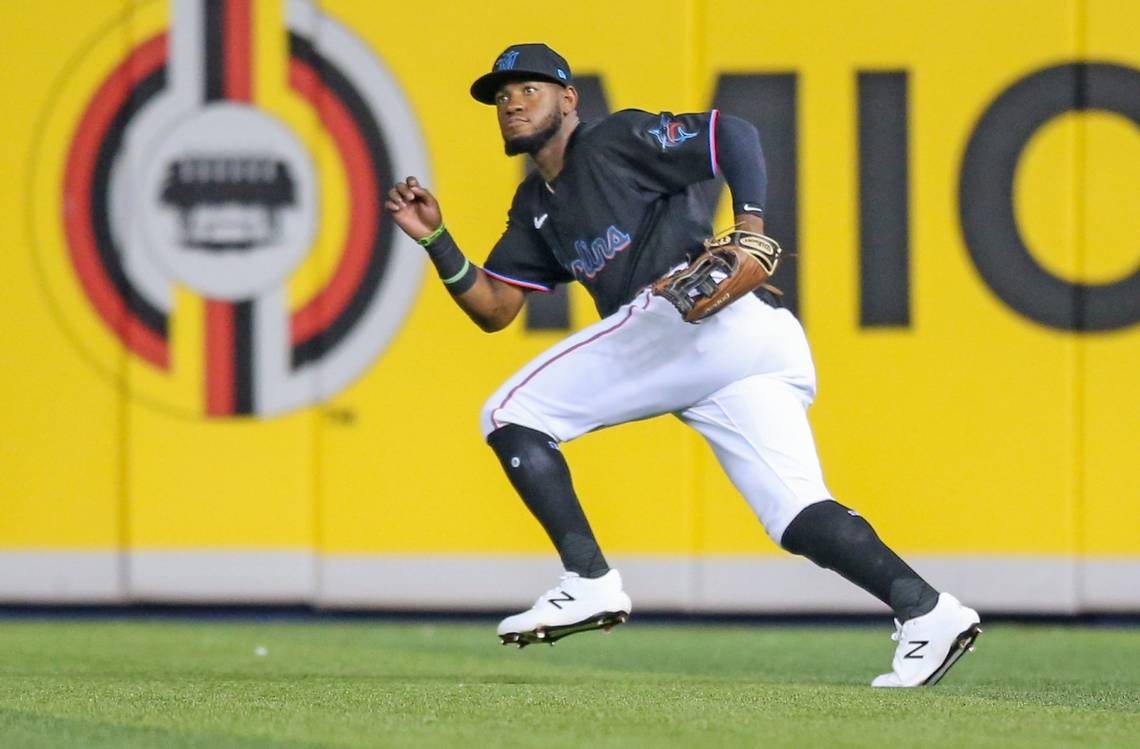 For the past few days, beat writers have been breathing a sigh of relief. After a wacky and wild final 72 hours of what will go down as one of the most unique trade deadlines of all time, the clock has run out. And while the Miami Marlins weren’t as active as some may have anticipated, they still built off the acquisition of Jesus Luzardo earlier in the week by swinging a few deals late in the deadline on Thursday. To explain it all, here is our break down of what happened and what didn’t for Miami during the 2021 trade deadline. — WHAT HAPPENED Marlins trade OF Adam Duvall to Atlanta Braves for C Alex Jackson Looking at the Miami Marlins as a whole heading into the 2020-21 offseason, the team as a whole clearly locked one big tool: power. After hitting just 60 homers and slugging .384 (25th in the league in each metric), the Marlins looked to free agent Adam Duvall to rectify that issue. The soon-to-be 33-year-old definitely did his part this season, slamming 22 homers which ranks tied for 12th in all of MLB. Asked to handle all three outfield spots among all of the Marlins’ injury woes, Duvall fared surprisingly well, turning in a dWAR of 0.9. But with a mutual option looming, the Marlins, out of fear that he would not agree to stay for the $7 million value, decided to err on the side of caution and get what value they could on the market. The suitor: the in-division Atlanta Braves. THE RETURN The Marlins addressed the catcher position for the first but not the last time by bringing back Alex Jackson, a 25-year-old backstop having a great year in AAA. Jackson has seen time in parts of three big league seasons with Atlanta including this season but none of those stints lasted longer than ten games. With the Marlins, Jackson will get his chance he can make his .287/.366/.694 stat line with the Gwinnett Stripers this year and 28 homers from his last full season in 2019 translate to the big league level. The 22nd ranked prospect in the Braves system by BaseballAmerica just five days ago, the first round draftee by Seattle in 2014 is a 6’2”, 215 pound specimen with a 45 grade FV per Fangraphs. For comparison’s sake, that ranks his ceiling and potential value to the Marlins’ organization as high as Jose Salas, Peyton Burdick, Jesus Sanchez, Lewin Diaz and others. Jackson is lauded for an incredible raw power tool that translates pretty well into 50 grade game power with a little tool to grow into more. Those tools allowed Jackson to hit 28 homers in 2019, a mark which ranked tied for 20th in AAA baseball. However, the power has come at the expense of historically mediocre bat to ball skills and pitch recognition. In each of 2018 and 2019 at the upper minor league levels, Jackson struck 33% of the time while only walking at a 7% clip. To Jackson’s credit though, he has greatly improved upon those numbers early in 2021. Through his first 108 plate appearances, he is holding down a walk rate just under 9% and a K rate of 28.5%. Jackson adds to his power-first profile at the plate with solid defense behind it. His best defensive tool is a cannon arm which allowed him to catch 25/50 potential base stealers in 2019 and before that, 21/46 in 2018 striking fear the hearts of MiLB base coaches to send their runners this season. In 2021, Jackson has thrown out two of three base stealers that have had the courage to test him. Scouts also credit Jackson with good blocking and game calling skills. THE VERDICT The path with Adam Duvall this deadline was simple: either convince the soon-to-be 33 year old it was worth foregoing free agency to stay in Miami for 2022 or get what they could out of his expiry contract. Judging by the way it came right down to the wire with Duvall departing just before the 4 o’clock cutoff, this was likely something the Marlins battled with all the way up to the very last minute. In the end, Duvall, a potential Silver Slugger and Gold Glove winner this season, goes back to a division rival. For only a guaranteed two months worth of his services, the return here is about as good as can be expected and it is at a position of great need for Miami. Jackson should get his full shot for the rest of this season and possibly part of next season to prove he can perform at the big league level. While it is disappointing to see the Marlins open up another hole in the outfield, they do get some promise and some solid tools in Alex Jackson. This will go down in the short term as the least popular move of the deadline but if the 25-year-old backstop builds off his solid start in AAA this year and pans out at the major league level, the move, in the longer term, could pay off. Marlins trade RHP Yimi Garcia to Houston Astros for OF Bryan De La Cruz and RHP Austin Pruitt It had been a very up-and-down season for the Marlins’ new look bullpen and Yimi Garcia was no exception. Like much of the relief core, Garcia had both his good moments in which he earned the closet’s role early in the season but also had his bad which have spelled a .260/.348/.494 slash line in high leverage situations. Ultimately, Miami decided to move on from Garcia to bring back a near-MLB-ready prospect at a position need (especially after the departure of Duvall), outfield. THE RETURN Coming back to the Marlins was Bryan De La Cruz, a long time minor leaguer despite being just 24 years of age. Signed as an international free agent at age 17 in 2013, De La Cruz grinded through seven minor league seasons at every level of the Astros’ system with very good results. Overall, his minor league line reads .276/.346/.391 with 88 doubles, 18 triples, 28 homers and 228 RBIs. Since battling injury in 2017, De La Cruz has performed well and ahead of schedule for the past three years. In 2018, he split time at both the low and high A level where he hit .289/.367/.375. 41 games into the 2019 season, De La Cruz was challenged to the AA level. There, 64 games for the Corpus Christi Hooks, he showed immediate translation, hitting .283/.340/.409. Bryan also stayed busy and competitive during the pandemic, taking part in eight games with the Toros del Este back home. He went 7 for 16. De La Cruz is an athletic 6’2”, 175 pounder who can play all three outfield spots. He has spent more time in center field this season with the Astros but he is probably better suited for a corner. He does have the arm to play right field regularly. This season, De La Cruz has answered some questions surrounding him regarding his raw power translating to game power. He already has 12 homers and a 112 wRC+. Scouts say he profiles best as a ceiling fourth outfielder but with Miami who will struggle to man their outfield in terms of in-house options in 2022, if he makes a good first impression this season, he could earn himself more playing time next year. He's certainly made a great first impression with Miami: he's recorded five hits in his first 22 ABs and played some impressive defense in right field. Pruitt is a 31-year-old journeyman who has spent time in the big leagues with three different clubs. He should provide some short term bullpen depth for the Marlins this season. THE VERDICT The Marlins get pretty good value for Garcia who had a very up and down season in high leverage roles. With a pretty high floor as a fourth outfielder and reachable ceiling as an every day starter if he can keep the K numbers in check, this is an attractive return for Miami who are in need of MLB ready outfield depth. With the potential for five tools, De La Cruz should get a pretty consistent and long look in the Marlins’ outfield. Marlins trade John Curtiss to Milwaukee Brewers for C Payton Henry The Marlins continued to answer the biggest glaring hole in the entire organization by trading the most consistent piece in their pen this season for a budding prospect who had a fantastic initial showing in the upper minors after a lost season. THE RETURN After starting the year in AA by hitting .315/.392/.405, Henry has definitely made a name for himself this season. However, the BABIP has to be taken into account. With the Biloxi Shuckers, Henry posted an astronomical and unsustainable .436 BABIP. That said, he does possess plus plus raw power. The challenge for Miami will be improving his swing which can get long. That tendency stems from a complicated approach and timing mechanisms within his mechanics which prevent him from making consistent barrel contact. That said, Henry has made strides when it comes to his K rate as it has shrunk every year since 2018. Behind the plate, Henry has a huge arm that has allowed him to throw out 40% of his base runners since 2017. According to Fangraphs, he has focused on becoming more flexible in order to improve his lateral movement and blocking abilities in recent years. THE VERDICT By trading Curtiss, the Marlins gave up a relief arm with quite a bit of control and give up the guy they traded first base prospect Evan Edwards for. So in hindsight, Edwards, who is hitting an odd .213/.340/.440 with 14 homers and an 87/37 K/BB in A+, turns into the Marlins’ most consistent reliever during the first half and Henry who has some loud tools and has had a great initial showing in the upper minors this season. A high school draftee in 2016, Henry is proof prep catchers can begin to pan out and in a fairly advantageous time frame. Henry provides the Marlins immediate relief when it comes to catching depth. The defensive skills are near big league ready. Should he continue to keep the strikeouts in check and improve his bat to ball skills, Henry has a solid big league starter’s ceiling. — WHAT DID NOT HAPPEN Acquire a cornerstone starting center fielder While Miami did address the backstop position in terms of their new big league starter as well as some near big league ready depth and did replace the departing Adam Duvall, the Marlins ultimately did not acquire their next center fielder. However, that’s not to say they did not try. During the entirety of the deadline, many names were abound and much conversation was had with multiple teams, the most notable being the offer to the Los Angeles Angels. Per a report by Craig Mish, the Marlins offered one of the top pitching prospects in the organization, 2020 first round pick Max Meyer in exchange for Angels top overall prospect Brandon Marsh. According to Mish’s report, the Angels were nearly ready to accept the deal but came back with another small ask on top of Meyer. The Marlins declined. Even though the deal did not get done, the fact that Meyer, who was thought to be nearly untouchable earlier in the deadline, proves that Ng and the Marlins are willing to move on from top prospects and in this case, top draftees. After the acquisition of Luzardo, the near acquisition of Marsh is further proof that Miami is focusing on competing at the big league level in 2022. According to Kim Ng, the conversations they had this deadline have a good chance of being revisited in the offseason. “I think what we did here over the last couple of weeks was not only prep for the offseason,” Marlins GM Kim Ng said. “We’ve talked to all the clubs multiple times and really, in my mind, set the groundwork for future deals whether it’s during the offseason, spring training or leading up to Opening Day.” Whether it is Marsh, Bryan Reynolds, Nick Senzel, Cedric Mullins or one of the other controllable names we heard mentioned, this will be a-priori for Miami this winter. Did not trade more of the bullpen There’s no getting around it: for the most part, the Marlins’ new look bullpen constructed by Ng and company this offseason has largely disappointed as a whole this season. That said, there have been some bright spots that carried some attractive trade value this deadline. The Marlins dealt the steady Curtiss and the up-and-down Garcia, however, they retained the likes of 34-year-old ground ball specialist Richard Bleier and 30-year-old World Series champion Dylan Floro who is carrying a 156 ERA+. While it would have been nice to see Miami make more moves for near-MLB ready prospects like the Garcia/Curtiss deals or to see them include these pieces to sweeten returns a bit more, they still need innings behind starters somewhere for the rest of this season. We would expect these veteran relief pieces to be shopped again this offseason, especially if they remain effective.
 -
View full article
-
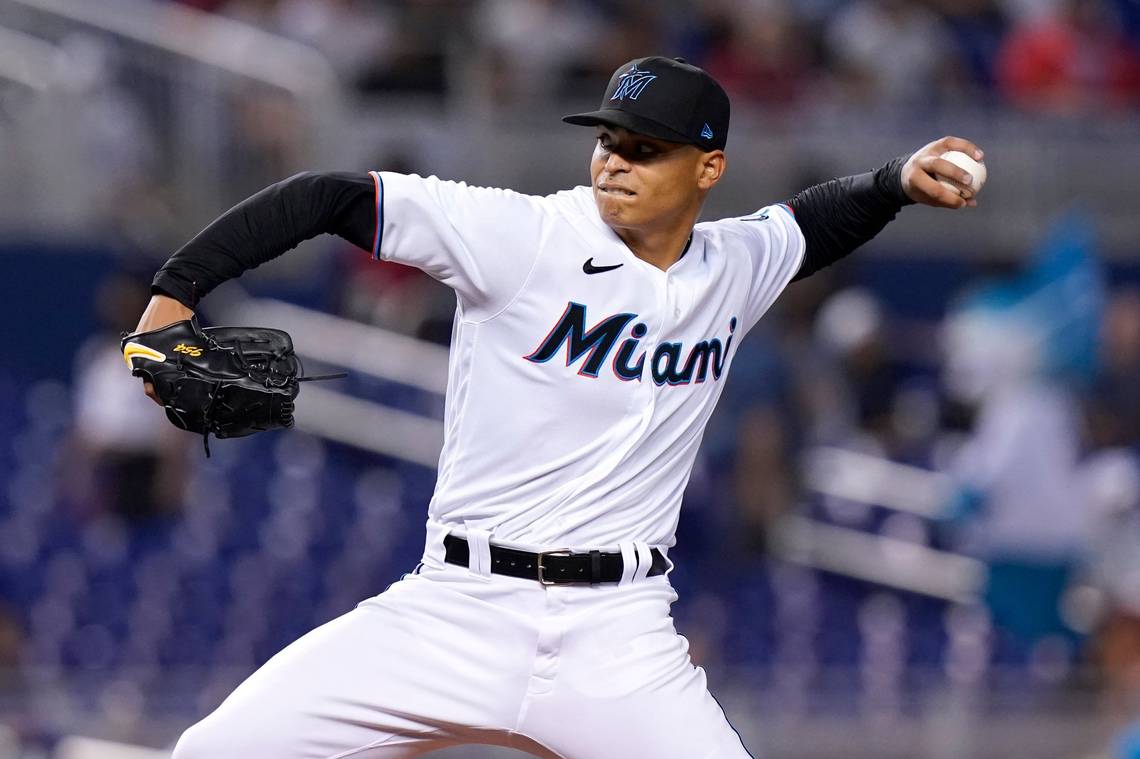 For Jesus Luzardo, home has always been a special place. And on Monday night, not far from home in Miami, he gave a special first impression to the Marlins’ organization. Though he was born in Lima, Peru, South Florida is all the Marlins’ new fireballing lefty has ever known. The son of Venezuelan patents, Luzardo and his family relocated to the region when he was just a year old. After attending Marjory Stoneman Douglas High School as a teenager, Luzardo was drafted in in the third round in 2017 and set sail for our nation’s capital, Washington DC. After just half a season in the Nationals’ organization, Luzardo was traded and made his way west to an entirely new climate 3,000 miles from his front door: Oakland, California. Now, four years after his professional career began, Luzardo has returned to pitch in his own backyard. "It was a whirlwind of a day for me. I just got off a plane from Salt Lake City to Vegas. I found out on Twitter that I had gotten traded," Luzardo said regarding the trade process. "I think it's an exciting opportunity, joining a great group of guys and a great group of young guys. I know they have a lot of fun here. I'm excited to be a part of it." On Monday, Luzardo took the mound for the Marlins against the division rival New York Mets. On the same mound on he watched some of his childhood heroes throw, the 23-year-old southpaw, with “954” emblazoned on his glove, provided a great first impression, tossing five innings of four hit three run ball on five hits, three walks and five strikeouts. For Luzardo, to be able to compete at such a high level 45 minutes south of his front door with over 100 of his family and friends looking on made the night extra special. "I take a lot of pride in where I grew up in Parkland, Florida. "Broward County. People ask me where I'm from, I say Broward County." Luzardo said. "I think it means a lot." Asked what he though about Luzardo's outing overall, Marlins interim manager summed it up in one word. "Wow. That's what I thought," Rowson said. "The stuff is electric. You watch him throw and you can see why people consider him to be special." The outing didn’t come without it’s adversity. After a scoreless first inning, Luzardo labored in the 2nd and to begin the 3rd, giving up three runs on a walk, two hits, a wild pitch and a homer. However, after that, Luzardo was able to rebound, setting down nine of his last 11 hitters. Marlins interim manager James Rowson said Luzardo’s ability to stay competitive really stood out. "Sometimes you look for those things. You know how good the stuff is and you know how well a guy can pitch. You've heard those things, you've seen it. The biggest thing to me is when you get into some trouble to bounce back," Rowson said. "The guy who can show hey, I can bounce back and come back and finish strong. I thought he did a great job of showing that tonight. And then he finishes really strong. This guy has a chance to be special with what he does." As well as Luzardo's Marlins debut went, the lefty said he is happy the first one is out of the way and he can focus on improving as the season goes along. "I would say this is the most... jittery start of my career. More than my debut when I came in in relief, more than playoff games. Just coming back home and being in front of so much family and friends. It's great to get my feet wet here and now we can move forward. "It was really good to see him get out there and get to know his teammates a little bit," added Rowson. "I know its been kind of a whirlwind for him, getting in town and getting to know everybody and all of a sudden you're pitching right away. So hopefully now that he's gotten out there and gotten on the field, he can just kind of take a deep breath, get comfortable and keep doing what he's doing." Behind Jesus on the mound, Luzardo’s fellow South Floridian, Coral Springs High School grad, Lewis Brinson provided the offense with a first inning grand slam, the second of his career and an eighth inning RBI which came on an error. Brinson’s five RBIs marked a career high. Brinson said it was important for him to come through for his fellow Broward County native in his first start with the Marlins organization with much of his support system in attendance. This was just the second big league outing Luzardo has had on the east coast of the United States. "He went to my rival high school so I'll let that slide. I wanted to get this win for him, I wanted him to have a good outing," Brinson said. "I know it's big being back home. You want to feel comfortable, you have all of your family and friends here. I know everyone was here cheering for him." According to Luzardo, even though he’s just now getting to know Brinson as a teammate, they have had a relationship since Brinson was drafted back in 2018. Ironically, this was not the first time Luzardo has seen Brinson hit a bases loaded round tripper in person. "I grew up watching LB. I went to his high school baseball game the year he got drafted. He hit a grand slam," Luzardo said. "I remember watchin him, looking up to him. It's funny; we talk in the offseasons and now I'm on the same team as him." Although he’s only been in the organization for a few days, it would appear as though changeup whisperer Mel Stottlemyre Jr has already begun to get to work with Luzardo. During the broadcast, Bally Sports' Jessica Blaylock said that Stottlemyre Jr told her that Luzardo will benefit from being around Sandy Alcantara, Pablo Lopez and Trevor Rogers, three guys Mel and his development staff completely transformed by enhancing that secondary pitch. In this start, the changeup was Jesus’ second most used pitch. His 24 thrown accounted for 29% of his 84 pitches thrown. Before this start, Luzardo was only using the changeup 19% of the time. The pitch showed extremely well, inducing 13 swings including six whiffs. Only two of Luzardo’s changeups found their way past fielders. "It's always been my pitch. Growing up I never threw that hard so it's a pitch I had to learn early," Luzardo said. "I feel like I got away from it at times, last year maybe and this year through my struggles. I feel like I'm back on track now physically. I feel like my pitches are doing what they need to do." On top of utilizing his changeup for strikes often, Luzardo’s mechanical repeatability, a big crux for him lately, was also on point. Driving into his pitches from his back leg well, landing downhill and hitting the same release point with all of his pitches, Luzardo was in the head of Mets hitters all night rather than them being clued in to what’s coming or taking advantage of missed spots. With those issues beginning to correct themselves, Luzardo will be able to focus on improving consistency of command. If he and Mel can work that out together, his ceiling will be within reach. This was the version of Jesus Luzardo that scouts thought was possible when they wrote rave reviews about him heading into the 2017 draft. It’s the same South Floridians saw when he was dominating high school competition for all four years of his prep career. Four years later, Luzardo is back home and has begun to do the same at the big league level and it could not be a more welcome sight for the Marlins. The full circle completing itself. It can be a beautiful thing.
 -
View full article
-

Marlins Acquire Jesus Luzardo in Exchange for Starling Marte
Alex Carver posted an article in Marlins
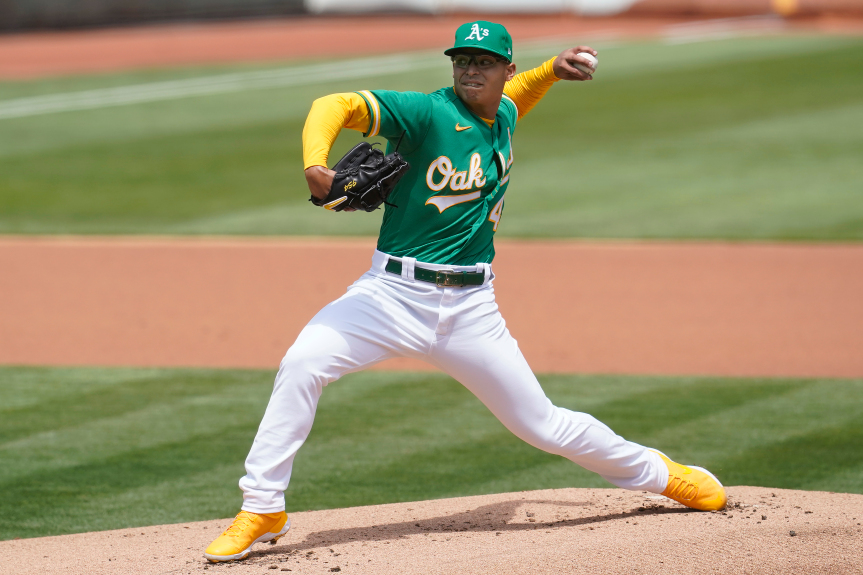 After years of trading established major league assets assets for long term projects after both failure and success, the down-and-out 2021 Marlins traded away the best player on their team and one of the best players in baseball on Wednesday afternoon. This time though, under the new Jeter regime, the very talented name coming back to Miami should be music to Marlins’ fans ears and should signify a much more competitive strategy. For at least a few weeks, it was a foregone conclusion that Starling Marte, who declined a contract extension with the Marlins before the All-Star Game, was going to be dealt, making him one one of the deadline’s hottest commodities. However, while there were reports of several interested parties including the Yankees, Giants and Astros, as late as Wednesday morning, there was not much movement on a potential deal. Then, in the 1 o’clock hour, a brand new suitor for Marte emerged: the Oakland Athletics. Things moved very swiftly and a few minutes later, the deal was announced by Craig Mish and Jon Heyman: Marte to Oakland for left handed pitcher Jesus Luzardo. Though the deal seemed to come out of nowhere, according to Kim Ng, she had been in contact with Athletics GM David Forst for most of the week. To bring the Major League ready former third round draft pick with a high floor and a great high school pedigree back to where it all began for him in South Florida, the Marlins picked up the rest of Marte’s remaining contract. To sum this up from an organizational standpoint: Miami traded the expiry contract of a star player but also included cash in order to bring back a big league ready piece that will sure up a spot in their rotation for the rest of this season and potentially for seasons to come. Luzardo will be under the Marlins’ control until 2026. Even though the Marlins still maintained an annually low payroll this season, this is a new and much welcome practice for a historically thrifty club and a team that has only included cash in order for trade partners to accept deals for much farther away prospects. Today, Kim Ng and Derek Jeter spent money to ensure a return that will help the team be competitive as early as 2022, signifying a winning attitude and mindset. In theory, the Marlins both bought and sold in the same trade. The acquisition of the MLB ready lefty Luzardo opens up a many possibilities for Ng and the Marlins for the rest of the deadline and/or this offseason. Among them: deal from the multitude of top pitching prospects the team has in the minor leagues (Jake Eder, Zach McCambley, Kyle Nicolas, etc) in order to acquire a controllable MLB center fielder or catcher. With the departure of Marte and with very little depth in the minors behind the plate, both positions are glaring holes for the Marlins. Acquiring MLB ready talent one or both of those positions would further solidify Miami as a contender in 2022. — Luzardo is a native of Lima, Peru who moved stateside and to South Florida when he was a year old. As a teenager, he attended Marjory Stoneman Douglas High School in Parkland. There, he played under head coach Tod Fitz-Gerald whose program is lauded producing professional talent. As early as his junior year, Luzardo was hitting as high and 95 mph with his four seamer and was showing three more pitches behind it, a curveball, slider and changeup. In 2016, Luzardo was drafted in the third round by the Washington Nationals as the seventh ranked left handed pitcher in the nation by PerfectGame. A year later, Luzardo was sent to the A’s in a trade that pitchers Sean Doolittle and Ryan Madson to DC. Jesus made his MLB debut as a 21 year old in 2019 and since has thrown 109 innings for Oakland including 10.2 in two postseason trips. The A’s have used Luzardo in a multitude of roles both out of the rotation and out of the bullpen. Just less than half of his appearances have been as a rotational starter. This season, Luzardo began the year in the A’s rotation before suffering an injury at the beginning of May. He came back to the A’s at the end of that month. Oakland gave him a single start before sending him to the bullpen and then ultimately back down to AAA. The numbers overall have not been pretty: in MLB, he has a 6.87 ERA by way of a 1.63 WHIP and 40/16 K/BB in 38 IP. In MiLB, he has a 6.52 ERA via a 1.66 WHIP and 26/15 K/BB in 29 IP. However, his last two starts in Las Vegas have been better: 11 IP, 8 H, 4 ER, 11/3 K/BB. Since high school, Luzardo’s biggest crux has been the repeatability in his levers which has affected his command. This season in his MLB stint, Luzardo has thrown his sinker a career high 32% of the time and his four seamer a career high 32% of the time while he’s thrown each of his breaking pitches at career low rates, proving that Luzardo is still having trouble placing breaking stuff consistently and having to challenge hitters with heat more often. Here is a look at his pitch mapping in his MLB stint this year (with 21% of his mapped curveballs being sliders). According to Aram Leighton of JustBaseball who played against Luzardo in his prep years, switching roles so often has affected Luzardo, disabling him from getting into a routine and consistent regimen. Today, Jesus comes home to play for his third organization in his five year career. In Miami, he will be able to find comfort as an every fifth day starter out of the rotation expectedly right off the bat. Although Kim Ng would not commit to that on Wednesday night, Don Mattingly made that prediction earlier in the day on MLB Network Radio. With fiery heat and a wipeout slider but needing polish on the rest of his breaking pitches including his changeup and his repetition, Luzardo is reminiscent of Trevor Rogers, circa 2019. Per Statcast, in 2021, Luzardo's velo and spin rates are very closely compared to Rogers. Coming back home to the Marlins’ pitching development system, the same system that turned Trevor into a Rookie of the Year favorite despite a missed season due to COVID and a missed season due to injury at the beginning of his career, this 23-year-old lefty enters a great situation for his career growth. In the hands of Mel Stottlemyre and the rest of the Marlins' pitching development staff, it is tough to bet against him sticking as a starter long term. At the very least, his floor is that of a late reliever. Luzardo could get his first start in a Marlins uniform as early as this coming weekend at loanDepot park.
 -
View full article
-
 Eddy Alvarez (Photo by TeamUSA.org)It is often said that the goal of any athlete is to represent his or her country on the national stage in the Olympic Games. Eddy Alvarez reached that plateau once as a speed skater in 2014 and he’s about to do it again as a baseball player in 2021. However, that future wasn’t always promised to him. Eddy is the second son of Walter and Mabel Alvarez whom he says have been catalytic and paramount in his success as an athlete. Walter and Mabel’s first contribution to Eddy’s way of life came years before he was born when the couple escaped political turmoil in Cuba and made their way to America. "This is something that's a little bit of an emotional time in my life just because of the fact that my family left for a reason. My family was under a certain control and they didn't like where the country was going so they got out for a chance at opportunity and freedom. Because of them I'm able to put on this uniform and represent this country. Because of them I'm able to have a freedom of speech of saying what I feel and what these people are being oppressed about." Similar political unrest still shakes the island just 90 miles south of Floridas’s southern peninsula. As baseball returns to the Olympics for the first time in seven years, Alvarez hopes and prays for an end to the ongoing crisis that has shaken Cuba for decades so that others from his background and cultural origins have the same opportunities he has had. "For things that are coming into light now, they've been going on for decades. This is not anything new. This regime that's in power, the government that's in power, its not okay. I see a lot of athletes disrespect the flag and say things abut their country that's not prideful, it really hurts me because of the situation I've had to see my family go through," Alvarez said. "We feel for the people of Cuba right now. We are so proud of them because they are going out to protest with stones, forks and broomsticks because they have no form of protection. I just want them to know that they have our support through and through." The city that welcomed Walter and Mabel was none other than Miami. There, the couple settled down and began building a family starting with Eddy’s older brother Nick and eventually in 1990, Eddy himself. Alvarez grew up with the game in his blood and all around him. His father played the game at a younger age and his brother was drafted by the Dodgers where made it as high as the AAA ranks when Eddy was a teenager. Eddy himself began playing baseball when he was four years old. At the same time he was handed his first baseball glove, he was handed a pair of ice skates. Much of Alvarez’s childhood was spent shuttling back and forth between his home, schools and baseball fields in Brickell to a the nearest ice rink in Kendall. Along with his parents who were steadfast in their support and encouragement for his athletic dreams, Alvarez would not be the man he is today had it not been for the Magic City. "This is the city that sculpted me and this is the city that gave my family an opportunity at a great life in this country. To be able to say that I'm from Miami, Florida in the Winter Olympics was an honor and now to be able to say that I'm playing on the US national team from Miami as a Cuban-American, it feels like a full circle. I owe the city a lot." For his collegiate years, Alvarez shipped up to Utah to pursue his dream of winning an Olympic medal in speed skating but he also kept baseball close, competing at the JuCo ranks when he was off the track. Trials and tribulations including chronic knee pain which eventually turned into patellar surgery, Alvarez’s grind paid off. In 2014, he took the podium as a silver medalist in the 5000 meter relay and he also garnered attention as an All-Conference shortstop. According to Alvarez, his most memorable moment in Sochi in 2014 wasn't taking the podium but rather the feelings he got when he was introduced as part of Team USA. "We work so hard for so many years sacrificing, absolutely demolishing our bodies for hours on end, for 11 months of the year every year," Alvarez said. "It wasn't so much the actual medal; it was more of stepping out on the ramp during opening ceremonies, and realizing I made it." After Sochi, Alvarez stepped away from speed skating to pursue a career in his passion for baseball, the sport he began along with speed skating and which he didn't let go of despite all of the work he put into his career on the ice. Seven years later, after the event was excluded from the Olympics for his entire playing career which has included stops with three different organizations including his current and home town team, the Marlins, baseball is back on the national stage. With it, so is Eddy Alvarez. According to Eddy, the topic of him possibly competing in the Summer Olympics as a baseball player, has been a light-hearted jest between he and his friends. Now that it has become reality, Alvarez is humbled. "Its been a running joke in our family: what if I make it to the Olympics in baseball? Ha ha!," Alvarez quipped to Bally Sports Florida. "Well, its happening. I'm just excited to put the colors back on again and wear the USA across my chest. It's an honor." On Friday, Alvarez will step back into an Olympic stadium again to be introduced as part of the US National Team. While many of the same feelings he felt when he first walked the ramp back in 2014 will once again be present, there will likely be some added emotion: Alvarez will be front and center leading the US into Olympic Stadium in Tokyo as one of two team flag bearers. "I didn't think this was ever going to be an opportunity to me so the fact that I'm sitting here alone this is a huge honor. But this is super big for me and my culture to be able to represent my background and my people," Alvarez said prior to Tuesday's official announcement. "To be able to be the flag bearer, to potentially hold Old Glory, a symbol of freedom and liberty to many around the world, not just the United States, this one means a lot. This is very special." If the United States medals in the event, the 31-year-old will become just the sixth athlete ever to win a medal in both the Winter and Summer Olympics. Coincidentally, it was last accomplished by Alvarez's fellow Miami native, Lauryn Williams at Sochi in 2014, the same Games Alvarez first medaled in. "I consider this group, this elite group of athletes, some of the best athletes to ever walk this planet. I didn't know that I was ever gonna make it this far. I was always willing to put in the work and the sacrifice to do so but to be potentially part of that exclusive club would be a dream come true of mine. I would love to go down in the history books as as great as some of these other athletes." Eddy Alvarez is a special athlete whose drive, determination and tenacity have spurred a unique and equally special career in sports, a career that, after much hardship, is producing very well earned rewards. On Friday, the Cuban-American will lead Team USA in to Olympic Stadium for the second time, Stars and Stripes in hand, as the perfect model of the American dream and proof that anything is possible in the Land of the Free.
 -
View full article
-
 The MLB Draft is always full of twists, turns and excitement unpredicted by any mock draft or pregame analysis. For two straight years, the Miami Marlins have been a part of such happenings frequently. After selecting Max Meyer over Asa Lacy in the first round of the 2020 Draft and used the savings to select Daxton Fulton. That pair accounted for 1/3 of the six pitchers Marlins selected in the abbreviated five round event. On Sunday night, Miami made a huge splash with both of their first round picks, selecting standout prep athletes before drafting established collegiate players with 16 of their last 17 picks. According to Marlins scouting director DJ Svihlik, this was exactly how he and his team saw the event going. “We anticipated this; we knew how this was going to happen or we felt like we knew how this was going to go down,” Svihlik said. “The whole front of the board from Rounds 5 and above is heavy, heavy high school this year.” Although the draft went the way Svihlik expected overall, there were a few surprising moments for the Marlins draft team, namely surrounding their first acquisition of the event. Here is a look at that pick and the rest of the Marlins’ 20 picks in the 2021 MLB Draft. Kahlil Watson (Photo by HighSchoolOT.com)Round 1, Pick 16 - SS Kahlil Watson, Wake Forest (N.C.) HS Running better than ever as a senior, Watson consistently displays well-above-average speed and is a basestealing threat. The North Carolina State recruit has the actions and instincts to play a solid shortstop.” Coming into the Draft, the newly turned 18-year-old Kahlil Watson was ranked the fourth best shortstop in the country by Perfect Game and was tabbed to go no later than seventh by most major mock drafts, including MLB Pipeline’s final version posted by Jim Callis (link) just moments before the event began. The Draft began and rolled on: the top five picks were made, 10 names were posted to the board, and finally the top 15 names were spoken into the microphone by Rob Manfred. Watson was somehow not one of them. After spending the last hour “sweating” in his conference room, Marlins scouting director DJ Svihlik perspiration ceased and he was filled with elation as he delivered the pick to the draft war room down the hall. “To have him fall down to us, that’s extremely exciting,” Svihlik said. “We were very surprised that he was available. He was one of the most dynamic players on the board.” How unlikely did Svihlik think it was heading into Sunday night that the Marlins would have the opportunity to select Watson? "I would say, 'You're crazy, no way, not going to happen,” he said. Scouting the 5’”, 178 pound lefty hitting shortstop, Svihlik stated that Watson is well beyond his years in terms of overall polish on all five of his tools. “You’re talking about a guy that has a plus arm, plus run, electric bat speed combined with a great swing and athleticism,” Svihlik said. “He plays right up the middle of the field which is everything which is everything we stress in the organization. So he checked all the boxes.” [youtube With 55+ grade tools throughout his profile and a 60 grade overall future value, Watson has an explosive swing, supreme bat speed (which Svihlik pointed out as arguably his best tool), and lightning quick wrists and hands which give him above average raw power with plenty of time to grow into more. The hands follow Watson into the field where scouts and evaluators agree he can make easy transfers. There seems to be some disconnect between reports when it comes to his readability and consistency going to both sides of the ball at short. Some say he may move to second base as he fills out in order to take some pressure off his bat but that he should maintain 55-60 grade speed, giving him the potential to be an annual 20/20 threat at a premium offensive position. With the bat, seemingly the only barrier that will stand in Watson’s way is the ability to get his raw power to match his game power at the next level but with an infinitesimal amount of time to clear that hurdle and with already so much shine on his hit, run and field tools, Watson’s future looks very bright. He should enter the Marlins’ stacked system as a top five prospect immediately. When scouts compare his big league ceiling, several names are coming up including Francisco Lindor but the name that will stand out to Marlins fans is Jazz Chisholm Jr. Asked about the prospect of sharing an infield with Jazz long term, Watson, who also shares an interest with Chisholm in the same video game, could not stop smiling. “I’ll be playing (MLB) The Show 24/7. I’ll be using Miami. Him on The Show is unbelievable,” Watson said. “I’d love to play right across from each other.” Looking at the future of the Marlins infield with names like Chisholm, Lewin Diaz, Jose Salas and now with the massive addition of Watson who is being called the steal of the draft, it is easy to see why Svihlik and company are so please with this pick. Joe Mack (Photo by PerfectGame.com)Round CB-A, Pick 31 - C Joe Mack, Williamsville East High (NY) On the financial side of things, Watson said he received the call from his agent describing the offer from the Marlins as “a great deal”. He is projected to make up to $1 million over his slot value of $3.7 million. So with this pick, the Marlins, who have a total bonus pool around $10 million, had a decision to make: spend now on another over slot player or go under slot value and save for later on in the draft. But when Joe Mack, the third best prep prospect at the thinnest position in the Marlins’ organization, fell to Svihlik at 31, the path was clear. [youtube Before we even get to the baseball tools, what stands out about this 6’1” 210 pound backstop who will be 18 for the rest of the 2021 season is his infinite athleticism and compete level. When not in class, Mack’s time was spent either on the baseball field or on one of two courts: basketball or volleyball. During his visit to see Mack leading up to the draft, Svihlik saw this up close and personally and was very impressed. “To watch him play basketball all winter, and for me to fly up there, watch him play volleyball and the next morning, be on the field, hitting (batting practice) at 8:00 in the morning, that’s very impressive when young players do that," Svihlik said. "You can’t understate how important it is that they are playing multiple sports.” Ultimately, Mack settled on playing baseball at the next level and he has all the tools to do. Each of his four plus tools are well ahead of his current level of development. We will start with a 55 grade hit tool made possible by great bat speed, good posture and an approach which he modified midway through his senior year and after getting a late start to the season due to his volleyball team’s season going long. From a more closed stance and with a much less pronounced front leg kick during game action, Mack is a much more simplistic hitter and looks very smooth. The vertical power transfer is present: he starts with his elbows high and drops the barrel to the ball with his aforementioned fantastic bat speed. With an advanced knowledge of the strike zone and good vision, he prolongs at bats and can hit in all counts, including two strike counts. The swing is short without much uppercut. All in all, Mack shows the blueprint to hit for a plus average. Mack’s power is rated at a 50 grade by multiple evaluators. Scouts say that he hits to all fields and, while at present he is more of a gap to gap guy, he should be able to unlock more power as his body matures and he is developed at the pro level. The bat speed and explosive finish is definitely there; he just needs to create more loft on the baseball and get his mostly stationary legs a bit more involved in his swing. The tools don’t stop on the offensive side. His highest graded tool overall is a 60+ throwing arm coupled with pop times in the 1.9 range and hand to hand transfers that are instantaneous. He even shows the absurd ability to start to get out of his crouch on pitches down even before the ball reaches the glove. The athleticism and fluid motions are a thing of beauty and his awareness and attention to runners will keep guys close to the pillows. Coupled with great receiving and lateral movements to block pitches out of the zone, the high schooler looks close to being big league ready defensively. Though the Marlins spent most of their bonus pool on the first two of their 20 picks, they did so for very good reason. Mack will enter the system as the highest rated catcher within the organization’s top 15 overall. Cody Morissette (Photo by BCEagles.com)Round 2, Pick 52 - SS Cody Morissette, Boston College After going over slot and spending an approximated $7 million of their $10 million pool on their first two picks, the Marlins go collegiate for the first of seven times in their first ten picks. Morissette is a 21-year-old lefty hitter from Exeter, New Hampshire. After the 218th nationally ranked shortstop went undrafted out of high school in 2018, the 59th ranked prospect in the 2021 draft went 52nd overall to Miami. So what happened? As Prospects Live notes, Morissette first garnered attention by making an immediate impact in his NCAA career. In his freshman year in 2019, he started every game at second base over upperclassmen and hit .320/.371/.476. That paved the way for a .336/.400/.507 NCAA career with three solid summer league showings mixed in. Included was a .340/.480/.511 28 game tenure in the Futures League in 2020 after the COVID shortened NCAA season. His future power production is dependent on his ability to see pitching (particularly good breaking stuff) at the next level as well as showing added impact with the wood bat. At the very least, he is a picky hitter who will also settle for singles, average, walks and OBP. He can also disrupt the game on the bases with good acceleration and above average top foot speed. Defensively, Morissette has spent most of his time at shortstop but evaluators believe his long term home may be at second base if not in center field. A floor utility man at the next level with room to be more if he comes by more power, Morissette and his plus plus hit tool was a strategically great selection in this spot. The Marlins should be able to sign him under slot value. Jordan McCants (Photo by 247 Sports)Round 3, Pick 88 - SS Jordan McCants - Pensacola Catholic High School The Marlins went back to the high school ranks in a slot worth just under $700K. The pick was McCants, a Mississippi State commit, the 33rd ranked prep shortstop in the nation and the 133rd ranked draftee overall. In his senior year consisting of 27 games, the McCants slashed .450/.451/.670. This was a bit of a surprising selection by the Marlins but they clearly saw something in McCants to once again commit what will very likely be over slot money to take this 6’1”, 165 pound lefty away from his college commitment. [youtube There are some good tools, namely a quick, slashy and mature for-average approach, 60-grade speed, great hands in the field and impressive athleticism. What McCants lacks is power and the physical projection to come by it. He comps closely to (a lefty only hitting) Nasim Nunez as a guy who approaches from the back of the box, recognizes pitches well, swings at strikes with a hack and slash cut, settles for singles or walks then lets his speed do damage on the base paths. Due to an average arm, scouts project his long term future to be at either second base or perhaps in center field where he can further utilize his best tool, the speed. Tanner Allen (Photo by Mississippi State Athletics)Round 4, Pick 118: OF Tanner Allen, Mississippi State Svihlik’s plan to take from the deep prep crop early then sign established collegiate hitters late fully came to fruition starting with this pick. It began a run on six straight three and four year NCAA picks. The pick at 118 was Tanner Allen who the Marlins had their eye on last year but due to the abbreviated Draft and a hamate joke injury limiting him to just eight games, he went unselected. Allen comes to Miami after a .336/.411/.522 collegiate career in the SEC at Mississippi State. [youtube Allen who just turned 23, was a force in the SEC for three years and a handful of games, hitting .336/.411/.522. His exports in a .383/.456/.621 senior season earned him the SEC Player of the Year Award and helped lead the Bulldogs to a national title. Svihlik said before the draft that this draft is full of Peyton Burdick type selections. This pick screams Peyton Burdick. Per MLB.com’s Jim Callis, Allen is a “top discount hitter”. Looking at Allen at the plate, he looks a bit like Peyton, who signed for well under slot in 2018, from the opposite side. They even wear similar war paint. 5’11, 190 to Burdick’s 6’, 205, Allen exhibits a quick, short swing with good bat speed and a feel for the gaps. Where Allen differs from Burdick is in the raw strength department (not a lot of guys can match Peyton here), making Allen a hit over power guy at present but if he puts on some muscle at pro facilities and begins to create loft more consistently, he will garner the ability to find more fences. Per MLBPipeline, Allen did a lot of work with his run tool this past season and is showing a better ability to cover more advantageous ground. Due to the fact his arm has just average strength but good accuracy, he could move to left field long term if he sticks as an outfielder. He’s also done work at both third base and first base. Allen, with good college pedigree, a plus hit tool from the left side with the ability to polish into a bit more, this is a value pick that has the ability to become a bit more and arrive pretty quickly. Brady Allen (Photo by South Carolina Athletics)Round 5, Pick 179: OF Brady Allen, South Carolina Back-to-back outfielders, back-to-back Allens. This time it’s Brady Allen, the 193rd ranked drafted per MLB Pipeline that comes to the Marlins at pick 149. Per MLBPipeline, Brady is a player who does “a little bit of everything”. After a power surge in his senior year, that tool rose a bit higher over his hit tool. To improve the hit tool, the 6’1”, 218 pounder will need to create more consistent contact against quality offspeed pitches. At just 21, there’s time for Allen to become a quality all-around lefty bat. Scouts have his big league future stamped as either a platoon player or fourth outfielder. Sam Praytor (Photo by University Of Alabama Athletics)Round 6, Pick 179 - C Sam Praytor, Alabama Praytor is a fourth year guy out of the SEC where he hit .285/.392/.500 over 126 games. He suffered an arm injury in 2019 which required Tommy John surgery which then parlayed into the missed 2020 season. Per reports, he is still considered one of the best receivers in the nation and he was able to build his arm strength back well enough to catch 24% of his runners in 2021. [youtube At the plate, Praytor, 5’10”, 205, hits for good power but has also stayed away from the strikeout, posting a 38/29 K/BB in 59 games this past season. A guy who missed a lot of tile in 2019 and of course 2020, the Marlins hope they caught Praytor at an advantageous time. Still just 22, there’s some more room to grow as he transitions to the professional ranks. A good find for the Marlins in this spot. Gabe Bierman (Photo by Indiana Athletics)Round 7, Pick 209: RHP Gabe Bierman, RHP Indiana A pitcher and the start of a run on pitchers for Miami. A 6’2”, 200 pounder, Bierman began his career at Indiana as a reliever in 2018 before transitioning to a starting role this season. The numbers pop: 74 IP, 2.68 ERA, 1.04 WHIP, 80/30 K/BB against Big 10 competition. That K total ranked 11th in the league. Bierman won’t overpower with velocity, sitting in the low 90s but he has four pitches and a good feel for the strike zone and ability to attack it with confidence. It’s a professional approach to hitters and a guy with a simple delivery. Ranked 24th in the nation in hits per nine innings at 5.72, Bierman recently spoke to the ability to get outs in multiple ways. "I don't mind pitching to contact, to soft contact, and trusting in my defense to make plays. My change-up will always be a weapon for me, but I need my fastball to set that up," Bierman said. "When they're both going well, and I can beat guys with my fastball when they're sitting on my change, too. It's all about keeping them guessing. keeping them off-balance.'' With a multitude of weapons including a sinker which induces ground balls and his best pitch, a plus changeup, a mature pitcher’s IQ and a good feel for his delivery and repetition, Bierman is a seventh rounder who is satisfied with getting outs however possible. He could play above his selection slot in the future as a back end rotational piece or at the very least, a multiple inning reliever out of the pen. Pat Monteverde (Photo by Texas Tech Atlethics)Round 8, Pick 239: RHP Pat Monteverde, Texas Tech From D-III Marlins to MLB Marlins. Monteverde is a 6’2”, 190 pound lefty who attended three different colleges over a five year collegiate career. After starting his career at Virginia Wesleyan (a team whose mascot is ironically the Marlins), Monteverde went back to his home state to attend Seton Hill in 2018. After a solid year in which he limited damage as a sophomore that year (71 IP, 3.04 ERA, 1.38 WHIP, 78/27 K/BB), Monteverde suffered an elbow injury early in 2019. He underwent Tommy John surgery that wiped out the rest of 2019 then COVID-19 wiped out all of 2020. But Monteverde and his rep Ben Simon didn’t let the pandemic hold them back. After graduating from D-II Seton Hill, he joined the transfer portal. Per reports, he did so with enhanced velo and another weapon in his arsenal, earning him a ton of attention and a multitude of D-I offers. According to the same report, Monteverde nearly became a Florida resident before today. “Monteverde’s stock was heating up, as his velocity was up to 95 mph and a slider was added to a repertoire that already included his fastball, curveball and changeup. Simon would have Monteverde pitch simulated games and then send the video to college coaches. Monteverde was bombarded with 43 total offers, including 24 from Power Five programs. He ultimately picked Texas Tech over Miami.” In a single season for the Red Raiders, Monteverde, with his ticked up velo and arsenal widened posted good starter numbers in his first D-I showing and in the most single season innings he had thrown (again, after a very long lay off): 86.1 IP, 3.75 ERA, 1.16 WHIP and a fantastic 101/21 K/BB. Showing a wide variety of pitches, good command, and plus velo, Monteverde is a great find for the Marlins and a feel-good story of constant progression no matter what obstacles have been placed in his path. Born one month and one day before the Marlins won their first World Series in 1997, this soon-to-be 24-year-old is a great find whose newly enhanced stuff plays up to a back end rotation spot. Jake Schrand (Photo by Wright State University Athetlics)Round 9, Pick 269: RHP Jake Schrand, Wright State University The Wright State Factor rolls on. Hailing from the same alma mater as Peyton Burdick and JD Orr, Schrand is a 6’, 180 pound righty who pitched out of the pen most of his collegiate career before starting in 2021. The standout tool here: fiery velo. Schrand is up to 97 with movement. He needs to polish off the secondaries whether it be his curveball or newly added changeup but per what we hear from his coaches, he certainly has the work ethic and drive to do so. “He’s the hardest worker I’ve ever seen. He’s an animal. I personally think he’s a back end guy. He would run it up 95-97 when closing games and in the first inning of starts and then settle in 92-95. He has some jump to his fastball and his curveball is 12/6. He learned a split change this year that was effective as the year went on. He’s got the closer/bulldog mindset so I think he’ll have success as a reliever as some guys don’t have that.” — WSU head coach Alex Sogard “He is definition of a bulldog. He competes and really works; one of hardest workers I've ever coached. He is quiet and just goes about his business. Obsessed with success. Likely a back-end bullpen guy as stuff will play up in shorter stints.” — WSU assistant coach Nate Metzger Schrand could go a long way as an MLB pen piece because of his velo, mentality and compete level. The soon-to-be 22-year-old has the ceiling of a future high leverage arm. Hunter Perdue (Photo by 247 Sports)Round 10, Pick 229: Hunter Perdue, Florida State Perdue is a 6’3”, 208 pound righty who began his collegiate career as a starter in JuCo where he threw to a 3.97 ERA via a 74/32 K/BB in 90.2 IP to become a top recruit. In 2019, Perdue was recruited to FSU only to undergo Tommy John surgery, wiping out his entire season. Perdue redshirted as a freshman in 2021 and transitioned to bullpen work. In 22 IP, he posted a 3.27 ERA by way of a 1.32 ERA and 28/10 K/BB. [youtube Perdue’s arsenal consists of three pitches. The anchor is a 93-95 mph fastball with good sinking action that he can throw all over the zone for swings and misses and weak contact. His best secondary is a snappy breaking pitch with 11/5 action and some solid vertical drop. Fifteen MPH slower than the heat, Perdue has good velo separation that keeps hitters off balance. He will also throw an affective changeup with fade away from opposite side hitters that shows room for growth. Despite missing a ton of time, Perdue was good in limited showings out of the FSU pen. The 22-year-old holds a solid mid-relief ceiling. Round 11, Pick 329 - RHP Jesse Bergin, UCLA An attendee of Harvard-Westlake High School, the same program that produced the likes of Pete Crow-Armstrong, Jack Flaherty, Lucas Giolito and Max Fried, Bergin held down a 3.91 ERA via a 1.25 WHIP and 168/55 K/BB in 168 IP in his career with the Bruins. Bergin stands 6’4”, 205 and has three pitches: a 90-93 mph sinking fastball, a best pitch sweeping slider with good vertical drop at 80-82 and an average changeup that shows flashes. Per reports, Bergin’s crux is the ability to repeat his delivery and throw everything from a consistent arm slot. The amount of effort and tendency to get hit later in starts might make him a bullpen candidate but if he can iron out his mechanics and build up his changeup, he has a chance to stick as a back end starter. He’s in no better place to develop those two facets of his game. Round 12, Pick 359: RHP Brandon White, Washington State The arm train rolled on with White, a junior from Washington State. White, a co-area MVP in his senior year of high school (0.34 ERA and 92 Ks in 55 IP), posted a 4.98 ERA via a 61/39 K/BB and 1.6 WHIP in 13 starts and 68.2 IP in his junior season. He made it into the sixth inning in all but two of them. What stands out immediately: size. White is 6’8”, 220. The next thing is his wide array of pitches. With natural downward plane on the fastball which he can pump up to 97, good movement on a tunneling cutter, both horizontal and vertical action on his slider which he can place on both sides of the plate, and a changeup (which is probably his best weapon) that has great two plane fade to his arm side and is virtually unhittable when he’s dotting it against opposite side hitters as seen above, this is four usable pitches. He doesn’t have too much in the way of velo separation and he will get In trouble when he misses his spots but he has shown the ability to work all over the zone. The mechanics look pretty smooth and free and the short arm actions are consistent from a very high slot. Despite the gaudy ERA and WHIP, there’s plenty of potential here for White gain more consistent command within the Marlins organization. At the very least, he’s a multiple innings reliever. Round 13, Pick 389: LHP Chandler Jozwiak, Texas A&M Jozwiak is a 6’, 180 pound lefty who comes off of a great senior year in the SEC after he was transitioned full time to the bullpen. In 2021, he was as reliable as they come for the Aggies, appearing in 28 games and staking himself to a 3.48 ERA in 62 IP by way of a 1.16 WHIP and 79/18 K/BB. Up to 95 with the fastball coupled with a high 80s slider all from a low 3/4 slot and a quick and explosive stretch delivery with which he hides the ball well, Jozwiak lines up as a potential high leverage arm. If he is to reach that ceiling, work will need to be done with his finish and hitting release points to enhance his control which wavers at times. The Marlins pitching development team will get to work on that shortly. Round 14, Pick 419: RHP Holt Jones Jr., Kentucky He’s not to be confused with Indiana Jones (aka Henry Jones Jr.) but Holt can definitely whip it and whip it good. During his collegiate career, he pitched for two highly heralded programs including the ACC’s Clemson Tigers and the SEC’s Kentucky Wildcats. According to the Wildcats' Twitter account, Jones Jr. certainly brings the compete level up on the mound. Holt is another massive 6’8” specimen with good fastball velo in the upper 90s. His size allows him to shorten distance to the plate giving the fastball the ability to jump all over hitters but what he lacks is the ability to keep his long limbs under control. These issues compound when he throws his breaking ball, a high 70s curveball. The pitch shows good shape but the feel for the pitch is just okay, leading to the tendency to get wild. Holt Jr comes to the Marlins with a projectable mid-late relief future due to the size, velo and velo mix but he will need to work a few things out as he progresses through the system. Round 15, Pick 449: LHP Caleb Wurster, UConn Wurster is a 6’, 180 pound lefty out of UConn who has enjoyed a lot of success out of the back end of the Huskies’ bullpen. In three years, he compiled a 2.64 ERA via a 100/32 K/BB and 1.05 WHIP in 95.1 IP. Wurster’s best tool is his deception. Tossing from the first base side, he comes home with a quick delivery from a low sidearm slot, giving him the ability to throw his low 90s fastball with movement and both rise and sink. He has two breaking pitches, the best being a low 80s slider that sweeps away from same side hitters. It has a natural downward arc because of his release point. When commanding, he can place it at will. His changeup is a mid-80s offering with some tumble. All three of Wurster’s pitches are thrown with similar velo and the stuff though good isn’t overwhelmingX However, his ability to hit release points and mask pitches with the same arm speed frustrates hitters and gives him an edge. At the collegiate level, Wurster was affective as a closer. At the next level, the softer tossing lefty is more likely a floor middle reliever or ceiling 7th/8th inning guy. Round 16, Pick 479: 3B Ivan Melendez, Texas Melendez is a 6’3”, 220 pound third baseman who was recruited to Texas after the 2019 season. He had a fantastic first season in D-I ball at one point hitting seven homers in six games and finished strong, helping Texas through the College World Series with some clutch performances. He provided one of the most exciting moments of the CWS with a go-ahead three run homer against Mississippi State. Overall, Melendez hit .319/.438/.603 with 13 homers and a 65/34 K/BB. [youtube Known as the Hispanic Titanic, Melendez is an athletically built specimen with a plus hit tool and power. His quick hands and feel for the barrel allow him to get to any pitch, impact the baseball consistently and go to all fields. Melendez recently described his approach at the plate, saying it changes depending on the situation and that he doesn’t force power but just lets it come naturally. Melendez’s hit and power tools each project to grade highly on the 20-80 scale. On the other side of the ball, there’s not much to say because there hasn’t been much to be seen. A pitcher in high school, Melendez underwent labrum surgery on his non-throwing arm before making the move to the field. After the College World Series this year, he suffered an injury to his left wrist which also required surgery. Because of the health concerns and inexperience in the field, he could be a regular DH at the next level. The Marlins took the lottery ticket on Melendez late in the draft but the likelihood of the Marlins, who wouldn’t be able to offer much over slot value, signing him isn’t great. After a special sophomore year, safe money is on Melendez to return to Texas and improve his draft stock for next season. With similar success, he could make himself a mid-late first round pick, earning himself a much bigger signing bonus. Round 17, Pick 509: LHP Justin Fall, Arizona State Another massive human being, Fall is a 6’6”, 240 pound southpaw who redshirted in his senior year at ASU. After starting the season in the bullpen, multiple injuries to starters moved Fall into the rotation. He ended the year with a 4.08 ERA and 1.44 WHIP in 77 IP. While those numbers weren’t bad for a guy who expected to transition to the pen only to be asked to rejoin the rotation early on, Fall didn’t create much in the way of whiffs. He struck out just 47 on the season, a concerning sign for MLBPipeline’s Will Boor. This is another value pick for the Marlins and their top-tier pitching development team. Fall is said to have improved his command greatly in 2021 with a sinking fastball that hits 95 with natural downward plane and a slider in the mid-high 80s with good tilt. After missing a lot of time in his collegiate career due to injury and the canceled 2020 season, the recently turned 22 year old will need to be developed swiftly and advantageously but if there’s one system that can bring out his full potential, it’s Miami. Round 18, Pick 539: SS Bennett Hostetler, North Dakota State Hostetler is a 23-year-old righty hitting shortstop and left fielder who played five years at NDSU. In an extra year of eligibility due to COVID-19 wiping out most of his senior year in 2020, Hostetler had a big year in 2021, hitting .394/.513/.606. He won the Summit League’s Player of the Year award and helped the Bison win their first ever NCAA tournament game. He caught the eye of the Marlins who held a private workout with him at the Missoula Paddleheads’ facility this offseason. [youtube 6’, 195, Hostetler, a two-sport collegiate athlete, drew little to no interest the first three years of his baseball career before lighting the world on fire in a lesser-heralded conference, a conference you need to do that in if you’re going to play pro ball out of the draft. It is a testament to Hostetler’s drive and ability to make the most of the opportunity to do so in an extra year of eligibility. As an out-of-nowhere guy, not much is printed or published on Hostetler’s tools. What is clear from his stat lines is that he’s always been a patient hitter that limits strikeouts. He’s fourth all time in NDSU history in OBP via a 170/108 K/BB across five collegiate seasons. What he greatly improved upon this season was his bat to ball skills and ability to make loud contact, moving his batting average from .250 in 2019 to .394. He also clubbed 10 homers, up from six. In a recent interview, Hostetler attributed the rise in average and power to being even more selective not only swinging at strikes but swinging at pitches he knows he can do something with. “Just because I have the ability to hit certain pitches pretty much anywhere in the strike zone doesn’t mean I should swing at them,” Hostetler said. At 24, Hostetler should be challenged and pushed pretty quickly. Round 19, Pick 569: OF Noah Williamson, Everett Community College The Marlins go to the JuCo ranks with their second-to-last selection and grab Williamson, a sophomore who only competed in four games with his community college in 2021 but really turned heads this summer in the wood bat West Coast League. In 24 games with Yakima Valley, Williamson hit .280/.348/.620 with six homers. He posted those numbers after he agreed to a 10-day contract with the summer ball club. After he went 2-5 in his first game, he received a full season offer. Along with the offer from the Marlins, Williamson also reportedly has an offer from D-I Oregon. He’s expected to decide whether to sign or not within the next two weeks. Scouting reports are few and far between on this player but what we do know from what has been said by Svihlik and from his coach this summer Kyle Krustangel, Williamson is a dynamic outfielder with plus power, plus speed and a good arm, checking the boxes for three of five potential tools. If Williamson signs, he will be an interesting story to follow as a purely out of nowhere discovery who has barely played much affiliated baseball. Round 20, Pick 599: 1B Zach Zubia, Texas Miami rounded out the draft by selecting Zubia who played all four years with Texas and helped them to the College World Series on the same team as a previous pick, Ivan Melendez last season. In 201 NCAA games, Zubia hit .274/.399/.476 with 30 homers and a 190/140 K/BB including .286/.412/.502, 11 HR, 67/49 K/BB this past spring. A quarterback and pitcher as well as first baseman in high school, there’s some real athleticism here especially for a larger built guy. Zubia is a thick framed 6’4”, 230 pounder who packs on muscle. The best tool is the raw power which Zubia comes by naturally. The swing looks pretty smooth; Zubia doesn’t overdo it or try to force power at the plate and he will settle for base hits and take walks. In his sophomore year, he walked more than he struck out, uncanny for a power-first bat. What you’d like to see more of from Zubia is more consistent bat to ball contact because they go far when he barrels up. If he can be taught to get extended more consistently and keep his bat in the zone longer which he definitely has the size to do, Zubia is a guy who could hit for both a good average and 20+ homer power while playing a solid first base and/or DHing at the next level. He will need to do so quickly and while getting facing a tall challenge though. At nearly 26, he will be pushed aggressively.
 -
View full article
-
 The career path of Troy Johnston has been anything but a straight line. But through mental strength and the ability to better himself in multiple ways even when unable to compete on the field, Johnston came into 2021 in the best shape of his career. Two months into the season, that is clear and evident as he is the top performer in the Marlins’ minor league system and in Minor League Baseball as a whole. Befittingly, the .325/.407/.522 hitter is our June Prospect of the Month. Johnston was born in June of 1997 in Tacoma, Washington, the same city as Jeff Conine, the father of his teammate who in those days was helping the Marlins piece together their first World Series championship run. Johnston attended Governor John Rogers High School in Puyallup where he played three sports and dabbled in another: baseball, football, wrestling and golf. Ultimately, Johnston committed to baseball and was recruited to Gonzaga as the fifth-ranked outfielder in the state of Washington per Perfect Game. Among his other high school accolades, Johnston was also a three-time league batting champion, a First Team All-State selection in 2016, an All-Area selection in three years, and he won a scholar athlete award. After an impressive first 35 collegiate games in which he hit .323/.413/.462 making him the West Coast Conference’s 14th best hitter and second best freshman bat, Johnston hit his first bump in the road in his sophomore year in 2018. Nineteen games into the season, Johnston suffered a broken hand and missed the remainder of the year. A year later, Johnston’s hand was fully healed and he was ready to return to the field. In 2019, Johnston played like a man among boys, torching the West Coast Conference for a .330/.402/.610 slash line, numbers which ranked sixth, 16th and third on the circuit. Among countable stats, his 27 doubles led the league and were second in the country and his 46 RBIs were sixth in the WCC. Johnston credits his ability to rebound so well after serious injury to a unique experience he had during the rehab process: coaching at a local high school. "One of my buddies was coaching at Farris High School in Spokane for a legion ball team and he asked if I could come help him out for that summer," Johnston said. "The biggest part of that was actually seeing a different side of the baseball game and having the coaching aspect of it. I got to coach some fantastic high school players all throughout the summer and I think that helped me realize what baseball was all about and who I really wanted to be as a baseball player coming into 2019." Johnston’s performance in his junior year caught the attention of Marlins area scout Scott Fairbanks. “What stood out about Troy is he's always had a natural feel to hit. He uses the big part of the field and the majority of his damage was to center field or left center field,” Fairbanks said. “He hit [27] doubles in 2019 and the thought was he could eventually turn some of those into more home runs down the road.” Johnston and Fairbanks were in contact for much of the 2019 season and then again leading into the Draft. Their last conversation occurred just moments before the Marlins called Johnston’s name in the 17th round. "He shot me a text probably 30 seconds before they picked me and asked me, "Hey can you play first base?" and I told him, "Hey, I'll play shortstop if you want me to. I'll do whatever you guys need." Johnston said. “That was pretty funny,” Fairbanks recalled. “I'm not sure he owned a first base glove at the time.” After the missed 2020 season, Johnston has begun seeing time at first base during games this season. Due to not manning the position since high school, he describes the experience as a re-adjustment process. Johnston credits work he has done with Beloit head coach and former Marlins' first baseman Mike Jacobs in helping him through the process. "In spring training and even now, we've been doing a lot of early work and working on a lot of different stuff to try to make me better and just the little parts of first base." Johnston said. "It's a little bit like riding a bike from high school. I just have to be good around the bag and all of that but the ground balls are definitely something I'm working on and I know having Jacobs there and pretty much everything that he's teaching me has all been around footwork, how to approach it and really what I need to do to keep me in the lineup and keep me getting better every single day." Johnston has tinkered with his approach and mechanics offensively as well, leading to the added pop that Fairbanks foresaw when scouting him two seasons’ previously. Johnston says the main mechanical focus for him this season has been maintaining a more closed lower half. "I always had to work against leaking and sliding forward a little bit. That "a-ha" moment for me was when I realized how much I can kind of preset my back hip and just get into my legs a little bit more," Johnston said. "And then just have a nice easy swing where I could just explode off of that back hip a little bit more." According to Johnston, his moment of clarity came very recently. "It didn't come in the offseason; it came more so probably at the end of spring training really," Johnston said. "I know that first week at low A I was working on it a little bit and then I think about the second or third week of low A was that moment when I was like, "Okay, this is it." I'm still working on it: just loading that back hip and rotating around that." While he’s come by more power, the 24-year-old lefty has done so without sacrificing his vision and discipline. On the year, his K rate is at a very manageable 19.2% and his walk rate is at an even 11%. Johnston likens the ability to tap into more power while still maintaining his great vision to learning the science of hitting, getting as much work in as possible, starting at a very young age, keeping it simple and having a blueprint of the athlete he wants to be. "When I was a kid, my coach called me a cage rat. I was always in the cage, I was always hitting, always working on something, just trying to get as many reps as I could," Johnston said. "That's really what it's about: as much as it's a mechanical thing and guys are going to have certain things in their swing and whatnot, really it's all about reps." "It's a very simple game so keep it simple: swing at the strikes and take the balls," Johnston added. "I know it may be hard for a younger guy trying to learn the game, but try to figure out who you are and what you want to do to the baseball and how you want to approach that because that's when you're really going to have that "a-ha" moment when you figure out who you want to be at the plate, who you want to be as a person and who you want to be in the world of baseball." All-in-all, Troy Johnston is an extremely selective hitter that waits for his pitches. When he gets them, he executes an effortless and well balanced swing that has gained more leverage this season. He’s continued to improve at the plate despite a missed season, a jump in level and while learning how to play first base at the professional level. A true student of the game and a feel good story, Johnston has broken out in a big way. If his success continues, he has a starter’s ceiling on any big league team. Gaining positional flexibility and with the DH on its way, that future has an increasing probability of being here in Miami with the Marlins. Listen to our full-length interview with Troy Johnston on Swimming Upstream here and wherever you get your podcasts.
 -
View full article
-
 Photo by Danis SosasWhen it comes to evaluating a player’s value to an organization, on field production has always been the measuring stick. However, leadership and loyalty can turn an athlete into a franchise cornerstone. In those regards, Miguel Rojas is the Marlins’ Mike Trout. On Tuesday night, the Miami Marlins were finally back home after quite a debilitating three city nine game road trip. Miami went 1-8, and fell to 25-34, seven and a half games back for the NL East division lead. The skid coincided with one of the latest bites from the injury bug that has been hampering the Marlins all season, this time to El Capitain himself. On May 27th, the same night the Marlins were to fly to Boston to start the aforementioned trip, Rojas dislocated his left index finger while sliding back to first base. He left the game immediately and was placed on the 10-day IL postgame. He remained in Miami during the Marlins’ road trip. According to Rojas, being away from the team as it struggled through adversity was a tough pill to swallow. “I really wish I could’ve been there with them grinding every day, going to the ballpark, going through these tough moments,” Rojas told Bally Sports during Wednesday’s game. “If you want to be a leader and you want to be a guy that supports your teammates, you want to be there in those moments, too. I don’t want to just he here when the good things happen.” While watching the Marlins on TV during the road trip, Rojas pinpointed some weaknesses within the offense, holes that he believes can be filled by the team as a whole being able to produce runs by more simplistic means. “That’s what I’m seeing: lack of ways to win games without an extra base or a homer,” Rojas said. “We need to have multiple ways to win games. We need to move the runners. We need to be a team that is able to put some hits together. We need to be a team that’s not striking out way too much.” “The Marlins’ organization needs to get better at playing the little game and don’t forget about playing the game the right way: to win,” Rojas continued. “If a situation is there, if you need to move a guy over, you need to do the job regardless. If you hit a homer great, but that’s your job, moving the guy over and continuing to make the line move.” With Rojas back with the team, around the cage pregame, on the bench during the game and in the clubhouse postgame, the Marlins manufactured runs much more frequently. They took two of three from the Colorado Rockies and the the first two of a three game series against the division rival Atlanta Braves. After only scoring 24 runs in their previous eight games, Miami scored that same amount in their next four contests and 28 in their last five. The Miggy factor helped the Marlins to back-to-back series for just the third time this season. During Wednesday night’s game Rojas was asked to help in a coaching role from the Marlins’ bench. Obviously, Rojas accepted and he looked every bit the part. “Our regular first base coach Keith Johnson is out due to personal things so Trey (Hillman) our third base coach is helping the outfielders with some things,” Rojas said during the Bally Sports broadcast. “He asked me to help the infielders today with positioning and all that stuff. I’m trying to help the guys as long as I can do it.” Rojas has remained with a chart and marker in his hands even after Johnson’s return on Saturday. “Miggy is always good for us just from the standpoint of taking to guys and encouraging with energy and talking the game,” Don Mattingly said Wednesday. “[He’s] very very positive during the course of the game.” Although Rojas was not with his big league teammates for a little over a week, he was still busy making an impact on the Marlins’ organization. This past weekend, Rojas spent time with the Jupiter Hammerheads, catching up with and counseling some of the top prospects in the system. “I want to be able to see what’s coming next and help these guys, trying to be there and present for [them] if I can,” Rojas said. "That way they can see that someone is there and someone cares about what they’re doing.” Rojas, who spent eight years in the minors before getting his first big league call, knows the aesthetics of a long minor league season and hopes his presence helped to break up the monotony of it and encouraged Marlins’ prospects, many of whom are playing their first full season, to keep grinding. "It’s really hard when you play a long season in the minor leagues; when you just have coaches around and the people that you see often, it kind of gets really boring and sometimes it’s really hard to find the motivation,” Rojas said. “When those guys see something like that from a player that is at the biggest level, I think it gives them that extra motivation to work harder.” During his visit, Rojas got to catch up with Victor Mesa Jr. whom he tutored during the offseason and whom he refers to as his little brother. “I really care about him. I think he’s a kid who is going to need the guidance and the help so hopefully I can provide some Mesa Jr. is not the only Marlins’ prospect currently playing with the Hammerheads whom Rojas sees big league potential in. Along with Mesa Jr. and Nasim Nunez, Rojas also pinpointed right hander Edward Cabrera, the Marlins’ third-ranked prospect who is currently rehabbing in Jupiter. “I wanted to see how his arm feels,” Rojas said. “I’m really excited about that kid. I think he’s going to be huge for us. His future is really bright.” Even when he is not on the field, Rojas is providing insurmountable wealth to the Marlins organization and staying involved wherever and whenever possible. As desirable as a .300+ batting average, a 1.000+ OPS and a 160 wRC+ are in a Major League Baseball player, so to are the leadership qualities and steadfast dedication to not just a team but an entire franchise exhibited by the seven-year Venezuelan veteran. Recently, the 32-year-old was asked about his contract situation which has him signed through this season before the Marlins must decide on a team option in 2022. Rojas gave the most Miguel Rojas answer, that befitting of a man fully committed to the Miami Marlins organization long term. “I want to be part of this organization for the rest of my career,” Rojas said. “That’s my mentality: I want to be here. I’m not thinking about coming back to the field because of my option. I want to be part of this for a long time.” Inasmuch as Miggy wants to stay in Miami, the Marlins should want to keep him in Miami.
 -
View full article
-
Eury Perez’s Professional Career Off to Enigmatic Start
Alex Carver posted an article in FOF Prospects
 As a league average minor league player just starting his professional career, you will usually find yourself attending extended spring training before being assigned to a short season league in which you will gain your bearings, learn how to adhere to a professional regimen on and off the field and hone your raw skills. However, Eury Perez is far from the league average minor league player. Four starts into his professional career, he’s proving why. Born April 15th, 2003, Perez was a Marlins’ international signee out of the Dominican Republic as part of the 2019-20 selection period. At 18 years and 16 days, Perez is the youngest player in all of Minor League Baseball currently assigned to a roster. Challenged that highly at such a young age, one would expect him to be understandably struggling through his first four starts. However, Eury has done quite the opposite of struggle. Through four starts and 14 innings pitched, the 6’8”, 200 pounder is among the best pitchers in the Low A Southeast league. Among hurlers with at least 10 IP, his 1.29 ERA ranks 11th and his 0.93 WHIP ranks 13th. He’s giving up hits at a lowly .163 clip which ranks 17th in the league and his 25.5% K/BB% ranks 21st. So how has such a youthful pitcher playing in his first ever affiliated games against average competition over three years older than him gotten off to such a successful start? Size Perez is 6’8” tall, putting him in the 90th+ percentile of all affiliated pitchers when it comes to height. Here is his release point mapping from three of his four starts so far: 08 AUG 2014: 2014 first round pick Tyler Kolek of the Marlins before the Gulf Coast League game between the GCL Marlins and the GCL Nationals at the Carl Barger Baseball Complex in Viera, Florida.A young man who knows his body well, Perez throws from an extremely high release point and planes downhill with natural ease, giving hitters a very tough time picking up the ball out of his hand and timing the break on his pitches, each of which moves at an above average rate. Velocity and separation Despite his immature wiry 200 pound weight range, Perez is already able to pump his stuff up into the upper 90s. Through his first four starts this season, he’s ticked up as high as 98. He throws the fastball two different ways, with two and four seams. The two seamer shows diving action while the four seamer has natural sink to the lower half. The only issue with Eury’s fastball velo is the fact that it has waned as he gets deeper into his starts, but that is something that should work itself out as his body matures. It’s one thing to have a good fastball and good velo but it’s another to be able to provide different looks with your secondary pitches. Perez does that and more. On top of above average spin rates on each of his four pitches, Perez provides a variety of speeds, the lowest being on his 75-78 mph curveball followed by his 84-86 mph slider and a 88-90 mph power slider. Spin We’ve mentioned movement and spin rate a few times already and for good reason. As many boxes as he checks, this might be Eury’s best attribute. Let’s take a look at this year’s MLB RPM averages up against where Perez is with each pitch: Averge MLB sinker: 2193 Perez: 2600+ Average MLB four seamer: 2305 Perez: 2600+ Average MLB curveball: 2499 Perez: nearly 2600 Clearly, Perez is putting all of the attributes we talked about previously to work here: big hands and fingers, a shortened distance to the plate, a high arm slot and familiarity with his body leading to the ability to repeat. Eury doesn’t throw anything lightly; everything jumps on hitters and dives away from where they think the ball is going. This movement gives Eury the ability to challenge with every single pitch he throws. Weaknesses It’s hard to find many even in such youth as Perez currently finds himself, but there are a couple of things he needs to clean up as he traverses the minor leagues. Effort As good as Eury has been and should continue to be in the lower minors at his current level of development, he will need to clean up his effort pitch to pitch to succeed as he proceeds up the minor league ladder. As good as Perez’s arsenal is, he shows the tendency to put more effort into his fastballs and less into his breaking pitches. If this continues, major league caliber hitters will see it in his film and notice it on the mound which would lead to Eury tipping his pitches. The good news: he’s 18. Already showing good feel for three of his four pitches, Eury has plenty of time to learn how to match effort and arm speed on each of his offerings. While he is still raw in terms of repeatability, there is plenty of time for him to work it out and he has enough in his aforementioned tools to be effective while doing so, especially at the lower levels. Changeup development If Perez has one average pitch, it’s the changeup. While he can show above average spin rates with it and the ability to place it well, the consistency is lacking. He shows the ability to spin it in the 1800 RPM range, giving it both vertical drop and horizontal fade but it will also flatten out to the 1600s, making it a hit table offspeed offering. Moreover, his control and overall feel for the pitch is also very inconsistent. That being said, the flashes Eury shows with it are extremely encouraging, especially for a pitcher his age. If there is one system who can be trusted to develop the changeup, it’s the Marlins’ system which has turned mere blueprints into effective weapons for the likes of Trevor Rogers, Braxton Garrett, Elieser Hernandez and others. With a better blueprint than some of those names before the development team got a hold of them and insurmountable time on his side, Perez should more than be able to build that offering into a plus pitch. All in all, Eury Perez already checks many boxes with just a few holes and all the time in the world to correct them. For a teenager making his pro debut while being challenged to full season ball, the Marlins could not have asked for much more than what he has done so far. The organization is going to keep close tabs on this kid. You should, too.
 -
View full article
-
Cody Poteet Leaned On Faith, Family During Long Journey to MLB Debut
Alex Carver posted an article in FOF Prospects
 2,164 days. On Tuesday morning, that’s how long Cody Poteet had been grinding, patiently waiting and hoping since he had been drafted in the 4th round in 2015 to realize his dream and take a Major League mound. Then, on the 2,165th, Poteet’s dream was realized. The Marlins activated the 26-year-old from the taxi squad and tabbed him as their starter for that night’s game in Arizona. Working with a three man rotation since Sixto Sanchez started the season on the IL, Elieser Hernandez was injured in his first start of the year , the Marlins have been looking for innings in a multitude of places. After going to the likes of Nick Neidert who made the Opening Day roster only to struggle in his first two starts, Dan Castano, Jordan Holloway and a multitude of bullpen arms, they went to the next man up in Poteet. After striking out 10 in his first AAA start of the year last week, the 6’1”, 190 pound righty impressed, giving the Marlins five innings of four hit two run ball while striking out six and not surrendering a walk. Aided by homers from Jesus Aguilar and his battery mate Sandy Leon, Poteet collected his first big league win. “It means the world to me to make it up to to the big leagues with the Marlins who gave me the opportunity to pursue my dream in 2015,” Poteet said postgame. “I have nothing but a thankful heart. It’s just an exciting day for me and my family.” Taking part in a career defining moment and experiencing the summation of his boyhood dream after a long grind through the minor leagues which included the canceled 2020 season, Poteet gave up a run on two hits in the 1st inning, Poteet was able to gain his composure, settle in and set down 12 of his next 13. The only other blemish on his line would be a solo homer given up to Andrew Young in his final inning of work. Poteet even showed a slight uptick in velocity from where we saw him in spring training and in his first AAA start where he was topping out at 95. In his first big league appearance, he touched as high as 97. He bottomed out at 76, Against a lineup in which seven of eight hitters were batting lefty, Poteet lived off his heater and elevated a lot to the his arm side, generating weak swings and contact. He was ahead with a first pitch strike to 12 of his 18 batters faced. Although he threw them intermittently, Poteet showed the rest of his 50-55 grade four pitch arsenal comprised of a curveball, slider and changeup for strikes as well. Poteet said the outing came at an opportune time for him, a time in which he thinks he’s throwing his best. “I think recently I’ve taken a few strides with all my pitches and I’m getting a little better. I’ve been waiting for this day to come for a long time and the lord provided it at a perfect time and I’m just extremely thankful to be here.” Don Mattingly was impressed with Poteet’s stuff as well as his pace. “His tempo was like he’s got it and ready to throw but it didn’t seem like he was in a hurry,” Mattingly said. [He] threw strikes, used his breaking stuff. He was good. It was much needed for us.” Poteet has four above average pitches, a good feel for his craft and a ton of comfort in his routines and in his body, proven by the fact he’s been able to stay on the field for almost his entire career without issue. But according to Cody, there was an equally if not more important factor that allowed him get to the stage he was on after a long trek through the minor leagues: support from his family and trust in his faith. “Just continually focusing on getting better and trust in the Lord that he would provide that opportunity if he wanted that to happen. Continuing to be faithful and pursuing to get better each and every day and being the best employee I could be no matter where I am.” Poteet, a California native, had a network of about 20 people in attendance to watch him make his big league debut. Poteet considered it a blessing that he was able to get word out to all of them in time for them to get to Phoenix. He touted the never-ending support of his wife Madeline, without whom Wednesday night would not have been possible. “My wife; she’s been with me every step in the minor leagues,” Poteet said. “She’s seen so many of my outings. She’s seen my when I’ve struggled, when I’ve done well. She’s my support system and I love her so much. This isn’t just for me but just as much for her.” During spring training, Mattingly made it evident that the organization will no longer be handing out opportunities that go unanswered. Impressed by the way Poteet was able to take advantage of this chance, he stated another start could certainly be in the cards for Poteet. “It’s something I’m sure we will talk about but I don’t think you could ask for more,” Mattingly said “You get opportunities; they only come so many. And when the door knocks, the saying is answer it.” Though the San Diego native and UCLA grad will miss the Dodgers series, he would next line up to start in Philadelphia.
 -
View full article
-
 Photo by Vincent Wong/Jacksonville Jumbo ShrimpNot even 48 hours into the Minor League Baseball season, outfielder Jesus Sanchez and first baseman Lewin Diaz are lighting up stat sheets and proving they are on their way to big things in their MLB careers which could (re)commence in the not-too-distant future. On Tuesday night at 121 Financial Ballpark in Jacksonville, Diaz, hitting second, homered on the second pitch he saw. An inning later, Sanchez struck a well-hit RBI single to left field, plating two runs. Five innings later, Diaz doubled to center and Sanchez connected for a three run bomb. The pair’s 4-10, 2 HR, 8 RBI barrage accounted for eight of the Jumbo Shrimp’s 11 runs and rout of the Norfolk Tides. Less than 15 hours later, Diaz and Sanchez were at it again. Both back in the lineup for Wednesday’s 1:05 start, the two top 30 organizational prospects once again led the way in an impressive offensive barrage, combining for seven hits, eight RBIs, two homers and four XBH in Jacksonville’s 10-7 win. Diaz, Fish On The Farm’s seventh ranked organizational prospect, had a busy winter and spring. After taking part in the Dominican Winter League where he hit .207/.301/.354 with three homers and 12 RBI against competition more than four years older than him on average. More so than the stats, the most impressive attribute to Lewin was the improvement in his physical build. "I was eating well, I was hitting the gym a lot, I gained some muscle mass. I feel perfect right now," Diaz told us this spring. "I feel like I'm hitting the ball a little harder." Through his first two games, Diaz is hitting the ball hard in virtually every AB. Diaz rode the opportunity to stay fresh and get bigger back home into spring training where he was among the most frequently used players, appearing in 16 of the Marlins’ 19 games. He went 5-22 with two doubles and a 5/4 K/BB. More important than the stats though was the experience and the ability to further prepare. “I’m planning ahead this year,” Diaz said through a translator in early March. “I’m working on swinging at good pitches and getting good at bats so that I can go back to the major league level and stay there for a long time.” Through two games, Diaz’s plans seem to be coming to fruition very early. Via extremely soft hands, excellent vision and insurmountable plate coverage, Diaz already looks locked in at the plate. Showing the ability to get to virtually any pitch and hit it hard, Diaz has already had a couple of “how did he do that?” moments. Handling his newly added size with grace and ease, Lewin looks to have made the most of his winter league experience where he said he tried to learn as much as possible from guys veterans Robinson Cano and his spring training experience where he faced off against big league arms on the regular. During spring, Don Mattingly told us it is “definitely possible” we see Diaz back with the Marlins sometime this season. If this early production persists, that possibility will be a foregone conclusion for the Marlins’ first baseman of the future. While Diaz was getting reps and experience on the field for much of spring training, Jesus Sanchez was doing quite the opposite. After just eight ABs, Sanchez suffered a groin strain which kept him out of action for the rest of the Grapefruit League tenure and eventually saw him placed on the 10-day IL. This Tuesday, in his first AB in 64 days, Sanchez did this: Despite missed time, Sanchez has flown out of the gates this year and is getting to pitches rarely seen touched, let alone hit for extra bases. His amazing raw strength is to thank for that. As he proved this week when he golfed a pitch out of 121 Financial Park, any pitch Jesus Sanchez gets under has a chance to leave the park. In his minor league career so far though, with a career ground ball rate around 50% and a ground ball/fly ball rate of 1.36, the consistency on which he’s been able to hit the ball in the air has been a bit of an issue and it is the main culprit keeping him from his 50-grade game power tool. If Sanchez has figured that out and if he can stay on the field, the 23-year-old slugger should be another one of the first promotees to the big leagues, especially with three expiry contracts currently manning the Marlins’ outfield. For now, enjoy the show, Jacksonville. Jumbo Shrimp Welcome Back Fans While the other three Marlins MiLB affiliates started their seasons on the road on Tuesday, the gates of 121 Financial opened to fans for a Minor League Baseball game for the first time in 617 days. “I was overfilled with excitement,” Jumbo Shrimp emcee and in game host Jordan Price said about walking back into the park. “You miss seeing the season ticket holder fans and interacting with them. They become like family so you miss the game day conversations. The fans make the ballpark come alive and adding baseball back is icing on the cake.” Jumbo Shrimp fans weren’t in their seats very long. Not even ten minutes after the national Anthem, Lewin Diaz took a ball deep for the first Shrimp homer of the season. It was far from the first time Shrimp fans rose to their feet. Jacksonville put on an offense clinic, banging out eleven runs in route to victory, the first Shrimp win since August 26th, 2019. The sell-out crowd wasn’t only treated to fireworks on the field during the game, they got to take in a postgame fireworks show as well, the perfect ending to a great first night back out at the ballpark. “You could tell the fans have been waiting patiently for this game,” Price said. “They were so enthusiastic about every little detail that was happening within the game from the players being announced, the play ball kid, the National Anthem and even booing the umpires as they walked out. Everything the fans did, they did it with more enthusiasm.” Jumbo Shrimp play-by-play announcer and director of media relations Scott Kornberg described the climate as a playoff atmosphere. “Jacksonville has great fans to begin with. To be honest, it's one of the very few places that actually gets LOUD. So we've felt that energy for months now, and even that extraordinary build-up did not exceed the actual moment,” Kornberg said. “From the instance the gates opened, you could tell everyone felt lucky to be there, myself included. It was one of the very, very surreal things I've been able to experience.” Straight out of minor league spring training, the Shrimp as a whole looked to be in mid season form. After starter Braxton Garrett worked into the 4th inning, reliever Brett Eibner threw 2.1 scoreless innings behind an offensive explosion which included a five run 2nd inning and a four run 8th. Kornberg believes the fans played a big part in the players’ performance. “These players have gone from either not playing at all in 2020 or playing in front of no fans. And they're all aware upon coming to Jacksonville of what the atmosphere in the stands is like,” Kornberg said. “They all say it the first day they get here, how much they've heard about how great it is to play here. So for them, it was special, and then you add in our crowd? I think there was no question those guys love playing in front of our fans to begin with, and the atmosphere last night only added to it.” The excitement surrounding the return of baseball in Duval county was far from exclusive to Opening Day. On a Wednesday afternoon, 121 Financial was close to allotted capacity. That crowd took in another Jacksonville victory. This weekend, a ticket to a Jumbo Shrimp game will be hard to come by. “We are sold out pretty much every home game through this homestand,” Kornberg said. Even without baseball in 2020, the Shrimp stayed active in the community and worked diligently with health and safety officials and county leadership to stay involved in the community and keep the gates of 121 Financial open. Through that work, the organization was able to host a variety of socially distanced events such as movie nights and bingo nights. Undoubtedly, that continued community involvement is a harbinger for why Duval continues to rally around the Shrimp organization. “I think them being involved kept them top of mind with the fans and giving hope that things will be back to normal eventually,” Jacksonville fan Stoffer Cochran said. “I love Minor League Baseball and I’m proud of the Jumbo Shrimp.” Max Meyer Debuts On Wednesday night, 2020 third overall pick Max Meyer made his professional ball debut at AA Pensacola. He did not disappoint. The 23-year-old lefty worked five scoreless innings allowing just two baserunners (one hit, one walk) and striking out five. He needed just 65 pitches, 42 of which were strikes. Meyer came as advertised, pumping up to 97 with his fastball (sitting 94). His famously sickening slider, labeled the best pitch in the 2020 MLB Draft, was on full display. Four of five of his strikeouts were finished with that pitch, including this one which, per the Mississippi Braves’ broadcast, had a spin rate of 2539. Major League Baseball’s average slider spin rate this season is 2453. Meyer didn’t need his changeup at the collegiate level and he didn’t really need it in this start either, but he did show it a bit. It sits in the 84-86 mph range and Meyer flashed the ability to locate it similarly to the heater. It has some nice late plane, giving it ability to have some tunnel off the heat leading up to the wipeout slider. While we need to see more than the few he threw in this start, it was encouraging to see Meyer mix it in and throw the changeup with conviction for strikes. So how did Meyer, pitching in his first pro game and l for the first time in a game at any level in over a year, fly out of the gates in this fashion at such a high level? Postgame, manager Kevin “Smoke” Randel likened it to mixture of ability and blissful ignorance. “He doesn’t know any better,” Randel said. “He’s never pitched in the Florida State League or even the (New York-) Penn League or low A. So it’s just the minor leagues to him. He feels like he needs to be up in the big leagues. He’s got the best stuff. That’s just how he pitches.” Meyer’s next start should come next Tuesday in the Blue Wahoos' home opener against the Birmingham Barons.
 -
View full article
-
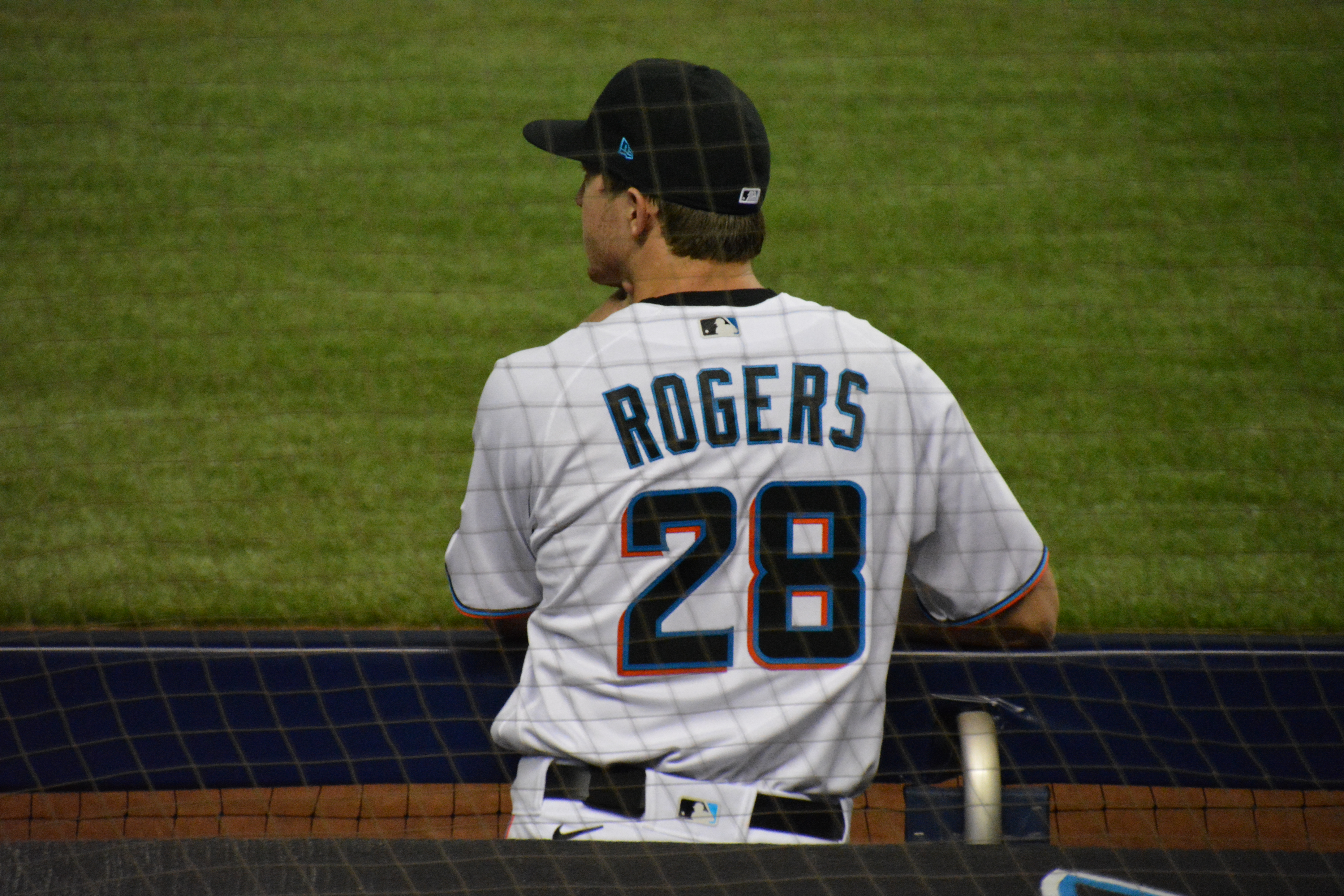 Photo by Tony CapobiancoFrom first round high school draft pick to loser of an entire year of development right in to lights out rookie hurler for a major league club, having only spent 26 innings above the single A level. Despite all disruptions, Trevor Rogers is here and he is living up to his potential. Last Wednesday afternoon at loanDepot park, Rogers cruised through a career high seven innings on just four hits, one walk and eight strikeouts. Since a rough first inning of the regular season which both he and Don Mattingly attributed to nerves, Rogers has allowed just eight baserunners while striking out 30 over 21 innings. His overall 22 IP, 4 ER, 31 K start to 2021 has him in some pretty special company. Only 46 other major league players have matched those numbers in their first four outings of a season. Some of their names: Nolan Ryan, Pedro Martinez, John Smoltz, Randy Johnson and Tom Seaver. His stat line so far this season was only outdone by the likes of Jacob deGrom, Joe Musgrove, Tyler Glasnow and the man who he will oppose today, Corbin Burnes. While Rogers was affective in the COVID stricken 2020 campaign, he was far from the guy we have seen so far this season. Don Mattingly attributes Rogers’ stark maturation to his ability to go to school, taking every ounce he could out of his seven starts last season. "He really learned his lessons and went to work and made some big strides," Mattingly said after Rogers' last start. "He has been very mature about the way he goes about it. This guy's stuff is really good." Mattingly also stated that every player that makes it as a major leaguer has a moment when they realize they belong. He believes Rogers is there. We have stated before the quick maturation of Rogers’ changeup from a blueprint pitch in 2019 to a usable pitch in 2020. In 2021, the Rogers changeup is a downright weapon and he is beginning to utilize it more often. This is how the changeup was working like this his last time out: Looking at that, it’s easy to see why Rogers threw the changeup 29% of the time in this start. Previously, he never went to it in more than 20% of a start. Last season, he only threw the pitch 9% of the time. The fact that Trevor now has two plus-plus secondary weapons with which he can give hitters two completely different looks on top of his 95-97 mph fastball and the fact that he’s starting to mix them more interchangeably has elevated his floor and made a 2-3 starter ceiling very reachable. We may even be looking at ace potential here. It is surprising that many major sources still underrate Rogers. For example, he never ranked inside Pipeline’s top 100 prospects and The Athletic still ranks his stuff below league average. However, if he continues to get whiffs at a rate which currently places him third in baseball (bested by only deGrom and Lance Lynn) and in the 95th percentile in all of MLB per Statcast, those sources will be forced to recognize him as a strong Rookie of the Year candidate and a potential Cy Young candidate. The question is is this level of production sustainable? Coming up through high school and through the minors, Rogers was always heralded for his advanced command tool. Today, that tool sits at 60 grade status and he is utilizing it on all three of his pitches. The big addition for him comes in his confidence to also deliberately throw pitches out of the zone and garner weak and sometimes foolish looking swings there. As Mattingly stated, Trevor is pitching with swagger, knowing he can play and succeed against the best hitters in the world. Of course, like any young pitcher, there will be some bumps in the road but all things considered, I believe Rogers is every bit the guy we have seen during this run. Jose Devers Makes MLB Debut On Thursday, the Marlins placed third baseman Brian Anderson on the 10-day IL with a left oblique strain. While he had been striking the ball on a pretty consistent basis, Anderson had been snakebitten at the plate, proven by a very hard luck .227 BABIP. Now, Anderson, at an important point in his contract with just two years of club control left, finds himself out of action. Oblique strains are tricky: some heal in a few days, some take a few months. Hope is that Anderson will be eligible to return when he is initially eligible early next month. After he was held out of the lineup on the last game of the home stand which gave the Marlins a hint that he may need to miss time, Anderson’s roster spot became available the next day. This left the team with a few probable options. First, the team could have realistically and retroactively placed Jorge Guzman, who suffered a setback in his rehab last week, on the 60-day IL to free up a 40-man roster spot and used that spot to get either Joe Dunand or Eddy Alvarez to the big leagues. They did not. This is good news for Guzman health wise, despite his recent setback. Secondly, if the team was going to call up someone already on the 40-man, there was one glaring and obvious option: Isan Diaz. Isan was not a member of the taxi squad to San Francisco and remains at the ATS. Instead, the Marlins made the move to activate 21-year-old Jose Devers, making him the third youngest active player in MLB. The younger cousin of Red Sox standout Rafael, Baby Devers has shown tons of promise in his MiLB career and during two spring training campaigns including this year when he bulked up a bit. Devers said that was his main focus over the offseason. He hung around Marlins camp all spring, showed improved physicality on top of his already plus hit and run tools. The career middle infielder even showed he’s capable of playing third base. However, Devers highest level of production in MiLB (not counting 11 games in the Arizona Fall League) has been A+ and, due to injury in 2019, he has been limited to 35 games there. It is worth noting that he was leading the Florida State League in batting when he went down 33 games into that injury plagued season in Jupiter two years ago. So why the move to Devers instead of Isan Diaz? According to Don Mattingly, the club misjudged the severity of the injury to Anderson. "We didn't have Isan on the taxi and we wanted him to keep playing," Mattingly said. "Andy we thought was the possibiltiy of being out a day, maybe two and obviously it was more than that. And then we are on the road. The timing of that kind of got us in a bind." Mattingly also would not commit to Diaz being a member of the taxi squad if and when he is sent back down. "If he's on the trip, he takes BP but he doesn't play in games," Mattingly said of the taxi squad, describing it as made up of 'emergency guys'. "You try to balance that taxi with these guys keep playing. If there is a serious injury, you want a guy that's ready to go that's been getting at bats." So where does this leave Isan within the organization's plans? While it is tough to gauge at this point, one thing we know is that the Marlins organization has continuously preached something since the installment of Derek Jeter and Bruce Sherman as owners: versatility. Per the words of Kim Ng last month, we know that Isan has been getting time at third base to further his usage and make it easier for him to get into games, especially with what the Marlins have coming soon middle infield wise and with what is already here. When the minor league season starts and when Miami needs a roster spot, we would expect Isan to go down to continue to work on his swing without pressure while continuing to get part time reps at third. For now, Isan Diaz is here and per Mattingly, his at bats have looked better and more relaxed. Progress. Minor League Rosters Announced After breaking minor league camp on Friday, the Marlins today announced Opening Day rosters for each of their four minor league affiliates. What do Daniel De Vivo and I think about these rosters? What are the top stories to watch at each affiliate? We will discuss in an all new episode of Swimming Upstream on Monday morning. Available wherever you get your podcasts.
 -
View full article
-
Photo by Sarah Stier/Getty ImagesRogers Outduels deGrom Ladies and gentlemen, the real Trevor Rogers has stood up. After a rough first inning and premature outing his first time on the hill in 2021 at loanDepot park this past week, the 2017 first round draft pick was dominant in his second start of the season today against the Mets. Going up against perennial Cy Young candidate Jacob deGrom during the opening series at Citi Field, Rogers twirled a six inning gem, limiting New York to just three hits and two walks while tying a career high in strikeouts with 10. Speaking on his outing postgame, Don Mattingly stated Rogers’ development is clear and evident. “We’re seeing him grow up right in front of our eyes,” Mattingly said. “You can just see the focus in his work and everything that he does.” Mattingly said a big key to Rogers’ success has been his ability to take a lot out of his experience in the majors in 2020, building off both his successes and his mistakes. “He’s put himself in good positions because he’s got good routines now,” Mattingly said. “I think he learned a lot of lessons last year and he used them. That’s a key: the guys that can make adjustments here are the guys that are going to be really good.” In his first inning of work of the year in his previous start, Rogers required nearly 40 pitches to get through the St. Louis Cardinals. Ultimately, he would wind up going 4.1 innings. On Saturday, Rogers didn’t reach the 40 pitch mark until the fourth inning (during one of three strikeouts by Friday’s controversial centerpiece, Michael Conforto). For Rogers, the biggest difference from last start to this one was in how he paced himself and stayed loose. "Last start, first inning, I kind of let the emotions and the game speed up on me," Rogers said. "I just made sure to breathe and really take my time. I wanted to make sure I was getting down the slope and not pulling off. Just really making quality pitches." With his emotions in line, Rogers went right after hitters, attacking them in the zone early in the count then relying on his breakers and pinpoint command to finish them off. Rogers threw a first pitch strike to each of the first 10 Mets that stepped to the plate against him and to 15 of 22 total. Rogers said that was and always has been a key to success for him. "That's pretty much the foundation of how I got about guys: getting that first pitch strike and then you can just build off that," Rogers said. "You put them in a hole right away, get them in swing mode." On getting to go up against one one the best in the game and getting the better of him on the ledger, Rogers credited his and the team’s ability to prepare properly but not press. “Best in baseball, Jacob deGrom is,” Rogers said. “You really have to bring your best and then some. To see me and our whole team go out and compete with the best, it just shows you how good we are.” One big difference in Trevor’s arrival has been the very quick build of his changeup. Still a work very nascent pitch for him during spring training 1.0 in 2020, Trevor has built that pitch up this: Here is the mapping of that pitch in this start. Rogers utilized the changeup within five of his 10 Ks. When he is getting ahead in the count and mixing and locating all three pitches, Rogers is a deadly combo of velo and at the very most, weak contact. An absolutely dominant outing in his second start of the season and nonetheless on the road in a day game after the team plane did not land in to New York until around 1 AM that same morning, this was a testament to Rogers’ level of focus, athleticism and maturity. In more ways than one, he has fully arrived. Jazz Goes Yard Coming in to Thursday’s game, Mets ace Jacob deGrom was virtually untouchable in his career in 0-2 counts, sporting a .136 BAA and 55% career strikeout rate. He had never allowed a home run in that situation in his career. Then, in the second inning, Jazz Chisholm Jr. stepped to the plate for his first career AB against deGrom and did this: The first home run deGrom has ever allowed in his eight year major league career came on an 100 mph fastball up and out of the zone against a guy taking his 74th career major league at bat. How did Jazz get to that ball let alone hit it out, .307/.358/.471 career hitter Don Mattingly? “It’s not necessarily a pitch you’re gonna hit that often,” Donnie said. “You’re talking about over 100 out of the box above the zone. It’s a tough pitch to get to. But today was a day that Jazz caught that one.” “Jazz is a guy who is nice and loose, Mattingly added “I think his hands work good and he sees the ball good.” According to Chisholm, he viewed the opportunity to go up against deGrom as an honor and a career defining moment, but he didn’t think his 100 mph heat was as intimidating as other pitchers. “I couldn’t have been more excited to face any other pitcher in the league. Much respect to him,” Chisholm said. “Some people's 100 is a little lighter. I felt like his was on the lighter side.” As Jazz rounded the bases, the entire baseball world sat with their mouths agape, wondering how Jazz got to the high cheese and via a seemingly effortless swing, deposited the ball into the upper deck right field stands. Chisholm himself though wasn't surprised one bit. In fact, according to his ex Marlins reliever Sterling Sharp, Jazz called the shot and the reactions that followed perfectly. After the game, Jazz was asked what he was thinking while taking his trip around the basepaths after not-so-arguably the biggest hit of his young MLB career. His answer to that inquiry was even more impressive than the moonshot itself. "I wasn't thinking anything crazy. It was like, "Okay, I just hit a homer off deGrom; that's cool. But now I have to try to go do it again," Chisholm said. "I feel like my abilities should allow me to hit a homer off anybody and my hands should allow me to get to any ball that I can swing at." Jazz Chisholm Jr. is here in the majors, seeing 100 mph fastballs from one of the best pitchers in the game well and doing what 595 other major league players before him couldn’t do. And afterwards, his only focus is on how can he repeat it. If you weren’t sold on Jazz yet, buy in and double down immediately. Neidert Overcomes Early Jitters On Thursday afternoon, Marlins prospect Nick Neidert took the mound as a starting pitcher for the first time in his career. Four and a third innings later, his start would come to an end and the events to follow would overshadow his performance. However, his work should not be discounted. After injuries to both Sixto Sanchez and Elieser Hernandez, Neidert took the hill to start a game for the first time in his MLB career and the first time to start a game since 2019 in AAA. Understandably, emotions played their part in Neidert’s outing. After allowing a leadoff double to Brandon Nimmo, Neidert walked Pete Alonso and drew a visit from Mel Stottlemyre, Jr. During that visit, Neidert said Mel got him back within himself and back on the attack. "It was just to get back in the zone," Neidert said of the conversation. "Stop trying to nibble at the corners and try to make the perfect pitch." Neidert then retired James McCann on strikes to get back to the dugout for the first time then he threw an efficient 1-2-3 second inning. He got out of similar jams as the one he escaped in the first frame in both his third and fourth inning of work, walking two guys in each but coming back to keep the Mets off the board. He pitched into the fifth inning on 85 pitches. The only run on his line came via primary reliever Ross Detwiler allowing an inherited runner to score. Overall, Neidert's outing can best be described as bend-but-not-break. "I just had moments where I tried to pick at corners and ended up walking a guy. When I was in attack mode and being aggressive, it turned out really well," Neidert said. "Overall I thought it was a solid outing. My goal every time out is to put us in a position to win. Five walks isn't great and I put myself in some bad positions but I was able to make pitches to get out of it." Though his command was spotty, catcher Chad Wallach was impressed with Neidert's ability to compete. "He'd kind of lose it for a few batters but then he'd lock it back in for a few hitters in a row," Wallach said. "I wouldn't say he had his best stuff today but he really battled his butt off and pitched with some aggression and went after those guys." For Neidert, the biggest highlight of the day was getting the opportunity to pitch in front of live fans for the first time since a very short 2019 season in which he threw just 54 innings between two minor league affiliates and the Arizona Fall League. Neidert said he took time to soak in that experience but tried not to let it negatively affect his outing. "Pitching in front of fans is a lot of fun. I took moments before the outing just to listen to the fans when they were announcing their lineup. Hearing fans like that, it's incredible and the adrenaline that comes with that is great," Neidert said. "I just tried to stay as calm as I could to go out there and make pitches and to not let it rise too high to where I was off." While this was definitely not a lights out performance, Neidert's ability to rise to a big occasion, make adjustments and keep the Marlins in the game despite not having his best stuff is extremely encouraging for his maturation process. The outing should serve as a good building block for his next start which should come on Wednesday in Atlanta.
-
View full article
-
Photos by Tony CapobiancoTrevor Rogers Overcomes Early Jitters It was a big night for Marlins lefty Trevor Rogers. After earning his spot in the starting rotation via lights out work in spring training, the 24-year-old took the mound at loanDepot park for the first time in 2021 in front of 4,605 fans. It was the first regular season game he's pitched in with fans in attendance. Among them was his family who were watching him pitch for the first time as a major leaguer. In his first inning of work, Rogers really struggled to find the strike zone. After throwing nine straight balls to start the game, Rogers threw a wild pitch, walked the bases loaded, and in between a run coming across via a passed ball, allowed a two run double to Yadier Molina. It took him 38 pitches to get through the frame. After a fourth walk, he struk out Austin Dean to mercifully get back to the dugout. He threw 38 pitches, only 18 of which were strikes. In that first inning, Trevor's average fastball velocity was up a few ticks from where we saw it in spring training. Postgame, Rogers admitted he was overthrowing. "I was trying to get everyone out on the first pitch," Rogers said. "It was definitely not my intent to start the game like that." Trevor came back out for his second inning of work showing the velo we've come to get used to from him: sitting 94, up to 96. Throwing more strikes with the heat early in counts, he was able to mix the breaking stuff in more and get back to being the guy we saw in spring training. He wound up going four innings on the same aforementioned two hits and earned runs and four walks. He struck out six. Rogers said the turning point in his outing came when Don Mattingly gave him some words of encouragement after he got back to the dugout for the first time. "He was like, "Hey scratch that. It can't get any worse,"" Rogers said. "He tried to make it a light moment." Overall, Rogers took the outing as another learning experience, saying it was another "a-ha!" moment, one that allowed him to find a better balance between emotions and competitiveness and that when his next start comes, likely this coming week in Atlanta, he will be more than ready. "I was just getting locked in and they took me out," Rogers said. "I'm ready to go back out there already." Holloway's Encouraging Outing The Marlins announced a group of roster moves on Monday morning: the expected call-up of Nick Neidert to replace Elieser Hernandez and a not-so-expected promotion of one Jordan Holloway. The righty came up to replace Garrett Cooper who went to the COVID-19-related IL due to experiencing reactions from his second vaccination. According to Holloway, his call-up happened very suddenly. "I think got the call at like 10:45 (this morning)," Holloway said. "I packed pretty hastily. I got here at 4:30-5 o'clock. That Ft. Lauderdale/Miami traffic... my goodness. But we got here. Sporting some facial hair he is not typically known for, Holloway came on in the 6th inning and showed a very unorthadox pitch selection. Usually a guy who uses a fiery 95-98 mph fastball and a 74-75 mph curveball as his main secondary, the 24-year-old came on throwing only this (save one pitch), a pitch with so much movement it fooled Statcast which originally had it labeled a changeup: He got through the inning on nine pitches. In his second inning of work, he threw two pitches above 95 and one of his patented curveballs but of his 22 pitches overall, 16 were that slide piece. The other three fastballs he threw were well under what we are used to seeing from him in terms of velocity. According to Holloway, that was by design. "I've kind of been working on that secondary pitch… a lot at the alternate site and during spring training," Holloway said. "I just wanted to show I was able to throw that slider in the zone and out of the zone whenever I wanted to compliment my fastball and give them a couple of different looks," I knew I was probably going to go multiple innings so I wanted to let them know that I wasn't just going to go in there and overpower them with fastballs." The work Holloway did with that pitch has clearly paid off. Merely a blueprint pitch for him the last time we saw him pitch in MiLB, the slider now has both horizontal and vertical break with late downward bite. He is indeed showing the ability to place it all over and out of the zone for strikes and weak contact. This outing is proof that Holloway, like Sixto Sanchez who showed it in spring training, has grown mentally and is gaining the understanding that just because he has his fiery velo, he does not need to use it every pitch to be affective. In terms of his development and all of the time he has missed with injury and illness, this was an extremely encouraging outing. He will likely go down any day once Garrett Cooper is ready to come back from the COVID-related IL but he definitely has earned himself another look sometime this season whether it be in middle or late relief.
