



Alex Carver
-
Posts
459 -
Joined
-
Last visited
-
Days Won
16
Content Type
Profiles
Miami Marlins Videos
2026 Miami Marlins Top Prospects Ranking
Miami Marlins Free Agent & Trade Rumors, Notes, & Tidbits
Guides & Resources
News
2025 Miami Marlins Draft Pick Tracker
2026 Miami Marlins Draft Tracker: Picks & Bonuses
Forums
Blogs
Events
Store
Downloads
Gallery
Everything posted by Alex Carver
-
View full article
-
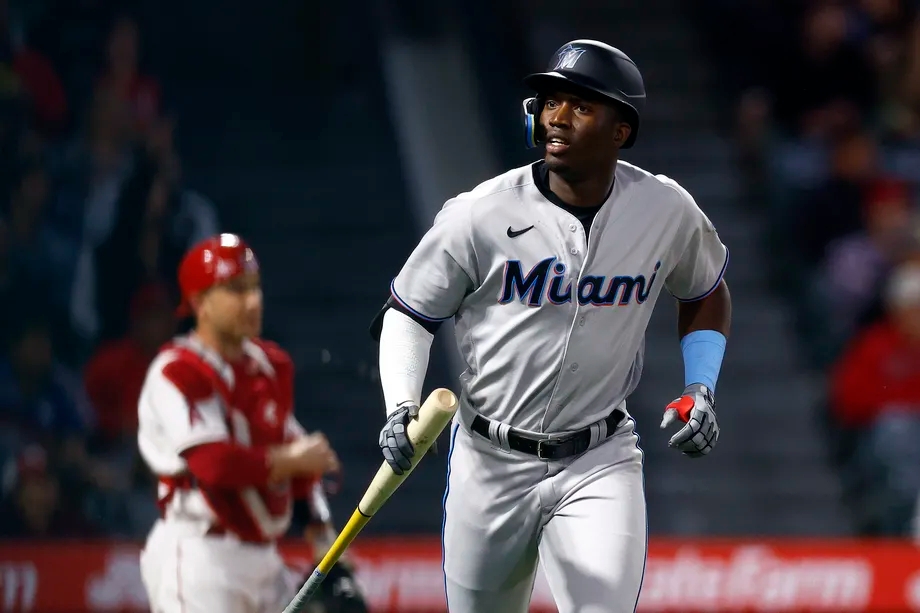 Jesus Sanchez (Photo by Ronald Martinez/Getty Images)Last season, Jesus Sanchez overcame a lot of obstacles. Called up prematurely as a necessity due to the pandemic while battling some mental demons in 2020, the now 24-year-old went on to become one of the most talked-about prospects in the Miami Marlins’ system. After an impressive spring training, Sanchez, who admittedly had to learn how to have fun on the field again while improving physically, got off to a flying start with the Jacksonville Jumbo Shrimp. With a .348/.407/.653 slash line, Sanchez quickly became the best hitter in the Marlins’ organization and one of the top hitters on the minor league circuit as a whole to earn his full opportunity at the big league level. Sanchez went through some more battles in 2021 including one with COVID-19 that cost him a month, things went pretty swimmingly for the remodeled top five organizational prospect. In 64 games, Sanchez played to his strengths, hitting for a .250+ batting average with 24 extra base (14 homers) and a .489 slugging percentage. His ability to impact the baseball while maintaining a decent average and playing plus outfield defense allotted him a 1.3 WAR. Sanchez made up for lost time in the offseason by taking part in the Dominican Winter League where he hit .324/.429/.465 and came into spring training this year primed to put his full potential on display full time as an every day starter. The first impression from Sanchez in 2022 was very positive as he hit .340/.386/.623 in his first two weeks of play. But since then, things have quickly spiraled downward. From April 24th through the present, Sanchez has been an .095 hitter. He is 6 for 63 with one extra base hit, a double, and a 23/5 K/BB. So what happened? Why have things gone so wrong so fast for Sanchez and how should the Marlins address it? A power hitter who works best when he’s able to get his arms extended on hard pitches over the plate, opposing pitchers have taken the bat out of Sanchez’s hands by busting him up and in on his fists and commanding just off the low/outer half. Pitch locations vs Jesus Sanchez 5/15/2022 (0-4, 4 K)Sanchez has always struggled with plus breaking stuff and so far this season, he’s faced a much healthier diet of them. After seeing fastballs and pitcher’s highest velos 57% of the time last year, that figure is down to 53% in 2022. Against breaking pitches, Sanchez is hitting just .108 with a 40% whiff rate. Due to this plan of attack, opposing pitchers record first pitch strikes against him 66% of the time (40% swinging). All of this has led to Sanchez seeing far less pitches inside the strike zone — 34% vs 41% in 2021 — and an overall limited exit velocity under 89 mph. Sanchez’s expected slugging percentage is down to .388. Further compounding Sanchez’s struggles is the fact that his setup, swing and follow through are mechanically altered. Even when he’s gotten pitches in locations he has been able to handle well in the past, the good part of Sanchez’s bat has eluded the baseball. After exhibiting a higher front foot timing trigger, Sanchez’s lower half has been susceptible to leaking and collapsing on follow through. His head is also up off of the ball to his pull side, disallowing him to stay through it. As a result, he is sporting a hard hit rate of just 24%. Even though his defense in center field has been more than the Marlins could have asked for, if Sanchez does not show improvement for another week or two at the most, it will be hard to defend including him in the every day lineup and could spur a demotion to either the bench, AAA or both. In the event of a Sanchez demotion, Bryan De La Cruz, who is 13-39 (.333) with a much lower and more sustainable BABIP than last year, could slot in as the starter until either Sanchez rebounds, one of JJ Bleday or Peyton Burdick is deemed ready and able to hold down the job or until a move to someone outside of the organization is made. Major League Baseball has adjusted to Jesus Sanchez and now it is his turn to adjust back. Hope is that Sanchez can get that done at the big league level and avoid a trip to AAA but that may be easier said than done.
 -
View full article
-
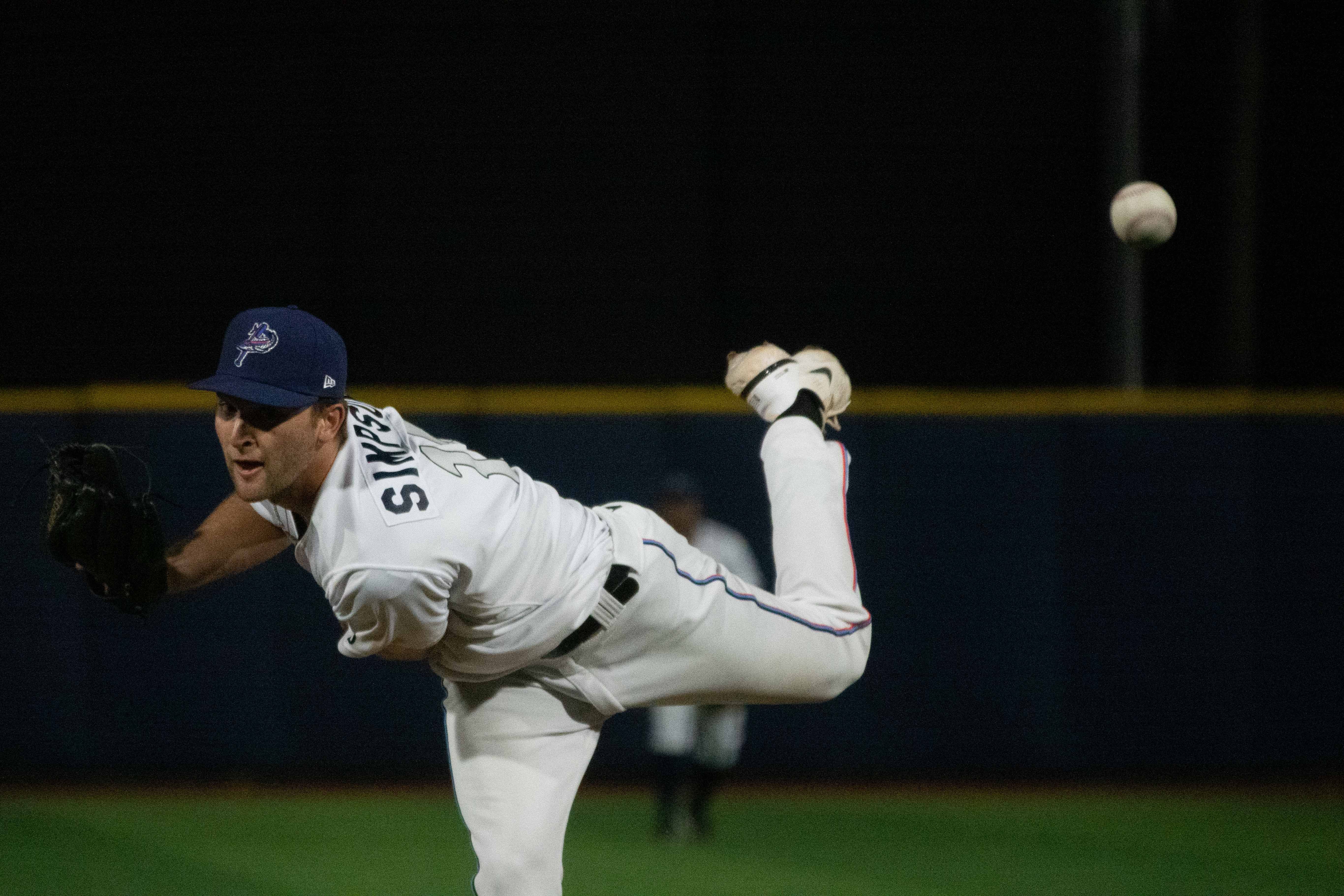 Due to a rare six-game sweep of the Rocket City Trash Pandas, the Pensacola Blue Wahoos feature prominently in this week's roundup. However, a few Marlins middle infield prospects putting together their best weeks of the young season are also worthy of our attention.-- 2B Ian Lewis, A This Week's Stats: 10-17, 2 R, 1 SB, 1 2B Lewis made his 2022 debut this season after getting a late start this spring due to a personal issue at home in the Bahamas. After getting some work in at extended spring training, Lewis picked up right where he left off at the end of last year. The switch-hitting middle infielder showed surprising pop in his professional debut at rookie ball, while making consistent contact and showing off the athleticism that made him a prized international free agent signing. Lewis had nine steals last year in just 43 games in the Florida Complex League, while playing solid defense at second base. He is almost certainly athletic enough to play shortstop, with a strong arm to boot. However, with Jose Salas, Khalil Watson, and Nasim Nunez needing reps at short as well, the smart move was to give Lewis the chance to show his versatility at another infield spot. With the way he has hit, finding Lewis a position in the field is far less important than getting his bat in the lineup every day. The numbers speak for themselves from Lewis' debut week in 2022 at Jupiter. He smacked nine singles, and got on base in 61% of his plate appearances. Lewis also only struck out one time, showcasing a hit tool that scouts have always been confident in. While his contact did not result in an abundance of extra base hits this week, the limited Statcast data that we have from Jupiter showed why there should be plenty of optimism for Lewis showcasing more of the power that we saw last year. On Thursday, Lewis ripped a single with a 106.4 mph exit velocity off of a 93 mph fastball. For a nineteen year old who is still getting stronger to showcase an ability to hit the ball that hard is incredibly promising. For context, Billy Hamilton, who has put up over 11 fWAR in his career, has never hit a ball over 107 mph in the big leagues. Hamilton was years older than Lewis when he was hitting the ball even close to that hard, showing that some guys just do not have the bat speed and strength to hit the ball hard enough to be quality big league hitters. Lewis seems to already possess that tool, which combined with his elite speed, makes him one of the best prospects in the Marlins entire system. LHP Josh Simpson, AA This Week's Stats: 4.0 IP, 0 R, 1 H, 5/1 K/BB Trying to find a more dominant relief pitcher than Josh Simpson, at any level of baseball, would be a waste of time. Simpson has thrown 17.2 innings this season; he has yet to allow a run. Simpson has gotten 53 outs; 32 of them have come via strikeout. He has only allowed five fly balls all season. Needless to say, none of them have turned into home runs. 62 batters have come to the plate against Simpson this season; the majority of them have struck out. These statistics of pure dominance could continue to be listed, but the point has been proven: nobody has been able to hit Josh Simpson with any success this year. This week was not even one of Simpson's most dominant. His five strikeouts in four innings actually brought his K% down for the season, which further shows how dominant he has been. With a low arm slot and a fastball that sits in the mid-nineties, Simpson has basically done whatever he desires against hitters. His breaking ball plays well off of the fastball low in the zone, and both pitches seem to generate a lot of weak contact on balls that are chopped right into the ground. From simply watching Simpson's delivery, it is evident just how uncomfortable left handed hitters must be against him. The ball seems to disappear behind his back before it is finally released, and then it gets on hitters quickly. Still, right handers have not had any more luck against Simpson than lefties. His third pitch, a changeup, seems to work well in these situations, but Simpson still leans on the fastball-curveball combo. With the way he has pitched, it is fair to say that Josh Simpson has done literally everything possible to be deserving of a promotion to Jacksonville. RHP Eli Villalobos, AA This Week's Stats: 3.0 IP, 1 R, 1 H, 8/1 K/BB Picking a dominant reliever in the Blue Wahoos Bullpen is an easy task, as so many of them are worthy of recognition. Simpson, Andrew Nardi, Colton Hock, Jeffry Yan, and Anthony Maldonado have combined to form a dominant unit. Eli Villalobos has been another valuable contributor to Pensacola, a team that is fresh off of a rare and impressive six game sweep of the Rocket City Trash Pandas. The Blue Wahoos are now in first place in the Southern League South Division, with an 18-15 record and +15 run differential. Not only is this team talented, but just from watching them one can see the way they seem to get along well and enjoy winning together. On Sunday, Villalobos contributed a scoreless seventh inning in a wild game that featured a rain delay and a four run comeback in the bottom of the ninth inning which culminated in a Pensacola victory. Villalobos, a 14th round pick in 2018 out of Long Beach State, had some hiccups to start his minor league career. The Marlins tried to stretch him out a bit as a starter in 2019, but that was met with limited success. Villalobos had been a reliever in college, and he has been dominant in that role this year. It was last year that Villalobos began to really put things together. With 72 strikeouts in 44 innings, Villalobos showcased the potential he had as a reliever and is now firmly on the radar as a future big league relief pitcher. Like Simpson, Villalobos is a three-pitch guy, with a fastball, slider, and changeup. He has had reverse platoon splits this season, as lefties have not touched him. That shows the effectiveness of the off speed pitches, which he is not afraid to throw in any count. In the seventh inning of Sunday's crazy game, Villalobos showed this ability to utilize his off speed pitches in an at bat against Rocket City's Torri Hunter Jr. He started him with two breaking balls down and away, with Hunter whiffing on both. Villalobos finished him off with a high fastball up in zone, producing another swing and miss. There have been many at bats just like that this season for Villalobos, who has a very clean delivery for a guy who was primarily a catcher only five years ago. If the Marlins are looking for a guy who has gotten better each year as a pitcher, than look no further than Eli Villalobos. OF/1B Jerar Encarnacion, AA This Week's Stats: 10-19, 2 HR, 5 R, 5 RBI Charles Leblanc and Jerar Encarnacion have had a great competition going when it comes to getting recognition in these weekly roundups. Both hitters have done nothing but rake at their respective levels, but this week belonged to Encarnacion. His OPS now stands at 1.010 for the season, with a 169 wRC+ that is just one point shy of Leblanc's for the lead amongst all Marlins minor league hitters. Encarnacion is just one home run shy of his own total from last season, in roughly half of the plate appearances. Going into this year, the book on Encarnacion was always that he was a freak athlete who could hit the ball as far as anybody in the organization. However, his lack of pitch recognition and an uncertain future defensively made Encarnacion more of a middle of the road prospect. In 2022, by quieting his doubters at the plate, Encarnacion is firmly back on the radar as a potential big leaguer. To be clear, the defensive question marks and limitations still exist. On Sunday, Encarnacion completely overran a foul ball pop up while playing first base, resulting in Eli Villalobos essentially needing to get an extra out in the seventh inning. Encarnacion does have a plus arm, which leads me to believe that if he is going to find a home in the field it will have to be in right field. With such a large frame, however, it is not easy to see Encarnacion having the necessary range to play the position in the big leagues. However, all the talk about defense is irrelevant if Encarnacion continues to progress like that at the plate. His K% of 25.7% is well below last year's 38.1%, as Encarnacion has made more contact with more experience at AA. He is posting a high line drive rate, and hitting the ball to all fields, leading to a remarkably high BABIP of .449. That will not be sustainable, but the process leading to that high BABIP is far more important. Encarnacion is squaring the ball up consistently and hitting it hard, while also getting lift more often to hit the ball out of the ball park. We always knew that he had big raw power, but seeing it in games was essential this year for Encarnacion. Right as this post was being finalized, the news came in that Encarnacion would reportedly be promoted to AAA Jacksonville later this week. Due to just how thoroughly Encarnacion has dominated pitching at AA this season, it is understandable that the Marlins front office would like to see him get more of a challenge. Considering the swing and miss risk inherent in Encarnacion's profile, it is fair to assume he will get a long look at Jacksonville before hopefully contributing to the big league club. 2B Cody Morissette, A+ This Week's Stats: 6-21, 2 2B, 1 HR, 5 R, 1 SB With players that come from the Northeast, it is not uncommon to see a slow start to professional ball. The lack of reps that come from not being able to play year round puts many of these players at a disadvantage compared to their warm weather peers. Cody Morissette, a two-time All-American at Boston College and a New Hampshire native, would certainly not use that as an excuse for his limited success in the lower levels to this point. Still, as we now are in the midst of the second month of the season, Morissette's bat is coming alive at the right time. A second round pick in last year's draft, the hit tool was Morisette's calling card. He has an all fields approach that should result in high batting averages eventually, with a sweet swing from the left side of the plate. When analyzing Morissette's batted ball data this year compared to last year, the increase in his fly ball rate stands out. Morissette was known as a guy who hit a lot of grounders, in part because his lack of raw power makes him better equipped for that time of profile. However, the power is starting to come with his ability to lift the ball more. Morissette has four home runs so far this season, compared to only one last year in A ball. His strikeout and walk numbers both remain acceptable, so he has not had to sacrifice contact to hit for some power. This could be a good sign for Morissette's ceiling, if nothing else, as he is better utilizing the bit of loft in his swing. The load depth of his hands remains pretty high, so it is impressive that Morissette is figuring out ways to pull the ball with authority more often. Despite the slow start, he is now at about a league average hitter (96 wRC+) rate for High-A Beloit. All the signs are pointing up for Cody Morissette as he continues to figure out ways to get to more power. RHP George Soriano, AA This Week's Stats: 6.0 IP, 1 R, 4 H, 8/1 K/BB George Soriano's path to get to the point of being a prized Marlins prospect has not been an easy or linear one. The big Dominican righty made his professional debut in 2016, missed the entirety of 2017 due to injury, and then had to deal with the missed 2020 season due to the pandemic. Through it all, Soriano has pitched well at the lower levels of the minors and gotten better as he has gotten older and stronger. Still, Soriano turned twenty-three years old in March, so he is not necessarily behind in his development. At that age, it is impressive to be matching up well with AA hitters, as Soriano has to this point in the year. Soriano faced Rocket City on Tuesday, who came into the game having won five out of six games. This makes the Blue Wahoos sweep even more impressive, but Soriano got the week started the right way with a great start. His greatest weakness right now may be a lack of consistent command, but that was not the case on Tuesday. Soriano located the fastball well to both sides of the plate, and got a lot of weak contact off of the pitch. He also only walked one batter in the game, in part because his off speed pitches were getting plenty of chases. The slider generated several strikeouts, and Soriano's changeup has improved as well. His fastball is sitting in the mid-to-low nineties, but with his frame scouts expect that there could be more to come still. For a guy who was left unprotected by the Marlins over the offseason by not being placed on the 40 man roster, it seems like his stock should be on the rise and that the organization should be valuing his potential more going forward. If Soriano can continue to develop his changeup, there is certainly a chance that he could remain a starter going forward. Next Up (5/17-5/22) AAA Jacksonville Jumbo Shrimp vs DurhamAA Pensacola Blue Wahoos at MontgomeryA+ Beloit Sky Carp vs PeoriaA Jupiter Hammerheads at LakelandMarlins Links Blue Wahoos' catcher Paul McIntosh spoke with Alex and Daniel on Swimming Upstream about his growth in the game, his ability to immediately produce at the pro level, the catching craft and moreAlex joined Peter Pratt on Locked On Marlins to talk about the Marlins' recent roster decisions and to highlight some standout minor league performersOn The Offishal Show, Ely Sussman points out how important it will be for Marlins' depth players to step upMLB.com's Christina De Nicola reports on how the Marlins' big bats are heating up in MayOn the Man On 2nd Baseball podcast, Joe Frisaro and David Fernandez when we might see JJ Bleday get his big league call
 -
View full article
-
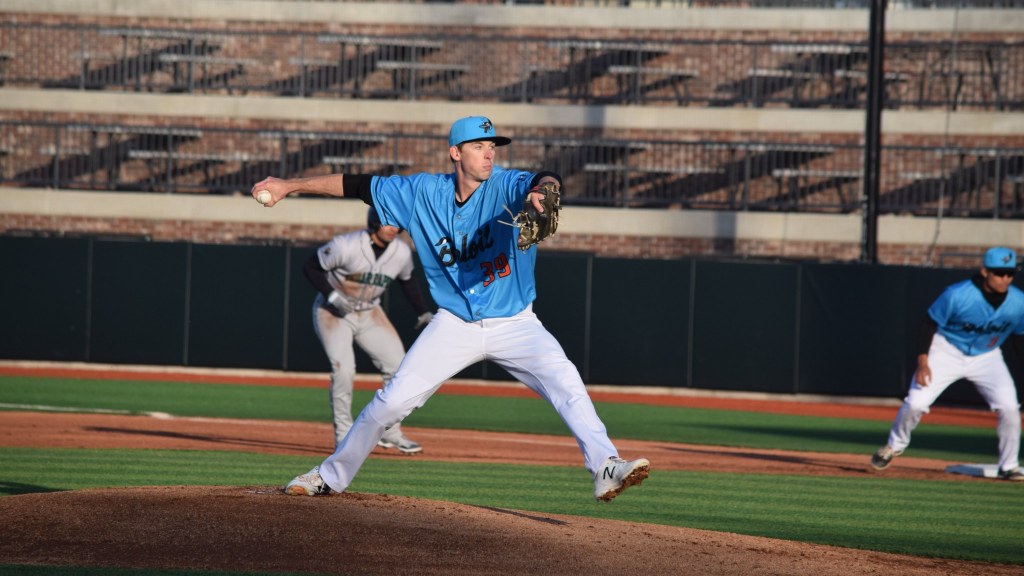 This past week may have been a frustrating one for the big league team, but the performance of several Marlins top prospects should make the outlook more sunny as we enter the second full week of May.-- OF JJ Bleday, AAA This Week's Stats: 9-21, 3 HR, 2 2B, 4/6 K/BB Bleday was featured in last week's roundup, as it was evident that his bat was starting to awaken following a relatively slow start to the season in Jacksonville. This week, Bleday went a step further by terrorizing the Memphis pitching staff all week. He got on base in over half of his plate appearances, while striking out less than he walked. This past week's performance was one that Marlins fans have been expecting for some time now; Bleday has such a natural feel at the plate and was a tremendous collegiate hitter at Vanderbilt. Still, he had yet to truly break out in his minor league appearances, in no small part due to the pandemic wiping away what would have been his first full season in 2020. Now, everything finally seem to be coming together for Bleday while in the Jumbo Shrimp lineup each day. Scouts had expressed some worry that the slight hitch in the swing of Bleday would prevent him from ever being a starting big leaguer. While those concerns may still exist, Bleday has quieted most of the criticism with his success to this point in 2022. After that slow start, his batting line is now up to .240/.382/.470 with a reasonable strikeout rate and a very high walk rate. That line is 33% better than the average at AAA, against pitchers who are right on the doorstep of the majors. Moreover, Bleday homered against two breaking balls and one fastball (which was up in the zone) last week. Being able to recognize the pitch and make quality contact is a testament to the hit tool of Bleday, which seems much more stable now than it did at this time last season. When Bleday had a quality performance in the Arizona Fall League last year, there was concern that it was due to the lack of pitching talent at the league. Once again, Bleday is showing that his added on muscle and patient approach at the plate is no fluke by hitting high quality pitching this year. Considering the frustration of watching Avisail Garcia chase so often, it may not be long before more Marlins fans are calling for the patient approach of Bleday to be utilized. OF Griffin Conine, AA This Week's Stats: 6-17, 2 HR, 5 RBI, 3 BB It may seem like an understatement, but when Griffin Conine consistently makes contact he can be a highly productive hitter. That is why his ceiling is so high as a prospect, but there is also a certain level of risk in depending on him in your lineup. This past week, Conine's strikeout rate was still a bit high, at 26%. On the other hand, that was a slight improvement from his mark from the beginning of the season, when it was hovering at 40%. In our weekly recap two weeks ago, we mentioned how an increased familiarity with the quality pitching at AA will only help Conine hit for more contact. A small sample size improvement may be nothing, but steps in the right direction should still be applauded. The high likelihood of extra bases when Conine makes contact make any improvements in his swinging strike rate notable. Conine had talked with our Alex Carver in that weekly recap two weeks ago about his finally being able to pull the ball and hit it hard. While becoming overly pull-side dependent can be dangerous for many hitters, maximizing your chances of extra bases often comes from hitting the ball hard to your pull side. Conine has done just that; over his last two weeks he is hitting a robust .395/.477/.658. He has easily been the most productive hitter in Pensacola's lineup during that time, with a strikeout rate of 23%. That is a bit larger of a sample size than the one previously noted, all while maintaining that slugging percentage. Continuing to walk at higher rate will also benefit Conine, as he becomes a bit more selective in hunting pitches that he knows he can pull and crush. Ultimately, there is no understating just how important it is that Conine is trending in the right direction with his contact rate and is becoming a highly productive hitter in the process. RHP Zach McCambley, AA This Week's Stats: 6.0 IP, 1 R, 2 H, 1 BB, 8 K Zach McCambley has been understandably overshadowed by Eury Perez in Pensacola this season, but too many people are sleeping on just how effective McCambley's stuff can be as well. A poor three start stretch has his numbers for the season looking ugly, with five homers given up over those three appearances. This past week, however, McCambley put up his best start of the season over six dominant innings in Mississippi. McCambley gave up back-to-back doubles to start the game, against the impressively productive bats of Michael Harris and Luke Waddell. Both balls were not hit particularly hard, and Conine took a poor route on the leadoff double by Harris. Following that bit of bad luck, McCambley was near perfect for the rest of the outing on his way to a 3-1 Wahoos victory. Facing the next nineteen batters, he walked just one and allowed no hits, while striking out eight. The first thing one notices when watching McCambley is the violence of his delivery. He rotates his body slightly back towards second base before delivering a pitch but does not struggle too much with control like many pitchers do with similar deliveries. The walk rate could stand to come down a bit, but hovering around 10% is not too dangerous for a minor league pitcher. With the quality of McCambley's high spin fastball and devastating curve, that walk rate should play. Against Mississippi, he commanded his breaking ball as well as he has at any point this season. He was able to throw it for a strike when needed, while his fastball was also commanded well both up and down in the zone. He sat 93-94 with the heater, which seems to be up a bit from the beginning of last year. McCambley's lack of a third pitch has been much discussed, and his changeup still needs to be better located and is not a plus pitch. McCambley did discuss, during the Wahoos Media Day prior to the start of the season, how he is able to manipulate his curveball depending on the movement of his wrist. This should mitigate the need for a third pitch somewhat and keep McCambley in a starters role moving forward. While many prospects experts have speculated that McCambley could end up in the bullpen, his outing on Saturday showed why it is too early to give up on his being a future back-end major league starter. RHP M.D. Johnson, A+ This Week's Stats: 7.0 IP, 0 R, 2 H, 0 BB, 6 K M.D. Johnson was not a pitcher getting discussed much going into this season, despite an impressive 2.58 ERA over nearly sixty innings last year in Beloit. While that success was backed up by a fluky low BABIP, Johnson pitched well enough to earn praise. Still pitching at Beloit, he has followed up last year's performance with a far better start to this season. His BB%, which was in the double digits last year, is at a miniscule 2.4% right now, while there have been far more swings and misses. A sixth round pick out of Dallas Baptist University in 2019, Johnson will turn twenty-five in July. He is at this point where he needs to start dominating the lower levels in order to get to the big leagues eventually, which is exactly what he has done. In a game that featured all of three hits total last Wednesday against Great Lakes, Johnson emerged as the victor in a quick 1-0 Beloit victory. The only two hits that Johnson gave up were plays that could have been made potentially, as seen in the video above from Fish Stripes, showing just how dominant Johnson was on the mound. The tall right hander has taken to the pitch clock well, as gets the ball and is ready to throw almost immediately. From simply watching his delivery, one would imagine that Johnson induces many ground balls due to his high release point. However, within his quick and twitchy delivery, he manages to get his hand lower than expected and deliver a high spin fastball. That is why the four-seamer has played so well up in the zone for Johnson, and resulted in more fly balls, with velocity sitting in the low nineties. It seems to be the pitch he relies on most, as there was little shaking off of catcher Bennett Hostetler on Wednesday. Continuing to develop his secondary pitches will be key for Johnson as he works towards a promotion to Pensacola that should be coming any day now. Many minor leaguers note how much better the hitters are once they reach AA, so Johnson facing that challenge should be telling of his future in the Marlins organization. OF Tanner Allen, A+ This Week's Stats: 7-16, 1 HR, 1 2B, 1 SB Scouts noted that Tanner Allen looked a bit fatigued in his professional debut last season, after being drafted in the fourth round of last summer's amateur draft. That should certainly be excused; Allen was coming off a remarkable collegiate season in which he was the SEC Player of the Year and led Mississippi State to a College World Series Championship. After being one of the best players in the country, Allen probably could have used some time to reset. This past offseason seemed to serve him well in that regard, as his .291/.325/.506 slash line is 34% better than league average in the notoriously pitcher friendly Midwest League early in the season. For a team that has struggled to hit, Allen has emerged as the bright spot in the Beloit lineup. As a result of the fatigue, or possibly just the pressures that come with being drafted, Allen struggled to make an impact in games last year. Playing in A ball, Allen's ground ball rate was over 50%, which contributed to a failure to maximize his solid raw power. An ugly .189/.258/.288 line was the result, but there was optimism for improvement due to his low strikeout rate and BABIP. After all, a hitter with Allen's speed and high effort should not be posting a BABIP of .211 with a high ground ball rate. This year, his swing has looked much more fluid, and the power has come as a result. The groundball rate has come down to below 40%, and Allen has hit the ball to the gaps well. He has seven doubles already this season, compared to just one at A ball in a larger sample last year. Allen has become faster over time, and that should help him become a better defender as well, even if he has settled into more of a corner outfield role. All in all, Allen has been very steady for Beloit this season, and with his strong college track record there is plenty to be excited about. Next Up (5/10-5/15) AAA Jacksonville Jumbo Shrimp vs NashvilleAA Pensacola Blue Wahoos vs Rocket CityA+ Beloit Sky Carp at West MichiganA Jupiter Hammerheads vs BradentonMarlins Links Bryan Hoeing spoke with BaseballAmerica about refining the grip on his slider and how it has aided in his early success this seasonJordan McPherson of the Miami Herald recapped an impressive MLB debut for Joe DunandDaniel Hirsch of Fish Stripes provided his own thoughts on JJ Bleday's improvements at the plate recently and explains why he believes Bleday is starting to play to his full potentialCraig Mish joined Peter Pratt on the most recent episode of Locked On Marlins where the pair chatted all things Marlins pitchingThe Pensacola Blue Wahoos are giving away fungible tokens on their upcoming homestand. The team calls them "completely worthless"; we're sure a lot of fans will want one.
 -
View full article
-
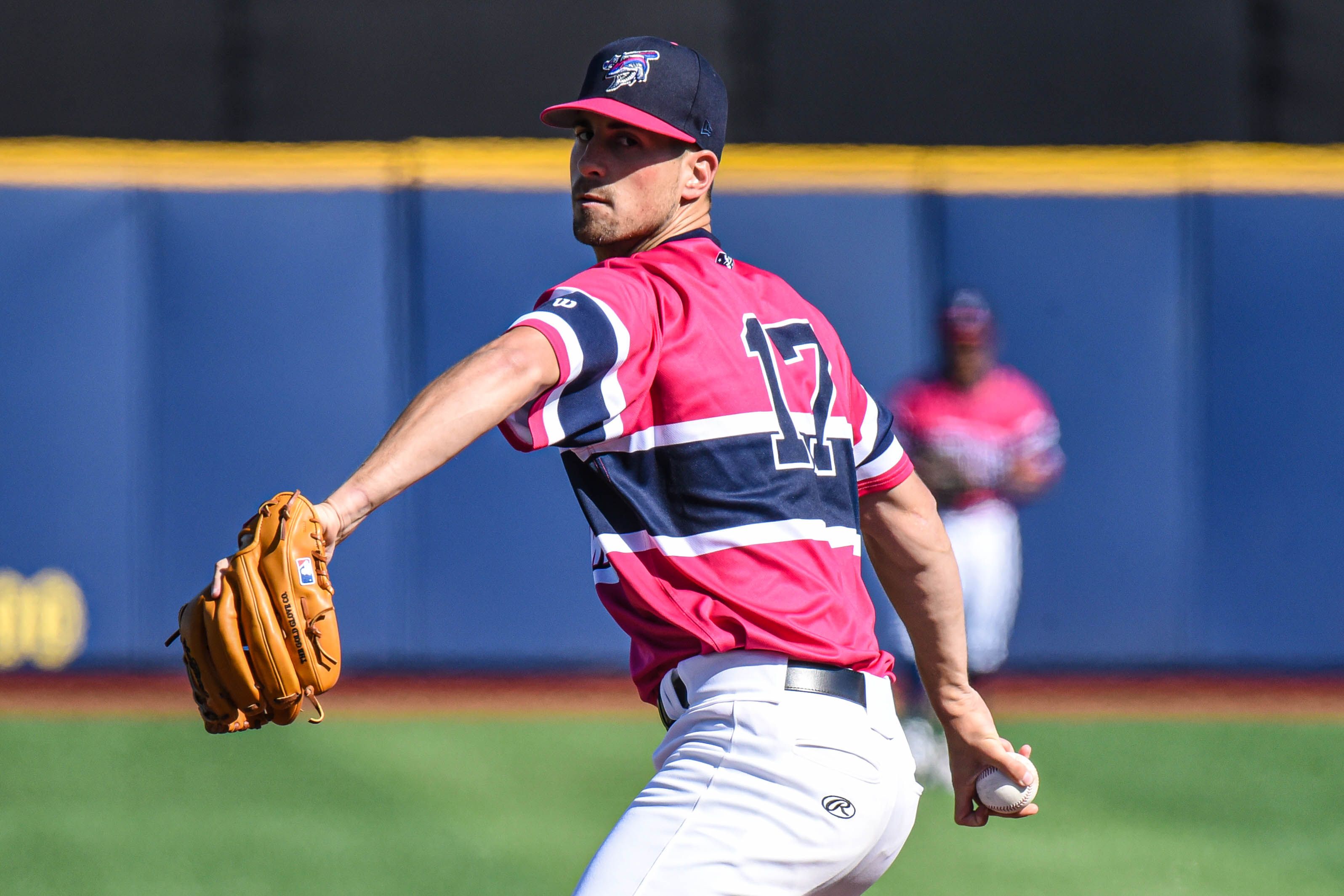 Bryan Hoeing (Photo by Pensacola Blue Wahoos)The route to success for Bryan Hoeing has been an interesting one thus far in his baseball career. Pitching nearly exclusively as a reliever in college and early in his professional tenure, the Marlins challenged Hoeing to a rotational role in 2021. He accepted and hasn’t looked back. On Tuesday afternoon, it was officially announced that after just four games at the AA level, Hoeing, a 25-year-old righty, would be promoted to the highest level of minor league baseball with the Jacksonville Jumbo Shrimp. The promotion for Hoeing comes after he showed some impressive stuff both physically and mentally early this season. With a 0.35 ERA, Hoeing ranked as the second best starting pitcher in all of Minor League Baseball among qualified starters. Hoeing has allowed just one run (an earned run) in 25.2 innings pitched. How did Hoeing get here and earn an early season call to AAA after he had a 4.83 ERA in 22 starts in A+ last season? Including his fellow starter and Marlins top 30 prospect Zach McCambley as well as new pitching coach Dave Eiland, Hoeing was called out by name as a guy who really impressed during spring training. Hoeing credits some of his success to an early start to his spring during the Marlins’ development camp. “It was good to get down to Jupiter in early January to start a throwing program. I was able to build up my pitch count during some live ABs and some intrasquad scrimmages,” Hoeing said. “That lead into spring training where I was built up to maybe 4-5 innings as far as my pitch count. I knew I was in a good spot heading to Pensacola as far as my arm and my pitch count. I felt even from week one, if I was pounding the zone and getting early ours I could go into the 5th or 6th inning.” A main catalyst that has allowed Hoeing to make it deep into his starts has been the development of his primary breaking pitch, a slider, which Hoeing says he put a lot of work into during his stay in Jupiter. The enhanced bender in the low-mid 80s has allotted Hoeing what has been his bread and butter, a high ground ball rate over 70% as well as a K rate of 25%. According to Hoeing, adjustments he made to the slider have made it a more affective offering which has allowed him to challenge hitters both in early and in deeper counts. That pitch on top of two other solid offerings allowed Hoeing to tough his way through 5.2 one run innings against Montgomery last week. “I tweaked with my grip a little bit and it’s been a great pitch for me so far,” Hoeing said. “I had to battle a bit more than usual. My sinker was still working in and out of the plate, I threw some good changeups today and mixed my slider in here and there. They did put up some good at bats against me. I had to find my way to battle through and get some outs.” Hoeing went on to have a seven inning, two hit, eight strikeout shutout performance in his final start for Pensacola. On top of improved stuff, Hoeing’s mental capacity and understanding of who he is as a pitcher is a big difference maker. His ability to adjust to the lineup he is facing and settle for recording outs any way possible whether it be by strikeout, groundout or by any other means speaks to his maturity as a competitor. Furthermore, Hoeing has been nearly untouchable in his second year as a full-time starter via his understanding and ability to differentiate what it takes to get it done in this role versus the one he served in prior. “It’s preparation throughout the week; being wary of how many throws you throw in catch play during the week,” Hoeing said. “Right now, we are in a six man rotation. When that day comes, I should feel like I’m fresh and ready to go.” Hoeing also pinned importance on challenging hitters, keeping the rest of the Blue Wahoos’ roster involved in what he’s doing on the mound and limiting his overall pitch count. “As a starter, I feel like it’s so important to pound the zone and keep the defense alive. I don’t want them to fall asleep behind me,” he said. “When you pound the zone early and guys put it in play, you’re able to go deep into the game.” Hoeing, who previously didn’t have certainty on how long he would be relied upon, has embraced his current role with an open mind and open arms. With continued success and satisfaction to get outs however possible — whether it be by double digit strikeouts or double digit ground balls — he is an innings eating arm that can serve a major league roster in a multitude of ways. With all the Marlins have both in front of and behind Hoeing, his future with the organization appears to be in a swing-man role but he has the experience and flexibility to be able to serve the team in a positive capacity pretty quickly. After his quick development, Hoeing has the capacity to produce results wherever he may be called upon in a game. His name is well on the radar for an MLB debut as early as this season.
 -
View full article
-
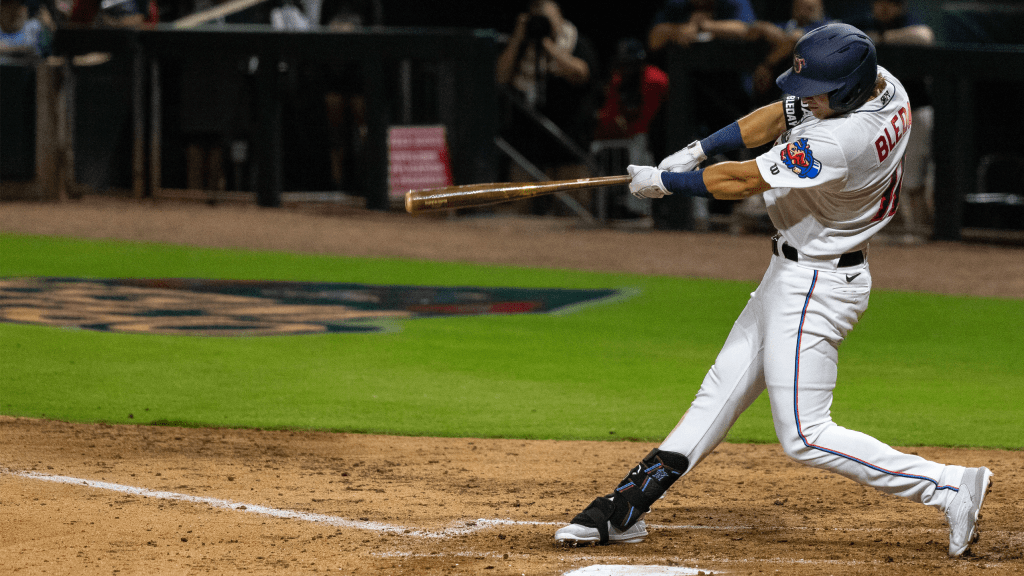 Eury Perez continues to make Marlins fans feverish, several other prospects put up dominant pitching performances, and the Jacksonville Jumbo Shrimp continue to hit as well as any team in the minors. Here is our weekly roundup as we head into May. -- RHP Eury Perez, AA This Week's Stats: 5.0 IP, 0 R, 1 H, 0 BB, 12 K Eury Perez had three promising outings in his AA debut to start this season. He had 18 strikeouts in just 12.0 innings prior to this past week's start, but had yet to really put everything together in a single start. The Blue Wahoos revealed to us, prior to the start of the season, that Perez would be kept around the 75 pitch maximum per start. So, he has also not pitched deep into any games because he's given up some hits. That all changed on Friday, when Perez went long enough to qualify for a win and absolutely dominated a Biloxi lineup that he was facing for the second time this season. Perez got fifteen outs on Friday, and twelve of them came via punch-out. Luis Urias, who had a breakout season last year with Milwaukee and is with Biloxi rehabbing, provided two of those K's. Garrett Mitchell, a first round pick two years ago and one of the Brewers' best prospects, was a victim of two strikeouts himself. The bottom line is that whoever Perez faces on this level does not stand much of a chance when he is locating his pitches. The quality of his repertoire is just too much, with strikeouts coming on the changeup and fastball frequently. Unfortunately, the camera angle in Biloxi does not provide easy analysis on how well Perez was throwing, but the numbers speak for themselves. Eury has been hindered by a .375 BABIP to this point, which has resulted in some hits and runs. Yet, he has 30 strikeouts in 17 innings through four starts, and is getting more swings and misses than any starter at any level has a right to. OF JJ Bleday, AAA This Week's Stats: 6-24, 2 HR, 6 RBI, 6 R The Jacksonville Jumbo Shrimp can really hit. Among all AAA teams, they rank fourth in homers, third in OPS, an fourth in runs scored. They have assembled an impressive collection of journeymen having breakout seasons, and then a few hyped prospects who are showing their talent this season. Bleday and Peyton Burdick fall into the ladder group, and have contributed to a solid 13-11 start for Jacksonville. Bleday took a few weeks to get going, but posted a .875 OPS last week that was backed by three extra base hits and three walks. Scouts were more down on Bleday entering this season than they ever have been. The fourth overall pick in 2019 has struggled to get to his power in games to this point in his professional career, and added on some muscle in the hopes of slugging more this season. Bleday also played much better in the Arizona Fall League last year after making some mechanical adjustments at the plate, in part lowering his hands to potentially get a bit more loft in the swing. Bleday also wanted to emphasize plate discipline, which he had gotten away from a bit in his early minor league appearances. This year, his BB% is at an impressive 15.6 %, leading to a respectable .333 OBP. His strikeouts are up a bit, but not yet to a concerning extent considering the sample size. Ultimately, it all comes down to Bleday unlocking whatever it is that helps him to tap into his raw power. We know he has more of it than he has shown in games, considering he has yet to post a .400 slugging percentage at any level. His .542 slugging percentage last week is a sign that Bleday is trending in the right direction, and why he is still one of the highest upside prospects in the Marlins system. He also had a few hard hit balls that were caught by the Charlotte defense last week, so that .235 BABIP should start trending upwards with greater luck. 3B/OF Charles Leblanc, AAA This Week's Stats: 10-23, 2 HR, 5 RBI, 3 R The best hitter in that vaunted Jacksonville lineup has been Leblanc, who has now been featured multiple times in our 2022 Weekly Roundups. While we look to feature different players each week, Leblanc has made it impossible not to mention him because he rakes in every series. His 197 wRC+ leads all the Marlins hitters at any level, which takes into account park factors and the offensive environment of the league in general. In other words, Leblanc has been 97% better than the average International League hitter. Considering he was released from the Rangers system this offseason, this has been a truly remarkable season from Leblanc. Leblanc's .469 BABIP will undoubtedly come back to earth a bit at some point, but there has been nothing fluky about his success. The strikeouts have gone down, the walks have gone up, and Leblanc always had a good amount of raw power. He is getting to more of it in the games now, and is racking up the extra base hits as a result. Leblanc's defensive versatility is also important to note, and should help him eventually get a chance in the Majors. He has made starts at third base, second base, and left field this year, and made a few dazzling plays at the hot corner last week. Leblanc continues doing everything possible to make it hard for the Marlins to overlook him whenever they need to call someone up. RHP Bryan Hoeing, AA This Week's Stats: 7.0 IP, 0 R, 2 H, 1 BB, 8 K Eury Perez has been promising, and beyond dominant, at certain points this season. Yet, no pitcher has performed better for Pensacola than Bryan Hoeing. The tall right hander was more of the veteran of the staff, and set a good example for a young guy like Perez to follow. In 25.2 innings pitched this season, Hoeing has given up just four runs, with only one being earned. He also has over a strikeout per inning, to go along with exceptional control. This kind of performance unarguably earned Hoeing the promotion to Jacksonville that he received on Sunday, due to Braxton Garrett's injury. To get a bit deeper into the weeds, Hoeing reminds me more of your typical workhorse starter straight out of the 1990s. He is a tall righty with a ton of downward action on his fastball that results in a plethora of groundballs. Hoeing led the High-A Central League in innings pitched last season, while putting up a groundball rate of over 55%. That is the formula to keep you in the game for longer, and to get outs more quickly. Hoeing is getting more strikeouts this year with an improved slider, and a changeup that neutralizes lefties well. With command as good as his, then anything extra he can get out of his stuff will go a long way. With the sinker sitting in the low-nineties and consistently hitting the bottom of the zone, I expect Hoeing to continue pitching well in Jacksonville. Our own Alex Carver further suggested on Twitter that Hoeing could serve in a multi-inning role out of the Marlins bullpen eventually, which makes sense considering his improved swing and miss stuff and the high groundball rate. Ultimately, he is the type of pitcher that managers tend to trust and know what they can expect from. LHP Sandro Bargallo, A This Week's Stats: 5.0 IP, 0 R, 2 H, 2 BB, 5 K Speaking of miniscule ERA numbers this season, Bargallo is the owner of his own. Through just 18.2 innings for Jupiter, Bargallo has given up just one earned run and no unearned runs, putting his ERA at a petite 0.48. Walks were a major issue for the Cuban born lefty last season, with 31 free passes handed out in just 27.2 innings. Walking more than one guy per inning is never going to work at any level, but Bargallo seems to have made some of the necessary adjustments this year. Through those 18.2 innings, he has walked 9 batters, which is still a bit high but is not hindering his success to this point. For a just-turned twenty year old, as long as the control is improving than there is plenty to be excited about. This past Sunday, Bargallo shut down the Palm Beach Cardinals lineup over five innings to help the Hammerheads to a 1-0 victory. The organization has limited Bargallo to one start per week at this point, which is probably wise considering his age and the goal of gradually building up his innings. Bargallo has demonstrated swing and miss stuff throughout his brief minor league career; in 66 professional innings he has 92 strikeouts. That has come at the lower levels, but shows the quality of the fastball-curveball combo that Bargallo is capable of displaying. Against Palm Beach, the curveball was frequently his out pitch, and resulted in four of his strikeouts. The fastball sat in the low nineties, and should keep getting faster as Bargallo develops and gets stronger. The fastball has, like Hoeing's, resulted in many grounders, indicating tailing two-seam movement. Consistently throwing strikes is the clear way to improvement for Bargallo, and why I think he could skyrocket up prospect rankings by this time next year. OF Davis Bradshaw, A+ This Week's Stats: 4-12, 2 BB, 2 R, 1 SB The Beloit Sky Carp have struggled to start the season, with a 7-14 record placing them in the entirety of the Midwest League. Still, they have had a few bright spots to start the year, and Bradshaw has clearly been one of them. With a 165 wRC+, Bradshaw has emerged as Beloit's best hitter, along with JD Orr. This past week's performance was not actually one of his stronger ones, but we have yet to talk much about Bradshaw and he is clearly worthy of recognition. Besides, a .429 OBP, which Bradshaw posted last week, is certainly nothing to scoff at. Drafted in 2018 out of Meridian Community College in Mississippi, Bradshaw is an impressive athlete with raw talent that has not yet translated into success onto the field. To this point in the 2022 season, he has displayed more power than we have seen at any point in his professional career. Bradshaw has also managed to continue making a high level of contact, which is necessary for a twenty-four year old who is still playing at a lower level of the minor leagues. Beloit is not a hitter's paradise, especially in the cold month of April, but Bradshaw is still making the most of his athleticism and speed to get on base. Hopefully, the power will continue to come as the weather gets warmer. Next Up (5/3-5/8) AAA Jacksonville Jumbo Shrimp at MemphisAA Pensacola Blue Wahoos at MississippiA+ Beloit Sky Carp at Great LakesA Jupiter Hammerheads at DaytonaMarlins Links Craig Mish and Barry Jackson of the Miami Herald provide updates on Max Meyer's potential timeline and updates on Braxton Garrett and Ian Lewis.Man On 2nd Baseball's Joe Frisaro and Eric Wiedeke what is next for the Marlins' rotation and bullpenFish Stripes' Ely Sussman delves into Kahlil Watson's heightened K rate thus far.The Herald's Jordan McPherson and Andre Fernandez discuss what is going right for the Marlins so far and what could be going better on their latest episode of Fish Bytes.
 -
View full article
-
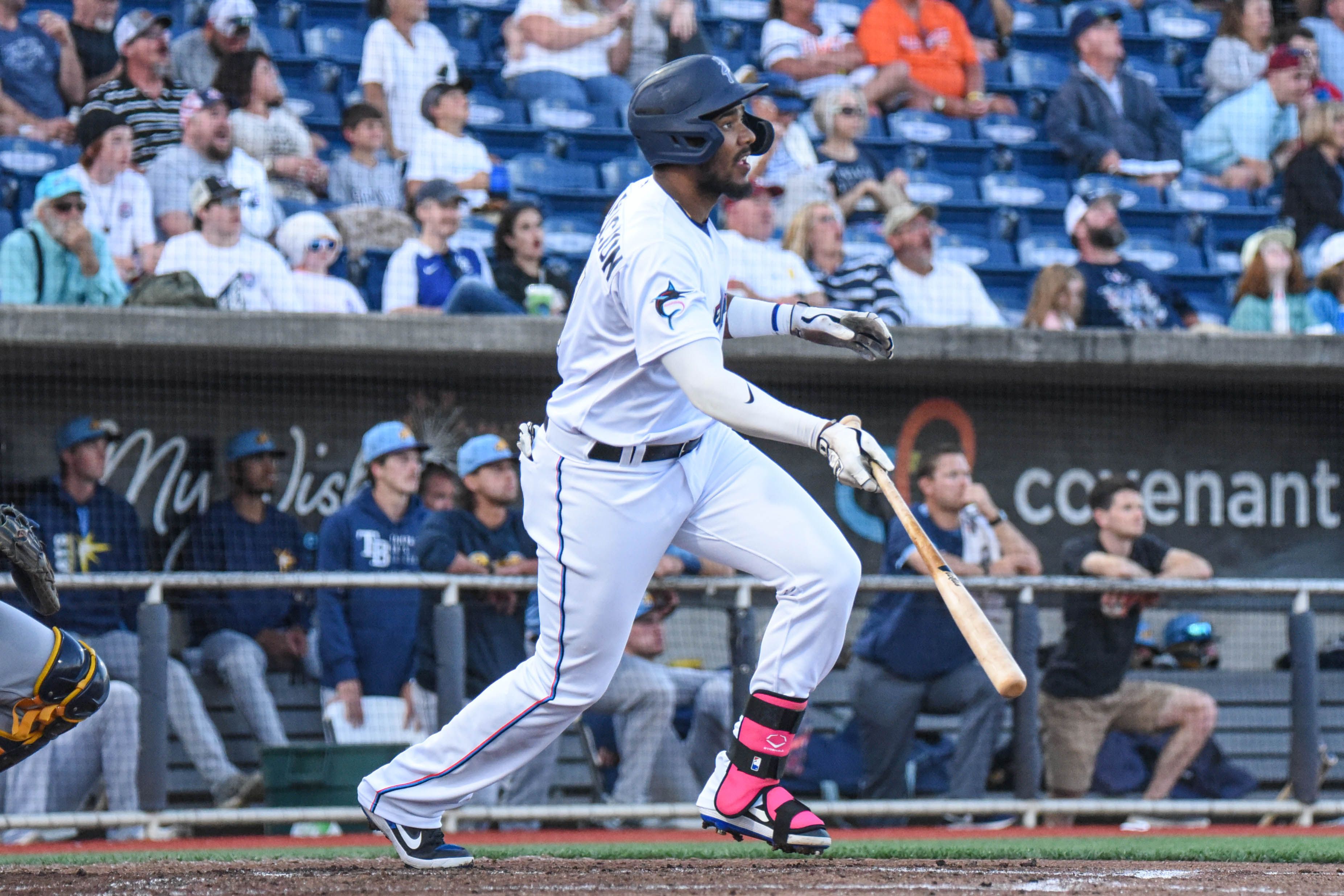 In a week that saw some hiccups for the Marlins top prospects after hot starts to the season, several Marlins hitters had breakout weeks while a few under the radar pitchers came up with impressive starts.-- SS Jose Salas, A This Week's Stats: 4-16, 2 SB, 3/2 K/BB While Kahlil Watson has, rightfully so, earned most of the headlines from Jupiter so far this season, Jose Salas is the other big middle infield prospect who is worthy of attention for the Hammerheads. Salas has bounced a round a bit, with starts at shortstop, second base, and designated hitter. This sort of versatility is a testament to Salas' talent, as well as his being a good teammate to accommodate Watson. More importantly, both players have seen some time at second base, but project to play shortstop in the future. Being able to play both positions will only bode well for their future success. Sticking to Salas, it is vital for a player with his speed to get on base. While being a bit too aggressive at the plate has been described as a weakness of his in the past, Salas has already walked seven times in forty nine plate appearances this season. The resulting BB% of 14.3% is well above average, and contributing to his overall batting line being above average for the A-level. Salas still has more power than he has shown to this point, but at just eighteen years old there should not be too much concern about that showing up in games just yet. Salas is also a switch hitter, and scouts are confident that he has the ability to remain one going forward. To this point, he has seen far more right handed pitching, but in a larger sample size in 2021 he hit about the same from both sides of the plate. More importantly, Salas' swing is quick from both sides and results in a lot of line drives. Continuing to show plate discipline will be vital to Salas' success, while he can work on unlocking a bit more of that raw power in games. RHP Gabe Bierman, A This Week's Stats: 5.1 IP, 1 R, 5 H, 1 BB, 9 K Several Marlins starting pitching prospects put together impressive outings this week, including Bierman, Braxton Garrett, Max Meyer, and MD Johnson. Bierman is a prospect who has yet to get much attention, however, so he is worth mentioning. A seventh round pick just last season out of the University of Indiana, Bierman possesses a plus changeup, a four seamer and two seamer that he can locate well in different parts of the zone, and a curveball. The refined repertoire certainly developed in his time pitching for Indiana, and has led to plenty of success so far in the lower minor levels. In 32.1 combined innings over the last two seasons with Jupiter, Bierman has 43/15 K/BB ratio. On Saturday against the St. Lucie Mets, Bierman showed how far along he is against a lineup of mostly young hitters. Coming into the game in relief of the rehabbing Dylan Floro, Bierman held the Mets bats fairly quiet through the sixth inning in an eventual 6-3 loss. His fastball topped out in the mid-nineties, which seems to be a slight improvement from his college days. The nine strikeouts are the most impressive stat, as Bierman's changeup and curveball were really working. Using the four seamer up in the zone, and the two seamer lower to get groundballs also seemed to be a solid approach. Ultimately, Bierman should continue to have success at the lower levels because his pitch arsenal is very far along for a pitcher at that level. OF/1B Jerar Encarnacion, AA This Week's Stats: 10-20, 3 HR, 2 2B, 6 RBI, 5 BB Encarnacion deserves the award for Best Marlins Hitter of the Week, with a Paul McIntosh-esque performance. It has his season batting line up to a gaudy .367/.441/.667, after struggling a bit in his AA debut in 2021. Encarnacion's strengths and weaknesses are well documented at this point, but it is not a surprise that he has been tearing up minor league pitching. A hitter with his strength and athleticism can really get going as long as he makes contact, and that has been the case so far this year. As is often repeated with high strikeout hitters in the Majors, such as Giancarlo Stanton, as long as they keep that K% below about 30% than they should optimize their contact enough to be a good hitter. To this point, that has been working in Encarnacion's favor; his K% currently sits at a high, but not unreasonable, 26.6%. On the other hand, when he has made contact Encarnacion has made the most of it. His .500 BABIP is laughably high, and unsustainable, but hitters who can hit the ball consistently over 100 mph are going to put together two-week stretches where they have that kind of batted ball luck. Encarnacion is not hitting tappers to third base that he is beating out with foot speed, but missiles to all parts of the outfield. That is clearly his path to the big leagues, so continuing to make contact and getting on base are essential to keeping his overall bating line balanced. Defensively, I was not overly impressed with Encarnacion at first base this spring. His footwork seemed like it needed work, but experience should take care of that for this level of athlete. He has mostly been in right field so far for Pensacola, which suits him well with his elite arm strength. He has already accumulated two assists from the outfield with that cannon of an arm. OF Griffin Conine, AA This Week’s Stats: 7-23, 1 HR, 5 RBI, 3 BB After a rough start to his season, Conine enjoyed a successful series against a powerhouse minor league system’s AA affiliate. This spring, Blue Wahoos hitting coach Scott Seabol said Conine had been working on integrating a few mechanical adjustments in order to improve his contact rates. Conine believes this series against Montgomery, beginning at one key moment, boosted both his confidence and comfort levels. “It was that second at bat against (Taj) Bradley on Thursday,” Conine said. “That’s a really good arm; he’s a special talent. To be able to square up one to the pull side like that, that felt really good. I felt a couple mechanical things during that at bat.” Conine rode the successful swing against Bradley, who can reach the high 90s, to a 5-24 finish to the series, including a three hit performance on Sunday. He also homered on Wednesday. “That was the first good swing to the pull side that I had in velo [all] year,” Conine said of the AB against Bradley following his multi-hit performance on Sunday. “I took a lot off that and kind of just tried to build off it. Hiccups here and there; not perfect, but today was a culmination of what I’ve been working on the last few days.” Another factor that has aided Conine recently is that he is enjoying himself on the baseball field, playing in competitive games as part of a stacked AA roster. So far this year, Conine, Encarnacion, Paul McIntosh, Troy Johnston and the rest of the Blue Wahoos’ lineup have hit a AA South leading 19 home runs. The club has been within two runs in all but one of their contests and they own a +2 run differential. They’re also housing some of the top pitching prospects in the Marlins’ organization. “It’s fun, man. It’s really fun. It’s a lot different,” Conine said. “Last year, I came up late, obviously. That’s tough in August. It’s a complete 180 for me with how the offense has started this year. We just got a lot of dudes, man. A lot of guys that can hit the ball hard and with authority. It’s fun to be a part of.” While strikeouts will always be a part of his game, it is refreshing to see Conine starting to speak highly of his mechanics and equally encouraging to see him begin to string together hits. If his barrel meets the ball, its going to go for at least extra bases. If Conine can build off his successes physically and mentally this week, the strikeout rate could begin to look a lot more manageable as he gets more familiar with AA pitching. 1B Lewin Diaz, AAA This Week's Stats: 4-19, 1 HR, 6 RBI, 7 BB Diaz is the type of player that I love, so I am excited to highlight him after a quality week with Jacksonville. The slick, lefty first baseman is an exceptional defender who has still been figuring things out offensively. Diaz seems to be putting things together, however, and with the struggles of Jesus Aguilar at the Major League level it may not be long before we see Lewin in Miami again. In his Major League cup of coffee in 2021, Diaz dealt with a problem that plagues plenty of young, exciting hitters: over-aggressiveness. He swung at nearly 50% of pitches outside of the strike zone, and posted a BB% lower than 5%. At AAA this year, Diaz has looked much more comfortable at the plate in the middle of a productive Jumbo Shrimp lineup. His BB% currently sits over 15%, in what is undoubtedly a small sample. Still, it is a good sign that Diaz is willing to take some walks, while also still getting to some power in games. Diaz was a thorn in the side of Gwinnett pitching all week, and continuing to put up professional at-bats will be the quickest way for Lewin to get back to the big leagues. 3B/OF Charles Leblanc, AAA This Week's Stats: 9-20, 2 HR, 8 RBI, 6 R We really could have highlighted Leblanc each week so far this season, because he has done nothing but hit. The former Texas Rangers farmhand was picked up off waivers in December, and now seems like he may be a vital piece of the Marlins' organizational hitting depth. The big league hitters have been fairly fortunate this far with injuries (knock on wood), but Leblanc's success has made him a real option in the case of injury. Considering he is not even on the 40 man roster, that is a testament to Leblanc's work effort to have this level of success at the level nearest to the Majors. I remain impressed by Leblanc's ability to turn on balls on the inside of the plate. He has a high load depth, which typically results in a chopped down swing with a plethora of ground balls, but Leblanc has managed to avoid that. He has hit just as many fly balls as grounders this season, and that does not even take into account the high number of line drives that he has hit. In AAA last year with Texas, Leblanc struck out at a concerningly high 35%. This year, that rate is down to a more reasonable 25%, while his walks are up as well. The total product has resulted in one of the most productive hitters in the minor leagues to this point, with a batting line eerily similar to the one Encarnacion has put up at Pensacola. Further adding to the value of Leblanc is the defensive versatility he has shown this year. Leblanc has started games at third base, second base, and left field for Jacksonville. As if his hitting was not enough, that should put Leblanc in a great place when it comes to calling up a hitter. Whether it is an infielder or an outfielder that the Marlins prefer, Leblanc can serve in both roles. RHP Max Meyer, AAA This Week's Stats: 10.2 IP, 2 R, 7 H, 4 BB, 14 K While we initially were going to recap this past week without looking at the week that Meyer had, the way he held his own against MLB superstar Ronald Acuna Jr. in two starts made us reconsider. In two starts against Gwinnett, Meyer did what he has done throughout his brief career in the minor leagues: dominate. His command was not quite as sharp as we have seen in moment's past, but Meyer managed to get through it by locating his fastball well up in the zone and displaying his always nasty slider. The lineup that Meyer was facing was also representative of essentially a poor Major League team. Former MLB'ers Delino Deshields Jr., Ryan Goins, Pat Valaika, Chadwick Tromp, Preston Tucker, and William Contreras were all in the Gwinnett lineup. That does not even include Acuna, who Meyer managed to strike out on Sunday. If the Marlins do end up expanding to a six man rotation, or need a spot start, it is hard to see a better option than Meyer right now. With Edward Cabrera's season still being delayed, there is nobody with the quality of stuff this close to the big leagues. Against a quasi-MLB lineup this weekend, Meyer's justified the Marlins' fans excitement. Next Up (4/26-5/1) AAA Jacksonville Jumbo Shrimp at CharlotteAA Pensacola Blue Wahoos at BiloxiA+ Beloit Sky Carp vs Cedar RapidsA Jupiter Hammerheads vs Palm BeachMarlins Links The Miami Herald's Jordan McPherson and Andre Fernandez provide a minor league update and chat about other Marlins' topics on the latest episode of Fish BytesEly Sussman leads an extremely intuitive conversation with Bally Sports' commentator Rod Allen on The Offishal ShowFish Stripes' Nicole Cahill previews a big early season series for the Marlins against the NationalsMLB.com's Mark Feinsand interviews Marlins' GM Kim Ng, recapping her career until now and her career growth
 -
View full article
-
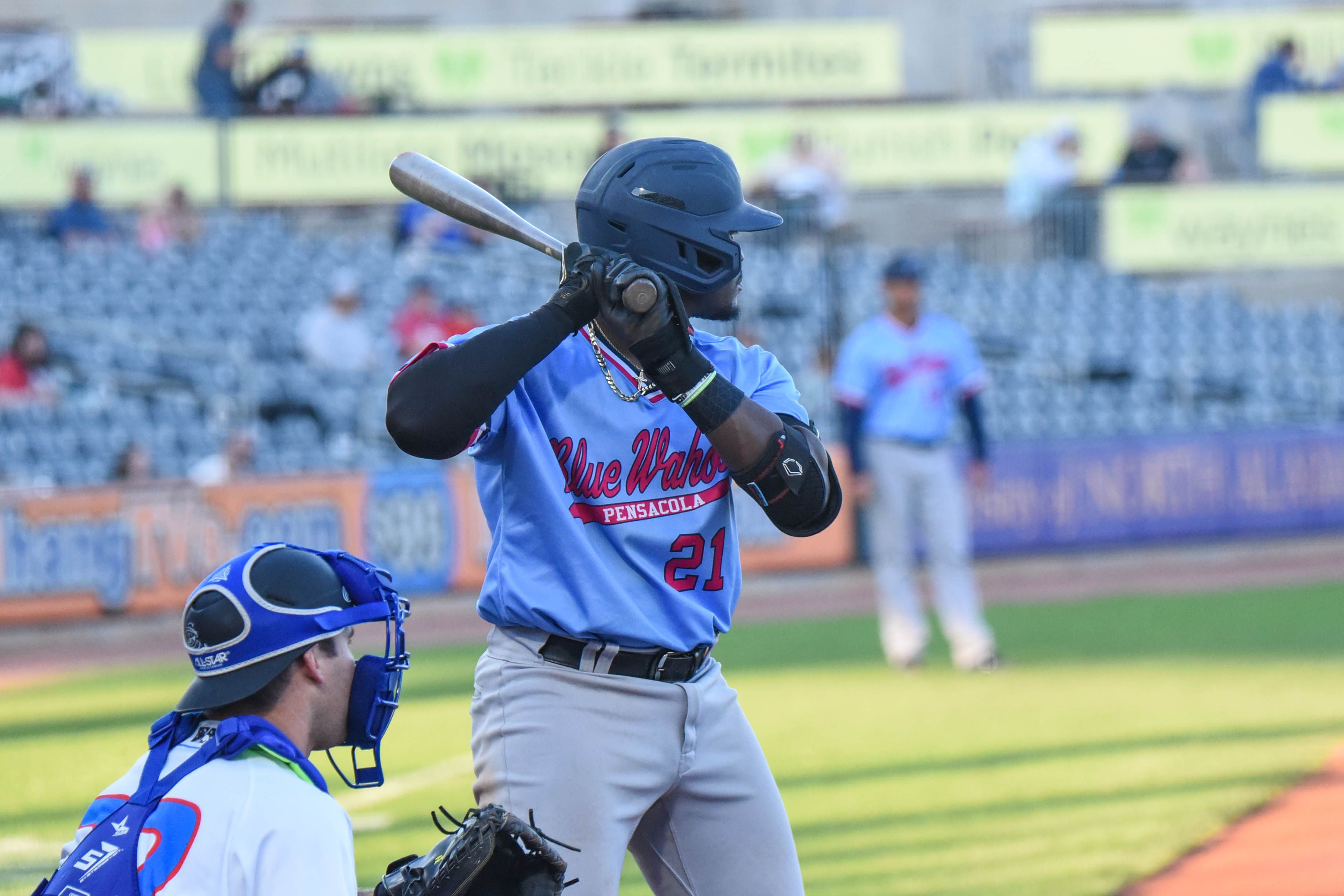 Paul McIntosh (Photo by Pensacola Blue Wahoos) Some breakout bats maintaining their consistency and a standout pitching performance by an under-the-radar arm paved the way for a feel-good week around the Marlins’ system.C Paul McIntosh, AA This Week’s Stats: 9-20, 3 2B, 4 RBI, 1 SB McIntosh impressed in his first taste of pro action upon (somehow) being signed as an undrafted free agent last year. This year, the 24-year-old was challenged all the way up the ladder to the AA level and he has been even more unstoppable. In a smaller park but against much better stuff, has come by some incredible results. This week, McIntosh racked up nine hits including three more extra base hits. Hitting an even .500, McIntosh leads the Marlins’ minor league circuit in multiple stat categories including wRC+ at an insane 304. As ridiculous as that is, it has somehow shrunk significantly from the 400+ mark it was at earlier in the week. Despite the recent doubles, McIntosh’s OPS has also somehow fallen to .929. Thats the lowest it’s been all year, proving how unprecedented his start to the year has been. There’s no question: McIntosh is one of the strongest guys in the Marlins’ system. He also couples it with advanced pitch recognition and plate coverage skills. In his initial showing in 2021, McIntosh was more pull heavy. On the young season in Pensacola, he has gone to the opposite field 43% of the time, proving he has another facet within his extremely balanced approach. While McIntosh’s overall numbers will even out quite a bit as the full season wears on and while his style of hitting does favor the pull side, he’s beginning to prove he has the ability to be a complete threat. The 6’1”, 220 pound specimen has even stolen two bases. McIntosh, who caught many Marlins’ top prospects in camp, continues to do so this year in Pensacola. Preseason, Zach McCambley spoke very highly of P-Mac’s ability, calling him a big target who knows how to call and handle a staff. A complete athlete who can play multiple positions, McIntosh is a great story and a testament to the Marlins’ scouting team and the work they do before, during and in this case, after a draft. C/1B Lorenzo Quintana, AAA This Week’s Stats: 9-23, 2 HR, 4 2B, 8 RBI Quintana is another deep dive find by the Marlins who has performed everywhere he’s ever played. After a long and impressive career in the Cuban leagues (.310/.377/.438), Quintana was signed by the Astros in 2018. He came to the Marlins organization last season in exchange for cash considerations. In 92 games between the the Houston and Miami organizations, Quintana hit .300/.350/.463. With the backup catcher position up in the air this spring, the Marlins took a look at Quintana in camp and he stuck there all campaign long. This past Saturday, Quintana had a career day, homering twice and driving in five runs. Quintana is a stocky 5’10”, 205 with a quick short stroke and a bit of hidden power. The approach is made more for average and gaps than it is for over the fence power but the experienced 33-year-old has a veteran presence at the plate and good vision that should allow him to continue to produce decent numbers at the big league level. Quintana also has some positional flexibility. While he is serviceable at catcher, he can also slot in at first and third. At his age, it’s hard to imagine there will be a starter’s ceiling for him for an MLB team but he could provide value off the bench and in pretty short order. If he continues to produce and the Marlins need a bench bat this year, he could be a name they look at. OF Tanner Allen, A+ This Week’s Stats: 5-17, 2 2B, 1 3B, 3 RBI, 1 SB The Marlins’ fourth round pick from 2021 (the third time he was drafted), Allen, who spent four years at Mississippi State and is well within their program’s Hall of Fame, got off to a slow start in his break in to pro ball. He’s more than begun to rectify that. Allen is off to a really hot start and is arguably the best hitter on the Beloit Sky Carp roster. Seven for his first 24 in A+, Allen provided theatrics (something he is used to doing) this past week, contributing a standup triple and a walk-off knock. Four of Allen’s seven hits so far have gone for extra bases. Allen, who is lauded for an advanced 50+ grade hit tool with room to grow with seasoning at the pro level. He also owns 50+ grade raw power. The lefty plays all three outfield positions and will continue to be an everyday mainstay in Beloit’s lineup. According to DJ Svihlik, Allen’s level of development and positional flexibility could allow him to move quickly through the levels. A complete athlete who had a decorated collegiate career, Allen has a pretty high floor and we are starting to see it. Don’t rule out him getting a look at AA before the end of the year. RHP Bryan Hoeing This Week’s Stats: 7.1 IP, 4 H, 1 BB, 6 K Hoeing has been through quite the journey in just three years. Drafted in the seventh round out of the University of Louisville in 2019, he had played in 70 career games between the NCAA and the wood bat summer leagues. Of those games, Hoeing started 21 times. In his first season pro, Hoeing appeared in nine low A games, all out of the bullpen. Enter 2021, coming out of the canceled COVID season. Hoeing appears in 22 games. He started all of them. It was a struggle for Hoeing in his stark and immediate transition to full time rotational work. For the Jupiter Hammerheads, he had a 5.36 ERA via a 1.273 WHIP. Hoeing did post good control numbers though with a 96/24 K/BB, proving that the 25-year-old was controlling, he just wasn’t commanding at his best. Enter 2022. Despite the struggles, Hoeing has gotten the big push up past A+ to AA baseball and he remains in the rotation. In his first two starts, Hoeing has looked spectacular, including this past Sunday where he went a career high 7.1 innings and allowed just four hits. The start comes on the heels of a 5.2 IP season debut where he set another career high with 10 strikeouts. Hoeing, who also played small forward in high school, looks much more in control of his huge levers and he is maintaining that control throughout his starts. He’s also added in a second offspeed pitch, a nasty diving changeup that can hit all four planes. He couples that with a low-mid 90s fastball and a slurvy slider in the low-mid 80 mph range. A good mix of size, shortened distance to the plate and now a solid three pitch mix which he commands well, Hoeing has back end rotational potential with a good floor as a multiple innings reliever if his success continues for the Wahoos. Next Up (4/19-4/24) AAA Jacksonville Jumbo Shrimp vs GwinnettAA Pensacola Blue Wahoos vs MontgomeryA+ Beloit Sky Carp at South BendA Jupiter Hammerheads vs St. LucieMarlins Links As Isaac Azout reported, Tuesday’s series opener in Jacksonville will feature a marquee matchup with the rehabbing Ronald Acuna Jr facing off against Max MeyerThe Beloit Sky Carp are hiring for multiple positions, including bat boy and bat girlThe Pensacola Blue Wahoos have a ton of fun planned for their second homestand of the seasonFish Stripes’ Ely Sussman graced us with a Peyton Burdick on their YouTube pageMan On 2nd Baseball’s Joe Frisaro explained why he believes Jesus Sanchez is the answer in center field
 -
View full article
-
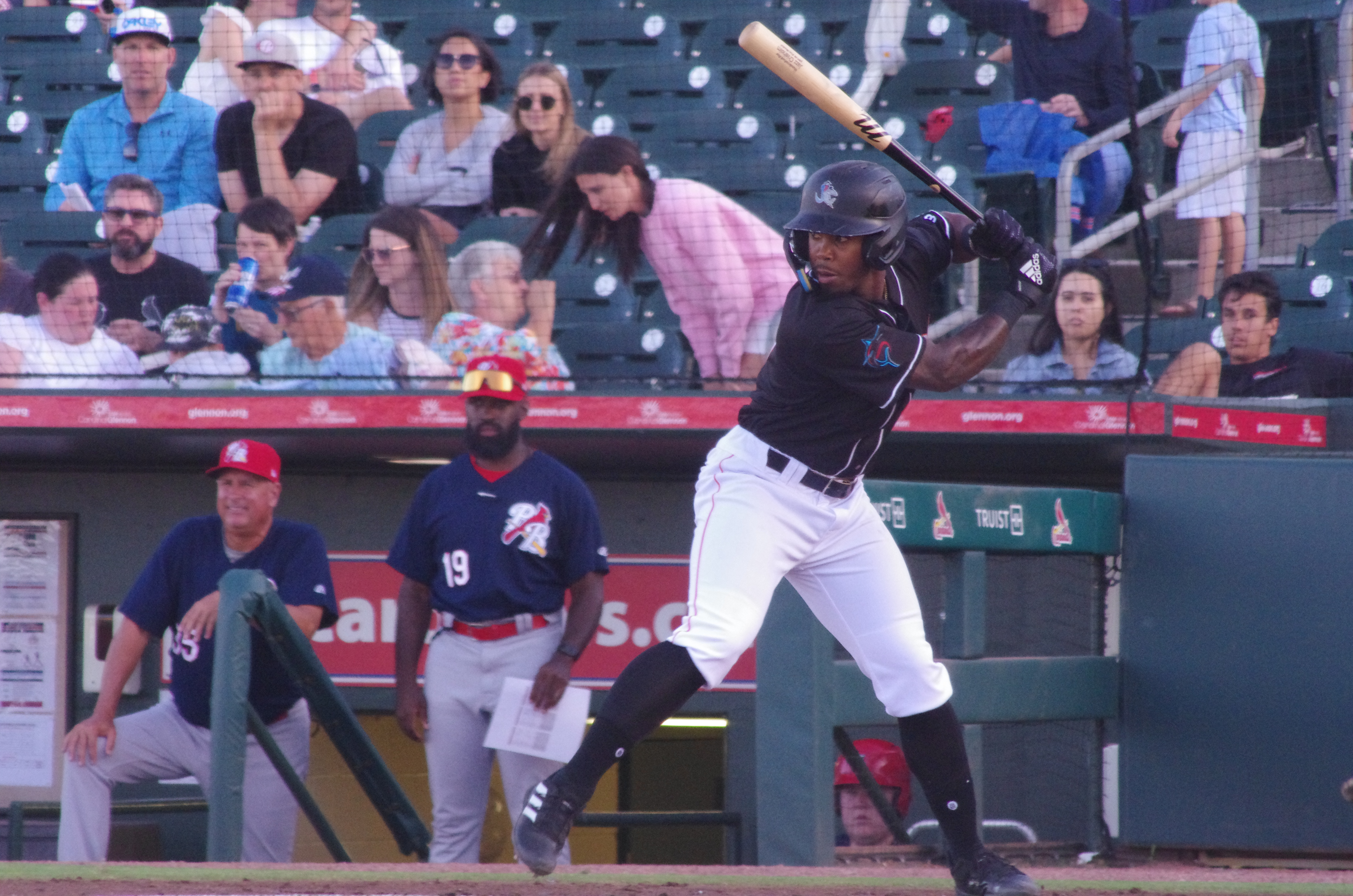 The first weekend of the season is in the books, and there is plenty to be optimistic about. The big league team had a tough series out in San Francisco, with one win in three one-run games. The rest of the system saw many close games as well, highlighted by some impressive performances.— Kahlil Watson, SS, Jupiter This Week's Stats: 4-10, 2 HR, 5 RBI, .400/.455/1.200 Watson is the best position player prospect in the Marlins system, and has done nothing but provide evidence for that statement since his professional debut last season. After hitting .394/.524/.606 in forty two plate appearances in 2021, Watson has followed that up with a great weekend to begin 2022 with Jupiter. Watson's athleticism was constantly emphasized when coming out of last year's amateur draft. While many thought that Watson had the talent of a top five pick, he fell to the Marlins at fifteen due to signability concerns. The Marlins saw how talented Watson was, and were able to secure him by handing out their largest draft bonus ever to a high school player. Watson turns nineteen this Saturday, but he has looked exceptionally comfortable so far in game action for a player of his age. Given the label of a "five-tool" player, there really is no aspect of the game where Watson is weak. He simply possesses that exciting combination of athleticism and baseball tools. Two home runs, while getting on base in nearly half of his plate appearances, made up the perfect Opening Weekend for Watson. His swing is well built to tap into plus raw power, with impressive bat speed to boot. There is not too much upper cut in his swing, as making contact is still a priority. Watson struck out five times this weekend, but making contact has not been a concern in the past and will probably just be a developmental hiccup. He uses his legs exceptionally well to appear balanced and comfortable at the plate. Everything about Watson at the plate right now just strikes me as well-developed and advanced for his age. With the advantage of Statcast data available for Jupiter home games, due to the Hammerheads using the big league spring training field at Roger Dean Chevrolet Stadium, we were also able to see Watson post some impressive exit velocities. Both of his home runs came off the bat at over 100 mph. That figure should continue to improve as Watson gets bigger and stronger during this development stage. Charles Leblanc, 3B, Jacksonville This Week's Stats: 7-13, 2 HR, 3 RBI, .538/.625/1.154 Claimed off of waivers by the Marlins back in December, Leblanc had a promising career stalled a bit in the Texas Rangers system. A high school draft back by Texas back in 2016, Leblanc features plus raw power with a decent ability to make contact. Unfortunately, he has not consistently got on base enough to be a productive in-game hitter to this point. Leblanc's seventeen home runs and .455 slugging percentage last season seem strong on the surface, but in the hitter friendly Pacific Coast League this comprised a well-below average line. Still, as a former fourth round pick, and just 25 years old, the Marlins saw some use in Leblanc as upper minor league depth. This weekend, Leblanc showed signs of rewarding that faith from Miami by crushing Worcester pitching. In a high scoring slate of weekend games, Leblanc was easily the best hitter in the Jumbo Shrimp lineup. Leblanc stands fairly upright at the plate, with a high load depth. Many hitters who place their hands higher tend to chop down in the ball, resulting in an abundance of ground balls, but that has not been the case in Leblanc's professional career. He also has a short swing, so has some natural strength to be getting to that power. Four extra base hits this weekend were a result of several line drives, which is the best way for a hitter to consistently hit the ball hard and get on base. The Jumbo Shrimp may have dropped five of six to Worcester, but it was a fairly competitive series an the losses were no fault of the productive Leblanc. He may not be not on the 40-man roster, Leblanc should still be monitored as potential depth later this season if he can be productive at the plate. Sandro Bargallo, SP, Jupiter This Week's Stats: 5.0 IP, 0 R, 2 H, 8 K, 1 BB Bargallo, signed out of Cuba in 2019 as a seventeen year old, is a guy worth following this season. After being used primarily as a relief pitcher in his first two professional seasons with Miami, Bargallo is transitioning to a starter role with the Hammerheads. While not a highly touted prospect, Bargallo has shown impressive swing and miss ability out of the bullpen with a fastball that was getting up to 96 mph. For a pitcher so young, there is still room for development, so Bargallo at least had an intriguing arm. On Sunday, starting against the Cardinals Single-A affiliate, Bargallo was dominant. Featuring three pitches (a fastball and curveball to go along with the fastball), he paced himself well and seemed comfortable in the starter's role. The velocity was down a bit, as Bargallo sat in the low nineties. That is perfectly acceptable, though, as he has to pace himself now while throwing multiple innings. Most importantly, the lefty showed none of the control issues that have thus far plagued his in game performance. Bargallo walked over a batter an inning last season, which is not atypical for such a young pitcher but needs to be sorted out quickly. Not only did Bargallo show plus control on Sunday, he also showed good feel for both breaking pitches and was able to execute many backdoor pitches. At 6'1, and just 180 lbs., Bargallo could still put more on his frame and potentially improve his velocity. His development will be worth watching this season. Paul McIntosh, C, Pensacola This Week's Stats: 5-8, 2 HR, 2 RBI, 1 SB, .625/.667/1.500 It is impossible to not root for Paul McIntosh, who is a rising star in the Marlins system. Originally drafted by the Angles back in 2018, McIntosh chose not to sign and instead attended the University of West Virginia. While hitting well in college, McIntosh did not garner enough attention to be drafted in last summer's amateur draft. The Marlins pounced on him as an undrafted free agent, and McIntosh has done nothing but rake since then. Since signing with the Marlins last summer, he has already moved through three levels and is now hitting in the middle of the Blue Wahoo's lineup. Batting cleanup on Sunday, McIntosh hit his second homer of the young season in a narrow defeat to Biloxi. Pensacola manager Kevin "Smoke" Randel said that McIntosh would be behind the plate for most of the games at AA, due to his status as a rising prospect, but few could have seen him emerging as an impact bat in this lineup so quickly. McIntosh has a wide stance, with the hands held high and a pretty long swing. That can work against some hitters, but so far McIntosh has made an adequate amount of contact while getting a lot of balls into the air. Ultimately, whatever he is doing right now is working and resulting in a ton of hard hit balls. McIntosh's strength and athleticism are both standout tools, and seem to be helping him both in the batters box and behind it. As a catcher, he features a strong arm and rates well defensively overall. McIntosh works well with pitchers, as evidenced by his catching many of the Marlins top pitching prospects this spring. That should give Randel plenty of confidence in writing his name into the lineup everyday. At this rate, he may not be able to do that for much longer, however, as McIntosh continues to hit and move quickly through the minor league levels. Grant Dayton, RP, Jacksonville This Week's Stats: 3.0 IP, 0 R, 1 H, 7 K, 1 BB If Grant Dayton's name sounds familiar, that is probably because you have watched the lefty reliever pitch several times in the big leagues. Over five major league seasons with the Dodgers and Braves, Dayton proved to be an exceptional lefty specialist. He put up a 3.43 ERA in over one hundred MLB innings, while lefties hit just .169/.256/.331 against him in that time period. The Marlins signed Dayton after the Braves released him following the World Series, and he stuck with Jacksonville following Spring Training with the hopes of eventually getting a callup. Miami has several lefty relievers already on the Major League squad, but it will be hard to keep Dayton off the team if he keeps pitching as well as he did this weekend. In Jacksonville's lone win last week, on Thursday against Worcester, Dayton threw two perfect innings to help get the job done. Throwing from his typical slightly low release angle, Dayton has an effortless fastball that seems to explode on hitters a bit and is used well at the top of the zone. Dayton does not throw particularly hard, with the fastball still sitting in the low nineties, but that level of deception makes it his primary pitch. Dayton's other pitch, a curveball, is used about a third of the time and also generates some swings and misses. His fastball command appeared to farther along this weekend than that of his curveball. Dayton hung a curveball to Worcester's dangerous Triston Casas, one of the top prospects in baseball. A leaping grab at the wall by JJ Bleday in right field prevented extra bases, and other than that hitters struggled to make any contact against Dayton. Up Next (4/12-4/17) AAA Jacksonville Jumbo Shrimp @ DurhamAA Pensacola Blue Wahoos @ Rocket CityA+ Beloit Sky Carp vs WisconsinA Jupiter Hammerheads @ Ft. MyersMarlins Links The Beloit Sky Carp, who celebrate their 2022 home opener (the first at the new ABC Supply Stadium) tomorrow night, are taking fan submissions for their new mascot's name.Just Baseball's Ethan Budowsky recapped the first series of the season for Miami and highlighted why the club still has things to address.Baseball America confirmed Eury Perez is just the second 18-year-old to make a AA Opening Day roster since 2010.Fish Stripes' Nicole Cahill previews the big league club's two-game series in Los Angeles against the Angels, beginning tonight.The Marlins' Twitter account posted a video depicting two-time World Series Champion Jeff Conine hanging a banner honoring both 1997 and 2003 that will over loanDepot park beginning this season.
 -
View full article
-
 Roster decisions are being finalized, last-minute trades are being made, and the Marlins are ready to head west for Opening Day in San Francisco. However, it was an eventful last week of Spring Training, with some impressive performances from a cadre of young Marlins. Here are a few of the highlights, in advance of the Minor Leagues and Major League getting underway this week. Edward Cabrera, RHP This Week's Stats: 3.0 IP, 0 R, 0 H, 3 K, 1 BB Cabrera's Spring 2022 debut was almost on par with Max Meyer's when it comes to generating excitement amongst Marlins fans. Everything that I had mentioned previously this offseason about wanting to see Cabrera work on seemed to be focuses for him as well. While a three inning outing is a tiny sample size, the command of the fastball was apparent. Cabrera's fastball control was a clear problem in his MLB cup of coffee last season, and contributed to his surprisingly high walk rate. This was not a guy who struggled much with control coming up through the minors, despite his age and stature. However, all pitchers have their hiccups as they advance to the highest level, so it was good to see that Cabrera may be a bit more settled in. Furthermore, the command of the off-speed pitches also appeared to be improved. Cabrera's changeup, which some scouts are now calling his best pitch due to it's spin and movement, looked great. Last year, Cabrera gave up several home runs on the pitch because it was hung over the middle of the plate. His changeup command against the Nationals last week was not perfect, but when Cabrera missed it tended to be down in the zone. This is the recipe for avoiding mistakes to hitters, and hopefully drawing some ugly swings instead. The pitch that is also in the conversation for Cabrera's best offering is the slider, which also was located well. His strikeout on Nelson Cruz was a near-perfect slider, in terms of location and movement. Lastly, the curveball, which Cabrera looked confident in last year, was still a pitch that he seemed to like. Cabrera started multiple at-bats by throwing it, and got two strikeouts with the pitch against the Nats. With the quality of Cabrera's stuff, having four plus pitches could be unhittable going forward. He showed some positive signs in his spring debut that having four quality offerings could soon be a reality. Aneurys Zabala, RHP This Week's Stats: 2.0 IP, 0 R, 0 H, 2 K, 3 BB It is hard to watch Aneurys Zabala pitch and not be intrigued. The 6'3, 259 lbs. right hander throws hard and is not afraid to challenge hitters. Zabala has bounced around the minors a bit, but if he can improve his command and do a better job of pitching out of the stretch then he has a chance to reach the next level. Last year with the Phillies in Double-A, Zabala got his walk rate below 10% for the first time in his minor league career. This is undoubtedly a step in the right direction, but his overall numbers were not up to par due to struggles with runners on base. This seems to me to indicate some discomfort with pitching out of the stretch, because Zabala's stuff and strikeout ability is just too good to struggle so much. Zabala struck out 36% of AA hitters last season, which is an elite rate at any level. After walking three in an outing last week against the Nationals, Zabala did not walk any hitters against St. Louis on Thursday. Hopefully, he made the necessary adjustments and is prepared to continue improving at Jacksonville. The Marlins do not feature much velocity in the bullpen compared to most teams, even with the acquisition of Tanner Scott. Zabala is the kind of guy who could take the leap this year, since he is still only 25. Brian Miller, OF This Week's Stats: 1-3, 1 single Miller is a feel good-story after reaching the big leagues last season. He has never quite lived up to his billing as a hitter in the minors, after being drafted 36th overall in the 2017 draft. Still, he plays the outfield well, makes contact, and steals a lot of bases. The Marlins obviously still valued that skillset, and gave him a chance last year. I was impressed with what we saw from Miller this Spring, as he finished the Grapefruit League session 4-10 with a walk and two stolen bases. At this point, it is unfair to expect Miller to show much more power, but the speed and contact abilities are essential to him eventually finding a place as a bench player in the Majors. Miller was worth highlighting because he has been a bit lost in the shuffle on the Marlins Depth Chart, with the additions to the Major League team and the need for a center fielder. Miller may not fill that need as an everyday player, but he has experience playing center field well and should not be forgotten as the Marlins look for depth options when the inevitable injuries come. Cody Morissette, 2B This Week's Stats: 1-1, 1 single Morissette is a guy that I will be watching closely this season. He struggled a bit in his A-ball debut in Jupiter, with little power and a lot of ground balls. After being a second round pick out of Boston College, some adjustment time was expected. After all, transitioning from a cold-weather school to a warm environment down in Jupiter is a large adjustment. So, I would not put much stock in his minor league showing last season, because Morissette has a sweet lefty swing that translates into a lot of contact and line drives. He is never going to be a big power hitter, but spraying the ball all over the field, getting on base, and playing exceptional defense is Morissette's ticket to the big leagues. In his lone Grapefruit League appearance, coming after several high level players had been sent down to AA and AAA, Morissette managed to get a hit against Houston. Unfortunatley, the Astros spring ballpark does not yet have Statcast data available, so we cannot gain much information from that one hit. Still, it should be a good little confidence boost for Morissette to start the season with. Osiris Johnson, OF This Week's Stats: 1-2, 1 single Like Morissette, Johnson is a guy who I was excited to see a sneak peak of this Spring, despite not playing above the lower levels yet. His profile is one that is not typical, but we have seen some Major League players have success with. Johnson is short and hits the ball hard, so it should not be surprising that he is the younger cousin of Phillies legend Jimmy Rollins. Even throughout some of his growing pains last year in A-ball, Johnson showed the power needed to remind fans of what he is capable of. He hit eleven homers across two levels, while not hitting many groundballs. Johnson is still just twenty-one, so there is plenty of time for growth, but this is the year that the Marlins will probably be looking for some of that raw potential to turn into in-game production. We do have Statcast information from Johnson's one Grapefruit League appearance in Port St. Lucie against the Mets. There is reason to be impressed, as Johnson hit two balls over 95 mph, one for a single and the other a flyout. Posting those kinds of exit velocities is a good sign that Johnson has the bat speed and pop to eventually become a big leaguer. Seeing him have some success in the lower levels of the minors comes first, however. Cutting his strikeout rate, which sat near 30% last year, and getting on base more is the first step towards accomplishing that.
 -
View full article
-

Marlins Deal Prospects, Draft Pick to Baltimore for Bullpen Help
Alex Carver posted an article in Marlins
 Cole Sulser (Photo by Mitchell Layton-USA TODAY Sports)Sunday night, the Marlins addressed one of the biggest glaring weaknesses on the Major League team by acquiring righty Cole Sulser and lefty Tanner Scott from the Baltimore Orioles in exchange for two prospects: teenaged outfielder Kevin Guerrero and 25-year-old lefty Antonio Velez, a player to be named later and a competitive balance draft pick. With Adam Cimber, Yimi Garcia and John Curtiss all departed, the Marlins’ bullpen limped to a finish in. 2021, posting a 4.38 ERA over their last 210 games. Before Sunday, the Marlins were scarcely being linked to many relief pitchers in the offseason. They appeared to be headed into 2022 with much of the same bullpen and without one of their best in house options, Dylan Floro who is delayed with a minor injury. In Sulser and Scott, the Marlins get one arm that will step into high leverage immediately and another that has the stuff to do so very shortly. Sulser is a recently turned 32 year old who made his MLB debut in 2019 and who has yet to hit his arbitration years. After a cup of coffee with the Rays in 2019, Sulser came back up to the bigs in 2020 with Baltimore. I’m 22.2 IP, Sulser struggled, allowing 14 earned runs in 22.2 innings. Despite his issues at the very hitter friendly Camden Yards, Sulser made the 2021 Opening Day roster for Baltimore and in his first full MLB season, showed massive improvement. Most strikingly, Sulser displayed a much better feel for his changeup. Despite a drop in velo, a softer grip has to game-changing improvement when it comes to the vertical movement on that pitch turned a two-plane offering into a four-plane offering. Sulser has never had a very fiery fastball, sitting at 93 and rarely up to 95. What he did have in 2021 though was much improved command, allowing him to fill up more of the strike zone and change the eye level of his opposition. The combination of the fastball up and the changeup diving out of the zone has proven to be a mystery for opposing hitters. Sulser can also mix in a slider which allows him to cover a wide range of the radar gun. Via very sudden improvements, he now has the stuff to start the year and, if his command consists, remain in a high leverage role for the Marlins this season. Scott is a 6’, 235 pound southpaw who was a 6th round pick by Baltimore in 2014. He broke out in 2017 in AA where he held down a 2.22 ERA via a 1.319 WHIP and 87/46 K/BB in 69 IP, allotting him a major league cup of coffee at the end of the year. Since then, Scott has thrown most of his innings for the big league club. His results with the Orioles have been very suspect. In 156 innings in the show, Scott has a 4.73 ERA, a 1.545 WHIP and a 208/96 K/BB, pointing towards his issues with command. While he may not have it all felt out yet, what Scott does have is absolutely electric relief stuff including heavy heat up to triple digits and some of the best spin rates in baseball all from the left side. In 2021, his average four seamer spin rate was 2582, 11th best among qualified pitchers. Additionally, Scott’s slider, which held an average 2666 spin rate, also averaged nearly 37 inches of vertical break, 14th highest among qualified lefties. He garnered an extremely high 46% whiff rate with it. Scott has the velo and stuff to become a viable high leverage reliever, but if that is to happen, he needs to work out his crux: inconsistent command, particularly with his fastball. Catching the heart of the plate far too often, Scott’s fastball allowed hard contact 44% of the time, had a .244 expected batting average and a .419 expected slugging percentage. Scott commanded his slider much better than the heat. But due to the inconsistency of the fastball, he had to challenge with the slider a bit more than he probably liked. Still, opposing hitters appeared to be pretty fortunate against Scott’s slider. The pitch had an xBA of .214 and was hard hit just 27% of the time. However, the actual batting average against the slider was .250 and opposing teams plated 25 runs against it. Those numbers should normalize as Scott leaves Camden Yards and comes to loanDepot park. Also working in Scott's favor, his hard hit rate decreased later in the 2021 season. With an elite 80 grade fastball and a 60 grade slide piece, Scott has the stuff to keep him in a major league bullpen and he is coming to a Marlins’ organization that knows how to get the most out of their pitchers. Expect Scott to start his tenure with Miami in middle relief and potentially get looks in high leverage situations a bit later in the year. Velez, a 6’1”, 195 pounder, is a Miami native and graduate of Brandon High School. After two years in JuCo, Velez was recruited to FSU where he had a solid junior year and was primed to build his draft stock in his senior season before the COVID-19 pandemic wiped out almost everything, including the collegiate baseball campaign. In the extremely shortened 2020 MLB Draft, Velez went unselected. DJ Svihlik and the Marlins signed him shortly thereafter. Immediately sent to A+ Beloit, Velez showed solid control and command over to-contact stuff, limiting his ERA to an even 3.00 and his walk rate to 2.9% while managing a respectable K rate near 24%. Velez got the call to AA Pensacola for his final three starts and showed much of the same: in 18 IP, he allowed just one earned run while striking out 18 and walking two. Am extremely feel-good story who has recently answered multiple challenges posed to him both mentally and on the field, Velez will not overpower with velo (usually sitting 92-93). What sets Velez apart is a great knowledge of who he is as a pitcher and plus command and control. In addition to the fastball which has good arm side run and tail away from righty hitters, Velez has advanced feel for a tumbling changeup and a well spun slider with late vertical action, that allows him to place it on both the front and back door in the zone for strikes and outside of it for whiffs. This trade is a good career move for Velez. With the depth in the Miami system, there were many pitchers above him in the pecking order. With the Orioles, he could contribute to the MLB team as early as this year. It is also a testament to the Marlins front office, their ability to recognize collegiate talent and their prowess for building up arms. Turning an undrafted free agent into a good looking piece and getting major league value out of him in a trade is an indicator of a very adept front office. The other piece going north is Kevin Guerrero, a Marlins international signee from the Marlins’ 2021-22 international signing class. He signed for an undisclosed amount. At 6’3”, 165 pounds two weeks away from his adult years, Guerrero’s best current tool is his solid bat speed from the right side. One of the youngest players in Marlins camp this spring, Guerrero was getting looks against mostly AA competition on the backfields. While he was clearly overmatched, he got his first taste of what adjustments he needs to make to succeed at the higher levels. He was also exposed to stateside coaching, development and facilities. A .260/.373/.298 hitter in the Dominican last year, Guerrero has a ton of projectability and should come stateside full time for Baltimore this season. In addition to two solid pieces (plus a PTBNL), the Marlins also traded away a compensatory draft pick. An event the club has leaned on heavily to find the next stars of their organization since the club’s purchase in 2018. Giving up prospects plus a draft selection to bolster their major league bullpen in addition the moves the club made earlier this offseason corroborates what Bruce Sherman said earlier this spring: this team wants to win at the major league level right now. Through this trade, they are closer to making that a reality.
 -
View full article
-
 This is the first weekly post of a season long series that will update readers on a few Marlins prospects each week. The players who perform best, or terribly, in any given week in the minor leagues are most likely to be featured here. However, those with significant prospect status, such as JJ Bleday or Max Meyer, are more likely to be featured if anything of note happens with them, as opposed to an off-the-radar name who has a noteworthy week. With Spring Training games officially under way, there has been plenty to look at for this group of young Marlins. A few players, like the aforementioned Meyer, have really stood out, while there were also a few notes that I gathered from watching this past week's action where there is room for improvement. Max Meyer, RHP This Week's Stats: 4.0 IP, 0 R, 0 H, 5 K, 0 BB Nothing excited Marlins fans more this week than Meyer's performance against the Mets on Monday. Coming into the game in relief of Elieser Hernandez, Meyer notched four perfect innings against a Mets lineup that still featured a few everyday players. More importantly, he showed developments in his repertoire that should appease more skeptical prospect experts who think Meyer will not pan out as a starting pitcher. Meyer's fastball sat around 96, as expected, and topped out at almost 98. As most pitchers do early in the Spring, Meyer threw plenty of fastballs. However, he also showed off two different versions of a slider. One version was so unique that Statcast was classifying it as a cutter, but it was almost certainly just Meyer manipulating the slider in a different fashion. It was a few miles per hour faster, and Meyer controlled the pitch well while getting many swings and misses. The changeup, Meyer's elusive third pitch, is still a work in progress and he did not consistently locate it on Monday. Still, if Meyer can use his slider in two different ways then it may alleviate the problem. Either way, Meyer showed this week why there is so much reason to be optimistic about his potential. Jerar Encarnacion, 1B/OF/DH This Week's Stats: 2-7, 1 HR, 4 RBI, .286/.286/.857 This is a big year for Encarnacion; he has untapped potential that was not realized last season. There were many reasons for this, including nagging injuries, but Encarnacion has to face the cold reality of being a 24-year-old prospect who needs to hit. The unheralded Dominican prospect gained attention on prospect lists because of his stature. Many have compared him to an NFL Tight End, and he has the strength and raw power to match that description. Getting to that power in games continues to be what Encarnacion needs to improve upon, and he has showed some real signs of life early in Spring Training. Of course, Encarnacion could also help his stock by becoming a better defensive player. He is undoubtedly limited based on his size, and having the DH in both leagues will help him if he can get to his power more often and become a better hitter. For now, there is plenty to work on still. Encarnacion has played the corner outfield and first base, but has not looked great at either position. Against the Cardinals earlier in the week, while playing first, he seemed to stretch with the wrong foot on the bag in the 7th inning. For a right handed first basemen, the right foot should be the one on the bag. Instead, the left was, and it looked a bit awkward as a result. Encarnacion still recorded the out at first base, but it may just be something to watch to see if the Marlins coaches can help improve his footwork this spring. The Marlins have optioned Encarnacion back to Triple-A, but he showed some of his elite contact skills prior to departing big league camp. Last Saturday against Houston, Encarnacion hit a ball 110 mph that went 459 feet. It was the hardest hit ball in the game, and would be in most MLB games as well. Encarnacion, for all of his defensive limitations and struggles making contact, still has the ceiling of an offensive difference maker because of how hard he hits the ball. The Battle for Backup Catcher It looks like we may have a winner of this positional battle, after the Marlins sent down Nick Fortes and Alex Jackson to Triple-A on Saturday. Fortes seemed to be the favorite for the position based on his impressive September cup of coffee. Jackson would have been a reasonable choice as well, since he had only one minor league option left. Instead, it will be Henry backing up Jacob Stallings on Opening Day in San Francisco, if health permits. Henry was seen as the least likely out of that trio to win the position heading into the Spring. We have yet to see him in much game action to this point, with three hits in just eight at-bats. It seems like the Marlins are making a bet on his power and defensive abilities. In Henry's last full minor league season, with the Milwaukee Brewers, he hit fourteen home runs in fewer than five hundred plate appearances. So, there is certainly some pop in his bat. Henry has also worked to become a better pitch framer with the now commonly used technique of catching off of one knee with the bases empty. This allows him to present the ball better, and the Marlins must be satisfied with the progress Henry has made. Henry caught Jesus Luzardo on Tuesday and Sunday, and the two seemed to have a good rapport. One final name worth mentioning is Lorenzo Quintana, a player who is not on the 40-man roster but who has had a great spring. The 33-year-old minor league journey man has five hits in 11 at-bats, with four for extra bases. Quintana hit well last year in Jacksonville, with a 131 wRC+. However, he played more first base than catcher, and he has seen limited reps behind the plate in Spring Training. So, Quintana was probably never a serious option for the backup catcher spot, considering the emphasis the Marlins are placing on defense with their young pitching. Still, he has had an awesome spring and is a guy deserving some praise. Huascar Brazoban, RHP This Week's Stats: 2.0 IP, 1 R, 2 H, 0 K, 0 BB Brazoban, a thirty-two year old reliever, never pitched above the Double-A level prior to playing in independent leagues over the past few seasons. Brazoban was dominant last season in the Atlantic League, and earned a well-deserved minor league contract from the Marlins in January. After pitching against the Nationals on Wednesday, his stuff seemed intriguing. Brazoban has struggled with control a bit over the years, but racked up huge strikeout totals as well. In an admittedly limited sample size this spring, Brazoban has not walked any batters. More intruiging is the velocity and swing-and-miss potential that Brazoban has shown. The Marlins bullpen is lacking in flamethrowers compared to the rest of the league. Brazoban registered six fastballs over ninety-seven miles per hour against Washington, and also generated two swings and misses. It is an incredibly limited sample, but Brazoban could fill a hole in the Marlins current bullpen. With Nick Neidert being sent down on Sunday, and expanded rosters for April, it does not seem impossible that Brazoban could be added to the 40-man at some point and see some big league time. Nick Neidert, RHP This Week's Stats: 2.0 IP, 0 R, 0 H, 1 K, 1 BB Neidert is a prospect worth featuring this week due to the career-altering news that was announced: Neidert will be transitioning into a reliever role permanently. I have my doubts about this move, as soft throwing guys with a kitchen sink pitch mix do not seem to have a place in big league bullpens anymore. I have been higher than most on Neidert over the past few years, because I thought that he could develop as a back-end starter in a sort of poor man's Kyle Hendricks mold. Instead, Miami sees his best path to production in the bullpen. On Sunday, Neidert was sent down to Triple-A, meaning that he will seemingly not have a place on the Opening Day roster. This came as a bit of a surprise, as many figured Neidert would be ready to serve in a multiple-inning role immediately for the big league club. Jordan Holloway was sent down as well, so that spot seems to be one the Marlins still need to fill. We know Miami has a plethora of pitching depth, but finding the right guys to work out of the 'pen is still something the club needs to do. Neidert looked okay in his early Spring outings, but it does not seem like Kim Ng and Don Mattingly view him as the answer right now.
 -
View full article
-
 What stands out about these Jumbo Shrimp of Jacksonville, in just their second season classifying in AAA? Pitching, pitching, and more pitching. It is the strength of the Major League team, and the Marlins organization as a whole. While that depth presents itself in a quality big league rotation, it also manifests in the Triple-A rotation. Four of the six pitchers listed below have experience at the Major League level already. To have that many pitchers ready to step in, who have already received a cup of coffee in the Majors, should provide a competitive advantage for the Marlins when pitcher injuries inevitably occur to the guys currently expected to be in the MLB rotation. Moreover, this projected roster does not even include Edward Cabrera, who could potentially start the year at AAA if he does not earn a spot in the big league rotation. Either way, there figures to be a plethora of pitching talent moving through Jacksonville this year, with the Marlins ready to call up anyone at a moments notice for a spot start 350 miles south. While the pitching deserves the most attention, there is an intriguing collection of hitters prepared to play in Jacksonville in 2022 as well. The one most worth watching is JJ Bleday, the former fourth overall pick who had a rough go of it last year in Pensacola. While this has resulted in a plummet down most prospect rankings for Bleday, his Arizona Fall League performance gave some hope that he may be on the path towards righting things. Bleday has the highest ceiling amongst this projected Jacksonville collection of hitters, but there are plenty of other bats worth watching. Peyton Burdick's value as a prospect has skyrocketed as he has continued to hit at every level he sees. Jerar Encarnacion has prodigious raw power, but needs to start getting to more of it in games. Isan Diaz has been a frustrating player to watch for Marlins fans, but he clearly has the tools to mash at the AAA level. All in all, there should be plenty of hitters on this team that are worth keeping an eye on for Fish fans. Managing the team, in his first year in Jacksonville, will be longtime baseball coach Daren Brown. Brown, 54, managed for almost two decades in the Seattle Mariners organization. He more recently served as the manager with a collegiate summer league team, the Kingsport Axmen. Brown is probably most well known for his brief stint as interim manager with the Mariners in 2010. He took over for Don Wakamatsu, and went 19-31 over the final fifty games of the season. Many viewed it as a seamless transition for Brown, who had managed many of the Mariners players already at AAA-Tacoma. Brown ended up as a bit of a legend in Tacoma, as he is the current recordholder for wins there. Clearly, Brown brings a lot of experience with him. That should serve this group of players in Jacksonville well, considering how many of them already have MLB experience and may just need that little push that a baseball lifer like Brown can provide for them. In fact, Daren Brown will now be the second consecutive Jacksonville manager with major league managing experience. Al Pedrique, now the Marlins third base coach, managed the team last year, and served as the interim manager with the Arizona Diamondbacks for half a season in 2004. Without further adieu, here is the Jacksonville Jumbo Shrimp projected roster for 2022: Projected Lineup C Payton Henry 1B Jerar Encarnacion 2021 Stats (A-AA): .221/.308/.396, 9 HR, 29 RBI, 102/25 K/BB It is hard to understate how important of a year this is for Encarnacion. Already twenty-four years old, and having never played above AA, Encarnacion has to hit this year. The K% of 38.1% at AA is scary to the point where it is doubtful he can hit at a higher level, but there is still hope that the raw power will translate into a powerful bat off of the bench in the Majors. At this point, it is about getting to that power in games for Encarnacion. The arrow was really pointing up for him after 2019, when he had a breakout in A-ball while keeping his strikeout rate in check. The pandemic must have hindered his development somewhat, as he has struggled to replicate that success since then. With someone this talented, however, the Marlins are wise to keep giving him chances to show what he can do in the Minors. Unfortunately, he does not profile well defensively, having struggled in the outfield and in limited reps at first base. The universal DH would only help the stock of Encarnacion if he can get back in a groove at the plate. 2B Riley Mahan 3B Isan Diaz SS Jose Devers The cousin of Boston’s Rafael Devers, Jose appeared briefly in the Majors at the end of the 2021 season. Devers profile is quite different from that of his cousin; he has a quality glove at short or second and displays a lot of speed, while also being very slight of build. Devers does have an exceptional ability to make contact, but the exit velocities in the minors have been concerningly low (according to Fangraphs). Moreover, he has only one homerun in four seasons of minor league play. At best, Devers will need to hit a lot of line drives to get as many hits as possible. The offensive profile is just not there for an everyday player, but Devers is probably ready to contribute as a good glove off the bench for the Marlins. As it relates to the Jumbo Shrimp, Devers will certainly be a favorite of the pitching staff with his ability to turn a high percentage of groundballs into outs. LF JJ Bleday 2021 Stats (AA): .212/.323/.373, 12 HR, 54 RBI, 101/64 K/BB The argument could be made that no position player within the Marlins system, other than perhaps Khalil Watson, has a higher upside than Bleday does. There is a reason he was a top-five draft pick just a few years ago; Bleday has a sweet swing, power to all fields, and is a quality athlete. His speed even surprised scouts prior to the draft, and many had given him that classic label of a "five-tool" player. Since the draft, it has been a bit of a rollercoaster ride. Bleday looked solid in a limited sample in 2019, and then had his first full season cancelled by the pandemic. He slimmed down a bit heading into 2021, and that seemed to backfire. There was a lack of hard contact, and now more concern about a potential hitch in his swing. Bleday put some of the angst to rest with a better performance in the Arizona Fall League. It is worth noting, however, that the pitching in that league was not exceptional this year, and many hitters raked. Still, it was good to see Bleday have some success at the plate professionally. He enters this season already twenty-four years old, and should be on the doorstep of the Major Leagues. A great start to the season in AAA will get him there, and he could be an option to play in center field eventually this year (depending on how the Marlins fill out the rest of the roster). He profiles as more of a solid corner outfielder, but has the potential to play an adequate center field as well. CF Victor Victor Mesa 2021 Stats (A+-AA): .249/.321/.345, 4 HR, 27 RBI, 56/28 K/BB Mesa was a highly sought after prospect coming out of Cuba due to what was believed to be an MLB ready package; he was already twenty-two at the time of signing. However, he has failed to hit in the minors, which has resulted in his development being stalled. Mesa has the speed to be an above average runner and defender in center field, but has not displayed max effort at all times. This is probably preventing him from being a MLB fourth outfielder as much as his lack of hitting at this point. At the plate, Mesa has a long swing that does not allow him to tap into some of the raw power he has. He does not swing and miss too much, and has a good feel for the barrel, but still puts the ball on the ground with too great of a frequency. Some improvement was clearly made in 2021 at High-A, as Mesa hit a solid .306/.357/.432 (118 wRC+) over 225 PA. However, he immediately struggled when getting promoted to AA, and will need to hit at the upper levels at some point if he wants an MLB callup. The ceiling for Mesa is likely just a fourth outfielder, but even that is starting to feel unlikely for the former top prospect. RF Peyton Burdick 2021 Stats (AA-AAA): .224/.367/.456, 23 HR, 53 RBI, 146/79 K/BB A stocky corner outfielder who was not on the draft radar going into his senior year, Burdick tore up the country at Wright State in 2018. The Marlins signed him below slot and he has kept hitting his way through the minors. Making contact is the main concern, as Burdick’s 29.3 K% in AA last year counters his solid .231/.376/.472 line a bit. The power is real, although there is some concern that Burdick will not be able to catch up to big league fastballs due to an open stride. Scouts rave about his makeup, which is always a good sign, and he should be able to provide at least average corner outfield defense. The entire package culminates in a player who has skied up prospect rankings over the past year. There is no doubt that the power is MLB caliber, so Burdick just needs to keep doing what he has been doing. Burdick briefly appeared in AAA at the end of 2021, and should get an extended look in Jacksonville before making his Major League debut. DH Lorenzo Quintana Projected Rotation RHP Max Meyer 2021 Stats (AA-AAA): 111 IP, 2.27 ERA, 130/42 K/BB, 1.19 WHIP Meyer attended a cold weather school, which left some scouts skeptical and others dreaming on what he could be. The dreamers seem to be on the right side of history, as Meyer has really developed since being drafted third overall. He was mostly a two-pitch guy in college, after initially starting out as a reliever (had sixteen saves as a freshman at Minnesota). Then the big games started piling up, and Meyer showed the competitor he is on the mound and started reaching triple digits with the fastball. He was fading later in games at first as a starter, but seems to have gotten better with fatigue issues since then. The slider was described by Fangraphs as being the single best pitch in the draft that year, and he has continued to get strikeouts with it in the minors. The command could still use some work, but Meyer is a tough guy on the mound who seems like he will continue to compete. He was also a decent college hitter, which shows some of his athleticism despite a lack of typical size for a kid who throws this hard. That is a big part of why I am higher on Meyer than many in the industry have been this offseason. Meyer has become a divisive prospect; some experts included him in the top half of their top one hundred, while others did not have him in their lists at all. Typically, quality athleticism is one of the best indicators of being able to develop, so I trust that Meyer can make the necessary adjustments. That, and his clear competitiveness on the mound, make me think that he has the intangibles needed to succeed. Meyer was promoted to AAA right before the season ended, and should get an extended look there prior to making his MLB debut at some point in 2022. LHP Braxton Garrett 2021 Stats (AAA): 85.2 IP, 3.89 ERA, 86/32 K/BB, 1.23 WHIP Garrett required Tommy John Surgery almost immediately after being drafted, which delayed his development quite a bit. Still, he has the potential to be a back end starter because of a quality breaking ball, good movement on his third pitch (changeup), and good feel and command for his pitches. The fastball is the most concerning part of the profile; Garrett never has consistently reached the velocity that scouts hoped for him, and was barely averaging 90 mph on the fastball last season. If that could rise back up a few ticks it would make Garrett far more appealing, as it is a pitch right now that is only being used to get ground balls. It does have downward movement, but big leaguers were able to tee off at that low velocity. The slider and changeup are thrown too hard to pair well with that fastball, so adding some velocity would be a huge value driver for Garrett. While he is unlikely to ever live up to the hype that comes with being the seventh overall pick in the draft, Garrett did perform well at Jacksonville last year and should be one of the first calls the Marlins make if they need a spot starter. RHP Nick Neidert 2021 Stats (AAA): 68.2 IP, 3.67 ERA, 52/21 K/BB, 1.34 WHIP Neidert once drew a Kyle Hendricks comp from Fangraphs for his plus changeup, excellent command, and not possessing an overpowering fastball. That obviously has more to do with style of pitching, as opposed to Neidert's ceiling. However, it is a big reason why I am high on Neidert. The way he pitches, showing command of a variety of pitches and an emphasis on getting weak contact, is a joy to watch when done right. Neidert commands a mid-eighties slider very well to the outside part of the plate against righties, which helps set up the movement of that changeup. The curveball is a slower pitch that does not get used as much but can still be dropped in effectively. Neidert will not miss many bats, but he has the potential to be a back-of-the-rotation starter because of the command and getting a high amount of weak contact. He struggled more than expected with control in a brief cup of coffee in 2021, but it was a very small sample. Neidert should be one of the first guys the Marlins turn to for a spot start in 2022. Like Garrett, he showed enough at AAA last year to get more opportunities in the big leagues. RHP Cody Poteet 2021 Stats (MLB): 30.2 IP, 4.99 ERA, 32/16 K/BB, 1.34 WHIP Poteet came back onto the radar in 2021 due to an increase in his strikeout rate, which had plummeted as he advanced through the minors. He then held his own over seven Major League starts, with a 24% K rate. The BB rate was a little bit high, but has been much more reasonable in a larger samples at AAA over the past few years. The UCLA product flashes four pitches, with a high spin curve, good control on the slider, and the changeup being the out pitch. His fastball sits in the low nineties, and tops in the mid nineties. It has less sink on it than it once did, and surprises some hitters. The complete package means that Poteet has a chance to be a back end starter, and the Marlins will probably turn to him for depth at some point next season. He may not be the most exciting option out of this minor league depth, but Poteet showed in his MLB sample last year that he can hold his own when called upon. RHP Jeff Lindgren LHP Will Stewart 2021 Stats (AA): 99.2 IP, 4.33 ERA, 85/38 K/BB, 1.34 WHIP Acquired as one of the main pieces in the JT Realmuto trade, Stewart has not quite pitched well enough to keep moving up the organizational ladder quickly. His fastball has dropped a few ticks since his Phillies days, and his groundball rate has seen the same sort of decrease. Those two things do not mix well for a guy without elite stuff, and the results have shown it. His secondary pitches are not poor, and he does possess a four pitch mix. However, the results are not good enough for this to be a starter profile. At best, Stewart’s path to the Majors is probably as a ground ball producing lefty out of the bullpen. The Marlins left him exposed to the Rule 5 Draft last offseason but there were no takers. That would not indicate the highest level of confidence in Stewart's chances in the big leagues, but lefties can always stick if they show an ability to get same-handed hitters out.
 -
View full article
