



Alex Carver
-
Posts
459 -
Joined
-
Last visited
-
Days Won
16
Content Type
Profiles
Miami Marlins Videos
2026 Miami Marlins Top Prospects Ranking
Miami Marlins Free Agent & Trade Rumors, Notes, & Tidbits
Guides & Resources
News
2025 Miami Marlins Draft Pick Tracker
2026 Miami Marlins Draft Tracker: Picks & Bonuses
Forums
Blogs
Events
Store
Downloads
Gallery
Everything posted by Alex Carver
-

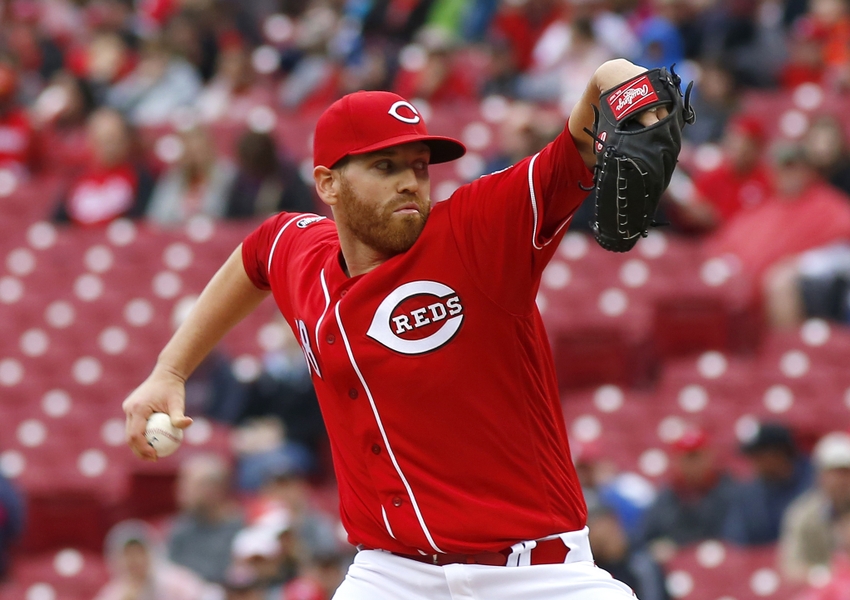 A few months back at the winter meetings, the Marlins passed on a multitude of offers they had on the table offering proven MLB pitching help for their top pitching prospect above A, Luis Castillo. They passed on all of them. This week, the Marlins dealt Castillo along with swing man Austin Brice and raw but talented outfielder Isaiah White, three of their top 16 prospects, for first-year Reds' starter last year, Dan Straily whom they claimed off of waivers last April. Straily is a 24th round draft pick by the Oakland Athletics from 2008. He had an average to mediocre start to his minor league career, posting a 4.09 ERA and a 1.31 WHIP before breaking out in AA and AAA in 2012. In 152 IP that year, he had a 3.02 ERA and an even 1.000 WHIP before getting his first major league cup of coffee in August. In two combined short stints with the A's that equaled 39 IP at the end of that season, he held down an ERA just shy of 4 (3.89) and a 1.322 WHIP. Despite the fairly solid year, Straily was left off the A's 2013 Opening Day roster and began a second year in AAA. But after holding down a 1.14 ERA in his first five starts, he was called up to begin his first full year in the majors. Pitching in 27 starts and 152.1 IP, the 24-year-old rookie was moderately impressive. He negated a pretty high walk rate of 3.4 by allowing just 132 hits, spelling out a 1.241 WHIP and a 3.96 ERA Five years younger than the average major leaguer, it looked as though Straily, with a solid enough for a back-end starter rookie year in his pocket even though he had a very limited arsenal of just two plus WAR pitches, good heat and a nasty slider and was very susceptible to the homer (2.5 HR/9), had plenty of room to grow. However, in 2014, Straily faded back into mediocrity. He made his first Opening Day roster and despite one start in which he allowed six runs, was his usual self, posting a 3.5 walk rate and a 2.1 HR/9 but again negated them by allowing a total of 33 hits, leading him to another solid WHIP of 1.252. On the forefront his 4.93 ERA beginning to his second MLB season was hideous but erase the aforementioned one bad start and his ERA was 3.54 with four quality starts. However, the A's apparently couldn't look past that one unfortunate outing. They sent Straily back to AAA on May 8th. For the next two seasons, Straily would remain mired in the minor league systems of three different organizations, unable to return to the form he flashed in 2013 and 2014. From a 4.71 ERA, 1.270 WHIP first half of 2014 with the Sacramento Bees of Oakland's system to a 4.09, 1.436 second half with the Iowa Cubs whom he joined as part of the Addison Russell/Jeff Samardzija trade to a 4.77, 1.402 full season with the Fresno Grizzlies, Houston's AAA affiliate whom he joined after the trade that sent Dexter Fowler to the Cubs in 2015 with a few equally unimpressive MLB spot starts sprinkled in, Straily was in serious danger of putting a label on himself that no baseball player wants: AAAA player. This past year, the Reds gave Straily perhaps his final chance to prove he can make it in the majors. After joining the Padres in a minor trade only to be DFA'd by them before ever appearing in a game for their organization, the Reds, Straily's fifth club in four seasons, claimed him off waivers. In a do-or-die year in reference to his career in Major League Baseball, it would appear on the forefront that Straily was able to return to to form. In the most hitter friendly park in the league, he posted a 3.76 ERA by way of a 1.19 WHIP. However, if we delve deeper into Straily's stats, it is revealed that he seems to have been a very fortunate beneficiary of circumstance. First, let's take a look at Straily's BABIP. Where the major league average is .298 and Straily's career MLB average is .255, he put up a .239. Unsustainable. Also unsustainable is Straily's LOB%. Where that MLB average was 72.9% and Straily's career average is 74.3%, he stranded runners at a ridiculous 81.2% rate. Unless you believe Straily has suddenly become comparable to guys like Jon Lester, Ian Kennedy, Max Scherzer and Kyle Hendricks (all of whom had higher BABIPs than Straily), he will not be capable of posting metrics like that again. The numbers from Straily's good full season with the Astros are astronomically different. That year, his BABIP was a much more realistic .266 and his LOB% a much more regulated 70.3%. So again, Straily didn't return to that form last year; he was just lucky. What aided him in his good fortune was a good Reds' defense. Even though it committed the seventh most errors in baseball, the Cincinnati D only lost a total of 6.5 runs to them. In nearly every other one of their advanced fielding metrics including their 17.1 range runs above average which ranked ninth in baseball, their 6.0 ultimate zone rating which ranked 13th, their 10 runs above average good fielding plays which ranked third and their overall 11.0 Def rating, the Reds' defense was one of the better manned fields in the league. The luck Straily had and the aid he got from his defense is further proven by the 5.02 xFIP, the rate at which Straily could've been expected to give up runs independent of fielders. It was the highest xFIP among NL starters. Straily's good fortune is also proven by the rate at which he gave up hard contact, 32.2%, 11th highest among NL starters. Straily induced ground balls at the absolute lowest rate in the NL among starters, 32% which is fine for a pure fly ball pitcher. But he also allowed the most homers in baseball, 31, by way of the 15th highest HR/FB ratio among NL starters. Great American Ballpark which had the fourth highest park factor in baseball is to blame, right? Well, no. In almost the exact same amount of innings on the road (92) versus at home (99), Straily gave up 18 homers. His total surrendered at Great American was 13. Looking at those same home/road splits a bit further will just baffle you even more and points to just how much of a ridiculous anomaly Straily's 2016 campaign was. He was overall better -- a lot better -- at the his hitters' haven band box of a home park as opposed on the road. Again, in nearly the same amount of innings at home versus on the road, he held hitters to a .193 BA and posted a 2.90 ERA. On the road? .242 BAA and a 4.70 ERA. His home and road BABIPs? A virtually unheard of (especially considering where he was pitching and a mark which very well may be the lowest ever posted at that park) .213 versus a much more regulated .266 on the road. So here we have in Straily, a guy which had one decent full season in the majors before spending most of the rest of his career in the minors, a guy the Reds threw a bone by giving him quite possibly his final chance to succeed in the majors, and a guy who did so by having one of the luckiest seasons imaginable. It is only fair to mention that Straily's 2016 season shouldn't be completely written off as nothing but good fortune. He appeared to make some adjustments for the second half which brought an 8.3 K/BB% all the way up to 11.2% and he had one of the best sliders in baseball, value wise at 13.9 wins above replacement. It is on those hopes and the move to pitcher friendly NL East that the Fish are basing their hopes on Straily continuing to "rediscover" himself. If he can't, at least he won't be costing Miami much money. He is under club control until 2020. While that all would be well and good to confide a couple B-C type prospects in, the Marlins parted with Luis Castillo (for the second time in a year, no less which raises questions about what the Marlins thought of his ability despite great on-field performance) their best minor league pitching prospect above single A, a guy who has the ability hit triple digits with his great sinking fastball and who has a fantastic changeup as well as great control over both of them and who is very close to making a major league debut, especially if he can continue to improve his command. They also lost a very solid hurler in Austin Brice, a guy who can pitch either from the back of the rotation or out of the bullpen thanks to a free and easy repeatable delivery despite his large size. Pitching in a swing man role this past year, he appeared to iron out the rest of his control issues on his way to a 2.74 ERA via a 1.098 WHIP between AA and AAA on his way to making his MLB debut. Brice has a debilitating curveball and, getting his 6'4" 235 pound frame behind his pitches, a fastball that consistently sits mid 90s and has the ability to go even higher. He shortens the distance to the plate by throwing from a full circle arm angle in which he hides the ball well. Whether it be as a back end starter or a reliever, he definitely has a future in the majors that, like Castillo, isn't far away. The Marlins could have simply given their final rotation spot to Jeff Locke, a guy who has struggled last year but, with his return to the tutelage of the famous "pitcher whisperer", Jim Benedict, the guy who made him an All-Star in 2013 and a 3.69 ERA, 1.365 WHIP, 4.02 xFIP contributor from 2013-15 in Pittsburgh, had as good a chance if not a better one as Straily did to return to his former "glory". If Locke didn't, Castillo, with continued success in AA/AAA, would be waiting in the wings to join the rotation and/or Brice, who already made his MLB debut last year, would be waiting to join either the rotation or the bullpen in long relief, allowing the Marlins to move David Phelps back to the rotation. Instead, the Fish lose both of those young prospects for a 27-year-old former journeyman with very little self-made major league success in his pocket. All things considered, what can we expect from Straily? If he does manage to win the final rotation spot out of spring training, something the Marlins have yet to commit to him in favor of saying they will still run an open competition, home league aside, there is no way he will post another BABIP as low as he did in 2016. That said, even though the Marlins have a better defense than the Reds did last year, his ERA, unless he's on the same level a two-time lottery winner, should be closer to his xFIP. With Straily turning 28, making an educated guess, I would credit him with no better than a 4.50 ERA via a 1.3 WHIP and 20+ homers allowed. That is what not one, not two but three of our top 16 prospects will have cost us. Bravo, Mr. Hill. Bravo.
 -
View full article
-
 Who was the best #Marlins number 7? Winner joins the All-Fish Team! — Fish On The Farm (@marlinsminors) December 29, 2016 When you're only a member of a franchise for one full season, it's tough to warrant being named one of it's best players of all time. That is unless you accomplish what Ivan "Pudge" Rodriguez did in 2003. That season, Pudge called some of the biggest games and made some of the team's biggest plays, making him an integral part of the leadership that brought the Marlins back atop the mountain and gave them their second World Series title in six years and thereby making him the greatest Marlin to ever wear the number seven. Rodriguez got his start in baseball as a child in Puerto Rico as a little league pitcher. However, he was too good at it. So good that his father received complaints from other parents in the league that his arm was scaring other children and making them not want to go to games on days they knew Rodriguez was throwing. As a means of mercy, Rodriguez's dad moved him to catcher. Little did he know later in life his presence behind the plate would strike similar fear in potential base stealers. At age 16, Rodriguez was noticed by scout Luis Rosa, the same scout that discovered the likes of Sandy and Roberto Alomar and Pudge's little league rival, Juan Gonzalez. Even in his teenage years, Rosa said he saw things in Pudge he had rarely seen in many others, including his ability to captain his team both tangibly and intangibly. "Pudge was hard-nosed, even then," Rosa has said. "He showed leadership at 16 that I’d seen in few kids. He knew where he was going." After signing with the Texas Rangers in 1988, Rodriguez made his minor league debut as a 17-year-old. In two full seasons and a small part of a third in MiLB, he hit .265/.296/.370 with 125 RBI on 68 XBH. Even though the numbers were decent enough for a teenager adjusting to life in both the United States and in the professional baseball ranks, a major league call-up after just 969 ABs, only 50 of which came in the upper minors and none of which came in AAA seemed a bit premature. However, upon making his MLB debut in June of 1991 at age 19, nine and a half years younger than the average big leaguer and the second youngest player in baseball, second only to Todd Van Poppel by 12 days, Pudge debunked that belief by hitting .264/.276/.354 in his first 80 MLB games. He also threw out 36 of 70 or 49% of potential base stealers making him the best behind-the-plate gun slinger in the league. At season's end, Rodriguez placed fourth in Rookie of the Year voting. Pudge spent the next ten years with the Rangers placing the building blocks of a legacy that has a lot of people today calling him one of the best catchers of all time. From 1992-2002, Rodriguez slashed .307/.345/.496 with a BA and SLG that ranked second among all of baseball's backstops. Over that same span, he gunned down 424 of 842, or an even 50% of potential base swipers which blew away the rest of the competition in baseball (among qualifiers with 1,000+ innings played). Accordingly, in that 1,391 game span, Rodriguez posted a 499.2 RAR and a 48.9 WAR, making him the 15th most valuable player in the league and the second most valuable catcher. Those marks were made possible by a 89.4 Off rating (calculated, in short, by adding park adjusted RAA with weighted stolen base and double play runs RAA and ultimate baserunning rating and determines how good a player's all-around offensive game (as opposed to only what he does with the bat or, in other words, his weighted OBP or runs created) is compared to a replacement level player), which ranked fifth among backstops as well as a ridiculous 209.7 Def rating (or positional adjusted runs above average) a mark that was 71.5 runs better than his next closest competitor. In each of those ten seasons, Rodriguez was selected as an All-Star and a Gold Glove winner. In six of them, he won the Silver Slugger award. His best single season over the course of his first 11 seasons (and arguably the best season of his career) came in 1999. That year, Rodriguez hit .332/.356/.558 with the seventh best AL BA and its 9th best SLG. His 35 homers were the 11th most in the AL and set a new league record for long balls by a catcher, his 113 RBI ranked 14th, and his 116 runs scored ranked seventh. Never really known as much of a base stealer, Pudge somewhat surprisingly swiped 25 bags, making him the first catcher in the then 98 year history of the American League to steal at least 20 bags and hit at least 20 homers in a single season. All of this spelled out a 20.9 Off rating, 22nd in his league and second among all catchers. Behind the plate, Pudge was his usual spectacular self that year, once again leading baseball in caught stealing percentage this time with a 55% (41/75). His 28.2 Def rating not only once again led all catchers by a wide margin, he was actually the seventh best defensive player in all of baseball. Altogether, by way of a 71.4 RAR and a 6.8 WAR, Rodriguez was the eighth most valuable position player baseball and the fourth most valuable position player in the AL. In a very close race with Pedro Martinez, Roberto Alomar, Manny Ramirez and others, Pudge won the AL MVP Award. At just 27, with his career not even half over, Rodriguez had people, including opposing managers, calling him one of, if not the single greatest catcher of all time and advising Cooperstown to get a jump-start on the carving of his Hall Of Fame plaque. "He might be the best catcher I've ever seen," Blue Jays skipper Jim Fregosi said. "He could retire right now and go into the Hall of Fame. Johnny Bench had more power, but Bench never had this guy's quickness." Even though he suffered a season ending injury on a freak play at the beginning of the second half of the 2000 season, Pudge still managed to hit .322/.357/.579 with the seventh best BA and SLG in baseball in his final three years with Texas. His 50% CS% and 37.5 Def rating over that span put him in very familiar territory as the best backstop in the AL. He went to two more All-Star games and won two more Gold Gloves. He should have won another Silver Slugger in 2002 when he was again the best offensive AL catcher but was somehow beaten out by Jorge Posada who hit .268/.370/.468 to his .314/.353/.542. Following the 2002 season, after 11 professional seasons, Pudge waved goodbye to the Texas Rangers, leaving a legacy in his wake that will forever have him labeled one of the best players in their franchise history. In those 11 years, Pudge was a 49.2 WAR player, the seventh best all-around player in the AL and the best all-around player in Rangers history, a title that Pudge still holds today. He is also still the best defensive WAR player in Rangers history and appears on many of the franchise's career leaderboards including BA (.304, 7th), SLG (.488, 9th), OPS (.828, 10th), runs scored (866, 4th), hits (1,747, 2nd), doubles (352, 2nd), triples (28, 5th), homers (217, 4th), RBIs (842, 4th) and runs created (900, 4th). In 2003, Rodriguez brought that legacy to Miami. As one of the signings that got the season-long spending spree started that year and saw the Marlins' payroll go from $40 million a year previous to $63 million (only to go back to $42 million on Opening Day 2004) the Marlins inked Pudge to a one year, $10 million deal, one of the higher single season price tags in team history, especially at the time. Rodriguez wound up being worth every penny. Along with contributing a .297 batting average, a mark which was fifth among NL catchers 16 homers (3rd among NL catchers) and 85 RBIs (2nd) to the lineup, Pudge served as the veteran anchor to a rotation with the average age of 25. He mentored and led that child-like rotation to a regular season 58% quality start percentage (94 QS in 162 games), tied for fourth best in baseball and an average game score of 53, third best in the game. Pudge himself didn't make the All-Star Game that year (even though he was hit .300/.375/.515 to backup selection Paul Lo Duca's .307/.374/.438) the work he did with rookie Dontrelle Willis got D-Train into an NL All-Star uniform. In the 2003 playoffs, Rodriguez was not-so-arguably the Marlins' best player in every round. In the division series, he slashed .353/.450/.588 and provided some of the most crucial clutch hits. In game three, Pudge staked the Fish to an early 2-0 lead with the first postseason homer of his career. Ten innings later in the bottom of the 11th, he strode to the plate with the Marlins' win expectancy down to 27%, an out away from going down 2-1 in the five game series. With the bases loaded, Rodriguez singled down the right field line, scoring Alex Gonzalez from third and the speedy Juan Pierre from second, giving the Marlins a huge 4-3 win. [youtube The very next game, Rodriguez would once again be involved in the game deciding play, this time on the other side of the ball. After the Marlins took a 5-1 lead early, the Giants clawed back with a four run 6th inning and going into the 9th, trailed by just two runs, 7-5. After a leadoff double, JT Snow plated the Giants' sixth run with an RBI single. Closer Ugeth Urbina battled back to strike out Pedro Feliz and get Benito Santiago on a popout but then hit Rod Durham with a pitch putting the tying run in scoring position for Jeffrey Hammonds. On the first pitch of the at bat, Hammonds struck a slow sinking fly ball into left field that fell just in front of a hard charging Jeff Conine. At that point, as Snow neared third with third base coach Gene Glynn waving him home against the arm of a 37-year-old, it looked as though the Giants were going to return the favor that Rodriguez presented them with two nights earlier. However, somehow, Conine, who had made the full-time switch to the infield four years earlier and was playing in just his 75th game in the outfield over a 662 game span, somehow came up with a perfect one-hop throw to the outside of the baseline just outside of the right handed batter's box to a waiting Rodriguez. Pudge adjusted slightly and and braced for a huge railroad hit by Snow that sent his catcher's mask flying high in the air and his body flying across the plate into the grass behind the plate. The ball though stayed put snug in Rodriguez's glove and the Marlins remained in the race for their second World Series title in six years. It is a play that has become synonymous with the Marlins' title run that year and the play that Marlins fans automatically reminisce to when they hear the name Ivan Rodriguez.But Pudge wasn't done there. In the next round, the seven game NL Championship Series against the Cubs, he hit .321/.424/.607 with two homers and 10 RBI on his way to becoming the NLCS MVP. The first of Rodriguez's homers of that series came in the third inning of game one, a three run bomb that helped erase a Cubs' 4-0 lead that they built in the bottom of the 1st and sparked a Marlins' 9-8 11 inning win. After hitting a second homer in game five, Rodriguez was a key contributor to the Marlins' miraculous game seven come-from-behind win. After falling behind 5-3 in the third inning, the Fish led off the 5th inning with two walks, a flyout sandwiched in between. With one out, Rodriguez took the first Kerry Wood pitch he saw to deep left field, scoring pinch runner Brian Banks, drawing Florida to within two and moving Luis Castillo to third. Two batters later after a fourth Marlins' run scored on a Miguel Cabrera fielder's choice groundout and moved him to third, Pudge scored the tying run on a Derek Lee line drive single. Successfully jump-started by Rodriguez, the Marlins would go on to complete the rally by scoring three more unanswered runs and eventually winning 9-6 to move on to their second World Series in 2,190 days. Again though, Rodriguez wasn't done providing huge moments for the Marlins that year. In the World Series, he hit .273/.292/.364 and caught a pitching staff that held the New York Yankees, a team which scored the fourth most runs in baseball by way of its fourth most homers and third best OPS, to 3.21 runs per game. His game calling and the same leadership skills his scout, Rosa noticed in him as a teenager helped produce series MVP Josh Beckett who held down a 1.10 ERA in two starts and 16.1 IP. All in all in those playoffs, Rodriguez hit .313/.389/.522. After them, his Marlins tenure would come to an end but in just 155 games, Rodriguez accomplishments were enough to establish him as arguably the greatest Marlins catcher in franchise history. Among catchers who played at least 100 games, his .297 BA in '03 was a Marlins' single-season record as were his .474 slugging percentage, 36 doubles, 85 RBI and 10 stolen bases. His 16 homers are the third most ever in a single Marlins backstop's season. Value wise, Pudge's 4.4 WAR is another of his Marlins' single season catcher records. It also ranks as the fourth best single campaign in franchise history among all position players. Following his short but sweet Marlins' career, Pudge moved on to a third city where he would for the third time, become a franchise MVP. For the 2004-2007 Detroit Tigers, he hit .298/.326/.453 with 114 doubles, 14 triples, 57 homers and 268 RBI. He was an All-Star selection in each of those years, won Gold Gloves in three, and a Silver Slugger in one. Defensively, he contributed a 41% CS% while leading the league in that stat in both 2005 and 2006, and a 49.5 Def rating, third among all of baseball's catchers over that span. After a .295/.338/.417 start to 2008, Rodriguez was traded to the Yankees. His Detroit legacy is firmly cemented by way of a .298 BA, a .449 SLG, 62 homers, 300 RBI and 30 SB, marks that rank third, fourth, fifth, sixth and first in the 116 year history of Tigers catchers. WAR wise, Rodriguez is the fifth best catcher in Detroit franchise history, behind the likes of Freehan, Parrish and Tettleton, each of which have a Hall Of Fame case. After moving from New York to Houston then back to Texas and finally to Washington in the twilight of his career, Pudge retired in 2011. In his 21 year career, Rodriguez hit .296/.334/.464. He owns the all-time MLB record for games played at catcher 2,427 and accordingly, ABs by a catcher at 10,270. His 572 doubles are also most all-time among backstops. With 311, his homer total ranks seventh most all-time among those to man the #2 position and his 1,332 RBI rank fifth. Pudge is the third most valuable catcher in baseball history (68.4 WAR) trailing only Johnny Bench and Gary Carter. He is one of just five players in all of baseball lore to hit at least .290 with 2,500+ hits, 550 doubles, 300 HR and 1,300 RBI. The others are some guys named Ruth, Aaron, Brett and Bonds. With some of baseball's best accolades at the catcher position over a storied 21 year career, Pudge could make the National Baseball Hall Of Fame on his first nomination this coming week. However, he placed himself in the Marlins' Hall Of Fame long ago by having one of the best seasons in franchise history behind the plate. Even though his time with the Fish was short, fans remain grateful for the time they got with Pudge and what he gave them in leading the franchise to a title. It is for those reasons that Ivan Rodriguez makes the All-Fish Team as the best all-time wearer of the number seven. Cast your votes on Twitter (@marlinsminors) and check back next week when I will reveal whom you selected as the Marlins' greatest donner of the number eight.
 -
View full article
-
Augmented Reality Umpiring: The Future Of Balls And Strikes?
Alex Carver posted an article in Marlins
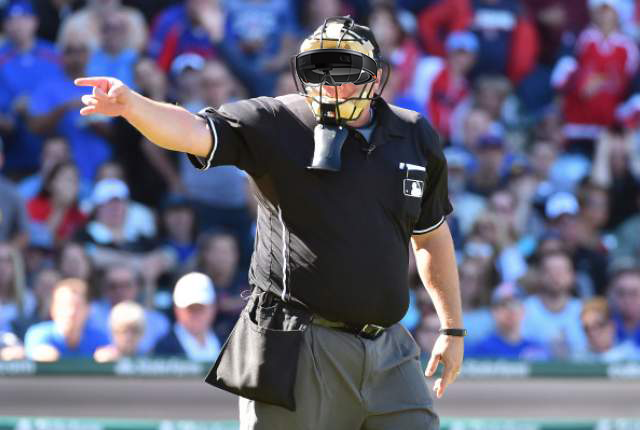 Armando Gallaraga had done it. He had made history. On June 2, 2010 with two outs in the ninth, he got Cleveland Guardians infielder Jason Donald to ground out to third base thereby sealing the 21st perfect game in Major League Baseball history. 17,738 fans in attendance at Comerica Park saw it that way. All of the players on the field saw it that way. Both benches saw it that way. Thousands watching on television saw it that way. The broadcasters saw it that way. The ice cream vendor trying to make a last minute sale in section 302 saw it that way. However, there was one man who saw it differently: first base umpire Jim Joyce. Upon the throw hitting the back of Gallaraga's glove and his foot hitting the first base bag seemingly a step ahead of hitter Jason Donald, Joyce, to the surprise of everyone else watching, called the runner safe. As a result, history was altered and Gallaraga and the Tigers were denied an entry in Cooperstown. This call by Joyce sent the baseball world into a frenzy. Knee-jerk reactors began calling for Joyce to be axed or forced to retire, others were calling for a formal apology (which Joyce did give), others called for baseball to award Gallaraga the perfect game regardless of the outcome. Meanwhile, the most sensible and fair minded baseball fans questioned what could be done to prevent this from happening again. Up until this point, baseball had a form of instant replay. However, under that system, only umpires could initiate a challenge of a previously made call and only another umpire could overturn it. The only type of play that could be challenged was a home run boundary call. It took MLB four more years to finally find a solution to the call that kept Gallaraga from his perfect game and oodles of other controversial calls which led to a non-transparency of umpires in both years previous and in the three seasons to come since that fateful day in Detroit but in 2014, that solution finally came. Baseball expanded instant replay, making many more calls reviewable including safe/out calls and force play calls which would have saved Gallaraga's history. Other reviewable situations included trap plays, tags on the basepaths, ground-rule doubles, fan interference, timing plays, scorekeeping issues and virtually everything while the ball is in the field of play. As great as instant replay has been for the integrity of the game and the putting in place of umpires as game officials rather than game deciders, another big question still stands: what about the no-hitters that are taken away by a third strike being called a ball and that batter going on to single? What about the perfect games nullified by a strike being ruled a ball and that batter going on to walk? And as importantly if not more importantly, what about the ball and strike calls that tip the scales in favor of one team or the other sometimes multiple times a game that lead to a win for one team and a loss for the other? From 2013-2016, Major League Baseball claimed its home plate umpires called balls and strikes with 97% accuracy. However, this October, Dr. Toby Moskowitz, a Yale professor with more time on his hands and more patience than a patron saint, cooked that goose. By going back and looking at the PITCHf/x results of every single pitch recorded in MLB over that three year time frame, almost a million in total, he calculated that umpires only make the correct call 88% of the time. That means plate umpires are making incorrect calls 30,000 times a year. Even more baffling, it means they are making an incorrect call once every eight pitches. Looking at pitches that were within two inches of one of the corners of the plate, the results are even more terrifying. In those situations, umps got the call wrong 31% of the time or once in every three pitches. That's right; one in every three corner painting pitches called inaccurately. These numbers prove that the fully human home plate umpire system isn't only ruining the integrity of baseball, it is demolishing it at an alarming rate in every game played. If baseball hopes to make its umpires and officials truly transparent, something has to be done about balls and strikes. Over the years, many things have been suggested: fully robotic umpires, fully computerized strike zones, etc. However, whether it be because of fear of backlash from the umpires' union due to the loss of umpiring jobs, fear of imperfect technology or fear of the next SkyNet takeover in the wake of a humanless behind-the-plate umpire environment, none of those ideas have gotten that far past the drawing board. So what is the solution to calling more accurate balls and strikes? I bring you to a few weeks back while I was out holiday shopping. While at an electronics expo last month, I may have found the answer to this seemingly age old question. I present for your consideration augmented reality balls and strikes. The technology I propose be introduced to baseball is called augmented reality. As opposed to virtual reality which completely replaces your real world surroundings with a simulated one, augmented reality preserves your natural environment but modifies it. Since the technology was perfected and the devices burst onto the consumer scene in 2013, they have proved plenty useful in a variety of fields. Along with the obvious embrace of augmented reality by the video game industry, it has also been adopted by the tourism industry where they act as tour guides pointing out famous historical landmarks when the wearer does nothing more than look at them and suggesting places of interest based on the region the wearer is in, it has been used in the print media by magazine companies who display digital content on top of their printed work and it aids in the translation of text in a foreign language, automatically deciphering it to the wearer's native tongue when viewed. Augmented reality technology and devices have been most widely used in the education field, making lessons much more interactive than simply reading out of a textbook or sitting through a lengthy lecture. Thanks to AR, students who use it in the classroom retain information much more advantageously and are scoring better on exams. Augmented reality has also been used in the medical education replacing textbook photos with visuals of the real thing on a real life human being, in the automotive and manufacturing education system where a lot of complex instruction is better illustrated than simply stated and in the education of architects where blueprints are laid over actual structures. Most of these fields use either a cell phone or tablet to take advantage of AR technology. However, for our case, neither one of these devices will do the trick. So I come to my inspiration for this suggestion, a device I got to play around with and sample at a live in-store seminar, an augmented reality headset. These devices which are available through a variety of manufacturers, look a lot like the virtual reality headsets which are increasing in popularity among kids and look like the next generation of video games in that they fit over your eyes in the same goggle-like fashion but as stated, the technology is a bit different in that it doesn't attempt to bring you to a new world but to enhance the one you're already in. Without having to touch, press or perform any sort of third party action, the device transplants data and holographic images on top of the wearer's field of view. It also comes complete with full head motion adaptability meaning as you turn your head, the device reacts. In this way, umpires wouldn't have to worry about a strike zone overlay being in the way of them viewing a play in the field or a close play at the plate. The headsets, including the model I tried out, are third party friendly and thousands of apps and games already exist for them. Accordingly, MLB already owns and maintains working copies of their MLB At Bat app on different software platforms. The app already houses the Gameday feature and one of its main commodities, a PITCHf/x-based ball/strike system. My proposition is that balls and strikes be decided solely on these metrics with the umpire there only as a middle man between the undisputed truth behind the location of a pitch and reality. Since PITCHf/x cameras and WiFi are already installed in every stadium and AR headsets are WiFi compatible, making augmented reality balls and strikes an actual reality from a technological standpoint should be a pretty smooth process. In the same way that current video replay system created jobs because requires a field timing official in each park to manage inning breaks, a replay coordinator on each team to decide when to challenge a call and a group of third party replay officials to decide the calls in the event of a challenge, each park would likely need to hire someone to oversee the PITCHf/x system and a team to maintain it as well as educate umpires on how to use it. So not only would this suggestion help the game from a competition standpoint, it would aid the league economically by creating more employment opportunities. The inescapable nature of humanity is that human beings make mistakes. For the home plate umpire who is tasked with making split second decisions about where an object travelling between 80-100 miles an hour over 400 times a night, that room for error is very wide. In the past and up until recently, those errors were understood and written off as part of the game. While they are still understandable and condoned on behalf of the umpire making them, a mortal whose occupation is not one of envy, now that something can be done to fix those mistakes and save the competition and integrity of the game, not only should it be done, it must be done. The players and coaches who give this game their lives deserve it, the fans who give it their hearts deserve it and the employees, including the umpires who are expected to fulfill a nearly inhuman standard while working under a very fine microscope thus making them the subject of tons of scrutiny deserve it. Of course even though the technology is present, this isn't an overnight venture. Many things would need to be done to institute it into the game. For example, the headsets would have to be fitted to sit over a home plate umpire's mask and they would have to be outfitted to withstand the impact of a foul ball. It would also need the approval of both the players union and the umpires' union. However, despite all of the obstacles, if baseball made this a concentrated effort, fool-proof balls and strikes called with near 100% accuracy could make their debut in baseball within the next few seasons, just in time for the commercial release of the Microsoft HoloLens, the device which is expected to dominate the AR market. Partnering with a tech giant like Microsoft has had fantastic results for the NFL who use their Microsoft Surface Pro laptop/tablet along the sidelines and could have similar inter-promotional outcomes for MLB. How amazing does "Cowboy Joe West's Rootin' Tootin' Real Life Umpire Simulator: the only game that allows you to umpire along with the pros!" sound? One of the founding principles of the office of the Commissioner of Baseball is to act within the best interest of the league and to maintain and strengthen the league's integrity. With everything needed in order to make competition much fairer as well as the opportunity to create jobs and create a business relationship with one of the world's biggest technological giants within grasp, Robert Manfred has an opportunity and a responsibility to do just that. It is a proverbial fastball headed straight down the heart of the plate. Manfred is staring right at it. Let's just hope he doesn't miss the call.
 -
View full article
-
 Who represented the number 6 best for the #Marlins? Winner joins the All-Fish Team! — Fish On The Farm (@marlinsminors) December 8, 2016 Occurring at the very end of the baseball Winter Meetings after all the hum and haw of the convention has already come and gone, the Rule 5 draft was often overlooked as merely a going through of motions necessary to satisfy the collective bargaining agreement. For the Marlins, t team which always looked for the thrifty option in years past, this seemed like the perfect place for them to go seeking a diamond in the rough. And in 2005, they found one. In that year's draft, they selected the man who would go on to become one of the best players in franchise history and the man who makes our All-Fish Team as the best wearer of the number six, Dan Uggla. Before being selected in the aforementioned '05 Rule 5 draft, Uggla was initially drafted by the Diamondbacks in 2001 out of the University of Memphis where, in that same season, his junior year, he hit a ridiculous .379/.498/.790 and put his name near the top of most Conference USA leaderboards. That season in the tenth most games played and among the eighth most at bats conference wide, Uggla was second in doubles (28), homers (18), walks (42) and batting average. He lead C-USA in OBP, slugging and OPS. Naturally, he made the All-Coference Team and barely lost Player of the Year honors to Jake Gautreau. His collegiate exports had some scouts posting his draft stock as high as the eighth round. Uggla fell a bit further than that but was still taken at a respectable position, the 11th round, by the Arizona Diamondbacks. However, unlike his fairly easy adjustment to life at the college level, things were a bit tougher for Uggla as he attempted to acclimate to proffesional ball. In his first two years as a big leaguer, Uggla hit just .241/.318/.355 with a 137/64 K/BB all below the AA level. Uggla's coming of age season finally came a bit late as in 2003, as one of single A advanced's more elderly players (23), he hit .290/.355/.504. His 23 homers were second in his league, his 100 RBIs ranked fourth, and his .859 OPS was amongst the top 20. Despite the impressive season, the D-Backs still sent Uggla back to A+ to begin 2004. Finally, after a .336/.422/.600 start there that season, Uggla cracked AA as a 24-year-old. Making the toughest jump there is to make in the minors proved to be just as hard for Uggla. He hit just .258/.301/.353 with a 55/15 K/BB in his first 83 games there and though for a moment it looked as though he could place himself back on a timely track to the majors, Uggla, now 25 headed in to his second season in AA, was again in do-or-die territory. That was when Uggla flipped his switch. After refining his craft by putting in some hard work hours in his first appearance in the Arizona Fall League where he hit .304/.390/.598 with it's fourth most homers (7), 14th best SLG and 18th best OPS (.988) in 29 games while battling against the likes of Andre Ethier, Matt Kemp, Kendrys Morales and Stephen Drew, Uggla returned to AA, this time even more an elder of the average player in his league. He spent that season slashing .297/.378/.502 slash line, the SLG of which ranked 12th, by way of the Southern League's third most homers (21) and fourth most doubles (33). His 87 RBI were good for second most in the league. After that season, Uggla peaked the interest of the Marlins, a team which traditionally allowed its top prospects to skip AAA and come straight to the majors. For both Uggla, whose prospect status was in its expiry year and the Fish who were in need of a second baseman after the trade of mainstay Luis Castillo, putting Uggla in teal and black looked rto be mutually advantageous. As he was not a member of the D-Backs' 40-man roster in 2005, and therefore eligible for the virtually overlooked (until now) Rule 5 draft, that offseason, the sneaky Marlins swiped him as part of the major league portion of the draft and made that a reality. On paper, beginning his major league career in a brand new place for the first time in his career, it would appear Uggla had some adversity to overcome. He responded to the situation by having an All-Star worthy and Rookie of the Year worthy inaugural campaign. For the 2006 Marlins, Uggla hit .282/.339/.480 with an SLG that ranked ninth among rookies by way of 27 homers, second on the rookie list only to Prince Fielder. Backed by solid defense including the seventh best UZR amongst 2Bs (5.3), the fourth best double play runs saved (1.6), and sixth best Def rating (7.6) Uggla posted a 4.2 WAR, second best among rookies and only trumped by his teammate Hanley Ramirez, the same guy (along with Ryan Zimmerman) that edged him out for the Rookie of the Year award. After nearly falling off the map just a few seasons earlier, here Uggla was in the majors going to All-Star showcases and earning six votes for best first year player. Indeed his tenacious attitude and tremendous work ethic as well as some good fortune thrown his way by a team in need were to thank. In any event, Uggla had finally come full circle. And he had the Marlins' front office looking like geniuses. Accordingly, with just one year under his belt, he had already endeared himself to the Miami faithful as a fan favorite. Over the course of the next four years, Uggla furthered that endearment by becoming one of the best power hitters and most valuable players in the entire franchise's history as well as one of the best offensive second basemen in the game. From 2007-2010, Uggla hit .259/.352/.490. That slugging percentage, made possible by 127 homers, most by a 2B over that span, and 144 doubles, fourth most, ranked second among men who regularly manned the number four position. His 13.9 WAR during that four year time period made Uggla the eighth most valuable 2B in the game. In each of those four seasons, Uggla hit at least 30 homers and at least 27 doubles and drove in at least 88 runs. In what would prove to be his swan song season with the Marlins in 2010, Uggla finally beat out his arch nemesis and most frequent NL competition, Chase Utley for the Silver Slugger by way of a career best .287/.369/.508 slash line and 105 RBIs. His 33 homers that year were his most in a single season as a Marlin. Uggla went on to hit a career high 36 homers for the Braves and make another All-Star Game in 2012 but he never again posted an OPS over .800. Thus he will best be remembered for his days in Miami where he started in obscurity and became one of baseball's top home run threats. He appears on Marlins' career leaderboards in many major categories including WAR (6th, 15.6), slugging percentage (7th, .488), OPS (7th, .837), games played (8th, 776), runs scored (3rd, 499), hits (8th, 771), total bases (7th, 1,427) and doubles (6th, 170). With 154 long balls, he is the second best home run hitter in franchise history. He has also accounted for the fourth most extra base hits, 336, in Marlins' lore. His 49 doubles in 2007 stand as the second most in a regular season by a Marlin and his aforementioned 33 homers in 2010 remain tied for sixth most in a single campaign by a Fish. Though you wouldn't guess it if you were looking at him stride to the plate for the first time, the 5'11", 210 pounder was a threat to go yard every time he stepped to the plate. He became that version of himself by procuring a never-say-die attitude during his late years in the minors and working for everything he would become. A very easy guy to root for and a great baseball story, Dan Uggla makes our All-Fish Team as the best wearer of the number six. Be sure to cast your vote on Twitter and join me here in the coming week where I will reveal who you decide was the best donner of the number seven and who becomes the next memeber of the All-Fish Team!
 -
View full article
-
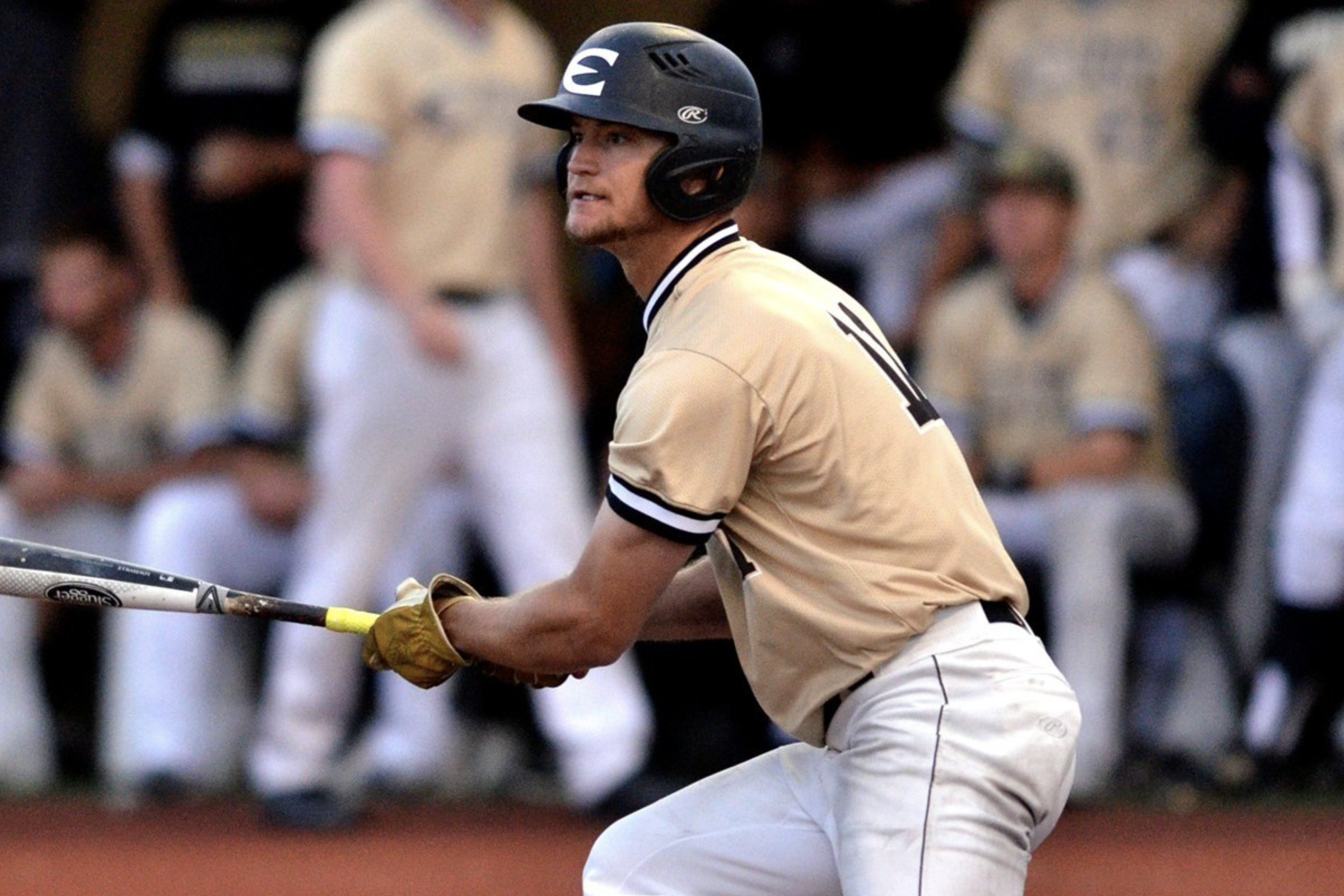 Making it to the Major Leagues from the ranks of the independent leagues is a tough road to hoe. From 2013 through last offseason, just 208 total players, 120 pitchers and 88 position players, were selected by major league clubs. Making it out of an indy league uniform and into a Marlins' affiliated uniform is an even rarer feat. Just three of those 208 had their contracts purchased by the Fish. So when the Marlins do invite an indy league player to the majors, as they did with Dalton Wheat in October, they obviously see something special. Wheat, a native of Augusta, Kansas, got his collegiate baseball career started at a small area community college. Over the course of two seasons as a Butler Grizzly, Wheat hit .341/.421/.497 with 71 RBI and 74 steals before moving on to the state university level. The jump in level didn't phase Wheat at all. Over the next two years in the Mid-America Intercollegiate Athletic Association with the Emporia State University Hornets, he hit .367/.452/.578 with 78 RBI and 32 steals. However, despite a .353/.435/.531, 149 RBI, 105 SB collegiate career, Wheat went undrafted in the 2015 MLB Draft. For many players his age, going undrafted after four years of college is usually a kiss of death for promising baseball careers. Wheat's career itself nearly fell victim to it as well as he was admittedly disappointed and in the beginning stages of pondering life after baseball. Then one day his phone rang. "It wasn't the easiest pill to swallow," Wheat divulged. "I thought I was going to have to find a job and finish up school. But after I got a call from the T-Bones, I was just grateful for another opportunity to play. That's all I wanted was a way to get my foot in the door so I can continue playing baseball." In a single season for the Kansas City T-Bones, Wheat did more than get his foot in the door; he kicked it down. It took Wheat just 67 games to become unaffiliated baseball's top prospect by way of a .335/.414/.403 slash line. Finally, after a long road and some adversity which he handled like a pro, this coming season, Wheat will be a major leaguer. When asked what he will do in order to succeed in affiliated ball, Wheat points towards doing the same thing as he always has and what allowed him to enjoy a fantastic college career and a coming out season in the indy leagues. "I was very excited when I got the news that I was able to move to the next level," Wheat said. "I'm not really sure what to expect, but I'm going to treat the game like I've always treated it. I'm going to work hard play as hard as I can so the transition should be smooth if I just worry about controlling what I can control." Sticking to what has served him well holds a lot of weight with Wheat. It is for that same reason that he has continued a tradition that he began in his years in community college and a tradition that has since become his own personal trademark, even at this young stage of his baseball career. When hitting, Wheat doesn't wear Nike, UnderArmour or adidas on his hands. Instead, he literally wears the American outdoors as he sports the same gloves that he uses when he goes hunting in his leisure time away from baseball. According to Wheat, it is something that he began doing in a time of need and something that hasn't failed him since so he never stopped and doesn't plan on doing so in the majors. "I started wearing them my freshman year at Butler because I let my buddy borrow my actual batting gloves at the time and we ended up being in different hitting groups the next day," Wheat said. "I had a big blister on my hand, so I didn't want to make it a lot worse by hitting without gloves, so I just grabbed a pair of work gloves I had in my truck to hit with and I liked the way they made me feel like I didn't have to over grip the bat so I've been using them ever since. I plan on continuing to wear them unless I'm told otherwise. They have worked well for me this far, so why try to fix something that ain't broke?" Having spent most of his life in the small town midwest, in coming to south Florida or New Orleans, Wheat will be in for a new experience and challenge in adjusting to big city life and in travelling the minor league and potentially major league circuits, life on the road as a big leaguer. It will also mean it is the furthest away from his family he has ever been. It will be a new and untraveled road for him but if anyone is up to the task, Dalton is. And though they will be further away, his family, as they always have been, will be in his corner. "They are really supportive and really excited," Wheat said of his loved ones' response to the news that he will be taking his baseball career east. "They are a little sad that I'll be going away. But they are mainly happy for me that I got this opportunity." Wheat himself is undoubtedly a bit sad to be waving goodbye to his home for an extended period for the first time in his life but, looking for the positive in the situation as he always has, he also sees it as an advantage in the way that he will be able to focus completely on baseball without being as connected to his life at home. "I think it actually might help me stay focused because I wouldn't have the normal distractions I would at home," Wheat said of his relocation. "I think I am going to be pretty busy with ball so I don't think I'll have much time to think of anything else." In Wheat, the Marlins get a guy that remained a complete hitter all through college, through the let down of going unrecognized in the draft, and, after nearly setting up a life away from baseball, a full season in the independent leagues that saw him becoming its most prized asset. He comes to the Marlins with whom he will be able to devote more of his attention to with very few hitches in his overall game. With a great attitude and work ethic, Wheat, still just 22, should begin his big league career in high A Jupiter but could and likely will fly through the lower minors. Scouts place his ceiling at fourth outfielder status but should he build a bit of outfield arm strength and maintain the same great plate vision and solid straight-through stride and swing at the plate and plus speed on the bases while he adjusts to a new level of opposing pitching and defense, he could become starting outfielder material. While Wheat's signing by the Marlins who always try to get creative with their offseason moves, wasn't covered much aside from a few short paragraphs around the internet, in a few year's time, it could prove to be one of their best under the radar offseason moves in recent memory. Considering he has fantastic ability and an attitude to match, keep the name Dalton Wheat at the back of your mind and don't be surprised if it rises to the forefront of the Marlins' top prospect list very quickly.
 -
View full article
-
 Cast your vote for best #Marlins to ever wear the number 4 and get them on the All-Fish Team! — Fish On The Farm (@marlinsminors) November 29, 2016 The bench. A place that, although being extremely important to the overall success of a team, loses all limelight to those in the starting lineup, pitching rotation and even bullpen. However, every once in a while, a utility player comes along and forces people to notice him. This was the case with the guy who has been voted as the Marlins' best wearer of the number four, Alfredo Amezaga. Born on January 16, 1978 in Ciudad Obregon, Mexico, Alfredo Amezaga immigrated to South Florida in his high school years with nothing but a tourist visa and a pile of pesos in his hand, money his parents had been since he was toddler with the intention to send Alfredo to the United States to learn English when he was of age. Upon landing in America as a freshman in high school, life wasn't much easier. His days consisted of waking up in a small room he shared with four other teenagers, going to school, then spending most of the rest of his days working at a car wash just to be able to eat one meal a day. The only solace Amezaga found was on the baseball field and despite having to quickly adjust to a tough life on his own, he was able to get to work on making his dream of becoming a professional ballplayer a reality by attending every practice, playing every game and putting in all the necessary work for the Miami High Stingarees. All of that work paid off in his senior year when he was recognized by the Colorado Rockies late in the draft and recruited by St. Petersburg college with the help of a student visa. The school was modest, one of the smallest in the area and to this day remains so without any resident students and four small campuses each of which offer a handful of specialized degrees but to Amezaga, it might as well have been Florida State. And they had a baseball program. Amezaga spent the next two seasons in that program and turned his 36th round draft stock from high school into a 13th round draft stock in his sophomore year of college. In the 1999 draft, he was selected by the Angels one spot ahead of Albert Pujols. At that moment, Amezaga was ready to fulfill his destiny. After a decorated .279/.352/.376, 149 SB start to his big league career in Anaheim's system which included a .322/.402/.420 All-Star worthy effort in his first pro season, a 73 stolen base effort in A+ in 2000, and a .312/.370/.425 effort in his first 70 games in AA in 2001 which earned him Texas League All-Star honors at both mid and postseason, a Futures Game invite the Angels' MiLB Defensive Player of the Year award, Amezaga signed his first big league contract in 2002. Upon doing so, he repaid his family's investment -- multiple times over -- by sending nearly $4 million back to his parents in Mexico. Honoring his parents with nearly half of his yearly earnings that season was the first time Amezaga showed that he remembered his roots, the very meager accommodations he cut his teeth in and the sacrifice his family made in favor of his baseball career but it certainly wouldn't be the last. Amezaga went on to pay tribute those former circumstances and that endowment during every single game of his career, whether he got on the field or not. After spending parts of three seasons with the Angels and a short single season stint in Colorado, in a a spout of poetic justice, Amezaga returned to where his baseball dreams were fulfilled, to Miami. There, he endeared himself to Marlins fans not only with good play off the bench as the franchise's best portrait of a Superman-like utility player but also as one of it's easiest to like people by way of his antics while in the dugout, namely those with his partner in crime, Miguel Cabrera. In 2006, Amezaga got his Marlins' tenure started by posting a .260/.332/.332 line in 334 ABs. He stole 20 bags, an MLB career high and second on the team to Hanley Ramirez. In the field, Amezaga spent most of his time in center field, platooning with Reggie Abercrombie but he also flashed his versatility by playing at six additional positions. In his first full season's worth of Major League games, the scrappy 28-year-old contributed 11.9 runs and a full win above replacement level. The following year, Amezaga did an even better job of showing his all-around resourcefulness. In 133 games and a career high 448 ABs, he hit .263/.324/.358. On most days, he was the Marlins' starter in center field but his adaptiveness to virtually any position allowed manager Fredi Gonzalez to move him all around the field late in contests in order to get advantageous offensive weapons into the game. Again that season, Amezaga fielded a total of seven different defensive spots and nearly all of them very well. At his usual home in center field, Amezaga saved 14 defensive runs, tied for fourth best among qualified center fielders (min. 600 innings played). By way of ranking third in both arm runs above average (+6) and range runs above average (11), Amezaga posted a ridiculous 15.8 UZR, making him the third best defensive CF in baseball, second best in the NL. The speedster who got amazing reads off the bat, allowing him to cover every bit of the infamous Bermuda Triangle at Sun Life Stadium appeared on NL leaderboards in a number of range dependant stat categories, including first in range factor per nine innings (3.02) and fourth in total zone runs (7). In addition, Amezaga contributed a positive DRS at two other positions, second base and shortstop. All in all that year, Amezaga was 20.5 runs above replacement level which ranked him as the 21st best all around CF in baseball and 9th best in the NL among those with at least 200 PAs. His 2.3 WAR made him the fourth best full time player on that Marlins team ahead of the likes of Dan Uggla, Josh Willingham and Dontrelle Willis. The mark also placed him amongst the top 10 most valuable center fielders in the National League. Amezaga's last full season with the Fish came in 2008. Again, he was of positive value to the club, posting a 1.2 WAR. It came by way of a very Amezaga-like .264/.312/.367 slash line and, although he took a bit of a step back, still above average defense as he posted saved 9 defensive runs which ranked fourth in the NL and posted a 3.5 UZR which ranked 12th. Though he was slightly better a year previous at more positions played, all of Amezaga's still plenty solid defensive work lead to a 1.7 dWAR, making him the 10th best fielder in the NL. In 2009, Amezaga appeared in 27 games for the Marlins. He got off to another good start defensively before an injury caused him to miss the remainder of the season. That offseason, the Marlins released him. After time in Colorado and Los Angeles, he was brought back to Miami in 2011 for a swan song 20 games. Those few handful of games appropriately played in the area where Amezaga was nationally noticed and where played his best pro ball closed the book on both his baseball career and his Marlins career that isn't storied in the same way as guys we have previously added to the All-Fish team but storied in its own right nonetheless. From the time he joined Florida in 2006 to the time he played the final game of his final full season, Amezaga was one of the best defensive center fielders in the game. Over that span, his 23 defensive runs saved ranked fourth, his UZR of 25.3 ranked third and his Def rating of 28.1 ranked fourth. Statistically, he was the best center fielder in the game behind Andruw Jones, Carlos Beltran and Grady Sizemore. He also saved 12 runs at other positions over that same three year span, which arguably makes him the best all-around defender in Marlins history. Amezaga wasn't a flashy player. He isn't a guy who will get many Hall of Fame votes and he isn't a guy fans outside of Florida will ever speak of. But within the fanbase, Amezaga successfully built a reputation as being a guy willing to do whatever was necessary to help the team whether it be being up on the top railing of the dugout, finding a way on base by any means necessary or simply sacrificing himself for the greater good at the plate or performing Gold Glove worthy defense in the field while all the while smiling, appreciating what baseball had given him. Even to this day at age 40, Amezaga still can't get stay away from his one true love as he continues to play in the Mexican leagues. For those reasons, Amezaga adorned himself as a fan favorite and for those reasons, he makes our All-Fish Team as the greatest all time wearer of the number four. Be sure to cast your votes on Twitter this week (@marlinsminors) and check back here next week to find out who will join our All-Fish Team as the greatest wearer of the number six.
 -
View full article
-
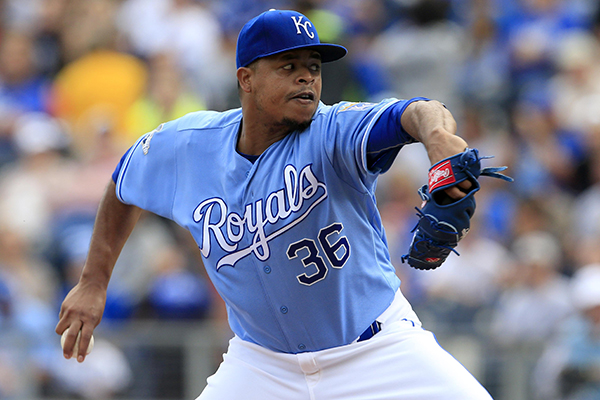 Due to the untimely death of ace Jose Fernandez and because of the ineffectiveness of Andrew Cashner, Justin Nicolino and others at the anchor position of the rotation, the Marlins have some work to do with their rotation this offseason. They began that work on Friday when they signed free agent Edinson Volquez to a two-year, $22 million contract. There's no getting around it. Edinson Volquez wasn't very effective last year. And that is putting it very nicely. Without using any more adjectives to describe Volquez, let's just let his stats speak for themselves: In 2016, Volquez went 10-11 in 34 starts and 189.1 IP. His 5.37 ERA was the second highest in all of MLB. It came by way of a .282 BAA, fifth highest in baseball and a 1.55 WHIP, second highest only to James Shields. Only Shields eclipsed Volquez for the dubious honor of most earned runs given up. The 113 surrendered by Volquez were a career high. Though there is something to be said for the fact that the damage he allotted came as a result of a heightened .319 BABIP and the fact that his defense didn't help him at all but moreso hindered him as proven by his 4.57 FIP, Volquez was a shadow of the pitcher he was just from 2014-2015. In those two seasons combined, Volquez was a quality asset, holding down a 3.30 ERA in 393 IP, making him the 25th best pitcher in the game in that regard. It came by way of a respectable 1.27 WHIP, a .238 BAA which was 32nd lowest in baseball and by way of a 75.2% LOB%, which was amongst the game's top 30. In both '14 and '15, Volquez was an integral part of teams that each reached the postseason. In the latter of those years, he was arguably the world champion Royals' best postseason arm posting a 3.85 ERA in 28.2 innings, including 12 innings with an even 3.00 ERA in the World Series. So what happened to Volquez to cause him to go from being a guy who contributed nearly three more wins to his team than the average major league pitcher in two straight seasons (2.5 WAR in both 2014 and 2015) to a guy who cost his team nearly a full one full win (-0.8 WAR in 2016) over the course of just 162 games? Volquez is traditionally a three pitch pitcher. He owns a straight and narrow mid-90s sinker with very little movement, a debilitating out-pitch changeup and a curveball. The sinker has almost always been subpar and more of a setup pitch. Over the course of the last six years, the best value the pitch has held has been just -0.2 RAA. In other words, it was slightly worse than a league average pitch. That was in 2012. In every other season from 2011 until now, the pitch has been much worse than league average. Over the last three seasons, the pitch has been a total of 31.1 runs below league average. Volquez has a fourth pitch which is technically classified as a four-seamer that he throws interchangeably with the sinker. but in similar fashion to the sinker, it holds very little value. It has only once been a better than league average pitch over the course of those same past six seasons. The changeup is by far Volquez's best offering. Even in a career worst season for him ERA and WHIP wise last year, it was still the 11th best changeup in the game, clocking in at 5.2 RAA. In 2015, the Volquez change was the even better. With a value of a whopping 11.4 RAA, it was the sixth best offering of its type in baseball and the fourth best in the American League. The company around him on the pitch value leaderboard that year -- Greinke, Sale, Hamels, etc. -- spoke for itself. To round out the three-year time frame we are mostly discussing here, in 2014, the changeup was a bit less valuable for Volquez but, probably due to the success of his fastball which he threw 18.4% of the time, he threw the changeup a lot less. It accounted for just 18% of his total pitches thrown, a career low. This stands a good reason why Volquez didn't have as good a feel for the pitch as he had both earlier and later in his career. Still, it was an above average pitch for Volquez, ranking at 1.3 RAA. Between 2014 and this past season, Volquez's 18.5 RAA changeup has been the 12th best changeup in baseball. So far, we have a guy who has one (or two, if you count the four-seamer as a separate pitch) very mediocre to bad pitches and one very good pitch. Unfortunately, that isn't going to get it done for a big league starter of any type, let alone one who hopes to be affective on the mound. A second plus pitch needs to be in his arsenal. Thus we arrive at what has either made or broken seasons for Volquez -- his temperamental curveball. Again, we go back to the 2014-2015 time frame when Volquez was very effective. Taking a look at the total pitch value on his curve over that span, it was nearly as good as his changeup. At 10.3 total RAA (6.7 in 2014 and 3.6 in 2015), the Volquez breaking ball was the tenth best of its type in MLB, seventh best in the AL. Looking at the pitch itself, it's easy to see where the value came from. For further recognition of the affectiveness and value of the pitch, here is Volquez's curveball (most of the time classified as a knucklecurve) RAA by pitch location from 2014-2015. Looking at batted ball stats on the pitch using PitchFX, we find that amongst 1,558 curves thrown between 2014 and 2015, Volquez gave up just 70 hits including five homers. The rate at which opponents successfully hit the pitch? A dazzling .193. Now let's fast-forward to last season. Ouch. Very ouch. As you can see, the pitch has evidently lost virtually all of its downward movement and bite. Instead, it flattened out and caught tons more of the strikezone. In just one season, the batting average against the pitch rose from the aforementioned collective .193 in the two years previous to .274. Where hitters touched him up for just 22 total XBHs on curveballs from '14-'15, they got 17 off of it in 2016. The problem with the pitch wasn't velocity. In fact, the 80.2 average velo on the pitch was right in line with its average velo in the two seasons prior. Consequently, it was location which stemmed from a faulty release point and arm angle. Comparing the two versions of the pitch, the good version from '14-'15 and the bad one from last year, Volquez appeared to be releasing the ball much later into his stride last year and not at the advantageous apex of his delivery as he was a little earlier in his career. This led to the swing-and-miss pitch turning into a swing-and-hit pitch by way of the ball losing its downward bite and catching far too much of the strikezone. For proof of this, we can refer to the 80.1% contact rate on the pitch and the 61.7% contact rate on curves out of the zone. Both were Volquez's worst percentages posted since he was first learning the pitch as a second year player in 2006. As a result, batters began waiting out Volquez's quality changeup, sitting on his mediocre at best sinker, laying off the few good curves he threw and taking advantage of the many more bad ones. All in all, it resulted in Volquez, who was not too long ago a fantastic middle of the rotation starter, becoming one of the worst starters in baseball. So the question is now that Volquez has a new home, can he reclaim the glue that holds his rotation together by successfully rebuilding his curveball? By giving him a $22 million contract at 32 years old despite the egg he just laid on the field last season, the Marlins obviously seem to think so. And they have good reason to. A Volquez signing in Miami means that he will be reunited with Marlins' VP of pitching development Jim Benedict. Benedict has a familiar task ahead of him: Fixing Edinson Volquez. Benedict, known as the pitcher whisperer, was successful in doing so for the first time in 2014 when Volquez came to the Pirates. A year after Volquez's curveball ranked as one of the worst in baseball with a -9.5 RAA, Benedict turned it into the pitch that has been revered throughout this article. In addition, Benedict molded the Volquez changeup, which was nearly as bad as his curve in 2013 (-8.1 RAA), and made it one of the best in the game. So if anyone can fix Volquez (again), Benedict is the man. While the Marlins could have gotten likely similar value for a cheaper price by signing Doug Fister (whom the Marlins may still be a player on regardless of this signing) and while the surplus could have gone to some of their many arbitration eligible players, Volquez is a guy who is still low risk, high reward. Should he not work out in the rotation, a move to the bullpen and a re-introduction of David Phelps to the rotation could be in the cards. In the twilight of his career, Volquez should at least be able to perform well in that capacity.
 -
View full article
-
 Here are your choices for best #Marlins to ever wear #3. Winner joins the All-Fish team! — Fish On The Farm (@marlinsminors) November 17, 2016 October 26, 1997. Game seven of the World Series. Tie game. 11th inning. Bases loaded, two outs. A 20-year-old Edgar Renteria steps to the plate against Charles Nagy. Four years earlier, it appeared that his lifelong dream was realized as he was signed at the age of 16 out of high school in Colombia now here he was at the age of 20 in his second season in professional ball with baseball history within his grasp in a situation that every ball player wants to find himself in yet and many never do, even after storied Hall of Fame type careers. Somehow still, Renteria was able to put his fear, excitement, nerves, and about a million other feelings aside and deliver. He drove an 0-1 slider back up the middle, scoring Craig Counsell from third and winning the Marlins their first ever world championship and writing their name along with his own into baseball record books forever. The AB which was Edgar's 1,048th of 1,565 in a Marlins' uniform painted a perfect picture of the kind of player he was: a scrappy hitter who could be counted on to get on base by any means necessary in order to both start innings or extend them. On top of the image of Renteria streaking down the first base line with tears streaming down his face being ingrained in every Marlins' fan's memory forever, it is for that reason, for being one of the best catalytic bats the team has ever seen that Edgar makes the All-Fish team as the best all-time wearer of the number three. Edgar Renteria was born on August 7, 1976 in Barranquilla, Colombia. He played high school ball at Instituto Los Alpes High School in Barranquilla. Not long after his graduating year in 1992, Edgar was signed at the age of 15 by the Marlins. He was the first of just three Barranquilla residents (the others being former Marlin Donovan Solano and his brother Jhonatan) to have ever made American professional baseball, aptly earning him the moniker The Barranquilla Baby. With what he would go on to accomplish in a storied 15-year MLB career, he did that nickname more than justice and did his homeland proud, so much so that his name is now attached to the region's brand new $45 billion ballpark which is set to be completed next month, named Estadio de Beisbol Edgar Renteria (Ballpark of Edgar Renteria). If you ask any child in the region whom their all-time hero is, you will be greeted with the name Edgar Renteria before you can even finish the question. Barranquilla little leaguers revere him above all others as their all-time hero and pull on their cleats for practice hoping to one day follow in his footsteps. Upon his arrival in America, Edgar was sent to the Gulf Coast League Marlins to begin a very short but very impressive minor league career. There, he hit .288/.329/.350. The .288 BA was second best on that year's GCL Marlins and 34th in the league. His 47 hits in 175 ABs ranked 27th in the league. Again, he was by far the league's youngest player, only turning 16 a month before the season ended. The shift to full season ball proved to be a bit difficult for Edgar at first as he hit just a collective .229/.288/.264 through his first 244 games between 1993 and 1994 but that didn't stop the Marlins from giving him the call to AA Portland to start the 1995 season. Renteria rewarded that confidence by having his best season as a pro at the highest level he's ever played at and once again against much older competition. That season, the 18-year-old, playing in a league against guys who averaged the age of 24, hit .289/.329/.388. He smashed a career high 29 XBH including seven homers and seven triples. He also turned many of his singles into at least doubles by swiping 30 bags, a total which ranked fourth in the Eastern League and just behind the likes of Nomar Garciaparra. He also appeared on top 20 leaderboards in triples (6th), RBI (13th with 68) and BA (20th) as he helped the Portland Sea Dogs to a league title by way of an average of over five runs a game. This was the first glimpse Marlins fans got of just how great of a catalyst Edgar could be as he also contributed eight sacrifice hits, sixth most in the Eastern League and eight sacrifice flies, third most. After getting another call up, his fourth in four years and officially making him a frequent flyer through the minors, Edgar got off to a similar start as his year previous as he hit .280/.326/.386 with eight doubles, two homers, 16 RBI and 10 SB in his first 35 games in AAA. On pace for career highs in all of those categories, the Marlins gave him his major league call after Kurt Abbott went down with an injury. Despite being just 19, Major League Baseball's youngest player and still to this day the youngest Marlin ever, Edgar spent the next 106 games becoming one of the very best shortstops in baseball. In 431 rookie year ABs, Renteria slashed .309/.358/.399. Amongst shortstops with at least 400 plate appearances, those marks ranked third, just behind Derek Jeter and Alex Rodriguez, seventh just behind Omar Vizquel and Barry Larkin and 10th. Despite playing in less games than any of the competition that topped him, his countable stats were equally as impressive as his hit count of 133 placed 13th amongst all shortstops, his stolen base count of 16 tanked sixth and his walk total of 33 ranked 17th. His exports barely kept his hands off the Rookie of the Year trophy. He placed second to Dodgers' outfielder Todd Hollandsworth. However, a season later, Renteria would get his mitts on an even more prestigious prize: the World Series trophy. The honor came after a regular season in which Edgar hit .277/.327/.340 as a 20-year-old atop the Marlins' lineup. With 45 walks in 691 PAs, his BB% of 6.5 ranked ninth amongst MLB shortstops. Despite seeing the most ABs amongst baseball's #6 players, he managed to hold down a 15.6 K%, good for eighth lowest amongst them. Accordingly, his 0.42 BB/K was 11th best amongst shortstops. The impetus Renteria also scored 90 runs that year, tied for most amongst NL shortstops. He also stole 32 bags, tied for second most in the NL with Shawon Dunston. All of this preceded his aforementioned heroic World Series moment. However, dramatically amazing as it was, the series clinching hit wasn't Renteria's only positive moment of that championship series. For the seven game span, he hit .290/.353/.355 with two doubles, three RBI and a 3/5 K/BB and he not so arguably deserved the World Series MVP Award over Livan Hernandez, who, despite a great performance in game five, gave up eight earned runs on 15 hits in 13.2 innings. Renteria played in his final season with the Marlins in 1998, a year in which he was the only Marlins' All-Star by way of a .302/.366/.358 slash line at the break. He went on to hit .282 that year, which was, at the point in his career, a career high and which ranked eighth amongst MLB shortstops. In that same regard, his .347 OBP ranked seventh and his 41 steals, another career high, ranked second again only to A-Rod of the American League Mariners. His 13.4 K% was 10th lowest amongst shortstops and his 8.3 BB% was seventh highest leading to a 0.62 BB/K that was sixth best amongst shortstops. Upon being traded to the Cardinals that offseason, his Marlins' career came to an end but it didn't come without a legacy left behind. That legacy is made up not only by way of arguably the best World Series performance in team history but also by way of the team's seventh most career stolen bases (89), its ninth best career BA (.288), its seventh best AB per strikeout ratio (6.2) and its sixth most sacrifice hits (30). His final Marlins slash line reads .288/.342/.357 with 89 steals and 114 RBI. Edgar went on to similarly great things as a member of the Cardinals hitting .290/.347/.420, marks which ranked sixth, eighth and 13th for an MLB shortstop and again putting him in the conversation for the best #6 man in the league for the span of 1999-2004 and awarded him three All-Star Game invites and two appearances in MVP voting (including 15th in his career best .330/.394/.480 season in 2003). However, perhaps his greatest personal accomplishment occurred in 2010 as a member of Giants when he righted the wrong of missing out on the World Series MVP award in 1997. That year, Renteria hit game winning homers in two separate games and was honored with the award. A season later, Renteria's baseball career came to an end. The first people he announced it to were his countrymen in Colombia. And as revered as he is there, he is equally as revered by Marlins fans. Being the ones who discovered him from humble beginnings in his tiny native city and bringing him to the professional ranks as merely a teenager only to watch him blossom in to a World Series hero and one of the baseball's best top of the order incendiaries, Renteria could become the first player ever to enter the Hall of Fame, which he is eligible for this year, donning a Marlins' cap. Participate in the poll on Twitter this coming week and be sure to read next week where your votes will reveal the greatest Marlin to ever wear the number four.
 -
View full article
-
 Moving on in our quest to assemble the best @Marlins' all-time roster, I submit for your vote the best wearer of the number 2. #Marlins — Fish On The Farm (@marlinsminors) October 26, 2016 Watching a guy become the hero of your team not only during the regular season but also during the postseason, leading the squad to a World Series title like Josh Beckett did in 2003, you hope he stays in your city and in your favorite uniform for his entire career. Unfortunately, that hasn't been the case for the Marlins who, after both times they went all the way, decided to quickly part with most of their assets, including Beckett. Just a year and a half after he was hoisted into the air after a dramatic game seven victory over the Yankees and less than a year after he paraded around Miami with the World Series MVP trophy in his grasp, the Marlins dealt him to Boston along with another Marlins' hero, Mike Lowell in one of the 2005 offseason's most blockbuster trades. Although it wasn't the first time, Jeffrey Loria had left a sour taste in Marlins' fans' mouths despite just recently giving them their second title in six years. Little did Marlins fans know at the time though that the center return piece for the Fish, a lanky, young, baby-faced kid named Hanley Ramirez, would be soon remedy that taste and make the pill a lot easier to swallow. Before he was an early Christmas gift to the Marlins in November 2005, Hanley Ramirez was a Christmas baby. Born on December 23, 1983 in Samana, Dominican Republic, Hanley came to the United States as an international signee by the Red Sox at the age of 19 in 2002. In his first year as a pro, Hanley made an instant impact. In 45 games with the GCL Red Sox that season, Hanley hit .341, ranking him fourth in the league. His 20 total XBHs were second to only Joey Votto and paved the way for a .555 SLG which also ranked second in the GCL. With an OBP over .400 (.402), he OPSed .957, third in the league. Before moving on to short season single A Lowell late that year, he was named a Rookie League All-Star. Upon arriving in Lowell, Massachusetts just a few hours away from his presumed future Major League home, Hanley hit .371/.400/.536 in 22 games, showing the Red Sox enough to begin his full season career in 2003. Ramirez rewarded his club's confidence by slashing .275/.327./.403 in 111 games with the Augusta Greenjackets of the Sally League. Among full time starters, his .275 BA ranked second on his team and among the top 50 in the league. His .403 SLG also ranked 47th in the Sally. Most impressively, Hanley swiped 36 bags, a total which ranked fifth in the league and scored the league's 14th most runs (69). Another jump in level greeted Hanley in 2004 when he moved on to the single A advanced Florida State League as a member of the now defunct Sarasota Red Sox. In 62 games and 239 ABs in the pitcher-friendly FSL, Hanley hit .310/.364/.389. Again, the now 21-year-old found himself as one of another league's best for-average hitters as his BA ranked 9th in the FSL. His OBP was also amongst the top 30 (29th) and his 12 steals in less games than most of his competition ranked inside the top 20. "What a young talent. He makes the game look so easy," Jose Marzan, manager of the FSL's Fort Myers Miracle said at the time. Hanley backed up that assertion in the middle of the 2004 season and, despite making the toughest jump there is to make in MiLB, greeted AA by slashing .310/.360/.512 with five homers in his first 129 ABs as a Portland Sea Dog. Between 62 games in A+ and 32 in AA along with another six back in the GCL, Hanley hit an overall .314/.369/.436 with six homers and 25 steals. Those exports earned him top-10 prospect accolades as he ranked 10th in all of baseball, per Baseball America heading into 2005. Despite posting a career low full season slash line in '05, Hanley still hit a very respectable .271/.335/.385 with a BA that ranked 34th in the Eastern League, stole another 26 bags, 10th most in the league and scored 66 runs, 18th most league wide, enough to earn him another All-Star nod, the second of his career. At season's end, the Red Sox awarded Hanley with a September call-up. He got into two games and got two at bats, striking out in both. Little did Red Sox fans know at the time that may be the only look they ever got of Hanley but in the 2005 offseason, that became a very distinct reality. On November 25, 2005, Ramirez was traded to the Marlins along with Anibal Sanchez, Jesus Delgado and Harvey Garcia in return for Beckett, Lowell and Guillermo Mota. Upon his arrival in Miami, Ramirez quickly began paving the way for what would become one of the best rookie campaigns to date by hitting .311/.354/.568 in spring training and beating out Robert Andino to become the Marlins' Opening Day shortstop. From there, he validated his top-10 prospect status by becoming the best rookie in the league by way of a .292/.353/.480 slash line. Among the records he broke or tied included the Miami rookie record for highest BA, most lead-off homers ever by s Fish (7), and, most impressively the first and only Marlin ever still to this day to reach double digits in homers (17), triples (11) and steals (51), the last two of which also ranked seventh and fifth in all of baseball. He joined the likes of four Hall of Famers, Ty Cobb, Tris Speaker, Lou Brock and Craig Biggio as just the fifth player since 1900 to crack at least 45 doubles and swipe at least 50 bags. Equally as impressive, Hanley put himself in a class of his own becoming the only NL player ever to steal 50+ bags and score 110+ runs. In addition to triples and steals, he appeared in the top 10 in all of baseball in doubles with 46, a total which ranked second among Marlins' rookies and was just six fewer than the all-time baseball rookie record. Accordingly, the best offensive rookie season in a Marlins' uniform earned him the NL Rookie of the Year as he topped Ryan Zimmerman and his double play partner Dan Uggla. Including a .332/.386/.562 season in 2007 in which he avoided the sophomore slump by tying for third in BA, placed ninth in SLG and placing second in total hits and third in total bases in the entirety of Major League Baseball, Hanley spent the next five seasons as the all-around best offensive shortstop in baseball. Hitting .309/.386/.512, his slash line figures ranked first, first and a very slight second (Troy Tulowitzki slugged .001 higher than him). He also hit the second most homers (117) and stole the third most bases (165). He was the most valuable player to play the number six position over the span, posting a cumulative 24.9 WAR. Despite his Marlins' tenure beginning to come to a sour end in 2011 as he failed to develop much of a rapport with with managers Edwin Gonzalez and Jack McKeon helped along by some very lackluster play (who could forget the benching of Hanley as McKeon's first major move as manager that year which resulted in just a 92 game season, the least he'd ever played in in a full season in his career), before finally being driven out of town by the signing of Jose Reyes after an equally disastrous experiment as a third baseman in 2012, Hanley's Marlins' legacy had already long since been cemented. Along with the aforementioned best rookie campaign in club history, Hanley still to this day owns single season team records in extra base hits (83 in 2007), runs (125 in 2007) and total bases (359 in 2007). He also owns the second best career batting average as a Marlin at .308, the third best team career slugging percentage at .527 and the third most team stolen bases at 137. Present day, Hanley is a bit of a different player as his limited defensive ability has seen him made the conversion to first base, a conversion that has come with a lot of added mass. That said, the hits have still kept coming for Ramirez who just hit 30 homers and drove in 100+ runs for the second time in his career this past season. Despite doing it out of a Marlins uniform, many Fish fans still rejoiced at the sight of Hanley's success as they recall where his Hall Of Fame career in the making began and gained its momentum. Despite coming to the Fish under hard to stomach circumstances and leaving during a similarly gloomy situation, Hanley Ramirez goes down in history as one of the greatest Fish of all time and as the best Marlin to ever don the deuce. Join me in the coming week on Twitter to vote then join me here to see whom you chose as on the best Marlin to ever wear the number three.
 -
View full article
-
 Marlins baseball may be over for the next five months on the east coast of the United States, but out west in Arizona, it rages on. Here is a look at what has occurred in the Arizona Fall League so far. Brain Anderson has built on his productive third season as a pro which saw him make the most difficult jump in the minors from A+ to AA and in which he posted an overall .265/.348/.389 line with 11 homers and a 97/58 K/BB and earning 2016 organizational MiLB Player of the Year honors by getting off to a .367/.426/.592 start with the Mesa Solar Sox. With a 1.018 OPS that ranks is tops on his team among full time starters and also ranks fourth among qualifiers in the entire AFL and riding a 13-32 streak, Anderson earned an invitation to play in this week's Arizona Fall League All-Star game as an AFL Rising Star among the likes of Yankees phenom Gleyber Torres and Baseball America's #25 overall prospect, the Blue Jays' Anthony Alford. As evidenced by the fact that 28% of his hits went for extra bases this past MiLB season which included 8 homers as a Jacksonville Sun, third most on that squad in 86 games despite being a fresh call up from Jupiter (and despite a rough initial learning curve to life in the upper minors as he hit just .165 over his first week in black and gold) and the fact that he already has two long balls in 11 games and 36 ABs this fall, Anderson is learning to harness some truly special power. As he is also proving in his second stint in the AFL so far, Anderson is getting his free swing a bit more under control. Working counts and gaining a better knowledge of the strike zone has evidently become a focal point for Anderson. With a huge 2.09 K/BB on his career in full season ball so far, Anderson has actually walked more than he has struck out as a Solar Sox, a notion that once seemed improbable, no matter how small the sample size, for the pure power swinger. Committing to swings less often has been the focus of Anderson's coaches since 2015 when he struck out 109 times as a Hammerhead. [youtube https://www.youtube.com/watch?v=sk9TzvoRILQ&w=560&h=315] The work of his coaches paid dividends this past season. Again, even though he made the hardest jump there is to make in the minors, he posted his best full season K/BB total (1.68). This included a 1.63 mark at the highest level he's ever played at. The 6'3", 185 and growing 23-year-old is an athletic sight to behold at the plate. His swing is of the uppercut variety and his strength allows him to shorten up well on balls inside. With the K rate in check, I foresee more doubles than homers but if Anderson can continue to make good choices at the plate and maintain the softness in his hands through an opposing pitcher's delivery and up until a viable point of commission of a swing, he could turn in to a 20+ long ball threat. Anderson has been put through the ringer defensively as well in an attempt to get him to be more consistent with his throws. He has good instincts and vision of balls off the bat and makes all the plays necessary at the hot corner. He has the arm strength necessary to play third but the arm accuracy isn't quite there. In 2016 full season ball, he made a career high 27 errors, most coming as a result of a throw. He's performed pretty well in the AFL so far and has been taking on extra drills and conditioning in order to succeed at third. But, even though he likely holds more value as a third baseman, as he grows into his body, I foresee him becoming a more realistic option at first base where he has begun seeing time this fall as a Solar Sox. Joining Anderson on the 2016 East Rising Stars Team is Jarlin Garcia. After a solid 97 innings in Jupiter (18 starts, 3.06 ERA, 1.23 WHIP), Garcia, a lefty and a Miami international signee in 2010, made it to Jacksonville to end that season. He returned to Jacksonville to start 2016 but after just 39.2 IP in 9 starts, Garcia hit the DL with a triceps injury in his throwing arm. After missing two full months, he returned to the mound on August 8th initially in the GCL and then back in Jupiter to end the season. In those eight outings, he pitched exclusively out of the bullpen. With the injury, which came after the posting very sub-par 330 IP, 4.09 ERA, 1.26 WHIP career stat line as a starter in leagues that weren't the extremely pitcher friendly Florida State League including a 76.1 IP, 4.73 ERA, 1.367 WHIP start to his career in the upper minors, it's looking like the pen is where Garcia belongs. That assertion is backed up by the 3.12 ERA, 6/2 K/BB and .975 WHIP Garcia has posted in 8.2 innings for Mesa this fall. A somewhat lanky 6'3", 215, Garcia starts off with a slow slide step delivery to the third base side before performing a high leg kick and dropping the his arm to a complete 6:00 position, hiding the ball completely behind his back leg, ala Carter Capps. He completes a near full arm circle as he strides home. Up until this point, his delivery is mechanically sound and hard for hitters to solve but as he releases from his high 3/4 arm slot and pushes off from his plant leg, Garcia's mechanics take a dive. His delivery loses its fluidity as he snaps through to the plate violently. The smooth liquid motion he has up until that point gives way to a jerky follow through which sometimes results in him falling off the rubber to the third base side. It isn't much of a problem for him in the beginning of his outings but as his pitch count rises he tries to compensate for the max effort release by overthrowing. This results in him missing his catcher's glove and overall bad command. Despite still being able to hit the zone, he catches too much of it and hitters take advantage. Thus oppositions start waiting him out, forcing him to throw as many pitches as possible in his first two innings of work then teeing off on him in the third. Unless he reinvents his delivery, the lefty who turns 24 this year isn't rotation material. For at least 25 pitches though Garcia has a late breaking 12-6 power curve which has seen ups and downs but is currently a plus pitch. He piggybacks that with an even better and more consistent changeup which he spins and fades nicely. His heater sits in the low to mid 90s with a max velo of 95 and an average of 92. Should he make the full transition to the pen, Garcia could contribute to the Marlins as early as 2017. [youtube https://www.youtube.com/watch?v=fRGBNf5Bxx8&w=560&h=315] Somewhat shockingly not joining Anderson and Garcia on the Rising Stars team is the third of eight Miami participants in the AFL this season, speedster Yefri Perez. After stealing 197 bags in 249 attempts including a record 71 for the Hammerheads in 2015 and another 39 for the Suns in 84 games in 2016, Perez received his first call to the majors as a pair of very apt legs off the bench for the Fish this September. He served in that capacity almost exclusively (he got just 3 ABs in 12 games appeared in) for the on-the-brink Marlins and stole his first four MLB bases. The 5'11, 170 25-year-old has zero power to speak of but if speed equated to homers, he would be a 50+ home run threat. Thus, all Perez needs to do to succeed in any league is get on base. And to do that, all he needs to do is put the ball in play and make an infielder make a somewhat difficult play. Watching Perez in Jupiter in 2015, I even saw him reach base on routine ground balls. That's the level this guy is at when it comes to his running game. He is by far the fastest guy the Marlins' organization has ever seen, faster than Luis Castillo, faster than Juan Pierre and a perennial 50 stolen base threat. But only if he can avoid the strikeout. That has been what has held Perez back until this season and has been the focal point of his coaching staffs. Before this season began, he boasted 255 career Ks (including 95 as a Hammerhead in '15) to just 139 walks or a 1.83 K/BB. Discounting his 28/30 K/BB season in the Dominican in 2009 or the only time he walked more than he K'd in his career, his K/BB figure rises to 2.08. However, the work that has been done with him both in Jacksonville this past season where he walked a career high 39 times to 66 Ks and in the AFL this winter where he is hitting .340/.417/.377 with a BA and OBP that rank fourth in the league just below Anderson and a very respectable 11/7 K/BB as well as seven steals which unsurprisingly ranks second in the league through is first 13 games seems to be paying dividends. Perez's knowledge of the strike zone has more than doubled since that ugly season K-wise in Jupiter. Although all he knows he has to do is get the bat on the ball to most likely reach base, he's not going nearly as far out of his way to do so and it seems that he has learned that taking four balls will allow him to reach indefinitely. With an approach that continues to mature and the willingness and desire to continue to learn as well as already providing some exciting moments in a Miami uniform Perez has shown the organization that he wants to make a big splash in the coming year. With the ability to play all three outfield spots as well as three infield positions (though his speed is most advantageously used in center field), Perez should almost definitely be part of the Marlins in 2017. With the work he did in AA and the work he is currently doing in the Arizona Fall League though Perez could be destined for more. With the potential trade of Adeiny Hechavarria incoming as well as the almost guaranteed trading of Marcell Ozuna, with a good spring campaign, Perez could find himself in the conversation for a starting job. At the very least, he will serve as a switch hitting bat off the bench who will steal bases virtually at will. [youtube https://www.youtube.com/watch?v=xMGZZlBJp84] As Today's Knuckleball laid out earlier this week, baseball hasn't been kind to Drew Steckenrider for most of his career. After a dim start to it as a starter from 2012-2014 which included Tommy John and saw him spending almost two years recovering, it was looking like Steckehnrider would need to pursue a different way to spend his working days. Then this year happened. With a firmly reconstructed throwing elbow and upon finally making a full-time transition to the a late inning relief role, Steckenrider found his inner peace. As a result, opposing batters have found their hell. In 52 frames mostly in AA Jacksonville but also in AAA New Orleans and a few in A+ Jupiter, Steckenrider held down a 2.08 ERA with a ridiculous 71-19 K/BB and a lowly 0.85 WHIP. He converted 14 of 15 save opportunities and held batters to just a .141 BA. So far in the Arizona Fall League, it's been more of the same for the Marlins' eighth rounder out of Tennessee. In seven games and nine IP, Steckenrider has yet to allow a run and has walked just one while striking out 11. He's converted both of his saves successfully, including the latest on November 1st which came as he closed out a combined no hitter. Tall and athletic at 6'5" 215, Steckenrider is a sight to stare down as an opposing hitter. He backs up that menacing appearance with equally menacing stuff. His running fastball holds good plus velo, sitting in the 96-98 MPH neighborhood and is backed up with filthy slider that runs and dives away from hitters. See the devastation of the pitch starting at the :30 second mark of the above video as he strikes out a pair of Yankees, prospect Miguel Andujar by running it inside and hitting the glove perfectly, buckling his hitter's knees and then at 1:14 as he gets former MLBer Greg Bird with it by running it outside and generating an off-balance swing. The 84-85 MPH offering is Steckenrider's best pitch and he will use it at both ends of an AB. Steckenrider's third pitch is a 75 MPH curve that he likes to bury low in the zone or even in the dirt. Again, the pitch owns late break and generates tons of swings and misses. With great arm speed and command over the slow pitch, it is a fantastic mix in and piggyback to the slider. See it in action again in the Bird AB as he gets a lefty who once hit .871 in the majors to look bad fishing out of the zone on it for a second strike before the aforementioned set-down with the change. With three complete pitches all of which flash plus and a free and easy repeatable windup and delivery, Steckenrider has a fantastic future as a late inning set up man or closer, a future which shouldn't be too far away for a Marlins team which has some filling out to do in their bullpen after the release of Fernando Rodney, the possible release of Mike Dunn who becomes a free agent this year, and a possible trade of AJ Ramos who holds great value. After a bit of soul searching and a lot of bumps in the road along the way to get where he is today, Steckenrider is a feel-good story and a very easy guy to root for. With a good spring training, the Marlins, who have stayed committed to him throughout, would love nothing more than to give him his major league debut next season. With a career .244/.330/.321 slash line over 1975 MiLB ABs, Austin Nola has exhibited pretty limited offensive capabilities. However, what the 26-year-old 6th round pick from 2012 has exhibited is a fantastic throwing arm and versatility in the infield playing five different positions. This fall, the Marlins are adding another position to that resume: catcher. Where at one time the 6'0", 195 pounder would be far too undersized for the backstop position, the evolution of baseball including the rulebook has made it a reality. For a guy with average to just above average at best offense at the upper levels of the minors, this could be the best thing to happen to Nola and should he succeed, his ticket to the majors. So far, it's been a mostly behind-the-scenes project for Nola as he has played just one full contest at the position and seen just a few more innings as a replacement in actual game action. Judging by that one full game though, it's going to take some time for Nola to get the feel for the position. The game he called was an 8-3 loss in which his only potential base stealer was successful and in which he contributed a catcher's interference error and allowed a passed ball. The silver lining for Nola this fall in limited action (six games) has been the fact that he has gone 6-16 with 2 RBI and four walks and has yet to strike out. While it is a small sample size, the posting of a .375 BA and .938 OPS has to feel good for a guy who has never OPSed above .700. Playing mostly against younger competition though, this likely isn't a corner-turning moment for Nola's offensive game. He did show a bit more power this past full minor league season in New Orleans, hitting six homers and did post a career high BA. But those figures equated to just six long balls and a .261 average. Nola will probably be in spring training with the Fish and his versatility gives him a good shot to either be with the club on Opening Day and if not, definitely later in the year as a defensive replacement but, unless his offense takes another significant and sustained jump or the catching experiment works out (which the Fish may not be willing to wait on), that will likely be his ceiling.
 -
View full article
-
 To hold us over the course of the long MLB offseason, I will be featuring a series of articles in a once-a-week segment labeled the All-Fish Team. Before writing these pieces, I will poll my Twitter audience (if you don't already follow me, follow @marlinsminors to participate) asking whom they think was the best player to wear a specific jersey number. The winner's career as a Marlin and before and/or after will then be detailed in the feature length post. Earlier this week, I held our first poll, querying whom you think was the greatest Marlin to wear #1. The winner, in resounding fashion, was Luis Castillo. To get us started, I submit for your vote the poll for greatest @Marlins to wear number 1. — Fish On The Farm (@marlinsminors) October 5, 2016 After being glossed over during the draft Castillo was signed non-drafted free agent at the age of 16. Despite plus speed, scouts doubted the soft hitting Castillo's ability to contribute on the plus level from the bat at the major league level. Castillo responded to skeptics beginning in his very first season in 1994 by hitting .264/.371/.301 for the GCL Marlins while walking more than he struck out (37/36 BB/K, the former of which ranked third in his league). Putting on display an attribute that was never a product up for discussion, his plus plus speed, Castillo stole 31 bases, third most in the Gulf Coast League. Those 31 steals came on 43 tries, giving Luis a 72% success rate and setting the tone for an amazing career on the bases. In 1995, Castillo made the move to low A where, with Kane County, he hit .326/.419/.362. The adjustments made by Castillo in his second year as a pro were unmistakable. In 142 more plate appearances, he more than doubled his hit total from his true rookie season, going 111 for 340. The walks still came at a fantastic rate of 16% and his speed was still plenty abundant as he stole 41 bags (a total which ranked fourth in the Midwest League) in 60 tries (68% success rate). His BA (.327) and OBP (.419) both ranked 5th in the Midwest League. In his third year in the professional ranks in '96, Castillo saw his most extensive time on the field, playing in 109 games and seeing 495 ABs. He responded by posting a .317/.411/.393 line at the highest level he had ever played at. That year with the Portland Sea Dogs, his .317 BA ranked 8th, his .411 OBP ranked 6th and the speed kept coming as he stole a league high 28 bags. He also walked 66 times, eighth most in the Eastern League. Those exports earned his initial major league call-up as he reached the Marlins that August. In 41 games with the Fish, he hit .262/.320/.305 with 46 Ks to just 14 walks. With that cup of coffee, the 20-year-old, who had only struck out 2 times more than he walked in 495 AA plate appearances in the minors that year and had been boasting a 163/153 K/BB in his career to this point, already seemed to be destined for great things. Those great things came the next season where in 1997, the 21-year-old made it back to to the majors with the Fish out of camp. He enjoyed a great month of April, a month in which he reached safely in 21 of 23 games which included him hitting safely in seven of his first eight MLB games to open the season (a 12-37 run) and beginning to May as he hit an overall .289/.357/.325 and stole 11 bags out of the top of the Marlins' lineup and and looked to be on his way to fulfiling his potential. However, on May 6th, he was placed on the DL with a troublesome bruised left heel. He missed nearly the rest of the month of May, not returning until the 23rd. From there, Castillo struggled to get things going again. He hit just .200/.272/.227 and stole just five bags from that point until July 27th. On June 28th, the Marlins optioned Castillo back to AAA which left him off that season's World Series roster. He lived out the rest of the year getting his legs back under him by hitting .354/.425/.392 with the Charlotte Knights. After selling off that entire World Series winning team in the first of two infamous post-series winning Marlins firesales in 1998, Florida was very cautious with the health of one of their best young assets, leaving him in AAA for the majority of the year even after he reached safely in 32 straight games from May 24th to July 3rd and hit an overall .287/.403/.326. Amongst batters with at least 300 ABs, that OBP ranked 12th in the International League. He also racked up 41 steals, second most in the IL. Castillo finally returned to the Marlins as a cup of coffee recipient in August. In 153 ABs, he hit .203/.307/.268. In 1999, a 23-year-old Castillo made his second Opening Day roster. This time, he stuck around for good. Over the course of the next six seasons, he turned himself into a fan favorite, one of the best second basemen in baseball and one of its fastest base burglars. From '99 to 2004, Castillo had the best OBP of all major leaguers to regularly man the number four position. Additionally, his .302 BA ranked fourth in MLB. On the basepaths, Luis blew the rest of his competition away. Over this six year span, he stole an average of 39 bases for a total of 235. Tony Womack, who stole 213 bases was second on the stolen base leaderboard. Defensively, his +16 DRS ranked fourth, his +13 UZR and +19.5 Def rating both third. He saved 4.4 runs on double plays, a metric which ranked second in baseball. For the 2003 World Series winning Marlins, Castillo was a key contributor. Playing in 152 of 162 games, he led the team in BA (.314, a mark which also made him the fourth best hitting 2B in MLB) as did his .381 OBP out of the leadoff spot. His .397 SLG was a career high. As well as being selected to his second All-Star team that season, Castillo won the NL Gold Glove at second base by saving nine runs, saving two runs on double plays and by posting an +11.5 UZR and a +12.7 Def rating. His exports as a whole earned him a small share (2%) of first place MVP votes. After another All-Star (.301/.362/.359 and a career high 108 OPS+) and Gold Glove winning (+7 DRS, +2 DPR, +10.4 UZR, +12.1 Def) season in 2005, Castillo's Marlins career came to an end. His career sort of fizzled out thereafter as he posted a .285/.362/.341 slash line and stole just 89 bases over that four year span. Defensively, Castillo's game took a huge hit away from Miami as he never again posted a positive DRS and instead posted numbers as ugly as a -13. His best season UZR wise over that span was a meager +2.8 and his best Def. rating in a season was a +3.8. Despite all of this though, Castillo's legacy was cemented because of what he did in teal and black. He ended his career after the 2010 season at age 35 with a career .290 BA, which ranked 43rd all time among second basemen, and a .368 OBP which ranks 32nd in that same regard. In the stolen base category, Castillo is the 17th best second baseman all time with 370. When it comes to Marlins career franchise records, Castillo is present in nearly every major leaderboard. To this day, he ranks as the franchise's third best WAR player at a +22.3, it's fourth best defensive WAR player at +3.6, its sixth best career hitter by batting average (.293, by way of a franchise most 1273 hits) and its fifth best by OBP (.370). All of those career records came as he played in the most franchise games (1128), saw its most ABs (4347) and made its most plate appearances (4966). He also owns the record for most total runs scored by a Marlin (675), the record for triples (42), the record for walks (533), and of course stolen bases (281). His reputation as a catalyst is cemented by the fact that he was on base a franchise most 1,814 times as a Fish and has the club record for most sacrifice hits (65). When it came to patience, Castillo was one of the best hitters the Marlins have ever seen. He went nearly seven ABs in between strikeouts in his Miami career, a mark which ranks fourth best in franchise history. The accolades keep coming for Castillo as a Marlins' defender. His +23.4 UZR is a franchise best, His +23 DRS is second second best in team history as is his +31.7 Def. rating as well as his 6.4 DPR. With one of the best all-around skill sets of any second baseman in the league during his tenure as a Marlin, Castillo makes our list as the unanimous favorite for best Marlin to ever don the number 1. Cast your votes on Twitter and join me here in the coming week where I will add the best wearer of the number 2 to our all-time franchise team.
 -
View full article
-
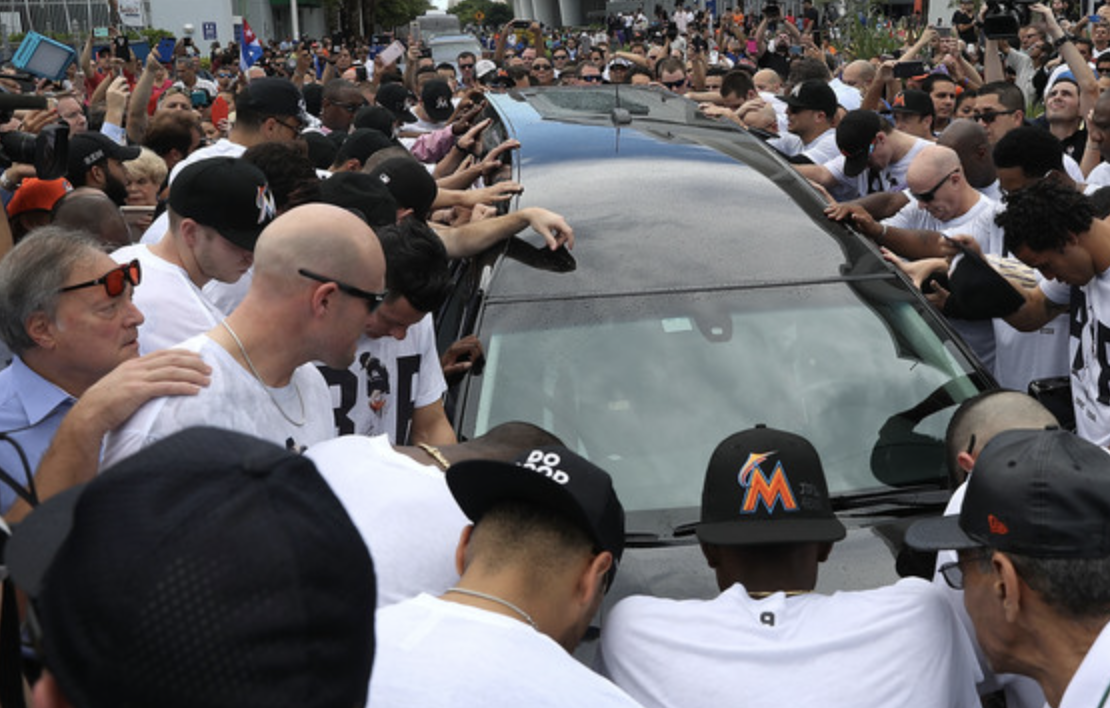 With the tragedy of Jose Fernandez still fresh in our minds, we look back on a Marlins' season and team that was much alike teams from years past: good but just not good enough. After sitting pretty at 57-48 on July 31, a true contender for their first postseason in 13 years, the injury bug and their lack of minor league depth bit the Fish and they fell back down to earth. At season's end, the Marlins were 7.5 back of the second wildcard spot. So the question is with very little of a minor league system to speak of, the question is, after several years of mediocrity, where do the Fish go from here? There's no denying it: the Marlins don't have very much of a minor league system. After failing to have a single prospect crack top 100 lists this past offseason, Miami only has one sure-fire top 100 prospect (Luis Castillo), a potential second (Braxton Garrett) and a longshot third (Dillon Peters) headed in to 2017. There's also no getting past the fact that this team has glaring holes in their starting rotation and bullpen (and each of the aforementioned pitchers at least a season away), a huge question mark at shortstop, and a very short bench which has the likes Chris Johnson leading it in ABs. So, without the talent to fill those holes in the lower levels of the system and a very thin free agent class at the spots they need to address, the most logical decision for a team that wants to do more than just tread water would be to sell off its biggest assets and go in to rebuilding mode. However, sometimes the best thing isn't necessarily the right thing. While baseball is still a business and Jeffrey Loria is still a businessman, this is a community that will be turning to him and the rest of the Marlins' front office to heal the wound left behind after it lost one of its biggest heroes, not to mention a guy who did everything he could, no matter how tall the task, in order to succeed whether it be successfully fleeing Cuba on his third attempt or returning from Tommy John surgery without losing a single step in his game. Add to that the fact that Loria who isn't a young man anymore (he turns 76 in November) has recently re-signed the likes of Giancarlo Stanton and Christian Yelich long-term, re-inking Martin Prado, and traded young assets for proven stars like Dee Gordon, it is pretty obvious that the Marlins' owner, staring retirement in the face in the next two to three years, wants to win and win now. Like Fernandez's aforementioned pilgrimage from communist Cuba to the United States, making the Marlins a viable contender this offseason will be tough. Tough but not impossible. It will take a carefully constructed and busy offseason (one which, with all hope, Mike Hill won't be overseeing), the Marlins can partially rebuild their minor league system with players on the verge of their call as well as improve at the major league level immediately. Here are a few potential moves the Miami could make in order to make that a reality. Trade Marcel Ozuna, Adeiny Hechavarria and Kendry Flores to Tampa Bay Rays for Willy Adames and Brandon Koch Marcell Ozuna, the Marlins' 25-year-old outfielder who enters his first of three arbitration years this season making him one of many arbi eligible Marlins this year which, in addition to the contracts of Giancarlo Stanton and Christian Yelich, will cause payroll to jump significantly this year, was rumored to be a potential trade candidate last offseason after the Marlins came to odds with Ozuna's agent, Scott Boras. After an even better season in 2016, one which earned him his first All-Star Game nod, teams in need of outfield help will definitely be interested in Ozuna, who in addition to a .266/.321/.452, 23 HR year by way of below-average .296 BABIP (18th lowest of 27 qualified NL outfielders), has eligibility at all three outfield positions and is in total a +5 DRS and a 10.8 UZR career player. With a surplus of in-house talent in the outfield including Derek Dietrich who just had a career best .279/.374/.425 year in 128 games and 351 ABs, the most extensive action he's seen in his career, and who has definitely played himself into contention for a starting spot, and Xavier Scruggs who received his call-up late this year after becoming the second best player in all of AAA and who, with a good spring, could be in the discussion for the Opening Day roster, shopping Ozuna presents the Marlins their best chance to bring back quality young talent. As for Hechavarria, his egg lay of a season slash-line wise albeit by way of a low .270 BABIP and batted ball stats which showed he should have hit significantly better (as I laid out here), makes him a huge question mark offensively headed into 2017. One thing is for certain, though: Hech is a wizard defensively at shortstop, definitely one of the best gloves and quite possibly the best at the position in baseball. He proved that this year by way of a +9 DRS (sixth best in the game) an 8.8 UZR (10th best) and a 15.1 Def rating (9th best). Over the last two years, Hech's 36.7 total Def rating is fourth best in MLB as is his 24.6 UZR and his +18 DRS. Because of the uncertainty surrounding his bat though, this offseason may present the most advantageous time for the Marlins to trade high on Hech. The inclusion of Kendry Flores, a fringe player so far in his career who has decent stuff but who struggled mightiliy with control above the AA level as well as injuries and may be destined for a long-relief type bullpen role, is of the low-risk loss for the Marlins, potentially high-reward gain for the Rays throw-in variety. Willy Adames is a 21-year-old shortstop, is the best prospect in the Tampa Bay Rays system and the number 46 prospect in baseball according to Baseball America. A Dominican Republic native brought over as an international signee in 2013, Adames has made it to AA in just three short seasons, jumping two levels in 2014 by way of a .271/.353/.429 line and by posting the 13th best OBP (.342) and OPS (.721) in the FSL despite being one of its youngest players in 2015. Most recently, Adames has continued his surge towards the majors by becoming the Southern League's second best OPS (.802), its fifth best SLG (.430) by way of 31 doubles (third most in his league) six triples (fourth most) and 11 homers (eighth most) and it's fifth best OBP (.372) by way of a league-most 74 walks. His exports in 2016 also earned him a spot on the World Team in the 2016 Futures Game. Staring AAA in the face this coming year, Adames is a career .265/.366/.409 bat with a 13% BB% . A current gap-to-gap threat who exhibits quick hands and great bat speed, fantastic patience and a knowledge of the strike zone well beyond his years especially considering he's spent the last two years playing against much older competition (which stands the reason his 22% K% should almost certainly improve), Adames, who also possesses slightly above average speed (he had a career high 13 steals this year) and is currently just 6'1", 180, has the ability to grow in to a rare all-around hitting middle infielder with plus power and a great eye. Scouts have rated his MLB ceiling at as high as a plenty impressive .270/.350/.450. Adames' fantastic offensive skill set is rivaled by the work he does with his glove and arm. Touted as one of the best infield guns in all of baseball (a 60 on the 30-80 scale), Adames makes accurate on line throws when given time and makes life incredibly easy on his first baseman. Up until this past season, the only knock on Adames' defensive game was the fact that his average speed limited him from covering the necessary ground at short. He silenced that criticism by posting his best year range wise, committing the fewest errors he ever has in full-season ball. His speed, made relevant by the fact he stole the most bases he ever has (13) took a slight jump and his throws from the hole were less rushed. While a move to third base still isn't out of the question for Adames later in his career, he will at least start his career at short which, again at just barely 21, makes him a long term answer for the Marlins' somewhat long term woes at the position come 2017. With a bevy of talented middle infielders among their ranks including Lucius Fox, Daniel Robertson and Adrian Rondon, all shortstops who rank among their top 15 prospects, the Rays, who aren't expected to contend within the next few years, will likely sell on Adames if the price is right. That price is young outfield talent (Ozuna) which the team as well as its system lacks as well as a shortstop who could bridge the gap to one of the aforementioned young future stars expected to arrive in 2019 (Hechavarria). Along with plenty of talent at the shortstop position, the Rays also possess plenty of B-type talent at the starting pitcher spot. In a trade such as this, it would give the Marlins a pick of the litter among several talented future B-type arms scattered between the rankings of 5-13 in their organization. My choice would be Chih-Wei Hu, currently Tampa's 6th best prospect and a guy who is coming off a great year this past season in AA. Signed internationally by the Twins in 2012, Hu advanced through Minnesota's lower minors by way of a 8-2, 2.15 ERA, 65/15 K/BB 2014 season between rookie ball and low A including a very succesful 55 IP in the Midwest League which saw him holding down the Cedar Rapids Kernals' lowest ERA (2.29) among those with at least 50 IP as well as its best WHIP (0.96). Despite the somewhat short stay, his seven wins tied him for second most on that team. The Taiwan native continued impressing the Twins' brass in 2015 when he posted a 2.44 ERA in 84.2 IP for the Fort Myers Miracle of the A+ Florida State League, making him the best starter on his team and on pace to be the second lowest ERA in his entire league. His exports impressed the Minnesota front office so much he was called upon to make a spot start all the way up in AAA Rochester, a start in which he went a quality six frames and allowed just one run. The Rays came calling for Hu's services at the deadline and successfully acquired them in the Kevin Jepsen trade. This past season, Hu held down a 2.59 ERA in 142.2 IP by way of a 1.15 WHIP. In Southern League's seventh most IP, his ERA raked eighth amongst full time starters and his 1.15 WHIP ranked tenth. Amongst those who went at least 0.8 IP per league game, his ERA was th all around best and his WHIP was third best. His 107 Ks ranked eighth. Once again, for a different club, his full season exports impressed the organization enough to earn him a look in AAA. He will get more than a look there in 2017 and, if his success continues, he could earn his MLB debut as early as the beginning of the second half of the season. [youtube Stuff wise, Hu is as intriguing as they come. While he won't blow anyone away with velo, (his heat can hit as high as 96 but usually rests in the 90-92 MPH area) the command and control he has over of all of his pitches is what has and what will in the future make him an effective hurler. Accompanying his heat which he throws fairly interchangeably with all of his other offerings which keeps hitters on their toes, is a changeup (probably his best secondary pitch), a low 80's offering from the circle-change grip which consistently shows drop-off-the-table type movement and which he can run to either corner. Again, with the command and control he has over it like all of his other pitches, it is already a plus plus pitch. Hu also has a rare commodity -- a palmball -- which currently projects at a 50 on the 20/80 scale. Thrown from the same arm slot as his fastball and changeup, the pitch is straight but painfully slow, sitting around 69-72 MPH. One more, he locates it nicely and it is a nice mix-in for a guy who likes to get in the head of his opposition. Piggybacking this nearly eephus type pitch with his high 90s heat early in counts makes Hu incredibly frustrating to face and pick up. Add to his offspeed repertoire a slider which he developed just this past year and, thanks to hard late movement both in and out in the 83-85 MPH range, has already become a plus pitch and moved ahead of his about average but still very useable curveball on the list of his best assets. With five complete pitches, all of which he throws with complete confidence, a slow deceptive delivery, the ability to live all around the zone and induce swings and misses when he deliberately goes out of it, the ability to make up for a lack of fiery heat because of a tricky mix of offspeed velocities which allow him to easily go deep in to starts, great arm speed and a great feel and head for pitching that allows him to get under the skin of opposing hitters and which allowed him to succeed against older competition for two years running, Hu more than makes up for his unathletic frame (already 6'1, 209 at age 22) and is on the verge of making his MLB debut far ahead of schedule. With continued success in AAA this year, Hu could contribute at the professional level as early as the second half of 2017 as a back end starter with the potential to become more. Sign Andres Blanco to stop-gap at shortstop After three years in Philadelphia which have equated to a .274/.337/.457 slash line, Blanco becomes a free agent. The earliest of those seasons began in 2014 after Blanco spent the start of that season in AAA and, after just a .598 start, in a return to overseas ball in Venezuela. A .293/.383/.415 tenure there attracted the Phillies to his talent. His exports thereafter, albeit in limited time, speak for themselves. He enters free agency at 32 years old as a career .264/.317/.388 bat. More impressive when it comes to Blanco's game is his glove which has lead to him being a defensive replacement and pinch hitter at this spot in his career. In 914 career innings at shortstop, he is a +7 DRS player. His UZR at short is a +3.9 and his double play runs above average (DPR) is an impressive +4. Although Blanco's power at the plate which has spelled a .457 SLG along with 12 of his 15 MLB homers would likely even out here in the pitcher friendly Marlins Park, Blanco does enough at the plate to warrant signing him for his glove and making the Marlins not miss Hechavarria. There is some question as to Blanco's stamina and ability to perform in an every day role considering he has only appeared in more than 100 games once at the major league level which will likely allow him to come at a thrifty price but that 100 game season was his best as a pro. It came in 2015 when he hit .292/.360/.502. After what we have seen at short offensively this past year, I would more than take that and even take a slightly lesser version of that for a single season (and perhaps less depending on how fast Adames progresses). Think of Blanco as a older but better offensive version of Hech and the perfect situational signing for the Fish. Sign Doug Fister to fill out a back end rotation spot Doug Fister is a guy who the Marlins pursued last offeason and a name whom will come at an even cheaper price this season. The reason for that is because Fister was signed by the Houston Astros who play in a hitters' heaven and because of the career low K/BB Fister posted there. Even still, Fister was able to post a positive WAR season (+1.1). Fister posted a decent 4.19 ERA out bullpen role for the Nationals in 2014 by way of a .310 BABIP, second highest in his career, leading up to that signing last offseason but before that, he was a Cy Young candidate. In 2014, he went 16-6 with a 2.41 ERA, sixth lowest in the National League. His 1.08 WHIP that year was also an NL 11th best. Fister isn't a guy who is going to dominate games or even strike out a lot of guys as is evident by his 16% career K rate and 10.8 career K/BB% but, despite some ups and downs, he is a still effective back end rotational innings eater who has never posted a negative WAR in a single season. After struggling in Houston he should, as a thrifty option, thrive in pitcher friendly Miami. In three career starts at Marlins Park in which he has held the opposing Fish to a .204/.278/.347 line, Fister has already begun to build that reputation. Target Ivan Nova After a somewhat successful minor league career, Nova, a 2008 rule 5 draft pick, had an overall miserable career with the Yankees. It equated to a 4.41 ERA by way of a 4.40 FIP and a 1.388 WHIP and included injury in 2013 and in 2014, Tommy John surgery which kept him out until June of 2015. Despite pitching with the best velo he's ever had coming off of his shoulder repair that year, Nova struggled mightily with control, having only 40.6% of his pitches hit the strikezone, by far a career low. This spelled an ERA over 5 (5.07) by way of a 4.87 FIP and a 1.40 WHIP. After experimenting with him out of the bullpen to begin 2016 which again, was subpar (5.14 ERA in 14 IP) and giving him his last shot in their rotation which was equally as bad as he has ever been (45 ER in 82.2 IP, 4.92 ERA) and an overall 4.90 ERA, 5.10 FIP, 1.356 WHIP in his first 97.1 2016 innings, the Yankees cut their losses with Nova and dealt him to the Pirates. In Pittsburgh and in a contract year, Nova revived his career pitching to the tune of a 3.06 ERA, a 2.62 WHIP and a 1.096 WHIP in 11 starts. All three stats were by far the best he has posted in his major league career. His work with the Pirates also improved his peripherals to a 9.4 swinging strike percentage, tying a career high, an 80.9 contact percentage, his lowest since his only effective season in Yankee pinstripes in 2013, and a career high 43.9 zone percentage (the percentage of pitches he threw in the strike zone). He also threw first pitch strikes at a career high 61.7 rate. He also either equaled or improved upon his career high velocities with every one of his pitches, including a 92.5 MPH two-seamer, an 87 MPH slider, and an 86 MPH changeup. Judging by all of this as well as his 2.2 WAR season in slightly hitter friendly PNC Park, Nova's change of scenery and change of league has done Nova wonders and his career is back with a vengeance. Dismally short of veteran pitching talent, the Marlins, who play in pitcher friendly Marlins Park, should be a major player for Nova's services, which should come at a fairly thrifty rate because of his rich injury history, this offseason. Should his health stay intact and should his effective work continue, at just 29, he still has several years ahead of him. Offer Tim Lincecum a minor league deal After four straight All-Star worthy seasons from 2008-2011 including two Cy Young Award winning seasons in '08 and '09, Lincecum hit the schnide in 2012 when he allowed a career high 107 runs in 186 innings. His sudden spike in ERA came by way of a 4.18 FIP (proving most of it was his fault) and by way of a 1.468 WHIP, over a half a point higher than any total he had posted to this point. That theme continued from 2013-2014 when Lincecum posted a collective 4.53 ERA and 1.315 and 1.394. Over those two years, Lincecum's fastball velo dropped nearly a full mile an hour from 90.4 to 89.6. His slider also fell from 83.4 to an even 81 and his changeup from 83.2 to 82.5. His control also took a dive as hitters made contact at an increased 78% rate in 2014, up nearly a full 4% from his 2012 mark. His swinging strike percentage also fell from 11.5% to a career low 9.7%. After an equally ineffective start to his 2015 campaign which equated to a 4.13 ERA by way of a 4.29 FIP and a 1.48 WHIP and a 60/38 K/BB, Lincecum elected to undergo surgery on a troublesome hip. Lincecum entered free agency at the end of that season and was picked up by the Los Angeles Angels. The two-time Cy Young winner signed for a chump-change figure of under $2 million. Despite some decent work in the AAA on his way back (38.1 IP, 3.76 ERA, 37/14 K/BB), Lincecum struggled mightily in nine games with the Angels, posting an ugly 9.63 ERA by way of a 7.16 FIP and a hideous 2.374 WHIP. His peripherals looked even worse as he hit the zone just 39.2% of the time and, despite the small sample size, got ahead with first pitch strikes just 49.5% of the time, both career lows. The lack of stuff was on full display, evident by his 26% swing rate outside of the zone and 71% swing rate on pitches in the zone as well as a career high 87.5% contact rate on stuff inside the zone. The only reason I inlcude this 32-year-old in this series of suggested moves is because he is an a-typical Jeffrey Loria signing as a career reclamation project, because the Marlins pitch in an extreme pitchers' park, and because of their complete lack of veteran starting pitching help. Despite his recent past and injuries and the fact that he is a shell of his former self, Lincecum's distant past speaks for itself and shouldn't be ignored when it comes to him being a low-risk, high-reward signing. If he can learn that he is never going to be what he once was and learn to harness a slower, more deceptive offspeed arsenal, he can still be effective as a spot starter or a long relief bullpen option. Potential 2017 Starting Lineup 2B Dee Gordon 3B Martin Prado CF Christian Yelich RF Giancarlo Stanton 1B Justin Bour LF Derek Dietrich C J.T. Realmuto SS Andres Blanco Potential 2017 Pitching Rotation Adam Conley Wei-Yin Chen Tom Koehler Ivan Nova Doug Fister LRP/Spot Starter: Tim Lincecum/Justin Nicolino/Austin Brice It should be noted that any rotation additions should come on deals of two years maximum. In addition to, in this situation, Hu being on the cusp of entering the majors and potentially making an impact as early as the midway point of the season, the Marlins are also biding their time until they can enlist the services of their top prospect, fireballing Luis Castillo, who, after earning FSL Pitcher of the Year honors as a Jupiter Hammerhead, received his call-up to AA late in the year in 2016. Castillo, who is 23, has the ability to reach triple digits with his heat which already ranks at a maximum of 80 on the 30/80 scale, has a debilitating 10-6 sinking slider. He exhibits fantastic control over a nearly complete (his changeup could use to gain some more rotational spin and run) four pitch arsenal. If the wiry 6'2", 170 pound 23-year-old grows into his frame as well as the great arm speed he flashed this past year, the strikeout totals which were just average this past season (103 in 131 IP), should improve. A bulldog on the mound with a great competitive spirit, Castillo will tend to overthrow but, again, improved command is something that will come with more experience. With a few slight tweaks and grooming, he could find himself in the rotation this coming September if not sooner. It is for these two reasons that I include the likes of Nova and Fister, guys who are far more likely to accept shorter contracts, in this series of offseason moves rather than the likes of Jeremy Hellickson and Gio Gonzalez who will undoubtedly be seeking long term extensions. These moves are hardly a means to an end. The Marlins still have some questions that need to be answered concerning their bench which is being led by Chris Johnson and their bullpen. Rather, these moves are a good start to what should prove to be a very interesting offseason for an on-the-cusp team looking to rectify major losses in more ways than one. Whatever the Marlins do in the wake of the loss of Jose, one thing is for sure: this offseason will be one we will be paying very close attention to.
 -
View full article
-
 My first glimpse of Jose Fernandez came in the summer of 2012. As I sat in my usual seats over the third base dugout at Roger Dean Stadium, I remember remarking out loud to myself, "Wow, this kid is going to be something special." Last Thursday night, as I sat in Diamond Club and peered over my left shoulder into the dugout, watching Jose perform his usual antics, on the railing for every play, in to the game the same amount as he is on nights he pitched, the first to congratulate players when they get back to the bench on positive plays and the first one to pick his teammates up with some words of encouragement on negative ones and all the while flashing his smile, so infectious that at the sight of it you couldn't help but laugh yourself, still so young, still so full of life, I turned to my girlfriend and said the same exact thing I had said four years before. Five days later, Jose is gone, the victim of a boating accident off Miami Beach. The story of Jose's early life, how he went through hell to make it to his own personal heaven, is the stuff of Hollywood movie scripts. He was born in 1992 in Santa Clara, Cuba where he lived on the same street as Cardinals' infielder Aledmys Diaz. His love for the game of baseball was borne in him by Diaz's father who helped coach the youth baseball teams in the area. After some coercing of Jose's mother to allow him to play, he and Diaz became teammates on a team head coached by Diaz's uncle and Jose's road to the show began. Last spring training, Jose commented that if not for Diaz's father, he would not be where he was that day, one of the game's most intriguing young talents with a personality to match. "I’m here because of his dad," Fernandez said in March 2015. "I’m pretty sure that I’m a baseball player today thanks to his dad." But that road didn't come without some bumps. In fact, it came with bumps, potholes and craters. Attempting to escape the oppressive Castro regime for a better life in America like so many Cuban families do, Jose and his mother and sister were unsuccessful three times, all before Jose was the age of 15. With each failed attempt, Fernandez served time in Cuban prisons where living conditions are described as subhuman, food is labeled unfit for human consumption and where receiving abuse from prison employees is far from rare. Jose and his family finally made a successful pilgrimage to America on their fourth attempt in 2007. During the voyage, Jose heard a body fall off of the flotilla carrying him, his kin and many of his countrymen. Not knowing who it was, Jose risked his own life, jumping into the Atlantic to save them. Upon pulling that person back on board their makeshift raft, it was revealed that that person was his mother. This act of heroism was the first of many for the then 15-year-old and set the tone for the brand of selflessness he would exhibit every time he pulled on his jersey whether it be in order to pitch, to come face-to-face with a fan, to help children learn to read, or to make a terminally ill patient's wish of meeting him come true the day before she passed away. After first reaching Mexico, the Fernandez family made its way to America where they made a brief stop in Texas before finally settling in the northern region of Florida, close to Tampa. There, Fernandez attended Braulio Alonso High School where he quickly became one of the nation's top standout players and got his first taste of stardom while getting acclimated to baseball in North America, something his high school baseball coach Landy Faedo took some time. Speaking on a local radio show this week, Faedo recounted the moment when Jose hit his first home run. Upon doing so, he rounded the bases in such a fashion that saw him throwing his helmet and leaping up and down through the air. "I had to tell him this is America," Faedo said laughing. "We don't do that here." Aside from confining those celebrations to the dugout, Jose didn't listen. Faedo also recounts a regular habit for Jose was greeting opposing players at the second base or third base bag moments after the rare occasion they doubled or tripled off of him. "Nice hit, he would say." Faedo remembers. "But I'm gonna strike you out next time." No matter if he is in the lineup or not, Fernandez's level of gamesmanship and his love of competition has never waivered. Eight years later, Jose's close friend and countryman Yasiel Puig says he has been in the habit of doing that same exact thing as well making other friendly quips to opposing players as recent as this season. "I think after [Clayton] Kershaw, he was the best pitcher in the big leagues," Puig said. "I liked to face him, we joked around a lot, had a lot of fun. Sometimes he would throw balls, I would tell him to throw strikes. The next time we play Miami, it won't be the same." And that's just who Jose is -- who he was, who he always will be. Forever blissful. Forever young. Following a high school career which saw him boasting a 28-3 record, a 1.34 ERA and a 278/34 K/BB and in which two of his three years involved a state championship, Jose was drafted by the Marlins in 2011. After a brief stint in the minor leagues during a 2012 season which saw him post a 7-0 record and a 1.59 ERA with low A Greensboro and a 7-1 record and 1.96 ERA with high A Jupiter, Jose skipped both AA and AAA and made his major league debut in 2013. After just six years in the United States and one full season in the minors, it appeared as though Jose was being rushed in favor of the Marlins saving face from that offseason's fire sale. Jose proved that theory wrong. In 2013, he made his major league debut. That April 7, he went 5 innings, allowed one earned run and struck out eight to become the seventh player under the age of 21 with at least eight strikeouts in his MLB debut. The 20-year-old went on that year to post a 2.19 ERA, the ninth best ERA in the league in 28 starts. His 0.979 WHIP ranked seventh in baseball, and his 2.73 FIP ranked sixth. His 187 Ks, which tied him for 14th, came by way of a slider, aptly nicknamed 'The Defector', which held the third best value in the league based on Fangraphs' pitch value metrics. He generated swings on 47% of the pitches he threw, the sixth highest figure in MLB and swinging strikes 10.2% of them, the 15th highest total in the pros. Among NL pitchers, Jose led the league in K/9 (9.75) and H/9 (5.7). His ERA ranked second. Amongst rookies with at least 80 IP, Jose was in a class completely his own. His next competition ERA-wise was .8 away, K total was 17 away, and the gap to the next lowest WHIP was 2.1 points. He also held the best K/BB% of 18.9% and best WAR amongst first-year starters at 4.1. That figure placed him amongst the top ten all-time amongst pitchers under 21 years old. His 14 strikeout performance on August 3 that year, he set a Marlins' rookie record, his second team record that season. The first came when Jose was named to the 2013 All-Star team, the lone Marlins' representative and the youngest Miami representative in team history. Following the year, the accolades kept coming for Jose as he was unanimously named Rookie of the Year with 26 of the 30 first place votes. He placed third in Cy Young voting, being the only rookie to receive votes. Jose set another "youngest ever" record on Opening Day of 2014, becoming the youngest ever Opening Day pitcher since 1986. At just 21, he went 6 IP, allowed just five hits and had a 9/0 K/BB on 94 pitches. He became the first pitcher since Bob Gibson and just the fourth pitcher in the live ball era to have such a K/BB on Opening Day. Jose went 4-2 in his first eight starts with a 2.44 ERA and a 70/13 K/BB only to have his season ended in May due to an ulnar ligament injury. He underwent Tommy John that month. One year and a few weeks later, Jose returned to the mound. Coming back from TJ, one would figure his velocity would be down and his control and command would be a bit shaky. But, save one rocky start at the end of the year, Jose was as phenomenal as ever. He responded to skeptics by throwing his hardest heat to date, an average of 95.9 MPH and compiled 5.64 K/BB. He rode that momentum into this season where, in 29 starts, despite some struggles on the road, he owns MLB's best K/9 (12.5), it's 10th best K/BB (4.6), it's second best FIP (2.30), eighth best ERA (2.86), and is tied for the 15th lowest WHIP (1.12). He is once again throwing one of baseball's best pitches, his slider, which owns a value of 24.4 (again based off of Fangraph's pitch value projections). He is generating swings and misses at a career high 14.2%, a mark which ties him at second most in the league. The lowly rate of 69% at which hitters make contact with his pitches is the very best in all of baseball, which, proves just how great Jose's stuff really is when it is on. Despite a career high BB/9% of 2.71 (which is still below league average), Jose is 16-8 in 182.1 IP this year. 19 of his 29 starts were of the quality variety. His 253 total strikeouts are another Marlins' record. He ends his career by being in the conversation for the award given to the best pitcher in the league, the Cy Young. In 471.1 career innings, Jose owns a 2.58 ERA on a 2.44 FIP, a 13.9 WAR, an 11.25 K/BB (589/140), and a 1.05 WHIP. For those keeping track, those numbers are the making of a legend. Statistics aside, for me personally, the spectacle of watching Jose both on his throw days and when just observing him whenever I went out to a park he was present at, before or after games or even during games when he was watching from the dugout is what I will always remember about him. No matter the situation, this man was always a joy to watch and just a joy to be around. I can honestly say, without personally knowing this young man or even having the privilege of conversing with him save a handful of times, I was a better person when I was in the same building, in the same company of Jose Fernandez. Along with being a master on the mound, he was a master at getting people to smile along with him. Just the sight of his infectious grin was enough to get a smirk across your face, even on your worst night. As an individual who often attends baseball games as an outlet for every day life, I'm one of the best witnesses to that. Regardless of how he performed on the mound, which happened to be at as high a level as anyone Marlins fans have ever seen, this man rounded out his game by being one of the best ambassadors to it by exhibiting nothing but pure love and pure joy for it -- for everything about it. But being one of the happiest people I've ever observed wasn't enough for Jose. He wanted to share that joy with others. With everything he did both on the field and off, whether it be by hanging Ks or by making those who adored him happy such as the little boy whom Jose saw crying and responded by asking him to trade autographs, he was able to accomplish that in his own spectacular way. It is for this reason that the amount of smiles that he brought to faces equaled the number of tears shed for him this week. It is for this reason so many of us who never met Jose feel like we know Jose as well as anyone. And it is for this reason that that Jose was and will always be a success, a winner, in baseball, in life, always. "He had his own level, one that was changing the game," Giancarlo Stanton wrote on Instagram. "Extraordinary, as a person before the player. Yet still just a kid, who's joy lit up the stadium more than lights could." Where the Marlins go from here, where his family goes, where we go as fans, I honestly don't know. It's been nearly three full days since I first got the news and I, now, have the same reaction I did then: it just cannot be not only that he isn't here any more but that the same waters that brought him to us have taken him away from us. Clearly, it is going to take some time to come to terms with this for all of us, friends, family and fans alike. Where we can all take solace though is in the fact that in everything Jose did from escaping Cuba for a better life, to being a good son and grandson, to perfecting his craft on the mound, to being a great teammate and friend, to being everything an athlete should be, he was successful. By never taking one hour of any day for granted and by filling each one with as much joy and happiness then projecting that unto others, he lived well beyond his years and his spirit will live on in each of us that came to know just how incredible he was forever. Rest easy, Jose. You're the best.
