



Alex Carver
-
Posts
459 -
Joined
-
Last visited
-
Days Won
16
Content Type
Profiles
Miami Marlins Videos
2026 Miami Marlins Top Prospects Ranking
Miami Marlins Free Agent & Trade Rumors, Notes, & Tidbits
Guides & Resources
News
2025 Miami Marlins Draft Pick Tracker
2026 Miami Marlins Draft Tracker: Picks & Bonuses
Forums
Blogs
Events
Store
Downloads
Gallery
Everything posted by Alex Carver
-
 In addition to encouraging developments at the big league level, Marlins players are showing up more than they have in a long time down on the farm. With results and projection galore to marvel at, there is a lot to pick from in terms of who has stood out the most during the first half of the 2025 season. After much deliberation, we have highlighted players at each position below, including several honorable mentions at the bottom. Some are still several years away from maturity, while others should be debuting in Miami before season's end. C Joe Mack Current affiliate: Triple-A Jacksonville Mack, pick 31 overall in the 2021 draft, came into pro ball from the high school ranks lauded for his defense with a bit to figure out on the offensive side of the ball. The glove allowed him to matriculate through a level a season through 2023, but he entered 2024 with a .217/.324/.303 slash line. This past season, amidst making the jump to Double-A where he was playing against average competition nearly three years his elder, Mack broke out with the bat. In 125 games, 112 with Pensacola, he slashed .252/.338/.468 with 24 home runs, fifth most amongst all MiLB catchers and one less than his future teammate Agustín Ramírez. This season so far, not only has Mack proven 2024 was no fluke, he’s hitting even better. Through 73 games, the 22-year-old owns a .268/.344/.454 slash line. Currently, Mack is on a ridiculous 15-game run in which he has a 1.186 OPS. Almost all of this has happened at the highest level of MiLB with the Jumbo Shrimp. Seemingly the only potential knock on Mack’s performance is that most of his success has come at home in Jacksonville where the conditions vastly favor bats. Mack will have the rest of the season to even that out. As he has his entire career, Mack is once again playing well under his average competition’s age this season—he’s nearly five years younger than the average AAA player. With continued success, Mack is on pace to take over as Miami’s everyday catcher in short order, possibly at the start of 2026. He will be 23 for all of next season. 1B Michael Snyder Current affiliate: Double-A Pensacola Snyder, who was drafted in the tenth round of the 2024 MLB Draft, has gotten off to a great start, slashing .247/.401/.388/.790 with six home runs, 47 RBI and a 133 wRC+. After spending most of the 2025 season in High-A, he received the promotion to AA, where in 18 games, he’s posted a 139 wRC+. Snyder is one of the few qualified hitters in the system with more walks (57) than strikeouts (56). 2B Yoffry Solano Current affiliate: FCL Marlins Miami’s highest-priced international signing from the 2022 class ($750k bonus), Solano had a fine initial showing in the DSL, allowing him to make it stateside this past season. A minor injury in 2023 limited him to just 17 games that season, likely contributing to a slow start last year amidst the aforementioned stateside move. Solano finished that season well though, slashing .345/.400/.483 in the month of July, proving the rust was off and that he had begun adjusting to baseball in America. He also did it amidst making the full-time transition to second base where he fared well. Solano is back in the FCL this season, building off of that late season success. Through 36 games, he’s slashing .270/.374/.357. He’s struck out just 24 times and walked 17 times. The glaring hole in Solano’s game is the lack of present power. Of his 34 hits this season, 27 are singles. His potential 60 grade hit tool, which he’s played into well this year, will be what carries him in his career, but he will need to at least start to find higher exit velocities and gaps to play towards a higher floor. Also, it would be encouraging to see him his use his 50-grade speed more. There’s still time for both of those things to happen. He probably won’t ever be a menacing physical presence in any sense of the word, but there’s still room for Solano to grow. He is still just 20 years old. It is very likely he will be moved to Jupiter to continue playing when the FCL season wraps up. 3B Diwarys Encarnación Current affiliate: FCL Marlins Encarnación, a signing from last year’s class, inked an undisclosed deal, which usually signifies the bonus was not substantial. In 2024, Encarnación played a full season in the DSL and slashed .227/.317/.301. This season, Encarnación, repeating the DSL, has produced a huge increase in power and exit velocities via physical projection. Through 33 games, the 19-year-old is slashing .305/.399/.534. His seven home runs are tied for second most on the DSL circuit. “Credit to him and his offseason routine as well as our (player development) staff really getting him a lot stronger. He’s ticked up in a lot of areas and rightfully so has turned himself into one of our better position players in the DSL,” international scouting director David Hernandez told us recently. “He’ll almost turn 20 soon, but he’s performed his way into a promotion and has significantly improved in batted ball data as well as plate discipline from one year to the next.” Positionally, the Marlins are still figuring things out with Encarnación: he has spent time at six different positions this season. If he sticks on the dirt, it will be at third base but at this point, it is more likely he moves to corner outfield spots. An improving mix of size and strength at 6’2”, 170, Encarnación is a bat-first prospect who should receive a stateside call in short order, likely when the DSL season concludes. SS Payton Green Current affiliate: High-A Beloit Another 2024 draft pick out of Georgia Tech, Green is slashing .290/.364/.440/.804 with four home runs, 29 RBI and a 124 wRC+. Green has primarily played shortstop and should stick at the position moving forward. At 22 years old, a promotion to AA-Pensacola should be arriving shortly. LF Fenwick Trimble Current affiliate: Double-A Pensacola Trimble had been rising quickly through the system. In High-A, he slashed .284/.407/.422/.828 with one home run, 14 RBI, 15 stolen bases and a 138 wRC+. When promoted to AA, Trimble hit one home run, but suffered a hamstring strain that sidelined him for nearly two months. He re-entered the Blue Wahoos lineup on Saturday. Trimble has been getting occasional reps at each of the three outfield spots. CF Jakob Marsee Current affiliate: Triple-A Jacksonville At this point, it isn’t a matter of if we will see Jakob Marsee don the Marlins uniform; it is a matter of when Marsee will be making his Major League debut. Through 88 games, Marsee is slashing .242/.375/.426/.800 with 12 home runs, 34 RBI, 42 stolen bases and a 122 wRC+. Marsee’s ability to get on base and cause havoc on the basepaths has been impressive. One major improvement has been elevating the ball higher, leading to increased power and the ability to utilize the entire field. RF Kemp Alderman Current affiliate: Double-A Pensacola Alderman had a rough 2024 season, adjusting to a full slate of games in full-season ball. He was assigned to repeat Jupiter to start the season. Two months in, a hamate bone injury landed him on the IL for nearly two months. Alderman’s overall numbers in his second stint with Jupiter were solid and earned him a call to Beloit in August. There, he hit .240/.312/.344 in 33 games. Attempting to lengthen his season and make up for missed reps, the Marlins assigned Alderman to Double-A for the Southern League playoffs and then assigned him to the Arizona Fall League. Alderman got his swag back in the hitter-friendly Fall League, hitting six home runs in just nine games and earning a Fall-Stars Game selection. Back fully healthy this season, the 22-year-old has been Pensacola’s most consistent offensive performer. Through 76 games, he’s slashing .281/.332/.431 with 9 home runs, already a career high. He’s another bat-first guy, but the onset of loud offensive tools at the upper levels should keep him in the conversation for a debut as early as next year. DH Troy Johnston Current affiliate: Triple-A Jacksonville In true Johnston fashion, it’s been yet another very productive season so far. Seventy-six games in, he’s staring another 20-20 season directly in the face for the playoff-bound Jumbo Shrimp. Other than the time missed away from the team for the birth of his first child, Johnston has been in lineup nearly every single game for Jacksonville. He’s played left field, first base and DH. On most occasions, the veteran minor leaguer has been asked to set the tone for the Jumbo Shrimp lineup. When leading off, Johnston is slashing .262/.333/.536. He has 10 home runs and 28 stolen bases. Why Johnston, the 2023 MiLB Player of the Year, has yet to be called upon to contribute to the major league team, the world may never know. In his last year of team control before hitting minor league free agency, hope is that step will be taken for a scientific and crafty lefty hitter and tenacious athlete who has given most of his life to the organization for upwards of seven years. SP Robby Snelling Current affiliate: Triple-A Jacksonville The recently promoted Robby Snelling has been great this season, completing seven innings of work twice and in AA, posting a 3.61 ERA, 2.90 FIP, 10.58 K/9 and a 2.74 BB/9. Of note, his fastball velocity has risen compared to 2024, more consistently touching mid 90s when he needs it. In a pair of AAA starts this season, Snelling has logged nine innings and allowed only two runs. RP Nigel Belgrave Current affiliate: Double-A Pensacola Belgrave has been unhittable this season, posting a 1.58 ERA, 2.53 FIP, 12.60 K/9 and 3.60 BB/9 through 23 appearances. He last surrendered an earned run on June 5. It was a decision between Josh Ekness and Belgrave to earn the honor, but Belgrave has been far more consistent and should receive the promotion to AAA soon. HM Anthony Abreu Current affiliate: DSL Marlins Abreu is an international signing from this year’s class who has shown immediate results. The 17-year-old has put out six home runs, something pretty rare from a debuting DSL prospect. Overall, Abreu is slashing a robust .235/.395/.500. In addition to the power potential, Abreu is holding down a respectable 45/22 K/BB. A lefty-hitting, righty-throwing 6’1”, 180 corner outfielder, Abreu appears ahead of the curve already in terms of developed tools. The Marlins think this may be the peak of Abreu’s development physically, and he also owns a defensive profile that will likely move him to a corner outfield spot. That said, the already-loud offensive tools and plenty of time for projection should carry Abreu to a very solid floor. He will very likely come stateside next season. HM Colby Shade Current affiliate: High-A Beloit Shade, 24, is a bit old for his current level which he is repeating after spending 33 games in Beloit last season, but his improvement deserves credit. Drafted in 2024 and moved from Jupiter to Beloit mid season, Shade is slashing .261/.380/.374 so far this season. After stealing 45 bases last year, he is already at 39 with nearly two full months left. a0REUldfV0ZRVkV3dEdEUT09X0Fna0NVd1lOQTFNQVhWVlJVd0FIVWdjRkFGa05CbGNBQWdBRkJRTlVCRllBVlF0Ug==.mp4 Shade owns a hit-over-power profile, but he’s been able to find some gaps and let his speed go to work for him. He has doubled 12 times and recorded four triples. Shade has also shown good patience against A+ stuff. He owns a 13.2% walk rate. Defensively, Shade has the plus speed and good-enough arm to stick in center field. He should’ve been called up to Pensacola yesterday to see if his offensive profile can keep pace against upper minors pitching. HM Thomas White Current affiliate: Double-A Pensacola White just keeps shoving. A top prospect in the organization and top 30 prospect league wide, the 6’5”, 240 lefty was a force to start the season at High-A (2.80 ERA and 53/17 K/BB in 35.0 IP) and continues to be amidst his recent call to the upper minors. He’s current holding down an even 3.00 ERA in his first 15 innings with Pensacola. During the All-Star break, White participated in his second straight Futures Game. The Marlins are, somewhat understandably, taking White’s progression very slowly. This season, he has only been allowed to pitch more than four innings three times. On almost every occasion, he is being limited to 85 pitches. That said, White’s insurmountable stuff has played up well to Double-A hitters. He is sitting 95 and has been as high as 99 with his fastball while intermixing a plus-plus power curve and plus changeup all from a high deceptive arm slot. He masks his smooth release well and garners the ability to make hitters look foolish. The next step for Thomas is to have the reins taken off and be allowed to go deep into games. As long as the stuff and velo persists into later innings and third time through lineups, he will be on track to make a major league debut next season. He will turn 21 on September 29. View full article
 -
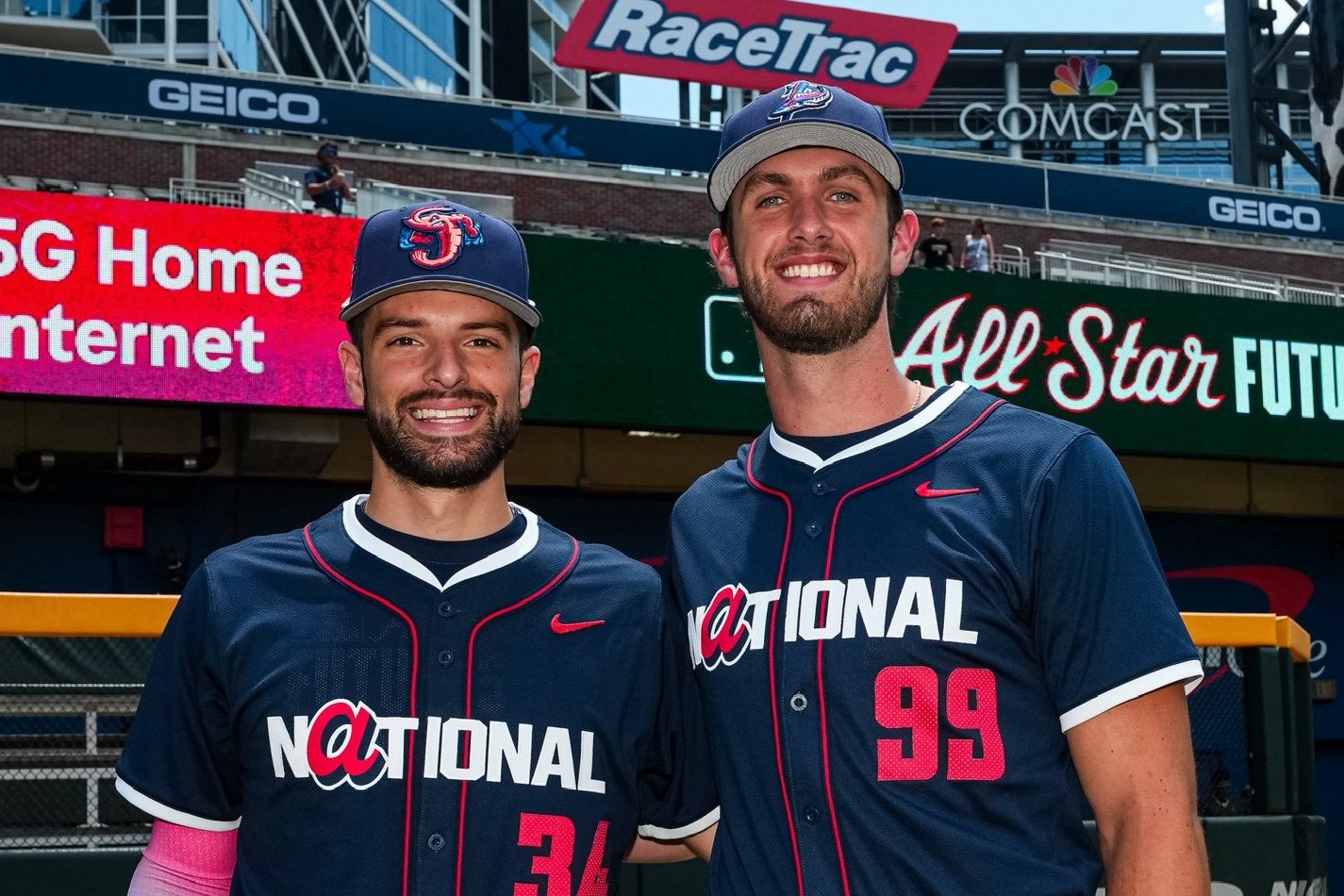 On Saturday afternoon in Atlanta, two of the league’s top 100 prospects, both among the best at their respective positions across all of MiLB, represented the rebuilt Marlins organization. The battery of Joe Mack and Thomas White debuted during the All-Star Futures Game at Truist Park. Aside from minor league spring training and other backfields activities, the 2021 and 2023 draft picks had never previously teamed up. Mack's selection to the National League roster was a certified no-brainer. Fish On First’s second-ranked prospect, Mack has proven his breakout last season was not as fluke at the Double-A level with Pensacola before receiving a call to Triple-A Jacksonville. Mack came into the Futures Game slashing .272/.350/.460. His 123 wRC+ ranks fifth in the Marlins organization amongst qualified players. Minor league-wide, that mark ranks 33rd amongst qualified catchers. That's in addition to being a Gold Glove-caliber defender. Pregame, Mack told El Extrabase’s Daniel Álvarez-Montes about catalytic improvements he’s made year to year. “First and foremost, it’s the faith I put into God and who Jesus is. I think that’s a really big part of my life that has grown in many different ways. That in turn helps me with the mental game,” Mack said. “I thought the game was 10% mental, 90% physical when I first started playing. I quickly got humbled and found that out. I sat down with Alan Yeager, who is a great mental health guy. We talked a lot and really improved the mental side of the game. That's been a a really big difference in the overall performance, outcome and everything that has happened.” Mack also told Álvarez about his promotion to Jacksonville and how the experience has aided his development. “Getting up to Triple-A was awesome. To be around those guys and see what that level is about. I got up there and did well the first couple of weeks, then started to decline a bit,” Mack said. “I’ve been doing a lot of work in the cages, figuring out my swing figuring out timing, how pitchers are attacking me. It’s a group effort with everybody, switching some things here and there, shortening things up and putting myself in better positions to put good swings on balls.” Mack started the Futures Game and played three innings, striking out in his lone plate appearance. He caught three different pitchers, including White. “He’s great behind the plate, great at the dish. Great guy, too,” White said of Mack. “All-around amazing player. He’s electric as we all know. Anything he does, he does well.” White was participating in his second straight Futures Game. The 20-year-old consensus top Marlins prospect made his Double-A debut on June 20 and spoke about his initial observations. “Just the patience. Hitters are a lot more patient early in the count. They kind of make you come at them first and prove you can throw strikes before they expand. Other than that, it’s just another level. I try not to make a big deal out of it. I just go out and do my job.” “Stuff-wise, everything’s moving a little bit more. I’m throwing a little harder,” White added. “I think the stuff is the biggest improvement.” After borrowing the locker of Atlanta Braves ace Spencer Strider, White took the mound in the third inning. He wore jersey #99, the same number he wore during the bulk of his high school career (it is also Strider's number, coincidentally). White noticeably attempted to command the top of the zone with fastball while relying heavily on his slider and sweeper low in the zone. He struggled a bit with control overall, often missing gloveside and landing 15 of his 30 pitches for strikes. That said, White faired pretty well on a big stage against the best hitters MiLB has to offer. He ended his outing on a strikeout looking of Jhostynxon Garcia. White will return to Double-A Pensacola, which the heady and very mature lefty calls “just another level” in his development. He is riding a stretch of 12 ⅓ innings with just three earned runs and 16 Ks over his first three starts. The next step for White will be pitching deeper into games. Miami has been very protective of the length of his starts. He’s gone five full innings just three times this season. Health permitting, both players are poised to reach the majors within the next calendar year.
 -
On Saturday afternoon in Atlanta, two of the league’s top 100 prospects, both among the best at their respective positions across all of MiLB, represented the rebuilt Marlins organization. The battery of Joe Mack and Thomas White debuted during the All-Star Futures Game at Truist Park. Aside from minor league spring training and other backfields activities, the 2021 and 2023 draft picks had never previously teamed up. Mack's selection to the National League roster was a certified no-brainer. Fish On First’s second-ranked prospect, Mack has proven his breakout last season was not as fluke at the Double-A level with Pensacola before receiving a call to Triple-A Jacksonville. Mack came into the Futures Game slashing .272/.350/.460. His 123 wRC+ ranks fifth in the Marlins organization amongst qualified players. Minor league-wide, that mark ranks 33rd amongst qualified catchers. That's in addition to being a Gold Glove-caliber defender. Pregame, Mack told El Extrabase’s Daniel Álvarez-Montes about catalytic improvements he’s made year to year. “First and foremost, it’s the faith I put into God and who Jesus is. I think that’s a really big part of my life that has grown in many different ways. That in turn helps me with the mental game,” Mack said. “I thought the game was 10% mental, 90% physical when I first started playing. I quickly got humbled and found that out. I sat down with Alan Yeager, who is a great mental health guy. We talked a lot and really improved the mental side of the game. That's been a a really big difference in the overall performance, outcome and everything that has happened.” Mack also told Álvarez about his promotion to Jacksonville and how the experience has aided his development. “Getting up to Triple-A was awesome. To be around those guys and see what that level is about. I got up there and did well the first couple of weeks, then started to decline a bit,” Mack said. “I’ve been doing a lot of work in the cages, figuring out my swing figuring out timing, how pitchers are attacking me. It’s a group effort with everybody, switching some things here and there, shortening things up and putting myself in better positions to put good swings on balls.” Mack started the Futures Game and played three innings, striking out in his lone plate appearance. He caught three different pitchers, including White. “He’s great behind the plate, great at the dish. Great guy, too,” White said of Mack. “All-around amazing player. He’s electric as we all know. Anything he does, he does well.” White was participating in his second straight Futures Game. The 20-year-old consensus top Marlins prospect made his Double-A debut on June 20 and spoke about his initial observations. “Just the patience. Hitters are a lot more patient early in the count. They kind of make you come at them first and prove you can throw strikes before they expand. Other than that, it’s just another level. I try not to make a big deal out of it. I just go out and do my job.” “Stuff-wise, everything’s moving a little bit more. I’m throwing a little harder,” White added. “I think the stuff is the biggest improvement.” After borrowing the locker of Atlanta Braves ace Spencer Strider, White took the mound in the third inning. He wore jersey #99, the same number he wore during the bulk of his high school career (it is also Strider's number, coincidentally). White noticeably attempted to command the top of the zone with fastball while relying heavily on his slider and sweeper low in the zone. He struggled a bit with control overall, often missing gloveside and landing 15 of his 30 pitches for strikes. That said, White faired pretty well on a big stage against the best hitters MiLB has to offer. He ended his outing on a strikeout looking of Jhostynxon Garcia. White will return to Double-A Pensacola, which the heady and very mature lefty calls “just another level” in his development. He is riding a stretch of 12 ⅓ innings with just three earned runs and 16 Ks over his first three starts. The next step for White will be pitching deeper into games. Miami has been very protective of the length of his starts. He’s gone five full innings just three times this season. Health permitting, both players are poised to reach the majors within the next calendar year. View full article
-
Every summer, MLB contenders are desperate to add pitching reinforcements. The Marlins are well-positioned to capitalize on that this year. For a long time, the Marlins have been lauded for pitching development. Their new front office has a more analytical approach than their predecessors did, but the early returns are similarly encouraging. They have prospects in the upper minors such as Thomas White, Robby Snelling and Adam Mazur capable of being staples of the major league rotation within the next calendar year, with Noble Meyer, Karson Milbrandt, Kevin Defrank, Liomar Martínez and others providing additional waves of depth. If the market appropriately values members of the Marlins' current MLB staff, Peter Bendix will not be reluctant to make deals that reinforce other areas of the organization. Two Marlins pitchers who will be asked about a lot are former Cy Young Award winner Sandy Alcantara and the surging Edward Cabrera. Both of them have their warts—Alcantara's disappointing 2025 results and Cabrera's inconsistent track record of health and strike-throwing—but they still compare favorably to the alternatives that other sellers can offer. Leading their respective divisions, the Chicago Cubs and Los Angeles Dodgers are logical landing spots, but a recent development ought to add another potential trade partner to the mix. On Saturday afternoon, the New York Yankees announced that righty Clarke Schmidt will likely need Tommy John surgery, effectively ending his 2025 and 2026 seasons. Schmidt had been pitching to a 3.32 ERA and 3.90 FIP in 78 ⅔ innings. The Yankees still have two quality veterans atop their rotation in Max Fried and Carlos Rodón, but making it to October is no longer a given for them. They sorely lack right-handed firepower. The reigning AL pennant winners enter Monday at 49-41, and they had been trending in the wrong direction even before Schmidt's injury. While the Yankees don’t boast a very deep farm system, they have a good working relationship with the Marlins. These teams collaborated on a substantial deadline deal last year centered around Jazz Chisholm Jr. and Agustín Ramírez, and Miami's director of player development, Rachel Balkovec, has a strong knowledge of Yankees prospects from her tenure working with the organization. Here are potential trade scenarios that could wind up putting Alcantara or Cabrera in pinstripes. Scenario A: Marlins trade RHP Sandy Alcantara to Yankees for OF Spencer Jones, RHP Elmer Rodriguez-Cruz and C/1B Rafael Flores Sandy’s pedigree would garner a good return if the Marlins move him this summer, but teams determined to win now understandably put a lot of weight on "what have you done for me lately." The former Cy Young Award winner has MLB's highest ERA in 2025 (min. 50 IP) and below-average-for-him K numbers. There is also a financial component, with salaries of $17.3 million both this season and next, plus a $2 million buyout of his 2027 club option if that isn't exercised for $21 million. Therefore, an Alcantara package would be lighter in terms of overall value than a Cabrera one. The main piece going to Miami would be Jones, the Yankees’ #2 prospect, per MLB Pipeline. Though he fell off top-100 league-wide lists after a strikeout-prone 2024 campaign at Double-A, the 24-year-old is making noise again this season. Through 55 games, Jones is slashing .290/.399/.633, mostly with Somerset. He’s taken a recent call-up to Triple-A well. Four of his 20 home runs on the year have come at that level. This season, across both levels, Jones has a K rate of 33.8%. To his credit, he’s also held down a solid 15.6% walk rate, by far the best of his career. At 6’7”, the lefty has a lot of zone to view and cover. The stark improvement in walk rate has come by way of upgrades in his approach and plate presence. Jones is seeing pitches in the strike zone at a 43% clip. His swing percentage is down to a career low 45% and his called strike percentage is down to 14.7%. Jones is making adjustments necessary to access his very loud tools, which include 60-grade game power (70 grade raw) that he has shown to all fields and 60-grade speed. If his recent uptick in patience persists and if he can bring his K rate down, he’s a scary offensive talent. The Marlins aided Griffin Conine in similar fashion amidst his call-up to the majors. Jones could be next all while playing a solid center field, a position of organizational need for Miami. Rodriguez-Cruz (NYY #6 prospect) was a 2022 Red Sox fourth-rounder moved to the Yankees in a trade for Carlos Narvaez this past winter. While jumping a level each season since his debut, wherever Rodriguez-Cruz has pitched, he’s performed well all while continuing to trend upward in terms of his progression. Coming out of the draft, Rodriguez-Cruz’s biggest strength was smooth, repeatable action and an advanced breaking ball; the biggest knock on him was a lack of velocity as his fastball was sitting just 92 mph. Despite an elbow inflammation injury that cost him the last month of the season in 2023, he showed up in 2024 sitting 95 and topping at 97-98. The breaking ball hasn’t gone away for Rodriguez-Cruz. The curveball sits in the mid-high 70s and holds sharp, late downward vertical that can garner him some foolish swings. Rodriguez-Cruz has also quickly added two more breaking pitches—a sweeping slider in the high 80s and a cutter in the same range, giving him a wide arsenal. What ERC previously lacked in terms of overall raw stuff, he’s made up for by continuing to take positive and calculated developmental strides. He’s also cleverly mixing the entirety of his repertoire to keep batters guessing and off balance. Rodriguez-Cruz sits 6’3”, 160 at nearly 22 years of age. As he continues to round into form, he would benefit from adding a bit more strength, which would only aid in his velocity persisting through starts, further negating reliever risk. Overall command and control has been inconsistent for ERC especially last season, but as he’s gained better feel for his new offerings, it’s improved back towards his career norms. This season, he has an 18.2 K-BB%. Through some trials early in his career, Rodriguez-Cruz has answered every question asked of him in a positive manner. He’s been in High-A the entire year, but is knocking on the door of the upper minors. Currently, he’s riding a streak of 35 ⅔ innings with an audacious 0.77 ERA and a 42/14 K/BB. With further consistency and polish, this is a solid back-end rotational arm. Flores (NYY #15 prospect) is not-so-arguably the second-best raw power threat in the New York's system. Signed as an undrafted free agent by the Yankees in 2022, he was pushed straight to High-A in 2023. After a respectable teeth-cutting debut season, Flores broke out in a big way in 2024. In his first 57 games, he slashed .285/.403/.466 with six home runs earning him a promotion to Double-A just 166 games into his pro tenure. Flores’ response to the toughest career developmental MiLB jump could not have been more positive. Last season with Somerset, he slashed .274/.359/.519 with 15 long balls. Back with the Patriots this season, the 24-year-old is putting up similar numbers (.289/.349/.502 with 14 homers). Flores has held down more respectable K rates than Jones, never over 30%. This season, it sits at 26%. That said, his walk rate has decreased as he’s faced more advanced stuff—8.6 BB% in 2025 is a career-low. Seeing how that matriculates through a full season at the higher levels of the minors will be key, but for the time being, Flores is doing enough with contact rates to excuse a lower walk rate. Defensively, evaluators note a passable current skill set at catcher, particularly in terms of athletic movement with a need to improve his throwing arm. In the future with any team and especially in terms of a potential future with the Marlins, Flores may be moved to first base. This prospect's profile is not too dissimilar from Agustín Ramírez's. Scenario B: Marlins trade RHP Edward Cabrera to Yankees for OF George Lombard Jr., RHP Cam Schlitter and SS Roderick Arias While Sandy has history on his side, Cabrera has recent performance on his. He also comes with an additional year of club control through the 2028 season via arbitration. Enter Yankees top prospect George Lombard Jr. A Miami native and graduate of Gulliver Prep, he was the their 2023 first-rounder. Jumping a level each season, Lombard is currently in Double-A. He finds himself there after a great 24-game start to the year with Hudson Valley in which he hit .329/.495/.488. The son of a World Series champion and current Detroit Tigers coach, Lombard grew up intertwined with the game. That shows up consistently on the field where he has an outstanding baseball IQ. Whether it be reading balls off the bat and taking an advantageous first step, garnering a quality secondary lead, or keeping swings within the zone, the 20-year-old consistently shows why he was able to crack the upper minors this early in his career. The tools are those of a future All-Star. Arguably his best tool is his 60/65-grade field. He has good range to both sides and above-average speed along with a plus throwing arm that’s been clocked in the low 90s. He also earns grades in the 50-60 range from evaluators in arm and run. From last season to this year, he’s taken a jump in terms of arm accuracy. Above all, Lombard’s athleticism speaks volumes about his future ability to stick on the middle infield. At the plate, Lombard’s approach and swing decisions are what set him apart and give him a solid initial blueprint. Even amidst the recent jump to Double-A—playing against competition much older than him on average—Lombard is walking at a near 17% clip. His area of needed work recently has been both catching up with fastballs and staying back on breaking pitches inside the zone. Additionally, Lombard is still pretty wiry at 6’2”, 190. He projects to be the type of bat that will come by solid gap power first. Natural progression in both senses of the word and advantageous analytical development for this very smart kid should allow Lombard to grow into solid 50-grade game power. Overall, offensively, Lombard is still young and a bit immature physically and needs to work on his swing path and barrel control on pitches within the zone, but he is developing highly sought-after tools, especially from a premium position. He could be ready for an MLB call as early as next season. Schlitter (NYY #10 prospect) is a 6’6”, 225-pound righty and 2022 seventh-round pick from a cold-weather climate who flew through the minors in just three seasons. This year, between Double-A and Triple-A, Schlitter has a 2.82 ERA and 2.52 FIP. He has a 3.81 K/BB ratio. This is all while pitching in hitter-friendly environments which have hampered him with a hard-luck .350 BABIP. Amidst the aforementioned injury to Schmidt, Schlitter received his first MLB call-up. He is slated to make his debut this coming Tuesday. Schlitter owns a smooth, seemingly low-effort delivery in which he maintains his size throughout, masking his release through a high arm slot. His fastball, which sits mid-90s and has been clocked as high as 99, has significant jump out of his hand and gets on hitters very quickly. He controls it well to various quadrants, notably elevating it for whiffs. Recently, Schlitter told FanGraphs about how he’s developed “cut-ride” movement on the pitch. Schlitter’s best secondary is a 12-6 curveball with consistent spin rates in the 2600s. Burying the pitch on the lower half and purposely out of the zone from the aforementioned high arm slot, it’s been nearly impossible for opposing hitters to pick up. Schlitter also mixes in a sweeper which holds unique vertical break. A recent development and addition to his arsenal has been a low-90s cutter; Schlitter used this pitch to replace a splitter that didn’t wield him great results. Now a four pitch pitcher, Schlitter has quickly rounded into form. With size, strength, still-developing stuff, velo and a great work ethic, he has the profile of a Marlins pitching development darling. This is everything they look for, prize and groom advantageously. Expect this name to be targeted in any trade with New York. Arias (NYY #5 prospect) was a Yankees international signing in 2022. He broke out well in a limited sample in the FCL in 2023, flashing speed, strength and a solid field tool. A transition to full-season ball in 2024 saw Arias have those tools permeate as he homered 13 times and stole 37 bases, but he really struggled with strikeouts (31.0 K%). This season, Arias is repeating Low-A at age 20. He’s slashing a lowly .195/.315/.314. That said, when he gets on, he’s been a consistent stolen base threat, already up to 20 bags. The power has peeked out at times (5 HR). To make the most of his skillset and potential ceiling, Arias will desperately need to fix his lowly contact rates. This season, he’s finding the baseball just 67.9% of the time, which is among the lowest contact rates of all MiLB qualifiers. A small tweak in setup last year awarded Arias better results at the end of last season, but his overwhelming issue with putting the bat on breaking balls has once again overtaken him this year. Arias swings at strikes—he just frequently fails to put the bat on them. Defensively, Arias’ speed and arm serve him well. Pipeline grades Arias as a “no-doubt” shortstop. Many other evaluators, though not as bullish, believe he will stick at the spot long term. Despite some gaps, Arias still has very high upside. With good raw power and the ability to keep swings in the strike zone as well as high defensive upside at a premium position, he is seemingly a few adjustments away from realizing potential. At the very least, his defense gives him a decently high floor. If the Marlins get their hands on him in this buy-low situation, their new development team could get the most out of this player. Betting on the raw tools here would be a smart move. View full article
-
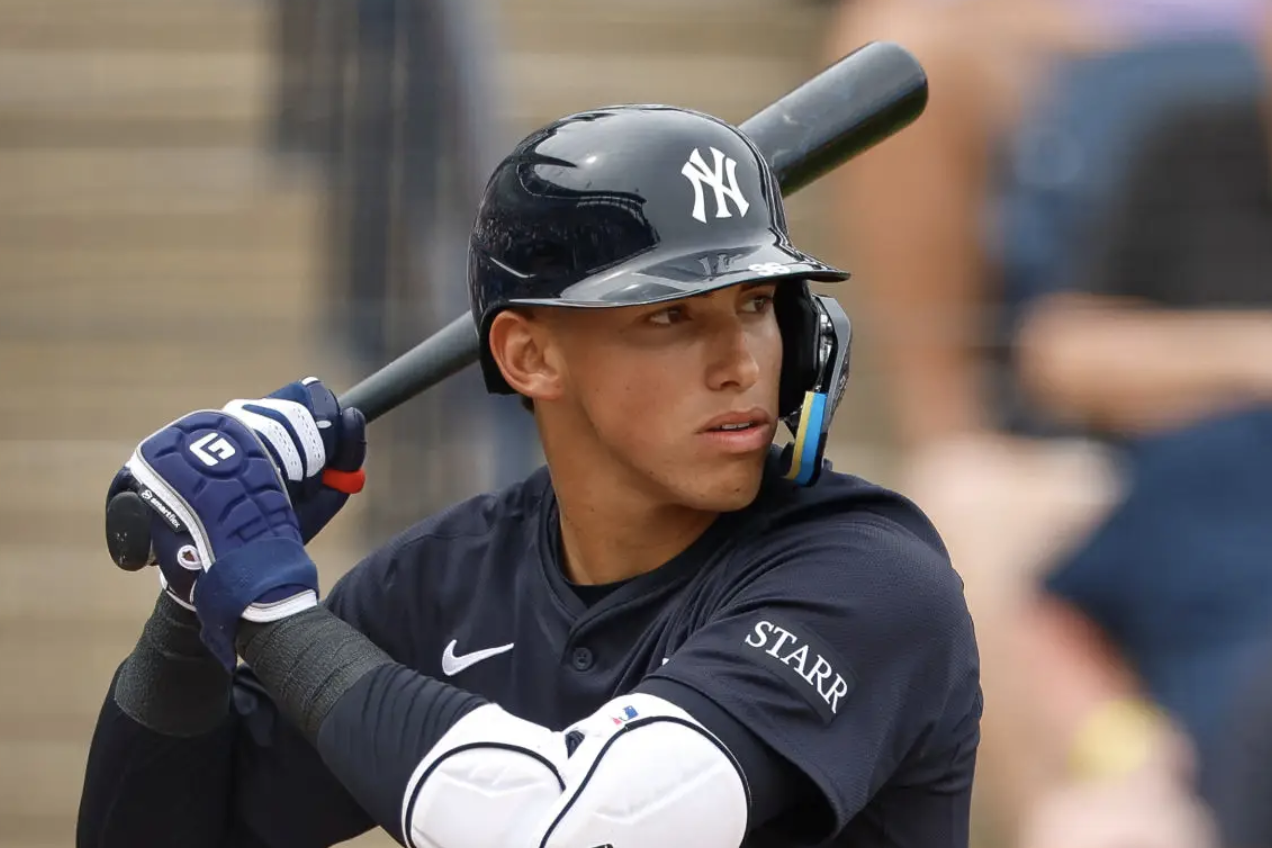 Every summer, MLB contenders are desperate to add pitching reinforcements. The Marlins are well-positioned to capitalize on that this year. For a long time, the Marlins have been lauded for pitching development. Their new front office has a more analytical approach than their predecessors did, but the early returns are similarly encouraging. They have prospects in the upper minors such as Thomas White, Robby Snelling and Adam Mazur capable of being staples of the major league rotation within the next calendar year, with Noble Meyer, Karson Milbrandt, Kevin Defrank, Liomar Martínez and others providing additional waves of depth. If the market appropriately values members of the Marlins' current MLB staff, Peter Bendix will not be reluctant to make deals that reinforce other areas of the organization. Two Marlins pitchers who will be asked about a lot are former Cy Young Award winner Sandy Alcantara and the surging Edward Cabrera. Both of them have their warts—Alcantara's disappointing 2025 results and Cabrera's inconsistent track record of health and strike-throwing—but they still compare favorably to the alternatives that other sellers can offer. Leading their respective divisions, the Chicago Cubs and Los Angeles Dodgers are logical landing spots, but a recent development ought to add another potential trade partner to the mix. On Saturday afternoon, the New York Yankees announced that righty Clarke Schmidt will likely need Tommy John surgery, effectively ending his 2025 and 2026 seasons. Schmidt had been pitching to a 3.32 ERA and 3.90 FIP in 78 ⅔ innings. The Yankees still have two quality veterans atop their rotation in Max Fried and Carlos Rodón, but making it to October is no longer a given for them. They sorely lack right-handed firepower. The reigning AL pennant winners enter Monday at 49-41, and they had been trending in the wrong direction even before Schmidt's injury. While the Yankees don’t boast a very deep farm system, they have a good working relationship with the Marlins. These teams collaborated on a substantial deadline deal last year centered around Jazz Chisholm Jr. and Agustín Ramírez, and Miami's director of player development, Rachel Balkovec, has a strong knowledge of Yankees prospects from her tenure working with the organization. Here are potential trade scenarios that could wind up putting Alcantara or Cabrera in pinstripes. Scenario A: Marlins trade RHP Sandy Alcantara to Yankees for OF Spencer Jones, RHP Elmer Rodriguez-Cruz and C/1B Rafael Flores Sandy’s pedigree would garner a good return if the Marlins move him this summer, but teams determined to win now understandably put a lot of weight on "what have you done for me lately." The former Cy Young Award winner has MLB's highest ERA in 2025 (min. 50 IP) and below-average-for-him K numbers. There is also a financial component, with salaries of $17.3 million both this season and next, plus a $2 million buyout of his 2027 club option if that isn't exercised for $21 million. Therefore, an Alcantara package would be lighter in terms of overall value than a Cabrera one. The main piece going to Miami would be Jones, the Yankees’ #2 prospect, per MLB Pipeline. Though he fell off top-100 league-wide lists after a strikeout-prone 2024 campaign at Double-A, the 24-year-old is making noise again this season. Through 55 games, Jones is slashing .290/.399/.633, mostly with Somerset. He’s taken a recent call-up to Triple-A well. Four of his 20 home runs on the year have come at that level. This season, across both levels, Jones has a K rate of 33.8%. To his credit, he’s also held down a solid 15.6% walk rate, by far the best of his career. At 6’7”, the lefty has a lot of zone to view and cover. The stark improvement in walk rate has come by way of upgrades in his approach and plate presence. Jones is seeing pitches in the strike zone at a 43% clip. His swing percentage is down to a career low 45% and his called strike percentage is down to 14.7%. Jones is making adjustments necessary to access his very loud tools, which include 60-grade game power (70 grade raw) that he has shown to all fields and 60-grade speed. If his recent uptick in patience persists and if he can bring his K rate down, he’s a scary offensive talent. The Marlins aided Griffin Conine in similar fashion amidst his call-up to the majors. Jones could be next all while playing a solid center field, a position of organizational need for Miami. Rodriguez-Cruz (NYY #6 prospect) was a 2022 Red Sox fourth-rounder moved to the Yankees in a trade for Carlos Narvaez this past winter. While jumping a level each season since his debut, wherever Rodriguez-Cruz has pitched, he’s performed well all while continuing to trend upward in terms of his progression. Coming out of the draft, Rodriguez-Cruz’s biggest strength was smooth, repeatable action and an advanced breaking ball; the biggest knock on him was a lack of velocity as his fastball was sitting just 92 mph. Despite an elbow inflammation injury that cost him the last month of the season in 2023, he showed up in 2024 sitting 95 and topping at 97-98. The breaking ball hasn’t gone away for Rodriguez-Cruz. The curveball sits in the mid-high 70s and holds sharp, late downward vertical that can garner him some foolish swings. Rodriguez-Cruz has also quickly added two more breaking pitches—a sweeping slider in the high 80s and a cutter in the same range, giving him a wide arsenal. What ERC previously lacked in terms of overall raw stuff, he’s made up for by continuing to take positive and calculated developmental strides. He’s also cleverly mixing the entirety of his repertoire to keep batters guessing and off balance. Rodriguez-Cruz sits 6’3”, 160 at nearly 22 years of age. As he continues to round into form, he would benefit from adding a bit more strength, which would only aid in his velocity persisting through starts, further negating reliever risk. Overall command and control has been inconsistent for ERC especially last season, but as he’s gained better feel for his new offerings, it’s improved back towards his career norms. This season, he has an 18.2 K-BB%. Through some trials early in his career, Rodriguez-Cruz has answered every question asked of him in a positive manner. He’s been in High-A the entire year, but is knocking on the door of the upper minors. Currently, he’s riding a streak of 35 ⅔ innings with an audacious 0.77 ERA and a 42/14 K/BB. With further consistency and polish, this is a solid back-end rotational arm. Flores (NYY #15 prospect) is not-so-arguably the second-best raw power threat in the New York's system. Signed as an undrafted free agent by the Yankees in 2022, he was pushed straight to High-A in 2023. After a respectable teeth-cutting debut season, Flores broke out in a big way in 2024. In his first 57 games, he slashed .285/.403/.466 with six home runs earning him a promotion to Double-A just 166 games into his pro tenure. Flores’ response to the toughest career developmental MiLB jump could not have been more positive. Last season with Somerset, he slashed .274/.359/.519 with 15 long balls. Back with the Patriots this season, the 24-year-old is putting up similar numbers (.289/.349/.502 with 14 homers). Flores has held down more respectable K rates than Jones, never over 30%. This season, it sits at 26%. That said, his walk rate has decreased as he’s faced more advanced stuff—8.6 BB% in 2025 is a career-low. Seeing how that matriculates through a full season at the higher levels of the minors will be key, but for the time being, Flores is doing enough with contact rates to excuse a lower walk rate. Defensively, evaluators note a passable current skill set at catcher, particularly in terms of athletic movement with a need to improve his throwing arm. In the future with any team and especially in terms of a potential future with the Marlins, Flores may be moved to first base. This prospect's profile is not too dissimilar from Agustín Ramírez's. Scenario B: Marlins trade RHP Edward Cabrera to Yankees for OF George Lombard Jr., RHP Cam Schlitter and SS Roderick Arias While Sandy has history on his side, Cabrera has recent performance on his. He also comes with an additional year of club control through the 2028 season via arbitration. Enter Yankees top prospect George Lombard Jr. A Miami native and graduate of Gulliver Prep, he was the their 2023 first-rounder. Jumping a level each season, Lombard is currently in Double-A. He finds himself there after a great 24-game start to the year with Hudson Valley in which he hit .329/.495/.488. The son of a World Series champion and current Detroit Tigers coach, Lombard grew up intertwined with the game. That shows up consistently on the field where he has an outstanding baseball IQ. Whether it be reading balls off the bat and taking an advantageous first step, garnering a quality secondary lead, or keeping swings within the zone, the 20-year-old consistently shows why he was able to crack the upper minors this early in his career. The tools are those of a future All-Star. Arguably his best tool is his 60/65-grade field. He has good range to both sides and above-average speed along with a plus throwing arm that’s been clocked in the low 90s. He also earns grades in the 50-60 range from evaluators in arm and run. From last season to this year, he’s taken a jump in terms of arm accuracy. Above all, Lombard’s athleticism speaks volumes about his future ability to stick on the middle infield. At the plate, Lombard’s approach and swing decisions are what set him apart and give him a solid initial blueprint. Even amidst the recent jump to Double-A—playing against competition much older than him on average—Lombard is walking at a near 17% clip. His area of needed work recently has been both catching up with fastballs and staying back on breaking pitches inside the zone. Additionally, Lombard is still pretty wiry at 6’2”, 190. He projects to be the type of bat that will come by solid gap power first. Natural progression in both senses of the word and advantageous analytical development for this very smart kid should allow Lombard to grow into solid 50-grade game power. Overall, offensively, Lombard is still young and a bit immature physically and needs to work on his swing path and barrel control on pitches within the zone, but he is developing highly sought-after tools, especially from a premium position. He could be ready for an MLB call as early as next season. Schlitter (NYY #10 prospect) is a 6’6”, 225-pound righty and 2022 seventh-round pick from a cold-weather climate who flew through the minors in just three seasons. This year, between Double-A and Triple-A, Schlitter has a 2.82 ERA and 2.52 FIP. He has a 3.81 K/BB ratio. This is all while pitching in hitter-friendly environments which have hampered him with a hard-luck .350 BABIP. Amidst the aforementioned injury to Schmidt, Schlitter received his first MLB call-up. He is slated to make his debut this coming Tuesday. Schlitter owns a smooth, seemingly low-effort delivery in which he maintains his size throughout, masking his release through a high arm slot. His fastball, which sits mid-90s and has been clocked as high as 99, has significant jump out of his hand and gets on hitters very quickly. He controls it well to various quadrants, notably elevating it for whiffs. Recently, Schlitter told FanGraphs about how he’s developed “cut-ride” movement on the pitch. Schlitter’s best secondary is a 12-6 curveball with consistent spin rates in the 2600s. Burying the pitch on the lower half and purposely out of the zone from the aforementioned high arm slot, it’s been nearly impossible for opposing hitters to pick up. Schlitter also mixes in a sweeper which holds unique vertical break. A recent development and addition to his arsenal has been a low-90s cutter; Schlitter used this pitch to replace a splitter that didn’t wield him great results. Now a four pitch pitcher, Schlitter has quickly rounded into form. With size, strength, still-developing stuff, velo and a great work ethic, he has the profile of a Marlins pitching development darling. This is everything they look for, prize and groom advantageously. Expect this name to be targeted in any trade with New York. Arias (NYY #5 prospect) was a Yankees international signing in 2022. He broke out well in a limited sample in the FCL in 2023, flashing speed, strength and a solid field tool. A transition to full-season ball in 2024 saw Arias have those tools permeate as he homered 13 times and stole 37 bases, but he really struggled with strikeouts (31.0 K%). This season, Arias is repeating Low-A at age 20. He’s slashing a lowly .195/.315/.314. That said, when he gets on, he’s been a consistent stolen base threat, already up to 20 bags. The power has peeked out at times (5 HR). To make the most of his skillset and potential ceiling, Arias will desperately need to fix his lowly contact rates. This season, he’s finding the baseball just 67.9% of the time, which is among the lowest contact rates of all MiLB qualifiers. A small tweak in setup last year awarded Arias better results at the end of last season, but his overwhelming issue with putting the bat on breaking balls has once again overtaken him this year. Arias swings at strikes—he just frequently fails to put the bat on them. Defensively, Arias’ speed and arm serve him well. Pipeline grades Arias as a “no-doubt” shortstop. Many other evaluators, though not as bullish, believe he will stick at the spot long term. Despite some gaps, Arias still has very high upside. With good raw power and the ability to keep swings in the strike zone as well as high defensive upside at a premium position, he is seemingly a few adjustments away from realizing potential. At the very least, his defense gives him a decently high floor. If the Marlins get their hands on him in this buy-low situation, their new development team could get the most out of this player. Betting on the raw tools here would be a smart move.
- 1 comment
-
- 3
-

-
- sandy alcantara
- edward cabrera
- (and 1 more)
-
Fish On First is publishing Miami Marlins minor league summaries throughout the 2025 season, covering the progress of FOF Top 30 prospects and lesser-known players in the organization who are worth monitoring. Each full-season MiLB affiliate has its own section below, with the two Dominican Summer League affiliates combined into a single section. Player stats are up to date entering July 4. Triple-A Jacksonville On June 26, the Miami Marlins purchased the contract of right-handed pitcher Morgan McSweeney, who was playing independent ball with the Staten Island FerryHawks. In his first start back in the affiliated minor leagues, he gave the Jumbo Shrimp 6 ⅔ innings of shutout ball, allowing four hits, one walk and striking out four on 94 pitches (56 strikes). McSweeney makes his next start on Friday night. Jakob Marsee finished the month of June with some of his best career numbers, slashing .308/.396/.648/.1.045 with seven home runs and 15 RBI. He is now slashing .245/.379/.440/.819 with 11 home runs, 29 RBI and 39 stolen bases through 78 games played. Marsee was acquired in the Luis Arraez trade in 2024. After struggling for about a month, Joe Mack has now hit five home runs within his last seven games. He is slashing .273/.354/.459/.812 with 10 home runs and 34 RBI. Mack, along with Thomas White, will be heading to the Futures Game in Atlanta next weekend. Prior to the series opener against the Minnesota Twins, the Marlins claimed right-handed reliever Nick Nastrini off waivers from the Chicago White Sox and optioned him to Jacksonville. Nastrini was still regarded as a White Sox top 30 prospect at the time of the move. He reached the major league level last season, but struggled. A return to AAA has not helped him—in 20 appearances (six starts) this season, he has a 7.51 ERA, 7.05 FIP, 9.74 K/9 and 7.92 BB/9 through 44 ⅓ innings pitched. His control will need to improve a lot before being considered for a call-up to Miami. Nastrini's Jumbo Shrimp debut will likely come against his former teammates as Jacksonville is hosting the Charlotte Knights this weekend. Double-A Pensacola Recently promoted Thomas White in his most recent start, working five shutout innings. He allowed only two hits, one walk and struck out five. Through two starts with Pensacola, he has only allowed one earned run and struck out nine. Robby Snelling is the reigning Southern League Pitcher of the Week after going seven shutout innings in his June 25 start, allowing only two hits and striking out seven. For an encore, Snelling logged five quality innings on Thursday. On the season, he has a 3.61 ERA, 2.84 FIP, 10.58 K/9 and 2.74 BB/9 through 72 ⅓ innings pitched. His promotion to AAA should arrive soon. Kemp Alderman continues to impress, slashing .275/.329/.428/.756 with nine home runs, 34 RBI, 14 stolen bases and a 123 wRC+. The recently promoted Michael Snyder was the Marlins' 10th-round back this past year. He has only played eight games in AA thus far, but already has a 167 wRC+. Most of his defensive work since joining the Wahoos has been at third base. High-A Beloit The Marlins misfired on their third-round pick in the 2023 MLB Draft. Although 23-year-old Brock Vradenburg still has time on his side, it is difficult to map out a potential career turnaround. Vradenburg is among the largest position players in Miami's farm system, listed at 6'6", 230 pounds. He blasted 13 home runs as a junior at Michigan State to juice his prospect stock; in 208 MiLB games since then, he has only 11 long balls, including none this season. Limited to first base defensively, that deficiency simply isn't acceptable. Vradenburg was actually among Beloit's best bats early in the 2025 season. He has trended the wrong way since mid-May. It's been a gradual developmental process for infielder Jesús Hernández. Signed out of Guanare Viejo, Venezuela in January 2021, he finally got bumped up to the High-A level four and a half years later. Hernández boasts a .313/.522/.438 slash line through five games. Shortly before the promotion, he began dabbling in left field, and he's continuing to see some action there as a member of the Sky Carp. Low-A Jupiter For the first time in his professional career, PJ Morlando has been able to string together multiple full weeks of availability. The 2024 top draft pick made his return to the Hammerheads on June 19. In 10 games since, he has slashed .226/.444/.323 with walks drawn in nine of those games. Maximizing his game reps is clearly the main objective for Morlando during the second half of the season. It would be especially valuable for him to see more left-handed pitching—Morlando still doesn't having any hits off lefties as a minor leaguer. Fellow 2024 draftee Jake Faherty is settling in as Jupiter's closer after his own IL stint. The combined line from his last six outings: 7.0 IP, 2 H, 0 R, 2 BB, 10 K (3 SV). Lack of control is still a red flag for Faherty, but he has elite fastball velocity and top-of-the-scale spin rates on his pitches. He topped out at 100 mph in April and has dialed it up as high as 99 since being reinstated. Health permitting, expect to see him in Beloit before season's end. aq4i72.mp4 Keyner Benitez is back in Jupiter's rotation after a surprising demotion to the complex league last month. In 11 total appearances across the two levels this season, the 19-year-old has posted a 2.83 ERA, 3.53 FIP and .237 BAA in 41 ⅓ innings pitched. FCL Marlins After a solid start, the FCL squad fizzled amidst some roster movement. However, since June 14, the squad has been able to ride solid pitching to an even 7-7 record. The team is 18-21 entering their Fourth of July doubleheader. On the year, the FCL Marlins own a 4.18 ERA and have struck out 379 batters, second on the circuit. A huge contributor on the mound for the FCL Marlins has been Nate Payne. The Marlins’ 18th-round pick last season out of the high school ranks, Payne had a lowly 2.03 ERA and 2.43 FIP prior to Friday's abbreviated start. He’s struck out 44 and walked just 14. While Payne isn’t overpowering velocity-wise sitting around 92-93 mph, he has a staple curveball in the 74-76 range that sets him apart. Despite his average present size, Payne gets on top of the pitch well, giving him the ability to change eye levels and get some ugly swings from FCL hitters. nate payne june 2025.mp4 After returning from a slowed start in late May, Yoffry Solano had a fantastic June, especially within the last two weeks of the month. In 37 June ABs, Solano hit .351/.415/.405. He struck out just six times and walked three times. Solano didn’t hit for a ton of power, but his ability to work counts and find holes from both sides of the plate led to great numbers. Solano will need to develop the ability to find a bit more launch and gaps as he grows in order to even out an unsustainable .375 BABIP. That said, June was a great confidence-builder for the 20-year-old. Checking in with top prospect Fabian López, he’s in a 5-for-32 skid. Hits have come sporadically for the 2023 signee, who is repeating the FCL. Recently, López has seen an increase in strikeouts. In June, he had a 21/2 K/BB. Swing decisions, particularly early in counts will need to improve. Additionally, the 6’, 165-pound switch-hitter has had extreme struggles at shortstop, already committing 12 errors on the year. A move to a different infield position, likely second base, would seemingly make a lot of sense for López’s development. DSL Marlins/DSL Miami Due to immature bodies, unpredictable tropical winds and other variables, game power is rare to see in the Dominican Summer League. None of that is stopping this year’s Marlins affiliates. DSL Marlins has hit a league-leading 26 home runs. DSL Miami is fourth on the circuit with 18. They have already exceeded their combined total from the 2024 campaign. The DSL season runs through mid-August. In addition, both teams continue to run. DSL Miami paces the league in steals with 100. DSL Marlins has 58. With this combination, it is unsurprising that both teams are putting up runs in bunches. The DSL Marlins scored 29 in a single game this past week while holding their opponent scoreless for one of the most lopsided victories in modern MiLB history. In the league lead with seven home runs is Diwarys Encarnación. A 19-year-old infielder, Encarnación has projectile size and newly pronounced strength. After hitting just a single home run last season, he’s already put out seven in 2025. Turning gap power into over-the-fence power this early in his career is of course encouraging. Encarnación is also avoiding whiffs, having struck out just 10 times while recording 11 walks. He’s slashing .318/.412/.612. “Undoubtedly very impressive the type of season Diwarys has put together. Credit to him and his offseason routine as well as our (player development) staff really getting him a lot stronger. He’s ticked up in a lot of areas and rightfully so has turned himself into one of our better position players in the DSL,” director of international scouting David Hernandez told us. “He’ll turn 20 soon, but he’s performed his way into a promotion and has significantly improved in batted ball data as well as plate discipline from one year to the next.” A defensive home for Encarnación still hasn’t been settled as he’s once again spent time at shortstop, third base, first base and all three outfield spots this year. Encarnación has the speed and range to stick on the infield and if his power persists as he grows through levels, he will be a great asset at either short or third. The biggest question right now is an inaccurate throwing arm, but there is time to get that under control. With two less homers than Encarnación is Anthony Abreu. Signed out of this past class for a lucrative $550k, Abreu’s pitch recognition ability that he was lauded for in scouting reports has shown up in droves. He’s slashing .254/.438/.552 in his first 21 career games. Of his 17 hits, nine have gone for extra bases. Abreu has spent most of his time at shortstop, but has also already dabbled at other infield positions including third base. Limited speed and range would seem to suggest Abreu will be another international prospect that will move off shortstop and maybe off of the infield entirely eventually. That said, his already-advanced plate presence should carry him to a pretty high floor. “If you want to talk about upside picks, Abreu is the one. Even though his swing-and-miss rates on (fastballs) is way too high, his combination of plate discipline and power makes him a potential monster offensive contributor,” Hernandez said. “He’s a bit maxed out already physically and might profile out of the dirt, but should continue to get more explosive in time to generate real offensive impact.” One more offensive standout has been catcher Almen Tolentino. Back in the DSL after being limited to just 20 games last season, Tolentino is putting on a show through his first 21 contests in 2025. Tolentino is slashing .356/.467/.658. His 1.125 OPS is seventh circuit-wide. He’s already hit four home runs and recorded four triples. “Super athletic and charismatic kid with big-time work ethic,” former director of international operations Adrian Lorenzo told us. “Love that swing!” Defensively, Tolentino, who is 6’1”, 160, has some learning to do behind the plate, but his background may allot him at least an extended look there before possibly being moved off into the diamond. “Probably most natural at 3B/2B, but really like the athleticism and actions behind the plate,” Lorenzo said. rqkdks_1.mp4 Tolentino is 18. With sustained success, he will place himself in prime position for a stateside call later on this season, either at the end of the DSL schedule or amidst FCL promotions. Next Up (July 4-6) Triple-A Jacksonville vs. Charlotte Double-A Pensacola at Biloxi High-A Beloit at Wisconsin Low-A Jupiter vs. Palm Beach View full article
-
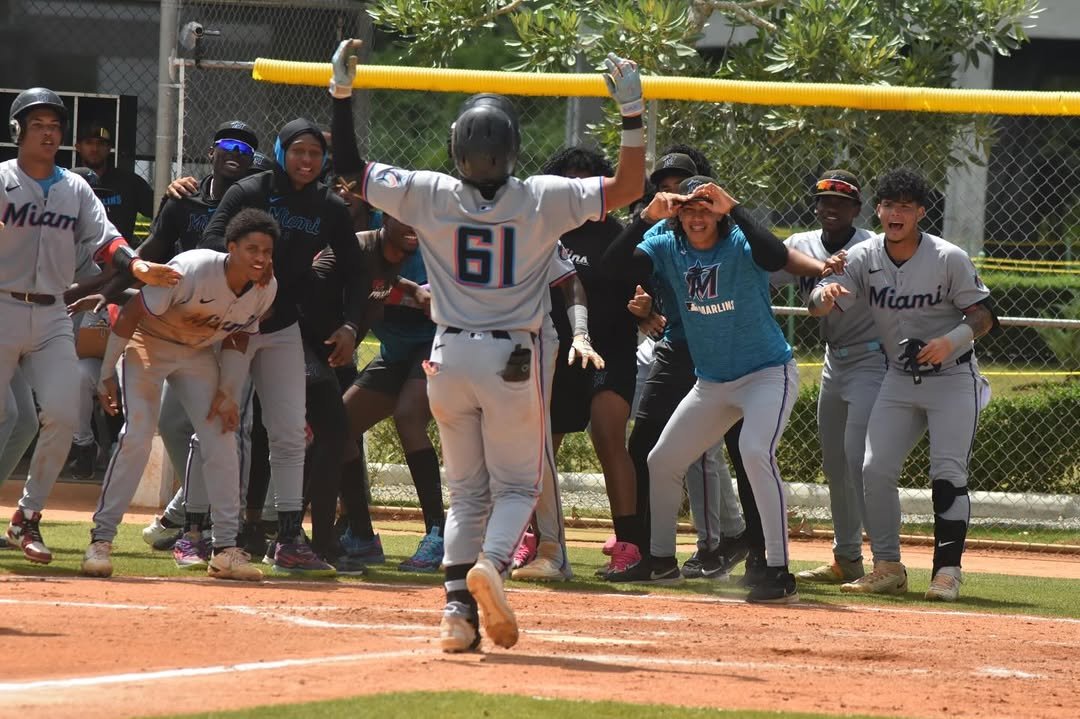 Fish On First is publishing Miami Marlins minor league summaries throughout the 2025 season, covering the progress of FOF Top 30 prospects and lesser-known players in the organization who are worth monitoring. Each full-season MiLB affiliate has its own section below, with the two Dominican Summer League affiliates combined into a single section. Player stats are up to date entering July 4. Triple-A Jacksonville On June 26, the Miami Marlins purchased the contract of right-handed pitcher Morgan McSweeney, who was playing independent ball with the Staten Island FerryHawks. In his first start back in the affiliated minor leagues, he gave the Jumbo Shrimp 6 ⅔ innings of shutout ball, allowing four hits, one walk and striking out four on 94 pitches (56 strikes). McSweeney makes his next start on Friday night. Jakob Marsee finished the month of June with some of his best career numbers, slashing .308/.396/.648/.1.045 with seven home runs and 15 RBI. He is now slashing .245/.379/.440/.819 with 11 home runs, 29 RBI and 39 stolen bases through 78 games played. Marsee was acquired in the Luis Arraez trade in 2024. After struggling for about a month, Joe Mack has now hit five home runs within his last seven games. He is slashing .273/.354/.459/.812 with 10 home runs and 34 RBI. Mack, along with Thomas White, will be heading to the Futures Game in Atlanta next weekend. Prior to the series opener against the Minnesota Twins, the Marlins claimed right-handed reliever Nick Nastrini off waivers from the Chicago White Sox and optioned him to Jacksonville. Nastrini was still regarded as a White Sox top 30 prospect at the time of the move. He reached the major league level last season, but struggled. A return to AAA has not helped him—in 20 appearances (six starts) this season, he has a 7.51 ERA, 7.05 FIP, 9.74 K/9 and 7.92 BB/9 through 44 ⅓ innings pitched. His control will need to improve a lot before being considered for a call-up to Miami. Nastrini's Jumbo Shrimp debut will likely come against his former teammates as Jacksonville is hosting the Charlotte Knights this weekend. Double-A Pensacola Recently promoted Thomas White in his most recent start, working five shutout innings. He allowed only two hits, one walk and struck out five. Through two starts with Pensacola, he has only allowed one earned run and struck out nine. Robby Snelling is the reigning Southern League Pitcher of the Week after going seven shutout innings in his June 25 start, allowing only two hits and striking out seven. For an encore, Snelling logged five quality innings on Thursday. On the season, he has a 3.61 ERA, 2.84 FIP, 10.58 K/9 and 2.74 BB/9 through 72 ⅓ innings pitched. His promotion to AAA should arrive soon. Kemp Alderman continues to impress, slashing .275/.329/.428/.756 with nine home runs, 34 RBI, 14 stolen bases and a 123 wRC+. The recently promoted Michael Snyder was the Marlins' 10th-round back this past year. He has only played eight games in AA thus far, but already has a 167 wRC+. Most of his defensive work since joining the Wahoos has been at third base. High-A Beloit The Marlins misfired on their third-round pick in the 2023 MLB Draft. Although 23-year-old Brock Vradenburg still has time on his side, it is difficult to map out a potential career turnaround. Vradenburg is among the largest position players in Miami's farm system, listed at 6'6", 230 pounds. He blasted 13 home runs as a junior at Michigan State to juice his prospect stock; in 208 MiLB games since then, he has only 11 long balls, including none this season. Limited to first base defensively, that deficiency simply isn't acceptable. Vradenburg was actually among Beloit's best bats early in the 2025 season. He has trended the wrong way since mid-May. It's been a gradual developmental process for infielder Jesús Hernández. Signed out of Guanare Viejo, Venezuela in January 2021, he finally got bumped up to the High-A level four and a half years later. Hernández boasts a .313/.522/.438 slash line through five games. Shortly before the promotion, he began dabbling in left field, and he's continuing to see some action there as a member of the Sky Carp. Low-A Jupiter For the first time in his professional career, PJ Morlando has been able to string together multiple full weeks of availability. The 2024 top draft pick made his return to the Hammerheads on June 19. In 10 games since, he has slashed .226/.444/.323 with walks drawn in nine of those games. Maximizing his game reps is clearly the main objective for Morlando during the second half of the season. It would be especially valuable for him to see more left-handed pitching—Morlando still doesn't having any hits off lefties as a minor leaguer. Fellow 2024 draftee Jake Faherty is settling in as Jupiter's closer after his own IL stint. The combined line from his last six outings: 7.0 IP, 2 H, 0 R, 2 BB, 10 K (3 SV). Lack of control is still a red flag for Faherty, but he has elite fastball velocity and top-of-the-scale spin rates on his pitches. He topped out at 100 mph in April and has dialed it up as high as 99 since being reinstated. Health permitting, expect to see him in Beloit before season's end. aq4i72.mp4 Keyner Benitez is back in Jupiter's rotation after a surprising demotion to the complex league last month. In 11 total appearances across the two levels this season, the 19-year-old has posted a 2.83 ERA, 3.53 FIP and .237 BAA in 41 ⅓ innings pitched. FCL Marlins After a solid start, the FCL squad fizzled amidst some roster movement. However, since June 14, the squad has been able to ride solid pitching to an even 7-7 record. The team is 18-21 entering their Fourth of July doubleheader. On the year, the FCL Marlins own a 4.18 ERA and have struck out 379 batters, second on the circuit. A huge contributor on the mound for the FCL Marlins has been Nate Payne. The Marlins’ 18th-round pick last season out of the high school ranks, Payne had a lowly 2.03 ERA and 2.43 FIP prior to Friday's abbreviated start. He’s struck out 44 and walked just 14. While Payne isn’t overpowering velocity-wise sitting around 92-93 mph, he has a staple curveball in the 74-76 range that sets him apart. Despite his average present size, Payne gets on top of the pitch well, giving him the ability to change eye levels and get some ugly swings from FCL hitters. nate payne june 2025.mp4 After returning from a slowed start in late May, Yoffry Solano had a fantastic June, especially within the last two weeks of the month. In 37 June ABs, Solano hit .351/.415/.405. He struck out just six times and walked three times. Solano didn’t hit for a ton of power, but his ability to work counts and find holes from both sides of the plate led to great numbers. Solano will need to develop the ability to find a bit more launch and gaps as he grows in order to even out an unsustainable .375 BABIP. That said, June was a great confidence-builder for the 20-year-old. Checking in with top prospect Fabian López, he’s in a 5-for-32 skid. Hits have come sporadically for the 2023 signee, who is repeating the FCL. Recently, López has seen an increase in strikeouts. In June, he had a 21/2 K/BB. Swing decisions, particularly early in counts will need to improve. Additionally, the 6’, 165-pound switch-hitter has had extreme struggles at shortstop, already committing 12 errors on the year. A move to a different infield position, likely second base, would seemingly make a lot of sense for López’s development. DSL Marlins/DSL Miami Due to immature bodies, unpredictable tropical winds and other variables, game power is rare to see in the Dominican Summer League. None of that is stopping this year’s Marlins affiliates. DSL Marlins has hit a league-leading 26 home runs. DSL Miami is fourth on the circuit with 18. They have already exceeded their combined total from the 2024 campaign. The DSL season runs through mid-August. In addition, both teams continue to run. DSL Miami paces the league in steals with 100. DSL Marlins has 58. With this combination, it is unsurprising that both teams are putting up runs in bunches. The DSL Marlins scored 29 in a single game this past week while holding their opponent scoreless for one of the most lopsided victories in modern MiLB history. In the league lead with seven home runs is Diwarys Encarnación. A 19-year-old infielder, Encarnación has projectile size and newly pronounced strength. After hitting just a single home run last season, he’s already put out seven in 2025. Turning gap power into over-the-fence power this early in his career is of course encouraging. Encarnación is also avoiding whiffs, having struck out just 10 times while recording 11 walks. He’s slashing .318/.412/.612. “Undoubtedly very impressive the type of season Diwarys has put together. Credit to him and his offseason routine as well as our (player development) staff really getting him a lot stronger. He’s ticked up in a lot of areas and rightfully so has turned himself into one of our better position players in the DSL,” director of international scouting David Hernandez told us. “He’ll turn 20 soon, but he’s performed his way into a promotion and has significantly improved in batted ball data as well as plate discipline from one year to the next.” A defensive home for Encarnación still hasn’t been settled as he’s once again spent time at shortstop, third base, first base and all three outfield spots this year. Encarnación has the speed and range to stick on the infield and if his power persists as he grows through levels, he will be a great asset at either short or third. The biggest question right now is an inaccurate throwing arm, but there is time to get that under control. With two less homers than Encarnación is Anthony Abreu. Signed out of this past class for a lucrative $550k, Abreu’s pitch recognition ability that he was lauded for in scouting reports has shown up in droves. He’s slashing .254/.438/.552 in his first 21 career games. Of his 17 hits, nine have gone for extra bases. Abreu has spent most of his time at shortstop, but has also already dabbled at other infield positions including third base. Limited speed and range would seem to suggest Abreu will be another international prospect that will move off shortstop and maybe off of the infield entirely eventually. That said, his already-advanced plate presence should carry him to a pretty high floor. “If you want to talk about upside picks, Abreu is the one. Even though his swing-and-miss rates on (fastballs) is way too high, his combination of plate discipline and power makes him a potential monster offensive contributor,” Hernandez said. “He’s a bit maxed out already physically and might profile out of the dirt, but should continue to get more explosive in time to generate real offensive impact.” One more offensive standout has been catcher Almen Tolentino. Back in the DSL after being limited to just 20 games last season, Tolentino is putting on a show through his first 21 contests in 2025. Tolentino is slashing .356/.467/.658. His 1.125 OPS is seventh circuit-wide. He’s already hit four home runs and recorded four triples. “Super athletic and charismatic kid with big-time work ethic,” former director of international operations Adrian Lorenzo told us. “Love that swing!” Defensively, Tolentino, who is 6’1”, 160, has some learning to do behind the plate, but his background may allot him at least an extended look there before possibly being moved off into the diamond. “Probably most natural at 3B/2B, but really like the athleticism and actions behind the plate,” Lorenzo said. rqkdks_1.mp4 Tolentino is 18. With sustained success, he will place himself in prime position for a stateside call later on this season, either at the end of the DSL schedule or amidst FCL promotions. Next Up (July 4-6) Triple-A Jacksonville vs. Charlotte Double-A Pensacola at Biloxi High-A Beloit at Wisconsin Low-A Jupiter vs. Palm Beach
-
- 2
-
-

-
- nick nastrini
- robby snelling
- (and 7 more)
-
 Swimming Upstream returns with our longest player interview to date, catching up with Miami Marlins first baseman/outfielder Troy Johnston. Johnston chatted with Alex Carver and Kevin Barral about becoming a father for the first time, his experience playing winter ball in the Dominican Republic, changes he's made during the 2025 season, continuing to wait for a long-overdue call-up and much more. Find Swimming Upstream on the Fish On First YouTube channel, our new-look Apple Podcasts channel and wherever else you get your pods. FOF's audio programming also includes The Offishial Show, Fish Unfiltered, Big Fish Small Pod and more. Drafted by the Marlins way back in 2019, Johnston was honored as the organization's Minor League Player of the Year in 2023. He has a career .284/.369/.458 slash line in the minors. Originally listed as an outfielder, he's been primarily deployed at first base since entering the pros. Despite 261 games of strong Triple-A production, Johnston has yet to be called up by the Marlins. Worth noting, the club has received -1.3 fWAR from its first basemen so far this season, which ranks 29th out of 30 MLB teams. Johnston turns 28 years old on Sunday. Following the 2025 season, he's eligible to become a minor league free agent if not selected to the Marlins 40-man roster. Follow Troy (@2297Troy), Alex (@marlinsminors), Kevin (@kevin_barral) and Fish On First (@FishOnFirst) on Twitter. Join the Marlins Discord server! Complete Miami Marlins coverage here at FishOnFirst.com.
 -
Swimming Upstream—Episode #66 Swimming Upstream returns with our longest player interview to date, catching up with Miami Marlins first baseman/outfielder Troy Johnston. Johnston chatted with Alex Carver and Kevin Barral about becoming a father for the first time, his experience playing winter ball in the Dominican Republic, changes he's made during the 2025 season, continuing to wait for a long-overdue call-up and much more. Find Swimming Upstream on the Fish On First YouTube channel, our new-look Apple Podcasts channel and wherever else you get your pods. FOF's audio programming also includes The Offishial Show, Fish Unfiltered, Big Fish Small Pod and more. Drafted by the Marlins way back in 2019, Johnston was honored as the organization's Minor League Player of the Year in 2023. He has a career .284/.369/.458 slash line in the minors. Originally listed as an outfielder, he's been primarily deployed at first base since entering the pros. Despite 261 games of strong Triple-A production, Johnston has yet to be called up by the Marlins. Worth noting, the club has received -1.3 fWAR from its first basemen so far this season, which ranks 29th out of 30 MLB teams. Johnston turns 28 years old on Sunday. Following the 2025 season, he's eligible to become a minor league free agent if not selected to the Marlins 40-man roster. Follow Troy (@2297Troy), Alex (@marlinsminors), Kevin (@kevin_barral) and Fish On First (@FishOnFirst) on Twitter. Join the Marlins Discord server! Complete Miami Marlins coverage here at FishOnFirst.com. View full article
-
Up and down. Highs and lows. Peaks and valleys. A rollercoaster of emotions. Whatever your choice phrase, Friday night’s game summed up the Marlins’ season so far perfectly. Edward Cabrera continued to improve before leaving injured (again), more than a few position players busted out of cold spells and the bullpen held off a hard-charging Washington team in a rain-soaked Marlins win at Nationals Park. Cabrera took the ball for the 11th time this season, coming off a very impressive three-game stretch in which he held down a 0.59 ERA and 1.84 FIP. His command dramatically improved as he was in the zone 52% of the time. Cabrera started to build on those results immediately as he promptly struck out the side on his first inning of work. He then got around a walk and a hit by pitch in the second and retired his first hitter of the third. By once again getting ahead with first pitch strikes then changing eye levels with his breaking stuff, Cabrera was cruising along very smoothly. Then things changed dramatically when CJ Abrams grounded a ball softly to first base. Attempting to cover the bag, Cabrera got tangled up with Eric Wagaman and came up lame. He stayed in the game but promptly gave up a two-run home run to James Wood and another walk to Nate Lowe. Cabrera finished the inning but did not re-enter. “Ankle contusion,” McCullough said of the incident. “A little bit of congestion around the bag with that play. The lower half and the ankle with pushing off we felt it was in his best interest at that time to not keep going right there. We will be in a good spot for his next start.” Thanks in large part to a 73.8% first pitch strike percentage and overall 51.2% zone rate, Cabrera will roll into that outing with a lowly 11.3% walk rate over his last four starts. While the news came out good in the end for Cabrera, it marked the 20th time already this season a Marlins starter failed to make it into the fifth inning and it was once again up to Clayton McCullough to piece together the rest of the game. Whatever plan McCullough had planned for this situation quickly had a wrench thrown in it as after just 0.2 innings worth of Tyler Phillips, a lengthy rain delay ensued. Upon restart, McCullough went with lefty Cade Gibson. It wound up being a great decision as Gibson once again impressed. He finished the 4th inning and threw a scoreless 5th allowing just two hits while striking out two. After not even being invited to spring training and barely pitching at the Triple-A level, Gibson now boasts a lowly 0.93 ERA in 19.1 MLB innings. “It was a lefty heavy lineup today. Phillips only got a couple outs before the rain but because of where it was there, the bottom wrapping around the the top with Cade,” McCullough said of his managerial strategy. “From there, we were just trying to go with outs and putting guys in spots we thought was the best matchup for them.” After Gibson, Valente Bellozo and Anthony Veneziano let up a combined six runs, but the Marlins’ offense was able to hand Calvin Faucher a two-run lead in the ninth. He earned his sixth save of the season. At 0 for his last 18, it’s clear the league had started to adjust to Agustín Ramirez. By throwing the rookie away much more often, he had become a much more manageable at-bat for opposing pitchers. Ramirez put an end to that in emphatic fashion. On the second pitch he saw on the night, after laying off a fastball up, Ramirez went down and got a 94 mph four seamer just which just barely clipped the inside corner. He wasn’t done. After falling behind 0-2 in his next at-bat, Ramirez drew the count back even and made Mitchell Parker serve up an 85 mph splitter directly down the heart of the plate. Ramirez didn’t miss it. In fact, he got every stitch and then some sending a majestic 447-foot blast into the night. It’s the longest home run by a Marlins player since Jesús Sánchez’s 480-footer last season. Ramirez, who went 3-for-5, is now up to 10 home runs in his first 44 games. He is the fastest Marlins rookie to reach that mark. Previously, Giancarlo Stanton hit his 10th home run in his 47th career game. “He’s had a terrific year. With how well he’s performed and certainly for him to take a low fastball in that first at-bat and put a great swing on it. And I think that other one was a secondary perch that he elevated,” McCullough said. “Good to see him put swings like that on, elevate to the pull side and then he had another knock up the middle staying inside.” Ramirez wasn’t the only Marlin in a slump-busting mood. Kyle Stowers entered the night 5 for his last 46. He went 2-for-4 with a walk and a run scored. Xavier Edwards, who came into the night mired in a 2-for-16 mini slump, went 3-for-5 with an RBI, a run, and a walk. Eric Wagaman, who was 4 for his last 21, recorded the eventual game winning hit, a two run single. The series resumes in Washington Saturday afternoon. It will be a presumed bullpen game for Miami as they face off against former Marlin Trevor Williams. View full article
-
Cabrera continues to trend upward, bats bust slumps in rainy win
Alex Carver posted an article in Marlins
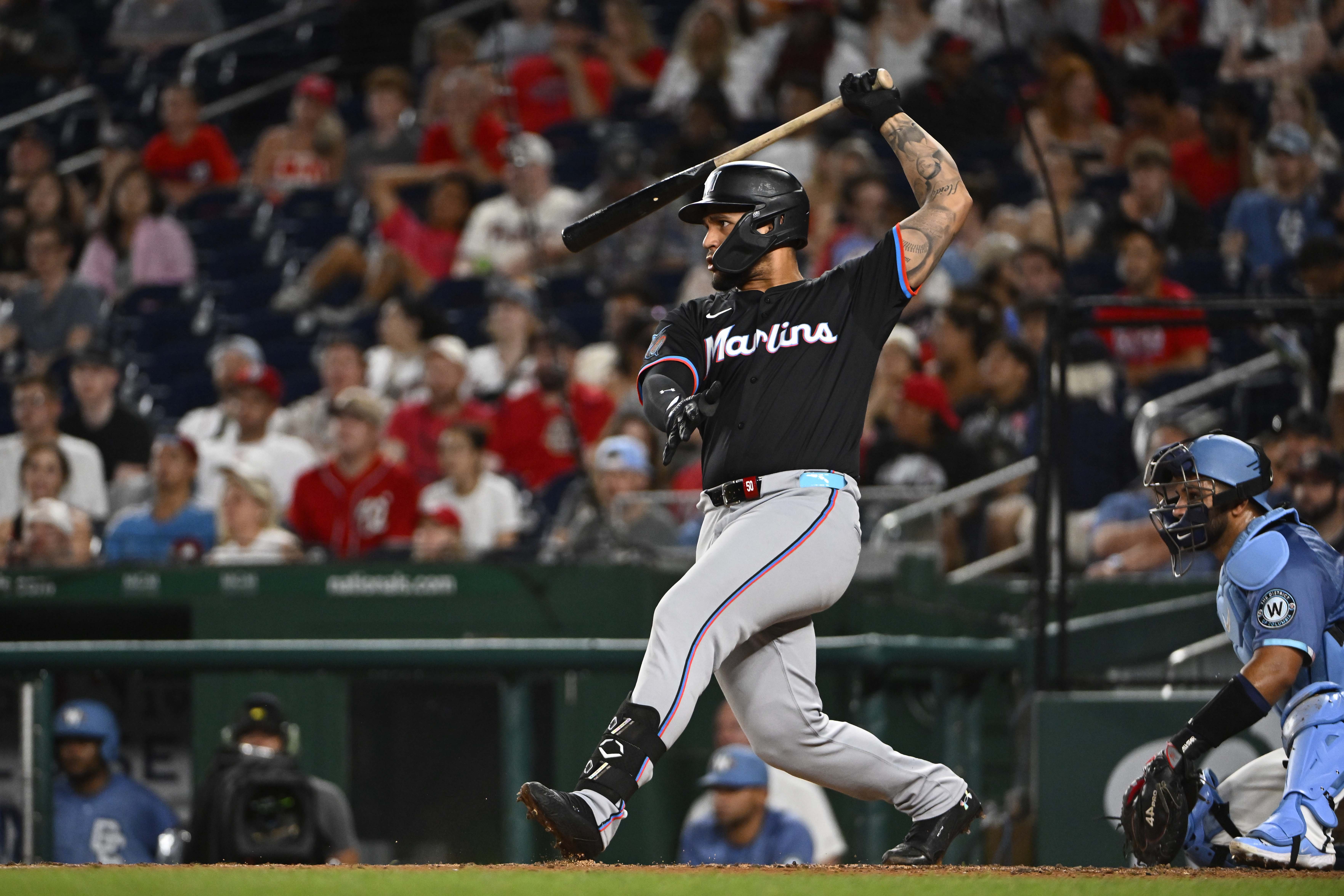 Up and down. Highs and lows. Peaks and valleys. A rollercoaster of emotions. Whatever your choice phrase, Friday night’s game summed up the Marlins’ season so far perfectly. Edward Cabrera continued to improve before leaving injured (again), more than a few position players busted out of cold spells and the bullpen held off a hard-charging Washington team in a rain-soaked Marlins win at Nationals Park. Cabrera took the ball for the 11th time this season, coming off a very impressive three-game stretch in which he held down a 0.59 ERA and 1.84 FIP. His command dramatically improved as he was in the zone 52% of the time. Cabrera started to build on those results immediately as he promptly struck out the side on his first inning of work. He then got around a walk and a hit by pitch in the second and retired his first hitter of the third. By once again getting ahead with first pitch strikes then changing eye levels with his breaking stuff, Cabrera was cruising along very smoothly. Then things changed dramatically when CJ Abrams grounded a ball softly to first base. Attempting to cover the bag, Cabrera got tangled up with Eric Wagaman and came up lame. He stayed in the game but promptly gave up a two-run home run to James Wood and another walk to Nate Lowe. Cabrera finished the inning but did not re-enter. “Ankle contusion,” McCullough said of the incident. “A little bit of congestion around the bag with that play. The lower half and the ankle with pushing off we felt it was in his best interest at that time to not keep going right there. We will be in a good spot for his next start.” Thanks in large part to a 73.8% first pitch strike percentage and overall 51.2% zone rate, Cabrera will roll into that outing with a lowly 11.3% walk rate over his last four starts. While the news came out good in the end for Cabrera, it marked the 20th time already this season a Marlins starter failed to make it into the fifth inning and it was once again up to Clayton McCullough to piece together the rest of the game. Whatever plan McCullough had planned for this situation quickly had a wrench thrown in it as after just 0.2 innings worth of Tyler Phillips, a lengthy rain delay ensued. Upon restart, McCullough went with lefty Cade Gibson. It wound up being a great decision as Gibson once again impressed. He finished the 4th inning and threw a scoreless 5th allowing just two hits while striking out two. After not even being invited to spring training and barely pitching at the Triple-A level, Gibson now boasts a lowly 0.93 ERA in 19.1 MLB innings. “It was a lefty heavy lineup today. Phillips only got a couple outs before the rain but because of where it was there, the bottom wrapping around the the top with Cade,” McCullough said of his managerial strategy. “From there, we were just trying to go with outs and putting guys in spots we thought was the best matchup for them.” After Gibson, Valente Bellozo and Anthony Veneziano let up a combined six runs, but the Marlins’ offense was able to hand Calvin Faucher a two-run lead in the ninth. He earned his sixth save of the season. At 0 for his last 18, it’s clear the league had started to adjust to Agustín Ramirez. By throwing the rookie away much more often, he had become a much more manageable at-bat for opposing pitchers. Ramirez put an end to that in emphatic fashion. On the second pitch he saw on the night, after laying off a fastball up, Ramirez went down and got a 94 mph four seamer just which just barely clipped the inside corner. He wasn’t done. After falling behind 0-2 in his next at-bat, Ramirez drew the count back even and made Mitchell Parker serve up an 85 mph splitter directly down the heart of the plate. Ramirez didn’t miss it. In fact, he got every stitch and then some sending a majestic 447-foot blast into the night. It’s the longest home run by a Marlins player since Jesús Sánchez’s 480-footer last season. Ramirez, who went 3-for-5, is now up to 10 home runs in his first 44 games. He is the fastest Marlins rookie to reach that mark. Previously, Giancarlo Stanton hit his 10th home run in his 47th career game. “He’s had a terrific year. With how well he’s performed and certainly for him to take a low fastball in that first at-bat and put a great swing on it. And I think that other one was a secondary perch that he elevated,” McCullough said. “Good to see him put swings like that on, elevate to the pull side and then he had another knock up the middle staying inside.” Ramirez wasn’t the only Marlin in a slump-busting mood. Kyle Stowers entered the night 5 for his last 46. He went 2-for-4 with a walk and a run scored. Xavier Edwards, who came into the night mired in a 2-for-16 mini slump, went 3-for-5 with an RBI, a run, and a walk. Eric Wagaman, who was 4 for his last 21, recorded the eventual game winning hit, a two run single. The series resumes in Washington Saturday afternoon. It will be a presumed bullpen game for Miami as they face off against former Marlin Trevor Williams.
 -
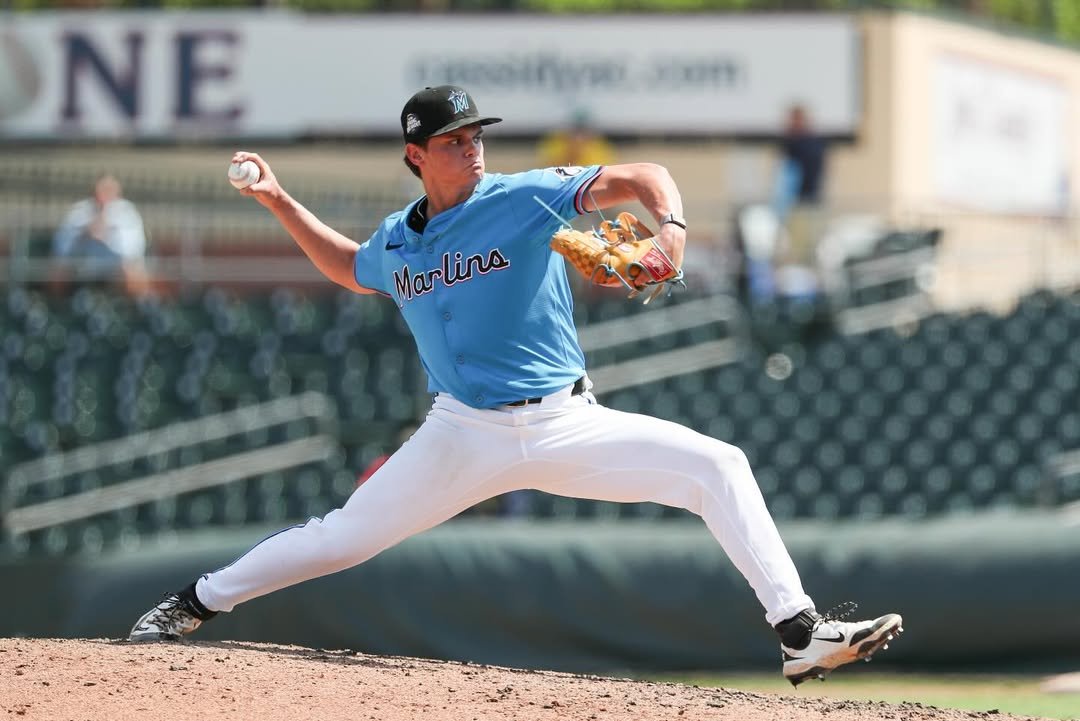 Fish On First is publishing weekly Miami Marlins minor league summaries throughout the 2025 season, covering the progress of FOF Top 30 prospects and lesser-known players in the organization who are worth monitoring. Each full-season MiLB affiliate has its own section below. Player stats are up to date entering June 11. Triple-A Jacksonville With his 28th birthday fast approaching and the Marlins offense struggling, Troy Johnston is still waiting for a call-up that may never come. He continues to produce, slashing .276/.351/.432/.783 with five home runs, 24 RBI, 19 stolen bases and a 113 wRC+. With the addition of Matt Mervis to the Jacksonville roster, along with Deyvison De Los Santos (Fish On First’s No. 8 prospect) nearing his return from a quad strain, Johnston is heading back to left field on a part-time basis, where he had been playing frequently before De Los Santos went down. Speaking of Mervis, he has three homers in eight games since being outrighted to the minors. He's been playing first base and also DH’ing. Jakob Marsee (FOF #23) is now up to 36 stolen bases this season. He is slashing .212/.359/.337/.696 with four home runs, 17 RBI and a 101 wRC+. His plate discipline and speed could earn him a call-up toward the end of this season, depending on what the Marlins do with their most experienced outfielders at the trade deadline. Minor league free agent signing Robinson Piña has quietly been very consistent this season. He hasn't allowed more than three earned runs in any of his 12 appearances (ten starts). Piña has posted a 3.51 ERA, 3.99 FIP, 8.24 K/9 and 2.63 BB/9 with the same effectiveness against right-handed and left-handed batters. Double-A Pensacola Kemp Alderman began the 2025 season on a tear and he's on another one right now. The Blue Wahoos right fielder is slashing .294/.358/.446/.804, including an 1.162 OPS in June. His strikeout percentage continues to drop, now at 19.6% on the season, the lowest of his career. Alderman is leading all Marlins minor leaguers with 60 hits. Through 17 appearances (27.1 IP), reliever Josh White has a 1.32 ERA, 1.14 FIP, 15.80 K/9 and 3.95 BB/9. A 2022 fifth-round pick, White is repeating AA, but should soon find himself in AAA-Jacksonville. With the recent graduation of Agustín Ramírez from prospect eligibility, we added Nigel Belgrave to the final spot of the FOF Top 30 list. Through 15 appearances (26.1 IP), Belgrave has a 2.39 ERA, 2.25 FIP, 15.04 K/9 and 3.08 BB/9. He has allowed only three hits to right-handed batters this season. Newly signed by the Marlins after being cut by the New York Yankees, outfielder Grant Richardson is making a great first impression. Through five games with the Wahoos, he is 7-for-17 with two home runs and five RBI. For Richardson to move up through the minor league system, he must find a way to reduce his high strikeout rate. This season, it is at 39.5%, and that is despite the advantage of being heavily platooned. High-A Beloit In two outings since returning from index finger soreness, Marlins top prospect Thomas White hasn't allowed an extra-base hit. Not a single High-A batter has homered off of White this season. Despite a somewhat limited workload (31.0 IP), he is well on his way to another Futures Game selection. Noble Meyer's overall production with the Sky Carp looks extremely similar to 2024, with one notable difference as of late—he's attacking the strike zone. Meyer has issued only one walk in each of his last four starts with a 66% strike rate (compared to 58% in his previous six starts). Ranked second in the Midwest League with a .446 on-base percentage, Michael Snyder has been a pleasant surprise. The Marlins paid him a paltry signing bonus of just $17,500 as their 10th-round draft pick. A corner infielder in college, Snyder has added left field to his toolbox. A Double-A assignment would be more age-appropriate for the 24-year-old. Low-A Jupiter June has not been too kind for Jupiter. In the month, the Hammerheads are 2-7. Fortunately, the Andres Valor turnaround featured in our previous Marlins Minor League Report has sustained. During the past three-plus series, Valor is hitting a solid .303/.385/.500. He has two home runs and seven doubles over that span. Looking at Valor’s setup and approach from season’s start until now, there are some noticeable changes. Valor used to have his bat out in front of his shoulders and turned his heel in as a timing trigger, which cost him some leverage. He still has a mostly upright stance, but is much more relaxed in his approach, alleviating some stiffness that caused him to lose balance and pull off on many of his swings, leading to weak contact. Nowadays, Valor is resting his bat on his shoulder, letting the ball travel deeper, and is quieter on his front foot. The more compact approach has not affected his bat speed and natural plus power. Valor will likely always be a pull-first batter, but these improvements have allotted him longer at-bats and better chances at making loud contact. Maybe most encouraging is that despite his limited batting average, Valor is now walking at a 12% clip. This is the single most encouraging offensive player in the Marlins’ system over these past two weeks. In June, Cam Clayton is hitting .360/.489/.800. Billed as a shortstop out of the draft, Clayton has spent seven games there while also moonlighting at first base and second base this season. Clayton features a split stance and a short swing with some slight uppercut capable of reaching all fields. Much like in his college days, he’s also shown good plate discipline and the ability to limit whiffs. Clayton is limited in terms of speed and overall raw power, but he’s off to a good start to his pro career. Eligibility at multiple positions and solid contact rates should carry him to an eventual big league debut. FCL Marlins The FCL squad has picked it up a bit offensively over the past two weeks and they are now averaging over five runs per game. However, their pitching staff is allowing 5.58 per game. They sit at an appropriate 10-13. Jancory De La Cruz continues to impress on the backfields in Jupiter after coming stateside for the first time this season. Through his 14 games, the 19-year-old is slashing .341/.500/.523. Despite the smaller sample, the most impressive aspect to his game is his newfound ability to limit strikeouts. He came into this season with a 110/65 K/BB. So far in 2024, he has a 10/15 K/BB. He’s already just one homer shy of his 2024 total. JDLC is huge for his age at 6’2”, 180. It seems so far this season, he has much better control over his body and he is using much more of the field. After a 61% pull rate last year, he’s only pulling the ball 48% of the time. His ground ball rate is up, but many of them have resulted in hits, proving he’s not trying to force power in every situation. These are all great developments for the $405k signing. He will be worth keeping a close eye on as the season progresses. A call-up to the full-season ranks shouldn’t be ruled out. Grant Shepardson continues to build up his workload as a starting pitcher. After missing last season due to a minor post-draft injury, Shepardson has been arguably the best pitcher in the FCL for the Marlins this season. Featuring a plus slider and 93-95 mph heat, Shepardson is already standing out. This past Saturday, he went up against the FCL Cardinals and in a career-high five innings, allowed just three hits and a single unearned run on a career-high-tying five Ks and one walk. Coming out of the draft, there was thought to be reliever risk for Shepardson due to limited size and lack of a third pitch. However, he has taken steps forward with velocity and continues to show plus spin rates on the aforementioned slider. He is developing a solid changeup as well as a still-improving high-70s curveball with tight arc and vertical drop. sgmreu.mp4 There’s a lot to like about this still very young player. Multi-inning reliever is looking more like his floor, with a rotation role in the big leagues being very plausible. Shepardson will likely spend all of 2025 in the FCL. DSL Marlins/DSL Miami The DSL squads kicked off their seasons this past week in a big way. Helped by games in which they scored 28 and 14 runs, DSL Miami is pacing the league by a large margin in offensive production. On the other squad, there have been some very encouraging initial samples, despite their small size. Overall, the DSL squads are 7-6. One interesting development in the DSL this season has been the conversion of former two-way player Janero Miller to pitching exclusively. It’s a very unique progression path, but the Marlins still believe in the arm enough for him to continue progressing as a pitcher. Miller's fastball velocity is sitting at 93 mph and touching 95. He complements it with a gyro slider and a changeup. He will need to build up a very raw skill set that he took a year off from. After being delayed to start the season due to a minor ailment, Miller allowed two runs on two walks and two strikeouts in his first outing while throwing five wild pitches. From a source, Miller will continue to be stretched out and eventually start games. Another high-priced international signing, Luis Cova has been an early standout for the DSL Miami squad. After hitting .239/.376/.438 over the course of the full short season schedule last year, Cova is off to a robust .385/.485/.846 start this year. In seven games, he’s already matched his 2024 home run total with three, two of which came in his first game of the season. Cova is lauded for great bat-to-ball skills, which he showed both late last year and so far this season. His patience allows him to select swings well and make consistent contact. Still building physically, he’s ahead of schedule offensively. He will need to continue to develop defensively to stick in center field, namely with reads and routes, but there is a solid footing here. Cova could’ve started 2025 stateside and is deserving of facing more advanced competition. Only one DSL player has hit more home runs than Cova: Almen Tolentino. An 18-year-old catcher who is also repeating the DSL after an offensively limited first showing, Tolentino is off to a scorching start to the season: he is slashing .385/.484/1.000. Seven of his 10 hits have gone for extra bases. The four homers leads the DSL circuit. At 6’1”, 160, Tolentino already has decent bulk and obvious budding power. If this continues, the Marlins may have found a gem for just $145k. Next Up (June 12-15) Triple-A Jacksonville at Rochester Double-A Pensacola at Rocket City High-A Beloit at Quad Cities Low-A Jupiter at Bradenton
- 1 comment
-
- 1
-
-
- troy johnston
- jakob marsee
- (and 8 more)
-
Fish On First is publishing weekly Miami Marlins minor league summaries throughout the 2025 season, covering the progress of FOF Top 30 prospects and lesser-known players in the organization who are worth monitoring. Each full-season MiLB affiliate has its own section below. Player stats are up to date entering June 11. Triple-A Jacksonville With his 28th birthday fast approaching and the Marlins offense struggling, Troy Johnston is still waiting for a call-up that may never come. He continues to produce, slashing .276/.351/.432/.783 with five home runs, 24 RBI, 19 stolen bases and a 113 wRC+. With the addition of Matt Mervis to the Jacksonville roster, along with Deyvison De Los Santos (Fish On First’s No. 8 prospect) nearing his return from a quad strain, Johnston is heading back to left field on a part-time basis, where he had been playing frequently before De Los Santos went down. Speaking of Mervis, he has three homers in eight games since being outrighted to the minors. He's been playing first base and also DH’ing. Jakob Marsee (FOF #23) is now up to 36 stolen bases this season. He is slashing .212/.359/.337/.696 with four home runs, 17 RBI and a 101 wRC+. His plate discipline and speed could earn him a call-up toward the end of this season, depending on what the Marlins do with their most experienced outfielders at the trade deadline. Minor league free agent signing Robinson Piña has quietly been very consistent this season. He hasn't allowed more than three earned runs in any of his 12 appearances (ten starts). Piña has posted a 3.51 ERA, 3.99 FIP, 8.24 K/9 and 2.63 BB/9 with the same effectiveness against right-handed and left-handed batters. Double-A Pensacola Kemp Alderman began the 2025 season on a tear and he's on another one right now. The Blue Wahoos right fielder is slashing .294/.358/.446/.804, including an 1.162 OPS in June. His strikeout percentage continues to drop, now at 19.6% on the season, the lowest of his career. Alderman is leading all Marlins minor leaguers with 60 hits. Through 17 appearances (27.1 IP), reliever Josh White has a 1.32 ERA, 1.14 FIP, 15.80 K/9 and 3.95 BB/9. A 2022 fifth-round pick, White is repeating AA, but should soon find himself in AAA-Jacksonville. With the recent graduation of Agustín Ramírez from prospect eligibility, we added Nigel Belgrave to the final spot of the FOF Top 30 list. Through 15 appearances (26.1 IP), Belgrave has a 2.39 ERA, 2.25 FIP, 15.04 K/9 and 3.08 BB/9. He has allowed only three hits to right-handed batters this season. Newly signed by the Marlins after being cut by the New York Yankees, outfielder Grant Richardson is making a great first impression. Through five games with the Wahoos, he is 7-for-17 with two home runs and five RBI. For Richardson to move up through the minor league system, he must find a way to reduce his high strikeout rate. This season, it is at 39.5%, and that is despite the advantage of being heavily platooned. High-A Beloit In two outings since returning from index finger soreness, Marlins top prospect Thomas White hasn't allowed an extra-base hit. Not a single High-A batter has homered off of White this season. Despite a somewhat limited workload (31.0 IP), he is well on his way to another Futures Game selection. Noble Meyer's overall production with the Sky Carp looks extremely similar to 2024, with one notable difference as of late—he's attacking the strike zone. Meyer has issued only one walk in each of his last four starts with a 66% strike rate (compared to 58% in his previous six starts). Ranked second in the Midwest League with a .446 on-base percentage, Michael Snyder has been a pleasant surprise. The Marlins paid him a paltry signing bonus of just $17,500 as their 10th-round draft pick. A corner infielder in college, Snyder has added left field to his toolbox. A Double-A assignment would be more age-appropriate for the 24-year-old. Low-A Jupiter June has not been too kind for Jupiter. In the month, the Hammerheads are 2-7. Fortunately, the Andres Valor turnaround featured in our previous Marlins Minor League Report has sustained. During the past three-plus series, Valor is hitting a solid .303/.385/.500. He has two home runs and seven doubles over that span. Looking at Valor’s setup and approach from season’s start until now, there are some noticeable changes. Valor used to have his bat out in front of his shoulders and turned his heel in as a timing trigger, which cost him some leverage. He still has a mostly upright stance, but is much more relaxed in his approach, alleviating some stiffness that caused him to lose balance and pull off on many of his swings, leading to weak contact. Nowadays, Valor is resting his bat on his shoulder, letting the ball travel deeper, and is quieter on his front foot. The more compact approach has not affected his bat speed and natural plus power. Valor will likely always be a pull-first batter, but these improvements have allotted him longer at-bats and better chances at making loud contact. Maybe most encouraging is that despite his limited batting average, Valor is now walking at a 12% clip. This is the single most encouraging offensive player in the Marlins’ system over these past two weeks. In June, Cam Clayton is hitting .360/.489/.800. Billed as a shortstop out of the draft, Clayton has spent seven games there while also moonlighting at first base and second base this season. Clayton features a split stance and a short swing with some slight uppercut capable of reaching all fields. Much like in his college days, he’s also shown good plate discipline and the ability to limit whiffs. Clayton is limited in terms of speed and overall raw power, but he’s off to a good start to his pro career. Eligibility at multiple positions and solid contact rates should carry him to an eventual big league debut. FCL Marlins The FCL squad has picked it up a bit offensively over the past two weeks and they are now averaging over five runs per game. However, their pitching staff is allowing 5.58 per game. They sit at an appropriate 10-13. Jancory De La Cruz continues to impress on the backfields in Jupiter after coming stateside for the first time this season. Through his 14 games, the 19-year-old is slashing .341/.500/.523. Despite the smaller sample, the most impressive aspect to his game is his newfound ability to limit strikeouts. He came into this season with a 110/65 K/BB. So far in 2024, he has a 10/15 K/BB. He’s already just one homer shy of his 2024 total. JDLC is huge for his age at 6’2”, 180. It seems so far this season, he has much better control over his body and he is using much more of the field. After a 61% pull rate last year, he’s only pulling the ball 48% of the time. His ground ball rate is up, but many of them have resulted in hits, proving he’s not trying to force power in every situation. These are all great developments for the $405k signing. He will be worth keeping a close eye on as the season progresses. A call-up to the full-season ranks shouldn’t be ruled out. Grant Shepardson continues to build up his workload as a starting pitcher. After missing last season due to a minor post-draft injury, Shepardson has been arguably the best pitcher in the FCL for the Marlins this season. Featuring a plus slider and 93-95 mph heat, Shepardson is already standing out. This past Saturday, he went up against the FCL Cardinals and in a career-high five innings, allowed just three hits and a single unearned run on a career-high-tying five Ks and one walk. Coming out of the draft, there was thought to be reliever risk for Shepardson due to limited size and lack of a third pitch. However, he has taken steps forward with velocity and continues to show plus spin rates on the aforementioned slider. He is developing a solid changeup as well as a still-improving high-70s curveball with tight arc and vertical drop. sgmreu.mp4 There’s a lot to like about this still very young player. Multi-inning reliever is looking more like his floor, with a rotation role in the big leagues being very plausible. Shepardson will likely spend all of 2025 in the FCL. DSL Marlins/DSL Miami The DSL squads kicked off their seasons this past week in a big way. Helped by games in which they scored 28 and 14 runs, DSL Miami is pacing the league by a large margin in offensive production. On the other squad, there have been some very encouraging initial samples, despite their small size. Overall, the DSL squads are 7-6. One interesting development in the DSL this season has been the conversion of former two-way player Janero Miller to pitching exclusively. It’s a very unique progression path, but the Marlins still believe in the arm enough for him to continue progressing as a pitcher. Miller's fastball velocity is sitting at 93 mph and touching 95. He complements it with a gyro slider and a changeup. He will need to build up a very raw skill set that he took a year off from. After being delayed to start the season due to a minor ailment, Miller allowed two runs on two walks and two strikeouts in his first outing while throwing five wild pitches. From a source, Miller will continue to be stretched out and eventually start games. Another high-priced international signing, Luis Cova has been an early standout for the DSL Miami squad. After hitting .239/.376/.438 over the course of the full short season schedule last year, Cova is off to a robust .385/.485/.846 start this year. In seven games, he’s already matched his 2024 home run total with three, two of which came in his first game of the season. Cova is lauded for great bat-to-ball skills, which he showed both late last year and so far this season. His patience allows him to select swings well and make consistent contact. Still building physically, he’s ahead of schedule offensively. He will need to continue to develop defensively to stick in center field, namely with reads and routes, but there is a solid footing here. Cova could’ve started 2025 stateside and is deserving of facing more advanced competition. Only one DSL player has hit more home runs than Cova: Almen Tolentino. An 18-year-old catcher who is also repeating the DSL after an offensively limited first showing, Tolentino is off to a scorching start to the season: he is slashing .385/.484/1.000. Seven of his 10 hits have gone for extra bases. The four homers leads the DSL circuit. At 6’1”, 160, Tolentino already has decent bulk and obvious budding power. If this continues, the Marlins may have found a gem for just $145k. Next Up (June 12-15) Triple-A Jacksonville at Rochester Double-A Pensacola at Rocket City High-A Beloit at Quad Cities Low-A Jupiter at Bradenton View full article
-
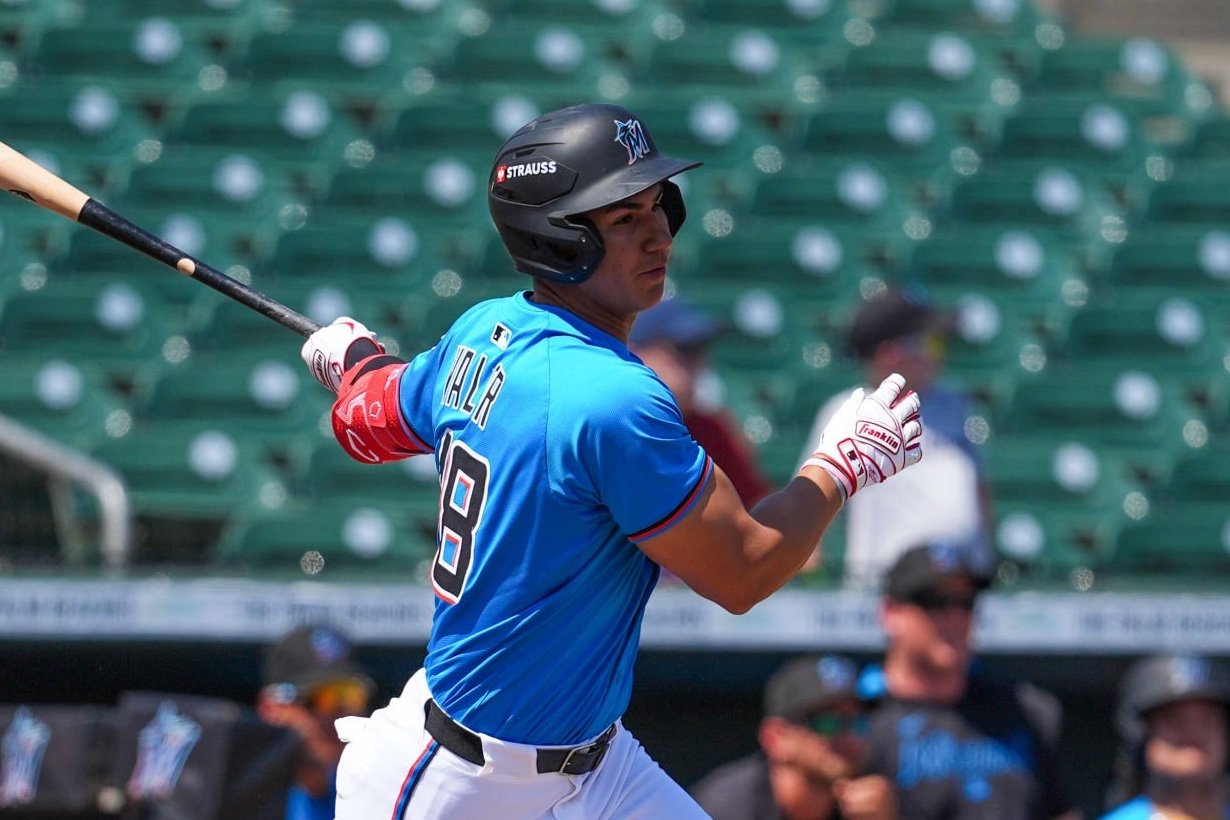 Fish On First is publishing weekly Miami Marlins minor league summaries throughout the 2025 season, covering the progress of FOF Top 30 prospects and lesser-known players in the organization who are worth monitoring. Each full-season MiLB affiliate has its own section below. Player stats are up to date entering May 29. Triple-A Jacksonville The Jumbo Shrimp came out victorious just twice in five games last week against the Memphis Redbirds, but seem to be back on a winning track after taking both games in Wednesday's doubleheader against the Gwinnett Stripers. Game one of the twin bill featured Eury Pérez making his seventh rehab start and second in Triple-A. To put it bluntly, Pérez dominated. The 22-year-old cruised through five innings, striking out four on 72 pitches. The only blemishes on Pérez's line were a lone hit and walk. It’s safe to assume that Pérez, a little over a year removed from Tommy John surgery, will make at least one more start in Jacksonville. If Miami’s front office decides that their prized arm is good to go, Pérez could debut some time during the next road trip, either in Tampa or Pittsburgh. Other Marlins big leaguers Dane Myers, Xavier Edwards and Declan Cronin are rehabbing alongside Pérez in Jacksonville as well. Edwards is serving as the designated hitter on Thursday, but he is in the midst of transitioning from shortstop back to second base. Looking back to last week, Shrimp bats struggled, only averaging three runs a game. Jack Winkler and Heriberto Hernández were responsible for six hits—half of which left the yard—and an additional double each. While they are on the older side, they are comfortably above average offensively by International League standards, both with an OPS north of .760. Double-A Pensacola Saying Pensacola slumped over the past week and a half would be a disservice. The Wahoos dropped all six of their games against Birmingham and continued their streak in games one and two in Montgomery, falling 8-1 and 3-1, respectively. A pivotal force behind their struggles has been offensive production. Among all seven qualified hitters, not one OPS’d higher than even .560, with Kemp Alderman getting the closest with a .554 mark. Notably, Jared Serna continued his near season-long slump, recording just three hits in 26 at-bats. Serna’s BB/K ratio hasn’t seen any drastic changes from a season ago—24/29 in ‘25 compared to 56/101 in 2024—but the highly regarded prospect from the Jazz Chisholm Jr. trade has simply been unable to hit for any power at a consistent rate. The 5’7" 22-year-old has just four extra-base hits in nearly two months of action. Again, looking back to a season ago, Serna recorded five of those within his first five games in the Marlins organization. The lone bright spot from northwest Florida during this lull has been on the mound in Robby Snelling. Fish On First’s #6 prospect earned Southern League Pitcher of the Week honors, as Snelling authored a six-inning, two-hit performance. Snelling didn’t stop there, riding the momentum into his next outing against the Biscuits on Wednesday, tossing a career-high seven innings. The premier prospect in last July’s Tanner Scott deal punched out six and displayed incredible command, throwing 60 strikes on 89 pitches. Following both gems, Snelling’s season ERA sits at an even 4.00. A promotion a couple hours east to Jacksonville has seemed overdue for a little while now. High-A Beloit It was a long week for the Sky Carp who endured a rain delay, a doubleheader, and overall a series loss to the Quad Cities River Bandits. One highlight in the series was lefty Emmett Olson who pitched in the completion of the first game of the series, a game that was suspended on April 20. Entering in the fifth inning, Beloit was down 3-2. Olson restarted the game for the Carp and turned in five innings of one run ball on five hits and just one earned run. He struck out a career-high 10 batters. The 6’4”, 230 Olson is a master at changing eye levels with a 12-6 curveball and a rising fastball. Most encouraging about this outing was how Olson used his slider specifically throwing it away from same-side hitters and for punchouts. His MO has been to use the breaking stuff early and the fastball late. Showing new ways to mix his stuff is a great development. Payton Green continues to succeed in the middle of the Sky Carp order. After a strong series against Wisconsin, he went 7-for-10 in his first three games in this series to accomplish an 11-for-20 stretch. He’s hitting .346/.402/.531 this month, his first month at the High-A level. Coming out of the draft, one of the biggest knocks on Green was his ability to stay consistent with the bat. Streaks like this at the highest level of baseball he’s ever appeared at will work to his advantage. Most evaluators think that he will also eventually move off of shortstop to third base where a good arm and just average range will serve him better, but he’s looked the part so far at short where he’s spent the entire season. He’s contributed to 14 double plays and committed just a single error. If he continues to perform, this is a prospect that will start to get the attention he hasn’t gotten much of thus far. Karson Milbrandt continues to perform week over week. After going 3.2 IP in his last start, Milbrandt completed four innings in this series while striking out six. He allowed three hits and a single walk. Milbrandt continues to be built back up after injury early this season. His ability to recover quickly and improved command with an increase in fastball velo has been a huge catalyst for early success. After he struck out his six in that start on May 23, the Sky Carp bullpen struck out an additional 11. Top prospect Thomas White was once again absent from a scheduled start in this series, his second straight missed outing. Our Isaac Azout cleared up that conundrum: White is dealing with a minor finger injury. While the timeline for his return is unknown, White is on a throwing program. Low-A Jupiter It was an up-and-down series for Jupiter against St Lucie this past week. Though they were well outscored 30-17, they managed to split a six-game series. Overall, it’s been a rough start for Andrés Valor, but he started to show some consistency in this series in terms of contact rates. He went 5-for-21 including his second home run of the season and his fourth double. At the time of publication midway through Thursday's contest, Valor has just reached another Low-A milestone by recording multiple extra-base hits in the same game. Though he still needs to get his swing decisions in check overall, seeing Valor show the ability to start to do so is encouraging. With improved patience and barrel control, Valor—still 19—has standout physical projection and athleticism. Whether or not he maintains this recent consistency will be something to watch as we go through the rest of the Hammerheads’ schedule. 2024 draftee Cam Clayton got his call to the Hammerheads at the back end of last series and started three games against St. Lucie. He made a pretty good first impression with Jupiter, homering in his second game and tripling in his fourth. Impact with the bat as he rounded out his collegiate career was the question for Clayton. Initial exports with Jupiter are good, but we will have to see how that matriculates as he gets more familiar with the league. A defensive star at the University of Washington, Clayton was drafted as a shortstop and did play one game of this series there with Jupiter, but he’s also spent time at 1B, 2B and DH. The Marlins’ development team appears to be trying to take some pressure off of Clayton’s bat by moving him around to less demanding positions. Even with Starlyn Caba still sidelined due to injury, the Hammerheads have a glut of SS options, including Andrew Salas and Carter Johnson. Already 22, Clayton could be pushed quickly. Look at him right now as a defensive-first asset with some holes to fill in his swing, particularly related to length and timing. FCL Marlins It’s been a rough go lately for the FCL squad which has lost five straight games. That said, they still remain one of the most base stealing savvy teams on the circuit—they are second in the FCL with 48 bags. The team’s top offensive performer to this point in the season has been 2024 ninth-round draftee Dub Gleed. Slashing .250/.467/.365, Gleed is boasting good plate vision. In 11 games, he has eight hits: four singles and four doubles. Coming out of the draft, Gleed was lauded for his ability to work counts and show good patience while needing to translate raw power to game power. He will also need to find a permanent defensive home. Miami is hoping he works out at 3B (he’s spent all his time there so far as a pro). While this initial small sample is solid, Gleed is 22, so we will need to see how his offensive skill set persists against more age-appropriate competition. He was promoted to Jupiter on Thursday. Another 2024 draftee showing solid initial results as a pro is 18th-round pick Nate Payne. A lefty, Payne has held down a sub-3 (2.53) ERA in his first 10 ⅔ innings. The 19-year-old Pennsylvanian is much closer to the average age of his FCL peers. Payne averages middling velocity, but he makes up for it with good movement on his heater and a pretty deep arsenal, especially for his age. He’s already throwing four pitches: fastball, changeup, curveball, and slider. His best offering is likely his bender which shows nice velo separation and tight arc. It’s been a big catalyst for his success so far, per sources we’ve heard from out of the FCL. With limited size and still a bit to work out in terms of consistent command and control, Payne has reliever risk, but he’s off to a solid start in limited showings. Next Up (May 29-June 1) Triple-A Jacksonville at Gwinnett Double-A Pensacola at Montgomery High-A Beloit at Lansing Low-A Jupiter vs. Daytona
-
- 1
-
-
- dub gleed
- emmett olson
- (and 4 more)
-
Farm system updates from the week of May 19. Despite a lot of losses at the team level, a pair of top prospects have recently hit their stride. Fish On First is publishing weekly Miami Marlins minor league summaries throughout the 2025 season, covering the progress of FOF Top 30 prospects and lesser-known players in the organization who are worth monitoring. Each full-season MiLB affiliate has its own section below. Player stats are up to date entering May 29. Triple-A Jacksonville The Jumbo Shrimp came out victorious just twice in five games last week against the Memphis Redbirds, but seem to be back on a winning track after taking both games in Wednesday's doubleheader against the Gwinnett Stripers. Game one of the twin bill featured Eury Pérez making his seventh rehab start and second in Triple-A. To put it bluntly, Pérez dominated. The 22-year-old cruised through five innings, striking out four on 72 pitches. The only blemishes on Pérez's line were a lone hit and walk. It’s safe to assume that Pérez, a little over a year removed from Tommy John surgery, will make at least one more start in Jacksonville. If Miami’s front office decides that their prized arm is good to go, Pérez could debut some time during the next road trip, either in Tampa or Pittsburgh. Other Marlins big leaguers Dane Myers, Xavier Edwards and Declan Cronin are rehabbing alongside Pérez in Jacksonville as well. Edwards is serving as the designated hitter on Thursday, but he is in the midst of transitioning from shortstop back to second base. Looking back to last week, Shrimp bats struggled, only averaging three runs a game. Jack Winkler and Heriberto Hernández were responsible for six hits—half of which left the yard—and an additional double each. While they are on the older side, they are comfortably above average offensively by International League standards, both with an OPS north of .760. Double-A Pensacola Saying Pensacola slumped over the past week and a half would be a disservice. The Wahoos dropped all six of their games against Birmingham and continued their streak in games one and two in Montgomery, falling 8-1 and 3-1, respectively. A pivotal force behind their struggles has been offensive production. Among all seven qualified hitters, not one OPS’d higher than even .560, with Kemp Alderman getting the closest with a .554 mark. Notably, Jared Serna continued his near season-long slump, recording just three hits in 26 at-bats. Serna’s BB/K ratio hasn’t seen any drastic changes from a season ago—24/29 in ‘25 compared to 56/101 in 2024—but the highly regarded prospect from the Jazz Chisholm Jr. trade has simply been unable to hit for any power at a consistent rate. The 5’7" 22-year-old has just four extra-base hits in nearly two months of action. Again, looking back to a season ago, Serna recorded five of those within his first five games in the Marlins organization. The lone bright spot from northwest Florida during this lull has been on the mound in Robby Snelling. Fish On First’s #6 prospect earned Southern League Pitcher of the Week honors, as Snelling authored a six-inning, two-hit performance. Snelling didn’t stop there, riding the momentum into his next outing against the Biscuits on Wednesday, tossing a career-high seven innings. The premier prospect in last July’s Tanner Scott deal punched out six and displayed incredible command, throwing 60 strikes on 89 pitches. Following both gems, Snelling’s season ERA sits at an even 4.00. A promotion a couple hours east to Jacksonville has seemed overdue for a little while now. High-A Beloit It was a long week for the Sky Carp who endured a rain delay, a doubleheader, and overall a series loss to the Quad Cities River Bandits. One highlight in the series was lefty Emmett Olson who pitched in the completion of the first game of the series, a game that was suspended on April 20. Entering in the fifth inning, Beloit was down 3-2. Olson restarted the game for the Carp and turned in five innings of one run ball on five hits and just one earned run. He struck out a career-high 10 batters. The 6’4”, 230 Olson is a master at changing eye levels with a 12-6 curveball and a rising fastball. Most encouraging about this outing was how Olson used his slider specifically throwing it away from same-side hitters and for punchouts. His MO has been to use the breaking stuff early and the fastball late. Showing new ways to mix his stuff is a great development. Payton Green continues to succeed in the middle of the Sky Carp order. After a strong series against Wisconsin, he went 7-for-10 in his first three games in this series to accomplish an 11-for-20 stretch. He’s hitting .346/.402/.531 this month, his first month at the High-A level. Coming out of the draft, one of the biggest knocks on Green was his ability to stay consistent with the bat. Streaks like this at the highest level of baseball he’s ever appeared at will work to his advantage. Most evaluators think that he will also eventually move off of shortstop to third base where a good arm and just average range will serve him better, but he’s looked the part so far at short where he’s spent the entire season. He’s contributed to 14 double plays and committed just a single error. If he continues to perform, this is a prospect that will start to get the attention he hasn’t gotten much of thus far. Karson Milbrandt continues to perform week over week. After going 3.2 IP in his last start, Milbrandt completed four innings in this series while striking out six. He allowed three hits and a single walk. Milbrandt continues to be built back up after injury early this season. His ability to recover quickly and improved command with an increase in fastball velo has been a huge catalyst for early success. After he struck out his six in that start on May 23, the Sky Carp bullpen struck out an additional 11. Top prospect Thomas White was once again absent from a scheduled start in this series, his second straight missed outing. Our Isaac Azout cleared up that conundrum: White is dealing with a minor finger injury. While the timeline for his return is unknown, White is on a throwing program. Low-A Jupiter It was an up-and-down series for Jupiter against St Lucie this past week. Though they were well outscored 30-17, they managed to split a six-game series. Overall, it’s been a rough start for Andrés Valor, but he started to show some consistency in this series in terms of contact rates. He went 5-for-21 including his second home run of the season and his fourth double. At the time of publication midway through Thursday's contest, Valor has just reached another Low-A milestone by recording multiple extra-base hits in the same game. Though he still needs to get his swing decisions in check overall, seeing Valor show the ability to start to do so is encouraging. With improved patience and barrel control, Valor—still 19—has standout physical projection and athleticism. Whether or not he maintains this recent consistency will be something to watch as we go through the rest of the Hammerheads’ schedule. 2024 draftee Cam Clayton got his call to the Hammerheads at the back end of last series and started three games against St. Lucie. He made a pretty good first impression with Jupiter, homering in his second game and tripling in his fourth. Impact with the bat as he rounded out his collegiate career was the question for Clayton. Initial exports with Jupiter are good, but we will have to see how that matriculates as he gets more familiar with the league. A defensive star at the University of Washington, Clayton was drafted as a shortstop and did play one game of this series there with Jupiter, but he’s also spent time at 1B, 2B and DH. The Marlins’ development team appears to be trying to take some pressure off of Clayton’s bat by moving him around to less demanding positions. Even with Starlyn Caba still sidelined due to injury, the Hammerheads have a glut of SS options, including Andrew Salas and Carter Johnson. Already 22, Clayton could be pushed quickly. Look at him right now as a defensive-first asset with some holes to fill in his swing, particularly related to length and timing. FCL Marlins It’s been a rough go lately for the FCL squad which has lost five straight games. That said, they still remain one of the most base stealing savvy teams on the circuit—they are second in the FCL with 48 bags. The team’s top offensive performer to this point in the season has been 2024 ninth-round draftee Dub Gleed. Slashing .250/.467/.365, Gleed is boasting good plate vision. In 11 games, he has eight hits: four singles and four doubles. Coming out of the draft, Gleed was lauded for his ability to work counts and show good patience while needing to translate raw power to game power. He will also need to find a permanent defensive home. Miami is hoping he works out at 3B (he’s spent all his time there so far as a pro). While this initial small sample is solid, Gleed is 22, so we will need to see how his offensive skill set persists against more age-appropriate competition. He was promoted to Jupiter on Thursday. Another 2024 draftee showing solid initial results as a pro is 18th-round pick Nate Payne. A lefty, Payne has held down a sub-3 (2.53) ERA in his first 10 ⅔ innings. The 19-year-old Pennsylvanian is much closer to the average age of his FCL peers. Payne averages middling velocity, but he makes up for it with good movement on his heater and a pretty deep arsenal, especially for his age. He’s already throwing four pitches: fastball, changeup, curveball, and slider. His best offering is likely his bender which shows nice velo separation and tight arc. It’s been a big catalyst for his success so far, per sources we’ve heard from out of the FCL. With limited size and still a bit to work out in terms of consistent command and control, Payne has reliever risk, but he’s off to a solid start in limited showings. Next Up (May 29-June 1) Triple-A Jacksonville at Gwinnett Double-A Pensacola at Montgomery High-A Beloit at Lansing Low-A Jupiter vs. Daytona View full article
-
 For many years, the Marlins have been lauded for the way they develop pitching, creating numerous effective MLB hurlers out of both homegrown players and those discarded by other organizations. Considering the raw talent currently in their minor league system, that reputation has a very good chance of permeating. But the Marlins’ new brass has implemented a significant change to how pitches are selected during MiLB games, and players are still getting acclimated to it. As first reported by Craig Mish of FanDuel Sports Network, pitches are no longer being called by catchers in the minor leagues; that responsibility belongs to the coaches, who relay their decision to the catcher from the dugout, then the catcher transmits the call to the pitcher. Fish On First reached out to sources to better understand the process, which was implemented during the 2024 season, and how it differs from traditional game-calling. “Last year in pitchers meetings, we would look at hitters' heat maps and what they struggle to hit early and late in counts,” one source said. “Our focus now is to 'throw your nastiest stuff middle-middle.'" “Coaches have a sheet that says what their best pitches are so you throw those more than pitches that don’t grade out as well,” another source stated. In addition, every pitcher in the Marlins organization is being coached to have the same mindset in terms of location and sequencing. “It’s middle-middle until two strikes or 3-2 count,” a source stated. “Get to two strikes then throw as many breakers as possible to get a strikeout. So 0-2, 1-2, 2-2 is all go get the punchout.” The main reason why this strategy is being used, particularly early in counts, is that across MiLB, under 10% of pitches thrown middle-middle over a multi-year sample have resulted in hits. The other results are largely takes, fouls, errors or outs. The Marlins view this as a prime ability to get ahead in counts early and build pitcher confidence. After the first pitch, coaches are basing their pitch-calling on the present pitcher’s arsenal and what have historically been their most effective pitches. They are also using the most readily available pitch data game to game and even inning to inning to determine what they're capable of throwing in the strike zone. “They are pitch-calling based on what pitch will have the best outcome of being an out,” a source said. “For example, an average slider gets more outs than an above-average fastball. Therefore, (they’d) throw more sliders.” “It’s, 'Can I throw that pitch for a strike?' If not, he plan adjusts to a pitch that you can throw for strikes that day.” From Wednesday's Pensacola Blue Wahoos game, here is left-hander Robby Snelling facing Knoxville Smokies infielder Ed Howard in the top of the third inning. Catcher Sam Praytor can be seen turning toward the Blue Wahoos dugout between each pitch for the call, then he signals it to Snelling. Three curveballs were thrown during the four-pitch strikeout sequence 7jzl2s (1).mp4 Within the new system, pitchers still have the ability to shake off the initial call being made by their coaches, but due to time constraints, they are not always able to pivot to their preferred offering. “(Pitchers) have the ability to shake, but with the pitch clock going, sometimes we get the numbers too late and have to give them a sign around 6-7 seconds which gives them no time to shake and come set to deliver pitch," a source said. “So (we) almost always just go with what coach calls.” The Marlins are only making an exception to this approach at the Triple-A level, where catchers are game-calling 20% of the time. Another source said a huge piece of the pitcher-catcher relationship has been removed and they are concerned about their sequencing becoming too predictable. “It’’s just about 'throwing nastiest stuff the most,' which teams can obviously start sitting on because we aren’t using heaters as often,” a source said. “The calls are based on Stuff+ grades.” Some Marlins pitchers have expressed disappointment about the new strategy. Others are trying to take the change in stride. “I don’t think into it too much,” another source said. “I’m mostly focused on the getting ahead aspect compared to the middle-middle approach.” From a statistical standpoint, the Marlins' upper-level affiliates are thriving. Double-A Pensacola has a 2.51 ERA, the lowest among all 120 full-season Minor League Baseball teams. Triple-A Jacksonville has a 2.95 ERA (seventh-lowest) and the third-highest strikeout total in the minors. However, it's been a different story for the lower-level affiliates, whose pitchers are less experienced and cannot command their "nastiest stuff" with as much precision. Low-A Jupiter has the Florida State League's highest ERA (5.72) to go along with 22 hit batsmen in just 17 games. The minor leagues are first and foremost meant to prepare players for what they will be doing at the major league level. Unless the Marlins plan to eventually institute this same process in Miami, it is going to make the transition more challenging for both pitchers and catchers. This is another bold step the Marlins are taking within their revamped analytical approach. They are more than willing to challenge conventional baseball wisdom. Will it work long term and continue to put their pitching development ahead of other organizations? Time will tell.
 -
Marlins player development is experimenting with a data-driven approach to pitch selection that's producing mixed results. For many years, the Marlins have been lauded for the way they develop pitching, creating numerous effective MLB hurlers out of both homegrown players and those discarded by other organizations. Considering the raw talent currently in their minor league system, that reputation has a very good chance of permeating. But the Marlins’ new brass has implemented a significant change to how pitches are selected during MiLB games, and players are still getting acclimated to it. As first reported by Craig Mish of FanDuel Sports Network, pitches are no longer being called by catchers in the minor leagues; that responsibility belongs to the coaches, who relay their decision to the catcher from the dugout, then the catcher transmits the call to the pitcher. Fish On First reached out to sources to better understand the process, which was implemented during the 2024 season, and how it differs from traditional game-calling. “Last year in pitchers meetings, we would look at hitters' heat maps and what they struggle to hit early and late in counts,” one source said. “Our focus now is to 'throw your nastiest stuff middle-middle.'" “Coaches have a sheet that says what their best pitches are so you throw those more than pitches that don’t grade out as well,” another source stated. In addition, every pitcher in the Marlins organization is being coached to have the same mindset in terms of location and sequencing. “It’s middle-middle until two strikes or 3-2 count,” a source stated. “Get to two strikes then throw as many breakers as possible to get a strikeout. So 0-2, 1-2, 2-2 is all go get the punchout.” The main reason why this strategy is being used, particularly early in counts, is that across MiLB, under 10% of pitches thrown middle-middle over a multi-year sample have resulted in hits. The other results are largely takes, fouls, errors or outs. The Marlins view this as a prime ability to get ahead in counts early and build pitcher confidence. After the first pitch, coaches are basing their pitch-calling on the present pitcher’s arsenal and what have historically been their most effective pitches. They are also using the most readily available pitch data game to game and even inning to inning to determine what they're capable of throwing in the strike zone. “They are pitch-calling based on what pitch will have the best outcome of being an out,” a source said. “For example, an average slider gets more outs than an above-average fastball. Therefore, (they’d) throw more sliders.” “It’s, 'Can I throw that pitch for a strike?' If not, he plan adjusts to a pitch that you can throw for strikes that day.” From Wednesday's Pensacola Blue Wahoos game, here is left-hander Robby Snelling facing Knoxville Smokies infielder Ed Howard in the top of the third inning. Catcher Sam Praytor can be seen turning toward the Blue Wahoos dugout between each pitch for the call, then he signals it to Snelling. Three curveballs were thrown during the four-pitch strikeout sequence 7jzl2s (1).mp4 Within the new system, pitchers still have the ability to shake off the initial call being made by their coaches, but due to time constraints, they are not always able to pivot to their preferred offering. “(Pitchers) have the ability to shake, but with the pitch clock going, sometimes we get the numbers too late and have to give them a sign around 6-7 seconds which gives them no time to shake and come set to deliver pitch," a source said. “So (we) almost always just go with what coach calls.” The Marlins are only making an exception to this approach at the Triple-A level, where catchers are game-calling 20% of the time. Another source said a huge piece of the pitcher-catcher relationship has been removed and they are concerned about their sequencing becoming too predictable. “It’’s just about 'throwing nastiest stuff the most,' which teams can obviously start sitting on because we aren’t using heaters as often,” a source said. “The calls are based on Stuff+ grades.” Some Marlins pitchers have expressed disappointment about the new strategy. Others are trying to take the change in stride. “I don’t think into it too much,” another source said. “I’m mostly focused on the getting ahead aspect compared to the middle-middle approach.” From a statistical standpoint, the Marlins' upper-level affiliates are thriving. Double-A Pensacola has a 2.51 ERA, the lowest among all 120 full-season Minor League Baseball teams. Triple-A Jacksonville has a 2.95 ERA (seventh-lowest) and the third-highest strikeout total in the minors. However, it's been a different story for the lower-level affiliates, whose pitchers are less experienced and cannot command their "nastiest stuff" with as much precision. Low-A Jupiter has the Florida State League's highest ERA (5.72) to go along with 22 hit batsmen in just 17 games. The minor leagues are first and foremost meant to prepare players for what they will be doing at the major league level. Unless the Marlins plan to eventually institute this same process in Miami, it is going to make the transition more challenging for both pitchers and catchers. This is another bold step the Marlins are taking within their revamped analytical approach. They are more than willing to challenge conventional baseball wisdom. Will it work long term and continue to put their pitching development ahead of other organizations? Time will tell. View full article
-
Main takeaways from what was the first full week of Minor League Baseball at the Low-A, High-A and Double-A levels of the Marlins farm system. Welcome to another edition of what will be a series of weekly Miami Marlins minor league summaries throughout the 2025 season. The stats and information used below is updated entering April 15 unless otherwise noted. Triple-A Jacksonville Right-hander Adam Mazur made one start and a long relief appearance this past week for the Jumbo Shrimp. On Tuesday, Mazur tossed five shutout innings, allowing one hit and walk while striking out five. In that Tuesday start, Mazur leaned on his slider and four-seamer. The fastball averaged 93.7 mph and topped out at 95.9 mph. His slider generated eight whiffs and was used in three of his five strikeout pitches (curveball for two strikeouts). On Sunday, Mazur entered in relief of Declan Cronin, who was making a rehab appearance. In 4 ⅓ innings of work, the Fish On First 11th-ranked prospect struck out five and, for a second time in the week, did not allow a run. Mazur is already on the 40-man roster, so if he continues performing like this, the big league team will give him an opportunity to start for them at some point this season. In a Wednesday afternoon game, starter Janson Junk turned in the best start of his career at any level, going six shutout innings, striking out ten and not walking anyone. The Jumbo Shrimp were facing a Charlotte Knights lineup featuring top prospects Kyle Teel, Edgar Quero and Colson Montgomery. Junk generated 11 total whiffs, with six of them coming on the fastball, which averaged 94.4 mph and topped out at 96.3 mph. After a strong spring for the Marlins, Junk was reassigned to Minor League camp and then AAA-Jacksonville. He’s currently proving to be a strong depth option for the Marlins. In his first start for the Jumbo Shrimp, Valente Bellozo went four shutout innings, striking out six and only walking two. Bellozo’s fastball topped out at 92.5 mph and averaged 90.7 mph. His cutter generated eight whiffs (13 total whiffs on the night). Reliever Austin Roberts, who the Marlins picked up in the minor league phase of the Rule 5 Draft a couple years back, is posting a 0.90 ERA, 3.90 FIP, 9.00 K/9 and 7.20 BB/9 through five games this season. On Sunday, Roberts started for the Jumbo Shrimp and went two shutout innings, walking and striking out three. The fastball velo jumps out, averaging 94.9 mph and topping out at 96.5 mph. His arsenal consists of the fastball, cutter, curveball and changeup. 463jj8.mp4 Although Jakob Marsee won’t blow you away with his batting average, he is someone who you can rely to get on base plenty. Through 14 games, Marsee is slashing .214/.421/.357/.778 with one home run, four RBI and 13 stolen bases, which leads all of Minor League Baseball. Entering April 16, the Jumbo Shrimp lead MiLB with 45 stolen bases. The team right behind them? The Beloit Sky Carp, the Marlins' High-A affiliate. It has been made very clear that the organization will be aggressive on the base paths. Despite not being called up to replace the injured Nick Fortes, Agustin Ramirez continues to put up big numbers in Jacksonville. As he’s played almost every day, he’s slashing .280/.345/.520/.865 with two home runs and 11 RBI. His biggest flaw continues to be on the defensive side of the ball as he has six passed balls, more than any other catcher in the minors. Receiving is also a part of his game where he continues to struggle in, but the bat is more than ready. On April 11, the club's control of Ramirez was extended through the 2031 season. Double-A Pensacola Kemp Alderman continued his hot start to the season and is now slashing .375/.432/.750/1.182 with three home runs, 11 RBI and five stolen bases. He has already matched his 2024 total in the stolen base category. Alderman was selected to the MLB Pipeline Prospect Team of the Week. There's been a significant change to his batting stance that could be contributing to the success he's having at the plate. It was a weird outing for lefty Robby Snelling (FOF #6). He gave the Wahoos 5 ⅓ innings of work, allowing four runs (three earned) off of eight hits, one walk, and nine strikeouts. He also surrendered two home runs. Through two starts, Snelling has posted a great 2.61 ERA, but his expected FIP is even better at 2.04. On Tuesday, catcher Joe Mack (FOF #8) hit his first home run of the season and is now slashing .348/.483/.696/1.179 with two home runs and four RBI. His second home run came on Friday. In his second start of the season, Dax Fulton went 5 ⅓ innings of work, allowing two runs off of five hits, walking two and striking out four. This is off the heels of a start where he was only able to go three innings of work. Quietly, Adam Laskey went four shutout innings, allowed one hit, didn’t walk anyone and struck out nine. In three appearances, reliever Josh Ekness has yet to surrender a run. He’s struck out six and yet to walk a batter. Like Ekness, Zach McCambley has made three appearances this season and has struck out nine and only walked two. If healthy, McCambley can find himself on a fast track to Miami. High-A Beloit The Sky Carp came out swinging against the Cedar Rapids Kernels, winning 10-0 and 8-7 in their second and third games of a six game series, but dropped the final three. Even more so than their Low-A counterparts, stolen bases continued to happen in abundance for Beloit. They stole an audacious 26 bases in six games. They have 44 steals on the season entering play on April 16; the next closest Midwest League team has 21. One huge catalyst for the stolen base success of Beloit in this series was Emaarion Boyd who came over in the Jesús Luzardo trade this offseason. In the second game of the series, a Sky Carp 10-0 win, Boyd stole an insane six bases. It all happened without the benefit of a hit. Boyd went 0-for-1 and walked twice. He was also hit by a pitch. During all three times on base, Boyd stole both second and third base. Boyd has appeared in nine games for Beloit this season as the primary center fielder. He’s gotten off to a slow start swinging the bat, but has proven he will make the most of his trips around the bases. With advertised 70-grade speed, if Boyd can find more consistent contact rates while continuing to work counts, he will become an annual 25+ stolen base threat with the ability to cover all necessary ground in center field. He also owns an above average throwing arm. We will continue to watch his contact rates closely as the season progresses. After being limited by injury in most of his MiLB career and struggles with offensive consistency last season, Yiddi Cappe is back in Beloit for a third year. Splitting time between second base and DH, his first six games have been extremely encouraging. In this series, Cappe went 7-for-15 with three walks. He had just one extra-base hit, a double, but he made the most of his trips around the bases, stealing three and scoring six runs. On top of his ability to stay on the field, there have been consistent questions about his physical projection. Yiddi is still and will always be a wiry athlete, but he’s begun to quiet down his approach and not over-swing. With smoother mechanics, Cappe’s on-base numbers have thrived early this season. Defensively, it seems Yiddi’s chances at sticking at shortstop are now gone especially with the improvements to the Marlins’ system. If his power remains limited, third base may not be the best choice either. However, Cappe still has the ability to play a solid second base. His time at DH also appears to be allowing him to focus fully on offensive consistency. Expect this early season trend of 2B/DH to continue. And remember: Cappe is still just 22. Don’t write him off; the Marlins sure haven’t. Noble Meyer (FOF #5) made a somewhat delayed first start in this series. During spring training, he missed some time with fluid build-up in his throwing arm, which is highly likely the reason he did not debut in the first series. Meyer got off to a very solid start to his sophomore season, pitching into the fifth inning without allowing a run. He allowed three hits while walking two and striking out two. As he told us during spring training, the focus for Meyer this year will be staying as close to 100% as possible. Last season, he was hampered by a nagging back injury which inhibited him most of the season, especially in relation to his repeat his delivery. On top of that, Meyer is also hoping to showcase improvements to his slider which is now a sweeper and a more consistent changeup. During the second half of 2024 and also in this start, his fastball velocity was down a bit from where he was early last year, but as strength and repeatability fully return and as Noble gets fully acclimated to his new arsenal, it has the capacity to return back up to approx. 94 mph. 2024 wasn’t what Noble wanted, but he has the stuff, ability, and drive to come back better than ever this season. His initial output looked good. Low-A Jupiter Jupiter started the series against Dunedin sloppily, walking a franchise record 22 batters and allowing 19 runs, but bounced back well to split the series. They stole 15 more bases and now have 33 stolen bases in nine games. After striking out eight in 3 ⅔ innings in his season debut, what could Liomar Martinez do for an encore? How about strike out another nine in four innings. Martinez was once again almost unhittable, particularly with a staple 12-6 curveball. He was even more dominant than his first outing as he didn’t allow a walk. The only blemish on his record was a single hit. A converted infielder who has an interesting backstory, Martinez is throwing strikes at an eye-popping rate. In this outing, he had a 50% CSW%. Still just 19 with budding stuff and improving control, Martinez has a starter’s ceiling. With continued success, it would behoove the Marlins to put him in a rotation and allow him to build a five-day routine. Dillon Head (FOF #9) built off a solid opening series by getting on base in four of five games played against Dunedin. His standout game occurred on Tuesday when he went 2-for-5 with his first home run of 2025. He also recorded his first walk of the season. To start his 2025 campaign, Head is swinging at a lot of pitches, but is doing enough to at least spoil pitches and lengthen at-bats. His swing decisions will need to improve as he makes his way up the MiLB ladder, but against Single-A pitching, he’s been able to hold his K rate in check. Coming back from a missed second half, this is a great start for Head. With reps being the most important thing right now, we will continue to see him play daily with Jupiter. The young phenom Andrew Salas (FOF #4) isn’t playing every game with the Hammerheads, but he’s making the most of his reps. Described by the coaching staff as a “super-utility," Salas got into three of six games in this series against Dunedin. At the plate, his advertised approach well beyond his years showed true. He went 3-for-10 and walked three times while striking out three times. He also scored three runs. Salas is with the Hammerheads as the youngest player in the FSL. If the 17-year-old continues to perform, he may stick with the Hammerheads all year, but it may be advisable for the Marlins to get him regular reps at a position of their choosing when FCL season begins. Salas has been described as a guy the team wants to see more of at shortstop, but that he’s also capable of playing center field. So far with Jupiter, with traffic around, he’s only spent time in center field sans one game at second base. He has not taken the field at shortstop. FCL season starts on May 5. Next Up (April 15-20) Triple-A Jacksonville at Memphis Double-A Pensacola at Columbus High-A Beloit vs. Quad Cities Low-A Jupiter at Daytona View full article
-
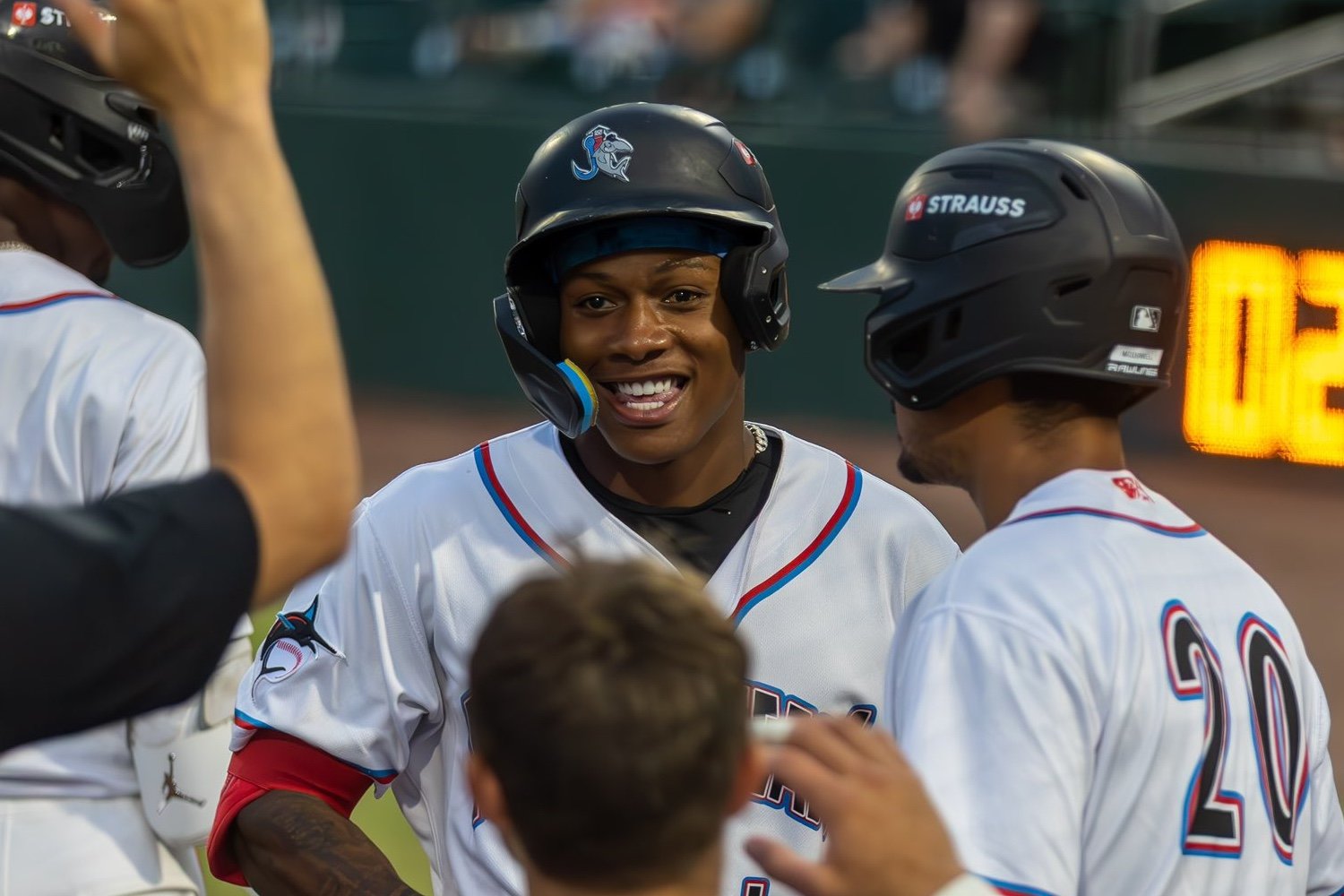 Welcome to another edition of what will be a series of weekly Miami Marlins minor league summaries throughout the 2025 season. The stats and information used below is updated entering April 15 unless otherwise noted. Triple-A Jacksonville Right-hander Adam Mazur made one start and a long relief appearance this past week for the Jumbo Shrimp. On Tuesday, Mazur tossed five shutout innings, allowing one hit and walk while striking out five. In that Tuesday start, Mazur leaned on his slider and four-seamer. The fastball averaged 93.7 mph and topped out at 95.9 mph. His slider generated eight whiffs and was used in three of his five strikeout pitches (curveball for two strikeouts). On Sunday, Mazur entered in relief of Declan Cronin, who was making a rehab appearance. In 4 ⅓ innings of work, the Fish On First 11th-ranked prospect struck out five and, for a second time in the week, did not allow a run. Mazur is already on the 40-man roster, so if he continues performing like this, the big league team will give him an opportunity to start for them at some point this season. In a Wednesday afternoon game, starter Janson Junk turned in the best start of his career at any level, going six shutout innings, striking out ten and not walking anyone. The Jumbo Shrimp were facing a Charlotte Knights lineup featuring top prospects Kyle Teel, Edgar Quero and Colson Montgomery. Junk generated 11 total whiffs, with six of them coming on the fastball, which averaged 94.4 mph and topped out at 96.3 mph. After a strong spring for the Marlins, Junk was reassigned to Minor League camp and then AAA-Jacksonville. He’s currently proving to be a strong depth option for the Marlins. In his first start for the Jumbo Shrimp, Valente Bellozo went four shutout innings, striking out six and only walking two. Bellozo’s fastball topped out at 92.5 mph and averaged 90.7 mph. His cutter generated eight whiffs (13 total whiffs on the night). Reliever Austin Roberts, who the Marlins picked up in the minor league phase of the Rule 5 Draft a couple years back, is posting a 0.90 ERA, 3.90 FIP, 9.00 K/9 and 7.20 BB/9 through five games this season. On Sunday, Roberts started for the Jumbo Shrimp and went two shutout innings, walking and striking out three. The fastball velo jumps out, averaging 94.9 mph and topping out at 96.5 mph. His arsenal consists of the fastball, cutter, curveball and changeup. 463jj8.mp4 Although Jakob Marsee won’t blow you away with his batting average, he is someone who you can rely to get on base plenty. Through 14 games, Marsee is slashing .214/.421/.357/.778 with one home run, four RBI and 13 stolen bases, which leads all of Minor League Baseball. Entering April 16, the Jumbo Shrimp lead MiLB with 45 stolen bases. The team right behind them? The Beloit Sky Carp, the Marlins' High-A affiliate. It has been made very clear that the organization will be aggressive on the base paths. Despite not being called up to replace the injured Nick Fortes, Agustin Ramirez continues to put up big numbers in Jacksonville. As he’s played almost every day, he’s slashing .280/.345/.520/.865 with two home runs and 11 RBI. His biggest flaw continues to be on the defensive side of the ball as he has six passed balls, more than any other catcher in the minors. Receiving is also a part of his game where he continues to struggle in, but the bat is more than ready. On April 11, the club's control of Ramirez was extended through the 2031 season. Double-A Pensacola Kemp Alderman continued his hot start to the season and is now slashing .375/.432/.750/1.182 with three home runs, 11 RBI and five stolen bases. He has already matched his 2024 total in the stolen base category. Alderman was selected to the MLB Pipeline Prospect Team of the Week. There's been a significant change to his batting stance that could be contributing to the success he's having at the plate. It was a weird outing for lefty Robby Snelling (FOF #6). He gave the Wahoos 5 ⅓ innings of work, allowing four runs (three earned) off of eight hits, one walk, and nine strikeouts. He also surrendered two home runs. Through two starts, Snelling has posted a great 2.61 ERA, but his expected FIP is even better at 2.04. On Tuesday, catcher Joe Mack (FOF #8) hit his first home run of the season and is now slashing .348/.483/.696/1.179 with two home runs and four RBI. His second home run came on Friday. In his second start of the season, Dax Fulton went 5 ⅓ innings of work, allowing two runs off of five hits, walking two and striking out four. This is off the heels of a start where he was only able to go three innings of work. Quietly, Adam Laskey went four shutout innings, allowed one hit, didn’t walk anyone and struck out nine. In three appearances, reliever Josh Ekness has yet to surrender a run. He’s struck out six and yet to walk a batter. Like Ekness, Zach McCambley has made three appearances this season and has struck out nine and only walked two. If healthy, McCambley can find himself on a fast track to Miami. High-A Beloit The Sky Carp came out swinging against the Cedar Rapids Kernels, winning 10-0 and 8-7 in their second and third games of a six game series, but dropped the final three. Even more so than their Low-A counterparts, stolen bases continued to happen in abundance for Beloit. They stole an audacious 26 bases in six games. They have 44 steals on the season entering play on April 16; the next closest Midwest League team has 21. One huge catalyst for the stolen base success of Beloit in this series was Emaarion Boyd who came over in the Jesús Luzardo trade this offseason. In the second game of the series, a Sky Carp 10-0 win, Boyd stole an insane six bases. It all happened without the benefit of a hit. Boyd went 0-for-1 and walked twice. He was also hit by a pitch. During all three times on base, Boyd stole both second and third base. Boyd has appeared in nine games for Beloit this season as the primary center fielder. He’s gotten off to a slow start swinging the bat, but has proven he will make the most of his trips around the bases. With advertised 70-grade speed, if Boyd can find more consistent contact rates while continuing to work counts, he will become an annual 25+ stolen base threat with the ability to cover all necessary ground in center field. He also owns an above average throwing arm. We will continue to watch his contact rates closely as the season progresses. After being limited by injury in most of his MiLB career and struggles with offensive consistency last season, Yiddi Cappe is back in Beloit for a third year. Splitting time between second base and DH, his first six games have been extremely encouraging. In this series, Cappe went 7-for-15 with three walks. He had just one extra-base hit, a double, but he made the most of his trips around the bases, stealing three and scoring six runs. On top of his ability to stay on the field, there have been consistent questions about his physical projection. Yiddi is still and will always be a wiry athlete, but he’s begun to quiet down his approach and not over-swing. With smoother mechanics, Cappe’s on-base numbers have thrived early this season. Defensively, it seems Yiddi’s chances at sticking at shortstop are now gone especially with the improvements to the Marlins’ system. If his power remains limited, third base may not be the best choice either. However, Cappe still has the ability to play a solid second base. His time at DH also appears to be allowing him to focus fully on offensive consistency. Expect this early season trend of 2B/DH to continue. And remember: Cappe is still just 22. Don’t write him off; the Marlins sure haven’t. Noble Meyer (FOF #5) made a somewhat delayed first start in this series. During spring training, he missed some time with fluid build-up in his throwing arm, which is highly likely the reason he did not debut in the first series. Meyer got off to a very solid start to his sophomore season, pitching into the fifth inning without allowing a run. He allowed three hits while walking two and striking out two. As he told us during spring training, the focus for Meyer this year will be staying as close to 100% as possible. Last season, he was hampered by a nagging back injury which inhibited him most of the season, especially in relation to his repeat his delivery. On top of that, Meyer is also hoping to showcase improvements to his slider which is now a sweeper and a more consistent changeup. During the second half of 2024 and also in this start, his fastball velocity was down a bit from where he was early last year, but as strength and repeatability fully return and as Noble gets fully acclimated to his new arsenal, it has the capacity to return back up to approx. 94 mph. 2024 wasn’t what Noble wanted, but he has the stuff, ability, and drive to come back better than ever this season. His initial output looked good. Low-A Jupiter Jupiter started the series against Dunedin sloppily, walking a franchise record 22 batters and allowing 19 runs, but bounced back well to split the series. They stole 15 more bases and now have 33 stolen bases in nine games. After striking out eight in 3 ⅔ innings in his season debut, what could Liomar Martinez do for an encore? How about strike out another nine in four innings. Martinez was once again almost unhittable, particularly with a staple 12-6 curveball. He was even more dominant than his first outing as he didn’t allow a walk. The only blemish on his record was a single hit. A converted infielder who has an interesting backstory, Martinez is throwing strikes at an eye-popping rate. In this outing, he had a 50% CSW%. Still just 19 with budding stuff and improving control, Martinez has a starter’s ceiling. With continued success, it would behoove the Marlins to put him in a rotation and allow him to build a five-day routine. Dillon Head (FOF #9) built off a solid opening series by getting on base in four of five games played against Dunedin. His standout game occurred on Tuesday when he went 2-for-5 with his first home run of 2025. He also recorded his first walk of the season. To start his 2025 campaign, Head is swinging at a lot of pitches, but is doing enough to at least spoil pitches and lengthen at-bats. His swing decisions will need to improve as he makes his way up the MiLB ladder, but against Single-A pitching, he’s been able to hold his K rate in check. Coming back from a missed second half, this is a great start for Head. With reps being the most important thing right now, we will continue to see him play daily with Jupiter. The young phenom Andrew Salas (FOF #4) isn’t playing every game with the Hammerheads, but he’s making the most of his reps. Described by the coaching staff as a “super-utility," Salas got into three of six games in this series against Dunedin. At the plate, his advertised approach well beyond his years showed true. He went 3-for-10 and walked three times while striking out three times. He also scored three runs. Salas is with the Hammerheads as the youngest player in the FSL. If the 17-year-old continues to perform, he may stick with the Hammerheads all year, but it may be advisable for the Marlins to get him regular reps at a position of their choosing when FCL season begins. Salas has been described as a guy the team wants to see more of at shortstop, but that he’s also capable of playing center field. So far with Jupiter, with traffic around, he’s only spent time in center field sans one game at second base. He has not taken the field at shortstop. FCL season starts on May 5. Next Up (April 15-20) Triple-A Jacksonville at Memphis Double-A Pensacola at Columbus High-A Beloit vs. Quad Cities Low-A Jupiter at Daytona
- 1 comment
-
- 2
-
-
- adam mazur
- agustin ramirez
- (and 8 more)
-
Signed by the Marlins more than three years ago, Martinez has broken out as one of the best pitchers in MiLB so far this season. It's one thing to make a good early impression; Liomar Martinez has taken it a step further. Two outings into his 2025 season, the right-hander has not only caught the attention of the Marlins but all of Minor League Baseball. Martinez was signed by the Marlins at age 16 as part of the 2021-22 international class. A native of Sousa, DR, he was discovered by the same scout that first laid eyes on Eury Pérez. According to Angel Izquiredo, his acquisition was partially the result of happenstance. “He is originally from Puerto Playa, but that day he was trying out in Bonao for the Pirates. I went to see some arms apart (from him) at the cages, not on the field because the other team was having a closed tryout,” Izquierdo said. “However, after I finished my duties, when I was heading to my car, I saw from far this little lanky, really skinny, loosy arm on the mound. I couldn’t get close, being respectful to other colleagues from the other team, but damn, there was a lot to project and a really loose arm.” Being a closed workout, Izquierdo had to be creative when it came to getting a closer look at Martinez. “I remember sending a little kid, offering him a ball to record from behind the plate. He actually did it. Not the best video, but was enough for me to be at his academy in Puerto Playa the next day and having my director (Roman) Ocumarez rush to come and see this kid.” Coming out of his first viewing of Martinez, Izquierdo credited the 16-year-old as a converted shortstop with a two-pitch mix with room to add more size and more stuff. Present tools included a quick, loose three-quarters arm action and a fastball up to 89 mph with tail and more velo to come with natural progression. His curveball was up to 75 mph with late break. It graded as 55+. According to the report, Martinez was already throwing a changeup with fringe action. Overall, Izquierdo saw good repeatability mound presence, and aggression. After Ocumarez laid eyes on Martinez, he was inked for a minuscule $80,000 during the 2021-22 signing period. “He is an impressive young man. Hyper-athletic with that clean arm action you look for, which is even more impressive given that he had recently converted to pitching,” former international scouting director Adrian Lorenzo said. “His journey wasn’t a straight shot upward, but he always flashed promise.” After breaking into pro ball with the DSL Marlins in 2022 and making his stateside debut in 2023, Martinez began to build stuff and confidence last season. As a member of the FCL Marlins, he made 11 appearances including 10 starts with a 3.89 ERA. He didn’t have dominant strikeout numbers, but held down a low 1.18 WHIP and limited the opposition to just a .171 BA, earning a late-season call-up to Low-A. This season, Martinez is back in Jupiter starting his first full season in pro ball. Through two appearances, the 19-year-old righty leads the Florida State League in strikeouts with 17. That marker also ranks 22nd in all of MiLB. Both of Martinez’s appearances have come in relief. He’s thrown a total of just 7 ⅔ innings. A standout improvement for Martinez has been the velocity on his sinker, which has risen from a 90.8 mph average last season to 93.7 mph this year. Control and command of that pitch and his curveball that dips down to 77 mph has allowed him to change eye levels and get some ugly swings. qmodj3_1.mp4 Martinez is also mixing in a changeup averaging 88 mph, which is showing improved arm-side fade. His fourth pitch is his four-seamer, topping out at 95 mph. Still growing physically, Martinez has time and natural talent both on his side. He is already showing a great mix of velocities and the ability to be placed all over the strike zone. He could come by even more strength, size and stuff, but he’s already sitting pretty with the ceiling of an eventual MLB starter. He’s not yet on top prospect lists, but if he continues on his current track, that will change very shortly. Martinez turns 20 on June 25. View full article
-
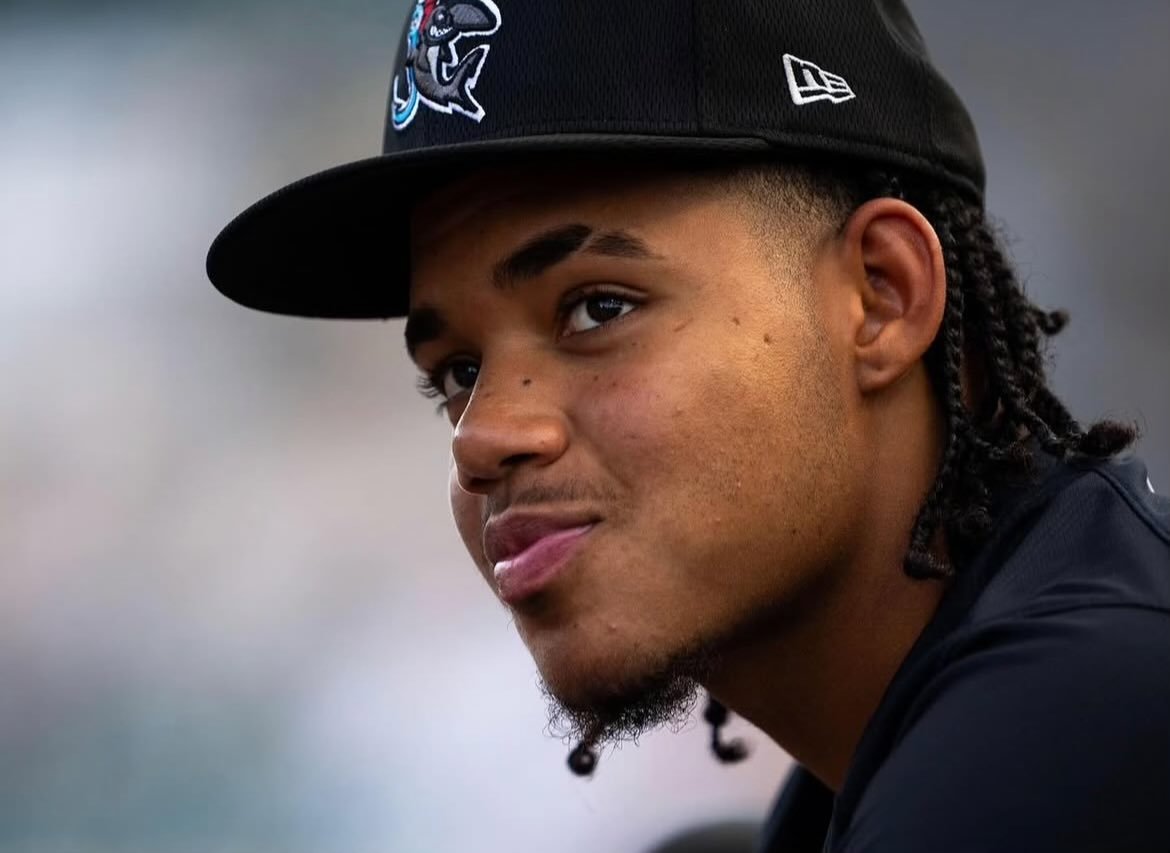 It's one thing to make a good early impression; Liomar Martinez has taken it a step further. Two outings into his 2025 season, the right-hander has not only caught the attention of the Marlins but all of Minor League Baseball. Martinez was signed by the Marlins at age 16 as part of the 2021-22 international class. A native of Sousa, DR, he was discovered by the same scout that first laid eyes on Eury Pérez. According to Angel Izquiredo, his acquisition was partially the result of happenstance. “He is originally from Puerto Playa, but that day he was trying out in Bonao for the Pirates. I went to see some arms apart (from him) at the cages, not on the field because the other team was having a closed tryout,” Izquierdo said. “However, after I finished my duties, when I was heading to my car, I saw from far this little lanky, really skinny, loosy arm on the mound. I couldn’t get close, being respectful to other colleagues from the other team, but damn, there was a lot to project and a really loose arm.” Being a closed workout, Izquierdo had to be creative when it came to getting a closer look at Martinez. “I remember sending a little kid, offering him a ball to record from behind the plate. He actually did it. Not the best video, but was enough for me to be at his academy in Puerto Playa the next day and having my director (Roman) Ocumarez rush to come and see this kid.” Coming out of his first viewing of Martinez, Izquierdo credited the 16-year-old as a converted shortstop with a two-pitch mix with room to add more size and more stuff. Present tools included a quick, loose three-quarters arm action and a fastball up to 89 mph with tail and more velo to come with natural progression. His curveball was up to 75 mph with late break. It graded as 55+. According to the report, Martinez was already throwing a changeup with fringe action. Overall, Izquierdo saw good repeatability mound presence, and aggression. After Ocumarez laid eyes on Martinez, he was inked for a minuscule $80,000 during the 2021-22 signing period. “He is an impressive young man. Hyper-athletic with that clean arm action you look for, which is even more impressive given that he had recently converted to pitching,” former international scouting director Adrian Lorenzo said. “His journey wasn’t a straight shot upward, but he always flashed promise.” After breaking into pro ball with the DSL Marlins in 2022 and making his stateside debut in 2023, Martinez began to build stuff and confidence last season. As a member of the FCL Marlins, he made 11 appearances including 10 starts with a 3.89 ERA. He didn’t have dominant strikeout numbers, but held down a low 1.18 WHIP and limited the opposition to just a .171 BA, earning a late-season call-up to Low-A. This season, Martinez is back in Jupiter starting his first full season in pro ball. Through two appearances, the 19-year-old righty leads the Florida State League in strikeouts with 17. That marker also ranks 22nd in all of MiLB. Both of Martinez’s appearances have come in relief. He’s thrown a total of just 7 ⅔ innings. A standout improvement for Martinez has been the velocity on his sinker, which has risen from a 90.8 mph average last season to 93.7 mph this year. Control and command of that pitch and his curveball that dips down to 77 mph has allowed him to change eye levels and get some ugly swings. qmodj3_1.mp4 Martinez is also mixing in a changeup averaging 88 mph, which is showing improved arm-side fade. His fourth pitch is his four-seamer, topping out at 95 mph. Still growing physically, Martinez has time and natural talent both on his side. He is already showing a great mix of velocities and the ability to be placed all over the strike zone. He could come by even more strength, size and stuff, but he’s already sitting pretty with the ceiling of an eventual MLB starter. He’s not yet on top prospect lists, but if he continues on his current track, that will change very shortly. Martinez turns 20 on June 25.
 -
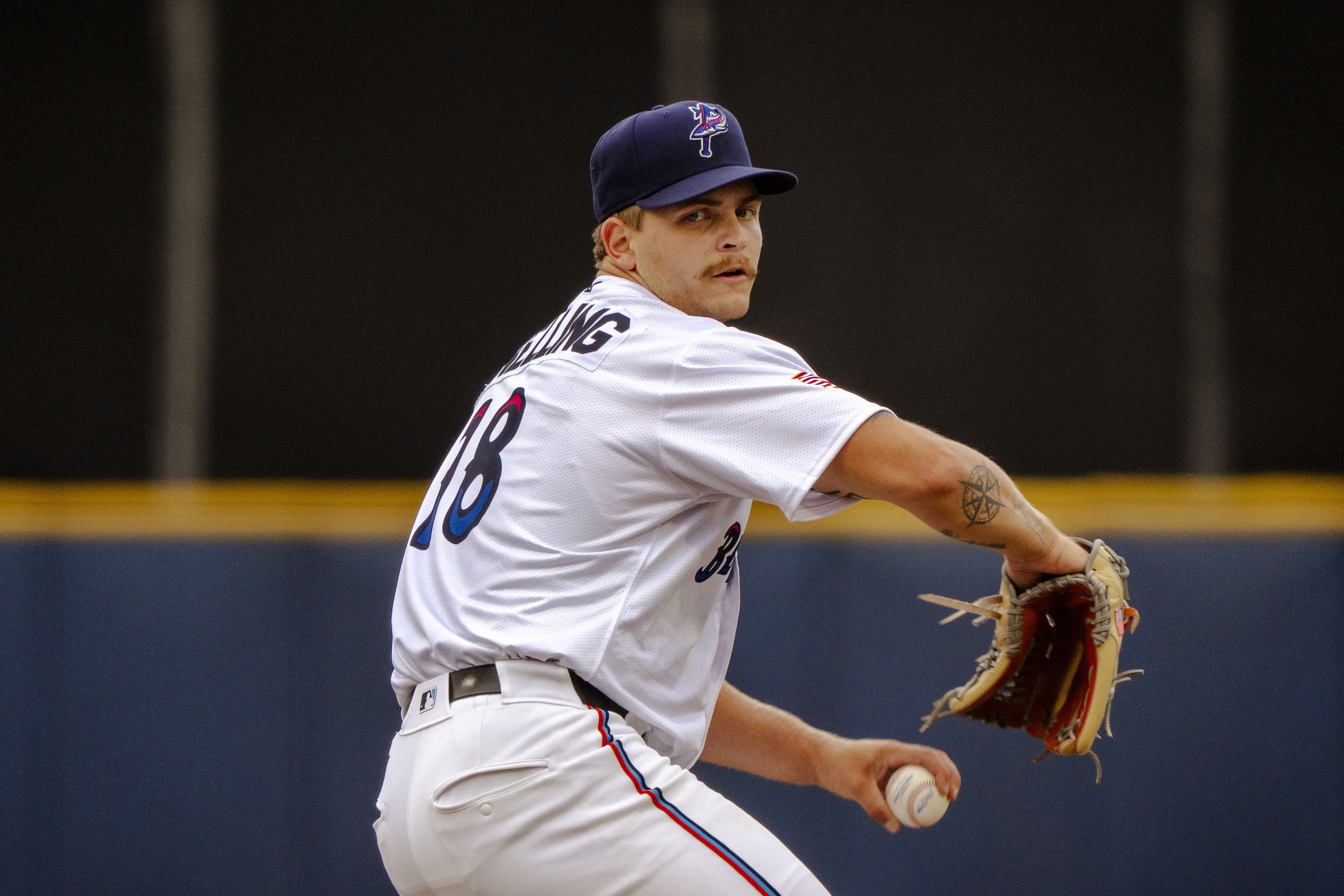 Through the games of April 6, Miami Marlins MiLB teams have combined for a remarkable .778 winning percentage (14-4 record). As highlighted below, that production came from some of the organization's top-ranked prospects as well as under-the-radar players worth monitoring. Triple-A Jacksonville Edward Cabrera made his second rehab start and went four innings, allowing two runs (one earned) off of six hits, didn’t walk anyone and struck out six. Cabrera’s fastball velocity averaged 97.8 mph and topped out at 100.3 mph. As of Tuesday, he is traveling with the big league club, so it appears his rehab assignment has wrapped up. Through two starts with the Shrimp, Janson Junk has posted a 3.00 ERA, 3.25 FIP, 10.00 K/9 and 1.00 BB/9. Junk was one of the spring training non-roster invitees that stuck around through almost all of big league camp. In one start, FOF #11 prospect Adam Mazur went five innings of work, allowing two runs off of two hits (one home run), walked one and struck out four. Maximo Acosta, who was a standout this past spring, has gotten off to a red hot start, slashing .333/.429/.444/.873 with one home run and six RBI. He’s been primarily at shortstop and if he continues to perform, it’ll be interesting to see how soon he can be called up. FOF’s #3 prospect, Agustín Ramírez, is slashing .250/.306/.375/.681 with five RBI through eight games thus far. Ramirez was one of three players acquired in the Jazz Chisholm Jr. trade from the New York Yankees. Deyvison De Los Santos, acquired in the A.J. Puk trade, has struggled, striking out 16 through eight games. There will be an opportunity for him moving forward to fill the void that the Marlins have at first base, but he'll have to make contact more consistently. Outfielder Jakob Marsee (Luis Arraez trade) currently leads Minor League Baseball with eight stolen bases this season. Double-A Pensacola Fish On First’s number six prospect Robby Snelling opened the Wahoos season with a gem. He tossed five shutout innings, allowing two hits and striking out five. In seven starts last season with Pensacola, Snelling posted a 4.00 ERA, 2.76 FIP, 10.25 K/9 and 2.75 BB/9. Limited him to only 18 appearances last season, Zach McCambley told Fish On First that he underwent major surgery to get back on the mound in 2025. On Friday, the 2020 third-round pick went two shutout innings, walking one and striking out four. He was credited with the win. In his first regular season start since undergoing Tommy John surgery, FOF #14 prospect Dax Fulton went three innings of work, allowing four runs (three earned) off of five hits, walking three and striking out two. The main standout on the position player side is Kemp Alderman. After struggling in a limited sample size in AA, Alderman went back and made some pitch recognition adjustments. In this first weekend, he went 5-for-12 with one double and a grand slam on Saturday. High-A Beloit Beloit also got their season started on a positive note, winning all three of their games against South Bend. A scrappy Sky Carp offense made the most of their opportunities, hitting .294 with runners in scoring position. Pitching allowed a total of just eight runs. With expectations of Thomas White starting at Double-A, the decision came down in the last hours prior to the assignment deadline for him to start back with Beloit this season. In 2024, White made 13 starts with the Sky Carp. He had a 2.61 ERA via a 3.41 FIP and even 1.00 WHIP. This spring, White showed back up to Marlins camp and got even more dominant in terms of raw stuff. Early in camp, White was showing easy fastball velocities of over 98 mph. During an early bullpen session, a pitching coach told White to simply let it go. He hit triple digits. This past week, he threw for the Sky Carp. He went 4 IP on 7 K's while allowing 3 walks. With added velo on top of a 12-6 curveball that dips into the high-70s and an improving slider, White moves his pitches in every direction and lands all around the strike zone from a high release point. Even when he is out of the zone, he can garner easy whiffs and doesn’t have to pinpoint his pitches to be effective. He could’ve started in Double-A and will be there before long. Level-headed with dominant stuff that is consistently getting even better, he’s a top 50 prospect in all of baseball. After participating in MLB camp as a non-roster invitee, Ryan Ignoffo is back in High-A where he ended 2024. On top of serving as the backstop for two of three games, Ignoffo flexed improved power at the plate. He recorded three hits for the series, including a home run and a double. Not known for his wheels, the second year backstop also stole two bases. A six homer guy last year, it is very encouraging to see Ignoffo getting into his legs and lower half sooner this season, especially in a pitcher friendly environment. He will need to continue to improve in that regard on the opposite side of the ball, particularly with his pop times if he plans to stick at catcher. If he can, he has the potential to grow into a bat-first backstop, a huge asset. While we will need to see how he matriculates through levels and handles higher quality stuff on both sides of the ball, Ignoffo has done a lot of things right so far in his young career. An unheralded name worth keeping close tabs on. After missing all of his draft season in 2023 due to injury, Colby Shade was extremely effective for Jupiter in 2024 before a late season call to Beloit. He’s back with Beloit to start 2025 and is off to a similar hot start. In this series, Shade recorded four hits in 9 ABs. He also stole three bases. A 6’1”, 205 outfielder, Shade’s best offensive asset is his extremely quick bat and good vision which allot him the ability to foul off tough pitches and lengthen his at bats. He also has sneaky solid pop, having homered eight times last season. Defensively, he can play all three outfield spots but is likely better suited for a corner. The biggest question with Shade is can his success permeate against competition closer to his own age? If he continues performing how he did in this series, we may get our answer to that question later this season when he is called up to Double-A Pensacola. Low-A Jupiter The Jupiter Hammerheads won two of three games against St. Lucie behind solid pitching and a record showing on the base paths. They swiped 17 bags, leading to 15 total runs. After being limited to just three games to start his Marlins tenure last season, Dillon Head showed up to spring training noticeably larger with something to prove to himself and his new organization. To start the season with the Hammerheads, things could not be going too much better. Head, with at least 10 pounds of added muscle mass, appeared in each of the Hammerheads’ first three games spending time in left field and center field. He stood out at the plate with huge exit velocities topping at 106 mph. In the last game of the series, Head went off going 3-for-5 with two triples and two stolen bases (during the same trip around the bases). His sprint speed maxed out at right around 29 feet per second. A main storyline around spring training camp, ahead has matriculated that showing into a great first series of the season. He’s a potential four-out-of-five tool player, especially if he is growing into more power and loft. He’s a main cog in this Marlins system to watch as he grows this season and beyond. Andrés Valor, who recently turned 19 this offseason, enjoyed an amazing season for the playoff-contentious FCL Marlins in 2024. He showed up at spring training this season upwards of 10 pounds worth of more muscle. With improved exit velos during camp, the most impressive factor that he could add to his game was even more power. During his first series, however, Valor showed an equally impressive tool: improved patience. During the three-game series with the Mets, Valor walked six times in 14 plate appearances. Despite the improved size, Valor’s base-stealing ability did not falter. While his ability to cover ground averaged out at 27 ft/sec, his ability to get out to plus leads continued to impress. A heady runner who is becoming the epitome “take what they give you”, Valor stole three bags. Last season, he was a key cog in the FCL Marlins stealing a rookie-level record 208 bases. He does have the ability to play center field, but spent two of his first three games in right field. With added size and improving patience to go along with a quiet approach, Valor is a bat-first prospect who has some of the loudest bar-to-ball and raw power potential in the organization. If his early added patience permeates, he will continue to add to his skill set. At 6’3”, 180 pounds, he’s one of the most exciting prospects in the pipeline. Liomar Martinez is a fourth-year player after being signed in the 2021-2022 signing period. He embarked on his third year pro with a bang. Entering the April 5 game as a bulk guy in relief of Walin Castillo and Juan Reynoso, Martinez dealt 3 ⅔ scoreless frames. Martinez topped at 95 mph and was down to 75 with three pitches. Later in the series, Liomar showed an absolutely untamable curveball. Throwing 31 of them, he recorded eight whiffs and a 55% CSW%. qqzd2e.mp4 Martinez is still just 19 and is breaking into stateside baseball. His original out has been spectacular. He’s hitting 95 down to low 80s with three pitches. Early results show command limitations from years previous being answered. If Liomar can continue to build off this hot start, he could be a back-end rotation piece. If not, his great breaking stuff should carry him to the floor of a middle reliever at the next level. Next Up (April 8-13) Triple-A Jacksonville vs. Charlotte Double-A Pensacola vs. Montgomery High-A Beloit at Cedar Rapids Low-A Jupiter vs. Dunedin
-
- 2
-
-
- robby snelling
- maximo acosta
- (and 4 more)
-
Early analysis of who has stood out for the Jacksonville Jumbo Shrimp, Pensacola Blue Wahoos, Beloit Sky Carp and Jupiter Hammerheads. Through the games of April 6, Miami Marlins MiLB teams have combined for a remarkable .778 winning percentage (14-4 record). As highlighted below, that production came from some of the organization's top-ranked prospects as well as under-the-radar players worth monitoring. Triple-A Jacksonville Edward Cabrera made his second rehab start and went four innings, allowing two runs (one earned) off of six hits, didn’t walk anyone and struck out six. Cabrera’s fastball velocity averaged 97.8 mph and topped out at 100.3 mph. As of Tuesday, he is traveling with the big league club, so it appears his rehab assignment has wrapped up. Through two starts with the Shrimp, Janson Junk has posted a 3.00 ERA, 3.25 FIP, 10.00 K/9 and 1.00 BB/9. Junk was one of the spring training non-roster invitees that stuck around through almost all of big league camp. In one start, FOF #11 prospect Adam Mazur went five innings of work, allowing two runs off of two hits (one home run), walked one and struck out four. Maximo Acosta, who was a standout this past spring, has gotten off to a red hot start, slashing .333/.429/.444/.873 with one home run and six RBI. He’s been primarily at shortstop and if he continues to perform, it’ll be interesting to see how soon he can be called up. FOF’s #3 prospect, Agustín Ramírez, is slashing .250/.306/.375/.681 with five RBI through eight games thus far. Ramirez was one of three players acquired in the Jazz Chisholm Jr. trade from the New York Yankees. Deyvison De Los Santos, acquired in the A.J. Puk trade, has struggled, striking out 16 through eight games. There will be an opportunity for him moving forward to fill the void that the Marlins have at first base, but he'll have to make contact more consistently. Outfielder Jakob Marsee (Luis Arraez trade) currently leads Minor League Baseball with eight stolen bases this season. Double-A Pensacola Fish On First’s number six prospect Robby Snelling opened the Wahoos season with a gem. He tossed five shutout innings, allowing two hits and striking out five. In seven starts last season with Pensacola, Snelling posted a 4.00 ERA, 2.76 FIP, 10.25 K/9 and 2.75 BB/9. Limited him to only 18 appearances last season, Zach McCambley told Fish On First that he underwent major surgery to get back on the mound in 2025. On Friday, the 2020 third-round pick went two shutout innings, walking one and striking out four. He was credited with the win. In his first regular season start since undergoing Tommy John surgery, FOF #14 prospect Dax Fulton went three innings of work, allowing four runs (three earned) off of five hits, walking three and striking out two. The main standout on the position player side is Kemp Alderman. After struggling in a limited sample size in AA, Alderman went back and made some pitch recognition adjustments. In this first weekend, he went 5-for-12 with one double and a grand slam on Saturday. High-A Beloit Beloit also got their season started on a positive note, winning all three of their games against South Bend. A scrappy Sky Carp offense made the most of their opportunities, hitting .294 with runners in scoring position. Pitching allowed a total of just eight runs. With expectations of Thomas White starting at Double-A, the decision came down in the last hours prior to the assignment deadline for him to start back with Beloit this season. In 2024, White made 13 starts with the Sky Carp. He had a 2.61 ERA via a 3.41 FIP and even 1.00 WHIP. This spring, White showed back up to Marlins camp and got even more dominant in terms of raw stuff. Early in camp, White was showing easy fastball velocities of over 98 mph. During an early bullpen session, a pitching coach told White to simply let it go. He hit triple digits. This past week, he threw for the Sky Carp. He went 4 IP on 7 K's while allowing 3 walks. With added velo on top of a 12-6 curveball that dips into the high-70s and an improving slider, White moves his pitches in every direction and lands all around the strike zone from a high release point. Even when he is out of the zone, he can garner easy whiffs and doesn’t have to pinpoint his pitches to be effective. He could’ve started in Double-A and will be there before long. Level-headed with dominant stuff that is consistently getting even better, he’s a top 50 prospect in all of baseball. After participating in MLB camp as a non-roster invitee, Ryan Ignoffo is back in High-A where he ended 2024. On top of serving as the backstop for two of three games, Ignoffo flexed improved power at the plate. He recorded three hits for the series, including a home run and a double. Not known for his wheels, the second year backstop also stole two bases. A six homer guy last year, it is very encouraging to see Ignoffo getting into his legs and lower half sooner this season, especially in a pitcher friendly environment. He will need to continue to improve in that regard on the opposite side of the ball, particularly with his pop times if he plans to stick at catcher. If he can, he has the potential to grow into a bat-first backstop, a huge asset. While we will need to see how he matriculates through levels and handles higher quality stuff on both sides of the ball, Ignoffo has done a lot of things right so far in his young career. An unheralded name worth keeping close tabs on. After missing all of his draft season in 2023 due to injury, Colby Shade was extremely effective for Jupiter in 2024 before a late season call to Beloit. He’s back with Beloit to start 2025 and is off to a similar hot start. In this series, Shade recorded four hits in 9 ABs. He also stole three bases. A 6’1”, 205 outfielder, Shade’s best offensive asset is his extremely quick bat and good vision which allot him the ability to foul off tough pitches and lengthen his at bats. He also has sneaky solid pop, having homered eight times last season. Defensively, he can play all three outfield spots but is likely better suited for a corner. The biggest question with Shade is can his success permeate against competition closer to his own age? If he continues performing how he did in this series, we may get our answer to that question later this season when he is called up to Double-A Pensacola. Low-A Jupiter The Jupiter Hammerheads won two of three games against St. Lucie behind solid pitching and a record showing on the base paths. They swiped 17 bags, leading to 15 total runs. After being limited to just three games to start his Marlins tenure last season, Dillon Head showed up to spring training noticeably larger with something to prove to himself and his new organization. To start the season with the Hammerheads, things could not be going too much better. Head, with at least 10 pounds of added muscle mass, appeared in each of the Hammerheads’ first three games spending time in left field and center field. He stood out at the plate with huge exit velocities topping at 106 mph. In the last game of the series, Head went off going 3-for-5 with two triples and two stolen bases (during the same trip around the bases). His sprint speed maxed out at right around 29 feet per second. A main storyline around spring training camp, ahead has matriculated that showing into a great first series of the season. He’s a potential four-out-of-five tool player, especially if he is growing into more power and loft. He’s a main cog in this Marlins system to watch as he grows this season and beyond. Andrés Valor, who recently turned 19 this offseason, enjoyed an amazing season for the playoff-contentious FCL Marlins in 2024. He showed up at spring training this season upwards of 10 pounds worth of more muscle. With improved exit velos during camp, the most impressive factor that he could add to his game was even more power. During his first series, however, Valor showed an equally impressive tool: improved patience. During the three-game series with the Mets, Valor walked six times in 14 plate appearances. Despite the improved size, Valor’s base-stealing ability did not falter. While his ability to cover ground averaged out at 27 ft/sec, his ability to get out to plus leads continued to impress. A heady runner who is becoming the epitome “take what they give you”, Valor stole three bags. Last season, he was a key cog in the FCL Marlins stealing a rookie-level record 208 bases. He does have the ability to play center field, but spent two of his first three games in right field. With added size and improving patience to go along with a quiet approach, Valor is a bat-first prospect who has some of the loudest bar-to-ball and raw power potential in the organization. If his early added patience permeates, he will continue to add to his skill set. At 6’3”, 180 pounds, he’s one of the most exciting prospects in the pipeline. Liomar Martinez is a fourth-year player after being signed in the 2021-2022 signing period. He embarked on his third year pro with a bang. Entering the April 5 game as a bulk guy in relief of Walin Castillo and Juan Reynoso, Martinez dealt 3 ⅔ scoreless frames. Martinez topped at 95 mph and was down to 75 with three pitches. Later in the series, Liomar showed an absolutely untamable curveball. Throwing 31 of them, he recorded eight whiffs and a 55% CSW%. qqzd2e.mp4 Martinez is still just 19 and is breaking into stateside baseball. His original out has been spectacular. He’s hitting 95 down to low 80s with three pitches. Early results show command limitations from years previous being answered. If Liomar can continue to build off this hot start, he could be a back-end rotation piece. If not, his great breaking stuff should carry him to the floor of a middle reliever at the next level. Next Up (April 8-13) Triple-A Jacksonville vs. Charlotte Double-A Pensacola vs. Montgomery High-A Beloit at Cedar Rapids Low-A Jupiter vs. Dunedin View full article
-
What should the next Marlins Legends Hall of Fame class look like?
Alex Carver posted an article in Marlins
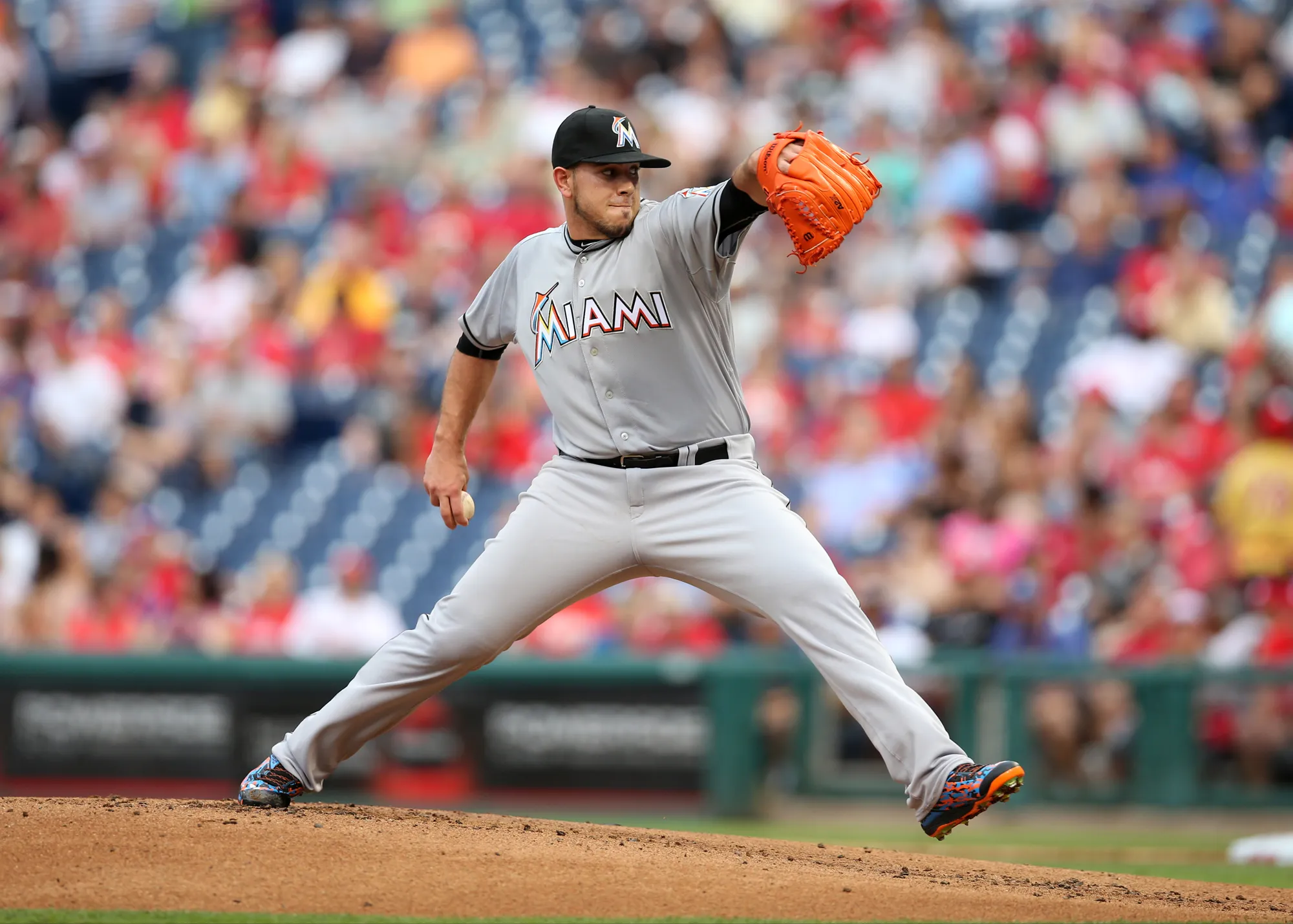 Just before the start of spring training at their annual FanFest, the Marlins announced they would take a long-awaited step in honoring their past. Heading into their 33rd season of existence, the inaugural Legends Hall of Fame class was revealed, consisting of players and coaches long lauded by fans for their play on the field and their candor off of it. Each individual will receive a day in his honor coinciding with a bobblehead giveaway and a permanent place in the HOF inside loanDepot park. The first Hall of Famer to be featured was fittingly Mr. Marlin, Jeff Conine, an original 1993 Marlin, contributed to both of the franchise's World Series teams and is one just one of two players to play 1,000 games for the Fish. The Marlins held a pregame ceremony for Conine on Sunday. Fellow champion player Luis Castillo and managers Jim Leyland and Jack McKeon will be formerly inducted later this season. According to the Marlins, populating the Marlins Legends Hall of Fame will be an ongoing process. New players, staff and perhaps executives deemed deserving will be added each season. Who should be part of the next class in 2026? Here’s a look at our top five picks along with some honorable mentions. Hanley Ramírez The main return for World Series champs Josh Beckett and Mike Lowell in a 2005 trade, Hanley came to the Marlins unpopularly, but quickly became a fan favorite. After debuting with the Red Sox, Ramírez immediately stepped into the starting shortstop role with Miami and immediately made a huge impact. As a 22-year-old, he put up a 4.9 bWAR while slashing .292/.353/.480 and stealing 51 bases. This immediate output earned Ramírez the NL Rookie of the Year as he edged out Ryan Zimmerman of the Washington Nationals. Ramírez is one of four total Rookies of the Year in franchise history. For the next two seasons, Ramírez remained an offensive force and established himself as one of the best hitting shortstops in baseball. In 2007, he barely missed out on a batting title as he hit .332. He continued to show great patience at the plate proven by a .386 OBP and saw a pronounced power increase as he put out 24 home runs to go along with another 51 steals. Following his first All-Star selection in 2008, Ramírez would not be denied the batting title in 2009. His .342 BA led the NL circuit and stood as the best single-season batting average in franchise history until Luis Arraez surpassed him in 2023. He rounded out 2009 with a career high .410 OBP and 24 home runs. His 7.3 bWAR that season is second-best in franchise history. Only topped by Albert Pujols, Ramírez finished runner-up in NL MVP voting. Hanley rounded out his Marlins career by posting a combined 3.6 bWAR between 2010 (another All-Star season) and 2012. Overall, his 26.9 bWAR over seven seasons with Miami ranks second all-time. His 3,671 ABs rank second only to Castillo. One of, if not the main reason to show up to watch Marlins games every single night, Ramírez was a close to a five-tool talent that went on to contribute to winning teams. A premier athlete and top performer from the moment he put on the teal and black, Hanley exemplifies the title Marlins Hall of Famer. Josh Johnson Johnson was a Marlins high school draft pick in 2002. After starting in rookie ball, he made it to the majors just three seasons later and quickly rose to stardom. By 2006, at age 22, he became a fixture in the rotation, posting a 3.10 ERA, a 3.99 FIP, and a 133/68 K/BB. The Marlins knew they had something special in the 6’7” righty. Excitement quickly turned to disappointment for the Marlins in 2007 as Johnson missed nearly all of that season due to an ulnar nerve injury that eventually required Tommy John surgery. However, Johnson recovered ahead of schedule and was ready for the 2008 season just 11 months afterwards. Managing a 2.0 bWAR in 87.1 IP under those circumstances, Johnson once again stood out. A full-go in 2009, Johnson threw 209 innings while striking out 191 and walking just 58. His ERA sat at 3.23, his FIP at 3.06. He went 15-5 on the season, a winning percentage that stands today as the best single-season mark by a Marlins pitcher. In 2010, after signing a four-year contract, Johnson had a career year. Leading all of baseball in FIP at 2.41 and leading the NL in ERA at 2.30, with a 186/48 K/BB, he made his second straight All-Star Game. He was shut down in September, though, which contributed to him finishing just fifth in NL Cy Young voting. edc62p_1.mp4 Amidst controversy regarding the extent of his shoulder injury, Johnson missed most of 2011, but threw enough to still manage a 2.9 bWAR. He was the first pitcher to start a game at Marlins Park in 2012, another quality outing for Johnson despite a Marlins loss. Overall, Johnson is the franchise leader in many telling categories: pitcher WAR (25.8), ERA (3.15), FIP (3.20), HR/9 (0.58), and win probability added (10.3). He was one of the most dominant pitchers to ever toe the rubber for Miami and he was one of few that can claim he was a franchise player. Josh Johnson is a Marlins Hall of Famer. José Fernández Talents like this don’t come along often. A Tampa area high schooler after surviving defecting from Cuba with his family, Fernández was living the American dream even before he was selected by the Marlins in the first round of the 2011 MLB Draft. After his selection, Fernández threw in just 27 minor league games before the Marlins had seen enough to award him his MLB call. It was well warranted: in 25 games at Low-A and High-A in 2012, Fernández set himself apart from all of his competition, going 14-1 with a 1.75 ERA, 0.926 WHIP and 158/35 K/BB. Fernández made his MLB debut out of camp as a 20-year-old in 2013. Pitching against competition nearly eight years his elder on average, he struck out eight Mets over five innings pitched while allowing just one earned run. Fernández parlayed that outing into his first quality start just five days later when he went six shutout frames against the Phillies in his Marlins Park debut. It was the first of 17 Fernández quality starts during his rookie season. Limiting hits to just 5.8 per nine innings with dominant stuff well ahead of his years—a mark which led all of MLB—Fernández easily won the NL Rookie of the Year award and placed third in Cy Young voting. His 6.2 WAR that season was and still is the highest posted by a rookie pitcher since 1986. Fernández started 2014 just as dominant before a blow-up start against the Padres in early May. Following that uncharacteristic 5 IP, 6 ER outing, an ulnar nerve injury was revealed which required Fernández to undergo Tommy John. He didn’t return until July of 2015. In his first start back, he commanded a quality start. In his second outing, he went seven shutout innings and struck out nine. Overall, Fernández's 2015 equated to 11 starts with a 1.4 WAR by way of a 2.92 ERA and 2.24 FIP. José was back. 2016 arrived with a 23-year-old José back healthy and feeling as dominant as ever. He started 29 games, 18 of which equated to quality outings. His 253 strikeouts were already a franchise record as was his 12.48 K/9, his 5.78 H/9 and his 2.30 FIP, records which still stand today. But after his final scheduled start of the season got pushed back by a day, tragedy struck. On the morning of September 25, 2016, Fernández was killed in a boating accident. Suddenly, baseball took a backseat to culture. As the Marlins resumed play, Dee Gordon hit an iconic home run and the Marlins won in his honor, all of Miami continued to feel and love José Fernández. That love matriculates to this day. He is still the Marlins’ all-time leader in win percentage. José Fernández is one of the greatest talents this franchise has ever seen. Posthumously, he is a Marlins Hall of Famer in every sense of the title. Gary Sheffield Sheffield was the dominance of the Marlins for over half a decade. Joining Miami in their expansion year, the bat-waggling Florida native quickly became a staple with the Marlins. Starting in 1993 when he joined the squad from the Padres in a trade that included Trevor Hoffman, Sheff swatted 10 bombs in 72 games. Despite being limited to just 87 games in 1994 due to the strike, Sheff once again led the Marlins in homers with 27. After injury in 1995, a fully healthy Sheff enjoyed a career season in 1996, slamming 42 home runs and slashing .276/.380/.584. His 5.9 bWAR that season ranks as the sixth-best season by a Marlins position player and his 7.7 offensive bWAR is the highest ever. Despite being slowed by minor injury in 1997, Sheffield slashed .250/.424/.446. In the playoffs, he hit .320/.521/.540 with three home runs, including one in Game 3 of the World Series. One of the most feared hitters of his era with a 60.8 career WAR, over 500 home runs and a .900+ OPS including 13.2 WAR, 122 HR, and .970 OPS with the Fish, Sheffield is not only a Marlins Hall of Famer; he should be a National Baseball Hall of Famer. Wayne Huizenga A small business owner early in his career, Huizenga quickly built a South Florida empire. Originating from a several-thousand-dollar investment, Huizenga created a Fortune 500 company in Waste Management and had the vision for Blockbuster Video. Before the Marlins were more than a thought in his mind, Huizenga was a minority owner for the Miami Dolphins and was already a millionaire. As Blockbuster, Waste Management and his minority stake with the Dolphins grew, bringing baseball to South Florida came into his focus. In 1990, Huizenga made the pitch to MLB for an expansion team in South Florida. In 1991, MLB accepted the pitch against competitors, largely because of the ability of the then-modern Joe Robbie to house and accommodate multiple sports including Major League Baseball. Huizenga’s tenure as owner started as similarly as any expansion franchise, but quickly led to the pinnacle of Major League Baseball in just his fifth year as an owner. At the time, the Marlins were the fastest expansion franchise to ascend the ladder and win a title. Though things went south for Huizenga and his fortunes just after the Marlins' title run, the franchise wouldn’t exist if not for his vision. A true trailblazer in every sense of the word and stalwart for the South Florida community whose efforts still persist today posthumously, Wayne Huizenga deserves to be immortalized. He is by his Florida Panthers; the Marlins should follow suit. Honorable mentions: Miguel Cabrera, Mike Lowell, Dontrelle Willis, Kevin Brown, Don Mattingly
- 4 comments
-
- 2
-
-
- hanley ramirez
- jose fernandez
- (and 3 more)
-
With the Marlins honoring a member of their first Hall of Fame class this weekend, we're already looking ahead to candidates who should be inducted in 2026. Just before the start of spring training at their annual FanFest, the Marlins announced they would take a long-awaited step in honoring their past. Heading into their 33rd season of existence, the inaugural Legends Hall of Fame class was revealed, consisting of players and coaches long lauded by fans for their play on the field and their candor off of it. Each individual will receive a day in his honor coinciding with a bobblehead giveaway and a permanent place in the HOF inside loanDepot park. The first Hall of Famer to be featured was fittingly Mr. Marlin, Jeff Conine, an original 1993 Marlin, contributed to both of the franchise's World Series teams and is one just one of two players to play 1,000 games for the Fish. The Marlins held a pregame ceremony for Conine on Sunday. Fellow champion player Luis Castillo and managers Jim Leyland and Jack McKeon will be formerly inducted later this season. According to the Marlins, populating the Marlins Legends Hall of Fame will be an ongoing process. New players, staff and perhaps executives deemed deserving will be added each season. Who should be part of the next class in 2026? Here’s a look at our top five picks along with some honorable mentions. Hanley Ramírez The main return for World Series champs Josh Beckett and Mike Lowell in a 2005 trade, Hanley came to the Marlins unpopularly, but quickly became a fan favorite. After debuting with the Red Sox, Ramírez immediately stepped into the starting shortstop role with Miami and immediately made a huge impact. As a 22-year-old, he put up a 4.9 bWAR while slashing .292/.353/.480 and stealing 51 bases. This immediate output earned Ramírez the NL Rookie of the Year as he edged out Ryan Zimmerman of the Washington Nationals. Ramírez is one of four total Rookies of the Year in franchise history. For the next two seasons, Ramírez remained an offensive force and established himself as one of the best hitting shortstops in baseball. In 2007, he barely missed out on a batting title as he hit .332. He continued to show great patience at the plate proven by a .386 OBP and saw a pronounced power increase as he put out 24 home runs to go along with another 51 steals. Following his first All-Star selection in 2008, Ramírez would not be denied the batting title in 2009. His .342 BA led the NL circuit and stood as the best single-season batting average in franchise history until Luis Arraez surpassed him in 2023. He rounded out 2009 with a career high .410 OBP and 24 home runs. His 7.3 bWAR that season is second-best in franchise history. Only topped by Albert Pujols, Ramírez finished runner-up in NL MVP voting. Hanley rounded out his Marlins career by posting a combined 3.6 bWAR between 2010 (another All-Star season) and 2012. Overall, his 26.9 bWAR over seven seasons with Miami ranks second all-time. His 3,671 ABs rank second only to Castillo. One of, if not the main reason to show up to watch Marlins games every single night, Ramírez was a close to a five-tool talent that went on to contribute to winning teams. A premier athlete and top performer from the moment he put on the teal and black, Hanley exemplifies the title Marlins Hall of Famer. Josh Johnson Johnson was a Marlins high school draft pick in 2002. After starting in rookie ball, he made it to the majors just three seasons later and quickly rose to stardom. By 2006, at age 22, he became a fixture in the rotation, posting a 3.10 ERA, a 3.99 FIP, and a 133/68 K/BB. The Marlins knew they had something special in the 6’7” righty. Excitement quickly turned to disappointment for the Marlins in 2007 as Johnson missed nearly all of that season due to an ulnar nerve injury that eventually required Tommy John surgery. However, Johnson recovered ahead of schedule and was ready for the 2008 season just 11 months afterwards. Managing a 2.0 bWAR in 87.1 IP under those circumstances, Johnson once again stood out. A full-go in 2009, Johnson threw 209 innings while striking out 191 and walking just 58. His ERA sat at 3.23, his FIP at 3.06. He went 15-5 on the season, a winning percentage that stands today as the best single-season mark by a Marlins pitcher. In 2010, after signing a four-year contract, Johnson had a career year. Leading all of baseball in FIP at 2.41 and leading the NL in ERA at 2.30, with a 186/48 K/BB, he made his second straight All-Star Game. He was shut down in September, though, which contributed to him finishing just fifth in NL Cy Young voting. edc62p_1.mp4 Amidst controversy regarding the extent of his shoulder injury, Johnson missed most of 2011, but threw enough to still manage a 2.9 bWAR. He was the first pitcher to start a game at Marlins Park in 2012, another quality outing for Johnson despite a Marlins loss. Overall, Johnson is the franchise leader in many telling categories: pitcher WAR (25.8), ERA (3.15), FIP (3.20), HR/9 (0.58), and win probability added (10.3). He was one of the most dominant pitchers to ever toe the rubber for Miami and he was one of few that can claim he was a franchise player. Josh Johnson is a Marlins Hall of Famer. José Fernández Talents like this don’t come along often. A Tampa area high schooler after surviving defecting from Cuba with his family, Fernández was living the American dream even before he was selected by the Marlins in the first round of the 2011 MLB Draft. After his selection, Fernández threw in just 27 minor league games before the Marlins had seen enough to award him his MLB call. It was well warranted: in 25 games at Low-A and High-A in 2012, Fernández set himself apart from all of his competition, going 14-1 with a 1.75 ERA, 0.926 WHIP and 158/35 K/BB. Fernández made his MLB debut out of camp as a 20-year-old in 2013. Pitching against competition nearly eight years his elder on average, he struck out eight Mets over five innings pitched while allowing just one earned run. Fernández parlayed that outing into his first quality start just five days later when he went six shutout frames against the Phillies in his Marlins Park debut. It was the first of 17 Fernández quality starts during his rookie season. Limiting hits to just 5.8 per nine innings with dominant stuff well ahead of his years—a mark which led all of MLB—Fernández easily won the NL Rookie of the Year award and placed third in Cy Young voting. His 6.2 WAR that season was and still is the highest posted by a rookie pitcher since 1986. Fernández started 2014 just as dominant before a blow-up start against the Padres in early May. Following that uncharacteristic 5 IP, 6 ER outing, an ulnar nerve injury was revealed which required Fernández to undergo Tommy John. He didn’t return until July of 2015. In his first start back, he commanded a quality start. In his second outing, he went seven shutout innings and struck out nine. Overall, Fernández's 2015 equated to 11 starts with a 1.4 WAR by way of a 2.92 ERA and 2.24 FIP. José was back. 2016 arrived with a 23-year-old José back healthy and feeling as dominant as ever. He started 29 games, 18 of which equated to quality outings. His 253 strikeouts were already a franchise record as was his 12.48 K/9, his 5.78 H/9 and his 2.30 FIP, records which still stand today. But after his final scheduled start of the season got pushed back by a day, tragedy struck. On the morning of September 25, 2016, Fernández was killed in a boating accident. Suddenly, baseball took a backseat to culture. As the Marlins resumed play, Dee Gordon hit an iconic home run and the Marlins won in his honor, all of Miami continued to feel and love José Fernández. That love matriculates to this day. He is still the Marlins’ all-time leader in win percentage. José Fernández is one of the greatest talents this franchise has ever seen. Posthumously, he is a Marlins Hall of Famer in every sense of the title. Gary Sheffield Sheffield was the dominance of the Marlins for over half a decade. Joining Miami in their expansion year, the bat-waggling Florida native quickly became a staple with the Marlins. Starting in 1993 when he joined the squad from the Padres in a trade that included Trevor Hoffman, Sheff swatted 10 bombs in 72 games. Despite being limited to just 87 games in 1994 due to the strike, Sheff once again led the Marlins in homers with 27. After injury in 1995, a fully healthy Sheff enjoyed a career season in 1996, slamming 42 home runs and slashing .276/.380/.584. His 5.9 bWAR that season ranks as the sixth-best season by a Marlins position player and his 7.7 offensive bWAR is the highest ever. Despite being slowed by minor injury in 1997, Sheffield slashed .250/.424/.446. In the playoffs, he hit .320/.521/.540 with three home runs, including one in Game 3 of the World Series. One of the most feared hitters of his era with a 60.8 career WAR, over 500 home runs and a .900+ OPS including 13.2 WAR, 122 HR, and .970 OPS with the Fish, Sheffield is not only a Marlins Hall of Famer; he should be a National Baseball Hall of Famer. Wayne Huizenga A small business owner early in his career, Huizenga quickly built a South Florida empire. Originating from a several-thousand-dollar investment, Huizenga created a Fortune 500 company in Waste Management and had the vision for Blockbuster Video. Before the Marlins were more than a thought in his mind, Huizenga was a minority owner for the Miami Dolphins and was already a millionaire. As Blockbuster, Waste Management and his minority stake with the Dolphins grew, bringing baseball to South Florida came into his focus. In 1990, Huizenga made the pitch to MLB for an expansion team in South Florida. In 1991, MLB accepted the pitch against competitors, largely because of the ability of the then-modern Joe Robbie to house and accommodate multiple sports including Major League Baseball. Huizenga’s tenure as owner started as similarly as any expansion franchise, but quickly led to the pinnacle of Major League Baseball in just his fifth year as an owner. At the time, the Marlins were the fastest expansion franchise to ascend the ladder and win a title. Though things went south for Huizenga and his fortunes just after the Marlins' title run, the franchise wouldn’t exist if not for his vision. A true trailblazer in every sense of the word and stalwart for the South Florida community whose efforts still persist today posthumously, Wayne Huizenga deserves to be immortalized. He is by his Florida Panthers; the Marlins should follow suit. Honorable mentions: Miguel Cabrera, Mike Lowell, Dontrelle Willis, Kevin Brown, Don Mattingly View full article


