



Alex Carver
-
Posts
459 -
Joined
-
Last visited
-
Days Won
16
Content Type
Profiles
Miami Marlins Videos
2026 Miami Marlins Top Prospects Ranking
Miami Marlins Free Agent & Trade Rumors, Notes, & Tidbits
Guides & Resources
News
2025 Miami Marlins Draft Pick Tracker
2026 Miami Marlins Draft Tracker: Picks & Bonuses
Forums
Blogs
Events
Store
Downloads
Gallery
Everything posted by Alex Carver
-
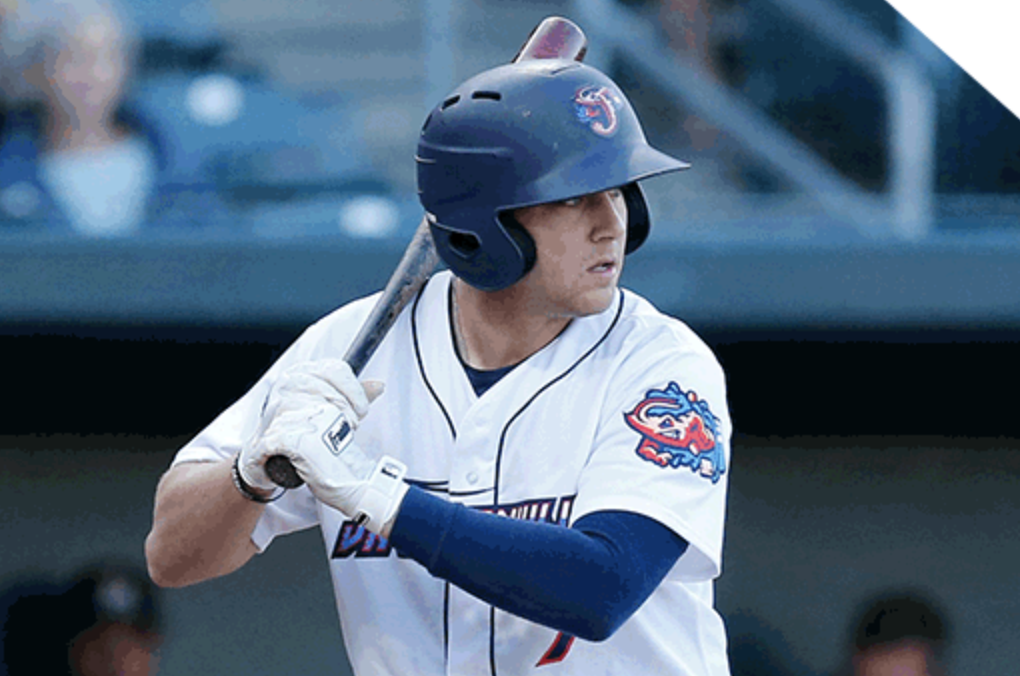 Prior to struggling with injuries that kept him out of action for much of 2014 and all of 2017, Austin James Dean is turning in a tour-de-force performance for the Marlins organization as he heads toward making his mark upon the professional ranks. Dean was born on October 14, 1993 in Spring, Texas where he attended Klein Collins High School. Following in the footsteps of David Murphy and Josh Barfeild, Dean earned underclass honors in both 2010 and 2011. In his senior year, Dean hit .379 with 10 doubles, 12 homers and 44 RBI on his way to a 2nd team All American selection where he joined the likes of Oakland A’s #9 prospect James Kaprielian and St Louis Cardinals and Tate Matheny, a Red Sox prospect who was a .408/.338/.408 hitter at the A level last year and who is off to a .304/.411/.342 start in AA this season. Following his breakout 2015 season, Dean signed with the Marlins who selected him in the fourth round, a spot which earned the 18-year-old a $379,000 paycheck. Upon putting pen to paper on his first professional contract, it started Dean down a path of stark maturation both as a player and as a man, quite the set of tasks for a newly anointed adult. Though he admits that the first year was tough as he adjusted to the shock of both living independently and the level of competition, by keeping his family as close as possible and by feeding off the advice of his elders, Dean has been able to conquer both challenges, turning a wide-eyed kid with a dream into a focused man with a plan. “Being a high schooler in pro ball was a big wake-up call. You go from being the best player on your high school team, to going and playing with everyone who is just as good or even better then you. My first year in pro ball was definitely life changing. Being away from home, and being away from your family is tough. But ever since then it’s been a growing up thing,” Dean explains. “You learn how to take care of yourself and be an adult while your playing. I’ve definitely matured a lot since 2012 when I got drafted. On the baseball side, I’ve come across many of different coaches and players, and you tend to pick things as you go and learn different things from them. I’ve learned a lot of thing over the past 6 years, and I have think that’s helped me as a player.” According to Dean, there have been many supporters and proponents that are responsible for getting him to where he is today. However, one person’s encouragement and advice has catalytically stood above all the rest. “My dad. He’s always been supportive of my baseball career and he will always be my number 1 fan,” Dean said. “His biggest thing he loves telling me is, “You don’t want to be doing my job, sitting behind a desk and dealing with people all day.” I always laughed at it, but he was right. I love baseball and I am very blessed to be playing this game, continuing to chase my dreams of making it up to the big leagues.” Dean’s path to the realization of that dream hasn’t come without some bumps in the road. After getting his feet wet in the GCL at the end of his draft year, Dean began his pro career by hitting .268/.328/.418 for the 2013 Muckdogs, totals which included the second best SLG on the team and 15th in the New York Penn League. The numbers which were paved by his 12 doubles and seven triples which were the most in the NYPL earned Dean a look in Greensboro to end that season. In 2014, Dean began the year in Greensboro and was tasked with the most extensive action of his young baseball career. Though Dean’s body would falter under the pressure, his drive, grind, resolve and fantastic baseball skill set remained strong. Dean began that season by hitting .288/.343/.403, earning a nod in the 2014 South Atlantic League All-Star Game. However, just before the break, Dean hit the DL for the first time with a right hand injury he suffered during a slide. After spending more than two weeks off the field completely, things went from bad to worse for Dean during his rehab stint in extended spring training when he suffered a nasal fracture after being hit by a pitch. But none of that hindered Dean. Showing the poise of a veteran well beyond his years let alone a 20-year-old playing in his first full season, Dean returned in early July. That month, he had one of the better months by a Greensboro player in recent memory, hitting .377/.459/.500 before he went down with injury again in early August due to a groin strain. As frustrating as this may seem, Dean once again returned undeterred, swatting six more XBHs in his final 14 games and rounding out a fantastic .308/.371/.444, 33 XBH, 72/38, 128 wRC+ season. His SLG stood at 15th best as did his wRC+, his BA was 9th best and his 24.7% line drive percentage was third best in his league. Quite the breakout season from a kid nearly a year and a half younger than the league average competition grinding through the most extensive single season action of his career. After Dean was promoted to Jupiter and the Florida State League in 2015 where he was equally as advertised as he showed a season previous when not playing in the extremely pitcher-friendly Roger Dean Stadium (.289/.337/.410 on the road versus .244/.298/.317 at home) and after Dean tore up the Arizona Fall League by hitting .323/.364/.452 against some of the top young talent in baseball that offseason, he began 2016 in AA Jacksonville marking a third straight season he’d received a promotion. That year, Dean had a solid first half hitting .261/.345/.426 with a 53/32 K/BB over his first 68 games but seemed to be pressing a bit at the plate in the second half when he hit just .212/.262/.320 with a 57/16 K/BB. Overall, Dean hit .238/.307/.375, setting him up to repeat a level for the first time in his career in 2017. At this very untimely moment, when Dean was working on adjusting to hitting consistently at the upper levels where scouting reports and number crunching are utilized much more, Dean would once again be bitten by the injury bug. Just seven games into the season, he broke his right hand in an outfield collision with Yefri Perez. The injury would cost Dean nearly three full months. It's been 8 weeks since I broke my hand, and I finally got see live pitching for the first time 🙌🏻🙌🏻. — Austin Dean (@AustinDean_3) June 2, 2017 However, Dean once again refused to succumb to the ailment. After a short stint in the GCL in which he went 7-13 in three games, Dean returned to the Jumbo Shrimp on July 3. He lived out the rest of the 2017 season by hitting .283/.325/.415, more than impressive numbers given the timing of his injury and the amount of time missed at such a disadvantageous time in his development. So how was Dean once again able to overcome the damage to both his body and psyche during this difficult time? Despite the distance between them, Dean says the biggest impetus during the entire process was the same one that has been throughout his baseball career: his family. “My parents last year were a big help. We’d talk every day or try to and obviously this was something new to me not being able to play,” Dean said. “They kept me motivated, and they were very supportive as well, and I probably couldn’t have done it with out them.” This season in Jacksonville, a 100% Dean is paying homage to his support system by being the best hitter in the entire Marlins’ organization. Through his first 22 games this season facing the same level of competition that gave him fits in the second half of 2016, Dean has been on fire. In fact, Dean’s bat has been so hot it’s made history. In his first 81 ABs, Dean has hit a ludicrous .420/.466/.654 with three homers, eight doubles, a triple and 14 RBI. His slash line marks the best offensive April in the Southern League since 2005 when Matt Murton hit .437/.505/.621. To put it another way, Dean just had the league’s best offensive month of April in over a decade. By way of a ridiculous 92% contact rate, Dean hit in 16 of 22 games and reached base in 18 of 22 including 17 of 18 to begin the season. His monthly success has been met with a promotion to AAA New Orleans to begin May. [milbvideo id="1966793683" width="830" height="400" /] After simplifying his stance and approach in his rookie season, Dean, a 6’1”, 190 pounder, has learned how to fill some holes in his swing and come by power with ease. This month with the Shrimp, Dean has also shown much improved patience, a greater ability to take close pitches, foul off tough pitches (proven by his 0.86 BB/K) and wait for his inside pitch in order to feed off his pull-happy instincts. He’s also shown a better feel for getting his hands extended to pitches on the outer half, either taking them to his pull side via his great raw strength or in the very least, making contact, limiting his K rate. The catalyst for this has been a shortened approach and heightened bat speed. Older and wiser, Dean has learned how to settle for what is given to him. He isn’t pressing and simply allowing his raw skill to drive his game. Smooth, fluid and effortless at the plate, the numbers are coming naturally to Dean, a fantastic sign. The only thing that was consistently missing from Dean’s game in April was the ability to lean in to pitches and go the other way (24% opposite field hit percentage). But so far in AAA (small sample aside), Dean has rectified that issue and for the first time in his career, is actually favoring his opposite field (47.6% opposite field hit percentage). If Dean continues to show these same contact rates and plate coverage ability at the highest level of minor league ball, there isn't going to be much left for him to prove below the Major League level and if the stats persist, the organization isn't going to be able to hold him back much longer. After all of his trials and tribulations, Dean, who holds the ceiling of a familiar friend of ours Jeff Conine (career .285/.347/.443, 17 HR 162 game average), is on the verge of his Major League call. His parents probably already have their plane tickets.
 -
 View full article
 -
2018 Jacksonville Jumbo Shrimp (Rest Of) Season Preview
Alex Carver posted an article in FOF Prospects
 According to crustacean experts, baby shrimp growth is dependent on sunlight. After absorbing the Jacksonville Suns last season, the newborn Jacksonville Jumbo Shrimp, led by Monte Harrison, Kyle Barrett, Colby Lusignan, Jeff Brigham and Max Duval are ready to make their mark on the Southern League. 2017 Stats .242/.321/.360, 86 HR, 313 XBH 1185.1 IP, 3.69 ERA, 1.28 WHIP, 2.64 K/BB In their second season, the Shrimp will once again be lead by manager Randy Ready. A graduate of Cal State East Bay, Ready was selected by the Brewers in the sixth round in 1980. After jumping a level with each passing year from 1980-83, Ready made his MLB debut with the Brewers 1983 and went on to slash .259/.359/.387 over an 11 year MLB career. His best season occurred in 1987 when he hit .309/.423/.520 in 124 games for the San Diego Padres. Needless to say, Ready knows what it takes to proceed up the developmental ladder and make it at the highest level as a professional. According to Kyle Barrett who began playing for Ready last season and rejoins him again this year, Ready, by way of his many years of experience and a solid all-around skillset especially in the minor league circuit, makes a well-rounded minor league skip. “Ready is laid back and a cool dude for sure. He had a long career in the bigs and knows his stuff,” Barrett said. “He’s really helped me with the smaller portions of the game such as bunting and baserunning.” Rejoining Ready is his pitching coach Storm Davis. A Jacksonville native, Davis was a high school draft pick in round seven by the Baltimore Orioles out of University Christian High School in 1979. After flying through the minors jumping a level with each passing season despite still being in his teenage years in three of four of those seasons (including a stop in Fort Lauderdale with the Miami Orioles), Davis, by way of a collective 3.56 ERA and 1.04 WHIP, cracked the majors as a 20-year-old in 1982. Despite being over eight years younger than the average major leaguer, Davis, who made the Orioles out of camp, stormed out of the gate (pun intended) and collected a win in his first MLB start on July 3, 1982 against the Detroit Tigers. He would go on to post an overall 3.49 ERA, 1.232 WHIP and 2.39 K/BB over 100 innings in his rookie year. Davis spent the next 12 years in a similar capacity pitching both as a starter and out of the pen, collecting a 113-96 career record and holding down a 4.02 ERA and 3.80 WHIP by way of a 1.392 WHIP and 1.53 K/BB (including over 1,000 strikeouts) over 1780.2 IP. In 1983, his sophomore season, Davis contributed a 13-7 record via a 3.59 ERA, 1.218 WHIP and 1.95 K/BB to the World Champion Orioles. He collected a second World Series ring in 1989 when he ran up a career high 19 wins (19-7) and was huge down the stretch for the Oakland A’s. In the second half, he held down a 3.61 ERA and went 12-3 in 17 starts. This year, Davis is bringing his expertise back to a level which he went 14-10 with a 3.47 ERA and 1.83 K/BB at despite being four years the minor to the average competition. A guy who grew up extremely fast, enjoyed a fantastic minor league career and borderline Hall Of Fame +17 WAR major league career, Davis simply knows what it takes to get the job done on the hill, no matter the level. Marcus Crescentini who joins Davis’ staff this year has already begun to see the positive impacts of Davis’ much apprised but quite relaxed tutelage. “I’ve only been with Storm a couple of weeks but what I’ve noticed with him is that his knowledge is endless and he is very approachable,” Crescentini said. “He also treats all of his pitchers like men; he doesn’t micro manage and he let’s us be who we are.” Completing Ready’s staff is hitting coach Kevin Witt. Another Duval county native and graduate of Bishop Kenny High which is a short three mile drive from his current place of employment at the Baseball Grounds, Witt hit .481 as a senior before he became a first round pick by the Blue Jays in 1994. His #28 overall draft slot placed him ahead of fellow draftees Troy Glaus and AJ Pierzynski and just behind Jason Varitek and Nomar Garciaparra. After hitting .252 over his first three seasons including a .271/.335/.426 in A+ in 1996, Witt rose to AA in the Southern League, the same league he now holds managerial status in. There, Witt hit .289/.349/.539, tied for the league lead in homers and made the All-Star team as a utility infielder. In 1998, Witt began his AAA career and enjoyed immediate success leading the Syracuse SkyChiefs in homers with 23 while hitting .273/.354/.481. He made his MLB debut in September that season and recorded his first major league hit. Witt had a similar season in ‘99, once again leading the SkyChiefs in homers (24) and placing second in OPS (.896) before hitting .206 and recording his first MLB homer late in the season with Toronto. Following a 26 homer season in AAA in 2000, the Blue Jays cut ties with Witt a year later. After a short stint in the Padres, Witt joined the Tigers in 2003. After a .316/.391/.594 performance in AAA, Witt got a mid season call to the majors. In his most extended look at that level, Witt hit a very respectable .263/.301/.407 with ten homers over 27 ABs. Witt was signed by the Cardinals where he enjoyed his best season as a pro hitting .306/.353/.600 and earning him the Pacific Coast League’s MVP trophy. However, on a stacked St Louis team, he never got a chance with the big league squad. From there, Witt attempted to prove his worth in Japan, a very brief experiment, before rounding his playing career out with the Rays. After a .291/.360/.577 and whopping 36 homer performance with the Durham Bulls, a total which stands as Durham’s franchise record and the Rays’ organizational record and which earned him the International League’s MVP award. Witt got called up to the pros late in the season where he hit .148 in his final 19 MLB games. Witt rounded out his playing career back in Japan where he hit .174 in his last 40 games. A fantastic .274/.336/.502 269 HR career minor league hitter with a plus plus power tool, Witt was unfortunately a victim of circumstance who never got his full shot in the majors in his prime. Regardless, Witt is a guy who knows how to adjust and get the job done at the plate no matter the level. He is a welcome contributor as hitting coach at a level he once dominated. According to Austin Dean, Witt has good individual relationships with each hitter on the squad and is attentive and accommodating to each of their needs and routines. Describing his relationship with Witt, Dean says it’s one of mutual respect built on Witt’s trust in his players’ judgment and his overseer approach that lets them be themselves that stands out most. All in all, Dean says that on top of great expertise, Witt brings great reverence and leadership to the locker room, creating a more positive environment to play in. “Being with Witt has been great. He’s very knowledgeable about the game and obviously he’s had great success as well,” Dean said. “Him and I’s relationship is a little bit different then everyone else. From spring training, he and I talked about routines and things I like to do in the season. And for me I don’t like hitting a lot. I like to take a couple rounds of five off the machine and then I go and hit BP on the field that day, and that’s it for me. And he’s respected that. He’s never tried to get me to do more then I wanted or that I needed. There’s times where I might be on my first round on the machine and I absolutely demolish five balls in row and he tells me to get and go back in the clubhouse. It’s things like that, he’s very encouraging and he knows what he talking about with us, and he’s been helping, you know, not just me but everyone else on team.” Projected Lineup DH Kyle Barrett 2B Isan Diaz LF Austin Dean RF John Norwood CF Monte Harrison 1B Colby Lusignan 3B Brian Schales C Rodrigo Vigil SS Chris Diaz Kyle Barrett 2017 - A+-AA - .276/.333/.324, 17 XBH, 65% SB%, 2.38 K/BB Barrett is a Marlins 15th round draft pick from 2015 out of the University Of Kentucky, a pick which has been part of a shopping spree of the UK system from 2013 to present. Over the last five years, Stan Meek, Mike Hill and the Marlins have selected Wolfpack members in four separate drafts: J.T. Riddle in 2013, Barrett in 2015, Dustin Beggs in 2016 and Riley Mahan last year. Its been a “stick with what’s working” type approach from the scouting department to continue to return to Lexington on the regular year after year to scout and eventually select and sign players. Each of the four players selected has successfully parlayed a great collegiate career into at least some sort of positive progression since they’ve begun wearing a Marlins affiliated uniform. While Riddle hit .275/.318/.364 over a four year minor league career, while Mahan has gotten off to a .289/.333/.458 over his first 20 pro games and while Beggs has posted a 3.61 K/BB in his first three seasons, Barrett has been one of the most consistent players in the entire organization. Barrett garnered the Marlins’ attention after a .324/.386/.391 collegiate career at UK which included a fantastic .354/.394/443 senior season. His BA that year ranked seventh in the SEC ahead of competition such as Dansby Swanson and just behind Red Sox top prospect and () overall prospect according to Baseball America, Andrew Benintendi. His average was made possible by his 46 hits, a total which ranked third in the conference, one shy of Benintendi. Barrett’s OBP ranked 17th in the SEC, just .23 points off of Swanson’s .417 mark. Barrett showed off his prowess on the bases as well scoring 29 runs and recording three triples, both of which were good for fourth most in SEC play and collected its 13th most total bases, 62. He accomplished all of this in the conference’s ninth most ABs, 124. Upon being drafted by the Marlins, Barrett headed to short season Batavia but just four games into his pro career, he broke his right hand and missed the rest of the campaign. Despite the injury, Barrett joined the Greensboro Grasshoppers in 2016. Despite getting off to a slow 12-72 7/16 K/BB start due to the fact that he was still not pain free in his injured hand, Barrett, ever the grinder and with a staunch refusal to quit, turned it on in late May and wound up reaching base in 55 his final 79 games. Despite the slow start, Barrett hit .282/.333/.345. Among players who appeared in over 60 games, his BA and OBP were both team highs. He also stole 17 bags in 22 attempts. The biggest hole in Barrett’s game headed into his sophomore season was his inability to read and time professional quality pitches as well as having a tendency to get a bit over-aggressive. This was proven by his heightened 17.05 K rate and 2.68 K/BB in Greensboro. However, the Marlins didn’t let that small hitch hold Barrett back and gave him the promotion to A+. That year, Barrett, back at 100% to start the season, rewarded the Marlins’ confidence in his projection by slashing .297/.355/.342 over his first 66 games with the Hammerheads. His BA, made largely possible by a 12 game hit streak in which he went 19-49 in late May and early June, led the team and ranked 18th in the Florida State League. He reached base via a hit in 57 of his 66 appearances. All the while, Barrett’s walk rate rose to 7.77%, his K rate fell to 14.53% and his K/BB rested at 1.87. Originally snubbed from the FSL’s All-Star Game, he rightfully made it as an injury replacement. For the second half, Barrett received the promotion to AA Jacksonville. In his first 126 ABs as a Shrimp, he hit .230/.285/.286. “I’m a firm believer that you can’t have success until you have failed. Failure is a teaching point," Kyle says. Barrett has had a few of those educational experiences so far in his pro career including being bitten by the sophomore slump in college (.253/.354/.312) and the aforementioned injury stricken 2016 season in Greensboro. However, each time, Barrett, by way of putting in all the necessary work and then some, has been able to adjust and come back the next season a much better player. Following a subpar audition in AA last season, Barrett faces a similar test in 2018 but if his track record is any indication, he will use stored knowledge, his fantastic work ethic and his ability to acclimate accordingly no matter the situation or level of competition to rise to the occasion. According to Kyle, in addition to the bump in competition level, the biggest rectification for him to make mentally during his transition from A to AA last year was being prepared to hear his number called upon at any time in any situation on any given day and not losing his preparedness just because he didn’t see his name on the lineup card. “The transition from high A to AA is definitely an adjustment,” Barrett said. “I learned that the days I’m not starting doesn’t mean I won’t play, there’s always a pinch hit or a double switch.“ 5’11”, 185, Barrett packs a ton of talent into his stout but athletic frame. Formerly a high strikeout guy, Barrett has found a nice balance between aggression and patience. He’s also improved the lateral level of his swing, allowing him to get at least some part of the bat on pitches he engages on, prolonging his ABs and forcing his opposition to beat him with a quality pitch. That said, Barrett will also often attack early in the count if he sees a juicy morsel he likes. Simply put, he’s a very tough and pesky out to get and a guy who can give opposing teams fits. Barrett owns an extremely quick snap swing made possible by even quicker hands. Approaching from the back of the box, his speedy upper half and stationary head expand his field of vision and allow him to read pitches nearly all the way to the front black of the plate. While he probably won’t put many out of the park or even over outfielders’ heads, he has a great knack for finding holes and gaps. With plus speed, the ability to read the ball off the bat and good base running instincts, he turns singles into extra bases with relative ease. He holds plus speed and makes equally good reads off the bat and flashes a strong arm in the field. He can cover all three outfield spots but he projects best as a future center fielder. Though the Marlins’ organization suddenly finds itself with a ton of young outfield depth especially after the acquisitions of Magnerius Sierra, Braxton Lee and Monte Harrison, with success at the AA level this year, Barrett is a rounding out a unique catalytic skillset. With success via another positive adjustment this season, he could receive a look in the bigs in September and he would definitely be a candidate to make his first 40-man roster next season. As good as his long range vision is on the field though, Barrett isn’t looking that far into the future. For now, he is putting all of his focus on what is directly in front of him and nothing more. “I can’t think about it or stress about it. All I can do is control the controllable and play my game,” Barrett said. “If I stay within myself, be confident and have fun, everything else will fall into place.” An extremely easy guy to get into games whether it be at the top of the lineup as a fire starter, at the bottom of it as a restarter or as a lefty bat off the bench as a rally starter, the 25-year-old’s modest ceiling should be placed somewhere around Roger Cedeno, a career .273/.340/.371 hitter and 77% successful steals threat. Austin Dean 2017 - .291/.328/.446, 25 XBH, 3.43 K/BB A fourth round pick out of high school from the year 2012, Dean is a name that has been around the Marlins organization for a while. Entering his sixth year as a pro, Dean’s career so far has been a proverbial roller coaster ride full of ups and downs. Dean hails from Klein Collins High School in his hometown of Spring, Texas. Coming into the draft, Dean was heralded for his great raw power via a solid 6’1”, 185 pound build, a great ability to get extended and a quick stroke with loft. Paired with good speed (clocked at a 6.74 first to home) and a good baseball IQ as well as classroom aptitude, Dean had a verbal commitment to Texas before he chose to sign with the Marlins after being selected in the 4th round of the Draft by the Marlins, a slot which garnered him a $379,000 signing bonus. After starting out in the Gulf Coast League post draft where he posted a .223/.337/.338 line in his first 47 pro games, Dean joined short season Batavia in 2013. There in 56 games, Dean hit a respectable .268/.325/418. His slugging percentage that came via 21 XBHs ranked 15th in the New York Penn League. At the end of the season, Dean received a cup of coffee in Greensboro where he hit .200/.346/.400 over 20 ABs. Regarding what life was like for him as a kid who suddenly saw an after school activity engulf his entire life and asked how he was able to maintain focus under those circumstances, Dean responds that it was a stark maturation process making his way as a teenager in professional baseball but with the help of a great supportive cast of teammates and coaches, he was able to keep his focus and nurture his skillset advantageously. “My first year in pro ball was definitely life changing. Being away from home, and being away from your family is tough. But ever since then it’s been a growing up thing. You learn how to take care of yourself and be an adult while you’re playing. I’ve definitely matured a lot since 2012 when I got drafted. On the baseball side, I’ve come across many of different coaches and players, and you tend to pick things as you go and learn different things from them. I’ve learned a lot of thing over the past six years, and I think that’s help me as a baseball player.” In 2014, Dean appeared on the Marlins’ top 20 prospect list slotting in at #15. At the beginning of the year, stared down the first full professional season of his career in Greensboro. Thanks to three separate injuries, a left hand injury he suffered during a slide, a nasal fracture that occurred while he has rehabbing and a right groin strain that occurred while running, Dean’s season would wind up being limited to 99 games. However, the missed time and gaps between in game action did not appear to affect Dean at all. When he was on the field, he was consistently effective. After beginning the year by hitting .288/.343/.403, accolades which earned him an All-Star selection, Dean missed 22 games and the All-Star Game. Undeterred, Dean returned in early July hitting .377/.459/.500 before hitting the shelf again in early August. He returned again on August 15 and closed out a fantastic .308/.371/.444, 33 XBH, 72/38 K/BB, 128 wrC+ breakout campaign, incredible numbers especially considering his youth (1.2 years younger than the league average player) and his health woes. In 2015, Dean received a promotion for a fourth straight season, joining A+ Jupiter. While the power hitter’s overall .268/.318/.366 slash line didn’t pop off the page, the underlying reason for it was due to his being stymied by the extremely pitcher friendly confines of Roger Dean Stadium. While he only hit .244/.298/.317 in 195 ABs at home, Dean was a .289/.337/.410 hitter in 208 ABs throughout the rest of the Florida State League. All five of his homers came on the road. Dean also successfully tempered his K rate down to 13.1%, a career low, proving he was at par in terms of making contact with A+ competition. That offseason, Dean took part in the Arizona Fall League. In 16 games and 62 ABs against some of the top young talent in professional ball, the 20-year-old turned in a .323/.364/.452 performance, marks which ranked 12th, 24th and 27th. His .815 OPS ranked 26th. 18 of the 25 players who ranked ahead of Dean on that list are current major leaguers such as Lewis Brinson, Gary Sanchez, Aledmys Diaz and Wilson Contreras. By leaving that impression coupled with his solid situational year in Jupiter, Dean was given yet another promotion this time to AA Jacksonville, just a step away from realizing his dream. Just seven games into his AA career, Dean suffered a demoralizing injury on a collision with a fellow outfielder. The ailment would cost Dean nearly three full months. After suffering the injury on April 12, Dean did not return to the field until June 28. Following a four game rehab stint in the GCL, he finally returned to Jacksonville on July 3. “When I got hurt last year, it was very unfortunate but you know injury’s happen; it’s a part of the game. While I was rehabbing in Jupiter it was very slow process, and it was hard not being up in Jax and playing and being around my teammates,” Dean said. "But I worked my butt off while I was down there, I was still able to lift weights, to a certain extent. I kept my body in shape so I would be ready for when I got back. It was very tough not playing baseball for long. But it’s one of things you have to deal with sometimes and I felt like I handled everything pretty well last year.” The ever-so modest Dean handled his situation a lot better than “well”. Upon his return, he enjoyed a .205/.347/.311 month of July. He hit in 39 of his final 55 game and reached reached base safely in 13 straight from July 28 to August 18. Overall, he was a .282/.323/.427, 4 HR, 22 XBH performer as he once again proved to hold an incredible ability to overcome adversity. Asked how he was able to rise to the occasion of meeting and exceeding expectations in the upper minors despite missing nearly the entire first half, Dean responded this way: “My parents last year, was you know a big help. We’d talk every day or try too, and obviously this was something new to me not being able to play. They kept me motivated, and they were very supportive as well, and I probably couldn’t have done it with out them. Despite having far from a sunshine and butterflies Sunday drive through the minor leagues, Dean has met every challenge he’s faced and conquered it all while keeping his development proceeding in the right direction. In 540 career games, Dean has been able to close some holes in his swing that were present when he got drafted, simplify his mechanics, improve his contact rates and learn how to take what he’s given, leading to good averages and a solid doubles-first power threat. While the Marlins would like to see more over-the-fence power from Dean, there’s still plenty of time for the 24-year-old to find that as he fills out the rest of the way. One area of concern for Dean lies in his limited ability to get extended. A naturally pull-happy hitter, Dean could use to garner a better knack to cover the outside of the plate via more advantageous barrel extension, leading to the ability to go to his opposite field. It’s one of the few things holding Dean back but it could be a major catalyst for his success as a major leaguer as pro pitchers and coaches could negate his strengths by way of quality stuff on the outer half and possibly an infield overshift. Should Dean, who has come out victorious in every battle he’s faced so far on his way up, be able to fill that small hole in his game, he’s a quality corner outfielder with a ceiling around our old buddy Jeff Conine a career .285/.347/.443 bat. With further success in AA this year, he’s a candidate to receive his MLB debut sometime in 2018. At the very least, he is a shoe in for a 40-man roster spot next year and a favorite for at least a bench spot in 2019. Monte Harrison 2017 (A-A+) – .272/.350/.481, 21 HR, 51 XBH, 139/43 K/BB, 27 SB The main accompanying piece in the Christian Yelich trade with the Brewers, Harrison is a power hitting threat who is a bit immature in his approach but who holds extreme upside. Between A and A+ last year, Harrison hit .272/.350/.481 and topped he 20 homer mark for the first time in his career. As impressive as his .209 ISO and 133 wRC+ were, those figures came at the expense of a 143/39 K/BB. His 27% K rate last season equaled his 27% career K rate. That said, if Harrison, still 22, can find more discipline, there isn’t much more he needs to do to be both a top prospect and major league ready. With elite bat speed by way of flashy wrists and a line drive swing which, coupled together, create plus launch angle and plus plus exit velocities, the 6’3”, 220 pounder is also a ridiculous 4.12 runner first to home, quite surprising for a guy his size and a testament to his athleticism. He rounds out his skillset with a throwing arm that receives an 80 grade on the 20-80 scale. Undoubtedly, there’s massive upside here and after the acquisition of Brinson turns the Yelich return from good to gold. If Harrison is going to realize his full potential, there’s still work to be done both mentally and mechanically but considering he was able to turn in a great 2017 regular season followed by a .283/.333/.604, five homer performance in the Arizona Fall League after he missed much of 2016 due to injury, there’s reason to be very excited about his future. With no pressure on him whatsoever, I wouldn’t expect any sort of Major League action before next season at least as Harrison works on his few hitches. However, a complete Monte Harrison will be well worth the wait and a franchise cornerstone type piece. Pay close attention here. There’s special five tool type talent being kindled. Colby Lusignan 2017 - A-A+ - .259/.326/.429, 15 HR, 49 XBH, 3.83 K/BB A 28th round pick from 2016 after a .328/.425/.528 collegiate career between community college in Gainesville, FL and Division 2 Lander University in South Carolina, Lusignan is a piece who has come almost literally out of nowhere and proven to be quite the power hitting commodity. After a .325/.429/.591 singular season at Lander with an OBP that ranked 10th in the conference and with its seventh best SLG and ninth best OPS (1.020), Lusignan hit .319/.422/.469 in the Gulf Coast League and got a look at short season Batavia to finish his 2016 season. The next year, Lusignan began the year in Greensboro. After hitting nine homers but slashing just .243/.315/.414 with a 34.72 K rate, the 23-year-old was nevertheless fast tracked to A+ Jupiter. Just 113 ABs into his pro career and sporting a .251 BA and 33% K rate, the challenge seemed a bit over Lusignan’s head. However, the 6’4”, 230 pounder was somehow able to respond to the task by completely tearing the pitcher friendly Florida State League apart. In 46 games and 201 PAs, he hit .285/.348/.453 with six homers, 18 XBH, a .168 ISO and a 134 wRC+. He also showed improved patience as his K rate even fell more than 10 points to 23.9 and his walk rate rose to 8.5. This season, just two years removed from playing ball at a Division 2 school, Lusignan faces his next challenge: playing against competition just shy of the major league level. A lefty hitter, Lusignan has successfully gained a better knowledge for the zone as he’s flown through the Marlins’ minor league system. Looking at spray charts, Lusignan has mastered the art of opposite field hitting, relying on his ability to get extended and making the most out of his lefty’s advantage. He’s also always shown a good knack for going straight up the middle. Recently, Lusignan is also using his strength advantageously to go pull side on pitches on the inner half, showing a good ability to stay inside the ball, cutting down on his swing and miss totals. When he times pitches right, gets his feet down and barrels up on his classic uppercut swing, the ball flies. If Lusignan can continue to show that kind of aptitude and bat control, he will close his only plate coverage gap, become a complete power first threat vs righties and make a huge improvement vs fellow lefties who love to take his eyes and arms away by jamming him inside. Though the K will probably always be part of the power hitter’s game, Lusignan has improved so much is such a short amount of time. One of if not the biggest rags to riches story in the entire organization, Lusignan, who saw time with the big league club in spring training, is a one more good showing in the upper levels away from a Major League call. While that’s easier said than done and while he probably isn’t going to push Justin Bour for playing time anytime soon if ever, for a guy who has responded well to every challenge put to him, making it to the upper minors in just two short seasons, an unprecedented feat, it’s certainly within the realm of possibility for this offensive minded 25-year-old first baseman who has improved his balance and timing with each jump he’s made to acquire a roster spot and be used as a lefty power threat off the bench. Lusignan who came from modest beginnings in a small town in central Florida and never played above D2 before being drafted, deserves a hat tip for what he’s been able to accomplish so far and considering his level of focus and drive to succeed, likely isn’t done yet. Remember the name. You’ll could be seeing it in a Marlins lineup soon. Projected Rotation Nick Neidert Jeff Brigham Cody Poteet Max Duval Pablo Lopez Jeff Brigham 2017 - A+ - 59 IP, 2.90 ERA, 1.17 WHIP, 53/20 K/BB Brigham is a 6’, 200 pound righty out of the University Of Wisconsin. In a three year career there, he posted a collective 3.71 ERA, a 1.24 WHIP and 1.65 K/BB over 174.2 IP. His standout season occurred in his junior year when he went 7-4 with a 2.90 ERA, 11th best in the PAC12 via a 1.13 WHIP and 1.96 K/BB. That year pushed Brigham up into the top five rounds on draft boards. Ultimately the Dodgers selected him in round 4. He signed for $396K. After finishing out his draft year season cutting his teeth in pro ball with the short A Ogden Raptors (32.2 IP, 3.58 ERA, 1.47 WHIP), Brigham skipped single A and joined the A+ Rancho Cucamonga Quakes. After 17 games and 69 innings, the assignment proved to be too difficult for the 23-year-old’s developing to-contact arsenal and he was demoted to single A Great Lakes. He appeared in just two games there, tossing seven innings before the Marlins came calling at that year’s trade deadline. On July 30, 2015, Brigham along with Victor Araujo and Kevin Guzman were traded to the Marlins for Mat Latos and Michael Morse. Upon his change of scenery, the Marlins gave Brigham a shot at redemption at the A+ level assigning him to the Jupiter Hammerheads. Brigham responded well, tossing 33.2 innings for Jupiter and recording three straight quality outings from August 16-28, a string of outings where he allowed just one total earned run. In 2016, Brigham once again began the season in A+. After just two starts though, he landed on the DL with a back strain. Though he was able to return a week later, Brigham wasn’t back to pitching pain free until mid June. This fact shown true in his numbers: from April 22 through May 31, Brigham went 32.1 IP with a 6.73 ERA and 1.56 WHIP. Though he was able to avoid making another trip to the DL, Brigham didn’t make another start until June 12. Over that two week span, he appeared in just one game throwing a single inning out of the bullpen. The time off was exactly the medicine Brigham needed. Over his last 15 appearances of the season, Brigham threw 82.2 innings and held down a 2.41 ERA and 1.16 WHIP. This included a fantastic month of July in which Brigham managed a 0.33 ERA and 0.90 WHIP in five outings and 27.2 IP as well as a 3.13 ERA and 1.09 WHIP string of starts from August 13-29. Last season, Brigham began a third season with the Hammerheads. He was performing masterfully, tossing to the tune of a 2.68 ERA and 1.14 WHIP in his first 10 starts, six of which were quality starts and all of which lasted at least five innings and contained four earned runs or less. During a 5 IP, 6 H, 1 ER outing on June 30, Brigham struck out a career high nine. Rolling along and undoubtedly making sure to keep his phone charged and close, Brogham was derailed on July 25 when during a start, he suffered an oblique strain in his throwing arm. The injury would cost him the rest of the season. These unfortunately weren’t untested waters for Brigham. In 2012, he missed nearly his entire freshman year of college after undergoing Tommy John. After resuming throwing mid-offseason, despite another injury to an already surgically repaired arm, Brigham showed up at camp this season and was a mirror image of the pitcher he was eight months ago, maintaining his 94-96 mph velo and his outpitch slider while continuing to rebuild his changeup. Despite the missed time, coaches saw enough to start Brigham off in AA this season. From his rocker step delivery and high 3/4 slot, Brigham has consistently flashed a good moving two-seamer with good sinking life down in the zone and an even better hard and snappy 86-88 mph slider with lateral run to his glove side that can get downright nasty when he’s ahead in the count and hitting his release point. Alternatively, the immaturity of Brigham’s changeup is what has held him back as a prospect. Last season though, the pitch looked to take a huge leap forward as he gained a better feel for the grip and gained the ability to let the pitch float off the tips of his fingers, adding spin and depth. Mixing it in much more rather than just using it as a waste pitch, it complimented his inside-out fastball/slider combo perfectly. While he still doesn’t have the consistency to pitch off the changeup, he’s using it with much more confidence and shows the ability to hit spots all around the plate. If he shows more dependable control of the change this season and manages to stay healthy, the 26-year-old Brigham could become a Major League ready starter, something I commonly found within the Marlins very young organization this season. Max Duval 2017 - A - 38.2 IP, 2.09 ERA, 0.85 WHIP, 7.60 K/BB Duval is a massively built righty that had quite the whirlwind start to his baseball career, playing all over the country and making the shift from an offensive first to defensive first player. After attending community college in San Luis Obispo, California, Duval played Division 1 ball at the University Of Hawaii. In 2012, the infielder hit .186/.255/.271. For Duval, the subpar season was disheartening considering how much work he would put in and how much of an infatuation he had with swinging the bat. “I loved hitting. And when I say “loved”, I mean that in college, there was nobody that would spend more time in the batting cage than me,” Duval said. “It was therapeutic for me. But no matter how hard I worked, I struggled in games.” Following his .186/.255/.271 junior season as a middle infielder, Duval got buried at the end of the Hawaii bench. At that point, he concedes he would’ve done anything just to see the field. So when his chance came, Duval literally jumped at it “My senior year, I was sitting on the bench every day and we had a pitcher go down with elbow issues so the head coach approached me and asked if I wanted to pitch,” Duval said. “At that point the only thing I wanted to do was get into the game so I gave it a shot. Since then, it has been all pitching.” After throwing his first eight innings during his senior year at Hawaii, Duval sought to expand his craft as a part timer in independent ball. Things started primitively for a Duval as he posted a 4.97 ERA in his first 67 innings in the Frontier League. During those years, Duval admits that on every pitch, he was simply trying to throw the ball as hard as he could and catch the strike zone. In turn, he was very much receiving on-the-job training. “At first, I was just throwing the baseball at the plate, trying to throw strikes,” Duval said. “Once I got comfortable on the mound, my career started to pick up.” The comfortability Duval speaks of started to come to him in 2015. That season, in 15 appearances including eight starts, Duval tossed 56.1 innings and managed a 3.51 ERA by way of a 1.172 WHIP and 3.13 K/BB. Essentially, this is where Duval’s career as a true pitcher really began. Overall, Duval sums his transition process from offense first to defense first as less of a change in mindset and moreso a shift in concentration. “Because I struggled at hitting those last few years, defense seemed like the only thing I was good at, so I don’t know if my mindset has changed from offensive to defensive, but it has definitely shifted to a focus on doing my job when I have the ball and giving the offense an opportunity to win us a ball game,” Duval said “Some days it works, some days it doesn’t. That’s how the game goes.” Duval’s exports in indy ball that 2015 year caught the attention of the Arizona Diamondbacks who signed him to his first professional contract for the minor league minimum in 2016. Duval didn’t know it yet but along with the biggest payday of his baseball career would eventually come a plethora of frequent flier miles. That season, Duval pitched in 15 games at four different levels as the D-Backs attempted to assess what level of maturation he was at. He spent two games in rookie ball before being moved to A Visalia. After just one game there, he was sent to short A Hillsboro for two games. Eventually, Duval “stuck” in low A. There, Duval impressed, holding a 3.02 ERA and a 1.28 WHIP with a 53/13 K/BB in 10 starts including six quality starts. According to Duval, as hard as being relocated so many times before he even got a chance to unpack his bags was, in hindsight, he finds it was stark yet an integral learning experience that benefited the growth of his young career. “The first year of affiliated ball after I signed was tough. I was all over the country that season so it was hard to find a consistent routine. It took me about two weeks to really get a handle on the lifestyle. Playing in a new city for a different team is tough because you don’t get to form relationships with your catchers or other teammates,” Duval said. “As difficult as it was, I think it forced me get to a point where I had to be comfortable enough to call my own game and be adaptable to situations that arise during the season; whether that be a level change, a rain delay, or anything in between.” Despite his impressive work in A that season, the Diamondbacks released Duval at the end of the year. In 2017, he returned to independent ball and with affiliated experience under his belt, turned in his best season as a pro. For the Evansville Otters, Duval went 8-2 with a 2.28 ERA, best in the Frontier League, 0.98 WHIP, and 113/27 (4.19) K/BB. His K rate sat at an obscene 11.69 percent. By signing Duval at the midway point of last season, the Marlins placed a small bet that the former infielder had learned how to pitch at the pro level and that he was starting to perfect his three pitch arsenal. The gamble produced some positive initial results. In six starts, Duval went 38.2 IP and managed a 2.09 ERA via a 0.85 WHIP and a .197 BAA. His control numbers were superb: he K’d 38 and walked just five. Indy ball signings are always low risk/high reward but recently, the Marlins have come out on the most advantageous side of that equation (see Trevor Richards and Mike Kickham). Duval, who pitched against Richards in the Frontier League three years ago could continue that recent tradition. This year, in Jacksonville, Duval meets Duval and vica versa as Max will be pitching in the county that took his name. And vica versa. Being nearly impossible to stare down on the mound, the 6’5”, 235 pounder menaces opposing hitters before he even begins his motion. In that regard, Duval gains an advantage before he does anything at all. Duval begins his windup by raising both hands over his head and performs a middle-high leg kick all at a slow and methodical pace before he follows through his full arm circle release with power and flashy quickness. The sudden change of pace coupled with his downward plane to the plate equals out to an extremely deceptive delivery which he repeats with immense ease which showcases his ability to succeed as a starter. Duval’s stuff is equally impressive: his four pitch arsenal consists of a fastball, cutter, a changeup and a curveball. The heat tops out at 95 and has good late life. The cutter seems to come out of his hand at a similar speed before it tails off to the corners late and dips down to 86. He throws both pitches with confidence and pitches off both, making them interchangeable. Mixed with his size and deception, it’s a plus plus combo which he controls, commands and feels very well. The changeup, although being a distant third pitch, is still a quality offering that can make hitters who swing over it look foolish. His work in progress pitch is a mid-low 70s curveball that doesn’t currently have a lot of shape but which Duval can still generate swings and misses with due to the stark change in velo and the improbability of picking it up out of his hand. Overall, Duval is a methodical worker who is a good mix of weakn contact and whiffs that knows how to get outs. Should he continue to modify and grow his changeup and curve to match hitters at this level, who could touch the majors sometime next season. Maybe then he could more closely hound Aaron Judge for repayment on that $80 debt. Projected Stats 76-64 .260/.359/.360, 88 HR, 320 XBH 1210 IP, 3.76 ERA, 1.32 WHIP, 2.76 K/BB
 -
View full article
-
 With the turn of the tide for the Marlins franchise there comes a ripe new group of Jupiter Hammerheads who sense blood in the water. Led by Corey Bird, Brian Miller, Joe Dunand, James Nelson, Sam Perez, Robert Dugger and Ethan Clark, this young crop of Sharks is primed and ready to feed on the rest of the Florida State League. [youtube https://www.youtube.com/watch?v=suTMUgYTeas]Leading the school of young pups into battle for a second straight year will be Kevin “Smoke” Randel. A 13th round draft pick by the Marlins out of Long Beach State University, Randel slashed .267/.374/.439 over a seven year playing career, all in the minors. Coincidentally, his best years came with the team he now coaches, the Jupiter Hammerheads. In 2005 and on return trips in 2007 and 2009, Randel hit a combined .294/.392/.480 with a 1.53 K/BB in 933 total at bats. He spent one season above A ball in 2009 and showed decently, hitting .253/.371/.496 while finishing second on the team in walks (62) and homers (12) only to Giancarlo Stanton (16). The lefty hitter who played three infield spots as well as left field could’ve made a decent career as a bench player but having only briefly reached higher than A ball, he instead decided to retire. Randel spent two years out of the game before returning to the Marlins organization in 2010 as an assistant coach for the Greensboro Grasshoppers. After two years there and two years with the Jacksonville Suns, he received his first head coaching gig in 2015 with Greensboro. After recording a 116-163 record with the Hoppers, he became the Hammerheads manager last season. That team finished just south of .500, by far his best year as a manager. It was made possible by way of a collective 2.82 ERA, second in the Florida State League, a 1.165 WHIP, also second, and a league leading 2.4 K/BB, numbers which evened out lowly offensive numbers such as a team .233 BA, dead last in the league, and 1,236 Ks, also dead last. Randel returns to Roger Dean Stadium this year with a much improved talent class, undoubtedly the best he’s ever coached. One of Smoke’s most successful alumni, Kyle Barrett who played for Randel first in Greensboro in 2016 and then in Jupiter last season says that his former coach is perfect for player development because although he demands hard work, Randel’s coaching style makes working hard fun. Barrett also commends Randel’s ability to relate to players. “Smoke is the man, he’s young so he’s not far out of the game and has feel,” Barrett said. “He’s a laid back coach but also holds you accountable. Play the game the right way and you’ll have no issues.” Rounding out Randel’s staff is Dan Black, another Marlins draftee from 2010 and minor leaguer from then until 2015. A career .253/.326/.344 hitter, Black was teammates with Marcell Ozuna, Christian Yelich, J.T. Realmuto and briefly with Giancarlo Stanton in 2011 and 2012. In 2013, he also shared a dugout with Derek Dietrich and Jake Marisnick. In 2012, Black had a great year as a Hammerhead, hitting .314/.375/.396 in 78 games before getting his first AA callup. Black says the breakout year was made possible by his ability to modify his approach and attitude, an experience that many minor leaguers struggle through. Black brings the knowledge and graduation of that process to the squad as a coach at a transitional level of development. “It was a very important year in my personal development. It is very hard to maintain consistency throughout the length of the season, and 2012 was the first year that I had a clear approach at the plate and I stuck with it. I did not try to do to much and just stayed in the gaps and within myself. After that it was just about competing and believing I was not gonna get beat by anyone.” Needless to say, Black understands what it takes to get the job done at the professional level. According to Black, he prizes the relationships he made as a player and strives to bring the same sense of belonging to the Hammerheads as a mentor. “I was very fortunate to be surrounded by not only great players but great teammates and coaches,” Black said. “A very special thing that our team possessed and a quality I try and carry out through my coaching is the trust and respect of your fellow teammates and coaches.” Overall, a grateful and humble Black says he is excited to return as coach and continue to impart wisdom gained through a trying yet successful minor league playing career at the A level on the next crop of young Marlins’ talent. “I am very blessed to have been apart of this game for as long as I have and to be around some amazing people,” Black said. “I just look forward to helping these men get better and ultimately fulfill there dreams of playing well at the highest level.” Joining Randel’s staff as hitting coach is Daniel Santin. Santin, a Miami native and attendee of Brito Academy and Miami-Dade College, was a 23rd round pick out of high school by the Mariners in 2003. After hitting ..314/.371/.485 in his first season, the catcher went on to post a career .270/.309/.393 slash line almost entirely at the single A level, including .264/.289/.391 with the Marlins’ single A affiliate in 2007. In 2015, Santin returned to the Marlins organization as hitting coach for the GCL Marlins, a position he has held for the last three seasons. Those three squads hit a collective .245/.323/.415. The promotee replaces Rey Noriega who departs after one season. Projected Lineup CF Corey Bird LF Brian Miller SS Joe Dunand 3B James Nelson 2B Riley Mahan DH Boo Vazquez RF Stone Garrett C Jarrett Rindfleisch 1B Will Allen Corey Bird 2017 - A-A+ - .288/.351/.370, 23 XBH, 0.9 K/BB, 28 SB Bird is a 7th round pick out of Marshall University in 2016. As a member of the Thundering Herd, Bird showcased his on-base instincts and enjoyed a standout .301/.374/342 three year career. He led Marshall in batting average in his freshman (.292) and sophomore (.307) seasons and, being the only player to appear in all 55 of Marshall’s games, was a few hits away from doing so again during an even .300 junior year. That season which would wind up being his draft year, Bird was a first team All-Conference selection. He rounded out his slash line with a .375 OBP and 335 SLG. His career walk rate as a collegiate player was a ridiculous 9.8 and he stole 58 bases in 73 attempts, a 79% success rate. After finishing his season off by adapting to the speed of the professional ranks in Batavia where he slashed .237/.302/.265, Bird impressed in camp in 2017. After, he was challenged to the prospect of his first full professional season. Bird not only met that challenge, he soared over it it by slashing .294/.360/.387 with a team high 23 steals in 32 attempts, enough to earn him a late season promotion to the Hammerheads. Playing in advanced A ball after being drafted not even a year and a half earlier, Bird’s average persisted as he hit .274 in 113 ABs, a metric that was only limited by the extreme pitcher-friendly confines of Roger Dean Chevrolet Stadium that limited him to a .286 BABIP. In his age 23 season, Bird returns to the Hammerheads to start the year but by as early as midseason, he may find himself headed north on I-95 to Jacksonville. The organization is extremely high on Bird and it’s easy to see why. Standing an even 6’0” at a current 180 pounds, Bird approaches from a straight away stance that sees his back foot straddling the back of the box and that he stays back on advantageously, allowing him to read the break on pitches, no matter how late and if he so chooses, engage a swing that may be the quickest in the organization thanks to his adaptable hands. These are Bird’s best mechanical tools and the bread and butter he projects to ride to the top of an MLB lineup. His swing is lateral and he has the smarts to settle for what he is given and he rarely presses, even when he is infrequently behind in the count. A heady hitter with a good working knowledge of the zone and how to approach ABs from a catalytic standpoint and poke out hits via solid plate coverage then late his plus speed go to work for him on the basepaths where he shows equally good instincts, Bird projects as a prototypical leadoff hitter. That said, although he will probably never be a true power threat, he is still building strength and when at his potential ceiling, could be an increased threat for true extra base hits, based on the speed of his swing alone. Coupled with good reads and equally as quick instincts in the field, Bird‘s ceiling should be placed at that of Austin Jackson, a career .275/.335/.402 hitter with a 73% stolen base percentage. Brian Miller 2017 - A - .322/.384/.416, 19 XBH, 1.52 K/BB, 21 SB Miller is a 2017 Marlins’ first round draftee, taken with the last pick of that round, 36th overall, with a competitive balance selection. He hails from the University of North Carolina, a team he made as a preferred walk-on back in 2014. Virtually unknown, Miller went on to enjoy a .332/.419/.453 career in Carolina blue all while fulfilling a childhood dream to play on their field. Miller’s lasting impression upon scouts was a .343/.422/.502 junior year, a line he held down while taking the most ABs in the ACC. For a third straight season, he walked more than he struck out (35/38 K/BB), ending his collegiate career with a ridiculous 0.88 K/BB ratio. He was also once again unstoppable on the basepaths, swiping 24 bags in 30 chance a total which was good for second most in the ACC and which gave him a career success rate of 81% in stolen base opportunities (55/68). The biggest thing Miller proved in his junior year of college was that he has the ability to be more than a pure singles threat. After heading into that season with just two career homers, Miller slammed a respectable seven bombs on top of 16 doubles and three triples, leading to a .159 ISO. His five-tool type season pushed Miller up draft ranks to what was thought to be a late second round selection. According to Miller, it was his support system that was the biggest catalyst in getting him to that position. “Getting picked in the first round was pretty cool, but it’s not really a goal I had all along because I just wanted to play for a team that valued me and gave me a chance to succeed,” Miller told me a few months ago. “There are a lot of very very good baseball players that didn’t get picked that high and will have great careers. Your junior year there’s so much noise out there about you as a player or where you might get picked. I was very blessed to have great friends and family around me that helped me tune all of that out and just play as hard as I could for my school.” Upon being drafted, Miller, who forwent being sent to Batavia, spent the rest of 2017 by making his pro debut in front of his family and friends. He responded by hitting .322/.384/.416 for the Grasshoppers. His success on the bases persisted as he stole 21 bags in 27 attempts. Despite the change in competition level, his solid patience also stayed strong as he posted a more than respectable 35/23 K/BB. Heading into 2018, Miller rides that fantastic ability to adapt into a pitcher friendly Florida State League especially at home at Roger Dean Chevrolet Stadium. Even though it will no doubt be a tough test for him after just 57 games in low A, if there’s anyone who has the ability to conquer it, it’s the same guy who went from near obscurity to a great fantastic career to an impressive initial showing in pro ball Greensboro. My 2017 Prospect of the Year, Miller exhibits four out of the five major tools. His excellent patience, strike zone knowledge and plate vision allow him to both avoid strikeouts and, coupled with his extremely shortened, lateral and lightning quick line drive cut, hit for a plus average. As quick as his hands at the plate are his legs on the bases. There, via good reads and probably his best present tool, his foot speed, making him a threat to steal every time he’s on. His quickness, good route running stemming from a good first step to the ball and solid throwing arm give him eligibility at all three defensive outfield spots but his future will probably be made in centerfield. Above all, Miller is the epitome of a guy who takes what he is given whether it be a walk, an infield single, a bunt hit or a stolen base, making him the perfect leadoff or two hole hitter. He’s a guy who is clearly valued in that capacity by the organization and rightfully so. Flying through the minors, with another good showing, Miller could get a look at AA by season’s end. [youtube https://www.youtube.com/watch?v=9r54JRIRvBg]Joe Dunand 2017 - A-A+ - .370/.471/.667, 6 XBH, 8/5 K/BB Dunand, the nephew of Alex Rodriguez. is a second round pick from last season out of NC State University. A Miami native, Dunand began garnering national attention in 2014 when he homered in eight straight at bats in a national tournament in Arizona. Dunand parlayed that performance into a solid three year collegiate career with the Wolfpack. Appearing in 178 of a possible 180 games, Dunand hit a collective .268/.334/.476 with 29 homers and 75 XBHs. Most of his success came during a .287/.368/.632 junior season in which he went yard 18 times, fourth most in the conference. His even 1.000 OPS ranked eighth in the ACC. Dunand rode that performance all the way up the draft board, going from a presumed late round pick at the start of 2016 to a seventh round selection in 2017. Upon joining the professional ranks, he had an intriguing first eight games in Jupiter between the backfields in the GCL and at Roger Dean Chevrolet Stadium with the Hammerheads (small sample aside) hitting 370/.471/.667. He flashed what is believed to be his best tool, plus raw power by collecting six XBHs, including his first professional homer. Judging by those numbers, the transition from metal to wood bats won’t be a problem for this kid. Watching him in camp, the righty hitter who gets low in a straight away stance impresses with his straight up the middle power. In a game I watched, Dunand went to the same exact area of the field twice against different pitchers with line drive hits, showing good repeatability in his approach and timing. The biggest and possibly only knock on Dunand’s approach is that he looks like a prototypical low ball hitter who can struggle against quality pitches on the upper half which has led to his high K totals. Better plate coverage will be paramount in how far he can go. Outside of that though, Dunand projects as a solid extra base hit threat who also hits for average and can play multiple infield positions including up the middle at short and second base. Should he improve his selectiveness and show the ability to walk more as he grows physically, he will be a highly prized commodity as a major leaguer. Place the ceiling here somewhere around Brandon Phillips, a career .275/.320/.421 hitter with the same quickness, instincts and hands in the field to match a career 9.5 dWAR. James Nelson 2017 - A - .309/.354/.456, 41 XBH, 4.08 K/BB Nelson is the Marlins’ 15th round draft pick from 2016 out of Cisco Junior College. The 20-year-old spent just one season there before signing with the Marlins upon his second draft selection. His single season in juco was paramount in his adding muscle and improving his power game. After hitting a total of just four homers in his junior and senior years of high school combined, Nelson exploded for 17, allowing him to climb up draft boards nearly 100 picks from 531st overall in 2015 to 443rd and garner a $75,000 signing bonus. He ended his 2016 campaign by hitting .284/.344/.364 in his first 162 pro ABs in the GCL. Last year in Greensboro, Nelson showed off an MVP-type skillset. Appearing in 102 of the Grasshoppers 136 games, Nelson hit .309/.354/.456. His BA brought him within one point of the South Atlantic League’s batting title, his OBP placed seventh and his .810 OPS sixth. His 31 doubles also ranked sixth. When measured by runs created (wRC+), Nelson was 32 runs better than the league average player. All the while, Nelson accomplished all of this despite being nearly three years younger than the Sally league’s average player. Much like his huge junior year in college, Nelson’s huge 2016 has garnered him a ton of attention from scouts. According to MLB Pipeline, he heads into 2018 as the 16th best prospect in the newly rebuilt Marlins’ system. Swinging from a low straight stance, Nelson engages from a big front foot trigger into a quick and well leveraged swing. Approaching from the back of the batters box, Nelson flashes the ability to wait out the break on pitches and a good step into the ball, allowing him to go to all fields. There isn’t much in the way of load or power transfer from the lower body. Rather, Nelson relies on bat speed, raw strength and speed to produce his XBHs, which last year were fairly limited to line drive doubles. Nelson’s upper body mechanics are solid. He maintains a stationary head and keeps two hands on the bat all the way through the zone, ensuring his plus contact rates. Nelson advantageously looks the ball off his bat and follows it into the field, allowing him to make a good first read on the basepaths where he shows above average jets. Areas of concern for Nelson are few and far between. One of those few is his patience. As good as his barrel path to the ball, full body extension and plate coverage abilities are, Nelson has a habit to press on pitches outside of the zone when down in the count and a susceptibility to allowing his top half to fly open a bit. Nelson will need to gain the ability to take more pitches, get ahead and work counts if he is to maintain a solid average and OBP at the upper levels and beyond. This fact isn’t lost on him. “The biggest thing is not wasting at bats, bearing down and getting the job done with runners on or not,” Nelson told me last year. “If they are gonna give me a walk, I gotta take it and not press.” Another area of concern for Nelson was his lack of home run power during his 2017 campaign as he hit just seven. While his ability to find holes and gaps shouldn’t be discounted, if he hopes to stick as a third baseman, that total as well as his 2.05 ground out to air out ratio will need to improve. Speaking of his future at third, Nelson’s fielding error total of 19 will also need refinement. Though he shows off a 60-grade throwing arm, he sometimes rushes his feeds. He’s also still learning how to make the most advantageous reads off the bat. Just 19, there’s plenty of time for Nelson, a traditional shortstop, to close those gaps in his game. However, he will lose a bit of that time to injury at the start of this season. At the beginning of camp, Nelson suffered a meniscus injury that required surgery. With no past history, Nelson says it came out of nowhere. However, despite the tough luck, he plans to come back no worse for the wear. “It just kind of happened. It’s weird because I didn’t feel anything last year,” Nelson said. “I’ll probably be out a month, but I’ll be fine.” What hurts most about the injury isn’t necessarily the longevity or seriousness of it but rather the timing. Due to the surgery, he missed the opportunity to reap the benefits of the tutelage big league coaches such as infield guru Perry Hill, the chance to get some work in against big league talent and begin to adjust to his slightly bigger body (he put on 20 pounds of mass in the offseason) and new home park Roger Dean Chevrolet Stadium. Instead, all of that will be need to be done on the fly during regular season action by a kid who will once again be the youngest player on his team. If he doesn’t lose a step, if the solid average persists and he is able to add some launch to his swing, get his lower half more involved in his approach and find more consistent over-the-fence power and if he can he can take the next step in his development as a defender, Nelson could get a look in AA at the end of the year. With a good gap-to-gap foundational make up, a great baseball IQ and fantastic athleticism, it’s definitely within the realm of possibility. However, there shouldn’t be any pressure on him to make that jump. Still in his teenage years, there’s plenty of time for Nelson to reach his potential as a 20/20/20 type offensive weapon with at least average all-around defensive skills. Although he faces a tough test this year, he will be one of the most intriguing pieces to watch within the entire organization. Projected Rotation Robert Dugger Sam Perez Sean Guenther Daniel Castano Ethan Clark [youtube https://www.youtube.com/watch?v=T4mZMiGbxGY]Robert Dugger 2017 - A-A+ - 117.2 IP, 2.75 ERA, 1.16 WHIP, 3.63 K/BB Acquired by the Marlins in the offseason trade for Dee Gordon, Dugger was an 18th round draft pick by the Mariners out of Texas Tech University. In a single season out of the Red Raiders bullpen, Dugger appeared in 30 games and held down a 2.67 ERA via a 1.4 WHIP, 8.01 K/9 and 2.35 K/BB in 60.2 IP. After his collegiate career, the Mariners tried to transition Dugger to the starting rotation. Since that time in 2016, he’s been a project in progress. His most convincing work was done this past season as he started the year in low A and held down a 1.18 ERA as a starter via a .199 BAA and 46/9 K/BB before being called up to A+ where he had a 3.94 ERA in the same amount of innings via a 47/16 K/BB and .272 BAA. Dugger returns to A+ this year with the Hammerheads in his age 23 season. A decently sized 6’2”, 180, Dugger delivers from a step-back delivery, a high leg kick and a low 3/4 slot. There’s quickness and deception in his delivery that he also maintains out of the stretch but there is a bit of effort in it leading to some doubt as to his ability to hold up during a season’s worth of starts. His heat which shows a bit of life tops out at 93 but his bread and butter pitch is a good power slider at 91 which he spots very well on his outer half. While his command can be spotty at times, he rarely misses up in the zone. He has a good feel for his craft as a weak contact inducing hurler. That said, Dugger doesn’t have much more of an arsenal outside of the beginnings of a changeup that lacks shape. He started throwing a curveball in college but has since abandoned it in favor of his quality slide piece. If he’s going to stick as a starter, Dugger will need to further develop the changeup. That’ll be the focus going into this season but at this point, at 24, he projects better as a pen arm with swing man potential. Sam Perez 2017 - A - 110.2 IP, 3.42 ERA, 1.11 WHIP, 83/19 K/BB (4.37 K/BB%) Perez is a 23-year old righty out of Missouri State University drafted by the Marlins in the fifth round of 2016. After recording a 4.50 ERA and a 26/8 K/BB in his first 34 innings that spanned his freshman and sophomore seasons, Perez enjoyed effective junior and senior campaigns solely out of the Missouri State bullpen, holding down a collective 3.06 ERA over 159 IP. He allowed just 156 baserunners over that same span, giving him a lowly 0.98 WHIP. What stood out even more over that 63 game span were Perez’s swing and miss numbers as he posted a 3.41 K/BB. The lasting impression he left on scouts in his senior year was a 112/35 K/BB and a ridiculous 11.04 K rate. Combined with a sub-3 (2.86) ERA and 1.09 WHIP that season, he climbed up into the top five rounds on draft boards. That’s exactly where the Marlins got him at 143rd overall. Perez received a $20,000 signing bonus. Upon his arrival in the professional ranks, the Marlins nearly immediately began transitioning Perez to the starting rotation. After coming out of the pen in eight of his first nine outings, Perez made seven straight starts to end his 2016 season. He responded pretty well, holding down a 3.72 ERA via a 1.38 WHIP and a 20/11 K/BB over 29 innings. In 2017, Perez began the year tossing out of the pen for the Grasshoppers. The exports were similar from a control standpoint as he collected 30 Ks to just six walks but the immaturity of his breaking arsenal cost him to give up seven homers in just 33 innings pitched. As a result, he was sent back to Batavia at the beginning of the short season. Despite his overall ineffectiveness in relief in Greensboro, the Marlins showed confidence in Perez’s ability by maintaining their commitment to making him a full-time starter. In 14 starts for the Muckdogs that year, Perez rewarded that confidence by flashing his best overall stuff yet, tossing to the tune of a 2.21 ERA via a 1.09 WHIP in 77 innings. He also showed excellent control numbers, walking less than two per nine innings (1.51) while striking out six per nine. The Marlins are hoping the bit of adversity is just what Perez needed to adjust to life at the upper levels. He will begin that life this year as he begins the season in single A advanced. A 6’3”, 210 specimen, Perez lives off a fastball that sits in the 92-95 mph range. In his second stint with the Muckdogs, Perez spent a lot of time developing his secondary pitches. Both offerings, a slider and a changeup sit in the 85-88 mph range and even with the steps they’ve made are still just average. As good as Perez has shown he can be against younger talent, he has had equally as tough a problem doing it with consistency. These issues stem from a crux in his ability to repeat his delivery and maintain velo after more than a few innings. Though he will get yet another and quite possibly a last chance to show he can succeed as a starter at the highest level he’s ever pitched at, the soon to be 24-year-old’s long term future is probably going to come as a bullpen arm. That said, he could still make a decent living as a 1-2 inning middle reliever. Ethan Clark 2017 - A - 107.2 IP, 2.59 ERA, 1.13 WHIP, 2.43 K/BB Clark is a 23-year-old righty who has had quite a traveling baseball career. After being born in Oklahoma City, Clark graduated from Greenwood High School in Greenwood, Arkansas before attending college at Crowder Junior College in Missouri. On the last of those stops, Clark had a 4.58 ERA in 107.1 IP by way of a 1.58 WHIP. His most impressive JuCo stat was a great K/BB metric of 100/43. That stat made possible by way of his gargantuan physicality was Clark’s meal ticket to being drafted by the Rays in round 15 of the 2015 draft and to garnering a $127.5K signing bonus. After finishing out his 2015 campaign by getting a taste of short season ball, Clark returned to the Princeton Rays in 2016 and began showing the Tampa organization his true potential. In 12 games, nine of which were starts, Clark held down a 2.91 ERA via a 1.06 WHIP in 56.2 innings. His solid swing and miss numbers also persisted as he collected 44 Ks to just 15 walks. What was most impressive about Clark’s 2016 campaign was his ability to rise to the occasion. His 7.21 hits per nine was the lowest he’d allowed in his baseball career. In 2017, Clark received the call to the Bowling Green Hot Rods, Tampa’s single A squad. Once again, facing the most grueling season of his career, Clark once again showed a great ability to successfully adjust to a new level by holding down a 3.11 ERA and 1.00 WHIP in his first 12 games and 58 IP. His stuff took yet another step forward over that span as he only allowed two homers (0.33 HR/9) and he struck out 50 giving him a 8.18 K/9. Those metrics attracted Clark to the Marlins who acquired him in the trade that sent Adeiny Hechavarria to the Rays. Clark, showing poise well beyond his 22 years, was nearly unphased by the trade. In 11 appearances (all starts) and 52.2 IP for Greensboro, Clark limited damage to the tune of a 7.01 H/9 and a 0.68 HR/9, leading to a 1.07 WHIP. His solid whiff counts also persisted as he posted a 9.74 K/9. All in all, despite relocation and by far the highest innings count of his career all while being converted to a full time starter, Clark held down a collective 2.59 ERA, a 1.13 WHIP, 6.52 H/9 and a 107/44 K/BB. Clark’s ability to adapt to his surroundings including a higher inning count and promotion in competition level has lain in his ability to continue to make the most of his god-given attributes while also advantageously developing his craft while having the presence of mind to not try to do too much. A massive 6’8”, 240 pound specimen, Clark doesn’t overpower with velocity but what he lacks in that department he makes up for with his ability to deceive. Maintaining a slow and methodical pace, Clark kicks his front leg high before following through from a high 3/4 slot. His arsenal consists of a 92 MPH fastball, an 86 MPH changeup and his best pitch, an 84 MPH slider. Where Clark succeeds most in limiting damage and generating swings and misses is in his ability to plane all of his pitches down into the lower half of the zone, keeping hitters nearly blind to the eventual location of his stuff and getting them to swing over it. This offsets his lack of velo mix and makes him a low effort guy capable of effectively eating innings. A guy who looks like he’s simply playing catch out there, Clark’s slow pace, his incredibly smooth mechanics and good body control allow him to repeat his delivery well. Combined with a good working knowledge of the strike zone and a solid three pitch repertoire, Clark has a good professional history, adapting to whatever level and situation he’s pitching in. At 6’8”, he would be the tallest pitcher to start a game in Marlins’ franchise history and the third tallest to appear in a game, a future that doesn’t seem too far away. Projected Stats 77-63 .247/.341/.639, 65 HR, 336 XBH, 2.56 K/BB, 86 SB, 37 CS (70%) 2.68 ERA, 1.31 WHIP, 3.57 K/BB
 -
View full article
-
 Due to both offseason trades and the many promotions from last year’s great 75-61 Grasshoppers team, many Marlins draftees from the last two years look to make their presence felt in their first full season of pro ball this year. It’s a young squad and in most aspects a pretty raw one but with talent such as Jose Devers, J.C. Millan, Brayan Hernandez, Remey Reed and Brady Puckett on board, there’s plenty to be excited about this year in Greensboro. 2017 Stats 75-61 .246/.321/.356, 70 HR, 414 XBH, 2.81 K/BB, 135 SB 1184.2 IP, 3.67 ERA, 1.205 WHIP, 3.34 K/BB At all levels of the minors and especially in the lower levels, the focus is not on winning but rather justifiably on development. However, at any level of sport, in regards to a player’s intangibles such as his/her psyche and drive to succeed, there are few things more valuable than being on the victorious side of games. In his first year at the helm in Greensboro, Todd Pratt proved that, partnering wins with positive growth in perfect harmony. While compiling a 75-61 record, second best in the South Atlantic League and bringing the Hoppers to the playoffs for the first time since 2014, Pratt saw upwards of 10 players graduate to the next level. According to third baseman James Nelson who was a Sally League All-Star and MVP candidate and second place finisher for the batting title via a .309/.354/.456 slash line as well as a very likely promotee this season, Pratt was able to do so by managing a carefree, loose clubhouse and by so doing, successfully shielding his club from any brand of unwarranted pressure. “Pratt is one of the coolest coaches I’ve had the pleasure to play for. He keeps the game fun but it gets serious if things aren’t how they are suppose to be,” Nelson said. “The clubhouse has a lot of laid back vibes. Baseball is already hard and he doesn’t want to make it harder by stressing out after losses.” J.C. Millan echoes his teammates sentiments. “Pratt is awesome overall. On the field and of the field, he lets us go out and play and have fun. He’s always going to be in a great mood no matter what and that always motivates us to always enjoy the game just like he enjoys his job as a manager,” Millan said. “He likes to do everything the right way and he is always encouraging us to play hard no matter what the circumstances are.” Rounding out Pratt’s staff will be hitting coach Frank Moore who oversaw the Sally’s best team walk rate of 10% and a .246/.321/.356 slash line last year. Returning pitching coach Mark DiFelice managed the Grasshoppers staff to a 3.66 ERA by way of a 1.20 WHIP, third best in the Sally League. Their 3.35 K/BB also ranked third. Projected Lineup SS Jose Devers LF Michael Donadio RF Isael Soto DH/1B Lazaro Alonso CF Brayan Hernandez 1B/DH Eric Gutierrez 2B J.C. Millan 3B Micah Brown C Jared Barnes SS Jose Devers 2017 - A- - .245/.346/.332, 13 XBH, 16 RBI, 16 SB, 37/18 K/BB Devers is a 2017 Yankee’s draftee who came to the Marlins in the trade for Giancarlo Stanton. He was acquired as a distant second piece compared to his former teammate, fireballing hurler Jorge Guzman. However, judging by what he showed both last season and this year in camp, there may be more ceiling value than currently meets the eye. Despite averaging just .246 last year, Devers at just 17 years old last year, OBP’d .359. He did so by exhibiting the brand of strike zone knowledge of a Major League ready leadoff hitter, a tool many pros find too difficult to come by. What’s more is he was able to accomplish this against pitchers who were on average, nearly four years his elder. Devers coupled his selective offensive approach with even more impressive work in the field where he shows good range to both sides, amazing athleticism and a strong and accurate throwing arm. He has the ability to dazzle with the glove and make “how did he do that?” type plays regularly, going completely across his body with jump throws and showing lightning quick transfer tools after flashing just as fast a reaction time and first step to the ball off the bat. Devers rounds out his game with absolutely blazing speed on the bass paths that allowed him 15 steals last year at a positively alarming 85% success rate. A tall and lanky 6’0” 155, Devers in both stature and skill set bears a striking resemblance to Elvis Andrus who hit a similar .265/.324/.362 in his age 17 season in A ball and who is a +9.9 career dWAR player. Devers, who will turn 18 in December, has a bit of work to do in the areas of bat speed and overall physical approach in terms of weight transfer and balance but that should come as his body fills out. Watching him play and go 100% every time he’s on the field, it’s easy to see why he was a favorite of former Yankees farm director turned Marlins farm director Gary Denbo and a target of his this offseason. Expect Devers to get a long and healthy amount of attention by the organization going forward starting this season in Greensboro. LF Michael Donadio 2017 - A- - 31 G, .278/.407/.392, 8 XBH, 13 RBI, 23/16 K/BB [youtube https://www.youtube.com/watch?v=iQc7yGvW_Ec] Donadio is a 2017 Marlins draft pick who had a beastly collegiate career at St. John’s. As a member of the Red Storm, Donadio hit .323/.433/.463 over a four year career including a .374/.473/.547 senior season. He was the first player in St. John’s history to earn first team All-Conference honors in each of his four seasons. Looking at his collegiate stats, there isn’t much to dislike. The only thing that may have turned him off to scouts is his lack of power (28.8 career XBH%) and his pretty pedestrian .252/.344/.313 showing against top talent in the Cape Cod League in 2015. For whatever reason, the Marlins stole Donadio in round 30 of the 2017 Draft. From there, he finished out his season with the GCL Marlins. The change in competition level didn’t phase Donadio one bit. In his first 97 pro ABs, he hit .278/.407/.392. His OBP ranked second on the team and tied him for 17th best in the league. Donadio parlayed that performance into a great showing this spring against older talent. Standing 6’, 195, Donadio is an athletic specimen who gets low in his left handed stance, keeps his head down and views pitches all the way to the glove. He reads pitchers well, gets in their heads and anticipates the break on pitches advantageously, fights off tough pitches and rarely lets a mistake go to waste. There’s some uppercut action to his swing which allows him to go to all fields with line drives. His favorite area to attack is straight up the middle of the box. While the extremely quick reflexes and strike zone management are extremely encouraging, Donadio is currently all arms and very little legs. Getting his lower half involved in his swing a bit more could give his game another aspect: the ability to reach fences. He’s probably never going to be a guy who hits 20+ homers but with some slight mechanical alterations, he could be a 20+ doubles threat with a great eye, making him an atypical table setter for the middle of the lineup. In the field, Donadio flashes a good arm and good range to either side. He projects best as a top-of-the-order left fielder with room to grow into more. With projection, I like Donadio as a diamond-in-the-rough type draft selection and a candidate to skip Batavia and start with the Hoppers this season. If he’s not in North Carolina on Opening Day, he will definitely be there at some point this year. RF Isael Soto 2017 - DNP (injury) Soto is a Marlins’ 2013 international signee out of the Dominican looking to reestablish his prospect status after missing all of 2017 with a broken foot. It was the second time he’s missed significant time. In 2015, he missed almost the entire season with a torn meniscus. Once as high as the Marlins’ #8 prospect, his future is in some serious doubt due to his inability to stay healthy. At the plate, Soto makes up for fairly limited size (6’0”, 190) by showing awesome bat speed and a short barrel path to the ball, giving him plus plus power upside. However, he’s far too aggressive early in at bats and his approach carries tons of swing and miss potential with it as proven by his 115/43 K/BB in 2016. His plate vision and over-commitment to swings need to make some huge leaps if he is to reach his ceiling as a potential frequent fence finding threat with a plus defensive arm in right field. However, with all the time he’s missed, that ceiling is starting to slip away. Entering his age 22 season still in low A, he’s starting to enter make it or break it territory. 1B/DH Lazaro Alonso 2017 - A- - .255/.366/.348, 15 XBH, 30 RBI, 56/37 K/BB Lazaro Alonso is an interesting backstory. Once regarded as the eighth best prospect in Cuba by way of a great breakout .299/.436/.494 showing in the island’s national series and a .395/.495/.535 campaign in 2016 season in its 23-and-under league, Alonso joined the Marlins in the 2016 International Draft, the same draft that held picks such as Yoan Moncada and Yasiel Puig. While he is very much their inferior in terms of service time and MLB readiness, Alonso had a great showing in Batavia last year as he adjusted to stateside ball by hitting .255/.366/.348 with a 56/37 K/BB. As you may guess by looking at Alonso who stands 6’3”, 230, he owns ridiculous raw power. However, the word raw should be emphasized here. As decent as he was in his introduction to pro ball, he has tons of work to do mechanically. His biggest issue is an off-balanced load spurred by a faulty power transfer stance in which he bends his back leg in and his front leg out. It looks as uncomfortable physically as it projects statistically at the upper levels. While he can rope pitches on the inner half, he gets handcuffed on pitches on the outer half and gets caught reaching, often falling off to the plate side, leading to weak contact outs. If he can be coached to close his stance, cover the plate more advantageously and go to his opposite field, he has the swing selectiveness, batter’s eye and muscle to be at least a 20/20 threat while also posting a good OBP. A heady hitter who lets his natural tools work for him and doesn’t try to overpursue, I like Alonso as a very under-the-radar candidate to come out of virtually nowhere and make a name for himself. CF Brayan Hernandez 2017 - A-/AAA - .263/.309/.406, 14 XBH, 42/10 K/BB [youtube https://www.youtube.com/watch?v=LZHXoQqz5HI] Hernandez, the main return piece in the David Phelps trade with the Mariners hails from Venezuela. A .252/.306/.408 hitter in 28 games with the Everett AquaSox, he finished his season out with the Muckdogs hitting a very similar .271/.302/.407 in 15 games. Though he is scouted as a potential five tool threat, Hernandez has a way to go if he hopes to reach that ceiling both in physical and mental growth. Just a 6’2”, 175 pound 20-year-old, hope is that Hernandez is simply a late bloomer both physically as well as mechanically and mentally. Playing in the Mariners organization probably hasn’t helped the right fielder who has a career 5.7 walk rate and 21.1 K rate. Seattle hasn’t graduated a top-tier outfield talent since it assisted with Adam Jones prior to his trade to the Orioles in 2008. Two things will be needed if Hernandez is going to reach his ceiling as a complete talent: a rigorous new training regiment centered around adding muscle and a supreme focus on improving his recognition of breaking pitches. He also has a bad habit of trying to do too much on pitches on the outer half, trying to pull them instead of going with them. In the field and on the bases, there is little to dislike about Hernandez’s games. He has plus speed with good instincts and the ability to cover all necessary ground at all three spots. He projects best as a center fielder but given the current scope of the Marlins minor league system, he will probably start seeing more time in right field. Entering his age 21 season, Hernandez still has time to reach his Odubel Herrera-esque ceiling but if that is to become a reality, he will need to start making progressive advancements towards it this year. 2B J.C. Millan 2017 - A - .243/.277/.348, 12 XBH, 42/7 K/BB Millan, a Cuba native, spent his high school and collegiate years locally in South Florida. After attending high school at Brito Academy, he was a standout in a single season at Broward College where he hit .324/.407/.443 where his batting average, OBP and .850 OPS all ranked top five in his conference. He also swiped 18 bags, second in the conference. Prior to the 2016 MLB Draft, the Marlins signed Millan as a free agent. After breaking in in the GCL that year, Millan began to show positive adjustments to the wood bat professional ranks last year when he hit .273/.304/.402 in 44 games in Batavia and earned himself a cup of coffee with the Grasshoppers at the end of the season. But as excited as he was to enjoy the success he did, Millan knows it was the beginning of a lengthy ride and that there’s still tons of work to be done, starting immediately. “2017 was a good start for me but that’s already in the past,” Millan said. “This year is a fresh start. I’m excited to get back on the field and get rolling.” Millan participated in camp this year on the main backfields and against the highest competition on low A-high A camp days, sometimes against competition as high as A+ and, by my estimation, looked great. He collected a few hits and made all the plays necessary of him in the field. Millan credits his readiness for his first full pro season to the cup of coffee he got in Greensboro at the end of last year, even though initially, it was a bit of a sharp learning curve, adjusting to both his competition and surroundings. “Greensboro was great for me even though it didn’t come out how I wanted.” Millan said. “The speed of the game took over me the first week I went up. It was first time I got to play at such a nice stadium. But those were all learning experiences that I had to go through and I will be prepared for the upcoming season.” Regarding how he is feeling heading into by far the most extensive season of his baseball career, Millan believes he is well prepared and is focused well focused on keeping his body at 100% capacity. With a lot of familiar faces around from his time in Batavia last year, he also believes there will be great camaraderie from the get go. “I’m excited for this full season. I got a little taste of how it was going to be and it’s going to be a fun ride with all the guys I’ve played with,” Millan said. “It’s just a matter of staying healthy all year and going out everyday to give it your best.” Millan is a 6’0”, 185 pound athletic specimen who swings from a preloaded split stance that stretches nearly the entire frame of the batters box. With slight bend in his back leg and a short stride to the ball, he generates good line drive contact from the barrel. He’s aggressive in the fact that he likes to crowd the inner half and shows good ability to get extended to pitches on the outer half. He could use to find more strength in his hands to fight off pitches high and in but his hands are still quick enough to get around on them. During his time in Greensboro last year, as he stated, was getting accustomed to the quicker pace of play, the speed of the field and the much higher level of competition. However, all of those are things that will and have already started to come with more innings and more at bats. Heading into this season, I really like Millan to surprise a lot of people as a catalytic type singles threat with good foundational patience and mechanics and good footwork and range to either side in the field, and plus plus speed on the base paths. A potential ceiling leadoff threat and 20+ base stealer while hitting for a plus average, he’s a great story out of Cuba, reminiscent of Jose Fernandez with similar compete level who shouldn’t be slept on. Projected Rotation SP Tyler Kolek SP Remey Reed SP Tyler Braley SP Brady Puckett SP Brandon Miller CL Colton Hock Tyler Kolek 2017 - A- (rehab) - 3.2 IP, 29.45 ERA, 4.91 WHIP, 0.07 K/BB If the name sounds familiar, that’s because it is. After missing all of 2016 and nearly all of 2017 with Tommy John, Kolek will make his return to the Grasshoppers this season. A prized first round draft pick, second overall by the Marlins in 2014 after he wowed scouts by hitting as high as 103 mph as a high schooler, Kolek’s career so far has been an unbridled disaster that has cost the Marlins $6,000,000 in signing money. After signing in 2014, the first two years of Kolek’s career were underwhelming at best. He showed similar plus velocity on his heat that he was valued for pre-draft (though he rarely hit triple digits and was definitely overthrowing when he did) but the pitch was dead straight. Each of Kolek’s secondary offerings were very immature to the level they were barely existent. He showed the beginnings of a 86-88 mph changeup and a similar velo slider but the release points are very inconsistent and he looks very uncomfortable throwing each of them. Another mechanical issue for Kolek was repeatability stemming from very little action in his lower half. Instead, Kolek appeared to be all arm, failing to push off the rubber and failing to throw downhill which is definitely what led to his arm being blown out. Now 21 and returning from major injury, Kolek, who enjoyed very little pro success, will need to completely rebrand both his arsenal and tools if he hopes to succeed as a big leaguer. Can he do it? The answer is time will tell. What is undoubtedly evident is that Kolek has the compete level and drive to do so. However, it takes a special individual to become a different player at this point in his career. While such a high draft pick will be given every chance to do so, I suspect Kolek’s big league future lies in the bullpen. Remey Reed 2017 - A- - 50.2 IP, 4.44 ERA, 1.28 WHIP, 2.76 K/BB A Marlins’ 6th rounder in 2016, Reed held down a 2.66 ERA in 122 innings at Division I Oklahoma State mostly out of the bullpen, Reed saw extensive time as a starter with Batavia last year, proving the Marlins are tabbing him as a future rotational candidate. Reed performed fairly well in this interview of sorts, especially considering they came in his first season as a professional. In his eleven starts, he held down a 4.15 ERA with a 42/12 K/BB over 43.1 IP. The highlight was a 6 inning 2 hit shutout in his second-to-last outing of the year against Mahoning Valley in which 47 of his 77 pitches went for strikes. Reed is a massive 6’5” 230 which would make him the fourth tallest pitcher to ever throw in a Marlins uniform behind only John Rauch, Chris Volstad, Andrew Miller and Josh Johnson. The biggest knock on Reed’s game so far in his career is that he hasn’t been able to use his great size to his advantage. Rather than using his long limbs to generate plus velo, he is a slow and deliberate worker with an arsenal that matches. Rarely touching 90, he releases late from a high over the top slot without much deception in his delivery. He commands his fastball well and it has a flash of late life to it but each of his secondaries, an 83-86 mph changeup, an 86-88 mph slider and a slow 71-74 12-6 curve are very unpolished. He has the profile to pitch deep in games and be an effective low-effort innings eating starter but he will need to develop a better feel for his offspeed stuff. If he can modify his mechanics to include better lower body involvement, his ceiling could be that of a 2-3 starter. Right now though, with a lot of arms ahead of him in a similar time frame, he projects best as a reliever. Brady Puckett 2017 - A- - 49 IP, 2.92 ERA, 1.28 WHIP, 35/9 K/BB [youtube Puckett is another huge specimen — 6’8, 220 — which would make him the second tallest hurler in Marlins history Here, there’s a ton of plus projection. Though the Lipscomb University alum is another guy that won’t wow with velo, Puckett, 22, already owns a plus-plus secondary offerings on top of a good lively arm side running heater. He gets his size involved in his delivery well, leaning slightly to his arm side, creating a downward plane and throwing from a high 3/4 slot, making him incredibly difficult to pick up. Everything is commanded well on the lower half creating advantageous weak contact, and plenty of late swings, setting up the out pitch slider which has the capacity to be downright unfair when he’s painting the corners with it. From his high release point, the pitch planes down and sweeps to the corner with extremely late life. It’s a plus-plus pitch at this point and by far his best offering. Regarding the pitch, Puckett says he can throw it multiple ways. Depending on how good it is daily, he is able to hit both his arm side and inside opposite corners, giving it more of a cut fastball profile. “I like to call it a cutter but some days it moves more like a slider,” Puckett said. “I’m pretty confident in it. I like to throw it to both left handed and right handed hitters.” He also owns a solid 85 mph changeup that shows good depth and the beginnings of a slow curveball that shows flashes but at this point is just a mix-in. A master at inside-outing hitters and working the entire zone when he is on, Puckett projects very well as a back end starter. He could use to improve a bit in terms of location consistency. Puckett says that trouble arises when he lets pressure get to him, leading to a tendency to overthrow. But he has a plan to remedy that issue. “Whenever I try to throw the ball real hard is when I get myself into trouble,” Puckett said. “I just need to stay within myself and think miss smaller, not throw harder.” Though he is headed into his first full professional season, Puckett says his past two years of work have made he and his body well equipped for the rigors of a large amount of work. “The past 2 years I have thrown around 150 innings each year so I’m hoping that will help my body be prepared for a full season,” Puckett said. Even though can be quite hittable when he doesn’t have his best stuff and is catching too much plate, he shows the ability to adjust and still does enough to limit damage. A guy who already has good command of two plus pitches, is developing two more, uses size by creating downward action and deception and has improving command, Puckett profiles as a good mix of a strikeout guy and limited contact guy. A hurler who can get outs multiple ways, I like Puckett to reach a ceiling somewhere comparable to Brandon McCarthy, a career 3.97 FIP, 2.97 K/BB starter. Projected Stats 60-76 .226/.307/.342, 56 HR, 375 XBH, 152 SB, 2.9 K/BB 1191 IP, 3.86 ERA, 1.31 WHIP, 3.10 K/BB
 -
View full article
-
 The MLB draft is an experience that can either be the highest of highs or the lowest of lows, especially for a ballplayer in the middle of his collegiate graduation season. In 2016, Harrison White felt both ends of that spectrum. “To be completely honest, I remember telling someone a couple days before the draft that we had a better chance of the ceiling falling in on us than me being drafted. It wasn't that I didn't have confidence in myself as a player, but I hadn't received any contact whatsoever from anyone affiliated with pro ball or indy ball,” White divulged. “After my final game in college, I broke down in tears in right field after our team meeting because I thought my baseball career was over. Every time I think about that moment, the emotions come rushing back to me.” It wasn’t that White couldn’t do great things outside of the baseball world. After all, he went to Yale and graduated with a major in political science and a would-be minor in pre-med (Yale doesn’t provide minor degrees). However, baseball was always Harrison’s first love and, if given the chance, he would commit to giving his heart to it. “I realized that doing what you love is an absolute necessity. And I’m doing it,” White said. White is still doing what he loves after he was selected by the Marlins in round 31 with pick number 929 of 1,215. White, who was busy preparing himself for life away from the game, didn’t even hear his own name called. Instead, it was a former teammate and fellow draftee who told him the news that fateful day, June 14, 2017. “I was in my car and my buddy Richard Slenker, who was drafted a couple rounds earlier by the Astros, called me. I expected he was calling me to thank me for congratulating him on getting drafted, but when I answered the phone, he yelled, "Congrats dude! You just got drafted by the Marlins!" So I immediately went on my phone and checked the draft tracker and, sure enough, there was my name,” White said. “Words can't express the thrill I felt in that moment, especially after thinking my baseball career was done forever. I think that was the first time in my life I’d ever felt shock and I still get goosebumps when I tell that story.” When he wasn’t reviewing Supreme Court decisions, turning the pages of Marx, Locke and Paine and/or prepping for the MCAT, White spent his time at Yale on the baseball diamond slashing .289/.374/.404 with 26 career doubles and a 114/56 K/BB. A guy who went from a .266/.356/.297 slash line in his first 26 games at the collegiate level all the way up to a .293/.369/.479 line in his junior season and rounded it his tenure out by posting a career high .380 OBP via a 13.51 walk rate and getting his attached to an Ivy League championship, White lends his growth as a hitter at Yale to the attentiveness of his hitting coach Tucker Frawley. ”[Frawley] was really into statistics and metrics - what types of changes made each player attain the highest exit velocity at the plate and what made each player field the ball with the highest efficiency, that kind of thing,” White said. “I definitely started thinking about the game a little differently because of that.” In addition to the positive impact Guarino left on him via his knowledge of the analytical side of the game, White says his time at Yale was paramount in teaching him the intangibles and in — you guessed, Ivy League aficionados — making him a more astute and heady player. “On top of all the metrics, I think the four years of college ball I played only helped me develop a higher baseball IQ,” White said. “You can talk about metrics and do everything in your power to optimize them but at the end of the day you still need to know how to play the game and play it smart and I think my time in college helped me develop in that aspect.” While posting respectable numbers at the plate, White also built positional flexibility by moving from the infield to the outfield, a process he describes as new and unique but overall, natural and comfortable. “My entire life I played infield. I really don't think I even logged an inning in the outfield until the season between my sophomore and junior years at Yale,” White said. “That transition was pretty easy, though. I worked hard in the off season, played every summer ball game in the outfield, took extra fungoes, and watched lots of videos of Mike Trout and Kevin Kiermaier. The toughest part was learning the new footwork for fielding out there as opposed to the infield. Fly ball reads, line drive reads, all that stuff - it came pretty easily to me. By no means was I perfect from the start but by the time my junior season at Yale came around, I was comfortable in right field.” [youtube https://www.youtube.com/watch?v=eGF9lh61H0E] White rode his solid college career into the professional ranks last season with the Marlins. There in Batavia, he proved that his catalytic type offensive skill set wasn’t exclusive to the collegiate ranks nor to metal bat hitting. As a Muckdog, he slashed .280/.379/.348, almost identical to the .285/.380./.386 line he posted in his senior year as a Bulldog. According to White, his ability to turn in the same quality numbers despite the change in competition level which lead to the late-round pick opening eyes both inside the organization and out was a product of him staying within himself and not allowing himself to become hurried in his further development. However, he also felt as though he had something to prove. According to White, that’s what has kept him grinding. “I really tried to minimize the pressure I put on myself by reminding myself that I was a late round pick from Yale that I don't think many people thought could be a serious player. Obviously I was drafted for a reason, but there were a variety of labels on me that signaled to everyone else not to expect much from me as a player,” White said. “I took that mindset into the season and sought to disprove those labels. If I didn't do well, fine. That's sort of what everyone expected. But if I did do well, then maybe I'd have a chance to open some eyes and get myself noticed.” As content as he was with his output in his rookie campaign, White understands there’s still a ton of work to be done for him to become a standout prospect. He intends to bring the same compete level this year as he continues to build toward his future. “I'm happy that I was able to do what I did but by no means am I satisfied,”, White said. "Last season is last season and I can't rest on a decent performance in 2017. I need to continue to make a name for myself this season.” Overall, White is a contact-first threat who possesses a good eye, a good barrel path to the ball and extremely quick hands, giving him the ability to get inside any pitch. He also has the ability to adjust his approach anywhere in the count, making him an advantageous two hole hitter that reaches base for power behind him. For the often power-needy Yale during his tenure there, White was often moved around and pressed into action spots that did not necessarily match his skill set, which might’ve cost him some points off his average and OBP. Now back in his proper element, White is clear as to what his role is in the offense and plans to let his natural abilities as a count working line drive hitting run scoring on base spark plug take over full time. “Ideally, I'd like to hit second. That's been my favorite spot in the lineup since I was 12. That said, I also see myself as a leadoff hitter as long as I continue to work on my speed and get faster and also as a bottom of the order, 8 or 9 type of guy. I'm a table setter,” White said. “At Yale, I was more of a middle of the order, drive in runs and split gaps kind of guy who was also expected to put a few balls out of the yard each year. I think the biggest transition from Yale to pro ball was realizing that I'm not supposed to be a power guy. That's not my role. If I run into a ball now and again and it happens to sail out, fantastic. But that's not my game. I'm going to leave that to the guys that are over 6 feet. My goal this year is to focus on line drives with backspin to all parts of the yard. Hopefully that will lead to a consistent and successful season in Greensboro.” White is a small but athletic 5’11, 175 lefty hitter who gets low in a semi-split stance, minimizing a strike zone that he knows very well. Early in ABs, he gets ahead in the count almost exclusively and from there, lets his body go to work for him. Despite being undersized he gets his entire frame involved in his approach, stepping into the ball nicely from a slightly off-center and backloaded split stance on pitches on the outer half and shows the ability to shorten up and get inside pitches thanks to quick and strong hands on the inner half. After a small front foot timing trigger, White engages a quick straight through line drive cut with excellent speed, allowing him to wait out the break on pitches advantageously. White’s knack for finding the proper path to the ball that allows him to put tons of balls in play including many of them on the ground and his plus speed make him a challenging out an on-base threat nearly every every time he puts wood on leather. One area of focus for White should be in replicating the great vision and line of sight and solid contact he shows against righties to his ABs vs same side pitching. Last season, nearly all of his success came against righties (101 ABs, 337/.417/.426 17/14 K/BB) while his 31 ABs against lefties (small sample aside) were nearly a total bust (.097/.263/.097, 15/7 K/BB). However, with more professional experience and coaching, this issue should rectify itself. Defensively, White played a fine right field both in college where his strong arm actually even earned him some time pitching and in Batavia last year where he committed just three errors in 32 games. However, given his offensive background and the fact that he has good range to both sides I would expect White to make the transition out of a power heavy defensive position and back to his natural spot on the infield at shortstop. Though he hasn’t played it much since high school, White says with some reconditioning and practice, he’d welcome the switch back to the infield and believes it would be good for his career to prove he could be more versatile. “I’d be fine with that. I love the infield,” White said. “I’d need a little while to get back in the groove and work on taking grounders but I’d definitely be excited to show everyone I have another facet to my game.” [youtube https://www.youtube.com/watch?v=lLA1sTrhUjI] Although he has a ways to go in his development, White is a possible diamond-in-the-rough type find by the Marlins. His floor should be placed at a super-utility type bench player and his ceiling should be that of a 70 grade for average threat and similarly graded defender. An extremely humble kid with leadership qualities by way of an outgoing, infectious personality which makes him a fantastic team player and with great athleticism and the raw tools to match it, if White turns puts in similar work and output as last season in what should be his first full pro year this year in Greensboro, he won't fly under the radar much longer.
 -
View full article
-
 Once again, Miami has become the most opportunistic place for a young player to call home. After a busy offseason in which they sold off nearly all of their biggest names (again), the club is in the midst of a spring campaign in which multiple starting and bench positions still needing filling. With just 19 locks for the 25 man roster, of the 53 players remaining in camp, many of them still have a good chance at cracking the Opening Day roster. The last time the franchise re-branded, the careers of players such as Hanley Ramirez, Dan Uggla and Scott Olsen were jump-started. Who will it be this time? Halfway into spring training and after the first round of cuts, favorites have begun to emerge. In this installment of Spring Training Power Rankings, we take a look at those who have made a good first impression upon Mike Hill, Don Mattingly and the rest of the Marlins brass as well as those who in some cases are surprisingly facing an uphill battle. Final Bench Spot Peter Mooney17 G, 9-26, 2 2B, 4 RBI, 2/2 K/BB, .320/.393/.360Despite a rough full season in AAA last year that amounted to a lowly .213/.290/.308 slash line, Peter Mooney has showed up at camp this year, hit in eight of his first 17 games including a string of four straight and reached base in nine of them. Looking at Mooney's career walk rate of 11% including 9.5% last year and his career 1.11 K/BB including 1.44 last year, its easy to see Mooney is an extremely patient hitter and an annoyingly pesky guy for opposing pitchers to face. Standing just 5'6", the left-handed Mooney cuts down on an already small strike zone by getting low in his stance and makes his living fighting off tough pitches and waiting out others in route to wearing you down and forcing you into making a mistake. It is the perfect resume for a guy at the back of the bench you can throw in many situations whether it be to jump-start a rally, wear down a cruising starting pitcher or finish off a game. The biggest hitch in Mooney's game has been poor bat-to-ball skills a hinderance made possible by subpar bat speed. Despite almost always swinging at good pitches to hit, Mooney misses barrels and instead hits the ball off the ends of the bat, leading to weakly hit ground balls. Without the speed to beat them out, Mooney has most often been a ground out victim. This is made relevant by his career 1.13 ground out/air out ratio and a BABIP that has never failed to fall short of .300 and stood at a career low .243 in AAA last season. However, last season in the Arizona Fall League against some of the league's top young pitching talent, Mooney hit .278 over 80 ABs and has continued that type of production into Marlins' camp this spring so it is also evident that Mooney has made some type of positive adjustment. Mooney, a Lake Worth, FL native, is also a versatile infielder who does his best work at second base due to just average range at shortstop but with a strong arm, can also slot in at third base. His glove would be good insurance for Starlin Castro, who has a career -12 defensive runs saved, including -6 last season at second. Cristhian Adames15 G, 6-21, 1 2B, 2 RBI, 2/4 K/BB, .286/.348/.333With starting shortstop JT Riddle still on the shelf recovering from the same shoulder injury that ended his 2017 season and Miguel Rojas struggling out of the gate, Cristhian Adames has jumped on the chance the Marlins gave him when they signed him as depth and insurance as a minor league free agent out of Colorado this past December and the opportunity they continue to give him as he has become a familiar face in in-game action this spring. Adames comes to the Marlins looking to shake the audacious title of AAAA player, a moniker he has unfortunately spent the past three seasons earning. Despite slashing an impressive .299/.351/.447 with 23 homers and 117 RBIs from 2014-present, Adames has only managed a meager .206/.283/.278 line in 166 MLB contests over that same span. However, sample size aside, Adames, who has reached base in six of his first 13 games and flashed some nice leather at multiple infield positions, has so far looked like the Marlins' best bet to come off the bench late in games and slot in on days off for starters. Scouted as an instictive fielder with good versatility and eligibility at three infield spots and quite possibly in the outfield (though he has yet to play there yet in his career), plus-plus glovework, a standout arm and average range, Adames spent most his career in Colorado's system on the heels of their now superstar shortstop Trevor Story level for level up the promotional ladder. In his most lengthy MLB look in 2016, a look he earned after winning a primary bench spot out of camp, despite preseason Steamer (.279/.324/.375) and PECOTA (.273/.313/.379) projections expecting him to be quite the contributor, Adames appears to have hit a major snag managing just a .218/.304/.302 line. However, judging by his 9.4% walk rate, the highest he's posted since rookie ball, and .267 BABIP despite hitting at Coors Field, it appears as though Adames made the mistake of drinking Jobu's rum just before the season began. Only that could explain such an unlucky anomoly campaign at the plate. Judging by reports and the rest of the wiry 6'0", 185 Adames' career numbers, he's not a guy who will blow you away with power (though, judging by last year's 11 homers and .461 SLG, he may have found some hidden muscle) but rather a guy who will do just enough to get by offensively, posting Mendoza line type numbers via average bat-to-ball skills, a shortened approach and swing and a pesky hitter's eye while he anchors his defensive position (wherever that may be) and then some. Look at Adames as a Adeiny Hechavarria-light: little offensive production but a viable late inning defensive replacement off the bench. Over the course of a full season, I like what his ZiPS projections are saying for him this year: .232/.287/.341, 30 BB, 89 K, 4.0 dWAR. Yadiel Rivera16 G, 6-23, 1 2B, 1 3B, 2 RBI, 3/4 K/BB, .261/.370/.391Rivera is another free-agent depth signee from this offseason who like Adames, has managed to turn some heads early in camp. Though he is not known for his offensive exports, Rivera has shown good plate discipline and an extremely quick bat, hitting in five of his 16 appearances including at one point three straight. A guy who struck out an egregious 106 times to walking just 30 times last year between AA and AAA, he has even managed to walk more times than he has K'd which at any sample size, is an accomplishment for a career 4.21 K/BB guy. What Rivera is known for is his fantastic work in the field. Able to play any spot in the infield, Rivera exhibits great vision off the bat and an almost natural correct first step to the ball. Rarely the victim of a misplay, can get equally high and low on anything hit in his direction and has equally great range to both his left and right. Rivera's arm is similarly impressive as he has proven he can go across his body and range deep into holes and still get the ball to his decisive base, a decision which is almost always the correct one. As good as all his tools are, Rivera's best asset may be his athleticism. He isn't afraid to put his body on the line to get to his spot on the field and he quite frequently dazzles with his ability to make any play. An innings eater and a guy who can be called upon to preserve small leads, Rivera is perfect bench material. If he doesn't make the team out of camp, he will definitely be keeping his phone charged while in AAA. Off: Eric Campbell, Isan Diaz Cuts: Johnny Giovatella, Jonathan Rodriguez Fourth Outfielder Isaac Galloway13 G, 8-20, 2 2B, 1 3B, 2 RBI, 1/3 K/BB, 2 SB, .400/.429/.600A Marlins draftee from 2008, Galloway is one of the longest tenured members in the Marlins' organization. Despite some pretty disappointing seasons over that stretch including a 2016 campaign in which he slashed just .254/.312/.374 with a 112/31 K/BB in 129 games and an injury-hampered 2017 season in which he only appeared in a total of 49 games between AAA and rookie ball, the Marlins have stayed committed to the now 28-year-old outfielder. This spring, Galloway is proving he still has something of value to give back to the organization in return for their confidence in him. Over his first 20 spring ABs, Galloway is the best hitting player in camp among those who have gotten that many chances in the box. He's also one of just two players in camp to have stolen multiple bases thus far. A 6'2", 205 specimen, Galloway's biggest hitch has always been his plate discipline and his struggles with the strikeout. In his 10 year minor league career, he owns a hideous 5.76 K/BB. However, when Galloway does put bat to ball which he has done so more often than not this spring, he's a threat for extra bases every time, whether it be by reading the ball well off his bat or whether it be by using his still plus-plus-plus jets to swipe bases. A stolen base threat that has a career 70% success rate in 201 attempts, Galloway is nearly impossible to contain when he doesn't contain himself. When he barrels up, Galloway quite surprisingly has some plus pop and the ability to reach the fences. However, he could use to find a more happy medium and learn to trust his tools more. Galloway can do this by learning to swing with less of an upper-cut stroke that can more often than not get extremely long. This is evidenced by Galloway's 0.90 GO/AO rate. Watching him this spring, Galloway's cut has been much more lateral through the zone which has been a catalyst in his early success. If he can continue to be coached to swing with more of a straight through line drive cut, get on base any way and let his feet go to work for him from there, Galloway is perfect fourth outfielder material and a huge weapon off the bench. J.B. Shuck14 G, 8-22, 1 2B, 1 HR, 4 RBI, 2/2 K/BB, .364/.417/.545Shuck is a long-time minor league journeyman who comes to Miami, his fifth organisation seven years, as a minor league free agent. The latest exports from the 30-year-old Shuck were 123 games worth of a .259/.325/.368 slash line and a 43/41 K/BB in AAA. His latest MLB product was a .205/.248/.299 line over 80 ABs with the White Sox in 2016. Always a good performer in spring training (career .298/.334/.395), Shuck has gotten off to a similar start in his career as a Marlin. Mr. March as it were, Shuck has hit in six of his first 14 games and reached in eight of them. He's also doubled and homered. If there were ever a prime example for why a lot of stock should not be put into spring training stats, Shuck is it. Despite his somewhat respectable career .729 OPS in the preseason, Shuck, drafted in 2008, is a lifetime .627 MLB OPS in 363 career appearances. However, with the depth-poor Marlins, Shuck may have found the perfect place to revive his career as a pro. A 5'1", 195 hitter, Shuck is a lefty who has seen same-side pitching well in his short big league career (117 AB, .289/.345/.358) and who, last season in AAA, slugged .403 against right handed pitching with 30 XBH. A good gap finder when he finds advantageous wood and a good enough eye to make his pitcher work as well as an average defender at all three outfield spots, Shuck is the kind of guy who could make the roster in allowance of the further development of the Marlins' top prospects. Braxton Lee14 G, 7-22, 1 RBI, 3/5 K/BB, 4 SB, .318/.400/.318The top prospects spoken of above start with Braxton Lee. 24 years old, Lee came to the Marlins in the trade that sent Adeiny Hechavarria to the Rays. Lee, hitting .321/.391/.401 at the time of the trade, took the change of scenery in stride and didn't miss a beat as he hit .294/.398/.364 in his first 60 Marlins' affiliated games with the Jumbo Shrimp. A lock to make the Opening Day roster as well as the Opening Day lineup all the way up until last month, Lee was pushed out of the starting lineup when the Marlins re-acquired Cameron Maybin. At this point, as well as Lee has been performing in spring training, it doesn't make much sense to relegate him to a bench role and makes much more sense to continue to feed him innings in the minors in order to iron out the rest of his game. Look for Lee, a future top of the order bat, to return to the minors and perfect virtually the only hiccup in his performance last year: a 1.6 K/BB made possible by his ability to over-pursue early in counts. That said, this will definitely not be the last we have heard of Lee in a Marlins' uniform this season and in the future. Scott Van Slyke15 G, 8-28, 1 2B, 2 HR, 7 RBI, 3/8 K/BB, .286/.355/.607Van Slyke made quite the first impression on the Marlins, homering twice in the club's first spring game. However, since that day and the two following it which all in all amounted to a 4-6, 2 HR, 4 XBH, 7 RBI start to his campaign, the gargantuan 6'4", 215 Van Slyke, son of former Dodger Andy Van Slyke, has fizzled out, going just 2 for his last 21. Unfortunately for Van Slyke, fizzling out has been exactly what his career has been doing since 2016. After an incredible 60 game performance in AAA in 2013, he cracked the Majors for the first time with the Dodgers and made an immediate impact, slamming six homers in his first 19 games. In 2014, Van Slyke, in his age 27 season, made the Dodgers' 25-man roster out of camp and posted an impressive .910 OPS in 98 games while platooning with Carl Crawford and filling in for Andre Ethier. Van Slyke easily made the Dodgers roster in 2015 and appeared in another 96 games. However, that's when his injury troubles began. In June, he first hit the shelf with a sore back. Despite returning two weeks later, he was never quite the same and it showed in his performance. After a .239/.317/.383 2015, Van Slyke hit the shelf again with the same back injury in early 2016. This time, he missed nearly two months. At the end of the 2016 season, Van Slyke took another trip to the DL with a wrist injury. He ended the year on the 60-day DL. Last year, Van Slyke hit a combined .222/.317/.365 with the Dodgers and Reds, whom he was traded to in the deal that brought Tony Cingrani to LA. The Marlins signed him after he elected for free agency upon being DFA'd in August. He comes to the Fish as a boom-or-bust option off the bench. So far this spring, he has been a little bit of both. What will hurt Van Slyke in his crusade to make the Opening Day roster is his injury history and positional inflexibility (he can only play LF and 1B). Despite the hot start, the 31-year-old will really need to turn it on again in the second half to avoid another trip to AAA. Cuts: Monte Harrison Starting Rotation (2 spots) Sandy Alcantara4 G, 12 IP, 7 H, 4 R (3 ER), 2 HR, 3 BB, 7 K, 2.25 ERA, 0.83 WHIPAlcantara is the other prime piece in the trade with the Cardinals for Marcell Ozuna. A tall and slender 6'4", 170 specimen, Alcantara gets the most out of his body, throwing from an extremely high downward plane, hiding the ball well, and sneaking up on hitters with his drop into the zone. He is free and easy in his repeatable delivery generates simple velocity on his heat which usually sits in the 94-95 MPH range but which he can ramp all the way up near triple digits when necessary. Sierra's second pitch is a sinker that sits on average at 93 but can reach 98. The late arm-side run on it is downright filthy when he is commanding it. However, it is very hittable when he isn't commanding and it floats over the heart of the plate. Alcantara's third pitch is an 86-90 MPH change which has a lot of effort to it. He throws it with the same arm speed and action as the fastball allowing him to mask it and mix it in advantageously but he also has the tendency to overthrow it, in which case hitters are able to tip and anticipate the break. The rest of his arsenal, an 82-84 MPH power curve and a 83-87 MPH slider, are not much more than get-me-over mix ins right now and as some scouts have mentioned, it would probably be wise for him to pick one to develop and let the other go. Early this spring, Alcantara has similar command issues, hitting two batters, walking three and giving up two homers but has been equally impressive when he has been on. At this point for the 22-year-old on a Marlins team without much to lose, the thing that is going to help him the most is innings pitched while being coached professionally. With perfected command and with even more velo possible as his body fills out as well as a perfected arsenal of secondaries, this could be a future ace of the Marlins' staff. Justin Nicolino3 G, 6 IP, 5 H, 3 R (2 ER), 1 HR, 2 BB, 6 K, 3.00 ERA, 1.17 WHIPFor Florida native Justin Nicolino, his first four years in the Miami organization have been a bit of a see-saw battle. After three dominant years in the minors in his first three years with the club which amounted to a 3.12 ERA, 1.23 WHIP, 3.03 K/BB in 427.1 IP, Nicolino's career as a big leaguer began. All in all, it's been... well... disappointing. As the command artist has struggled with on-and-off command, he's been hit to the tune of a .297 BAA, a 4.65 ERA and a 1.46 WHIP. Last year, things hit an all-time low for Nicolino as he battled injury and spent the bulk of his season in AAA. Such adversity affected Nicolino greatly and, as Craig Davis writes, despite being the father of a newborn, he never stopped working even if it meant taping a baseball to his hand in order to improve his grip. He's also resurrected a fourth pitch slider, a pitch he hasn't thrown since 2013. He's used it regularly this spring and it plays well off of his running fastball and further sets up the to-contact slow curve. Out of options, Nicolino realizes this is his make-it-or-break-it window with the Fish. Currently, he's doing enough to earn a roster spot and at least a handful of regular season starts, but if he falters at all, there's a ton of depth behind him and a DFA with his name on it. Elieser Hernandez4 G, 10 IP, 8 H, 3 ER, 1 HR, 0 BB, 9 K, 2.70 ERA, 0.80 WHIPThe depth I speak of starts right here. Elisier Hernandez is a Marlins' Rule 5 draft pick formerly of the Astros and will need to remain on Miami's 25-man all season long or be returned to Houston. Hernandez is an interesting guy in that he doesn't have any one single pitch that really stands out. Rather, he has four average offerings that he gets away with due to a good feel for the game and a head for his craft. A master of mixing pitches even though he lacks much of a velo mix (everything sits between 86-92), Hernandez is a to-contact thrower who owns a rising four seamer which generates weak contact and a ton of weak can-of-corn pop outs. He balances that out with a sinking two seamer that garner him routine ground outs and he turns in swings and misses and the frequent K on a nice out-pitch changeup with arm-side fade. A 3.98 ERA (3.52 FIP) via a 10.52 K/9 and 2.98 walk rate in 63 innings in AA last year despite a slightly high .310 BABIP, Hernandez also stranded 73.0% of his runners, proving he has the composure and command structure to get the job done in any situation. At this point, I foresee Hernandez starting the year in the pen and being the first man to get a shot in the rotation in the not-so-unlikely event of a member of the rotation struggling. Off: Chris O'Grady, Dillon Peters Cuts: Merandy Gonzalez, Pablo Lopez, James Needy Projected Opening Day Roster: LF Derek Dietrich CF Lewis Brinson RF Cameron Maybin 3B Martin Prado * 3B Brian Anderson 1B Justin Bour 1B Garrett Cooper SS J.T. Riddle 2B Starlin Castro C J.T. Realmuto C Tomas Telis UT Miguel Rojas BN Peter Mooney BN Isaac Galloway RP Brad Ziegler RP Kyle Barraclough RP Junichi Tazawa RP Drew Steckenrider RP Nick Wittgren RP Brian Ellington RP Elieser Hernandez SP Jose Urena SP Jarlin Garcia SP Dan Straily SP Sandy Alcantara SP Justin Nicolino * = player will begin season on DL
 -
View full article
-
 Christian Yelich got exactly what he wanted: out. At the end of the offseason, Yelich became the last victim (or, if you ask Christian himself, benefactor) of the Marlins' latest firesale, getting shipped off to Milwaukee for a package of prospects. Yelich's relationship with his new bosses started off rocky and quickly deteriorated. After the Giancarlo Stanton trade, Yelich publicly stated that the relationship between he and the team was "irrevocably damaged". He even threatened to miss a fan-friendly event to which he was contractually obligated. The lay of the land being what it was, there was a very good possibility the Marlins -- even though they controlled Yelich until 2023 -- were going to be forced to settle for improper value, especially after Yelich, who was expected to compete for last season's batting title, had a bit of an off year, slashing .282/.369/.439 and posting a 3.9 WAR, down from 5.3 in 2016. Not only did that not happen but Yelich fetched the Marlins a better haul than each of Stanton, Dee Gordon and Marcell Ozuna. Lewis Brinson - OF [youtube https://www.youtube.com/watch?v=ScT5WG7H7rY] 2017: AAA - .331/.400/.562, 13 HR, 39 XBH, 62/32 K/BB, 11 SB The centerpiece of the return is former Brewers' top prospect, 2017's #13 overall prospect and undoubtedly new Marlins' number one prospect, Lewis Brinson. In being traded to the Fish, Brinson returns to his childhood home where he will play for the team he grew up watching. When he wasn't at Sun Life Stadium, Brinson spent his days at Coral Springs High School where he quickly made his name well known, hitting .473/.623/.872 in his junior year, numbers which earned him district Player Of The Year honors in 2011. At the time, head coach Frank Bumbales saw in his center fielder what has since become evident to the entire baseball world. "He leads by example," Bumbales said. "He gives 100%. He’s a really special kid." Brinson continued to lead by example in his senior year, hitting .394/.516/.732 in 91 plate appearances, once again leading the Colts to their third straight district title. He graduated with four school records which still stand today: career runs (92), career RBI (95), doubles in a season (13) and RBI in a game (8). Talking with Brinson's former teammates, they echo their coach's sentiments, saying their center fielder was a leader both on and off the field. "Even though I only played with him for one year, I can honestly say he was one of the best players I've ever played with because he knew how to hit homers but he also knew how to find gaps and get around the bases," Joseph DeMicco said. "But as good as a hitter that he was, he was even better on defense. With he speed, he could get to anything, no matter where it was hit. Anything. And his arm was explosive. Definitely a five tool type guy. I really think Marlins fans are going to like him." Dylan Ebel who has known Brinson since middle school praises him for his positive attitude and what he is capable of bringing to a team's intangibles. "I first played with him in 8th grade so to see how far he progressed has really been spectacular," Ebel said. "He always kept his head down and put the work in to get better each and every day. That type of grind and work ethic rubbed off on others on the team, made people just want to be better, play harder and always doing it with a smile." Upon graduating as the 16th best overall player and sixth best center field draft prospect nationally as well as the fifth best overall and third best positionally statewide and garnering first team All-American and All-Region honors in 2012, Brinson forwent a four-year commitment to the University Of Florida when he was selected 29th overall by the Texas Rangers. "I've been a Marlins fan growing up, and I still am, but I'm a bigger Texas Rangers fan now," Brinson said at the time. Now, Brinson and his fandom are coming home, just in time for his first full Major League season. Brinson comes to the Marlins after hitting .287/.354/.502 over 2,134 minor league ABs, including .331/.401/.562 in 300 AAA chances last year before making his Major League debut. Once described by scouts as projectible but very raw, Brinson jumped at least one level in each of his minor league seasons and enters spring training as MLB's 27th best prospect and as a shoe-in candidate to start for the Marlins in center field. Standing 6'3", 170, the Tamarac native used to swing from a straight front leg upright stance which caused him to fall off to his left side, limited his plate coverage and made him succeptible to pitches on the outer half. After a 96/33 K/BB season in 2014, Brinson made the adjustment to his current stance, a much more closed approach in which he stays much farther back in the box, his back foot nearly touching the back of it. Since the adjustment, Brinson's K rate has fallen from 25% to 18% last year. His swing will still get a bit long on quality pitches on a low and outer black but his new stance has improved his plate vision and extension. What Brinson is yet to acquire in body mass he makes up for with his superior bat speed which allows him to generate easy power. He will occasionally find the fences but will more frequently hit the gaps and from there, let his speed -- grade 60 on the 20-80 scale and alotting him a 4.25 second-to-home-to-first time -- go to work for him. Brinson still has some work to do, especially in the swing-and-miss department, in order to realize his full potential but recent production has alotted him to surpass boom-or-bust status and enter elite prospect maturation. Place Brinson's ceiling at Andrew McCutchen-lite and his floor somewhere around Shane Victorino. This year's PECOTA rankings favor the latter that assessment. Where McCutchen was a 2.5 WAR player last year (and a career 2.5 WAR player), they predict Brinson to hold a 2.8 WAR this season, highest among rookie outfielders. Needless to say, this hometown hero should be a fun player to watch and should be leaned on heavily by the franchise. Monte Harrison - OF [youtube https://www.youtube.com/watch?v=EKMb16lrYQo] 2017 (A-A+) - .272/.350/.481, 21 HR, 51 XBH, 139/43 K/BB, 27 SB The main accompanyment to Brinson is Monte Harrison. While being two levels lower than Brinson, a fellow outfielder, Harrison proved last year that he is also a potential fellow 20-20 threat and quite possibly is a threat for even more power. Playing between A and A+, Harrison slashed .272/.350/.481 with 21 long balls and 51 total XBHs. He also tore it up on the basepaths to the tune of 27 swiped bags. Much more the physical specimen than Brinson, Harrison stands 6'3", 220. Still, with a career 87-15 SB/CS (85%), 27 of which came this past year, Harrison manages to be quite nimble on his feet. As phsyically imposing yet still athletic as he is, with a career 28.55 K% and 3.08 K/BB, there's a lot of work to be done in the upper levels of the minors here. With an inconsistent timing trigger, poor pitch recognition and equally poor plate discipline, he needs to improve top down in his approach. While it's conceded that he will never be a for-average hitter, Harrison has plenty of projectible talent in his raw power and superb bat speed. If he can learn the zone, improve his vision and gain the ability to hit to his opposite side more often, negating the shift and improving plate coverage, there's realistic potential for Harrison to become a member of the 30/30 club someday. Harrison translates his power profile at the plate into a power arm in the outfield. He runs good routes via good reads and a good first step to the ball off the bat and he has more than enough speed to cover any outfield position, disallowing bloop hits and holding virtually anything hit in front of him to a single base. While he's been a center fielder most frequently in his MiLB career, Harrison projects best as a future every day right fielder. For a ceiling comparison, look somwhere between Yasiel Puig and Justin Upton. Needless to say, Monte Harrison will be the man to watch in Jacksonville this season. Isan Diaz - SS/2B [youtube https://www.youtube.com/watch?v=S_8lsRRJ9TM] 2017 (A+) - .222/.234/.376, 13 HR, 33 XBH, 121/62 K/BB, 54 RBI Diaz is a 2017 second round prep draft pick by the Arizona Diamondbacks out of Springfield, Massachusetts. Diaz moved to the Division I high school to garner more draft attention in his junior season. In his senior year, he did that and more. After a .492/.625/.898 campgaign, he was named Western Massachusetts' baseball Player of the Year for 2017. Infinitely humble, Diaz gives credence to those closest to him for allowing him to burst onto the national scene that year and take a huge step closer to making his childhood imagery come to life. "I have to give credit to my supporting cast: my family, my teachers and everyone who helped me. Without them, I wouldn’t have continued to strive to get too where I wanted to get to," Diaz said. "The constant reminder of making my dream come true and what was in front of me helped a ton." After breaking into pro ball as a 17-year-old, Diaz had similar immediate success, charging out of the gate his first three seasons, hitting a combined .291/.377/.515 between the Arizona Fall League and Pioneer League. He then parlayed that into a .264/.359/.469 first full pro season with the Wisconson Timber Rattlers, Milwaukee's low A affiliate in 2016, his first with the Brewers' organizaion after he was involved in a trade. These accollades, combined with a total 36 homers and 129 RBI allotted Diaz to climb up to the fifth ranked prospect in the Brewers' deep system entering 2017, just his age 21 season. That was when Diaz, for the first time in his baseball career, failed to exceed expectations, hitting just .222/.334/.376 with a career hih 26.48 K rate. However, Diaz doesn't look on last season with feelings of failure. Rather, he chalks it up to a positive part of the maturation process. "I honestly believe last year was a great learning experience for me, knowing how it feels to have success and how it feels to fail. It’s always fun to succeed but when you fail that’s when you have too still be the same player and still be a great teammate as you were when you were having success," Diaz said. "I believe I’ll be ready for this season and whatever comes to the table, trying to help the team and be the best teammate I can be both on and off the field." You wouldn't guess it by looking at his 5'10", 185 pound frame but one of Diaz's best tools is his power capacity. By getting his entire body involved in his swing, showing good repetition in balancing his load and getting his barrel extended, Diaz has a career 3.12 home run percentage and a career 43.02 XBH percentage. According to Diaz, extra bases aren't at the forefront of his mind when he's in the box; it's just something that occurs on its own. "I believe that the power is something that comes out naturally," Diaz said. "I don’t ever try to hit home runs; my main focus is always to reach base and hit the ball hard wherever it’s pitched." Unfortunately for Diaz, the good power numbers have come at the cost of a lot of K's. In each of his last two seasons, he's racked up over 100 strikeouts. This issue stems from a hole in his approach common to hitters like Diaz who thrive when they can get their arms fully extended and struggle when they get jammed and their eyes are taken away: the inability to cover the up-and-in pitch. Though he concedes strikeouts are something he needs to work on, Diaz still plans on being himself at the plate and keeping his game simple. "I know it’s something I have to try my best bring down, but I've learned that by thinking about strikeouts and trying to not strikeout that’s when you strike out more," Diaz said. "So my approach stays the same, the only difference now is knowing with two strikes I’m still trying to driving the ball." Even though he does have some work to do in the K department, the high numbers in that category shouldn't be indicative of his plate vision. Instead, refer to Diaz's nearly equally high walk totals and career walk rate of 12.3%. A good pitch identifier with equally good vision and timing, if Diaz can get his K total in check and continue to improve against lefties (he hit .255 and OPSed .734 against same-side pitching last year despite hitting it at just a .245 BA, .696 OPS in 2016, figures which were aided by a .386 BABIP), there will be nothing working against him reaching his 20/20 type ceiling. Just four years into his professional baseball career, this is the second time Diaz has been involved in a trade and had his offseason interrupted in order to relocate. However, this time, it's a small price to pay in exchange for him being much, much closer to his east-coast based support system. "I’m very excited to be a Marlin and I can’t wait to see this team in a few years to come," Diaz said. "Playing on the same coast is great you know closer to home, closer to family and just excited to be here and excited for all those who came over in trades as well." Overall, Diaz is a very sought after commodity -- a power first middle infielder who has above average speed and plays at least average defense. While there is some question as to how Diaz is going to perform after suffering a hamate bone fracture that ended his season last year prematurely and while he will have to repeat single A advanced in Jupiter this season, if he comes back 100%, his swing is unaltered and he learns to cover the upper inside half of the plate a bit better or at least lay off of it and continue to improve against same-side pitching, Diaz could reach his ceiling of Dan Uggla -- a player of extremes in the K/BB department but also in the power categories and cornerstone starting second baseman (and fellow jersey number 6) -- by 2021, his age 23 season. He will be an interesting prospect to follow. Jordan Yamamoto - RHP [youtube https://www.youtube.com/watch?v=nlnP0Sa1BAA] 2017 (A+) - 111 IP, 9-4, 2.51 ERA, 1.09 WHIP, 113/30 K/BB, 3.77 K/BB, .280 BABIP The final return piece in the Yelich trade is righty Jordan Yammamoto, a Hawaiian native, the second in Marlins history after Charlie Hough. He was also the second Hawaiian selected by the Brewers in the 2014 MLB Draft. In the first round that year, Milwaukee selected Yamamoto's island mate and highly touted lefty Kodi Mederios who at the time of his selection, was already drawing comparisons to Madison Bumgarner. However, when the two met in the Hawaii High School Athletic Association Division I baseball tournament, it was the northerner and Honolulu native Yamamoto who shined brighter. "It was a high-tension game because Kodi is a great pitcher and I was up for the challenge," says Yamamoto who threw a two-hit complete game shutout. "It was a game that I think I will hold against him as a friendly joke." Through the pair's first three years in professional ball, despite being drafted eleven rounds later than Mederios, the story has been the same: it's been Yammamoto who has grown up quicker. Where Mederios has mustered a 5.19 ERA, a 1.51 WHIP and a in 324.1 IP, Yamamoto has held down a 4.19 ERA, a 1.33 WHIP and a 3.60 K/BB in his first 329 IP. However, for Yamamoto, his career hasn't been trying to outdo anybody. Rather, it has been about learning from his squadmates, letting them learn off of him and most importantly, beinh himself. "When [Mederios and I] got drafted, it became a helping situation and all we did was push each other to be better. We were roommates for many years and we would try to help each other through it all." Yamamoto said. "It’s all about staying within myself and not overdoing anything. Be the same pitcher. As in the last years and letting my defense back me up because I believe in my teammates that they will have my back through thick and thin." After cutting his teeth in rookie ball in 2015, Yammamoto entered his first full pro season with the low A Wisconsin Timber Rattlers in 2016. After coming out of the pen in six of his first nine appearances, Yammamoto transitioned to the rotation full time in mid June. Rather than being snakebitten (pun intended) by the increased workload and amount of innings, a common downfall for many young players in their first full season, Yammamoto didn't seem to be bothered by either factor. In fact, some of his best work was done in his final four starts of the season, three of which were quality starts and amounted to a total of 23 IP, a 0.78 ERA and a 0.57 WHIP. Collectively that year, Yammamoto held opponents to a minuscule .223 BA and .661 OPS by way of the second most Ks in the Midwest League (152) and its best K/BB% (21.8). His ERA wound up at 3.82, 12th best in his league and his WHIP at 1.20, 7th best. All of this occurred while he was working against the league's second highest BABIP, a very tough-luck .342. This past year, Yamamoto jumped up to A+. As his BABIP normalized down to .286, his ERA not only shrunk down to what it should have been last year -- proven by his 2.53 FIP in 2016 --, he was even slightly better in disallowing runs, as it came to rest at 2.51, lowest in the Carolina League by more than half a point. Once again, Yamamoto relied heavily on the strikeout, fanning 111 (or 25.2% of his opponents) and his excellent control and command as he gave up walks to just 30 (or 6.7% of his hitters). As much as the strikeout has been a key to his success so far, Yamamoto says he doesn't go into at-bats looking for a strikeout but rather to induce weak contact. However, if he works himself into a favorable count, Yamamoto says it's strikeout or bust because as has been the theme throughout his pro career this far, he wants to take the chance he's obtained through hard work and run with it. "I do not look for strikeouts; I look for contact because my mentality is that hitters will get themselves out 7/10 times. I do not have overpowering stuff so I just pitch to contact and let my defense back me up because they got my back," Yamamoto said. "But when I get hitter 0-2/1-2 I tell myself that the hitters can’t get a hit because I worked for this count and I will have to make the most of this opportunity." Last year, Yamamoto proved that he can successfully limit contact and damage, his a-priori when a hitter steps into the box. Along with a WHIP that stood at 1.09, third lowest in his league, he stranded 79% of the runners he allowed to reach base, another top mark amongst Carolina League hurlers. Yamamoto's arsenal consists of a 92-94 MPH fastball that he can ramp up a bit higher when necessary. It is by far the crux of his arsenal and his most frequently used pitch. It shows good run to both sides of the plate, especially to Yamamoto's glove side where he flashes his best command. Despite limited size, Yamamoto planes dthe pitch well and can get some sink on it. His first breaker is a 85-88 mph power slider which has good late movement and gives hitters fits when he's spotting it on the outside corner and. He piggybacks it off his fastball well and will throw both pitches in any count, keeping the opposition guessing. His distant third pitch is an 84-86 MPH changeup. The pitch flashes plus at times with late fade low in the zone. However, Yamamoto will need to develop a better feel and his command over the pitch as he gets ready to enter the upper minors. Even though it seems Yamamoto was thriving in the Milwaukee system, he finds himself as the receiver of a change of scenery, relocating to South Florida, about as far away as he could possibly be from his home in northern Hawaii. Though he admits that some things will be different now, Yamamoto expresses good understanding for the industrial side of the game and that he can only control what he can control. Despite the relocation, Yamamoto says his effort and drive to improve will be the same in a Marlins' uniform as it was in both his high school and Brewers uniforms. "Nothing will be easy from here on out but I will do my best to make the most of the opportunity that has been presented to me," Yamamoto said. "It is a great place for me. It is a business and like any other jobs, the boss will do what he/she thinks is best for the company. And if they have the belief in me that I can help this organization, then I will do everything in my power to help this organization." Look for Yamamoto to begin 2018 in A+ with the Jupiter Hammerheads and possibly be a quick promotee to AA Jacksonville. --- Despite the situation with Yelich going bad to worse to getting to the point where they were insufferable from Yelich's perspective, a fact which he wasn't afraid to point out to the media, Mike Hill, Derek Jeter and the Marlins surface from the debacle not only getting all they could out of Yelich (especially after a down year statistically), they got an even better return out of him than they got out of the Stanton and Ozuna trades. For coming away with a surefire fan-favorite MLB ready five tool center fielder, a not-too-distant-future 30/30 professional threat, a powerful middle infielder and a ceiling 3-5 starter, this trade passes the grade with flying colors. Grade: A
 -
View full article
-
 The city of Batavia, New York has known baseball for over a century. After the founding of a team in the city in 1897 during the playing tenure of Jack Burns, the franchise has seen names such as Doc Ellis, Cito Gaston, Manny Sanguillen, Ned Yost, Andy Ashby, Chase Utley, Ryan Howard and, most recently, some of the Marlins' brightest budding stars don its garb. But despite how rich its history in the game is, the county of Genesee may have seen its last MiLB affiliated game played on its surface at Dwyer Stadium. Since 2008, the financial funding situation for the Muckdogs has been a unique one. With the team up for sale due to financial losses from the non-profit Genesee County Baseball Club, the nearby Rochester Red Wings volunteered to operate the club. "The Genesee County Baseball Club became strapped for funds and in order to sae baseball in Batavia, the Red Wings offered to manage the club under Red Wings Management," Red Wings' Director of Communications tells us. In return for running the team, the Red Wings would gain a share of the team's ownership with each passing year. That share was set to cap at 50% this past season. Despite another very generous offer from the Red Wings to virtually run the team for free, it was decided on December 19 that, with the GCBC unable to satisfy their half of the team ownership agreement, the franchise would be surrendered to the New York Penn League. "The Red Wings will receive 50% of the sale price (5% per season of operation for a maximum of 10 years," Rowan said. "We still offered to operate Batavia next season and were denied." If a new Muckdogs' owner cannot be found, the league has stated that there is no guarantee the team will play in 2018. In the ten years the team has been up for sale, only one suitor has come along but was denied purchasing power because of its intent to relocate the franchise to Bowie, Maryland, a territory occupied by the Orioles' Bowie Baysox. Lack of interest in buying the Muckdogs may be being driven by the condition of their park, Dwyer Stadium. As a frequent visitor of the park built in 1996 and baseball photographer, Mike Janes points out to us, it isn't the age of the stadium that is problematic; it is the lack of improvements and upkeep of it that have led baseball fans to seek a more desirable experience. "Dwyer is a throwback to what Minor League Baseball used to be," Janes said. "The park doesn't have a ton of amenities that newer parks have. There is room for improvement throughout but that could be done drastically for very little as compared to building a new stadium somewhere else." Going into further detail on the state of Dwyer Stadium, Janes states that the stadium is in definite need of some TLC but also says that all of the improvements needed could be completed at a reasonable cost. Overall, Janes says that although the atmosphere is different from most newer stadiums, it isn't a long ways off from being a competitor in the crowded northern New England baseball market. However, the financial situation surrounding the team with GCBC operating completely off of donations and volunteer work and the Red Wings running the team at a loss while also having a primary objective to their own baseball team, the work the park needs is simply not monetarily possible. According to Janes, fans have worked together with GCBC in order to give the park the facelift it needs but those efforts always seem to fall by the wayside. "Dwyer is hard to compare to other places since most others are in bigger cities but even in its current state, it still manages to stack up against others," Janes said. "In general they need a massive cleaning, painting, many seats need replacing (city put in some new ones few years ago), and just bringing it back to what it should of been all along. Small group of fans have been discussing doing a volunteer cleanup for years, but nothing ever materializes. Auburn which has an identically aged stadium as Batavia uses local prisoners to clean the park. That was also suggested by a season ticket holder but hasn't happened." While the conditions of Dwyer from a fan's perspective are subpar but not terrible, life through a player's eyes there is quite grim. As one former Muckdogs player tells us, despite great support from Batavia fans and natives, due to the state of the field and clubhouses at Dwyer, the team perferred and eagerly awaited the occasions they got to play at other New York Penn League venues. "The people of Batavia are nothing but supportive and invested in us as players and that was really nice to have that support system day in and day out. When we’d walk around town, people would always wish us good luck," he said. "Other than that, though, the facilities definitely gave us a little extra adversity to deal with compared to some of the other teams in our league. We would always look forward to road trips because the fields we played on when we traveled were almost always better than our home field and the same could be said for the hotels. I really think a move would benefit the club." With the decision now in the hands of Minor League Baseball as to the future of the Muckdogs, there is nothing left for the city of Batavia to do but wait. While an exodus by the MiLB from a city and group of fans synonymous with baseball for centuries would be heartbreaking, it wouldn't necessarily mean the death of the Muckdogs altogether. Because the GCBC own the rights to the team's name and logo, the 'Dogs could find partnership in either the independent or amateur ranks. But as for the MiLB, from a business standpoint, if a potential owner does not rear its head and very soon, relocation is hard to argue against. Expect the resolution from the league to be announced in the coming months ahead of the start of the short season in June.
 -
View full article
-
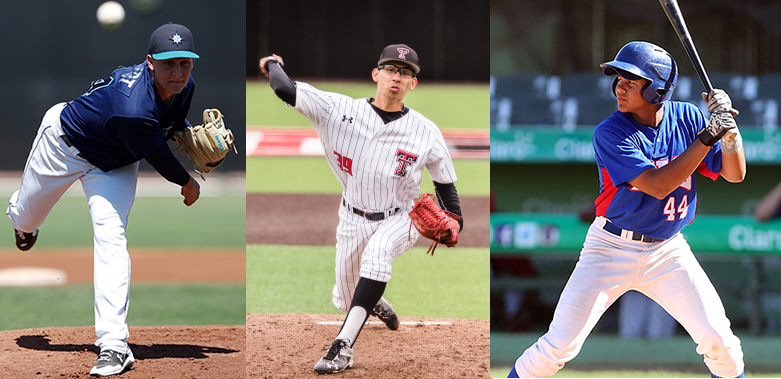 Two weeks ago, Derek Jeter and the new Marlins regime began the rebuilding process by trading second baseman Dee Gordon, the final four years of his five year, $50,000,000 contract and international bonus pool cash to the Mariners for three minor leaguers. Before we look at the pieces coming back to the Marlins, I'd like to pay tribute to one of the most exciting and likable players to ever pull on a Marlins' jersey. A maximum effort player in every at bat and every inning, Dee leaves the Marlins as the franchise's second best for-average hitter (.309), its fifth best triples hitter (23), its fourth best stolen base man (148) and eighth best defensive WAR player (2.7). He was also center stage for one of the Marlins' most magical, storybook moments. On September 26, 2016, the game after Jose Fernandez's untimely passing, the left-handed hitting Gordon, wearing Jose's helmet, stepped into the box right-handed and took the first pitch of the game as tribute to his friend. On the next pitch, this happened. [youtube https://www.youtube.com/watch?v=CkTy9p91YQc]It is a moment that will live on forever, not only in Marlins lore but in the spirit of baseball, teammateship and the bonds of botherhood it brings forever. For that memory and the many others he brought the Fish, Dee Gordon will forever be enshrined in the minds of Marlins fans everywhere. And we are all grateful to him for that. Now on to the return, three young men who hope to one day make their own legacy in a Marlins' uniform. RHP Nick Neidert [youtube https://www.youtube.com/watch?v=2ekz6TKvR3U] 2017 (A+-AA) - 127.2 IP, 3.45 ERA, 1.17 WHIP, 122/22 K/BB The centerpiece of the return, the Mariners' 2015 second rounder spent most of 2017 in A+ where he racked up 10 wins via a 2.76 ERA and 22.1 K/BB%, all tops in the California League amongst pitchers who tossed at least 100 innings. At the end of the year, he got his feet wet in AA which is where he should begin his Marlins career. Despite limited 6'1", 200 size, Neidert creates advantageous deception by hiding the ball behind his plant leg and following through to the plate lightning quick. The delivery is extremely fluid, smooth and repeatable which should allow Neidert to continue to work deep into starts. The 21-year-old has four usable pitches, all of which are either already Major League quality or show similar potential. His heat sits around 90-93 but he can ramp it up to 95 at will. Formerly a straight and narrow offering, Neidert is beginning to plane the pitch, giving it better movement and creating a fifth pitch sink piece, a great commodity for the 3/4 release point control artist he looks to be blossoming into. This past season, improved arm speed allowed Neidert's 84-87 MPH changeup to move past his 72-76 mph curve as his best offspeed pitch but both offerings have plus-plus potential and give him a nice 20+ mph velo mix. While the 9.4 K/9% Neidert posted in A+ last year should temper a bit when he gets to the upper minors and beyond, his deep arsenal, high arm slot, and pinpoint control give him a great chance to develop into a ceiling 2-3 rotational starter by as early as 2019. Neidert should easily be ranked among the Marlins' top 10 prospects this coming season. RHP Robert Dugger [youtube https://www.youtube.com/watch?v=T4mZMiGbxGY] 2017 (A-A+) - 117.2 IP, 2.75 ERA, 1.16 WHIP, 116/32 K/BB Dugger is a 22-year-old righty who began his pro career at Cisco Junior College where he was teammates for the first time with Marlins' draftee James Nelson. He spent two years at Cisco, throwing 133.1 IP and producing a 4.86 ERA. While those numbers don't fly off the page, he did hold down good control numbers, posting an overall 2.32 K/BB, including a 3.06 marker in his sophomore season. Those figures punched Dugger's ticket to Texas Tech for 2016. There, against much stronger Big 12 competition, Dugger pitched in relief but also pitched much truer to his potential, holding down a 2.67 ERA over 60.2 innings. The good control persisted as he posted a 54/23 K/BB. Upon being drafted by the Mariners in the 18th round, Dugger bounced around from rookie ball to A ball to AAA to end his year but most of his time was spent with the Everett AquaSox. There, he made six starts and threw 26.1 IP to the tune of a 5.47 ERA as he clearly went through a stark adjustment process, going from throwing 70 JuCo innings a year previous to throwing the last 38 out of a total of 99 innings against professional hitters who were on average nearly two years his elder. This past season, the Mariners returned Dugger to single A and transitioned him to the bullpen in order to reduce strain on his arm and allow him to work on pitching around the plate rather than living over it. His arsenal features a low-90's fastball, a high-80's changeup and a mid-70's curve. He has a good feel for all three pitches and controls them well, though the release point on the curve is a bit inconsistent at the moment but again, he needs to develop better command if he is to make it as a starter. His biggest hinderance lies in his tendency to fall off to his glove side on the follow-through of his windup delivery. Dugger is much more effective out of the stretch where after a high leg kick, he is extremely quick to the plate. While there is still time for the bespectacled 22-year-old to work on becoming a corner painting Rembrant-style to-contact back end starter, the more likely scenario is that he is converted to a full-time reliever. SS Christopher Torres [youtube https://www.youtube.com/watch?v=FmEjQsxE-rc] 2017 (ROK-A) - .238/.329/.446, 69/28 K/BB, 22 XBH, 14 SB Torres is a 19-year-old infielder out of the Dominican that had quite the interesting start to his professional career stateside. Then 16, Torres came to America with a deal in place from the New York Yankees for seven figures. However, due to severe weight gain, New York apparently backed out of the deal. The Yankees deny they ever had a deal in place with Torres. Whatever the case, Torres eventually agreed to a deal with the Mariners worth much less, $375K. Since then, Torres spent two seasons in rookie ball posting a .253/.374/.358 (with most of his success coming in the Dominican Summer League back home) before playing in short season A last year where he slashed .238/.326/.435 and placed second in the Northwest League in triples (6) and seventh in runs (44). He was also 13/16 in stolen base attempts. Clearly, Torres' most advanced skill is his raw speed and good instincts on the bases but he will need to work at making better decisions with the bat (64/25 K/BB last year) if he is to make it as the tablesetter he projects to be. Despite weighing in at just 5'11", 170, the switch-hitting Torres will show surprising pop when he does barrell up. Torres earned high praise for his defensive abilities headed into the international draft. He did suffer an arm injury in his rookie season in the DSL, a contributing factor to his 34 errors in his last 88 games. Still, there is believed to be plenty of room for growth. Combine Torres' quick feet with a good first step towards the ball off the bat in the field, his line drive contact capabilities and the ability to turn anything that drops into extra bases, and -- though it will take some time -- there is five-tool potential here. Torres should slot in somewhere in the Marlins' top 15 prospects this season. --- From the outset, it looks like just another salary dump for the Marlins who rid themselves of 2015's NL batting title winner, a perennial 50+ stolen base guy and a lockdown fielder up the middle. And while that clearly was Jeter's goal, Miami did get back three quality pieces, one of which is a 3-5 slot starter that is but a year -- if that -- away from his MLB debut and one of which could develop into a cornerstone shortstop. Throw in Dugger who's future is unknown at this point but will, barring injury, undoubtedly include MLB service time and this is an equitable return. Grade: B
 -
2017 Minor League Player Of The Year - Brian Miller
Alex Carver posted a topic in Miami Marlins Talk
View full article -
 Mark Prior, Jason Marquis, Jayson Nix, Brian Jordan. These names make up an esteemed class of MLB draftees who have made a profound impact on the game after they were selected with the last pick of the first round of their respective drafts. After being drafted in that same slot last season, outfielder Brian Miller took a huge leap towards joining that group. Reading up on Brian Miller's background you might learn that after going undrafted he made the North Carolina Tarheels as a true walk on. However, as Miller tells us, it wasn't exactly like that. "It was actually a little different than a typical walk on situation. I ended up doing a workout for one of the assistant coaches at Carolina in the early summer, then they offered me," Miller explained. "They added me to their class as a late addition because they were going to lose a lot of high school commits to the MLB draft. So I was technically a preferred walk on. I didn't have to do a tryout during the year or any of that stuff to "make" the team." Despite not having to go through a formal try out though, Miller still had to prove himself worthy of cracking one of the nation's best baseball programs. That would happen a little later that summer when he was amongst nearly 50 players trying to crack a 25-man roster. "We had like 44 guys on the team in the fall, and had to cut it down to 35 by the end of the fall," Miller said. "The whole fall felt like my actual tryout." Miller made the team as the Tarheels' starting center fielder and proceeded to hit .288/.375/.326 as a freshman. He stole 10 bags in 12 attempts and was second on the team in K/BB% with a lowly 0.84 marker (16/19). A native of Raleigh, North Carolina, Miller often spent time on the other side of the fence at Boshamer Stadium, dreaming of pulling on the Carolina blue and white. Now, that dream was a pleasant reality, even if not in the way Miller envisioned it. "North Carolina was everything I could've asked for as a baseball program and school as a whole," Miller said. "I've been a huge UNC fan since I was very little so it was definitely a dream come true being able to go there. Growing up going to games and being around campus a lot I sort of formed my own image about what it would be like to go there, but then when I actually fulfilled that dream I realized the experience was a lot different than I had expected... in a good way!" After his solid rookie campaign, Miller took his talents to the Coastal Plain League where he placed second in BA (.389) and led the league in OBP (.476) via its most hits (77) and also racked up a league-most 38 steals. He parlayed that to his sophomore year at UNC, where he absolutely exploded, hitting .345/.440/.469. His batting average ranked amongst the top 15 in the ACC, his 21 steals (in 26 chances) ranked fourth in the conference and his 56 runs scored ranked 10th. The 19-year-old continued to exhibit excellent plate vision, posting a 0.85 K/BB, a nearly identical mark to that of his rookie year and in almost 100 more ABs. During that breakout year, Miller started to become acclimated with the close-knit fabric that binds that UNC Baseball program together. According to Miller, it was a major catalyst in his success. "There's a huge feeling of comfort at UNC knowing that you're a part of such a tradition of winning and excellence on and off the court/field. I think all of my teammates and peers would agree with that feeling. I can say very confidently that if I hadn't played ball at UNC I would be no where near the player I am today," Miller said. "The knowledge, resources, and facilities that we have access to helped me grow tremendously as a player in all areas of my game." After a .327/.369/.387 showcase in the 2016 Cape Cod League, Miller's comfortability and compatibility with the UNC program continued to show true in his junior season last year when he hit .343/.422/.502. The biggest addition to his game here was a surplus of power as he slammed seven homers after managing just two in his first two seasons at the collegiate level. Once again, the emphatically patient Miller walked more than he struck out (38/35 BB/K), and he continued to be a menace on the basepaths where he added another 24 steals in 30 chances. He appeared on multiple ACC leaderboards including BA (11th), total bases (136, 9th), steals (2nd), hits (93, 2nd) and runs (61, 5th). All of it came in 271 ABs, most in the league. Miller was a key contributor to the Tarheels' 23-7 record, their division title and their #11 ranking in the nation. Indeed, Miller and the rest of his UNC teammates did big things that year, but if you ask any of them, including Brian, they will tell you they weren't the least bit surprised in themselves. According to Miller, the team is accustomed to success and counts on it day in and day out. According to Miller, this attitude had a profound impact on his career. "The ideology surrounding the program is just to win and compete," Miller said. "We expect to win and once I was surrounded by other players and coaches that embodied that mindset it really helped me improve as a baseball player." Enter Draft day 2017. Miller, by way of his five-tool type junior year, entered projected to go off the board in the second round only to hear the Marlins, with their competitive balance pick, call his name in the first round, 36th overall. Yes, the same Brian Miller that went unrecruited out of high school had become a first round draft pick. However, while he admits it was exciting hearing his name get called so early in the draft, Miller says his draft stock wasn't really a concern while he was playing for UNC. Instead, Miller had his sights set on making his friends and family proud. "Getting picked in the first round was pretty cool, but it's not really a goal I had all along because I just wanted to play for a team that valued me and gave me a chance to succeed," Miller said. "There are a lot of very very good baseball players that didn't get picked that high and will have great careers. Your junior year there's so much noise out there about you as a player or where you might get picked. I was very blessed to have great friends and family around me that helped me tune all of that out and just play as hard as I could for my school." Upon being selected, the Marlins forwent sending Miller to short season Batavia and instead sent him to full season A in Greensboro. This was music to Miller's ears as it was a short 80 mile trek from his home in Greensboro and an even shorter 50 mile hike from Chapel Hill, meaning he would continue to be surrounded by his friends and family and could keep reaping the benefits of his college coaches' expertise. "Being close to home was such a blessing," Miller said. "Having my parents and other family/friends at a lot of games was a really cool environment to start my career in." Feeding off the in-person support of his family and friends, Miller, despite being over a year younger than the average South Atlantic League player, started his big league career by slashing .322/.385/.416. He tore up the basepaths, stealing 21 bags in 27 attempts and scored 42 runs, quickly solidifying himself as the Grasshoppers' leadoff hitter. Though he admits there was a noticeable leap in the opposition's skill level that he had to adjust accordingly, Miller credits the successful start to his big league career to the time he spent facing some of baseball's top rising stars in the ACC such as fellow 2017 first rounder Brendan McKay (Tampa Bay) and 2016 second rounder Connor Jones (St Louis) and picking the brains of his star rotational teammates, Astros' 2017 first rounder Jacob Bukauskas who owned a 3.06 K/BB at UNC and Cardinals' 2016 third rounder Zac Gallen who posted a 3.67 K/BB in Tarheel blue. "The competition level was definitely a step up from college ball but I think the ACC helped prepare me for mostly everything I faced this past season in Greensboro," Miller said. "I wasn't really familiar with many pitchers or players in the SAL, so it took a little bit of time to adjust to how different teams and pitchers like to throw. There are some really good players in the SAL and it was fun being able to compete against them all for a few months." A contact-or-bust singles swinger, Miller uses his plus-plus jets to collect extra bases. He exhibits fantastic plate vision and patience via a knowledge of the strike zone well beyond his years, allowing him to work at least deep and usually favorable counts. Miller's swing is one of the quickest in Miami's system. Using his excellent vision, he is able to wait out the break of a pitch and follow it all the way to the back of the glove. When he engages, Miller's swing flashes through the zone straight and narrow. His split stance allows him to step both in and out to his contact point and allows him to barrel up virtually any pitch on either side of the zone. All of that sounds and is great. But if you ask Miller himself, his mechanics are so soundly second-nature that he isn't concerned with them. Instead, he approaches his at-bats with a very simple, refined attitude. "My approach is pretty simple in the box. I just try to be on time and hit a ball hard up the middle of the field. I think always staying to the middle of the field puts me in a good position to succeed because it helps me hit any pitch at any location in the strike zone," Miller said. "Also, when I mishit a ball I have a good chance of beating it out with my speed because the middle guys have to move the most and sometimes make far throws on the run." Where Miller wants to do the most of his offensive damage and where he believes he can disrupt the game most advantageously is on the bathpaths. "When I'm on the bases I'm always trying to steal," Miller said. "I always want the defense to be on their toes and feel pressured, which can also help my teammate in the box get a better pitch to hit if the pitcher and catcher is concerned with throwing me out." Miller uses that same speed to cover ridiculous ground in the outfield, making him one of the best range defenders in the system, rivaling the likes of teammate Aaron Knapp and former/future teammate Corey Bird. If the Marlins' current system is rich with one thing it's speedy, top of the order outfielders. However, due to left-handedness, his pre-pro pedigree and his untenable patience and the fantastic beginning to his career, Miller may have the highest leg up on all of them. While the recently turned 22-year-old only competed in 57 games worth of affiliated action last year and while he will have to prove that he can endure a full season's worth of games, due to his coming virtually out of nowhere, turning into a first round draft pick, skipping short season ball and becoming one of the Greensboro Grasshoppers' most valuable players, Brian Miller earns our Minor League Player of the Year Award. We expect this will be the first of many times you hear his name this coming year. He should start the season in Greensboro (after a possible spring training invite) but with continued success, could move up to A+ Jupiter by the midseason mark.
 -
View full article
-
 There's an old saying that goes, "When it's your time to go, it's your time to go." No one disproves that statement better than Jose Fernandez, a young man so full of life it seems a sin and 365 days later, still seems impossible that it was taken from him and that this seemingly innocent, playfully childish and infinitely joyful soul is no longer turning everything he touched from a baseball to other's lives to pure gold. On the afternoon of September 22, 2016, my girlfriend surprised me with an early birthday present: tickets in Diamond Club at Marlins Park. For those unfamiliar with the stadium, these are the all-inclusive seats directly behind home plate that can and usually do cost upwards of $200 a game. From the seats, you can easily peer down into the Marlins' third base dugout. As players started filing from the clubhouse, a young group of autograph seekers sitting just above the canopy called to each of their heroes. While some stopped to sign a few and exchange a quick pleasantry, Jose Fernandez went above and beyond expectations. Not only did Fernandez ink every peice of memoribilia presented to him from one side of the dugout to the other, he invited fans who asked for a photo with him to traverse a small set of steps to the right of the dugout and just to the left of the backstop screen. This wasn't just a case of catching Jose on a good day; this was who Jose was: a man who wanted to share the happiness and joy life in America and in baseball had given him with as many people as possible. There is little doubt that seeing that joy in others, making their day, creating smiles and hearing laughter was more paramount to Jose Fernandez than his own well-being. Watching Jose on the mound and in the media, you became a fan. After one two minute interaction with him, you felt like family. The effect he had on others was just as incomparable as his stuff on the mound. After the National Anthem was sung and he returned to the dugout, Jose took up his normal alter on the right side of the bench in his high chair against the railing. This two minute span between the anthem and first pitch was the most use that chair would get. You see, even though he only physically took the field once every five nights, his teammates took him to the field with them every single night. The first to get to his feet when the ball was hit deep, the first to raise his arms when a big out was about to be recorded and the first in line to greet a teammate with a congratulatory celebration on their triumphant return to the bench, Jose was invested in every game just as much as he was invested in his own starts. There were no days off. This is who Jose was: a man who cared about the success of others as equally if not more than he was concerned with his own virtue. The Marlins took Jose with them to the mound those nights, they have done so every day since last year's tragedy and they will do so forever. That's the legacy he would have wanted and the legacy he has successfully created. Even in the afterlife, Jose Fernandez has remained successful. After all, I don't even think Jesus Christ himself could touch that slide piece. However, as selfless as this man -- the same one who, as a teenager, jumped into the middle of the ocean to save his mother from drowning -- was, he was still a human being. And human beings make mistakes. When I heard the news of Jose's choices that night after his start was pushed back and after he had a disagreement with his girlfriend, I was admittedly awash with emotions, confusion and anger included. Those same emotions overcame me months later when the toxicology reports were released. However, on both occasions, I refused to let one night of bad decision making trump a lifetime of altruistic nobility. Retire the number, build the statue, name the street, make a spot for him in the Hall Of Fame. He's more than earned it. He more than deserves it. One year and I can rewind the events of that day and week in my head with perfect accuracy. How I refused to believe the news when it was first reported, how it was confirmed to me by a former member of the board of directors who frequented my place of employment, the usual party-like atmosphere of the ballpark being replaced by that of a funeral on September 26, every tear I shed into the concrete underneath my seat in right field at the sight of every player donning '16', at the sight of Dee Gordon barely being able to round the bases following his lead off homer and at the visual of 30+ Marlins hats left on the field by Jose's brothers on the spot where he was king, I can tell you about it all. What I can't tell you is when this wound will heal or if it ever will. As fresh as it still is, it cuts even deeper when I think of the pain in the hearts of Jose's family including his beloved Abuela and his mother. It seers when I see the face of Penelope Fernandez, a child who will grow up never knowing her father and how miraculous he truly was to know. The search for solace is never an easy quest but one place where young Penny and the rest of the Fernandez family can go is to the memories of Jose being the best at everything he set out to do from dominating his craft on the mound to being a good teammate to being a good friend to being a good son and grandson. And there is no doubt he would have succeeded just the same as in fatherhood. As fans, Jose's extended baseball family and the innumerable masses whose lives Jose touched, we can find peace in knowing that by never taking one hour of any day for granted and by filling each one with as much joy and happiness then projecting that unto others, he lived well beyond his years and his spirit will live on in each of us that came to know just how incredible he was forever. To the greatest baseball player I've ever had the distinct privilege of getting to know, of getting to watch grow, of getting to watch dominate the game both on the field and off, continue to rest well. You were good, kid. You were good.
 -
View full article
-
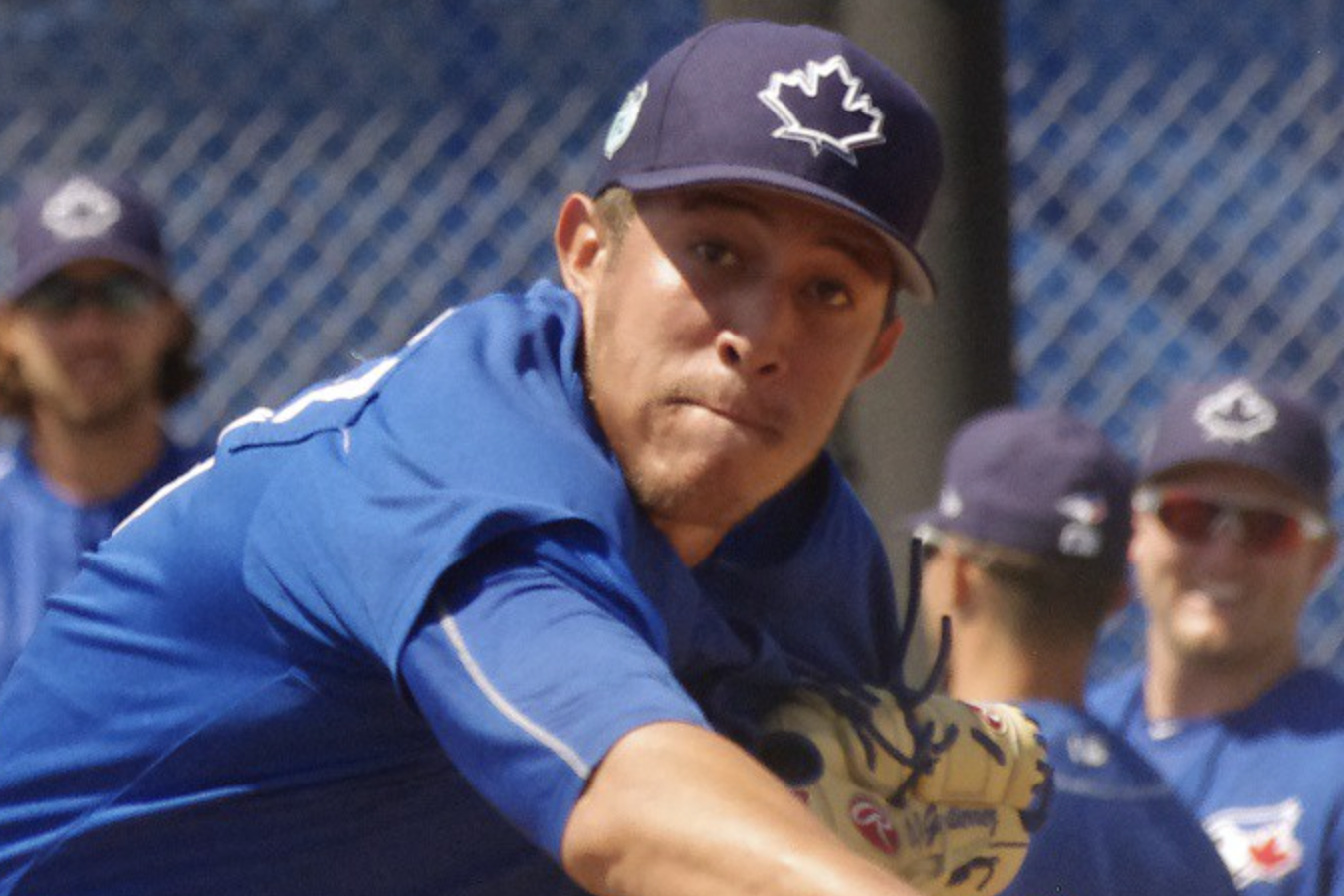 This past month, the Marlins gave troubled starter Tom Koehler (1-5, 55.2 IP, 7.92 ERA, 1.72 WHIP) a change of scenery by trading him north of the border to the Blue Jays for a virtual unknown, Osman Gutierrez. I teamed up with Matt Weber and Tom Dakers of Bluebird Banter to scout and place a potential value on this 22-year-old righty. Gutierrez, a native of the Dominican Republic, was part of the same international draft as part of the same international draft that brought the likes of Yu Darvish, Yoenis Cespedes, Rougned Odor and Roberto Osuna to Major League Baseball. He was signed by the Jays at a time where their GM Alex Anthoupolous had money burning a hole in his pocket. "From when Anthopoulos was hired in late-2009 until the hard restrictions on amateur spending with the 2011 CBA came into force in 2012, the Blue Jays were really aggressive in the spending in the draft (heavily skewed to high school pitchers) and internationally." Matt told me. Matt's claim is backed up by the fact that Toronto, in the international draft alone, spent upwards of $20,000,000 in that three year span. Gutierrez himself, a late round pick, cost Toronto upwards of $200,000. In the coming years, while his fellow international selection names like Osuna and Hechavarria and his minor league teammate stateside draft names such as Syndergaard, DeSclafani and Nicolino quickly established themselves as legitimate prospects and began a quick journey through the minors, Gutierrez, due to both his still teenage years and the pure rawness of his talent, remained in rookie ball in the Dominican for three years and rarely saw the mound in the first two. However, after holding down an impressive 1.91 ERA in 47 innings and 10 starts in 2014, he was able to make it to North American ball by his age 20 season, quite average for a player of his B type caliber and quite advantageous considering the amount of high priced talent the Jays were currently circulating. Clearly, the organization saw something in this kid. Gutierrez came to the US in 2015. It was then during his tenure in the GCL that his reinvention began and coaches got to work on teaching him how to pitch strategically rather than allowing him to continue leaning on simply blowing his stuff past the opposition, a transformation many amateur picks undergo in order to make it as a professional. For the very immature Gutierrez, it is a process that has been lengthy and one that is still going on today. In 2015 and 2016, Gutierrez responded fairly well to his coaches and to the changes. Despite his ERA being victimized by a heightened .330 BABIP, he held holding down good combined control numbers including a 2.91 BB/9 and an 8.67 K/9 and a solid FIP that came in under the 3.70 mark as he began to establish a good breaking ball, piggybacking his fiery heat. "In his July 23rd start, he touched 96 a couple times on the stadium gun, with a mid-80s breaking ball. So there's some quality stuff to go along with the good stat line," Matt wrote on Bluebird Banter back in 2016. "[He's] done everything you want to see: missed bats and worked ahead of batters, and been able to finish them off while still being quite efficient." This season, the 22-year-old made the jump to full season ball. In his first 13 starts with the Lansing Lugnuts Gutierrez -- there's no getting around it -- struggled mightily. On July 21, after a particularly dreadful 3 inning, 6 run, 4 walk, 2 K start, his ERA sat at a hideous 10.13 via an equally dreadful 2.08 WHIP and .295 BAA. Matt chalks the ugly start to his career in full season ball up to an inability to work ahead and a failure to place his pitches, issues that, if not for a serious lack of depth among the Lansing staff, would have landed him either in the pen or back in rookie ball. "The struggles until recently were very simple: lack of control and command. He often struggled mightily to throw strikes, got himself behind in counts and into lots of jams, and then got hit hard when he came in the zone," Matt said. "That he kept a spot in the rotation at all with mostly due to injuries to other players meaning Lansing had little other choice." All of that out of the way, there's something to be said for how Gutierrez has performed recently. Since the aforementioned disaster outing on July 21, the Nicaragua native bounced back by allowing just 14 runs over his next 30 innings pitched (4.20 ERA) which spanned five starts, including a career outing on August 2 in which he went 7 innings, allowing just four hits, one walk and striking out 10 Bowling Green Hot Rods. In his second start with the Marlins' organization, Gutierrez came within one K of matching that total. Both of his first two Muckdogs starts were of the quality variety, lasting six innings each and consisting of four hits and one earned run. Our colleague at Bluebird Banter says that Gutierrez's recent success has been due to his slider taking another step forward and turning into a plus-plus offering and the fact that overall, he is throwing with a lot more confidence. "He's been vastly improved the last last couple months, including a couple of really dominating outings. One of he keys has been that his slider's been a lot better, giving him an out pitch. One of the Lansing broadcasters was talking recently about how the coaches wanted him trust his stuff more, not try to be so fine. And against low-A hitters, his stuff should be plenty." If given time to develop his changeup that is distinctly a mix in offering at the time being, Gutierrez, still 22, could make it as a starter. However, given the fact that the fastball/slider combo thrower dumbs down his velo to the low 90's range in order to make it deeper in starts and the fact that he is a minor league free agent after next season, Matt and I both agree that he profiles best as a late inning reliever. "There will be some impetus to move him along," Matt said of Gutierrez's situation. "He should start next year in high-A regardless but if moved to relief, he could get to AA." In a straight up trade for a troubled starter who barely touched B-type status as a prospect looking at finishing out his career as a swing man, the Marlins could have done a lot worse than a ceiling 4-5 starter, floor late relief/closing option. I give Michael Hill a passing grade on this trade, one of few he's turned in in his tenure as President of Baseball Ops. Look for Gutierrez to participate in the offseason winter leagues overseas before starting 2018 in Jupiter.
 -
View full article
-
 Ben Meyer: A Golden Gopher with a golden arm and a golden future. The Minnesota alum spent the past 30 days continuing to prove himself worthy of those titles, tossing to a 1.01 ERA via a 0.79 WHIP and in so doing, earned himself another accolade: Fish On The Farm's July Prospect Of The Month. Monthly StatsSeasonal Stats35.2 IP, 1.01 ERA, 0.79 WHIP100.1 IP, 2.06 ERA, 0.94 WHIP39/3 K/BB, 10.0 K/9, 0.75 BB/9121/21 K/BB, 10.9 K/9, 1.88 BB/9.188 BAA, .266 BABIP, 73.3 LOB%.204 BAA, .298 BABIP, 76.8 LOB% Benjamin K. Meyer was born on January 30, 1993 in Minneapolis, Minnesota. In his high school days at Totino-Grace, Meyer lettered in both baseball and basketball but upon his graduation, Ben, who comes from very athletic bloodlines, followed in his father's footsteps rather than his twin siblings and gave up the court in favor of the mound. In 2012, he became a second generation University of Minnesota pitcher proceeding his dad, Bob and by so doing, made a childhood dream reality. "I wanted to do the same [as my dad] ever since I was younger," Meyer said regarding toeing the rubber for the Golden Gophers. Although he became a quality basketball player late in his amateur career, Meyer says he didn't fully acquire the physical size for it until his high school tenure was finished which made him focus more on and gain more of a passion for baseball. "I was a late grower, so I was better at baseball at a young age," Meyer said. "I wasn't done growing until my freshman year of college, so my basketball skills developed later in my high school career." Even though his basketball days are behind him now, Meyer credits his time on the hardwood to his ability to adjust to his body, remain well conditioned and most importantly for him, keep baseball fresh and exciting. "I think it's important for kids not to specialize in one sport too early to keep from burning out," Meyer said. "Basketball helped me become a better all around athlete which correlates to success on the mound." Focusing solely on baseball, Meyer quickly became the anchor of the Golden Gophers' bullpen, holding down a 2.37 ERA via a 1.08 WHIP in his first 38 collegiate innings. This all came after he dropped two subpar offerings from his arsenal and rapidly developed two brand new pitches that backed up his low 90s cut fastball more advantageously. Meyer credits his Minnesota coaches for immediately turning him in to an effective collegiate arm and for starting him down the road to becoming a professional rotational arm. "When I got to college I switched out my splitter and curveball for a changeup and slider," Meyer said. "I worked a lot with my college pitching coach to improve their consistency and make them look more like my fastball out of the hand to keep hitters off balance. I've also found a bigger need for the changeup at the pro level as hitters bat speed is quicker." In his sophomore year, Meyer began the transition to the rotation, playing in 15 games and starting eight, doubling up his inning count from the year previous. The increased workload showed a bit as his WHIP rose .2 points and he gave up 2 more hits per nine than the year previous but he still held his ERA under 3 (2.80), improved his BB/9 by .45 points, tossed two eight inning shutouts and one complete game shutout, proving he belonged in the rotation. The Golden Gophers staff took notice of Meyer's overall successful tenure as a starter and made him one full time in his junior year. Despite taking on an even bigger workload and putting by far the most stress on his arm he ever has, tossing in his conference's third most innings (98), Meyer placed sixth in the Big 10 in ERA (2.39), 12th in WHIP (1.13) and fifth in strikeouts (67). His K total combated the only area where the high inning total showed any effect on him, his heightened but still respectable walk rate (2.57). That career high BB/9 was completely offset by his career low 7.62 H/9. After starting the Big 10's second most games in his junior season, Meyer once again proved his durability by tossing in 14 more in his senior year. However, that same season and his draft year, Meyer's stats became the victim of circumstance when the Big 10 modified their official baseball in an attempt to increase offensive production. Although his great control persisted (7.29 K/9, 2.46 BB/9), the result for Meyer was a 4.31 ERA by way of a H/9 over 9 and a HR/9 over 1.00, causing his draft stock to plummet. In hindsight though, Meyer says the change was an advantageous for him in that it allowed him to hurdle over some common struggles for young professionals at an earlier age. "My last year of college they lowered the seams on the baseball. This made it more similar to a minor league baseball, which was a good transition for me," Meyer said. "It taught me to pitch more effectively down in the zone and forced me to mix my pitches a little more." Meyer admits he sweated through the draft process as he watched the rounds pass him by, hoping to not have a bad case of deja vu from the year previous when he was not selected. His relief came on the final day in round 29 of 40 when he got his call from Stan Meek and the Marlins. "The last day of the draft was definitely the longest day of my life as well as one of the most exciting, especially after I didn't get drafted after my junior year of college." Meyer said. "I was just hoping for an opportunity and was very grateful when the Marlins called saying they were going to take me." After seven innings in the GCL and five in Greensboro, Meyer lived out the rest of 2015 in Jupiter pitching against competition a year and a half older than him. That fact along with the wear on the 22-year-old's arm (he racked up a total of 120 innings pitched, by far a career high), led to a 1.54 WHIP via a 9.13 H/9 and 11.7 BB% but thanks to a 76% LOB%, Meyer was able to hold down a 3.18 ERA, which was very respectable when all things are considered. His overall successful cup of coffee with Jupiter that year planted a good seed within the organization as he found himself just outside of its top 20 prospects. Meyer lived out 2016 in Greensboro where he began his transition to starting as a pro. It was a bit of a learning curve for Meyer as he went 0-8 in 10 starts with a 4.23 ERA and 1.41 WHIP. He was much more effective out of the pen. Throwing in eight more innings as a reliever as opposed to a starter, he held down an ERA a full point lower (3.10), walked one less (10 vs 11) and striking out nearly twice as many (60 vs 34). However, Marlins didn't give up on the prospect of one day seeing Meyer in their big league rotation. After beginning the year regaining his confidence tossing out of the Grasshoppers' bullpen where he held down a 2.15 ERA and 0.95 WHIP, the Marlins brought Meyer back to A+. There, Meyer has started 10 of his 16 games appeared in and rewarded the confidence the organization has shown in his ability by producing a 2.03 ERA by way of a 0.93 WHIP, marks which rank second and first in the Florida State League among qualified players (>70 IP). Within that same group, Meyer's 28.7 K% and 23.4 K/BB% each rank second. Even though he divulges that all of the moving around between the rotation and bullpen was a bit tedious, taxing on his body and wracking on his nerves, Meyer, ever the "big picture" guy, says the experience was a major catalyst in making him the pitcher he is today, able to pitch in any circumstance, understanding the mind of a hitter and mastering the art of pitch selection and location. "Moving to the bullpen after college was a big transition for me because I was only in the bullpen for my freshman year of college. I had to learn how to warm up quicker, and come into the game with a different mentality," Meyer said. "When I moved back into the rotation in 2016, the biggest adjustment for me was learning to throw on a 5 day rotation vs the college 7 day. It took some time to get my body to bounce back quicker. This year, my velocity has been up a little bit, which has helped, and my slider has been more consistent than it was last year. I have had more confidence in my slider to throw in more situations and keep hitters off balance." The impetus behind Meyer being allowed to experience all the things he has, learn from them and grow so quickly has been excellent health. In his entire baseball career, even though the stress on his body has doubled and sometimes even tripled, Meyer has never made a trip to the disabled list and has never been out of action for more than a few days. In addition to his overall fantastic athletic background imparted on him at birth and fully realized very early in his amateur career, Meyer attributes his good health to good fortune, staying active every day, and to the medical regimen assigned to him by the attentive Marlins' medical staff. "I have been very fortunate to stay healthy over the years," Meyer said. "The Marlins have a great arm care program that I follow between starts, as well as running every day and staying on top of our strength program has helped keep my body and arm healthy." The fact that Meyer once succeeded as a basketball player is evident as he stares down his opposition from his towering 6'5", 180 build. Meyer maintains his height advantage over hitters as he winds up from a straight up-and-down stance but creates deception as he planes his pitches in downhill. Viewing the strike zone from a birds eye, overhead angle, Meyer commands it wonderfully with all of his pitches, something he has done his entire career, something which he is very satisfied with and the basis of his confidence as a hurler. He plans to ride that confidence to the upper levels of the minors and beyond. "I have always prided myself on my command of 3 pitches and ability to work ahead in the count. I would rather give up a hit than walk somebody and give them a free base," Meyer said. "It's definitely tougher as the competition gets better as the strike zone shrinks, and hitters get better eyes, but it comes down to trusting my stuff and preparation." Meyer will rarely touch any higher than 94 MPH with the fastball but his plus plus secondaries both of which he created in college and has established during his great minor league run more than make up for it. He throws all three of his pitches with the same arm speed which adds to his nearly impossible to pick up motion and mixes them beautifully which makes him nearly impossible to time or wait out. As a result, Meyer works quick tidy innings and limits pitches. Six of his 10 starts, including four in a row in July, have been quality outings. Meyer's best pitch is his go-to slider which sits in the 82 MPH range, has hard bite and which he likes to run in on the hands of guys inducing plenty of whiffs. He will also bury it in favorable counts and due to the late break, get guys fishing. The Meyer changeup sits in the 86 MPH range. Due to its good depth and his shortened stride to the plate, it is one of the more deceptive pitches in the Marlins' system right now. As with all of his pitches, Meyer will throw it in any count but he shows an affinity for pitching off of it. The change sets up Meyer's "show me" fastball, a 9o-94 MPH offering which he can run to either corner and which he likes to put in the eyes of hitters in two strike counts. In most cases, a three pitch arsenal isn't translatable to Major League rotational success but in the case of Meyer, who throws all three pitches interchangeably with similar arm speed and great control and command, he should be able to succeed with it. If not, judging by how quickly he established two brand new pitches, he has the ability to quickly re-develop and fall back on the split change and 11-6 curve that he threw as a high schooler. A battle tested thinking man's thrower, Meyer sets up as a 4-5 inning eating rotational option and floor bullpen anchor in that same capacity. With similar success in the upper minors which he stands to break into soon, the 24-year-old should be fast-tracked to his MLB debut, realizing not only his dream but fulfilling a family legacy. But for now, Meyer, as per usual, as staying level headed and letting the process work itself out. "Playing in the big leagues would obviously be a lifelong dream of mine. I've put in a lot of hard work, and still have a ways to go, so I don't want to get too far ahead of myself," Meyer said. "I'm just trying to stay day to day and get better each outing." Meyer should make the jump to AA next season.
