



Alex Carver
-
Posts
459 -
Joined
-
Last visited
-
Days Won
16
Content Type
Profiles
Miami Marlins Videos
2026 Miami Marlins Top Prospects Ranking
Miami Marlins Free Agent & Trade Rumors, Notes, & Tidbits
Guides & Resources
News
2025 Miami Marlins Draft Pick Tracker
2026 Miami Marlins Draft Tracker: Picks & Bonuses
Forums
Blogs
Events
Store
Downloads
Gallery
Everything posted by Alex Carver
-
 View full article
 -
The J.T. Realmuto Situation, Part Deaux: The Saga Continues
Alex Carver posted an article in Marlins
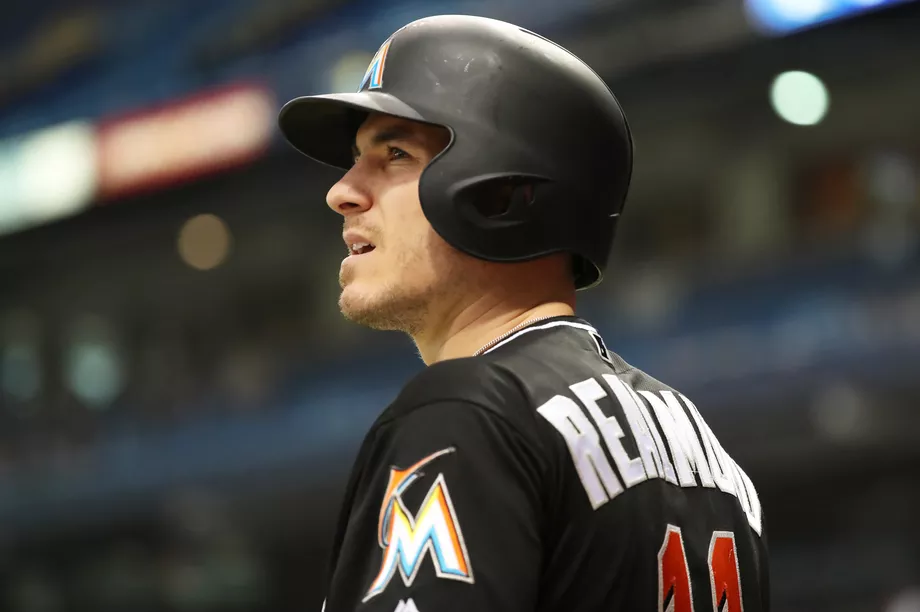 The Winter Meetings have come and gone. While J.T. Realmuto still remains property of the Miami Marlins’, the annual conferences between MLB GMs and executives provided us with a clearer picture of where, how and for whom the Marlins will flip J.T. sometime in the near future, a reality that, although Michael Hill says otherwise, is all but a foregone conclusion; that according to members of the media who were present in Las Vegas in mid-December. Marlins are going to trade Realmuto. It’s going to happen. When not if. BUT just because we want some big action at the WM (and trust me we all do) it’s a sooner than later thing. Not a have to get it done right now thing. Cool ? — Craig Mish (@CraigMish) December 13, 2018 While several teams that were thought to be viable suitors for Realmuto’s services such as the Rockies and Mets dropped out of the race either during the meetings or just after, the Braves have remained engaged, the Astros have come, gone and come back again, and a few new teams — the Rays, Dodgers and Yankees — have emerged as potential trade partners. Without forgetting about a potential Braves or Astros trade both of which I previewed here, here is a look at those aforementioned organizations, what they have to offer and what the Marlins’ asking price could be. Tampa Bay Rays The Rays, who were predicted to go 71-91 by SBNation, shocked the baseball world, finishing nearly exactly the opposite of that forecast, going 90-72. With a record that would have been a half game shy of winning the AL Central, the Rays proved they are closer than anyone thought to competing with the top dogs in the AL East and at the very least, becoming a wild card favorite. This coming year, the Rays will be without their stolen base leader Mallex Smith who they flipped in a trade and minus their home run leader CJ Cron who fled in free agency. Also departing the Rays is the man who started the most games behind the plate for them last season, Wilson Ramos, a .297/.346/.488 bat and 3.73 CERA backstop, as well as their most frequently used first baseman Jake Bauers. While the acquisition of Yandy Diaz will serve to quell the absence of Bauers and while the their rotation, with the return of Brent Honeywell, stands to get even better than the 3.68 ERA, 1.17 WHIP marks that they posted last season, Tampa still has a big question to answer: who will catch receive for them without creating a hole in the lineup? While Mike Zunino, who the Rays acquired in the Smith trade, can do the former (he’s coming off of +12 DRS, 35% CS% season), the .207/.276/.406 career hitter can barely do the latter. The only other catchers on the Rays’ 25-man roster are prospects Nick Ciuffo and Michael Perez. Accordingly, the Rays have recently emerged as a major player in the Realmuto sweepstakes. And they have plenty of organizational strength, perhaps the most of any team still involved in talks, to get a deal done. The Proposal To Miami: OF Jesus Sanchez SS Lucius Fox C Mike Zunino To Tampa Bay: C J.T. Realmuto [youtube https://www.youtube.com/watch?v=Ybem0ytsehY] OF Jesus Sanchez 2018 (A+-AA) - .282/.324/.433, 11 HR, 75 RBI, 92/26 K/BB Signed out of the Dominican in 2014 as BaseballAmerica’s 27th-best ranked prospect during the international signing period, Sanchez broke into pro ball with the DSL Rays that same year. After continuing to annihilate pitching in his home country by hitting .335/.382/.498 with 24 XBH in 2015, Sanchez came to America a year later. There, Sanchez proved his abilities weren’t exclusive to the DR as he hit .329/.351/.549 with 25 XBH and 39 RBI across two levels. Sanchez then spent all of 2017 in full season A with Bowling Green where he hit .305/.348/.478, marks which ranked 2nd, 16th and 6th in the Midwest League. Furthermore, Sanchez’s 82 RBI led the league and his 29 doubles tied for fourth. This past season, Sanchez spent his first 90 games in A+ where he hit .301/.331/.462 with 35 XBH including 10 homers before a call to AA at age 20. He lived out 2018 hitting .214/.300/.327 as a Montgomery Biscuit. Not 21 until October of next year, Sanchez has ridden overseas stardom and a high international draft slot with the according big pay day to immediate sustainable success as an American pro. The tools he has to thank for that are natural physical and raw power exploits that he has advantageously grown into via a well-balanced load. His upper half utilities including snappy wrists through the zone partner well with his mid-level front leg timing trigger and explosively active hips through his lofty swing with natural lift and his knack for keeping the barrel in the zone. Sanchez will struggle against quality breaking stuff, especially when behind in the count, leading to an elevated K rate. However, despite being very aggressive, Sanchez has enough plate presence and more than enough bat-to-ball skills to foul plus breaking stuff off early in counts, to work into advantageous situations and to force pitchers to come to him. His innate abilities including that to notice, see, time and stride in to high velocity, allow him to make the most of those occurrences, leading to the plus average and plus-plus power numbers he’s been able to translate. With 60 grade hit, power and arm tools that should only improve with age and physical growth, Sanchez profiles as a very low-risk middle of the order corner outfielder at the big league level within the next two years. Scouts place his big league ceiling extremely high: .300+ BA, 30+ HR. Despite Miami’s strong organizational outfield depth, Sanchez is a guy the Marlins simply cannot pass up in a potential deal with Tampa Bay. [youtube https://www.youtube.com/watch?v=Ck7BfGb0DGY] SS Lucius Fox 2018 (A+-AA) - .268/.351/.341, 3 HR, 20 2B, 39 RBI, 99/51 K/BB, 29/9 SB/CS Judging by every decision the new Marlins regime has made and everything they have said, it is easy to assess they hold certain player traits in very high regard: versatility and athleticism. Lucius Fox is the physical embodiment of both of those traits. Fox played high school ball locally at high-flying, world-renowned American Heritage Academy in Del Ray Beach where he was a 6.4 60-yard runner, an advanced infielder with hard-charging instincts and a quick arm and where the switch-hitter showed good mechanics from both sides of the plate including flashy hands to the ball and good barrel placement. At 17, Fox who was born in the Bahamas, forwent a commitment to NC State and instead declared himself an international free agent. The day he turned 18, Fox became a multi-millionaire, signing with San Francisco for $6 million. The following August, Fox completed a .207/.305/.277, 25 SB, 76/37 K/BB, 75 game rookie season at full season A against competitor that, on average, was nearly four years older than him. Despite flashing his 70-grade speed very early in his career, the Giants sold extremely low on Fox, dealing him to the Rays along with Matt Duffy who had a 2.4 WAR last year and Michael Santos who is Tampa’s number two prospect and stands to figure well with within their future plans. Going back to the Giants was a lone figure: lefty Matt Moore. Moore had a 242.2 IP, 12-20, 5.12 ERA, 1.475 WHIP career in San Francisco before moving on to Detroit. Fox’s and Santos’ development pending, the trade stands to be considered one of the worst fleecings in Giants’ franchise history. And that’s after Tampa agreed to drop a protest they raised upon finding a bone bruise on Fox’s foot during preliminary medical tests, a grievance that could’ve gotten them even more. As it turns out, it would’ve taken a lot more than a foul ball off the foot to slow Fox down, both literally and figuratively. In 2017, Fox continued to torch the low A ranks on the basepaths, stealing 27 bags in 37 attempts. He made those 37 attempts in just 77 games via the quick maturation of his hit tool which allotted him a .278 BA and .362 OBP and earned him a call to high A at the MiLB midseason mark as well as an appearance in the Futures Game during the MLB All-Star break. He finished 2017 by hitting .235/.321/.287 in a 30 games with the Charlotte StoneCrabs. Fox’s steady progression continued this past season when the 20-year-old hit .282/.371/.353 in 89 games for Charlotte. The best power numbers he’s ever posted at any level (20 total XBHs) came in one of the toughest leagues to hit in in all of MiLB, the FSL. His speed on the bases also persisted as he stole 23 more bags in 30 chances. Late in the year, Fox received a promotion to Montgomery. As one of the youngest players in all of AA and against the most advanced competition he has ever faced, he stole six more bases on eight attempts and slashed .221/.284/.298. One of the fastest runners and most successful in all of professional baseball, Fox’s best tool, his speed, serves him just as well in the field where he shows great range as it does on the basepaths where he can turn virtually any ball in play into a hit. Through his minor league career, Fox has caught his approach against righties up to his further developed approach from the right side of the plate, showing similar pitch recognition and the same short step to the ball. From the right side, he has calmed down attempting to do too much with pitches, leading to better swing mechanics and a better balls in play average. If the past two years in which Fox returned to the level in which he ended the previous season only to completely dominate (as well as his impressive .326/.437/.352 Arizona Fall League appearance) are any indication, it isn’t hard to perceive that Fox, who already shows 4/5 tools and is still physically growing, will be ready to contribute to a big league team by midseason 2019. Los Angeles Dodgers Through a massive trade on Thursday. the Dodgers sent Yasiel Puig, Alex Wood and Kyle Farmer all to the Cincinnati Reds for two prospects, Jeter Downs and Josiah Grey. The most significant factor in this trade is that the Dodgers will save $7 million in salary and nearly $15 mil off their luxury tax payroll, making them a major player for the season’s biggest name free agent, Bryce Harper. However, without the services of Yasmani Grandal who left in free agency, the Dodgers still have a glaring hole at catcher. Who better to fill that spot on what would become a World Series favorite than the best catcher in baseball who still has two seasons of club control to his credit? But do the Dodgers have enough prospect power to get the deal done? After the aforementioned trade, the answer is yes, they do. The Proposal To Miami OF Alex Verdugo C Keibert Ruiz IF Jeter Downs To Los Angeles C J.T. Realmuto [youtube https://www.youtube.com/watch?v=iyhkrfvDg_k] OF Alex Verdugo 2018 (AAA, 91 G) - .329/.391/.472, 19 2B, 10 HR, 44 RBI. 47/34 K/BB Verdugo is the Dodgers second round pick from 2014 out of Sahuaro High School in Tucson, Arizona where, as a senior, he showed off his ahead-of-his-time skills by hitting .532 and hitting 95 MPH with fastball with developing breaking stuff from the mound. Where most teams preferred Verdugo as a pitcher, the Dodgers selected him as an outfielder. Since 2014, they haven’t regretted that choice for a minute but rather have looked like geniuses. Since his selection by LA, the All-USA selection has grown into one of the most complete hitting prospects in all of Minor League Baseball. Slashing .309/.367/.444 in 512 games on the minor league circuit including .273/.336/.407 with 13 HR in AA in 2016 and .314/.389/.414 in AAA in 2017, the outfielder hit .329/.391/.472 in 91 games with Oklahoma City before receiving his first major league call late in the year. In that 37-game cup of coffee with the Dodgers, Verdugo hit a respectable .260/.329/.377 with six doubles and his first career MLB homer. Still just 21, Verdugo is touted for his clean and quick simple swing, snappy wrists, great contact rates and the ability to cover the whole plate, allowing him to go to all fields and making him nearly impossible to strike out. His compact line-drive hitting approach and pitch recognition abilities likely tab him for two-hole hitting duties in the future, though if he adds a bit of uppercut to his swing, he could become a guy who reaches fences more often, making him a daunting middle-of-the-order threat. Though he may lack some “boom” offensively, he doesn’t have that problem at all on defense. Scouted as a 70-grade arm, Verdugo, a former pitcher, trades just average speed for good initial reads and a canon arm, tools that have allowed him to hold down center field in the minors and that make him a more than viable candidate to man right at the big league level. With a plus-plus hit tool that would become elite with the addition of some plane to his swing and similar defense at multiple positions, Verdugo has little left to prove in the minors. As a potential Marlin, he would start in right field on Opening Day along with Lewis Brinson in center and Austin Dean in left. His addition would also allow the Marlins to make available Dean as well as Magneuris Sierra and Brian Miller in any future dealings. [youtube https://www.youtube.com/watch?v=cae31Yun1aA] C Keibert Ruiz 2018 (AA) - .268/.328/.401, 14 2B, 12 HR, 47 RBI, 33/26 K/BB Signed out of Venezuela for $140,000 as an international prospect at age 16, Ruiz has wasted no time making a name for himself stateside. After starting his career by hitting an even .300 with a .340 OBP and .360 SLG with a 36% CS% behind the plate in the Dominican Summer League, Ruiz made his American baseball debut by slashing .374/.412/.527 between the Arizona League (8 games) and the Pioneer League’s Ogden Raptors (35 games). In 2017, Ruiz made the jump to full season A ball and continued raking, slashing .317/.372/.423. Ruiz spent the final 38 games of that year with A+ Rancho Cucamonga. There, the 18-year-old, competing against guys that averaged 22 years old, nearly matched his Midwest League slash line (and showed more power), hitting .315/.344/.497 with six homers. This past season, Ruiz made the jump to AA where he played against competition that were nearly five years older than him, making him the youngest player in the Texas League. Still, Ruiz managed a respectable .268 BA, a .728 OPS and a career high 26% CS% behind the plate. Ruiz is considered the most complete of Los Angeles’ young crop of catchers which also includes Will Smith and Diego Cartaya. Despite being listed and grown as a switch hitter thus far in his career, Ruiz is much more comfortable from the left side of the plate and his numbers prove it. With a more upright stance, a better swing plane and less pull-happy instincts, Ruiz covers the plate much more advantageously as a southpaw. This past season, he hit .276/.334/.420 as a lefty versus .238/.304/.333 as a righty. In his future as a big leaguer, Ruiz will likely be asked to drop hitting from the right side altogether. No matter what side he is hitting from, Ruiz has a fantastic hitters eye, one that allowed him to post a 33/26 K/BB against AA pitching this past season, part of a 128/74 career. He also has the baseball IQ needed to make adjustments mid-count and will rarely press or chase waste pitches, an innate trait rarely found in players his age. Like many hitters at his level of development, Ruiz trades a high leg kick timing trigger for a less-advantageous step into the ball, a habit that is extremely coachable (as Brinson and Monte Harrison, both of whom have a less advanced hitters eye than Ruiz, proved this past season). The lefty-hitting 20-year-old still has room to grow physically, which should aid his offensive power numbers as well as his his arm strength and his blocking skills behind the plate. Though his framing skills need some polish, Ruiz is a plus receiver who exhibits good lateral and vertical movement, leading to good pop times. Not far from completing a 4/5 tool skillset, Ruiz profiles as a middle-of-the-order threat with plus plus on base skills, a ceiling not too distant from the man that would be going to the other side of this potential trade. [youtube https://www.youtube.com/watch?v=ILpE9_uveu8] IF Jeter Downs 2018 (A) - .257/.351/.402, 23 2B, 13 HR, 47 RBI, 103/52 K/BB, 37/10 SB/CS Jeter, Miami acquire Jeter’s namesake, Miami’s Jeter Downs? Seems like a match made in journalistic heaven... and, given the middle infielder’s talent level, a perfect match for the current state of the Marlins’ system. Jeter Downs was born on July 27, 1988 in San Andreas, Colombia where his father, Jerry named him for then Yankees infielder turned Marlins owner Derek Jeter. Since then, Downs has honored his namesake by becoming one of the fastest rising middle infield prospects in all of Minor League Baseball. "I have always loved it," Downs told MLB.com last May. "Jeter was one of my favorite players growing up, just the way he carried himself, on and off the field. He was never in trouble, he was a good role model to look up to as a kid growing up. In 1992, the Reds passed up Derek Jeter in the Draft. In 2016, when the name Jeter became available to them at pick #37, the club made sure not to make the same mistake twice. Upon signing with Cincinnati, Downs, who had a .430/.529/.849 prep career all while wearing the number 2, spent 2017 in short season ball. There, in 50 games with the Billings Mustangs, Downs hit .267/.370/.424 while he posted a low .288 OBP. Against competition nearly three years older than him, Downs showed off his extremely mature plate discipline, posting a walk percentage of nearly 13% and a 1.19 K/BB. This past season, Downs got his first taste of full-season ball. In his 120 games, Downs proved his durability both in a physical and in a statistical sense as and in a statistical sense as he slashed a similar .257/.351/.402 with a 10% walk rate and a 1.98 K/BB. More games meant much more opportunity for Downs to show off his plus-plus speed and he did so very regularly. The 19-year-old went 37/47 in stolen base opportunities, a 79% success rate. That same 70 grade speed tool allotted Downs 23 doubles. Though power was the main question mark surrounding Downs coming out of high school, he proved his plus bat speed and elite contact rates can allow him to reach the fences at a respectable rate as he homered 13 times. The only thing working against Downs is a pull-heavy tendency, something that should work itself out with age and lead to an even better BA. One NL scout on new Dodger prospect: “Jeter Downs a stud....don’t care what he is ranked...future all-star.” — Jon Heyman (@JonHeyman) December 21, 2018 Paired with a lean-but-athletic build with plenty of room to grow and a present 60-grade arm at shortstop, Downs represents a future a five-tool talent well worthy of recognition within the top 10 middle infield prospects headed in to 2019. New York Yankees The Yankees, another squad that plays in the most competitive and most formidable division in Major League Baseball, the AL East, won 100 games in 2018 but still finished eight games behind the eventual World Series champion Boston Red Sox. In a great division that is only getting better with the rise of the Rays and the near-future projection of the Blue Jays, the Yankees seek to fill their biggest hole, backstop, with a controllable asset. They’d like to make Realmuto that man. The Proposal To Miami IF Miguel Andujar RHP Garrett Whitlock To New York C JT Realmuto [youtube https://www.youtube.com/watch?v=w2YS4l0xTeU] IF Miguel Andujar 2018 (MLB) - .297/.328/.527, 47 2B, 27 HR, 92 RBI, 97/25 K/BB The Yankees sixth ranked prospect headed into 2018, 23-year-old Miguel Andujar enjoyed a .267/.306/.622 spring, the capping of a .274/.323/.412 MiLB career including a .315/.352/.498 2017 campaign between AA and AAA. Those exports earned Andujar a spot on New York’s Opening Day roster. 120 games later after a seven game hit streak and 18 game on base streak, the Yankees’ starting third baseman held down a .296/.327/.528 slash line. While his 49 doubles and 96 RBIs led all MLB rookies, Andujar’s 27 homers tied Daniel Palka for most amongst them. When it came to rookies with at least 100 games played, Andujar also lead the way in BA and ranked third in slugging. He garnered 5% if the first place Rookie Of The Year vote, but ultimately lost out to two-way Japanese standout Shohei Ohtani. Still, Andujar provides the on-the-cusp Yankees with a massive bartering chip. The number three third base prospect in baseball after he hit .315/.352/.498 between AA and AAA in 2017, Andujar showed the same plus bat speed and uppercut power swing plane needed to succeed against MLB velocities and above all, the ability to cover the plate. While his 16% K rate didn’t look too terribly impressive at first glance, Andujar made contact with pitches outside of the zone at nearly a 70% rate, up nearly 7% from the league average (as a rookie) proving he didn’t regularly chase too far out of the zone. On pitches inside the zone, Andujar has a 92% contact rate, up 6% from the league average. Accordingly, his 82% contact rate ranked 5% higher than the average MLB player. In his rookie season, Andujar proved he is a special combination of contact, strike zone knowledge and elite plate coverage, capable of providing both average and power. And he’s still just 23. Though he has good range and a great arm, Andujar’s throwing accuracy has been a historic question mark, including last year when he committed 15 errors and posted a -2.2 dWAR. Accordingly, his future in MLB could, and, as a Marlin, would be at first base, a position in which Miami owns little organizational depth. Andujar’s acquisition would immediately lock up that position for years to come. With the capability of being a franchise cornerstone, if the Marlins have a chance at reeling in Andujar, even though he has surpassed prospect status, they should not pass it up. [youtube https://www.youtube.com/watch?v=5tncvzjFW-k] RHP Garrett Whitlock 2018 (A-AA) - 120.2 IP, 1.86 ERA, 1.11 WHIP, 122/41 K/BB With Whitlock, the Yankees truly found a diamond in the rough. Not heavily recruited as a high schooler, Whitlock decided to commit to one of his few interested parties, UAB. Following two seasons’ worth of good but not eye popping 3.56 ERA, 1.44 WHIP, 2.00 K/BB ball in Conference USA, the Yankees took a chance on Whitlock in round 18 of the 2017 Draft. After some debating, Whitlock ultimately decided to sign with New York for $247K. Since then, Whitlock has pushed the far end of the plus side of his low-risk, high-reward profile. After getting his feet wet in pro ball by tossing 21.2 innings worth of 3.77 ERA, 0.98 WHIP ball to end 2017, Whitlock pitched at three different levels last season, holding down a collective 1.86 ERA, a 1.11 WHIP and a 122/41 K/BB. It was his first year in full season ball. Following a 40 IP, 1.13 ERA, 0.75 WHIP, 44/7 K/BB start in low A, Whitlock was called up to A+ Tampa where spent the bulk of his season. There, he posted a 2.44 ERA, 1.24 WHIP and 74/27 K/BB in 70 IP. The highlight of his breakout season was a 43.2 IP streak in which he allowed just one earned run and had a 42/11 K/BB. On June 23, against the Miami-affiliated Jupiter Hammerheads, Whitlock struck out a career high 11 in seven innings of shutout, three hit ball. In his single start in AA, a 5.2 IP, 1 ER effort, Whitlock threw a career high 103 pitches. An outing later, he was shut down for the year with general arm fatigue. Despite the slightly abbreviated finish to his season, Whitlock proved the ability to hold up against professional talent and workloads, providing him with plenty to offer a big league rotation. At 6’5”, Whitlock shows great extension in his release and the ability to limit his opposition’s reaction time. He creates even more deception with a low 3/4 arm slot and good control over his deep arsenal of quality pitches. Those offerings include a low-90s two seam fastball, a mid-90s four seamer, a power slider and a piggybacking changeup. Whitlock shows a well advanced pitcher’s IQ, selecting pitches well and managing his stamina even better, holding velocity deep in to his starts. A contact-first thrower who has seen his swing-and-miss stuff take a jump due to his frequency of use and coachability, Whitlock is a mechanically sound hurler who pounds and commands the zone with all four of his pitches, generating weak contact and/or swings and misses, giving him the floor of a back end starter/swing man and the ceiling of a 3-4 rotational piece. Still just 22, there’s plenty of time for Whitlock to reach that ceiling as he reaps the benefits of professional coaching.
 -
View full article
-
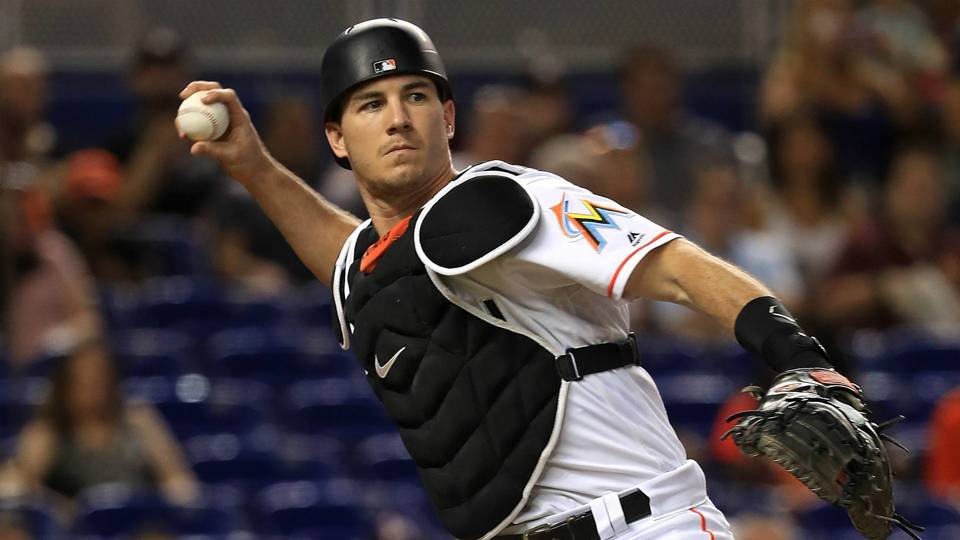 Not even a week and a half in to the offseason, J.T. Realmuto set the hot stove afire by reportedly telling his agent that he will not sign an extension with the Marlins. NEWS: Jeff Berry, agent with @CAA_Baseball, on @MLBNetworkRadio just now regarding client J.T. Realmuto: “I think he will definitely be wearing a different uniform by the start of spring training.” Berry made clear that Realmuto won’t sign an extension with #Marlins. @MLB — Jon Morosi (@jonmorosi) October 30, 2018 The decision by Realmuto comes a season after the Marlins committed to a complete rebuild by trading away top assets such as Giancarlo Stanton and Christian Yelich and on the heels of a 98-loss season, the second worst campaign in franchise history. While they will be losing another All-Star talent, a prospect that would even further set a fleeting fanbase astray, the decision by JT wasn’t necessarily detrimental to the Marlins, just a year in to another massive rebuild. As a standout (and arguably the standout) at a thin offensive position, there was plenty of opportunity to move and plenty of talent to be had in return for Realmuto’s services. But as the Marlins attempted to wait until the Winter Meetings at the end of next month in the hopes of starting a bidding war between potential suitors, a quick-moving market has already seen a few of those teams finding their catcher elsewhere. This may force the Marlins into showing their own hand much earlier than they would have liked. So where should the Marlins double down in the hopes of garnering the best prospect package? Heading in to what is sure to be an active bargaining session involving Miami and potentially multiple second parties, here are Fish On the Farm’s top three suitors for the 4.6 WAR catcher’s services as well as some trade proposals for each team, respectively. Houston Astros The Houston Astros had a fantastic 2018 season, going 103-59, the second best team in all of baseball. The defending World Champions went on to sweep the Cleveland Guardians in the ALDS, but came up short against the eventual World Series Champion Boston Red Sox in the ALCS. Not a bad way to go out. If there was a hole on the 2018 Houston squad, it was catching. In a contract year, Opening Day starter Brian McCann hit just .206 through the month of June before being lost for two months to a knee injury. From July 1 through August 30, the team fielded a platoon of Martin Maldonado and Max Stassi. The pair managed just a meager .227/.297/.389 line with a 99/26 K/BB. They also allowed stolen bases at a 69% rate. With most of their roster from last season returning in 2019, the addition of Realmuto who hit .277/.340/.484 in the 2018 Marlins lineup and caught base stealers at a 38% rate, puts Houston over the top and makes them an instant World Series favorite. The Proposal To Miami: IF/OF Yordan Alvarez LHP Cionel Perez RHP J.B. Bukauskas To Houston: C J.T. Realmuto The Astros are rightfully extremely high on the near-perfect swing of Kyle Tucker and the near-complete arm of Forrest Whitley. While those two represent the moon the Marlins have been asking for so far this offseason, this return is well among the stars. [youtube https://www.youtube.com/watch?v=0QGq4ePJtz4]IF/OF Yordan Alvarez 2018 (AA/AAA) - .293/.369/.534, 20 HR, 74 RBI, 92/42 K/BB Alvarez was an international signee by the Dodgers, selected out of Cuba where he hit .351 in his native country’s top reaches, the Serie Nacional. From there, the lefty hitter was signed by the Los Angeles Dodgers for a cool $2 million as a 19-year-old in 2016. His tenure with the Dodgers barely lasted a month before he was traded to Houston in a one-for-one deal that put Josh Fields in Dodger blue. After hitting .341/.474/.500 in 44 ABs in the Dominican Summer League to round out his well-traveled 2016 season, Alvarez started his first season in stateside ball at single A Quad Cities. Nearly a year and a half younger than his average competitor, Alvarez lit Midwest League pitching up to the tune of a .360/.468/.658 line via nine homers, earning him the call to A+. Buies Creek was a bit of a learning experience for Alvarez as he saw his wall rate drop from 16.5 to 7.5, but he was still able to post a respectable .277/.329/.383 slash line against even older average competition, this time nearly three years his elder. After impressing as a late inning replacement early on in spring training, the Astros gave Alvarez the promotion to AA to start the season, a move that had many in the Astros’ circle thinking he was being rushed. However, despite missing nearly a month and a half due to injury, Alvarez was able to honor his organization’s faith in his ability by slashing .325/.389/.615 with 12 homers and a 45/19 K/BB in 43 games. On July 6th, Alvarez was promoted to AAA Fresno. Following a bit of a slow start, Yordan made necessary adjustments and rounded out an overall fantastic 2018 campaign by hitting .290/.377/.452 with three homers, 18 RBI and a 24/13 K/BB at the highest level of the minors. Looking at Alvarez who stands 6’5”, 225, one would venture to guess he is a pure power hitter who trades long balls for poor plate discipline. However, the 21-year-old is as imposing a disciplinary figure as he is a physical specimen. In his 176 game MiLB career, Alvarez has posted a 1.83 K/BB ratio, the product of a simplified approach that makes the most of his very natural power tool, an extremely rare commodity, especially for someone his age. At every level he’s played at, Alvarez has shown above average strike zone management and plate coverage as well as at least above average power numbers. If there’s a knock against Alvarez, it is his outfield defense. This makes the Marlins, whose biggest hole is first base, a prime trade partner with the Astros a team that sees Alvarez blocked by Yuli Gurriel, Tony Kemp, Derek Fisher and JD Davis. Considering the Astros depth, Alvarez is a buy-low centerpiece that has a huge potential ceiling. And if the past is any indicator, that is a gamble well worth making. [youtube https://www.youtube.com/watch?v=okPoak_9j-o]LHP Cionel Perez 2018 (AA-AAA) - 73.2 IP, 2.44 ERA, 1.18 WHIP, 89/28 K/BB Perez is a 5’11, 170 pound lefty who has quite the interesting history with the Astros. After figuring out some control issues and putting up a 2.08 ERA via a 75/32 K/BB as an 18-year-old in the Cuban National Series, Perez defected from Cuba. That September, the Astros signed Perez to a $5.5 million deal, the most the Houston franchise had ever doled out to an international free agent. However, the Astros voided the contract due to concerns with Perez’s physical. Three months later, the Astros re-signed Perez for a much lighter $2 million. Cionel began his career in stateside ball in single A Quad Cities. After a bit of a rude welcome to Minor League Baseball including a 2.2 IP, 7 ER performance his first time out against the Clinton LumberKings (who are now the Marlins’ single A affiliate) and a similar 1.2 IP, 6 ER night in his third appearance, Perez settled in nicely. Over his next 52.1 IP, he held down a 2.42 ERA by way of a 42/10 K/BB. The highlight of that stretch was a 7 shutout inning, 10/1 K/BB outing on May 22nd. Perez rode that wave of momentum with him to the next level, A+, where he appeared in five games and posted a 2.85 ERA with an 18/5 K/BB in 25.1 IP before getting a second promotion. He lived out the rest of his breakout season with AA Corpus Christi. Following that cup of coffee in the Texas League, Cionel returned to the Hooks this past season where he once again put his ability to positively adjust to opposing hitters‘ competition level on full display. In 16 games (11 starts) and 68.1 IP, Perez held opponents to a .213 BAA. His 1.98 ERA led the Texas League, his 22% K/BB% ranked fourth and his 1.11 WHIP ranked 10th (among pitchers with at least 60 IP). Those exports allowed Perez to first crack the uppermost level of MiLB where he tossed 5.1 IP in relief before receiving his first MLB call. He ended the year with the Astros, tossing 11 innings out of the pen and holding competition nearly seven years older than him on average to a .158 BAA and 1.15 WHIP. A guy who barely topped out at 90 coming out of Cuba, Cionel now regularly sits in and maintains the 90-93 mph range throughout starts and he has shown the ability to hit as high as 97. In his time out of the Astros pen last year, his average fastball came in at 95.3. Perez also owns a late-fading changeup regularly reaching the mid-80s, giving him a viable 1-2 punch, a plus power curveball that comes in 77-79 that keeps hitters honest and off-balance and a recently added back-foot slider that tops at 88 and has the makings of a plus out pitch. While there are some reservations about his size and his faulty throwing elbow that cost him upwards of $2 million when he was signed, Perez is a guy who has grown at every level he’s pitched at and rounded out his arsenal nicely. He confidence in all four of his pitches each of which he throws for strikes and commands well. About the only thing Perez hasn’t proved yet in his career is the ability to stay healthy over the course of a full season’s worth of starts as the Astros have erred on the side of caution when it comes to his IP totals. If Cionel‘s body can hold up to the rigors of 20+ starts, there is little against him becoming a viable 2-3 starter. At worst, his floor is that of a back end starter/swing man. [youtube https://www.youtube.com/watch?v=hXzYJi2OzbM]RHP J.B. Bukauskas 2018 (A-AA) - 59 IP, 2.14 ERA, 1.11 WHIP, 71/24 K/BB Ranked as the 29th best right handed pitcher and the 89th best overall player in the country by Perfect Game coming out of high school, Jacob Bukauskas was thought to be first-round draft pick material with money to match when he graduated from Stone Bridge High School in Virginia. However, after falling to the DiamondBacks in the 20th round of the 2015 draft, Bukauskas decided to honor his commitment to the University Of North Carolina, his “dream school”. After breaking in to collegiate action with a 72.2 IP, 4.09 ERA, 67/30 K/BB freshman season, Bukauskas enjoyed a 78.1 IP, 3.10 ERA, 111/29 K/BB sophomore season in 2016. His 12.7 K/9 ratio ranked third in the country and he was named to the All-ACC Second Team. Those exports earned Bukauskas the right to pitch under the Friday night lights as UNC’s ace in 2017. There, Bukauskas had one of the best pitching seasons in the 17 year history of Tarheels baseball. In 92.2 IP, J.B. went 9-1 with a 2.53 ERA and 116 Ks — the seventh most in program history — and 37 walks. He was named the ACC Pitcher Of The year and a unanimous first team All-American. Bukauskas’ exceptional collegiate tenure made what was possible when he entered the draft out of high school a foregone conclusion. At pick 15 of the 2017 MLB Draft, Houston sounded his name. With the 15th pick in the 2017 #MLBDraft, the Astros select RHP J.B. Bukauskas from the University of North Carolina. — Houston Astros (@astros) June 13, 2017 This past season in his first full year as a pro, Bukauskas started in full season A. He made two starts for Quad Cities before suffering a back injury that cost him nearly two months. Upon his activation on June 29th, he made a single start in the Gulf Coast League followed by three starts back in Quad Cities, a tenure in which he allowed a total of two earned runs (and both in his first game back in the GCL), Bukauskas rejoined Quad Cities before being quickly promoted to A+ Buies Creek. In his five starts for the BC Astros, Bukauskas went at least 5 innings in each and managed two quality starts. In total, he allowed just 5 ER in 28 IP, good for a 1.61 ERA. He limited opposing hitters to a .138 BA and had a 31/13 K/BB. Despite being another guy whose health hasn’t been on his side to start his career, Bukauskas has been able to battle through it. The catalyst for that has been his wide arsenal which features a fiery sinking mid-90s fastball that he can ramp up to 97-98 and a plus mid-80s slider. He also owns a mid-80s changeup that he’s worked to improve in his young career as a pro. At its best, the distant third pitch shows good arm-side run. Very much a show-me pitcher who comes right after hitters, Bukauskas’ future will hinge on two things: further development of the aforementioned change and better repeatability in his delivery. Throwing from the first base side of the rubber, the extremely upright Bukauskas owns a smooth leg kick and windup, but in stepping downhill, the 6’ 200 pounder loses fluidity when it comes to his hip torque and follow-through. While this can serve to Bukauskas tipping his pitches, it moreso leads him to employ a lot of effort, causing him to lose velo late in starts and also to fall off the mound towards his glove side, disabling his command. Although Bukauskas will need to work those kinks out and he will need to prove he can stay healthy over the course of a full season’s worth of innings if he hopes to make it as a top-end starter, he has the floor of a back end rotational piece and at the very least, a future standout closer. Colorado Rockies In the extremely competitive NL West, the Rockies went 91-72 in 2018, finishing just one game behind the division winning Dodgers. They went on to the NL Wild Card game against the Cubs where they pulled off a win, making the postseason. However, Rocktober was short lived as Colorado was eliminated in the division series by Milwaukee in four games. They are a team that has made the playoffs in each of the past two seasons and that just had their top pitching prospect as well as another of their top infield prospects complete their first MLB seasons, but one that has little in the area of MLB-ready catchers outside of 35-year-old Chris Ianetta. The addition of Realmuto and 30+ more home runs to a diamond that already holds names like Arenado, Story and McMahon could be exactly what the Rockies need to push them over the top. The team and GM Jeff Bridich realize they are all but one small step away from reaching the top of the mountain. Bridich recently announced that none of the team’s assets will be untouchable as they search for their missing link. This would give the Marlins their pick of a pretty stacked litter that was ranked 13th by Bleacher Report earlier this midseason. The Proposal To Miami: IF Brendan Rodgers LHP Ryan Rolison To Colorado: C J.T. Realmuto [youtube https://www.youtube.com/watch?v=rFY7mFYBpnY]IF Brendan Rodgers 2018 (AA-AAA) - .268/.330/.460, 17 HR, 67 RBI, 92/31 K/BB A Florida native, Brendan Rodgers played high school ball at Lake Mary High School, in close proximity to Orlando. There, Rodgers made his name as a top draft talent, though some saw that ability in him at a much younger age. After watching him play as a five-year-old, one Dante Bichette had this to say to Rodgers’ parents: “Your kid is going to be a big-leaguer.” Thirteen years later, the same team that housed that former Rockies slugger and organizational Hall Of Famer selected Rodgers third overall in the 2015 MLB Draft. Rodgers, who had a () prep career, was thought by many scouts to be the best talent in that year’s draft due to how quickly he was maturing 3/5 tools. At the ripe age of 18, Rodgers already had a simplified approach at the plate that made the most of his fantastic natural plate vision and bat speed, giving him the ability to hit for both average and power as well as smooth footwork, hands, a plus-plus arm and innate infield instincts, providing him the ability to make good reads at multiple positions. Only Dansby Swanson and Alex Bregman had their names called before Rodgers. Rodgers signed with the Rockies for a franchise record $5.5 million. Since his signing, Rodgers has been pushed aggressively through the Rockies’ system. Without changing much of what he did as a high schooler, Rodgers has naturally (we are using that word a lot, aren’t we?) adapted to each jump in competition level. After hitting .273/.340/.420 in his first 143 professional ABs in short season ball to round out his draft season, Rodgers was tasked with his first full season campaign in 2016. In 442 ABs, nearly three times as many as he’d ever seen, he slashed .281/.342/.480 with 19 homers. His 137 wRC+ was good for sixth best on the circuit. Rodgers accomplished all of this as one of the youngest players in the South Atlantic League, nearly three years younger than his average competition. In 2017, Rodgers was promoted to A+ Lancaster. There, at an extremely hitter friendly park aptly named the Hangar, presumably because of how often baseballs fly out of it, Rodgers raked to the tune of a .461/.488/.809 slash line. While those figures were surely inflated by his surroundings proven by his .413 BABIP, Rodgers also hit a well respected .308/.312/.523 within the rest of the California League. His wRC+ (184) didn’t only rank within the top six circuit wide for a second straight season (among players with at least 200 ABs), it led the league. Once again, Rodgers was playing against competition nearly three years older than him. That June, Rodgers got another well-earned promotion, this time to AA Hartford. There, as a Yard Goat and a teenager making the second-hardest jump in professional baseball to make, Rodgers got off to a rough 18-78 start, but finished the year 21-71, once again driving his wRC+ up above 100 (104). This time, he was playing against competition nearly FOUR years his elder. Rodgers used experience gained during his 41 games at the AA level in 2017 to improve his slash line to .275/.342/.493 and his wRC+ to 129 during the course of 402 plate appearances. While his BABIP hovered right around average (.301), his disciplinary numbers improved as his walk rate jumped nearly three percentage points from 4.9% to 7.5% and his K rate fell accordingly from 22% to just under 19%. At season’s end, Rodgers’ exports allotted him being named MLBPipeline’s ninth best overall prospect, league wide. Hitting via from extremely streamlined approach with plus-plus bat speed, great present strength with plenty of more capacity for growth and solid pitch recognition skills, Rodgers is a guy who has responded to every challenge the Rockies have thrown at him even as his competition got older, wiser and more experienced by remaining confident in his inherent gifts, making his coach’s jobs extremely easy. A guy who has a very real ceiling as one of the best middle-of-the-lineup hitters while also being a middle infielder (his potential future with the Marlins would likely be at second base), Rodgers is lining up as a very rare commodity, worthy of building a franchise around and all within the next season and a half. The only knocks that could possibly go against Rodgers’ game is his overall lack of walks (though he makes enough contact to excuse it) and a slight tendency to get pull-happy, a very coachable flaw. A game changer that would take the Marlins’ system from good to one of the best in baseball, a deal with the Rockies should be Rodgers or bust. [youtube https://www.youtube.com/watch?v=tkrQJXj2LVk]LHP Ryan Rolison 2018 (A) - 29 IP, 1.86 ERA, 0.79 WHIP, 34/8 K/BB Rolison is the Rockies’ first round pick from this past season’s draft out of the University Of Mississippi. Rolison initially caught the eyes of scouts as a junior after he posted a 0.72 ERA with 104 Ks as a junior and made those same eyes pop after he went 9-0 with a 0.12 ERA and 108 strikeouts as a senior in 2016. The accolades came flowing in for Rolison that year, including being named the best player out of his home state of Tennessee, the 51st best prep player in the country, a top 500 draft prospect by Baseball America and a second-team All-American title. However, Rolison really wanted to honor his commitment to his dream school, Ole Miss, an understanding that all but negated his prep draft stock. After balking at a 37th round selection by the Padres in 2016, Rolison started his collegiate career coming out of the Ole Miss bullpen before quickly earning a spot in the rotation. On the whole in his freshman season, Rolison made 19 appearances (10 starts, the most in program history by a first-year pitcher) and held down the SEC’s 13th lowest ERA (3.06) while striking out 64 and walking just 24 in 61.2 IP. After an impressive 1.84 ERA, 35 K appearance in the Cape that summer, a sophomoric Rolison had one of the better seasons in Ole Miss program history. The numbers: 97.1 IP 3.70 ERA via a .235 BAA. Not eye popping until you look at the control figures: 120/45 K/BB and just 22 XBH allowed, the equivalent of a negative 0.412 FIP. With a 10-4 record, Rolison became the 10th player in program history to post at least 10 wins and 100+ Ks. Those exports earned him a first round, 22nd overall selection by Colorado this past June. Rolison finished his 2018 campaign by making nine appearances for the short season Grand Junction Rockies. In 29 innings, the 21-year-old had a 1.86 ERA and 0.79 WHIP via a 34/8 K/BB. Rolison has succeeded by way of his 94-96 mph fastball that challenges his more frequently-faced opposite side hitters and via his hard-breaking wipeout curveball that dips into the high 70s and which MLBPipeline dubbed as the best in his draft class. He also owns a third pitch changeup that should play up in the future. While Rolison still needs to improve control over his long limbs, the 21-year-old has plenty of room to move, making him a more-than-advantageous complimentary piece in this potential trade. Atlanta Braves Even though they began their offseason by re-signing free agent Brian McCann thus making in-house option Tyler Flowers, a more-than-capable backup, the Braves have been headlined as one of the top seekers for Realmuto’s services, proving they are confident their young core can carry them to the next level within the next two years. With Ronald Acuña, Ozzie Albies, Dansby Swanson and perennial All-Star candidate Freddie Freeman already at their disposal, this may be possible. And Atlanta more than has the prospect prowess in their minor league system to get a deal done. The Proposal To Miami: RHP Mike Soroka 3B Austin Riley To Atlanta: C J.T. Realmuto [youtube https://www.youtube.com/watch?v=Fn8O_xyO2LY]RHP Mike Soroka 2018 (A/AAA) - 30.2 IP, 1.76 ERA, 0.84 WHIP, 34/6 K/BB Soroka is the Braves’ 2015 first round draft pick out of high school in Canada. On paper, it seemed to be quite the bold move but looking at Soroka’s 6’5”, 225 build and his ability to dictate the tempo of the game via working quickly and with a more-than-solid three pitch mix, it’s easy to see why scouts are extremely excited about Soroka’s future. A command-first artist that makes the most of his size throwing his 92-94 mph fastball with a good downward plane creating good natural sinking action, Soroka also owns two different breaking pitches, a hard power curveball/slider hybrid with tight late break that sits between 83-86 as well as an above average changeup. While all three pitches get 55+ grades, Soroka is a guy who relies less on pure stuff and more-so on his head and feel for pitching and his smooth delivery mechanics and tried and true consistent arm action to succeed. Those attributes have allowed Soroka to play up to competition wherever he’s played. After beginning his career in the Gulf Coast League, Soroka received a quick call to short season ball. In 34 total pro innings in his draft season, he held down a collective 3.18 ERA and 1.12 ERA. His excellent command was put on display early and often as he posted a 37/5 K/BB. In his first full pro season in 2016, Soroka went 9-9 in 24 starts for the Rome Braves. His 3.02 ERA was 8th lowest in the South Atlantic League and his 2.78 FIP was second best. The great control persisted as his 15.9 K/BB% ranked 10th best on the circuit. In 2017, those exports allowed Soroka to skip A+ and make it to AA in just his second full professional ledger. Only one word could possibly describe Soroka’s tenure in a Rome Braves uniform: dominant. While he doesn’t command much out of the zone, Soroka controls both his pitches and his games with the ability of middle-of-the-rotation MLB starter. And he’s still only 21. With more room for growth and drawing comparisons to Adam Wainwright and Tim Hudson, Soroka has the floor of a back end starter with the potential to become ace material. [youtube https://www.youtube.com/watch?v=AAIF_WnuRPY]3B Austin Riley 2018 (A-AAA) - .294/.360/.522, 19 HR, 70 RBI, 129/37 K/BB Riley is another Braves’ prep pick, this time out of Mississippi in 2015. Riley was signed by the Braves after a .418/.517/.725 prep career at DeSoto Central High School where he split time between pitching and third base. While some scouts were higher on Riley’s potential as a hurler, Atlanta invested in him as an infielder. Since, they have not regretted it for a moment. The 41st overall pick began his career in the GCL where he slugged an even .500 with his first seven pro homers before his promotion to rookie ball. He lived out 2015 by hitting .351/.443/.586 for the Danville Braves. In his first full pro season in 201), Riley showed the same power prowess, homering 20 times, part of a 61 XBH season. Those numbers were the exports of Riley’ countless hours spent with coaches that offseason, adjusting his bat grip and batter’s box placement, a pair of changes that allowed him to get extended more advantageously. In 2017, Riley showed improved recognition of breaking pitches and hit 12 homers in the pitcher-friendly Florida State League before a midseason call to AA. There, as a 20-year-old playing in his home state of Mississippi against an on-average 23-year-old, Riley slashed .315/.389/.511 with eight more bombs, affirming himself as a legitimate power-first prospect. Riley further solidified himself of that status when he participated in the Arizona Fall League that season. Against some of the top young talent MiLB has to offer, he hit .300/.364/.657 with six homers, second in the league to only his teammate Ronald Acuna and 18 RBI, third in the league. His slugging percentage ranked second on the circuit. This past season, Riley battled injury but when he was healthy, he was raking. After hitting .333/.394/.677 in AA to start the season, Riley got a much deserved call to AAA where he went 30 for his first 100 (.300) including a 4-5, three homer, eight RBI game on May 13th before hitting the disabled listed for more than a month. On July 5th, Riley came back no worse for the wear. Following an 11-18 rehab stint in the GCL, he went 53 for his last 189 (.291) which included a 10-game hit streak from August 21st-31st. Overall, Riley showed awesome resiliency and hit .282/.346/.464 in 75 games in AAA, giving himself a very realistic shot at making an Opening Day roster in 2019, whether it be with Atlanta or elsewhere. At the plate, in the field and on the bases, Riley looks every bit of his 6’3”, 220 build. With a long power load and even longer swing, Riley is plenty susceptible to swings and misses and will continue to be as a major leaguer. He also isn’t a guy who will cause much trouble on the basepaths nor is he likely to stick as a third baseman. However, with elite strength pronounced by even better bat speed, the ability to make plenty more than enough contact via 50-grade vision, and, as he’s proven, the ability to make positive adjustments, there isn’t much doubt that Riley, a model base jogger and still just 21, has the future of a franchise centerpiece at either first base or in left field, a future that should begin this coming season.
 -
View full article
-
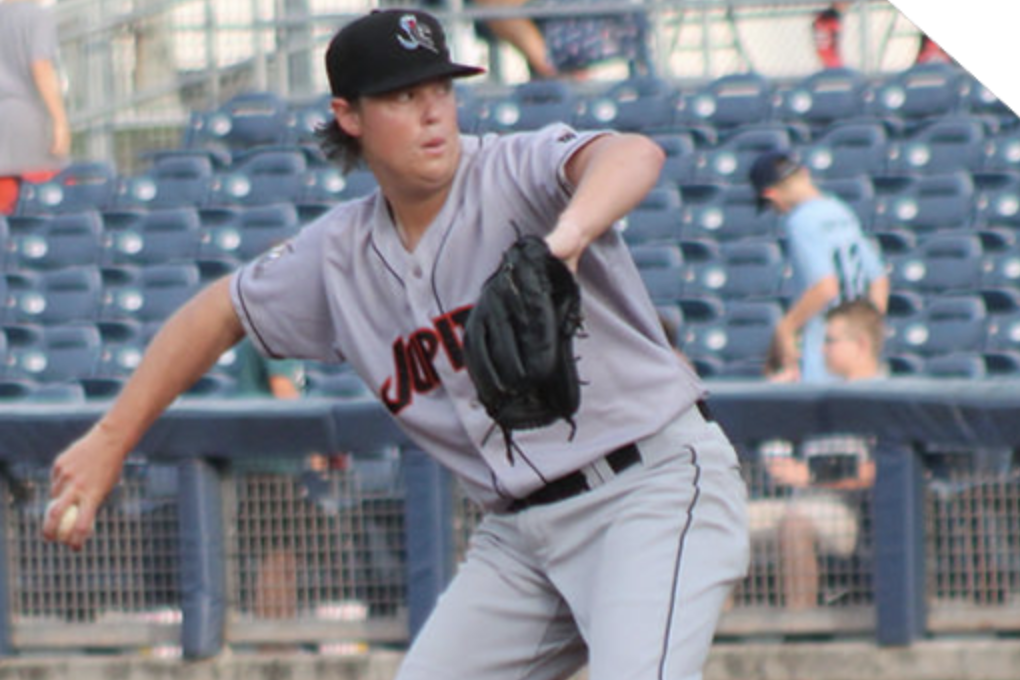 When you jump from single A all the way to AA and hold down a collective 2.12 ERA, 0.98 WHIP and 111/20 K/BB along the way, you beg to be awarded postseason accolades — especially when your name is Dustin Beggs. This season, we are happy to oblige and award the 25-year-old righty with our Prospect Of The Year Award. Beggs, born in Colorado Springs, Colorado, attended high school in northwestern Georgia. Beggs lettered in both his junior and senior seasons, the latter of which he also earned his team’s MVP award as well its Cy Young award. At season’s end, Beggs appeared in many Perfect Game showcases, not placing any worse than in the 50th percentile on fastball velocity and flashing a velo mix of more than 20 MPH before departing for junior college. There, as a Georgia Perimeter College Jaguar, Beggs compiled a 17-5 record in 150.1 IP while holding down a 1.86 ERA and a 0.97 WHIP via a 175/27 K/BB. Most of Beggs’ dominance was done in 2014, a sophomore season in which he struck out a league most 125 and managed a league leading 1.65 ERA. Following his second collegiate season, Beggs was drafted by the Cardinals in the 17th round of the 2014 draft. That same offseason, Beggs was recruited by the University Of Kentucky. Ultimately, he decided to go back to school. “That decision was made by talking with my parents and coaches at UK,” Beggs explained. “I think the main message I got from them was that going to play at an SEC school for a year or two would help me develop not only physically, but more importantly, mentally.” In his first season as a Wildcat, Beggs made the full-time transition to the rotation. “The jump from JuCo to the SEC seemed pretty big when I first got there,” Beggs said. “I remember giving up 3-4 runs in my first intrasquad and thinking, “Wow, these guys are really good 1-9. It was definitely an adjustment process.” In 14 starts that year, Beggs posted a 3.65 ERA via a 1.09 WHIP and 75/20 K/BB, numbers very respectable for a first-year D1 hurler, marking the first time but certainly not the last that Beggs would show that he is very capable of adjusting to competition level. After posting a 9-2 record and a 3.01 ERA by way of a 0.95 WHIP and 80/16 K/BB in 98.2 IP in his senior year in 2016, Beggs was drafted for a third time. On this occasion, the Marlins took him in the 16th round and Beggs obliged, signing with Miami and earning a $10,000 signing bonus. He came to the Marlins as the fifth of seven Kentucky alums the organization has drafted from 2012 to the present. Other Wildcats turned Fish over that span include JT Riddle and Beggs’ former teammate and current 25th ranked prospect, Riley Mahan. Beggs says the fact that Michael Hill and company keep going back to the UK honeypot draft after draft is a testament to the strength and stability of a program that will only get better in the years to come. “I think it speaks to the University of Kentucky coaching staff and how well they have done at preparing players for the next level,” Beggs said. “They take pride in, not only in winning games and competing in the SEC but also in helping players get the most out of the talent they have. With them building that beautiful new stadium, I think that trend is going to continue for a long time.” After breaking in to pro ball at the end of 2016 with Batavia, Beggs rode the aforementioned preparedness borne in him from Kentucky to a fantastic rookie pro season in full season A in 2017. There, as a Greensboro Grasshopper, Beggs held down a 10-6 record and a 3.86 ERA. He K’d a team-high 107 in 149.1 IP, another team high, the second most in the South Atlantic League. According to Beggs, staying both healthy and effective over the course of his first full pro league season was a challenge, but, thanks to his years spent at UK learning how to create, execute and maintain an advantageous weekly regimen, a challenge he was able to stare down and conquer. “Throwing almost 100 innings in both of my seasons at Kentucky helped a lot not only with understanding how that feels physically on your arm, but mentally understanding that you have to have a good routine and pace yourself over the course of the year,” Beggs said. “The routine helps you categorize your days off and have an idea of what to do when you get on the field each day.” As well equipped as Kentucky made him for the rigors of life in the minor leagues, Beggs attests to the fact that pitching in Greensboro taught him many more valuable lessons such as learning how to advantageously pitch to contact. Accordingly, Beggs labels his first MiLB season as a very important foundation laying process that he will build off for the rest of his career. “Since Greensboro’s field is so small, it really taught me the value of pitching down and inducing ground balls,” Beggs said. “[The 2017 season] was a very helpful building block just to give me confidence going forward. A lot of times confidence is the biggest key to getting people out, knowing your stuff is good enough to get people out and compete at each level. That really helped me going forward.” This season, Beggs, a second year pro, used his newfound confidence to jump two levels all the way to AA. After starting the year back in Greensboro and holding down a 2.66 ERA and 1.08 WHIP with an 8.33 K/BB in 40.2 innings, Beggs got the promotion to A+ Jupiter. There, he returned to exclusive rotational work. In seven starts for the Hammerheads, Beggs had a tiny 2.01 ERA with a 35/6 K/BB in 44.2 IP. The highlight of his A+ career was a 7 IP, 1 ER, 10 K, 2 BB start on July 7. Six of his seven Jupiter starts were quality outings. Between A and A+ in 2018, Beggs had a 2.32 ERA and allowed just 84 baserunners in 85.1 IP (0.98 WHIP) while compiling an 88/12 K/BB. Those accolades earned Beggs his second promotion of the season, this time to AA Jacksonville, on August 15. Making the difficult leap from the lower to upper minors, all four of Beggs’ starts with the Shrimp were of the quality variety. During those 25 innings, he limited opponents to a .193 BA and just four earned runs. His impeccable control numbers persisted as he struck out 23 and walked just eight. Beggs, who trades any sort of fiery velocity for hitting spots, missing barrels, says the key to his continued success as he’s traveled through the minors, has been maintaining a great working knowledge of himself and his abilities, staying true to that persona and avoiding the urge to become something he is not. “I think the key has been consistency and keeping an even temperament on the mound. As the levels pass and the opponents and teammates change, you have to keep attacking hitters and throwing strikes,” Beggs said. “I understand that I’m not going to blow it by people so I use offspeed and location to my advantage.” Following a head-turning 2018 campaign, the 25-year-old Beggs will head into 2019, a campaign in which, with continued success at the AA level, could include his Major League debut. However, the 25-year-old is determined not to let anything — not even the pending realization of his childhood dream — alter his steadfast concentration. “It’s very exciting to think about, but I am a very in-the-moment focused person,” Beggs said. “I have to keep working this offseason to put myself in a good position to compete this spring. I’m just going to keep staying the course and focus on how I can better myself.” [youtube https://www.youtube.com/watch?v=AmRrg8IpMng] A 6’3” 180 pound specimen, Dustin August Beggs literally DAB-bed on the competition no matter where he pitched in 2018 via his best tool: impeccable control. While his low-90s heat won’t light up radar guns or the eyes of scouts, the placement of his huge 12-6 curve that clocks in at 72-74 MPH, his sweeping 9-6 slider that sits 75-78 MPH and his 82-84 MPH changeup that shows late arm-side run to the black provide Beggs with the ability to use any pitch in any count. He masks each of his pitches by repeating his windup, arm speed and follow-through. A guy who is extremely averse to a free pass and who limits pitches per AB and is more than capable of erasing what few baserunners he does allow via a lightning quick pickoff move, Beggs has the ceiling of a 2-3 starter and the floor of a back end swing man, capable of eating many innings. A guy who earned the reputation of a more-than-reliable starter in college, Beggs has begun to pave a path to do the same as a Major Leaguer. With similar success in both spring training and early in the minor league season with the Jumbo Shrimp, Beggs should be among the first handful of Marlins hurlers to earn a major league promotion in 2019.
 -
View full article
-
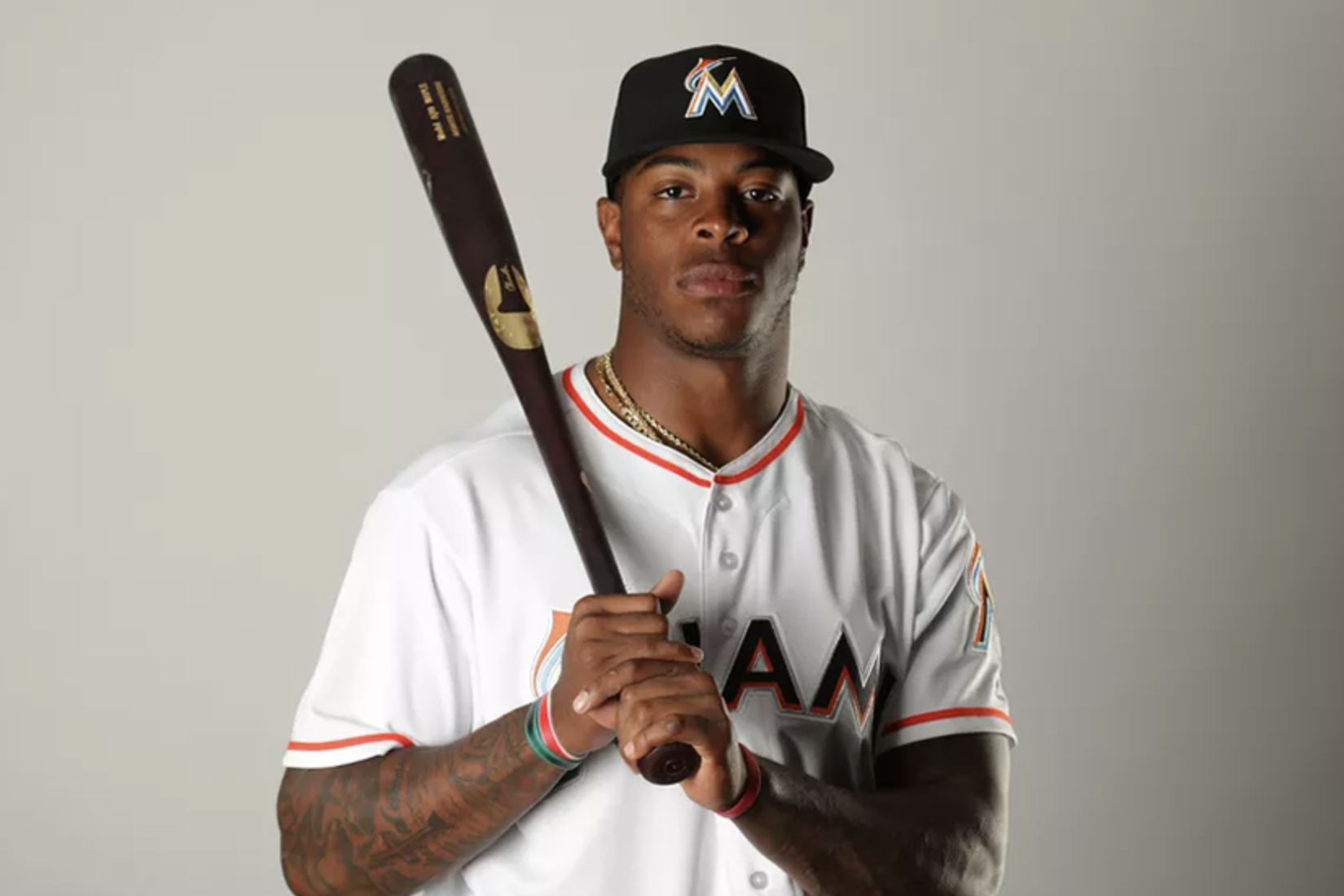 In 2018, his first season with the Marlins, the organization’s new top prospect Monte Harrison played to the tune of a famous Billy Joel song: he went to extremes. Too high and too low, there was no in between as the 23-year-old struck out 215 times, the most in all of AA and at a 37% rate, and walked just 44 times at a 7.5% pace. His excellent raw talent and power potential allowed Harrison to swat 19 homers, a career high and fourth most in the Southern League. However, if Harrison hoped to match and/or better that number when he arrived in The Show, he had some adjustments to make heading into his second Arizona Fall League campaign. It is undeniable: Monte Harrison has always owned many plus-plus offensive tools. With great overall strength stemming from his 6’3”, 220 pound frame, Harrison uses an advantageous vertical path in his hands and wrists during his load leading up to the execution of his superb bat speed which gives him exceptional leverage. His menacing physicality and good upper half mechanics give him a figurative leg up on his opposition before a pitch is thrown. However, this past season, not long after an opposing pitcher came set, Harrison had too much of a leg up — literally. Harrison had been trading attempting to recognize pitches for trying to time a pitcher’s motion. Through his aforementioned fantastic core strength, good hands and 60-grade power tool that still has room to grow, Harrison was been able to exhibit fence-clearing power, but that success had been had nearly exclusively in either obvious fastball counts or on mistake pitches that floated into his wheelhouse. The habit that Harrison formed disallowed him from staying back and led to off-balance long hacks that expanded the zone. This was the main culprit feeding Harrison’s gargantuan strikeout rate. For that reason, Harrison’s hit tool is currently capped at 45. After this fall though, that number will undoubtedly rise. “He did have the high leg kick when he got here,” Salt River Rafters Head Coach Tommy Watkins corroborated. “Since then, he’s cut it down a bit and he’s been having good ABs.” Here are some of the ABs Watkins speaks of: #Marlins #1 prospect Monte Harrison smokes a single #Milb #MLB Arizona Fall League pic.twitter.com/an3JWjxc2F — Ronnie Laybold (@CoyotesGlendale) October 22, 2018 #Marlins prospects also contributing with the bat. Here’s a two-run triple from Monte Harrison. @MLBPipeline pic.twitter.com/7uqyMGEdwi — William Boor (@wboor) October 30, 2018 So far this Arizona Fall League season, Harrison has shown a much more simplified approach, allowing him to utilize his superior bat speed and upper half mechanics to the best of his advantage. The drop in lower half involvement has led Harrison to drastically drop his strikeout total and improve his contact rates. But as positive as these adjustments have been, has Harrison negated his lower half too much? MIA Marlins OF Monte Harrison - Wide base stance, removed leg kick at some point in 2018. Swing now more contact-oriented. Harrison elite athlete with immense upper body strength. Able to generate power with little lower body use. Chance for better contact rates with new swing pic.twitter.com/dZdezfK8v3 — Prospects Live (@ProspectsLive) October 27, 2018 Looking at the new Harrison, his lower half is nearly stationary, limiting his fence clearing ability, especially at his future home of Marlins Park. The minuscule hip torque and lack of power transfer will cause his hit tool to rise but his power tool, which currently stands at 55, to drop. The question is can Harrison put it all together and become the complete offensive threat the baseball world foresaw when the Brewers offered him nearly a $700K signing bonus and when the Marlins traded soon-to-be NL MVP to Milwaukee for him last offseason. While that remains to be seen and while Harrison will need to make several more adjustments in order for it to happen including closing his very wide stance, his willingness to learn and change his approach in order to improve is very encouraging. For evidence, peep one of Harrison’s latest efforts: 2-3, 3B, 3 RBI, 2 R, BB 2 SB. He’s reached base in all 13 of his Arizona Fall League games. By losing a literal first step, Harrison has taken a big proverbial leap towards becoming a more complete hitter this fall. From a development standpoint, he’s following a similar path as the guy who he accompanied to Miami, Lewis Brinson. Already making positive strides this fall, Harrison looks forward to a spring training campaign in which he will share a dugout, a clubhouse not only with Brinson but with MLB coaches and facilities at his disposal. All things considered, we like a near-complete five-tool outfielder to join Brinson and potentially another piece of the Yelich trade, right hander Jordan Yamamoto, in Miami for regular season action in the second half of 2019.
 -
View full article
-
It’s Iowa: Marlins Begin New Affiliation With Clinton LumberKings
Alex Carver posted an article in FOF Prospects
 In 2019, Marlins minor leaguers at the A level will be crowned kings. Clinton LumberKings, to be exact. After spending over a decade affiliated with the Greensboro Grasshoppers, the Miami organization will make a westward expansion, partnering with the franchise hailing out of Clinton, Iowa. Clinton is a township which has known baseball for a very long time. After originally beginning play in 1895, the Clinton baseball club endured through the Great Depression and two World Wars. Upon the completion of a new stadium, Ashford University Ballpark in 1937, the Clinton baseball franchise earned their professional baseball partnership, teaming up with Dodgers. On May 9, 1937, the Clinton Owls opened their new stadium and made their MLB-affiliated debut against their peers and elders from Brooklyn in an exhibition game. Appearances by future Hall of Famer Heine Manush and five-time All-Star Van Mugno highlighted the occasion. Career 4.6 WAR IF/OF Bert Haas suited up for Clinton. Fast forward 61 years. In 1998, after Clinton spent time with many different MLB organizations including the Cubs, White Sox, Dodgers, Pirates (twice) and Giants and after it played innkeeper to the likes of Jim Leyland, Mike Scioscia, Orel Hershiser, Matt Williams, John Burkett, Royce Clayton and a host of other future stars, the team welcomed a new general manager to town: Ted Tornow. A longtime baseball man most recently known for the success he earned with the 1996 Butte Copper Kings, a season in which his team went 37-35, marking their first winning record in five years, and a year in which the club set a franchise record in total attendance, Tornow arrived in eastern Iowa to find the long-storied club in debt and their park which was built in 1937 and will become the oldest Pioneer League park this coming season, in rough shape. “When I got here, it wasn’t good. We were given the death sentence by Minor League and Midwest League baseball,” Tornow said. “That’s when the whole concept of integrating Vision Iowa started.” Vision Iowa (or SF 2447) was an Act passed by the Iowa General Assembly in 2000 with the purpose of providing State financial assistance, paid for by gambling receipts, to community attract and tourist (CAT) facilities. The Act created a 13-member panel which was charged with the duty of, among other things, reviewing applications and approving grant recipients based on a list of required criteria. After a few years worth of attempts, Tornow, the LumberKings and Ashford University Stadium were eventually selected to receive Vision Iowa funding of upwards of $3 million. “It took a while but we finally got it done,” Tornow said regarding receiving government funding. “It turned out being in the $3.3 (million) range. The whole project really revitalized not only us but the entire area.” With the gubernatorial backing plus $1.5 million of the franchise’s own, Tornow began to formulate a plan that would completely facelift Ashford University Stadium. The first thing Tornow did was enlist the assistance of HOK/Populous, a firm very well versed and world-renowned for its sports venue architectural success. HOK/Populous is the same company that crafted Joe Robbie Stadium, the original home of the Florida Marlins, in 1987 as well as Marlins Park, the current home of your Miami Marlins in 2012 They are also responsible for many other current MLB parks such as Coors Field, Minute Maid Park, Citi Field, new Yankee Stadium and SunTrust Park to name a few. Upon their arrival in Clinton, Tornow instructed HOK/Populous to proceed in a fashion that not only procured the longevity of LumberKings baseball but also promoted potential movement up the minor league ladder. “When they came in, I told them to build it to AA standards,” Tornow said. “We didn’t know the next time the commissioner or PBA audit was going to come so we wanted to be well prepared.” With the blueprint in place, Tornow and HOK/Populous began to work from the ground up — literally. “The new playing surface is sand-based and it drains,” Tornow said. “We can take an inch of rain and be ready to play in an hour. It’s absolutely perfect.” Accordingly, Tornow and HOK/Populus didn’t stop at the field surface. From there, they set their sights on getting the rest of Clinton’s facility completely in compliance with the Professional Baseball Agreement (PBA), the statute which binds minor and Major League Baseball together. The pair’s next venture became creating a better home clubhouse. To do so, Tornow and HOK/Populous chose to get creative and fashion what would become the LumberKings clubhouse out of what was originally created for the out-of-town squad. “When I got here, we knew our limitations. The new home clubhouse is underneath where the visitors dressed and showered way back in 1937,” Tornow said. “But is is now palatial. And the visitors’ clubhouse, which was our home one, is still above PBA standards.” Switching sides allowed Tornow and his constructionists to add a home batting cage which comes in handy during seasonal Iowa afternoons and evenings. “The batting tunnel is 50x100; it’s lit, ventilated and heated,” Tornow said. “It’s a great clubhouse. Absolutely great.” In their inaugural season with the Marlins in 2019, Tornow and the LumberKings will welcome many players who spent last season in Batavia, New York. Even though the Muckdogs’ original stadium, which was built in 1937 (the same year as Ashford University Stadium) was demolished and rebuilt in 1996, players have recently spoken of the horrors of the park belonging to a team that lacks an actual owner and is instead being run by the league itself. Some of those players have gone as far as to deem Dwyer Stadium unfit for professional play. It is Tornow’s ambition that those same players as well as the rest of the future Marlins he and his staff field this coming season and beyond will come to Iowa and promptly pose the question, “Is this heaven?” “Gosh, I hope they’re gonna be happier than a pig in slop. I hope they come in here and go, “holy cow!”” Tornow said. “We’ve got a great host family situation. Believe it or not, in Clinton, Iowa, we have a great Latino connection. We’ve got great clubhouse facilities and great player amenities. We might be small but we have first class facilities.” Those facilities are the product of what Tornow demanded from decision makers when he arrived in Clinton in 1995. “I told my mayor and my city admin way back then that if you want to ensure the longevity of baseball here in Clinton, Iowa, we cannot skimp on it. We have to do this,” Tornow said. “And we made it happen.” As much as the reconstruction of Ashford University Stadium helped Tornow and the LumberKings, it wouldn’t have been possible if not for the work turned in by Tornow in his earliest years in Clinton. During those first few seasons, Tornow got the team out of the red and began turning a profit for he and his partners despite battling a very crowded market. “The renovation definitely helped but it was the success prior to that,” Tornow said. “We lost a little money in ‘99 but we made money in 2000, we made money in 2001, 2002, 2003, 2004, 2005. That’s what really helped us.” Tornow says that, in a baseball sense, he didn’t do many things differently than he believes peers around Minor League Baseball, including in nearby Cedar Rapids, Burlington, Kane County and Quad Cities, would have done. Alternatively, Tornow believes the biggest catalyst for his success in rebuilding the LumberKings was his adherence to a concept taught to every grade school child. “Treat people the way you want to be treated and deal with them fairly and honestly,” Tornow said. With the arrival of the Fish in Clinton, Tornow plans to honor Marlins history as well as their future on a weekly basis. His first blueprint for bringing a taste of Miami to northwest Iowa will involve a sneak peak at what Marlins prospects at the single A level could look like in a Miami uniform someday. In accordance, Tornow also wants to bring some of Clinton to South Florida at the end of the Minor League season. “We want to do a “Marlins Monday” where we brand ourselves, maybe bring in some of your old jerseys and spring training stuff, maybe develop a new hat,” Tornow said. “Also, every Monday we want to run a progressive drawing where we draw a winner and during the final two weeks of the MLB season, take those fans that won and take them down to Miami to catch a game.” Affiliation change aside, above all, Tornow, a longtime baseball man who was working in the park when Bo Jackson made his professional baseball debut, was present for the return of Jim Eisenriech and who housed the likes of Neftali Feliz, Gary Matthews, Jr., Jason Bay, Ian Kinsler, Grady Sizemore and most recently, Pablo Lopez and Nick Neidert, is dedicated to preserving the spirit and purity of the game of baseball in eastern Iowa. “We play baseball. We have the game, we have a clean stadium, we treat people how we want to be treated,” Tornow said. “We have good food, cold beer, hot hot dogs and great customer service. Our advantage over other teams in the market is that we are just laid back and we don’t take ourselves too seriously.” Tornow says that although preparations and upgrades have been made to make their players and guests comfortable and informed in the 21st century, it has deliberately been kept in moderation in order for the LumberKings to maintain the same atmosphere and aura they have been known for for over eight decades. “We got fancy this year and got a ribbon board six feet high by 60 feet long. Out in right field we got some monitors up and WiFi throughout the stadium,” Tornow said. “But what people don’t realize that between the four jumbotrons and the interactive games that everyone has on their cellphones, iPads and everything else is that it’s still a game. Another team in the area has a fair and rides. It’s literally a circus next to a baseball game. It works for them so more power to them. But we just play baseball. That’s what works for us.” Looking towards the immediate future and the start of their relationship with the Marlins, Tornow says an advantageous beginning to their partnership can be achieved if and when the Fish become proactive in the Clinton community. “Seattle was big on community. It didn’t matter if you were he number 1 or 328 pick; they made you go to community events. Jimmy VanOstrand, former player, helps handle [the Mariners’] community events. He was constantly in touch with our radio guy saying these guys need to do more community work and to get them out there. Seattle was used to that so if the Marlins are anywhere close, we’ve already got a good start.” So starting in 2019, come to Iowa. Walk out to the bleachers and sit in the shirtsleeves on a perfect afternoon where you’ll sit and cheer future Marlins’ heroes. And watch the game. Ted Tornow, his staff and his park are sure not to disappoint.
 -
View full article
-
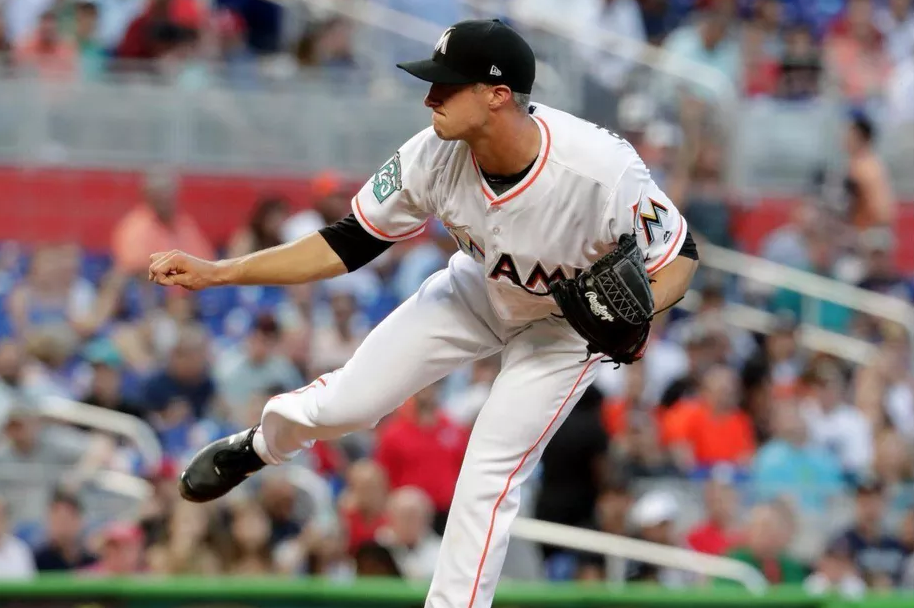 On this date two years ago, Trevor Richards was finishing up his second season with the independent league Gateway Grizzlies and was spending his time applying for hourly jobs off the playing field to fill his time and monetary requirements. According to Richards, this was a regular offseason practice. “I was just looking for some sort of money,” Richards told the Milwaukee Journal Sentinel. “You don’t make enough to not work in the offseason. Every offseason, I had to get a job." One day during that search, Richards’ phone rang. The caller had a job offer for Richards but it probably wasn’t the one he was expecting. Regardless, by the end of said call, Richards had accepted his first professional on-field gig with Miami. Richards made 11 total appearances for Marlins’ affiliated teams in 2016, holding down a 2.48 ERA with a 53/18 K/BB in 53 IP between short season ball and low A. However, with more to prove even within Miami’s thin system, Richards erred on the side of caution and kept his options off the playing field open. "He was sitting at my place all day for two days, and after that he said to me, 'I gotta do something,'" Richards' new fiance Aunna Beckemeyer told ESPN. After throwing his last game of 2016 with the Greensboro Grasshoppers on September 5, Richards reported to work at MillerCoors Brewery where he served as a gift shop attendant all offseason long, through the New Year and right up to training camp. "The pay was $9 an hour on the nose," Richards said. "I won't forget that. Only got overtime on Christmas." Come 2017, in quite possibly the staunchest promotion in employment history anywhere, Richards went from being a part-time gift shop cashier to being a full-time MLB-affiliated pitcher. That season, Richards split time between A+ Jupiter and AA Jacksonville, holding down a collective 2.53 ERA by way of a 1.03 WHIP and 158/30 K/BB. This was where Richards made his terrific control and command tools very well known. His 6.75 K/BB led all Florida State League hurlers who tossed a minimum of 70 IP. Despite making the difficult jump to AA midseason, that figure barely fell to 4.28 in his 75.1 IP for the Jacksonville Jumbo Shrimp, 7th best in the Southern League. Thirteen of Richards’ 25 starts we’re of the quality variety. His best outing came on 7/19/17 when he struck out a career high 10 over 7 shutout frames (3 H, 1 BB) in his fourth AA start against the Biloxi Shuckers. After an impressive spring training campaign in which he held down a 0.75 ERA and 1.17 WHIP in 12 IP, Richards earned a spot in the Opening Day rotation. Save a lights out 7 IP on just two hits against the Pirates on April 14, Richards’ first month in the majors was a bit of a wake-up call. With a 4.94 ERA via a 1.52 WHIP in his first 23.2 IP, Richards was optioned to AAA in favor of a healthy Martin Prado. Richards would go on to spend exactly a month with the New Orleans Baby Cakes. In those 30 days, he received the attention necessary that would not only garner him the mindset to gain penultimate confidence in his stuff but to also throw with 100% conviction. This led to an uptick in fastball velo. When all was said and done, Richards went from a guy who would barely touch 90 upon his signing with Miami to an on-average thrower of 91 MPH and frequent 92-93 MPH heat. The four-seamer has also gained a touch of late arm-side life. These days, the Richards moving heat sits at an average of 91.3 MPH and that figure is rising every time he takes the mound. According to Quality Of Pitch Average, a metric which aims to assign a rating between 1-10 to a pitch based on break, velo and location, Richards’ fastball ranks within the top 33% in all of baseball. Far and away though, Richards’ bread and butter pitch is the changeup. On the year, Richards’ changeup is generating swings 60% of the time and is leading to whiffs 25.3% of the time. Both of those figures lead the league (among qualified pitchers with at least 100 IP). Accordingly, Richards’ changeup is carrying a 13.6 runs above average rating (his next closest competition among the same qualifiers is Zack Greinke who holds a 10.2 wCH) and a 4.43 QOPA, the third best changeup in baseball, behind Greinke (4.91) and Luis Castillo (4.44). While it was a pitch that was scouted as playing up to MLB talent while he was coming up through the Marlins’ system, it was seldom thought that the Richards changeup would be rubbing proverbial elbows with that belonging to a former Cy Young winner or that it would be more effective than the versions of the pitch belonging to the potential winners of the award in both leagues this season, Jacob DeGrom and Chris Sale. Richards has done that. When the Marlins signed Richards, although there was clear and present talent in his arm, it couldn’t have been anything more than a very distant thought that Richards would wind up becoming the fastest Marlins starter to eclipse the 100 K Mark. Thanks to the changeup, Richards has done that in just 103 innings pitched. “I don’t think anyone realized quite how good that changeup was,” Don Mattingly said this past Monday. “It’s really the pitch that sets him up and sets up other pitches.” The only two Marlins rookie pitchers to reach 100 Ks faster than Richards are relievers Kyle Barraclough (2016) and Matt Mantei (1998). Richards surpassed the 100 K mark so quickly thanks in part to two 9+ K performances. The first, a 10 K effort, came in a 4.2 IP outing vs the Dodgers on April 25. The second, a 9 K effort, came two starts ago in a 5.1 IP outing. In that game, Richards became the sixth Marlins pitcher to record two or more 9+ K games in his first 20 appearances. In so doing, he joined some more prestigious company, including the aforementioned Jose Fernandez. Tonight, @trevrchrds became just the sixth @Marlins pitcher in team history to record multiple 9+ strikeout games in his first 20 career appearances. Other names on the short list include Josh Beckett and Jose Fernandez.#Marlins | #JustGettinStarted pic.twitter.com/hkvTDaoxoY — Fish On The Farm (@marlinsminors) August 23, 2018 The owner of an unlucky .310 BABIP due to the -13 RAA defense that is being played by a behind him, Richards peripherals, as he is, stand to improve as the talent behind him such as Monte Harrison, Brian Miller, Tristan Pompey, James Nelson etc., reach fruition and become his teammates in Miami. Each of those names projects as at least a plus defender. As he is right now, Richards is a more than adequate middle-rotational piece. However, with an elite pitch (the changeup) already to his credit and his fastball velo ticking in the positive direction, the Marlins believe the 25-year-old is just one tool away from pulling it all together, becoming the team’s next bonafide ace and leading the rotation into the next decade. That missing link for Richards is an above-average offspeed breaking pitch. “The development of a breaking ball takes him to another level,” Mattingly said. “The addition of something that goes away from the right handed hitter or goes far enough in to the lefty to make him aware of where the changeup plays or where the fastball on the other side plays.” Fortunately for Trevor, he has something to build off of. He owns the beginnings of a 12-6 curveball that sits right around 80 MPH. All in all this season, due to the effectiveness of his FB/CH combo, the curve has been a back pocket pitch for Richards. However, upon his return to the big leagues in the month of June, Richards used the pitch at a 20.24% rate and generated whiffs 11% of the time. Recently as the season winds down, Richards has reintroduced the curve in to his in-game repertoire, throwing it more than 10% of the time in two of his last three starts, including 12.8% on August 22 against arguably the best lineup in baseball, the Yankees. Over his last four outings, the pitch is a respectable +1.1 runs above average. At the behest of his coaches, including Mattingly, we should see Richards continue to work on the curveball over his last few starts of he season. This offseason, the pitch’s progression should be Trevor’s a priori. If Richards can leap from Indy ball to an MLB rotation after just 44 games in the minors and whilst a big leaguer, quickly make his changeup one of the best pitches in baseball, the possibilities for him this offseason, already with a good third pitch blueprint and with a staff full of professional coaches and facilities at his disposal, are endless. What’s working more to his advantage is that Richards will be going in to said offseason with more than a bit of a chip on his shoulder, having recently gained his high school sweetheart’s hand in marriage. Yesterday I asked the girl of my dreams to marry me. It was much overdue and it is time to start a new chapter in our life! I am so blessed and thankful to have you by my side. I cannot wait to see what our future holds! @beckemeyeraunna pic.twitter.com/9tcotereox — Trevor Richards (@trevrchrds) August 31, 2018 With his fate both on and off the field aligning at the same advantageous time, we expect Trevor — who went to better from worse, who isn’t in sickness but in health, and who became baseball rich by experiencing baseball poor — to have and to hold even more lights out stuff next season, the kind of stuff every Marlins fan and executive will love and cherish. A 2020 rotation anchored by a version of Richards that has three quality pitches followed by the 98-83 velo mix and five pitch arsenal of Sandy Alcantara parlaying into Pablo Lopez, the organization’s third best prospect Nick Neidert and #16 prospect, the swing-and-miss artist Jordan Yamamoto? We like that. And yes, we’d put a (championship) ring on it.
 -
View full article
-
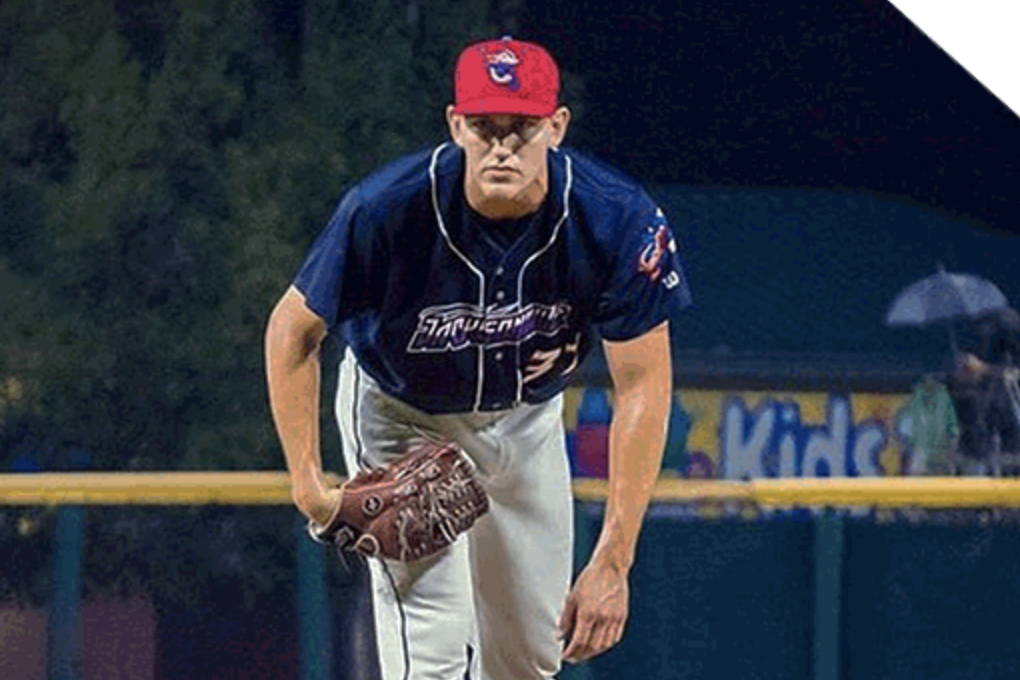 This past week, the United States celebrated National Left Handers’ Day. But for Jacksonville Jumbo Shrimp reliever Dylan Lee, forcing his competition to respect his southpaw arm was so two months ago. For a month and a quarter, if the Jacksonville Jumbo Shrimp had to have a clean inning or two, all they had to do was call upon number 37 who, from June 22 until July 26, turned in 15 straight scoreless innings, 10 of which came in the month of July. Over that span, he allowed just five hits and recorded a 19/0 K/BB. Lee finished the seventh month of the year running that audacious scoreless stretch to 17 IP by tossing two near-spotless in his first game at the AAA level. For taking literally no time to become a purely dominant arm at the AA level and earn the call to the highest level of the minors where his success has continued, Lee, who began the year in A+ Jupiter only to find himself a stone’s throw away from his MLB debut in four months’ time, earns our Prospect Of The Month honors for the month of July. Lee, who just celebrated his 24th birthday on August 1, attended high school at Dinuba High located between Fresno and Visalia in California’s southeastern valley. Lee was a letterman in all three of his varsity seasons by way of an 18-8 record and 1.39 ERA, a .164 BAA and a 230/85 K/BB in 180.2 IP. This included a 69.2 IP, 9-3, 0.40 ERA, .117 BAA, 112/22 K/BB IP in his senior season in 2012 at the end of which Lee was named Dinuba’s Player Of The Year by MaxPreps. Following high school, Lee attended junior college at the College of the Sequoias in nearby Visalia. As a 19-year-old sophomore in 2015, he had one of the best seasons in school history and earned the titles and accolades to match. By winning a school record 13 games (all of which came consecutively before he lost his first and only game) by way of a 2.34 ERA, 1.01 WHIP and 3.00 K/BB in 103.2 IP, Lee was named to the All-California State Team and labeled the Central Valley Conference’s Pitcher Of The year. After his superb sophomore season, Lee was recruited to Division I ball at powerhouse Fresno State. While his first season was very much like his first year in JuCo — an adjustment process — Lee rebounded well in his senior year. Focusing solely on relief work, Lee’s ERA shrunk over two full points (5.31 in 2015 to 3.45 in 2016), his WHIP came down almost half a baserunner (1.54 to 1.19) and his K/BB rose from 1.67 to 2.93. According to Lee, owner of a bulldog mentality, his transition to pitching exclusively out of the pen and in high leverage situations was met with a shot in the arm and led to a rise in his overall compete level. “Coming out of the pen at Fresno State was different for me, but I liked the adrenaline and being called in for late relief during close games,” Lee said. Eventually, the comfort in knowing when and in what type of situation his number was going to be called upon allowed Lee to solidify his game plan and made the former swing man a much more effective pitcher. Lee contributes that sense of consistency, being able to maintain the same ideology from outing to outing and time spent analyzing it to his great July run and believes it will further assist him as he fills out and moves closer to his big league debut. “Mindset is different from starting and in relief. The situations you are in during a game will determine the pitches and locations you should use. I’ve learned your mindset should be the same throughout your outing,” Lee said. “I will continue to work on my mechanics and recognizing what the hitter is trying to do in his at bat so I can continue being effective. The work Lee refers to has lay within his delivery. Still a very deliberate and seemingly effortless tosser at the beginning of the year, Lee has focused on putting more into his delivery without discounting his control. Formerly a guy who would rarely touch above 91, he has between 93-96 and topped out as high as 97 this season. This has created a more advantageous velo mix to his bread-and-butter FB/CH combo and an even further velo distance from his developing curveball. According to Dylan, the rise in fastball velo can be attributed his ability to remain upright, creating a better arc to his release and creating a better downward plane to his stride towards the plate. “I'm definitely not the biggest pitcher in the organization, but I worked on staying tall and staying over my back leg for as long as possible at Fresno State,” Lee said. “I have worked on it during my throwing program, flat grounds, and pens to be consistent during the game.” Most of all though, this current and very spicy brand of Dylan Lee heat has been made possible by each of coaching, the organization and Lee himself removing any sort of leash. A guy who looked like he was tossing BP at times while still hitting 89-92, this new and unlimited version of Lee is a much better suitor for his bulldog mentality and huge compete level. “It felt like I was playing catch out there,” Lee said. “I was getting frustrated that I wasn't letting it go.” This Dylan Lee profile is coming along well 😍 pic.twitter.com/cKDvBjB8Ow — Ely Sussman (@RealEly) August 1, 2018 As much as incorporating his physicality in to his approach and plan of attack on the mound has allowed him to flourish of late, Dylan attributes the bulk of his accomplishments to a gargantuan intangible factor that has stuck with him throughout his pro career: confidence. “My faith has been the biggest thing for me. Staying in the moment and appreciating everything that has put me in this situation, Lee said. “It doesn’t matter what level I am at or who is in the box; the rubber and the plate is going to be the same distance apart and that's how I have and will continue to keep my composure.” On top of his improved heater, Lee still hold on to the pitch that was his calling card as a draftee: his 83-85 mph changeup. Thrown with the exact same arm speed as his fastball, Lee masks the pitch well and has a good feel for the release. The pitch both sinks and fades away late from opposite side hitters, creating tons of weak ground ball outs (see his 0.82 GO/AO rate and sub-.140 BAA vs RHB in A+ and AA this year). Lee‘s aforementioned developmental offering is a slow 76-78 MPH curve. Nothing more than a below average mix-in prior this year, Lee has focused on improving the grip and release points on it in his warmups and has used it much more frequently during in-game action. Accordingly, Lee has put much better spin rates on the ball and a higher 12-6 arc, bringing the pitch out of the dirt and into the lower half of the zone. Formerly a pitch he’d throw maybe two times over the course of an inning, the curve has become a major part of Lee’s repertoire and a pitch he can use in any situation. “I’m throwing it the most I ever have and I’m throwing it to LHH and RHH and both early and late in the count,” Lee said. “But most importantly I’m throwing it with conviction.” A guy who has jumped multiple levels from A+ all the way to the highest level of the minors, managing to adjust to each by maintaining his supreme level of poise and also building up his arm, Lee, a floor pitch-count limiting middle reliever and ceiling late-innings setup man/closer, should get a look in spring training next season. The lefty who is having fun every time he toes the rubber should at the very least be at the very top of the list of bullpen call-ups next season. When his moment comes, Lee, who has been sold short since graduating high school, will allow it to serve as a resounding “I told you so”. And undoubtedly, that will be fun, too. “Mr. Irrelevant. That’s always been me,” Lee said. “But being underestimated pushes me. It’s always fun beating the big name guys.” Adjust your radars, baseball world. Lights out lefty appearing on heading 2019.
 -
View full article
-
 Even for the virtually unknown, there is always Hope. For proof, look to first-year pro and graduate as well as first MLB Draftee of Hope International University, Cameron Baranek. Born February 1995, Cameron Baranek attended Canyon High School in Orange, CA where he earned All-American Honorable Mention honors in his senior year before attending JuCo at Santa Ana. There, Baranek hit .344/.434/.534 over two years. Prior to that, he was recruited to Hope International University, a Private Christian school in nearby Fullerton for their second baseball season. There, for the newly crowned Royals, Baranek enjoyed a standout season, one which put him in both school and district record books and led his team to their first conference title and to the top seed in the conference’s playoff. Baranek placed in the top 10 in nearly every offensive category in his conference, the Golden State Athletic Conference, including BA (.344, 8th) and OBP (.434, 3rd). At season’s end, Baranek was named an NAIA All-American Honorable Mention, the first in program history. While being incredibly proud of what he was able to accomplish and attribute to the attention and concentrated tutelage of his coaches at HIU, Baranek hopes his exports at Hope pave the way for the program to become a baseball powerhouse. “It’s quite an honor being able to represent HIU, and being the first draft pick from the school. The school and coaching staff were so helpful in every aspect to allow me to be the best student athlete I could be,” Baranek said. “Being a smaller Christian school with a focus on quality education and it’s a really awesome place for growth, the coaching staff and baseball program is top notch and to get a good foundation and name in its second year is huge and hopefully will draw more athletes alike with the same goals to win a championship and make it to the next level.” Baranek parlayed his record-setting junior season at HIU into a .234/.306/.351 season in the Gulf Coast League in 2017. While those numbers may not be particularly impressive on paper, when you consider those 111 ABs were Baranek’s first above the Division II collegiate ranks and first with a wood bat, they appear very respectable. In addition, Baranek drove in 22 runs, second most on the team (in just 29 of the team’s 55 games). He also stole the third most bases on the team (6). Regarding how he was able to adjust so quickly to the staunch rise in competition level as well as the change in bat material from metal to wood, Baranek says that despite some growing pains in the midst of his first season, it was all about remaining open to change and, in that spirit, making positive adjustments at the plate. “After being drafted I was coming off a good collegiate year and had some success to start, along with some struggles I had to face about halfway through which was good for me to grow and learn my body and swing and how to mature as a professional player,” Baranek said. “I’ve always loved using wood bats hut they’re definitely not as forgiving as metal, so when you get hits they’re true as can be. Took the good and tried to learn how to make adjustments when things don’t come as easy in the box.” The work Baranek put in last season in the GCL didn’t go unnoticed. This season, the Marlins skipped the 23-year-old past short season ball and straight to his first year in full season A with the Greensboro Grasshoppers. Baranek responded to the promotion by hitting .319/.402/.479 in 28 South Atlantic League games, numbers which each ranked in the top 10 on the circuit at the time. Regarding how he was able to enjoy continued success despite the massive jump from the D-II metal bat collegiate league to full season A ball after just 29 games in the short season rookie ball ranks, Baranek attributes it all to remaining open to changing as his frame did the same maintaining a positive attitude even when things aren’t going his way and in taking pride in his exports. [youtube There are three things that helped Baranek the most in Greensboro and that will continue to serve him as he progresses: his faith, sticking to his roots and remembering a motto that is continuously imparted on him by a close friend and mentor. “No one feels bad for you when you line out over and over so just sticking with a good approach and my trust and faith in God definitely keeps me as level headed and confident as I can be when things are going good or not as well as they could be,” Baranek said. “”It’s a marathon, not a race,” my scout always says. It is a helpful concept when it comes to any short term adversities that may go on during a season.” In response to Baranek’s great start with the Grasshoppers this year, the Marlins gave him another promotion after just 27 games, one game shy of the 28 he spent in the GCL before his first call-up. Through his first 19 games with Jupiter, Baranek’s hot for-average hitting continued as he hit .270, thanks in part to hitting in 10 of 11 games from June 29-July 11. Though he has cooled off a bit of late, Baranek enters each game with the same mindset: remain thankful, stay humble and keep the game fun. “I’m just loving the opportunity and confidence that our organization has shown. I’m going to do everything I can to help a team win, and will fight until the end in every way I can. It’s an honor to play professional baseball and I don’t every want to take it for granted,” Baranek said. “My parents and my faith definitely keep my drive and my heart very innocent playing this game. I have just as much or more fun as I did being a kid playing wiffle ball in the front yard, so for me to be on this stage is awesome and I only hope to keep adjusting swinging hard, and Lord willing continue to climb the ladder and grow as a player and teammate.” Above all, perhaps the best testament to Baranek’s drive and will to succeed is the fact that his body was surgically repaired three times early in his playing career. Despite the setbacks though, Baranek’s attitude to repay the favor to do as much as, if not more, for his body than it has done for him has prevailed and allowed him to make it as a pro. “I’ve always had a passion for fitness and staying in shape. Just like Jeter and so many great players have said about people being more talented, but no one should outwork you I keep that mindset in every facet because if I’m not doing everything I can to take care of my body, I’m not giving myself the best chance on the field,” Baranek said. “Injuries are inevitable at times but the farther I can stay away from that by being healthy and in shape the better. Can’t help a team win in the training room. Having a little extra strength to help a smaller guy like me get a few over the fence isn’t the worst thing either.” Built 5’10”, 195, the lefty hitter makes up for his stout size by exhibiting above average bat speed and good plate coverage via the ability to get extended across the zone. His swing is mostly lateral with slight uppercut action and he stays through it well with great steady balance giving him the potential to find gaps and the occasional fence. Though he has some filling out to do against quality breaking stuff especially from same side pitching, it’s nothing pro coaching can’t rectify. On top of his intriguing offensive prowess, Baranek carries plus defensive abilities, skills that have allowed him to flash a 90 mph+ arm with good carry and lines and great reads off the bat which have allotted him a .966 fielding percentage and 2.48 range factor across all three outfield positions, including in the massive Roger Dean Chevrolet Stadium yard. Chalk Baranek up as a lefty hitting threat that has the floor of a righty mashing platoon option who plays great defense off a MJor League bench. With improvement against same side pitching, he has the ceiling of a top of the order catalytic threat. For now, Baranek, never the one to put more pressure on himself than necessary, says he’s enjoying the process spurred by the support of his family (miles apart or not) and will welcome the role life places him in, wherever that be. “My family is all the way back in Southern California so I missed them a lot but it’s been nice talking to my mom and going over bible studies and keeping in touch with them. Gives me a little taste of home when I’m out here,” Baranek said. “I appreciate my family and coaches always being supportive and helping me along the way. God’s always got me and I’m just going along for the ride and enjoying every step.”
 -
View full article
-
 With the explosion of young talent that has arrived in Miami both via offseason trades and the draft, some new Marlins stars have been born and some have even begun to go supernova. With first halves complete across baseball, here’s a look at which organizational players have shined brightest thus making up our 2018 All-Baby Fish Team, some of which could see time with the big league club during the second half. C Austin Nola (AAA) .282/.358/376, 14 XBH, 24 RBI, 29/17 K/BB, 39% CS% If the surname sounds familiar, that’s because it is. After clearing some massive hurdles recentl, Austin, the younger brother of Phillies’ ace Aaron, is beginning to show the same athletic prowess and similar standout baseball abilities, the kind the Marlins foresaw in him when they selected him in the fifth round of the 2012 MLB Draft. A .296/.387/.425 career hitter over the course of a four year career at LSU, Nola was a 2009 College World Series champion as a freshman and a major catalyst in the team’s 2010 SEC title and their #9 nationwide ranking a year prior. The patient, pesky, contact-first top of the order threat (128/115 K/BB) who also found plenty of gaps (30% XBH%) and the occasional fence (1.45 HR%), Nola, an SEC Tournament MVP, a second-team All-SEC selection, a CAS Regionals MVP and a Wally Pontiff Award winner as top scholar athlete, also manned a more than solid shortstop, most heralded for his huge arm and throw accuracy all across the diamond. Including his posting of a perfect 1.000 fielding percentage in the CWS in his freshman year, Nola posted a career FPCT over .970 during his time in purple and gold. After posting a .968 fielding percentage in his first 5,108 innings as a professional, the Marlins decided to ride that history as well as the reputation Nola built in the collegiate ranks by assigning him to the second-most defensively responsible position on the diamond: catcher. Playing at a spot he hadn’t played since little league (link) Nola responded to the position change by tossing out 27 of his first 38 runners. Through his first 49 games this season, Nola has allowed more SBs than he did in 75 overall games last season (38 vs 41). However, in place of an adjustment process to MLB-caliber runners, Nola has soared on offense, hitting .282/.358/.378/. Among PCL catchers with at least 100 ABs, those marks rank 11th, 8th and 19th. Additionally, Nola’s 0.64 BB/K ranks 7th. Though the 28-year-old might be a bit of a late bloomer in realizing exactly where his future lies, he’s less than a step away of putting it all together and becoming an above average defensive catcher with an at least average offensive bat. Given his background and biological pedigree, we like Nola to make the squad, post-Realmuto or not, as the backup backstop next season after a cup of coffee is served to him this September. 1B John Silviano (A+) .281/.363/.491, 12 HR, 22 XBH, 39 RBI, 61/30 K/BB A local boy makes good. A native of Boynton Beach and graduate of Summit Christian School, Silviano attended Lynn University for a single season in 2016 after being released by the Blue Jays who drafted him in the 13th round in 2012. In that single season, Silviano hit a ridiculous .405/.528/.950 by way of 31 homers, a number which set both conference and team records and made him just the third player in Division II history to hit at least 30 long balls. In addition to his SLG, Silviano’s RBI (76) and total base tallies (190) also set Fighting Knights program records. After hitting a subpar .212/.281/.449 while manning backstop in his first season with the organization, the Marlins gave Silviano the promotion from A to A+ and a positional switch from catcher to DH in order to focus on his offensive game. That season, the switch proved to be productive as Silviano paced the Hammerheads and placed third in the Florida State League in homers with 13. Additionally, his .172 ISO placed fourth in the league’s ranks. However this also came while Silviano had the 15th lowest BB/K in the league at 0.29, giving the Marlins reason to hold Silviano back from a promotion. So far this season, there is very little holding Silviano back from a seemingly destined call upstate to Jacksonville. A .281/.363/.491, 12 HR first half hitter and owner of the league’s fourth best SLG and fifth most homers, Silviano has also tempered his free swing and become an 11.5 BB% presence. Though he is another late arrival due to some early career hindrances based on a lack of confidence by a knee-jerky organization that drafted him and cut him after just 247 plate appearances as an 18-and 19-year-old in rookie ball, the now 24-year-old is very much in the cusp of cracking the upper minors and eventually touching the Majors as at least a lefty power bat off the bench spot with the ceiling to share starts as a righty-mashing platoon option at first base. So far in his career as a Marlins’ affiliated player, Silviano is hitting .277 with 29 homers against opposite side hurlers. This year, his slash line vs righties reads .305/.379/.584. 2B Eric Campbell .321/.436/.455, 24 XBH, 57 RBI, 54/53 K/BB A New York Mets’ 2008 8th round pick after a .306/.391/.448 career at Boston College, Campbell rose through the Mets’ Minor League ranks, the standout seasons being a .306/.369/.467 year between A+ and AA in 2010 and a .314/.435/.475 AAA season in 2014 before he made it to the majors for the first time that same season. In his first 85 MLB games, Campbell hit a respectable .263/.322/.358. A season later, Campbell made the Mets squad out of spring training only to manage a meager .197/.312/.295 line over 71 games before being sent back to AAA. Prior to hitting .363/.493/.593 for the rest of that season, Campbell earned a second straight Opening Day roster spot for the Mets in 2016 only to hit .173/.287/.227 in 40 games that year. Campbell spent most of that season hitting .301/.390/.447 in AAA After spending a season abroad in Japan, Campbell returns to the MLB ranks hoping to shake the audacious title of AAAA fodder. So far this season, he appears to be a step closer to accomplishing that feat. He has done so by making himself nearly impossible to not promote via exceptional offensive output. A Triple A All-Star starter, Campbell hit .326/.429/.468 in the first half, marks which ranked 9th, 6th and 31st in the PCL. Campbell’s current .891 OPS ranks 13th. With MLB experience and good positional flexibility and eligibility at first, second, third and in left field, it’s easy to believe the Marlins will give Campbell another chance in the majors ahead of calling up their young prospects who they have no reason to rush. Look for Campbell to pull on a Marlins jersey very shortly after the trade deadline. 3B Cristhian Adames .264/.315/.366, 20 XBH, 38 RBI A Marlins’ free agent depth signing at the beginning of the year, Adames impressed this spring in extended action, hitting .333/.381/.513 with five doubles, a triple and an RBI before being assigned to AAA in favor of Yadiel Rivera, the final spot on the bench, to begin the season. While Rivera has gotten a much longer leash than originally thought and used it to hit a very unappealing .198/.317/.248 while playing -1 DRS overall defense (though he has been rather good at shortstop, posting a +3 mark in that respect), Adames is hitting .262/.315/.366 with 20 XBHs, 34 RBI and a 46/24 K/BB along with a .970+ FPCT across three different infield positions. While it’s taken this long for Adames to get another shot in the pros, it may not take him much longer. Look for Adames to get a look as a switch-hitting bench option sometime early in the second half. [youtube https://www.youtube.com/watch?v=R1XzQJuWwQo] SS Jose Devers .272/.308/.339, 16 XBH, 21 RBI Despite being the youngest guy to crack these rankings as well as the youngest member of the Greensboro Grasshoppers after he skipped rookie ball, Jose Devers has been one of the best and brightest stories to grace the system this season. Another organizational player with a preceding pro pedigree in being the brother of Red Sox’ standout Rafael Devers, the Marlins acquired the Jose Devers of the Dominican in the Giancarlo Stanton trade with the Yankees. A native of Somana, DR, Jose hit .245/.336/.342 in his age 16-17-year-old seasons that marked the beginning of his pro career. In his inaugural season with the Marlins’ organization, though he has shown that he still has room for growth in terms of strike zone knowledge by recording a 3.28 K/BB, Devers has already begun to exhibit his lauded raw elite bat speed by hitting to a .272 BA. He’s also enjoyed good success on the base paths where he is 11/16 in stolen base attempts. A kid who has been on base in 26 of his last 29 games while also exhibiting a .973 fielding percentage via the same great speed that allows him on-base success, a fantastic first read to the ball off the bat and a flashy glove, Devers is the dark-horse candidate to become the best piece of the return for Giancarlo Stanton. While the Marlins will undoubtedly take it easy with the kid’s progression up the ranks, we expect his name to be a mainstay among the top prospect ranks as a for-average shortstop with above average defense for the foreseeable future. LF Cameron Baranek .278/.341/.390, 5 HR, 11 XBH, 22 RBI In enjoying his fantastic first half this season, second year Marlin Cameron Baranek is not only making a name for himself, he’s gaining his alma matter some deserved recognition. Miami’s ninth round selection last year, Baranek is the first ever MLB draftee from Hope International College in central California. However, that’s far from the first “first” Baranek recorded for the brand new Hope International baseball program. The transfer from nearby Santa Ana college earned his Draft honor by setting multiple club records in his single season with HIU in its sophomore season including BA (.364), homers (14) and steals (20), flashing a five-tool skillset. In so doing, Cameron led the school to 35 wins and its first Conference title. After the season, Baranek was named the the Royals’ first NIAA All-American. Despite playing just one season for the Royals, Baranek will forever remain a pioneering member of the HIU baseball family. What had been potentially most impressive about what Baranek was able to accomplish in his amateur days was the fact that he was able to succeed and realize his dream of becoming a pro despite not only coming from a very young and virtually unknown pedigree but that he was able to overcome a laundry list’s worth of injuries sustained since he began high school. Since the age of 17, Baranek underwent surgery to repair three different parts of his body. Still, he was able to stand tall (albeit on a surgically repaired knee and ankle) on June 14, 2017, as a professional baseball player. It’s hard to believe Baranek’s grind, drive and incredible ability to stay positive was lost on the Marlins. That same mindset has remained in Baranek this far in his young career as a professional. Prior to being drafted, Baranek broke into the professional ranks by hitting .234/.306/.351 with 9 XBH and his team’s second best RBI total (22) for the GCL Marlins last season, the 22-year-old impressed in camp and earned his initial call to full season ball to begin 2018. This year, Baranek became one of the best hitters in the South Atlantic League, hitting .420/.453/.580 in June. Among hitters with at least 90 ABs, Baranek’s .319 overall BA ranks 9th, his .400 OBP ranks 4th and his .479 SLG ranks 16th. His wrC+ of 150 ranks 7th. On June 20, Baranek received his call-up to A+ Jupiter and built on a 21-game on base streak by reaching in his first four games, turning it into a 25-game on base streak. He had a 30/81 with 11 walks. Over that span, Baranek had a .445 OBP. A lefty hitter with a bit of surprising pop behind his 5’10”, 197 pound frame and quick bat speed propelled by a flashy cut with uppercut action and a strong raw throwing arm that stands to get better with improved accuracy, Baranek is a 20+ 9th round boom-or-bust draftee that should be fast-tracked through the minors. If his career thus far is any indication, he should end up on the right side of that equation as at least a fourth outfielder and/or lefty threat off the bench with the potential for more. Chalk Baranek up to reach a ceiling of that of Nick Markakis with a more moderately adjusted expectation around Raul Ibanez, a career .801 OPS. CF Brian Miller .320/.359/.398, 22 XBH, 27/35 SB/CS, 42/20 K/BB Like you didn’t know this was coming. Fish On The Farm’s 2017 Minor League Player Of The year last season after hitting .322/.384/.416 in his first 57 pro games with Greensboro (he skipped through the GCL and short season), Miller began 2018 in A+ Jupiter. There, Miller continued to flaunt his for-average, gap thirsty swing and above-average speed, hitting .324 with 13 doubles and 19 steals in 25 attempts before getting the call to AA Jacksonville. In his first 21 games for the Shrimp, Miller has answered the promotion to AA by hitting .321/.358/.417 in 21 games, reaching base in each of them and hitting in all but one of them. In other words, Miller has taken the toughest jump in the minors to take by adjusting immediately and continuing to be one of the most productive prospects in the organization despite his career being just 140 games old. On top of good strike zone knowledge and vision, Miller’s calling card is his extremely quick bat speed that he uses to reach all parts of the plate and go to all fields. From there, Miller puts arguably the best of his four tools to work for him, his speed, to create runs. In 97 trips on base for the Hammerheads this year, Miller swiped 19 bags in 25 attempts. Trouble catching Miller has proven to be just as difficult for upper minors catchers as he has stolen seven in his first nine tries. Overall this season, Miller has an audacious 78% SB success rate (21/27). Miller’s speed serves him just as well in the field where he owns a 2.00 range factor and .988 fielding percentage this season. Though he projects most advantageously as a center fielder Miller’s jets and good reads off the bat provide him with positional flexibility anywhere in the outfield. A top of the order for-average on base threat who has hit at each of the three levels he’s played at in an extremely young Minor League career but one in which he has disallowed the Marlins from taking a watchful eye off of him as well as disallowing the organization from holding him back to repeat any level, we are penciling Miller in as a potential September call-up and as a shoe-in to get a long, extended look next year in Spring Training. With only one spot in next year’s Marlins’ outfield currently occupied (Lewis Brinson), Miller is the rest of the season doing exactly what he’s done his entire minor league career and a strong spring showing away from potentially appearing in an MLB Opening Day lineup. To do what Brian has done in such a short amount of time on the pro circuit can only be described in one word: wow. RF Austin Dean .326/.392/.472, 8 HR, 25 XBH, 49 RBI, 44/28 K/BB From the lowest of lows to the highest of highs. Not far from this time last season, long time Marlins farm hand drafted in 2012 Austin Dean began his way back from a knee injury suffered seven games in to the 2017 season when he collided with a teammate in the outfield. After a .283/.325/.415 second half that year, a 100% healthy Dean returned to Jacksonville this season and in his third season’s worth of work for Jacksonville, proceeded to make Southern League history. By hitting .420/.466/.654 in the first month of the season, Dean held the best overall batting line in the month of April since at least the year 2005. Following that showing in which Dean hit in 17/22 games and at one point had a 10 game hit streak, he was promoted to AAA New Orleans. The call-up came just over one month shy of the anniversary of Dean’s return from the most serious injury of his career which occurred in the same outfield he commanded this season. Talk about coming back with a vengeance. What is more is that Dean’s success this year hasn’t been exclusive to the AA ranks. Instead, he is exhibiting the same well balanced and timed shortened line drive swing, the same knowledge of the strike zone and the same improved bat speed and plate coverage via the same better extension across the dish to become one of the better for-average and on-base threats at the highest level of Minor League Ball. Through 64 games, his .299 BA ranks 20th and his .373 BA ranks 23rd in the Pacific Coast League. While it may have taken him six years, almost a year and a half total of which was spent on the shelf with various ailments, it looks as though Dean has finally realized the potential the Marlins saw in him when they drafted him out of a Texas high school in 2012. A .294/.367/.409 hitter against the best of what MiLB has to offer this year, Dean is a shoe-in for a September (if not earlier) call and a lead candidate to win a roster spot next season. [youtube https://www.youtube.com/watch?v=paP-a0gTG0M] SP Nick Neidert 105.1 IP, 2.91 ERA, 1.14 WHIP, 110/23 K/BB, .248 BAA Nick Neidert was the main return piece in the trade with Seattle for Dee Gordon. In his first 17 games as an organizational Marlin, the 21-year-old has proven why he was such a sought after commodity. Neidert, a second round pick by the Mariners out of Suwannee High in Georgia, impressed in his first two seasons as a pro, holding down a 2.50 ERA by way of a sub-1 WHIP and 5.15 K/BB before being promoted to AA late last year. comes back to his home coast. After getting a taste of the competition in the upper minors, Neidert has begun to dominate it this season, proving his success wasn’t exclusive to A ball. In 17 games, the-22-year has held down a 2.91 ERA and a 1.14 WHIP, marks which rank 3rd and 5th in the Southern League. Neidert’s deception starts in his slow and deliberate delivery which he then speeds up at his moment of propulsion off his back foot. The sudden change in motion and acceleration makes Neidert one of the most difficult pitchers in the system to time and leads to a multitude of swings and misses and at the very least, off-balance contact when he’s hitting spots. His stuff consists of a low-mid-90s fastball with sink as well as arm-side run, a shapely changeup with good running fade and a 12-6 curve with sharp downward action. He commands all three pitches extremely well down in the zone and can spot on both corners. Already the owner of a more than solid three pitch repertoire and great command via repeatable mechanics that deceive, Neidert stands to get a September call, fill out even more with pro coaching and be a mainstay among the top three in the Marlins’ rotation in 2019 and beyond.
 -
View full article
-
 Baseball in Batavia has lasted the test of time. It has remained through a World War and the Vietnam war as well as three other major United States affiliated conflicts. It has stood strong through two stock market crashes and the Great Depression. It has marked the times through 20 different US presidents. And although the team has lost a lot in recent years including its latest ownership group as well as the better condition of its stadium and playing field, Minor League Baseball, who will manage the team this season, refuses to let that history die. This year in the Batavia Muckdogs’ 79th season, they will welcome an impressive young crop of first and second year pro talent including Demetrius Sims, Sean Reynolds, Michael Donadio, Jeral Encarnacion, Sean Reynolds and Alberto Guerrero. Returning as the Muckdogs head coach is second year manager Mike Jacobs. Yes, that Mike Jacobs. The same one that hit .258/.314/.483 with 69 homers from 2006-2008 with Miami. His 32 homer season in ‘08 ranks among the top ten in franchise history (9th). His .483 SLG as a Marlin ranks eighth 8th all time in team history. Fresh off his participation in the Marlins’ 25th Anniversary festivities, Jacobs heads back up north to assist in building the next quarter decade of Miami talent. That talent includes fellow first baseman Sean Reynolds who says due to his .253/.313/473 seven-year pro career, his 13-year .279/.353/.486 Minor League career and his five seasons spent in the Mexican leagues that allowed him to see a different type of discipline and playing style along with the fact that Jacobs isn’t very far removed from sitting on the other side of the bench makes him a perfect mentor and leader for players at such an early level of development. “Mike is still a player in a lot of ways, even though he’s not out on the field with us during the games, he still thinks the game and is very easily able to stay in touch with what we are thinking as players. He likes to keep a loose clubhouse and let guys learn on their own, for the most part, how to conduct themselves in a professional way. He’s always very open if anyone has anything they want to talk about, and he’s always willing to help anybody get better who wants to put in the time and effort. Overall, having him as my manager for my first two years has been really great for me, and I think a lot of the other guys who have played for him would say the same thing.” Rounding out Jacobs’ staff is hitting coach Jesus Merchan, pitching coach Jason Erickson and defensive coach Ronnie Richardson. Merchan is a former infielder who spent time with the Twins, Blue Jays and Marlins organizations before ending his North American playing career with the Padres organization in 2013. He played five games in the Venezuelan Winter League in 2014 before hitting .270/.345/.345 in a single Indy ball season. Prior to that, Merchan hung ‘em up. This will be Merchan’s first season as a member of a coaching staff. A for-average bat who once hit over .330 in AAA and held down a .296/.349/.386 career Minor League slash line despite never getting an MLB call, Merchan is a guy with knowledge of success at every minor league level and akin to life in them. That coupled with his mechanically sound offensive background makes him a welcome contributor to the Muckdogs’ young offense. Returning as pitching coach is Jason Erickson. Erickson was drafted by the Padres in 2009 out of the University Of Washington. He had a 3.94 ERA, 1.25 WHIP, 3.65 K/BB stat line in 254 Minor League innings before retiring in 2011. According to RJ Peace who played under Erickson’s tutelage last season, Erickson is an extremely attentive coach who spends time one-on-one with his staff regarding their development. “He sits down with me and watch video after every time I pitch to talk about what i can improve on and what I did well,” Peace said. “He’s a coach that really cares and tries to get his players better every day. He’s a high energy coach that brings it day in and day out no matter what, always trying to get his players better.” Richardson, a Florida native and UCF graduate, played 1,514.2 innings in MiLB and independent ball outfields posting a .980 fielding percentage and 1.96 range factor. He also contributed 15 outfield assists while committing just 11 errors. He also held down an MiLB BA over .260 and OBP over .400 during three seasons between A and A+. Projected Lineup SS Demetrius Sims CF Ricardo Cespedes RF Jerar Encarnacion 1B Sean Reynolds 2B Michael Donadio LF Albert Guaiarmo 3B Denis Karas C JD Osborne DH Matt Brooks SS Demetrius Sims 2017 - Rk-A: .242/.349/.273, 31/15 K/BB Sims is a 6’2”, 200 pound righty hitter out of Bethune Cookman in Daytona Beach where he hit .299/.375/.390 over a three-year collegiate career. Sims takes great pride in his time spent at the mostly-black college and is looking forward to making an impact on the game as a Bethune-Cookman alum and in doing so, putting the school which prides itself on its African-American heritage more significantly on the athletic landscape. “You know, a lot of guys get over looked because they attend an HBCU. Being one of those guys, I’ve always had to play with a chip on my shoulder knowing that I have to make the best out of every single opportunity I get because you only get so many,” Sims said. “Just being able to represent Bethune Cookman University in pro ball is an honor in itself. There’s not too many African American baseball players so I’m glad I can be a sense of hope or determination to other young African American players all around.” After tearing a labrum during his initial junior campaign, Sims his red-shirted in 2017. That season, he placed third in the Mid-Eastern Athletic Conference in hits with 72 and led the conference in runs scored 52, triples with 7 and total bases with 96. Sims says his red-shirt junior season was made possible by his time spent sidelined. According to Sims, he views the usually negative experience of extended time on the shelf as a positive because it aided in his development as a player, making him view baseball in a completely different regard and teaching him how to respect it. “I tore the labrum in my left shoulder during summer ball that sidelined me for awhile,” Sims said. “During the recovery process, it really allowed me to see the game from a different perspective. It helped me appreciate the game a lot more and I was able to grow mentally.” Playing just under three hours south of his collegiate coaches last season allowed Sims to stay in close contact with them which attributed to a fantastic rookie pro season for Sims who hit .290/.417/.304 for the GCL Marlins. According to Sims, he holds his relationship as a Bethune-Cookman alum in high regard and says it was a major catalyst in his initial success as a Marlin. “The coaches/staff/faculty are always so welcoming to the guys who want to come back and get their work in,” Sims said. “I’m so glad to be apart of the Wildcat family.” Sims returns to Batavia this year after hitting .186/.262/.237 in 17 games as a Muckdog last year. While those stats may not look impressive from the outset, Sims enters 2017 with a blueprint for improvement. “Just slowing the game down. Controlling the things that I can control and not trying to do too much.” A .323 hitter with a .412 OBP in his collegiate career, Sims, the younger brother of pro football standout Dion Sims, is a still growing 6’2”, 200 pound 20-year-old heralded for his blazing bat speed and even better foot speed proven by his seven doubles and triples and 72% success rate while stealing 13 bags in his final season and 49% success rate in his final two at HBCU. Rounding out his skill set with astonishing range and a flashy glove in the infield, Sims, although raw, has the makeup of a top of the order catalyst with improving plate presence that can handle multiple infield positions but at 22, he will need to take some big strides to reach that ceiling. Still, Sims has the type of big league talent to earn him a roster spot as a utility infielder and for-average bat off the bench. [youtube https://www.youtube.com/watch?v=EaVfyHRMQAc] RF Jerar Encarnacion 2017 - GCL: .266/.323/.448, 5 HR, 15 XBH, 26 RBI, 51/10 K/BB Yeral “Jerar” Encarnacion is a Marlins’ international signee from 2016 out of the Dominican Republic. Already 6’4”, 219 and still building muscle mass, the impressive physical specimen cut his teeth in the Dominican Summer League in his signing season before breaking out last season in the GCL where he hit 266/.328/.446 with five homers, seven doubles and three triples in 42 games. His SLG ranked 12th in the league, his .182 ISO ranked eight and his .771 OPS was good for 23rd best in the GCL. All of this occurred in his first season of stateside ball. So far this year, all Jerar has accomplished in 11 games is to post league-leading stats in all four slash categories: BA (.479), OBP (.500), SLG (.646) and OPS (1.146) by recording multihit efforts in nine of those appearances. A guy who has advantageously grown with his body and who is nurturing an elite level power tool, Encarnacion is THE guy to watch in Batavia this year. 1B Sean Reynolds 2017 - Rk-A: .198/.269/.350, 5 HR, 24 RBI, 85/18 K/BB Reynolds spent most of his time in high school playing ball for the Redondo Union Seahawks in central California. But his dreams of becoming a professional baseball player began way before that. “When he was a six years old, I literally had to beg him to come inside from playing catch with his friends,” Sean’s mother explained to us during Minor League camp this season. “Since then, somehow I always knew this is what he wanted to do.” Sean confirms his mother’s suspicions. “To be honest I always looked at playing professional baseball as the best job in the world my whole life leading up to actually being drafted, so I would say I guess I always knew I wanted to do this.” A right handed thrower, Reynolds rode his size and power arm to 11 wins with a 1.08 ERA in his senior year of high school. As impressive as that output was, the Marlins opted to sign him based on the output of his nine homers, 34 RBI and .366 BA as a lefty hitter at the plate. “Yeah, they like me more as a hitter,” Reynolds said at the time. “I’ll play right field or wherever they need me. I like to hit, so it’s something I’m ready to do.” Reynolds joined the Marlins as just the 40th overall player to be drafted out of the central California institution. Of the previous 39, only one has cracked the major leagues (pitcher Scott Davison). Should Reynolds realize his dream, he will be the first positional player in school history to do so. No matter what, Reynolds, who won two regional titles, has been a major catalyst in starting to put the RUHS baseball program on the map, turning a small-town local school into the beginnings of an athletic destination. “Coming into Redondo my freshman year, you could that the program was looked at as just another Southern California school with a baseball team. I definitely left that place better than I found it, and I can already see how the results and impact that winning two championships my junior and senior year is making,” Reynolds said. “Kids from surrounding areas want to come and play for Redondo by choice, even if it’s not their closest school.” In pursuing his dream as a professional, Reynolds hopes to continue to do his alma matter proud and to continue to contribute to the future of it’s program. “All I want is to continue having a positive influence on the school and the players that come after me,” Reynolds said. Just five days after being selected by the Marlins, Reynolds made his pro debut in the Gulf Coast League. In that game, Reynolds went 2-5. Overall, Reynolds’ rookie season and much of his sophomore season in Batavia were very much a learning experience as he shifted his focus toward being a full-time offensive player at the pro level with a wood bat but his versatility and ability to positively adjust began to show through at the end of last year when he recorded hits in 10 of his last 19 games. Over that span, Reynolds hit () with four homers. After an impressive camp, Reynolds has returned to Batavia breathing fire. On the young season so far this year, he is one of the best hitters in the New York Penn League, slashing .242/.360/.452 with an .812 OPS, 27th on the circuit. The biggest catalyst for Reynolds has been and will continue to be balancing his load, getting his lower half more involved in his approach and executing better swing paths making him more of a heady hitter and less of a guy who goes for the fences every pitch. While he is still a bit of a question mark at this point, with youth on his side as well as the likelihood to add more muscle to his power-first offensive skillset, Reynolds has a great opportunity to reach MLB slugger status by 2020. Place Reynolds’ potential ceiling somewhere around Lucas Duda, a career .242/.338/.453 hitter. 2B Michael Donadio 2017 - GCL: .278/.407/.392, 8 XBH, 13 RBI, 23/16 K/BB Like his teammate Demetrius Sims, Donadio is another guy who comes from a bloodline rooted in athletic stardom. While his twin brother Mark was a .290/.370/.374 career hitter Fordham University, his father Jos was a football standout at quarterback 20 years earlier. According to Michael, he inherits his raw athletic skill from his father and the backing he gets from the rest of the Donadio clan. “I believe I get my talent from my dad being a prestigious athlete,” Donadio said. “My family has always been very supportive through the ups and downs of my career.” Mike hit .323/.433/.463 in a four year career with the St. John’s Red Storm. All the while, Donadio was able to maintain great academic standing and graduate with honors from the prestigious university. According to Michael, his time spent at St John’s didn’t only make him a better ballplayer but it made him a more valuable human being, all around. “Balancing school and work and playing baseball was tough at times. It forced me to develop time management skills, be be resilient and stay focused at all times,” Donadio said. “Fortunately I graduated with a degree in business management. If I wasn’t playing baseball I’d be pursuing a career in the financial industry or as a sales rep, perhaps in the medical or technology business. The lessons I learned at St. John’s carry over into my baseball career.” Last season, the Marlins selected Donadio in the 30th round of the draft. As fate would have it and as Michael recalls, he was actually with his brother Mark when the pair of twins found out Michael’s name was being called by Miami. “I was in the car with Mark when I got the call and my phone was ringing off the hook from family and friends congratulating me,” Michael said. “It was a great moment for me and my family.” Following his selection, Michael got off to a .282/.407/.392 start to his pro career with the GCL Marlins. By way of his 13.6% walk rate, Donadio’s OBP ranked 15th in the Gulf Coast League. So far this year with the Muckdogs, Donadio is showing a similar for-average pace, hitting .282. A dynamic fielder with eligibility at three infield spots as well as two outfield spots, Donadio, who had a standout camp showing both well-timed swings and good range, enters 2018 for the first time with his focus solely on improving his athletic abilities. Should he reach his ceiling, the 23-year-old stands out as a flexible defender with a solid line drive swing and for-average capabilities with the growing potential for above average power. Given his pedigree and drive, Donadio is plenty worth keeping an eye on as an under-the-radar prospect on the rise. Pitching Rotation Alberto GuerreroRJ PeaceDakota BennettHumberto MejiaChris ValiamontSP Alberto Guerrero 2017 - Rk-A: 48.2 IP, 2.59 ERA, 1.192 WHIP. 39/18 K/BB Guerrero is a Marlins 2015 international signee out of the nation of Panama. In his first pro season at the ripe age of 17, Guerrero participated in both the GCL and Dominican Summer League, holding down an impressive combined 3.70 ERA in 41.1 IP with a 1.234 WHIP and 33/17 K/BB. Guerrero spent all of 2016 in the GCL where he managed a lowly 2.63 ERA as an 18-year-old. His accompanying stats were a 1.22 WHIP and 1.78 K/BB. Last year, Guerrero threw 40 more innings of 3.10 ERA, 1.05 WHIP ball in the GCL before getting a cup of coffee in Batavia. Though that tryout in upstate New York didn’t go as planned (7 ER in 8 IP), Guerrero, who is still a year and a half younger than his average competition, has already started to reap his revenge on NYPL hitters this season. In his first three starts, Guerrero has held down a 2.81 ERA and 1.18 WHIP with a 14/7 K/BB. A zone pounding righty who will frequently touch 95 and can also pitch off an above average high 80s change, Guerrero, who has gone through some trials and tribulations in his young career, is a consistent release point away (on his high 80s power slide piece) away from completing a solid three pitch repertoire at age 20 with plenty of time to develop another offspeed pitch at the full season level. There’s also the probability for even more velo as he fills out. Guerrero should be given a good amount of credence and attention this season as he starts back in Batavia but should be a pretty quick mover up to Greensboro. Projected Stats 36-38 .237/.322/.401, 39 HR, 172 XBH, 4.2 R/G 652 IP, 4.07 ERA, 1.260 WHIP, 712/201 K/BB
 -
View full article
-
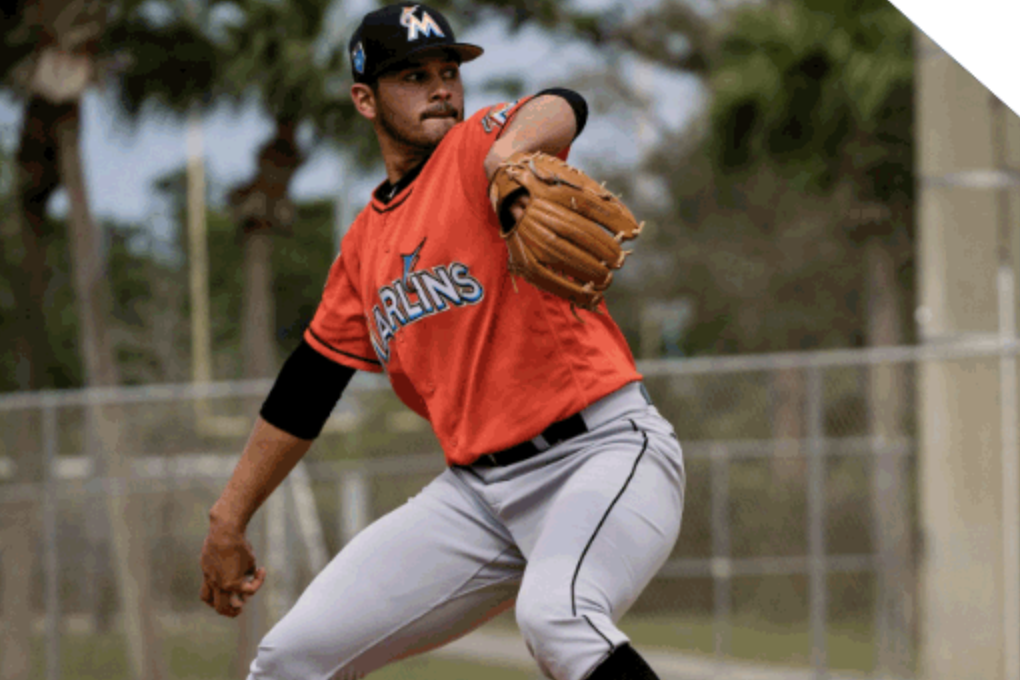 Although the Marlins may be on the wrong side of the win-loss column now and for the rest of the season in in-game action this year, they are very much so on the right side of that equation when it comes to offseason moves and regarding the culture they are hoping to build in the future. One of the biggest figures that speaks to that success is right handed pitcher Pablo Lopez who after an impressive spring training with the big league club, has had an absolutely unprecedented start to his 2018 campaign at the AA level. For his most recent success this past 30 days with the Shrimp, Lopez earns our Prospect Of The Month honors for the month of May. Lopez is a 6’3”, 200 pound righty who hails out of Cabimas, Venezuela. He’s just the fourth player in history to come from the city on the shoreline of Lake Zulia on the northwestern edge of the country. However, as Pablo explains, his hometown region is rich in baseball tradition which created a great support system during his tenure there. Mileage aside, that support has followed Lopez into his career as an American ballplayer. “Baseball is very popular in Venezuela and especially where I’m from, so it was always really fun and exciting. I got to represent my state three times for national tournaments. Games would be very exciting and the stadiums would be packed with families of the players supporting and yelling all game long, which was really cool for when you’re 10-12 years old,” Lopez said. “I played with a lot of great players and friends of mine. It’s really special to have such great support from everyone back home. They’ve supported me through everything since the beginning of my career and my entire life and I’m forever grateful for that.“ Of the countless many that have supported Lopez throughout his baseball career through, he says one individual stands head and shoulders above the rest. “My dad," Lopez said. "He’s been my mentor, coach, doctor and everything I could have asked for.” As paramount as his relationship with his family was, Lopez found himself at a crossroads after he was drafted in 2012. After competing in his native country’s affiliated Ball summer league that year, the Mariners pegged him for his North American pro debut the following season. Suddenly on his own still in his teenage years away from the confines of everything he’d ever know and still even somewhat of a stranger to his new nation’s native language, Lopez admits it was a bit of a nervous experience. But with the help of some friendly squadmates as well as some advantageous surroundings, Lopez says he was able to adapt fairly quickly. “I signed as a 16-year-old and spent my first season back home in the Venezuelan Summer League during 2013. After the season was over, I came to the United States for the first time to participate in the Instructional League when I was 17 years old. It was a completely different experience, not just because of the language barrier (I was lucky enough to know some English back then), but getting acclimated to the culture would take longer! I created great friendships right away with the teammates I was able to meet. They were always willing to help me and the other young players,” Lopez said. “At times it was really hard though, I would get back from the baseball complex to the hotel where I was staying at and I would just hang out in my room not knowing what else to do or where to go! Luckily the hotel was near Bell Road, which had a lot of American restaurants so I was able to eat tons of American food and it was a way to get to know the different culture.” Despite the mileage, home remained close to Lopez. He was always in regular contact with his family including his father whom Lopez mentioned earlier was able to help him in a medical capacity. That is because Lopez’s dad (as well as Lopez’s mother before her untimely death when Pablo was still just a child) was a medical internist. Pablo’s father’s expertise was beneficial to him when he was forced to miss the entire 2014 season after undergoing Tommy John surgery. Lopez says his dad was quintessential during that process and in giving him the advice needed to get back into playing condition. “I injured my elbow in instructional league in 2013 and went through some rehab. After that I was throwing a bullpen and that’s when I injured it again and found out I was going to need Tommy John surgery to repair my UCL. My dad came all the way from Venezuela to Seattle to be with me the day of the surgery. He explained to me the medical process, how the surgery worked, what my body was going to go through and what to look forward to in the future and in the rehabilitation. It was going to be a long process, both mentally and physically." According to Lopez, even though he wasn’t able to physically throw a baseball for an entire season, the thought of doing so and strategizing on how to do so in a better capacity never left his mind. In fact, those thoughts filled his mind every day, allowed him to maintain his focus, turn a bad experience into a positive one and ultimately come back stronger than ever, maintaining his effectiveness while staying within the limits of his physical capacity. “Having the game taken away from you is not fun. You kind of just become a spectator. But I realized there were so many ways for me to keep learning, not just about the game but also about my body. So I spent the following year of rehab getting to know my body to its fullest, learning what’s best for me, how to take care of my body and I also explored the mental aspect of the game,” Lopez said. “I would watch all the games from the stands paying close attention to details, I visualized myself in certain game situations and pictured how I would handle it. I kept trying to learn about pitching and baseball, even though I was not able to play at the time.” Finally in 2015, Lopez toed the rubber on a state side field for the first time. Immediately, Lopez showed the same effectiveness that allotted him to hold down a 2.56 ERA and 37/11 in his first 66.2 IP in the VSL back home. Over his first 37.1 IP in the US, Lopez tossed to the tune of a 3.13 ERA in 37.1 IP via a 28/6 K/BB and 1.15 WHIP in rookie ball competition for the Arizona League Mariners. A year later, Lopez got his first call to full season ball with the Clinton Lumberkings and at the same time transitioned back to the starting rotation. In 17 appearances (13 GS), Lopez managed a 2.13 ERA by way of a 0.91 WHIP and 56/9 K/BB. Amongst hurlers with at least 80 IP, Lopez’s WHIP was the best in the league, his ERA was third best and his 6.22 K/BB was second best. In 2017, Lopez made the jump to A+ Modesto Nuts of the California League. In one of the most hitter friendly leagues in all of Minor League Baseball, Lopez’s ERA ballooned to 5.04 due to a massive .341 BABIP. However, his FIP stood at just 3.36. Still this did not stop the Mariners from flipping Lopez to the Marlins as what was thought to be an add on piece to a trade involving centerpiece Brayan Hernandez and fellow organizational hurlers Brandon Miller and Lukas Schiraldi. For the rest of 2017, Lopez showed his true potential holding down a 2.18 ERA and 32/7 K/BB in 45.1 IP for the Jupiter Hammerheads. Lopez says his jump in production can be attributed to his work done in the offseason concentrating on better releases and more advantageous pitch spotting. So far this season in his call-up to the AA Jacksonville Jumbo Shrimp has done more than not skip a beat — he has taken a massive step forward. It is an impression that began in spring training when Lopez tossed 4.1 scoreless IP in 3 appearances which put him in the conversation to make the Opening Day roster out of camp. Although a freak minor injury Lopez suffered on a line drive come-backer late in the spring campaign ruined that prospect and afforded him to be assigned to AA Jacksonville, Lopez, after making a slightly abbreviated season debut on April 21, was one of the best pitchers in all of Minor League Baseball in the month of May. In 34.2 May innings, Lopez limited his Southern League opposition to just three total runs for a 0.78 ERA via a 0.92 WHIP and .195 BAA. While his BAA and WHIP each placed second in the Southern League, his ERA marked the lowest monthly ERA since August 2017 when Freddy Peralta of Biloxi had a 0.40 in nearly half as many IP (22.1). It is the best May ERA for a Southern Leaguer since Blake Snell held down a 0.72 ERA in the month in the year 2015. What’s more is that Lopez was maintaining a 0.24 ERA until a 6 IP, 2 ER quality start caused his ERA to “balloon” to what it concluded at for the month. For his success to begin the season and his Marlins tenure this past month, Lopez credits the ideology and strategic way of approaching at bats that the Marlins’ organization maintains throughout the system. He also credits his coaches and teammates who have created a positive environment for him to compete in. “The Miami Marlins as an organization have created the philosophy of attacking the strike zone, commanding the fastball, pitching to your strengths, and know who you’re facing. That’s been working really well and not just for me but for all of our pitching staff, they all see confident on the mound and it’s really fun to watch them. We also do a lot of studying and we help each other out as pitchers, we are constantly talking and we learn from each other with each game that passes,” Lopez said. “We have a great team with great chemistry and outstanding defense, knowing that you have them behind you making great plays for you gives us great confidence. The catchers have been amazing as well, they work so hard and they’re always helping us to get better.” Lopez’s calling card is a mid-80’s changeup that he spots at will with great depth and late fading action. He both pitches off of it and pitches into it off of a low 90’s sinker which he commands well in the lower half (proven by his 42% ground ball rate and 95% LOB%) and a mix-in curveball. Above all, by his own admission, Lopez is a weak contact artist who works through hitters quickly en route to making it deep into starts. Although the strikeout numbers have begun to pile up this year due to Lopez’s impeccable control (51/8 K/BB in AA), Lopez says he is remaining focused on sticking to his roots as a to-contact pitcher. “I’ve always known I’m not a power pitcher with power stuff so being able to throw strikes has been my main focus since the beginning of my career. It has been very important to try and improve it because hitters just keep getting better and better as you move up through the minor leagues, they have better pitch recognition, control of the zone, they put better swings, and they make pitchers pay for their mistakes in the strike zone,” Lopez said. “I try to implement game like situations in my bullpens that allow me to work on controlling the strike zone with my pitches, simulating counts, runners on base, and sequencing.” That said, although Lopez knows himself and his craft well has his mind set on limiting pitches per AB and contact allowed, he isn’t ruling out a bump in velo as he finishes out his tenure in the minors and begins his MLB career. “I’m most concerned with throwing strikes, I try to limit free bases as much as I can. As a starter, I have to learn to administrate my energy throughout the baseball game, so I can’t throw as hard as I can with every single pitch,” Lopez said. “There are certain moments or situations where I will put more effort behind it, but then I go back to trying to locate and execute better instead of throwing hard. Right now I’m working and learning on how to use my whole body when I’m pitching and not just relying on my arm to create power. So maybe as I improve at that, there could be room to grow and create more velo.” Even at present, Lopez has all the tools and then some to succeed as a starter at the MLB level and his phenomenal month of June as well as his solid start in AAA (3.27 ERA in his first two starts) prove that. Pencil this strike thrower who trades nasty whiffs for quick weak contact outs in to make his Marlins debut sometime in the second half of this season.
 -
View full article
-
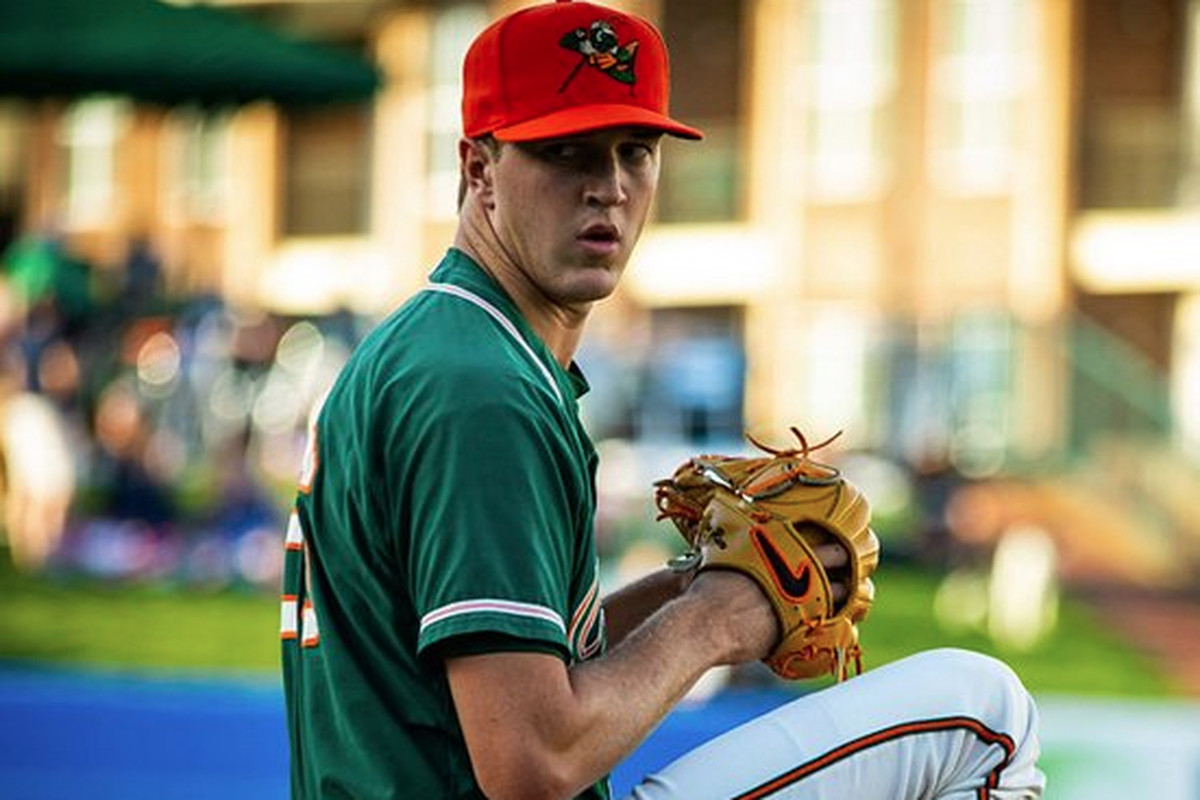 344 days. That’s how long Trevor Rogers painstakingly waited after going from being drafted by the Marlins in the first round of the 2017 MLB Draft to actually taking the field for an organizational squad in live game action. Finally, after a series of unfortunate events, Rogers has arrived. Hailing from Carlsbad High in southern New Mexico, Rogers enjoyed a highly decorated amateur career. In his four year varsity tenure, Rogers held down a 26-5 record by way of a 0.73 ERA and a 325/52 K/BB. This included an 11-0, 0.33 ERA 134/13 K/BB senior year in which Rogers collected first team All-American honors. Touted for his great mix of size and easy mid-high 90s velo and advanced second pitch slider, Rogers forwent a four year commitment to Texas Tech to become the second straight prep hurler to sign with the Marlins out of the first round of the draft. The signing garnered the 18-year-old a $3.4 million payday. For that success as well as the check, Rogers says he has plenty of people to thank: “My coaches gave me all the tools they had to make me a better ball player. And course my teammates. They were always their pushing me to get better each day.” Also amongst the individuals Rogers has gratitude for is his cousin, former Marlin Cody Ross. According to Rogers, becoming a member of the same organization as an elder member of his family hits very close to home. “We talked a little bit, he just said to enjoy the process and that it’s an exciting time for me to be apart of this organization,” Rogers said. “Watching him when I was younger playing for the Marlins and now I’m in the exact same position, that’s really special to me.” At the investment the Marlins made in him and with Rogers nursing a light forearm strain and with the recent stories of fellow hard throwing high schoolers such as Tyler Kolek and Braxton Garrett gone awry still fresh in their minds, the Marlins organization erred on the side of extreme caution with Rogers. The team balked at giving Trevor his first professional assignment and instead relegated him to an instructional league that was set to begin at the end of the regular season. However, the entire season was washed out when Hurricane Irma struck on August 30. Finally, after the painstaking wait and after beginning the season in extended spring training, Rogers has made his pro debut. And he couldn’t be more excited. “Man, it’s been a very long wait. It’s been over a year since I’ve pitched in front of a crowd,” Rogers said. “It’s so exciting for me to eventually take this small step of many throughout my journey in organization. I can’t wait for the late night games under the lights in front of all the fans.” Regarding how he dealt with and spent all the time off, Rogers had this to say: “Just making sure a stay healthy and really buy in with the throwing program and bullpens, slowly building up my innings throughout extended spring, doing arm care with the trainers and resting.” After almost a year long wait. I’m finally making my pro debut!!! Let the journey begin @GSOHoppers — Trevor Rogers (@T_Raw1691) May 22, 2018 Rogers’ first start was a bit up and down. He started off his first professional inning by striking out his first two hitters faced then proceeded to give up two runs on a walk and two hits. He then threw a wild pitch and committed a balk before recording a third strikeout to end the frame. Rogers allowed a lead off double to begin the 2nd but got around it and an HBP by getting an out three different ways: a groundout, flyout and a third K. Rogers allowed another man to get into scoring position without a swing in the 3rd, walking a man and allotting a steal of second base. The run scored on his final pitch of the game on an RBI single in which the batter was tossed out at second base. In regards to his first start, Rogers admits there were some nerves and rust present but that overall, it was a life-changing event. “Yeah, there were definitely a little bit [of jitters] but it was a great experience,” Rogers said. The first inning of Rogers’ second start on May 28 would prove to be one of the rockiest innings of his baseball career. After allowing a leadoff double, the Hagerstown Suns loaded the bases on a walk and another HBP. Following a strikeout, Rogers gave up a single and a grand slam homer to back to back hitters. Following a mound visit, the Suns put two more men in scoring position on two singles and a steal but Rogers was able to finally stop the bleeding via two fly outs. As unfortunate as that first inning was, what happened next was all the more encouraging. In his next two innings, Rogers proved he could have a short memory, put adversity behind him and settle down, setting down six of his last eight including three by way of the K. “There was plenty of ball game left and the plan was to keep out there as long as possible,” Rogers said regarding the message during his mound visit in the 1st. “I finally got in the grove all my pitches felt good and placed them where I wanted to.” While it hasn’t been the perfect start to a career in any sense of the word from the get go to the present, Rogers has shown the ability to overcome in many more ways than one, whether it be waiting out the chance to make his debut or a rough start to a game. On top of that, his reputation and stuff at such a young age speak volumes to his potential ceiling. Rogers’ calling card is his easily leveraged and well disguised velo that is made possible by use of his extra large frame. His bread and butter pitch is his 92-96 mph fastball with good sink but a recent change in mechanics that has allowed him to mask his slider better and refrain from tipping it has allowed the pitch to make leaps and bounds, getting hitters out in front of it and leading to many more swings and misses or at the very least weak contact. Rogers says this simplification and not overthinking the pitch has resulted in a better feel and more confidence in the pitch. “I always struggled with the secondary stuff, more with the slider because I would alter my mechanics and try to make it break instead of accelerating through the pitch and having the grip do the work,” Rogers said. “It’s going to be a big asset for me going forward and becoming more of the complete pitcher that I always want to be.” As we saw in camp, the Rogers slider can get downright nasty when he’s hitting his marks. .@T_Raw1691 with a nasty three pitch K to begin the 2nd. Ended with a filthy slider in the dirt. #MarlinsST pic.twitter.com/Pkc4xjNwao — Fish On The Farm (@marlinsminors) March 15, 2018 Rogers also owns an already average curveball and the beginnings of a changeup that flashes late fade. The development of those pitches will be a large factor in how high up his ceiling he reaches but given his ability to learn, adjust and show composure well beyond his years in regards to all he’s already been through, the sky appears to be the limit for this yet-to-turn-21-year-old. Welcome to the pros, Trevor. Your next challenge awaits your conquering.
 -
View full article
