



Marlins Video
Paul Skenes took the baseball world by storm in 2024. At 22 years old and less than a year after being the first overall draft pick, Skenes was already blowing big league hitters away with some of the best pure stuff the game has ever seen. The LSU standout was so dazzling that he was selected to start the MLB All-Star Game for the National League.
When the dust settled, Skenes authored a rookie season for the ages, finishing with a sterling 1.96 ERA in his 133 innings spread across 23 starts in a year that placed him firmly in contention for the title of the game’s best pitcher.
Pittsburgh's flame-throwing phenom has the it factor. So did José Fernández, who burst onto the scene 11 years ago. When watching Skenes, I could not help but find myself reminiscing about when José captivated Miami in a very similar way.
En route to earning 2013 NL Rookie of the Year honors, Fernández joined the short list of 19 pitchers to deliver a quality start in at least 70 percent of his outings in his first MLB season with a minimum of 25 starts. He became one of just 12 to do so in his age-20 or younger season.
Some important factors to consider when pitting Skenes against Fernández:
- 2013 and 2024 were both years with interleague play.
- Fernández had the benefit of facing a hitting pitcher multiple times in most of his outings.
- League-wide offensive performed similarly across both seasons.
So, who was better?
One must remember that Fernández’s path to making the Opening Day roster that season came on the heels of injuries to Nathan Eovaldi and Henderson Alvarez, whereas Skenes started the year with 27 ⅓ innings of sub-1.00 ERA ball in AAA before debuting on May 11 as the Pirates seemingly hid him in plain sight to secure an additional year of club control.
Fernández’s debut season was nothing short of brilliant. In 28 starts over 172 ⅔ innings pitched, the Marlins right-hander pitched to the tune of a 2.19 ERA. His 5.8 H/9 paced the 81 pitchers to qualify for the ERA title in a year where the league hit .253/.318/.386/.714. Skenes, meanwhile, limited opponents to a H/9 of 6.4 while league-wide offense hit .243/.312/.399/.711.
The near 40-inning gap between the pair is something we will revisit throughout this Venn diagram of a piece.
In the 11 years since Fernández, only only six pitchers—two of whom pitched previously in foreign professional leagues (Shota Imanaga and Kodai Senga)—qualified for the ERA title in their first MLB season. Skenes did not. Even if you lumped the 27-plus innings he threw in the minors this year, still fails to hit that 162-inning mark. Now, a lot of this is rooted in the kid gloves front offices use in handling modern starting pitchers, as well as the arbitrary thresholds for qualifiers. It isn't a knock against the pitchers themselves.
Skenes’ brilliance exemplifies how we come to view players in the modern game: rate-basis performance.
Fernández was otherworldly on a rate basis as well. He limited opponents to a collective .522 OPS in 2013. If you exclude the COVID-shortened 2020 season, not only is this a top-20 suppression-of-damage season in the live-ball era (since 1920), but it also ranks as the best first season any pitcher has had, well, ever.
That is not to disparage the .552 OPS Skenes limited opponents to in 2024, but a season of this kind is more in line with 1973 Steve Rogers (.553 OPS in 134 IP) from that standpoint. For the season as a whole, Fernández allowed just 10 home runs, a number matched by Skenes in his aforementioned 39 ⅔ fewer innings.
One factor we referenced at the outset was the advantage Fernández had in facing the opposing team’s starting pitchers, something he did in 25 of his 28 starts in 2013 (the only exception being when he visited American League ballparks). Pitchers facing Fernández hit .051/.140/.051/.191 with a 37-percent strikeout rate. Here's what happens when filtering those matchups out of the equation:
Fernández, 2013: 635 BF, .191/.265/.280/.544, 26.8 K% (MLB position player K%: 19.3)
Skenes, 2024: 581 BF, .198/.257/.295/.552, 33.1 K% (MLB position player K%: 22.6)
Striking out nearly 11 percent more hitters than the league average, Skenes also complimented this with a 6.2 percent walk rate, well below the 8.2% league-wide rate. On the other hand, Fernández, only struck out 7.5% more "real" hitters than the league average while walking 8.5% of them, which was slightly above average. This could explain an extrapolated, 30-start total of 7.7 bWAR for Skenes against 6.6 for Fernández.
Assessing a pitcher’s worth mostly comes down to two factors: run prevention and swing-and-miss. Fernández's season ERA of 2.19 was worthy of an adjusted ERA+ of 176 (100 is league average), a mark only reached three times by a qualified pitcher in his first MLB season since the mound was moved to its current distance in 1893. Fernández also joined 1985 Dwight Gooden as the only qualified pitcher with a 175 or better ERA+ in their age-20 or younger season in MLB history.
If only comparing Fernández to Skenes on a start-by-start basis, the pendulum swings in favor of Skenes. By adjusted ERA+, he finished at 214, denoting him as being 114 percent better than the league average at preventing runs. Throughout baseball history, only five pitchers have posted an ERA+ of 200 or better over 130 innings in their first season.
Fernández’s first 23 GP: .190/.265/.269/.534, .252 BABIP, 2.45 ERA/2.78 FIP
Skenes’ first 23 GP: .198/.257/.295/.552, .284 BABIP, 1.96 ERA/2.45 FIP
Of course, we must circle back to the innings of it all, as Fernández has an edge for the five ensuing starts and 33 innings he threw before the Marlins decided to cap his workload in the middle of September. In those five outings, the right-hander dazzled to the tune of a 1.09 ERA en route to NL Rookie of the Year honors and a third-place finish for NL Cy Young.
Regardless of which season you come away favoring more, any broader comparisons between the hurlers are difficult to make. For Skenes, the rest of his career is an unknown despite the obvious talent he currently possesses. For Fernández, we unfortunately barely got to see him build upon his extraordinary 2013 campaign. Tommy John surgery limited his workload in 2014 and 2015, then tragedy struck.
On the morning of September 25, 2016, Fernández, under the influence of alcohol and cocaine, crashed a boat into a North Miami Beach jetty, killing himself and the two other men on board, Eduardo Rivero and Emilio Jesús Macias. The incident shrouds his legacy in controversy.

Baseball fans can still vividly remember the dazzling, high-90s fastball, the sweeping breaking ball, the air-bending changeup, the 2.58 ERA across 76 largely brilliant starts, the infectious joy with which Fernández played and enjoyed the game. Now, there's Skenes, gifted with even more velocity and a signature "splinker" for amassing whiffs. It's a new vessel for the same excitement we all first bore witness to more than a decade ago.
Where will Otto Lopez finish in NL MVP voting?
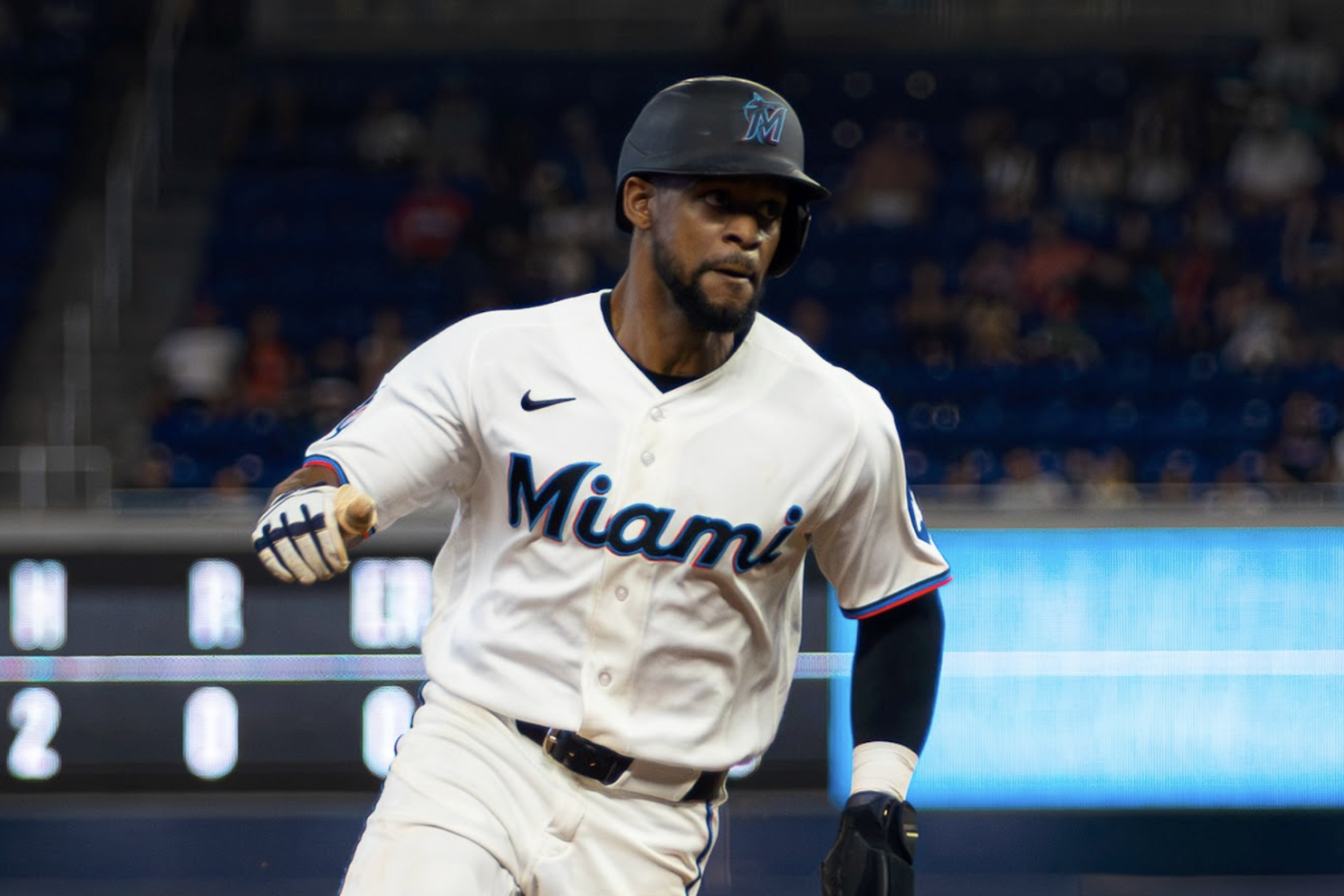
Where will Otto Lopez finish in NL MVP voting?
Follow Fish On First For Miami Marlins News & Analysis



Think you could write a story like this? Fish On First wants you to develop your voice and find an audience. We recruit our paid front page writers from our users blogs section. Start a blog today!
More From Fish On First
— Latest Marlins coverage from our writers
— Recent Marlins discussion in our forums
— Become a Fish On First SuperSub


Recommended Comments
Create an account or sign in to comment
You need to be a member in order to leave a comment
Create an account
Sign up for a new account in our community. It's easy!
Register a new accountSign in
Already have an account? Sign in here.
Sign In Now