



Alex Carver
-
Posts
459 -
Joined
-
Last visited
-
Days Won
16
Content Type
Profiles
Miami Marlins Videos
2026 Miami Marlins Top Prospects Ranking
Miami Marlins Free Agent & Trade Rumors, Notes, & Tidbits
Guides & Resources
News
2025 Miami Marlins Draft Pick Tracker
2026 Miami Marlins Draft Tracker: Picks & Bonuses
Forums
Blogs
Events
Store
Downloads
Gallery
Everything posted by Alex Carver
-
Jesús Luzardo, Bryan De La Cruz, and Jesús Sánchez continued their strong starts to spring training on Friday afternoon in Clearwater. The Marlins came by their second tie of the spring on Friday night in Clearwater, deadlocking with the Phillies 6-6 after nine innings. Jesús Luzardo became the first Marlins’ starter to work three full innings. Bryan De La Cruz and Jesus Sánchez continued to stand out offensively for Miami. Vidal Bruján also recorded two hits. Luzardo impressive Jesús Luzardo took the mound for the second time this spring. The second verse was even better than the first. After working two scoreless this past week, Luzardo, who has been tabbed as Miami’s Opening Day starter, worked three full frames on just two hits and a walk while striking out two. He threw 45 pitches, 28 for strikes. ivqtwk.mp4 The main occupation with Luzardo through his career has been his spotty fastball command. That was of no concern for him in this start. Luzardo was pounding the zone early and often which overpowered a Phillies’ lineup made up of many of their projected Opening Day starters. The four-seamer averaged 96 mph and topped at 98. It carried a 35% CSW%. Perhaps just as encouraging as the work he did with the fastball, Luzardo also controlled his changeup very well and could place it in the zone (which he did 62% of the time) without getting hurt. Only two balls were put in play against the Luzardo changeup. The only downside to Luzardo’s outing is that he once again didn’t have his slider working well. He also struggled to throw strikes with the pitch his first time out. That said, he hasn’t needed it. "There's a lot of value in coming out and not having my best stuff necessarily and still being able to navigate through a tough inning and getting outs in different ways," Luzardo told Stephen Strom of the Marlins Radio Network following his outing. "I think that that's something that 32, 33 starts throughout a full season, you're not gonna have your stuff every time. It was good and it was positive to have one of those starts so early in spring." Two starts in and showing consistent command and control of multiple pitches with room to fill in even more, Luzardo is off to a very encouraging start to spring training. De La Contact Once again, Bryan De La Cruz was seeing the ball very well. Starting in left field, DLC got three ABs and recorded one hit, a single. However, everything he hit was hit hard. He once again owned the hardest-hit ball of the game, a 111.9 mph lineout that held an .810 expected batting average but somehow found an outfielder’s glove. Early this spring, De La Cruz has been Miami’s most consistent and most impressive bat. He’s off to a 4-for-9 start. With a bit less bad luck, he could be sitting in an even better spot. His average exit velocity this spring is 97.7 mph. Sánchez keeps hitting Jesús Sánchez was once again active with the bat, hitting a single in his first AB and a screaming double in his second, both off Aaron Nola. In both cases, Sánchez showed good plate coverage, getting to offspeed pitches on his outside corner. Sánchez has had an impressive start to camp. He’s recorded hits in each of his first four games. Other notes: After recording two hits on Tuesday, Jacob Berry recorded his first extra-base hit of the spring campaign, a double. He also saw some time at first base. Troy Johnston exited the game with an apparent injury after a groundout in the 9th inning. Johnston rolled his ankle attempting to reach the base. It isn’t thought to be serious. Eury Pérez will start for the Marlins on Saturday afternoon in Jupiter. Sixto Sánchez is also expected to pitch for the first time this spring. View full article
-
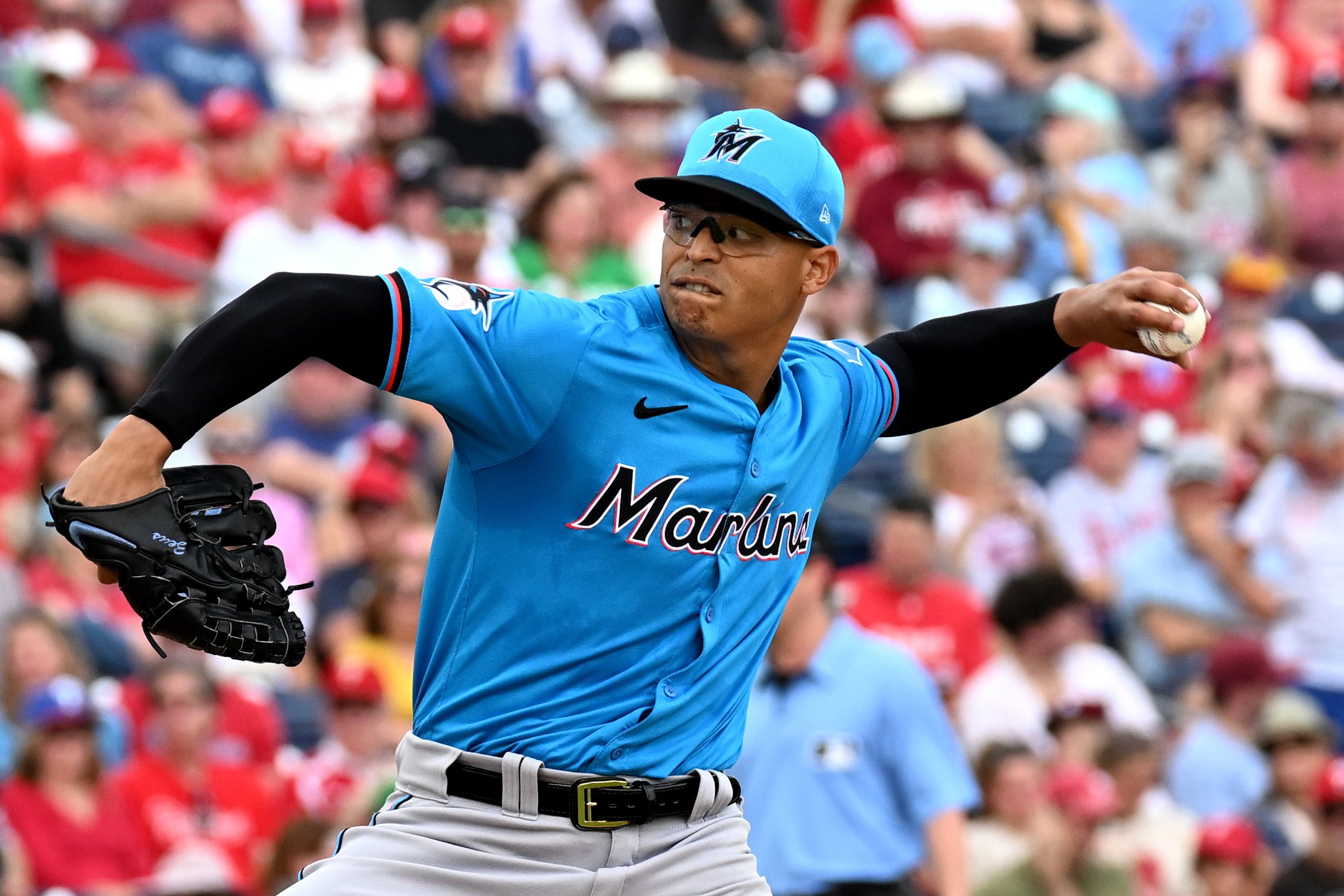 The Marlins came by their second tie of the spring on Friday night in Clearwater, deadlocking with the Phillies 6-6 after nine innings. Jesús Luzardo became the first Marlins’ starter to work three full innings. Bryan De La Cruz and Jesus Sánchez continued to stand out offensively for Miami. Vidal Bruján also recorded two hits. Luzardo impressive Jesús Luzardo took the mound for the second time this spring. The second verse was even better than the first. After working two scoreless this past week, Luzardo, who has been tabbed as Miami’s Opening Day starter, worked three full frames on just two hits and a walk while striking out two. He threw 45 pitches, 28 for strikes. ivqtwk.mp4 The main occupation with Luzardo through his career has been his spotty fastball command. That was of no concern for him in this start. Luzardo was pounding the zone early and often which overpowered a Phillies’ lineup made up of many of their projected Opening Day starters. The four-seamer averaged 96 mph and topped at 98. It carried a 35% CSW%. Perhaps just as encouraging as the work he did with the fastball, Luzardo also controlled his changeup very well and could place it in the zone (which he did 62% of the time) without getting hurt. Only two balls were put in play against the Luzardo changeup. The only downside to Luzardo’s outing is that he once again didn’t have his slider working well. He also struggled to throw strikes with the pitch his first time out. That said, he hasn’t needed it. "There's a lot of value in coming out and not having my best stuff necessarily and still being able to navigate through a tough inning and getting outs in different ways," Luzardo told Stephen Strom of the Marlins Radio Network following his outing. "I think that that's something that 32, 33 starts throughout a full season, you're not gonna have your stuff every time. It was good and it was positive to have one of those starts so early in spring." Two starts in and showing consistent command and control of multiple pitches with room to fill in even more, Luzardo is off to a very encouraging start to spring training. De La Contact Once again, Bryan De La Cruz was seeing the ball very well. Starting in left field, DLC got three ABs and recorded one hit, a single. However, everything he hit was hit hard. He once again owned the hardest-hit ball of the game, a 111.9 mph lineout that held an .810 expected batting average but somehow found an outfielder’s glove. Early this spring, De La Cruz has been Miami’s most consistent and most impressive bat. He’s off to a 4-for-9 start. With a bit less bad luck, he could be sitting in an even better spot. His average exit velocity this spring is 97.7 mph. Sánchez keeps hitting Jesús Sánchez was once again active with the bat, hitting a single in his first AB and a screaming double in his second, both off Aaron Nola. In both cases, Sánchez showed good plate coverage, getting to offspeed pitches on his outside corner. Sánchez has had an impressive start to camp. He’s recorded hits in each of his first four games. Other notes: After recording two hits on Tuesday, Jacob Berry recorded his first extra-base hit of the spring campaign, a double. He also saw some time at first base. Troy Johnston exited the game with an apparent injury after a groundout in the 9th inning. Johnston rolled his ankle attempting to reach the base. It isn’t thought to be serious. Eury Pérez will start for the Marlins on Saturday afternoon in Jupiter. Sixto Sánchez is also expected to pitch for the first time this spring.
-
- 2
-

-

-
- jesus luzardo
- bryan de la cruz
- (and 1 more)
-
 Following a breakout 2023 season offensively, catching prospect Will Banfield is in major league camp with the Marlins as an NRI, looking to continue to impress. JUPITER, FL—The progression and development of a high school catcher in professional baseball can be extremely volatile. When focusing on learning how to handle pro pitching and the speed of a pro game as their first priority, the ability to produce offensively can sometimes get lost in the shuffle. For some high school catchers, it never happens. But with how advanced the defense of Will Banfield was coming out of the draft in 2018, the Marlins were confident in Banfield’s very high floor at age 18. In 2023, the confidence and persistence the Marlins showed in Banfield to become a dual threat backstop starter to pay off. While holding down his always solid tools behind the plate, Banfield had a breakout year at the plate, slashing .258/.302/.472 with 23 home runs. It happened over the course of a full season with Double-A Pensacola, the highest level he’s ever played at. The catalysts for Banfield’s improvements at the plate were twofold. The first: mental adjustments. “Not pressing, knowing I’m a good hitter and I can hit with two strikes and that I’m not gonna miss my pitch.” Banfield pointed to Pensacola hitting coach Matt Snyder as a key cog in the improvements he was able to make mentally. The best advice he got from Snyder was to create a blueprint for how he was going to attack each pitcher he faced. “That’s something that we worked on hard,” Banfield said. “Once I was able to feel comfortable with a couple of adjustments that we did make, once I was on time, those things took care of itself. It was more so making a plan for hunting windows for different guys especially righties with sliders, sweepers. So just making sure I’m sticking to a plan, through an at-bat, through a game…that was the biggest thing.” The second catalyst for Banfield’s improvements were the mechanical adjustments he speaks of. At the plate and in his setup, Banfield looked much different than years past. The changes allowed him to stay more relaxed at the plate and cover more of it. “Staying looser with my full body but mostly my upper half. Hitting more into my front side,” Banfield said of the mechanical adjustments. “It’s been able to give me a lot more length in my swing and it’s helped a lot obviously with offspeed or pitches down in general. I’m continuing to work on that and sticking with a routine I was comfortable with last year.” There’s also a sense of comfort and familiarity in the Marlins’ clubhouse this spring for Banfield. Joining him are several of his Pensacola teammates from the past two years including Patrick Monteverde, Josh Simpson, Troy Johnston, Paul McIntosh, Victor Mesa Jr. and others. Seeing the winning culture he and those same teammates helped build in Pensacola matriculate to a major league clubhouse has been a boost of confidence for Banfield. “Having the same core group of guys, it’s really cool to be able to keep going up with. All these guys are winners. All these guys want to win whenever we step on the field," Banfield said. “For that group and these guys here now that we’ve gotten to know and be around, everyone’s winners. It’s cool to bring our side from the minor leagues up into the clubhouse, blending it with major league guys. It’s gonna be a really fun year.” Banfield has been a very regular participant in every drill on the backfields early in camp and he’s already played in two games, where he’s showcased his continuously plus defensive skills and recorded two hits in his first five ABs. TVprRzVfWGw0TUFRPT1fVkFWVVVsd05Wd1FBQUZaUlhnQUFBUUVFQUZoUldnY0FVMUVFQlFJRlZRWUJWVkFD.mp4 If Banfield can continue to showcase his improved bat-to-ball skills, he will continue to solidify himself as the top catching prospect in the Marlins’ organization and place himself in a good position to contribute to the big league club this year. He will be 24 for the entirety of the season. View full article
 -
Will Banfield looking to build off strong 2023 season
Alex Carver posted an article in FOF Prospects
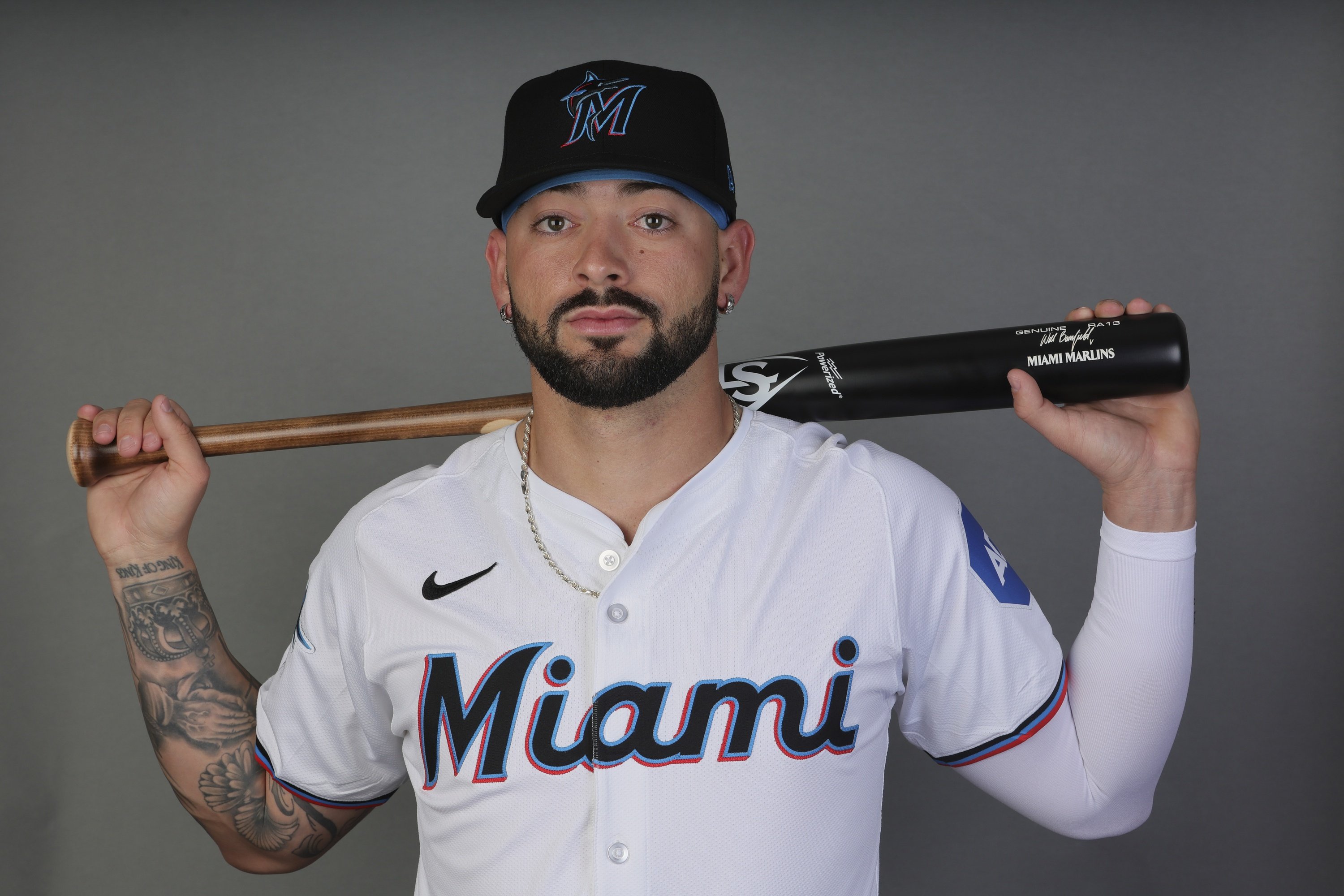 JUPITER, FL—The progression and development of a high school catcher in professional baseball can be extremely volatile. When focusing on learning how to handle pro pitching and the speed of a pro game as their first priority, the ability to produce offensively can sometimes get lost in the shuffle. For some high school catchers, it never happens. But with how advanced the defense of Will Banfield was coming out of the draft in 2018, the Marlins were confident in Banfield’s very high floor at age 18. In 2023, the confidence and persistence the Marlins showed in Banfield to become a dual threat backstop starter to pay off. While holding down his always solid tools behind the plate, Banfield had a breakout year at the plate, slashing .258/.302/.472 with 23 home runs. It happened over the course of a full season with Double-A Pensacola, the highest level he’s ever played at. The catalysts for Banfield’s improvements at the plate were twofold. The first: mental adjustments. “Not pressing, knowing I’m a good hitter and I can hit with two strikes and that I’m not gonna miss my pitch.” Banfield pointed to Pensacola hitting coach Matt Snyder as a key cog in the improvements he was able to make mentally. The best advice he got from Snyder was to create a blueprint for how he was going to attack each pitcher he faced. “That’s something that we worked on hard,” Banfield said. “Once I was able to feel comfortable with a couple of adjustments that we did make, once I was on time, those things took care of itself. It was more so making a plan for hunting windows for different guys especially righties with sliders, sweepers. So just making sure I’m sticking to a plan, through an at-bat, through a game…that was the biggest thing.” The second catalyst for Banfield’s improvements were the mechanical adjustments he speaks of. At the plate and in his setup, Banfield looked much different than years past. The changes allowed him to stay more relaxed at the plate and cover more of it. “Staying looser with my full body but mostly my upper half. Hitting more into my front side,” Banfield said of the mechanical adjustments. “It’s been able to give me a lot more length in my swing and it’s helped a lot obviously with offspeed or pitches down in general. I’m continuing to work on that and sticking with a routine I was comfortable with last year.” There’s also a sense of comfort and familiarity in the Marlins’ clubhouse this spring for Banfield. Joining him are several of his Pensacola teammates from the past two years including Patrick Monteverde, Josh Simpson, Troy Johnston, Paul McIntosh, Victor Mesa Jr. and others. Seeing the winning culture he and those same teammates helped build in Pensacola matriculate to a major league clubhouse has been a boost of confidence for Banfield. “Having the same core group of guys, it’s really cool to be able to keep going up with. All these guys are winners. All these guys want to win whenever we step on the field," Banfield said. “For that group and these guys here now that we’ve gotten to know and be around, everyone’s winners. It’s cool to bring our side from the minor leagues up into the clubhouse, blending it with major league guys. It’s gonna be a really fun year.” Banfield has been a very regular participant in every drill on the backfields early in camp and he’s already played in two games, where he’s showcased his continuously plus defensive skills and recorded two hits in his first five ABs. TVprRzVfWGw0TUFRPT1fVkFWVVVsd05Wd1FBQUZaUlhnQUFBUUVFQUZoUldnY0FVMUVFQlFJRlZRWUJWVkFD.mp4 If Banfield can continue to showcase his improved bat-to-ball skills, he will continue to solidify himself as the top catching prospect in the Marlins’ organization and place himself in a good position to contribute to the big league club this year. He will be 24 for the entirety of the season.
 -
Two doubles each for Bryan De La Cruz and Victor Mesa Jr. as well as a solo home run by Tristan Gray navigated the Marlins past some early jitters on the mound in a 9-8 win in Miami's Grapefruit League opener. JUPITER, FL—Bryan De La Cruz and a cast of non-roster invitees starred in a high-scoring affair on Saturday afternoon at Roger Dean Chevrolet Stadium, allowing the Marlins to surpass some very early spring woes on the mound and overcome the St. Louis Cardinals by a score of 9-8. The Marlins' offense got things started early against Matthew Liberatore. After Josh Bell walked and was moved to second by a wild pitch, Bryan De La Cruz struck for an RBI double that left his bat at 111.7 mph. De La Cruz was then plated by Jesús Sánchez on a single to give Ryan Weathers a two run lead before he toed the rubber. De La Cruz was back at it again in his next at-bat. With the bases full of Marlins, he continued to seer the baseball well and cleared them with his second double. A ball which left his bat at 110.5 mph. De La Cruz had the two hardest hit balls of the day. Young players including multiple non-roster invitees made a lot of noise with their bats, leading to a good first impression upon manager Skip Schumaker and staff. Tristan Gray got in on the fun in the 4th. On the first pitch he saw, he cranked his first home run of the spring to right field on a cutter left up. Gray later proved he can get on base when he sees more than one pitch by working a walk against JoJo Romero. Gray has been an early standout in camp. Not to be outdone by De La Cruz, Victor Mesa Jr. participating in his first big league camp, also recorded two doubles. The second of the pair came in the Marlins' pivotal 8th inning. With two outs, Mesa got the rally started by rocketing a ball to dead-center field and off the warning track. Then, Jonah Bride's two-run single and Griffin Conine's loud double center put the Marlins back ahead for good and proved to be the winning run. d97e24ff-3e1ebc03-b1b52e15-csvm-diamondx64-asset_1280x720_59_16000K.mp4 Schumaker believes the group of NRIs as well as Bride and Mesa Jr are making the most of their opportunity to impress so far this spring. "They want to make a name for themselves and there's roster battles," Schumaker said. "In spring training, you face different types of pitches later in the game and that's the reality but you don't get to pick who you face. You're supposed to take the baton and whoever you face, you face." Ryan Weathers started for Miami and after giving up solid contact to his first hitter Dylan Carlson, surrendered a double to Nolan Gorman who took a 95 mph fastball to the warning track in right field. A second double by Nolan Gorman on a Weathers changeup that caught a lot of plate gave St. Louis their first run. Nick Fortes made a heads-up play to get Weathers out of his first inning by picking Gorman off at first. "I think Nick just caught Arenado off guard," Schumaker said of the play. "I'm not sure if (he) maybe forgot the count...But yeah, kind of a heads-up play in your first game." Weathers got the first out of the second inning quickly, albeit once again on hard contact. He then gave up two free baserunners via a walk and hit by pitch paving the way for Jose Fermin to drive in the tying run. Weathers was removed after his expected two innings of work. With spotty command especially of his fastball, (38 pitches, 20 strikes), he allowed two runs on three hits and a walk while striking out one. "First inning (my command was spotty), second inning was better," Weathers said. "I would say it was probably 50/50. I didn't really accomplish what I wanted to accomplish, wanting to be really good with the first-pitch strike. That was kind of what got me behind the eight ball to a couple batters." a198bb98-fbb6630d-1d32dc25-csvm-diamondx64-asset_1280x720_59_16000K.mp4 In relief of Weathers, Bryan Hoeing pitched two innings, giving up two hits and an earned run with a walk and three strikeouts. Despite the walk, Hoeing was very economical with his pitches needing just 23 to get through two frames. Josh Simpson, who has been highly spoken of this spring, entered in the 5th. He struggled with his control throughout his appearance. He hit his first two batters before allowing an RBI single to Cesar Prieto. After the Cardinals loaded the bases via a walk, Matt Koperniak brought St Louis back to within a run on an infield base hit. Simpson was unable to finish his inning of work. Austin Roberts relieved Simpson and allowed the Cardinals to tie the game on a wild pitch. All three runs in the inning were charged to Simpson. This early in spring training when everyone is working on something, Schumaker isn't concerned. "It's six weeks of spring training and there's a lot of teaching moments and learning lessons," Schumaker said. "We'll look back and see what it looked like; his curveball it looked like he was casting a little bit, a lot of arm side misses, a couple hit by pitch. We'll take a look. Mel and Beef are really good at identifying some stuff. And again, first game of spring." After NRI hurler Declan Cronin and his tricky offspeed stuff threw a scoreless 6th, lefty Kent Emanuel allowed three hits and a run in the 7th. Yet another NRI, Jeff Lindgren threw the final two frames for Miami and recorded a two inning save. The Marlins will be back in action against Sunday afternoon for their spring home opener against the Washington Nationals. Jesús Luzardo draws the start for Miami. Other notes: -Tim Anderson's signing was made official and he was present at Marlins' camp for the first time today. It has not yet been decided when he will appear in game action. -Dax Fulton spoke about his rehab from his most recent elbow surgery, stating he has started throwing off flat ground three times a week. He is recovering from a UCL injury he sustained this past season, which cost him all of 2023. There is still no timetable set for when he will return to full action. -JT Chargois (neck spasms) did not throw live BP on Friday as scheduled. -Eury Pérez has been announced as Monday's probable starter in a rematch with the Cardinals. View full article
-
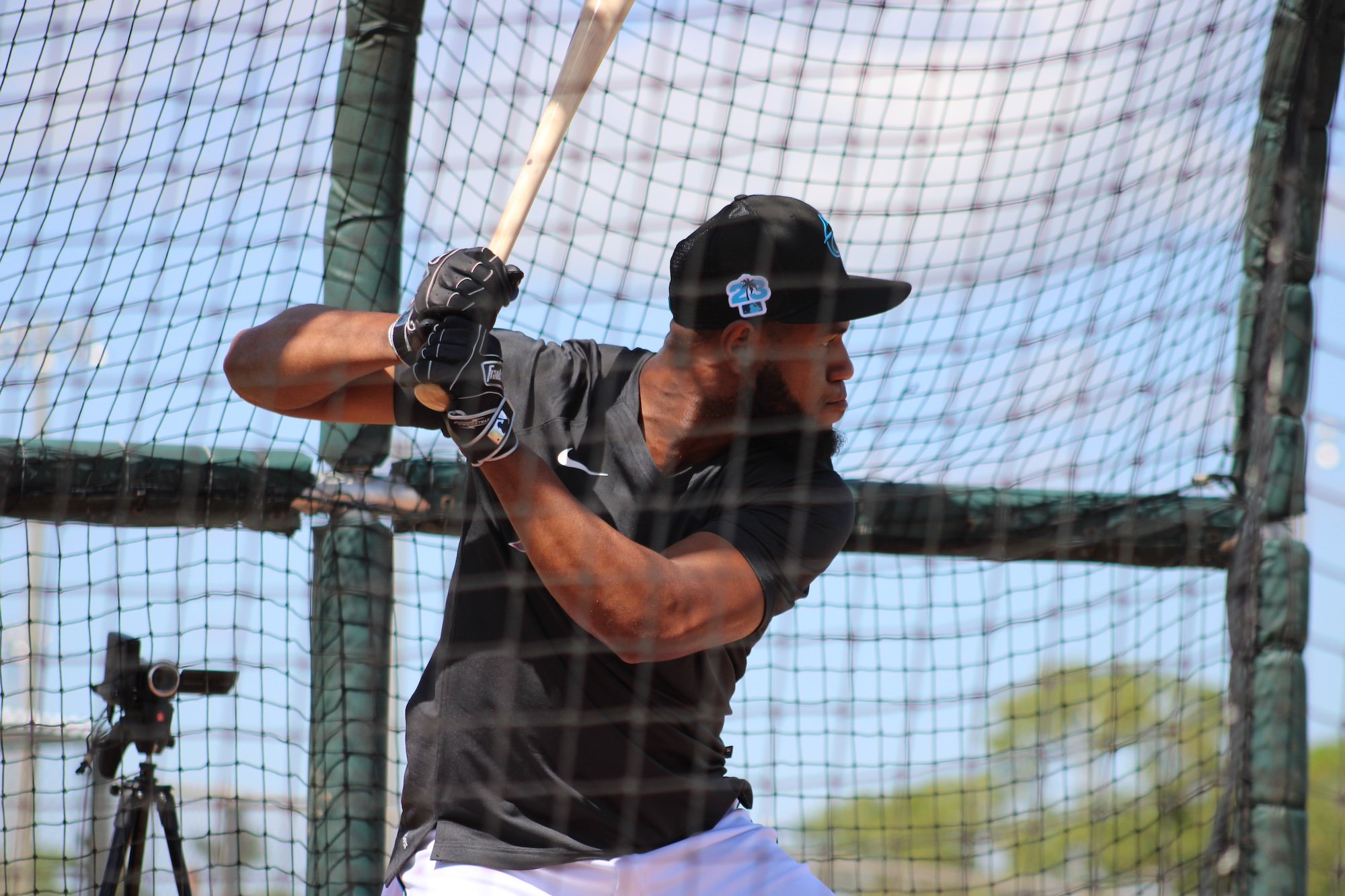 JUPITER, FL—Bryan De La Cruz and a cast of non-roster invitees starred in a high-scoring affair on Saturday afternoon at Roger Dean Chevrolet Stadium, allowing the Marlins to surpass some very early spring woes on the mound and overcome the St. Louis Cardinals by a score of 9-8. The Marlins' offense got things started early against Matthew Liberatore. After Josh Bell walked and was moved to second by a wild pitch, Bryan De La Cruz struck for an RBI double that left his bat at 111.7 mph. De La Cruz was then plated by Jesús Sánchez on a single to give Ryan Weathers a two run lead before he toed the rubber. De La Cruz was back at it again in his next at-bat. With the bases full of Marlins, he continued to seer the baseball well and cleared them with his second double. A ball which left his bat at 110.5 mph. De La Cruz had the two hardest hit balls of the day. Young players including multiple non-roster invitees made a lot of noise with their bats, leading to a good first impression upon manager Skip Schumaker and staff. Tristan Gray got in on the fun in the 4th. On the first pitch he saw, he cranked his first home run of the spring to right field on a cutter left up. Gray later proved he can get on base when he sees more than one pitch by working a walk against JoJo Romero. Gray has been an early standout in camp. Not to be outdone by De La Cruz, Victor Mesa Jr. participating in his first big league camp, also recorded two doubles. The second of the pair came in the Marlins' pivotal 8th inning. With two outs, Mesa got the rally started by rocketing a ball to dead-center field and off the warning track. Then, Jonah Bride's two-run single and Griffin Conine's loud double center put the Marlins back ahead for good and proved to be the winning run. d97e24ff-3e1ebc03-b1b52e15-csvm-diamondx64-asset_1280x720_59_16000K.mp4 Schumaker believes the group of NRIs as well as Bride and Mesa Jr are making the most of their opportunity to impress so far this spring. "They want to make a name for themselves and there's roster battles," Schumaker said. "In spring training, you face different types of pitches later in the game and that's the reality but you don't get to pick who you face. You're supposed to take the baton and whoever you face, you face." Ryan Weathers started for Miami and after giving up solid contact to his first hitter Dylan Carlson, surrendered a double to Nolan Gorman who took a 95 mph fastball to the warning track in right field. A second double by Nolan Gorman on a Weathers changeup that caught a lot of plate gave St. Louis their first run. Nick Fortes made a heads-up play to get Weathers out of his first inning by picking Gorman off at first. "I think Nick just caught Arenado off guard," Schumaker said of the play. "I'm not sure if (he) maybe forgot the count...But yeah, kind of a heads-up play in your first game." Weathers got the first out of the second inning quickly, albeit once again on hard contact. He then gave up two free baserunners via a walk and hit by pitch paving the way for Jose Fermin to drive in the tying run. Weathers was removed after his expected two innings of work. With spotty command especially of his fastball, (38 pitches, 20 strikes), he allowed two runs on three hits and a walk while striking out one. "First inning (my command was spotty), second inning was better," Weathers said. "I would say it was probably 50/50. I didn't really accomplish what I wanted to accomplish, wanting to be really good with the first-pitch strike. That was kind of what got me behind the eight ball to a couple batters." a198bb98-fbb6630d-1d32dc25-csvm-diamondx64-asset_1280x720_59_16000K.mp4 In relief of Weathers, Bryan Hoeing pitched two innings, giving up two hits and an earned run with a walk and three strikeouts. Despite the walk, Hoeing was very economical with his pitches needing just 23 to get through two frames. Josh Simpson, who has been highly spoken of this spring, entered in the 5th. He struggled with his control throughout his appearance. He hit his first two batters before allowing an RBI single to Cesar Prieto. After the Cardinals loaded the bases via a walk, Matt Koperniak brought St Louis back to within a run on an infield base hit. Simpson was unable to finish his inning of work. Austin Roberts relieved Simpson and allowed the Cardinals to tie the game on a wild pitch. All three runs in the inning were charged to Simpson. This early in spring training when everyone is working on something, Schumaker isn't concerned. "It's six weeks of spring training and there's a lot of teaching moments and learning lessons," Schumaker said. "We'll look back and see what it looked like; his curveball it looked like he was casting a little bit, a lot of arm side misses, a couple hit by pitch. We'll take a look. Mel and Beef are really good at identifying some stuff. And again, first game of spring." After NRI hurler Declan Cronin and his tricky offspeed stuff threw a scoreless 6th, lefty Kent Emanuel allowed three hits and a run in the 7th. Yet another NRI, Jeff Lindgren threw the final two frames for Miami and recorded a two inning save. The Marlins will be back in action against Sunday afternoon for their spring home opener against the Washington Nationals. Jesús Luzardo draws the start for Miami. Other notes: -Tim Anderson's signing was made official and he was present at Marlins' camp for the first time today. It has not yet been decided when he will appear in game action. -Dax Fulton spoke about his rehab from his most recent elbow surgery, stating he has started throwing off flat ground three times a week. He is recovering from a UCL injury he sustained this past season, which cost him all of 2023. There is still no timetable set for when he will return to full action. -JT Chargois (neck spasms) did not throw live BP on Friday as scheduled. -Eury Pérez has been announced as Monday's probable starter in a rematch with the Cardinals.
-
- 2
-
-
- bryan de la cruz
- tristan gray
- (and 2 more)
-
The Marlins' 2023 first-round draft pick has been working diligently on his fastball and overall stamina as the regular season approaches. JUPITER, FL—Though he is less than a year into his pro career, things have moved quickly for Marlins top prospect Noble Meyer. After starting 2023 in the FCL, he was quickly promoted to the Jupiter Hammerheads where he contributed to a Florida State League title. A few months later, the 19-year-old is one of the youngest players participating in an early development camp for Marlins minor leaguers where he's throwing against upper-minors competition in matchups that mimic in-game situations. He wouldn’t have it any other way. “It’s absolutely great,” Meyer said on Friday in relation to his experience so far. “I get to go out there and throw then I get to talk with the guys I faced. These are pro guys, pro minds. They’re where they’re at for a reason so to dig into their minds I think really helps my game.” Some of the competition Meyer faced his second time out on Friday afternoon included invitees to big league camp Jonah Bride, Victor Mesa Jr., Troy Johnston, and Paul McIntosh, all of whom have played at the AA level or above. “It’s awesome,” Meyer said about facing upper level competition. “It gives me a chance to see what I need to be at, what the next level is like, and how to climb.” After his start, the constructive feedback was aplenty for Meyer from both his organizational mates and from his coaches. “Fastball was great on the outside corner to lefties and then working inside with the changeup to righties was really good, it caught them off their balance,” Meyer said. “I could throw a fastball back inside and that seemed to be a really good plan of attack for most guys.” The four-seam fastball Meyer speaks about was a point of focus for him in the offseason. He put work in on improving spin rates and where he’s able to command the pitch including in the upper half of the strike zone. On Friday, he showed off exactly that in a stand-out moment where he got the aforementioned Mesa to strike out on the fastball up in the zone. Mesa spoke about what he saw from Meyer after the outing, pinpointing the fastball Meyer has been working to improve in relation to how it carries. “He’s got pretty good stuff at a young age,” Mesa said. “I told him to use more of his fastball—it has pretty good rise.” After his last start, Meyer stated that if he is able to improve carry and rise on his fastball, his breaking stuff will play better. After this outing, he was satisfied with how his fastball played overall, pointing to and showing an understanding of exactly what the pitch was formerly and currently is doing. Meyer specifically focused on staying true to his natural arm slot and reaching all four quadrants. “If you look at the numbers, the vertical break isn’t too high, but just the approach angle, where I’m throwing and how I’m spinning it, it’s going to play really well at the top of the zone,” Meyer said. “I can also throw it at the bottom of the zone with sink. So it’s kind of a dual threat fastball right now.” In addition to the improving fastball, Meyer has three other pitches. His newest and maybe best breaking pitch already is a curveball with two-plane break that he can spin with ease. He also owns a slider and changeup, which place him all over the velo mix map, from the mid-70s to the high 90s. A key for Meyer this coming season will be stamina through his starts and a full MiLB schedule. “I just want to get better. Getting stronger and being able to sustain velocity and command throughout the entire season,” Meyer said. “It’s a long season, so that’s priority number one right now.” Meyer has also stated that, while staying within what he can control, in a perfect world, he would like to make it up to Double-A this coming season and would like to participate in the upcoming Spring Breakout game on March 15. Full Marlins minor league camp begins on March 3 with the MiLB regular season schedule to follow on April 5. View full article
-
Noble Meyer learning quickly early in minor league camp
Alex Carver posted an article in FOF Prospects
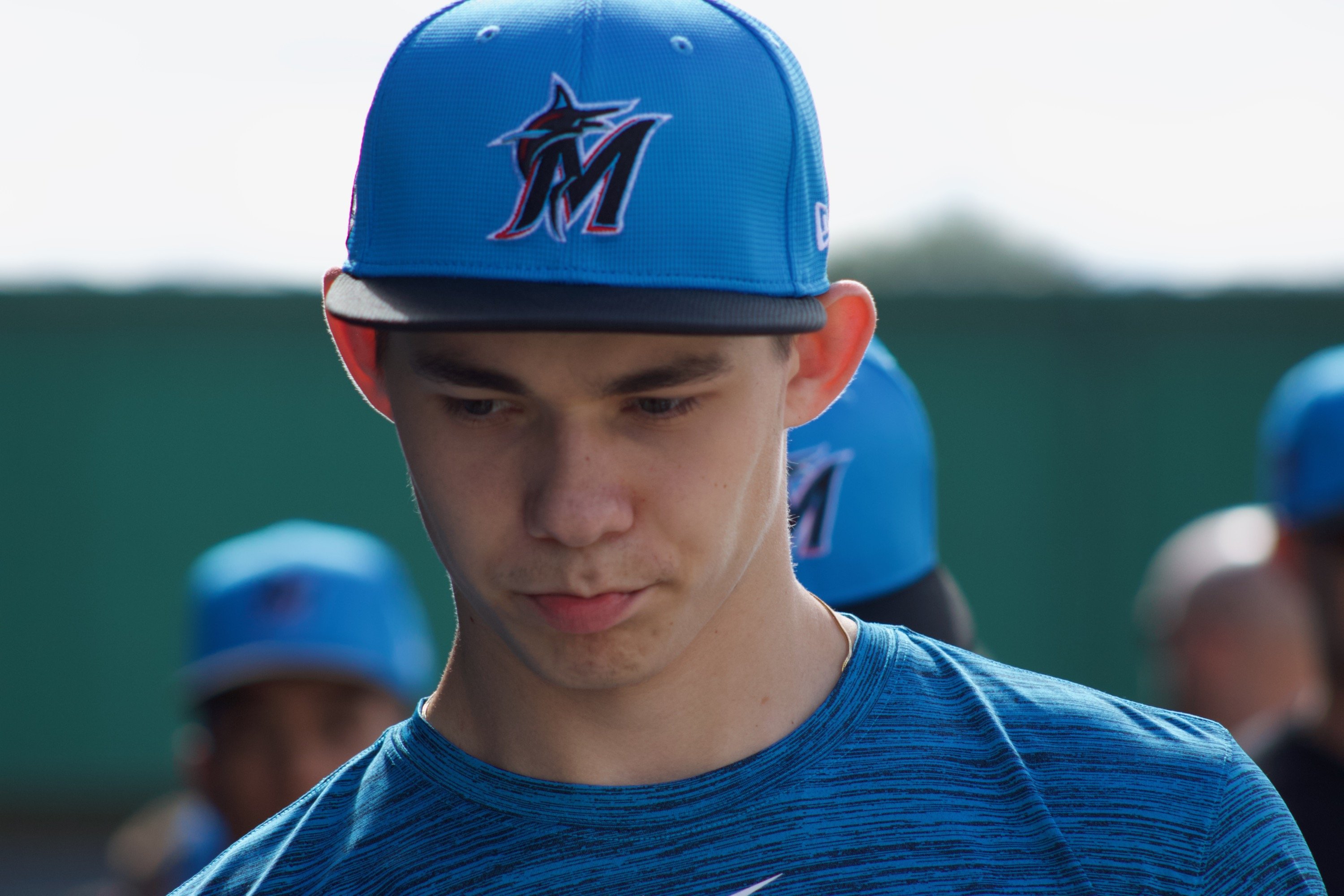 JUPITER, FL—Though he is less than a year into his pro career, things have moved quickly for Marlins top prospect Noble Meyer. After starting 2023 in the FCL, he was quickly promoted to the Jupiter Hammerheads where he contributed to a Florida State League title. A few months later, the 19-year-old is one of the youngest players participating in an early development camp for Marlins minor leaguers where he's throwing against upper-minors competition in matchups that mimic in-game situations. He wouldn’t have it any other way. “It’s absolutely great,” Meyer said on Friday in relation to his experience so far. “I get to go out there and throw then I get to talk with the guys I faced. These are pro guys, pro minds. They’re where they’re at for a reason so to dig into their minds I think really helps my game.” Some of the competition Meyer faced his second time out on Friday afternoon included invitees to big league camp Jonah Bride, Victor Mesa Jr., Troy Johnston, and Paul McIntosh, all of whom have played at the AA level or above. “It’s awesome,” Meyer said about facing upper level competition. “It gives me a chance to see what I need to be at, what the next level is like, and how to climb.” After his start, the constructive feedback was aplenty for Meyer from both his organizational mates and from his coaches. “Fastball was great on the outside corner to lefties and then working inside with the changeup to righties was really good, it caught them off their balance,” Meyer said. “I could throw a fastball back inside and that seemed to be a really good plan of attack for most guys.” The four-seam fastball Meyer speaks about was a point of focus for him in the offseason. He put work in on improving spin rates and where he’s able to command the pitch including in the upper half of the strike zone. On Friday, he showed off exactly that in a stand-out moment where he got the aforementioned Mesa to strike out on the fastball up in the zone. Mesa spoke about what he saw from Meyer after the outing, pinpointing the fastball Meyer has been working to improve in relation to how it carries. “He’s got pretty good stuff at a young age,” Mesa said. “I told him to use more of his fastball—it has pretty good rise.” After his last start, Meyer stated that if he is able to improve carry and rise on his fastball, his breaking stuff will play better. After this outing, he was satisfied with how his fastball played overall, pointing to and showing an understanding of exactly what the pitch was formerly and currently is doing. Meyer specifically focused on staying true to his natural arm slot and reaching all four quadrants. “If you look at the numbers, the vertical break isn’t too high, but just the approach angle, where I’m throwing and how I’m spinning it, it’s going to play really well at the top of the zone,” Meyer said. “I can also throw it at the bottom of the zone with sink. So it’s kind of a dual threat fastball right now.” In addition to the improving fastball, Meyer has three other pitches. His newest and maybe best breaking pitch already is a curveball with two-plane break that he can spin with ease. He also owns a slider and changeup, which place him all over the velo mix map, from the mid-70s to the high 90s. A key for Meyer this coming season will be stamina through his starts and a full MiLB schedule. “I just want to get better. Getting stronger and being able to sustain velocity and command throughout the entire season,” Meyer said. “It’s a long season, so that’s priority number one right now.” Meyer has also stated that, while staying within what he can control, in a perfect world, he would like to make it up to Double-A this coming season and would like to participate in the upcoming Spring Breakout game on March 15. Full Marlins minor league camp begins on March 3 with the MiLB regular season schedule to follow on April 5.
 -
Before the start of Marlins minor league spring training, first baseman Torin Montgomery talks to Alex Carver and Kevin Barral about his offseason weight loss.
-
Before the start of Marlins minor league spring training, first baseman Torin Montgomery talks to Alex Carver and Kevin Barral about his offseason weight loss. View full video
-
During Marlins pre-spring development camp, right-hander Jacob Miller talks to Alex Carver about his new pitch and what he's hoping to accomplish in 2024.
-
During Marlins pre-spring development camp, right-hander Jacob Miller talks to Alex Carver about his new pitch and what he's hoping to accomplish in 2024. View full video
-
For Skip Schumaker and his staff, all players in camp—including non-roster invitees—are being given the same amount of attention and the same amount of opportunity to impress. JUPITER, FL—Every spring, in addition to 40-man roster players, MLB clubs bring some of their minor league players to spring training as non-roster invitees. In most cases, NRIs consist of players with the potential to make a big league impact shortly that the team wants to take a closer look at and younger minor league players the team would like to learn from exposure to a preseason big league experience. For Skip Schumaker and his staff, they are treating NRIs the same way they are treating everyone else in camp and the 26-man roster is not yet set. “Just because you aren’t on the 40-man roster doesn’t mean we’re not taking a real look,” Schumaker said. The Marlins manager corroborates this almost daily. Once big league workouts are done, NRIs are sent to get at-bats during minor league scrimmage games. On Thursday afternoon, Schumaker was present to watch Will Banfield, Bennett Hostetler, Jacob Berry and Javier Sanoja (the youngest NRI in camp) take some live at-bats. With the big league staff looking on, Banfield doubled and Hostetler recorded two hits. “There’s guys that are interesting, no doubt about it.” Schumaker said. Schumaker went into detail on a few of his NRIs that he is looking forward to getting a closer look at when spring training games commence. The first name mentioned was Trey Mancini. A seven-year MLB veteran, Mancini is a .263/.328/.448 career bat who plays both first base and corner outfield. He’s struggled offensively in recent years, but Schumaker believes the rest of his career speaks for itself. “He was a very good player for a lot of years,” Schumaker said. “Good right-handed bat, veteran player, great guy, great story. I’m looking forward to seeing him. He’s looked good so far out there.” Another name mentioned by Schumaker was that of the reigning Marlins Minor League Player of the Year, Troy Johnston. Despite a loud 2023, Johnston hasn't been rewarded with a promotion yet. Schumaker related Johnston’s experience this offseason to his own as he was developing as a player. “I remember when I was in AA and led the Southern League, went to Venezuela, led the league there, didn’t get protected,” Schumaker said. “I also wasn’t picked up by the other 29 teams and made my debut the following year.” “He had a great AA/AAA season. So we will see what happens there.” A third name mentioned by Schumaker was catcher Curt Casali. Another vet, Casali is a career .220/.314/.380 bat known well for his defense. In 40 games past season, Casali had a 0.5 dWAR, adding to his career total of 4.2 and a 32% caught stealing percentage. He also carries a 19 in the career defensive runs saved department. Schumaker didn’t forget about his NRI hurlers. There are seven in camp: Elvis Alvarado, Matt Andriese, Luarbert Arias, Yonny Chirinos, Jeff Lindgren, Patrick Monteverde, Devin Smeltzer and Kyle Tyler. In Skip’s experience, guys like this come ready to impress. “There’s always an NRI pitcher that surprises you,” Schumaker said. “I’m hoping and looking forward to one or two NRI arms that surprised us that make our decision really tough at the end of spring training.” The Marlins did not have an NRI crack the Opening Day roster in 2023. Shawn Armstrong was the last to do it when he made the Marlins’ bullpen out of spring training in 2022. The Marlins begin their spring training slate this Saturday against the St. Louis Cardinals. With major league regulars being eased into game action, the club should start to get a good look at these names starting immediately. View full article
-
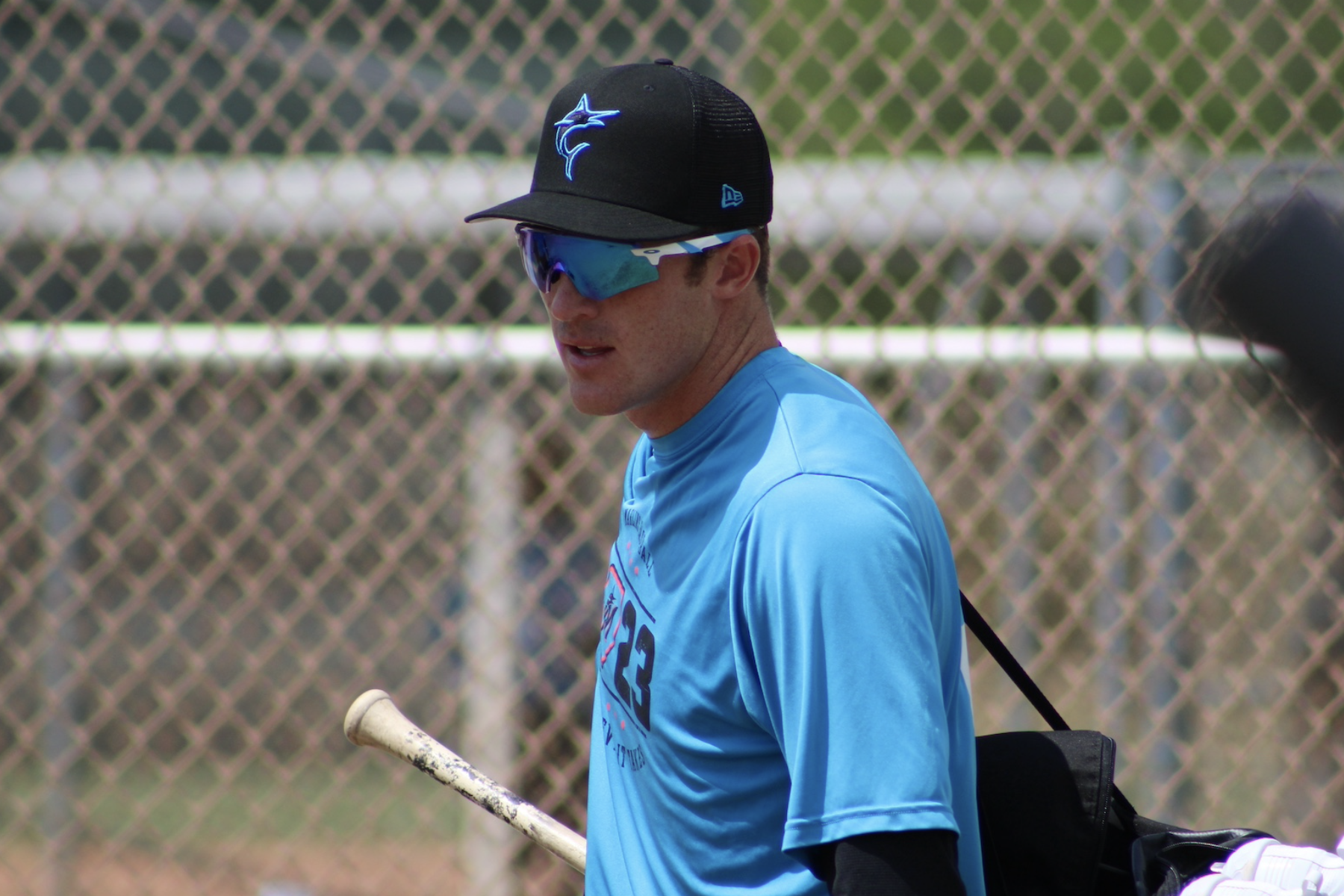 JUPITER, FL—Every spring, in addition to 40-man roster players, MLB clubs bring some of their minor league players to spring training as non-roster invitees. In most cases, NRIs consist of players with the potential to make a big league impact shortly that the team wants to take a closer look at and younger minor league players the team would like to learn from exposure to a preseason big league experience. For Skip Schumaker and his staff, they are treating NRIs the same way they are treating everyone else in camp and the 26-man roster is not yet set. “Just because you aren’t on the 40-man roster doesn’t mean we’re not taking a real look,” Schumaker said. The Marlins manager corroborates this almost daily. Once big league workouts are done, NRIs are sent to get at-bats during minor league scrimmage games. On Thursday afternoon, Schumaker was present to watch Will Banfield, Bennett Hostetler, Jacob Berry and Javier Sanoja (the youngest NRI in camp) take some live at-bats. With the big league staff looking on, Banfield doubled and Hostetler recorded two hits. “There’s guys that are interesting, no doubt about it.” Schumaker said. Schumaker went into detail on a few of his NRIs that he is looking forward to getting a closer look at when spring training games commence. The first name mentioned was Trey Mancini. A seven-year MLB veteran, Mancini is a .263/.328/.448 career bat who plays both first base and corner outfield. He’s struggled offensively in recent years, but Schumaker believes the rest of his career speaks for itself. “He was a very good player for a lot of years,” Schumaker said. “Good right-handed bat, veteran player, great guy, great story. I’m looking forward to seeing him. He’s looked good so far out there.” Another name mentioned by Schumaker was that of the reigning Marlins Minor League Player of the Year, Troy Johnston. Despite a loud 2023, Johnston hasn't been rewarded with a promotion yet. Schumaker related Johnston’s experience this offseason to his own as he was developing as a player. “I remember when I was in AA and led the Southern League, went to Venezuela, led the league there, didn’t get protected,” Schumaker said. “I also wasn’t picked up by the other 29 teams and made my debut the following year.” “He had a great AA/AAA season. So we will see what happens there.” A third name mentioned by Schumaker was catcher Curt Casali. Another vet, Casali is a career .220/.314/.380 bat known well for his defense. In 40 games past season, Casali had a 0.5 dWAR, adding to his career total of 4.2 and a 32% caught stealing percentage. He also carries a 19 in the career defensive runs saved department. Schumaker didn’t forget about his NRI hurlers. There are seven in camp: Elvis Alvarado, Matt Andriese, Luarbert Arias, Yonny Chirinos, Jeff Lindgren, Patrick Monteverde, Devin Smeltzer and Kyle Tyler. In Skip’s experience, guys like this come ready to impress. “There’s always an NRI pitcher that surprises you,” Schumaker said. “I’m hoping and looking forward to one or two NRI arms that surprised us that make our decision really tough at the end of spring training.” The Marlins did not have an NRI crack the Opening Day roster in 2023. Shawn Armstrong was the last to do it when he made the Marlins’ bullpen out of spring training in 2022. The Marlins begin their spring training slate this Saturday against the St. Louis Cardinals. With major league regulars being eased into game action, the club should start to get a good look at these names starting immediately.
- 1 comment
-
- 2
-
-
- troy johnston
- trey mancini
- (and 5 more)
-
After a mentally challenging offseason, Troy Johnston is in Marlins camp as an NRI determined to succeed. JUPITER, FL—Troy Johnston was up early on Monday morning. All players in Marlins camp were scheduled to take their spring training physicals and Johnston had the earliest appointment. He arrived at Marlins camp at 5:30 AM. “They pulled a fast one on me,” he joked. “Someone had to be first.” Johnston hit .307/.399/.549 with 20+ home runs and steals in 2023, at the end of which he was honored as the Marlins’ Minor League Player of the Year. The award is now part of a growing collection of accolades he has been receiving in his pro career. “My parents are awesome and they have, I don’t want to call it a shrine, but they have a shelf that I have most of my awards on,” Johnston said. “It’s right next to/in front of my 2022 Blue Wahoos’ Player of the Year award.” Success aside—these past two seasons especially—Johnston was the first in line for physicals because later times conveniently go to members of the Marlins’ 40-man roster. Johnston is somehow not one of them. This past winter, Johnston was exposed to the Rule 5 Draft for a second consecutive season. Surprisingly, none of the other MLB teams called his name at the Winter Meetings. He is back in Marlins’ camp this year once again as a non-roster invitee. “It’s kind of heartbreaking,” Johnston said. “I had some mental things I had to work through. You’re kind of at a low point where it’s like, 'What else do I have to do? What more?' No one is giving you answers, that kind of stuff.” To help him through what was a very challenging winter—which included working multiple jobs to make ends meet—Johnston sought some professional help from a mental skills coach and described the assistance he got as invaluable. “He was talking about how we have to flip the script,” Johnston said. “You have another opportunity. You’ve set yourself up for a good opportunity. Take that opportunity and don’t squander it.” On the field, despite not having faced live pitching yet, Johnston has been satisfied with how he showed up to camp and his initial output so far. “I’m seeing the ball well, my timing is surprisingly better than I thought,” Johnston said when asked for his thoughts on camp so far. “I feel good, I feel healthy, and I feel happy.” In lieu of what was a frustrating winter for the 26-year-old infielder, Johnston’s mindset this spring is to remain levelheaded and cash in on his most recent chance at his dream to become a big leaguer. While he is determined and wants to convince the Marlins he is ready for the majors as much as possible, he’s also staying true to himself. “Yes, definitely both,” Johnston said. “I can only force their hand so much because parts of it are out of my control.” In the meantime, Johnston is enjoying his second spring training experience so far and has been impressed with the presence in the clubhouse early on. Although full squad report day is not until Tuesday, much of the spring training cavalcade has been present since pitchers and catchers have reported. “Vibes are high. Everybody is really excited to be here,” Johnston said. “Of course this was the first full team practice, but when we were here early a couple days, it pretty much seemed like a full team practice already. They haven’t started making cuts so nobody is really getting nervous. They’re just excited to be here.” Johnston is expected to see time at first base during spring training games, which begin this coming Saturday. View full article
-
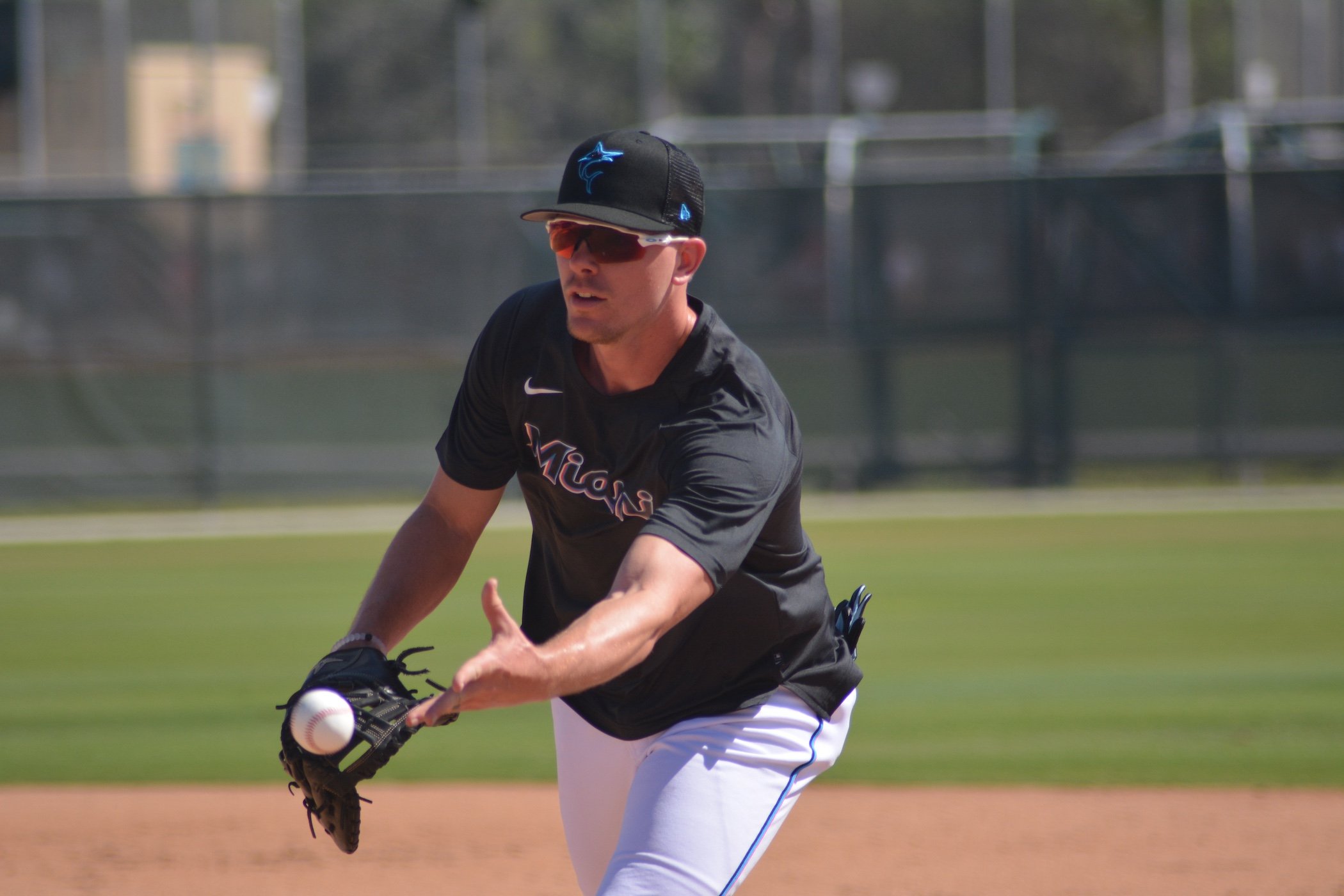 JUPITER, FL—Troy Johnston was up early on Monday morning. All players in Marlins camp were scheduled to take their spring training physicals and Johnston had the earliest appointment. He arrived at Marlins camp at 5:30 AM. “They pulled a fast one on me,” he joked. “Someone had to be first.” Johnston hit .307/.399/.549 with 20+ home runs and steals in 2023, at the end of which he was honored as the Marlins’ Minor League Player of the Year. The award is now part of a growing collection of accolades he has been receiving in his pro career. “My parents are awesome and they have, I don’t want to call it a shrine, but they have a shelf that I have most of my awards on,” Johnston said. “It’s right next to/in front of my 2022 Blue Wahoos’ Player of the Year award.” Success aside—these past two seasons especially—Johnston was the first in line for physicals because later times conveniently go to members of the Marlins’ 40-man roster. Johnston is somehow not one of them. This past winter, Johnston was exposed to the Rule 5 Draft for a second consecutive season. Surprisingly, none of the other MLB teams called his name at the Winter Meetings. He is back in Marlins’ camp this year once again as a non-roster invitee. “It’s kind of heartbreaking,” Johnston said. “I had some mental things I had to work through. You’re kind of at a low point where it’s like, 'What else do I have to do? What more?' No one is giving you answers, that kind of stuff.” To help him through what was a very challenging winter—which included working multiple jobs to make ends meet—Johnston sought some professional help from a mental skills coach and described the assistance he got as invaluable. “He was talking about how we have to flip the script,” Johnston said. “You have another opportunity. You’ve set yourself up for a good opportunity. Take that opportunity and don’t squander it.” On the field, despite not having faced live pitching yet, Johnston has been satisfied with how he showed up to camp and his initial output so far. “I’m seeing the ball well, my timing is surprisingly better than I thought,” Johnston said when asked for his thoughts on camp so far. “I feel good, I feel healthy, and I feel happy.” In lieu of what was a frustrating winter for the 26-year-old infielder, Johnston’s mindset this spring is to remain levelheaded and cash in on his most recent chance at his dream to become a big leaguer. While he is determined and wants to convince the Marlins he is ready for the majors as much as possible, he’s also staying true to himself. “Yes, definitely both,” Johnston said. “I can only force their hand so much because parts of it are out of my control.” In the meantime, Johnston is enjoying his second spring training experience so far and has been impressed with the presence in the clubhouse early on. Although full squad report day is not until Tuesday, much of the spring training cavalcade has been present since pitchers and catchers have reported. “Vibes are high. Everybody is really excited to be here,” Johnston said. “Of course this was the first full team practice, but when we were here early a couple days, it pretty much seemed like a full team practice already. They haven’t started making cuts so nobody is really getting nervous. They’re just excited to be here.” Johnston is expected to see time at first base during spring training games, which begin this coming Saturday.
 -
Marlins prospect Kemp Alderman speaks on his experience so far at his first Spring Training as well as what he took away from his first year pro. View full video
-
Marlins prospect Kemp Alderman speaks on his experience so far at his first Spring Training as well as what he took away from his first year pro.
-
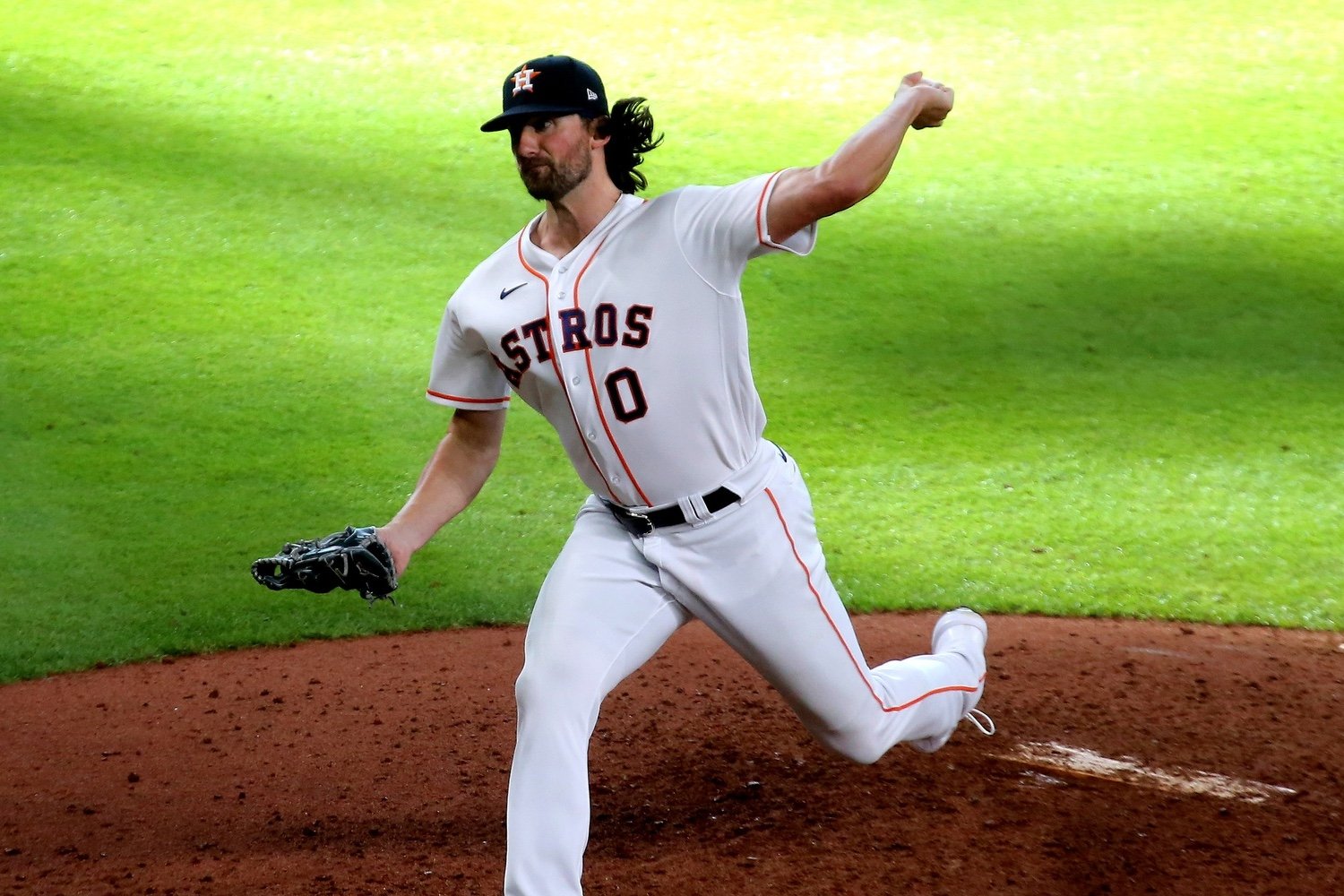 Days after announcing their first batch of Spring Training non-roster invitees, the Marlins made another small minor league signing on Thursday night. Lefty Kent Emanuel will come to Marlins camp this coming week, hoping to make the Opening Day bullpen. Craig Mish of SportsGrid was the first to report Emanuel's signing. Emanuel will be 32 this summer and has hade quite an eventful career for all the wrong reasons. He began his pro career as a third-round pick in 2010. Always lauded for his size, the 6’5” Emanuel held down a 2.52 ERA with a 287/78 K/BB at the University of North Carolina which earned him his draft capital. Emanuel had an effective first two seasons against younger competition and made it up to AA to start 2015. However, his season was very short-lived. After just four games, he went down with an elbow injury that ultimately required Tommy John surgery. He didn’t return to the mound until midway through 2016. In his first lengthy look in the upper minors, he had a 5.23 ERA over 82.2 IP. Emanuel’s most successful year in the upper minors came in 2017 when he was almost fully converted to a reliever. In 28 appearances (101.2 IP), Emanuel held down a 3.90 ERA and had an 81/23 K/BB. Also to his credit was his calling card, a 57% groundball rate. It would be a long time until Emanuel would be able to build off that season's success. After the missed COVID season, Emanuel was suspended 80 games for the use of the banned substance Dehydrochlormethyltestosterone (DHCMT). He returned from his second lengthy absence in April 2021 and was immediately called up to make his big league debut. Pitching for the first time in an affiliated game in 606 days, Emanuel impressed the Astros, tossing 8 ⅔ innings in relief allowing just two earned runs while striking out five. After his debut, Emanuel went on to perform well out of the Astros bullpen. In his first 17 ⅔ total innings, he had a 2.55 ERA and 13/4 K/BB with a 50% ground ball rate. But once again in the middle of solid performance, injury struck. After exiting his final appearance of 2021 with another apparent throwing arm injury, Emanuel underwent an internal bracing surgical procedure in early June. That offseason, he was waived by the Astros and claimed by the Phillies. Recovery from the aforementioned injury landed Emanuel on the 60-day IL to start his career with Philadelphia. He rehabbed in June of 2022 and got back to AAA that July before eventually being shut down again for the season with a shoulder issue. After missing more than a full year, he threw in just 13 total games with the Phillies. This past season, Emanuel returned and pitched for the Pirates organization. He remained healthy after his return in April, but he struggled to find results pitching to a 6.12 ERA—mostly as a starter—and was released in August. Since 2021, he’s thrown just 162 innings. At his core, Emanuel is a fairly soft-tossing lefty with three pitches: fastball, slider and changeup. He’s had a very turbulent career especially on the health front, but if he’s able to stay on the mound, he’s capable of recording quick outs mostly via soft contact when he’s commanding. He can serve as a swing man, but is best suited for shorter stints. With the Marlins, he will get another chance to make it back to the big leagues. As of Friday afternoon, the Marlins have a full 40-man roster and 21 NRIs. They could have up to 63 players in big league camp if both Jordan Groshans and Kaleb Ort clear waivers and are outrighted to the minors.
 -
The Marlins added pitching depth on Thursday night, signing free agent Kent Emanuel to a minor league contract with an invite to Spring Training. Days after announcing their first batch of Spring Training non-roster invitees, the Marlins made another small minor league signing on Thursday night. Lefty Kent Emanuel will come to Marlins camp this coming week, hoping to make the Opening Day bullpen. Craig Mish of SportsGrid was the first to report Emanuel's signing. Emanuel will be 32 this summer and has hade quite an eventful career for all the wrong reasons. He began his pro career as a third-round pick in 2010. Always lauded for his size, the 6’5” Emanuel held down a 2.52 ERA with a 287/78 K/BB at the University of North Carolina which earned him his draft capital. Emanuel had an effective first two seasons against younger competition and made it up to AA to start 2015. However, his season was very short-lived. After just four games, he went down with an elbow injury that ultimately required Tommy John surgery. He didn’t return to the mound until midway through 2016. In his first lengthy look in the upper minors, he had a 5.23 ERA over 82.2 IP. Emanuel’s most successful year in the upper minors came in 2017 when he was almost fully converted to a reliever. In 28 appearances (101.2 IP), Emanuel held down a 3.90 ERA and had an 81/23 K/BB. Also to his credit was his calling card, a 57% groundball rate. It would be a long time until Emanuel would be able to build off that season's success. After the missed COVID season, Emanuel was suspended 80 games for the use of the banned substance Dehydrochlormethyltestosterone (DHCMT). He returned from his second lengthy absence in April 2021 and was immediately called up to make his big league debut. Pitching for the first time in an affiliated game in 606 days, Emanuel impressed the Astros, tossing 8 ⅔ innings in relief allowing just two earned runs while striking out five. After his debut, Emanuel went on to perform well out of the Astros bullpen. In his first 17 ⅔ total innings, he had a 2.55 ERA and 13/4 K/BB with a 50% ground ball rate. But once again in the middle of solid performance, injury struck. After exiting his final appearance of 2021 with another apparent throwing arm injury, Emanuel underwent an internal bracing surgical procedure in early June. That offseason, he was waived by the Astros and claimed by the Phillies. Recovery from the aforementioned injury landed Emanuel on the 60-day IL to start his career with Philadelphia. He rehabbed in June of 2022 and got back to AAA that July before eventually being shut down again for the season with a shoulder issue. After missing more than a full year, he threw in just 13 total games with the Phillies. This past season, Emanuel returned and pitched for the Pirates organization. He remained healthy after his return in April, but he struggled to find results pitching to a 6.12 ERA—mostly as a starter—and was released in August. Since 2021, he’s thrown just 162 innings. At his core, Emanuel is a fairly soft-tossing lefty with three pitches: fastball, slider and changeup. He’s had a very turbulent career especially on the health front, but if he’s able to stay on the mound, he’s capable of recording quick outs mostly via soft contact when he’s commanding. He can serve as a swing man, but is best suited for shorter stints. With the Marlins, he will get another chance to make it back to the big leagues. As of Friday afternoon, the Marlins have a full 40-man roster and 21 NRIs. They could have up to 63 players in big league camp if both Jordan Groshans and Kaleb Ort clear waivers and are outrighted to the minors. View full article
-
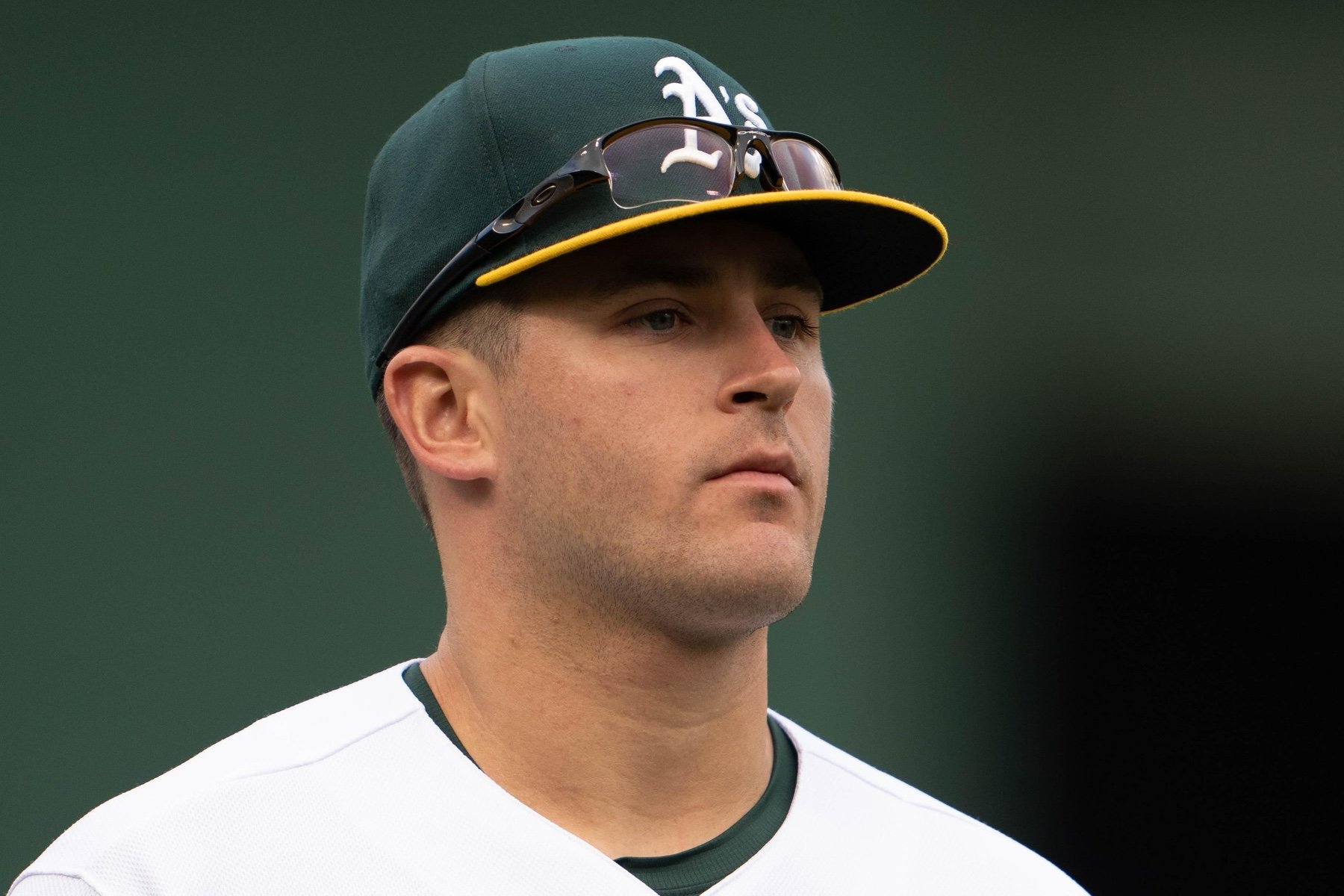 Before closing the book entirely on a slow offseason, the Marlins announced a minor trade on Tuesday night. Miami acquired infielder Jonah Bride from the Oakland Athletics in exchange for cash considerations. Daniel Alvarez of El Extrabase was the first to report. Bride is entering his age-28 season and has spent his entire career this far with Oakland. A 23rd-round pick from the 2018 MLB Draft, Bride enjoyed a .289/.395/.401 collegiate career mostly in the SEC at the University of South Carolina. A four-year collegiate player who also spent the 2020 COVID season idle, Bride was pushed hard by the A’s, playing at three MiLB levels in 2022 before making his big league debut that same season. He began 2023 back at AAA where he hit a loud .305/.432/.544 before being recalled to Oakland. In 40 games with the A’s this past year, Bride slashed an underwhelming .171/.286/.205. Bride’s standout tool has always been exceptional plate discipline. In his minor league career, he racked up 265 walks to just 207 strikeouts. Despite struggles at the big league level so far with contact, Bride has still kept his swings at pitches mostly inside the zone, allowing him a 54/30 K/BB over his 293 plate appearances. The 5’10”, 210-pounder also shows solid athleticism and has shown the ability to take the field wherever he’s been needed. Over the course of his career, he’s played all over the infield, even slotting in as a catcher. His solid righty arm makes him best fit to play third base. As he embarks on his career with Miami, Bride will need to find more barrels (only five of those through his first 201 batted balls vs. major league pitching). He was also hampered by a 50% ground ball rate with the A’s last year, wasting some of his hard-hit balls. Overall, Bride controls the strike zone extremely well. Given his success in the upper minors, there is still the potential for him to become an above-average on-base threat, a fine asset the Marlins could incorporate regularly off the bench at multiple positions. Acquiring him at the cost of just cash considerations is a good bet to make. He will come to Spring Training with a plus chance of making the Opening Day roster; if he doesn’t, he still has an option year remaining. To make room for Bride on the 40 man roster, Jordan Groshans was designated for assignment. Groshans was acquired by Miami at the 2022 trade deadline. He hit .244/.339/.330 with AAA Jacksonville this past season. The rest of the league will have seven days to inquire about Groshans’ services.
 -
On Tuesday evening, the Marlins swung a trade with the Athletics: infielder Jonah Bride for cash considerations. Before closing the book entirely on a slow offseason, the Marlins announced a minor trade on Tuesday night. Miami acquired infielder Jonah Bride from the Oakland Athletics in exchange for cash considerations. Daniel Alvarez of El Extrabase was the first to report. Bride is entering his age-28 season and has spent his entire career this far with Oakland. A 23rd-round pick from the 2018 MLB Draft, Bride enjoyed a .289/.395/.401 collegiate career mostly in the SEC at the University of South Carolina. A four-year collegiate player who also spent the 2020 COVID season idle, Bride was pushed hard by the A’s, playing at three MiLB levels in 2022 before making his big league debut that same season. He began 2023 back at AAA where he hit a loud .305/.432/.544 before being recalled to Oakland. In 40 games with the A’s this past year, Bride slashed an underwhelming .171/.286/.205. Bride’s standout tool has always been exceptional plate discipline. In his minor league career, he racked up 265 walks to just 207 strikeouts. Despite struggles at the big league level so far with contact, Bride has still kept his swings at pitches mostly inside the zone, allowing him a 54/30 K/BB over his 293 plate appearances. The 5’10”, 210-pounder also shows solid athleticism and has shown the ability to take the field wherever he’s been needed. Over the course of his career, he’s played all over the infield, even slotting in as a catcher. His solid righty arm makes him best fit to play third base. As he embarks on his career with Miami, Bride will need to find more barrels (only five of those through his first 201 batted balls vs. major league pitching). He was also hampered by a 50% ground ball rate with the A’s last year, wasting some of his hard-hit balls. Overall, Bride controls the strike zone extremely well. Given his success in the upper minors, there is still the potential for him to become an above-average on-base threat, a fine asset the Marlins could incorporate regularly off the bench at multiple positions. Acquiring him at the cost of just cash considerations is a good bet to make. He will come to Spring Training with a plus chance of making the Opening Day roster; if he doesn’t, he still has an option year remaining. To make room for Bride on the 40 man roster, Jordan Groshans was designated for assignment. Groshans was acquired by Miami at the 2022 trade deadline. He hit .244/.339/.330 with AAA Jacksonville this past season. The rest of the league will have seven days to inquire about Groshans’ services. View full article
-
Despite being one of the most recognizable and feared hitters in baseball for decades, Sheffield did not make it to Cooperstown after 10 years on the ballot. Gary Sheffield’s time on the BBWAA Hall of Fame ballot has come and gone. As the voting results were revealed on Tuesday tonight, it was confirmed that he was again denied election to Cooperstown. Sheffield recevied the most support he ever has, but in heartbreaking fashion, he missed election by a narrow 11.1%, garnering 63.9% of the necessary 75% of the electorate's vote. What was the case for voting against Gary Sheffield over these last 10 straight years? Let's explore one final time. Let’s get it out of the way first: yes, Gary Sheffield used a BALCO product. Famously at the spike of the steroid era in 2002, Sheffield trained with Barry Bonds. After being mentioned in the Mitchell Report, he admitted to applying a topical cream produced by BALCO to his knees during that tenure. This undoubtedly is one of the main reasons why Sheffield was not elected. But let’s talk about something else that Bonds and Sheffield also have in common: they were both on a Hall of Fame track before they started using. Sheffield (14th season) and Bonds (13th season) were at similar points in their career when their first use cases happened. Comparing the two players pre-first use, we see very similar slash lines that made both players two of the best hitters in the game. In Sheffield’s case, he had already racked up over300 home runs, he had been a main contributor to a World Series winning team, and he won a batting title for having one of the best seasons in Marlins’ history. On top of that, he won two Silver Sluggers and six All Star Game selections. During that stretch, he was one of 14 players in baseball to play in over 1000 games and OPS at least .900. Whether Sheffield did it knowingly or not, using this as an excuse to keep him off of your ballot would be acceptable if (big if) steroids helped his performance greatly improve. Did they? Statistics say no. Before 2002, Sheffield slashed .295/.399/.521 and averaged 22 home runs a season. Afterwards, in a smaller sample, he slashed .287/.384/.503 with an average of 24 home runs a season. The proof is on the page: whatever Sheffield used did not greatly help his performance and did not make him a Hall of Famer. He did that on his own. And oh, by the way, he never got caught or suspended for steroid use. This should not be have been treated nearly as simply as it seemingly was by some voters. Let’s talk about the other knock of Sheffield’s candidacy: defense. Yes, it is true that Sheffield was objectively not good with his glove. In fact, he was one of the worst gloves in baseball during his tenure. After not being able to make it work at either shortstop or third base early on in his career, Sheff moved to the outfield where he more often than not struggled. For his career, he posted a -27.7 dWAR. This severely impacted Sheffield’s overall WAR. However, what he did with the bat to become one of the most memorable and recognizable hitters arguably of his generation more than made up for those shortcomings. By posting a career 80.7 oWAR, something only 36 other players have ever done in their careers, Sheff ended his 22-year run with a 60.5 marker for overall WAR. Currently, there are 37 post-dead ball era outfielders in the Hall of Fame with a 60.5 WAR or less. His defense should nearly be a non-factor. The only other question mark around Sheffield during his playing tenure that has been pointed to as a caveat to his great play was his relationship with media members. Some didn’t like Sheffield’s brash and very honest nature and have since used this as fuel to leave his name unchecked. However, the Hall of Fame is about telling the story of baseball, not about telling us who was better in front of a microphone. Let's take a quick look at the National Baseball Hall of Fame's voting guidelines: 5. Voting: Voting shall be based upon the player's record, playing ability, integrity, sportsmanship, character, and contributions to the team(s) on which the player played. No matter what team you rooted for during Sheffield’s incredible playing career, it didn’t matter. You knew his iconic bat waggle and tried to replicate it in your little league games and games of backyard baseball. You knew his beautifully violent swing. You saw him finish top three in MVP voting three times. You saw his name was all over print media for far more right reasons than for wrong reasons. You still know him today as the only player in MLB history to hit 500+ home runs having never struck out more than 83 times in a season. The story of the history of baseball will remain incomplete without Gary Sheffield in Cooperstown. Although this was a very disappointing day for both Sheffield and the baseball world as a whole, this wrong can still be righted. The 16-person Contemporary Baseball Era Committee will meet again in December 2025. At that time, Sheffield should have the opportunity to join his fellow Tampa, Florida native Fred McGriff as players who were snubbed by the BBWAA, but ultimately got the induction they deserved. View full article
-
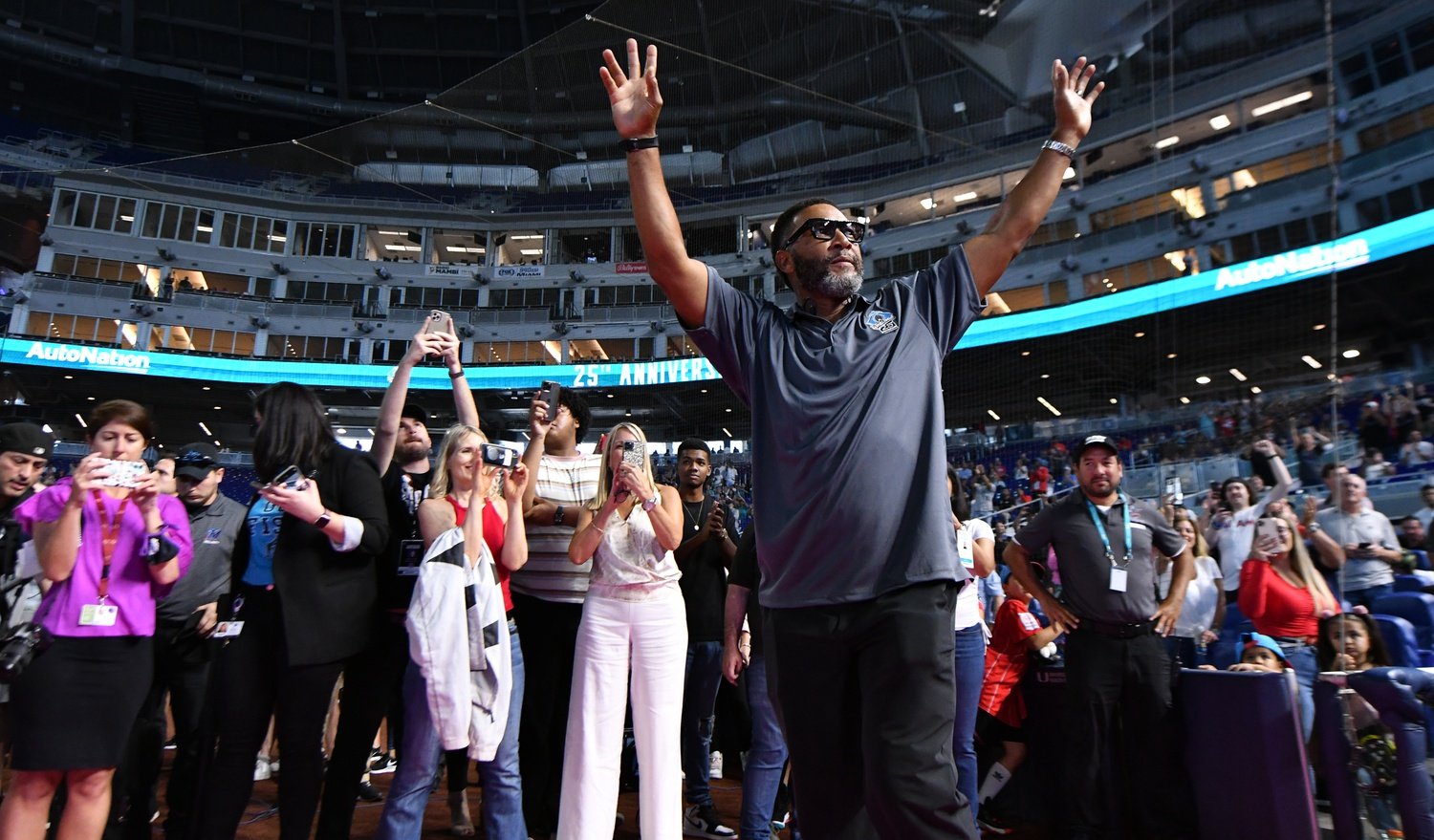 Gary Sheffield’s time on the BBWAA Hall of Fame ballot has come and gone. As the voting results were revealed on Tuesday tonight, it was confirmed that he was again denied election to Cooperstown. Sheffield recevied the most support he ever has, but in heartbreaking fashion, he missed election by a narrow 11.1%, garnering 63.9% of the necessary 75% of the electorate's vote. What was the case for voting against Gary Sheffield over these last 10 straight years? Let's explore one final time. Let’s get it out of the way first: yes, Gary Sheffield used a BALCO product. Famously at the spike of the steroid era in 2002, Sheffield trained with Barry Bonds. After being mentioned in the Mitchell Report, he admitted to applying a topical cream produced by BALCO to his knees during that tenure. This undoubtedly is one of the main reasons why Sheffield was not elected. But let’s talk about something else that Bonds and Sheffield also have in common: they were both on a Hall of Fame track before they started using. Sheffield (14th season) and Bonds (13th season) were at similar points in their career when their first use cases happened. Comparing the two players pre-first use, we see very similar slash lines that made both players two of the best hitters in the game. In Sheffield’s case, he had already racked up over300 home runs, he had been a main contributor to a World Series winning team, and he won a batting title for having one of the best seasons in Marlins’ history. On top of that, he won two Silver Sluggers and six All Star Game selections. During that stretch, he was one of 14 players in baseball to play in over 1000 games and OPS at least .900. Whether Sheffield did it knowingly or not, using this as an excuse to keep him off of your ballot would be acceptable if (big if) steroids helped his performance greatly improve. Did they? Statistics say no. Before 2002, Sheffield slashed .295/.399/.521 and averaged 22 home runs a season. Afterwards, in a smaller sample, he slashed .287/.384/.503 with an average of 24 home runs a season. The proof is on the page: whatever Sheffield used did not greatly help his performance and did not make him a Hall of Famer. He did that on his own. And oh, by the way, he never got caught or suspended for steroid use. This should not be have been treated nearly as simply as it seemingly was by some voters. Let’s talk about the other knock of Sheffield’s candidacy: defense. Yes, it is true that Sheffield was objectively not good with his glove. In fact, he was one of the worst gloves in baseball during his tenure. After not being able to make it work at either shortstop or third base early on in his career, Sheff moved to the outfield where he more often than not struggled. For his career, he posted a -27.7 dWAR. This severely impacted Sheffield’s overall WAR. However, what he did with the bat to become one of the most memorable and recognizable hitters arguably of his generation more than made up for those shortcomings. By posting a career 80.7 oWAR, something only 36 other players have ever done in their careers, Sheff ended his 22-year run with a 60.5 marker for overall WAR. Currently, there are 37 post-dead ball era outfielders in the Hall of Fame with a 60.5 WAR or less. His defense should nearly be a non-factor. The only other question mark around Sheffield during his playing tenure that has been pointed to as a caveat to his great play was his relationship with media members. Some didn’t like Sheffield’s brash and very honest nature and have since used this as fuel to leave his name unchecked. However, the Hall of Fame is about telling the story of baseball, not about telling us who was better in front of a microphone. Let's take a quick look at the National Baseball Hall of Fame's voting guidelines: 5. Voting: Voting shall be based upon the player's record, playing ability, integrity, sportsmanship, character, and contributions to the team(s) on which the player played. No matter what team you rooted for during Sheffield’s incredible playing career, it didn’t matter. You knew his iconic bat waggle and tried to replicate it in your little league games and games of backyard baseball. You knew his beautifully violent swing. You saw him finish top three in MVP voting three times. You saw his name was all over print media for far more right reasons than for wrong reasons. You still know him today as the only player in MLB history to hit 500+ home runs having never struck out more than 83 times in a season. The story of the history of baseball will remain incomplete without Gary Sheffield in Cooperstown. Although this was a very disappointing day for both Sheffield and the baseball world as a whole, this wrong can still be righted. The 16-person Contemporary Baseball Era Committee will meet again in December 2025. At that time, Sheffield should have the opportunity to join his fellow Tampa, Florida native Fred McGriff as players who were snubbed by the BBWAA, but ultimately got the induction they deserved.
 -
Alex and Kevin summarize the international signings and Fish Fest interviews that took place last week. Alex Carver and Kevin Barral guide you through a very busy week of Miami Marlins prospect news that included 2024 International Signing Day, reports of Andrew Salas agreeing to a multi-million dollar deal for 2025 and takeaways from Double-A Pensacola's annual Fish Fest event. Enjoy Episode 58 of Swimming Upstream. Subscribe to the Fish On First YouTube channel to watch video versions of every Swimming Upstream episode. Read up on the 21 international players who signed last Monday and the talented Salas, who's expected to receive a bonus of nearly $4 million to headline next year's class. Follow Alex (@marlinsminors), Kevin (@kevin_barral) and Fish On First (@FishOnFirst) on Twitter. Complete Miami Marlins coverage here at FishOnFirst.com. Our Fish On First podcast programming includes The Offishial Show, Fish Unfiltered, Swimming Upstream, Big Fish Small Pod and What a Relief. You can subscribe on Apple Podcasts, Google Podcasts, Spotify, Stitcher, Podbean, Megaphone or wherever you normally get your pods from. View full article


