



Nicole Cahill
-
Posts
2 -
Joined
-
Last visited
Content Type
Profiles
Miami Marlins Videos
2026 Miami Marlins Top Prospects Ranking
Miami Marlins Free Agent & Trade Rumors, Notes, & Tidbits
Guides & Resources
News
2025 Miami Marlins Draft Pick Tracker
2026 Miami Marlins Draft Tracker: Picks & Bonuses
Forums
Blogs
Events
Store
Downloads
Gallery
Everything posted by Nicole Cahill
-
fwiw, it was Jeter (not Ng) that was responsible for signing Avisaíl García. The Miami Herald reported that Jeter and García met over breakfast because Jeter wanted to look him in the eyes as García made his pitch for why he'd be a good fit for the Marlins. The quote below is from Jordan McPherson's December 13, 2021 article in the Miami Herald: "I've dealt with a lot of people in my life and I think I'm a pretty good judge of character in terms of when someone's telling me the truth or not," Jeter said of Garcia, "and you could see in his eye he was excited at the possibility of coming here. That's what you want to hear." Here's the link to that article if you'd like to read more: https://www.miamiherald.com/sports/mlb/miami-marlins/article256498451.html
-
Kim Ng was fully capable of constructing a winning roster and staff all along. Kim Ng was fully capable of constructing a winning roster and staff all along. When Bruce Sherman & Co. bought the Miami Marlins and Derek Jeter was named CEO in 2017, I hoped that the arrival of a player accustomed to winning would help reinvigorate the franchise. I was hesitant, however, because of Jeter's lack of front office experience. But anyone, I told myself, was better than the duo of Jeffrey Loria and David Samson. Looking back, it appears the organization just traded one problem for another. Apart from the pandemic-shortened 2020 season, the franchise had not enjoyed a winning season since 2009, well before the team became the Miami Marlins and new ownership took over. We all know the changes Jeter made during his first year running the team: a fire sale of Giancarlo Stanton, Christian Yelich, and Marcell Ozuna in an attempt to rebuild the franchise. One of those moves was a success—trading Ozuna for a package of prospects that included Sandy Alcantara and Zac Gallen is one of Jeter’s biggest accomplishments with the Miami Marlins. The Stanton and Yelich trades, however, were less successful. Just one of the seven players obtained in return for them (Starlin Castro) produced above replacement level in South Florida. As the rebuild began, the Marlins went 63-98 in 2018 and 57-105 in 2019. With the help of a 60-game schedule and expanded playoffs in 2020, the 31-29 Marlins snuck into the postseason for the first time since 2003. They beat the Cubs in the NL Wild Card Series before a swift three-game sweep from the Braves in the NL Division Series. Inherited from previous ownership, president of baseball operations Michael Hill had remained in the front office during that period, but when his contract expired in October 2020, Jeter took it as an opportunity to handpick a successor. The following month, the Marlins announced they were hiring Kim Ng as their new general manager. The move was historically significant with Ng being the first woman general manager in any of the four major North American sports. The hiring also appeared to signal a change of direction for a franchise that was stagnant. Jeter said the following in part of a prepared statement: We look forward to Kim bringing a wealth of knowledge and championship-level experience to the Miami Marlins. Her leadership of our baseball operations team will play a major role on our path toward sustained success. This sounded fantastic and was a move that was necessary because of Jeter’s complete lack of baseball ops experience. “Her leadership of our baseball operations team” sounded like she would make those crucial decisions, a role she earned after 30 years of experience in Major League Baseball with 21 of those years working in teams’ front offices. Here is Ng’s resume prior to joining the Marlins (h/t Sarah Langs, MLB.com): 1990-1996: Chicago White Sox front office 1990: Intern in front office 1991-94: Hired full time as a special projects analyst for front office 1995-96: Assistant director of baseball operations 1997: American League front office Director of waivers and records 1998-2001: New York Yankees front office Assistant general manager (youngest AGM in baseball at 29 years old) 2002-2010: Los Angeles Dodgers front office Vice president Assistant general manager Oversaw pro-scouting Took part in decision-making conversations on player transactions, including trades and free agency Interim farm director (2004) 2011-2020: Major League Baseball’s Commissioner’s Office Senior vice president of baseball operations That’s an extensive amount of experience that came with a lot of success. During Ng’s time in front offices, she was a part of eight postseason appearances. Specifically with New York, the Yankees made the playoffs all four years she was there and won the World Series three times. She worked directly with Yankees’ general manager Brian Cashman who had this to say after Ng was hired by the Marlins: As assistant general manager with the Yankees, she was indispensable to me when I first began my tenure as the GM. With her wealth of experience, knowledge, and a history of success, the hiring seemed like a no-brainer, especially considering this was Jeter’s post-playing career resume when he took over with the Marlins: None However, the first two seasons with Ng at the helm looked much like the previous three. In hindsight, we know why: Derek Jeter remained the lead decision-maker, hindering Kim Ng from running the franchise as she intended. During Jeter’s time as CEO, the franchise’s decisions were said to be made in collaboration with others in the front office. The issue is many of these collaborators were Jeter cronies whose many qualification for their positions was having New York Yankees ties. One of those people was Gary Denbo, who stepped into the role of vice president of player development and scouting a week after the Sherman-led ownership deal was approved. Denbo was with the organization from October 2017 until June 29, 2022, a few months after Jeter left the Marlins. In May 2019, Ken Rosenthal wrote a very detailed article for The Athletic about how Denbo was “tearing up a franchise and creating enemies along the way.” It’s a fantastic account of Denbo’s early years with the Marlins that I recommend you read. There are a few things that I found illuminating in Rosenthal’s reporting that I’d like to touch on here. Denbo was described as “an unyielding authoritarian” by former employees and colleagues who say he “engaged in verbal abuse, fat shaming and blatant favoritism toward certain Marlins personnel.” Many people who worked with Denbo during his time with the Yankees and Marlins that found him difficult to work with, including this anecdote Rosenthal described: Unwilling to tolerate differences of opinion, Denbo would favor certain Yankees employees and all but ignore others, walking past them without saying hello. Camps formed within the organization. Those Denbo trusted were devoted to him; those he excluded felt marginalized, even belittled. A staffer who disappointed Denbo or disagreed with him could move quickly from the former group to the latter. “His way was the only way,” one former Yankees colleague says. “He was always right.” — Ken Rosenthal, The Athletic Another said they had “never encountered someone in baseball—or in life, honestly—who seemed to go so far out of their way to treat other people badly.” Marlins personnel began to “[grow] nervous in his presence, knowing he was prone to snap, his face turning red, his language turning foul.” Many former Marlins employees told The Athletic that Denbo’s personality and decision-making were the main reasons they left their positions with the team. Furthermore, as Rosenthal detailed in his 2019 story, Denbo’s intolerance of differing opinions led to the departure of beloved assistant farm director Brett West who “learned quickly that the fastest way to fall out of favor with Denbo was to disagree with him—for example, by offering a dissenting evaluation on a player, the type of opinion that sparks constructive debate in virtually every organization.” True collaboration is a necessary part of running successful organizations. It’s not collaboration if disagreement and debate spur such vitriol from one of the key people in charge. Along with a toxic atmosphere, it seems like the scales were tipped in the opposite direction under Jeter: the general manager with 30 years in the business was forced to get decisions approved by the CEO with none. It's been about one full year since Denbo followed Jeter out the door. That has finally allowed Ng to do the job she was hired to do: run the team. With the benefit of increased financial support from principal owner Bruce Sherman—increased Opening Day payroll about $13 million from last season—Ng's made moves both big and small to yield more on-field success than the Marlins have had in years. Trading Pablo López for Luis Arraez is the most obvious move. Arraez leads all qualified hitters with a .383 batting average, .434 on-base percentage, and his 149 wRC+ is seventh-best in baseball. Arraez has been much better than advertised on defense, posting 3 defensive runs saved at second base, part of the Marlins being the best positioned infield defense this year. Teammates also rave about his energy and work ethic, per Jordan McPherson of the Miami Herald. Solidifying the bullpen was also a point of emphasis this offseason. The Marlins acquired A.J. Puk from the Athletics for JJ Bleday. Two tough outings last week have bloated his numbers a bit, pushing his ERA from 2.77 to 4.03. But overall, Puk has been solid during his first season as a closer. The team also traded for right-handed reliever JT Chargois who has been another solid arm in the bullpen. Chargois was acquired along with prospect Xavier Edwards from the Rays for two minor league players. Edwards was the Rays’ No. 7 prospect at the time of the trade and he's now leading the International League's batting title race. Some of Ng's transactions seemed inconsequential at the time, like when the Marlins traded for journeyman Jonathan Davis on May 22, shortly after Jazz Chisholm Jr. went on the injured list with turf toe. Davis had back-to-back three hit games in his first two starts and far exceeded his career track record by slashing .266/.326/.418 while Chisholm was on the IL. Playing time thinned out went Jazz returned, and a few games later, Davis suffered an unfortunate knee injury. Miami then called on Dane Myers, the 27-year-old utility man they plucked from the Detroit Tigers in the minor league phase of the Rule 5 Draft. Myers has been fantastic during his first six games, going 9-for-22 with four multi-hit games. Ng also signed veterans Yuli Gurriel and Garrett Hampson to minor league free agent deals this offseason. Gurriel has put up league-average offensive numbers and Hampson has provided defensive versatility. The biggest free agent signings have proved to be the least successful moves made during the 2022-23 offseason. Johnny Cueto’s season has been incredibly disappointing, to say the least. He suffered a biceps injury 30 pitches into his first start and looked terrible in his recent rehab starts. It’ll be interesting to see how long a leash the team has with him when he returns to the mound after the All-Star break (reportedly as a reliever). Jean Segura is the other big free agent signing. He got off to a dreadfully slow start, but has looked much better at the plate recently. Since returning from the injured list on June 27, Segura is slashing .333/.388/.400 with improved quality of contact numbers. I don’t think the hiring of manager Skip Schumaker should be overlooked either. The rookie manager has done an incredible job of both in-game management and transforming the dynamic between the coaching staff and players. As reported in the Miami Herald last week, players appreciate the level of communication from Schumaker. Skip and his staff are also bringing a level of individualized preparation to hitters that has “revolutionized the way Marlins hitters do their homework on opposing pitchers,” Barry Jackson of the Miami Herald detailed in early July. Not every acquisition is going to be a perfect one, but Ng and her staff have done a good job identifying under-the-radar bats in Davis and Myers and pitchers who have fit well in high-leverage bullpen roles. These victories on the margins, which were so few and far between for Miami during the previous half-decade, have helped sustain the team’s success despite disappointing performances elsewhere. At 53-39, the Miami Marlins have set a franchise record for total wins in the first half and the fanbase is as energized as ever. The team is 14 games above .500 with a firm grasp on the first NL Wild Card spot. It’s almost as if, with 30 years of front office experience, general manager Kim Ng was fully capable of constructing a winning roster and staff all along. And that’s because she was. View full article
-
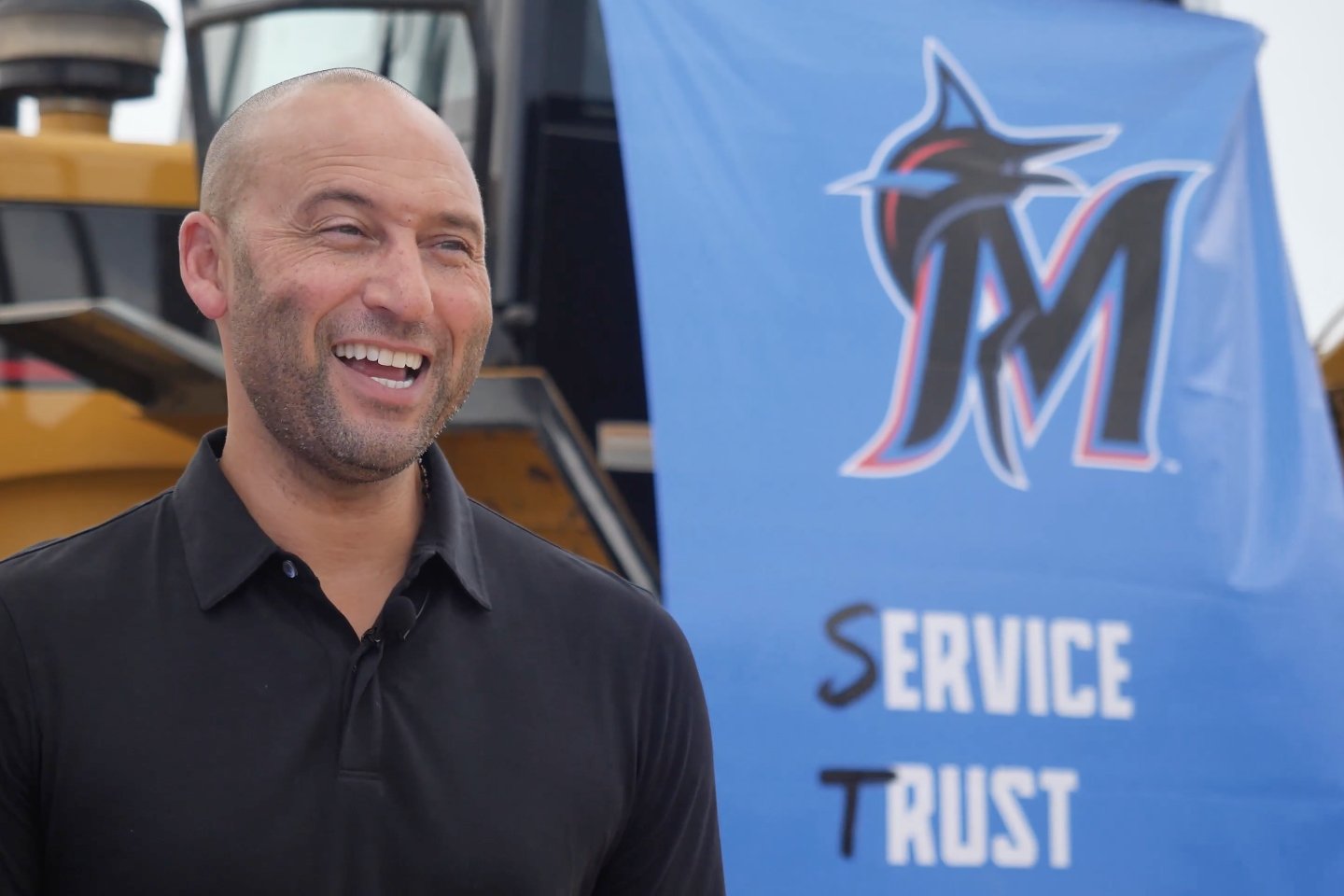 When Bruce Sherman & Co. bought the Miami Marlins and Derek Jeter was named CEO in 2017, I hoped that the arrival of a player accustomed to winning would help reinvigorate the franchise. I was hesitant, however, because of Jeter's lack of front office experience. But anyone, I told myself, was better than the duo of Jeffrey Loria and David Samson. Looking back, it appears the organization just traded one problem for another. Apart from the pandemic-shortened 2020 season, the franchise had not enjoyed a winning season since 2009, well before the team became the Miami Marlins and new ownership took over. We all know the changes Jeter made during his first year running the team: a fire sale of Giancarlo Stanton, Christian Yelich, and Marcell Ozuna in an attempt to rebuild the franchise. One of those moves was a success—trading Ozuna for a package of prospects that included Sandy Alcantara and Zac Gallen is one of Jeter’s biggest accomplishments with the Miami Marlins. The Stanton and Yelich trades, however, were less successful. Just one of the seven players obtained in return for them (Starlin Castro) produced above replacement level in South Florida. As the rebuild began, the Marlins went 63-98 in 2018 and 57-105 in 2019. With the help of a 60-game schedule and expanded playoffs in 2020, the 31-29 Marlins snuck into the postseason for the first time since 2003. They beat the Cubs in the NL Wild Card Series before a swift three-game sweep from the Braves in the NL Division Series. Inherited from previous ownership, president of baseball operations Michael Hill had remained in the front office during that period, but when his contract expired in October 2020, Jeter took it as an opportunity to handpick a successor. The following month, the Marlins announced they were hiring Kim Ng as their new general manager. The move was historically significant with Ng being the first woman general manager in any of the four major North American sports. The hiring also appeared to signal a change of direction for a franchise that was stagnant. Jeter said the following in part of a prepared statement: We look forward to Kim bringing a wealth of knowledge and championship-level experience to the Miami Marlins. Her leadership of our baseball operations team will play a major role on our path toward sustained success. This sounded fantastic and was a move that was necessary because of Jeter’s complete lack of baseball ops experience. “Her leadership of our baseball operations team” sounded like she would make those crucial decisions, a role she earned after 30 years of experience in Major League Baseball with 21 of those years working in teams’ front offices. Here is Ng’s resume prior to joining the Marlins (h/t Sarah Langs, MLB.com): 1990-1996: Chicago White Sox front office 1990: Intern in front office 1991-94: Hired full time as a special projects analyst for front office 1995-96: Assistant director of baseball operations 1997: American League front office Director of waivers and records 1998-2001: New York Yankees front office Assistant general manager (youngest AGM in baseball at 29 years old) 2002-2010: Los Angeles Dodgers front office Vice president Assistant general manager Oversaw pro-scouting Took part in decision-making conversations on player transactions, including trades and free agency Interim farm director (2004) 2011-2020: Major League Baseball’s Commissioner’s Office Senior vice president of baseball operations That’s an extensive amount of experience that came with a lot of success. During Ng’s time in front offices, she was a part of eight postseason appearances. Specifically with New York, the Yankees made the playoffs all four years she was there and won the World Series three times. She worked directly with Yankees’ general manager Brian Cashman who had this to say after Ng was hired by the Marlins: As assistant general manager with the Yankees, she was indispensable to me when I first began my tenure as the GM. With her wealth of experience, knowledge, and a history of success, the hiring seemed like a no-brainer, especially considering this was Jeter’s post-playing career resume when he took over with the Marlins: None However, the first two seasons with Ng at the helm looked much like the previous three. In hindsight, we know why: Derek Jeter remained the lead decision-maker, hindering Kim Ng from running the franchise as she intended. During Jeter’s time as CEO, the franchise’s decisions were said to be made in collaboration with others in the front office. The issue is many of these collaborators were Jeter cronies whose many qualification for their positions was having New York Yankees ties. One of those people was Gary Denbo, who stepped into the role of vice president of player development and scouting a week after the Sherman-led ownership deal was approved. Denbo was with the organization from October 2017 until June 29, 2022, a few months after Jeter left the Marlins. In May 2019, Ken Rosenthal wrote a very detailed article for The Athletic about how Denbo was “tearing up a franchise and creating enemies along the way.” It’s a fantastic account of Denbo’s early years with the Marlins that I recommend you read. There are a few things that I found illuminating in Rosenthal’s reporting that I’d like to touch on here. Denbo was described as “an unyielding authoritarian” by former employees and colleagues who say he “engaged in verbal abuse, fat shaming and blatant favoritism toward certain Marlins personnel.” Many people who worked with Denbo during his time with the Yankees and Marlins that found him difficult to work with, including this anecdote Rosenthal described: Unwilling to tolerate differences of opinion, Denbo would favor certain Yankees employees and all but ignore others, walking past them without saying hello. Camps formed within the organization. Those Denbo trusted were devoted to him; those he excluded felt marginalized, even belittled. A staffer who disappointed Denbo or disagreed with him could move quickly from the former group to the latter. “His way was the only way,” one former Yankees colleague says. “He was always right.” — Ken Rosenthal, The Athletic Another said they had “never encountered someone in baseball—or in life, honestly—who seemed to go so far out of their way to treat other people badly.” Marlins personnel began to “[grow] nervous in his presence, knowing he was prone to snap, his face turning red, his language turning foul.” Many former Marlins employees told The Athletic that Denbo’s personality and decision-making were the main reasons they left their positions with the team. Furthermore, as Rosenthal detailed in his 2019 story, Denbo’s intolerance of differing opinions led to the departure of beloved assistant farm director Brett West who “learned quickly that the fastest way to fall out of favor with Denbo was to disagree with him—for example, by offering a dissenting evaluation on a player, the type of opinion that sparks constructive debate in virtually every organization.” True collaboration is a necessary part of running successful organizations. It’s not collaboration if disagreement and debate spur such vitriol from one of the key people in charge. Along with a toxic atmosphere, it seems like the scales were tipped in the opposite direction under Jeter: the general manager with 30 years in the business was forced to get decisions approved by the CEO with none. It's been about one full year since Denbo followed Jeter out the door. That has finally allowed Ng to do the job she was hired to do: run the team. With the benefit of increased financial support from principal owner Bruce Sherman—increased Opening Day payroll about $13 million from last season—Ng's made moves both big and small to yield more on-field success than the Marlins have had in years. Trading Pablo López for Luis Arraez is the most obvious move. Arraez leads all qualified hitters with a .383 batting average, .434 on-base percentage, and his 149 wRC+ is seventh-best in baseball. Arraez has been much better than advertised on defense, posting 3 defensive runs saved at second base, part of the Marlins being the best positioned infield defense this year. Teammates also rave about his energy and work ethic, per Jordan McPherson of the Miami Herald. Solidifying the bullpen was also a point of emphasis this offseason. The Marlins acquired A.J. Puk from the Athletics for JJ Bleday. Two tough outings last week have bloated his numbers a bit, pushing his ERA from 2.77 to 4.03. But overall, Puk has been solid during his first season as a closer. The team also traded for right-handed reliever JT Chargois who has been another solid arm in the bullpen. Chargois was acquired along with prospect Xavier Edwards from the Rays for two minor league players. Edwards was the Rays’ No. 7 prospect at the time of the trade and he's now leading the International League's batting title race. Some of Ng's transactions seemed inconsequential at the time, like when the Marlins traded for journeyman Jonathan Davis on May 22, shortly after Jazz Chisholm Jr. went on the injured list with turf toe. Davis had back-to-back three hit games in his first two starts and far exceeded his career track record by slashing .266/.326/.418 while Chisholm was on the IL. Playing time thinned out went Jazz returned, and a few games later, Davis suffered an unfortunate knee injury. Miami then called on Dane Myers, the 27-year-old utility man they plucked from the Detroit Tigers in the minor league phase of the Rule 5 Draft. Myers has been fantastic during his first six games, going 9-for-22 with four multi-hit games. Ng also signed veterans Yuli Gurriel and Garrett Hampson to minor league free agent deals this offseason. Gurriel has put up league-average offensive numbers and Hampson has provided defensive versatility. The biggest free agent signings have proved to be the least successful moves made during the 2022-23 offseason. Johnny Cueto’s season has been incredibly disappointing, to say the least. He suffered a biceps injury 30 pitches into his first start and looked terrible in his recent rehab starts. It’ll be interesting to see how long a leash the team has with him when he returns to the mound after the All-Star break (reportedly as a reliever). Jean Segura is the other big free agent signing. He got off to a dreadfully slow start, but has looked much better at the plate recently. Since returning from the injured list on June 27, Segura is slashing .333/.388/.400 with improved quality of contact numbers. I don’t think the hiring of manager Skip Schumaker should be overlooked either. The rookie manager has done an incredible job of both in-game management and transforming the dynamic between the coaching staff and players. As reported in the Miami Herald last week, players appreciate the level of communication from Schumaker. Skip and his staff are also bringing a level of individualized preparation to hitters that has “revolutionized the way Marlins hitters do their homework on opposing pitchers,” Barry Jackson of the Miami Herald detailed in early July. Not every acquisition is going to be a perfect one, but Ng and her staff have done a good job identifying under-the-radar bats in Davis and Myers and pitchers who have fit well in high-leverage bullpen roles. These victories on the margins, which were so few and far between for Miami during the previous half-decade, have helped sustain the team’s success despite disappointing performances elsewhere. At 53-39, the Miami Marlins have set a franchise record for total wins in the first half and the fanbase is as energized as ever. The team is 14 games above .500 with a firm grasp on the first NL Wild Card spot. It’s almost as if, with 30 years of front office experience, general manager Kim Ng was fully capable of constructing a winning roster and staff all along. And that’s because she was.
 -
How Chisholm's passive approach at the plate differs from his successful 2022 season. How Chisholm's passive approach at the plate differs from his successful 2022 season. Jazz Chisholm Jr. seemed to be coming into his own before an injury sidelined him for the second half of the 2022 season. The then-24-year-old second baseman was posting the best offensive numbers of his brief career. Fast-forward to 2023, however, Chisholm often seems lost at the plate. Both his approach at the plate and how opposing pitchers are attacking him are completely different from his All-Star-worthy campaign. Before his unfortunate back injury in 2022, a lot of things were going right. His .365 wOBA was the best mark of his career, along with career best walk (8.7%) and strikeout (27.4%) rates. Through 60 games, Chisholm’s run production was 39% better than league average (139 wRC+). His performance at the plate was the culmination of an ideal offensive approach: hitting balls hard and in the air. Ideal Plate Appearance (IPA%) is a statistic coined by Pitcher List that quantifies how often a batter’s plate appearance ends in contact that generally leads to positive results. There are three types of batted balls that are considered “ideal”: barrels, solids, and flare/burners. Now, what makes these types of batted balls ideal? In the interest of brevity, I’ll oversimplify it with the average batting average and slugging percentage for each of the six types of batted balls. Looking at the numbers, it’s a no-brainer: To get the percent of plate appearances that are “ideal,” you’d then divide by the batter’s number of plate appearances. This is different than other statistics that use batted ball events as the driving numbers because it also takes into account the batter’s strikeout and walk rates. If you’re wondering why it matters to use plate appearances rather than batted ball events with quality of contact metrics, you can read Alexander Chase’s article at Pitcher List here. The oversimplification is this: batted ball events only looks at what happens if a player makes contact, therefore completely ignoring how good or bad their plate discipline is. A quick example: In 2022, Tommy Pham and Freddie Freeman had nearly identical, 88th percentile hard-hit rates—Pham with 48.2% and Freeman with 48.0%. Were Pham and Freeman the same caliber of hitters because nearly half of their batted balls were hit at 95 mph or more? Absolutely not. Freeman made contact a lot more frequently than Pham, and focusing only on batted balls doesn't account for the disparity in their walk rates. Overall, Freeman was an elite hitter (157 wRC+) while Pham was below average (89 wRC+). So now that we’ve established PA > BBE, back to Jazz. In 2022, Chisholm’s rate of ideal plate appearances was 29.0%. In 2023, that number has plummeted to 21.4%. With the league average IPA of 25.7%, Chisholm was significantly above-average in 2022 and now significantly below average in 2023. I mentioned above that there’s been some distinct differences between the Jazz we saw in 2022 vs. the hitter he’s been in 2023. Chisholm went from above- to below-average batted ball results from 2022 to 2023, hitting the ball on the ground far more often this season. Unless absolutely scorched, groundballs usually fall into the “poorly/topped” category leading to bad results. His swing decisions are also puzzling. He’s swinging less, so it makes sense that he’s taking more pitches for strikes. When he does swing, however, Jazz is making contact at a dismal rate. There are only 19 batters (min. 50 PA) that make contact less often than Chisholm does. Some of those names include Trayce Thompson, Trevor Larnach, Christopher Morel, Bryce Harper. These four players however, can be put into two separate categories: Thompson and Larnach swing less often than Jazz Chisholm Jr. Both create runs at a rate that is below league average. In contrast, Morel and Harper swing more often than Chisholm and are considered above-average by wRC+. My guess is that Morel and Harper’s offensive profiles are able to offset their low contact rate because they’re swinging more often. Harper also has an impressive walk rate and has limited his strikeouts, allowing him to remain a productive hitter even when he fails to make contact. Morel is thriving despite his low contact rate and frequent strikeouts because he’s absolutely demolishing balls when he makes contact. Morel’s batting average on contact is .455, which is in the 99th percentile. In contrast, Thompson and Larnach don’t have offensive profiles than can sustain them through periods of low contact. Like Chisholm, both hitters have high strikeout rates and swing rates among the worst in the league. I don’t have all the answers, but this approach doesn’t sound like a recipe for success. As I’ve been watching games early this season, I felt like Jazz Chisholm Jr. was being passive at the plate, at least compared to his approach in 2022. So knowing that the statistics back it up encouraged me to try and see why that might be the case. Is he being pitched differently? Are there differences in performances against pitch types or speeds or anything else that stands out? I came upon a few… Chisholm crushed breaking pitching in 2022. He slashed a combined .306/.333/.681 against breaking pitches in 2022. The success against those pitches has evaporated in 2023: .158/.273/.395. From the pitcher’s perspective, I think other teams have made a concrete decision to attack one of Chisholm’s weaknesses: pitches low and inside. He’s seeing more pitches low in the zone than he ever has, and at a rate that puts him in the 95th percentile in baseball. Why? He really struggled against pitches low and in during the 2022 season. Take a look at the strike zone breakdowns from Chisholm’s successful 2022 vs. the current 2023 season. The weaknesses he had in 2022 (left) are now being exploited in 2023 (right). For the most part, he hasn’t been able to adjust to the way teams are pitching him. 1. Strikeout percentage by zone Last season, Chisholm was most likely to chase pitches low and inside in two-strike counts. 67% of the time a pitcher threw a ball low and inside, Chisholm struck out. This was by far the quadrant he was most likely to chase with two strikes. If the pitcher buried the pitch for a strike low and in, Chisholm struck out 33% of the time. This season, Chisholm is struggling with two-strike pitches inside and outside the bottom of the strike zone. He’s chased two-strike, low and inside pitches at the same 67% rate as he did in 2022. But he’s also been unable to protect against chase pitches low and away in 2023. Additionally, his strikeout rate has increased in five of the nine in-zone locations, including all three low-zone locations. As Chisholm has shown he’s unable to handle those pitches this season, pitchers are attacking the lower third of the strike zone at an unprecedented rate. The league average rate for pitches low in the zone is 45.0%; in 2023, 55.5% of the pitches Chisholm sees are low. Again, that figure is in the 95th percentile. 2. wOBA by zone When pitchers left the ball in the most areas of the strike zone in 2022, Jazz crushed those mistakes. The league average wOBA (weighted on-base average) is .316. He greatly exceeded that figure in six of the nine in-zone locations in 2022 and was just below average in a seventh. One of the two locations he struggled with was again, pitches low and inside. Even though these were strikes that caught that corner, Chisholm had a .147 wOBA. This season, however, Chisholm is still struggling to cover those low and inside pitches. It improved from a .147 wOBA in 2022 to a .224 wOBA in 2023, but that’s still a well below-average figure. Along with that weakness, Chisholm has been unable to make pitchers pay for leaving pitches low in the zone and on the outer third of the plate. These were balls he teed off on last year. This year? Not so much. 3. Ground ball percentage by zone We established earlier that hitting balls in the air leads to better success. One of the reasons why Chisholm’s wOBA is so low against pitches low in the zone is because, when he’s making contact, it’s usually ground balls. The pesky low and inside location for Chisholm lead to a ground ball 75% of the time he made contact in 2022. Although that number has decreased to 50% in 2023, nearly every other area of the strike zone is generating ground balls at a higher rate in 2023 than in 2022. Going from a 40.3% ground ball rate in 2022 to a 51.1% ground ball rate in 2023 is a huge increase, and one that Chisholm hasn’t been able to overcome. The Miami Marlins are putting together one of their most successful starts to a season in recent history. Entering Tuesday, the team is 33-28 and three games back from the NL East-leading Atlanta Braves. There have been some positives on offense: Luis Arraez has been everything the team could’ve hoped for and more. Jorge Soler is finally providing the power everyone expected from him. Jesús Sánchez and Bryan De La Cruz are producing runs with productive at-bats. They also seem to be running into quite a bit of luck. That luck has undoubtably overshadowed some of the offensive concerns, namely the lack of production from the catching, shortstop, and third base positions. With Jazz Chisholm Jr. poised to come off the injured list soon, the Marlins could really benefit from the production he flashed during the 2022 season. View full article
-
Exploring Jazz Chisholm Jr.'s Puzzling Approach at the Plate
Nicole Cahill posted an article in Marlins
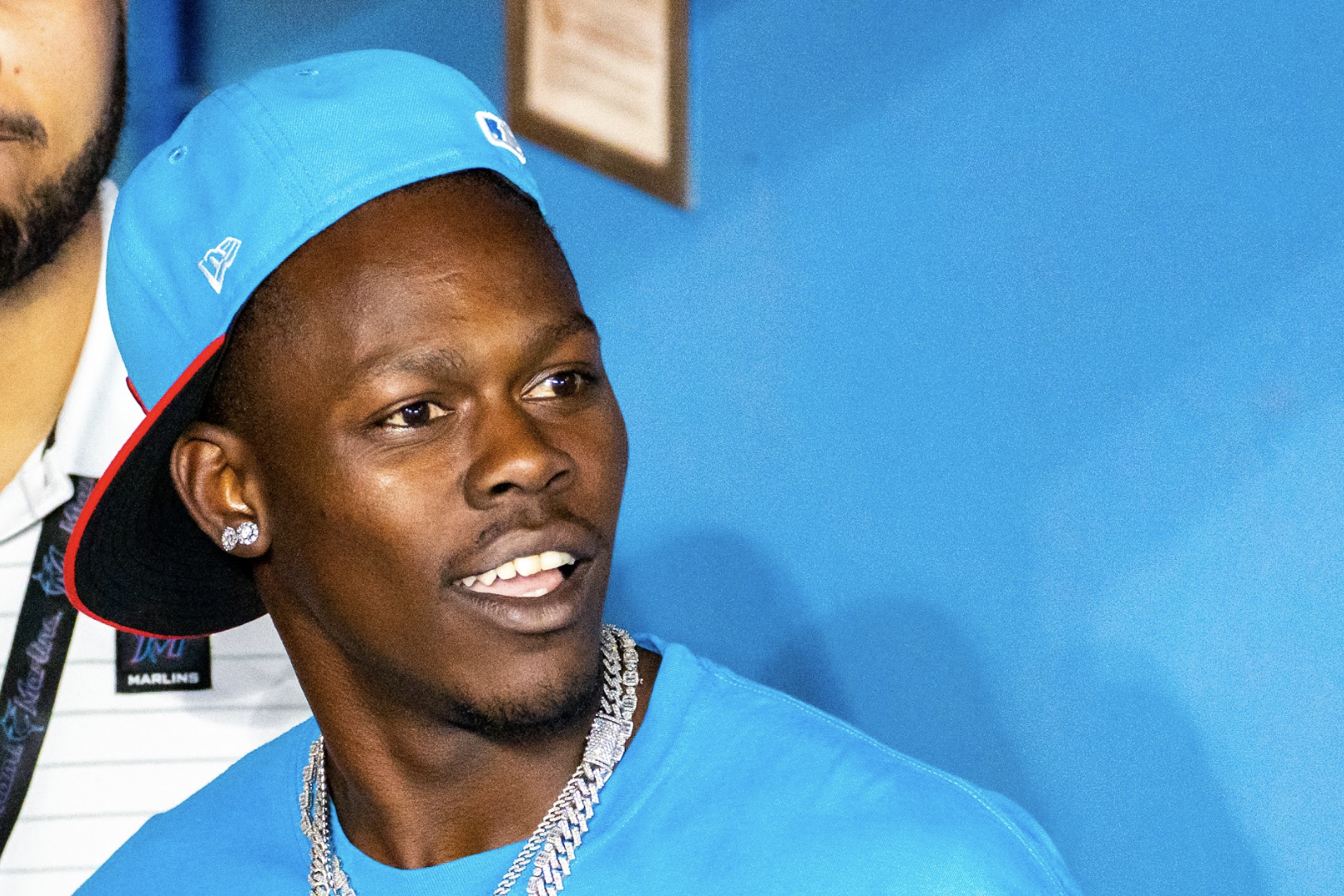 Jazz Chisholm Jr. seemed to be coming into his own before an injury sidelined him for the second half of the 2022 season. The then-24-year-old second baseman was posting the best offensive numbers of his brief career. Fast-forward to 2023, however, Chisholm often seems lost at the plate. Both his approach at the plate and how opposing pitchers are attacking him are completely different from his All-Star-worthy campaign. Before his unfortunate back injury in 2022, a lot of things were going right. His .365 wOBA was the best mark of his career, along with career best walk (8.7%) and strikeout (27.4%) rates. Through 60 games, Chisholm’s run production was 39% better than league average (139 wRC+). His performance at the plate was the culmination of an ideal offensive approach: hitting balls hard and in the air. Ideal Plate Appearance (IPA%) is a statistic coined by Pitcher List that quantifies how often a batter’s plate appearance ends in contact that generally leads to positive results. There are three types of batted balls that are considered “ideal”: barrels, solids, and flare/burners. Now, what makes these types of batted balls ideal? In the interest of brevity, I’ll oversimplify it with the average batting average and slugging percentage for each of the six types of batted balls. Looking at the numbers, it’s a no-brainer: To get the percent of plate appearances that are “ideal,” you’d then divide by the batter’s number of plate appearances. This is different than other statistics that use batted ball events as the driving numbers because it also takes into account the batter’s strikeout and walk rates. If you’re wondering why it matters to use plate appearances rather than batted ball events with quality of contact metrics, you can read Alexander Chase’s article at Pitcher List here. The oversimplification is this: batted ball events only looks at what happens if a player makes contact, therefore completely ignoring how good or bad their plate discipline is. A quick example: In 2022, Tommy Pham and Freddie Freeman had nearly identical, 88th percentile hard-hit rates—Pham with 48.2% and Freeman with 48.0%. Were Pham and Freeman the same caliber of hitters because nearly half of their batted balls were hit at 95 mph or more? Absolutely not. Freeman made contact a lot more frequently than Pham, and focusing only on batted balls doesn't account for the disparity in their walk rates. Overall, Freeman was an elite hitter (157 wRC+) while Pham was below average (89 wRC+). So now that we’ve established PA > BBE, back to Jazz. In 2022, Chisholm’s rate of ideal plate appearances was 29.0%. In 2023, that number has plummeted to 21.4%. With the league average IPA of 25.7%, Chisholm was significantly above-average in 2022 and now significantly below average in 2023. I mentioned above that there’s been some distinct differences between the Jazz we saw in 2022 vs. the hitter he’s been in 2023. Chisholm went from above- to below-average batted ball results from 2022 to 2023, hitting the ball on the ground far more often this season. Unless absolutely scorched, groundballs usually fall into the “poorly/topped” category leading to bad results. His swing decisions are also puzzling. He’s swinging less, so it makes sense that he’s taking more pitches for strikes. When he does swing, however, Jazz is making contact at a dismal rate. There are only 19 batters (min. 50 PA) that make contact less often than Chisholm does. Some of those names include Trayce Thompson, Trevor Larnach, Christopher Morel, Bryce Harper. These four players however, can be put into two separate categories: Thompson and Larnach swing less often than Jazz Chisholm Jr. Both create runs at a rate that is below league average. In contrast, Morel and Harper swing more often than Chisholm and are considered above-average by wRC+. My guess is that Morel and Harper’s offensive profiles are able to offset their low contact rate because they’re swinging more often. Harper also has an impressive walk rate and has limited his strikeouts, allowing him to remain a productive hitter even when he fails to make contact. Morel is thriving despite his low contact rate and frequent strikeouts because he’s absolutely demolishing balls when he makes contact. Morel’s batting average on contact is .455, which is in the 99th percentile. In contrast, Thompson and Larnach don’t have offensive profiles than can sustain them through periods of low contact. Like Chisholm, both hitters have high strikeout rates and swing rates among the worst in the league. I don’t have all the answers, but this approach doesn’t sound like a recipe for success. As I’ve been watching games early this season, I felt like Jazz Chisholm Jr. was being passive at the plate, at least compared to his approach in 2022. So knowing that the statistics back it up encouraged me to try and see why that might be the case. Is he being pitched differently? Are there differences in performances against pitch types or speeds or anything else that stands out? I came upon a few… Chisholm crushed breaking pitching in 2022. He slashed a combined .306/.333/.681 against breaking pitches in 2022. The success against those pitches has evaporated in 2023: .158/.273/.395. From the pitcher’s perspective, I think other teams have made a concrete decision to attack one of Chisholm’s weaknesses: pitches low and inside. He’s seeing more pitches low in the zone than he ever has, and at a rate that puts him in the 95th percentile in baseball. Why? He really struggled against pitches low and in during the 2022 season. Take a look at the strike zone breakdowns from Chisholm’s successful 2022 vs. the current 2023 season. The weaknesses he had in 2022 (left) are now being exploited in 2023 (right). For the most part, he hasn’t been able to adjust to the way teams are pitching him. 1. Strikeout percentage by zone Last season, Chisholm was most likely to chase pitches low and inside in two-strike counts. 67% of the time a pitcher threw a ball low and inside, Chisholm struck out. This was by far the quadrant he was most likely to chase with two strikes. If the pitcher buried the pitch for a strike low and in, Chisholm struck out 33% of the time. This season, Chisholm is struggling with two-strike pitches inside and outside the bottom of the strike zone. He’s chased two-strike, low and inside pitches at the same 67% rate as he did in 2022. But he’s also been unable to protect against chase pitches low and away in 2023. Additionally, his strikeout rate has increased in five of the nine in-zone locations, including all three low-zone locations. As Chisholm has shown he’s unable to handle those pitches this season, pitchers are attacking the lower third of the strike zone at an unprecedented rate. The league average rate for pitches low in the zone is 45.0%; in 2023, 55.5% of the pitches Chisholm sees are low. Again, that figure is in the 95th percentile. 2. wOBA by zone When pitchers left the ball in the most areas of the strike zone in 2022, Jazz crushed those mistakes. The league average wOBA (weighted on-base average) is .316. He greatly exceeded that figure in six of the nine in-zone locations in 2022 and was just below average in a seventh. One of the two locations he struggled with was again, pitches low and inside. Even though these were strikes that caught that corner, Chisholm had a .147 wOBA. This season, however, Chisholm is still struggling to cover those low and inside pitches. It improved from a .147 wOBA in 2022 to a .224 wOBA in 2023, but that’s still a well below-average figure. Along with that weakness, Chisholm has been unable to make pitchers pay for leaving pitches low in the zone and on the outer third of the plate. These were balls he teed off on last year. This year? Not so much. 3. Ground ball percentage by zone We established earlier that hitting balls in the air leads to better success. One of the reasons why Chisholm’s wOBA is so low against pitches low in the zone is because, when he’s making contact, it’s usually ground balls. The pesky low and inside location for Chisholm lead to a ground ball 75% of the time he made contact in 2022. Although that number has decreased to 50% in 2023, nearly every other area of the strike zone is generating ground balls at a higher rate in 2023 than in 2022. Going from a 40.3% ground ball rate in 2022 to a 51.1% ground ball rate in 2023 is a huge increase, and one that Chisholm hasn’t been able to overcome. The Miami Marlins are putting together one of their most successful starts to a season in recent history. Entering Tuesday, the team is 33-28 and three games back from the NL East-leading Atlanta Braves. There have been some positives on offense: Luis Arraez has been everything the team could’ve hoped for and more. Jorge Soler is finally providing the power everyone expected from him. Jesús Sánchez and Bryan De La Cruz are producing runs with productive at-bats. They also seem to be running into quite a bit of luck. That luck has undoubtably overshadowed some of the offensive concerns, namely the lack of production from the catching, shortstop, and third base positions. With Jazz Chisholm Jr. poised to come off the injured list soon, the Marlins could really benefit from the production he flashed during the 2022 season.
