



Alex Krutchik
-
Posts
194 -
Joined
-
Last visited
-
Days Won
15
Content Type
Profiles
Miami Marlins Videos
2026 Miami Marlins Top Prospects Ranking
Miami Marlins Free Agent & Trade Rumors, Notes, & Tidbits
Guides & Resources
News
2025 Miami Marlins Draft Pick Tracker
2026 Miami Marlins Draft Tracker: Picks & Bonuses
Forums
Blogs
Events
Store
Downloads
Gallery
Everything posted by Alex Krutchik
-

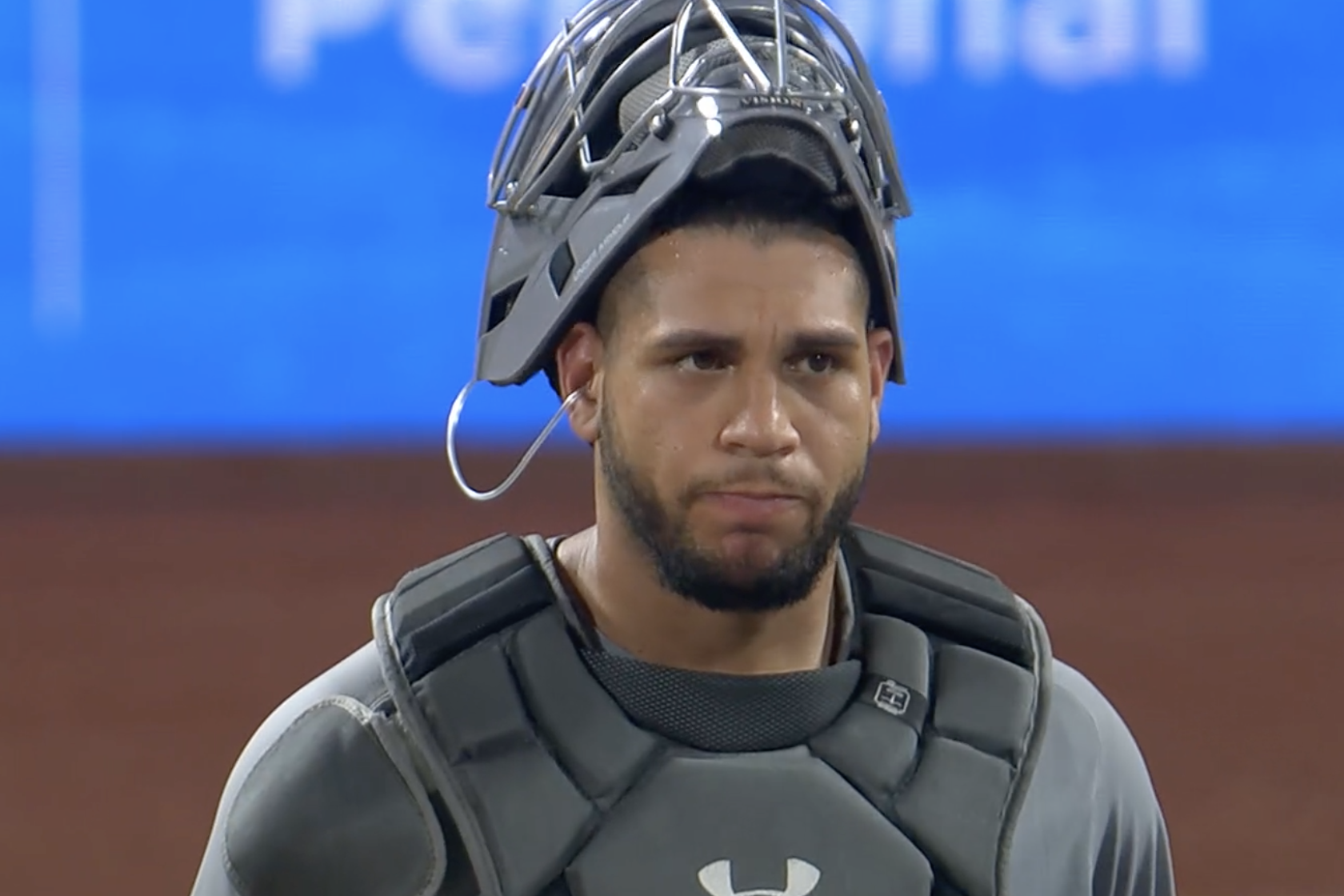 The Miami Marlins just didn’t have it Monday. "You don't play well in multiple facets, nights like this happen," manager Clayton McCullough said when summarizing the 7-1 loss to the St. Louis Cardinals. Andre Pallante, who came into Monday with a 4.91 ERA—5.03 at home—didn’t allow a hit until Graham Pauley singled to right field to lead off the sixth inning. It was the only hit the right-hander would give up in seven shutout innings. It’s not like the Marlins couldn’t make contact, but they struggled to get quality contact. Miami put 18 balls in play in those seven innings, marred by lazy fly outs and weak grounders. As a team, they had an average exit velocity of 85.1 miles per hour against Pallante. Pallante’s counterpart in Edward Cabrera was just a couple pitches worse. He allowed one earned run and four hits over six innings, the lone run being an Alec Burleson home run in the third. Cabrera allowed three walks, the first time in five starts that he allowed multiple free passes. Despite that, he still made it through six innings for a quality start, which has becoming increasingly commonplace for Cabrera as the season has worn on. Just hours after the Marlins reached an agreement to trade veteran catcher Nick Fortes, two of the Cardinals' first three runs scored could be attributed to Agustin Ramirez, who the Marlins continue to try out at catcher despite his continued struggles there. With Yohel Pozo attempting to advance on a wild pitch in the fourth inning, Ramírez airmailed the throw to third base. It trickled down the left field line, allowing Pozo to score. In the seventh inning, Ramírez was called for catcher interference with the bases loaded, allowing another run to score. ybvndb_1.mp4 Down 3-0 now and the bases loaded, the Marlins brought in Lake Bachar to get the second out of the frame. But Masyn Winn and Jordan Walker hit back-to-back doubles to break everything open and give the Cardinals a 7-0 lead. Josh Simpson was charged with three of those runs for loading the bases. The lone run Miami scored was a ninth-inning Heriberto Hernandez single that scored Jesús Sánchez. Hernandez started on short noticed in place of Kyle Stowers, who was scratched due to illness. The Marlins played a man down with the Fortes trade not yet finalized. Expect a corresponding roster move prior to Tuesday's game.
-
- 2
-

-
- edward cabrera
- agustin ramirez
- (and 1 more)
-
The Miami Marlins just didn’t have it Monday. "You don't play well in multiple facets, nights like this happen," manager Clayton McCullough said when summarizing the 7-1 loss to the St. Louis Cardinals. Andre Pallante, who came into Monday with a 4.91 ERA—5.03 at home—didn’t allow a hit until Graham Pauley singled to right field to lead off the sixth inning. It was the only hit the right-hander would give up in seven shutout innings. It’s not like the Marlins couldn’t make contact, but they struggled to get quality contact. Miami put 18 balls in play in those seven innings, marred by lazy fly outs and weak grounders. As a team, they had an average exit velocity of 85.1 miles per hour against Pallante. Pallante’s counterpart in Edward Cabrera was just a couple pitches worse. He allowed one earned run and four hits over six innings, the lone run being an Alec Burleson home run in the third. Cabrera allowed three walks, the first time in five starts that he allowed multiple free passes. Despite that, he still made it through six innings for a quality start, which has becoming increasingly commonplace for Cabrera as the season has worn on. Just hours after the Marlins reached an agreement to trade veteran catcher Nick Fortes, two of the Cardinals' first three runs scored could be attributed to Agustin Ramirez, who the Marlins continue to try out at catcher despite his continued struggles there. With Yohel Pozo attempting to advance on a wild pitch in the fourth inning, Ramírez airmailed the throw to third base. It trickled down the left field line, allowing Pozo to score. In the seventh inning, Ramírez was called for catcher interference with the bases loaded, allowing another run to score. ybvndb_1.mp4 Down 3-0 now and the bases loaded, the Marlins brought in Lake Bachar to get the second out of the frame. But Masyn Winn and Jordan Walker hit back-to-back doubles to break everything open and give the Cardinals a 7-0 lead. Josh Simpson was charged with three of those runs for loading the bases. The lone run Miami scored was a ninth-inning Heriberto Hernandez single that scored Jesús Sánchez. Hernandez started on short noticed in place of Kyle Stowers, who was scratched due to illness. The Marlins played a man down with the Fortes trade not yet finalized. Expect a corresponding roster move prior to Tuesday's game. View full article
-
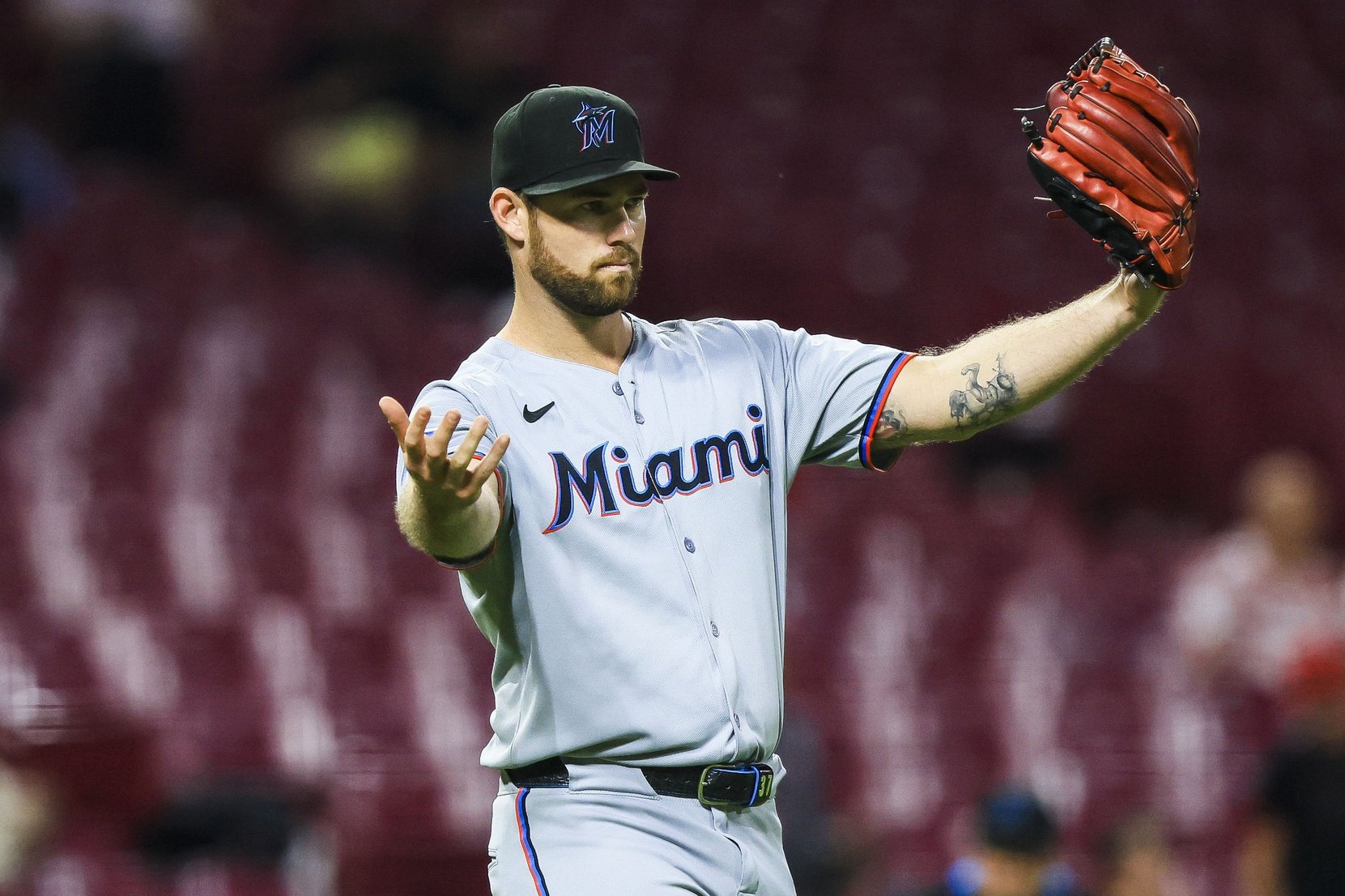 It’s trade deadline season, which means plenty of relievers will be on the move between now and July 31. Sellers will try to exploit the insecurities of other teams to flip their veteran arms for surprisingly strong returns—case and point, the 2024 Marlins, who extracted a Robby Snelling-led prospect package from the San Diego Padres on deadline day for Tanner Scott and Bryan Hoeing. On Thursday, the Baltimore Orioles got a head start on the 2025 market by trading reliever Bryan Baker to the Tampa Bay Rays. The 30-year-old right-hander has a 3.52 ERA in 42 games this year, though it had been below 3.00 all season prior to a blow-up in his final O's appearance. Baker primarily worked the eighth inning following Baltimore's managerial change. Hitters are batting .205 with a .612 OPS in 48 high-leverage plate appearances against him and he has stranded 16 of 18 inherited runners. In exchange for Baker’s services, the Rays sent over their competitive balance pick (No. 37 overall) for the 2025 draft along with the $2,631,400 slot value for that pick. Not a bad return for a non-closing reliever. As it turns out, the Marlins also have one of those, and he might be an even better version of Baker. Also a 30-year-old righty, Anthony Bender has experienced a resurgence this year. After missing 2023 recovering from Tommy John surgery, he struggled to miss bats in 2024, posting career-highs in ERA (4.08) and hits per nine innings (8.5). He also registered an unremarkable 1.24 WHIP. This year, he’s putting up career-bests in those three aforementioned stats: 2.11 ERA, 5.6 H/9, and 1.04 WHIP. In 75 high-leverage plate appearances, hitters are batting .169 with a .557 OPS. Bender looks mighty effective this year, but in different ways than his previous peak in 2021 that saw him post a 28.7% overall strikeout rate and 44.4% whiff rate on his slider. Instead, almost half his pitches are sweepers, with the other 26% being sinkers and 22% being sliders. While none of his pitches are generating nearly as much swing-and-miss as a few years ago, his sweeper is virtually unhittable with a .078 opponent batting average against. The pitch that hitters are having the “most” success with is the sinker, which has a .263 batting average against. Last year, when he was throwing his sweeper and sinker equally at 45% each, hitters were posting a .323 batting average against the sinker. Keeping with the theme of “effective, but different,” Bender’s strikeout rate of 18.7% is the lowest of his career. But his line drive rate of 14.8% is the lowest and his fly ball rate of 28.7% is the highest. Bender is currently making $1.42M and is still arbitration-eligible for the next two seasons. If the Orioles got a top-40 draft pick in exchange for a lesser version of Anthony Bender, what can the Marlins get? The draft begins this weekend, so the window is rapidly closing on the possibility of getting an extra comp pick for themselves. Expect a more conventional return of prospects with pro experience. The 37th overall pick in the 2024 draft was prep right-hander Levi Sterling. Currently developing as a starter in Low-A, he ranks 13th on Baseball America's Pittsburgh Pirates top prospects list. However, the Pirates are obvious sellers this year. A more relevant name would be Padres lefty Boston Bateman, another tall prep arm selected 52nd overall in the same draft and signed for $2.5M. He's also in Low-A and actually performing much better than Sterling (3.41 ERA and 1.22 WHIP in 60.2 IP). Baseball America ranks Bateman fifth in San Diego's thin farm system. He would be a quality pick-up for the Fish if the Padres are willing to double down on their past efforts to assemble arguably MLB's deepest bullpen.
 -
It’s trade deadline season, which means plenty of relievers will be on the move between now and July 31. Sellers will try to exploit the insecurities of other teams to flip their veteran arms for surprisingly strong returns—case and point, the 2024 Marlins, who extracted a Robby Snelling-led prospect package from the San Diego Padres on deadline day for Tanner Scott and Bryan Hoeing. On Thursday, the Baltimore Orioles got a head start on the 2025 market by trading reliever Bryan Baker to the Tampa Bay Rays. The 30-year-old right-hander has a 3.52 ERA in 42 games this year, though it had been below 3.00 all season prior to a blow-up in his final O's appearance. Baker primarily worked the eighth inning following Baltimore's managerial change. Hitters are batting .205 with a .612 OPS in 48 high-leverage plate appearances against him and he has stranded 16 of 18 inherited runners. In exchange for Baker’s services, the Rays sent over their competitive balance pick (No. 37 overall) for the 2025 draft along with the $2,631,400 slot value for that pick. Not a bad return for a non-closing reliever. As it turns out, the Marlins also have one of those, and he might be an even better version of Baker. Also a 30-year-old righty, Anthony Bender has experienced a resurgence this year. After missing 2023 recovering from Tommy John surgery, he struggled to miss bats in 2024, posting career-highs in ERA (4.08) and hits per nine innings (8.5). He also registered an unremarkable 1.24 WHIP. This year, he’s putting up career-bests in those three aforementioned stats: 2.11 ERA, 5.6 H/9, and 1.04 WHIP. In 75 high-leverage plate appearances, hitters are batting .169 with a .557 OPS. Bender looks mighty effective this year, but in different ways than his previous peak in 2021 that saw him post a 28.7% overall strikeout rate and 44.4% whiff rate on his slider. Instead, almost half his pitches are sweepers, with the other 26% being sinkers and 22% being sliders. While none of his pitches are generating nearly as much swing-and-miss as a few years ago, his sweeper is virtually unhittable with a .078 opponent batting average against. The pitch that hitters are having the “most” success with is the sinker, which has a .263 batting average against. Last year, when he was throwing his sweeper and sinker equally at 45% each, hitters were posting a .323 batting average against the sinker. Keeping with the theme of “effective, but different,” Bender’s strikeout rate of 18.7% is the lowest of his career. But his line drive rate of 14.8% is the lowest and his fly ball rate of 28.7% is the highest. Bender is currently making $1.42M and is still arbitration-eligible for the next two seasons. If the Orioles got a top-40 draft pick in exchange for a lesser version of Anthony Bender, what can the Marlins get? The draft begins this weekend, so the window is rapidly closing on the possibility of getting an extra comp pick for themselves. Expect a more conventional return of prospects with pro experience. The 37th overall pick in the 2024 draft was prep right-hander Levi Sterling. Currently developing as a starter in Low-A, he ranks 13th on Baseball America's Pittsburgh Pirates top prospects list. However, the Pirates are obvious sellers this year. A more relevant name would be Padres lefty Boston Bateman, another tall prep arm selected 52nd overall in the same draft and signed for $2.5M. He's also in Low-A and actually performing much better than Sterling (3.41 ERA and 1.22 WHIP in 60.2 IP). Baseball America ranks Bateman fifth in San Diego's thin farm system. He would be a quality pick-up for the Fish if the Padres are willing to double down on their past efforts to assemble arguably MLB's deepest bullpen. View full article
-
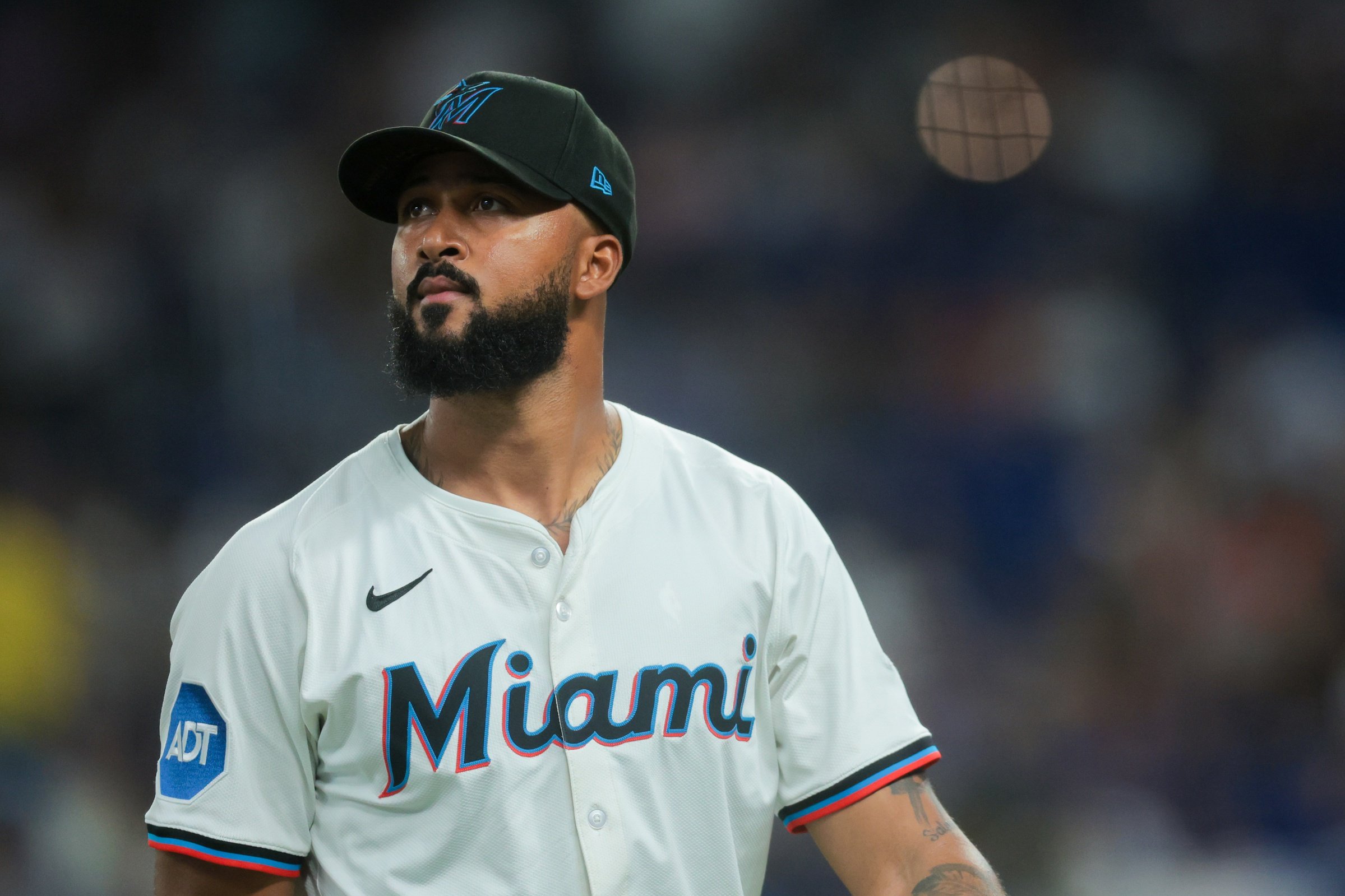 MIAMI—The warning signs were there on Monday night. While Miami Marlins starting pitcher Sandy Alcantara began his night strong—he struck out leadoff hitter Shohei Ohtani swinging on an inside fastball—he served up a lot of juicy pitches to a Los Angeles Dodgers lineup that doesn’t need the help. Alcantara left a fastball middle-up to Mookie Betts after Ohtani’s strikeout, which Betts turned into a single. Two batters later, Teoscar Hernández took advantage of a changeup near the heart of the zone and drove it to left-center field for an RBI double. Even the outs Alcantara recorded were loud. Three of the Dodgers’ first four outs on balls hit into play left the bat at over 95 miles per hour. Still, Alcantara limited the damage for a short time. He only allowed the one run in the first inning, and came back with a perfect second. He opened the third by walking Ohtani and striking out Betts. But then, the hard contact finally caught up with him. Freddie Freeman connected on a fastball right down the middle of the plate and sent it over the center field wall to take a 3-0 lead in the third inning. Two innings later, Ohtani hit a two-run home run of his own on virtually the same pitch and location. It left the bat, mercilessly, at 118 miles per hour. Alcantara let a lot of pitches—specifically his sinker and four-seam fastball—over the middle of the plate. The Dodgers’ average exit velocity against him was 94.4 miles per hour. “Was nothing about my mechanics,” Alcantara said. “I think I'm just leaving (pitches) right there. I watched the video after they took me out of the game. It was easy peasy, just right there in the middle.” The 29-year-old right-hander, making his seventh start of 2025 after missing all of 2024 recovering from Tommy John surgery, struck out four and walked one in five innings. His ERA rose to 8.42. Alcantara said he was happy with how aggressive he was in the zone, but knows he made a couple of mistake pitches on the home runs to Freeman and Ohtani. “More aggressive in the zone,” Alcantara said. “Trying to not let them get too many chances. If I take those two pitches out of there, those two homers, it would be a better result.” It was marginally better than his previous outing, which was also against the Dodgers. Alcantara allowed seven runs and walked five in Dodger Stadium, which has been a house of horrors for him his entire career. He admitted after Monday’s loss that he was tipping pitches in Los Angeles, but ironed out those issues in this start at home. The Dodgers, on the other hand, went with a hybrid bullpen game, with Jack Dreyer getting the 1 ⅓ innings and Ben Casparius getting the next four. Dreyer was perfect, while Casparius allowed just one run on five hits and two walks. The lone bright spot from the Marlins offense was Agustin Ramírez. Coming into the game riding a 1-for-24 slump after a hot start to his major league career, Ramírez cranked a three-run home run in the eighth inning to bring the Marlins within three runs. Estimated to have traveled 424 feet, according to Statcast, it was tied for the second-farthest homer by a Marlins player this season.
 -
Sandy Alcantara's strikeout pitch was working well, punching out stars like Shohei Ohtani and Mookie Betts. Unfortunately, when he got hit, he got hit hard. MIAMI—The warning signs were there on Monday night. While Miami Marlins starting pitcher Sandy Alcantara began his night strong—he struck out leadoff hitter Shohei Ohtani swinging on an inside fastball—he served up a lot of juicy pitches to a Los Angeles Dodgers lineup that doesn’t need the help. Alcantara left a fastball middle-up to Mookie Betts after Ohtani’s strikeout, which Betts turned into a single. Two batters later, Teoscar Hernández took advantage of a changeup near the heart of the zone and drove it to left-center field for an RBI double. Even the outs Alcantara recorded were loud. Three of the Dodgers’ first four outs on balls hit into play left the bat at over 95 miles per hour. Still, Alcantara limited the damage for a short time. He only allowed the one run in the first inning, and came back with a perfect second. He opened the third by walking Ohtani and striking out Betts. But then, the hard contact finally caught up with him. Freddie Freeman connected on a fastball right down the middle of the plate and sent it over the center field wall to take a 3-0 lead in the third inning. Two innings later, Ohtani hit a two-run home run of his own on virtually the same pitch and location. It left the bat, mercilessly, at 118 miles per hour. Alcantara let a lot of pitches—specifically his sinker and four-seam fastball—over the middle of the plate. The Dodgers’ average exit velocity against him was 94.4 miles per hour. “Was nothing about my mechanics,” Alcantara said. “I think I'm just leaving (pitches) right there. I watched the video after they took me out of the game. It was easy peasy, just right there in the middle.” The 29-year-old right-hander, making his seventh start of 2025 after missing all of 2024 recovering from Tommy John surgery, struck out four and walked one in five innings. His ERA rose to 8.42. Alcantara said he was happy with how aggressive he was in the zone, but knows he made a couple of mistake pitches on the home runs to Freeman and Ohtani. “More aggressive in the zone,” Alcantara said. “Trying to not let them get too many chances. If I take those two pitches out of there, those two homers, it would be a better result.” It was marginally better than his previous outing, which was also against the Dodgers. Alcantara allowed seven runs and walked five in Dodger Stadium, which has been a house of horrors for him his entire career. He admitted after Monday’s loss that he was tipping pitches in Los Angeles, but ironed out those issues in this start at home. The Dodgers, on the other hand, went with a hybrid bullpen game, with Jack Dreyer getting the 1 ⅓ innings and Ben Casparius getting the next four. Dreyer was perfect, while Casparius allowed just one run on five hits and two walks. The lone bright spot from the Marlins offense was Agustin Ramírez. Coming into the game riding a 1-for-24 slump after a hot start to his major league career, Ramírez cranked a three-run home run in the eighth inning to bring the Marlins within three runs. Estimated to have traveled 424 feet, according to Statcast, it was tied for the second-farthest homer by a Marlins player this season. View full article
-
Eury Pérez on schedule to complete Tommy John rehab in June
Alex Krutchik posted an article in Marlins
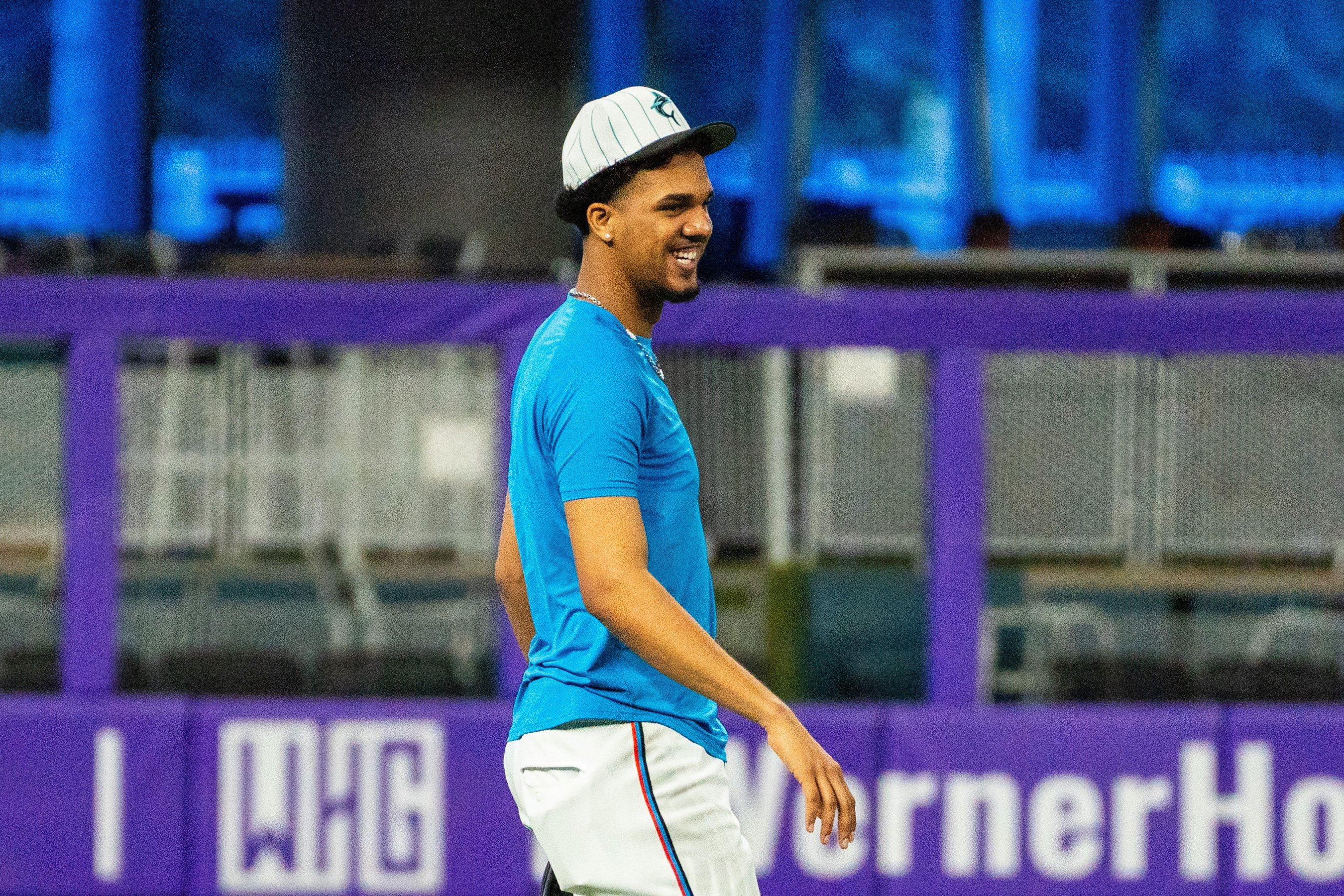 MIAMI, Fla.—Eury Pérez may be coming back sooner than anticipated. The Miami Marlins pitching phenom underwent Tommy John surgery in April of last year. Up until spring training this year, it was widely reported that he was on pace to complete the rehab process around the All-Star break in mid-July. Barring setbacks, Pérez is now scheduled to resurface in the majors in June. The 22-year-old right-hander made his return to a game mound on April 26 with Low-A Jupiter. He threw 19 pitches and topped out at 98.4 mph. He used his entire arsenal. It was more of the same on Thursday, this time stretching out a bit further to 26 pitches. “Even though it's a minor league game, it's actually a baseball game,” Pérez said Friday through an interpreter. “I'm out there, I'm competing, I'm back on the mound, I'm doing what I love to do. It was very exciting for me just to be back there competing.” “Reports were very good,” Marlins manager Clayton McCullough said. “Another really positive step for Eury. He feels great. And I think with each one he gets under his belt, I think he gets more and more excited about what's ahead. And we'll just hope that he just continues to feel strong and healthy after each outing.” After one more outing in Jupiter, the Marlins intend to transfer Pérez's rehab to Triple-A Jacksonville. The plan is for him to make five starts for the Jumbo Shrimp. With five to six days between each start, he's in line to be reinstated sometime during the Marlins road trip that runs from June 6-15. Most minor league rehab assignments are limited to 30 days for pitchers, but there is an exception for those returning from Tommy John surgery—they can request up to three 10-day extensions (60 total days). The Marlins will be utilizing at least one of those extensions to carefully build up Pérez's pitch count. Pérez told the media that he has been recovering well after each outing and pitch design session. He is also going to work on his sweeper and sinker, expanding upon his pre-injury four-seamer/slider/curveball/changeup pitch mix. Pérez was the consensus top prospect in the Marlins organization when he was called up in 2023. In 19 starts that season, he finished with a 3.15 ERA, including six scoreless outings. The team controversially optioned him to the minor leagues midway through that summer in order to manage his workload and prioritize his long-term health. His UCL blew out the following year despite those efforts. Ryan Weathers, who suffered a forearm strain in his throwing arm this spring training, has also made a pair of rehab starts, most recently with Triple-A Jacksonville on Friday. He's been stretched out to 62 pitches. A return to the Marlins rotation could be play in for Weathers during the week of May 12. In the absences of Pérez and Weathers, Marlins starting pitchers have combined for an MLB-worst 6.69 ERA in 2025.
 -
Figuratively and literally, Pérez would be a huge reinforcement for the Marlins starting rotation. Here's the latest on how he is progressing. MIAMI, Fla.—Eury Pérez may be coming back sooner than anticipated. The Miami Marlins pitching phenom underwent Tommy John surgery in April of last year. Up until spring training this year, it was widely reported that he was on pace to complete the rehab process around the All-Star break in mid-July. Barring setbacks, Pérez is now scheduled to resurface in the majors in June. The 22-year-old right-hander made his return to a game mound on April 26 with Low-A Jupiter. He threw 19 pitches and topped out at 98.4 mph. He used his entire arsenal. It was more of the same on Thursday, this time stretching out a bit further to 26 pitches. “Even though it's a minor league game, it's actually a baseball game,” Pérez said Friday through an interpreter. “I'm out there, I'm competing, I'm back on the mound, I'm doing what I love to do. It was very exciting for me just to be back there competing.” “Reports were very good,” Marlins manager Clayton McCullough said. “Another really positive step for Eury. He feels great. And I think with each one he gets under his belt, I think he gets more and more excited about what's ahead. And we'll just hope that he just continues to feel strong and healthy after each outing.” After one more outing in Jupiter, the Marlins intend to transfer Pérez's rehab to Triple-A Jacksonville. The plan is for him to make five starts for the Jumbo Shrimp. With five to six days between each start, he's in line to be reinstated sometime during the Marlins road trip that runs from June 6-15. Most minor league rehab assignments are limited to 30 days for pitchers, but there is an exception for those returning from Tommy John surgery—they can request up to three 10-day extensions (60 total days). The Marlins will be utilizing at least one of those extensions to carefully build up Pérez's pitch count. Pérez told the media that he has been recovering well after each outing and pitch design session. He is also going to work on his sweeper and sinker, expanding upon his pre-injury four-seamer/slider/curveball/changeup pitch mix. Pérez was the consensus top prospect in the Marlins organization when he was called up in 2023. In 19 starts that season, he finished with a 3.15 ERA, including six scoreless outings. The team controversially optioned him to the minor leagues midway through that summer in order to manage his workload and prioritize his long-term health. His UCL blew out the following year despite those efforts. Ryan Weathers, who suffered a forearm strain in his throwing arm this spring training, has also made a pair of rehab starts, most recently with Triple-A Jacksonville on Friday. He's been stretched out to 62 pitches. A return to the Marlins rotation could be play in for Weathers during the week of May 12. In the absences of Pérez and Weathers, Marlins starting pitchers have combined for an MLB-worst 6.69 ERA in 2025. View full article
-
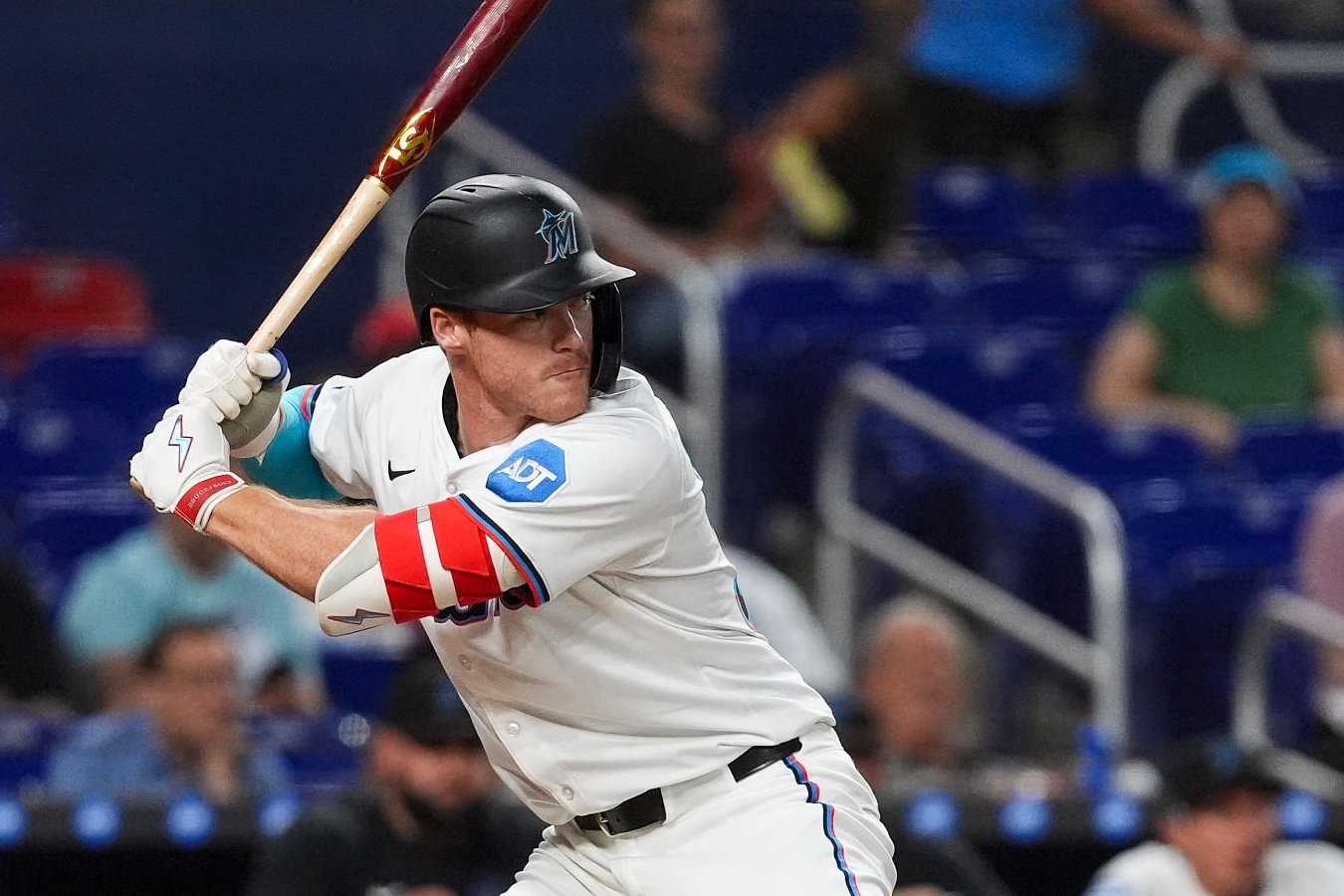 MIAMI—Eric Wagaman saw the jokes. For much of the offseason, the 27-year-old infielder with 18 games of major league experience was the only free agent that the Miami Marlins signed. To fans across baseball, he was emblematic of everything that's wrong with MLB, where teams in the midst of rebuilding themselves do the bare minimum to assemble competitive rosters. Even professional pundits neglected to mention him when discussing the Marlins offseason, claiming that Miami hadn’t spent any money in free agency. While it’s not the reason why Wagaman has an OPS north of 1.000 in his last 10 games, it certainly doesn’t hurt. “There's definitely a little bit of motivation,” Wagaman told Fish On First. “You want to prove people wrong, but at the same time, I know what I can do, I know what I'm capable of, so I'm just gonna go out there and do it.” Wagaman's 2025 season got started on the wrong foot with a 5-for-32 slump at the plate and just one home run through three weeks of action. Marlins fans were counting the days until Connor Norby and Jesús Sánchez returned from the injured list so that he could be optioned to the minors to make room for them. However, Wagaman's underlying data was encouraging from the beginning. Calculated by Baseball Savant using a combination of exit velocity, launch angle, and Sprint Speed, his expected slugging percentage has been consistently high. “I love looking at that kind of stuff,” Wagaman said. “Because I feel like it's a good indicator of where I'm at, and I feel like I can make adjustments based on that kind of stuff.” Beyond simple bad luck, Wagaman struggled in March and early April in part because he was hitting a lot of balls into the ground. He’s made mechanical adjustments with hitting coaches Pedro Guerrero and Derek Shomon, along with director of hitting Joe Migliaccio. One of the keys, Wagaman said, is keeping his bat flatter through the zone, as the steepness of his bat path was causing weak contact and low launch angles. Wagaman was drafted by the New York Yankees in 2017 and worked together with Migliaccio while both were in their minor league system. Migliaccio was the minor league hitting coordinator from 2022-24 and was the hitting coach at several Yankees MiLB affiliates before that. Wagaman said the familiarity with Migliaccio’s processes has made the transition comfortable. Migliaccio and the staff have introduced more game-type drills, like frequent live batting practices with pitchers on the mound, Trajekt machines that simulate opposing pitchers’ wind-ups and release points, and pitching machines with higher velocities than usual. “Just challenging your swing. Because, at the end of the day, we got to go perform when the lights go on. so doing easy stuff in the cage really isn't gonna get you anywhere…Sometimes it can be frustrating because you're not getting the results you want. But for me, it makes me ready to go for the game.” And ready for the game, he’s been. Unlike last year’s cup of coffee with the Angels, Wagaman is seeing consistent playing time, starting 17 of Miami’s 22 games, and each of their last seven. He’s started multiple games in each of the No. 2 through No. 5 spots in the lineup, hitting better than league average in the two through four slots. His .985 OPS over the last two weeks is a big reason the Marlins are hovering around .500 when many thought they’d come nowhere close to that mark at any point past opening weekend. b92fd53e-2f40ddd5-a1f6aac4-csvm-diamondgcp-asset_1280x720_59_4000K.mp4 Wagaman and the rest of the team are aware of their lack of major league experience. The average age of their hitters is 26.5 years old, the lowest in the majors. But belief in themselves is still there. “There's obviously fans that watch baseball every day,” Wagaman said. “They know the game. They know good players. But just because we're inexperienced in the big leagues, doesn't mean we don't have talent. There's a lot of talent in this room, on the pitching side and on the offensive side. The only way to get experience in the big leagues is to get experience in the big leagues.”
 -
Unheralded at the time of his acquisition, Wagaman has emerged as one of the Marlins' most well-rounded hitters. MIAMI—Eric Wagaman saw the jokes. For much of the offseason, the 27-year-old infielder with 18 games of major league experience was the only free agent that the Miami Marlins signed. To fans across baseball, he was emblematic of everything that's wrong with MLB, where teams in the midst of rebuilding themselves do the bare minimum to assemble competitive rosters. Even professional pundits neglected to mention him when discussing the Marlins offseason, claiming that Miami hadn’t spent any money in free agency. While it’s not the reason why Wagaman has an OPS north of 1.000 in his last 10 games, it certainly doesn’t hurt. “There's definitely a little bit of motivation,” Wagaman told Fish On First. “You want to prove people wrong, but at the same time, I know what I can do, I know what I'm capable of, so I'm just gonna go out there and do it.” Wagaman's 2025 season got started on the wrong foot with a 5-for-32 slump at the plate and just one home run through three weeks of action. Marlins fans were counting the days until Connor Norby and Jesús Sánchez returned from the injured list so that he could be optioned to the minors to make room for them. However, Wagaman's underlying data was encouraging from the beginning. Calculated by Baseball Savant using a combination of exit velocity, launch angle, and Sprint Speed, his expected slugging percentage has been consistently high. “I love looking at that kind of stuff,” Wagaman said. “Because I feel like it's a good indicator of where I'm at, and I feel like I can make adjustments based on that kind of stuff.” Beyond simple bad luck, Wagaman struggled in March and early April in part because he was hitting a lot of balls into the ground. He’s made mechanical adjustments with hitting coaches Pedro Guerrero and Derek Shomon, along with director of hitting Joe Migliaccio. One of the keys, Wagaman said, is keeping his bat flatter through the zone, as the steepness of his bat path was causing weak contact and low launch angles. Wagaman was drafted by the New York Yankees in 2017 and worked together with Migliaccio while both were in their minor league system. Migliaccio was the minor league hitting coordinator from 2022-24 and was the hitting coach at several Yankees MiLB affiliates before that. Wagaman said the familiarity with Migliaccio’s processes has made the transition comfortable. Migliaccio and the staff have introduced more game-type drills, like frequent live batting practices with pitchers on the mound, Trajekt machines that simulate opposing pitchers’ wind-ups and release points, and pitching machines with higher velocities than usual. “Just challenging your swing. Because, at the end of the day, we got to go perform when the lights go on. so doing easy stuff in the cage really isn't gonna get you anywhere…Sometimes it can be frustrating because you're not getting the results you want. But for me, it makes me ready to go for the game.” And ready for the game, he’s been. Unlike last year’s cup of coffee with the Angels, Wagaman is seeing consistent playing time, starting 17 of Miami’s 22 games, and each of their last seven. He’s started multiple games in each of the No. 2 through No. 5 spots in the lineup, hitting better than league average in the two through four slots. His .985 OPS over the last two weeks is a big reason the Marlins are hovering around .500 when many thought they’d come nowhere close to that mark at any point past opening weekend. b92fd53e-2f40ddd5-a1f6aac4-csvm-diamondgcp-asset_1280x720_59_4000K.mp4 Wagaman and the rest of the team are aware of their lack of major league experience. The average age of their hitters is 26.5 years old, the lowest in the majors. But belief in themselves is still there. “There's obviously fans that watch baseball every day,” Wagaman said. “They know the game. They know good players. But just because we're inexperienced in the big leagues, doesn't mean we don't have talent. There's a lot of talent in this room, on the pitching side and on the offensive side. The only way to get experience in the big leagues is to get experience in the big leagues.” View full article
-
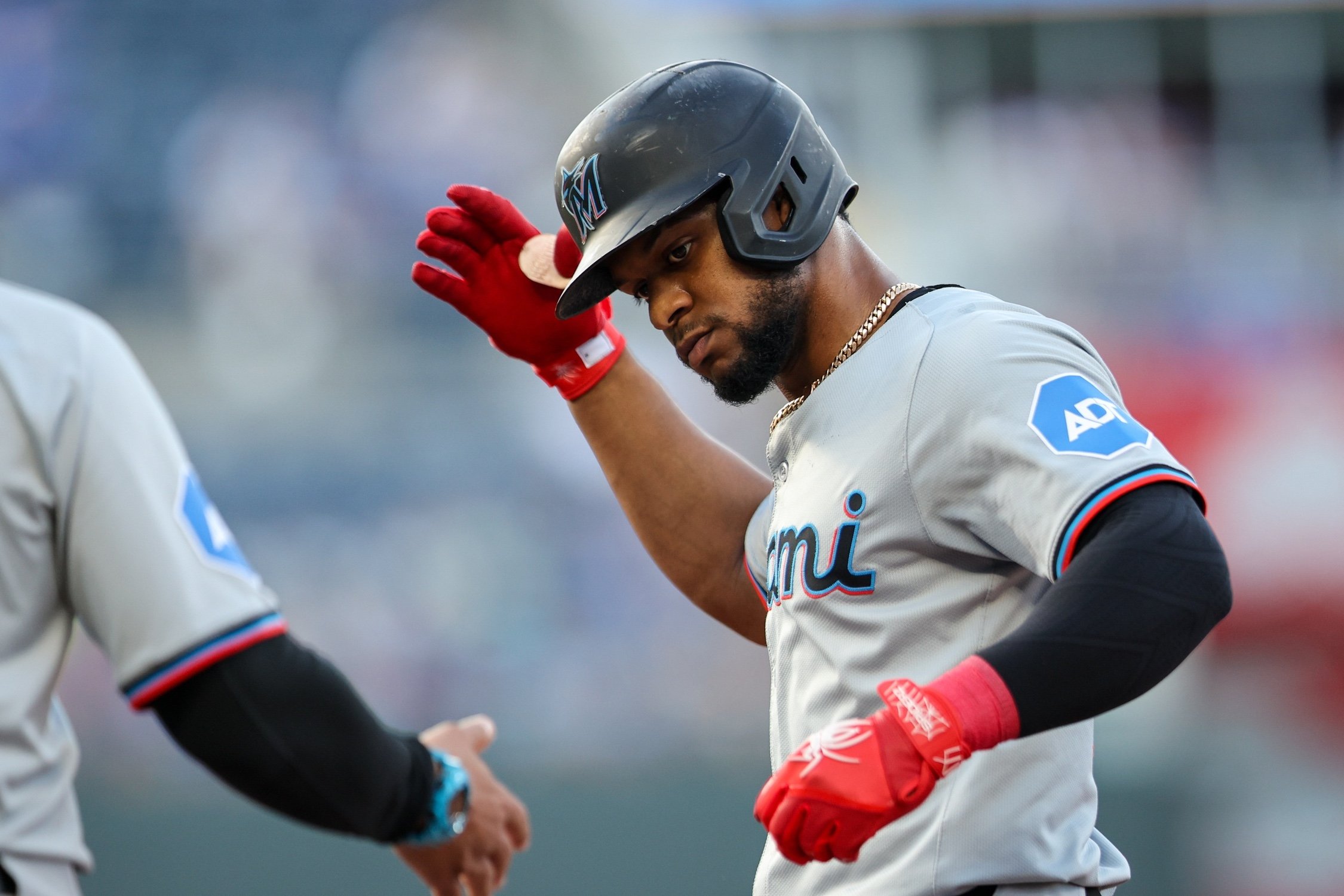 Otto Lopez was kind of "just another guy" when he was claimed off waivers by the Miami Marlins last season. The then-25-year-old had been playing for the San Francisco Giants’ Triple-A affiliate when he was designated for assignment just two days into the season. He had been acquired via trade from the Blue Jays just over one month prior, in exchange for cash considerations. Marlins president of baseball operations Peter Bendix did what he does best: he went bargain hunting on the waiver wire and found gold. Lopez was only with Triple-A Jacksonville for about a week before Marlins fans were clamoring for this mystery man to be called up on April 15, 2024. Lopez tells Fish On First that he felt there was "more freedom" to be himself upon joining the Marlins organization. "People just telling me, 'you have to play your game.'" Who was this nameless infielder with 17 hits, five doubles, and two home runs in 10 games? Even then-manager Skip Schumaker admitted he didn’t “know anything about him” when asked on the day of his call-up last year. After Lopez was brought up to the major league club, he brought his hot streak with him. He had a 1.028 OPS through his first 35 plate appearances. After 31 games, he was hitting .297 with a .778 OPS, and was one of the most consistent hitters in a Marlins lineup that struggled everywhere else. kaqyqw.mp4 He struggled in the middle of the year, going on the injured list with back pain in early July, but a strong September in which he had a .903 OPS over 102 plate appearances put a punctuation on his Marlins debut season. One thing that never wavered was Lopez’s defense. Having to step up as starting second baseman full-time after Luis Arraez was traded to the San Diego Padres in early May, Lopez proved himself as an anchor on the infield. His nine defensive runs saved were fifth among all second basemen with at least 850 innings played, and his 17 outs above average were third. 78b06086-5ba7de03-ff10b921-csvm-diamondx64-asset_1280x720_59_4000K.mp4 Entering Tuesday, Lopez is slightly ahead of last year's production in terms of on-base percentage (.317), slugging percentage (.393) and wRC+ (97). He also scored the game-winning run in one of the three opening week walk-offs against the Pittsburgh Pirates. Statcast metrics suggest there could be a louder breakout coming. Lopez’s barrel rate (5.1% to 12.2%), zone contact rate (87.1% to 90.9%), and launch angle sweet-spot percentage (30.4% to 36.7%) have all increased. His expected slugging percentage is .528, per Baseball Savant, trailing only Matt Mervis (.544) among Marlins players. In this young season, Lopez leads all qualified major league second basemen in outs above average (4). Strange as it may sound, Lopez could be a building block for the rebuilding Marlins. Yes, we know Sandy Alcantara exists. But when you consider the financial behavior of this team, Lopez is the poster child for who the organization would want: a middle infielder with strong defense and low strikeout rates making close to league minimum, not eligible for arbitration until spring of 2027, under team control through 2029, and still in his mid-twenties.
 -
Marlins cough up late lead after strong Edward Cabrera start
Alex Krutchik posted an article in Marlins
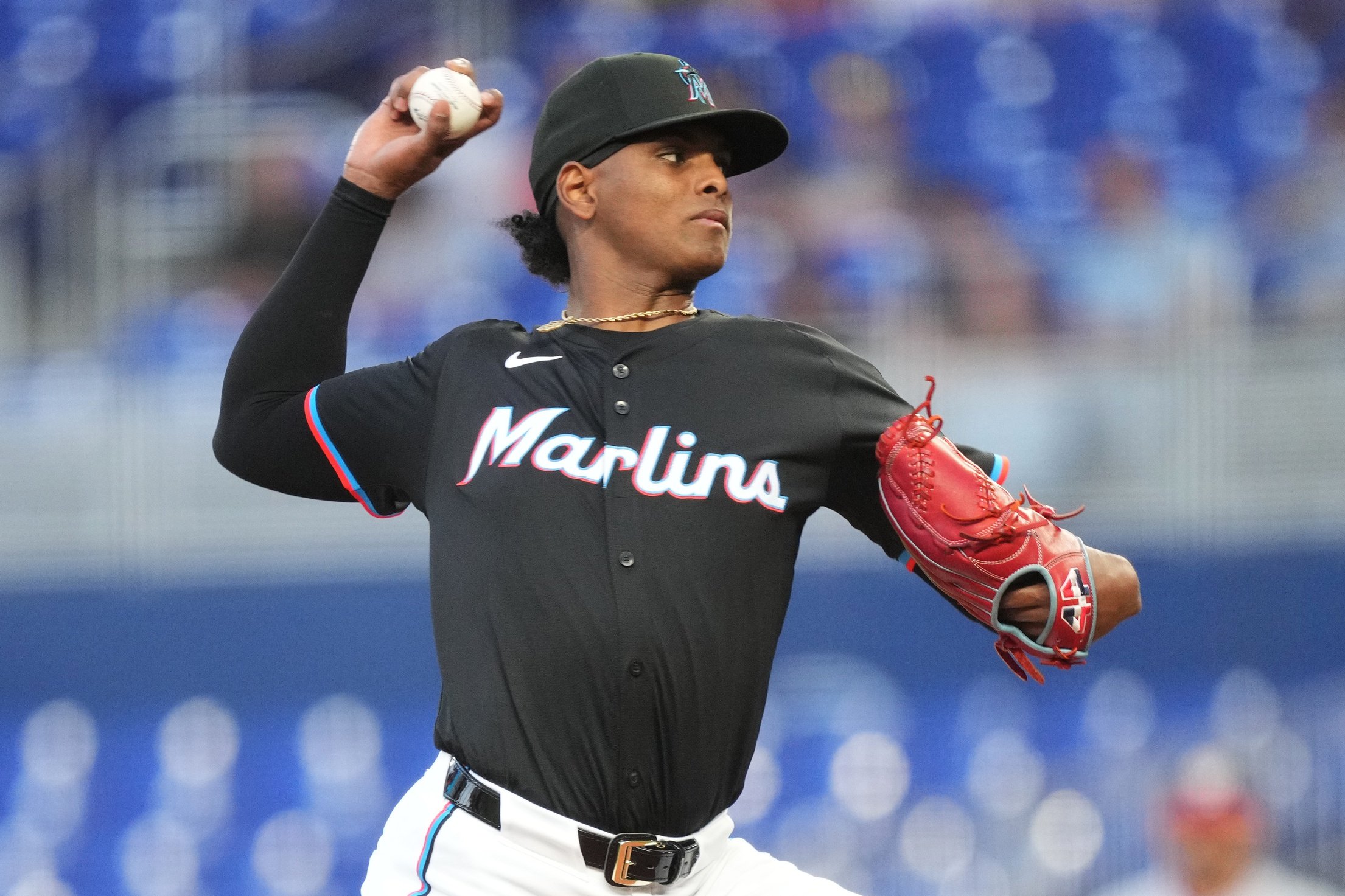 MIAMI—Sometimes it’s not your day. With the Miami Marlins protecting a 4-2 lead against the Washington Nationals in the eighth inning, Anthony Bender came in relief with two runners on and nobody out. The sure-handed reliever hadn’t given up a hit, much less an earned run, in his first five appearances this year. He also erased all three inherited runners he had to deal with up to this point. While Bender got former Marlin Josh Bell to fly out for the first out, he walked the next batter he faced, Alex Call, to load the bases. He then battled with pinch-hitter Nathaniel Lowe for 10 pitches, including six foul balls, before Lowe smacked a three-run double down the left field line. cb8698d0-245250ff-19ea6d64-csvm-diamondgcp-asset_1280x720_59_4000K.mp4 It was Bender’s first blemish all year, and it gave Washington a 5-4 lead that they wouldn’t squander for the rest of the game. “He's been so good,” Marlins manager Clayton McCullough said. “He just kept making pitches. Once the at-bat gets going that deep, sometimes the advantage can shift to the hitter. It was a good battle, unfortunately we came up on the wrong side of it.” The blown lead came on the heels of a solid performance by starting pitcher Edward Cabrera. Making his first start of the year after developing a blister injury in spring training, the Dominican right-hander cut through the Washington Nationals lineup with relative ease. Cabrera still showed glimpses of his control issues, walking three in 5 ⅔ innings and throwing 59 percent of his 79 pitches for strikes. But he danced around the danger and allowed just four hits and two runs—those runs came on a home run to Josh Bell in his final inning of work. Cabrera’s stuff looked even better than usual, and that's saying something. He averaged 97.9 miles per hour on his four-seam fastball, up 1.6 mph from last year. He registered one four-seamer at 99.5 mph, which was the second-fastest recorded in his career. The soon-to-be 27-year-old also averaged an extra six inches of vertical break on his curveball compared to 2024. b5005082-e12686e7-91519434-csvm-diamondgcp-asset_1280x720_59_4000K.mp4 On the other side, Nationals starting pitcher Mitchell Parker was also breezing through his outing until the fifth inning. Parker pitched four shutout innings and allowed two hits and a walk. The Marlins finally cracked the second-year pitcher in the fifth. They followed the formula that carried them to an unexpected .500 record through 12 games: play small ball and attack the mistake pitches. Liam Hicks led off the inning by getting hit by a pitch. Javier Sanoja bunted for a hit, and Graham Pauley reached base when Parker threw off target on a sacrifice bunt attempt. Bases were loaded when the lineup flipped to Xavier Edwards with zero out. And that’s when he attacked. Parker left a four-seamer over the middle of the plate, and Edwards sent it back up the middle to drive home two runs and give Miami a 2-0 lead. Kyle Stowers then drove home two runners with a double down the right field line. Alas, that was the only inning the Marlins could get numbers on the board. “We did a lot of good things in that inning to build, have a cushion, and create other opportunities,” McCullough said. “We'll just continue to preach to these guys to just try to string at-bats together, mount innings, create innings. And we believe that the more opportunities that we give ourselves, we will cash in more often than not.” Dating back to the start of last season, the Marlins have lost 12 of their last 14 matchups against the Nats. They'll send Sandy Alcantara to the mound on Saturday to buck that trend.
-
- 2
-
-
- edward cabrera
- anthony bender
- (and 1 more)
-
The Marlins were five outs away from getting above .500. Unfortunately, the bullpen couldn't hold the lead. MIAMI—Sometimes it’s not your day. With the Miami Marlins protecting a 4-2 lead against the Washington Nationals in the eighth inning, Anthony Bender came in relief with two runners on and nobody out. The sure-handed reliever hadn’t given up a hit, much less an earned run, in his first five appearances this year. He also erased all three inherited runners he had to deal with up to this point. While Bender got former Marlin Josh Bell to fly out for the first out, he walked the next batter he faced, Alex Call, to load the bases. He then battled with pinch-hitter Nathaniel Lowe for 10 pitches, including six foul balls, before Lowe smacked a three-run double down the left field line. cb8698d0-245250ff-19ea6d64-csvm-diamondgcp-asset_1280x720_59_4000K.mp4 It was Bender’s first blemish all year, and it gave Washington a 5-4 lead that they wouldn’t squander for the rest of the game. “He's been so good,” Marlins manager Clayton McCullough said. “He just kept making pitches. Once the at-bat gets going that deep, sometimes the advantage can shift to the hitter. It was a good battle, unfortunately we came up on the wrong side of it.” The blown lead came on the heels of a solid performance by starting pitcher Edward Cabrera. Making his first start of the year after developing a blister injury in spring training, the Dominican right-hander cut through the Washington Nationals lineup with relative ease. Cabrera still showed glimpses of his control issues, walking three in 5 ⅔ innings and throwing 59 percent of his 79 pitches for strikes. But he danced around the danger and allowed just four hits and two runs—those runs came on a home run to Josh Bell in his final inning of work. Cabrera’s stuff looked even better than usual, and that's saying something. He averaged 97.9 miles per hour on his four-seam fastball, up 1.6 mph from last year. He registered one four-seamer at 99.5 mph, which was the second-fastest recorded in his career. The soon-to-be 27-year-old also averaged an extra six inches of vertical break on his curveball compared to 2024. b5005082-e12686e7-91519434-csvm-diamondgcp-asset_1280x720_59_4000K.mp4 On the other side, Nationals starting pitcher Mitchell Parker was also breezing through his outing until the fifth inning. Parker pitched four shutout innings and allowed two hits and a walk. The Marlins finally cracked the second-year pitcher in the fifth. They followed the formula that carried them to an unexpected .500 record through 12 games: play small ball and attack the mistake pitches. Liam Hicks led off the inning by getting hit by a pitch. Javier Sanoja bunted for a hit, and Graham Pauley reached base when Parker threw off target on a sacrifice bunt attempt. Bases were loaded when the lineup flipped to Xavier Edwards with zero out. And that’s when he attacked. Parker left a four-seamer over the middle of the plate, and Edwards sent it back up the middle to drive home two runs and give Miami a 2-0 lead. Kyle Stowers then drove home two runners with a double down the right field line. Alas, that was the only inning the Marlins could get numbers on the board. “We did a lot of good things in that inning to build, have a cushion, and create other opportunities,” McCullough said. “We'll just continue to preach to these guys to just try to string at-bats together, mount innings, create innings. And we believe that the more opportunities that we give ourselves, we will cash in more often than not.” Dating back to the start of last season, the Marlins have lost 12 of their last 14 matchups against the Nats. They'll send Sandy Alcantara to the mound on Saturday to buck that trend. View full article
-
The former waiver claim has found his niche as Miami's starting second baseman. Otto Lopez was kind of "just another guy" when he was claimed off waivers by the Miami Marlins last season. The then-25-year-old had been playing for the San Francisco Giants’ Triple-A affiliate when he was designated for assignment just two days into the season. He had been acquired via trade from the Blue Jays just over one month prior, in exchange for cash considerations. Marlins president of baseball operations Peter Bendix did what he does best: he went bargain hunting on the waiver wire and found gold. Lopez was only with Triple-A Jacksonville for about a week before Marlins fans were clamoring for this mystery man to be called up on April 15, 2024. Lopez tells Fish On First that he felt there was "more freedom" to be himself upon joining the Marlins organization. "People just telling me, 'you have to play your game.'" Who was this nameless infielder with 17 hits, five doubles, and two home runs in 10 games? Even then-manager Skip Schumaker admitted he didn’t “know anything about him” when asked on the day of his call-up last year. After Lopez was brought up to the major league club, he brought his hot streak with him. He had a 1.028 OPS through his first 35 plate appearances. After 31 games, he was hitting .297 with a .778 OPS, and was one of the most consistent hitters in a Marlins lineup that struggled everywhere else. kaqyqw.mp4 He struggled in the middle of the year, going on the injured list with back pain in early July, but a strong September in which he had a .903 OPS over 102 plate appearances put a punctuation on his Marlins debut season. One thing that never wavered was Lopez’s defense. Having to step up as starting second baseman full-time after Luis Arraez was traded to the San Diego Padres in early May, Lopez proved himself as an anchor on the infield. His nine defensive runs saved were fifth among all second basemen with at least 850 innings played, and his 17 outs above average were third. 78b06086-5ba7de03-ff10b921-csvm-diamondx64-asset_1280x720_59_4000K.mp4 Entering Tuesday, Lopez is slightly ahead of last year's production in terms of on-base percentage (.317), slugging percentage (.393) and wRC+ (97). He also scored the game-winning run in one of the three opening week walk-offs against the Pittsburgh Pirates. Statcast metrics suggest there could be a louder breakout coming. Lopez’s barrel rate (5.1% to 12.2%), zone contact rate (87.1% to 90.9%), and launch angle sweet-spot percentage (30.4% to 36.7%) have all increased. His expected slugging percentage is .528, per Baseball Savant, trailing only Matt Mervis (.544) among Marlins players. In this young season, Lopez leads all qualified major league second basemen in outs above average (4). Strange as it may sound, Lopez could be a building block for the rebuilding Marlins. Yes, we know Sandy Alcantara exists. But when you consider the financial behavior of this team, Lopez is the poster child for who the organization would want: a middle infielder with strong defense and low strikeout rates making close to league minimum, not eligible for arbitration until spring of 2027, under team control through 2029, and still in his mid-twenties. View full article
-
Calvin Faucher gives up first home run in two years in loss to Mets
Alex Krutchik posted an article in Marlins
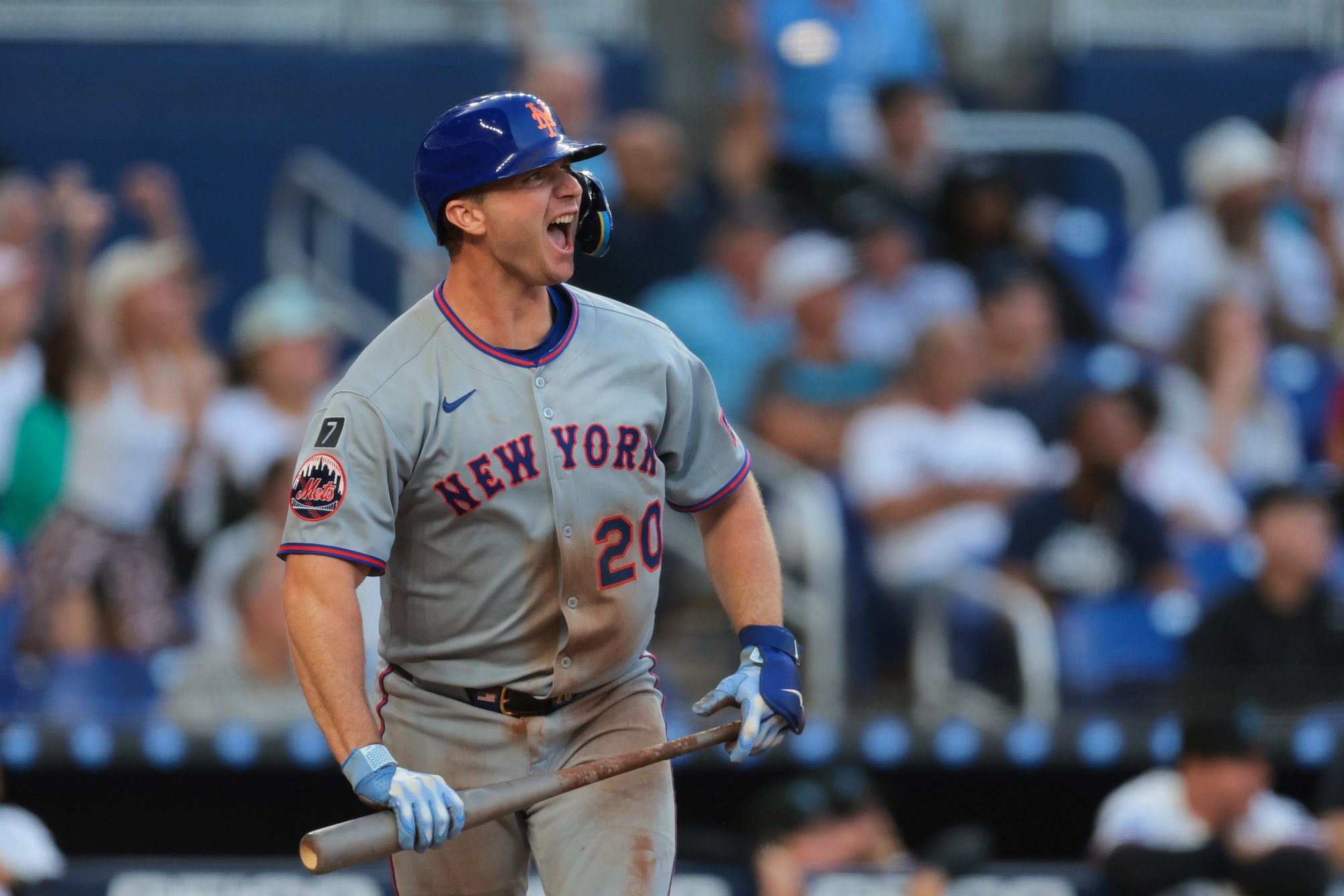 MIAMI—An unstoppable force met an immovable object on Wednesday. The unstoppable force won. Up 4-1 in the top of the eighth inning, Miami Marlins reliever Calvin Faucher was tasked with handling the 8-9-1 hitters of the New York Mets lineup. Last year, he pitched to a 3.19 ERA and handled closing duties after Tanner Scott was traded to the San Diego Padres in July. In 53 ⅔ innings, he allowed zero home runs. On Wednesday, Faucher allowed two one-out singles and allowed Juan Soto to reach on a fielder’s choice in which Luis Torrens was thrown out at home. The only thing standing between Faucher and the end of the inning was Pete Alonso, with two runners on base. After falling behind in the count 2-1, Faucher threw a fastball low and in to even the count at 2-2. Here’s how the rest of the battle went: Foul. Foul. Foul. Foul. Moonshot over the center field wall. Tied game. For the first time in almost two years, Calvin Faucher gave up a home run. “I didn't really want to mix in, get a possible ball, get a full count, and then have to go from there,” Faucher said. “I mean, he was fouling off pitches that were out of zone, so more credit to him there. At the end of the day, it was just a battle he won.” 50b7681e-19971b4d-a6e9347b-csvm-diamondgcp-asset_1280x720_59_4000K.mp4 It was Alonso's 29th career homer against the Fish, which broke a tie with Barry Bonds. Only eight hitters have taken Marlins pitchers deep more often. The score remained tied until Jesse Winker walked with the bases loaded in the 11th inning. The Mets would add onto the lead in the next at-bat when shortstop Xavier Edwards misplayed a Mark Vientos grounder and allowed Alonso to score. Starting pitching strong again Marlins starting pitcher Connor Gillispie admitted he was a little amped up in his season debut last Friday. It showed in his line score. He allowed a respectable three earned runs over five innings against the Pittsburgh Pirates, but allowed four walks in what was also the first start of his major league career. With a much more potent New York Mets lineup in town, the 27-year-old’s heart rate actually slowed. After allowing a single to Soto in the first inning and an RBI double to Alonso in the next at-bat, Gillispie shut down a Mets offense that is expected to be one of the best in the majors this year. It was the only run he allowed in five innings. In contrast to his debut, he allowed zero walks and threw 51 of his 73 pitches for strikes in Wednesday's 6-5 loss. Gillispie, who made the roster out of camp after injuries to Ryan Weathers and Edward Cabrera, bent but didn’t break whenever the top third of the Mets lineup beat him. While the Mets’ No. 2 and No. 3 hitters in Soto and Alonso went 3-for-4 with two doubles against him, the four through nine hitters went 1-for-12. Leadoff hitter Francisco Lindor went 0-for-3 with two strikeouts against the right-hander. “I've worked my whole life for this,” Gillispie said. “So, I'm not going to let the moment kind of overtake me. I just kind of stay within my way, do what I can do, just try and do my job.” The Marlins offense manufactured baserunners and took advantage of Mets mistakes to score runs. With Kyle Stowers standing at third base in the third inning, Otto Lopez hit a ground ball to third baseman Mark Vientos. The south Florida native threw home, but the throw sailed high and wide of catcher Hayden Senger, allowing the run to score. Up 2-1 in the seventh, Griffin Conine was standing on second base when reliever A.J. Minter fell during his delivery, allowing Conine to advance to third on a balk. Otto Lopez would then drive him home on an infield single. Nick Fortes drove home Lopez with a single two batters later to go up 4-1. The Marlins will go to Atlanta on Friday to begin a three-game set against the Braves, who unexpectedly own MLB's worst record through one week of play. Max Meyer is scheduled to make his second start of the season.
 -
The Miami Marlins blew their largest lead of the young season, then couldn't get the clutch hit they needed in extra innings. MIAMI—An unstoppable force met an immovable object on Wednesday. The unstoppable force won. Up 4-1 in the top of the eighth inning, Miami Marlins reliever Calvin Faucher was tasked with handling the 8-9-1 hitters of the New York Mets lineup. Last year, he pitched to a 3.19 ERA and handled closing duties after Tanner Scott was traded to the San Diego Padres in July. In 53 ⅔ innings, he allowed zero home runs. On Wednesday, Faucher allowed two one-out singles and allowed Juan Soto to reach on a fielder’s choice in which Luis Torrens was thrown out at home. The only thing standing between Faucher and the end of the inning was Pete Alonso, with two runners on base. After falling behind in the count 2-1, Faucher threw a fastball low and in to even the count at 2-2. Here’s how the rest of the battle went: Foul. Foul. Foul. Foul. Moonshot over the center field wall. Tied game. For the first time in almost two years, Calvin Faucher gave up a home run. “I didn't really want to mix in, get a possible ball, get a full count, and then have to go from there,” Faucher said. “I mean, he was fouling off pitches that were out of zone, so more credit to him there. At the end of the day, it was just a battle he won.” 50b7681e-19971b4d-a6e9347b-csvm-diamondgcp-asset_1280x720_59_4000K.mp4 It was Alonso's 29th career homer against the Fish, which broke a tie with Barry Bonds. Only eight hitters have taken Marlins pitchers deep more often. The score remained tied until Jesse Winker walked with the bases loaded in the 11th inning. The Mets would add onto the lead in the next at-bat when shortstop Xavier Edwards misplayed a Mark Vientos grounder and allowed Alonso to score. Starting pitching strong again Marlins starting pitcher Connor Gillispie admitted he was a little amped up in his season debut last Friday. It showed in his line score. He allowed a respectable three earned runs over five innings against the Pittsburgh Pirates, but allowed four walks in what was also the first start of his major league career. With a much more potent New York Mets lineup in town, the 27-year-old’s heart rate actually slowed. After allowing a single to Soto in the first inning and an RBI double to Alonso in the next at-bat, Gillispie shut down a Mets offense that is expected to be one of the best in the majors this year. It was the only run he allowed in five innings. In contrast to his debut, he allowed zero walks and threw 51 of his 73 pitches for strikes in Wednesday's 6-5 loss. Gillispie, who made the roster out of camp after injuries to Ryan Weathers and Edward Cabrera, bent but didn’t break whenever the top third of the Mets lineup beat him. While the Mets’ No. 2 and No. 3 hitters in Soto and Alonso went 3-for-4 with two doubles against him, the four through nine hitters went 1-for-12. Leadoff hitter Francisco Lindor went 0-for-3 with two strikeouts against the right-hander. “I've worked my whole life for this,” Gillispie said. “So, I'm not going to let the moment kind of overtake me. I just kind of stay within my way, do what I can do, just try and do my job.” The Marlins offense manufactured baserunners and took advantage of Mets mistakes to score runs. With Kyle Stowers standing at third base in the third inning, Otto Lopez hit a ground ball to third baseman Mark Vientos. The south Florida native threw home, but the throw sailed high and wide of catcher Hayden Senger, allowing the run to score. Up 2-1 in the seventh, Griffin Conine was standing on second base when reliever A.J. Minter fell during his delivery, allowing Conine to advance to third on a balk. Otto Lopez would then drive him home on an infield single. Nick Fortes drove home Lopez with a single two batters later to go up 4-1. The Marlins will go to Atlanta on Friday to begin a three-game set against the Braves, who unexpectedly own MLB's worst record through one week of play. Max Meyer is scheduled to make his second start of the season. View full article
-
Fish On First speaks with Miami Marlins infielder Eric Wagaman about making an Opening Day roster for the first time in his MLB career and having many teammates who've just reached the same milestone. View full video
-
Fish On First speaks with Miami Marlins infielder Eric Wagaman about making an Opening Day roster for the first time in his MLB career and having many teammates who've just reached the same milestone.
-
 MIAMI, Fla.—When you have a team as young and inexperienced as the Miami Marlins, you’ll have games where you beat yourself. The average age of their position players is 27 years old, second-youngest in the majors. It showed on Friday night. Connor Gillispie, making his first major league start, opened the fourth inning by walking Oneil Cruz. Catcher Liam Hicks, making his MLB debut, tried throwing him out on a steal attempt and sent the ball into the outfield, allowing Cruz to get to third. Gillispie then walked Joey Bart, and allowed Cruz to score one batter later on an Andrew McCutchen double. Gillispie eventually found himself with the bases loaded and zero outs, but it seemed luck would be on his side. He got Endy Rodriguez to fly out to left fielder Kyle Stowers, and the lefty threw the ball back to the infield at 90 miles per hour to prevent Bart from even thinking of leaving his spot at third base. It was almost a mirror image on the next at-bat. Adam Frazier hit a ball into shallow right field to Griffin Conine, and he fired the ball towards home plate. This time, Bart decided to tag up, and the throw looked like it would beat him to home...except Matt Mervis, playing in his 30th career game at first base, cut the throw off at the bottom of the mound instead of letting it get to Hicks. Bart was safe, and the Pirates took a 2-0 lead. “I heard ‘cut’ from somewhere behind me, and reaction took over,” Mervis said. “In hindsight, it was a throw that was perfectly on line. Would have been an easy hop for the catcher to handle. So my mistake there.” 219803e8-37aadf76-5724a6fa-csvm-diamondgcp-asset_1280x720_59_16000K.mp4 The following inning opened with Graham Pauley, making his sixth start at third base, booting a ball hit straight at him, allowing Tommy Pham to reach base. Oneil Cruz took advantage of the error with a line drive home run just inside the right field foul pole to go up 4-0. The Marlins committed a major league-leading 117 errors in 2024. Their four miscues on Friday have propelled them to an early lead in that category once again. "We played good defense throughout spring training,” McCullough said. “We didn't make some of the plays that I think we've been making. Those things are going to happen. Our guys will come right back out and work tomorrow. You give people extra outs, it just makes it tough on yourself and your staff.” Gillispie, who was claimed off waivers by the Marlins over the winter and was starting in place of the injured Ryan Weathers, managed the game well. The 27-year-old righty went five innings, allowed four hits, struck out four, and allowed three earned runs. He struggled a bit with control, walking four and placing only 61.6 percent of his 85 pitches for strikes. The offense couldn’t do much aside from a Graham Pauley RBI double in the fifth, until Otto Lopez hit a two-run home run in the ninth to cut the deficit to 4-3. The season-opening series between these clubs continues Saturday at 4:10 pm.
- 1 comment
-
- 2
-
-
- connor gillispie
- liam hicks
- (and 2 more)
-
The Marlins looked every bit of the inexperienced roster they have on paper en route to their first loss of 2025. MIAMI, Fla.—When you have a team as young and inexperienced as the Miami Marlins, you’ll have games where you beat yourself. The average age of their position players is 27 years old, second-youngest in the majors. It showed on Friday night. Connor Gillispie, making his first major league start, opened the fourth inning by walking Oneil Cruz. Catcher Liam Hicks, making his MLB debut, tried throwing him out on a steal attempt and sent the ball into the outfield, allowing Cruz to get to third. Gillispie then walked Joey Bart, and allowed Cruz to score one batter later on an Andrew McCutchen double. Gillispie eventually found himself with the bases loaded and zero outs, but it seemed luck would be on his side. He got Endy Rodriguez to fly out to left fielder Kyle Stowers, and the lefty threw the ball back to the infield at 90 miles per hour to prevent Bart from even thinking of leaving his spot at third base. It was almost a mirror image on the next at-bat. Adam Frazier hit a ball into shallow right field to Griffin Conine, and he fired the ball towards home plate. This time, Bart decided to tag up, and the throw looked like it would beat him to home...except Matt Mervis, playing in his 30th career game at first base, cut the throw off at the bottom of the mound instead of letting it get to Hicks. Bart was safe, and the Pirates took a 2-0 lead. “I heard ‘cut’ from somewhere behind me, and reaction took over,” Mervis said. “In hindsight, it was a throw that was perfectly on line. Would have been an easy hop for the catcher to handle. So my mistake there.” 219803e8-37aadf76-5724a6fa-csvm-diamondgcp-asset_1280x720_59_16000K.mp4 The following inning opened with Graham Pauley, making his sixth start at third base, booting a ball hit straight at him, allowing Tommy Pham to reach base. Oneil Cruz took advantage of the error with a line drive home run just inside the right field foul pole to go up 4-0. The Marlins committed a major league-leading 117 errors in 2024. Their four miscues on Friday have propelled them to an early lead in that category once again. "We played good defense throughout spring training,” McCullough said. “We didn't make some of the plays that I think we've been making. Those things are going to happen. Our guys will come right back out and work tomorrow. You give people extra outs, it just makes it tough on yourself and your staff.” Gillispie, who was claimed off waivers by the Marlins over the winter and was starting in place of the injured Ryan Weathers, managed the game well. The 27-year-old righty went five innings, allowed four hits, struck out four, and allowed three earned runs. He struggled a bit with control, walking four and placing only 61.6 percent of his 85 pitches for strikes. The offense couldn’t do much aside from a Graham Pauley RBI double in the fifth, until Otto Lopez hit a two-run home run in the ninth to cut the deficit to 4-3. The season-opening series between these clubs continues Saturday at 4:10 pm. View full article
-
Why the Marlins may or may not exceed expectations in 2025
Alex Krutchik posted an article in Marlins
 Happy Opening Day. Every MLB team is 0-0 (except for the Cubs and Dodgers). However, most people and projection systems are already aligned in thinking that the Miami Marlins will be non-competitive in 2025. What will make the difference between meaningful improvement versus jockeying for draft lottery position for the second consecutive season? Let's begin by thinking positive thoughts before outlining the main reasons for concern. Why they will exceed expectations Good returning bullpen One thing that president of baseball operations Peter Bendix has shown in his short time here is that he knows how to find good bullpen pieces in the bargain bin. Declan Cronin, Calvin Faucher, Jesús Tinoco, Lake Bachar, and Anthony Veneziano were all guys that were claimed off waivers at some point before or during the 2024 season. They contributed to a 'pen that ranked second in the majors in wins above replacement, per FanGraphs. Faucher was given the closing role last year after Tanner Scott was traded at the deadline. The 29-year-old right-hander pitched to a 3.60 ERA and 2.17 FIP in 15 games after Scott was dealt. He made six saves in eight opportunities. Unfortunately for him, he was sidelined in early September with a right shoulder impingement and would miss the rest of the season. Tinoco was next in line for the job, converting on three of four save opportunities in the final month of the year. Hitters made 35 plate appearances against the 29-year-old right-hander across all of 2024. They collectively mustered four hits, only one of which was for extra bases, and struck out at a 34.3% clip. l1VGg0ejclp_OeQJ.mp4 Bachar and Veneziano each posted ERAs below 4.00 last year in 10 games each. With Veneziano being the only healthy left-hander in the bullpen to start the season, expect him to have a much larger workload than last year. Cronin will miss the start of the season with a sore hip. But last year, he was a reliable middle reliever. Used in mostly low-leverage spots, he put up a 4.35 ERA, but his FIP of 2.58 would suggest he should have fared much better. This isn’t even to mention Anthony Bender, who made his return to the mound last season after missing 2023 recovering from Tommy John surgery. Bender didn’t have the best results in 2024, but his pitches still showed the sharpness that made Marlins fans fall in love with him in 2021 and 2022. His sweeper—a variation of his slider that was his calling card before the surgery—had a .170 batting average against last year. New prospects coming up soon For the first time in years, there are hitters knocking on the door of the major leagues that have actually made positive impacts in the minors. Catcher Agustín Ramírez, and infielders Deyvison De Los Santos and Max Acosta are expected to be up at some point in 2025. Ramirez and De Los Santos, in particular, represent some of the best power the organization has seen in years. De Los Santos, 21 years old, slugged .523 and hit 26 home runs in 99 games in Triple-A last year, while Ramírez, 23 years old, hit nine over 68 games at the same level. Pitchers Robby Snelling and Adam Mazur, both traded to Miami last year from the San Diego Padres, are also expected to come up this year. Snelling, a 21-year-old lefty, was one of the youngest pitchers in Double-A last year, and struggled there before his change of scenery. He settled down slightly when he got to the Marlins Double-A affiliate in Pensacola and actually made one start a Triple-A last year, becoming the youngest in franchise history to do so. Mazur is a lanky right-hander that made his MLB debut last year with the Padres at just 23 years old. The Marlins sent him down to Triple-A when they acquired him. He had inflated ERAs at each level he pitched at last year, but put up solid BB/9 and K/9 numbers. Peter Bendix mentioned his name multiple times in recent months as someone the organization is impressed with. Returning guys take a step forward The fun thing about having a young team is that, in theory, everyone should take a step forward year after year. Of course, that doesn’t always happen. But there’s certain guys that people should have their eyes on as breakout candidates. Once he returns from a Grade 1 oblique injury in May, Connor Norby will try to one-up his Marlins debut in which he reached base safely in 17 of his first 18 games and hit six home runs with a 1.043 OPS in that span. He cooled off considerably after that, hitting .164 with two extra-base hits over the final 18 games of the year. Playing a mostly full season in the majors should do wonders for a 24-year-old that former manager Skip Schumaker admitted to having a man crush on. Otto Lopez was another guy who had an up-and-down season at the plate. He was hitting .297 on June 4, but then hit .168 over the next 31 games, with only two extra base hits. The 26-year-old infielder finished his season by posting a .903 OPS in September and October. If he could be somewhere in between his best and worst self from last year, combined with a full season of elite defense he’s shown at second base, he could realistically get All-Star votes. A team-wide improvement we saw this spring (yes, we know it’s just spring training) is that the Marlins were drawing a lot of walks. Miami drew the third-most walks in the majors during spring training. During the regular season last year, they were second-worst behind the Chicago White Sox. For a team that doesn’t have a lot of power, getting guys on base by any means necessary will be huge in stealing a few wins. Why they won't exceed expectations Rotation can’t finish the season One of the detriments to the Marlins 2024 season is already rearing its ugly head again. The pitching rotation, which was the only proven position group on this team, is entering the season injured once again. Braxton Garrett is out for the year after getting UCL revision surgery on his throwing elbow, Edward Cabrera will begin the year on the injured list with a blister issue, and Ryan Weathers will join Cabrera on the IL with a mild strain in his throwing forearm To add onto this, Eury Pérez is still rehabbing from his Tommy John surgery he had in April 2024 and is set to return after the All-Star break. That leaves the Marlins with Sandy Alcantara, Max Meyer, Valente Bellozo, Connor Gillispie, and Cal Quantrill to start the season. While Alcantara is a bonafide workhorse with two 200-inning seasons in his career, he’s coming off Tommy John surgery and will likely be on somewhat of a leash. The 29-year-old is also likely going to be traded some time before the trade deadline in late July. Meyer has only eclipsed 100 innings once—in 2021 with Double-A Pensacola. Gillispie has logged just eight innings in the majors, although he did surpass the 100-inning mark in 2023 and 2024 in the high minors. While they’ll be given a larger workload than they’ve previously had in the majors, it’s still unlikely to see a pitcher make a drastic jump in innings pitched from one year to the next. Even when Cabrera returns—an optimistic timeline would be mid-April—he is no guarantee to stick in the rotation consistently. He has had multiple IL stints over the last two seasons and hasn’t hit the 100-inning mark at all in his major league career. While not impossible for guys like Meyer, Gillispie, Bellozo, and Cabrera to eat up innings, it’ll require each of them to exceed the ceilings they’ve set in their respective careers. Lack of power in the lineup The Marlins struggled with power last year, ranking 27th in total home runs and 24th in slugging percentage. And then, they traded their leader in home runs and slugging in Jake Burger. Now, the only relatively consistent power hitter they have is Jesús Sánchez, and he will be out for at least the first two weeks of the year as he deals with a left oblique strain. That leaves Jonah Bride as the only healthy player on the team who hit more than 10 home runs against major league pitching last year, hitting 11 in 71 games. The Marlins have guys in their lineup with power, like Griffin Conine and Kyle Stowers, but they have yet to prove that they can get the bat on the ball consistently, both posting strikeout rates of over 30 percent last year. These weren’t just growing pains, either. Both of these hitters struggled with strikeouts while coming up through the minors. Connor Norby could be a candidate to hit over 20 home runs this year, assuming he avoids setbacks during his oblique rehab. Coaching staff inexperience In speaking with a few members of this new coaching staff during the offseason, it’s clear they have a coherent and cohesive plan. In observing them during spring training and talking to those they’ve worked with in the past, there is reason to believe they will do well as time goes on. But for now almost every coach and coordinator is in the first year of their respective role. Manager Clayton McCullough was a manager in the low minors for the Toronto Blue Jays organization from 2007-2014, and was a base coach with the Los Angeles Dodgers for four years before coming to Miami. Bench coach Carson Vitale was a manager for the Los Angeles Angels’ Dominican Summer League team in 2014 and 2015, and served as a hitting coach in their system for two years before that. The highest role he’s served in the majors was with the Seattle Mariners as the Major League field coordinator from 2020-2024. Hitting coach Pedro Guerrero and pitching coach Daniel Moskos were each assistant coaches for three seasons in their previous stops with the San Francisco Giants and Chicago Cubs, respectively. Tyler Smarslok, who will be the club’s first base, infield, and baserunning coach, has never coached in the majors. At least he has managerial experience in the Arizona Fall League. Although new bullpen coach Brandon Mann has a lot of experience working with Driveline and serving as a pitching strategist with Miami last year, this will be the first time he is officially a coach at the major league level. The two big exceptions to the aforementioned lack of experience in their current roles are assistant hitting coach Derek Shomon and assistant pitching coach Alon Leichman. They each spent two seasons with the same job titles with the Minnesota Twins and Cincinnati Reds, respectively. When Skip Schumaker was going through his debut season in 2023, he often mentioned how much it helped to have guys like Mel Stottlemyre Jr. around. McCullough doesn't have the same luxury. It will be interesting to see how this staff handles the peaks and valleys with the glaring lack of tenure in the room.
 -
Will this wind up being a typical rebuilding year in Miami or something much more compelling? Happy Opening Day. Every MLB team is 0-0 (except for the Cubs and Dodgers). However, most people and projection systems are already aligned in thinking that the Miami Marlins will be non-competitive in 2025. What will make the difference between meaningful improvement versus jockeying for draft lottery position for the second consecutive season? Let's begin by thinking positive thoughts before outlining the main reasons for concern. Why they will exceed expectations Good returning bullpen One thing that president of baseball operations Peter Bendix has shown in his short time here is that he knows how to find good bullpen pieces in the bargain bin. Declan Cronin, Calvin Faucher, Jesús Tinoco, Lake Bachar, and Anthony Veneziano were all guys that were claimed off waivers at some point before or during the 2024 season. They contributed to a 'pen that ranked second in the majors in wins above replacement, per FanGraphs. Faucher was given the closing role last year after Tanner Scott was traded at the deadline. The 29-year-old right-hander pitched to a 3.60 ERA and 2.17 FIP in 15 games after Scott was dealt. He made six saves in eight opportunities. Unfortunately for him, he was sidelined in early September with a right shoulder impingement and would miss the rest of the season. Tinoco was next in line for the job, converting on three of four save opportunities in the final month of the year. Hitters made 35 plate appearances against the 29-year-old right-hander across all of 2024. They collectively mustered four hits, only one of which was for extra bases, and struck out at a 34.3% clip. l1VGg0ejclp_OeQJ.mp4 Bachar and Veneziano each posted ERAs below 4.00 last year in 10 games each. With Veneziano being the only healthy left-hander in the bullpen to start the season, expect him to have a much larger workload than last year. Cronin will miss the start of the season with a sore hip. But last year, he was a reliable middle reliever. Used in mostly low-leverage spots, he put up a 4.35 ERA, but his FIP of 2.58 would suggest he should have fared much better. This isn’t even to mention Anthony Bender, who made his return to the mound last season after missing 2023 recovering from Tommy John surgery. Bender didn’t have the best results in 2024, but his pitches still showed the sharpness that made Marlins fans fall in love with him in 2021 and 2022. His sweeper—a variation of his slider that was his calling card before the surgery—had a .170 batting average against last year. New prospects coming up soon For the first time in years, there are hitters knocking on the door of the major leagues that have actually made positive impacts in the minors. Catcher Agustín Ramírez, and infielders Deyvison De Los Santos and Max Acosta are expected to be up at some point in 2025. Ramirez and De Los Santos, in particular, represent some of the best power the organization has seen in years. De Los Santos, 21 years old, slugged .523 and hit 26 home runs in 99 games in Triple-A last year, while Ramírez, 23 years old, hit nine over 68 games at the same level. Pitchers Robby Snelling and Adam Mazur, both traded to Miami last year from the San Diego Padres, are also expected to come up this year. Snelling, a 21-year-old lefty, was one of the youngest pitchers in Double-A last year, and struggled there before his change of scenery. He settled down slightly when he got to the Marlins Double-A affiliate in Pensacola and actually made one start a Triple-A last year, becoming the youngest in franchise history to do so. Mazur is a lanky right-hander that made his MLB debut last year with the Padres at just 23 years old. The Marlins sent him down to Triple-A when they acquired him. He had inflated ERAs at each level he pitched at last year, but put up solid BB/9 and K/9 numbers. Peter Bendix mentioned his name multiple times in recent months as someone the organization is impressed with. Returning guys take a step forward The fun thing about having a young team is that, in theory, everyone should take a step forward year after year. Of course, that doesn’t always happen. But there’s certain guys that people should have their eyes on as breakout candidates. Once he returns from a Grade 1 oblique injury in May, Connor Norby will try to one-up his Marlins debut in which he reached base safely in 17 of his first 18 games and hit six home runs with a 1.043 OPS in that span. He cooled off considerably after that, hitting .164 with two extra-base hits over the final 18 games of the year. Playing a mostly full season in the majors should do wonders for a 24-year-old that former manager Skip Schumaker admitted to having a man crush on. Otto Lopez was another guy who had an up-and-down season at the plate. He was hitting .297 on June 4, but then hit .168 over the next 31 games, with only two extra base hits. The 26-year-old infielder finished his season by posting a .903 OPS in September and October. If he could be somewhere in between his best and worst self from last year, combined with a full season of elite defense he’s shown at second base, he could realistically get All-Star votes. A team-wide improvement we saw this spring (yes, we know it’s just spring training) is that the Marlins were drawing a lot of walks. Miami drew the third-most walks in the majors during spring training. During the regular season last year, they were second-worst behind the Chicago White Sox. For a team that doesn’t have a lot of power, getting guys on base by any means necessary will be huge in stealing a few wins. Why they won't exceed expectations Rotation can’t finish the season One of the detriments to the Marlins 2024 season is already rearing its ugly head again. The pitching rotation, which was the only proven position group on this team, is entering the season injured once again. Braxton Garrett is out for the year after getting UCL revision surgery on his throwing elbow, Edward Cabrera will begin the year on the injured list with a blister issue, and Ryan Weathers will join Cabrera on the IL with a mild strain in his throwing forearm To add onto this, Eury Pérez is still rehabbing from his Tommy John surgery he had in April 2024 and is set to return after the All-Star break. That leaves the Marlins with Sandy Alcantara, Max Meyer, Valente Bellozo, Connor Gillispie, and Cal Quantrill to start the season. While Alcantara is a bonafide workhorse with two 200-inning seasons in his career, he’s coming off Tommy John surgery and will likely be on somewhat of a leash. The 29-year-old is also likely going to be traded some time before the trade deadline in late July. Meyer has only eclipsed 100 innings once—in 2021 with Double-A Pensacola. Gillispie has logged just eight innings in the majors, although he did surpass the 100-inning mark in 2023 and 2024 in the high minors. While they’ll be given a larger workload than they’ve previously had in the majors, it’s still unlikely to see a pitcher make a drastic jump in innings pitched from one year to the next. Even when Cabrera returns—an optimistic timeline would be mid-April—he is no guarantee to stick in the rotation consistently. He has had multiple IL stints over the last two seasons and hasn’t hit the 100-inning mark at all in his major league career. While not impossible for guys like Meyer, Gillispie, Bellozo, and Cabrera to eat up innings, it’ll require each of them to exceed the ceilings they’ve set in their respective careers. Lack of power in the lineup The Marlins struggled with power last year, ranking 27th in total home runs and 24th in slugging percentage. And then, they traded their leader in home runs and slugging in Jake Burger. Now, the only relatively consistent power hitter they have is Jesús Sánchez, and he will be out for at least the first two weeks of the year as he deals with a left oblique strain. That leaves Jonah Bride as the only healthy player on the team who hit more than 10 home runs against major league pitching last year, hitting 11 in 71 games. The Marlins have guys in their lineup with power, like Griffin Conine and Kyle Stowers, but they have yet to prove that they can get the bat on the ball consistently, both posting strikeout rates of over 30 percent last year. These weren’t just growing pains, either. Both of these hitters struggled with strikeouts while coming up through the minors. Connor Norby could be a candidate to hit over 20 home runs this year, assuming he avoids setbacks during his oblique rehab. Coaching staff inexperience In speaking with a few members of this new coaching staff during the offseason, it’s clear they have a coherent and cohesive plan. In observing them during spring training and talking to those they’ve worked with in the past, there is reason to believe they will do well as time goes on. But for now almost every coach and coordinator is in the first year of their respective role. Manager Clayton McCullough was a manager in the low minors for the Toronto Blue Jays organization from 2007-2014, and was a base coach with the Los Angeles Dodgers for four years before coming to Miami. Bench coach Carson Vitale was a manager for the Los Angeles Angels’ Dominican Summer League team in 2014 and 2015, and served as a hitting coach in their system for two years before that. The highest role he’s served in the majors was with the Seattle Mariners as the Major League field coordinator from 2020-2024. Hitting coach Pedro Guerrero and pitching coach Daniel Moskos were each assistant coaches for three seasons in their previous stops with the San Francisco Giants and Chicago Cubs, respectively. Tyler Smarslok, who will be the club’s first base, infield, and baserunning coach, has never coached in the majors. At least he has managerial experience in the Arizona Fall League. Although new bullpen coach Brandon Mann has a lot of experience working with Driveline and serving as a pitching strategist with Miami last year, this will be the first time he is officially a coach at the major league level. The two big exceptions to the aforementioned lack of experience in their current roles are assistant hitting coach Derek Shomon and assistant pitching coach Alon Leichman. They each spent two seasons with the same job titles with the Minnesota Twins and Cincinnati Reds, respectively. When Skip Schumaker was going through his debut season in 2023, he often mentioned how much it helped to have guys like Mel Stottlemyre Jr. around. McCullough doesn't have the same luxury. It will be interesting to see how this staff handles the peaks and valleys with the glaring lack of tenure in the room. View full article
-
3 questions to be answered during last week of Marlins spring training
Alex Krutchik posted an article in Marlins
.jpg.461bb34bc9cdca7cf62a6ba5b77e031d.jpg) Jupiter, Fla.—With 10 days left in camp, the Miami Marlins are close to figuring out their 26-man roster. Here are some of the most pressing questions regarding roster construction. Who will be the fourth outfielder? The Marlins came into spring training lacking established, everyday outfielders, but they had a deep group of candidates with little left to prove in the minor leagues. Veteran Jesús Sánchez was seemingly the only lock to make the roster. Instead, he'll be missing at least the first two weeks of the regular season with a strained oblique. Right-handed hitters with center field experience, Dane Myers and Derek Hill were very likely to make the roster even before Sánchez was injured. Griffin Conine and Kyle Stowers can now both fit comfortably in the corner spots. But when Sánchez comes back, who will be the odd man out? The remainder of camp will help establish the pecking order. Both Conine and Stowers are left-handed hitters with good raw power, just like Sánchez. Stowers, who came over from the Baltimore Orioles last July in exchange for Trevor Rogers, has played sparingly in the majors the past three seasons. Conine, who has been in the Marlins organization since 2020, made his MLB debut last September. Power is not a question for either of them, however, they both struggle with swing-and-miss, each recording strikeout rates north of 30 percent last season. In 12 Grapefruit League games, Conine has slashed .286/.375/.371 with one home run, and has brought his strikeout rate down to 20%. Stowers has slashed .167/.394/.167 in 10 games and is striking out at a 36.4% clip. “We’re feeling really good about where Derek Hill is right now, and the at-bat quality he's shown, certainly the ability to play center,” McCullough said on Saturday. “Dane Myers has had a good camp in that regard as well. Griff, Stowers, we still have plenty of options, and it just opens up some opportunity for others to take on some more regular playing time.” How do the infield pieces fit together? On Sunday morning. Graham Pauley, who came over from the San Diego Padres last year for Tanner Scott and Bryan Hoeing, was optioned to Triple-A. The 24-year-old third baseman slashed .269/.345/.308 in 29 plate appearances this spring. With Pauley out of the mix, Matt Mervis, Eric Wagaman, and Javier Sanoja are left fighting for part-time roles behind the default starting infield of Connor Norby, Xavier Edwards, Otto Lopez, and Jonah Bride. Wagaman is just 6-for-31 this spring with two home runs, but his ability to play first and third, along with his cup of coffee in the majors last year, could help his odds. “I think (Wagaman’s) swing is in a really good place now, taking really good at-bats,” McCullough said. “I think he’s had a really solid camp.” Sanoja is 6-for-24 with two doubles and two walks this spring. He went 8-for-35 as a September call-up last year and only struck out twice. What separates him from anyone else on this roster is he can play practically anywhere defensively. In four seasons in the minors, he started 134 games in the outfield and he logged at least 500 innings at second base, shortstop, and third base. He also made two starts in left field last year when he was to the major leagues with the Marlins. “The versatility is great,” McCullough said about Sanoja’s defense. “But I think watching him throughout camp, I think about his offensive identity and how he looks like he's embracing that. He's really gotten into at-bats. He's got a superpower being able to move the ball forward. His contact skill is elite…His at-bats have matured for me as camp has gone on.” Mervis, who was traded from the Chicago Cubs for Vidal Bruján, has showcased the power that was advertised on his scouting report. The 26-year-old leads the team with three home runs and is slashing .313/.333/.656. The main drawback for Mervis is he almost exclusively plays first base, which goes against what the Marlins have been preaching about positional versatility this spring. What will the rotation look like? Sandy Alcantara is the Opening Day starter. That much is clear. After that, in no particular order, the Marlins will trot out Ryan Weathers, Max Meyer, and Cal Quantrill. Edward Cabrera would be a lock for the rotation if he had a normal spring progression, but he was removed from his last start on Thursday with blister issues. He resumed throwing on Monday. The problem is, he has yet to stretch out beyond two innings in any spring appearance. If Cabrera's regular season debut is delayed while he continues to ramp up, the Marlins can call upon another arm from their 40-man roster such as Connor Gillispie, Valente Bellozo, and Adam Mazur. Because of his established workload in the majors last year, Bellozo has a solid case, but he's had uneven results this spring, while Gillispie has been close to flawless. For what it's worth, Gillispie is Miami's probable starter for Tuesday.
Jupiter, Fla.—With 10 days left in camp, the Miami Marlins are close to figuring out their 26-man roster. Here are some of the most pressing questions regarding roster construction. Who will be the fourth outfielder? The Marlins came into spring training lacking established, everyday outfielders, but they had a deep group of candidates with little left to prove in the minor leagues. Veteran Jesús Sánchez was seemingly the only lock to make the roster. Instead, he'll be missing at least the first two weeks of the regular season with a strained oblique. Right-handed hitters with center field experience, Dane Myers and Derek Hill were very likely to make the roster even before Sánchez was injured. Griffin Conine and Kyle Stowers can now both fit comfortably in the corner spots. But when Sánchez comes back, who will be the odd man out? The remainder of camp will help establish the pecking order. Both Conine and Stowers are left-handed hitters with good raw power, just like Sánchez. Stowers, who came over from the Baltimore Orioles last July in exchange for Trevor Rogers, has played sparingly in the majors the past three seasons. Conine, who has been in the Marlins organization since 2020, made his MLB debut last September. Power is not a question for either of them, however, they both struggle with swing-and-miss, each recording strikeout rates north of 30 percent last season. In 12 Grapefruit League games, Conine has slashed .286/.375/.371 with one home run, and has brought his strikeout rate down to 20%. Stowers has slashed .167/.394/.167 in 10 games and is striking out at a 36.4% clip. “We’re feeling really good about where Derek Hill is right now, and the at-bat quality he's shown, certainly the ability to play center,” McCullough said on Saturday. “Dane Myers has had a good camp in that regard as well. Griff, Stowers, we still have plenty of options, and it just opens up some opportunity for others to take on some more regular playing time.” How do the infield pieces fit together? On Sunday morning. Graham Pauley, who came over from the San Diego Padres last year for Tanner Scott and Bryan Hoeing, was optioned to Triple-A. The 24-year-old third baseman slashed .269/.345/.308 in 29 plate appearances this spring. With Pauley out of the mix, Matt Mervis, Eric Wagaman, and Javier Sanoja are left fighting for part-time roles behind the default starting infield of Connor Norby, Xavier Edwards, Otto Lopez, and Jonah Bride. Wagaman is just 6-for-31 this spring with two home runs, but his ability to play first and third, along with his cup of coffee in the majors last year, could help his odds. “I think (Wagaman’s) swing is in a really good place now, taking really good at-bats,” McCullough said. “I think he’s had a really solid camp.” Sanoja is 6-for-24 with two doubles and two walks this spring. He went 8-for-35 as a September call-up last year and only struck out twice. What separates him from anyone else on this roster is he can play practically anywhere defensively. In four seasons in the minors, he started 134 games in the outfield and he logged at least 500 innings at second base, shortstop, and third base. He also made two starts in left field last year when he was to the major leagues with the Marlins. “The versatility is great,” McCullough said about Sanoja’s defense. “But I think watching him throughout camp, I think about his offensive identity and how he looks like he's embracing that. He's really gotten into at-bats. He's got a superpower being able to move the ball forward. His contact skill is elite…His at-bats have matured for me as camp has gone on.” Mervis, who was traded from the Chicago Cubs for Vidal Bruján, has showcased the power that was advertised on his scouting report. The 26-year-old leads the team with three home runs and is slashing .313/.333/.656. The main drawback for Mervis is he almost exclusively plays first base, which goes against what the Marlins have been preaching about positional versatility this spring. What will the rotation look like? Sandy Alcantara is the Opening Day starter. That much is clear. After that, in no particular order, the Marlins will trot out Ryan Weathers, Max Meyer, and Cal Quantrill. Edward Cabrera would be a lock for the rotation if he had a normal spring progression, but he was removed from his last start on Thursday with blister issues. He resumed throwing on Monday. The problem is, he has yet to stretch out beyond two innings in any spring appearance. If Cabrera's regular season debut is delayed while he continues to ramp up, the Marlins can call upon another arm from their 40-man roster such as Connor Gillispie, Valente Bellozo, and Adam Mazur. Because of his established workload in the majors last year, Bellozo has a solid case, but he's had uneven results this spring, while Gillispie has been close to flawless. For what it's worth, Gillispie is Miami's probable starter for Tuesday.- 7 comments
-
- 4
-
-
- kyle stowers
- griffin conine
- (and 4 more)
-
The Marlins are almost done putting their Opening Day roster together. Jupiter, Fla.—With 10 days left in camp, the Miami Marlins are close to figuring out their 26-man roster. Here are some of the most pressing questions regarding roster construction. Who will be the fourth outfielder? The Marlins came into spring training lacking established, everyday outfielders, but they had a deep group of candidates with little left to prove in the minor leagues. Veteran Jesús Sánchez was seemingly the only lock to make the roster. Instead, he'll be missing at least the first two weeks of the regular season with a strained oblique. Right-handed hitters with center field experience, Dane Myers and Derek Hill were very likely to make the roster even before Sánchez was injured. Griffin Conine and Kyle Stowers can now both fit comfortably in the corner spots. But when Sánchez comes back, who will be the odd man out? The remainder of camp will help establish the pecking order. Both Conine and Stowers are left-handed hitters with good raw power, just like Sánchez. Stowers, who came over from the Baltimore Orioles last July in exchange for Trevor Rogers, has played sparingly in the majors the past three seasons. Conine, who has been in the Marlins organization since 2020, made his MLB debut last September. Power is not a question for either of them, however, they both struggle with swing-and-miss, each recording strikeout rates north of 30 percent last season. In 12 Grapefruit League games, Conine has slashed .286/.375/.371 with one home run, and has brought his strikeout rate down to 20%. Stowers has slashed .167/.394/.167 in 10 games and is striking out at a 36.4% clip. “We’re feeling really good about where Derek Hill is right now, and the at-bat quality he's shown, certainly the ability to play center,” McCullough said on Saturday. “Dane Myers has had a good camp in that regard as well. Griff, Stowers, we still have plenty of options, and it just opens up some opportunity for others to take on some more regular playing time.” How do the infield pieces fit together? On Sunday morning. Graham Pauley, who came over from the San Diego Padres last year for Tanner Scott and Bryan Hoeing, was optioned to Triple-A. The 24-year-old third baseman slashed .269/.345/.308 in 29 plate appearances this spring. With Pauley out of the mix, Matt Mervis, Eric Wagaman, and Javier Sanoja are left fighting for part-time roles behind the default starting infield of Connor Norby, Xavier Edwards, Otto Lopez, and Jonah Bride. Wagaman is just 6-for-31 this spring with two home runs, but his ability to play first and third, along with his cup of coffee in the majors last year, could help his odds. “I think (Wagaman’s) swing is in a really good place now, taking really good at-bats,” McCullough said. “I think he’s had a really solid camp.” Sanoja is 6-for-24 with two doubles and two walks this spring. He went 8-for-35 as a September call-up last year and only struck out twice. What separates him from anyone else on this roster is he can play practically anywhere defensively. In four seasons in the minors, he started 134 games in the outfield and he logged at least 500 innings at second base, shortstop, and third base. He also made two starts in left field last year when he was to the major leagues with the Marlins. “The versatility is great,” McCullough said about Sanoja’s defense. “But I think watching him throughout camp, I think about his offensive identity and how he looks like he's embracing that. He's really gotten into at-bats. He's got a superpower being able to move the ball forward. His contact skill is elite…His at-bats have matured for me as camp has gone on.” Mervis, who was traded from the Chicago Cubs for Vidal Bruján, has showcased the power that was advertised on his scouting report. The 26-year-old leads the team with three home runs and is slashing .313/.333/.656. The main drawback for Mervis is he almost exclusively plays first base, which goes against what the Marlins have been preaching about positional versatility this spring. What will the rotation look like? Sandy Alcantara is the Opening Day starter. That much is clear. After that, in no particular order, the Marlins will trot out Ryan Weathers, Max Meyer, and Cal Quantrill. Edward Cabrera would be a lock for the rotation if he had a normal spring progression, but he was removed from his last start on Thursday with blister issues. He resumed throwing on Monday. The problem is, he has yet to stretch out beyond two innings in any spring appearance. If Cabrera's regular season debut is delayed while he continues to ramp up, the Marlins can call upon another arm from their 40-man roster such as Connor Gillispie, Valente Bellozo, and Adam Mazur. Because of his established workload in the majors last year, Bellozo has a solid case, but he's had uneven results this spring, while Gillispie has been close to flawless. For what it's worth, Gillispie is Miami's probable starter for Tuesday. View full article
-
What Jesús Sánchez's injury means for Marlins outfield competition
Alex Krutchik posted an article in Marlins
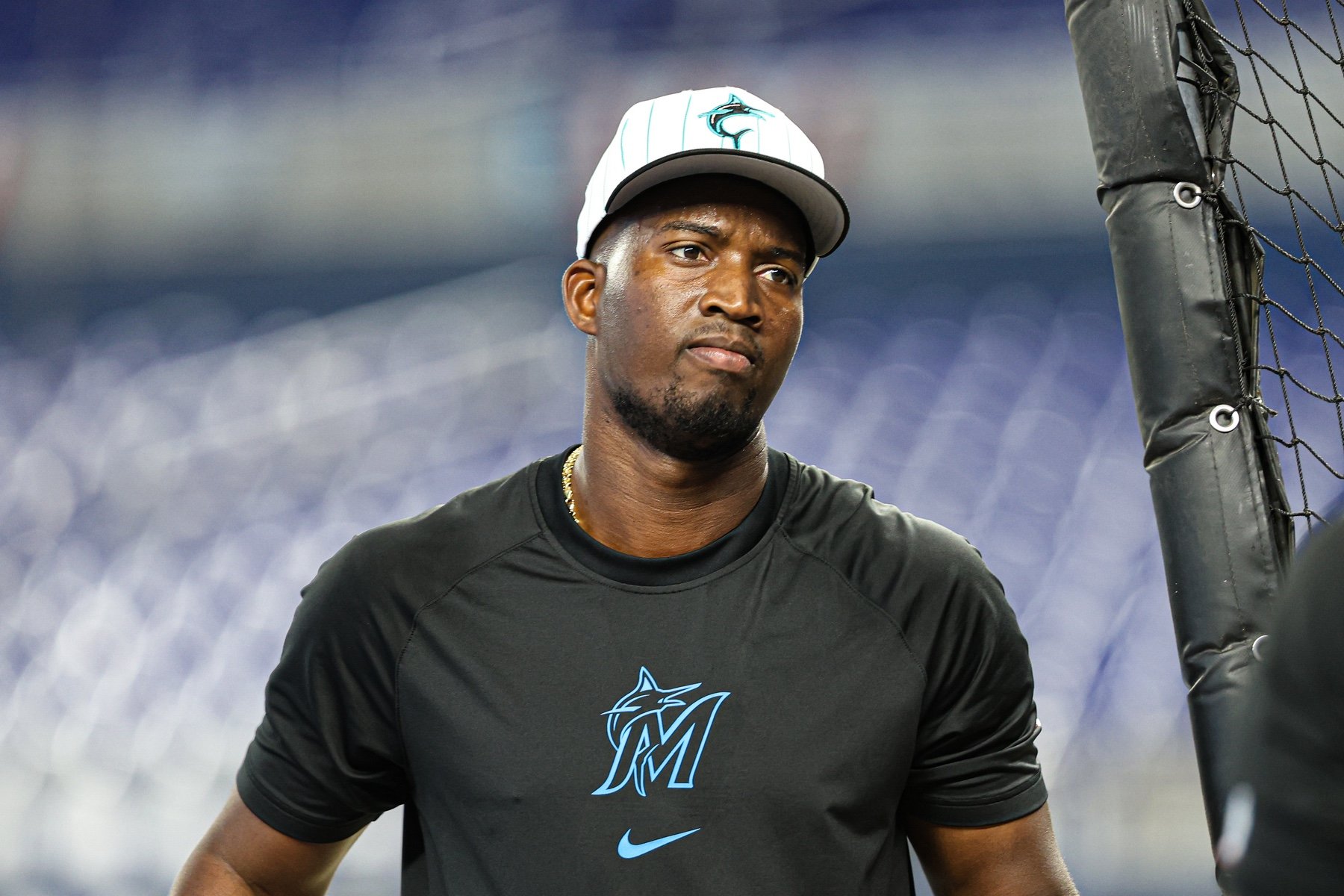 West Palm Beach, Fla.—Jesús Sánchez will miss at least the first two weeks of the regular season with a left oblique strain. The 27-year-old outfielder was injured on a check swing against the Houston Astros on Thursday. He managed to hit a double in that at-bat, but was removed for a pinch-runner one batter later. Marlins manager Clayton McCullough said the imaging revealed a “grade one-plus” strain, which “optimistically” has a recovery time of about one month. “All you can do now is take the time that's required to have this thing heal up and get yourself built back up,” McCullough said. “Because it's not an area and a place where you want to be too aggressive with how you come back, because we’ve just seen a lot of cases where those things can linger.” Sánchez dealt with right elbow inflammation earlier in spring training, but this oblique strain seems to be an unrelated injury. The Marlins looked at Sánchez as someone who would carry a majority of the power in this lineup, especially after trading away fellow slugger Jake Burger over the offseason. Sánchez hit a career-high 18 home runs last year. Jonah Bride is now the only healthy player on the roster who hit more than ten against MLB pitching last year. Sánchez's three years and 118 days of major league service time was the highest among Miami position players. Catcher Nick Fortes (2.149) will be the most experienced hitter on the Opening Day roster unless the Marlins make a move prior to then. As for the outfield, this injury should increase playing time for Dane Myers and Derek Hill while creating a clearer path for corner outfielders in Kyle Stowers and Griffin Conine to both make the club. All of the above spent part of the 2024 season with the Fish. “We’re feeling really good about where Derek Hill is right now, and the at-bat quality he's shown, certainly the ability to play center,” McCullough said. “Dane Myers has had a good camp in that regard as well. Griff, Stowers, we still have plenty of options, and it just opens up some opportunity for others to take on some more regular playing time.” Conine and Stowers are perhaps the biggest beneficiaries of this development. Both are left-handed hitters with good raw power, just like Sánchez. Stowers, who came over from the Baltimore Orioles last July in exchange for Trevor Rogers, has played sparingly in the majors the past three seasons. Conine, who has been in the Marlins organization since 2020, made his MLB debut last September. Both players put up solid power numbers in streaks, but struggled with strikeouts, each recording a strikeout rate of over 30 percent last season. In 11 Grapefruit League games, Conine has slashed .258/.343/.355 with one home run. Stowers has slashed .167/.394/.167 in 10 games. Fellow outfielders Albert Almora Jr. and Heriberto Hernández also remain in big league camp as non-roster invitees. “It's a big piece for us,” McCullough said. “Jesús has been a performer. We were counting on him. But it's kind of next man up, and it'll be an opportunity for others to get a chance to get out there.”
- 5 comments
-
- 3
-
-
- jesus sanchez
- kyle stowers
- (and 2 more)


.jpg.461bb34bc9cdca7cf62a6ba5b77e031d.jpg)
