



Nathaniel Klaff
-
Posts
-1 -
Joined
-
Last visited
-
Days Won
1
Content Type
Profiles
Miami Marlins Videos
2026 Miami Marlins Top Prospects Ranking
Miami Marlins Free Agent & Trade Rumors, Notes, & Tidbits
Guides & Resources
News
2025 Miami Marlins Draft Pick Tracker
2026 Miami Marlins Draft Tracker: Picks & Bonuses
Forums
Blogs
Events
Store
Downloads
Gallery
Everything posted by Nathaniel Klaff
-
 It's not common for a high school player to sign in the 18th round, and it's even less common for an 18th-round pick to put up the kind of numbers that turn heads throughout an organization. The Marlins drafted Nate Payne 544th overall in the 2024 MLB Draft out of Central Dauphin High School in Harrisburg, Pennsylvania. They signed him for $235,000, convincing him to forgo his commitment to George Mason University. In just two years, Payne has gone from a lottery ticket to a legitimate candidate to become a quality major leaguer. Payne spent the majority of the 2025 season in the Florida Complex League before finishing the year with Jupiter. Between both levels, he pitched to a 3.20 ERA across 56 ⅓ innings while striking out 73 batters. Opponents hit just .176 against him. He did just about everything the Marlins could have hoped for except limit the walks, issuing 37 free passes, which equated to a 5.91 BB/9. He was also an extreme fly-ball pitcher, posting a GO/AO ratio of just 0.41. According to Prospect Savant, which tracked only 16 ⅔ of his Hammerheads innings, Payne generated a 37.7 Whiff% while allowing an average exit velocity of just 83.5 mph. In those innings, he surrendered only six hits (five singles and one home run) while striking out 27% of the batters he faced. The strikeout-to-walk ratio (18 K/14 BB) further showed that the electric stuff was there even if the command still needed refinement. Fast forward to 2026, and Payne opened the year in Jupiter before earning a promotion to Beloit after just three starts. The strikeouts are up, the walks are down, he's generating more ground balls, and he's throwing more strikes. Between both levels this season, Payne has made 17 starts, throwing 83 innings (4.88 innings per start) with a 3.69 ERA and 113 strikeouts, good for an outstanding 12.25 K/9. Perhaps the biggest sign of development is the improved command. Payne has already thrown nearly 25 more innings than he did all of last season while walking eight fewer batters. His BB/9 has dropped from 5.91 to 3.14. His GO/AO ratio has also improved from 0.41 to 0.68, and he has induced 29 ground-ball double-play opportunities compared to just 17 all of last season. The trade-off has been the amount of hard contact he's allowed. Payne has surrendered 14 home runs along with 12 doubles and two triples. His .379 BABIP suggests he has been hit around at times and has likely been on the wrong side of some bad luck as well. At the same time, his strike percentage has jumped by nearly 10 percentage points from last season. In many ways, 2026 has been a year of sacrificing some contact quality for significantly better command and efficiency. Nate Payne's journey so far is what baseball is all about. He gave up his college commitment to chase his dream of playing professional baseball, despite the long odds that come with being an 18th-round pick out of high school. At just 20 years old, Payne has already shown flashes of becoming a quality major league pitcher. The last player taken at least 544 picks into the amateur draft who reached the majors was college right-hander Duncan Davitt (pick No. 554 in 2022). No Marlin has done it since 2019 draftees Jeff Lindgren and Josh Simpson, back when the draft was comprised of 40 rounds instead of 20. They also came from the college ranks. No matter what happens from here, both Payne and the Marlins have already exceeded expectations. For a player selected 544th overall, the pick looks better and better with each passing start. View full article
 -
From 18th-round pick to legitimate Marlins prospect
Nathaniel Klaff posted an article in FOF Prospects
.jpg.ba12172468c94ad07d4465876c7ecddc.jpg) It's not common for a high school player to sign in the 18th round, and it's even less common for an 18th-round pick to put up the kind of numbers that turn heads throughout an organization. The Marlins drafted Nate Payne 544th overall in the 2024 MLB Draft out of Central Dauphin High School in Harrisburg, Pennsylvania. They signed him for $235,000, convincing him to forgo his commitment to George Mason University. In just two years, Payne has gone from a lottery ticket to a legitimate candidate to become a quality major leaguer. Payne spent the majority of the 2025 season in the Florida Complex League before finishing the year with Jupiter. Between both levels, he pitched to a 3.20 ERA across 56 ⅓ innings while striking out 73 batters. Opponents hit just .176 against him. He did just about everything the Marlins could have hoped for except limit the walks, issuing 37 free passes, which equated to a 5.91 BB/9. He was also an extreme fly-ball pitcher, posting a GO/AO ratio of just 0.41. According to Prospect Savant, which tracked only 16 ⅔ of his Hammerheads innings, Payne generated a 37.7 Whiff% while allowing an average exit velocity of just 83.5 mph. In those innings, he surrendered only six hits (five singles and one home run) while striking out 27% of the batters he faced. The strikeout-to-walk ratio (18 K/14 BB) further showed that the electric stuff was there even if the command still needed refinement. Fast forward to 2026, and Payne opened the year in Jupiter before earning a promotion to Beloit after just three starts. The strikeouts are up, the walks are down, he's generating more ground balls, and he's throwing more strikes. Between both levels this season, Payne has made 17 starts, throwing 83 innings (4.88 innings per start) with a 3.69 ERA and 113 strikeouts, good for an outstanding 12.25 K/9. Perhaps the biggest sign of development is the improved command. Payne has already thrown nearly 25 more innings than he did all of last season while walking eight fewer batters. His BB/9 has dropped from 5.91 to 3.14. His GO/AO ratio has also improved from 0.41 to 0.68, and he has induced 29 ground-ball double-play opportunities compared to just 17 all of last season. The trade-off has been the amount of hard contact he's allowed. Payne has surrendered 14 home runs along with 12 doubles and two triples. His .379 BABIP suggests he has been hit around at times and has likely been on the wrong side of some bad luck as well. At the same time, his strike percentage has jumped by nearly 10 percentage points from last season. In many ways, 2026 has been a year of sacrificing some contact quality for significantly better command and efficiency. Nate Payne's journey so far is what baseball is all about. He gave up his college commitment to chase his dream of playing professional baseball, despite the long odds that come with being an 18th-round pick out of high school. At just 20 years old, Payne has already shown flashes of becoming a quality major league pitcher. The last player taken at least 544 picks into the amateur draft who reached the majors was college right-hander Duncan Davitt (pick No. 554 in 2022). No Marlin has done it since 2019 draftees Jeff Lindgren and Josh Simpson, back when the draft was comprised of 40 rounds instead of 20. They also came from the college ranks. No matter what happens from here, both Payne and the Marlins have already exceeded expectations. For a player selected 544th overall, the pick looks better and better with each passing start.
It's not common for a high school player to sign in the 18th round, and it's even less common for an 18th-round pick to put up the kind of numbers that turn heads throughout an organization. The Marlins drafted Nate Payne 544th overall in the 2024 MLB Draft out of Central Dauphin High School in Harrisburg, Pennsylvania. They signed him for $235,000, convincing him to forgo his commitment to George Mason University. In just two years, Payne has gone from a lottery ticket to a legitimate candidate to become a quality major leaguer. Payne spent the majority of the 2025 season in the Florida Complex League before finishing the year with Jupiter. Between both levels, he pitched to a 3.20 ERA across 56 ⅓ innings while striking out 73 batters. Opponents hit just .176 against him. He did just about everything the Marlins could have hoped for except limit the walks, issuing 37 free passes, which equated to a 5.91 BB/9. He was also an extreme fly-ball pitcher, posting a GO/AO ratio of just 0.41. According to Prospect Savant, which tracked only 16 ⅔ of his Hammerheads innings, Payne generated a 37.7 Whiff% while allowing an average exit velocity of just 83.5 mph. In those innings, he surrendered only six hits (five singles and one home run) while striking out 27% of the batters he faced. The strikeout-to-walk ratio (18 K/14 BB) further showed that the electric stuff was there even if the command still needed refinement. Fast forward to 2026, and Payne opened the year in Jupiter before earning a promotion to Beloit after just three starts. The strikeouts are up, the walks are down, he's generating more ground balls, and he's throwing more strikes. Between both levels this season, Payne has made 17 starts, throwing 83 innings (4.88 innings per start) with a 3.69 ERA and 113 strikeouts, good for an outstanding 12.25 K/9. Perhaps the biggest sign of development is the improved command. Payne has already thrown nearly 25 more innings than he did all of last season while walking eight fewer batters. His BB/9 has dropped from 5.91 to 3.14. His GO/AO ratio has also improved from 0.41 to 0.68, and he has induced 29 ground-ball double-play opportunities compared to just 17 all of last season. The trade-off has been the amount of hard contact he's allowed. Payne has surrendered 14 home runs along with 12 doubles and two triples. His .379 BABIP suggests he has been hit around at times and has likely been on the wrong side of some bad luck as well. At the same time, his strike percentage has jumped by nearly 10 percentage points from last season. In many ways, 2026 has been a year of sacrificing some contact quality for significantly better command and efficiency. Nate Payne's journey so far is what baseball is all about. He gave up his college commitment to chase his dream of playing professional baseball, despite the long odds that come with being an 18th-round pick out of high school. At just 20 years old, Payne has already shown flashes of becoming a quality major league pitcher. The last player taken at least 544 picks into the amateur draft who reached the majors was college right-hander Duncan Davitt (pick No. 554 in 2022). No Marlin has done it since 2019 draftees Jeff Lindgren and Josh Simpson, back when the draft was comprised of 40 rounds instead of 20. They also came from the college ranks. No matter what happens from here, both Payne and the Marlins have already exceeded expectations. For a player selected 544th overall, the pick looks better and better with each passing start. -
Jake Faherty is nearly unhittable, so why is he struggling?
Nathaniel Klaff posted an article in FOF Prospects
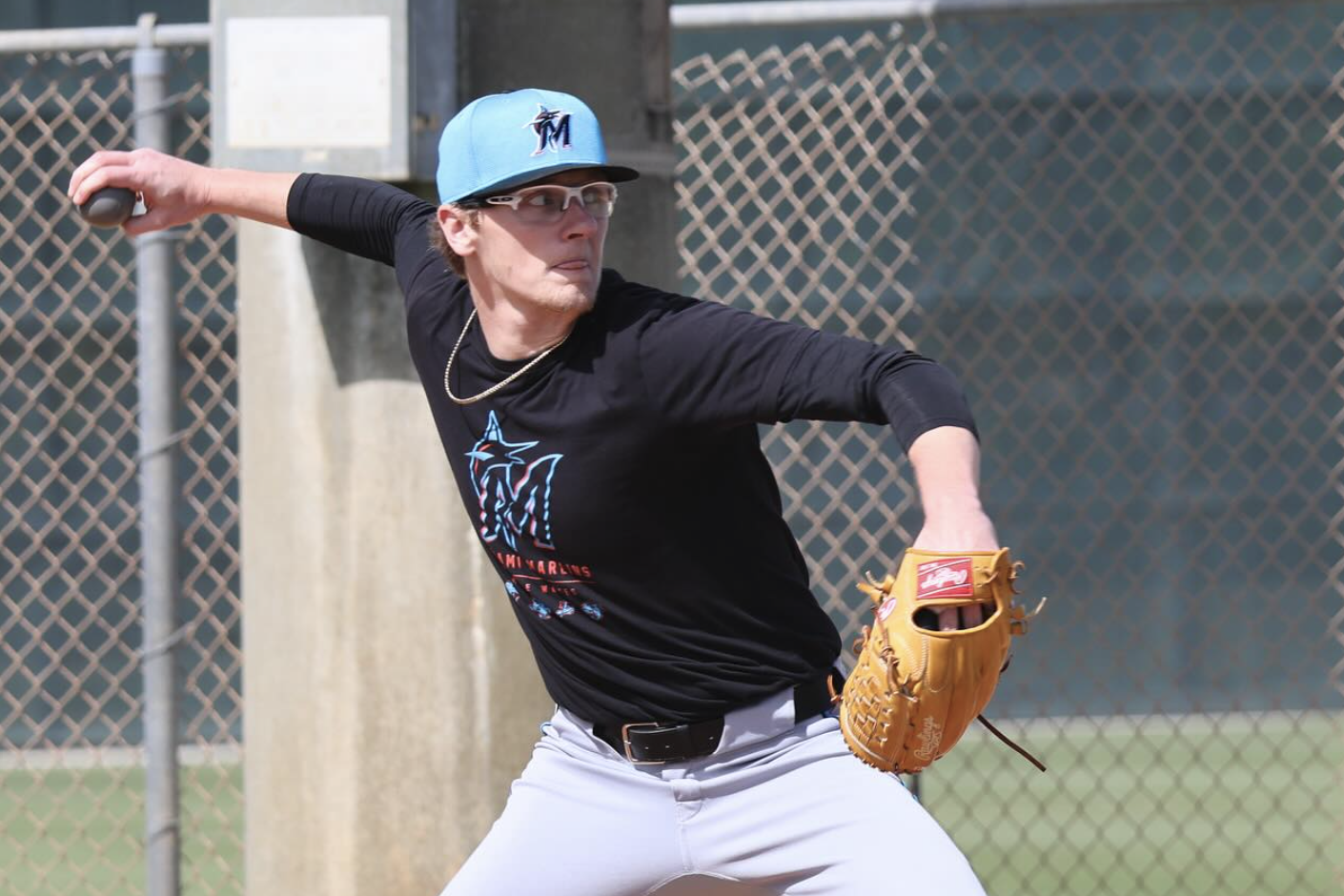 When the Marlins selected Jake Faherty in the 11th round out of Arkansas in the 2024 MLB Draft, they believed they were getting one of the hardest throwers in the class with legitimate late-inning upside. During his final season at Arkansas, he appeared in 16 games, throwing 14 ⅔ innings while striking out 26 batters, with opponents hitting just .151 against him. He had the look of an electric relief arm, sitting 97-99 mph with his sinker while touching triple digits. Unfortunately, two years later, things have gone almost as poorly as they possibly could have. So far in 2026, Faherty owns a 13.73 ERA over 19 ⅔ innings with a 2.85 WHIP. Across his professional career, he has posted a 9.40 ERA in 59 ⅓ innings despite striking out 82 batters. At first glance, those numbers would suggest a pitcher who is getting hit around, but that couldn't be further from the truth. Faherty has arguably been even more unhittable in the minor leagues than he was during his time at Arkansas. In 2025 with Jupiter, opponents hit just .167 against him, collecting only 14 hits in 29 ⅓ innings. This season, hitters have been even less successful, managing only five hits in 16 ⅔ innings. If nobody can hit him, why has he struggled so much? The answer is simple: command. Faherty's command has become one of the biggest "what-ifs" in the Marlins system. This season with the Hammerheads, he has walked 35.6% of the batters he has faced while throwing strikes just 39.8% of the time. His zone rate sits at only 37.8%, meaning he simply isn't giving himself enough opportunities to get ahead in counts. Yet when hitters do make contact, they still struggle to do anything with it. Opponents own an average exit velocity of just 82.3 mph against him in 2026—for context, that's lower than any qualified major leaguer, per Baseball Savant. This is another sign that the raw stuff is still every bit as overpowering as advertised. The Marlins recently reassigned Faherty to the FCL in hopes of getting him back on track, but the command issues have only worsened. In just three innings, he has allowed 14 runs, 12 walks, and five hits for a 42.00 ERA. On Monday, he failed to record a single out, surrendering two hits, five walks, and seven runs before being removed. Faherty features four pitches: a sinker, changeup, cutter, and slider. His sinker and changeup account for roughly 80% of his pitch usage, while the cutter and slider are used much less frequently. Remarkably, every single one of his pitches has held opponents to a batting average below .200. That alone tells the story. Hitters simply are not squaring him up; the problem is getting enough pitches into the strike zone. Faherty turned 23 years old last month, making him older than many of the hitters he is facing, but the type of stuff he possesses isn't something organizations simply give up on. When you think about the dominant stretches we've seen from pitchers like Robby Snelling and Thomas White last season or Karson Milbrandt this year, Faherty has flashed the kind of underlying metrics that suggest he could belong in that conversation when everything is clicking. The strikeouts, batting average against, exit velocity, and pure quality of his arsenal all point toward a pitcher with legitimate late-inning potential. Now it's simply a matter of finding enough command to let those tools play. The good news for the Marlins is that Faherty projects as a reliever, not a starter, meaning there is no need to rush his development. If he can ever find even average command, the Marlins could still have a high-leverage bullpen arm on their hands.
 -
When the Marlins selected Jake Faherty in the 11th round out of Arkansas in the 2024 MLB Draft, they believed they were getting one of the hardest throwers in the class with legitimate late-inning upside. During his final season at Arkansas, he appeared in 16 games, throwing 14 ⅔ innings while striking out 26 batters, with opponents hitting just .151 against him. He had the look of an electric relief arm, sitting 97-99 mph with his sinker while touching triple digits. Unfortunately, two years later, things have gone almost as poorly as they possibly could have. So far in 2026, Faherty owns a 13.73 ERA over 19 ⅔ innings with a 2.85 WHIP. Across his professional career, he has posted a 9.40 ERA in 59 ⅓ innings despite striking out 82 batters. At first glance, those numbers would suggest a pitcher who is getting hit around, but that couldn't be further from the truth. Faherty has arguably been even more unhittable in the minor leagues than he was during his time at Arkansas. In 2025 with Jupiter, opponents hit just .167 against him, collecting only 14 hits in 29 ⅓ innings. This season, hitters have been even less successful, managing only five hits in 16 ⅔ innings. If nobody can hit him, why has he struggled so much? The answer is simple: command. Faherty's command has become one of the biggest "what-ifs" in the Marlins system. This season with the Hammerheads, he has walked 35.6% of the batters he has faced while throwing strikes just 39.8% of the time. His zone rate sits at only 37.8%, meaning he simply isn't giving himself enough opportunities to get ahead in counts. Yet when hitters do make contact, they still struggle to do anything with it. Opponents own an average exit velocity of just 82.3 mph against him in 2026—for context, that's lower than any qualified major leaguer, per Baseball Savant. This is another sign that the raw stuff is still every bit as overpowering as advertised. The Marlins recently reassigned Faherty to the FCL in hopes of getting him back on track, but the command issues have only worsened. In just three innings, he has allowed 14 runs, 12 walks, and five hits for a 42.00 ERA. On Monday, he failed to record a single out, surrendering two hits, five walks, and seven runs before being removed. Faherty features four pitches: a sinker, changeup, cutter, and slider. His sinker and changeup account for roughly 80% of his pitch usage, while the cutter and slider are used much less frequently. Remarkably, every single one of his pitches has held opponents to a batting average below .200. That alone tells the story. Hitters simply are not squaring him up; the problem is getting enough pitches into the strike zone. Faherty turned 23 years old last month, making him older than many of the hitters he is facing, but the type of stuff he possesses isn't something organizations simply give up on. When you think about the dominant stretches we've seen from pitchers like Robby Snelling and Thomas White last season or Karson Milbrandt this year, Faherty has flashed the kind of underlying metrics that suggest he could belong in that conversation when everything is clicking. The strikeouts, batting average against, exit velocity, and pure quality of his arsenal all point toward a pitcher with legitimate late-inning potential. Now it's simply a matter of finding enough command to let those tools play. The good news for the Marlins is that Faherty projects as a reliever, not a starter, meaning there is no need to rush his development. If he can ever find even average command, the Marlins could still have a high-leverage bullpen arm on their hands. View full article
-
During this brief break in the 2026 minor league season, it's time to check in with each of Fish On First's ranked Miami Marlins prospects. Some of them have taken major steps forward, while others have battled injuries or faced challenges on the field while adjusting to higher levels. Every player in our Top 30 is covered below, breaking down their first-half performance, development, and outlook entering the second half of the season. 1. Thomas White Began season at Triple-A; currently at Triple-A (injured list) White entered the season with legitimate expectations of making his major league debut before the end of the year. Instead, injuries derailed what was shaping up to be another important step in his development. Over just 18 ⅔ innings, White saw a slight dip in velocity across his arsenal, allowed four doubles and three home runs, and walked nine batters before being diagnosed with a left shoulder capsular sprain. The injury is expected to sideline him for the remainder of the season. Although the first half was disappointing, White's long-term outlook remains unchanged. He has succeeded at every level of the minors throughout his career, and if he returns healthy next season, there is every reason to believe he will quickly establish himself in Jacksonville and once again put himself on the doorstep of Miami. 2. Robby Snelling Began season at Triple-A; currently in major leagues (injured list) Few prospects entered the season with more momentum than Snelling. After posting a 1.27 ERA across 63 ⅔ innings in Jacksonville last year, many expected him to make his major league debut in 2026, with some even believing he had a legitimate chance to win the Marlins' fifth starter job coming out of spring training. He returned to Jacksonville and was every bit as dominant, posting a 1.86 ERA over 29 innings while striking out nearly 40% of opposing hitters. With opponents batting just .116 against him, a promotion to Miami quickly became inevitable. His debut started about as well as anyone could have imagined, striking out James Wood on three pitches before finishing with five innings of three-run ball. Unfortunately, it would also be his only appearance. Days later, Snelling suffered a torn left UCL during a bullpen session, ending his season. The injury is a significant setback, but with an expected recovery timeline of 10-12 months, he should return early next season if everything goes according to plan. 3. Dillon Lewis Began season at Double-A; currently at Double-A (injured list) Lewis wasted little time showing why the Marlins made him a key part of the Ryan Weathers trade. After breaking out with 22 home runs and 26 stolen bases across two levels in 2025, he has continued to flash that same power-speed combination during his first season in the organization. Through 66 games with Pensacola, Lewis is hitting .240 with 17 home runs, 43 RBIs, and 14 stolen bases. The production has been impressive, though the strikeout rate remains the biggest obstacle to unlocking his full offensive potential. He is striking out in 31.5% of his plate appearances, an area that will continue to be closely monitored. His season was interrupted on June 27 by a broken hamate bone, an injury expected to keep him out six to eight weeks. Finishing the year healthy will be just as important as the numbers he posts. 4. Aiva Arquette Began season at High-A; currently at Double-A (injured list) Arquette's first full professional season has featured both rapid advancement and frustrating interruptions. After spending just 14 games in High-A Beloit, he earned a promotion to Double-A Pensacola, where he has shown flashes of why he is viewed as one of the organization's cornerstone prospects. Offensively, Arquette has hit .221 with seven home runs and 22 RBIs through his first 27 games in Pensacola. Defensively, he has looked every bit the part at shortstop, posting a .987 fielding percentage over 159 innings while displaying the smooth actions that made him such a highly regarded prospect. The biggest hurdle has simply been staying on the field. Injuries have already interrupted his development several times, and he is currently sidelined with a left thumb injury. A healthy finish to the season would go a long way toward restoring the momentum he built early in the year. 5. Cam Cannarella Began season at High-A; currently at Double-A Cannarella entered professional baseball with more questions than most first-round caliber talents after tearing the labrum in his throwing shoulder. Even while playing through the injury in 2025, he still hit .337 with 11 home runs and remained one of the premier defensive outfielders in the draft, making him one of the biggest value picks when the Marlins selected him in the Competitive Balance Round A. His first full professional season has exceeded even the organization's expectations. After dominating High-A Beloit with a .394 average over 19 games, Cannarella earned a promotion to Pensacola and has somehow been even better. Through 34 games, he is hitting .344 with nine home runs, 23 RBIs, and 23 walks compared to just 20 strikeouts. Perhaps the biggest surprise has been the power. Cannarella launched eight home runs during a 13-game stretch and recently told Isaac Azout and Alex Carver on Fish Unfiltered that his shoulder is nearly back to full strength. Combined with his elite defense, the unexpected power surge has only strengthened the belief that he could be the Marlins' long-term answer in center field. 6. Karson Milbrandt Began season at Double-A; currently at Triple-A Milbrandt entered the season with plenty of momentum after a strong finish to 2025 and an outstanding Arizona Fall League, where he struck out 23 batters in just 13 ⅓ innings. He carried that success into Spring Breakout, punching out six hitters over three dominant innings, and continued to establish himself as one of the fastest-rising arms in the organization. He opened the year in Double-A Pensacola and was nearly untouchable, posting a 1.34 ERA while striking out 70 batters in 47 innings. During one stretch, Milbrandt threw 27 consecutive scoreless innings before earning a promotion to Triple-A Jacksonville. The jump to Triple-A has presented a new challenge. While he has shown flashes of the same dominance, his command has not been as sharp as it was in Pensacola. Even so, the stuff continues to play at a high level, and if he settles in during the second half, Milbrandt has positioned himself to make his major league debut sooner rather than later. 7. Starlyn Caba Began season at High-A; currently at High-A Caba's season has been one of the tougher evaluations in the system. After spending all of last year in Jupiter, he returned to High-A Beloit looking to take another step forward, but injuries and inconsistency have prevented him from finding much rhythm. Despite spending time on the injured list twice, there have still been encouraging signs. Caba has already established career highs in doubles and home runs while posting an OPS nearly 160 points higher than last season. His plate discipline has also improved, as he has already surpassed last year's walk total and is drawing walks at the second-best rate of his professional career. The downside has been the strikeouts, which have climbed to a career high. Finding more consistency will be the biggest objective after the All-Star break because the overall offensive improvements suggest there is still plenty to be encouraged by. 8. Kevin Defrank Began season in FCL; currently in FCL (injured list) Few pitchers in the organization possess the raw upside of Defrank. Seeing a 16-year-old consistently reach triple digits is rare, and after turning heads last season, there was plenty of excitement surrounding his expected stateside debut as a 17-year-old. Unfortunately, injuries have kept that from becoming a reality. Defrank was placed on the 60-day injured list in May with a right biceps injury and is expected to miss the remainder of the season. Although the lost development time is disappointing, there is no reason to rush his timeline. At just 17 years old, Defrank remains one of the highest-upside arms in the organization, and the focus now shifts toward returning healthy for next season. 9. Kemp Alderman Began season at Triple-A; currently at Triple-A Alderman has done exactly what the Marlins hoped after his breakout 2025 campaign. Following a season in which he hit .285 with 22 home runs and 22 stolen bases across two levels, he has continued producing against Triple-A pitching. Despite missing roughly a month with an elbow injury, Alderman is hitting .297 with 13 home runs and 37 RBIs. Projected over a full 550 at-bat season, his current pace would put him around the 33-home run mark, reinforcing the middle-of-the-order power that has become his calling card. The biggest storyline surrounding Alderman may ultimately have nothing to do with his performance. With the trade deadline approaching, his name has surfaced in speculation as a potential trade chip. Whether he finishes the season in the Marlins organization or elsewhere, he has only increased his value during the first half. 10. Luis Cova Began season in FCL; currently at Low-A Cova has continued building on the breakout season he enjoyed in the Dominican Summer League, where he hit .299 with nine home runs and 35 stolen bases. He opened this year in the Florida Complex League and wasted little time proving he was ready for a new challenge, batting .288 over 19 games with two home runs, 14 stolen bases, and nearly as many walks (12) as strikeouts (14). That performance earned him a promotion to Low-A Jupiter, which has taken a toll on his effectiveness at the plate. Through his first 30 games, Cova is hitting .219 with 30 strikeouts, but the underlying approach remains encouraging. He has already drawn 24 walks while adding another 10 stolen bases, bringing his professional total to 95. The plate discipline has translated well despite the jump in competition. Now it becomes a matter of making more consistent quality contact. Given his speed, pitchers will eventually be forced to challenge him in the strike zone, creating more opportunities for Cova to impact games offensively. 11. Dillon Head Began season at High-A; currently at High-A Head's season has been a tale of two halves. After struggling through the opening month and spending time on the injured list, he has turned into one of the hottest hitters in all of Minor League Baseball. Along with Cam Cannarella, the Marlins may have two of the hottest bats in the minors. Over his last 26 games, Head is hitting .361 while recording a hit in 21 of those contests. July has been especially impressive, as he has already put together three three-hit games and one four-hit performance. Even after missing time earlier in the season, Head has stolen 30 bases, continuing to showcase the elite speed that has always made him such an intriguing prospect. The slow start is quickly becoming an afterthought. If he can sustain this level of production throughout the second half, Head will continue climbing back toward the top tier of the Marlins' prospect rankings. 12. Fenwick Trimble Began season at Double-A; currently at Double-A Trimble's first half has featured two completely different stretches. After a slow start in Pensacola, he caught fire in late April and became one of the Southern League's most productive hitters over the next two months. From April 25 through June 30, Trimble hit .312 with 11 home runs and 35 RBIs, producing the best offensive stretch of his professional career. Since the calendar flipped to July, however, he has cooled off considerably, batting .171 over his first 10 games despite leaving the yard twice. While the strikeout rate has increased and the walks have declined compared to last season, the overall power production has continued to trend in the right direction. Trimble has already established a new career high with 33 extra-base hits despite receiving fewer at-bats than he did all of last year. 13. Brendan Jones Began season at Double-A; currently at Double-A Jones has quietly put together a solid first season in the Marlins organization after arriving alongside Dillon Lewis in the offseason. Through 64 games with Pensacola, he is hitting .220 with eight home runs, six triples, 25 RBIs, and 31 stolen bases while continuing to impact games with his speed. The batting average doesn't tell the full story. Jones owns a career-low .265 BABIP despite striking the ball well at times, suggesting he has been on the wrong side of some batted-ball luck. He is also striking out at a 27% clip, an area that could use some improvement during the second half. Defensively, Jones has seen increased time in left and right field following Cannarella's emergence in center. That versatility only adds to his value as he continues adjusting to a new organization. 14. Eliazar Dishmey Began season at High-A; currently at Double-A Dishmey continues to establish himself as one of the most underrated pitchers in the Marlins system. After posting a 2.90 ERA across two levels last season, he returned to High-A Beloit and immediately earned another promotion by recording a 2.14 ERA with 48 strikeouts in 33 ⅔ innings. The move to Pensacola has come with a learning curve, but the overall results remain encouraging. Through 36 ⅔ innings, Dishmey owns a 3.93 ERA with 44 strikeouts while limiting opponents to a .164 batting average. The only noticeable difference has been the command. Dishmey has walked 18 batters since arriving in Double-A, but his ability to miss bats and suppress quality contact has remained intact. If he can sharpen the command over the final two months, another jump in his prospect stock could be on the horizon. 15. Andrew Salas Began season at Low-A; currently in FCL Salas' second full professional season has been anything but ordinary. After struggling to find consistency in Jupiter, where he hit .170 over 43 games, he was reassigned to the Florida Complex League and has completely changed the outlook of his season. In 23 FCL games, Salas is hitting .264 with seven home runs, showcasing an unexpected power surge that has become one of the biggest surprises in the organization this year. The strikeouts remain the biggest hurdle. Between both levels, Salas is striking out at a 30% clip, leaving plenty of room for improvement as he continues to mature offensively. Still, he will not turn 19 until next March, and the emergence of legitimate game power gives the Marlins plenty to be excited about heading into the second half. 16. Santiago Solarte Began season in DSL; currently in DSL Solarte has wasted little time showing why he was the Marlins' top international signing in this year's class. Through his first 29 professional games, he is hitting .281 with five home runs, 24 RBIs, and 28 stolen bases, making an immediate impact in nearly every facet of the game. The strikeouts have been higher than the Marlins would like, but when Solarte puts the ball in play, the ball jumps off his bat. His combination of power and speed has been evident throughout the first half and has only reinforced why the organization invested so heavily in him. There is still room for growth defensively, but that's to be expected from a player who won't turn 18 until November. Considering his age and tools, the Marlins couldn't have asked for a much better introduction to professional baseball. 17. Luis Arana Began season in FCL; currently at Low-A Arana continued building on his breakout 2025 campaign after hitting .297 in the Dominican Summer League while drawing 30 walks compared to just 18 strikeouts. He carried that disciplined approach into the Florida Complex League, batting .389 over 17 games with nine walks and only six strikeouts. That performance quickly earned him a promotion to Low-A Jupiter, where full-season pitching has provided a much tougher test. Through 31 games, Arana is hitting .250 while his strikeout total has climbed to 30 in 116 at-bats. Even with the adjustment period, there is little reason to overreact. Arana has already proven he can make changes at every stop of his professional career, and as he settles into Jupiter, expect the disciplined approach that carried him through the DSL and FCL to become more consistent again. 18. Christian Hernández Began season at Double-A; currently at Double-A Hernández entered the organization this offseason as part of the trade that sent Edward Cabrera to the Cubs, and after a slow start, he has steadily become one of the hottest hitters in the Marlins system. Following a difficult April in which he hit just .164, Hernández has responded by hitting .306 with eight home runs and 28 RBIs since May 2. Those eight home runs have already established a new career high, highlighting the power that has emerged during his turnaround. The strikeout rate remains elevated at 28%, but putting together three straight productive months is an encouraging sign. If he maintains that momentum into the second half, Hernandez could continue climbing the organizational rankings. 19. Brandon Compton Began season at High-A; currently at Double-A Few hitters in the organization possess the raw power that Compton brings to the plate, and he has done plenty to reinforce that reputation during the first half. After a slow start through April and May, Compton caught fire in June, hitting .318 with 10 home runs, including one in his Double-A debut. The promotion to Pensacola has done nothing to cool him off. Through his first 11 games, he is hitting .349 with six home runs and 12 RBIs, continuing to punish opposing pitching. Just as encouraging as the power has been his approach at the plate. Compton is averaging nearly 4.4 pitches per plate appearance, consistently working deep counts while forcing pitchers into mistakes. That combination of patience and power gives him one of the highest offensive ceilings in the system. 20. Brandon White Began season at Double-A; currently at Triple-A White has been one of the biggest surprises in the Marlins organization this season. After putting together a solid year in Beloit in 2025, he opened this season in Pensacola and needed just 33 innings to prove he was ready for Triple-A, posting a 3.00 ERA with 39 strikeouts before earning a promotion. The adjustment to Jacksonville has brought some ups and downs. Through 37 ⅔ innings, White owns a 5.73 ERA, though the underlying numbers paint a more encouraging picture. Across both levels, he has posted a career-best 10.95 K/9 while lowering his walk rate to a career-low 2.17 BB/9. The long ball has been his biggest issue since reaching Triple-A, but pitchers often need time to adjust after making that jump. As long as White continues attacking the strike zone the way he has throughout the season, the results should continue trending in the right direction. 21. Juan Matheus Began season at High-A; currently at Double-A Matheus has been one of the biggest risers in the Marlins system after arriving in the offseason as part of the same trade that brought Dillon Lewis and Brendan Jones to the organization. He opened the year in High-A Beloit and immediately made an impact, hitting .261 with seven home runs, 29 RBIs, and 22 walks compared to 29 strikeouts in 42 games. That performance earned him a promotion to Double-A Pensacola, where he has looked just as comfortable. Through 40 games, Matheus is hitting .288 with six home runs and 30 RBIs, proving his offensive production has translated against better competition. The walk rate has dipped since the promotion, but the power has remained while the strikeout rate has stayed nearly identical. Defensively, Matheus has added even more value by appearing at every infield position except first base, giving the Marlins another versatile option as he continues to develop. 22. Keyner Benitez Began season at Low-A; currently at Low-A (injured list) Benitez has quietly established himself as one of the most dependable pitchers in the Marlins organization. Since joining the system in 2023, he has compiled a 3.10 ERA over 188 career innings while consistently producing wherever he has been assigned. That trend continued this season in Jupiter, where he posted a 2.79 ERA across 19 ⅓ innings while holding opponents to a .106 batting average and striking out hitters at an 11.0 K/9 clip. Unfortunately, his season came to an early end after he was placed on the 60-day injured list with an arm injury. While missing the remainder of the year is a disappointing setback, Benitez has built a track record of consistent production that should keep him firmly on the organization's radar once he returns. 23. Josh Ekness Began season at Triple-A; currently in major leagues (injured list) Ekness has long been regarded as one of the best relief prospects in the Marlins system because of his ability to miss bats. After posting a 1.91 ERA with 83 strikeouts in 66 innings during 2024, he followed it up with another productive season in Double-A before earning his first extended opportunity in Triple-A. Through 16 ⅓ innings with Jacksonville this season, Ekness recorded a 4.41 ERA, but the strikeout numbers continued to stand out with 29 punchouts. His ability to generate swings and misses ultimately earned him his first major league call-up. Ekness appeared in six games for Miami before suffering a right calf strain that landed him on the 60-day injured list. Once healthy, he should continue competing for a permanent role in the Marlins' bullpen. 24. Nate Payne Began season at Low-A; currently at High-A Payne continues to look like one of the biggest steals from the 2024 MLB Draft. Selected in the 18th round, he has consistently outperformed expectations and has emerged as one of the more underrated pitching prospects in the organization. Through 74 ⅔ innings this season, Payne has struck out 102 batters, good for a 12.29 K/9. That ability to generate swings and misses has carried over throughout his professional career, as he owns an even 12.0 K/9 across 131 innings. The development has gone beyond just strikeouts. Payne has lowered his walk rate by nearly two batters per nine innings compared to last season, while a .329 BABIP suggests he has also dealt with some poor fortune on balls in play. At just 20 years old, his first half has only strengthened the case that he deserves far more attention. 25. Josh White Began season at Triple-A; currently at Triple-A White followed one of the most dominant relief seasons in recent minor league history by proving he was ready for the next challenge. After posting a 1.86 ERA with 107 strikeouts over 67 ⅔ innings in 2025, he opened this season in Triple-A Jacksonville and continued to produce. Across 41 innings, White owns a 2.20 ERA with 48 strikeouts, earning his first promotion to the major leagues. He made his debut on May 31, though his first taste of the big leagues proved challenging as he allowed five earned runs while walking four batters. Despite the rocky debut, White has consistently shown he can dominate minor league hitters. The track record speaks for itself, and it would not be surprising to see him become a valuable piece of the Marlins' bullpen before long. 26. Edgardo De Leon Began season FCL; currently at Low-A De Leon was the final piece the Marlins acquired from the Cubs during the offseason, and his first half has been defined by two very different stops. He opened the season in the Florida Complex League and was one of the league's most productive hitters. Had he accumulated enough plate appearances to qualify, he would have been among the league leaders in batting average after hitting .351 with four home runs, 20 RBIs, and 15 walks compared to just 14 strikeouts in 22 games. That performance earned him a promotion to Low-A Jupiter, where the adjustment has been much tougher. Through 23 games, De Leon is hitting .167 while striking out in more than one-third of his plate appearances. The offensive tools that stood out in the FCL are still there. The second half will be about making the adjustments necessary to translate that success against full-season pitching. 27. Luis Leon Began season FCL; currently at Low-A Leon has already shown significant growth since beginning his professional career. After hitting just .110 over 24 games in the Florida Complex League last season while striking out in 56% of his plate appearances, he returned to the level this year looking like a much different player. In 34 games, Leon hit .248 with three home runs, 17 RBIs, and 19 stolen bases before earning a promotion to Jupiter. His first taste of full-season baseball has been more challenging, as he is hitting .209 through 13 games while striking out at a 40% clip. The sample size in Jupiter remains small, so there is no reason to draw major conclusions yet. The focus for the remainder of the season will simply be cutting down the strikeouts and allowing his elite speed to impact games more consistently. 28. Emilio Barreras Began season at Low-A; currently at High-A Barreras entered professional baseball with the reputation of being one of the best contact hitters in the 2025 draft, and he has largely lived up to that billing during his first professional season. He opened the year in Jupiter and hit .317 over 37 games while drawing 25 walks compared to just 15 strikeouts, displaying the disciplined approach that made him such an attractive draft pick. That success earned him a promotion to High-A Beloit, where some regression was expected after posting a .346 BABIP at the previous level. Even with the tougher competition, Barreras has continued to put the ball in play at an impressive rate. While the walks have dipped, the strikeout rate has remained under control. If those contact skills continue to translate, Barreras has a chance to become one of the fastest-rising position players in the organization. 29. Aiden May Began season at High-A; currently at High-A May entered the season with one primary objective after undergoing an elbow procedure last year: stay healthy. Through the first half, he has accomplished exactly that while continuing to develop in High-A Beloit. Across 53 innings, May owns a 4.25 ERA. Although his strikeout numbers have declined from last season, so have the walks, as he has relied more on generating weak contact than overpowering hitters. Regardless of the statistics, simply remaining healthy has been the biggest victory. There has been no indication whether the Marlins will place him on an innings limit during the second half, but if he continues performing the way he has, a promotion to Pensacola appears well within reach. 30. Noble Meyer Began season at High-A; currently at High-A (injured list) Few first-round picks from the 2023 draft have endured a tougher start to their professional careers than Meyer. Injuries have repeatedly interrupted his development, making it difficult for him to build any momentum on the mound. That trend has unfortunately continued this season. Meyer has been limited to just three rehab appearances, totaling four innings while issuing eight walks. The lack of innings makes it nearly impossible to evaluate where his development currently stands. At 21 years old, however, there is still time for Meyer to get back on track. He has already shown the ability to reach the upper 90s with his fastball when healthy. For the remainder of the season, simply staying on the field and building momentum would represent a meaningful step forward. With the 2026 MLB Draft now complete, another wave of talent has entered the organization, adding to an already deep farm system. As the second half gets underway, promotions, continued development, and the integration of this year's draft class will provide an even clearer picture of the future in Miami. View full article
-
Midseason reports for every Marlins Top 30 prospect
Nathaniel Klaff posted an article in FOF Prospects
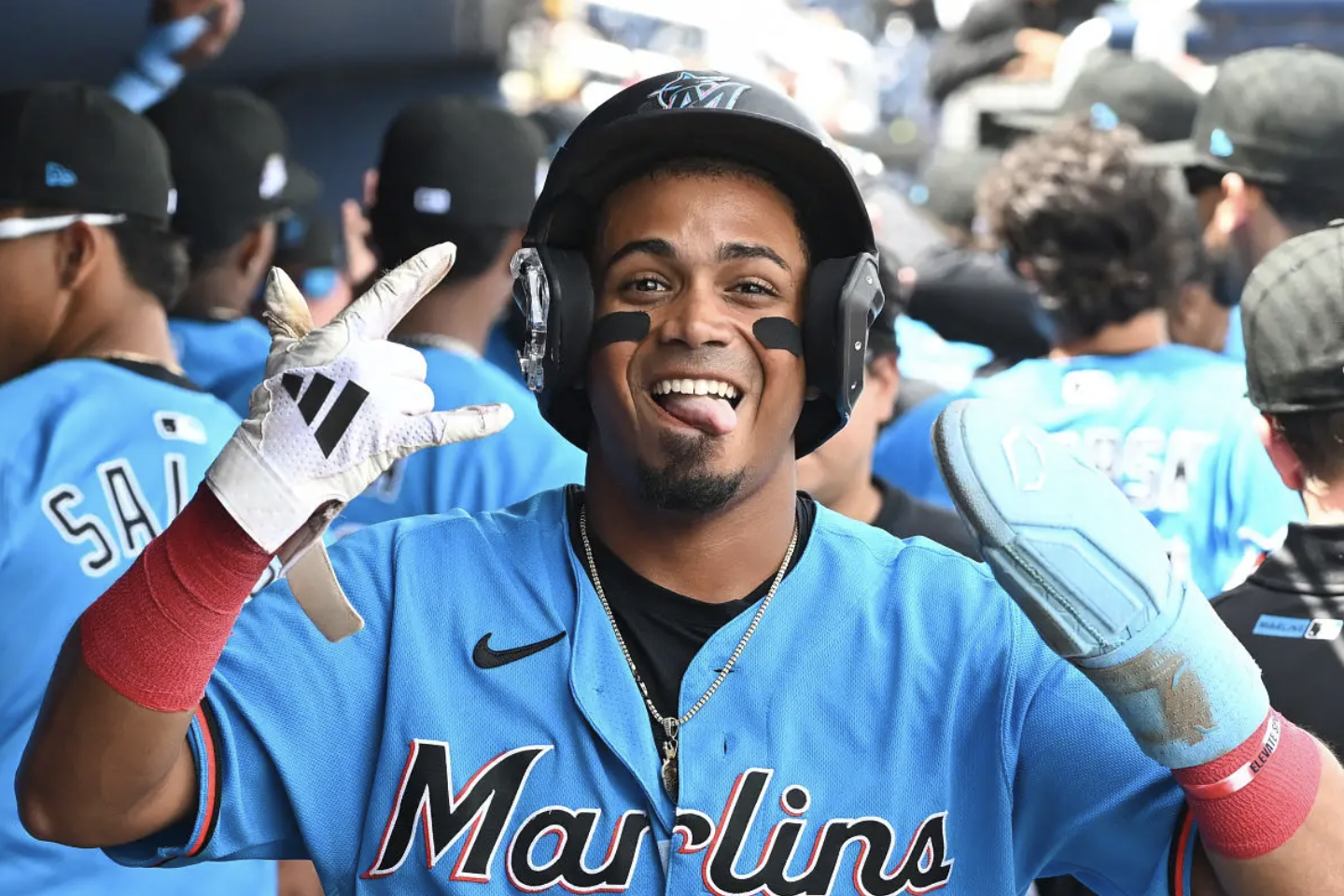 During this brief break in the 2026 minor league season, it's time to check in with each of Fish On First's ranked Miami Marlins prospects. Some of them have taken major steps forward, while others have battled injuries or faced challenges on the field while adjusting to higher levels. Every player in our Top 30 is covered below, breaking down their first-half performance, development, and outlook entering the second half of the season. 1. Thomas White Began season at Triple-A; currently at Triple-A (injured list) White entered the season with legitimate expectations of making his major league debut before the end of the year. Instead, injuries derailed what was shaping up to be another important step in his development. Over just 18 ⅔ innings, White saw a slight dip in velocity across his arsenal, allowed four doubles and three home runs, and walked nine batters before being diagnosed with a left shoulder capsular sprain. The injury is expected to sideline him for the remainder of the season. Although the first half was disappointing, White's long-term outlook remains unchanged. He has succeeded at every level of the minors throughout his career, and if he returns healthy next season, there is every reason to believe he will quickly establish himself in Jacksonville and once again put himself on the doorstep of Miami. 2. Robby Snelling Began season at Triple-A; currently in major leagues (injured list) Few prospects entered the season with more momentum than Snelling. After posting a 1.27 ERA across 63 ⅔ innings in Jacksonville last year, many expected him to make his major league debut in 2026, with some even believing he had a legitimate chance to win the Marlins' fifth starter job coming out of spring training. He returned to Jacksonville and was every bit as dominant, posting a 1.86 ERA over 29 innings while striking out nearly 40% of opposing hitters. With opponents batting just .116 against him, a promotion to Miami quickly became inevitable. His debut started about as well as anyone could have imagined, striking out James Wood on three pitches before finishing with five innings of three-run ball. Unfortunately, it would also be his only appearance. Days later, Snelling suffered a torn left UCL during a bullpen session, ending his season. The injury is a significant setback, but with an expected recovery timeline of 10-12 months, he should return early next season if everything goes according to plan. 3. Dillon Lewis Began season at Double-A; currently at Double-A (injured list) Lewis wasted little time showing why the Marlins made him a key part of the Ryan Weathers trade. After breaking out with 22 home runs and 26 stolen bases across two levels in 2025, he has continued to flash that same power-speed combination during his first season in the organization. Through 66 games with Pensacola, Lewis is hitting .240 with 17 home runs, 43 RBIs, and 14 stolen bases. The production has been impressive, though the strikeout rate remains the biggest obstacle to unlocking his full offensive potential. He is striking out in 31.5% of his plate appearances, an area that will continue to be closely monitored. His season was interrupted on June 27 by a broken hamate bone, an injury expected to keep him out six to eight weeks. Finishing the year healthy will be just as important as the numbers he posts. 4. Aiva Arquette Began season at High-A; currently at Double-A (injured list) Arquette's first full professional season has featured both rapid advancement and frustrating interruptions. After spending just 14 games in High-A Beloit, he earned a promotion to Double-A Pensacola, where he has shown flashes of why he is viewed as one of the organization's cornerstone prospects. Offensively, Arquette has hit .221 with seven home runs and 22 RBIs through his first 27 games in Pensacola. Defensively, he has looked every bit the part at shortstop, posting a .987 fielding percentage over 159 innings while displaying the smooth actions that made him such a highly regarded prospect. The biggest hurdle has simply been staying on the field. Injuries have already interrupted his development several times, and he is currently sidelined with a left thumb injury. A healthy finish to the season would go a long way toward restoring the momentum he built early in the year. 5. Cam Cannarella Began season at High-A; currently at Double-A Cannarella entered professional baseball with more questions than most first-round caliber talents after tearing the labrum in his throwing shoulder. Even while playing through the injury in 2025, he still hit .337 with 11 home runs and remained one of the premier defensive outfielders in the draft, making him one of the biggest value picks when the Marlins selected him in the Competitive Balance Round A. His first full professional season has exceeded even the organization's expectations. After dominating High-A Beloit with a .394 average over 19 games, Cannarella earned a promotion to Pensacola and has somehow been even better. Through 34 games, he is hitting .344 with nine home runs, 23 RBIs, and 23 walks compared to just 20 strikeouts. Perhaps the biggest surprise has been the power. Cannarella launched eight home runs during a 13-game stretch and recently told Isaac Azout and Alex Carver on Fish Unfiltered that his shoulder is nearly back to full strength. Combined with his elite defense, the unexpected power surge has only strengthened the belief that he could be the Marlins' long-term answer in center field. 6. Karson Milbrandt Began season at Double-A; currently at Triple-A Milbrandt entered the season with plenty of momentum after a strong finish to 2025 and an outstanding Arizona Fall League, where he struck out 23 batters in just 13 ⅓ innings. He carried that success into Spring Breakout, punching out six hitters over three dominant innings, and continued to establish himself as one of the fastest-rising arms in the organization. He opened the year in Double-A Pensacola and was nearly untouchable, posting a 1.34 ERA while striking out 70 batters in 47 innings. During one stretch, Milbrandt threw 27 consecutive scoreless innings before earning a promotion to Triple-A Jacksonville. The jump to Triple-A has presented a new challenge. While he has shown flashes of the same dominance, his command has not been as sharp as it was in Pensacola. Even so, the stuff continues to play at a high level, and if he settles in during the second half, Milbrandt has positioned himself to make his major league debut sooner rather than later. 7. Starlyn Caba Began season at High-A; currently at High-A Caba's season has been one of the tougher evaluations in the system. After spending all of last year in Jupiter, he returned to High-A Beloit looking to take another step forward, but injuries and inconsistency have prevented him from finding much rhythm. Despite spending time on the injured list twice, there have still been encouraging signs. Caba has already established career highs in doubles and home runs while posting an OPS nearly 160 points higher than last season. His plate discipline has also improved, as he has already surpassed last year's walk total and is drawing walks at the second-best rate of his professional career. The downside has been the strikeouts, which have climbed to a career high. Finding more consistency will be the biggest objective after the All-Star break because the overall offensive improvements suggest there is still plenty to be encouraged by. 8. Kevin Defrank Began season in FCL; currently in FCL (injured list) Few pitchers in the organization possess the raw upside of Defrank. Seeing a 16-year-old consistently reach triple digits is rare, and after turning heads last season, there was plenty of excitement surrounding his expected stateside debut as a 17-year-old. Unfortunately, injuries have kept that from becoming a reality. Defrank was placed on the 60-day injured list in May with a right biceps injury and is expected to miss the remainder of the season. Although the lost development time is disappointing, there is no reason to rush his timeline. At just 17 years old, Defrank remains one of the highest-upside arms in the organization, and the focus now shifts toward returning healthy for next season. 9. Kemp Alderman Began season at Triple-A; currently at Triple-A Alderman has done exactly what the Marlins hoped after his breakout 2025 campaign. Following a season in which he hit .285 with 22 home runs and 22 stolen bases across two levels, he has continued producing against Triple-A pitching. Despite missing roughly a month with an elbow injury, Alderman is hitting .297 with 13 home runs and 37 RBIs. Projected over a full 550 at-bat season, his current pace would put him around the 33-home run mark, reinforcing the middle-of-the-order power that has become his calling card. The biggest storyline surrounding Alderman may ultimately have nothing to do with his performance. With the trade deadline approaching, his name has surfaced in speculation as a potential trade chip. Whether he finishes the season in the Marlins organization or elsewhere, he has only increased his value during the first half. 10. Luis Cova Began season in FCL; currently at Low-A Cova has continued building on the breakout season he enjoyed in the Dominican Summer League, where he hit .299 with nine home runs and 35 stolen bases. He opened this year in the Florida Complex League and wasted little time proving he was ready for a new challenge, batting .288 over 19 games with two home runs, 14 stolen bases, and nearly as many walks (12) as strikeouts (14). That performance earned him a promotion to Low-A Jupiter, which has taken a toll on his effectiveness at the plate. Through his first 30 games, Cova is hitting .219 with 30 strikeouts, but the underlying approach remains encouraging. He has already drawn 24 walks while adding another 10 stolen bases, bringing his professional total to 95. The plate discipline has translated well despite the jump in competition. Now it becomes a matter of making more consistent quality contact. Given his speed, pitchers will eventually be forced to challenge him in the strike zone, creating more opportunities for Cova to impact games offensively. 11. Dillon Head Began season at High-A; currently at High-A Head's season has been a tale of two halves. After struggling through the opening month and spending time on the injured list, he has turned into one of the hottest hitters in all of Minor League Baseball. Along with Cam Cannarella, the Marlins may have two of the hottest bats in the minors. Over his last 26 games, Head is hitting .361 while recording a hit in 21 of those contests. July has been especially impressive, as he has already put together three three-hit games and one four-hit performance. Even after missing time earlier in the season, Head has stolen 30 bases, continuing to showcase the elite speed that has always made him such an intriguing prospect. The slow start is quickly becoming an afterthought. If he can sustain this level of production throughout the second half, Head will continue climbing back toward the top tier of the Marlins' prospect rankings. 12. Fenwick Trimble Began season at Double-A; currently at Double-A Trimble's first half has featured two completely different stretches. After a slow start in Pensacola, he caught fire in late April and became one of the Southern League's most productive hitters over the next two months. From April 25 through June 30, Trimble hit .312 with 11 home runs and 35 RBIs, producing the best offensive stretch of his professional career. Since the calendar flipped to July, however, he has cooled off considerably, batting .171 over his first 10 games despite leaving the yard twice. While the strikeout rate has increased and the walks have declined compared to last season, the overall power production has continued to trend in the right direction. Trimble has already established a new career high with 33 extra-base hits despite receiving fewer at-bats than he did all of last year. 13. Brendan Jones Began season at Double-A; currently at Double-A Jones has quietly put together a solid first season in the Marlins organization after arriving alongside Dillon Lewis in the offseason. Through 64 games with Pensacola, he is hitting .220 with eight home runs, six triples, 25 RBIs, and 31 stolen bases while continuing to impact games with his speed. The batting average doesn't tell the full story. Jones owns a career-low .265 BABIP despite striking the ball well at times, suggesting he has been on the wrong side of some batted-ball luck. He is also striking out at a 27% clip, an area that could use some improvement during the second half. Defensively, Jones has seen increased time in left and right field following Cannarella's emergence in center. That versatility only adds to his value as he continues adjusting to a new organization. 14. Eliazar Dishmey Began season at High-A; currently at Double-A Dishmey continues to establish himself as one of the most underrated pitchers in the Marlins system. After posting a 2.90 ERA across two levels last season, he returned to High-A Beloit and immediately earned another promotion by recording a 2.14 ERA with 48 strikeouts in 33 ⅔ innings. The move to Pensacola has come with a learning curve, but the overall results remain encouraging. Through 36 ⅔ innings, Dishmey owns a 3.93 ERA with 44 strikeouts while limiting opponents to a .164 batting average. The only noticeable difference has been the command. Dishmey has walked 18 batters since arriving in Double-A, but his ability to miss bats and suppress quality contact has remained intact. If he can sharpen the command over the final two months, another jump in his prospect stock could be on the horizon. 15. Andrew Salas Began season at Low-A; currently in FCL Salas' second full professional season has been anything but ordinary. After struggling to find consistency in Jupiter, where he hit .170 over 43 games, he was reassigned to the Florida Complex League and has completely changed the outlook of his season. In 23 FCL games, Salas is hitting .264 with seven home runs, showcasing an unexpected power surge that has become one of the biggest surprises in the organization this year. The strikeouts remain the biggest hurdle. Between both levels, Salas is striking out at a 30% clip, leaving plenty of room for improvement as he continues to mature offensively. Still, he will not turn 19 until next March, and the emergence of legitimate game power gives the Marlins plenty to be excited about heading into the second half. 16. Santiago Solarte Began season in DSL; currently in DSL Solarte has wasted little time showing why he was the Marlins' top international signing in this year's class. Through his first 29 professional games, he is hitting .281 with five home runs, 24 RBIs, and 28 stolen bases, making an immediate impact in nearly every facet of the game. The strikeouts have been higher than the Marlins would like, but when Solarte puts the ball in play, the ball jumps off his bat. His combination of power and speed has been evident throughout the first half and has only reinforced why the organization invested so heavily in him. There is still room for growth defensively, but that's to be expected from a player who won't turn 18 until November. Considering his age and tools, the Marlins couldn't have asked for a much better introduction to professional baseball. 17. Luis Arana Began season in FCL; currently at Low-A Arana continued building on his breakout 2025 campaign after hitting .297 in the Dominican Summer League while drawing 30 walks compared to just 18 strikeouts. He carried that disciplined approach into the Florida Complex League, batting .389 over 17 games with nine walks and only six strikeouts. That performance quickly earned him a promotion to Low-A Jupiter, where full-season pitching has provided a much tougher test. Through 31 games, Arana is hitting .250 while his strikeout total has climbed to 30 in 116 at-bats. Even with the adjustment period, there is little reason to overreact. Arana has already proven he can make changes at every stop of his professional career, and as he settles into Jupiter, expect the disciplined approach that carried him through the DSL and FCL to become more consistent again. 18. Christian Hernández Began season at Double-A; currently at Double-A Hernández entered the organization this offseason as part of the trade that sent Edward Cabrera to the Cubs, and after a slow start, he has steadily become one of the hottest hitters in the Marlins system. Following a difficult April in which he hit just .164, Hernández has responded by hitting .306 with eight home runs and 28 RBIs since May 2. Those eight home runs have already established a new career high, highlighting the power that has emerged during his turnaround. The strikeout rate remains elevated at 28%, but putting together three straight productive months is an encouraging sign. If he maintains that momentum into the second half, Hernandez could continue climbing the organizational rankings. 19. Brandon Compton Began season at High-A; currently at Double-A Few hitters in the organization possess the raw power that Compton brings to the plate, and he has done plenty to reinforce that reputation during the first half. After a slow start through April and May, Compton caught fire in June, hitting .318 with 10 home runs, including one in his Double-A debut. The promotion to Pensacola has done nothing to cool him off. Through his first 11 games, he is hitting .349 with six home runs and 12 RBIs, continuing to punish opposing pitching. Just as encouraging as the power has been his approach at the plate. Compton is averaging nearly 4.4 pitches per plate appearance, consistently working deep counts while forcing pitchers into mistakes. That combination of patience and power gives him one of the highest offensive ceilings in the system. 20. Brandon White Began season at Double-A; currently at Triple-A White has been one of the biggest surprises in the Marlins organization this season. After putting together a solid year in Beloit in 2025, he opened this season in Pensacola and needed just 33 innings to prove he was ready for Triple-A, posting a 3.00 ERA with 39 strikeouts before earning a promotion. The adjustment to Jacksonville has brought some ups and downs. Through 37 ⅔ innings, White owns a 5.73 ERA, though the underlying numbers paint a more encouraging picture. Across both levels, he has posted a career-best 10.95 K/9 while lowering his walk rate to a career-low 2.17 BB/9. The long ball has been his biggest issue since reaching Triple-A, but pitchers often need time to adjust after making that jump. As long as White continues attacking the strike zone the way he has throughout the season, the results should continue trending in the right direction. 21. Juan Matheus Began season at High-A; currently at Double-A Matheus has been one of the biggest risers in the Marlins system after arriving in the offseason as part of the same trade that brought Dillon Lewis and Brendan Jones to the organization. He opened the year in High-A Beloit and immediately made an impact, hitting .261 with seven home runs, 29 RBIs, and 22 walks compared to 29 strikeouts in 42 games. That performance earned him a promotion to Double-A Pensacola, where he has looked just as comfortable. Through 40 games, Matheus is hitting .288 with six home runs and 30 RBIs, proving his offensive production has translated against better competition. The walk rate has dipped since the promotion, but the power has remained while the strikeout rate has stayed nearly identical. Defensively, Matheus has added even more value by appearing at every infield position except first base, giving the Marlins another versatile option as he continues to develop. 22. Keyner Benitez Began season at Low-A; currently at Low-A (injured list) Benitez has quietly established himself as one of the most dependable pitchers in the Marlins organization. Since joining the system in 2023, he has compiled a 3.10 ERA over 188 career innings while consistently producing wherever he has been assigned. That trend continued this season in Jupiter, where he posted a 2.79 ERA across 19 ⅓ innings while holding opponents to a .106 batting average and striking out hitters at an 11.0 K/9 clip. Unfortunately, his season came to an early end after he was placed on the 60-day injured list with an arm injury. While missing the remainder of the year is a disappointing setback, Benitez has built a track record of consistent production that should keep him firmly on the organization's radar once he returns. 23. Josh Ekness Began season at Triple-A; currently in major leagues (injured list) Ekness has long been regarded as one of the best relief prospects in the Marlins system because of his ability to miss bats. After posting a 1.91 ERA with 83 strikeouts in 66 innings during 2024, he followed it up with another productive season in Double-A before earning his first extended opportunity in Triple-A. Through 16 ⅓ innings with Jacksonville this season, Ekness recorded a 4.41 ERA, but the strikeout numbers continued to stand out with 29 punchouts. His ability to generate swings and misses ultimately earned him his first major league call-up. Ekness appeared in six games for Miami before suffering a right calf strain that landed him on the 60-day injured list. Once healthy, he should continue competing for a permanent role in the Marlins' bullpen. 24. Nate Payne Began season at Low-A; currently at High-A Payne continues to look like one of the biggest steals from the 2024 MLB Draft. Selected in the 18th round, he has consistently outperformed expectations and has emerged as one of the more underrated pitching prospects in the organization. Through 74 ⅔ innings this season, Payne has struck out 102 batters, good for a 12.29 K/9. That ability to generate swings and misses has carried over throughout his professional career, as he owns an even 12.0 K/9 across 131 innings. The development has gone beyond just strikeouts. Payne has lowered his walk rate by nearly two batters per nine innings compared to last season, while a .329 BABIP suggests he has also dealt with some poor fortune on balls in play. At just 20 years old, his first half has only strengthened the case that he deserves far more attention. 25. Josh White Began season at Triple-A; currently at Triple-A White followed one of the most dominant relief seasons in recent minor league history by proving he was ready for the next challenge. After posting a 1.86 ERA with 107 strikeouts over 67 ⅔ innings in 2025, he opened this season in Triple-A Jacksonville and continued to produce. Across 41 innings, White owns a 2.20 ERA with 48 strikeouts, earning his first promotion to the major leagues. He made his debut on May 31, though his first taste of the big leagues proved challenging as he allowed five earned runs while walking four batters. Despite the rocky debut, White has consistently shown he can dominate minor league hitters. The track record speaks for itself, and it would not be surprising to see him become a valuable piece of the Marlins' bullpen before long. 26. Edgardo De Leon Began season FCL; currently at Low-A De Leon was the final piece the Marlins acquired from the Cubs during the offseason, and his first half has been defined by two very different stops. He opened the season in the Florida Complex League and was one of the league's most productive hitters. Had he accumulated enough plate appearances to qualify, he would have been among the league leaders in batting average after hitting .351 with four home runs, 20 RBIs, and 15 walks compared to just 14 strikeouts in 22 games. That performance earned him a promotion to Low-A Jupiter, where the adjustment has been much tougher. Through 23 games, De Leon is hitting .167 while striking out in more than one-third of his plate appearances. The offensive tools that stood out in the FCL are still there. The second half will be about making the adjustments necessary to translate that success against full-season pitching. 27. Luis Leon Began season FCL; currently at Low-A Leon has already shown significant growth since beginning his professional career. After hitting just .110 over 24 games in the Florida Complex League last season while striking out in 56% of his plate appearances, he returned to the level this year looking like a much different player. In 34 games, Leon hit .248 with three home runs, 17 RBIs, and 19 stolen bases before earning a promotion to Jupiter. His first taste of full-season baseball has been more challenging, as he is hitting .209 through 13 games while striking out at a 40% clip. The sample size in Jupiter remains small, so there is no reason to draw major conclusions yet. The focus for the remainder of the season will simply be cutting down the strikeouts and allowing his elite speed to impact games more consistently. 28. Emilio Barreras Began season at Low-A; currently at High-A Barreras entered professional baseball with the reputation of being one of the best contact hitters in the 2025 draft, and he has largely lived up to that billing during his first professional season. He opened the year in Jupiter and hit .317 over 37 games while drawing 25 walks compared to just 15 strikeouts, displaying the disciplined approach that made him such an attractive draft pick. That success earned him a promotion to High-A Beloit, where some regression was expected after posting a .346 BABIP at the previous level. Even with the tougher competition, Barreras has continued to put the ball in play at an impressive rate. While the walks have dipped, the strikeout rate has remained under control. If those contact skills continue to translate, Barreras has a chance to become one of the fastest-rising position players in the organization. 29. Aiden May Began season at High-A; currently at High-A May entered the season with one primary objective after undergoing an elbow procedure last year: stay healthy. Through the first half, he has accomplished exactly that while continuing to develop in High-A Beloit. Across 53 innings, May owns a 4.25 ERA. Although his strikeout numbers have declined from last season, so have the walks, as he has relied more on generating weak contact than overpowering hitters. Regardless of the statistics, simply remaining healthy has been the biggest victory. There has been no indication whether the Marlins will place him on an innings limit during the second half, but if he continues performing the way he has, a promotion to Pensacola appears well within reach. 30. Noble Meyer Began season at High-A; currently at High-A (injured list) Few first-round picks from the 2023 draft have endured a tougher start to their professional careers than Meyer. Injuries have repeatedly interrupted his development, making it difficult for him to build any momentum on the mound. That trend has unfortunately continued this season. Meyer has been limited to just three rehab appearances, totaling four innings while issuing eight walks. The lack of innings makes it nearly impossible to evaluate where his development currently stands. At 21 years old, however, there is still time for Meyer to get back on track. He has already shown the ability to reach the upper 90s with his fastball when healthy. For the remainder of the season, simply staying on the field and building momentum would represent a meaningful step forward. With the 2026 MLB Draft now complete, another wave of talent has entered the organization, adding to an already deep farm system. As the second half gets underway, promotions, continued development, and the integration of this year's draft class will provide an even clearer picture of the future in Miami.
- 5 comments
-
- 3
-

-
- thomas white
- robby snelling
- (and 8 more)
-
 One article produced earlier this year examined how the Marlins' minor league system was on pace to record the highest strikeout rate in franchise history. At the time, the development of swing-and-miss ability across all levels seemed like it would be the prevailing narrative of the 2026 season. However, as the season has progressed, a larger issue has overshadowed that. The depth that once appeared to be an organizational strength is quickly disappearing. Injuries, promotions, underperformance, and roster turnover have impacted nearly every MiLB roster. When the Marlins traded Edward Cabrera and Ryan Weathers last offseason, the belief was that the organization had enough pitching depth to absorb those losses. That depth is now being tested. Thomas White is likely out for the season with a shoulder sprain. Robby Snelling and Adam Mazur have both undergone elbow surgeries. Eury Pérez is sidelined with a gracilis sprain, while Janson Junk is dealing with shin inflammation. Chris Paddack has already been designated for assignment. Braxton Garrett has struggled with command during his return from Tommy John, and Ryan Gusto has posted a 10.80 ERA in his limited MLB exposure. The concern extends beyond the rotation. Andrew Nardi is expected to miss roughly three months, while Ronny Henriquez underwent Tommy John and will miss the remainder of the season. Josh Ekness is sidelined for six weeks, Calvin Faucher owns an 18% walk rate, and the club's biggest bullpen addition from the offseason, Pete Fairbanks, has struggled to find consistency. This has had a trickle-down effect to the Marlins farm. Over their last two series, Triple-A Jacksonville has posted a 4.72 ERA and 1.51 WHIP while issuing 64 walks. Bradley Blalock has cooled off after a strong start, Braxton Garrett is still working his way back, and Brandon White has struggled since being promoted. The one obvious bright spot has been introducing Karson Milbrandt to their rotation. Now being recognized as a Top 100 MLB prospect, Milbrandt tossed six innings of scoreless ball in his AAA debut. Double-A Pensacola has managed a respectable 4.23 ERA, but much of the credit goes to Eliazar Dishmey, who was nearly flawless in his outing on Thursday (6.0 IP, 1 H, 1 ER, 1 BB, 9 K). High-A Beloit has arguably been hit the hardest. The Sky Carp own a staggering 7.74 ERA during that span. Compounding their inability to throw strikes, they've been surrendering nearly two home runs per game. The Beloit active roster includes Jaydenn Estanista and Jesús Rios, who were not even employed by the Marlins org when the season began. Unsurprisingly, they have a 2-10 record over their last 12 games. It looks like a typo at first glance, but no: Low-A Jupiter has issued more than a walk per inning (106 BB in 101.2 IP) over this two-week span, contributing to a 5.40 ERA. Walin Castillo, Dameivi Tineo, and Julio Mendez have all performed well in the rotation, but the bullpen has struggled. What about the offense? The offensive side of the organization presents a different challenge. While overall production throughout the system has been strong, much of it is concentrated among a relatively small group of players. Triple-A Jacksonville currently features Agustín Ramírez and Graham Pauley, both of whom struggled during their time with the major league club earlier this season. Jacob Berry appeared close to a call-up before cooling off over the last few weeks—he has not homered since April. Kemp Alderman is expected to miss at least another week with a right elbow sprain, while Deyvison De Los Santos has not produced at the level the organization hoped. Double-A Pensacola has become the center of the organization's offensive talent. Aiva Arquette, Cam Cannarella, Juan Matheus, and Connor Caskenette have all arrived from Beloit and continued their strong seasons. Dillon Lewis leads the organization with 12 home runs and Fenwick Trimble leads with 56 hits, while Brendan Jones has paired 22 stolen bases with six homers. Those aforementioned promotions have left Beloit's lineup much thinner than it was a few weeks ago. Brandon Compton has struggled, Dillon Head has yet to find consistency, and Emilio Barreras and Esmil Valencia have gotten off to slow starts at the High-A level. Adding to the talent drain, Starlyn Caba was recently placed on the injured list. Jupiter recently received reinforcements with the arrivals of Luis Arana and Luis Cova from the FCL, and both have started well. Abraham Ramírez opened the year as one of the hottest hitters in the organization before cooling off significantly. Carter Johnson has put together a solid bounce-back season, but there is still development ahead. The biggest concern remains 2024 first-round pick PJ Morlando, who is hitting under .200 with a strikeout rate above 34%. Andrew Salas was recently demoted to the FCL after hitting .170. For an organization that plans to build its next contender through player development, maintaining depth is just as important as developing stars. The Marlins have made progress since Peter Bendix took over in November 2023, but the first half of 2026 has shown how quickly injuries and underperformance can reshape not only a farm system but an entire organization. The good news is that many of the organization's top prospects are performing and earning promotions. The challenge now is ensuring there is enough depth behind them. As the trade deadline approaches, it would not be surprising to see the Marlins target younger pitching and position-player talent capable of strengthening the lower levels of the system while preserving the development timelines of their current prospects.
 -
One article produced earlier this year examined how the Marlins' minor league system was on pace to record the highest strikeout rate in franchise history. At the time, the development of swing-and-miss ability across all levels seemed like it would be the prevailing narrative of the 2026 season. However, as the season has progressed, a larger issue has overshadowed that. The depth that once appeared to be an organizational strength is quickly disappearing. Injuries, promotions, underperformance, and roster turnover have impacted nearly every MiLB roster. When the Marlins traded Edward Cabrera and Ryan Weathers last offseason, the belief was that the organization had enough pitching depth to absorb those losses. That depth is now being tested. Thomas White is likely out for the season with a shoulder sprain. Robby Snelling and Adam Mazur have both undergone elbow surgeries. Eury Pérez is sidelined with a gracilis sprain, while Janson Junk is dealing with shin inflammation. Chris Paddack has already been designated for assignment. Braxton Garrett has struggled with command during his return from Tommy John, and Ryan Gusto has posted a 10.80 ERA in his limited MLB exposure. The concern extends beyond the rotation. Andrew Nardi is expected to miss roughly three months, while Ronny Henriquez underwent Tommy John and will miss the remainder of the season. Josh Ekness is sidelined for six weeks, Calvin Faucher owns an 18% walk rate, and the club's biggest bullpen addition from the offseason, Pete Fairbanks, has struggled to find consistency. This has had a trickle-down effect to the Marlins farm. Over their last two series, Triple-A Jacksonville has posted a 4.72 ERA and 1.51 WHIP while issuing 64 walks. Bradley Blalock has cooled off after a strong start, Braxton Garrett is still working his way back, and Brandon White has struggled since being promoted. The one obvious bright spot has been introducing Karson Milbrandt to their rotation. Now being recognized as a Top 100 MLB prospect, Milbrandt tossed six innings of scoreless ball in his AAA debut. Double-A Pensacola has managed a respectable 4.23 ERA, but much of the credit goes to Eliazar Dishmey, who was nearly flawless in his outing on Thursday (6.0 IP, 1 H, 1 ER, 1 BB, 9 K). High-A Beloit has arguably been hit the hardest. The Sky Carp own a staggering 7.74 ERA during that span. Compounding their inability to throw strikes, they've been surrendering nearly two home runs per game. The Beloit active roster includes Jaydenn Estanista and Jesús Rios, who were not even employed by the Marlins org when the season began. Unsurprisingly, they have a 2-10 record over their last 12 games. It looks like a typo at first glance, but no: Low-A Jupiter has issued more than a walk per inning (106 BB in 101.2 IP) over this two-week span, contributing to a 5.40 ERA. Walin Castillo, Dameivi Tineo, and Julio Mendez have all performed well in the rotation, but the bullpen has struggled. What about the offense? The offensive side of the organization presents a different challenge. While overall production throughout the system has been strong, much of it is concentrated among a relatively small group of players. Triple-A Jacksonville currently features Agustín Ramírez and Graham Pauley, both of whom struggled during their time with the major league club earlier this season. Jacob Berry appeared close to a call-up before cooling off over the last few weeks—he has not homered since April. Kemp Alderman is expected to miss at least another week with a right elbow sprain, while Deyvison De Los Santos has not produced at the level the organization hoped. Double-A Pensacola has become the center of the organization's offensive talent. Aiva Arquette, Cam Cannarella, Juan Matheus, and Connor Caskenette have all arrived from Beloit and continued their strong seasons. Dillon Lewis leads the organization with 12 home runs and Fenwick Trimble leads with 56 hits, while Brendan Jones has paired 22 stolen bases with six homers. Those aforementioned promotions have left Beloit's lineup much thinner than it was a few weeks ago. Brandon Compton has struggled, Dillon Head has yet to find consistency, and Emilio Barreras and Esmil Valencia have gotten off to slow starts at the High-A level. Adding to the talent drain, Starlyn Caba was recently placed on the injured list. Jupiter recently received reinforcements with the arrivals of Luis Arana and Luis Cova from the FCL, and both have started well. Abraham Ramírez opened the year as one of the hottest hitters in the organization before cooling off significantly. Carter Johnson has put together a solid bounce-back season, but there is still development ahead. The biggest concern remains 2024 first-round pick PJ Morlando, who is hitting under .200 with a strikeout rate above 34%. Andrew Salas was recently demoted to the FCL after hitting .170. For an organization that plans to build its next contender through player development, maintaining depth is just as important as developing stars. The Marlins have made progress since Peter Bendix took over in November 2023, but the first half of 2026 has shown how quickly injuries and underperformance can reshape not only a farm system but an entire organization. The good news is that many of the organization's top prospects are performing and earning promotions. The challenge now is ensuring there is enough depth behind them. As the trade deadline approaches, it would not be surprising to see the Marlins target younger pitching and position-player talent capable of strengthening the lower levels of the system while preserving the development timelines of their current prospects. View full article
-
In the last two weeks, the Miami Marlins have lost Robby Snelling and Eury Pérez for extended periods, and Janson Junk until at least the middle of June. Their starting rotation now consists of Sandy Alcantara, who has struggled mightily since mid-April, Max Meyer, who has already surpassed his previous MLB career-high in innings pitched, and Tyler Phillips, who isn't even fully stretched out as a starter yet. While the organization is severely lacking pitching depth at the moment, the opposite is true in the outfield. Miami has accumulated so many promising players at the position that it is becoming increasingly difficult to find everyday playing time for prospects who deserve it, much like Ely Sussman anticipated back in January. Alex Carver of Fish On First reported Monday morning that Cam Cannarella (FOF #11 prospect) is being promoted to Double-A Pensacola. The Blue Wahoos' outfield currently features Brendan Jones (FOF #14), Dillon Lewis (FOF #5), and Fenwick Trimble (FOF #16), each of whom is comfortably meeting expectations, if not exceeding them. How will Cannarella find the necessary at-bats to continue his development? Trimble, in particular, looks more than ready for a promotion to Triple-A Jacksonville. The problem is that Jacksonville has its own outfield logjam. The Jumbo Shrimp currently have Kemp Alderman (FOF #8), who was knocking on the door of the major leagues before his recent elbow injury. Matthew Etzel is having a breakout season, and Rece Hinds, who was acquired less than two weeks ago, is hitting over .300 on the year. Andrew Pintar is the best defender of the bunch and posted a 1.017 OPS in May. Even the major league roster offers little flexibility. Miami's everyday outfield consists of Kyle Stowers, Jakob Marsee, and Owen Caissie. Off the bench, the club has Esteury Ruiz, Heriberto Hernández, and Javier Sanoja to primarily receive opportunities against left-handed pitching. So what could the Marlins do to capitalize on this uneven distribution of talent? DFA Christopher Morel and recall Rece Hinds This would merely be a baby step, but a helpful one, nonetheless. The Marlins would be parting ways with their least productive right-handed hitter—Morel has a 23 wRC+ this season—while also freeing up spot in Jacksonville. In adding even more outfield options to the active roster, Sanoja could focus fully on the infield moving forward. Trade minor league outfield depth for pitching The Marlins are desperate for innings at this point and will take them any way they can get them. Trading from a position of organizational strength could help address multiple issues at once. Moving one or two outfielders would create opportunities throughout the system while potentially bringing back a starter capable of eating innings until the rotation gets healthy. A 40-man roster crunch is coming after the 2026 season no matter what, with the likes of Alderman and Etzel due to become Rule 5 draft-eligible for the first time. Might as well get out in front of that predicament. Promote aggressively and let performance dictate decisions The Marlins entered 2026 with the goal of both developing young talent and remaining competitive at the major league level. If that mindset remains unchanged, the organization may eventually have to become more aggressive with its roster decisions. If major league players continue to struggle while prospects continue to perform, Miami could begin optioning underperforming players and rewarding those who have earned opportunities. For an organization suddenly lacking pitching depth while possessing a surplus of outfield talent, standing pat may not be an option for much longer. Whether that solution comes through a trade, a series of promotions, or roster changes at the major league level, the Marlins have reached a point where performance throughout the organization may force their hand. With several prospects knocking on the door and a rotation searching for answers, Miami could soon face one of its most important roster decisions of the season. View full article
-
Could the Marlins trade from their outfield depth?
Nathaniel Klaff posted an article in FOF Prospects
 In the last two weeks, the Miami Marlins have lost Robby Snelling and Eury Pérez for extended periods, and Janson Junk until at least the middle of June. Their starting rotation now consists of Sandy Alcantara, who has struggled mightily since mid-April, Max Meyer, who has already surpassed his previous MLB career-high in innings pitched, and Tyler Phillips, who isn't even fully stretched out as a starter yet. While the organization is severely lacking pitching depth at the moment, the opposite is true in the outfield. Miami has accumulated so many promising players at the position that it is becoming increasingly difficult to find everyday playing time for prospects who deserve it, much like Ely Sussman anticipated back in January. Alex Carver of Fish On First reported Monday morning that Cam Cannarella (FOF #11 prospect) is being promoted to Double-A Pensacola. The Blue Wahoos' outfield currently features Brendan Jones (FOF #14), Dillon Lewis (FOF #5), and Fenwick Trimble (FOF #16), each of whom is comfortably meeting expectations, if not exceeding them. How will Cannarella find the necessary at-bats to continue his development? Trimble, in particular, looks more than ready for a promotion to Triple-A Jacksonville. The problem is that Jacksonville has its own outfield logjam. The Jumbo Shrimp currently have Kemp Alderman (FOF #8), who was knocking on the door of the major leagues before his recent elbow injury. Matthew Etzel is having a breakout season, and Rece Hinds, who was acquired less than two weeks ago, is hitting over .300 on the year. Andrew Pintar is the best defender of the bunch and posted a 1.017 OPS in May. Even the major league roster offers little flexibility. Miami's everyday outfield consists of Kyle Stowers, Jakob Marsee, and Owen Caissie. Off the bench, the club has Esteury Ruiz, Heriberto Hernández, and Javier Sanoja to primarily receive opportunities against left-handed pitching. So what could the Marlins do to capitalize on this uneven distribution of talent? DFA Christopher Morel and recall Rece Hinds This would merely be a baby step, but a helpful one, nonetheless. The Marlins would be parting ways with their least productive right-handed hitter—Morel has a 23 wRC+ this season—while also freeing up spot in Jacksonville. In adding even more outfield options to the active roster, Sanoja could focus fully on the infield moving forward. Trade minor league outfield depth for pitching The Marlins are desperate for innings at this point and will take them any way they can get them. Trading from a position of organizational strength could help address multiple issues at once. Moving one or two outfielders would create opportunities throughout the system while potentially bringing back a starter capable of eating innings until the rotation gets healthy. A 40-man roster crunch is coming after the 2026 season no matter what, with the likes of Alderman and Etzel due to become Rule 5 draft-eligible for the first time. Might as well get out in front of that predicament. Promote aggressively and let performance dictate decisions The Marlins entered 2026 with the goal of both developing young talent and remaining competitive at the major league level. If that mindset remains unchanged, the organization may eventually have to become more aggressive with its roster decisions. If major league players continue to struggle while prospects continue to perform, Miami could begin optioning underperforming players and rewarding those who have earned opportunities. For an organization suddenly lacking pitching depth while possessing a surplus of outfield talent, standing pat may not be an option for much longer. Whether that solution comes through a trade, a series of promotions, or roster changes at the major league level, the Marlins have reached a point where performance throughout the organization may force their hand. With several prospects knocking on the door and a rotation searching for answers, Miami could soon face one of its most important roster decisions of the season.
- 2 comments
-
- 3
-
-
- rece hinds
- kemp alderman
- (and 2 more)
-
More than a quarter of the way through the minor league season, Miami Marlins affiliates are on pace to make history. The organization's strikeout rate is not only up significantly from 2025, but it's higher than any other mark that any org has posted in a single season. This is the continuation of a trend. In 2023—the final year before Peter Bendix became Marlins president of baseball operations—the farm system struck out 22.2% of opposing batters. In 2024, that rose to 23.9%. In 2025, it reached 25.0%. Entering play on Friday, the Jacksonville Jumbo Shrimp, Pensacola Blue Wahoos, Beloit Sky Carp, Jupiter Hammerheads and FCL Marlins are collectively at 28.2%. The organization’s emphasis on swing-and-miss stuff ("throw nasty strikes") is showing at every level. Jacksonville Jumbo Shrimp Coming off a Triple-A title, expectations were still high with Robby Snelling and Thomas White leading the Jumbo Shrimp rotation. Even with Snelling now in the big leagues, Jacksonville still has a loaded rotation consisting of Thomas White, Ryan Gusto, Dax Fulton, and Bradley Blalock. White is currently ranked as the top left-handed pitching prospect in baseball. The bullpen has been just as dominant. Josh White is putting up Josh White numbers as usual, William Kempner owns a K/9 approaching 20, and Jack Ralston has been one of the more underrated signings made by Bendix. Even with constant pitching transactions between Jacksonville and Miami, the Jumbo Shrimp staff has arguably been even more dominant than last year’s championship team. The team K/9 has jumped from 9.28 last season to 10.90 this year, while opponents are hitting just .207 against them compared to .228 last season. Players with a K/9 Above 11 (min. 10 IP, Excluding Current MLB Roster Players) William Kempner — 17.26 Josh Ekness — 14.92 Tyler Zuber — 13.93 Thomas White — 12.77 Jack Ralston — 12.73 Zach McCambley — 11.03 Pensacola Blue Wahoos With quite a few pitchers getting promoted between last season and this offseason, the Blue Wahoos entered 2026 with a much different pitching staff. Headlined by Fish On First’s No. 10 prospect Karson Milbrandt, Pensacola has still managed to take another leap in the strikeout department. After leading the Southern League in 2025 with a 9.83 K/9, the Blue Wahoos were not satisfied. Through the first quarter of the 2026 season, they currently rank second in the Southern League with a 10.56 K/9. They also lead the league with a .224 batting average against. Milbrandt has continued to dominate, Brandon White has been one of the bigger surprises in the system so far, and Kade Bragg, who was acquired from the Twins during the offseason, has been productive as well. Even with roster turnover throughout the organization, Pensacola has continued to develop into one of the better swing-and-miss staffs in Double-A baseball. Players with a K/9 Above 11 (min. 10 IP) Justin King — 16.20 Gabe Bierman — 15.30 Colby Martin — 12.66 Livan Reinoso — 12.00 Kade Bragg — 11.90 Karson Milbrandt — 11.87 Alex Williams — 11.81 Logan Whitaker — 11.15 Beloit Sky Carp When it comes to pure pitching talent, Beloit stands out within the organization. The rotation consists of Fish On First’s No. 15 prospect Eliazer Dishmey, No. 30 prospect Nate Payne, 2024 CB-B pick Aiden May, 14th-round pick Carson Laws, and 2025 Florida State League All-Star Liomar Martinez. Beloit finished last season with a 9.21 K/9, which was good enough for second in the Midwest League. So far this year, that number has jumped all the way to 11.18. While walks have been an issue, as the Sky Carp also lead the Midwest League in BB/9 at 6.45, the raw talent is clearly there. Beloit should see multiple arms promoted to Pensacola later this season. Players with a K/9 Above 11 (min. 10 IP) Luis Ramirez — 15.68 Liomar Martinez — 14.10 Cannon Pickell — 12.60 Eliazar Dishmey — 12.54 Justin Storm — 11.64 Carson Laws — 11.52 Peyton Fosher — 11.41 Nate Payne — 11.32 Juan Reynoso — 11.21 Jupiter Hammerheads The Hammerheads have done a complete 180 with their pitching staff from last season to this year. They finished with the second-worst ERA in the Florida State League in 2025, but through 36 games this season they own the best ERA in the league at 3.39. The staff has been led by Julio Mendez, Walin Castillo and Keyner Benitez (who is now injured, unfortunately). With newly converted reliever Juan De La Cruz moving up to High-A, the bullpen is anchored by Elier Morillo and Jake Faherty, who is capable of touching 100+ mph. Walks and injuries have slowed the start of Faherty’s professional career, but the raw stuff has never been in question. Out of all Marlins affiliates, Jupiter has made the biggest leap in the strikeout department. They're on track to join 2025 Double-A Binghamton (Mets) as the only full-season MiLB teams to ever retire at least 30% of batters faced via K. Players with a K/9 Above 11 (min. 10 IP) Elier Morillo — 17.72 Michael Perez — 15.88 Julio Mendez — 13.09 Luis De La Cruz — 11.69 Samuel Carpio — 11.30 Keyner Benitez — 11.17 From Jacksonville all the way down to the rookie ball, there is legitimate talent throughout the system, and the numbers back it up. Each affiliate currently boasts a K/9 of 10 or higher, featuring multiple pitchers who should be on everyone’s radar moving forward. There is a logjam of arms at every level, including the major league roster, and that is the type of problem an organization loves to have. View full article
-
Marlins farm system on pace for record strikeout rate
Nathaniel Klaff posted an article in FOF Prospects
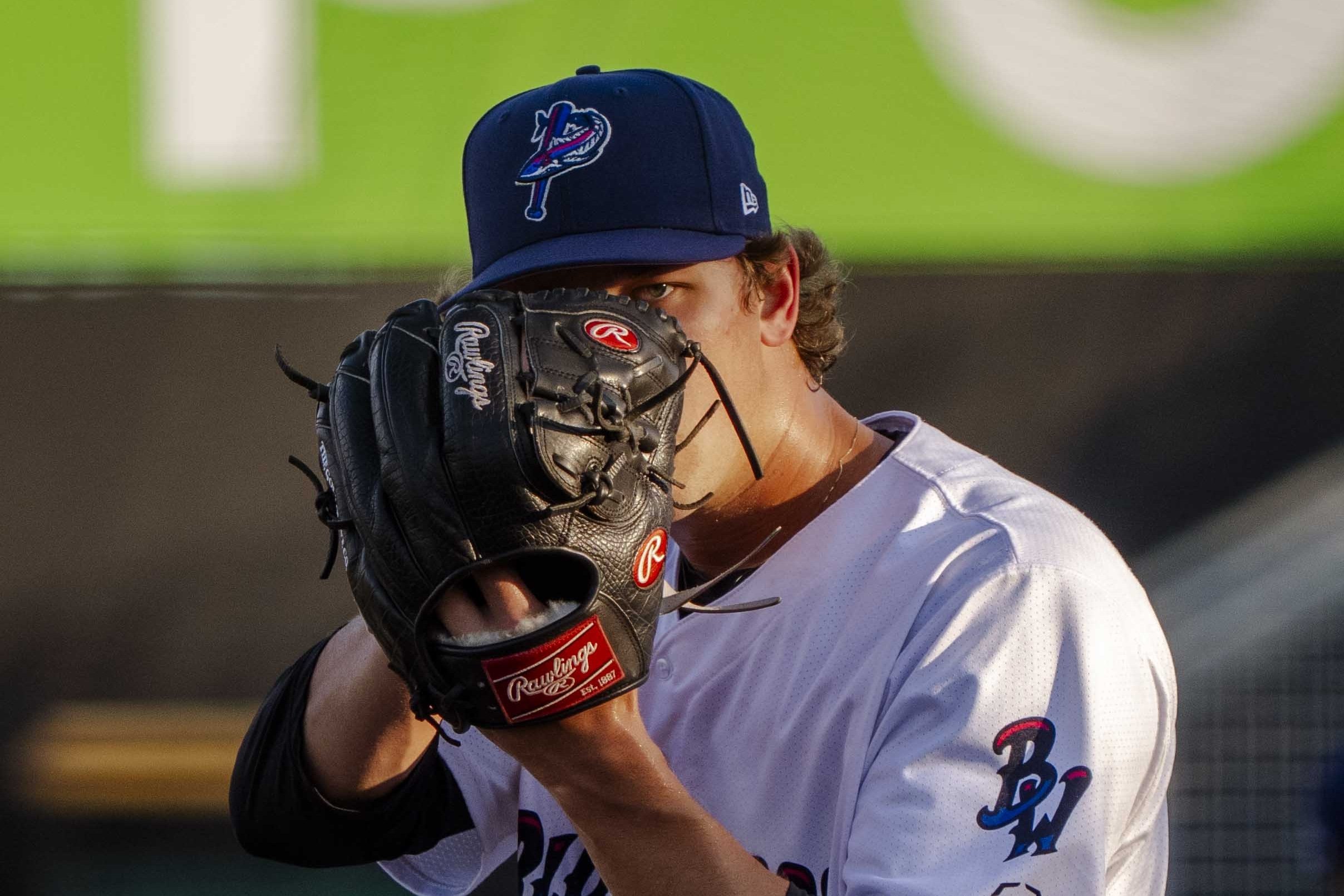 More than a quarter of the way through the minor league season, Miami Marlins affiliates are on pace to make history. The organization's strikeout rate is not only up significantly from 2025, but it's higher than any other mark that any org has posted in a single season. This is the continuation of a trend. In 2023—the final year before Peter Bendix became Marlins president of baseball operations—the farm system struck out 22.2% of opposing batters. In 2024, that rose to 23.9%. In 2025, it reached 25.0%. Entering play on Friday, the Jacksonville Jumbo Shrimp, Pensacola Blue Wahoos, Beloit Sky Carp, Jupiter Hammerheads and FCL Marlins are collectively at 28.2%. The organization’s emphasis on swing-and-miss stuff ("throw nasty strikes") is showing at every level. Jacksonville Jumbo Shrimp Coming off a Triple-A title, expectations were still high with Robby Snelling and Thomas White leading the Jumbo Shrimp rotation. Even with Snelling now in the big leagues, Jacksonville still has a loaded rotation consisting of Thomas White, Ryan Gusto, Dax Fulton, and Bradley Blalock. White is currently ranked as the top left-handed pitching prospect in baseball. The bullpen has been just as dominant. Josh White is putting up Josh White numbers as usual, William Kempner owns a K/9 approaching 20, and Jack Ralston has been one of the more underrated signings made by Bendix. Even with constant pitching transactions between Jacksonville and Miami, the Jumbo Shrimp staff has arguably been even more dominant than last year’s championship team. The team K/9 has jumped from 9.28 last season to 10.90 this year, while opponents are hitting just .207 against them compared to .228 last season. Players with a K/9 Above 11 (min. 10 IP, Excluding Current MLB Roster Players) William Kempner — 17.26 Josh Ekness — 14.92 Tyler Zuber — 13.93 Thomas White — 12.77 Jack Ralston — 12.73 Zach McCambley — 11.03 Pensacola Blue Wahoos With quite a few pitchers getting promoted between last season and this offseason, the Blue Wahoos entered 2026 with a much different pitching staff. Headlined by Fish On First’s No. 10 prospect Karson Milbrandt, Pensacola has still managed to take another leap in the strikeout department. After leading the Southern League in 2025 with a 9.83 K/9, the Blue Wahoos were not satisfied. Through the first quarter of the 2026 season, they currently rank second in the Southern League with a 10.56 K/9. They also lead the league with a .224 batting average against. Milbrandt has continued to dominate, Brandon White has been one of the bigger surprises in the system so far, and Kade Bragg, who was acquired from the Twins during the offseason, has been productive as well. Even with roster turnover throughout the organization, Pensacola has continued to develop into one of the better swing-and-miss staffs in Double-A baseball. Players with a K/9 Above 11 (min. 10 IP) Justin King — 16.20 Gabe Bierman — 15.30 Colby Martin — 12.66 Livan Reinoso — 12.00 Kade Bragg — 11.90 Karson Milbrandt — 11.87 Alex Williams — 11.81 Logan Whitaker — 11.15 Beloit Sky Carp When it comes to pure pitching talent, Beloit stands out within the organization. The rotation consists of Fish On First’s No. 15 prospect Eliazer Dishmey, No. 30 prospect Nate Payne, 2024 CB-B pick Aiden May, 14th-round pick Carson Laws, and 2025 Florida State League All-Star Liomar Martinez. Beloit finished last season with a 9.21 K/9, which was good enough for second in the Midwest League. So far this year, that number has jumped all the way to 11.18. While walks have been an issue, as the Sky Carp also lead the Midwest League in BB/9 at 6.45, the raw talent is clearly there. Beloit should see multiple arms promoted to Pensacola later this season. Players with a K/9 Above 11 (min. 10 IP) Luis Ramirez — 15.68 Liomar Martinez — 14.10 Cannon Pickell — 12.60 Eliazar Dishmey — 12.54 Justin Storm — 11.64 Carson Laws — 11.52 Peyton Fosher — 11.41 Nate Payne — 11.32 Juan Reynoso — 11.21 Jupiter Hammerheads The Hammerheads have done a complete 180 with their pitching staff from last season to this year. They finished with the second-worst ERA in the Florida State League in 2025, but through 36 games this season they own the best ERA in the league at 3.39. The staff has been led by Julio Mendez, Walin Castillo and Keyner Benitez (who is now injured, unfortunately). With newly converted reliever Juan De La Cruz moving up to High-A, the bullpen is anchored by Elier Morillo and Jake Faherty, who is capable of touching 100+ mph. Walks and injuries have slowed the start of Faherty’s professional career, but the raw stuff has never been in question. Out of all Marlins affiliates, Jupiter has made the biggest leap in the strikeout department. They're on track to join 2025 Double-A Binghamton (Mets) as the only full-season MiLB teams to ever retire at least 30% of batters faced via K. Players with a K/9 Above 11 (min. 10 IP) Elier Morillo — 17.72 Michael Perez — 15.88 Julio Mendez — 13.09 Luis De La Cruz — 11.69 Samuel Carpio — 11.30 Keyner Benitez — 11.17 From Jacksonville all the way down to the rookie ball, there is legitimate talent throughout the system, and the numbers back it up. Each affiliate currently boasts a K/9 of 10 or higher, featuring multiple pitchers who should be on everyone’s radar moving forward. There is a logjam of arms at every level, including the major league roster, and that is the type of problem an organization loves to have.
 -
Drafted in the seventh round in 2019 out of UCLA, Jack Ralston has spent his entire professional career as a reliever. After signing with the Miami Marlins as a minor league free agent this offseason, he is quickly becoming the latest example of the organization finding value in overlooked arms. Through 13 appearances this season with Triple-A Jacksonville, he owns a 1.27 ERA with a 0.98 WHIP and 31 strikeouts in just 21 ⅓ innings. The walks are still a little high at 4.64 BB/9, but compared to last season’s 6.75 BB/9, that's a significant improvement. The Marlins bullpen has been pretty effective overall in 2026, but Ralston can help them reach even greater heights. One adjustment has changed everything With the AAA data we have from last season, it is easy to see what has changed for Ralston this year. In 2025, he threw all three of his pitches over 29% of the time (fastball 37.8%, splitter 32.3%, slider 29.8%). In 2026, everything has changed tremendously. His splitter usage has jumped all the way to 52.1% while his fastball usage has dropped to just 21.5%. His slider usage has stayed relatively similar at 26.3%. Everything has followed with this adjustment. Ralston has done a tremendous job limiting damage this season, allowing just 0.42 home runs per nine while opponents are averaging only 4.22 hits per nine compared to 8.16 last year. The swing-and-miss has taken a huge step forward as well as he is now striking hitters out at a 13.08 K/9 clip, up from last season's 11.30. Additionally, the quality of contact against him has dropped as opponents are slugging just .173 after posting a .376 SLG last season. While Ralston's walk rate is still a little high, hitters still have not been able to consistently reach base against him as opponents own just a .244 OBP against Ralston this season compared to a .371 OBP last year. Overall, hitters own just a .417 OPS against him this year. Compared to a .747 OPS last season, it's clear just how effective the adjustments to his pitch mix have been. When could we see him? It is always tougher to determine sustainability with relievers as their results can fluctuate heavily from year to year, but through a 13-game sample, it is clear the adjustments Ralston and the Marlins made over the offseason have paid off. The 28-year-old doesn't need to be waiting by his phone quite yet. The Marlins 40-man roster is currently full and Ralston isn't on it. However, this team has shown a willingness to demote struggling players and cycle through fresh arms when needed. During this current stretch of 26 games in 27 days, pitching depth will inevitably be leaned on. Ralston could be next in line to debut. View full article
-
Jack Ralston hasn't gotten his opportunity yet, but it's coming
Nathaniel Klaff posted an article in FOF Prospects
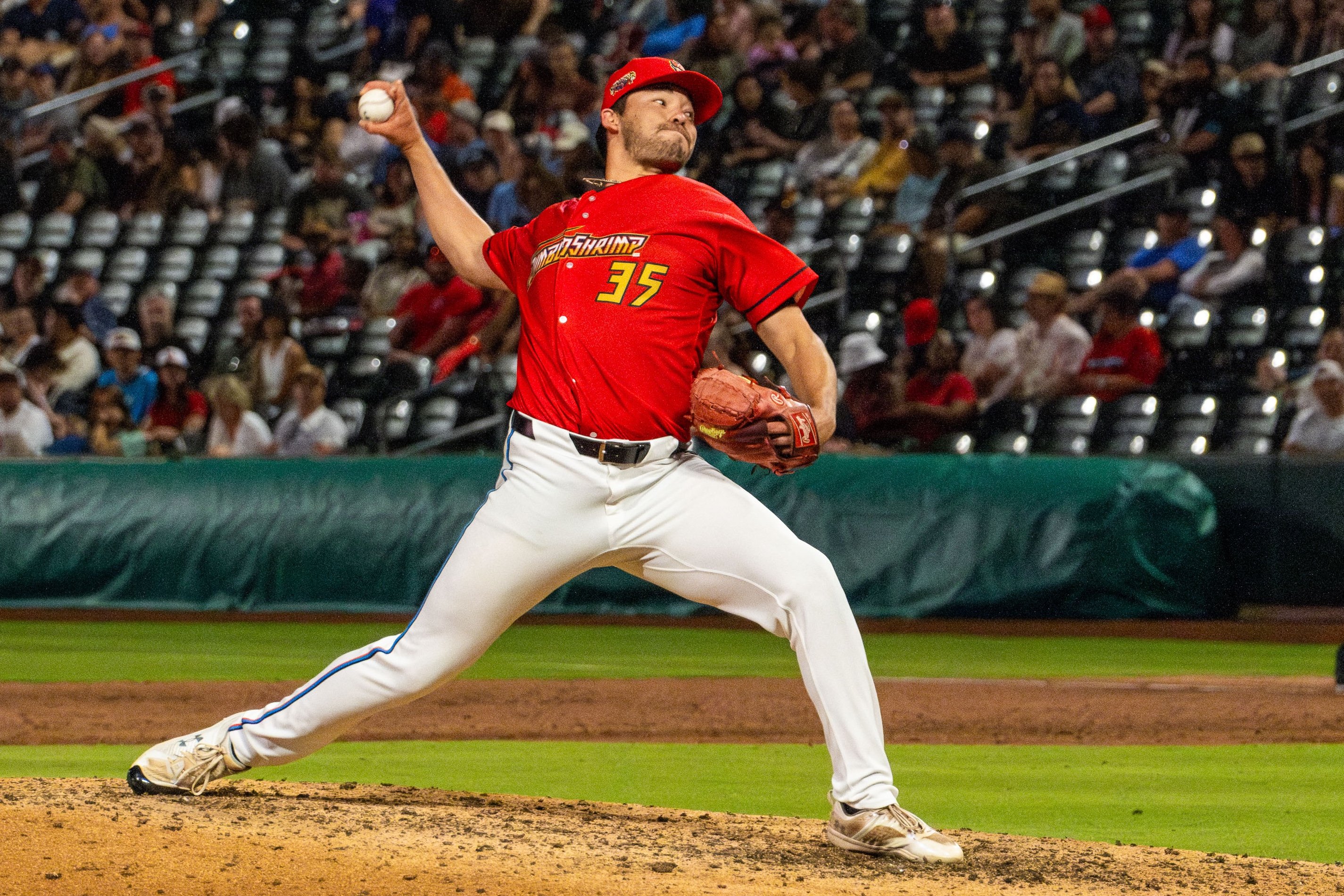 Drafted in the seventh round in 2019 out of UCLA, Jack Ralston has spent his entire professional career as a reliever. After signing with the Miami Marlins as a minor league free agent this offseason, he is quickly becoming the latest example of the organization finding value in overlooked arms. Through 13 appearances this season with Triple-A Jacksonville, he owns a 1.27 ERA with a 0.98 WHIP and 31 strikeouts in just 21 ⅓ innings. The walks are still a little high at 4.64 BB/9, but compared to last season’s 6.75 BB/9, that's a significant improvement. The Marlins bullpen has been pretty effective overall in 2026, but Ralston can help them reach even greater heights. One adjustment has changed everything With the AAA data we have from last season, it is easy to see what has changed for Ralston this year. In 2025, he threw all three of his pitches over 29% of the time (fastball 37.8%, splitter 32.3%, slider 29.8%). In 2026, everything has changed tremendously. His splitter usage has jumped all the way to 52.1% while his fastball usage has dropped to just 21.5%. His slider usage has stayed relatively similar at 26.3%. Everything has followed with this adjustment. Ralston has done a tremendous job limiting damage this season, allowing just 0.42 home runs per nine while opponents are averaging only 4.22 hits per nine compared to 8.16 last year. The swing-and-miss has taken a huge step forward as well as he is now striking hitters out at a 13.08 K/9 clip, up from last season's 11.30. Additionally, the quality of contact against him has dropped as opponents are slugging just .173 after posting a .376 SLG last season. While Ralston's walk rate is still a little high, hitters still have not been able to consistently reach base against him as opponents own just a .244 OBP against Ralston this season compared to a .371 OBP last year. Overall, hitters own just a .417 OPS against him this year. Compared to a .747 OPS last season, it's clear just how effective the adjustments to his pitch mix have been. When could we see him? It is always tougher to determine sustainability with relievers as their results can fluctuate heavily from year to year, but through a 13-game sample, it is clear the adjustments Ralston and the Marlins made over the offseason have paid off. The 28-year-old doesn't need to be waiting by his phone quite yet. The Marlins 40-man roster is currently full and Ralston isn't on it. However, this team has shown a willingness to demote struggling players and cycle through fresh arms when needed. During this current stretch of 26 games in 27 days, pitching depth will inevitably be leaned on. Ralston could be next in line to debut.
 -
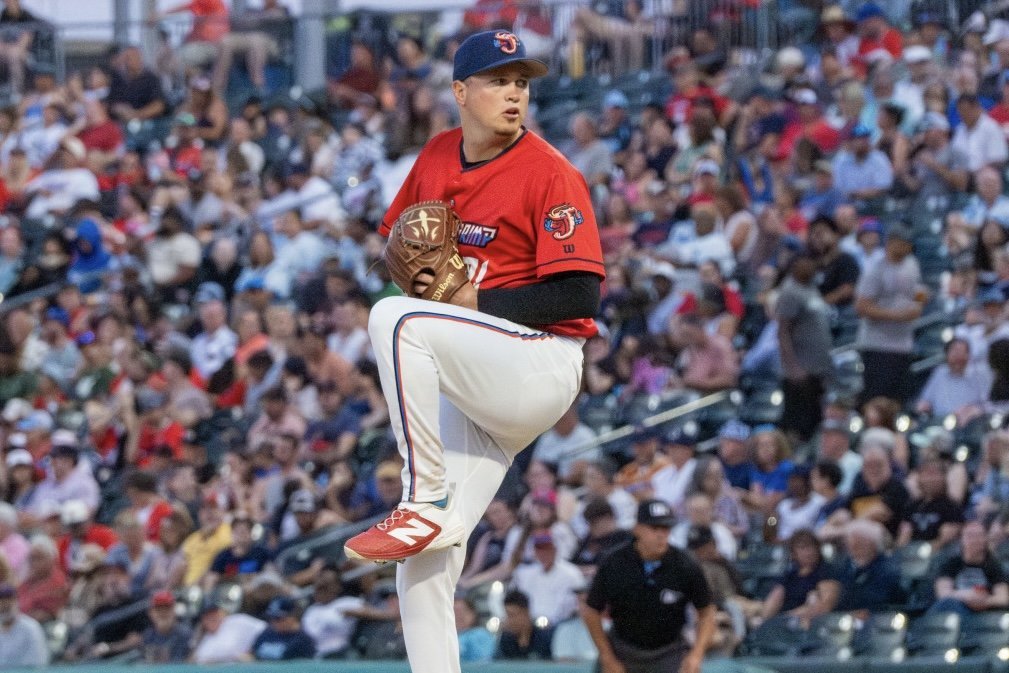 When the Miami Marlins acquired Bradley Blalock over the offseason, expectations for him were modest. After all, this a pitcher who had been designated for assignment by the Colorado Rockies. He ranked last among MLB pitchers in 2025 with -1.0 fWAR and had not found success at the minor league level, either. However, the Marlins saw something in him and the right-hander is turning heads during his first year in a new organization. Blalock's 62° arm angle would rank third in the majors right now, behind Toronto’s Trey Yesavage and the Mets’ Tobias Myers. His arsenal is led by a fastball that sits around 94 mph and plays well up in the strike zone. He mixes in a cutter that gives him a different look and can keep hitters off balance. His slider is a solid secondary pitch that he can go to for swings-and-misses, while his curveball adds another layer with more depth and helps change eye levels. He also throws a splitter, which works as his main offspeed pitch and can get hitters to chase when it’s working. Through six starts this year with Triple-A Jacksonville, Blalock has thrown 32 innings, allowing 11 earned runs, six walks, and 31 strikeouts. The long ball has hurt him, as he has allowed seven home runs on the year, but hitters are batting just .190 against him overall. The Marlins' decision to part ways with Chris Paddack shakes up their starting rotation for the first time since Opening Day. Robby Snelling will step into Paddack's spot for now, but Blalock has moved up the depth chart. With a couple more injuries and/or trades, Blalock could find himself back on a major league pitching staff. What has changed? Blalock has made a clear adjustment from 2025 to 2026, lowering his four-seam usage from 52.3% to 41.0% while increasing his cutter usage from 7.5% to 22.1%. His slider has dipped from 16.6% to 13.8% and his splitter from 14.4% to 13.1%, while his curveball has seen a slight increase from 9.2% to 10.0%. Becoming more unpredictable is not the only key to his success so far. Blalock's BB/9 this season is 1.69 compared to 5.19 last year. He is averaging three fewer pitches per inning compared to last year, and his K/BB ratio has more than tripled, rising to 5.17 this year from 1.49 last year. Not only is he throwing more strikes, but he is limiting damage across the board. The ability to get ahead in counts has played a big role in that. In 2025, opponents posted a .400 OBP and .559 SLG (.959 OPS) against him. That has dropped significantly in 2026, with hitters putting up just a .228 OBP and .397 SLG (.625 OPS). Similar to what we have seen with Janson Junk, filling up the zone leads to results. Blalock’s BABIP this season is .190, which suggests some regression may be coming, but if he continues throwing strikes and limiting walks, he will remain effective.
 -
When the Miami Marlins acquired Bradley Blalock over the offseason, expectations for him were modest. After all, this a pitcher who had been designated for assignment by the Colorado Rockies. He ranked last among MLB pitchers in 2025 with -1.0 fWAR and had not found success at the minor league level, either. However, the Marlins saw something in him and the right-hander is turning heads during his first year in a new organization. Blalock's 62° arm angle would rank third in the majors right now, behind Toronto’s Trey Yesavage and the Mets’ Tobias Myers. His arsenal is led by a fastball that sits around 94 mph and plays well up in the strike zone. He mixes in a cutter that gives him a different look and can keep hitters off balance. His slider is a solid secondary pitch that he can go to for swings-and-misses, while his curveball adds another layer with more depth and helps change eye levels. He also throws a splitter, which works as his main offspeed pitch and can get hitters to chase when it’s working. Through six starts this year with Triple-A Jacksonville, Blalock has thrown 32 innings, allowing 11 earned runs, six walks, and 31 strikeouts. The long ball has hurt him, as he has allowed seven home runs on the year, but hitters are batting just .190 against him overall. The Marlins' decision to part ways with Chris Paddack shakes up their starting rotation for the first time since Opening Day. Robby Snelling will step into Paddack's spot for now, but Blalock has moved up the depth chart. With a couple more injuries and/or trades, Blalock could find himself back on a major league pitching staff. What has changed? Blalock has made a clear adjustment from 2025 to 2026, lowering his four-seam usage from 52.3% to 41.0% while increasing his cutter usage from 7.5% to 22.1%. His slider has dipped from 16.6% to 13.8% and his splitter from 14.4% to 13.1%, while his curveball has seen a slight increase from 9.2% to 10.0%. Becoming more unpredictable is not the only key to his success so far. Blalock's BB/9 this season is 1.69 compared to 5.19 last year. He is averaging three fewer pitches per inning compared to last year, and his K/BB ratio has more than tripled, rising to 5.17 this year from 1.49 last year. Not only is he throwing more strikes, but he is limiting damage across the board. The ability to get ahead in counts has played a big role in that. In 2025, opponents posted a .400 OBP and .559 SLG (.959 OPS) against him. That has dropped significantly in 2026, with hitters putting up just a .228 OBP and .397 SLG (.625 OPS). Similar to what we have seen with Janson Junk, filling up the zone leads to results. Blalock’s BABIP this season is .190, which suggests some regression may be coming, but if he continues throwing strikes and limiting walks, he will remain effective. View full article
.jpg.ba12172468c94ad07d4465876c7ecddc.jpg)


